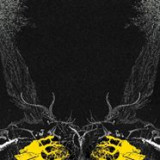
Berlin-based French-Irish multimedia artist Zoe Mc Pherson levels up on their third full-length "Pitch Blender", mangling years of experience DJing and performing live into a tight set of cybernetic soundsystem experiments that flicker between the rave and the art space.
Cast your mind back to February 2020 for a moment, when Mc Pherson released their last album "States of Fugue". The world seemed less tangled somehow, and yet Mc Pherson's precision-engineered fusion of exploratory sound design and visceral club pressure seemed to hint at a cataclysmic event none of us were really expecting. Only a few weeks after its release the world changed forever, and the majority of us were grounded - forced to consider our lives and the movement (or lack thereof) surrounding us. The philosophy of this extended time period is welded into the bones of "Pitch Blender", Mc Pherson's supple third album. They have learned plenty in the last two years, and infuse all of that anxiety and spiky emotionality into a spread of tracks that sound as powerful in headphones as they do over a well-tweaked soundsystem, soldering vocals, environmental recordings and instrumental flourishes to unpredictably pneumatic, cybernetic beats.
Anyone that's caught one of Mc Pherson's energetic live performances over the last few months will have an idea of what "Pitch Blender" is made of. They're an artist who's somehow able to match the raw energy of post-punk and no-wave music with the brain-altering potential of the best experimental club tracks, vocalizing an incongruous post-lockdown reality over beats that sound as if they're in a permanent state of flux. 'On Fire' splutters to life in a frenetic patter of drums that blur into oddly soothing hoover sounds, snaking lysergically towards a drop that's teased constantly, and never comes. We're forced to wait until 'The Spark' for that, fighting through choppy, pitch-mangled guitar and rolling beats until a gruesome kick drum forces its way through the psilocybin mists and heaving Bristol-inspired bass clonks. Backed up with just the inverted traces of recognizable breaks, this vigorous pulse lies at the heart of "Pitch Blender", the driving force that powers Mc Pherson's sound even when it's only hinted at.
'Blender' is the moment where Mc Pherson show their full hand, using crackling sound effects, ghost vocals and uneven rhythms to build a textural landscape that's so evocative you can almost taste it. Squealing modular synth effects sound like gameshow buzzers being triggered in another dimension and propel the track forward - it's club music, just about, but Mc Pherson's motivation is world-building, and their world is colorful, abstract, and dizzyingly surreal. "Obsolete user," their voice echoes over driving airlock kicks. But they take a swift left turn with 'Lamella', reducing the kinetic club rhythms to a longing simmer and letting loose with powerful vocals, intoning with robotic, gender-fluxed intensity. On 'Wait', New York City's clacking crosswalk signal - already an effective club track on its own - is transformed into a reminder to slow down, juxtaposed with booming sub-heavy kicks, acidic synths and effervescent percussion that rattles in time with the vibrations. It's foley rave, built for pure psychedelic intensity to blur the line between real life and sonic fiction.
One of the album's most galvanic tracks, 'Power Dynamics' curves a double-time rhythm around breathless HQ sound design squiggles until it hits a polyrhythmic crescendo, striking a queasy balance between rave hedonism and ritualistic hand drum energy. It all builds towards eerie closing track 'Outside' that acts as an important wind down, spotlighting Mc Pherson's ability to operate outside of the rhythmic spectrum, using cinematic scrapes and flickering neon synths to create music that's tense but never terrifying. The track feels like the end credits of a particularly bewildering movie - something between the cyberpunk dystopia of "Ghost in the Shell" and the vivid, sky-scraping beauty of "Koyaanisqatsi". Mc Pherson has managed something special with "Pitch Blender": mashing together genres with rare focus, and sharpening their engineering skills to a fine point, they've concocted an antidote to contemporary malaise - a wakeup call that's begging us to loosen our limbs and move.
Suche:point no point
- Annunciation 06:12
- Riel 04:52
- Stone Leaf And Pond 04:11
- Katwijk 04:01
- Dongen 05:20
- Tilburg 03:09
- Maryam 04:51
- Two Wings 04:53
Originally released on Ben Chasny's own Pavilion imprint in 2011.
"I was invited by the Incubate Festival and the city of Tilburg to participate in an artist residency where I would explore the region’s unique chapels built for the Virgin Mary. After writing the music for about six months by drawing on memories of the encounters with the chapels and using techniques inspired by Gaston Bachelard’s Poetics Of Reverie, I flew back to Tilburg to perform the music at the Incubate Festival. We recorded the evening and I released the result on my Pavilion label. Each cover was hand painted white on white in the old Pavilion style. I created a stencil and used graphite powder to make the design that is inspired by the sun imagery in Athanasius Kircher diagrams."
Roadside chapels express the identity of the inhabitants of North Brabant, a Dutch province, bordering on Belgium. Roman Catholicism has been the dominant religion in this southern part of the Netherlands since the eighth century. For about a century and a half this religion was strongly suppressed. Only when the French revolutionaries preached freedom of belief around 1800 could the people of North Brabant exercise their faith again. This was the start of a very strong emancipatory development from which a special form of the Roman Catholic faith arose that fully determined everyday life of the people here. This faith was the determining factor in life and the measure of all things. After the second Vatican Council (1962-1965) the reins of the catholic faith in Brabant were loosened as well. This was the start of a revolutionary process of secularisation. Within a decade hardly anything was left of the almighty influence of the Roman Catholic Church and this situation has lasted up to the present day.
In spite of the almightiness of the official, Vatican ruled, Roman Catholic faith, North Brabant has always and perhaps notoriously fostered an undercurrent of popular belief as well. This is a kind of belief in which elements of the official faith and age-old pre-Christian traditions are combined. Worshipping relics, holding pilgrimages and processions, the use of water from holy wells, popular art, recitations and songs, festivals, rituals, folk traditions, superstition and the like are all examples of popular devotion. These matters have strongly influenced and formed the identity of the present-day population of North Brabant. It is part of their immaterial heritage.
An obvious and still very much visible form of popular devotion are the roadside chapels. In Brabant some 400 can be found, most of which have been devoted to Mary. Chapels are small buildings in which Mary or other saints are worshipped. They can be found within villages or towns or in natural surroundings. Always at the finest spots! The beauty of the environment adds a primary religious or mystical feeling to the visitor. Local people attach great value to their chapels. In spite of the overall secularisation in society they are still at the centre of cultural and social life. Where people in North Brabant can hardly be found in the churches nowadays, this doesn’t mean at all they are no longer religious. On the contrary, religious feelings are perhaps stronger than ever, but now people have to find their own expression of them. That’s why they fall back on the age-old popular belief in which chapels play an important role. We can even witness new forms of popular belief with chapels as their focal point. An example of this is the scattering of ashes of people who have been cremated. Chapels clearly also play a role in the lives of young people. On an average five new chapels are added every year.
I have studied the popular culture and belief and the identity of the inhabitants of North Brabant for over thirty years. I have published over forty books on these subjects. In 2010 I was approached by the organisation of the Incubate Festival in the North Brabant town of Tilburg. Their request was for me to lead the American composer and guitarist Ben Chasny around a number of chapels in the province devoted to Mary. He had been invited to North Brabant to write some new compositions. Ben Chasny then chose to be inspired by these chapels and that’s how we met. I was especially curious how an American would react to something as specific and small as a roadside chapel in North Brabant, since we tend to think here of (people in) America in terms of ‘big-bigger-biggest’. Would an inhabitant of this enormous country with this prevailing culture be able to grasp and respect the identity of some 2.5 million people in North Brabant with their chapels? The answer to this question lies hidden in the compositions he made and that can be listened to on this album. Yes, Ben Chasny has been able to convert the phenomenon of a simple chapel devoted to Mary into music. The physical and the spiritual have found each other. What a beautiful world…just listen! - Paul Spapens
Pink Acid Wash[31,05 €]
"In a world where there are no more heroes, the Fleshtones walk the earth like Roman gods. Since their inception in 1976 in Queens, New York, and their sweaty, boozy gestation at legendary venues such as CBGB, Max’s Kansas City, and the storied Club 57— recently feted at the Museum of Modern Art, where their proto-video underground film “Soul City” was unspooled for art stars, glitterati, and a raft of punk rockers who managed to get past the front gate — they have perpetrated their proprietary brand of SUPER ROCK, a frenetic amalgam of garage punk and soul, punctuated by the big beat and unleashed with the spectacular show business majesty which has kept them on the road for over forty years, adored by audiences whose love for them borders on religious fervor.
It’s Getting Late (…and More Songs About Werewolves) is a smash that could have dropped at any point in their epic career — it is an outburst, and a celebration of the SUPER ROCK sound. Unlike their contemporaries, they have not dialed down the tempos to compensate for osteoporosis, they have not lost anything on their fastball, and continue to throw it for strikes. The hardest working band in garage rock has never sounded better, and now you see why they've been your favorite band's favorite band for decades."
- Zen And The Art Of Nonsense
- Fun On The Floor
- The Blessed West
- Taken For Granted
- Looks Can Kill
- Sacred Measure
- Flare
- Black Five
- Vigilante
- Zor Gabor
- Tightrope
The Scream, Siouxsie & the Banshees' first album, was released late enough in the punk era to bear some claim as the first post-punk album, with only a minor traces of 'punk' (one lingering early song, "Carcass" comes to mind) and enough hints of what had come even earlier, Andy MacKay-like saxophone flourishes - to feel utterly new. Not to mention the effort producer Steve Lillywhite must have put into the album, his first fully-credited major label production. Siouxsie was clearly the focus of the band, with her unique vocal style and lyrics, but the real star, we've always known, was John McKay, who wrote most of the album's music (as well as singles like "Hong Kong Garden"), creating a wholly new guitar sound - harsh and brittle, yet melodically intoxicating . . . best articulated by a somewhat confounded Steve Albini years later ". . . only now people are trying to copy it, and even now nobody understands how that guitar player got all that pointless noise to stick together as songs". McKay's influence lives on; many of the most influential guitarists of the past four decades credit him as a major influence - Geordie from Killing Joke, Jim Reid of The Jesus And Mary Chain, U2's The Edge, Thurston Moore, Johnny Marr and even the two guitarists - The Cure's Robert Smith and Magazine's John McGeoch - who followed him in The Banshees. McKay's burgeoning status as the anti-guitar hero was halted when he and Banshees drummer Kenny Morris - at odds with Siouxsie and bassist Steve Severin - fled the band just after the start of a tour supporting the group's second album, Join Hands. It was a weekly music paper scandal, later the subject of a BBC documentary, and Siouxsie's vitriol working its way into the lyrics of a later Banshees b-side, "Drop Dead / Celebration". Aside from a solitary single on Marc Riley's In Tape label nearly a decade later, no music was heard from McKay again. So it comes as a major surprise to learn of a pile of excellent recordings made in the years just after he left The Banshees, unheard by all but a very few, some of which feature drummer Kenny Morris, plus Mick Allen from Rema Rema, Matthew Seligman of the Soft Boys and longer-term collaborator Graham Dowdall and John's wife Linda . . . the latter three of whom now all sadly deceased. Sixes And Sevens is an historic lost album. Brazenly genius and bearing fair claim as the lost treasure of the post-punk era, the album collects eleven studio tracks, carefully mastered from original tapes. It's a masterpiece which best speaks for itself.
Mucha, AKA Amanda Butterworth presents a stunning double header for Frequency Domain's tenth birthday release. But when up against one of the most thoughtful, precise, yet loose and rave inducing producers in the history of synthesisers, there was only ever going to be one opening point being made here. Surgeon's remix is typically essential for any techno fan. So while the original 'Skin' is this patient, rhythmic but beat-less slice of post- (or pre-)club stuff, full of ecstasy moods and comedown overtures, Surgeon's take refocuses us on the repetitive vocal patterns and slaps a wonderful compelling broken kick underneath to create a proper dancefloor builder. B-side 'You Make Me Go Under' goes for a neo-Bjork style IDM leaning piece, which then gets a moody, apocalyptic Datassette cut to top off an exceptionally strong package. Buy it. Buy it now.
The Scream, Siouxsie & the Banshees' first album, was released late enough in the punk era to bear some claim as the first post-punk album, with only a minor traces of 'punk' (one lingering early song, "Carcass" comes to mind) and enough hints of what had come even earlier, Andy MacKay-like saxophone flourishes - to feel utterly new. Not to mention the effort producer Steve Lillywhite must have put into the album, his first fully-credited major label production.
Siouxsie was clearly the focus of the band, with her unique vocal style and lyrics, but the real star, we've always known, was John McKay, who wrote most of the album's music (as well as singles like "Hong Kong Garden"), creating a wholly new guitar sound - harsh and brittle, yet melodically intoxicating . . . best articulated by a somewhat confounded Steve Albini years later ". . . only now people are trying to copy it, and even now nobody understands how that guitar player got all that pointless noise to stick together as songs". McKay's influence lives on; many of the most influential guitarists of the past four decades credit him as a major influence - Geordie from Killing Joke, Jim Reid of The Jesus And Mary Chain, U2's The Edge, Thurston Moore, Johnny Marr and even the two guitarists - The Cure's Robert Smith and Magazine's John McGeoch - who followed him in The Banshees.
McKay's burgeoning status as the anti-guitar hero was halted when he and Banshees drummer Kenny Morris - at odds with Siouxsie and bassist Steve Severin - fled the band just after the start of a tour supporting the group's second album, Join Hands. It was a weekly music paper scandal, later the subject of a BBC documentary, and Siouxsie's vitriol working its way into the lyrics of a later Banshees b-side, "Drop Dead / Celebration". Aside from a solitary single on Marc Riley's In Tape label nearly a decade later, no music was heard from McKay again. So it comes as a major surprise to learn of a pile of excellent recordings made in the years just after he left The Banshees, unheard by all but a very few, some of which feature drummer Kenny Morris, plus Mick Allen from Rema Rema, Matthew Seligman of the Soft Boys and longer-term collaborator Graham Dowdall and John's wife Linda . . . the latter three of whom now all sadly deceased.
Sixes And Sevens is an historic lost album. Brazenly genius and bearing fair claim as the lost treasure of the post-punk era, the album collects eleven studio tracks, carefully mastered from original tapes. It's a masterpiece which best speaks for itself. John McKay will be made available for a limited number of interviews . . . and yes, there are surprises in store.
- Intro
- Parisian Thoroughfare
- Premonition
- Point Of No Return
- Back In The 60'S
- Without Regrets
- Celtic Steps
- Desert Crossing
- Last Memories Of Her
- The Acatama Experience
- On My Way To Bombay
- Still In Love
- Euphoria
- To And Fro
“The Atacama Experience” wurde von dem Jazzviolinisten Jean-Luc Ponty als eine musikalische Reise konzipiert. Diese Reise beginnt in der Einleitung mit einer Pariser Straßenszene, der dreizehn Songs folgen, die den Hörer durch verschiedene Länder, eine Reihe unterschiedlichster Impressionen und Emotionen sowie in die musikalische Vergangenheit und Gegenwart führen. Die Aufnahmen entstanden zwischen Januar 2006 und Februar 2007. In diesem Zeitraum bereiste Ponty mit seiner Band diverse Kontinente und absolvierte Auftritte in Südamerika, Europa, Russland, den USA und Indien. Zwischendurch kehrte er immer wieder nach Frankreich zurück, um die frischen Eindrücke und neuen Einsichten in Einspielungen für dieses Projekt zu verwandeln.
Jean-Luc Ponty - Geige, Keyboards, Synthesizer, Effekte
William Lecomte - Klavier, Keyboards
Philip Catherine - Gitarre (Titel 2, 5 und 12)
Allan Holdsworth - Gitarre (Titel 4)
Guy N'Sangue - Bassgitarre
Thierry Arpino - Schlagzeug
Taffa Cissé - Schlagzeug
Die irische Musikerin Maria Somerville kündigt ihr zweites Album "Luster" für den 25. April an. Es ist zugleich ihr Debüt bei 4AD. Mit dem Announcement erscheint die Single "Garden". Der Track taucht ihre sirenenhaften Vocals in einen Sound aus schwirrendem Feedback, luftiger Percussion und nostalgischen Gitarren, der Erinnerungen an die klassische 4AD-Phase heraufbeschwört. Bereits im letzten Jahr war der hypnotische Shoegaze-Track "Projections" erschienen, mit dem Somerville eine erste Spur in Richtung des Sounds ihres kommenden Albums gelegt hatte. Somerville wuchs im ländlichen County Galway an der bergigen und rauen irischen Westküste auf. Sie zog später nach Dublin, wo sie an ihrem Signature-Sound arbeitete: atmosphärischem Dreampop, der von der Landschaft ihrer Jugend geprägt bleibt. Die ätherischen Gitarrenklänge, spärlichen Rhythmen und elektronischen Ambient-Sounds hielt sie erstmals auf dem 2019 selbst veröffentlichten Album "All My People" fest, einem Werk, das knietief in Nostalgie und Sehnsucht watet. Erst als sie nach Connemara zurückkehrte, in ein Haus nicht weit von dem, in dem sie aufwuchs - und von wo aus man einen der größten Seen des Landes, den Lough Corrib, überblicken konnte - begann Somerville mit der Arbeit an Musik, die schließlich zum neuen Album "Luster" werden sollte. Während ihr DIY-Debüt Erinnerungen und Melancholie in nebligen Slowcore hüllte, zeigen die zwölf neuen Tracks eine Künstlerin, die sich des Weges, den sie eingeschlagen hat, viel sicherer ist. "I can see more clearly than I could before. I know now what"s true for me", singt sie passend in "Trip". Gestärkt durch die neue, alte Umgebung und ermutigt durch ihre Community, entwickelte Somerville wieder kreative Energien. Der Boden erwies sich im wahrsten Sinne als fruchtbar, als sie in lockeren Wohnzimmer-Sessions erste Demos aufnahm, die später u. a. mit J. Colleran und Ian Lynch (Lankum) ausgearbeitet und schließlich vom New Yorker Engineer Gabriel Schuman (Oneohtrix Point Never, Princess Nokia, David Byrne) gemixt wurden. Eine gewisse Popularität erreichte Somerville auch durch ihre "Early Bird Show" auf NTS Radio, wo sie seit 2021 zwei Mal die Woche ein Morgenprogramm hostet, in dem sie Musik zwischen Shoegaze und traditionellem irischen Folk vorstellt. Im selben Jahr unterschrieb sie ihren Vertrag bei 4AD, wo sie bislang zwei Compilation-Beiträge veröffentlichte und mit ihren Labelmates Dry Cleaning auf Tour ging. 2025 wird sie mit Band Shows auf der ganzen Welt spielen, darunter auch Konzerte in Deutschland.
- A1: Something Wrong With Your Mind
- A2: Weirdo
- A3: Stay
- A4: Let Me Sleep
- B1: Please Leave Me Alone
- B2: Save Me
- B3: Maybe Nowhere
- B4: What Is The Point
- C1: Black Hole Feat Reggie Watts
- C2: In Your Mind
- C3: Tofu
- C4: Fried Rice
- C5: Where'd You Go
- C6: Wanna Die
- D1: Starting At The Wall
- D2: I Don't Recognise My Hands
- D3: It's Okay Feat Kassa Overall
- D4: Remedy
- D5: Thank You For The Day
Emma-Jean Thackray, the visionary producer, composer, and multi-instrumentalist, releases her highly anticipated second album, “Weirdo” on April 25th via Gilles Peterson’s celebrated label, Brownswood Recordings / Parlophone Records. Known for defying musical boundaries, Thackray's latest work is a deeply personal and utterly original exploration of selfhood, grief, and gratitude.
Drawing on an eclectic mix of influences—grunge, pop, soul, p-funk, and jazz— “Weirdo” is a triumphant celebration of survival and individuality. Written, performed, recorded, mixed, produced and arranged entirely by Thackray in her South London flat, the album stands as a testament to her extraordinary musicianship and fearless self-expression.
The compositions of Miłosz Kędra (b. 2001) explore synthetic sound, electroacoustic music, and self-built acoustic instruments, seeking diverse timbres, tunings, and textures. His main field of work is the pipe organ. Through minimalist motifs, he has transported the instrument’s sound beyond the church space by synthetically processing its tones. He is currently pursuing a Master’s degree in New Media Music at the Academy of Music in Poznań and recently completed a Bachelor’s degree in Electroacoustic Composition, during which he built his own pipe organ from scavenged pipes.
~ Liner notes ~
Miłosz Kędra - "their internal diapasons"
The pipes that Miłosz Kędra used to craft his own organ emulator have lived many lives. They come from churches scattered across Greater Poland—some trimmed for a more presentable façade, others left to gather dust in parish houses until, stripped of purpose, they were cast away. Their first voices have faded, their inner resonance unsettled, yet with patience, one can teach them to sound again—to sing in their altered state, to be gently coaxed out of silence.
Audiomancy—the conjuring of lost sounds—is the word that lingers when I try to grasp the lore crystallizing with Kędra’s second album.
The resolve with which the musician and composer has inhabited his self-built instrument recalls Witold Szalonek and his search for “unexploited properties of wind instruments in classical music.” Szalonek sought to map these hidden voices into a system of multiphonics, revealing over 160 on the oboe alone by 1968. Some sound eerily alike, yet emerge through distinct gestures—“a particular breath, a precise choreography of levers and apertures, the seamless fusion of the two.”
The splitting of a single note into its spectral fragments—allowing a melodic instrument to speak in two, three, even four voices at once—enabled Szalonek to bend the rigid structures of Western music. "their internal diapasons" follows a similar path: an aesthetic bypass through which Kędra taps into the sacred gravity of the church organ, only to reveal it as a domesticated echo of something far older—the primal theater of transformation. To listen closely to an instrument is to learn its flaws, to turn its imperfections into a new way of speaking.
Each of the nine compositions on "their Internal diapasons" is an invitation—to approach the material world with the intent of letting it speak beyond expectation. An instrument that is at once a sculpture, a performance, and a manifesto of voicing the discarded suggests that its creator—following the path of Didier Eribon (Returning to Reims)—might take as his motto, a principle of asceticism, Sartre’s words: “What matters is not what is made of us, but what we ourselves make of what is made of us.”
Filip Szałasek
Rocket Recordings’ new Black Hole Series is a place where the unorthodox, otherworldly and esoteric can flourish, and there could be no more fitting first release for it than the most powerful metaphysical travelogue yet from Moundabout. Journeying still further into and beyond the landscapes from which this duo have unearthed inspiration, ‘Goat Skull Table’ is a transmission to give flight to spectral visions and include trance-states in abundance.The vibrations and manifestations of the duo of Paddy Shine(GNOD) and Phil Langero (Los Langeros, Damp Howl, Bisect) has always resonated within a very specific sense of place, transcending linear narratives and astral planes in a quest to unite timeless spirits with inner space. This third release for Rocket Recordings sees them colluding with
the landscape of their surroundings, transcending linear narratives and astral planes in a quest to unite timeless spirits with inner space.The title track marks a focal point here; a Shamanic rite on which Langero’s charismatically charged mantras collude with an audial landscape somewhere on the map between the abstract spell-casting of Nurse With Wound and the druidic gnosticism of Julian Cope. This is Moundabout at their darkest and most ritualistic. Elsewhere, the hypnotic repetition of the twin ten-minute extrapolations ‘Blood On My Blanket’ and ‘Wagon’, and the potent incantatory chants of ‘Am I Not’ and ‘Brave New World’ glow with a rugged and
charged dynamism redolent of the Swedish Psychedelia of Träd, Gräs & Stenar, uniting a minimal aesthetic with maximal impact.
Dauntless, feverish, and reaching new heights of primal intensity ’Goat Skull Table’ is a formidable field guide to the earthen and other
2025 Repress
Johnny's Disk Record Ist Ein Unabhängiges Jazz-label, Das Vom Inhaber Des Jazz-cafés Kaiunbashi In Der Stadt Rikuzentakata In Der Präfektur Iwate, Japan, Betrieben Wird.
Das Legendäre Label Veröffentlichte Eine Reihe Von Alben Mit Hochwertiger, Aber Bodenständiger Musik, Die Von Modernem, Avantgardistischem Jazz Bis Hin Zum Leftfield-pop Reicht. Alben Wie "johnny / Left Alone" Und "aya's Samba" Haben Bei Den Fans Kultstatus Erreicht Und Gehören Zu Den Besten Werken Der Japanischen Jazzszene.
Dieses Debutalbum Des Drummers Und Schauspielers Mitsuaki Katayama Ist Ein Japanisches Jazz Meisterwerk.
Bestehend Aus Fünf Eigenkompositionen, Enthält Das No-filler-album Die Tracks "unknown Point", Einen Tanzbaren Jazz-samba Mit Engem Und Kraftvollem Schlagzeug, Den Melancholischen "arizona High Way", Ein Stück, Das Perfekt Verkörpert, Worum Es Beim Japanischen Jazz Geht, "it's Over", Mit Wunderschönem Klavierwerk Von Kichiro Sugino - Einem Vielversprechenden Pianisten, Der Tragischerweise Einer Chronischen Krankheit Erlag Und Sein Potenzial Nicht Voll Ausschöpfen Konnte, "louis" Und "first Flight", Ein Jazziger Dance-schnitt Mit Einer Funky Bassline.
- Scratch The Flea Point (Ft. Nerdie)
- Zoo
- Cosplay
- Blush
- Chanel (Ft. Alice Skye)
- Dial Up (Ft. Stoneset)
- Spiderweb
- Way Out
- Hotel
- Ephemera
- Sea Legs
- Bullet Point
- Big Axe
"A powder keg of bangers primed to shake the rat race to its core" - The Guardian Australia (Best of 2023) "Simultaneously chaotic and precise, no matter whether the palette is fierce rap, punk energy or slinking beats." - Rolling Stone Australia (Best of 2023) London/Melbourne rap duo Teether & Kuya Neil release their long-awaited debut album YEARN IV. YEARN IV captures the brooding and vivid world of two musical outsiders. Raised by the internet, the pair find their voice amid a sea of clashing cultural experiences and sonic histories, finding solace in the isolation of contemporary urban Australia. Recorded in Melbourne and completed in London, the album captures the duo's hyper local yet globally influenced rap sound at its core. Kuya Neil's drum heavy production collides with Teether's surreal and immersive storytelling, blending thrash metal and club music aesthetics with the echoes of the early internet. Lead single `ZOO' plays with the silent throes of cultural diversity over a paranoid trap instrumental, 'BLUSH' is a blissed out digital love letter wuth shimmering autotuned hooks and rave inspired breaks. `CHANEL' (featuring Indigenous Australian songwriter Alice Skye) is a guitar driven lament for Australia's myopic cultural landscape, fading out with "I'll never reach my full potential here". Teether & Kuya Neil released their first mixtape GLYPH via Chapter in 2021, receiving airplay from NTS, Dublab and Australian radio, plus writeups via Brooklyn Vegan and NME. Four tracks from `GLYPH' were featured in the iconic Australian Netflix series 'Heartbreak High' the following year. 2023 mixtape STRESSOR charted in the Australian Independent Top 10 and made it into end of year best of lists for The Guardian, Rolling Stone and NME Australia. The mixtape was nominated for Best Hip Hop Album at the 2024 Australian Independent Music Awards and named Album of the Week by 3RRR and fBI Radio. Teether & Kuya Neil have performed around Australia and New Zealand. They have played alongside international peers MC Yallah & Debmaster and They Hate Change as well as supported veteran alt-rap outfit Shabazz Palaces and Chicago Footwork pioneer RP Boo. As a solo artist, Teether has collaborated with New York rapper Billy Woods and toured with his outfit Armand Hammer in Australia in 2022. In 2024, he opened for the legendary Kim Gordon. Kuya Neil is an active producer in underground dance music, releasing tracks on UK labels Chinabot and Moveltraxx and has toured South East Asia as a DJ and promoter.
- A1: Sad Dance
- A2: Shine A Light
- A3: Lay Your Head
- A4: Strangers
- A5: Dance Again
- B1: The Water's Edge
- B2: Josephine
- B3: Oceans
- B4: Wave
- B5: Babylon Nights
Oi Va Voi verbinden Dance-Grooves, Singer/Songwriter-Sensibilitäten und kosmopolitische Rhythmen aus Osteuropa und Nahost. Trotz (oder gerade wegen) der zerrissenen Zeiten strahlt ihr neues Album "The Water's Edge" Optimismus aus und weckt Erinnerungen an ihr bahnbrechendes Debüt "Laughter Through Tears" (BBC World Music Award, NYT Top 10 Alben 2003). Oi Va Voi sind bekannt für prominente Kollaborationen wie mit KT Tunstall, Bridgette Amofah (Rudimental) oder der Violinistin Anna Phoebe. "The Water's Edge" wurde zum Teil von Mike Spencer (Rudimental, Tom Walker, Ellie Goulding) produziert und erscheint auf dem eigenen Label Parallel Skies. Es ignoriert Kategorisierungen zugunsten dauerhafter musikalischer und sozialer Werte und ist ein Ausdruck der Notwendigkeit, Spaltungen hinter sich zu lassen und eine gemeinsame Menschlichkeit zu finden.
Oi Va Voi fuse dance grooves, singer-songwriter sensitivity and a rock’n’roll sensibility with the group’s Jewish cultural heritage and a cosmopolitan rhythmic inspiration drawn from Eastern Europe, the Middle East and beyond. Despite the fractured times we are living in, a theme of optimism through pain is there throughout Oi Va Voi’s new album ‘The Waters Edge’.
We’re reminded of the title of the breakthrough first album, Laughter Through Tears. The Bacon & Quarmby-produced debut won a BBC World Music Award, was listed as a New York Times Top Ten Album Of The Year, and launched the career of a young KT Tunstall. The tradition of world-class musicianship continued with Bridgette Amofah (Rudimental) as the featured vocalist on Travelling the Face of The Globe, and noted violinist Anna Phoebe, who recorded and performed with the band for over a decade.
Every member evolves the Oi Va Voi sound; but through each change, the core themes and vision have remained constant. 2018’s album, Memory Drop, introduced the unique voice of Zohara Niddam, and it’s Zohara who returns here on The Water’s Edge, featuring on ‘Shine A Light’, ‘Lay Your Head’ and ‘Wave’. Also featuring across the new album is composer, violinist and singer Sarah Anderson, who co-wrote seven tracks on the album, with her emotionally poignant lyrics, evocative layered vocals and uplifting violin parts. Guitarist John Matts and Trumpeter David Orchant also return, with Orchant bringing deep colour and expression to the stirring waltz ‘Oceans’.
The album opener ‘Sad Dance’ was written after the devastating earthquake that struck Turkey and Syria in early 2023 impacting many of the band’s friends, fans and colleagues. Finding themselves in the studio the day after the tragedy, the band searched for ways to respond. Sarah’’s mournful, pulsating violins create an ever evolving soundscape on top of which her own vocal, and Steve’s earthy clarinet express sorrow and hope. Says Sarah - “It’s about human connection - a metaphorical hand held through trauma, and the preservation of ‘old worlds’ through relics, reminding us of where we came from”.
‘Shine a Light’ was also a chance to welcome back producer Mike Spencer (Rudimental, Tom Walker, Ellie Goulding), who produced their second album. Here his Pop experience can be felt in the hooky dance loop, which you can hear becoming one of Oi Va Voi’s trademark live encores. Along with the melodic pop sheen of ‘Lay Your Head’, this song shows the band in an uplifting mood, pointing at the years of high-energy tours which have become their signature. These tracks, and the poignant ‘Josephine’, offer a release - a more escapist mood and a sign of the hope underneath everything.
Oi Va Voi have never been easy to categorise, and they’ve made a point of ignoring genre in favour of more enduring musical and social values. The Water’s Edge is the first album to be released on the band’s own Parallel Skies label, which will sign artists from a diversity of cultures, nations and musics in the coming years. The album title refers to an old custom from the Jewish New Year of going down to the waterside - casting off the baggage of the past, and letting it wash away on the tide. As the first release on this label it’s an expression of the need to put divisions behind us, and find a shared humanity.
- Psychopomp
- Sweet Relief
- Icon
To celebrate PigsX7 new album 'Death Hilarious', Rocket have reissued the bands long out of print debut album 'Feed The Rats' onto a special three colour splatter LP, so the 2025 repress comes on orange with red coloured plus black splatter on top vinyl. Playing their first gig supporting Goat at what was only the latter's second ever show, the band have gigged relentlessly with kindred spirits including The Cosmic Dead and Luminous Bodies, not to mention gracing festivals like Supernormal and Portugal's Reverence with their feral attack. This is their overwhelming first album - equal parts righteous repetition, bludgeoning brute force and Sabbathian squalor, its alchemical charge has the power to transform bleary-eyed abandon into small-hours revelation. This three-track, forty-minute monument of chaotic catharsis captures the spirit of the band's live manifestation whilst adding a level of finesse and texture. Channelling the grimy trip of Monster Magnet's pine Of God' through a prism of kraut-derived repetition and Part Chimp style bloodymindedness, the resulting hallucinatory vortex appears constantly on the realm of breaking point.Amps and brains alike, as these psychic omnivores bring seven times the joy, seven times the pain, seven times the dementia and deliverance.
Ziúr lines up with The Tapeworm for an exclusive cassette-only release featuring Kenichi Iwasa, exploring the electroacoustic realms.
Invited to perform solo at Tarek Atoui's performance series at Kunsthaus Bregenz in October 2024, Ziúr decided to write a new piece for the occasion. This composition, 'Turn Liquid Into Dust', was then performed within the framework of Tarek Atoui's 'Waters' Witness' exhibition as an 8-channel spacial audio piece, transmitting sounds through the installation's structure – metal bars, stones, compost piles… Composed in London in autumn 2024, its principal source of sonic material is recordings of Atoui's instruments which Ziúr had recorded in his studio in Paris during the summer of 2024. In addition, she invited the Japanese woodwind player and virtuoso Kenichi Iwasa to join on all pieces, his contribution providing a binding element, tying the pieces together.
Opener 'A Cold Drip' consists solely of Iwasa's spectral squalls. The tense noir drone of 'Long Call' features a string instrument built by Atoui. For the airy yet dense title track, Ziúr recorded an organ named The Reed Box, with Iwasa floating atop its smoggy soundbed. Closer 'Chips 'n' Crumbles' echos and reverberates with the rattles of household items Ziúr found around her home.
Driven by a relentless appetite for boundless experimentation, Ziúr has been subverting expectations since she was a teenager, corkscrewing through hardcore, metal and punk before veering towards electronic music's turbulent fringes. She produces just like she DJs, gathering a wide variety of ingredients and figuring out the most intriguing, unexpected ways to simmer them into a coherent narrative that helps listeners synchronize the conflicting messages that surround them. Genre isn't a fixed point for Ziúr, but a colour in a vast palette that stretches across history and borders, helping illustrate music that's powerfully subversive. Her The Tapeworm edition follows acclaimed recordings for Planet Mu, PAN, Objects Limited and Hakuna Kulala.
Kenichi Iwasa is a London-based improviser and multidisciplinary artist from Japan, also known for his legendary Krautrock Karaoke night as well as collaborations with visual artists and musicians such as Beatrice Dillon, Maxwell Sterling and Linder Sterling. He currently performs with Naima Karlsson under the name Exotic Sin.
Originally released in the late '80s, this album stands as a defining statement of the Japanese noise and industrial scene—an unrelenting fusion of power electronics, mechanized chaos, and avant-garde intensity.
The brainchild of Ichiro Tsuji, Dissecting Table’s sonic assault exists in the same lineage as the dystopian brutality of Whitehouse, the mechanical terror of SPK, and the raw sonic deconstruction of early Einstürzende Neubauten. At the crossroads of noise, industrial, and extreme experimental music, Ultra Point Of Intersection Exist embodies the radical spirit of the era, pushing boundaries alongside contemporaries like Controlled Bleeding and Ramleh.
This long-awaited reissue restores a crucial chapter in noise history—available now for the first time as an official release on limited edition vinyl and digital formats.
- A1: Wild Wild West
- A2: When I Sleep
- A3: Ever Shrinking World
- A4: I
- A5: Low Love
- A6: Speak For Me
- B1: Ii
- B2: Sun
- B3: Stay
- B4: Iii
- B5: We Don't Need The Weather
- B6: Drip Drip Drip
Der Grammy-nominierte, New Yorker Komponist/Perkussionist Eli Keszler präsentiert sein neues, selbstbetiteltes Album. In den letzten Jahren kollaborierte Keszler mit Oneohtrix Point Never, Skrillex, Rashad Becker und Laurel Halo, komponierte die Filmsoundtracks für Olmo Schnabels "Pet Shop Days" (2023), Lotfy Nathans "Harka" (2022) und Dasha Nekrasovas "The Scary Of Sixty First" und lieferte mit Daniel Lopatin die Filmmusik für "Uncut Gems" (2019). Nach gefeierten Alben wie "Icons" (2021) und "Stadium" (2018) ist sein neuestes Werk ein freizügiger, Lynch-artiger Songzyklus, in dem Keszlers virtuose Darbietungen eine lebendige Landschaft abstrakt-elektronischer Klänge durchqueren. Das Album atmet, knarrt und seufzt auf 12 Tracks. Noir-artige Jazz-Torch-Songs machen huschenden Trommeln und filmischen, dubartigen Texturen Platz. Die Texte werden von fast unhörbaren Stimmen geflüstert und geweint, als kämen sie aus einem entfernten Raum. Mit Gastauftritten von Sängerin Sofie Royer und Saxophonist Sam Gendel.
Dateline: April 10, 1970. Setting: The storied Fillmore West in San Francisco, CA. Context: Miles Davis, three days removed from his first session for Jack Johnson and, with newly recruited soprano saxophonist Steve Grossman in tow, opening shows for countercultural heroes the Grateful Dead on the latter’s home turf. Result: The initial rumblings of a thrilling era in which Davis and his cohorts would again upend jazz and popular conceptions of the genre with music steeped in groove, improvisation, and hang-on-for-your-life adventurousness. All captured on Black Beauty: Miles Davis at Fillmore West.
Mastered at MoFi’s California studio, pressed at Fidelity Record Pressing in California, and housed in a Stoughton gatefold jacket, Mobile Fidelity's numbered-edition 180g 33RPM 2LP set helps bring what went down that spring evening in Bill Graham’s venue to your listening room with exceptional clarity, balance, and presence. Originally only released in Japan in 1973 and unavailable in the United States until the late ‘90s on compact disc, this marks the first time Black Beauty has been issued on domestic vinyl. The wait is worth it.
Benefitting from quiet surfaces and excellent definition, these LPs present the band’s livewire energy and torrential storm of notes with captivating dynamics, pacing, and fullness. At its core, this audiophile reissue takes you into the walls of sound erected by a band learning on-the-fly the sheer power, will, and breadth of the electric jazz Davis was orchestrating and realizing, on the spot, would reach rock audiences that until that point had only a faint awareness of his mad-scientist experimentation. The sense of release and reach conveyed by these carefully restored records make it clear the veteran bandleader was in the process of a permanent shift that he’d chase for the next five years.
Given Davis was only a few months away from releasing the pioneering double album Bitches Brew, it shouldn’t come as a surprise that much of the fare here adheres to similar explorative approaches. Turbulent rhythms, provocative trumpet passages, and rich, saturated tonal colors that seemingly splash against a blank canvas take precedence over any traditional attempts at organization and melody. Davis and Co. intentionally play everything on a line with the bandleader signaling changes with his horn via coded phrases. The group speaks a common language — with each member having gone to achieve iconic status for their career contributions and technical prowess.
In the company of Grossman, Chick Corea (piano), Dave Holland (bass), Jack DeJohnette (drums), and Airto Moreira (percussion), Davis constructs themes around “Directions,” “Miles Runs the Voodoo Down,” “It’s About That Time,” the title track to Bitches Brew, and more from his then most-recent studio works and the in-progress Jack Johnson. His farewell to the popular standards that for nearly two decades remained a part of his repertoire arrive via a brief dalliance with “I Fall in Love Too Easily,” a shortened albeit aggressive “Masqualero,” and the “Theme” finale of “Spanish Key.” Initially, Black Beauty lacked specific track listings due to Davis’ increasing frustration with listeners over-analyzing his music.
In retrospect, it’s difficult to blame anyone for wanting to view what’s on display here with the aural equivalent of a magnifying glass. Leaning in rock directions, yet maintaining an ear for spaciousness and solos, Black Beauty survives as a snapshot of a thrilling moment amid a transitory period in which evolution came fast and furious. Just two months later, Davis would add another instrumentalist to the lineup in the form of organist Keith Jarrett, and the perpetually restless visionary would blast off to a more atmospheric and arguably more chaotic universe.
Consider, then, this live document a bridge to that galaxy and a breathtaking example of the possibilities of jazz itself.