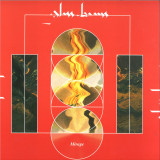
Berlin based producer CONCEPTUAL is back home after his Not an easy one Ep, again providing his own vision on techno, full of sonic landscapes, detail and intelligence.
Release starts with Approach slowly a brief atmospheric intro that sets the pace for what comes next in Il silenzio degli innocenti introducing the rhythmic pulse from the first bar with almost all elements into he equation, this is a minimalistic tool where percussive elements evolve in a subtle manner all over the arrangement.
No more excuses continues in the mood, adding more spice to the formula with reverberated details, growing mental sequences and the usual complex groove. Intense and mental all in one.
Sand fury follows, with atmospheres colliding with rugged components, evolving all together in a progressive arrangement, a superb tool to enhance your mixes properly.
Miles per hour introduces you into another sonic realm, using elastic synth lines, a wise reverb work and a sensation of infinite space combined with floor intensity. Again a proper intelligent missile for the adequate dancefloors out there.
Simone Scardino is one of those few creators that always pushes his sound one step further and we are super proud to have him onboard again.
Search:pol on
- Little League
- Oh Messy Life
- Puddle Splashers
- Flashpoint: Catheter
- In The Clear
- Yes, I Am Talking To You
- Basil's Knife
- Bluegrassish
- Planet Shhh
- The Sands've Turned Purple
- Precious
- Que Suerte!
Standard weight white vinyl remastered from the original tapes, restoring the original album on vinyl for the first time since 1995, including its original artwork. Includes download code.
In 1991, four kids from the suburbs of Chicago, IL formed Cap’n Jazz, arguably one of the most influential rock bands of the last 30 years. Those kids, brothers Tim & Mike Kinsella, Victor Villarreal, and Sam Zurick, were joined by Davey von Bohlen in 1994 and recorded their only full-length album before calling it quits - Burritos, Inspiration Point, Fork Balloon Sports, Cards in the Spokes, Automatic Biographies, Kites, Kung Fu, Trophies, Banana Peels We’ve Slipped on, and Egg Shells We’ve Tippy Toed Over - often referred to as Shmap’n Shmazz. Originally released on the Man With Gun label, the album quickly fell out of print after the band’s breakup, with the songs eventually making their way to the Analphabetapolothology compilation, released in 1998 via Jade Tree Records.
As a testament to this legendary debut, Polyvinyl is thrilled to announce the vinyl reissue of Shmap’n Shmazz, which has been remastered from the original tapes - restoring the original album on vinyl for the first time since 1995, including its original artwork. With the unmatched intensity heard in the opening track, “Little League,” coupled with eccentrically poetic lyrics, this iconic album has influenced countless artists since its release and unintentionally sparked a new genre. Pitchfork calls the album “a touchstone of Midwestern emo,” while Vulture placed “Little League” at #3 on their 100 Greatest Emo Songs of All Time list. Musician Devendra Banhart has also expressed his love for the band in a 2017 Joan of Arc documentary, describing Tim’s powerfully striking vocals like "going to the zoo on quaaludes, but all the other animals are on speed."
In addition to the band’s influential legacy, Cap’n Jazz was the catalyst to the formation of other notable bands featuring the original members, including American Football, Joan of Arc, The Promise Ring, Owls, Owen, Make Believe, Ghosts and Vodka and many more.
- Respite For The Tulpamancer
- Gajo
- Doll Park Doll Park
- Dissimulato
- Losing Faith
- Busy Walks Into The Memory Palace
- Paraphrase Of A Shadow
- Riddlecraft
- Gaolbreaker's Dream
- Tip The Ivy
,respite -- levity for the nameless ghost in crisis", aka ,r--L4nGc`, ist Colin Selfs drittes Album, nach dem gefeierten ,Siblings` (2018) und der dazugehörigen EP ,Orphans` (2019).In ,r--L4nGc" bewegt sich die Musik des in Berlin und New York lebenden Künstlers, Komponisten und Puppenspielers nahtlos zwischen schwebenden, unheimlichen Pop-Vocals, immaterieller experimenteller Elektronik und knallharten Dancefloor-Rhythmen. Strahlende, grenzenlose Schönheit und unentrinnbarer Terror sind ein und dasselbe. Unter Einbeziehung von Selfs langjähriger Praxis des Puppenmachens und auf der Grundlage eines bewussten Exils, das es dem Künstler ermöglichte, sich mit verlorenen Seelen auf anderen Existenzebenen zu unterhalten, ist ,rünL4nGc" eine integrierte Vision der eklektischen Praxis des Künstlers. Self singt in Polari, einer vergessenen Form des Slantwise-Englisch, das von queeren Subkulturen seit Jahrhunderten verwendet wird, um sich der Entdeckung zu entziehen, und performt für unsere verstorbenen Lehrer und Freunde und für den Rest von uns, die bereit sind, mit unheimlichen Geistern zu kommunizieren. Für Fans von Perfume Genius, Björk, Holly Herndon, Psychic TV, Oneohtrix Point Never, Lyra Pramuk, Bat For Lashes, SOPHIE, Talk Talk. "respite - levity for the nameless ghost in crisis", aka "r-nL4nGc", is Colin Self's third full length album, following the acclaimed "Siblings" (2018) and its companion EP "Orphans" (2019). In "r-L4nGc" the Berlin and New York based artist, composer, and puppeteer's music travels seamlessly from soaring, uncanny pop vocals to immaterial experimental electronics and hard-hitting dance floor rhythms. Radiant, limitless beauty and boundless, inescapable terror are one and the same. Incorporating Selfü's long standing practice of dollmaking, and drawing upon a conscious exile that allowed the artist to settle into conversation with lost souls on other planes of existence, "r-L4nGc" is an integrated vision of the artist's eclectic practice. Singing in Polari, a forgotten form of slantwise English used by queer subcultures for centuries to evade detection, Self performs for our departed teachers and friends, and for the rest of us, ready to commune with uncanny spirits. For fans of Perfume Genius, Björk, Holly Herndon, Psychic TV, Oneohtrix Point Never, Lyra Pramuk, Bat For Lashes, SOPHIE, Talk Talk.
[f] [CANTING]
- 1: Canto De Enramada
- 2: A Temple By The River
- 3: Exuviae
- 4: Burial Of The Patriarchs
- 5: Siphonophores
- 6: Despe?Aperros
- 7: O Rubor
- 8: Fiat Lux
- 9: Kwisatz Haderach
Coloured Vinyl[29,20 €]
Maud the moth, the solo project of Spanish-born and Scotland-based pianist, singer and songwriter Amaya Lopez-Carromero announces her new album, The Distaff, to be released via The Larvarium (digital +CD) and La Rubia Producciones (vinyl) Amaya has long used the mantle of Maud the moth as an alter-ego, a séance-like conduit to explore themes of rootlessness, identity and trauma. The Distaff in particular refers to the stick or spindle onto which wool or flax is wound for spinning, and an object which has historically been used across multiple cultures as a symbol wielded by the “virtuous woman”, an authoritarian ideal around which much of the trauma surrounding the feminine coalesces. The album takes the form of a sort of self reflective and surreal autobiography. It was in part inspired by the poem of the same name written by the Greek poet Erinna, as she mourns her friend's loss of individuality and agency in exchange for marriage - and therefore safety and acceptance in the eyes of society. The album exists in an ethereal but violent world of aesthetic overlaps where time stands still and fictional and reimagined folk sits at the table with Maud the moth’s usual sonic menagerie. It is the result of a lifetime of obsession with sound and music, where glimpses of musical genre offer insight into Amaya’s artistic interests and her participation in the underground European scene for many years, in bands such as healthyliving. Heavier, darker, and more exposed than any of her previous works it features some highly accomplished artists, such as Seb Rochford (Patti Smith, Polar Bear, Sons of Kemet, Pulled by magnets, etc.) on drums, Alison Chesley (Helen Money) on cello, Fay Guiffo on violin and Scott McLean (Ashenspire, healthyliving, Falloch) on guitar, saxophone and synthesiser. Maud the moth shares the video for "Siphonophores". About the track, Maud the moth says; I wrote "Siphonophores" on guitar, during the first lockdown, a period where I was kind of trapped between an almost empty flat in Edinburgh and Dresden. It was an incredibly harrowing time, but also one of hope and where important new things were being birthed. I felt incredibly sensitive to everything, almost like life was happening in slow motion. I´m not a confident guitarist since I am completely self-taught, but, probably because of this, I feel that this instrument allows me to focus on aspects of the songwriting that I normally overlook when writing on piano, and I think it was a necessary step for this song to exist. Something else which I've been really exploiting lately and features strongly in the album is the percussive capabilities of the piano, and in particular, of the sustain pedal when mic'd up. This can be heard very clearly at the beginning of "Siphonophores". Written and arranged by Amaya, with some contributions in the later role from the aforementioned collaborators, the album presents nine tracks originally written entirely on acoustic piano as accompanied voice pieces, in pure singer-songwriter fashion. The album was co-produced and recorded by Scott and Amaya in different studios across the UK between January and July of 2024, in a process that started shortly after the 2020 pandemic and finished alongside the album recordings in a detailed, organic and at times obsessive process aimed primarily at capturing the natural dynamics and expression of free performance. The Distaff was mixed in its entirety by Scott and mastered at Abbey Road by Alex Wharton (Radiohead, My Bloody Valentine, Aurora, Kathryn Joseph etc.) Despite being born of a very personal point of view, the album lacks a specific narrator and was conceived almost as a sonic trousseau, where the needle point, silks and other family heirlooms have been swapped for out-of-the-corner-of-the-eye memories of rural Spain by the vineyards, family disputes, old tales of wartime pains, generational breaches and finally the conflict of migration and estrangement. The songs paint dystopian pastoral scenes which evolve throughout the span of one fictional day outside of time and coherent locations and where imagination (often the only account surviving from traumatic events and gaslighting) has become indistinguishable from fact. The Distaff attempts to acknowledge past trauma, comprehend and process some of the more difficult aspects which have contributed to our darker self and offer closure and solace through creative catharsis.
Italian composer and saxophonist Laura Agnusdei returns with “Flowers Are Blooming In Antarctica” a career defining record that sees the artist diving into uncharted waters, a profound timeless meditation on our relationship with planet Earth, the eco-conflicts arising and the fascination with non human forms of life, backdropped to a vivid soundtrack of coral exotica, spiritual Jazz, fourth-world minimalism, tropical electronics, tribal futurism and contemporary elegance.
Every step of Laura Agnusdei’s path, from electroacoustic experimentation to her constant research based upon the acoustic dimension of wind instruments and their interaction with polymorphic electronic sounds, seems to have pivoted into a new sense of awareness, as if the mind and intellectual practice has finally caught up with the body, the heart and the soul, resulting in her most organic and transcendent work yet. “Flowers Are Blooming In Antarctica” is loosely inspired around a trifecta of pioneering ideas that explore unconventional reality: James Bridle’s ‘Ways Of Being’ with his radical story that mixes ecology, tech and intelligence; Luigi Serafini’s late-70s fantastical ‘Codex Seraphinianus’, an unparalleled collection of flora, fauna, anatomies metamorphosed into new fragile beings; J.G. Ballard’s climate-fiction foreshadowing sci-fi ruminations. These influences shift Agnusdei’s musical trajectory injecting doses of terrestrial malaise, the earthy sub-saharan ‘Ittiolalia’ with its wah-wah filtered sax and trance inducing groove; the rubbery playfulness of ‘Oasi Bar’; the gentle eco-system of ‘P.P.R.N’ reminiscent of Herbie Hancock’s innovative synthesis of funk, space and synthesizers; the kaleidoscopic northern lights of ‘Emperor Penguin Lullaby’, where south-east Asian echoes reach icy shores; the Jon Hassell hyper-ambience of ‘Cuttlefish REM Phase’; the post-apocalyptic march of ‘The Drowned World, a jazz standard for an artificial civilization on the brink of self-destruction. Nothing feels out of place and it’s no coincidence that one of the most powerful messages on the record is delivered on centerpiece ‘Are We Dinos?’ via an interview conducted with two preschoolers. Radical optimism or sonic liberation?
Laura Agnusdei’s tenor sax cuts deep all across “Flowers Are Blooming In Antarctica”, a laser baton raised up to the clouds, a conductor orchestrating devotional soundscapes for a three-eyed dolphin, guiding us through prismatic pastures and acidic oceans. Her tropicalized realm is pin-pointed with Miles-like sheer clarity, a bristling nakedness on the verge of exploding at any time, creating an album where ascension becomes the unifying code.
Alternative Tentacles Records is thrilled to announce the first-ever vinyl release of two long-awaited tracks, previously available only in digital format. This highly anticipated split 7" features Jello Biafra & The Guantanamo School of Medicine and The November 3, with two explosive songs: "Blunder Blubber" and "IFAR." "Blunder Blubber," originally released as a digital single to mark Rush Limbaugh's passing and was recorded during the TEA PARTY REVENGE PORN recording sessions, highlights everything iconic about Jello Biafra & The Guantanamo School of Medicine. The song critiques the rise of right-wing extremism, tracing its roots back to Rush Limbaugh's influence and the repeal of the Fairness Doctrine under President Reagan in 1987—a policy change that allowed one-sided political commentary on public airwaves. Biafra argues that this set the stage for the toxic media landscape, fueling figures like Limbaugh and the current wave of ""MAGA"" rhetoric. Reflecting on the political climate, Biafra notes, "I wrote the song back when Clinton was president, seeing the writing on the wall. I was hoping never to use it, but we had no choice but to update and perform it now." On the flip side, The November 3 delivers "IFAR," a fiery debut track that first dropped during the 2020 Republican National Convention. Blending punk rock energy with raw political outrage, lead vocalist Billie O' Rights unleashes a bold, biting rant, backed by Tom Pain’s searing guitars. Pat Triotte and Justice Ferrall add their creative touches to this electrifying anthem, capturing the chaotic spirit of the times. "IFAR," is a raucous, tongue-in-cheek commentary on partisan divides, clocking in at just two minutes of catchy, irreverent fun. Interestingly, the song was reportedly conceived during a mundane moment: Pat Triotte was baking blueberry muffins one Saturday afternoon when the idea hit, and within hours, the track was recorded— and the muffins were supposedly amazing. Despite the humorous and often provocative tone of both songs, the core message of this release is clear: a call to action to vote. With this limited 7" vinyl, Alternative Tentacles Records urges everyone to make their voices heard in the 2024 election and beyond! Don't forget to VOTE!
A special ‘Submerge” 12” EP featuring a bunch of reworks of this pivotal track from Apta's forthcoming ‘The Pool’ album on Castles in Space.
Kicking things off, Apta's own rework of the original sees the shadowy textures and droning wall-of-sound backdrop turned into a static-strewn dreamland of a piece, underpinned by a flickering guitar riff, cracked snare drums and fuzzed-out Odyssey strokes before launching into the euphoric half-time vocal refrain.
The follow-up sees Clay Pipe boss, illustrator and musician step into her Hardy Tree guise for a beautifully hypnotic waft of wistful folk-tinged electronics and shimmering ambient textures. It's warmly nostalgic, and packed full of all the feel of a lovely Clay Pipe release.
Following on from that, modular wizard Polypores takes pieces of the original and stretches them into an organic swell of texture and movement, warping the low basses and flickering modular plinks (and / or plonks) into a beautiful, undulating wall.
Flip over and It's none other than the brilliant Pye Corner Audio, providing an organically blooming suite of saturated percussion and woozy drifting oscillators, in peak PCA fashion. There are few artists that can do as much as with little as Martin Jenkins can, and hearing his audio sunshine underpinning the vocal line is breathtaking.
It's good to get the ears nice and soothed too before the aural assault and hypnotic spirit-cleansing heft of the legendary Gnod. Dubby throbbing bass and cavernous reverb tear the original into shards and piece it together as a churning, industrial powerhouse before shooting the rest into the endless reaches of space.
Closing things out on a space theme is the ideal way to do things too, with Field Lines Cartographer's remix taking things waaay into the outer reaches. Grounding bass churns and stellar synth sweeps float below the modulated vocal line, resulting in a perfectly crafted drone, rich in melody but untethered to the earth.
- A1: Diamond Jubilee
- A2: Glitz
- A3: Baby Blue
- A4: Dreams Of You
- A5: All I Want Is You
- B1: Dallas
- B2: Olive Drab
- B3: Always Dreaming
- B4: Wild One
- B5: Flesh And Blood
- B6: Le Machiniste Fantome
- C1: Kingdom Come
- C2: Demon Bitch
- C3: I Have My Doubts
- C4: Til Polarity's End
- C5: Realistik Heaven
- D1: Stone Faces
- D2: Gayblevision
- D3: Dracula
- D4: Lockstepp
- D5: Government Cheque
- E1: Deepest Blue
- E2: To Heal This Wounded Heart
- E3: Golden Microphone
- D4: Crime Of Passion
- D5: 24/7 Heaven
- E4: If You Hear Me Crying
- E5: Darling Of The Diskoteque
- E6: Don't Tell Me I'm Wrong
- D1: What's It Going To Take
- D2: Wild Rose
- D3: Durham City Limit
Superior Viaduct and our new artist label, W.25TH, are proud to continue to be the home for Cindy Lee with the physical release of the celebrated album Diamond Jubilee. Universally praised, shortlisted for the 2024 Polaris Music Prize, and already hailed by Pitchfork as the 3rd best album of the 2020s, anticipation and conversation around the record has been high.
Cindy Lee is the performance and songwriting vehicle of Patrick Flegel (who previously fronted influential indie group Women). Over several albums, Flegel has combined delicate melodies and sheer beauty with moments of experimentation. With Diamond Jubilee, Flegel’s undeniable songcraft comes to the foreground, embracing a more instant connection and accessibility. Timeless tales of love and longing, surrounded by sticky hooks, take the listener on an unforgettable journey. Diamond Jubilee was written and recorded over several years by Patrick Flegel in Toronto, Durham, Calgary and Montreal at Realis- tik Studios. The album was mixed by Steven Lind, who also contrib- utes to several tracks and co-wrote “Baby Blue,” and was mastered by Joshua Stevenson.
Triple LP on black vinyl comes with 24” x 36” poster.
Two records came out in 1988 that forever changed the perception of "experimental" or "serious" music produced in Portugal. These were "Plux Quba" by Nuno Canavarro and "Música de Baixa Fidelidade" by Tózé (António) Ferreira. Both were released by the same label - Ama Romanta -, an influential independent imprint closely linked to avantgarde pop band Pop Dell'Arte. Because those records appeared in what could be perceived as an "alternative pop" framework, they rescued this difficult music from Academia. It helps that Canavarro played in a successful new wave pop band (Street Kids) during the period 1980-83. By association, being a friend since 1976, António was in close contact with many of the musicians and bands that were part of the equally celebrated and detested Portuguese Rock Boom (roughly 79-82).
He was not a musician then but through his friendship with Canavarro, who had the means to acquire electronic equipment, António became involved with that equipment and shared Canavarro's passion for experimentation and curiosity for knowledge. They tried to get hold of as many technical magazines as possible and learn while testing ideas. In 1983, Street Kids were about to break up, young lives drafted into the Army and maybe, in Canavarro's case, a whole new passion for challenging music similar to his bandmate Nuno Rebelo, by then in the process of discovering a wide range of "other" music mainly through Jorge Lima Barreto. Barreto, who had started Telectu with Vítor Rua, possessed a huge book and record collection and, like Rua before them, Canavarro, Rebelo and Ferreira became fascinated by the pool of knowledge they now had access to by frequenting Barreto's house in Lisbon. He was roughly a decade older, had published several books and other writings throughout the 1970s, cultivated an anarchic stance and a penchant for cultural indoctrination. Rebelo was the first to be introduced via his contact with Rua (who had invited him to play in his other band GNR).
Overwhelmed, he felt the need to share his enthusiasm with friends and eventually took a few to the house in true pilgrimage fashion. To see the Light. Among the few he led there was even João Peste, founder of Ama Romanta. Canavarro and Ferreira preceded him.
Ferreira recalls an exciting learning process added to his experiments with Canavarro's array of synths such as the Korg Ms 20, Korg polysix, ARP Axxe, Roland SH-01, the Ensoniq Mirage sampler... He read in a magazine article about someone who had studied at the Institute of Sonology (then in Utrecht, Netherlands) and went there during a vacation trip in the Summer of 1983. He became excited by the prospect of studying at the Institute but money was a problem. Canavarro, on the other hand, was admitted there in the following year. Back in Portugal, Ferreira eventually abandoned his Chemical Engineering studies in Lisbon's Technical Institute in favour of a more focused music practice. He collaborated with Telectu during 1984 and 85 as a sort of technical engineer, implementing some recording solutions and background tapes and went to work at a thermoelectric power plant in Sines, hoping to make enough money to fund his musical studies. He did and proceeded with the paperwork for admission at the Institute of Sonology, now based in The Hague. António studied there in 1986-87 and the present album includes two compositions developed at the Institute: "More Adult Music" and "This Is Music, As It Was Expected", both featuring the voice of Rodney Waschka II. Among other activities and talents, Rodney is an expert in computer music and to António his voice sounded similar to Robert Ashley's, whose work he admired.
What happened at the Institute was a systematization of António's self-taught practice. Computer software, Musique Concrète, noise and silence, organisation of abstract ideas and sounds. The original notes on the back sleeve of the LP give some indication of process and thinking, but a more detailed account was given by António in the liner notes of the CD reissue in 2002, which are also included in this 2025 LP reissue.
The music sounds deep and detailed, despite the fact of António calling it low-fi ("Baixa Fidelidade"). It flows like an improvised performance where several musicians might be responding to each other, respectful of their mutual space. Drama occurs, as a natural emotional connection is sought by the listener. Piano, bells, drone, processed voices, even the clear narrative of Rodney Waschka II, contribute to create a sort of alternative perceptual reality. The sounds are almost tangible, more a part of the physical world than ethereal manifestations and thus it would not be correct to invoke "ambient music" as a selling point. But although "physical" and distinct, this music is still alien, more so in Portugal's 1988 environment. In March, helped by Canavarro, António set up a home studio and there he recorded the remaining material for this album: "Algumas Pessoas Olharam O Sul E Viram Deserto", "Um Som, Seguido De Uma Cena Negra E Malva" and "O Verão Nasceu Da Paixão De 1921".
"Música de Baixa Fidelidade" stands not only as a proof of great resilience but as one of those magnificent works of art coming from someone who balanced technical inclination and emotional sensibility. Because of that, Tózé Ferreira is able to decode the phantom world of sound for anyone who cares to experience the sensation of inhabiting a version of the Future. First ever vinyl reissue, reproduction of the original artwork with an additional insert. Made in collaboration with the artist and the support of Paulo Menezes (Plancton Music), who provided valuable assistance. Remastered by Taylor Deupree.
- A1: Pride
- A2: Bloom
- A3: My Love
- A4: Nearness Of You
- A5: Upstate
- B1: Wither
- B2: Passerby
- B3: Exit Wounds
- B4: It Could Be Simple
Rising indie soul artist Sevens announces the release of his highly anticipated debut album, Sincerely, Sevens, on February 21, 2025. At just 24 years old, Sevens emerges as a compelling voice in the contemporary soul scene, blending indie soul, neo-soul, and jazz into a collection of sincere, heartfelt songs.
With a distinct baritone voice and a gift for storytelling, Sevens explores themes of love, growth, and introspection throughout the 9-track record. His philosophy is simple: less is more. Crafted over a span of three years, much of the album was created in Sevens' bedroom, showcasing his skills not only as a songwriter and vocalist but also as a multi-instrumentalist and producer.
Sincerely, Sevens captures the artist in his purest form—a deeply personal work that touches the soul. From sparse, intimate arrangements to warm, groove-infused instrumentation, the record embraces vulnerability while exuding timeless charm.
The album features contributions from trusted collaborators: Boris Van Overschee (co-producer / Delv!s, Portland) Willem Ardui (additional production / Blackwave.) and David Poltrock (additional keys)
Tobie Speleman expertly handled the final mix, ensuring every note resonated with clarity and purpose.
Reflecting on the album, Sevens shares: “I wanted to feel more with less. I wanted to evoke, I wanted to touch. Parts of me I’ve never gone. It is honest, it is true. It is me.”
With Sincerely, Sevens, the young artist solidifies his position as one to watch—an emerging voice with both depth and authenticity.
Amongst the hundreds of recordings issued by Sun Ra and his Arkestra, under their various guises, the majority were recorded in concert or in makeshift studios such as their early 1960s set-up at NYC's Choreographer's Workshop. Beyond those, roughly 22 albums were recorded at Variety Recording Studio in New York's Times Square. However, on August 25, 1986, Sun Ra and cohorts entered Mission Control, a state-of-the-art 24-track studio north of Boston, which was teeming with electronic keyboards and otherworldly sound generators. Nestled within that arsenal was a brand-new digital ultra keyboard — the Prophet VS ("Vector Synthesizer").
Of all the keyboards Ra played throughout his half-century career, the Prophet was one of the most sophisticated. There's no evidence that he had played either of the instrument's earlier incarnations, the Sequential Circuits Prophet-5 and Prophet-10. Created using microprocessors, a then-new technological advance, under the auspices of engineer Dave Smith in 1978, the Prophet-5 revolutionized electronic music as the first polyphonic and, most importantly, programmable synthesizer.
Ra was intrigued by the Prophet (surely by the instrument as well as by the name). Recorded during a single day, it's about time that these once lost performances have now been found.
It was a joy and a thrill to be sitting at the console hearing this music for the first time, especially with my fingers on the faders and knobs of the mixing desk. We watched the oxide fly off the 2" tapes during playback, making this our one chance to digitize before they metamorphosed into dust. Welcome to the new Sun Ra album....35+ years after it was recorded. The Omniverse has expanded once again.
Linea Aspera is the London duo of Ryan Ambridge (Synths/Programming) and Alison Lewis (Vocals/Synths). They began the project in November 2011, technically drawing inspiration from electronic music from the early 1980s. Within the duo, Alison writes and performs all vocal elements, while Ryan is responsible for the writing and performing of the electronics, as well as recording and mixing of the final recordings. For their debut album they utilized small, simple analog synthesizer set up: Roland SH-09, Roland Juno 6, Vermona DRM MKiii, Korg Poly 800 and Analogue Solutions Semblance. Linea Aspera's sound includes clear influences from early electronic body music, classic synth-pop and, in some instances, industrial and noise. Lyrically the band incorporates the sciences of osteology, neuroscience, and anthropology weaving a new medical language around themes of desire, despair and renewal. Linea Aspera serve up an icebox of dark doom riding on Alison's powerful vocals with a soft but sharp touch.
- Time
- Interaction
- Moments
- Choices
- Kinesis
- Ta Matoklada Sou Lampoun
BLUE MARBLED VINYL[36,35 €]
180 Gram Vinyl Melina Paxinos is a composer and saxophonist (soprano and alto) and dedicates her album "Time", to the now state of time, because time is the most precious thing we have. Here, modern Jazz meets Mediterranean flair, creating a small journey through time with the help of her expressive melodies. The band Melina Paxinos Quartet plays together since 2018 and consists of Melina Paxinos (bandleader, sax, comp.), Yiannis Papadopoulos (piano), Ntinos Manos (bass) and Dimitris Klonis (drums). As a guest musician this time she invited Andreas Polyzogopoulos, who with his lyrical playing, accompanies the band with his trumpet and flugelhorn. The last song on her album "Ta Matoklada sou Lampoun" is a composition by one of the most famous Greek rebetiko musicians Markos Vamvakaris (1905-1972), which Melina rearranged for her album, thus bringing the past, that is the cultural heritage, into the present.
180g, blue marbled vinyl. Melina Paxinos is a composer and saxophonist (soprano and alto) and dedicates her album "Time", to the now state of time, because time is the most precious thing we have. Here, modern Jazz meets Mediterranean flair, creating a small journey through time with the help of her expressive melodies. The band Melina Paxinos Quartet plays together since 2018 and consists of Melina Paxinos (bandleader, sax, comp.), Yiannis Papadopoulos (piano), Ntinos Manos (bass) and Dimitris Klonis (drums). As a guest musician this time she invited Andreas Polyzogopoulos, who with his lyrical playing, accompanies the band with his trumpet and flugelhorn. The last song on her album "Ta Matoklada sou Lampoun" is a composition by one of the most famous Greek rebetiko musicians Markos Vamvakaris (1905-1972), which Melina rearranged for her album, thus bringing the past, that is the cultural heritage, into the present.
- 1: Ketchaoua
- 2: Pan African Festival
- 3: Brotherhood
- 4: Speak With Your Echo (And Call This Dialogue)
After appearing with Archie Shepp at the landmark Pan-African Cultural festival in Algiers in 1969, African-American trumpeter-cornetist Clifford Thornton recorded a set of his own compositions in Paris later that year. The result was Ketchaoua, an important political and spiritual as well as musical statement that reflected the inspiration that he took from Islam. Indeed, the title of the album refers to the awe-inspiring mosque in Algiers.
Clifford Thornton’s superb band comprised his compatriots, saxophonists Archie Shepp and Arthur Jones, drummer Sunny Murray, trombonist Grachan Moncur III, pianist Dave Burrell, and bassist Earl Freeman, as well as French bassist Beb Guérin. Together they brought energy and ingenuity to the leader’s compositions, which were characterized by vivid atmospheres, exploratory, mysterious sounds and haunting themes. And the song titles conveyed an important social and cultural message. Pieces such as ‘Brotherhood’ pointed to the sense of unity and kinship that African-American artists felt with the citizens they encountered on their journey to North Africa and Europe.
This newly remastered deluxe edition of Ketchaoua provides an opportunity to hear one of the major entries in Clifford Thornton’s relatively small yet nonetheless highly impressive discography. It is an album that marks him out as a figure in the avant- garde movement of the late 60s and early 70s who deserves far wider recognition.
Vinyl is 180g and contains downloadcode
Wrocław-Toruń noise rock band founded by Szymon Szwarc (swrcfx, Jesień) and Damian Kowalski (SKI). They are currently collaborating with Cezary Rosiński (Młyn) and Krzysztof Rogalski (Pchełki). The band has performed in clubs and at festivals in Poland, Germany, the Czech Republic, Slovakia, Austria, Lithuania, Latvia, and Estonia. So far, two full-length albums by RZWD have been released: POMPY (Fonoradar Records 2020) and GOLD (Fonoradar Records 2022).
Album GAPS Recorded in November 2023, is the result of two years of work that merges classic POST-PUNK GUIDE with a rich electronic influence. On GAPS, RZWD aims to craft DANCE NOISE CLUB MUSIC on their own terms, pushing the limits of what a LIVE BAND can be in achieving this.
Most of the tracks evolved during RZWD's concerts in countries like Lithuania, the Czech Republic, Germany, and Estonia. These experiences and ideas were shaped into the album between November 2023 and May 2024. Live recordings in Szczecin were done by Adam Sołtysiak, while additional recordings and production were handled in Toruń under the supervision of swrcfx.
The core idea behind GAPS was to use developed themes as a starting point for further variations and exploration within DANCE NOISE CLUB MUSIC. This time, the instrumentation includes bass and an ever-expanding, mutating layer of modulation. Therefore, the album features four brand new compositions alongside four remixes of tracks from previous albums.
The album also features guest appearances by: DANIELIUS PANCEROVAS from the Lithuanian band KANALIZACJIA, adding a saxophone touch to the track DIESEL, and KRZYSZTOF FREEZE OSTROWSKI - a renowned Polish electronic musician and producer, bringing a new sonic perspective to EURO TRACK from the DMO EP.
Among the multidimensional concepts blending environments, genres, styles, and techniques found on GAPS, the pursuit of synthesizing acoustic and electronic sounds stands out. RZWD creates a space where the boundaries between these domains blur and lose their significance.
The result is a groove-driven and noisy mix of dance music styles such as RAVE, TECHNO, HOUSE, and FOOTWORK, played beyond rigid tempo measurements and DAW limitations, relying on natural skills and intuition. It's a soundtrack that works best as a backdrop to movement, whether coordinated or not.
RZWD:
SKI - DRUMS, ELECTRONICS
KRZYSZTOF ROGALSKI - BASS GUITAR
CEZARY ROSIŃSKI - DUBS, SYNTH, MOD. ELECTRONICS
swrcfx - DUBS, SYNTH, GUITAR
ALBUM GUESTS:
DANIELIUS PANCEROVAS - SAXOPHONE in DIESEL V3
KRZYSZTOF FREEZE OSTROWSKI - ELECTRONICS in EURO TRACK V2
- A1: They Will Shade Us With Our Wings (3 09)
- A2: Life Study (I) (2 36)
- A3: A Colour Field (Holocene) (3 26)
- A4: Life Study (Ii) (2 24)
- B1: And Some Will Fall (1 50)
- B2: Life Study (Iii) (1 56)
- B3: The Poetry Of Earth (Geophony) (1 56)
- B4: Life Study (Iv) (2 13)
- B5: Only Silent Words (4 55)
- B6: Life Study (V) (3 24)
- C1: Late & Soon (1 53)
- C2: Life Study (Vi) (1 36)
- C3: Andante (3 43)
- C4: Life Study (Vii) (3 04)
- C5: A Time Mirror (Biophony) (2 44)
- C6: Life Study (Viii) (2 27)
- D1: Love Song (After Je) (2 59)
- D2: Life Study (Ix) (2 40)
- D3: Movement, Before All Flowers (5 07)
Max Richter, der gefeierte Komponist, der dafür bekannt ist, traditionelle Orchestrierung nahtlos mit modernen elektronischen Elementen zu verbinden, bereitet sich darauf vor, sein mit Spannung erwartetes Album
zu veröffentlichen. Dieses Album markiert eine bedeutende Entwicklung in Richters musikalischem Werdegang, da er sich intensiver mit Themen wie Optimismus und der Polarität des Lebens und menschlicher
Emotionen auseinandersetzt, begleitet von einer tieferen Erkundung elektronischer Klänge und Feldaufnahmen.
Mit seiner jahrzehntelangen Karriere und prägenden Projekten wie SLEEP oder Vivaldi Recomposed kann
Max Richters Einfluss auf Musik und Kultur gar nicht hoch genug eingeschätzt werden. Seine unvergleichliche Fähigkeit, tiefgreifende menschliche Erfahrungen in musikalische Kompositionen zu übersetzen, hat
ihm weltweit eine treue Anhängerschaft eingebracht.
Seither begeisterte Max Richter weltweit ein Millionenpublikum und berührte damit nicht nur bewährte
Kenner, sondern auch völlig neue Generationen von Hörern, sei es in Filmen wie Ad Astra, oder Serien, wie
zuletzt in den Netflix-Erfolgsformaten Bridgerton oder The Crown.
Wie lässt sich eine Ahnung von Schönheit finden inmitten von Angst und Grausamkeit. Wie lässt sich all das Unsagbare hörbar machen, aber auch Wut, Zuversicht und unbedingter Lebenswille. Mit seinem dritten Album "Temple Of Hope_Ç hat der iranische Komponist Saba Alizadeh eine bewegende Hommage an die Menschen seiner Heimat geschaffen. Die Geschehnisse während der "Woman Life Freedom_Ç-Bewegung, aber auch die Kämpfe der Bevölkerung in den Jahren zuvor setzt er in eindringliche electro-akustische Musik um. Intensiviert durch Gesang und Lyrik von Andreas Spechtl, Sanam Maroufkhani und Leila Rahimi. In seinen Kompositionen kombiniert Saba Alizadeh das traditionelle Saiteninstrument Kamanche und Streicher mit modularem Synthesizer und No-Input-Mixer. So entsteht ein spannungsgeladener Sound, der vor allem die Sprachlosigkeit und Zerrissenheit zwischen Leid, Aufbegehren und Hoffnung auslotet. Historische Radio-Sequenzen verwurzeln seine Stücke in der Kultur und Geschichte des Landes. Die starke Verfremdung und Dekonstruktion dieser akustischen Elemente verweist wiederum auf das Unbegreifliche. Auf existentielle Erschütterungen und Auflösungsprozesse. In seinem "Temple Of Hope_Ç versammeln sich Mut und Zuversicht. Denn Saba Alizadehs vielschichtige Stücke mögen zwar oftmals wie ein Widerhall des Entsetzens wirken. Doch zugleich entfalten sie eine eigene erschütternde Schönheit.
Choke Enough, das Studiodebüt des französischen Künstlers Oklou, ist eine geduldige, meisterhafte Umsetzung von ephermeralsoftclub-Elektronik und texturär verführerischem Indie-Pop. EigenschaftenBladee,
Untermalungen, mit Produktionen von Danny L Harle, A. G. Cook, Nick León und anderen. Ihr von der
Kritik gefeiertes Mixtape Galore führte sie auf Tourneen mit Caroline Polachek, Oneohtrix Point Never und
Sampha, bevor sie vom NME als ”Vorgeschmack auf die Zukunft der Popmusik” bezeichnet wurde.