Lost soul phenomenon Lewis Taylor's Numb finally arrives on double vinyl! One of UK soul’s most fascinating artists, most enigmatic figures and most under-appreciated talents, Andrew Lewis Taylor is a prodigious multi-instrumentalist and eclectic polymath. He enjoys a fiercely loyal following which, over the years, has included celebrity champions like Bowie, Elton and D'Angelo. Numb is Taylor's sixth album, initially released on his own label Slow Reality (an anagram of his name) and licensed to Be With for this long-awaited physical edition. It captures Taylor's wholly unique, intoxicating take on lush, late-night psychedelic soul music.
Lewis wrote and recorded these 10 brand new tracks after a 17 year break from making music, although the album came together over a two-year period. The years away have done nothing to dull Taylor's unique musical vision. He still astounds. The lyrical themes, however, have shifted. Understandably, more than a decade and a half of soul searching and unflinching self-examination cannot fail to influence this most honest of songwriters, and boy does it show. Numb marks a return to the darker, more mysterious side of his output: "Brian Wilson-channels-Smokey Robinson atmospheres", as Mojo put it recently.
After playing a rapturously received gig at the Bowery Ballroom in NYC in 2006, Lewis unceremoniously walked away from music and disappeared completely. An interview in 2016 shed light on some of the reasons for Taylor’s withdrawal from the business, but there was no hint of a return anytime soon. Then in June 2021, news emerged out of the blue that he was readying new music alongside Sabina Smyth with whom he had worked first time around.
On Numb, Lewis deftly balances stark, soul-bearing lyrics with moody mid-tempo pop-soul sheen. He deals candidly with depression, mental turmoil, even thoughts of suicide - clearly more personal than Taylor's earlier songs. The music is rich, warm and layered, with infectious melodies and hooks that stick with you. A true grower of an LP, it really does reward repeated listens. As Jim Irvin in Mojo reflected, "despite the depths these plumb, it's a curiously uplifting experience, unfurling like a concept album about life's challenges with an optimistic beauty at its heart."
Triumphant dubwise horns ring out yet, almost instantly, “Final Hour” takes on a dark, downbeat vibe. With lyrics that confront (and, seemingly, confound) death head-on, Lewis ensures the groove is still there, the beats still swing and your head still nods, strings glissade. Woven around delicate yet insistent piano and subtle strings over a killer bassline, the title track “Numb” is a good example of the lyrical themes throughout the album. As Taylor reflects, "So removed I feel no pain / And for all I know I could be having the time of my life" with a coda that feels very much in conversation with Brian Wilson's finest harmonies. "Feels So Good" is sophisticated 90s-sounding soul of the highest order. The music and vocals feel simultaneously optimistic and despondent. Downlifting. A neat trick, and one Lewis has been so adept at over the years. "Apathy" is a mini-epic, a symphonic-soul gem which builds and glides and, eventually, soars. “Worried Mind" is another slow-builder, creeping out the gate in a sketchy, discordant fashion before climbing to half-crescendo but never quite breaking free of its disorientating restraint.
The brighter "Please" presents a more hopeful mood, with the refrain "I still believe" ringing out as Lewis harmonises with himself. "Brave Heart" quietly struts from step one, as Lewis's falsetto swaggers over a downtempo backdrop with ace echoey drums, beautiful strings and serene electric guitar. Closing out Side C, "Is It Cool" answers its own (non-) question with a spellbinding five and a half minutes of swoonsome deep soul that oscillates between a restrained, barely-there backdrop and a lushly full musical accompaniment of acoustic and electric guitar and organ over bass and slick drums. The penultimate track "Nearer" is a magical, soul-stirring ballad in which Lewis sings of reaching a sweet salvation and achieving a peace of mind. If the hairs on the back of your neck aren't standing up by the midway point, you might need to check your pulse. Album closer and true tear-jerker "Being Broken" places Lewis's gorgeous voice high in the mix and the wordless falsetto and melodies invite you to ponder what Pet Sounds might sound like if it were refashioned as a dubby 21st Century electronic soul album. Astonishing.
Simon Francis’s vinyl mastering spreads out the ten tracks over a double LP so, as ever, nothing is compromised. And as usual, the records have been cut by Cicely Balston at Air Studios and pressed at Record Industry. Turn it up and let the Lewis Taylor sound envelop you.
Cerca:pol
Die Detroiter Post-Punk-Band Protomartyr kündigt heute ihr neues Album "Formal Growth In The Desert" für den 2. Juni bei Domino an und präsentiert die erste Single 'Make Way'.
Protomartyr, bestehend aus dem Sänger Joe Casey, dem Gitarristen Greg Ahee, dem Schlagzeuger Alex Leonard und dem Bassisten Scott Davidson, sind zu einem Synonym für bissige, impressionistische Assemblagen aus Politik und Poesie, Wahrem und Schrägem geworden.
Casey beschreibt das zugrundeliegende Thema von "Formal Growth In The Desert" als ein 12-Song-Testament über das "Weitermachen mit dem Leben", selbst wenn es sich unmöglich hart anfühlt. Die stimmungsvolle Lead-Single/Video "Make Way" ist gleichzeitig der Eröffnungstrack von "Formal Growth In The Desert", in dem sich Casey zu Beginn des Albums direkt mit der Tragödie auseinandersetzt: “Welcome to the haunted earth // The living after life // Where we chose to forget // the years of the Hungry Knife.”
Das begleitende Video, bei dem Trevor Naud Regie führte, ist eine beeindruckende filmische Meisterleistung. Über das Video sagt Naud: "Es gibt eine bewusste Verbindungslinie zwischen den Videos zu "Make Way" und 2020's "Worm In Heaven". Die beiden Songs fühlen sich zusammengehörig an. Deshalb wollte ich, dass die Videos sich so anfühlen, als würden sie in der gleichen Welt existieren. Es gibt verschiedene Ebenen von Experimenten, die alle in einer geschlossenen Umgebung stattfinden. Wir wissen nicht, was mit der Welt da draußen passiert ist, aber es gibt einen Unterton, dass irgendwas nicht stimmt."
Milestone album from n°1 Dancehall artist in Europe available for the first time ever on vinyl. Includes the monster hits "Bad" and "World Whin" as bonus tracks.
Blaiz Fayah currently lives between Paris and London and comes from a family of musicians. Songwriter- singer-composer, he made a name for himself thanks to the Dancehall and Moombahton djs who selected him for their best mixes around the world.
After making the world dance with his track « Bad » and its millions of streams, Blaiz Fayah is the dancehall hit maker of the moment.
Blaiz Fayah is the most exciting dancehall artist of his generation !
The French artist has been very successful all over the world and this has brought him to the South American, Caribbean and European dancehall scenes.
Independent and unstoppable, his freshness and talent have pushed him to the top with several million streams per month thanks to hits such as : Best Gyal, Bubble & Whine, Bounce it, Call The Police... With millions of views on TikTok, his hit "Bad" (with Tribal Kush) has gone viral, accumulating thousands of videos.
Independant and unstoppable, his freshness and talent have pushed him to the top with several million streams per month and a string of hits...
Blaiz Fayah, with his charisma and accompanied by his dancers on stage, brings to each of his live performances, a crazy energy and happiness to the public.
'Yesterday Today 1999 - 2003' ist die Fortsetzung in der Reihe von Re-Releases der Studioalben dieser Brit Pop-Institution als umfangreiche LP-Boxsets. Hier nun enthalten: 'One From The Modern', das vierte Album der Band. Ein nachdenklicherer, gefühlvollerer und pastoraler Sound sowie eine politischere Botschaft, wenn auch mit einer psychedelischen Note, die an die Byrds, Small Faces oder späteren Beatles erinnert. Das fünfte Album 'Mechanical Wonder' (erstmalig seit 2001 wieder als LP erhältlich) kommt inkl. Tracks wie 'Up On The Downside', 'If I Gave You My Hear' und 'Mechanical Wonder', und ist eine Fortsetzung des beliebten Ocean Color Scene-Sounds. Den Abschluss bildet 'North Atlantic Drift', das zum ersten Mal seit seiner Erstveröffentlichung auch auf Vinyl erscheint. Alle drei enthaltenen Alben wurden in voller Abstimmung mit der Band von Phil Kinrade bei Alchemy Mastering gemastert. Sie erscheinen nun in den jeweiligen Farben Grün, Gelb und Rot in dieser formschönen und optisch ansprechenden Box.
- A1: (Oo) (L(Oo)Ping Version)
- A2: Ghosts (L(Oo)Ping Version)
- A3: Room With A View (L(Oo)Ping Version)
- A4: Tikkoun (L(Oo)Ping Version)
- A5: Vood(Oo) (L(Oo)Ping Version)
- B1: Les Olympiades - Opening (L(Oo)Ping Version)
- B2: Les Olympiades - Emilie Dance (L(Oo)Ping Version)
- B3: Bora Vocal (L(Oo)Ping Version)
- B4: Motion (L(Oo)Ping Version)
L(oo)ping is a story that began with great trepidation and an initial polite refusal and may have never have been told. Even for Rone, who's used to making bold moves, the orchestra had always seemed a step too far.
'Motion' laid the groundwork for L(oo)ping, a journey in which Romain Allender (who worked The Grand Budapest Hotel by Wes Anderson and The Shape of Water by Guillermo del Toro amongst others) acted as a creative translator for Rone. Leafing through Rone's repertoire he selected the tracks that would better lend themselves for symphonic reinterpretations.
The eleven pieces chosen each mark a different stage in Rone's trajectory, from one of his first-ever productions, 'Bora', born in a studio flat in Paris in 2008 when he was still a student, all the way to the soundtrack composed for the 2022 short-film, 'Ghosts', written by Spike Jonze, directed and performed by (LA)HORDE. L(oo)ping isn't just an orchestral re-telling of Rone's work, however. New life has been breathed into the music through Allender's arrangements as well as Rone's own interaction with the Orchestre National de Lyon and conductor Dirk Brossé.
There's a rich dramaturgy to the music, but not once does the acoustic trample on the electronic nor vice-versa. Rather, L(oo)ping manages to achieve an elegant and playful tight-rope balance between both voices that keeps listeners hooked on suspense and surprise.
- A1: Herbie Mann With The Wessel Ilcken Combo - Afro Blues
- A2: The Diamond Five - Amsterdam Blues
- A3: Kwartet Leo Meyer - So Why
- A4: The Jacobs Brothers - Two Brothers
- A5: Kwartet Martin Verlinden - Four On Six
- B1: The Rhythme All Stars - Relaxin' With Rhythme
- B2: Martien Beenen And The Orchestra Featuring Sandy Fort - Golden Earrings
- B3: Tony Vos Quartet - Lady Elisabeth
- B4: Herman Schoonderwalt - Theme From The Movie 'Mensen Van Morgen
- C1: The Diamond Five - Les Halles
- C2: The Red And Brown Brothers - Blues For Eddy
- C3: Frans Elsen Quintet - Sem
- C4: Leddy Wessel With Jack Van Poll And His Tree-Oh - Sing Sing Sing
- C5: Boy's Big Band - Blues Minor
- D1: The Frans Wieringa Trio Featuring Eduard Ninck Blok - Work Song
- D2: Rita Reys And Oliver Nelson - Wives And Lovers
- D3: Herman Schoonderwalt Septet - My Plea
- D4: Trio Tony Vos - Comin' Home Baby
Limited Vinyl[25,42 €]
Delve into the Dutch jazz scene of the 1950s and 1960s with a selection of classic and rare hard bop and cool jazz tracks from artists like Herman Schoonderwalt, the Diamond Five, Wessel Ilcken and Tony Vos. Holland never sounded this hip before!
"Jazz is garbage and a caricature of the modern orchestra; it is garbage arranged by half-grown musicians for the benefit of common entertainment." In spite of the Dutch cultural establishment's attempts to preclude jazz - as illustrated by this citation from the October 1926 issue of music magazine De Muziek - The Netherlands was one of the earliest adopters of the new music style as it came over to the Old Continent at the end of World War I.
- A1: Herbie Mann With The Wessel Ilcken Combo - Afro Blues
- A2: The Diamond Five - Amsterdam Blues
- A3: Kwartet Leo Meyer - So Why
- A4: The Jacobs Brothers - Two Brothers
- A5: Kwartet Martin Verlinden - Four On Six
- B1: The Rhythme All Stars - Relaxin' With Rhythme
- B2: Martien Beenen And The Orchestra Featuring Sandy Fort - Golden Earrings
- B3: Tony Vos Quartet - Lady Elisabeth
- B4: Herman Schoonderwalt - Theme From The Movie 'Mensen Van Morgen
- C1: The Diamond Five - Les Halles
- C2: The Red And Brown Brothers - Blues For Eddy
- C3: Frans Elsen Quintet - Sem
- C4: Leddy Wessel With Jack Van Poll And His Tree-Oh - Sing Sing Sing
- C5: Boy's Big Band - Blues Minor
- D1: The Frans Wieringa Trio Featuring Eduard Ninck Blok - Work Song
- D2: Rita Reys And Oliver Nelson - Wives And Lovers
- D3: Herman Schoonderwalt Septet - My Plea
- D4: Trio Tony Vos - Comin' Home Baby
Standard Vinyl[23,49 €]
Delve into the Dutch jazz scene of the 1950s and 1960s with a selection of classic and rare hard bop and cool jazz tracks from artists like Herman Schoonderwalt, the Diamond Five, Wessel Ilcken and Tony Vos. Holland never sounded this hip before!
"Jazz is garbage and a caricature of the modern orchestra; it is garbage arranged by half-grown musicians for the benefit of common entertainment." In spite of the Dutch cultural establishment's attempts to preclude jazz - as illustrated by this citation from the October 1926 issue of music magazine De Muziek - The Netherlands was one of the earliest adopters of the new music style as it came over to the Old Continent at the end of World War I.
For MAN ON MAN, the duo of boyfriends Roddy Bottum (Imperial Teen, Faith No More) and Joey Holman (HOLMAN), 2021 was a monumental year. Without knowing exactly what they were making the year prior, the couple had recorded a batch of songs while traveling across the country to be with their ailing mothers during the pandemic, both of whom passed away in the span of just 6 months. The songs that came out during this time celebrated the love they have for each other while championing the queer scenes they surround themselves with. They are deeply intentional and their overall message is rooted in the Queer experience – songs about gay love, pride, acceptance, self-empowerment, and appropriation. The tracks would eventually appear on their self-
A tale of two Indians recorded in Cologne, Stockholm & Berlin.
Anurag Choudhary & Pawas Gupta are Non Solo.
Friends from more than two decades, these gentlemen decided to bring together their knowledge of music at Anurag's apartment in Stockholm back in 2008. Anurag’s life journey took him to Stockholm,
Sweden and Pawas’ culminated in Berlin, Germany; both cities a cultural and a musical powerhouse in their own right. Anurag, a professionally trained Flautist (bamboo Flute or “Bansuri”) in the traditional Hindustani Classical Music and Pawas, someone who has been exploring the realms of electronic music since 1997 as a DJ and releasing records under different monikers since 2007 decided to bring in their forces on a gloomy Stockholm afternoon.
You may ask, why Non Solo? Well, for obvious reasons!
In traditional Indian classical music you are trained as a soloist, mastering a single instrument and each instrumentalist has a deep understanding of the common syntax and rules of engagement that produce some brilliant duets. Both Anurag and Pawas have been pursuing their solo music careers and mastering their craft. However, ‘Non solo’ brought these two (soloists) together to collaborate on something that has not been done before in this way so two soloists coming together and forming NON SOLO.
It all started over a “Fika” which translates to “ a concept, a state of mind, an attitude and an important part of Swedish culture. Many Swedes consider that it is almost essential to make time for fika every day.
It means making time for friends and colleagues to share a cup of coffee (or tea) and a little something to eat” in Anurag’s favourite Cafe, not to forget his exquisite palette for Coffee. After a short brainstorming on how to create something new and fresh without it being too cliched and with the help of impeccably roasted coffee beans that were freshly brewed, the men decided to jam it out to see where this goes.
The first attempt resulted in the second track on the record “Svar” which means “note or tone” which was a one take track. Motivated and excited, they both decided to continue working on this project.
A few months later Anurag visited Pawas' previous Studio in Cologne to record, where Sarang, Tandav and Bhoop were born. Even though the creation had happened, they felt it wasn't the right time to put
it out there just yet. However, time flew by and after almost 14 years of waiting, the men came back to what they had created and decided it was now the time to release it.
The title track “Sarang” is inspired by raga Brindavani Sarang, where Anurag infuses the romantic and mystical flavour of this raga with his flute and Pawas brings his deep repertoire of electronic grooves and
atmospheric sounds to create an intelligent track that touches the listeners.
Svara is inspired by raga Hansadhwani (translated ‘svan song’ or ‘sound of swan’) is an endearing melange of Indian classical and house music.
Tandav is a high energy track based on a variation of Sarang raga. With Pawas’ in-depth knowledge of both Indian classical percussion and electronic music….. This track combines multiple rhythmic layers
manifesting in one exhilarating track that is filled with polyrhythmic cadence and interludes.
Bhoop is melancholy and nostalgia infused into one melodious offering inspired by raga Boopali laid over a bed of organic drums and bass.
The Feel:
Svara is falling in love, the feeling you get when you are walking after that first wonderful date, smile on your face and so much anticipation and joy in the heart for all that excitement that is about to come.
Sarang is being in love, when you start to experience all those emotions you didn’t know even existed inside your heart. It is a complete journey.
Bhoop has a tinge of melancholy, longing and missing each other , while Taandav is coming back together after a long time away from each other. Re-discovering each other and re-experiencing all those
emotions at an even deeper level and celebrating the togetherness, be it in friendship or relationship.
Non solo is first in its kind to bring the melodious/musical depth inspired by the raga traditions to the exhilarating rhythmic world of deep house and electronica.
Available now in your favourite digital store and on limited edition Vinyl with an exquisite typographic artwork by Shantanu Suman in collaboration with Masala Movement's Manoj Kurian!
Northwind Splatter Vinyl! Isolated at the rural fringe of Northern California, Bailey's Nervous Kats took Shasta County by storm in the early '60s. Combining surf, rock n' roll, exotica, and R&B, the Kats were a teenage dream draped in Magnatone amplifiers and crisp white polo tees. Their self-titled_and only_LP came at the dead end of the band's run, issued on Orville Simmons' one-shot Emma imprint in 1965. The mid-century modern LP of your dreams.
Isolated at the rural fringe of Northern California, Bailey's Nervous Kats took Shasta County by storm in the early '60s. Combining surf, rock n' roll, exotica, and R&B, the Kats were a teenage dream draped in Magnatone amplifiers and crisp white polo tees. Their self-titled_and only_LP came at the dead end of the band's run, issued on Orville Simmons' one-shot Emma imprint in 1965. The mid-century modern LP of your dreams.
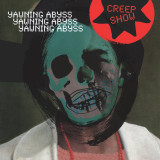
In the five years since Creep Show’s acclaimed Mr Dynamite album was released it’s fair to say that we’ve all been through a fair bit. Sitting here, in 2023, things don’t seem to be getting any better. There’s the cost of living crisis and political meltdowns; we're in deep water with global warming and to top it all there’s a war on our doorstep.
Back in 2018 everything seemed less complicated. Sure, there was stuff to get riled about, but we knew nothing about what was to come. Mr Dynamite was a fairground ride into the dark corners of a world that was on the brink of being blitzed in a blender. It was a record teetering on the edge. Five years down the line you’d expect the follow-up, Yawning Abyss, would double-down and bring the white-knuckled, teeth-gritted fury of the last five years to the boil. And yet….
A quick recap? No problem. Wrangler + John Grant = Creep Show. And Creep Show? “A band of musical misfits who have found a voice or two”, says Wrangler’s Ben “Benge” Edwards, whose Bond villain studio on the edge of a moorland is Creep Show Grand Central as well as home to an analogue synth arsenal that could sink ships.
Wrangler have known each other for a while. Tunng’s electronics wizard Phil Winter and Cabaret Voltaire’s trailblazing, pioneering frontman Stephen Mallinder go way back, while Phil and Benge crossed paths in the 21st century when they seemed to be increasingly in the same venues at the same times. Meanwhile, Mal had been living in Australia since the mid-90s and when, in 2007, he returned to the UK his old pal Phil suggested he meet Benge and the three of them immediately began working together.
Wrangler collectively bumped into Grant at their soundcheck for Sheffield’s Sensoria Festival in 2014 where they were playing with Carter Tutti. A friendship blossomed and when they were invited to perform together for Rough Trade’s 40th anniversary show at London’s Barbican in 2016, well, they jumped at the chance... and Creep Show was born.
Let’s talk about the new album... What is the ‘Yawning Abyss’? You might well ask. According to Mal, it’s “a cosmic event horizon that I can see from my attic window when stand on a chair”. Yeah. Thanks.
“On this album”, offers Benge, feet firmly on the floor, “Wrangler wrangled some vintage synths, mostly Roland, Moog, and the ‘Crystal Machine’ - then John Grant joined in the fun at Memetune Studios where lots of musical experiments were carried out. Then Mal and John ran off to Iceland with the master tapes and recorded a load of madcap vocals. Back at Memetune, me and Phil were left to try and make sense of it all. Which wasn’t hard because what they did in Iceland was totally magnificent.”
Which kind of brings us back to where we began. You’d imagine ‘Yawning Abyss’ would be blowing steam out of its furious ears. Mr Dynamite but kicking a wasps nest. Repeatedly. And yet…
Opener ‘The Bellows’ comes on like a modular ‘Radio Ga Ga’, the singalong ‘Moneyback’ (“You want your money back? / I didn’t think so”) sounds like Godley & Creme’s ‘Snack Attack’ meets Prince Charles And The City Beat Band (“Pennies, pounds, dollar bills, signed agreements, death wills”). ‘Yahtzee!’ is an unhinged electro breakdance party in four minutes and nine seconds.
Where Mr Dynamite was menace, a mélange of mangled voices, with Grant and Mallinder being heavily treated, pitched up or down, rendering their contributions largely indistinguishable, Yawning Abyss takes a more direct approach. You hesitate to say feelgood, but there’s a skip in the step here for sure.
The title track plays John Grant’s vocal straight. Completely. It’s good, so very good. Like ‘Axel F’ covered by Vangelis. The delicious shimmering synths of ‘Bungalow’ also plays those Grant pipes with a straight bat. ‘Matinee’ delves into darker, very funky territory. With Mal upfront it comes on like ‘The Crackdown’. Choice lyric: “You are starting to breakdown / And it’s so fun for me to see / You should have thought of that / You should have come prepared / You can see what’s happening and you look a little scared”.
So, you know, not all feelgood. But it does feel good. It’s probably best to draw your own conclusions... This is Creep Show after all.
Bedroom pop singer-songwriter Gracie Abrams is seriously on the rise. The California-born 22-year-old is the daughter of director and composer J.J. Abrams (you may have heard of his work) and Katie McGrath, a film and television producer. Produced by Aaron Dessner of The National, Good Riddance, Gracie Abrams’s highly anticipated debut album, will be released February 24 via Interscope & Polydor Records. Includes the powerful new single “Where do we go now?”
Merging a dynamic curio of melodic guitars, disconcerting monologues and a rhythm section both technical and unruly, London’s Legss create a wholly unique and mesmerising sound. New EP Fester is a literary and disarmingly lyrical collection of art-rock songs laden with ideas and sun-licked beneath the bus smog of anxious skies.
Even when leaning into more melodic territory, there’s a pervasive uneasiness that underpins both the vocals and instrumentation. Just as you drift into the relaxing arpeggio flow, vocalist Ned Green’s soft soliloquy accelerates to an exasperated yelp and we’re jolted by discordant noise-rock stabs dragging us into Legss’ deliciously feverish and poetic world.
“The lyrics were written in the summer, when you’re sun-drunk and romantic, and the buses look like they’re kissing as they cross each other, and everyone’s got a cold sore. But beneath all the sunny games there’s a bittersweet desire to be someone or something else.” - Legss
Fresh from supporting the likes of Pom Poko and Hotel Lux, Legss release Fester via The State51 Conspiracy on 16th June. Pressed on 12” black vinyl in a sealed polybag liner.
- A1: Farron - Rsendless Line
- A2: Farron - Entrance Wounds
- A3: Farron - Hoog83
- B1: Farron - Music For Saps
- B2: Farron - Tensit
- B3: Farron - Wh Respiration
- C1: Farron - Fort Miley
- C2: Farron - Toesbarn
- C3: Farron - Lido Recess
- D1: Farron - 19-7/5-12
- D2: Farron - Acorn Solo
- D3: Farron - Under Tower Talk
- E1: Lindenberg Support - C20-25
- E2: Lindenberg Support - Sks (101)
- F1: Lindenberg Support - Gate
- F2: Lindenberg Support - Kinda Weak
- F3: Lindenberg Support - Pol -1 (For Stefan)
- G1: Quiem - Strayed And Aimless
- G2: Quiem - You Looked So Pretty On My Balcony
- G3: Quiem - Your Singular Courage
- H1: Quiem - My Tiny Engine
- H2: Quiem - On My Mother's Birthday
- H3: Quiem - Trauma And Its Clutches
Repress! Essential garage Zamrock/soul/funk: the first official reissue of the celebrated band’s one and only album.
The musical style that became known as Zamrock came to embody the economic despair that
followed the 1973-1974 oil crisis, which flung Zambia into recession and exacerbated a wide
range of social tensions. Much of Zamrock also captured the controversy of wider politics in
Africa and the world. Perhaps the finest example of this is Black Power by The Peace.
The Boyfriends, from Kitwe’s Chamboli Mine Township, supplied the founding members for Zamrock’s most
famous band, WITCH, and kick started one of Zamrock’s best bands, Peace. Their sole Zamrock entry, Black
Power, recorded at Malachite Film Studio circa 1973/4 and issued circa 1975, sounds like nothing else in the
Zamrock canon: a lost message drifiting from the flower power era, imbued with a fiery Zambian voice.
Wiederveröffentlichung des Umse Albums aus dem Jahr 2008 als Vinyl! Das 2008er Konzeptalbum des Ratinger MCs ist durchweg an eine Tageszeitung angelehnt. Seinem eigenständigen und ebenso intelligenten wie humorvollen Stil ist Umse hier durchgängig treu geblieben - nicht zuletzt dadurch konnte er sich stets deutlich vom aktuellen Hip Hop-Geschehen in Deutschland abheben. Chefredakteur Umse nähert sich auf diesem 12 Song-starken Konzeptalbum sämtlichen Themen von "Politik" und "Wirtschaft" über "Kontaktanzeigen" hin zum "TV Programm", dem "Wetter" oder den "Todesanzeigen" mit einem Augenzwinkern: Als Aufhänger dienen all seine persönlichen Erlebnisse zwischen bundesweiten Liveauftritten bis hin zum Fernsehabend auf der Couch. Umses technisch versierter, leidenschaftlich kreativer und perfektionistischer Schreibstil lädt den Hörer hierbei zur akustischen Langzeitlektüre ein. Die Beats auf "Rheinisches Blatt" stammen von Deckah, Firstar, Tesk und DJ Radrum. Besonders die Verwendung zahlreicher Vokal-Schnitte aus der ersten Golden Ära Hip Hops deutscher Machart, machen "Rheinisches Blatt" zu einem Hip Hop-Album klassischer Prägung, mit welchem die Fans der ersten Stunde definitiv ihre Freude haben werden.
The next chapter of the Natural Information Society is here. Since Time Is Gravity, credited to Natural Information Society Community Ensemble with Ari Brown, presents a newly expanded manifestation of acclaimed composer & multi-instrumentalist Joshua Abrams nearly 15 year, 7 albums &-counting flagship ensemble. Joining the core NIS of Abrams (guimbri & bass), Lisa Alvarado (harmonium) Mikel Patrick Avery (drums) & Jason Stein (bass clarinet) are Hamid Drake (percussion), Josh Berman & Ben Lamar Gay (cornets), Nick Mazzarella & Mai Sugimoto (alto saxophones & flute), Kara Bershad (harp) & Chicago living legend of the tenor saxophone Ari Brown. Recorded live to tape at Electrical Audio & The Graham Foundation, cover painting Vibratory Cartography: Nepantla, by Lisa Alvarado. 2xLP on Eremite USA, 2xLP & CD on Aguirre/Eremite Europe. Out 14-04.
Since first developing Natural Information Society in 2010, Joshua Abrams has been gradually expanding the group’s conceptual underpinnings, its musical references & the sheer number of the group’s members. Its music is, in a sense, an expansive form of minimalism, based in repeated & overlaid rhythmic patterns, ostinatos & modality. Its roots, its scale & its meaning become clearer in time. If time is gravity, it also allows us to carry more. Having begun as fundamentally a rhythm section with Abrams’ guimbri at its core, the version here can stretch to a tentet, including six horns.
Abrams has been expanding his minimalism gradually, but he has long understood a key to minimalism’s potential: the breadth of its roots in the late 1950s & early 1960s, ranging from the dissatisfaction of young European-stream composers with the limitations of serialism to the simultaneous dissatisfaction of jazz musicians with the dense harmonic vocabulary of bop & hard bop. The former began exploring rhythmic complexity & narrow tonal palates in place of harmonic abstraction (Steve Reich’s Drumming, Philip Glass’ Music with Changing Parts; perhaps above all Terry Riley’s In C & his late ‘60s all-night organ & loop concerts); the later reduced dense chord changes to scales (signally with Miles Davis' Kind of Blue, but rapidly expanding with John Coltrane’s vast project). In the 1950s the LP record opened the world with documentation of Asian & African musics, key influences on both minimalists & jazz musicians. If John Coltrane’s soprano saxophone suggested the keening shehnai of Bismillah Khan, the instrument was rapidly taken up by two key minimalists, LaMonte Young & Riley, similarly appreciative of its flexible intonation, the same thing that kept it out of big bands.
If the guimbri, the North African hide-covered lute that Abrams plays with NIS, involves a rich tradition of hypnotic healing music associated with the Gnawa people, Abrams’ music also touches on other musics as well — other depths, memories & healings, different drones, rhythms & modes. As the group expands on Since Time Is Gravity, he has made certain jazz traditions in the same stream more explicit as well. If there is a mystical & elastic quality involved in the experience of time, both in direction & duration, you will catch it here. The parts for the choir of winds expand on the roles of Abrams’ guimbri, Mikel Patrick Avery & Hamid Drake’s percussion & Lisa Alvarado’s harmonium: at times, the winds are almost looping in the tentet version, each hitting a repeating note in turn, at once drone & distinct inflection on temporal sequence. The brilliance of the work resides in Abrams’ compositions, the NIS’ intuitive execution & in Ari Brown’s singular embodiment of the great tenor saxophone tradition, including the oracular genius of Eddie “Lockjaw” Davis, & Yusef Lateef. The three pieces by the expanded NIS featuring Brown —the opening “Moontide Chorus” & “Is” & the ultimate “Gravity”— have an immediate impact, & togther might be considered a kind of concerto for tenor saxophone. Here Brown presses almost indistinguishably from composed melody to improvised speech, getting so close to language that he might have a text. Everything here is a sign. Note the tap of the Rhythm Ace that links “Moontide Chorus” to “Is”, the attentive heart always present, even when signed by a machine. There’s a link here to the methodologies & meanings of dub music & the linear & vertical collage of beats, textures & tongues: treated with reverence, a sample of a beat-box can be as soulful, as hypnotic, as a mbira or a tamboura. If those pieces with Brown are heard as a suspended concerto, the three embrace & enfold the other works, like the sepals of a flower. That placement will also touch on the mysteries of our perception of time.
Particularly in “Is”, but elsewhere as well, a phenomenon of transcendence arises in which time appears to be tripartite, at once moving backwards & forwards & standing still. This is an act of technical brilliance certainly, but also an illumination of music’s ability to represent temporal consciousness through polymetrics. This particular listener has only heard it before in a few places, including the horn shouts & bowed basses of Coltrane’s Africa, in moments of Charles Mingus’ The Black Saint & the Sinner Lady, in certain pieces where tapes were literally running backwards, & earlier still in Dizzy Gillespie’s Cubana Be, Cubana Bop, in which the composer George Russell & conguero Chano Pozo found a music that spoke at once in the voices of Stravinsky’s Rite of Spring & the vestigial rites, rhythms & songs of the Yoruba language & Santeria religion of inland Cuba.
In Joshua Abrams’ compositions & the realization of them by the NIS, in the time of one’s close listening & memory thereof, distinctions between the “natural” & the “social”, the “quotidian” & the “transcendent” are erased, suspended or perhaps irrelevant. Consider two of the ensemble pieces, one named for nature, the other social science. In “Murmuration” the repeated wind figures of flute & alto saxophone combine with the interlocking patterns of harp, guimbri & frame drum (tar) to create a perfect moving stillness, not an imitation but a witness to the miracle of the starlings’ astonishing collective art, a surfeit of beauty that might be the ultimate defense tactic.
“Stigmergy” takes its name & concept from the Occupy movement’s Heather Marsh, who proposes a social system based on a cooperative rather than competitive models, one in which ideas are freely contributed & developed as ideas rather than an individual’s property. In its form, Abrams’ “Stigmergy” is the closes thing to traditional jazz, a series of accompanied solos by each of the wind players. However, the composed accompaniment is a radically collectivist notion: a repeated rhythmic figure, call it ostinato or riff, in which the different winds each play only a note or two of the figure, a concept both more collectivist & individualistic in its conception than any typical unison figure. It suggests another of the underlying recognitions that propel the Natural Information Society, the group as social organism, the teleology of hypnotic anarchy, all parts in place, functioning systematically, evolving & expressing itself, its nature & society, as a transformative organism.
George Lewis has described music as “a space for reflection on the human condition”. This suggests that, rather than a “distraction”, at least some music might serve as a distraction from distraction. It’s a focus, a clarity, a awareness, an external invitation to interiority, as if music itself is a model for form & contemplation, an organism contemplating for us or as us. If that is a possibility, & I am sure I have heard such musics, than this music is among them. How many of our rhythms, melodies & harmonies (cultural, historical, biological, psychic) might such music carry, translate & transform in the particulate ecstasy of our own murmuration? (Stuart Broomer, April 2022)
‘Y Dydd Olaf’, which is sung entirely in Welsh,
apart from one song penned in Cornish, draws
inspiration from Owain Owain’s 1976 novel of the
same name. The book is set in a dystopian future
where robots enslave the human race through the
use of medication, while Gwenno’s album covers
such themes as patriarchal society, governmentfunded media propaganda, cultural control,
technology, isolation and the importance of
minority languages.
‘Y Dydd Olaf’ was initially released by Peski
Records in October 2014, before being released
worldwide in 2015 by Heavenly Recordings.
Now available on crystal clear vinyl. Includes
digital download of ‘Y Dydd Olad’ plus nine bonus
tracks of remixes and rarities.
“This record demands what’s left of your time.” - Q
(★★★★)
“Blissful, dreamy psychedelia, full of twinkling
electronics and metronomic drums.” - Evening
Standard (★★★★)
“Language as a metaphor for political defiance…
floats beautifully over the krautrock/space-rock
soundscape, a Goldfrappian album you should
hear.” - The Sunday Times (★★★★)
What would have happened if Michael Dudikoff had gone missing in action, say – in Poland in 1987 – during the harshest freezing spell of the century? Would he have coped under these conditions like John Rambo has in the town of Hope? We shall never find out, but the soundtrack is already there. Latarnik and Cancer G (members of EABS and Błoto) would call this film Zima Stulecia: Minus 30°C.
When Twin Peaks debuted on Polish National Television with its oneiric music by Angelo Badalamenti, Poland could feel as eerie as the series. Seemingly nothing quite matched, but on the other hand, no one was surprised. Growing up in the 1990s inevitably brings back memories of stalls selling a variety of products. You could buy there cleaning products from Germany, some underwear, Haribo jellies and Jacobs coffee, and have access to the "latest" cultural releases, which would be arriving late in Poland. This is where one could obtain pirated copies of cassette tapes and VHS, the labels of which had typewritten film titles that transported kids' fantasies to another world. With such content distribution, many of these kids got their first glimpse of Predator, Terminator, Robocop, as well as Van Damme's stunts in Bloodsport and a plethora of other B action movies, which to this day - like American Ninja - are rerun on TV over and over again. The afterimages of these soundtracks nestled in the heads of Marcin Rak and Marek Pędziwiatr for years and found expression on their debut album.
The music of Zima Stulecia is difficult to label in terms of genre. It oscillates towards melancholic electronic music. For some it will be techno, others will hear elements of house, all accompanied by improvised synth and percussion music.
Zima Stulecia is a duo that was not supposed to have any chance of success. Many years ago, back in 2006, when they were still budding musicians they met for the first time at a jazz workshop. When they found out where they both came from and that they were separated by almost 800 kilometers, despite having great chemistry in playing, they
jokingly said goodbye with the sentence: "it was fun playing together!". They figured they would never meet again. At the time, none of them imagined that in a few years' time in Wrocław they will form one of the most interesting contemporary jazz bands in Poland: EABS and Błoto. On top of that, they were both born in January 1987. The last of the historic "winters of the century" (eng. for "zima stulecia") occurred at that time in Poland, which ultimately determined their name as a band. Minus 30°C album is a recording of the non-verbal workings of these soulmates, and a fruit of a musical collaboration that has lasted for 16 years.