While frontman Tom Greenhouse’s off-kilter observations and bizarro anecdotes remain front and centre, this time round the band up their game with a more vigorous sound that keeps pace with Greenhouse’s wholly distinctive lyrical style. Greenhouse continues to revel in telling increasingly surreal short stories, rejoicing in the power of the deadpan one-liner and bedecking his songs with far-flung cultural references. But now the band employ a variety of techniques with improved pro- duction, from the impulsively bashed keyboards and jubilantly repetitive guitar stabs that have be- come their trademark, to flirtations with–heaven forbid!–melody, chord progressions and arrangements which elevate their tried-and-tested blueprint into a more exciting and cohesive whole.
Opener Musicians is the perfect embodiment of this conscious development. Here, Greenhouse re- counts a sarcastic tale of half-truths that see him galavanting around town trying to put a band to- gether. Sonically, it begins with a caustic callback to the group’s first EP Crap Cardboard Pet and its über-minimalist aesthetic. But by the end of the song a joyous festival of afrobeat-inspired in- struments including samba whistles, bongos and saxophones are added to the mix as the front- man, ironically, fails in his mission to recruit more players.
With Get Unjaded, the band have somehow conjured something close to pop, without abandoning the repetition and wit that’s relished by their early fans. I Lost My Head also adopts a jangle-pop sheen with a luscious synth melody, as the frontman ditches the spoken-word for a surly croon (his first known attempt at actual singing!) that provides a welcome breather from the onslaught of dense recantations that are the band’s bread-and-butter.
While the lyrics here are still often humorous and political, Greenhouse has also notably expanded his interests on this album to include a new host of topics. The influence of extraterrestrials, for ex- ample, infiltrates the subject matter frequently. On The UFOs, the mysterious protagonist Blinkus Booth’s isolationist lifestyle is apparently interrupted by the spectres of otherworldly visitors, while closer The Neoprene Ravine feels like an extract from a deep space rock opera. Here, jaunty and angular instruments pile-on as we are fed images of an interstellar Spinal Tap, the titular fictional band “The Neoprene Ravine” who are “the alien equivalent of the Velvet Underground” and include an alien Lou Reed yelping “too busy sucking on my little green ding dong!”.
Meanwhile, Hard Rock Potato is propelled by a vortex of keys and synths, a real noise-pop gem comprised of real guitar chords (!) and rock-orientated riffs. Here the stream-of-consciousness lyrics take shots at the sinister financial industry, and include one of the many top-tier one-liners on the album: “It’s not gambling if you’re wearing a tie (even if you’ve got no trousers on)”.
On Sod’s Toastie, The Cool Greenhouse have pushed their distinctive flavour of post-punk to the point of perfection – their incongruous riffs, alchemical instrumental chemistry, and irreverent spo- ken-word vocals are a delight throughout. Sod’s Toastie is hilarious at times, and at others just hilariously good – a not-so-difficult second album.
Buscar:pol
Collaboration between Broken English Club and Autumns exploring dub, post-punk atmospheres and political unrest. Debut EP is a bold and eclectic taster of this duo. Vacant Heads is the duo of Christian Donaghey (Autumns) and Oliver Ho (Broken English Club). Anyone familiar with their work, or underground electronic music in the last two decades, probably needs no further introduction. Having worked together (Autumns' album ‘Shortly After Nothing’ was released on Oliver’s ‘Death and Leisure’ label) and shared stages over the years. Vacant Heads was borne from a desire to collaborate on tracks and form a live unit.
Their debut self-titled EP is a bold taster of where Vacant Heads are at and where Vacant Heads are headed. These four tracks reek of a brutal and busted city - after-hours prowls with fuck all to do and nowhere to go. In “Crawling Up The Pisser”, Ho’s world-weary treatise on consumerism drools over the nag, nag, nag of the tightest and tautest post-punk electronics. “Heavy Rain Dub” is a ten-minute low-end cruiser. A deep, Digi-dub riddim underpins clarinet squalls, jaw harp twang and screwed vocals that feel like a nocturnal trip into Chris Morris’ ‘Blue Jam’…On Side B, “Street Toucher’s” rowdy snare hits, new wave synths and trademark distorted howl from Donagheyhint at the potential ferocity of their upcoming live shows. “Swan Dive” rounds off the EP - slowing down the tempo and pulling influence from the renegade sound of Adrian Sherwood’s revered production work with the likes of Tackhead and Keith LeBlanc. The heaviest breakbeats meet industrial churn and clipped vocal samples. Vacant Heads. Nothing up top. Pure body music.
Written and recorded between 1972 and 1982 in Western Oregon, Back to the Woodlands is a previously unreleased, and nearly lost, album made by Ernest Hood during the same era as his near mythical album Neighborhoods . A visionary combination of field recordings, zithers, and synthesizers, Back to the Woodlands offers an unprecedented depth of access to this singular artistic mind. Born into a musical family, Ernest Hood began a promising career as a jazz guitarist during the 1940s, touring internationally with his brother Bill Hood and the saxophonist Charlie Barnet , before contracting polio in his late twenties. The disease left Ernest unable to play the guitar and confined him to a wheelchair for the rest of his life. It also forced him to adapt and innovate around his musical practices in the face of adversity; Hood's value of sound matured with a remarkably democratic and nonhierarchical approach and application. Taking up the zither, a less physically-demanding stringed instrument to the guitar, embarking upon the unprecedented process of incorporating field recordings into his work as early as 1956, and eventually discovering the synthesizer, Hood's music became imbued with optimism and subtle cultural critique. This ethos and technique - refined over the coming decades - would lay the groundwork for a sprawling body of radio work, mail order recordings for homebound listeners, and Neighborhoods , self- issued as a small vinyl edition in 1975. Where Neighborhoods , a nostalgic opus, drawing from a well of collective memory of the 1950s, is defined by traces of human activity, Back to the Woodlands leaves the modern world behind, delving into Hood's love for nature. Only recently discovered in his archives, the album dramatically expands his concept of "musical cinematography," imagistically triggering states of sensory memory from within its zither and synthesizer melodies, intertwined with field recordings made during Hood's extensive travels throughout Oregon. If Neighborhoods is a retreat into the gauzy joys of a romanticized past, Back to the Woodlands is an immersion in the timeless sanctuary of the natural world. A fascinating counterpoint to its predecessor, Back to the Woodlands brings us even closer to Hood's belief in the transportive qualities of sound; that field recordings could serve as a vehicle for the imagination and liberation, particularly for those with similar mobile disabilities as his own. Across the album's twelve compositions, the rippling instrumental harmonics - shifting between abstraction and playful melody - fold so seamlessly into the birdsong, bubbling brooks, and other environmental ambiences, that they often give the impression of having been recording within the landscapes toward which they whisper. Falling somewhere between the immersive calm of healing music and New Age, the creative field recording practices of sound ecologists world building for Folkways, and the jazz infected ambiences during Obscure / Editions EG's highest heights, Back to the Woodlands sculpts an singular proximity of music for its moment; a form of ambient sonic realism that draws the consciousness toward its surroundings as much as within. Working closely with his estate to maintain his original vision, Freedom to Spend has restored and remastered this never before released, lost masterpiece by Ernest Hood from the original tapes. Ernest Hood's Back to the Woodlands will be issued on vinyl, as well as on CD in combination with its contemporary Where the Woods Begin , with new liner notes by Michael Klausman . On behalf of Ernest Hood and Freedom To Spend, a portion of the proceeds from this release will benefit Oregon Wild, an organization dedicated to protecting and restoring Oregon's wildlands, wildlife, and waters as an enduring legacy for future generations.
- A1: An Introduction To
- A2: Brosome Ride
- A3: Cmd Ctrl
- A4: Digital State
- A5: Emquvist
- B1: First, I Heard Color
- B2: Gear
- B3: Hummerican
- B4: Inward Seminar
- C1: Jeopardy
- C2: Knowledge Hills
- C3: Loom Letter
- C4: Mountain Meadows
- C5: Nebula Center For The Youth
- D1: Oiralt
- D2: Polyedra One
- D3: Qontinent Ag
- D4: Ram
- D5: Sequent
- D6: Tape Voices
- E1: U R Eyecandy
- E2: Vestige
- E3: We Did It Joe
- E4: Xenism
- E5: Yes Computer
- E6: Zeitgeist (Without Auqura)
Cult French duo Principles of Geometry is back after an 8 years hiatus with a 26 tracks love letter to IDM & electronica, ABCDEFGHIJKLMNOPQRSTUVWXYZ.
A construct on the language which composes their musical lexicon, a sonic grammar which has been their common thread through 5 albums now.
This album is inspired by classic albums such as Artificial Intelligence on Warp Records, Braindance on Rephlex and was teased online this summer with singles "Cmd Ctrl" and “Hummerican”.
- A1: City Sounds
- A2: Turn Me Around
- B1: When You Call Me
- B2: Night Flight 05 25
- B3: Soothsayer (Feat. Theo Croker)
- C1: Why Must You Fly (Feat. Omar)
- C2: To Be As One (Feat. Theo Croker)
- C3: (Bring On The) Bad Weather (Feat. Anushka)
- D1: Lazy Days (Feat. Emma-Jean Thackray)
- D2: Find Your Heaven (Feat. Valerie Etienne)
- D3: Virgil (Vocal Version)
White Vinyl[32,73 €]
Welcome to ‘STR4TASFEAR, Bluey and Gilles’ second STR4TA album released.
A collection of songs, melodies, grooves and sounds that sit perfectly in the brand new music world it’s part of. Gilles and Bluey are both men who emerged into the Brit funk world. They were both part of this truly thrilling chapter in the story of homegrown music; which manifests itself here in a sumptuous mixture of twanging basslines, spacey synth melodies, clicking beats and wispy, ethereal voices.
And for this new set, they’ve got a few like-minded souls along to join the party. Multi-talented Neo-soul Godfather Omar, and celebrated vocalist, Valerie Etienne, both represent Brit funk’s first bounce. Also welcomed in to the fold is musical polymath, Emma-Jean Thackray, Brighton duo Anushka and Floridian trumpeter/vocalist Theo Croker. ‘STR4TASFEAR’ is Gilles and Bluey’s wide-open window into a timeless, wonderful world of Brit funk (Words by Mark Webster, 2022).
STR4TA has received a rapturous reception, with standout tracks ‘We Like It’ achieving over 1 million streams on Spotify and ‘Rhythm In Your Mind’ exceeding 12 weeks on Jazz FM’s playlist. They have been heavily supported by BBC 6Music, The Guardian, Wax Poetics, The Vinyl Factory, CLASH, Télérama (FR), Radio Nova (FR), Rolling Stones Italy & Japan. Most recent singles “When You Call Me” & “Night Flight”, taken from the upcoming album, has already received support from Rampage (BBC 1Xtra), Jamz Supernova (BBC 6 Music), Deb Grant (Jazz FM) plus NTS, Mi-Soul, Solar Radio, KCRW (US), KEXP (US), Concrete Islands, CRACK Magazine, and Nu-Funk (Spotify).
- A1: City Sounds
- A2: Turn Me Around
- B1: When You Call Me
- B2: Night Flight
- B3: Soothsayer (Feat Theo Croker)
- C1: Why Must You Fly (Feat Omar)
- C2: To Be As One (Feat Theo Croker)
- C3: (Bring On The) Bad Weather (Bring On The)
- D1: Lazy Days (Feat Emma-Jean Thackray)
- D2: Find Your Heaven (Feat Valerie Etienne)
- D3: Virgil
Black Vinyl[26,85 €]
Welcome to ‘STR4TASFEAR, Bluey and Gilles’ second STR4TA album released.
A collection of songs, melodies, grooves and sounds that sit perfectly in the brand new music world it’s part of. Gilles and Bluey are both men who emerged into the Brit funk world. They were both part of this truly thrilling chapter in the story of homegrown music; which manifests itself here in a sumptuous mixture of twanging basslines, spacey synth melodies, clicking beats and wispy, ethereal voices.
And for this new set, they’ve got a few like-minded souls along to join the party. Multi-talented Neo-soul Godfather Omar, and celebrated vocalist, Valerie Etienne, both represent Brit funk’s first bounce. Also welcomed in to the fold is musical polymath, Emma-Jean Thackray, Brighton duo Anushka and Floridian trumpeter/vocalist Theo Croker. ‘STR4TASFEAR’ is Gilles and Bluey’s wide-open window into a timeless, wonderful world of Brit funk (Words by Mark Webster, 2022).
STR4TA has received a rapturous reception, with standout tracks ‘We Like It’ achieving over 1 million streams on Spotify and ‘Rhythm In Your Mind’ exceeding 12 weeks on Jazz FM’s playlist. They have been heavily supported by BBC 6Music, The Guardian, Wax Poetics, The Vinyl Factory, CLASH, Télérama (FR), Radio Nova (FR), Rolling Stones Italy & Japan. Most recent singles “When You Call Me” & “Night Flight”, taken from the upcoming album, has already received support from Rampage (BBC 1Xtra), Jamz Supernova (BBC 6 Music), Deb Grant (Jazz FM) plus NTS, Mi-Soul, Solar Radio, KCRW (US), KEXP (US), Concrete Islands, CRACK Magazine, and Nu-Funk (Spotify).
- A1: Love Song
- A2: Young Bastards
- A3: Stop It
- A4: Blind Man
- A5: Skin O Daayba - Complex Habits No.3
- A6: We Are Waiting
- B1: Mantra
- B2: Skin O Daayba - Feedbackless World
- B3: Cupping Glass
- B4: Half Monk Half Herring
- B5: Ukoidm - Fishing (Edit)
- B6: Eric
- B7: In The Garden
- B8: Sequencer
- C1: Who Are We
- C2: Hit
- C3: Yozti 2
- C4: Voices Cricket
- C5: Attempt To Raise Hell
- C6: Anna's Assignment
- D1: In Our Culture (Surname Version)
- D2: Lesson 4 Voices
- D3: Intermission
- D4: Chicken
- D5: Untitled
- D6: Against Soap
- D7: Bereshit
- D8: Caretakers
Black Truffle is pleased to announce Uri Katzenstein’s Audio Works, produced in collaboration with Holon’s Centre for Digital Art. Spanning sculptural installation, performance, video art, and many other media, Katzenstein’s absurdist, poetic, and often hilarious work made extensive use of sound and music. This, however, is the first release dedicated to the artist’s audio work, collecting 28 tracks produced between the early 1980s and 2017. Compiled from dozens of hours of recordings left uncatalogued (and in some instances unheard) at the artist’s death in 2018, these four sides are a treasure trove, offering a captivating glimpse into a uniquely uninhibited creative practice. Predominantly recorded alone, with some contributions from regular collaborators such as Ohad Fishof on the later pieces, many of these tracks stem from Katzenstein’s time living in New York in the 1980s. Feeding on the cross-pollination of post-punk energy, radical art practice, and new media possibilities that characterised the New York scene at this time, many of Katzenstein’s recordings squeeze multilayered vocal experimentation into synth-based miniatures with a distinctively pop twist, their forms ruptured with anarchic bursts of free-form electronics, sounds from self-built instruments, and field-recorded snatches of the outside world. Katzenstein’s electronic production calls up touchstones of skewed 80s art pop like Laurie Anderson, Ambitious Lovers, and Scritti Politti, but imbued with DIY directness and economy of means. The arrangements of synths, percussion, and noise elements are invigoratingly raw and, at times, almost austerely minimal. On ‘Intermission’, thick distorted chords accompany a wandering portamento melody, inhabiting the wayward carnival space of Roedelius’ most unhinged efforts. Many of the tracks centre on Katzenstein’s multi-tracked vocal performances, often moving between multiple languages, (most commonly English, German, French, and Hebrew). A bewildering range of vocal approaches are present on these pieces, from sweet wordless harmonies to hammed-up growls and monastic recitations. On ‘Skin O. Daayba – Complex Habits no. 3’, improvised resonance singing against a backdrop of echoing electronics and radio snatches. ‘Half Monk Half Herring’ layers multi-lingual syllabic fragments, crossing sound poetry techniques with melodic invention in a way rarely heard outside of Caetano Veloso’s Araçá Azul. On ‘Attempt to Raise Hell’, Katzenstein’s distorted voice spits out streams of alliterative nonsense (‘the hemlock of Henry, he was a hermit…purple pumpkin pulsates to pops’), while on the hilarious ‘Eric’, Katzenstein appears to instruct a small boy simultaneously in basic French and German conversation. On ‘Chicken’, vocal harmonies accompany the pecking and clucking of the titular fowl. Moving from bent, outsider synth pop to snatches of Jo Jones-esque automated instrumental clang and absurdist linguistic experiments, these are far more than footnotes to an artist’s gallery works. Accompanied by extensive, beautifully written liner notes by Roee Rosen and the little information that exists on the individual tracks, Katzenstein’s Audio Works inhabits an outer fringe of DIY pop and sonic experiment reminiscent of Pascal Comelade or Die Welttraumforscher, where accessible forms convey radical interrogations of song, word, and sound.
- A1: Monsters On The Hill
- A2: Big Troubles Come In Small Doors
- A3: Fold Me Up
- A4: I Hate The Capitalist System
- A5: No Hiding Place For Me
- A6: What Does A Man Do All Day
- B1: United States Of The Broken Hearted
- B2: I'm Just A Visitor
- B3: I've Enjoyed As Much Of This Good Life
- B4: Deportees
- B5: Looking For Some Rain
- B6: Satisfied Mind
Das neue Jeb Loy Nichols-Album besteht aus zwölf düsteren, aber wunderschönen Stücken, bei denen der langjährige Freund und Produzent Adrian Sherwood seinen charakteristischen Dub-Ansatz gegen sorgfältig zurückgenommene Arrangements eintauscht. Akustikgitarre und Jebs Stimme werden umrahmt von subtilen Bläsersätzen, Cello und Perkussion sowie Keyboardbeiträgen von Martin Duffy (Primal Scream, Felt). Politisch aufgeladene Coverversionen ('I Hate The Capitalist System', 'Deportees') stehen neben eher introspektivem Material, darunter einige der besten Songs, die Nichols bisher geschrieben hat. Adrian Sherwood fügt hinzu: 'Dies ist Jebs 'Great American Songbook', er ist im Laufe der Jahre ein großartiger Sänger und Songwriter geworden. Es ist ein wunderschönes Werk, das an unsere gemeinsame Liebe zu dem Miracle-Album erinnert, das ich mit Bim Sherman gemacht habe. Ich bin wirklich stolz auf diese Platte und sie ist ein passender Nachfolger von Long Time Traveller.'
Over the past decade, Vienna-based Florian Stöffelbauer – also known as Heap, has built a consistent reputation as a skilled DJ, producer and Neubau’s label head.
Isla is proud to present his latest effort “False Hope” which explores the intersections between industrial, electro and dark wave – all with a leftfield twist.
As diverse as it is powerful, the 7 tracks featured here almost feel like nocturnal tales, chalking out Heap’s observations wandering through the streets of a silent city, with cigarette smoke permeating the air and sirens ringing in the distance.
The cinematic essence of the release emerges from the very beginning, with the atmospheric beauty “Diall” transporting us straight into some late-80s scenery of Kraftwerkian nostalgia. In “Jetzt Oder Nie” a sharp knit of drums is placed on top of the grave frequencies of the bass: it’s indeed “now or never”, the moral imperative of the release, requiring us to take action.
Throughout the whole album, hypnotic sounds punctuate the dark space, bouncing between the polyrhythmic and uplifting energies of “Inner peace” and “No Palm Too Big”, a sneaky slow-burner with a nocturnal groove and Gayna Rose Madder’s robotic voice reciting the stream of consciousness of this urban wanderer.
“Trist” rises slowly yet powerfully thanks to its mystical synths covering the ground and preparing us for what comes next.
The title track “False Hope” holds the unique charm of a creature effortlessly floating in between dualities. As obscure as it is airy, as delicate as it is forceful, this hybrid composition is rich in details and plot twists.
At the end of this journey, “Losing time” reminds us of the urgency to take action expressed at the beginning of the album. In a rarefied canvas, an off-kilter solitary sound comes in, starting off as insistent as a car horn in rush hour, and evolving into a beautiful instrument arpeggiating the melody.
Here Heap concludes his narrative for now. We like to imagine him walking away, a shadow fading in the smoke of the city as the first lights of the day appear.
- 1: A Recipe To Cure Historical Amnesia
- 2: To Remember (Feat. Kushal Gaya)
- 3: Utopia Is A Colonial Project
- 4: Back In The Day, Things Were Not Always Simpler (Feat
- 5: The Past Is Not Only Behind Us, But Ahead Of Us
- 6: Kal Means Yesterday And Tomorrow
- 7: Remember Begum Rokheya
- 8: That Clocks Don't Tell But Make Time (Feat. Kodo)
- 9: Remember Circles Are Better Than Lines
- 10: Remember To Look Out For The Signs
- 11: Kalak - A Means To An Unend
Black Vinyl[20,04 €]
Sarathy Korwar returns with new album KALAK. The follow up to the politically charged, award-winning More Arriving is an Indo-futurist manifesto - in rhythmic step with the past and the present, it sets out to describe a route forward. It celebrates a rich South Asian culture of music and literature, which resonates with spirituality and community, while envisaging a better future from those building blocks. Recorded at Real World studios with meticulous production by New York electronic musician, DJ and producer Photay, who translates these communal rhythms and practices into a timeless and groundbreaking electronic record. There"s a spirituality and warmth at play in the polyrhythms, group vocals and melodic flourishes. The KALAK rhythm is the fulcrum upon which the 11-track project balances. After an intense lockdown induced period of reflection and meticulous note-making, Korwar boiled this down to the circular KALAK symbol which he then presented to his band before recording began. With the symbol projected on the walls in order to de-code and improvise around, Korwar had utter faith in the musicians he"d assembled and conviction in the concept.
- A1: Ataxia - Detroit Gospel
- A2: Ataxia & Andres - Pine Island
- A3: Ataxia - Language
- B1: Ataxia & Dj Minx – Maxia
- B2: Ataxia - Spit In Your Percolator
- B3: Ataxia - 98 Degrees
- C1: Ataxia - Number Streets
- C2: Ataxia - The Formulator
- C3: Ataxia - The Pusher
- D1: Ataxia & Mister Joshooa - Feels Like
- D2: Ataxia – Wm
- D3: Ataxia - Dance The Bridge
Having torn up raves for well over a decade, the Detroit duo Rickers and Ted Krisko AKA Ataxia present their debut longplayer ‘Out Of Step’. Featuring guest spots from close peers DJ Minx, Andrés and Mr Joshooa, they twist house, techno, electro, breakbeat and rave into revitalized new shapes; embellished with a touch of soul, funk and hip hop. With backgrounds in hardcore and punk, Ataxia’s debut is suffused with that energy, attitude, and approach; this is raw, lean and unashamedly no-nonsense dance floor tackle that goes straight for the jugular. Heavily analogue, the album experiments with tape saturation, which harks back to the duo’s formative years in bands, recording demos to cassettes. These straight-up, in-the-red tracks give preference to overdriven drum machines, rather than generic polished sheen, but conversely, it’s all deceptively well-crafted too; ‘Out Of Step’ is a standout record that’s big in character, bringing to mind the renegade spirit of Underground Resistance, and the bombastic brilliance of The Prodigy and Chemical Brothers.
Defiantly optimistic despite the state of the world, a “life is good” vocal sample meets minor chords sliding over 808 hats on the exemplary house/techno pumper ‘Detroit Gospel’, before a lighter moment on the album, but no less impactful with its hefty low-end thump, is ‘Pine Island’ featuring Motor City hero Andrés. Together they cook up a Motown-inspired house cut awash with horn swells and backup singers, bouncing to wide swung funk bass, in classic 313 style. ‘Language’ turns the club on its head – busting out one of the most distinct basslines in recent times, and bristling with buzzy, undulating chords, whilst ‘Maxia’ features influential Detroit royalty DJ Minx. Inspired by her classic ‘A Walk In The Park’, with a fat distorted kick and stealthy bass groove, this is low-slung, stripped-back, heads-down coolness. The high-tech funk of ‘Spit In Your Percolator’, is laser-guided in its efficiency, with a strobe-like, increasingly intensifying energy, peppered with clever, tripped up vocal chops. With the next cut, conveyor belt noises and fast churning low-end gives way to a dubbed-out breakdown, on the deep breakbeat roller ‘98 Degrees’. Charged with a blistering, rave intensity, ‘Number Streets’, is a futuristic distorted techno workout that booms through the subs, whilst ‘The Formulator’ mixes filtered snippets, abstract synth noises and melodic bleeps with a bassline echoing Paperclip People’s ‘The Floor’. Closer to the UK definition of hardcore, combining 4/4 and breakbeat, ‘The Pusher’ evokes the spirit of late 80s orbital raves, adding a natty keys solo, and deadly bass used sparingly, for even deadlier effect. ‘Feels Like’ sees Rickers and Ted team up their studiomate and fellow TV Lounge resident and club booker, Mister Joshooa. Inspired by Photek but also almost UKG in style, this breakbeat session is stamped with MJ’s signature chopped vocals and intricate rhythmic interplay. The bubbling, wobbly loose swing of ‘WM’ is constructed around a classic chopped-up MTV cribs sample, with a filtered vocal creating a far out psychedelic effect – all of which is propelled apace by a huge bruising LFO. The LP concludes in fine style with ‘Dance The Bridge’, where bouncy beats and wigged-out keys meet bright, gently uplifting synth chords that bring a clear-skied mood; ending the record as it began, on an optimistic note.
‘Out Of Step’ marks another chapter in the ongoing relationship between Life and Death co-founder DJ Tennis and Ataxia. Their connection goes back to the earliest days of the label, where they played gigs together on some of Tennis’ initial visits to Detroit. It’s a friendship that’s blossomed organically over the last decade through their shared love of punk and hardcore, and led to the fruition of one of Ataxia’s most compelling projects to date. Labels to release Ataxia’s output include legendary Detroit techno imprints Planet E and KMS, plus the seminal American house label Nervous Records. Their catalogue also includes music for Visionquest, Leftroom, 20/20 Vision and Seth Troxler’s Play It Say It.
AMRA, the collaborative project between Paul Purgas (Emptyset) and artist and filmmaker Imran Perretta, continue their excavations into syncretic mythologies, diasporic echoes and ancient rhythmic talas. hills/demons ruminates on spectral landscapes whilst bringing together a wider group of collaborators, forming a collection of dense percussive polyrhythms alongside sitar improvisations from British-Pakistani multi-instrumentalist Nabihah Iqbal and guest vocals from Bangladeshi singer Sohini Alam. Developed for a performance with the London based commissioning platform Artnight, the release expands on AMRA's exploration of archival traces and the struggles that marked South Asia's partition, summoning alternative histories and the echo of ancestral voices.
Strut present the first ever compilation of Balka Sound, bringing together their influential 1980s recordings, Hailing from Congo-Brazzaville and led by revered vocalist and ngonfi player, Nkibi “Lusialala” Albert, Balka Sound created their own unique musical world, re-imagining traditional Congolese Balka rhythms with electric guitars, electric bass and drums, alongside the traditional 5-string ngonfi.
Nkibi Albert had risen to fame in 1972 with his solo hit ‘Ah Lusialala’ and Balka Sound was created to bring the sound of Balka, a folk style from the Beembe people, to modern life and an international audience. With its roots in slavery and colonialism rumba was dominating the music scene in Congo while the philosophy of Balka Sound was to find its inspiration directly in local country life, to associate the modern and the traditional and to revive folk traditions that were dying. Founder member Henri Nsika Nkaya explains, “it was intended to be an update, a unification and an internationalisation of Congolese cultures.”
In 1979, during a festival organised by the Centre Culturel Français, the band won a recording deal to release their first album: Le 1er son du Balka, Lusialala et ses amis, recorded in just one take. Their success led to a second LP, Tu Kine Balka, recorded in Kinshasa in 1982. A third album in 1984, Afro Musik Creation, featured a more modern studio production sound. Their songs drew from traditional folk tales and parables, life lessons and the damage caused by rural exodus to the cities. By 1985, Balka Sound were working full-time with residencies at Chez Tantine Clara in Brazzaville, a well-known tourist venue, and the Frantel Cosmos Hotel.
In 1991, political tensions were rising in the country; civil disobedience and threats of a military coup were followed by a civil war from 1993 to 1994. The band eventually regrouped and were invited to perform in 1996 at the Palais des Congrès for the Fête National. Unfortunately, on the first day of new fighting in 1997, Balka Sound’s studio was looted and the band were forced to finally disperse.
This first compilation of the band’s music is curated and annotated by Makila Nsika Nkaya in conjunction with Balka Sound and has been fully remastered by The Carvery.
Written and recorded between 1972 and 1982 in Western Oregon, Back to the Woodlands is a previously unreleased, and nearly lost, album made by Ernest Hood during the same era as his near mythical album Neighborhoods. A visionary combination of field recordings, zithers, and synthesizers, Back to the Woodlands offers an unprecedented depth of access to this singular artistic mind.
Born into a musical family, Ernest Hood began a promising career as a jazz guitarist during the 1940s, touring internationally with his brother Bill Hood and the saxophonist Charlie Barnet, before contracting polio in his late twenties. The disease left Ernest unable to play the guitar and confined him to a wheelchair for the rest of his life. It also forced him to adapt and innovate around his musical practices in the face of adversity; Hood’s value of sound matured with a remarkably democratic and nonhierarchical approach and application.
Taking up the zither, a less physically-demanding stringed instrument to the guitar, embarking upon the unprecedented process of incorporating field recordings into his work as early as 1956, and eventually discovering the synthesizer, Hood’s music became imbued with optimism and subtle cultural critique. This ethos and technique - refined over the coming decades - would lay the groundwork for a sprawling body of radio work, mail order recordings for homebound listeners, and Neighborhoods, self-issued as a small vinyl edition in 1975.
Where Neighborhoods, a nostalgic opus, drawing from a well of collective memory of the 1950s, is defined by traces of human activity, Back to the Woodlands leaves the modern world behind, delving into Hood’s love for nature. Only recently discovered in his archives, the album dramatically expands his concept of “musical cinematography,” imagistically triggering states of sensory memory from within its zither and synthesizer melodies, intertwined with field recordings made during Hood’s extensive travels throughout Oregon. If Neighborhoods is a retreat into the gauzy joys of a romanticized past, Back to the Woodlands is an immersion in the timeless sanctuary of the natural world.
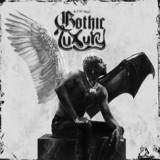
Als ein Drittel des New Yorker HipHop-Trios Flatbush Zombies arbeitete Meechy Darko bereits mit u.a.
James Blake, A$AP Rocky und Danny Brown zusammen. Mit ”Kill Us All” stellte er jetzt die erste
packende Videosingle aus seinem Debütalbum ”Gothic Luxury” vor, das am 26. August über Loma Vista
Recordings / Concord erschien.
Es ist die Komik der Tragik, die Meechy Darko zu seinem ersten Soloalbum geführt hat. Ausgehend von
dem entsetzlichen Tod seines Vaters, der im Januar 2020 von einem Polizisten in Miami niedergeschossen
wurde, ist sein Debütalbum kein Schritt aus der Komfortzone, sondern ein Stoß in die Realität: ”Ich hatte
keine andere Wahl, als es zum Persönlichsten zu machen, was ich je getan habe, denn glücklicherweise oder
unglücklicherweise befinde ich mich gerade in einer sehr aufrüttelnden Phase meines Lebens”, sagt der 32-
jährige Rapper über die Entstehung von ”Gothic Luxury” und die Bedeutung dessen als Momentaufnahme.
”Der, der ich gestern war, ist vielleicht schon nicht mehr der, der ich morgen bin. Ich bin nicht der,
der ich letzte Woche war. Man kann nicht sagen, wer ich nächstes oder übernächstes Jahr sein werde.”
Zusammen mit Dot Da Genius, dem langjährigen Partner von Kid Cudi und Produzenten für u.a. Jhené
Aiko, Lil Nas X und Denzel Curry sowie Grammy-Preisträger Neal Pogue (u.a. TLC, Outkast, Tyler The
Creator) hat Meechy ein vielschichtiges Debütalbum erarbeitet, auf dem sich der Flatbush Zombie so öffnet
wie nie zuvor.
”Niemand hat Soltis DECCA-Ring in Schwung, Anspruch, Größe, dramatischer Unmittelbarkeit und schierem
Adrenalin übertroffen” - Stereophile
Als erste Veröffentlichung des legendären Solti-Ring erscheint das RHEINGOLD als limitierte Deluxe 3-
LP-Edition. Die weiteren Musikdramen des Ring-Zyklus‘ erscheinen in den kommenden Monaten. Kunden,
die alle vier Werke über diesen Shop erwerben, bekommen mit der GÖTTERDÄMMERUNG die Möglichkeit
einen exklusiven Holz-Schuber für alle vier Produkte sowie ein Hardcover-Buch zu erwerben.
Deluxe Vinyl-Edition: Vinylschnitt im half-speed Verfahren durch Miles Showell von den Abbey Road
Studios, gepresst in 180gr Vinyl bei Optimal; poly-lined-Innenhüllen, ein reich illustriertes Booklet in einem
Slipcase mit Goldveredelung.
Das Booklet enthält: Einen Text über das neue HD-Remastering von Decca Classics Label Director &
Executive Producer Dominic Fyfe. Einführung zur Oper von John Culshaw. Synopsen auf Englisch &
Deutsch. Libretti (Deutsch + Englisch). Fotos von den originalen Aufnahmesitzungen, Faksimiles von
Soltis und Culshaws Partituren, und bisher unveröffentlichte Kuriosa von den Aufnahmen.
Beim Decca-Ring ging es immer um den Klang. Mit dieser neuen Übertragung der originalen analogen
Masterbänder hat sich Decca bemüht, das Beste für Solti, für Culshaw und seinen Chefingenieur Gordon
Parry und letztlich für Wagner herauszuholen.
'Songs From Planet Earth' is Deux Furieuses' third full length album, the second with Xtra Mile Recordings. Written and recorded during the last two turbulent years, Songs From Planet Earth is a beating heart signal out from this world as we fall spinning into a vortex of pandemic, isolation, avoidable deaths, political corruption, personal mourning and ultimately survival. The album documents the journey from the city to the countryside like refugees in search of sanctuary. 'Bring Down The Government' jumps on the fuzz box to demand a reckoning for all the lives. Deux Furieuses are currently members of Brix Smith (from The Fall) band, playing guitar and drums. They are touring across the UK supporting PiL throughout June; Kendal Calling, Loud Women Festival appearances and further headline and support shows in November and December.
Yellow and black splatter
While frontman Tom Greenhouse’s off-kilter observations and bizarro anecdotes remain front and centre, this time round the band up their game with a more vigorous sound that keeps pace with Greenhouse’s wholly distinctive lyrical style. Greenhouse continues to revel in telling increasingly surreal short stories, rejoicing in the power of the deadpan one-liner and bedecking his songs with far-flung cultural references. But now the band employ a variety of techniques with improved pro- duction, from the impulsively bashed keyboards and jubilantly repetitive guitar stabs that have be- come their trademark, to flirtations with–heaven forbid!–melody, chord progressions and arrangements which elevate their tried-and-tested blueprint into a more exciting and cohesive whole.
Opener Musicians is the perfect embodiment of this conscious development. Here, Greenhouse re- counts a sarcastic tale of half-truths that see him galavanting around town trying to put a band to- gether. Sonically, it begins with a caustic callback to the group’s first EP Crap Cardboard Pet and its über-minimalist aesthetic. But by the end of the song a joyous festival of afrobeat-inspired in- struments including samba whistles, bongos and saxophones are added to the mix as the front- man, ironically, fails in his mission to recruit more players.
With Get Unjaded, the band have somehow conjured something close to pop, without abandoning the repetition and wit that’s relished by their early fans. I Lost My Head also adopts a jangle-pop sheen with a luscious synth melody, as the frontman ditches the spoken-word for a surly croon (his first known attempt at actual singing!) that provides a welcome breather from the onslaught of dense recantations that are the band’s bread-and-butter.
While the lyrics here are still often humorous and political, Greenhouse has also notably expanded his interests on this album to include a new host of topics. The influence of extraterrestrials, for ex- ample, infiltrates the subject matter frequently. On The UFOs, the mysterious protagonist Blinkus Booth’s isolationist lifestyle is apparently interrupted by the spectres of otherworldly visitors, while closer The Neoprene Ravine feels like an extract from a deep space rock opera. Here, jaunty and angular instruments pile-on as we are fed images of an interstellar Spinal Tap, the titular fictional band “The Neoprene Ravine” who are “the alien equivalent of the Velvet Underground” and include an alien Lou Reed yelping “too busy sucking on my little green ding dong!”.
Meanwhile, Hard Rock Potato is propelled by a vortex of keys and synths, a real noise-pop gem comprised of real guitar chords (!) and rock-orientated riffs. Here the stream-of-consciousness lyrics take shots at the sinister financial industry, and include one of the many top-tier one-liners on the album: “It’s not gambling if you’re wearing a tie (even if you’ve got no trousers on)”.
On Sod’s Toastie, The Cool Greenhouse have pushed their distinctive flavour of post-punk to the point of perfection – their incongruous riffs, alchemical instrumental chemistry, and irreverent spo- ken-word vocals are a delight throughout. Sod’s Toastie is hilarious at times, and at others just hilariously good – a not-so-difficult second album.
"Most of this record was created in the shadow of COVID and deep in the maw of Melbourne’s 2020 long winter lockdown. It is a meditation on the nature of connection.
Restricted to a 5km zone, one of the only people I saw outside my family during this time was my old friend and teacher, Ania Walwicz. We met in the overlap between our zones on the waterfront near Docklands to walk and talk on bright, cool winter afternoons. Those conversations became large in my thoughts when Ania suddenly passed away in September. Her voice was in my head as I worked on this music, trawling through threads of ideas, recordings made on my phone, and thoughts jotted down in notebooks.
Ania’s practice as a writer relied on ‘automatic’ processes. Her work was informed by everything she had read (a lot) but it was created in the manner of dreams. In a state where the subconscious might bubble up and the words arrange themselves into meaning bearing forms that resonate more than represent. I thought a lot about that as I made this music. I recorded everyday using the trumpet, my old Revox reel-to-reel, a couple of synths, a harmonium I lent from a friend, and whatever else was around. I worked mostly on just diving a little deeper each time I sat down to it.
Through the simple process of exhalation, I explored my relationship with the trumpet, which has been through so many twists and turns. I let the tones produced by my breath unfurl on long tape loops and degrade beyond recognition through pedal and plugin chains, until the only imprint of the initial gesture remained.
My process also involved long bike rides during which I’d listen to the work of previous days on ear buds, gliding through familiar streets made slightly strange by the absence of people and movement. Often my rides took me along Footscray Rd next to the port, and as I washed down towards Docklands past the old boat moorings I stopped pedalling to coast. The sounds from my darkened studio mingled with the low rush of air past my helmet, the click and whirr of my bike gears, a squalling bird, a whooshing car. And I remembered my last conversation with Ania. Sitting in the late afternoon sun, squinting against the light that raked across the water, she was telling me about all the different words for they have for blue in Polish and Russian, and how words don’t just change our perception of things, but also actually change the thing being perceived.
As I rode home that afternoon, I felt like anything was possible. "
Peter Knight
Started in 2010, tricot have developed a unique sound that utilizes
captivating guitar interplay and stop-and-start percussion over complex
polyrhythms while harnessing the emotional vocals of singer Ikkyu
Nakajima - The end result is somehow neatly packaged and delivered as
dense, and invigorating pop songs