Recorded in 1971 by a 27-year-old pastor and an after school program choir, Like A Ship is a stirring and powerful meditation on the wayward aftermath of the Civil Rights Movement. Tracked with the help of Chess/Cadet maestros Gene Barge, Phil Upchurch, and Richard Evans, the album is a mix of euphoric gospel and Mayfield-esque political soul, with sleigh bells, hand claps, and jazzy piano stabs. Sampled by T.I., Kanye, and Khaled, Barrett created a rapturous, crossover gospel classic that's still wildly relevant.
Suche:pol
In the spring of 2020, Willem Ardui and Jean-Valéry Atohoun of blackwave. found themselves in a difficult creative and personal period and in need of a change of scenery to recharge. They find their peace in the cosmopolitan melting pot of Los Angeles, the City of Angels, and for Ardui and Atohoun also a city of dreams. A dreamworld in which they rediscover themselves as artists and as individuals.
The spark from which blackwave. had emerged in 2016 caught fire again during their 20-day trip to the American West Coast. With renewed passion, inspiration and vision, the duo writes and works on new music, as if in a daze, day and night, with no limits to the creative process. With about thirty demos in their pocket, Ardui and Atohoun fly back to Belgium. Three days later, the first covid-lockdown hits them cold and the regained enthusiasm slowly ebbs away. Another period of uncertainty began, and at one point it was even doubted whether the group would continue to exist...
But the towel is not thrown in the ring. blackwave. starts polishing the American demos and distills 11 tracks from them. These now make up 'no sleep in LA', their second full-length album and follow-up to 2019's successful 'ARE WE STILL DREAMING?' 'no sleep in LA' is about the highs and lows of the past years, the insights they have gained, the difficulties and the beautiful moments. Everything about the record feels a lot more mature as a result. Existential themes are explored more and more deeply. Doubt and uncertainty, depression, grief and loss, dreams and ambitions, nostalgia, love and desire, no stone is left unturned.
The album also exudes maturity on a musical level: it is more compact in length than its predecessor, but the instrumentation is more in-depth. Strings, horns, backing vocals and other session musicians enrich the genre-transcending sound of blackwave. Everything is arranged to perfection without being delineated. The common thread is the thoughtful and lively lyrics of the two frontmen, and the layered production of Willem Ardui. To this end, Ardui received help on a number of tracks from the likes of Paul Meany (Twenty One Pilots), MiSCHiEF BOY (Cantrell), Spencer Petersen (Sego), Tobie Speleman (incidentally mixer of the entire record), and even his younger brother Remco Ardui.
Celebrated guest features include Lute (signed to Dreamville, J.Cole's label), Abhi The Nomad (artist from Austin, Texas who met the duo in LA) and Caleborate (a good friend and old friend to blackwave. fans). Kirby, who has already collaborated with the likes of Beyoncé and Kanye West, co-wrote the song "I Miss" on the album.
The 40th Anniversary Edition of Fairytales is the final of many incarnations of singer Radka Toneff and pianist Steve Dobrogosz’s jewel of a duo album. In the course of the 40 years that have passed since its release – on LP in 1982, CD in 1986 – Fairytales has sold well over 100 000 units, making it the top-selling Norwegian jazz record ever, and was also voted Norway’s best album of all time in a poll of Norwegian musicians in 2011. For four decades the sometimes delicate and sometimes robust melodic intimacy between the singer and the pianist, and the fragile strength with which they imparted their lyrics and music, has cast a spell on listeners from all music scenes. Constantly new generations are enthralled by the 41 auditorily minimalist but eloquently narrative minutes, and this final version, with improved sound quality, brings us closer to the magic of the Toneff/Dobrogosz duo than ever before. Fairytales had a solemn epilogue when Radka died under tragic circumstances a few weeks after the album was released and had begun to go from strength to strength. In retrospect, though, it is not the memory of the loss of an incomparable singer, but rather the content of what Radka accomplished together with her American duo partner that keeps Fairytales alive. “It’s not just the sound itself, but it’s also about how Radka sings, about the sensitivity in her voice,” Steve Dobrogosz has said. The pianist describes Radka as a superb, forthright and genuine interpreter who was “at her best” with Fairytales, and he rejects any implication that she sounds especially lonely or depressed, or that the album can be construed as part of any autobiographical timetable. The sum of singer Radka Toneff was, naturally, more than the parts she was able to display on Fairytales. But when practically all subsequent singers in Norway, from Sidsel Endresen up to the young talents of today, get a warmth in their voices and eyes when they talk about Radka as an artistic ideal and a source of inspiration, it is not least because they heard Fairytales at some point, and were sold. The fact that the album has also been the impetus for an interest in Radka that has produced posthumous records, books, radio documentaries and countless articles only confirms the strong position the album still occupies in the Norwegian music scene, a position that this 40th Anniversary Edition will further reinforce. Terje Mosnes, January 2022 01 The Moon Is A Harsh Mistres (Jimmy Webb) 02 Come Down In Time (Elton John/Bennie Taupin) 03 Lost In The Stars (Kurt Weill/Maxwell Anderson) 04 Mystery Man (Steve Dobrogosz/Fran Landesman) 05 My Funny Valentine (Richard Rodgers/Lorenz Hart) 06 Nature Boy (Eden Ahbez) 07 Long Daddy Green (Blossom Dearie/Dave Frishberg) 08 Wasted (Radka Toneff/Fran Landesman) 09 Before Love Went Out Of Style (Dudley Moore/Fran Landesman) 10 I Read My Sentence (Steve Dobrogosz/Emily Dickinson)
* Tena Stelin’s ‘Wicked Invention’ is one of the most highly-sought UK digital roots reggae vocal albums,
* Produced by Sound Iration (Nick Manasseh & Scruff), essentially, this is the vocal version of the classic dub album `Sound Iration in Dub’. This vocal set, like the vocal counterpart was released on Wau! Mr Modo in 1989.
* Features the sound system belters ‘Orthodox Music’, `Jah Equity’ and the title track.
- A1: War & Wonders
- A2: Dirty Mercedes
- A3: Shame On You
- A4: Road Rage (Feat Marsha Ambrosius & Dem Jointz)
- B1: Mind My Business
- B2: Find My Way (Feat Tobe Nwigwe & Bj The Chicago Kid)
- B3: Crossover (Feat Westside Boogie)
- B4: Common Sense (Feat Sir)
- C1: Why Run
- C2: Stay True (Feat John Legend)
- C3: Say Go
- C4: Good Thing (Feat Ty Dolla $Ign)
- D1: Sleepwalking (Feat Fireboy Dml)
- D2: Better Half
- D3: Clockwork (Feat Marsha Ambrosius)
- D4: Free Write
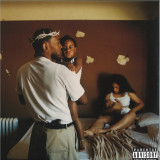
The 16-track album opens with “War & Wonders'' as Smoke begins his journey foreshadowing an upcoming battle featuring impassioned flows and rhymes describing the violent challenges of urban living. The track opens with a storyline of Smoke getting knocked down from his ongoing battles and a woman calling his name to wake up. The narrative then progresses with latest singles “Shame On You” and “Common Sense” featuring SiR commenting on humanity’s unique simplicity and embracing our differences. At the core of the album, “Stay True” featuring John Legend accentuates the meaning of living your best life by staying true to your authentic self regardless of what life throws your way and the hardships you may face. Then “Good Thing” featuring Ty Dolla $ign offers an upbeat, positive track bringing light to companionship and finding joy in life through many avenues. Smoke wraps the project with rhythmic, jazz infused “Free Write” reflecting on the crusade of each track leading to the end of his battles, and bringing awareness to the grieving of his city from politics to systemic racism and his influence on making the situation better for future generations. War & Wonders spotlights poignant themes, necessary social commentary, and the hurdles we overcome in order to appreciate what we have in this life. For Smoke, he showcases Inglewood’s war on losing love, being in love, and battling himself as he is always being led in different directions. It is a continuous journey of learning, growing, self-discovery, and reinventing a better version of himself.
Our Albarika Stores 7-inch series returns with one of the masterpieces of lo-fi Afro-funk: 'It's A Vanity' by Gabo Brown and Orchestre Poly-Rythmo.
Originally released in the early '70s, it is a fine example of the way that Benin's premier group could perfectly nail a James Brown-style groove and then twist it to make it uniquely their own thing.
'It's A Vanity' is one of the masterpieces of low-fi Afro-Funk, and has been widely sought after (and become extremely valuable) since it was comped in 2008. We've paired it with the first reissue of 'Nougbo Vehou (La Verité Blesse)' - licensed directly from bandleader Clement Melomé's family - for a must-have double-sider!
David Sylvian describes his 2nd solo album for his own Samadhisound label as being: “A modern kind of chamber music. Intimate, dynamic, emotive, democratic, economical”. Recorded in London, Vienna and Tokyo, the 8 songs and 1 instrumental on ‘Manafon’ bring together “the world’s leading improvisors, and innovators, artists who explore free improvisation, space-specific performance and live electronics” including Evan Parker, Keith Rowe, Christian Fennesz, Sachiko M, Otomo Yoshihide, John Tilbury and members of Polwechsel. This is the first time on 180gram vinyl for this 2LP set
Ever since Tsuyoshi Hamada, better known as Dayzero dropped his now-sold-out first ZamZam “Orbit Dub” b/w “Theory Dub” in 2020 we’ve been eager to bless listeners and dancers with a next chapter of his unmistakable, menacing 140 dubs, and that Part 2 is finally here. In the two years since his first Zam he’s worked with Sentry, Vomitspit, Endz, and most recently branched out with an EP of leftfield styles & textures for Bristol’s legendary Livity Sound. Now he's back on 7" vinyl with a pair of stompers just the way we like them.
“Word sounds and power gonna mash them down” couldn’t be a more choice sample to lace “Pages” with, a skanking behemoth of 140 energy powered by swaggering kick & sub, reverb soaked snare, driving shaker, scratchy guitar licks, and mad delays twisting out at bewitching angles.
“Sen” counts off through a dodgy radio frequency, flying low and dropping into a ruff attack of dirty drums & bass, shifting, off-beat mid-range melodics, sleigh bell and percussion cutting through the hazy sonic miasma threatening to envelop the tune. At once eyes-down and hands-in-the-air, Dayzero strikes again with a guaranteed high score in the dance.
Strictly limited to 700 copies for the world. No digital, no repress. Art, design & two-color screen print by Polygon Press. Mastered at Precise, Pressed at Third Man.
Born of chance meetings in Accra, the band brings together a Burundian producer and vocalist, Betina Quest; with a Ghanaian singer-songwriter, Eli A Free; and a German percussionist and multiinstrumentalist, Ma.ttic. Nyamekye Junction take their name from a bustling junction in the Ghanaian capital, where a number of major roads merge, embodying the musical approach of the band: a singular sound at the junction of their cultural heritages.
In Eli’s words, ‘Dasein’ (from the German for ‘existence’, ‘being there’), captures “the need to live in this moment here and now with a heart full of gratitude” while exploring a number of interlinked themes, including the importance of one's environment – cultural and political, as well as physical - in situating, shaping and explaining each individual’s identity.
The band adeptly channel a wide range of influences, from the Ghanaian legends Ebo Taylor and Osibisa through to US mainstays such as Nina Simone and Erykah Badu; with equal regard given to UK innovators like Benjamin Clementine and Mala. The resulting debut EP ‘Dasein’ is a stunning collage which showcases the band’s impressive range and evolving sound by traversing a diverse range of moods, rhythms and textures.
The lead single ‘GMT’ (short for ‘Ghana Man Time’) is a dancefloor-ready track that carries a deft political message. Driven by a weighty bassline alongside punching drums and percussion, for a rhythm section that would be at home in any broken-beat set, the song explores and emphasises differing conceptions of time between the West and Africa with a playful irony.
Black Truffle is thrilled to announce Drumming Up Trouble, the first release of previously unissued music by Alvin Curran on the label. Collecting works recorded between 2018-2021 and a side-long epic dating back to the early 80s, as the title suggests, Drumming Up Trouble focuses on a hitherto almost unknown aspect of Curran’s encyclopaedic and omnivorous musical world: his experiments with sampled and synthesised percussion. As Curran’s wonderful, wildly sweeping liner notes make clear, his fascination with drumming belongs to the radical investigation of music’s fundamental elements that has marked his output since the beginnings of MEV, who aimed (as he says in a recent interview) to return ‘in some collective way to a non-existent start time in the history of human music’. Whatever kind of music our proto-human ancestors played, he writes, ‘drums were front and centre in the mix. Drums rule!’
In a paradox typical of Curran’s approach, Drumming Up Trouble interrogates this most ancient dimension of music with contemporary technology. On the first side, we hear recent pieces performed using the sampling software and full-size MIDI keyboard setup Curran has refined since the 1980s. Two of them are wild real-time improvisations, primarily utilising an enormous bank of hip-hop samples. Building from polyrhythmic layers of drum machine fragments to wild cacophonies of clashing vocal samples, scratching, and frantic pitch shifting, these energetic and at times hilarious pieces occupy a space somewhere between John Oswald’s Plunderphonics, Pat Thomas and Matt Wand in the Tony Oxley Quartet, and the propulsive Kudoro/Grime fusion of Lisbon’s Príncipe label. They are improvisations are accompanied by two austere, minimal compositions realised in collaboration with Angelo Maria Fallo: ‘End Zone’ for orchestral bass drum and high oscillator, and ‘Rollings’, where a snare roll is gradually stretched and filtered by digital means into ‘floating electronic gossamer’.
The incredible breadth of Curran’s output makes it pretty unlikely that a listener familiar with his work would be surprised to find it branching out in a new direction. But no degree of familiarity with his work can really prepare for side B’s epic and bizarre ‘Field it More’. It’s perhaps best to let the maestro describe this unhinged and infectious offering in his own words: ‘It features an 8 bar funky minimal riff à la James Brown, played on synth and an-out-of-tune piano, synced to a pre-paid patch on the Roland drum machine. Over this is laid a heavily processed track of the voices of dancer Yoshiko Chuma and movie-maker Jacob Burckhardt discussing an upcoming performance of theirs at the Venice film festival, capped by a track of my playing an increasingly out of control blues over the top of all of the above’. Only Pekka Airaksinen’s Buddhas of the Golden Light comes to mind as a reference point that might even vaguely compare to this wild home-brew of drum-machine funk, mad improvisation and squelching electronics, which eventually dissolved into a massive, layered cluster. Ancient and modern, synthetic and human, hysterical and rigorous, Drumming up Trouble is 100% Curran.
Note price increase and cat number change from last time around. In the late 1960s, the American trumpet player and free jazz pioneer Don Cherry (1936-1995) and the Swedish visual artist and designer Moki Cherry (1943-2009) began a collaboration that imagined an alternative space for creative music, most succinctly expressed in Moki's aphorism "the stage is home and home is a stage." By 1972, they had given name to a concept that united Don's music, Moki's art, and their family life in rural Tagårp, Sweden into one holistic entity: Organic Music Theatre. Captured here is the historic first Organic Music Theatre performance from the 1972 Festival de jazz de Chateauvallon in the South of France, mastered from tapes recorded during its original live broadcast on public TV. A life-affirming, multicultural patchwork of borrowed tunes suffused with the hallowed aura of Don's extensive global travels, the performance documents the moment he publicly jettisoned his identity as a jazz musician, and represents the start of his communal "mystical" period, later crystallized in recordings such as Organic Music Society, Relativity Suite, Brown Rice, and the soundtrack for Alejandro Jodorowsky's The Holy Mountain. The musicians in Don Cherry's New Researches, hailing from Brazil, Sweden, France, and the US, converged on Chateauvallon from all over Europe. The five-person band Don and Moki Cherry, Christer Bothén, Gérard "Doudou" Gouirand, and Naná Vasconcelos performed in an outdoor amphitheater and were joined onstage by a dozen adults and children, including Swedish friends who tagged along for the trip and Det Lilla Circus (The Little Circus), a Danish puppet troupe based in Christiania, Copenhagen. The platform was lined with Moki's carpets and her handmade, brightly colored tapestries, depicting Indian scales and bearing the words Organic Music Theatre, dressed the stage. As the musicians played, members of Det Lilla, led by Annie Hedvard, danced, sang, and mounted an improvised puppet show on poles high up in the air. The music in the Chateauvallon concert aspired to a universal language that would bring people together through song. In a fairly unprecedented move, Don abandoned his signature pocket trumpet for the piano and harmonium, thereby liberating his voice as an instrument for shamanic guidance. The show opens with him beckoning the audience to clap their hands and sing the Indian theta "Dha Dhin Na, Dha Tin Na," and the set cycles through uplifting and sacred tunes of Malian, South African, Brazilian, and Native American provenance including pieces that would later appear on Don's albums Organic Music Society and Home Boy (Sister Out) all punctuated by outbursts of possessed glossolalia from the puppeteers. "Relativity Suite, Part 1" notably spotlights Bothén on donso ngoni, a Malian hunter's guitar, prior to Vasconcelos taking an extended solo on berimbau. A vortex of wah-like microtonal rattling, Vasconcelos's masterful demonstration of this single-stringed Brazilian instrument is a harbinger of his work to come as a member, with Don, of the acclaimed group Codona. The sounds of children playing on the ensemble's achingly tender rendition of Jim Pepper's oft-covered beacon of spiritual optimism, "Witchi Tai To," lends the proceedings an especially intimate, domestic glow. Given the context of the star-studded international jazz festival, the concert's laid back, communal vibe feels like an attempt by the Cherrys to show Don's jazz audience that he was moving on. At the same time, however, Don was extending a warmhearted invitation for them to come along for the ride. With liner notes by Magnus Nygren. Track list: 1. Intro: Dha Dhin Na, Dha Tin Na 2. Butterfly Friend 3. Elixir 4. Amazwe 5. Interlude with Puppets 6. Ganesh 7. Elixir Reprise / Witchi Tai To 8. Resa 9. Relativity Suite, Part 1 10. Berimbau Solo 11. Interlude / North Brazilian Ceremonial Hymn 12. Elixir Reprise / Ganesh 13. Ntsikana's Bell / Traditional Melody
Coloured Vinyl
WRWTFWW Records is absolutely honored to announce the release of Kenji Kawai’s complete soundtrack to Mamoru Oshii's 1993 superb political thriller science-fiction mecha anime PATLABOR 2: The Movie, available on vinyl for the first time ever and housed in a beautiful heavy gatefold sleeve with obi, as well as on digipack CD. Both versions come with liner notes by the great Masaaki Hara.
A true soundtrack maestro, Kenji Kawai is behind the legendary soundscapes of cult animes and movies such as Ghost in the Shell, Avalon, Ring, Ip Man, and Seven Swords among numerous others. PATLABOR 2: The Movie (Original Soundtrack) is one of his most experimental offerings, an outstanding palette of emotion-filled ambient atmospherics and percussion mastery breathing beautifully through Kawai’s minimalism meets modern classical approach. His symphony of moods paints a delicate picture of urban isolation, a central theme in the movie, but doesn’t hide hints of hope for a joyful future.
PATLABOR 2: The Movie (Original Soundtrack) is an ideal companion to Kenji Kawai’s Ghost in the Shell soundtrack, already available on WRWTFWW Records.
"After 11 pm, you stop hearing regular rock on the classic hits radio
station and start hearing more strange stuff, one-hit wonders from 1976,
or really minor singles from artists I thought I didn't like because I just
hadn't heard this one weird song before," says Bloomington, Indianabased singer-songwriter Damion - Rather than let those offbeat classics
fade into the twilight on his late-night drives, Damion returned home and
went straight to the Tascam cassette machine - Inspired by both the
sound and the bleary-eyed ambiguity, the result of that late-night
recording is the bronzy Special Interest, a record bathed in memory and
the antigravity of '70s AM radio
Once he had finished demoing songs at home, Damion brought the nine tracks
that would make up the album to his preferred studio, Russian Recording, and
worked with Ben Lumsdaine and Lewis Rogers to polish them up. Aesthetically,
Damion aimed to fit within the limits of the era that inspired the songs.
"Recording to cassette tape, you either have to play the part right or learn to love
the way it sounds wrong, so even in the studio we abided by those same
limitations," he says. Rather than limitations, the structures and styles of vintage
rock perfectly suit the album's lithe falsetto, eerily familiar melodies, and hazy
storytelling--the listener immersed in a soup of poetic fragments, Damion himself
always at a beguiling arm's length. On lead single and opener "Company Man",
resonant acoustic guitar and Super Ball bass provide a platform for Damion's
knowing ability to split the difference between confident swagger and laid-back
charm. The singer-songwriter pulls joy out of musical echos and lyrical wordplay,
in part coming from his love of classic songwriters and long history as a
performer. "I am mostly inspired by singer- songwriters like Carole King, Todd
Rundgren, etc.
Since releasing their first album There Is a Bomb in Gilead in 2012, the
road-worn Birmingham, Alabama band has built a reputation as being
what NPR calls 'punks revved up by the hot-damn hallelujah of Southern
rock' who carry on 'the Friday-night custom of burning down the house,' a
raw live sound that they captured with Texas punk producer Tim Kerr on
studio albums Dereconstructed (2014) and Youth Detention (2017)
before recording a full-on live album at their favorite hometown dive, Live
at the Nick (2019)
While the Glory Fires have spent a decade propagating what the New York Times
calls 'pandemonium with a conscience,' they've long talked about wanting to
make a classic record'not a transparent document of their playing live with the
occasional embellishment'but a record. So, that's what they did. They contacted
Athens, Georgia's David Barbe, whose work with the Drive-By Truckers, Sugar, Son
Volt, Vic Chesnutt and countless other artists has earned him a legendary
reputation amongst Southern independent rockers, and they agreed to set about
bringing this vision to fruition. While tackling such lofty political, historical and
philosophical concepts, the album is also the band's most intimate, vulnerable
and spiritual to date. The perspective is both outward- and inward-facing, Bains
never taking on the persona or experience of others, but rather writing about the
way his own limited experience and perspective of the band's place can lift the
veils of false narratives, and uncover 'piles of winding stories' through time. In an
age characterized by individualism, and at a time when the past seems to be the
sole domain of the status quo, Old-Time Folks illustrates the deep, thick, tangled
roots of liberation, collectivism, mutuality and solidarity in the Deep South, and
where they are flowering and bringing forth fruit today.Packaging: CD Old- Style
Stoughton-Tip on Jacket
‘Cupid & Psyche 85’: Originally released in 1985, includes sleeve notes written by Green Gartside and David Gamson.
From a bedsit in London to New York recording studios… Alternative acclaim to mainstream adulation… Indie label hopefuls to major signings… Despite the series of radical shifts that underpinned its creation, Scritti Politti's second album, ‘Cupid & Psyche 85’, achieved the virtually impossible. While everything was scaled up - the ambition, the sound, the audience - the singular artistic vision that drove the group not only remained intact and undiluted in these bigger surroundings but became more inventive, more adventurous and, ultimately, more beloved. Introduced to pianist and programmer David Gamson while making of the band's debut album ‘Songs To Remember’, Green Gartside realised he had found a creative foil to help him achieve the ambitions he had for Scritti Politti Partially recorded in New York, with several tracks produced by Arif Mardin (who had worked on Aretha Franklin’s ‘I Say A Little Prayer’, a track Green beautifully commemorates on this record) and partially in the UK, with Green and Gamson directly overseeing the process, ‘Cupid & Psyche 85’ is infused shimmering synths and the heat of classic funk.
Yet weaved together by Green’s intoxicating melodies, it is also embroidered with ideas from philosophical writings, while taking cues from myths and fables.
- A1: United In Grief
- A2: N95
- A3: Worldwide Steppers
- A4: Die Hard (Feat Blxst & Amanda Reifer)
- A5: Father Time (Feat Sampha)
- B1: Rich (Interlude)
- B2: Rich Spirit
- B3: We Cry Together (Feat Taylor Paige)
- B4: Purple Hearts (Feat Summer Walker & Ghostface Killah)
- C1: Count Me Out
- C2: Crown
- C3: Silent Hill (Feat Kodak Black)
- C4: Savior (Interlude)
- C5: Savior (Feat Baby Keem & Sam Dew)
- D1: Auntie Diaries
- D2: Mr Morale (Feat Tanna Leone)
- D3: Mother I Sober (Feat Beth Gibbons Of Portishead)
- D4: Mirror
- 1: Duende (Feat. Katie Melua)
- 2: Bank Of Wildflowers (Feat. Georgia)
- 3: I Paint What I See (Feat. Beth Orton)
- 4: William Orbit & Hukwe Zawose - Heshima Kwa Hukwe
- 5: Nuestra Situación (Feat. Lido Pimienta)
- 6: The Diver (Feat. Natalie Walker)
- 7: William Orbit & Polly Scattergood - Colours Colliding
- 8: Gold Coast
- 9: Second Moon
- 10: Promethean Lies (Feat. Ali Love)
- 11: Planet Sunrise
- 12: No Other World (Feat. Beth Orton)
- 13: Free Glo (Feat. Gloria Kaba And Laurie Mayer)
- A1: I'm Just Cupid
- A2: Bait
- A3: Empty Your Vessels & Descend
- A4: Apex Celebration
- A5: Facepie
- A6: Singing Policeman Begging For Eternal Existence
- B1: Short & Joy 1
- B2: Joyboy
- B3: Playdead 1
- B4: Tainted Smile
- B5: Short & Joy 2
- B6: Inflated Self
- B7: Alienation (Part 1)
- B8: I Had To Laugh So Hard The Gun Fell Out My Mouth
- B9: Follow The Rainbow
- C1: Playdead 2
- C2: I Am The Light Of Your Prison
- C3: Solace & Unity
- C4: Alienation (Part 2)
- C5: Ghost Arcadia
- C6: Plain Staring
- C7: Constipated Monomania
- D1: Entertainment Frenzy
- D2: Supereminent Drift
- D4: Instant Remedy
- D5: To Revive Under A Sunless Roof
- D3: Comfort Permit Deprivation (Expecting The Event Of A Sunny Day) (Expecting The Event Of A Sunny Day)
ARTS is proud to presents the second full length from one of the mainstays of the label. KRTM is again free to express his art in the purest form, after "It Will Make The World A Better Place" the Artist found again inspiration to keep working on a second one with a unique flow... for us, "NARCFEST" is pure inspiration and we hope this has an impact on you as it did on us.
Jazz iconoclast Albert Ayler took the experimental leanings of contemporaries like John Coltrane and Ornette Coleman as a starting point and then blasted them to stratospheric extremes, creating some of the most polarizing and brilliant music of the 20th Century. In particular, 1964 was a pivotal – and well documented – year in the free jazz artist’s career. After returning to New York, Ayler assembled a brilliant group with Sunny Murray on drums and Gary Peacock on bass, recording Spiritual Unity, Ayler’s first record for the legendary ESP-Disk’ label, that summer.
Soon after that session, Ayler took his trio to Europe where they were joined by cornetist Don Cherry for a tour of The Netherlands, Sweden, and Denmark. The Hilversum Session is a live radio session recorded on November 9th, 1964. At that point the quartet was months into its European tour and the interplay is extraordinary. On classic Ayler compositions like “Spirits” and “Ghosts” the band absolutely rip, with a kind of intuition and connectivity rarely heard, creating some of the most untethered and undeniably powerful music in the history of free jazz. Our Swimmer is pleased to present the first official vinyl reissue of The Hilversum Session in over thirty years.


![[KRTM] - Narcfest LP 2x12"](https://www.deejay.de/images/l/5/9/998559.jpg)