
Search:pol

10
“Subservient” ist das 4. Album von Larry Gus für die New Yorker Talentschmiede DFA. Der aus Griechenland stammende Panagiotis Melidis (so der bürgerlicher Name) präsentiert auf dem neuen Werk ein “Crisis Funk Pop” mit traditionellem, mediterranem Groove. Nicht nur politisch ist das Leben des Griechen aktuell eine Herausforderung – auch die Probleme des Vatersein prägen die Songs des neuen Albums.

12
Reissue of this 1976 LP from Zambia. Deep minimal African music, lovely compositions over scarce drum machines and (fuzzy) guitars.. Beautiful music with a deeper message in the lyrics which is explained better in the long review below. Some words from the label. There is music that falls right into place, a perfectly articulated expression of a few distinct influences. Then, there is another kind of median music, something more mysterious, the result of time, place, technology, and alchemy. Zambian writer and musician Smokey Haangala’s Aunka Ma Kwacha (The Money is Gone) released in 1976 is an example of this more mystical metallurgy, falling somewhere between psychedelic Zamrock, US folk, Kalindula, and Sundown Beat (music played after dark) from Tongaland. The unique mix of languages on the album (Bemba, Tonga, Lozi, and English) also suggest this complex cultural crossroads. Underlying the whole album is the insistent beat of a simple drum machine, which was totally unheard of in Zambia at the time, and parallels pioneering experiments by Francis Bebey, Sly Stone, and Shuggie Otis, utilizing a technology which would later come to define dance music. Then there’s the album’s original artwork by Peter Kependa, done in style similar to the infamous Jamaican dancehall illustrator Wilfred Limonious, interpreting the album’s title and primary theme; the burden of financial inequality.
In this sense the album is political, but the theme is extrapolated and explored through its impact on personal life; love, marriage, social status, and diet. The album is full of cautionary tales, folklore and references to magic, aspects of Zambian culture simultaneously mystifying and alluring to outsiders, part of what attracted Western readers to Nigerian writer Amos Tutuola’s hallucinatory Yoruba folktales. After becoming a household name in Zambia for his music, writing, and television appearances, Smokey Haangala died at the age of 38, the very week his book The Black Eye was published, abruptly ending his brilliant and ascending career. We are lucky to have his inimitable work to remember him by, Aunka Ma Kwacha resting comfortably in the pantheon of re-visionary works by Rodriguez, Kissoon Ramasar, TJ Hustler, and William Onyeabor.

The Galleria is a project from Morgan Geist (Storm Queen, Metro Area) that ripples with echoes of the indigenous music of long-dead suburban New Jersey shopping malls and NYC radio stations: bombastic freestyle, club dubs, razor-edits and bubblegum-pop R&B. The newest single, Stop & Go, is the second release since the 2015 debut, Calling Card/Mezzanine. Vocals are once again provided by Jessy Lanza, whose two solo albums on Hyperdub were met with critical acclaim and were both shortlisted for the Polaris Prize. Stop & Go features a drum-a-pella for creative mixing, plus an extended, dancefloor-friendly dub.

4
After launching with Jaxe’s acid bomb Seekings earlier this
year, Dom Trojga is back with a bang (and five smiles). Uniting
artists from Ukraine and Poland, and ditching genre
considerations in favour of a shared wavelength, Domownicy
Różnoracy Cz.1 is all about further revelation of the imprint’s
purpose. First up is synth enchantress Poly Chain with the
storming ostinato of Moonhaze (first track ever signed to the
label, but not her last, by any means), followed by the beaming
legend SLG and his soother-shaker Hello Utopia. On the B-side
Jaxe strikes back, teaming up with the uncanny Bejenec
(CHECK OUT HIS LIVE SHOW, FOR REAL), for a hefty slab of
tekno-funk that is Seamless. Finally, label founder Eltron
rounds things up with his own quirky Rym Cymcym. The
beautiful label art has been drawn by the inimitable Martyna
Bolanowska. Playing this record is good for you, so don’t
hesitate.

Following on from the release of a spilt EP from rising stars Gramrcy and Gaunt late last year, GlassTalk Records returns in 2019 with the sophomore EP from Bristol's Henry Greenleaf, "Patent".
The unassuming producer has been making waves with his bassy 130bpm productions which seem almost custom-made for the later hours of dark club settings.
Since his debut release on Par Avion last November, Greenleaf has been focused on increasing the sonic scale and clarity of his work; something that's apparent on the whole of "Patent" but especially on the opener, "Inch". A true 'creeper' of a track, the groove and harmonic arrangement of the 3-minute build-up is somewhat
entrancing but then gives way to a head-wringing breakdown.
True to his previous output, Henry doesn't sit still stylistically on "Patent". The EP's second track, "Tare", moves away from the 4x4 structures of "Inch" and into more syncopated territory previously occupied by producers like Mickey Peace or Paleman. "Tare" is a masterclass in polyrhythms with all manner of kicks, claps and vox samples skittering over each other. This deft use of drum programming is complemented by serene and uplifting synth sections, cleansing the tonal pallet before the beat forcefully drops back in.
On the B-Side, "Caved" keeps the energy and the tempos high with supremely processed high hats and a rumbling low-end landscape. Here Henry Greenleaf's adoration of Paula Temple's music shines through more than ever. Much like her output, it's kind of hard to know which way is up in "Caved" with its ever-shifting
palette of sounds and grooves.
Closer and EP title track "Patent" is probably the vastest song Greenleaf has created during his recent mission to grow his productions in scale. It's a mammoth techno track with a pulsing low-end juxtaposed against some sporadic & icey synth pads.
This release solidifies Henry Greenleaf's already hard-to-dispute status as one of the leading lights of the 'Bristol sound'. Almost impossible to define; his work sits in that amorphous sweet spot where techno, dubstep, garage and a load of other UK influences bleed into each other to form something unique. Put your headphones on and let the grooves swallow you up.


4
Bonn return on Polycarp Records with a follow-up EP of their recently released debut album „Forget Forgot Forgotten“. This time they are in good company: Frankfurt’s finest Lauer and handsome Iron Curtis set their hands to the original versions of „Le Jardin“ and „Endless“ and contributed their very own interpretation of the two tracks. Again the artwork has been designed by Atelier Disko and all tracks were mastered by Michael Jürgens. Bonn are from Hamburg.

8
“Mohammad Reza Mortazavi is a virtuoso percussionist known for playing traditional Persian instruments such as the tombak and daf. After developing more than thirty new striking techniques and progressing to be one of the most prominent players in Iran, Mortazavi travelled to Germany, eventually settling in Berlin to record and perform regular concerts the world over. His acclaimed performances have taken in venues such as Berlin Philharmonie and Sydney Opera House. In recent years, he has been embraced by the experimental electronic music community, collaborating with Burnt Friedman, Fis and Mark Fell.
Ritme Jaavdanegi is Mortazavi’s sixth LP, and his first one available on vinyl. The album came together from recordings made in Berlin in June 2019, inspired by Mortazavi’s vivid reminiscence about profound experiences he had listening to music as a child. As he drifted in this time-slipping reverie, the phrase ‘ritme jaavdanegi’ or ‘rhythm of eternity’ came to mind, and he found the phrase itself to match the 11/8 metre he was striving for. As such, all eight pieces on this album adhere to this time signature, which in itself harks back to the Aksak, a rhythmic pattern based on the alteration of binary and ternary quantities executed in a fast tempo, intrinsic to traditional music from Iran, Turkey, Afghanistan and the Balkans.
In the same way these non-standard folk rhythms started to impact on Western music in the early 20th Century, so now you can hear an ever-increasing embrace of polyrhythms and metres that break away from the dominant 4/4 ideology. What’s most striking about Ritme Jaavdanegi, perceived through a lens of modern Western experimental music, is how Mortazavi’s virtuosic playing rivals the intensely programmed dynamics of electronica. His rapid, needlepoint drum hits bend their tonality in incredibly musical ways, but there is still an underlying focus on cyclical repetition that encourages the same ancient transcendental quality that so many contemporary artists strive for.”

11
“Experimental trio Giraffe crystalize time on ‘Desert Haze’, their new LP on Marionette. Giraffe is the musical project of Sascha Demand (guitar), Jürgen Hall (keys), and Charly Schöppner (percussion). Sascha Demand is a composer that comes from a contemporary and improvised musical background, collaborating with the likes of Ensemble Integrales and Vinko Globokar. Jürgen Hall works in electroacoustic experimental projects, theatre and film scores, with releases on Staubgold and Edition Stora. Charly Schöppner is known for his popular music releases such as Boytronic on major production companies in the 1980´s and composes for theatre, dance, and film scores. With only a couple of releases to date on the wonderful Meakusma imprint as well as an EP on Marmo, little is known about Giraffe. After letting go of other artistic projects, the trio now focuses solely on Giraffe by continuously searching for and finding their own unique language.
Sascha, Jürgen and Charly have quite diverse musical backgrounds, though morphing into Giraffe they tower into one single composer. Their music is a critical statement, not in a political sense but rather an artistic one. Being mindful about what it means to create and how to position themselves as artists nowadays (without the constant hassle of being en vogue and short-lived trends) shaped their rather rare and stoic artistic stance. It is refreshingly honest to see their expression develop so naturally.
On Desert Haze, they’ve created a vibrant and minimalistic tribal sound that feels inspired by the Saharan traditional music of the Tuareg, Jazz, and German psychedelic krautrock. Giraffe themselves also list the radical music of the Viennese School (Schoenberg along with his pupils Berg and Webern) as well as the Köln School with its early electronic experiments as their main influence and inspiration. More precisely the composition process and the organization of musical material within space and time, where a conceptual and intellectual approach melds with an experimental yet expressive sound searching method.
Side A focuses on the trios studio work; it is built around tone color and pitch analysis of resonating prepared guitar sounds. Through a unique mixture of free improvisation and a serialism "rule set”, they develop instrumental layers and structures to form their tracks. Side B sees Giraffe playing more freely with a reduced setup - representative of what you may hear when listening to them live.
Desert Haze, along with its track-titles, showcases an almost mimetic approach to art. The haptic music grabs the listener not as a passive recipient but as an active resonant body to vibrate through. One can almost feel the Elements, pressure and heat forming a diamond, hypnotic overtones ringing through windy caves, shamanistic rhythms conjuring up mysterious and ancient landscapes - where the constant cycle of sedimentation and erosion reveals structures of fragile beauty - always gentle to the hand’s touch and the mind’s eye.”


20
"2001 is the second studio album by Dr. Dre. It was released on November 16, 1999, by Interscope Records as the follow-up to his 1992 debut album The Chronic. The record was produced primarily by Dr. Dre and Mel-Man, as well as Lord Finesse, and features several guest contributions from fellow rappers such as The D.O.C., Hittman, Snoop Dogg, Kurupt, Xzibit, Eminem, and Nate Dogg. 2001 exhibits an expansion on Dre’s debut G-funk sound and contains gangsta rap themes such as violence, promiscuity, drug use, street gangs, sex and crime.

Edition of 100 copies only.
Side A: 'Vodou'. Head priest: Gran Sèvitè Jean-Daniel Lafontant. Vodou priests: Oungan Eddy Saint-Jean and Anperè Jean Céus. Vodou priestesses: Manbo Françoise Célestin, Manbo Christine Lamour, Manbo Marie-Marthe Similien and Manbo Jacqueline Thélus. Other participants: Ounsi and members of Sosyete Na-Ri-VéH. Percussionists: Ountògi and the drummers of The Sacred Temple Na-Ri-VéH 777. Side B: 'Rara'. All-female rara band: Forever Rara Fanm of Belair.
Grand Rue recordings made by AMé in front of the Atis Rezistans, Port-au-Prince on 21 December 2015, 4:54pm to 5:18pm. Vodou ceremony and all-female rara band recorded by AMé at Temple Na-Ri-VéH 777 in Port-au-Prince, 16 December 2015, 9pm to 1am. Edited by Philip Marshall with AMé in Cologne, 16 May 2016. Mastered by Zachary James Watkins at Stank House, 3 August 2016. Artwork by Stefan Fähler. AD&D by Don Wyrm.
With thanks to: Ghetto Biennale, Leah Gordon, Atis Rezistans, Gabriel Toso, the priests and priestesses, the members of the all-female rara band, the percussionists, Clocktower Radio and all the Haitian People.
An introduction to Vodou music and Rara, by Gabriel Toso:
"Tanbou prete pa janm fè bon dans" ("A borrowed drum never makes good dancing")
"Music is to Vodou what water is to our bodies or fire to our hearts: all embracing, all inflaming. The spirits of Vodou are called upon and energised by the inexhaustible rhythms of Africa. Brought by the slaves to the New World, and merged with indigenous and European traditions, their magical power is the soundtrack of Vodou itself, its life-force.
Dancing, singing, praying are all fundamental aspects of Vodou; but above all it is the drumming that plays a major role during the ceremonies, an invitation to the lwas (gods) to join and partake in the rituals. Like the heartbeat of an infant in its mother's womb or the vibrations of our planet, the percussions of the tanbou (drum) are at once instrument and creator. Different batteries of drums correspond to different rites, countless rhythms to a multitude of nations of laws. The drum is not only a musical instrument but a sacred object, an expression of the divine. Its sound guides the initiates to their appointment with the spirit world.
Rara festivals are yearly celebrations that begin following Carnival during the Catholic Lent season, when the activity of the Vodou temples is at its quietest. During those six weeks Rara bands parade for miles playing music, dancing, and performing rituals for Afro-Haitian laws, while wearing specific costumes and using a variety of musical instruments. Probably originated in Haiti during the colonial period, Rara bands and their vast repertoire of songs are both politically and socially engaging while keeping an amusing, irreverent, and at times risqué personality. Traditionally connected with a Vodou temple, Rara bands leave the ceremonial spaces to interact in the public sphere through parading, thus reminding both participants and spectators of the physical presence of the lwas." – Gabriel Toso, London, 3 November.

- A1: Lentz 1 Mg (Viersen / D)
- A2: Grossenhainer Eu (Grossenhain/ D)
- A3: C.a.roscher Bo (Oberlausitz / D)
- A4: Henry Livesey Bo (Blackburn / Gb)
- A5: Lentz 2 Mg (Viersen / D
- A6: Saurer Mg ( Aarbon Ch)
- A7: Ruti / Łódź / Pl, 1892 Rec M.w
- A8: Saurer 400 Bo (Aarbon Ch & F)
- A9: Günne (Irmscher) Bo
- A10: Bändchen Mg (Jacquard F? Unbekannt)
- A11: Dornier Mg (Lindau / D)
- A12: Transmission / Bo
- A13: Elitex Jet Mg. (Cz)
- A14: Robert Hall Mg Solo (Bury / Gb)
- A15: Fred Greenwood Mechanical Works / (Łódź / Pl 1889) Rec M.w
- A16: Kleiner C.a.roscher Bo (Oberlausitz / D)
- A17: Jean Güsgen Bo (Dülken / D)
- A18: Grossenhainer Eu / Lower Floor (Grossenhain/ D)
- A19: Grossenhainer Eu (Grossenhain / D)
- A20: Grossenhainer Eu Lower Floor / Variation1 (Grossenhain/ D)
- A21: Looms/ Group* Łódź, Pl / Rec M.w
21
Editions Mego is proud to present the latest addition to the compelling discography of Thomas Brinkmann. Throughout his career Brinkmann has focussed on the human operating amongst industry alongside rhythms that manifest as a result of technological advancement. With this new release Brinkmann makes a u-turn, looking back to the early industrial age. Comprised of recordings of various looms, Raupenbahn investigates the sonic properties and consequences of the first automatic loom as constructed by Jacques de Vaucanson in 1745. Thomas Brinkmann once again adheres to his tendency for clarity and simplicity whilst further investigating not only the sound and rhythms of the machines (looms) but also what role they serve in society and what consequences they have on the environment. Raupenbahn presents 21 tracks in total, 11 feature on the vinyl, the remaining 10 as digital bonus tracks. The majority of recordings were undertaken by Brinkmann in 2017 with a Neumann KM 184 stereo set. Additional recordings were sourced with permission from Monika W. recs. from 2014 Central Museum of Textiles Łódź, Poland. Each piece presents a diversity of material which borders on the breathtaking and beautiful in richness and complexity. The various looms unravel rhythms and patterns unexpected from machines of the early industrial age.
The loom holds a significant role in shaping our world being the catalyst for Charles Babbage's Analytical Engine which, alongside the subsequent work of Byron's daughter Ada Lovelace, paved the way for modern computing. There is a linage of the loom that fits succinctly in Brinkmann's overall argument. Here we encounter a parallel between machine driven economies and the music that rose from such places, consider the Sheffield steel industries, the Manchester weaving industry or the Rhineland / Düsseldorf loom and machine industry. Is it a coincidence that the practice of such machines in the environment gave rise to today's predilection for electronic dance music, in pop, soundtracks, etc.
Raupenbahn features no treatment or processing and explicitly displays varying tempo and timbres which ascertain a wide range of acoustic structures. The artwork features Ingrid Wiener, Rosemarie Trockel and Alexandra Bircken, three different generations who would with ideas of fabric weaving, loming and the like. This exceptional release works on a number of levels alongside it's striking sonic palette.
i 9 Günne (Irmscher) BO Möhnesee / D

There are certain records you have to earn the right to play. After buying the right kind of warehouse, you have to build the energy in the room for what feels like an eternity until the precise moment the vape circle starts gettin’ out of control and Dionysus the Greek God of Greek Promoters tears through the very fabric of reality and screams “t??a!” right in your goddamned face. All of which brings us to Color Code, the latest EP from new Turbo sensation Dean Grenier.
Every single one of these four tracks is killer, a term industry demands have forced us use lightly in the past, but not this time, mister. This is sexually-viable sci-fi techno that rewrites your genetic code to give future generations a better chance at exhibiting club-friendly phenotypes like dance antlers or even more powerful sweat glands. At the snap of a glowstick, any of these selections will take your next set from “good” to “very good” on a scale of “good” to “shitty” to “very good.” That is our promise to you, no matter who you are or how much we care what you think.

8
Reissue (originally released 1981 on SKY records). Cold, concise analogue synthesizer instrumentals – on his secondalbum Serge Blenner remained true to his style, albeit shifting course slightly towards pop territory. The juxtaposition of dark harmonies and pop structures is what makes this album so appealing. In places, it feels like a blueprint for early Depeche Mode.

An absolutely georgous 12" by Orlando Voorn under his Baruka moniker focusing on ambient house / IDM and downtempo, think of the heyday of Black Dog, New Electronica, Artificial Intelligence, and Fat Cat Records shop, with Orlando's touch. And a truly delicious acid line on Circles.
First released in 1994 and remastered for the 21st century.

After publishing in labels like Semantica, Hara, Stale or Jealous God, Irazu exposes his vulnerable flank in Hooded Records in a record with great healing power for the nightlife-damaged minds. The precious melodies and soothing titles Lavender Mist, Just Breathe, and the homonym Last Rays, manage to tame the Shimmering Substance(s) and to overflow the broken ravers souls with pure, uncut love, while freeing them from the fears and anxieties usually attached to the comedown of an over-extended, masochistic, polydrug fueled sesh. We could say that the work is seeded in a Burialesque music for after the rave kind of feeling, but its root rather emerges from Berlin’s spacious techno soil and the purest, uncut human emotions. The vinyl comes in a classic 4 tracker EP format and the digital adds on Bandcamp two ambient pieces making the whole thing a sort of lifejacket Mini-album for the sinners.

4trk-028 the Oscillate EP is a collaborative effort from Francesco De Luca and Jason Patrick. The title track of the release, Oscillate springs into action with it’s tough modulating bassline and keeps the energy pumping throughout with spacey synths, heavily effected drums, crisp hi-hats, and more. The second track of the release, Oblivion, gets on with an otherworldly synth line that works away in tandem with another poly synth. Processed 909 percussions bits are laced throughout the track. Trumbull & Fort is an electro tune that pays homage to the genre’s roots with it’s title being the names of the cross streets in Detroit where the Metroplex post office is located. Deep atmospheric synth pads, bleeps and bloops, a polyrhymic synth, 808 drums snap
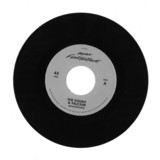
The modern funk connaisseurs Voyage Funktastique are back with the second release from their blooming label. This time they are dropping a boogie gem from Toronto's The Kount on a scorching 7" that will have DJs flipping both sides. Bungalow's slowburning groove and bumping bassline is the perfect track to get the dancefloor warmed up while Shakedown is dripping with The Kount's signature polyrythmic molasses. Falcxne's smooth vocals and G-Funk influences make for a killer 2 sider that is sure to sell out just as quickly as VF's first 45! Another essential crate filler brought to you by these funktastical ambassadors.
