"Baby Queen has announced details of her debut EP, ‘Medicine,’ set for release on November 6th via Polydor Records on limited edition Pink coloured vinyl. The EP has 6 tracks, 1.Internet Religion, 2.Pretty Girl Lie, 3.Want Me, 4. Buzzkill, 5.Medicine, 6. Online Dating. Baby Queen’s most recent track, ‘Medicine,’ saw enthusiastic praise across the board, with NME calling it “a subdued but shiny track that explores the side effects and salves of anti-depressants” while DIY proclaimed her ""pop’s buzziest new talent."" Previous single ‘Buzzkill’ saw the rising South Africa-born artist hailed one of BBC Radio 1’s ‘New Names’ on the Annie Mac Show . Additional plaudits from the likes of Billboard, who called the track “an electric, effortlessly cool single that balances its stream-of-consciousness snark with an arena-ready chorus,” drawing comparisons to Billie Eilish and Lorde. "
Cerca:pol on
- A1: Road To Earth (With Peter Thomas)
- A2: It's The Music (With Afrika Bambaataa, Charlie Funk, Hektek & Deejay Snoop)
- A3: In The Dark (With Nichola Richards)
- A4: The Spell Of Ra-Orkon
- A5: Political Power (With Afrika Bambaataa, Charlie Funk & Donald D)
- A6: Drifting Stars
- B1: Not Get Caught (With Derobert)
- B2: Locked & Loaded
- B3: Catfight
- B4: Hot Stuff (With Afrika Bambaataa, Charlie Funk & Deejay Snoop)
- B5: The Showdown
COLOUR VINYL[16,77 €]
The Mighty Mocambos' new album "Showdown" sets another cornerstone in their prolific career as a globally active instrumental funk outfit. While maintaining their organic approach of recording real musicians live on tape, the group has refined their trademark sound with a dramatic edge, a hard hitting production and ventures into less obvious musical territories. While highly enjoying themselves as the tight unit they are, The Mighty Mocambos invited an exciting list of guests to contribute to their musical "Showdown": German film composer icon Peter Thomas, hiphop godfather Afrika Bambaataa, rap legends Charlie Funk aka Afrika Islan (member of the original Rocksteady Crew) and Donald D (of Ice-T's Rhyme Syndicate), plus Nichola Richards, Shawn Lee, DeRobert from peer label GED Soul in Nashville, Zulu Nation MCs Deejay Snoop & DJ Hektek and organ genius Guillaume Metenier all joined the group for their new musical adventure. "Showdown" is released on vinyl LP by Mocambo Records and on CD and digital incarnations by Légère Recordings.
About the Mighty Mocambos:
The Mighty Mocambos and their many incarnations have released dozens of 45s and several albums on their own imprint Mocambo Records and other labels such as Kay Dee, Truth & Soul, Tramp, Légère and Favorite Recordings, to name a few. They have collaborated with musical legends such as Afrika Bambaataa, Lee Fields or Kenny Dope, put new talent like Gizelle Smith and Caroline Lacaze on the map, brought Caribbean steel drums to funk clubs with their alter ego Bacao Rhythm & Steel Band, and have toured through all civilized parts of the continent and beyond for the better part of the last years. Their unique style and trademark sound are loved by peers, fans and critics alike and distinguishes them from mere retro-copycat-acts as well as overproduced plastic soul. The Mighty Mocambos continue to deliver their brand of funk with blazing horns, soulful guitars, driving drums and basslines combined with an extra bit of quirkiness. When not producing records for one of their many incarnations and collaborations, the band is touring steadily. Whoever witnessed a concert will tell you about the musicality, passion, energy, humour and joy that the band loves to bring to the people. Background What started out years ago as a take on "deep funk" and its associated vinyl culture has completely grown into its own oeuvre d'art. With the launch of their production studio and record label in 2006, things started to gain momentum. Apart from self-releasing the group's own recordings, Mocambo Records became a household name by putting out highly collectable vinyl 45s by today's best funk outfits as well as unearthing lost library funk treasures. The Mighty Mocambos however did not restrict themselves solely to their own label. Their interpretation of the Furious Five classic "The Message", released under a pseudonym on an obscure phantasy label without proper distribution, got picked up and remixed by Grammy- nominated producer legend Kenny Dope (Masters at Work, Bucketheads). Their first single with UK funk singer Gizelle Smith, "Working Woman", became an overnight smash and a prime-time club favourite of funk & soul DJs worldwide. Initially released on the Finnish private press imprint Old Capital, it got the remix treatment by Kenny Dope and a re-release on Kay Dee Records as well. After earning their credits through vinyl 45s, the band stepped up their game with the full- length "This Is Gizelle Smith & the Mighty Mocambos" in 2009. The album received rave reviews, got lots of airplay - and sold a bunch of physical copies too. Its success led to an extensive tour throughout Europe with club dates from Marseille to Oslo, performances at massive festivals such as the Printemps de Bourges in France and live radio appearances at respected FMs such as the BBC and Radio Nova. With the following album "The Future Is Here" (2011), the band stepped further into the spotlight and explored new sounds with features by hiphop legends Afrika Bambaataa and Charlie Funk, French singer Caroline Lacaze and German rare groove queen Su Kramer, while manifesting their unique raw funk sound and refining their unmistakable instrumental style that had long gained international reputation. The album was toured extensively, including a legendary performance with Afrika Bambaataa at Hamburg's Reeperbahn Festival (covered by ARTE TV), support gigs for Lee Fields and headline shows at renowned venues such as Amsterdam's Paradiso, Islington Assembly Hall in London, Paris' Bellevilloise, Tempo Club in Madrid, or at home at Hamburg's Mojo Club. After producing the critically acclaimed debut album "En Route" (2013) of French soul singer Caroline Lacaze, where their adapted their sound to deliver a stunning mix of French Beat, Soul & Psychedelic Rock, the band went on to record a full length under their moniker Bacao Rhythm & Steel Band. Their interpretation of 50 Cent's P.IM.P. had long become a cult classic and was often mistaken for the original sample. The group's approach in stretching the boundaries of funk by adding Caribbean steel pans caught the interest of Brooklyn's finest label Truth & Soul who signed the band for the album "55", an explosive mix of funk and hip hop cover versions as well as original compositions that showcase the band's singularity in today's funk circuit. The Mighty Mocambos' recent album "Showdown" (2015) sets yet another cornerstone in their prolific career as a globally active instrumental funk outfit. While maintaining their organic approach of recording real musicians live on tape, the group has refined their trademark sound with a dramatic edge, a hard hitting production and ventures into less obvious musical territories, with a diverse list of special guests ranging from German film composer icon Peter Thomas to hiphop pioneer Afrika Bambaataa.
"Matasuna Records" has found another musical treat from the African continent for its latest release - a song by the Ghanaian musician "Mawuli Decker". It was released in 1983 on the rare and sought-after album "Ayo Special" and is available for the first time as a 7inch vinyl single, which is supplemented by an edit from "Renegades Of Jazz". The esteemed London label "Kalita Records" was able to provide the audio material for new masters and is also acting as music publisher with the new "Kalita Music Publishing".
Mawuli Decker was born in 1949 in Ghana, where he also grew up. His musicality has been given to him from an early age, so that he not only attracts attention as a singer, but also plays drums, percussion and bongo. He played in various dance bands, which were very popular in Ghana especially from the middle of the last century onwards and made the Ghanaian highlife known beyond the borders. He has played in various dance bands such as New Planets, Sawaaba Sounds, The Tops, Caprice 73, The Volta Pioneers and others, which have performed in Ghana and other West African countries.
His first release was in 1975 with the band "Dzobi Soundz" on the Polydor label. Further releases of projects with his participation followed, until 1983 when he recorded his album "Ayo Special" at "Otodi Studio" in Lome (Togo) with an illustrious group of musicians.
He is still deeply rooted in music and performs in West Africa and is still very active in recording.
On the A-side is the original version of the song "Lololi-Lomko", sung in the "EWE" language, which is spoken in the south of Ghana as well as the southern parts of Togo. "Lololi" means "There's Still More Love" and "Lomko" stands for "Please love me" - classical themes that have appeared in countless songs in music history. Although a certain catchiness of the track cannot be denied, it doesn't seem cheesy at any point. Mawuli, who also contributes the vocals, creates perfectly formed harmonies through his compositions and arrangements, which are especially apparent in the bassline, guitars & brass and of course the vocals.
This was certainly also the idea behind the edit of "Renegades of Jazz" on the B-side, which did not want to break up and alienate the organic composition. Listening closely reveals the approach: a steady tempo, a more powerful bassline and additional drums and percussions bring the song back directly to where it belongs: to the dancefloors of this world!
- A1: Road To Earth (Feat Peter Thomas)
- A2: It's The Music (Feat Afrika Bambaataa, Charlie Funk, Hektek & Deejay Snoop)
- A3: In The Dark (Feat Nichola Richards)
- A4: The Spell Of Ra-Orkon
- A5: Political Power (Feat Afrika Bambaataa, Charlie Funk & Donald D)
- A6: Drifting Stars
- B1: Not Get Caught (Feat Derobert)
- B2: Locked And Loaded
- B3: Catfight
- B4: Hot Stuff (Feat Afrika Bambaataa, Charlie Funk & Deejay Snoop)
- B5: The Showdown
BLACK VINYL[14,66 €]
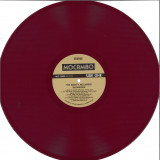
Limited edition ruby red colour vinyl reissue of the smashing album from Germany's finest funk ensemble to celebrate its 5th anniversary. 11 cinematic deep funk instrumentals, celebrated b-boy breaks and vocal dancefloor killers with special guests Afrika Bambaataa, Charlie Funk, Deejay Snoop, DJ Hektek, Donald D., DeRobert, Nichola Richards, Peter Thomas, Guillaume Metenier & Shawn Lee.
Original note from 2015 release:
"The Mighty Mocambos' new album "Showdown" sets another cornerstone in their prolific career as a globally active instrumental funk outfit. While maintaining their organic approach of recording real musicians live on tape, the group has refined their trademark sound with a dramatic edge, a hard hitting production and ventures into less obvious musical territories. While highly enjoying themselves as the tight unit they are, The Mighty Mocambos invited an exciting list of guests to contribute to their musical "Showdown": German film composer icon Peter Thomas, hiphop godfather Afrika Bambaataa, rap legends Charlie Funk aka Afrika Islam (member of the original Rocksteady Crew) and Donald D (of Ice-T's Rhyme Syndicate), plus Nichola Richards, Shawn Lee, DeRobert from peer label GED Soul in Nashville, Zulu Nation MCs Deejay Snoop & DJ Hektek and organ genius Guillaume Metenier all joined the group for their new musical adventure."
Simon Popp and Sebastian Wolfgruber aka Fazer Drums team up with Tunisian producer Azu Tiwaline for the second part of their hybrid Sound Measures series.
On the A side, the Munich-based duo's pure and raw drumming gets more melodic than on the first edition. With interwoven, polyrhythmic grooves they explore the concept of counterpoint, drawing inspiration from Gamelan, Afro-Cuban and Swing.
That's material made in heaven for Azu Tiwaline, who made sizeable waves this year with her Magnetic Service EP on Bristol's Livity Sound.
In her rework, she kept the focus on the drums, boiling down and rearranging the different parts into a 7-minute beast of a tune. Layers of her signature dubbed-out electronics add to the mystic aura, while maintaining the dynamics and musicality of the recordings.
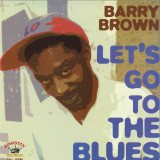
Barry Brown one of reggaes vastly overlooked talents. His militant conscious style has over time lost none of its appeal. Truly one of the sweetest roots vocalists to come out of Jamaica.
Born in 1962, Kingston, Jamaica, he cut his musical teeth working under producer Bunny Lee. Their first release was a track called ‘Girl You’re Always on my Mind’, although a minor hit, Bunny Lee saw his potential and was rewarded with his 1979 cut ‘Step it up Youthman’ which became a hit and has become a roots classic, leading to an album of the same name. The late 70’s was a great period in Barry Brown’s career and its from this period that we have culled this set of tracks. Straight from the master tapes some of his finest moments and some unreleased gems that we believe should be heard. A great set from his timeless 'Trying Youthman' a tail of struggling times in the heart of Kingston Jamaica.
His rastafarian inspired chants 'Stop Them Jah Jah','Give Thanx and Praise','Natty Rootsman' and 'Lead Us Jah’ work alongside socially charged cuts as 'Politician', 'Big Big Pollution' and 'Mr Money Man'. As with all his tales and inspired lyrics they are put across in such a tuneful way that like all the best songs that carry a message can be remembered also through the strength of the song.
As with many of his artists Bunny Lee encouraged him to go into self-production, and after a time spent with producer Linval Thompson ‘Separation’, and Sugar Minott ‘Things & Time’, he did just that and produced his first release ‘Cool Pon Your Corner’ in 1980 followed in 1981 by ‘Problems Get You Down’.
We hope this release will find a place in your collection and remind us of the talent of Mr Barry Brown. If somewhat overlooked, but certainly now not forgotten. Let’s celebrate with the man and go to the blues one more time....
Pole is the project of ground-breaking electronic musician Stefan Betke. The new album ‘Fading’ is the first since 2015’s ‘Wald’. As with every new Pole record, it’s part of a continued forward trajectory but it also connects to a pre-existing sonic framework.
“Every Pole record connects to recordings that I’ve made before,” Betke says, “in order to stay in this kind of vertical development. The ideas from ‘1’, ‘2’, ‘3’ up to now are connected. I keep the interesting elements, languages and vocabulary that I designed and add new elements.”
‘Fading’ follows the physical released on Mute of remastered versions of his iconic albums ‘1’, ‘2’, ‘3’ to much acclaim.
Double vinyl in black gatefold sleeve and spot
gloss finish with digital download code.
It's back-to-backhits with the new Names You Can Trust split single series, the first of which features two up-and-coming acts in the blossoming Latin music scene of the Pacific Northwest. From Seattle via Argentina and Miami is Terror/Cactus, a futuristic electronic cumbia project from musician Martín Selasco. Selasco's machine-forward audio/visual performances combine a mixture of bugged out digital folklore, live percussion and the omnipresent sounds inspired by the canon of South American chicha concoctions. That balance is on display in the group's debut vinyl release "Churro vs Crow." A field recording of a Mexico City street scene playfully intermingles with the track's heavy production, an innocuous battle between a crow and a churro vendor breathes a little outdoor analog into an avant digital landscape.
On the other side of the spectrum, down south in neighboring Oregon, lies Portland's Orquestra Pacifico Tropical, an 11-piece ensemble formed by a crew of talented musicians from the lush local offerings of the Willamette Valley. The band's big sound is an explosive expression of their own roots, representing the heyday of tropical music that graced stages for decades in Central and South America. Clarinet, brass, electric guitars and that familiar percussive pulse are all alive on their NYCT debut "Regreso." Imagine a return to the cross-pollinated sounds of the psychedelic '70s, an echo from the Andes, the Amazon, through the central isthmus and back to the present, only this time landing in the City of Roses.
Isolation Tapes is a 3 part series from Audiojack, featuring guest vocals from Polarbear, Eli & Fur and Lady Vale.
'The Isolation Tapes came together accidentally during lockdown. Getting lost in the music-making process was our way to escape the feelings of anxiety and uncertainty which presented themselves with the emergence of Covid. We had no plan beyond escapism, but a cleared schedule gave us lots of time to explore new ideas. After we'd made a few tracks we started to realize the importance of bringing this music together under one project, a musical reference point for this strange period in time, and so the Isolation Tapes was born - a series of singles we made during lockdown whose titles all begin with a different letter from the word: I S O L A T I O N.' - Audiojack
We’re proud to welcome Robert Owens and Queer On Acid to Takeout, who present a ‘double-A side’ release. 2 sublime pieces of vocal-house and techno which will make the hairs stand up on the back of your neck.
Robert’s hypnotic vocals weave between QoA’s beautiful production with both tracks enticing remixes from none other than in demand Fear-E, Polymod and MASC (Mark Archer & Shadow Child).
The music does the talking here, and with a limited vinyl run (which excludes the MASC remix) to support a huge digital package, we’re excited to have such quality on the new label.
Enjoy !
East London record shop World of Echo debuts on the other side of the counter with a reissue of Two Wishes, the solitary 12" by Anglo-German collective, Mutabor!. Seemingly lost to time, Mutabor! were first brought to World of Echo's attention when drummer/singer, Gary Asquith, played at the shop's first birthday celebrations while promoting one of his other bands, Rema Rema. And so the story goes...
Mutabor! emerged wraith-like from the monochromatic grit of Berlin's art punk underground late in 1981 when Asquith left London to set up temporary residence in the city following a chance meeting with Malaria's Bettina Koster backstage at a Birthday Party gig at the Lyceum earlier that year. Beguiled by the possibilities of collaboration, musical and otherwise, he was soon to make his own contributions to what was an already fecund scene. Partnering with Koster, and Gudrun Gut and Manon Duursma also of Malaria!, Mutabor! were publicly birthed via an impromptu performance at punk rock polestar the Risiko. Asquith found himself playing percussion in what would be a first, while the rest of the band ossified in front of him in typically idealistic post-punk democracy. Little documentation of the performance survives beyond that which exists in the memories of those playing - that itself shaky enough - though there was clearly sufficient encouragement for them to commit to a recording session.
Later that winter, the four booked time at Music Lab, the studio operated by Harris Johns, for what would ultimately be their only studio visit. Two songs were laid to tape, and soon after a photoshoot was to take place at Koster's flat, resulting in a handful of images that, along with the music, comprise the sum total evidence of the band's existence. 1001 Nights and Treats both found their way to Peter Kent, a co-founder of 4AD who had recently left the label with the ambition of starting his own imprint. Entitled Two Wishes, the two track 12" was to be the first and only release on Loaded. It seems that Mutabor! were to represent a series of firsts and lasts, a trend that continues now as they open the World of Echo imprint.
It's fitting to think of Mutabor! in these prescient terms given how they sounded. Berlin at that time shared a spiritual axis with New York, the conceptual & aesthetic discordance of no wave and a nascent off-beat dance culture underpinning much of the respective creative activity. There are shared signifiers, but even in that context, Two Wishes sounds oddly out of step, moving to its own unusual rhythm. 1001 Nights stutters along on a tribal beat that seems to run independent of skronking sax, spidery guitar lines and deadpan vocal incantations, the ghosts of two songs meeting in some kind of incompatible voodoo union. On the reverse, Treats slows down and dims the lights further, as Asquith sardonically recites desirous threats as an increasingly malevolent sax and guitar grinds behind him. No surprise the darkness within the music given the parent bands and the backdrop of a crepuscular early 80s Berlin, though there remains a complex compositional element to these songs that suggests a broader spectrum of emotion - desire, romance, and ultimately, infinite possibility.
Recut and mastered, Two Wishes is now presented with the original front cover artwork alongside additional imagery, including a 16 page booklet, all culled from Asquith's own archive. A brief bolt of energy at a crucial juncture in music history, Mutabor!'s story is emblematic of the mutli-verse of post-punk and the creativity its ideology necessitated.
The next one, NKISI
Climate of Fear follows up Soft Boi’s debut LP with a mammoth drop: 12 tapes ripped straight from the first two years of Berlin parties. Released one per month, the series moves from Izabel’s shivering chug through Nkisi’s deadly anarcho-gabber psychedelia, Polar Inertia’s sleek techno throb and DJ Python & Mad Miran’s impromptu closing b2b.
Climate's third release in its tape series is a writhing hardcore masterclass from Nkisi. Recorded the same night as Elena Colombi's entry, it offers an inverted counterpart to that set's languid grooviness. Nkisi wrings a supple and hypnotizing atmosphere from the most astringent and defiant selections, using the 170+ bpm kick drums and scythe-like percussion to envelop the listener. Creation and destruction merge in a fluid void state. NSFW.
Society is shaped by its history, stories that have evolved over time and held to be true. Stories of the imagination, stories from the ill-informed, stories conjured by favored subjects, but all loosely wrapped in the truth. Systems such as morals, religion, politics, and a culture are powerful enough to influence the mind of one and the minds of many and therefore direct the evolution of the species. Unseen Forces is a conceptual work that dissects this idea. A collection of four songs cause the listener to re-examine not only what they believed to be real and true but also why. Side A dives head first into testing your belief system by introducing the first stage of influence - Disruption and Experimentation. Introducing a simple question into the belief system that cannot be answered and observing the result. The Disruptor - subtle but powerful making its point with eerie, off center synth lines, and synthesized drums. Driving a wedge between the listener and the comfort of familiarity. Dr. Blowfin's Experiment - a long time and highly revered classic previously released on SID, continues to re-evaluate beliefs with modifications to the original. The question of why is still unanswered. Beliefs are broken and chaos ensues. Side B begins to take direct the chaos with another classic - Crossphaze - injecting live funk and modulated filters with this flexible floor mover previously released on Accelerate. Crossing into another realm unfamiliar to the listener as new beliefs are formed. Deconstructing the Immortals - leaves the listener with no other choice but to eagerly leave their old world behind and everything they know in ruins. This offbeat and mesmerizing anthem makes the question of why unimportant, because the answer is what now.
Soweto-born Sello Twala emerged as a key figure in South Africa’s bubblegum scene, initially cutting his teeth in the early 80s as part of groups Umoja, Harari and Image, who in 1985 released the track that would give him his nickname: ‘Chicco’. Teaming up with co-producer Attie van Wyk, later that year he released his first single as a solo artist, ‘We Can Dance’. It was followed in 1986 by ‘I Need Some Money’. Both tracks add accessible English lyrics and catchy call-and-response vocals to infectious Shangaan-rooted dance rhythms, appealing to a wide audience that defied apartheid categories and established Chicco as a charismatic solo star, as well as a talented producer, both in SA and across the continent. Based on the success of these breakthrough singles, Chicco would go on to release politically charged pop albums We Miss You Manelow (1987), Thina Sizwe Esimnyama (1989), Soldier (1989) and Papa Stop the War (1990) and Nomari (1991).
DOWNFALL is the first album under the name SAITO created by Lena Saito, aka Galcid, and produced by accomplished analog synthesizer guru, Hisashi Saito, aka Lena’s husband. Having descended from a long line of Japanese sword-smiths, the industrial sound of smashing steel is embedded in Lena’s DNA and reflected in her music, however there are also refined, hypnotic tones showing a side with more finesse. The music itself is not scored and is predominantly improvised. Words and vocals are ad libbed as well. Sometimes the machines respond as if through telekinesis, altogether emitting a sound which can be categorized somewhere in the range between modern experimental dance music and something possibly making more sense to enlightened minds a thousand years in the future.
There is a new addition to the forge of talents of Mille Plateaux, a Japanese musician by the name of Saito whose album has been released on the label under the title of Downfall. After a whole series of releases under the signature tag clicks & cuts, there comes out a work, much more suited for a dance hall, that is different in terms of the genre from everything that has been published so far.
Like a bucket of ice-cold water poured over the head, erratic agressive hardcore rhythms pour all over the audience in the first track, interrupted only by grinding noises and minimalistic technogenic clicks.
Downfall won't fail to infect even the most experienced music connaisseur with its out-of-control energy, while offering a wide range of techniques: at times, robotic voices, one second long fragments of looped melodies and many other audio gimmicks.
Lena Saito (that is the author's name) is not afraid of conducting experiments in her chemical laboratory, freely mixing sound reagents without taking any precautions. It feels like, this new chemical substance, that she has been working on so thoroughly, contains quite a long list of ingredients, although its main component is the various rhythm breaks.
The synthesizer part of Red Hammer sounds in the best traditions of the acid style, and the rhythm section is akin to African tribal dances of the future. Downfall is absolutely unrelenting in its concept.
The melody of the composition Nucleosome is a little bit like the melancholic IDM of the 00s, finding itself secondary to the dominating, yet again convoluted rhythmical web meticulously woven by Saito.
This album can be definitely named as a big contender aspiring to start a new golden era of Mille Plateaux, and Saito as the hidden treasure of the label that can challenge even the veterans for the right to be the headliner.
After his acclaimed debut EP « Cotonou » on Alma Negra’s record label, James Stewart comes back with his new EP Atlantic River Drive for Mawimbi Records, featuring two collaborations with Ghanaian kologo musician Ayuune Sule as well as two remixes from Simbad aka SMBD.
James Stewart met Ghanaian kologo musician Ayuune Sule, after booking several shows of kologo music star King Ayisoba in Lyon. Stewart was quick to witness the bluesy tone of Ayuune’s voice and his kindness as a musician, despite his impressive stature. Quite logically, Stewart invited Sule to record vocals on two of his ongoing demos at Bruno Patchworks’ recording studio (Voilaaa, Mr. President, Da Break), with the idea of making a rather unheard crossover between traditional kologo music and contemporary styles that would both appeal to Ghanaian crowds and a Western audience. Stewart then had a number of his arrangement ideas re-recorded by a talented cast of musicians, resulting in a brilliant mix of acoustic and electronic textures, sounding both vintage and modern.
Nodding to Eddie Palmieri’s landmark record “Harlem River Drive”, “Atlantic River Drive” is a stomping dancefloor track, drawing from the 6/8 feel of kologo music and the energy of contemporary club music. The track can be read as a tribute to the musical cross-pollinations between the African continent and its many diasporas, which Stewart has dedicated a long part of his life to, but also as a more intimate story about his life and family. All words were written by Stewart and then translated by Sule in his native Fra fra language from Northern Ghana.
“Where Are We Going?” is a two-part journey that reminds us that we should care about each other, about our communities while we don’t know what the future is made of. An important and much welcome message to navigate through these troubled, uncertain times. Referencing congolese N’dombolo tracks, the track has two parts and rich arrangements, with its first part going deep with syncopated clarinet hooks and playful percussion parts, and its second part moving to a four-on-the-floor pattern and an entrancing baritone saxophone solo.
The EP also features Worldwide FM and Brownswood maestro Simbad, who delivers two dancefloor-ready reworks of the track “Where Are We Going?” under his SMBD moniker, turning it into a spiritual, dubby journey, as well as an emotional house music track.
Birds are singing, a soft female voice embraces the stars, then the funk hits the fan: the second album of mysterious Japanese singer Nadja haunts immediately and marks one of the most exquisite reissues in the ever-growing catalogue of Studio Mule. Originally released in 1989 as promo only CD on the Japanese label Polystar, the album features some of the finest eighties pop funk fusion arrangements of the era. A deeply enchanting lost gem, that gets listeners instantly into heavy repeat addiction.
All ten songs are arranged by a group of grandmasters of their art. Japanese saxophonist, composer and music producer Yasuaki Shimizu, man behind the electronic ambient fusion classic “Kakashi”, was in charge for tunes like “Wac-Wack”, a neon light funk pop song, full of soft big city eroticism, ultra-slick synth lines and real funkateer explosions. It’s followed by “夢のとりこ”, the most stirring pop tune on the album, that originally was written by French composer, multi-instrumentalist, actor and singer Areski Belkacem, known for his and long-time collaborations with French avantgarde singer Brigitte Fontaine. Shimizu transformed the song into a low hanging funk jewel, with a cool rolling bassline, dub depth and synths that cry for cosmic help. Above all Nadja signs with a sexy chill, that somehow could only emerge in the 1980ees, when the cold war even made pop music real cool. The follow up is named “真珠のように”, features again music by Belkacem, this time transformed by Shimizu into electronic erotic pop - dreamy, witchy and precisely musical composed.
The B-Side opens with “Velvet Rain”, a funky urban boogie composition by Japanese keyboard player, composer and producer Akira Inoue, enlarged with glimmer camp kitsch, that immediately puts a smile on the listeners faces. It gets followed by “Paradise Catcher”, a soft pop tune with longing string and horn sections, arranged by legendary Jamaican rhythm and production duo Sly & Robbie. It somehow marks one of the strangest songs in their longstanding career, as it is largely minimal orchestral but yet super tight when it comes down to the rhythmic magnitudes. The next tune, “Private Tripper”, also stays soulful, funky and horn driven. Always pleasing the super tight, yet feathery voice of Nadja, that is dancing about boogie grooves and illuminating melodies with a seducing tragical coolness. Finally the album ends with a stylistic break in the overall musical atmosphere. It comes from Japanese musician Hiroaki Goto, it’s called “地図をずっと南へ”and features Afro-Brasilian voodoo rhythms, pan flutes, cosmic piano notes and Nadja, singing like a rain forest sorceress from outer space.
Ten arrangements by a bunch of high-grade arrangers, that all left Nadja’s voice enough space to widespread her talent as a supremely seducing singer, who wrote all lyrics, vocals and chorus by herself in order to present her touching vocal class in a vivid, bewitching timeless style. Come in and get ensnared!
- A1: Special Fun - Polar
- A2: Ranko Feat Lola Rue - Everyday
- A3: George John - Hope (Solo)
- A4: Larry Houl - The Vinyl Frontier
- A5: Ari Bald - Cluster Of Islands
- A6: Explorer Of The Humankind - I Feel U
- A7: Atbin - Who Want To
- A8: Lydia Eisenblätter - Episode One
- A9: Marco Lazovic - From Here To Eternity
- B1: Malik Kassim & Midnight Flavor - Little Girl
- B2: Donnie Moustaki - Robot Jesus
- B3: Last Nubian - 1 Choice
- B4: Duktus & Byte Chop - Sloppy Jam
- B5: Kolja Gerstenberg - Fall In Love
- B6: Wild Re§Ection - You The Only One
- B7: Lootbeg - Hollow Earth Filler
- B8: Dj Safeword - Who Got Da Space Powda?
- B9: Native Cruise - Distant Planes
- A1: Intro
- A2: Say The Name
- A3: 96 Neve Campbell (Feat Cam & China)
- A4: Something Underneath
- B1: Make Them Dead
- B2: She Bad
- B3: Pain Everyday (With Michael Esposito)
- C1: Check The Lock
- C2: Looking Like Meat (Feat Ho99O9)
- C3: Eaten Alive (With Jeff Parker & Ted Byrnes)
- D1: Body For The Pile (With Sickness)
- D2: Enlacing
- D3: Secret Piece (Composed By Yoko Ono)
In the horror genre, sequels are perfunctory. As the insufferable film bro Randy explains in Scream 2, "There are certain rules that one must abide by in order to create a successful sequel. Number one: the body count is always bigger. Number two: the death scenes are always much more elaborate-more blood, more gore. Carnage candy. And number three: never, ever, under any circumstances, assume the killer is dead." Last Halloween, Los Angeles experimental rap mainstays Clipping ended their three-year silence with the horrorcore-inspired album There Existed an Addiction to Blood. This October, rapper Daveed Diggs, and producers Jonathan Snipes and William Hutson return with an even higher body count, more elaborate kills, and monsters that just won't stay dead. Visions of Bodies Being Burned is less a sequel than it is the second half of a planned diptych. It turns out, Clipping took to the thematic material of horrorcore like vampires to grave soil. Before the release of There Existed an Addiction to Blood, Clipping and Sub Pop Records divided the material up into two albums, designed to be released only months apart. However, a global pandemic and multiple cancelled tours pushed the release of the project's "part two" until the following Halloween season. Visions of Bodies Being Burned contains sixteen more scary stories disguised as rap songs, incorporating as much influence from Ernest Dickerson, Clive Barker, and Shirley Jackson as it does from Three 6 Mafia, Bone Thugs-N-Harmony, and Brotha Lynch Hung. Clipping's angular, shattered interpretations of existing musical styles are always deferential, driven by fandom for the object of study rather than disdain for it. Clipping reimagine horrorcore-the purposely absurdist hip-hop subgenre that flourished in the 1990s-the way Jordan Peele does horror cinema: by twisting beloved tropes to make explicit their own radical politics of monstrosity, fear, and the uncanny. The album features a host of collaborators: Inglewood's Cam & China, fellow noise-rap pioneers Ho99o9, Tortoise guitar genius Jeff Parker, and experimental LA drummer Ted Byrnes. The final track, "Secret Piece," is a performance of a Yoko Ono text score from 1953 that instructs the players to "Decide on one note that you want to play/Play it with the following accompaniment: the woods from 5am to 8am in summer," and features nearly all of the musicians who appeared on both albums. Since their last album, Daveed Diggs-the group's Tony and Grammy Award-winning rapper-has starred in the TNT science fiction series, Snowpiercer, voiced a character in Pixar's Soul, and portrayed Frederick Douglass in Showtime's The Good Lord Bird. Writer Rivers Solomon's novella based on Clipping's Hugo-nominated song "The Deep" has been nominated for the Nebula, Hugo, and Locus Awards, and won the Lambda Literary Award for best LGBTQ SF/Fantasy/Horror novel. Clipping's song "Chapter 319"-a tribute to George Floyd (AKA Big Floyd) the former DJ-Screw affiliated rapper who was murdered by police officers in May of 2020-was released on Bandcamp on June 19th and raised over $20,000 for racial justice charities. A clip of the song also became a popular meme on TikTok, generating over 50,000 videos in which teenagers rapped the song's lyrics ("Donald Trump is a white supremacist, full stop_") directly into the frowning faces of their conservative parents. The band also contributed a Skinny Puppy-esque rework of J-Kwon's "Tipsy" to Save Stereogum: An '00s Covers Comp.
Creole poetry, folk mysticism and heavy-grooving cosmic synths combine on this unprecedented survey of spiritual Martinique polymath Gratien Midonet's first four albums. For Midonet, pushing musical boundaries was less a choice than an extension of his spirit. A self-taught guitarist and composer, drawing on his childhood memories of bélé and beguine rhythms, Midonet's musical life developed in parallel to his academic and spiritual pursuits. Studying philosophy and psychopedagogy in France, it was his fascination with pan-Africanism and animism which fuelled the transcendent energy of his music. Although Midonet honed his sound in France, the four albums he released during the late '70s and '80s were heavily inspired by diasporic nostalgia, or what he describes as the "smells and colours... subliminal noises... fruity notes, the memories of funeral wakes, the bombastic organ of the cathedral and the gasps of the drums" of his childhood home on the Caribbean island of Martinique.