Motel d'amour - A Lost Electro-Funk Gem from the NDW Era Resurfaces
When we first collaborated with Collage member Markus Kammann on the EP project "Mit den Puppen tanzen" at the end of last year, we never imagined what would follow: Kammann approached us with a completely unreleased full-length album by his former band. Upon receiving the first three preview tracks, we were floored. One of them was "Nachtcafé" - a track that kicks off with a funky bassline layered over the punchy rhythm of a Roland TR-808. Add shimmering synths and Katrin A. Kunze's sharp, distinctive vocals, and we instantly knew we were hearing something special.
For a label dedicated to rediscovering lost treasures, this was exactly what we'd been searching for. The next two tracks - "Rendezvous" and "Casanova" - were just as compelling. When Kammann sent us the full album, we realized we were holding an electro-funk grail from the late golden days of the German Neue Deutsche Welle (NDW). We were listening to "Motel d'amour".
"Motel d'amour" is a concept album, offering a sharp, vibrant perspective from a confident, intelligent, and radiant young woman eager to experience nightlife, love, and music. Kunze's lyrics paint vivid scenes of flirtation ("Nachtcafé", "Rendezvous"), encounters with men ("Casanova"), the pulse of nightlife ("Die Nacht ist noch jung"), love ("Rotes Licht für rote Liebe"), one-night stands ("Motel d'amour"), and more. Rarely has a German album from that era captured emotional nuance and social dynamics so insightfully. Without veering into the overly personal, Kunze's direct, daring lyrical style was groundbreaking at the time - and remains refreshingly bold today.
While German listeners will fully appreciate the lyrical depth, the music speaks volumes on its own. Kunze's words are masterfully complemented by the production of Markus Kammann and Jürgen Grah. As heard on the in-demand "Mit den Puppen tanzen", their creativity seemed boundless. Each track is tightly composed, catchy, and full of character. While many German bands at the time leaned into rock, Kammann drew from the deep grooves of Earth, Wind & Fire, The Isley Brothers, Brothers Johnson, The Commodores, and the electro-futurism of Afrika Bambaataa's "Planet Rock" and "Looking for the Perfect Beat". The result: tracks with unmistakable electro-funk flair, powered by the classic 808 drum sound.
Though primarily rooted in funk and electro, the album retains flashes of NDW aesthetics - "Wir haben getanzt heut' Nacht" being a prime example. The instrumentation is a dream list for vintage gear lovers: Yamaha keyboards, Roland Juno-60, vocoder, Micromoog, Hohner D6 Clavinet, Fender bass, and a Telecaster guitar all feature prominently.
Recorded in 1985 at the high-profile Delta Studio by Richard Rossbach, the album attracted interest from Polydor. However, the label proposed using the compositions for a solo project with singer Inga Humpe (of Neonbabies), who was already signed to their roster. This would have required replacing Kunze as the vocalist, an idea the group firmly rejected. As a result, "Motel d'amour" was shelved, and Kammann, Grah, and Kunze moved on to form Cold End.
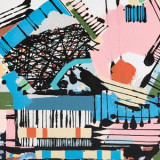
The album cover features a rare archival photo of Katrin A. Kunze - rediscovered by Kammann and now finally seeing the light of day, 40 years later.
We believe Motel d'amour deserves recognition alongside cult German classics like P!OFF?, 1. Futurologischer Congress' "Wer spricht?", Ami Marie's "Verrückt nach Glück", the funkier cuts of Cosa Rosa, or Piet Klocke's groove classic "Heute ist nicht sonst". It's a record that fits into adventurous DJ sets but also rewards a full, start-to-finish listen.
A note on audio quality: Sadly, the original master tapes were lost. The tracks were restored from a vintage TDK cassette. Thanks to modern digital tools, we were able to remaster them to a high standard - but in some songs light distortions remain. We appreciate your understanding and hope you enjoy this lost and undiscovered gem.
Suche:pol on
ETNOBOTANIKA - remember them? Well, now it's KOSMOBOTANIKA!
But rest assured - it's still the same excellent band from Ruda ?l?ska, only this time instead of a forest full of ghosts or a land of fairy tale creatures like a Fruwajacy Przestepca the duo of producers takes us on an interstellar journey!
The artists' third album, just titled KOSMOBOTANIKA, is an over forty-minute work skillfully composed from a multitude of various samples, and genre-wise presenting the sounds of deep house, trip-hop, breakbeat, ambient and even jazz. This is electronic music with a very cinematic, visual and imaginative character, something at which ETNOBOTANIKA has undoubtedly achieved mastery confirmed by their first two very well-received albums. This cinematic style (electronic concept album?) is reminiscent of the classic albums of the genre's progenitors from the UK like The Orb (first releases) or The KLF (the iconic "Chillout" album), but also the French Motorbass.
The Silesian duo does it their own way, of course, with a local twist. Thus, in the cosmic journey our guides will be in-sampled familiar voices from Polish television, cinema, radio and dusty vinyls (yes - samples from Mr. Kleks in Space had to be on the album, of course :) ).
There is no shortage of atmosphere-building instrumental fragments here, but also quite song-like tracks with catchy melodies and vocals. Fans of the band will certainly be satisfied.
What is there to say - ETNOBOTANIKA has created another classic, which simply must be on the shelf :) Trust them and let yourself be taken on a cosmic journey - satisfaction guaranteed!
- Ete
- Kharita
- Baynana
- Mudun
- Haigazian (October 22)
- Burj Al Murr (October 25 To 27)
- Markaz Azraq (December 6)
- Markaz Ahmar (December 6 Suite)
- Al Hisar (December 8)
- Holiday Inn (January To March)
- Holiday Inn (March 21 To 29)
- Al Irth
Mayssa Jallad is a Beirut-based bilingual singer-songwriter, architectural researcher and teacher. Her work deals with the highly personal as well as the political, as with her first solo album "Marjaa: The Battle of the Hotels", which explores the histories of urban battles that occurred before she was born, during the Lebanese Civil War, through a collaborative musical and architectural lens. "(Marjaa) is, as one might expect, a sombre affair largely comprised of Jallad's delicate vocals backed by acoustic guitar and ethereal synthesizer. Elsewhere, co-composer and producer Fadi Tabbal adds the crackle of distant artillery and a ghostly wind between the high-rise blocks." - Daniel Spicer, Songlines, April 2023 "Historical trauma, strings, drones, metallophones and buzuks wrap around powerful stories and gossamer vocals on Lebanese singer's tender, intimate debut. With shades of Nico, Jarboe and Elizabeth Fraser, '80s' 4AD fans will rejoice." - Andy Cowan, MOJO `Marjaa_' (tr. `reference') combined Mayssa Jallad's two main vocations: music and urban research/architectural history. The album was co-written with Fadi Tabbal and based on Mayssa's Historic Preservation master's thesis (`Beirut's Civil War Hotel District: Preserving the World's First High-Rise Urban Battlefield'). The thesis examined a 5-month conflict that took place within Beirut's skyscraper-laden luxury hotel district of Minet El Husn near the start of the Lebanese Civil War. Addressing a post-war generation who have never been taught this difficult history, `Marjaa_' was an attempt to process trauma, and "a call to protest for the renewal, rather than the recycling of the political class that once destroyed the country and holds us, to this day, hostage of its violence". In 2013, Mayssa founded indie-pop band Safar with guitarist Elie Abdelnour, releasing debut album In Transit with Lebanese indie label Ruptured in 2017, and follow-up EP Studies of an Unknown Lover in 2019. Both albums were produced by Lebanese producer Fadi Tabbal at Tunefork Studios in Beirut. Mayssa's most recent multi-genre collaborations include "Madina min Baeed" (2022) with electronic musician/producer Khaled Allaf; "Bi Kheir" and "Fil Aatma" (2022) with indie supergroup Baada Ab (Dani Shukri, Ezra Tenenbaum and Omaya Malaeb), released by Thawra records and Found Sound Nation. Next is the Versions version of Marjaa, which sees Civilistjävel! (aka Swedish producer Tomas Bodén) apply a stripped, dub methodology to Mayssa's original rich stems, refracting the Arabic source through the hazy prism of Northern European electronica. 140gsm vinyl, jacket printed on 20pt board with aqueous gloss coating, with a 3.5mm spine and a black paper inner dust sleeve.
- Beyond Compare
- Step On Up
- Meant To Be
- Possibilities
- Things
- That's Fate
- Adventure
- The Summer Of Love
- Stars Don't Lie
- Lemonade Sunset
- Magnificent
- Blame It On Your Smile
Legendary indie travellers Half Japanese return with their new album Adventure. The prolific outsider combo, helmed by the ever-optimistic Jad Fair, delivers a heartwarming set of upbeat sonnets celebrating the power of love, affection, and maturity. More than 50 years since Jad and his brother David emerged from their lo-fi bedroom in Uniontown, Maryland, USA, Adventure takes the latest incarnation of the band down new and more refined avenues. Recorded in London at Vacant TV and produced by Jason Willett and Jad, Adventure presents a more pristine and polished canvas for Jad to expand upon. The addition of Euan Hinshelwood to the sonic palette, with saxophone, harmonica, and piano, creates a smoother backdrop for the band's less lubricated sound. Lemonade Sunset is an ode to the world of wonder, a spacious overture built with melancholy in mind but relishing the positivity of life. By contrast, Step On Up revolves around a glorious rising piano motif that hints at Steely Dan if they were high on energy drinks and spinach rather than their usual tipple. It's a light-hearted evocation of the good times. Magnificent is a homage to living in the present tense, powered by the bittersweet saxophone, with a glorious piano-led sub-melody offsetting Jad's positivity: "magnificently magnificent," no less. Elsewhere, ringing percussion and sharp arrangements provide Jad with a sturdy and far reaching soundtrack to lament over. Adventure sees Half Japanese covering new ground, with Jad's considered soliloquies set in a sumptuous setting. The lineup for Half Japanese on Adventure includes Jason Willett (bass, keyboards), Gilles-Vincent Rieder (drums, percussion), John Sluggett (guitar, piano, bass), Mick Hobbs (guitar), Euan Hinshelwood (guitar, saxophone, piano, harmonica), and Jad Fair (vocals, percussion). Sadly, longstanding member Mick Hobbs passed away last year. "Absurdly underrated art-rockers" - Record Collector. * "Fair's ability to bang out music behind him is matched perhaps only by Mark E Smith" - The Wire.
Playing with a Different Sex was the debut album by seminal post-punk band Au Pairs, released in 1981.
Described retrospectively by AllMusic as ‘one of the great post-punk records’, a review by Record Mirror on its release said the band’s ‘critique of all forms of possession and sexual stereotyping assumes a devastating power’. Themes include sexual politics and the torture of women imprisoned in Northern Ireland during The Troubles of the 1970s, as well as a stunning cover of David Bowie’s ‘Repetition’ about domestic violence. It peaked at No. 33 in the UK, and features the single ‘It's Obvious’, which reached No. 37 on the US Club Play Singles chart. Playing with a Different Sex is available as a numbered limited edition of 750 copies on turquoise coloured vinyl and contains an insert.
Signing with FatCat Records in 2022, and having released four singles to date, Nottingham-based Midnight Rodeo have now delivered their debut album, “Chaos Era”.
Extensive, relentless touring (sold-out hometown shows,The Great Escape, Dot To Dot, and Kendall Calling) created a tight-knit family, their pleasure in playing as an ensemble is instantly evident on the album. When asked about this they’ll explain, “We want people to tap into why we are always smiling on stage.”
The songs are collaborative efforts. Their different musical backgrounds result in a genre criss-crossing and totally unique creative collisions. Bassist Harry says, “What we do is Dada-istic. The drums play hooks, the bass plays parts usually taken by brass, the guitar’s playing West Coast psyche over disco rhythms.”
Written over a prolonged period of time, the songs on the album can be viewed as a kind of coming-of-age “suite”, as the unit of 20-somethings wrestle with subjects such as relationships, shifting social dynamics, changing hopes and dreams. The LP’s title refers to tumultuous personal events they’ve helped each other through. Reinforcing their bonding. With no pointed political agenda, the album is about “escape”. “We want people to dance”, they say.
The band recorded the album with Samana’s Franklin Mockett. Making full use of the acclaimed duo’s residential studio, located deep in the Welsh countryside, during an Indian summer heatwave. The aim was to remove all distractions, and, with Mockett’s assistance, capture the group as live, and as analogue, as possible. For 10 days, in sometimes 16 hour sessions, music, incense, and whiskey flowed, while vintage amp valves glowed.
Just like the band’s live performances, “Chaos Era” is packed with a palpable joy. The exhilaration of creation in each others company. Its punchy production is most definitely meant to be played loud.
- A1: The Nails - Real Proof (Unreleased)
- A2: Fingerprints - Wasted On You
- A3: Naked Rush - Top 40
- A4: Spektr'm - What Do I Do (What Do I Say)
- B1: Fritz - Number Nine
- B2: Blue Rain - New Morning
- B3: Merrell Fankhauser - Calling From A Star
- B4: Nick Coluccio & Dream Illusions - Awaken
- C1: The Scam - Don't Quit
- C2: Angry Young Bees - Tell Me Tv (Unreleased)
- C3: Ted Paugh - Headin' - Down The Highway
- D1: Animal Logic - The Meaning Of Life
- D2: Holidaye - Times
- D3: Hangnail Phillips - Let Me In (Unreleased)
- D4: Sly Dog - Cryin' For Love
Jede Compilation-Serie hat ein Ende. Nach 10 grandiosen Ausgaben verabschieden wir uns nach diesem 11. Teil von der unter Sammlern und Musikliebhabern hoch geschätzten Praise Poems Reihe. Ganz bewusst wagen wir uns mit diesem letzten Teil an ein Genre heran welches wir bis dato nur in Ausnahmen mit einbezogen haben: Power Pop der späten 1970er und frühen 80er.
Los geht’s mit „Real Proof“, einem unveröffentlichten Song der ursprünglich aus Boulder, Colorado stammenden Band The Nails die einige Jahre später sogar unter Vertrag eines Major-Labels standen. Obwohl die Fingerprints ein ganzes Album aufgenommen haben hat es über 45 Jahre gedauert bis dieses schließlich 2022 veröffentlicht wurde. „Wasted On You“ stammt von einer der drei Singles die zwischen 1978 und 1980 veröffentlicht wurden. Ganz im Gegensatz zu den Fingerprints sind die Original-Singles von Naked Rush extrem selten. Dies ist wohl mit ein Grund warum keiner ihrer Songs bis dato auf einer Compilation zu finden ist. Schön, dass wir dies nun ändern. Dies gilt übrigens für die Mehrzahl der Songs auf diesem Album und generell für alle unserer Compilation-Alben. Fritz, Blue Rain, oder Holidaye machen hier keine Ausnahme. Speziell erwähnen möchten wir noch zwei Songs. Zum einen „Don’t Quit“ von The Scam der von William Garrett produziert wurde. Garrett war von 2016 bis 2023 bei Spotify als Senior Music Producer für die Einführung von Spotify Singles zuständig und hat in dieser Zeit mit Künstlern wie Elton John, Ed Sheeran, John Legend und vielen weiteren zusammengearbeitet. Zum anderen gibt’s eine tolle Geschichte zu Animal Logic. 1989 erfuhr die Band, dass Stuart Copeland von The Police eine neue Band gründete. Der Name? Animal Logic! Nachdem Bitten, den Namen nicht zu verwenden, ignoriert wurden, sahen sich die Jungs von Animal Logic gezwungen, die Angelegenheit vor Gericht zu bringen, und verkauften schließlich den Namen an Copeland. Noch viel mehr weitere, spannende Geschichten rund um die Bands gibt’s im Begleitheft der CD bzw. der LP-Beilage.
Mit “A journey into raw, energetic power pop from the 1980s” beenden wir nun unsere 10-jährige Entdeckungsreise durch die Musikgeschichte unter dem „Praise Poems“ Schirm. Wir hoffen sehr, dass euch unsere akribische Arbeit viel Freude bereitet hat. Geht eine Tür zu, geht eine andere auf. So wird es auch hier sein. Es gibt noch so unglaublich viel zu entdecken und so freuen wir uns jetzt schon auf viele weitere Veröffentlichungen!
- Almost Automatic
- 21:
- Balmorhea
- Bummer Year
- First Crossing
- Vision Boards
- Walker Lake
Born and raised in small Texas towns, the members of Good Looks met and began playing together in Austin. Songwriter Tyler Jordan grew up in a South Texas coastal town dominated by the petrochemical industry, his childhood steeped in the tension between nature and industry, exploitation abundantly present and the wealth gap on full display. His father's church, described by Tyler as "cult-like in its intensity," was homebase and where he learned to sing. Tyler eventually met lead guitarist Jake Ames in the late-night song-swap circles of the Kerrville Folk Festival campground (where they would also meet Buck Meek and Adrienne Lenker pre-Big Thief). They shared their mutual love of the Texas hill country canon (Blaze Foley, Townes Van Zandt, and Willie Nelson), a love of cheap diner food, thrift store baseball caps, and a healthy dose of harmless shit-talking. They began playing in bands together, backing up other songwriters and taking turns in the spotlight. They sought out producer Dan Duszynski (Loma, RF Shannon, Jess Williamson) to engineer their debut album. What would form was Good Looks, a blue-collar political indie-rock band with healthy doses of Replacements swagger and shimmering, desert rock riffs not unlike The War On Drugs.
- A1: The Blue Planet
- A2: Family Theme
- A3: Surfing Dolphins
- A4: Abyssal Plain
- A5: Mobula Rays
- A6: Race To Feed
- B1: Albatross Flight
- B2: Big Blue
- B3: Turtle Spa
- B4: Ducks & Currents
- B5: Humboldt Squid
- C1: A Foresta Awekens
- C2: Scavengers Of The Deep
- C3: Kobudai Transformation
- C4: Clownfish
- D1: Baby Turtle
- D2: Weedy Sea Dragon
- D3: Portuguese Man Of War
- D4: Walrus The Right Piece Of Ice
A sequel to the 2001 series Blue Planet, it took 4 years to complete this seven part new exploration of the underwater worlds, with 125 expeditions across
39 countries and 6000 hours of underwater filming. The series was broadcast on BBC One on 29 October 2017 with viewing figures exceeding 10m and
its exposure of plastic pollution in our oceans has started a global conversation about reducing plastic waste, now more relevant than ever.
With over 120 soundtracks to his credit which have grossed 24 billion dollars at the box office, Hans Zimmer has been honoured with many accolades:
an Academy Award, two Golden Globes, three Grammys, an American Music Award, a Tony Award and The Henry Mancini Award for Lifetime Achievement.
His Academy Award nomination for Interstellar marked his 10th Oscar nomination.
The composition is completed by Jacob Shea and David Fleming from Emmy and BAFTA nominated Bleeding Fingers Music. Bleeding Fingers has created
original music for productions including the Fox’s The Simpsons, BBC’s Planet Earth II, National Geographic’s Princess Diana In Her Own Words, NBC’s hit
Little Big Shots, Sony’s Snatch (TV), Amazon’s American Playboy, AMC’s The Making Of The Mob, Netflix original Roman Empire and History Channel’s Mountain Men.
Accomplished Polish beat-maker Emapea has made memorable appearances on many Cold Busted label compilations – such as in the IWYMI and Bust Free series – and has been selected for inclusion in Mark Farina’s next Mushroom Jazz installment. All this activity has mouths watering for the debut full length album from Emapea, and the appearance of Seeds, Roots & Fruits doesn’t disappoint one bit. Featuring sixteen exceptional tracks ranging from hip hop to acid jazz to psychedelic trip hop in the style of Mo’Wax, Emapea’s long player is indeed, as a wise man once said, “a journey into sound.” Seeds, Roots & Fruits rises above the average beats album to reveal the enduring depth of this young producer
- Twilight Winter
- Cocaine
- Universe
- Rolling
- Spanish Feeling
- The Annexe
- Bleak House
- Track Four
# 1st official vinyl reissue in over 30 years # sourced from tape # 8 page color bboklet with large-format hotos and full liner notes # band members' stories told at last // Universe was a Welsh rock band formed in the late 1960s, marrying progressive and blues musical elements with a powerful sound. Guitarist Steve Finn, bassist John Healen, and drummer Rob Reynolds formed the nucleus of the band, initially playing under the name Deep Blue Centre, then Spoonfull, rehearsing a set that included covers and originals influenced by acts like Cream, John Mayall, and Jimi Hendrix. By 1970, they had become Universe, the name reflecting the expansive ambition of their evolving music. Universe became known for their stellar live performances, playing countless gigs across Wales and well beyond. They shared stages with acts such as Jethro Tull, Yes, and Graham Bond, while also enduring a character-building but arduous tour of Hamburg and Norway. The constant touring polished their sound and inspired original material such as "Twilight Winter" and "A Woman's Shape." In 1971, the band recorded an album and a single, both self-titled, in Norway; these recordings later became prized finds among collectors. Though Universe's time was brief, their music endures as a fascinating chapter of the underground rock scene in Wales. With Steve Finn's ongoing solo work and the reissue of their recordings, Universe holds a unique place in early '70s rock history.
- Bam Bam (Feat. Takoda)
- Clown Camp
- How To Swing (Feat. Nikiranda)
- Tap Water
- I Don't Like My Telephone(Feat. Salamirose Joe Louis)
- Castle In The Sky
- Kaza Dum
- Circuit City
- Tummy (Feat. Teleporter)
- Velvet Room (Feat.deradoorian)
- Band Practice
- Larry
Los Angeles trio sunking marry hip hop, and electronic influences on their 2nd album I DON"T LIKE MY TELEPHONE. Childhood friends Bobby Granfelt, a jazz drummer and self-proclaimed hip-hop head, Antoine Martel, a synthesist and composer, branched off their mainstay High Pulp to explore their polar opposite tastes and make music as sunking in addition to multi-instrumentalist Victory Nguyen. Their 2022 debut Smug, was more jazz-influenced, while I DON"T LIKE MY TELEPHONE is akin to the early work of beat-driven artists Thundercat, Madlib, and Flying Lotus. They hand selected artists Salami Rose Joe Louis, Niki Randa, Deradoorian, and Takoda to lend vocals and help capture that spirit. I DON"T LIKE MY TELEPHONE as a series of self-contained "micro-compositions," built around Granfelt"s drum loops and Martel"s new gear. In addition to, they were fueled by an increasing love for electronic music artists like Galcher Lustwerk, The Field, and Susumu Yokota, whose 1994 cult classic Acid Mt. Fuji they cite as a particular inspiration. The result is a record as vibrant as a kaleidoscope, and compact as one too, shuffling through more styles and ideas in neat, three-minute chunks of virtuosity.
Reissue of in-demand Italo title, with accompanying edits by Hysteric. "For the much-requested 12'' reissue of Roaring Mosquitoes, Best Record followed the hint by a die-hard German researcher and esteemed DJ of 'hidden musical treasures' Frinda Di Lanco. Further enriching this reissue - masterfully remastered by Dom Scuteri - with two of his splendid edits is the Australian DJ-producer George Hysteric, one of the world's leading authorities and a leading figure in Italo Disco. The juxtaposition of the two songs performed with grit and physicality by Agostina Casalino and her cousin Antonietta Casalino (aka Roaring Mosquitoes) highlights two aesthetically and rhythmically similar approaches, albeit with different roots and inspirations. "You Aren't With Me" has the merit of not wanting to reinvent the genre, but exploits the familiarity of pop-dance forms, obtaining an immediate catchiness. The piece stands out for its linearity while reworking melodic mechanisms typical of the 80s new wave: short instrumental intro, well-defined verse-chorus, obsessive repetition of melodic hooks that make it an immediate and "dragging" song on the dance floor. The arrangement focuses on a solid electronic drum groove, sinuous basslines, clean guitar riffs, "cutting" keyboards and the use of the chorus typical of the Italo Disco of those years. Some passages recall the melodic line and rhythmic progression of "Tonight... Crazy Night", an intriguing song that the Canadian artist Dorine Hollier created in 1984 at the Titania Studios in Rome with Pierluigi Giombini. Even with "Ah Ah Ah Ah" which features a vibrant and cheerful sound there's a playful use of citation for some idea that Diego Pepe took from a Micky & Joyce track. It evokes the "space disco" spirit of Jean-Pierre Massiera and the influence of the French scene of 1979: polyphonic synthetic strings, echo effects on electronic hi-hats and a vaguely futuristic atmosphere, but with an even more captivating sound revitalized with more scratchy modern touches and compressed basslines. A mix of vintage and contemporary that enhance its charm."
Released in 1962, "Etta James Sings for Lovers" came out during a time when Etta James was Establishing herself as one of the premier vocalists in the music industry
The early 1960s were a fertile period for soul and R&B music, and James was at the forefront of this movement. It's about an album collection of romantic ballads and standards that showcase her powerful and emotive vocal abilities: known primarily for her blues and R&B hits, this album allows her to explore jazz standards and love ballads, demonstrating her ability to convey complex emotions and connect with listeners on a deep level. The album features accomplished session musicians who provide a sophisticated and polished sound: Over the years, "Etta James Sings for Lovers" has been appreciated as a classic example of a signifcant part of her discography, beloved by fans for its timeless quality. The arrangements feature lush orchestration, with strings and horns providing a rich backdrop for James' vocals and at the time of its release, the album was well-received by critics who praised James' vocal prowess and the sophisticated arrangements.
After offering the label a beautiful closing composition on its various artists compilation Reflection EP, Rotterdam live act, producer, and DJ Mata Disk returns to Polychrome Audio with LFH-Proxy EP. Featuring two original club tracks and their interpretations by producers Eversines and Jopie, this project further cements Julian Determann’s singular musical identity while opening it up to new dimensions and patterns.
A1. Life Force Harmonizer (“LFH”) opens the dance by capturing the sweet nostalgia experienced during club morning hours. Mata Disk’s sound palette is here in full display, the energy carried by sharp drum design and a propulsive bassline is lifted by melodious pads offering the track its tenderness. On the B1, Rotterdam producer Jopie creatively re-imagined these feelings, stripping down and reshaping LFH onto a track flirting with breaks and IDM progressions.
With Proxy, Mata Disk dims the light slightly, with a drum workout track to keep the dance alive. The very progressive and low-end focused build-up paired with a tension-building synthesized lead offers the A2 track a smooth build-up. De Lichting member Eversines elegantly switches the sound narrative, transforming Proxy into a dark electro-leaning tech house track carrying the same tension. Adding emotion into the mix with an anthemic melodic lead, Eversines’ Proxy Ziggo Mix serves as a perfect closer.
Way back when, Upgrade & Afterlife was the umpteenth release from the individual and collective forces of David Grubbs (known then for Bastro, The Red Krayola, Codeine, Squirrel Bait) and Jim O"Rourke (known for O"Rourke), whose further history has since numbered at least another umpteen or so essential listens. What is it though, wrapped up in delectable sonic amber here, that defines this Upgrade? To be sure, we hear these young men dashing through the joys of youth-their actual young youth-as well as a version captured in memory and relived with a performative touch. Time remembered as tones, with gravity gained via perceptions. The stuff of memory and sentiment as selective and potentially deceptive in their nature. Who needed "em? As part of its time-traveling function, Upgrade & Afterlife is a return to roots, but not always necessarily Gastr"s. They were more than happy to stand on branches up above other folks in order to see any next thing worth leaping for. In addition to the elder-statesman Conrad, Gastr del Sol drew upon a memorable spectrum of players for the sounds of Upgrade & Afterlife, including Anthony Burr, Steve Braack, Gene Coleman, Mats Gustafsson, Terri Kapsalis, John McEntire, Günter Müller, Jerry Ruthrauff, Ralf Wehowsky and Sue Wolf. When issued, this combination of players, parts and play - packaged in an impressively broad tip-on Stoughton gatefold sleeve emblazoned with Roman Signer"s instantly iconic "Wasserstiefel" image - became the fastest-moving Gastr del Sol record to date. A delightful result, to our way of thinking, of the band"s ability to push at the far boundaries of their music while consolidating upon pleasure points within sounds and songs. Gastr used these polarities to compulsively draw the listener intimately close with sudden injections of g-force and an uncanny interpolation of space.
Monde UFO follow the celebrated ‘7171’ album with a trip to the mysterious ‘Flamingo Tower’. In the shadows of the Los Angeles bustling music scene, the enigmatic collective led by visionary Ray Monde create a trance-like fusion of psychedelia and avant jazz, mantra-like evocations, brash moody ambience and passages reminiscent of long-lost library music.
Magnifying Monde UFO’s idea of musical chaos, their early sonic escapades into off-kilter exotica is now elevated with sweeping atmospheric waves of sound inspired by an eclectic brew of Arto Lindsey, Khan Jamal’s ‘Drum Dance To The Motherland’, Keith Hudson, Milford Graves, Marion Brown, Don Cherry and Lennie Tristano.
Cast deep into number theory with occasional quasi-religious touchstones, ‘Flamingo Tower’ bustles with background sounds overlaid with intimate melodies conjuring plenty of suitably strange illusions; a synthetic orchestra plays baroque pop, a guitar is set to auto destruct and Ray Monde’s hushed vocals carry a bracing narrative. It’s an evocative album, one for the heavy music nerds, sprinkled with ear candy and proliferated by mysterious numbers which litter the song titles.
“Monde UFO wander through a humid mist of exotic samba shuffles, shamanic whispers, and reverberating laser beam synthesizers.” New Commute
After a three-year hiatus from releasing new music, Błoto knew they had to make up for the long wait with a flood of fresh material. Their fruitful recording sessions at Studio Pasterka produced a wave of new tracks—like mushrooms springing up after the rain. These sessions have already brought us two 7" singles, the Grzybnia LP, and now, rounding off this chapter, comes the final piece: the album Grzyby (eng. Mushrooms).
Anticipation for new Błoto releases reached a fever pitch. Vinyl collectors quickly snapped up all copies of the singles Szlam / Ścieki and Bakteria, the latter featuring a guest appearance by DāM-FunK. In less than six months, nearly all copies of Grzybnia were sold out—setting a record pace for Astigmatic Records. In the meantime, the album was nominated for a Fryderyk Award in the Alternative Music category. Though Grzybnia didn’t take home the prize, Błoto did win a Fryderyk for their track “Godzina W”, featured on the WAWA album dedicated to the Warsaw Uprising. It’s been an electrifying time for the band, filled with shows across Poland and abroad.
Standard redefined The professional RMX-95 4+1 channel club mixer blurs the lines between analogue workflow and digital technology. The RMX-95 is a cutting-edge, extraordinarily versatile creative tool thanks to its dual-USB 2.0 interface, redesigned effects section, optional MIDI mapping of all controls and smooth integration of the djay Pro DJ software. The club mixer has a familiar and user-friendly interface, making it suitable for both professional and hobby DJs.
Surgical sound manipulation in every detail Will you go for ''Classic'' or ''Kill''? The RMX-95's 3-band EQ can be adjusted to allow maximum sound control for unique results. Echo, Reverb, Flanger, Phaser, Vinyl Brake, Loop Roll, Noise, Pitch Shift, Delay, Ping Pong Delay, Tape Delay, Bit Crusher and Transformer are just some of the many studio-quality effects included in the brand-new Beat FX unit. The dedicated FX frequency control (LPF/HPF) lets you apply the effects to a specific frequency range for a more unique sound. And that's not all: Each channel also features a bipolar filter unit (LPF and HPF) with real-time resonance adjustment. This allows for even more complex sound productions. Two digital displays show parameter changes in real time for precise control that goes beyond hearing. Connections galore The RMX-95 also excels in terms of connectivity: Four CD, two line, and two phono inputs are available on the four input channels. The separate microphone channel has two microphone connections (1 x jack, 1 x jack/XLR combination jack) and an additional AUX input. The master output offers RCA or balanced XLR cable connections. The booth output has two jack connections for stereo operation. However, it can also be used in mono mode.
A recording device can be connected to the Rec output via RCA jacks to record DJ sets regardless of the master output level. Last but not least, the DJ mixer has two jacks for headphones. Crisp cuts and smooth blending The adjustable curve of all faders provides DJs with the creative flexibility they want while mixing. Turntablists and scratch wizzards can also upgrade the crossfader with the contactless RMX innoFADER. Maximum flexibility: dual-USB audio interface Superior 24-bit sound quality is provided by the ten inputs and outputs of the high-quality dual-USB 2.0 interface. The two USB ports allow smooth transitions between DJs and maximum flexibility when using different setups in a single club night. In addition, the active USB hub enables the connection of additional USB devices. Fully digital architecture The RMX-95's digital architecture transforms the DJ mixer into an individually mappable MIDI controller. As part of this, the setup menu provides a wealth of customisable options, such as EQ frequency range, Neural Mix EQ mode, audio interface routing, and zone routing for the booth output. DVS-enabled for djay Pro & Neural Mix The RMX-95 works with Algoriddim djay Pro via plug and play. The DJ app's ground-breaking Neural Mix function lets you isolate beats, melodies, and vocals in the mix in real time. The RMX-95 supports djay Pro's advanced DVS integration with Mac, PC, iPhone and iPad.
The DJ software is also compatible with streaming services like Apple Music, Tidal, SoundCloud, Beatport and Beatsource. Indestructible design The club mixer's sleek black metal surface is not only eye-catching but also highly durable. The solid metal housing and hard-wearing metal shafts in all of the built-in potentiometers and switches provide a long service life, even with heavy club use. An internet connection and a separate Apple Music, Tidal, Beatport, Beatsource or SoundCloud subscription is required to use this service.
Professional 4+1-channel DJ club mixer - DUAL 10 In/Out USB 2.0 audio interface with superb, 24-bit sound quality
New Beat FX unit with multiple effects in studio quality: Echo, Reverb, Flanger, Phaser, Vinyl Brake, Loop Roll, Noise, Pitch Shift, Delay, Ping Pong Delay, Tape Delay, Bit Crusher,Transformer - FX frequency control (LPF/HPF) for manipulating effects in selected frequency band -
Sound filters: Bi-polar filter unit with LPF and HPF - Realtime resonance control for channel filters - Active USB hub to connect USB accessories
3-band EQ with adjustable behaviour (classic/kill) -
Two digital displays showing real-time information of parameter changes -
Digital mixer architecture with extensive adjustment options - Extensive setup menu, including:
- EQ frequency range (low, high)
- Neural Mix EQ mode
- Audio interface routing
- Booth output zone routing (matrix)
- Cue solo option
- RMX innoFADER compatible
- Adjustable linefader and crossfader curves
- MIDI-compatible control elements
- 2x High-retention USB 2.0 port, especially durable
- 2x Headphone outputs via 6.3/3.5 mm stereo jack with split cue
- 2x Mic inputs with dedicated MIC ON button
- Booth output in stereo or mono
- High-quality and hard-wearing, pure black metallic finish
- Sturdy construction in a metal housing with bolted metal shafts
- Kensington lock to secure the device
- Incl. instruction manual, power cord and USB cable
- Frequency Range: 20 Hz - 20 kHz +2/-3dB - Inputs: 7x line RCA, 2x phono RCA, 1x mic combo-XLR/jack, 1x mic 6.3mm jack (TR), 2x USB port - Outputs: master XLR (balanced), master RCA (unbalanced), booth (TRS) (balanced), rec RCA (unbalanced), 1x headphones 6.3mm jack, 1x headphones 3.5mm jack - EQ range classic at 70 Hz, 1 kHz, 13 kHz: -26 dB/+9 dB - EQ range isolator at 70 Hz, 1 kHz, 13 kHz: -90 dB (total kill)/+9 dB - EQ range mic at 100 Hz, 10 kHz: -12 dB/+ 12dB - EQ headphones at 100 Hz, 10 kHz: -29dB - Power Source: AC100-240V, 50/60Hz - Power Consumption: 29 W - Dimensions: 322(W) x 387(D) x 107.5(H) mm - Weight: 6.8 kg
dimensions (LxWxH) in mm
445x442x153
dimensions outerbox in mm
460x452x327
Launched in London in December 1976, punk stalwarts 999 are one of the most successful and long-lasting acts of the upstart movement. Third studio album The Biggest Prize In Sport was their first for Polydor, the band's competency at a peak, despite the temporary appearance of fanboy drummer Ed Case, drafted in from the Southall Crew supporters when Pablo LaBrittain broke his arm. Often ranked as the greatest album of their entire career, The Biggest Prize In Sport had noticeably smoother edges than their earlier work, yet still holding plenty of bite, the combination pushing it into the Billboard top 200 in the USA. Unmissable!