Reissue of 1995 low-fi folk debut of band
featuring Geoff Farina (Karate)
The Secret Stars debut was a cassette-only release issued
by Shrimper Records in 1995. Geoff Farina and Jodi Leo
would record two more full length releases on Shrimper in
the mid to late ’90s along with some seven-inch singles and
scattered tracks.
Geoff Farina would continue to write and record both
solo and in the band Karate. Leo has recorded some solo
records in the years since The Secret Stars disbanded.
This reissue of the first cassette has never sounded so
good. It has been painstakingly mastered from the original
cassette by Carl Saff. The vinyl pressed at Smashed Plastic
Pressing, the CD and digital taken from this mastering.
Attention has been paid to detail, making the experience
of listening analog or digitally reminiscent of the cassette
experience. The tracks are banded as two tracks, side one
and side two on the LP and as track one and two on the CD.
The first press of the LP is on limited edition clear vinyl
with a tour poster reproduction insert. The CD press is in a
digipack. Both include new liner notes by Dennis Callaci.
Cerca:pola t
When the whole world collapses around you, sometimes the only thing you can do is stomp it all loose. Erin Anne's second album, the gleaming, electrified Do Your Worst, charts that uninhibited romp through disaster. Written amid the rubble of personal grief and professional disappointment, later exacerbated by the devastation of a global pandemic, the record deepens Erin's venture into the blur between human and machine, adding a new roster of digital instruments to the mix. Drawing on dark, glossy '80s synthpop as well as the unabashed bombast of bands like The Killers, the L.A.-based songwriter deploys a cyborg persona to articulate a feeling of displacement from the world as a queer artist struggling to survive the machinations of late capitalism. With bright, interweaving synthesizers and ripples of Auto-Tuned vocals, Do Your Worst poses a dare to the world: Whatever you have in store, I'll take it standing.
Erin began writing her second album not long after adding a MIDI keyboard and vocal processing hardware to her home studio setup. While exploring her new gear, she found that she could work in the same vein as the artists and producers she loved the most. Do Your Worst takes inspiration from the music of Patrick Cowley, the disco and hi-NRG producer best known for working alongside Sylvester. Erin was taken by Cowley's use of vocoder on the 1982 album Mind Warp, where his distorted vocals create a queer, mutant subjectivity. That album rang out against the cataclysm of the AIDS epidemic; Erin found resonance in Cowley's music during the present-day pandemic. "I have found the most catharsis and the most safety in listening to the music of people in really, really horrific circumstances making something lasting and profoundly beautiful," she says.
Throughout Do Your Worst, which was mixed by Sarah Tudzin of Illuminati Hotties, songs like "Typhoid Mary" and "Florida" reckon with loss, despair, and abjection. "This Hungry Body" sears through pandemic-era touch starvation, while "Mirror Mirror" attends to the noxious but necessary funhouse of social media. On the playful, guitar-driven “Eve Polastri’s Last Two Brain Cells Have a Debate,” Erin uses the spy thriller TV show Killing Eve to explore queer codependency and masochism. Among these fraught subjects, Erin Anne finds opportunities for release. She stages internal conflict on a scale so massive that its details start to become clear; if they don't resolve, they at least become palpable.
"I’m very much a maximalist when it comes to production. I like vast landscapes. I like a stratosphere and a core -- I want the bass to be beneath the floor," Erin says. "This record is, in a lot of ways, a collection of some of the first moments that I was technologically able to achieve accurate renderings of how I hear my own emotional world."
House Of Lucy is a special project by three friends and music producers from Warsaw, Poland (TAMTEN, Ivan Bayor & FOPA) who also happen to organize a mysterious event called “Lucyna” on Half Year’s Eve (sunny New Year’s Eve in summer). It is a local thing with lineups consisting of DJ’s and bands with very different musical backgrounds. This genre bending and melting situation, together with an utterly open-minded audience, creates some of the most unexpected encounters. This is the place where dub meets new wave, post punk meets house, electro meets jazz… This is the place where House Of Lucy comes from. Following the lyrics on the opening track:
“…welcome to house of Lucy
you can do anything at house of Lucy
anything at all
the only limit is yourself…”
Dark 80-ish synths, guitar riffs, dubby basslines, aggressive percussion, haunting vocals, and some soft cozy spots seem a bit much for one record? This is House Of Lucy after all, the only limit is yourself.
- A1: Diana Ross - Turn Up The Sunshine (Feat Tame Impala & Verdine White)
- A2: Brittany Howard - Shining Star (Feat Verdine White)
- A3: St Vincent - Funkytown
- A4: Brockhampton - Hollywood Swinging
- A5: Kali Uchis - Desafinado
- A6: Caroline Polachek - Bang Bang
- A7: Thundercat - Fly Like An Eagle
- A8: Phoebe Bridgers - Goodbye To Love
- A9: Bleachers - Instant Karma
- A10: Weyes Blood - You're No Good
- A11: Gary Clark Jr - Vehicle
- A12: Her - Dance To The Music
- A13: Tierra Whack - Black Magic Woman
- A14: Verdine White - Cool
- A15: Jackson Wang - Born To Be Alive
- A16: The Minions - Cecilia
- A17: Gem - Bang Bang
- A18: Rza - Kung Fu Suite
- A19: Heitor Pereira - Minions: The Rise Of Gru Score Suite
This OST promises another exciting instalment in The Minions franchise. Produced by legendary Grammy-winning music producer Jack Antonoff and filled to the brim with a star-studded list of artists, the soundtrack celebrates a range of dazzling funk, disco and soul classics with brand-new versions of some of the biggest hits of the 1970s. From St. Vincent’snew take on Lipps Inc’s 1979 hit Funkytownand H.E.R.’s rendition of Sly and The Family Stone’s 1967 smash Dance to the Music, to Bleachers version of John Lennon’s 1970 track Instant Karma! and Phoebe Bridgers’ interpretation of The Carpenters’ 1972 single Goodbye To Love, every track has been reimagined by each artist with ingenious results. Set in the 1970s, Minions: The Rise of Gru tells the origin story of how Gru (Oscar nominee Steve Carell), the world’s greatest supervillain, first met his iconic Minions, forged cinema’s most despicable crew and faced off against the most unstoppable criminal force ever assemble.
MY DYING BRIDE'S CLASSIC 1996 SHOW FROM KRAKOW, POLAND, FOR
A NIGHT OF DOOM METAL MAGIC
PRESENTED ON DOUBLE GATEFOLD VINYL, & ON THE VINYL FORMAT FOR THE
FIRST TIME.My Dying Bride has been the leading light of doom metal since the
debut album 'As The Flower Withers' was released on Peaceville Records back in
1992. Influenced by acts such as Celtic Frost & Candlemass, the British band's
heavy atmospherics have carved a huge worldwide following over the years to
stand as one of the true enduring & distinguishable pillars of the genre. 'For
Darkest Eyes' contains the band's iconic 1996 performance from Krakow, Poland,
featuring numerous classic doom anthems from the early career of the UK Metal
Gods. The show was recorded as the band was riding a wave of popularity due to
their recent breakthrough third album, 'The Angel & the Dark River' (plus their tour
with British metal legends Iron Maiden in the winter of 1995), showcasing several
tracks from that release such as 'The Cry of Mankind' & 'Your Shameful Heaven',
as well as renditions of other established numbers such as 'The Crown of
Sympathy' & 'The Forever People'.
This edition of 'For Darkest Eyes' is presented on double gatefold vinyl & first time
on the vinyl format & contains cover artwork adapted from the original video tape
release.
Black vinyl[22,65 €]
2LP[36,56 €]
Turquoise and Black splatter vinyl[27,69 €]
Gold LP[25,63 €]
Black Vinyl[26,85 €]
Forest Green Vinyl[39,08 €]
Red / Blue Splatter Vinyl[29,37 €]
Black Vinyl[29,37 €]
Vinyl[35,92 €]
Clear Vinyl[28,53 €]
Clear Vinyl[30,21 €]
LP2[38,87 €]
Black Vinyl[29,37 €]
Creme White Vinyl[31,89 €]
Clear Green Vinyl[31,89 €]
Lavender Marble[30,63 €]
Yellow w/ red & black splatter[30,63 €]
Black VInyl[30,21 €]
Cassette[15,08 €]
Black Vinyl[33,19 €]
Tidewater Tri Color Vinyl[34,87 €]
MARIUSZ DUDA'S 2008 DEBUT SOLO ALBUM IS BACK ON VINYL.Lunatic
Soul is the solo project from Mariusz Duda, the creative force, lead singer
& talented multi-instrumentalist behind Poland's Progressive Rock
shooting stars Riverside
Since the release of their debut album in 2003, Riverside have built a solid fan
base in a genre that boasts the likes of Porcupine Tree, Opeth & Dream Theater.
Lunatic Soul adds another name to this new post-progressive stable.
Following a string of critically acclaimed releases over recent years, Kscope are
now proud to present the bands' debut in a slick new single black LP format.
'Lunatic Soul' was recorded at Serakos Studio, Warsaw, Poland between Jan – Jul
2008, mixed & produced by Robert Srzednicki & Mariusz Duda, with the beautiful
artwork created by Rafa Buczek.
'Haunting Sounds… Brilliant' – Metal Hammer SELF- TITLED DEBUT FROM
LUNATIC SOUL IS AVAILABLE ON LP VIA KSCOPE
Black vinyl[22,65 €]
2LP[36,56 €]
Turquoise and Black splatter vinyl[27,69 €]
Gold LP[25,63 €]
Black Vinyl[26,85 €]
Forest Green Vinyl[39,08 €]
Red / Blue Splatter Vinyl[29,37 €]
Black Vinyl[29,37 €]
Vinyl[35,92 €]
Clear Vinyl[28,53 €]
Clear Vinyl[30,21 €]
LP[30,21 €]
Black Vinyl[29,37 €]
Creme White Vinyl[31,89 €]
Clear Green Vinyl[31,89 €]
Lavender Marble[30,63 €]
Yellow w/ red & black splatter[30,63 €]
Black VInyl[30,21 €]
Cassette[15,08 €]
Black Vinyl[33,19 €]
Tidewater Tri Color Vinyl[34,87 €]
MARIUSZ DUDA'S 2008 DEBUT SOLO ALBUM IS BACK ON VINYL.Lunatic
Soul is the solo project from Mariusz Duda, the creative force, lead singer
& talented multi-instrumentalist behind Poland's Progressive Rock
shooting stars Riverside
Since the release of their debut album in 2003, Riverside have built a solid fan
base in a genre that boasts the likes of Porcupine Tree, Opeth & Dream Theater.
Lunatic Soul adds another name to this new post-progressive stable.
Following a string of critically acclaimed releases over recent years, Kscope are
now proud to present the bands' debut in a slick new single black LP format.
'Lunatic Soul' was recorded at Serakos Studio, Warsaw, Poland between Jan – Jul
2008, mixed & produced by Robert Srzednicki & Mariusz Duda, with the beautiful
artwork created by Rafa Buczek.
'Haunting Sounds… Brilliant' – Metal Hammer SELF- TITLED DEBUT FROM
LUNATIC SOUL IS AVAILABLE ON LP VIA KSCOPE
Charlie Griffiths, guitarist for British Progressive Metal band Haken, proudly presents his debut solo album ‘Tiktaalika’. With musical roots still firmly in the progressive realm, Charlie draws from his love of old-school 80s thrash, 90s tech-metal and alternative rock. Running the gamut from melodic to avant-garde to straight-up heavy, you might say Tiktaalika bridges the gap between King Crimson and King Diamond! This concept album was 375 million years in the making, with the 9 tracks drawing inspiration from themes of geological time, fossilisation, transformation and humanity’s connections with each other and the planet we inhabit. The Griffiths-penned lyrics are given voice by some of the best vocalists in the business: Tommy Rogers (Between the Buried And Me), Danïel De Jongh (Textures), Vladimir Lalić (Organised Chaos) and Neil Purdy (Luna’s Call). The album also features a host of guest musicians: Drummer Darby Todd (Martin Barre, Frost, Devin Townsend), Keyboard wizard Jordan Rudess (Dream Theater) and Saxophonist Rob Townsend (Steve Hackett). The album was mixed by Adam ‘Nolly’ Getgood and mastered by Ermin Hamidovic. The artwork was created by Dan Goldsworthy. Available as Limited CD, Gatefold 180g 2LP+CD & as Digital Album.
Fantastic Negrito's upcoming album and short film "White Jesus Black
Problems" was inspired by a search into his ancestry where he found that
his 7th generation grandmother was a Scottish indentured servant who
entered into a common law marriage with an African American enslaved
man, his 7th generation grandfather, in open defiance of the racist laws of
1750's colonial Virginia
Their love story is a healing testament to standing up against inhumane and
brutal systems with love as your only weapon. Their perseverance is a lesson in
today's polarized society on the virtues of constant struggle in the face of
ignorance, fear, and violence, which is still present in the contemporary
embodiments of white supremacy, bigotry, and hatred. It's important to tell the
story of how those who suffered much greater indignities and violence than we
do in contemporary times were nonetheless able to preserve their humanity
through human connection and the determination to love. If they can do it in
1759, we can do it 2022.
A spellbinding tribute from one multi-faceted artist to another. New York-based artist Aki Onda (b. 1967) conjured a transduction to the Korean multi-media pioneer Nam June Paik (1932-2006). Aki himself describes the project:
“Nam June’s Spirit Was Speaking to Me occurred purely by chance. In 2010, I was spending four days at Nam June Paik Art Center in South Korea for a series of performances and had plenty of free time to wander. The building was packed with Paik’s artwork and related material. I have always felt a close kinship with him as an artist, and so it was a great opportunity to immerse myself in his works and ephemera.
It was that night I made the first contact, via a hand-held radio in a hotel room in Seoul. It was literally out of the blue. Scanning through the stations, I stumbled upon what sounded like a submerged voice and I began to record it in fascination. I concluded this was Paik’s spirit reaching out to me.
The project continued to grow organically as I kept channeling Paik’s spirit over long distance and receiving cryptic broadcasts/messages. The series of séances, conducted in different cities across the globe, began in Seoul in 2010, and continued in Köln, Germany in 2012, Wrocław, Poland in 2013, and Lewisburg, USA in 2014. The original recordings were captured by the same radio which has a tape recorder, with almost no editing, save for some minimal slicing and mastering.
Paik is known for his association with shamanism, a practice that constantly surfaces in his works all through his career. In an interview, he stated “In Korea, diverse forms of shamanism are strongly remained. Even though I have created my work unconsciously, the most inspiring thing in my work came from Korean female shaman Mudang.” Paik himself was a master shaman and vividly used shaman rituals and symbols for staging his performances and installations.
These recordings also became a way for me to explore the mythic form of radio—a medium which is full of mysteries. The transmissions captured may be “secret broadcasts” on anonymous radio stations. There are in fact hundreds of those stations around the world, although the numbers dwindle as clandestine messages can now be sent via encrypted digital channels. Some of these stations were likely for military use or espionage or relics of the Cold War. But many others continue without apparent explanation. These are just some of the questions that remain unanswered.”
Commissioned in 2017 by documenta 14's radio program “Every Time A Ear di Soun,” these recordings were continually broadcast on eight radios stations around the world that year. Nam June’s Spirit is a beautifully formed homage, I cannot think of any other like it. An intimate, flickering language discovered through the air. The LP comes replete with a booklet of photographs of Paik on the set of Michael Snow’s unreleased film Rameau’s Nephew (1974).
Sean McCann, 2020
Aki Onda, 2017
20-page art booklet including rare photographs of Nam June Paik from the set of Michael Snow’s film Rameau’s Nephew (1974), two essays on radio-wave phenomenon (by Onda and Marcus Gammel), and a remembrance of Paik by Yuji Agematsu
- 1: The Moomins (Occarina Theme)
- 2: Raft Journey The Cave
- 3: Climbing The Lonely Mountain
- 4: The Moomin Hornpipe (Part One)
- 5: Woodland Band (Parade)
- 6: The Observatory (Unabridged)
- 7: Locusts
- 8: The Moomin Hornpipe (Part Two)
- 9: Indigenous Woodland Band
- 10: The Tornado
- 11: The Moomins End Titles (Occarina Theme)
From deep in the heart of Moomin Valley, frozen in time for many
midwinters passed, comes a genuine treasure chest of never
heard Moomin melodies and instrumental comet songs composed
for the continued animated adventures of our Fuzzy-Felt freak folk
friends who disappeared from UK TV pastures in the mid-1980s.
From the top of the Hobgoblin’s Hat and the bottom of Snufkin’s
satchel, original Moomins composer Graeme Miller (‘The Carrier
Frequency’) kindly shares this patchwork selection of spellbinding
sound poems and percussive peons made using the very same
selection of ocarinas, kalimbas, miniature squeak boxes, Waspy
synths, cornflake box shakers and a seemingly endless array of
talent and lo-fi home studio trickery.
Regarded as one of the most enigmatic, beguiling and haunting
imported children’s programmes to ever grace UK TV screens,
‘The Moomins’ was one of the first-ever commissions by Anne
Wood (‘The Teletubbies’) who ingeniously replaced the original
Polish/Austrian/Finnish soundtrack with homemade music
experiments by unknown post-punk theatre students Graeme
Miller and Steve Shill (aka The Commies From Mars) who, after
the screening of two unforgettable series in 1983 and 1985, were
left in eager anticipation of rescoring further Moomin adventures
with new melodies, arrangements and sound designs, which then
lingered in the ether waiting until the Groke awoke and
Snorkmaiden sang once more.
With future felt adventures screened exclusively in Poland and
Germany for many years (often as feature films) these unheard
recordings are the only genuine musical sequel to the bizarre UK
version of ‘The Moomins’ and stand as important inclusions in
Graeme Miller’s own portfolio of theatrical theme music and sound
installations as part of The Impact Theatre Cooperative, including
collaborations with artists and writers such as Russell Hoban.
Witnessed in fragmented form during a short run of incredible rare
live screenings at The Barbican Theatre and various film festivals,
this record marks the first time this music has been heard in its
original full-length form, free from sound effects, dialogue and
whimpers of euphoric joy and nostalgia from those who have
continued to crave the company of our Moomintrolls and their
mysterious music over the last five decades.
ANATHEMA'S NIGHT OF ETHEREAL DOOM METAL MAGIC FROM
KRAKOW, POLAND, 1996, WITH A SELECTION OF CLASSICS FROM THEIR FIRST TWO ALBUMS - PRESENTED ON VINYL FOR THE FIRST TIME'A
Vision Of A Dying Embrace' contains a night of spellbinding Doom Metal from Anathema's live show in Krakow, Poland, in 1996 Whilst still reasonably early in the career of the band & with rhythm guitarist Vincent Cavanagh taking on vocal duties only relatively recently for the sublime 'The Silent Enigma' opus, the set contained a whole selection of now-established classics from Anathema's first two studio albums & 'Pentecost III' EP, with epics like 'A Dying Wish', 'Sleepless', & 'Mine is Yours' captured in their purest & rawest form in the live setting. Anathema has spent most of their career making music that defies description. As part of the "Peaceville three", along with Paradise Lost & My Dying Bride, Anathema have carved a strong legacy since their inception at the turn of the 1990's, to become a widely revered & respected band within both the metal world & beyond, as their sound & compositions progressed from doom/ death metal into more rock & progressive territory with each subsequent release, becoming one of the UK's most cherished & critically acclaimed rock bands. This edition of 'A Vision Of A Dying Embrace' is presented on the vinyl format for the first time & includes printed inner sleeve.
- A1: Live At The Sahara Tahoe, 1973 (Remaster 2022)
- A2: Farben Says Love To Love You Baby (Remaster 2022)
- A3: Muskeln (Remaster 2022)
- B1: Suntouch Edit (Remaster 2022)
- B2: Farben Says As Long As There's Love Around (Remaster 2022)
- B3: 6Ff (Remaster 2022)
- C1: Beautone (Remaster 2022)
- C2: Farben Says So Much Love (Remaster 2022)
- C3: T Microsystems (Remaster 2022)
- D1: Raute (Remaster 2022)
- D2: Silikon (Remaster 2022)
- D3: Farben Says Love Oh Love (Remaster 2022)
On textstar+ Jan Jelinek brings together the material from the CMYK series, four EPs he released between 1999 and 2002 under the pseudonym farben (the German word for both colours and paints), on a vinyl double LP for the first time. The selection of tracks has been remastered from the original tapes, joined by two additional pieces that appeared on compilations during the same period.
A Polaroid. Still life with tangled leads and consumer electronics, late twentieth century. Black and various shades of dirty white are the dominant non-colours. The image’s spatial depth remains diffuse, the links between its elements speculative. A note stuck to the wall (a legend, perhaps, or an all-explaining blueprint in text form?) is impossible to decipher. You can’t see what connects the picture’s signs. You have to hear it.
farben says: Every sound is a text. A bearer of meaning in search of a reader. Hoping the ideas inscribed in its autonomous existence will be understood as intended. While its beauty lies precisely in misunderstanding, in reading the coded message a new way every time. A thousand colours of sound, a thousand different ways to hear, to see, to understand.
On textstar+ Jan Jelinek brings together the material from the CMYK series, four EPs he released between 1999 and 2002 under the pseudonym farben (the German word for both colours and paints), on a vinyl double LP for the first time. The selection of tracks has been remastered from the original tapes, joined by two additional pieces that appeared on compilations during the same period. Another new element is the Polaroid, showing the origins of a world: Jelinek’s home studio in Berlin at the time.
farben says: Move your body! The project has its roots in Jelinek’s love of house as a reductionist vision of soul. Of four to the floor as a proposition that can be accessed anywhere. Of electronic dance music as a realm of possibility that can be continually expanded. farben was written as contemporary house music. As a text about excitement and euphoria. The arrangements were made directly while recording to DAT, on a twelve-channel mixing desk. Several track titles suggest a link to live concerts, coupled with the context of machine music and bedroom recording. Others affirm pop music’s most extravagant stock phrases about various states of love.
Jelinek produced the tracks with the aim of making music for dancefloors. An idea that failed very productively. In the locations to which it was originally addressed, the project barely figured. But people did listen, and they listened all the more closely to this music that opened up new acoustic and associative scope for house. farben is the opposite of genre: a music spawning new terms (clicks & cuts, micro-house) that never manage to fully capture it.
farben says: Signifiers. The four CMYK EPs are designed as a network of references that cannot be missed but that can also never be precisely deciphered. The vectors of sound, word and image point to Isaac Hayes and Ornette Coleman, to Detroit and the first generation of the Red Army Faction, to Karl Marx and Friedrich Engels. So multifarious that they are distorted to the point of recognition. Overall we hear sonic docufictions whose appealing vagueness derives precisely from this oscillation between clarity and ambiguity, which is also the source of their poetry: the lyricism of the pure circulation of signs.
The artwork is based on photographs of former Red Army Faction members, broken down into the four colours of the CMYK model. The motifs dissolve into individual dots of a single colour, so close to the faces that their expressions are only hinted at. Taken together, the individual colours compose a new whole out of fragmentary material, defying definition and thus maintaining their vibrancy. The same occurs on the level of sound. The sampler Jelinek used for these tracks had to be fed with floppy disks, imposing a memory limit of 1.44 megabytes per audio quotation from soul or jazz records. As a necessary consequence of this, the individual references, like the dots of colour, are dissolved into details and abstractions. They appear as splinters that recombine in new ways to create new meanings. The joy of collapsing metaphors.
farben says: New departures. Even two decades after its original release, textstar+ does not come across as an epitaph to the modern era. Instead, it appears as a euphoric affirmation of the utopias of the twentieth century, translated into new sound texts via the aesthetic strategies of abstraction, collage, networking and speculation. 1.44 megabytes of history, one thousand signifiers, one album. From “Live ...” to “... Love”.
Arno Raffeiner, 2021
Picture yourself cruising around Tuscany in an Alfa Romeo, stopping off at the localpizza joint, spending the night playing snooker next to the swimming pool. PyschoWeazel take us straight back to the 80s with their vintage synths and hair spray hairstyle with the “BIANCO&ROSSO EPs”. Put on your nicest shirt, put your sunglasseson, get your pair of santiagos out, it’s your time to shine on the dancefloor!At the very edge of good taste, always with a pinch of fun and self-mockery, these sixtracks sound like the future of hedonist club music, 2022 style.These two EPs are a bit like both sides of the same coin. They include influencesthat shaped the duo’ssound: indie-Dance, Italo-disco, Cold Wave and EBM. PsychoWeazel used production techniques popular in the 80s: arpeggios, cowbells, snarerolls, re-claiming ear-catching melodies from that era and offering it with their freshand polished sound.
‘Director’ is the follow up to Chrome Canyon’s
2012 debut ‘Elemental Themes’.
Chrome Canyon is a composer for film and TV,
including the HBO Max / Cartoon Network series
‘Infinity Train’.
‘Director’’s lead track, ‘Broken Theme’, was used
in an iPhone 13 Pro advert.
Vintage synths were used to create ‘Director’,
including the PE-1000, which was Korg’s first
polyphonic instrument, and the Chroma Polaris,
which was the second synth made by
Fender/Rhodes.
Chrome Canyon’s music is greatly influenced by
scores that are as revered as the films they
soundtrack: ‘Tron’, ‘Blade Runner’, ‘Metropolis’,
etc. His new album, ‘Director’, arrives ten years
after his Stones Throw debut ‘Elemental Themes’,
and is his vision of a soundtrack to an unmade
film.
The ten pieces across ‘Director’ are intended spark
vivid, cinematic imagination. The album was
recorded between downtown LA and the
Californian desert and is inspired by the drama of
the natural landscape.
For fans of Ben Frost, Mica Levi, Kyle Dixon &
Michael Stein, Trent Reznor.
Radio - Radio 1, KCRW, 1Live, Byte FM.
Online - Music Radar, Music Tech, Fifteen Questions, The
Vinyl Factory.
- A1: Sofie Birch - Willness
- A2: Hollie Kenniff - Embers
- A3: Clariloops - Today
- A4: Drum & Lace - Felt
- A5: Sachi Kobayashi - Scent Of Roses
- A6: Belly Full Of Stars - Charlie Day
- B1: More Eaze - Better
- B2: Marine Eyes - Doorways
- B3: Iksre - You Will Find
- B4: Inquiri - Ruminating
- B5: Clarice Jensen - Getting Lost Is Okay
- B6: Christina Giannone - Decor
- C1: Patricia Wolf - Cognitive Distortion
- C2: Penelope Trappes - Possession
- C3: Claire Deak - Dampen The Waves
- C4: Ami Dang - Cerulean
- C5: Pechblende - Glacial Lake Lullaby
- C6: Karen Vogt - I Know It Is Hard
- D1: Zoe Polanski - Liu
- D2: Nailah Hunter - Yaellan's Grove
- D3: Caminauta - Endless Tide
- D4: Ai Yamamoto - Yamaha To Yamamoto San
- D5: Cat Tyson Hughes - Almonta
Healing Together is a benefit compilation for mental health recovery featuring 23 ambient-electronic artists from around the world. Recognizing that music is a bridge to normalizing conversations about the challenges people are going through, each artist was prompted to create a song that would help someone with mental health struggles know they're not alone. This sprouted into a collection of ambient music holding space for the many emotional landscapes we experience as humans. Healing Together features new compositions specially prepared for the compilation from the incredible line-up of women artists Nailah Hunter, Penelope Trappes, Clarice Jensen, Drum & Lace, Sofie Birch, Hollie Kenniff, Clariloops, more eaze, Ami Dang, Karen Vogt, Patricia Wolf, Zoe Polanski, Sachi Kobayashi, Christina Giannone, Ai Yamamoto, Cat Tyson Hughes, IKSRE, Inquiri, Belly Full of Stars, Claire Deak, Pechblende, Caminuata and marine eyes. Net profits of the compilation will go to Sounds of Saving, a non-profit fueling hope for mental health both by celebrating the power of human connection to music and directing people towards the resources they need before it's too late.
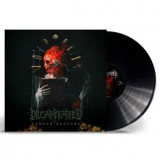
Across eight studio albums, DECAPITATED grew from the adolescent dream of teenagers from a small Central European town to one of the leaders of the metal genre. Each successive album further expands the band’s sound with genre-bending authenticity and integrity. As Metal Injection rightfully observed, “any self-respecting death metalhead knows the name well.”
DECAPITATED’s music is a weapon forged by four young men from a historic medieval-fortified town in Poland, which catapulted them to the top of a worldwide subculture. Like a rose in the devil’s garden, the DECAPITATED story builds triumph from tragedy. The gleeful grotesquery of extreme metal imagery and rifftastic bludgeoning beckons listeners to uncover broader truths.Upon the release of 2017’s Anticult, Metal Hammer declared DECAPITATED “a serious successor to the likes of Pantera and Lamb Of God – a band who can draw new legions into the metal world as its new champions.” Their diverse follow-up, 2022’s Cancer Culture, delivers on that promise.
Instantly recognizable devastation and deceptively sinister hooks abound. Freshly minted DECAPITATED anthems like “Last Supper,” “Hello Death,” “Just Cigarette,” “No Cure,” “Iconoclast,” and “Cancer Culture” shimmer with sonically sharp production and unrelenting bombast. There’s also a newly increased emphasis on melody, even venturing into darkly romantic territory. Wacław "Vogg" Kiełtyka (guitar), Rafał "Rasta" Piotrowski (vocals), Paweł Pasek (bass), and James Stewart (drums) are at the top of their game, delivering the goods at peak performance. Jinjer vocalist Tatiana Shmayluk and Machine Head frontman Robb Flynn make guest appearances.
Set on the descending plains of a mountain range amid a dense forest, Krosno boasts a 14th-century Gothic church, a Subcarpathian museum, and stunning artisan glassware. In this Polish town, teenage music student Wacław "Vogg" Kiełtyka discovered records from bands like Morbid Angel, Cannibal Corpse, Metallica, and Machine Head. The guitarist and his younger brother, drummer Witold “Vitek” Kiełtyka, cofounded DECAPITATED in 1996, inspired by a wide range of technical death, blackened thrash, and local heroes, like KAT and the world-renowned Vader. Death and black metal reigned supreme in the Polish scene of the 1990s, where Behemoth originated as well. In fact, a Vader song called “Decapitated Saints” inspired the band’s moniker.
The organic musical chemistry between the Kiełtykas was akin to the brotherly connectivity and vibe driving Pantera, Gojira, and the classic era of Sepultura. In 2006, Kerrang! praised the first three DECAPITATED albums - Winds of Creation (2000), Nihility (2002), and The Negation (2004) – as “superbly conceived and executed eruptions of technical brilliance and razor-sharp songwriting that turned these youthful Poles into one of the genre’s most widely respected bands.” That year’s Organic Hallucinosis further perfected Vogg’s penchant for blending extremity with catchy hooks.
The rule-breaking ferocity and invention of the first four albums reinvigorated death metal, as DECAPITATED inspired a new generation of bands who followed suit. Sadly, this era came to a shocking end in late 2007. While touring Russia, the band’s bus collided with a large truck near the border with Belarus. Both Vitak and then-singer Adrian “Covan” Kowanek sustained severe head injuries. Tragically, Vitak passed away in a Russian hospital a few days later. He was just 23.Vogg summoned the courage to continue, in honor of his brother and what they created, and returned with a new incarnation of DECAPITATED and the fiercely adventurous comeback album, Carnival is Forever (2011) featuring new vocalist Rafał "Rasta" Piotrowski. Blood Mantra (2014) introduced bassist, Paweł Pasek. Blabbermouth declared it “perhaps the most poised and gutsy” DECAPITATED album, adding “its courageous bends make it a turbulent but pleasurable ride.”
Cancer Culture sounds brilliant, modern, and tasty. “There is no place for any fake, plastic, bullshit drum machine or anything like that,” Vogg insists. “It’s all organic, pure, and clear, showing the true face of the band. Vogg and company entrusted the Cancer Culture mix to David Castillo at Sweden’s Fascination Street Studios / Studio Gröndahl (Sepultura, Carcass, Opeth, Katatonia), and legendary American producer Ted Jensen (Metallica, Slipknot, Pantera, Machine Head, Korn).
The devoted supporters who traveled to see DECAPITATED on international tours with the likes of Lamb Of God, Meshuggah, Soulfly, Fear Factory, and Suffocation over the years will recognize the ever-present pummeling backbone. Longtime fans and newcomers alike will connect to the variety of atmospheric depth throughout Cancer Culture’s ten boundlessly energetic and creative tracks.
“If you told me 25 years ago, in my neighborhood in the South of Poland, that I would be in Machine Head, sharing riffs with Robb Flynn,” Vogg marvels. “It’s simply incredible. It means that everything is possible in your life. That gives me the faith to believe that I can achieve even more in my career. The dreams we have when we are kids, things we can barely imagine, can happen.” Flynn contributes a hauntingly beautiful vocal to the Cancer Culture track “Iconoclast.” “Clean vocal singing is a really new thing in DECAPITATED,” Vogg notes. “It’s really unique and amazing.”
Driven by Vogg’s passion and integrity, the dual emphasis on creative invention and technical prowess maintains DECAPITATED’s stature as genre-leaders in 2022 and beyond. The band’s supporters continually demonstrate confidence and absolute certainty DECAPITATED will deliver.
Across eight studio albums, DECAPITATED grew from the adolescent dream of teenagers from a small Central European town to one of the leaders of the metal genre. Each successive album further expands the band’s sound with genre-bending authenticity and integrity. As Metal Injection rightfully observed, “any self-respecting death metalhead knows the name well.”
DECAPITATED’s music is a weapon forged by four young men from a historic medieval-fortified town in Poland, which catapulted them to the top of a worldwide subculture. Like a rose in the devil’s garden, the DECAPITATED story builds triumph from tragedy. The gleeful grotesquery of extreme metal imagery and rifftastic bludgeoning beckons listeners to uncover broader truths.Upon the release of 2017’s Anticult, Metal Hammer declared DECAPITATED “a serious successor to the likes of Pantera and Lamb Of God – a band who can draw new legions into the metal world as its new champions.” Their diverse follow-up, 2022’s Cancer Culture, delivers on that promise.
Instantly recognizable devastation and deceptively sinister hooks abound. Freshly minted DECAPITATED anthems like “Last Supper,” “Hello Death,” “Just Cigarette,” “No Cure,” “Iconoclast,” and “Cancer Culture” shimmer with sonically sharp production and unrelenting bombast. There’s also a newly increased emphasis on melody, even venturing into darkly romantic territory. Wacław "Vogg" Kiełtyka (guitar), Rafał "Rasta" Piotrowski (vocals), Paweł Pasek (bass), and James Stewart (drums) are at the top of their game, delivering the goods at peak performance. Jinjer vocalist Tatiana Shmayluk and Machine Head frontman Robb Flynn make guest appearances.
Set on the descending plains of a mountain range amid a dense forest, Krosno boasts a 14th-century Gothic church, a Subcarpathian museum, and stunning artisan glassware. In this Polish town, teenage music student Wacław "Vogg" Kiełtyka discovered records from bands like Morbid Angel, Cannibal Corpse, Metallica, and Machine Head. The guitarist and his younger brother, drummer Witold “Vitek” Kiełtyka, cofounded DECAPITATED in 1996, inspired by a wide range of technical death, blackened thrash, and local heroes, like KAT and the world-renowned Vader. Death and black metal reigned supreme in the Polish scene of the 1990s, where Behemoth originated as well. In fact, a Vader song called “Decapitated Saints” inspired the band’s moniker.
The organic musical chemistry between the Kiełtykas was akin to the brotherly connectivity and vibe driving Pantera, Gojira, and the classic era of Sepultura. In 2006, Kerrang! praised the first three DECAPITATED albums - Winds of Creation (2000), Nihility (2002), and The Negation (2004) – as “superbly conceived and executed eruptions of technical brilliance and razor-sharp songwriting that turned these youthful Poles into one of the genre’s most widely respected bands.” That year’s Organic Hallucinosis further perfected Vogg’s penchant for blending extremity with catchy hooks.
The rule-breaking ferocity and invention of the first four albums reinvigorated death metal, as DECAPITATED inspired a new generation of bands who followed suit. Sadly, this era came to a shocking end in late 2007. While touring Russia, the band’s bus collided with a large truck near the border with Belarus. Both Vitak and then-singer Adrian “Covan” Kowanek sustained severe head injuries. Tragically, Vitak passed away in a Russian hospital a few days later. He was just 23.Vogg summoned the courage to continue, in honor of his brother and what they created, and returned with a new incarnation of DECAPITATED and the fiercely adventurous comeback album, Carnival is Forever (2011) featuring new vocalist Rafał "Rasta" Piotrowski. Blood Mantra (2014) introduced bassist, Paweł Pasek. Blabbermouth declared it “perhaps the most poised and gutsy” DECAPITATED album, adding “its courageous bends make it a turbulent but pleasurable ride.”
Cancer Culture sounds brilliant, modern, and tasty. “There is no place for any fake, plastic, bullshit drum machine or anything like that,” Vogg insists. “It’s all organic, pure, and clear, showing the true face of the band. Vogg and company entrusted the Cancer Culture mix to David Castillo at Sweden’s Fascination Street Studios / Studio Gröndahl (Sepultura, Carcass, Opeth, Katatonia), and legendary American producer Ted Jensen (Metallica, Slipknot, Pantera, Machine Head, Korn).
The devoted supporters who traveled to see DECAPITATED on international tours with the likes of Lamb Of God, Meshuggah, Soulfly, Fear Factory, and Suffocation over the years will recognize the ever-present pummeling backbone. Longtime fans and newcomers alike will connect to the variety of atmospheric depth throughout Cancer Culture’s ten boundlessly energetic and creative tracks.
“If you told me 25 years ago, in my neighborhood in the South of Poland, that I would be in Machine Head, sharing riffs with Robb Flynn,” Vogg marvels. “It’s simply incredible. It means that everything is possible in your life. That gives me the faith to believe that I can achieve even more in my career. The dreams we have when we are kids, things we can barely imagine, can happen.” Flynn contributes a hauntingly beautiful vocal to the Cancer Culture track “Iconoclast.” “Clean vocal singing is a really new thing in DECAPITATED,” Vogg notes. “It’s really unique and amazing.”
Driven by Vogg’s passion and integrity, the dual emphasis on creative invention and technical prowess maintains DECAPITATED’s stature as genre-leaders in 2022 and beyond. The band’s supporters continually demonstrate confidence and absolute certainty DECAPITATED will deliver.
- Sadness Is On His Way
- Us Lot
- Awful Things (Feat. Caroline Polachek)
- Please Don't Move To London It's A Trap
- The World Is Changing Some Don't Like It
- Every Statue Must Come Down
- World I Want To Live In
- I Had A Nice Time But I Won't Be Back (Feat. Mysterious Beanie)
- I Don't Do Love Songs
- Stay Ready
- Read The Room (Interlude)
- Bad Advice
- East London Smile
Cassette[10,80 €]
'The City Needs A Hero' is the highly-anticipated sophomore album from Murkage Dave, following on from the critically acclaimed debut 'Murkage Dave Changed My Life' which cemented him as one of the UK's most exciting new singer-songwriters. Includes the singles 'Please Don't Move To London It's A Trap, 'Awful Things (feat. Caroline Polachek)', 'Us Lot', 'World I Want To Live In' and more.