Georgian artist Sophia Saze releases her debut two-part album 'Self' on Francis Harris' Kingdoms imprint, with part one dropping on cassette this June. "The record embodies my story of duality within the context of identity, insomuch as the idea that every person has a deeper layer we don't show on the surface."
Born in Tbilisi, Sophia Saze is the daughter of political refugees who's spent her life living in numerous different countries before eventually finding home in Brooklyn. Finding it difficult to find her own identity due to living a nomadic lifestyle, the classically trained musician became entangled with electronic music before becoming a key player within New York's nightlife scene and launching her Dusk & Haze imprint in 2017.
A reflection of her struggles throughout life, 'Self' is very much a memoir of the many different places she's lived during her journey, including Georgia, Russia, USA, France and Canada. Contrasting to her recent productions, which are geared more towards the dancefloor, her debut longplayer is downtempo and features a medley of musical influences - mixed in two parts and released as a concept album on cassette. Maintaining a sonically raw feel throughout, 'Self' draws the analogy of analog to modern day digital culture whilst also taking a stance against perfection, whether integrating the distance crackle of her machines or intentional off-beat piano notes in minor. Part One was conceived, for the most part, during a sleepless yet inspired 48-hour studio session. Processed field recordings accompany samples from her childhood, such as soviet cartoons and intimate VHS recordings of her family. The result is a well-seasoned and personal story portrayed in fourteen tracks mixed together.
"I feel the element of patience is somewhat of a lost commodity in our generation, particularly for albums. We're consumed by track to track interpretations and constantly searching for the next instant stimulation. With this record, I wanted to reiterate the idea that if you don't have the willingness to sit through the whole thing, then you're not stepping into it with the right mindset to begin with."
Every artist who collaborated on the record is handpicked, such as vocalist Ricardo Rivera. The final production was also mixed by Francis Harris himself. All of their involvement means they share a fragment of the concept.
Search:political
Founded in 1990 in Minneapolis, Minnesota, Cold Front were what you'd call early adaptors, their music at the time of its inception an oddity. This fourpiece, consisting of spouses Ayanna and Cam Muata, Jon Jon Scott and Ron Clark, were far ahead of their time and faded just as rapidly as they entered the stage, only playing a handful of local shows in support of Nine Inch Nails, Meat Beat Manifesto and such, alongside several cameos during early house nights and techno events.
Though short lived, their music nevertheless speaks volumes. It's intriguing stuff, a magical association of sound reminiscent of Ron Hardy and Klein MBO. New Beat-like drum parts, overdubbed by politically engaged raps, basslines that would make The Cure proud, held together by freakout speaking in tongues vocal experiments while also showing an obvious parallel to the rise of triphop at the other side of the ocean.
Beyond the Beat will burst dancefloors soon. In collaboration with Paris' recordshop Dizonord, Knekelhuis will close the summer of 2019 with this amazing gem.
- A1: Airto – Samba De Flora
- A2: Duke Pearson And Flora Purim – Sandalia Dela
- A3: Sérgio Mendes & Brasil '66 – Batucada (The Beat)
- A4: Deodato – Skyscrapers
- B1: Milton Nascimento – Catavento
- B2: Airto – Tombo In 7/4
- B3: Luiz Bonfá – Bahia Soul
- B4: Dom Um Romao – Braun-Blek-Blu
- C1: Moacir Santos – Kathy
- C2: João Donato – Almas Irmãs
- C3: Sivuca – Ain't No Sunshine
- C4: Milton Nascimento – Rio Vermelho
- D1: Tamba 4 – Consolation (Consolação)
- D2: Flora Purim – Moon Dreams
- D3: Dom Um Romao – Escravos De Jo
- D4: Airto – Andei (I Walked)
All of the music featured here on this new Soul Jazz Records collection was created by Brazilian
artists in the USA in the 1970s.
In the early 1970s North American jazz musicians were eager to work with upcoming Brazilian
musicians. Miles Davis invited Airto Moreira to join his new ‘electric’ band, Dom Um Romao (part of
Sérgio Mendes’ legen
dary Brazil ‘66 in the 1960s) joined the fusion group Weather Report, Flora
Purim and Airto both became a part of Chick Corea’s new project Light As A Feather, Wayne Shorter
collaborated with Milton Nascimento, George Duke recorded Brazilian Love Affair, and so on.
With all the attention placed on them from these important jazz artists, North America became the
new musical playground for a large number of these Brazilian artists – Airto Moreira, Flora Purim,
Sérgio Mendes, Luiz Bonfá, Eumir Deodato, João Donato and many others.
Most of these musicians had already experienced success through the earlier popularity of bossa
nova in the 1960s, either at home in Brazil or in the USA. But by the end of the 1960s many
Brazilian artists had left their own country, as the military dictatorship became progressively more
authoritarian and repressive. In the USA, through their critically acclaimed work for Miles Davis,
Weather Report, Lightj As A Feather etc., all of these artists were now given reign to explore new
musical terrains away from the restrictions of both a musical genre and a state censor back in Brazil.
This collection brings together some of these finest works and comes complete with extensive notes
that explains the path these musicians took from Brazil to the USA and shows the political and
musical links between Brazil and the USA that created the conditions for this unique fusion of these
two distinct cultures, North American Jazz and Brazilian music, that occurred in the 1970s.
The album comes as a deluxe gatefold double vinyl LP, complete with download code, full sleeve
notes, exclusive photography, double inner sleeves.
For Against Fascism Trax 006, Auntie Flo takes us to Brazil, a country that is dealing with having a bona fide fascist president, with an EP recorded in Rio De Janeiro. I’m going to shut up and let Afonso Marcondes from Sao Paolo take it from here -
In a world in which culture policies (incl. music) win nationalist tones, Brazil has lessons to give with the catastrophic failed experience of the last government and the teletubbies talk on Culture from the current one.
As one sometimes feel as if one is on a time-warp from time to time, most often taken there by music, songs like March of The Berimbau here, could easy make for the perfect soundtrack for the political history of Brazil, country in which Auntie Flo got his inspiration and recorded this tracks.
From the military regime that gave Brazil bossa nova in the 60’s, the tropicália sounds of the 70’s to the pop rock era of the 80’s all the way from the rave scene of the 90’s to todays Bahia Bass, music in Brazil has always been instrumental in helping shape the political scene.
One thing about the Brazilian music ’scene’ is that rarely it lends itself to extreme political views, via lyrics or otherwise, after all, carnaval must be kept a happy time! The number of different cultures living in peace, side by side in Brazil has strenghten the country disapproval of hate talk in music since I can remember growing up in the interior of São Paulo state.
As per wiki: Fascism is a form of radical ultranationalism, characterized by dictatorial power, forcible suppression of opposition… Children bedtime reading if you follow the past 15 years in Brazilian politics and the rise and fall of Brazil’s Labour Party, together with its disastrous polices on culture and synergy with de definition above; including the views of a important cultural Party branch that continuously 'preached' that Authors should need no rights over their works. That couldn’t bit music in Brazil.
Fast forward to the first 5 months of government of an unfortunate retired army officer, whose every word sounds like Trump, and whose views on culture is to extinguish the Culture Ministry and cut low the state incentives to the sector, that, so far, is not bitting music in Brasil.
Hope that Auntie Flo’s music inspired everyone as the place where it was made and recorded inspired music in Brazil, as a beacon of light against any hate talk darkness.
Influenced by the social and political climate of the modern
world, MOTSA’s debut album, ‘Perspectives’, is inspired by his
acute awareness of modern society’s dependence on
technology and the social media bubble also responsible for
the civic polarisation seen globally. The 11 track album takes
the listener on an emotional journey with dark, yet hopeful,
detailed compositions, each representing their own personal
story. The title “Perspectives” refers to a problem we all face:
differing perspectives of the same situation, which in turn
leads to conflict, be it in personal relationships, families and
even political discussions globally. With individuals and
groups often losing perspective in disagreements, MOTSA’s
debut LP calls for more empathy, highlighting our current
trajectory of an ego-driven society. Encouraging listeners to
spend less time behind computer screens and more time
outside in nature to broaden our horizons and reflect on
human decisions, many of the album’s samples were recorded
from MOTSA’s own environment. Using the sounds of children playing in the sand on a Balearic beach, crickets in the grass,
or the ambient soundscapes of bells recorded from his
father’s apartment in Moscow, the producer also recorded and
sampled his own voice to create distant, choir-like melodies in
many of the tracks. The artist’s signature sound – a soulful yet
driven harmonic blend – continues to propel the multi-talented
artist to the highest acclaim into 2019 and beyond.
Collocutor to release new single ‘The Angry One’, announce gigs at Jazz Cafe and We Out Here Festival
Tamar Collocutor is back with her Collocutor ensemble for On the Corner’s first 7”
’T.A.O’ is a rage, a visceral expression of what gathers within, and the counter-reaction to our times. Verve, distorted psych guitar in combat with a flaming, rolling, discordant, flowing barrage of horns. This single is the anomaly from Collocutor’s forthcoming third album. Rooted in personal loss, it is a scream of bewilderment that builds to encompass the social, political and environmental crisis of our times.
The flip sees Tamar and Magnus P.I. (ex-Collocutor) sparring in an in-the-moment sonic Rumble in the Jungle. Lunging off of T.A.O’s bass line, Tamar tares hard up-river to follow the calling of ancestral drums into a cacophonous parade. Trance inducing rhythm and screams. Across winds of wood and brass Tamar’s voice weaves a rich vein of quality throughout the resurgent UK jazz/instrumental music scene.
The forthcoming LP (autumn 2019) is Tamar’s most personal yet, a reflection about grief. Artistic vision stewed in an emotive concoction. Loss, life changes and ‘Continuation’ paralleled at the macro level with unimaginable political malaise.
The record is an attempt to give voice to the (sometimes surprising) emotional states of being experienced, coloured further by the discordant machinations of our times.
From the inner microcosm of self to the (macro) overarching societal crisis Tamar has fulfilled her vision ‘of writing music that wants to be written’ with her ensembles third LP.
For the second release on the Galaxiid imprint, a label of electronic music archeology and quality, we are transported to the strange sonic world of an elusive 90s pioneer. Solar X's 1997 album X-Rated will be released for the first time on vinyl, as well as reissued digitally, with new artwork by the Japanese artist Keiichi Tanaami. Two worlds connecting sonically, visually and culturally.
Solar X enjoyed a burgeoning career in post-Perestroika Moscow making playful, low-tech electronica from Soviet analogue instruments, which he masterfully configured to forge animated compositions and dancefloor rarities. Fascinated by chaos and complexity, his music explores the ways in which our minds can be manipulated by structure - an endeavour quite plausibly linked to his other career as a lecturer and researcher of AI, information theory and cognitive science, his interest in which was in turn triggered by his young experiments in computer music.
Solar X gained international attention at a time when Russia was (quite unfairly) seen as a vacuum for electronic music, but was exploding in the period of piracy, poverty and freedom following the collapse of the USSR. Young Russians had benefited from the soviet education system and there was a strong DIY computer programming and music scene, fuelled by hackers, gear freaks and party animals. Viewed from today, the album is reborn at a time of further political and social strife, which many see as fuelling the huge creativity and radical thinking of modern Russia's young creatives.
X-Rated treats tempo and form as fluid concepts, administering sudden changes to its sonic landscape with disorienting effect, underlain with a subtle dose of humour and experimentation. Downtempo trip-hop sits alongside frenetic IDM and blistering electro, all bound together by peculiar melodic inflections and lively distortions. Warm, trippy harmonies and robotic synths are offset with angular drums, shifting erratically through moods and genres with cunning intent. Much like his contemporaries from the era, it's his ability to breathe life into a humble production setup that makes his music so compelling some twenty one years later.
The track titles are from a book of call girl cards in London phone booths, that reached the artist in Moscow in 1995. "I liked the titles from these cards, which were self-promoting and offering pleasure (e.g. "Mistress awaits you"). So, I thought since my tracks also offered some kind of pleasure, they might as well advertise this through their titles.'
Label head Nina Kraviz was introduced to the work of the 83 year old sensei Keiichi Tanaami by Ukawa Naoshiro, founder of Dommune in Tokyo, one of the brightest figureheads for the arts in Japan, responsible for the graphic design of the cover. In September 2017 Nina played for the opening of Tanaami-san's first exhibition in Moscow at Gary Tatintsian Gallery. Nina performed a live sound palette, to accompany the looping 7 minute animation, of experimental music from the Soviet Union, Russian pioneers of electronic music like Species Of Fishes and SolarX, Soviet-time pioneer Lev Termen, Kuryochin, avant-guard rock mixed with some Stockhausen and just pure abstract sounds, as well as treasured artists like Biogen.
Tanaami's illustrative work has strong sexual elements, so out of the five art pieces Nina selected and commissioned for Galaxiid, the first fits perfectly for 'X-rated'. The vertical line of text on the left is the traditional form for Japanese covers of foreign releases. The cover, together with the accompanying poster and sticker, are printed in Japan to ensure the highest print quality and purity of the colours.
On His Second Full-length 'degenerate', Turkish Producer, Artist And Designer Berk Çakmakçi Uses A Plethora Of Found And Recorded Sound To Create Shape-shifting Compositions Where Noise, Drone And Post-club Sounds Are Filtered Through Industrial Textures. 'degenerate's Brooding Sound Design And Disregard For Textural Uniformity —lo-fi Soundbites From Youtube Vids Merge With Sharp Blasts Of Digital Noise On Short But Intense 'spit'— Is Informed By The Trans-international Chaos Of The Political Zeitgeist. The Closer 'nothing To Break' Searches For A Throughline In The Current Wave Of Destruction And Death, And Plays Out Like Several Movie Trailers Going Simultaneously. Often Making Sharp Turns Within A Single Song, 'degenerate' Is Ostensibly Aggressive And Fragmented. At The Same Time, It Reconfigures The Residue Left By Contemporary Paranoias And Obsessions.
The Album Is Mixed By Ahmet Türk And Berk Çakmakçi, Mastered By Beau Thomas And Features Art By Bora Akincitürk And Type Design By Amir Jamshidi.
Fix Me is a techno symphonic soundtrack of the collaboration between the choreographer Alban Richard and Arnaud Rebotini, dandy of the French electro and César 2018 of the best musical composition for the film 120 beats per minute.
Interested by the sound energy, Alban Richard conceives a piece that draws its power in fervor. Eloquent bodies, sermons and slogans, this choreographic, musical and plastic montage is exhilarating. The four performers translate their actions into words: American evangelical sermons, political speeches and feminist hip-hop songs. The light worked on a vibratory mode bathes interpreters and spectators in the same hypnotic halo.
Driven by an incessant flow, music and dance interfere each in the sphere of the other and compete with energy to monopolize the eyes and listen to the audience.
The fourth AF Trax release is a three-track EP from our long time ally The Fantastic Twins, who has the following to say about her EP:
This EP is a small collection of works I crafted over the past couple of years in the process of working on my live show. I have been performing versions of these tracks countless times and yet never played them twice the same way. To me, they have been material in constant motion, so shaping them into a 'finished' form was a risky challenge. Something I was also wary of - would it mean they would become set in stone Would it mean I'd have to somehow 'rationalise" the music - via the mind - as opposed to letting it run into the wildness of its physical live experiences
Whilst editing these tracks into a format that could be released, I realised that instead of shaping them into the mould my mind first intended to give them, I could in fact use the power they revealed each time I performed them to an audience and inject some of that energy - as much as it is possible to capture and recreate it in the studio - back into this EP. Then of course, it meant letting go on things I usually like to control more, and better.
But isn't it the power of music to let it take you where you didn't plan to go And how incomplete would the music be if our inspiration didn't feed off the collective experience of dancing to music together I've lost myself (and my twins) many times throughout the process - not only on German soil - I have sometimes landed in the wrong place, but I may have found one answer yet in the form of another question. Why are we here if we can't dance
That reminds me of the words of Pina Bausch 'Dance, dance or we are lost'. Lost in our internal struggles as individuals (or imaginary twins). Lost in a society where our relation to the other is often marked by fear, power or violence. We feel the need to resist. Yet nowadays, taking a political stance as an artist is too often being instrumentalised as another tactics or accessory to gather more popularity, reducing the political message to nothing else but a branding attempt. Isn't it anyway the power of capitalism to assimilate everything, even contradictory or once-upon-a-time subversive voices All to end up on a 'Rave' or 'Feminist' H&M t-shirt. Slogans that have been emptied of their initial force and substance, now replaced by their commercial value. I strongly doubt that more empty words poured in vain on social media will help us much. But, like Pina Bausch, like JD Twitch, I have always firmly believed in dancing as a physical, social and fundamental act that leads us to share a common space with others and embrace otherness. Standing together, dancing together when everything else forces us to divide.
Jason Letkiewicz has always swum against the musical tides, flitting between different solo pseudonyms (including Steve Summers, Death Commando and Alan Hurst) and collaborative projects (most notably Mutant Beat Dance) in order to explore different aspects of his leftfield inspirations. With his latest release, a first full-length outing for Artificial Dance entitled Mirage Information, the Chicago-based artist is operating under an alias that celebrates this approach: Opposing Currents.
It's an alias he's used once before - for a track featured on Chronditic Sound's 2015 cassette compilation Non-Christian Referent - but Mirage Information sounds like an artistic rebirth. Densely layered, mind-altering and often intense, the album's seven tracks update the Cold War paranoia and pulsating electronics of EBM and industrial music for today's complex and chaotic political climate.
Throughout, Letkiewicz smothers off-kilter drum machine rhythms and throbbing, body-jacking synthesizer basslines in untold layers of hazy audio detail, creating a dystopian sound soup out of which alien electronic melodies, psychedelic acid lines and barely audible vocals emerge. At times, such as on angry opener 'Lying Awake', the extra-terrestrial 'Dissolve' and foreboding 'Shallow Grave', we're invited to dance in the darkness in celebration of impending doom. On other occasions, such as the poignant and melancholic closing cut 'It Awaits', Letkiewicz simply seems exasperated at the chaos that is life in the 21st century. It makes for a genuinely arresting and thought-provoking listen.
Available on vinyl for the first time in 40 years, Outernational Sounds is proud to present a masterpiece from the Los Angeles jazz underground - Horace Tapscott's burning, spiritualised 1978 set, The Call.
One of the unsung giants of jazz music, the composer, bandleader, arranger, pianist and community activist Horace Tapscott was the undisputed keystone in the grassroots Los Angeles jazz scene. Throughout the 1960s and 1970s, his radical community arts and music formations the UGMA (Underground Musicians Association, later changed to UGMAA - Union of God's Musicians and Artists Ascension), and his protean big band, the Pan Afrikan Peoples Arkestra, were at the epicentre of music, culture and politics in the Los Angeles area.
From their 1960s base at the Watt's Happening Coffee House on 103rd St, to their decade-plus- long 1970s residency at the Immanuel United Church of Christ on 85thE St and Holmes Ave, Tapscott's groups were the beating heart of underground music in LA. Hundreds of musicians passed through and played their part. Major figures in LA jazz such as Arthur Blythe, Azar Lawrence, Jimmy Woods, John Carter, Bobby Bradford, Sonny Criss, Ndugu Chancler and dozens of others all paid dues or just got down with Tapscott, not to mention the core Arkestra regulars who have since become celebrated names - Nate Morgan, Jesse Sharps, Adele Sebastian, Dadisi Komolafe, Gary Bias, to mention only a few.
Tapscott and the Arkestra were down on the ground - playing fundraisers in park and street, organising teach-ins and workshops for young and old, mixing it with radical theatre groups, firebrand poets, political radicals, Black separatists, community groups and churches. They lived communally, and built an ark for the Black arts in the heart of the city. But as a result of this grassroots community focus and Tapscott's antipathy to the music industry, the Arkestra didn't record for nearly two decades. That only changed when long-time jazz fan Tom Albach started Nimbus Records. The label was initiated specifically in order to document Tapscott and his circle, and the first three records showcased Horace and the Arkestra.
The Call was put together from two studio sessions in April 1978, one at Hollywood Sage and Sound, one at United Western - the latter session had the addition of a string section, who can be heard on the moody Cal Massey composition 'Nakatini Suite' and Jesse Sharps' swinging modal trip, 'Peyote Song No. III', with its swirling soprano solo. In keeping with the communal nature of the Arkestra, the other two compositions, 'The Call' and 'Quagmire Manor at Five A.M.' are also by Arkestra members. But at the centre of the music is the builder of the Ark, the visionary whose original call to action started a movement whose legacy continues to this day - Horace Tapscott.
Heed The Call!
Lavascar is a sound and music project by creative instigator and provocateur Michèle Lamy, multi-disciplinary artist Nico Vascellari and Lamy's daughter, the artist Scarlett Rouge.
Following the release of their debut album A Dream Deferred in 2017 - which was inspired by Langston Hughes' poem Montage Of A Dream Deferred, the trio will release new album Garden Of Memory through The Vinyl Factory label.
Drawing on the work of Lebanese-American poet, journalist and artist Etel Adnan, Garden Of Memory explores the tension between the organic and industrial, layering both Rouge and Lamy's idiosyncratic delivery over Vascellari's ambient and EBM-influenced electronics. After Vascellari described the debut LP as 'an evocation of Michèle Lamy sitting in a cave, surrounded by wild beasts ready to devour her', Lamy says the new record has loftier concerns: 'So far it seems like we are more in the cosmos... We are coming out of the hole!' Lamy continues: 'I like poetry, I don't like when there is sentence that tells you everything, I like suggestion.' It was for this reason that Lamy was drawn to the 93-year-old Adnan - 'a woman explaining what's going on in life. We can say everything is political, this is especially important.' It's a sentiment that Scarlett Rouge echoes: 'She wrote political poetry, and she is a journalist, so that's why I think when Michèle discovered her there was an immediate sense that this is now what needs to be felt and said.'
- A1: Rain Of Terror (Prince Fatty Dub)
- A2: We Must Be Sacred (Prince Fatty Dub)
- A3: How Many Bullets (Prince Fatty Dub)
- A4: Certain Images (Prince Fatty Dub)
- B1: The Music (Prince Fatty Dub)
- B2: Understand What Black Is (Prince Fatty Dub)
- B3: What I Want To See (Prince Fatty Dub)
- B4: North, East, West, South (Prince Fatty Dub)
Last year saw The Last Poets celebrate their 50-year anniversary with the righteous, politically-charged poetic record, "Understand What Black Is". Now to continue the party, Brighton production-maestro Prince Fatty has reworked the album with a fresh twist and blend of smooth, dub-delights. Set to land on the 29th March, the revolution marches on - this is "Understand What Dub Is".
After Prince Fatty's involvement in the production of the original project, he was the perfect person to help update the record with five decades of experience for a new audience to enjoy. The ten tracks of "Understand What Black Is" depict a relevant, historical philosophy of identity and race that has followed The Poets over the last 50 years. Since the origins of the civil rights movements back in the late 60's, Abiodun Oyewole and Umar Bin Hassan (two of the longest-standing group members) have provided social commentaries and a voice to African-American consciousness that has now been heard on a global scale.
Their raps, exploitations and insights quickly evolved into the origins of hip-hop in Harlem, New York back in 1968, and now in 2019 they continue to voice their dedication to the cause with the backing of slick rock-steady infused beats to keep things moving. Having had their work sampled by the likes of NWA, Dr Dre, Kanye West, Snoop Dogg and countless others is just a testament to the timeless sounds and prophecy they have created, and now Prince Fatty has stepped up to put his stamp on it.
Prince Fatty's ever-reliable work gives "Understand What Black Is" another lease of life as he maintains an undeniably slick groove throughout. Both therapeutic and warm, the soulful rhythms of "Understand What Dub Is" provide the perfect platform for The Last Poets to delve into everything from Trump's inauguration, nods to Biggie Smalls and respect to Prince. The calm, collective and downright thought-provoking words go hand-in-hand with the roots-driven reggae medleys with ease - this is dub in its rawest form.
Not only do these songs explore personal struggles and individual endeavours, they also represent a collective of deprived aspects of humanity and socialism, that perhaps now need to be pointed out more than ever. Although there is a variation of sound, the overlying topics remain a constant - it is time to "Understand What Black Is" once more.
After a long wait, Melbourne's Public Opinion Afro Orchestra (The POAO) is set to release their second album, 'Naming & Blaming', a pulsing, percussive journey into classic afrobeat. Recorded by a 17 piece ensemble, led by fierce vocals and a howling horn section, it's a fitting 21st-century response to the world-shaking music of 1970s Nigeria. The result is true to the afrobeat blueprint of hypnotic, extended songs, improvisation and political comment but adds to the formula a host of pan-African influences and hip-hop elements that reflect the deep ranging roots of the band. As the title suggests, and in true afrobeat tradition, Naming & Blaming pulls no punches. It is an outspokenly political record, a cauldron of strong opinions where indignation and optimism coexist. Led by the vocals of MC One Sixth and singer Lamine Sonko, the critique of colonialism is applied to both the African and Australian experience, the battles of many cultures informing the group's ethos as does the importance of community and staying true to one's convictions. Uplifting visions of a brighter possible future as laid out in 'No Passport,' the album's rambunctious opening song, are balanced with honest reflections on injustice like guest Robbie Thorpe's take on Australia's chequered history in the title track.For the Naming & Blaming cover, the band was honoured to have the opportunity to work with one of the originators of the Afrobeat movement Lemi Ghariokwu, the legendary collage artist and illustrator responsible for all of Fela's most famous album covers of the 1970s. This relationship is what the POAO is all about, paying respects to the culture and keeping it alive and relevant in the 21st century. Over the last decade, The POAO have established themselves as a firm festival favourites with their contemporary approach to Afrobeat.
Stefan Smith has channeled an elevated reverence for process, texture and synth-extrapolation with the forthcoming release of his self-titled LP on the Sapiens imprint. A relative new-comer to the land of rapid fire releases and dance floor formulae, Smith is deeply steeped in the art of music creation, performance and theory.
As a graduate of Mills College's revered music department, Smith's prosaic understanding of music partially explains his migration to Sapiens, a label headquartered in Paris, France, which, under the direction of techno luminary, Agoria, has been expanding the realm of possibility for what a techno label can become. Collaborating with musicians, visual artists, film directors, shamans and sound designers, the young Sapiens platform releases may include political speeches, radio hits, dance floor tunes, sensorial or cognitive music or a gentle computer
virus'. Smith's LP contribution will definitely fall on the more delicious end of this spectrum, having woven a synth-lovers dream tapestry.
The nine tracks composing the album, Stefan Smith', draw the listener in on a river of oscillators, which push just past the banks of perceptible sound with with flawless production and loving sound treatment. The idea behind the album is very raw and organic. Stefan Smith focuses on atmosphere, mood, tones, and frequencies, rather than melodies. His productions are a response to the subliminal, and about feeling.
This album came together from a natural flow of working with computers and synthesisers, and also from the musical connection fostered Sebastien Devaud (Agoria). His approach to the album's production was to edit as little as possible, keeping the original feeling of chance and temporality intact. We can sense here Smith's intuition as sound designer, a role which has enabled him to work with artist Nicolas Becker and through this association further contribute work to the Philippe Parreno 'Anywhen' exhibition in Tate Modern Turbine Hall. The feedback
generated by studio experimentation gives birth to new ideas for aural shapes and textures. If one were only to lie back and identify the various wave forms, like butterflies and birds flittering through dappled sunlight, in each track's canopy of bountiful synth elements the mind's eye would dance with the steady intervals of Smith's real-time probe of his machinery, however, deep tracts of emotion and effortless grooves won't allow for a purely sensory listen. In the spirit of exploration, enjoy the ride.
The New Creation were a local Los Angeles group who during 1974 recorded the H.B. Barnum produced 'The Fish Song' a tribute song dedicated to the door to door fish sellers of Whiting H&G. With the flipside again a tribute song dedicated to Elijah Muhammad the leader of Afro-American religious and political movement ,The Nation Of Islam. At the time of release the song received little radio airplay due to the radio stations deeming it a commercial song and demanding spot payments for it's promotion. Undeterred the group self promoted and distributed the 45 amongst the local community and the audiences at their shows. The group continued to perform right through until the early 1980's often sharing the stage with Philadelphia's The Delfonic's, L.A,s own The Youngheart's, New York's Cool & The Gang (who also recorded a LP track dedicated to Whiting H&G). Fast forward to the present and 'The Fish Song' and it's flipside 'Elijah Knows' has become a very desirable and sought after 45 (although most copies of the few copies found are not in great shape) amongst Lowrider, Crossover, Sweet and Group Harmony collectors both in Europe and the 45's native USA.
Lakker Return To R&s With Their Stunning New Album, Época. Following 2016's Conceptual 8 Track Maxi-ep struggle And Emerge' (using Field Recordings Of Tv And Radio Broadcasts From The Dutch National Av Archive) Época Is A Bracing Return To Form, Combining Caustic Electronics With Fresh Inspiration From The Prepared Piano Of John Cage, Plaintive Folk Melodies, The Explorative Label Sublime Frequencies And The Raw Rhythms Of Kampala's Nyege Nyege Tapes.
Following A Restorative Creative Break To Pursue Their Own Solo Projects (as Arad And Eomac Respectively) The Duo Finally Returned To The Studio, Finding Themselves Working More Closely Than Ever Before. "we Wrote This Record Together, In The Studio As A Duo." Ian Explains "previous Records Involved A Lot Of Time Working On Tracks Individually, But Época Was Written Almost Entirely Together In The Studio - It Felt Much More Fun, More Organic And Democratic." We Allowed It To Happen Rather Than Push Or Pressure It" Dara Adds.
The Natural Evolution Of The Tracks And Their Rougher, Looser Production Sound Parallels The Duo's Interest In Two Separate Ideas: Ambient And Natural Sound, Especially The Background Noise - A Sense Of Time And Place - That Is Inherent In Old Recordings Of Folk And Classical Music, And An Interest In Herd Dynamics And Flock Patterns / Murmurations, Both In The Natural World And In Human Society. The Movements Which Affect The World At Large Through Cultural And Political Shifts. "like The First Starling That Causes A Wave In A Murmuration," Ian Explains "we Are Really Interested In How This Is Also Reflected In Human Society - A New Idea Appears And Then Reaches Critical Mass And Resonates Through Society As A Whole, And Change Happens (positive Or Negative)."
The Rich And Deep Work Of Época Finds The Duo Reinvigorated From Their Hiatus, Using Their Own Voices Extensively For The First Time, Alongsides Regular Vocal Collaborator Eileen Carpio. As Dara Explains "we Had Been Experimenting With Our Own Voices In Our Solo Music, So It Felt Like This Was The Moment To Step Out From Behind The Curtain And Put Our Own Vocals Front And Centre In A More Natural Way". This Leads To An At Times More Melodic And Poppier Feeling, Balanced Out By The Off Kilter Rhythms And Blasts Of Feedback And Weathered Reverbs That Intertwine Throughout The Record.
Once Again The Duo Look To The Outside World For Sonic Inspiration. Alongside The Use Of Physical Modelling Synths The Album Contains Recordings And Samples Of Violin, Guitar And Bodhrán, The Stringboard Of A Piano At Ems Stockholm, Phone Recordings Of Family Gatherings In Dublin And 1970's Dance Music From Jaipur.
'época' Is A Rich, Challenging Album Of Diverse And Intense Soundscapes That Expands On The Scope Of Lakker's Already Multifaceted Music That Finds Them At The Peak Of Their Artistic Powers.
'we Are Living Through Volatile Times, And As Musicians It Is Impossible To Avoid That Being Reflected In Our Work. Época Is A Our Personal Response To The Atmosphere Of These Times And The External Political And Cultural Events That Are Shaping Our World. Some Positive And Hopeful, Some Despondent And Angry, And Some Reflective And Introspective.'
Limited to 500 on gold vinyl WW!! Over two decades later, KRS One's debut solo album Return of the Boom Bap finally gets the reissue it deserves. Pressed for the first time on gold vinyl, this double LP not only includes a bonus 7' of Kenny Parker remixes, but also features the first-ever colour sleeve on a U.S. pressing. Stripping away the intricate production of the final Boogie Down Productions album, Sex and Violence, Return of the Boom Bap saw the already iconoclastic rapper return to the bare bones, gritty territory of his landmark masterpiece Criminal Minded. KRS-One's delivery, burned with a reinvigorated fury, spits out his rhymes with pummeling cadences and world-wise intelligence. Although the record isn't as focused on social activism and political protest as the latter Boogie Down albums, KRS-One never made his lyrics simplistic, nor did he turn his back on what could now be called prescient social commentary. The combination of raw beats and emotion-driven rhymes made Return of the Boom Bap a genuine comeback for KRS-One, one of the founding figures of modern hip-hop.
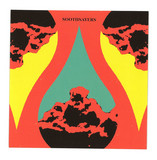
For The Best Part Of Two Decades Now, South London Afro-dub Dons Soothsayers Have Been Preaching Their Politically Charged Good Vibrations To A Growing And Loyal Fan Base. Their Live Shows Are Legendary And Vary From Off-the-cuff Community Friendly Gigs In Brixton, To Festival Headline Slots And Tours Across Europe And Beyond. Having Recently Filled London's Jazz Caf To Much Acclaim, And In Anticipation Of Their New Album, Tradition, Out On Wah Wah 45s In June, Soothsayers Unleash The Second Single To Be Taken From It. It's A Double Header Of Sorts That Shows The Band's Knack Of Reinterpreting A Cover Version Or Two For The Dance Floor.
Sleepwalking Is A Take On Fela Kuti's 1971 Classic Black Man's Cry. It's A Chant Of Frustration Aimed At Disenfranchisement From The Process And Features Afrobeat Ambassador Dele Sosimi On Guest Vocal Duties.
It Questions If We Are Sleepwalking Into The Abyss, And Is A Revolutionary Song About Taking Power Back Into Our Own Hands! Although It's Challenging To Do Justice To A Bob Marley Cover, On Natural Mystic Soothsayers Cradle The Spirit Of The Originator And Turn It Upside Down, Transforming The Familiar Into A Journey Back To Africa Via Their Trademark Groove.
Spiritual Jazz Flutes And Percussion Combine With The Floating Vocals Of The Mighty Cornel Campbell, While The Song's Main Melody Is Emphatically Reproduced By Soothsayers Horn Section To Stunning Effect.