(2LP gatefold 180gr pressing) The album is a collaboration between Brazilian artists Lula Côrtes and Zé Ramalho, a wonderfully off-kilter record full of fantastic hooky and strange tunes that range from full-on freakouts to quiet pastoral numbers displaying the entire range of 1970s hippie Brazilian musician culture.
quête:poly
Spearheaded by James Dean Brown (also known from Perlon's Narcotic Syntax) and Victor Sol, and featuring other rotating members, Hypnobeat is a true product of the open-ended spirit of DIY music that proliferated in the 1980s. The prescient project championed deft, machine-powered rhythm programming as its modus operandi long before the practice would become a dominant global cultural form. Since Hypnobeat was revived in 2012 with Helena Hauff joining JDB on stage for improvised live performances based on one 707 and three 808s, there have been a string of archival releases shining a light on the early and more recently recorded works of this forward-thinking venture.
This latest collection for Artificial Dance comprises three freshly unearthed iterations. Long-form A-side track 'Polychrome Desert' is a pure percussive exercise, programmed and recorded by JDB in 1986 with a chain of three 808s filling out a stereo panorama. The intention was to create a pure, meditative rhythm drawing on African influences and reinterpreted through what was then the music technology of the future. 'Spies In Malaysia' is a live recording from a concert Hypnobeat performed in 1985. Its lurid melodic passages and crunchy percussive blasts formed the closing track of the set, which was met with rapturous response. Recorded in the same year, 'Sumatra Railway' was the product of an impromptu session between JDB and Victor Sol. The song finds the pair exploring a more shadowy, surf-inspired sound, laden with echo and freewheeling through seven minutes of sun-kissed, subtly tropical subversion.
With each successive release, the plot surrounding Hypnobeat thickens in a tangle of 1/4' jack cables and ancient effect pedals. From its shifting line-up to the diverse sonic repertoire, it remains one of the wondrous plants of German electronic music in the pre-techno era.
Cosmic Bridge’s club focused ‘Earthbase Series’ continues with ‘Nocturnal’ the new release from Russian producer A.Fruit.
Four tracks that fuse Footwork, Drum’n’Bass, Techno and bold sound design into the 160 BPM framework. A er a heavy hitting set of releases via Russian imprint Hyperboloid, Irish modern trendsetters Rua Sound, and the ever vigilant Med School, so please welcome A.Fruit to the Cosmic Bridge roster.
Label boss Om Unit says: “Anna has a rare ear in this 160bpm world; one foot firmly in the techier sound-design lane, and one in the world of fun dance floor sounds. Well mixed, and not too serious! It’s great to have her on board and we look forward to sharing a stage soon!”
Kicking things off is ‘Make Them Shake’, a hypnotic and contorted expression of footwork with bubbling bass and drum FX - only for the boldest of dancers. ‘Polykarp’ comes complete with rugged old school hardcore chops twisted into a technoid stepper. ‘Deep Insight’, is reminiscent of early Moving Shadow Jungle; hypnotic & minimalist with tight drums, glitches and jazzy late night moments. Closing track ’Before You Go’ is a breaks filled, garage-footwork workout; cheeky vocal cuts and rolling syncopated rhythms for your waistline!
Aggelos Baltas is a veteran of the global electronic music scene, responsible for a handful of celebrated EBM 12”s as Dream Weapons, and a particularly heady and open-ended brand of krautrock as Fantastikoi Hxoi. His newest project, Anatolian Weapons, was conceived as a way to bring together these two seemingly mismatched concepts, with the polyrhythmic percussion and wailing tones of Greek folk music serving as their unlikely bonding agent. His output garners praise particularly around the Golden Pudel scene, such as Vladimir Ivkovic, and Phuong Dan. Lena Willikens, from the same circle, included Baltas’ track “Disillusioned” on her Dekmantel Selectors compilation in 2018.
But where much of what Baltas has released as Anatolian Weapons is instantly recognizable as dance music, To The Mother Of Gods—Baltas’ debut album for Beats In Space—is something else entirely. Created in tandem with Greek folk musician Seirios Savvaidis, it is a work of simultaneous collaboration and subtraction whose meticulous construction becomes more apparent with every listen. An album-length exploration of what happens when the principles of dance music are applied to pre-digital musical modalities. It is a record of psychedelic folk music that has more in common with Kikagaku Moyo, Minami Deutsch, and the Habibi Funk label than it does with anything else Baltas has produced under any alias. It’s difficult to imagine this music in any kind of club setting.
And yet, it’s very much the work of a DJ. Baltas initially heard Savvaidis’ music through a friend, and was absolutely amazed. “It was his very esoteric, pagan [music and] beautiful lyrics that grabbed me,” he writes. Seirios is a composer and performer of traditional Greek folk music with a growing discography of regional psych-rock gems. Baltas reached out to collaborate and the seeds of To The Mother Of Gods were sown.
Savvidis contributed stems of ten songs, which Baltas deconstructs and rearranges with appreciation of the ancestry of their lineage and of the deceptively ancient eerie, droning qualities inherent in the style. Occasionally augmenting Savvaidis’ recordings with his own, Baltas treats these elements as if raw materials for an architectural process.
To The Mother Of Gods showcases Baltas’ arrangement skills. He treats Savvaidis’ songs as landscapes, filling them with slanted, droning light and setting the singer’s vocals in dead center. His years behind the decks have given him an intuitive understanding of dynamics—drums crest and recede like tides, snippets of bassline repeat and swirl. He knows how to entrance, and when to push the music from the head to the body. Opener “Taratchi Katarratchi” (“Stormy Cataract”) is sung as a spell to ward off the fear of death, but Baltas’ orchestration demonstrates that dancing is an equally effective way of dispelling the darkness. The beat he assembles from Savvaidis’ playing recalls the late-night ecstasies of Primal Scream circa Screamadelica.
To The Mother Of Gods is a reminder that folk music and dance music are both powered by their audience as much as the musicians themselves. Savvaidis’ lyrics echo pagan Greek themes, touching on what Baltas calls “the magic of nature.” At times, as on “Kalesma” (“Invitation”), this can feel incantatory. Savvaidis chisels his vocal melodies into hard, clipped syllables, their cadence recalling Gregorian chant, and yet Baltas cloaks these details in washes of distortion. “Ston Stavraito” (“In Stavraithos”) is delivered with a lamentive tenderness that Baltas swells into a prideful stomp, immersing Savvaidis in marching drums and distant vocals that form a resilient protest-song. To The Mother Of Gods is a testament to the ongoing and innate truth that music can take us beyond ourselves. That repetition and drone can shepherd us to a liminal space beyond thought and rationality, where the wall between perception and reality does not exist. Call it spirit, if you want, and watch as it courses its way through modern-day dance music, mid-century psych, and the ancient sounds of the anatol.
Anatolian Weapons’ To The Mother Of Gods will be available from Beats In Space on June 14, 2019 in limited vinyl and unlimited digital forms.
Artist Highlights
• Aggelos Baltas is an Athenian music producer creating and Djing under the monikers of Anatolian Weapons, Fantastikoi Hxoi, and Dream Weapons.
• The Anatolian Weapons moniker is an outlet for Baltas to explore global music—from African to Anatolian and Middle Eastern, while also incorporating sounds from his home country of Greece.
“Built By Humanoid” is Humanoid's second album, a mere 30 years after the debut, though Brian Dougans claims the first album wasn't really him anyway.
Humanoid's classic acid house single, ‘Stakker Humanoid’, highly regarded as one of the key tracks from the era (Richard James (Aphex Twin) sights the Stakker project as a major influence), enjoyed massive success in 1988. Reaching No.1 for 5 weeks in the UK dance charts, performances on Top of the Pops, a John Peel session for the BBC and European tours eventually led to an album deal.
Whilst all this was happening, Brian Dougans (one half of electronic legends Future Sound of London) claims he was returning to his squat in Kings Cross with no electricity or water. He not only became disillusioned with the business, but also became increasingly ill from the conditions he was living in. Around 6 tracks into the album, he left London and record label, Streetsounds, returning to Manchester to recover and regroup his thoughts. However, Steetsounds pressed ahead with the album and it was finished in Brian’s absence with guest performers.
Brian left Humanoid behind and went on to create FSOL with Gaz Cobain becoming leading lights in the burgeoning ambient scene, scoring a top 10 album "Lifeforms" on Virgin Records.
In 2003 Rephlex (Aphex Twin’s label) released a posthumous album of 1988 out takes compiled by Brian.
Recently Humanoid tracks have been popping up on modern compilation albums (Touched Music / Gasman, etc) signalling a possible return.
“Built by Humanoid” is a brand new nine track album of future acid cuts, breaks and electronics, a lot of which is credited to 2 synthesisers co-designed by Brian Dougans and English Electronics company Digitana. It is this innovation that has helped usher Humanoid back into the limelight and consequently the album has a rather new and unique sound and style.
The track ‘Polymath’ is created using a possibility / probability theory that results in a track which at no point repeats itself - 303 tinged acidic bubbles. Meanwhile ‘Traktion’ is a break beat, pulse laden, bass heavy monster. ‘Fu*k It’ is the future sound of 303. Fast, frantic and beat driven. Whilst ‘Post Humans’ combines thumping 909 and 303 into an acid hallucination.
JakoJako makes her debut on Leisure System with Aequilibration, an EP of diverse, experimental tracks aimed at the dancefloor.
In F22.0, waves of paranoia break over driving, asymmetric rhythms, offset by soothing, whispered vocals. Kogn. Dissonanz maintains the tension, making clever use of polyrhythms and blasts of machine gun fire. The B-side takes a more hopeful turn with Resilienz, where warm oscillations cluster around a simple but effective groove, and the restrained cries of Katharsis close the EP with powerful intimacy.
Self-taught and primarily a live performer, JakoJako makes extensive use of modular synthesis in her productions and on stage. ”Depending on how you configure your system, you can design a completely different instrument every time. I love when it’s surprising me.” When not in the studio, her expertise is put to use advising well-established artists on their own systems at Berlin’s synth-mecca SchneidersLaden.
The Growing Bin may have taken a hiatus for AW18, but don‘t be fooled into thinking this is a deciduous operation; after all the most powerful plantlife grows from below. Moving through the mulch, Basso traces the mycellium network from Hamburg‘s forests to the gentle slopes of Hasenheide, reconnecting with James Booth for the officially first Growing Bin release of 2019, or the first ever Glowing Pin Release.
Emerging from the green house with a heroic dose of wavy caps, the Mancunian export unleashes A-side sizzler ‚Space Echo Track‘, a little post-minimal magic for the peak time shamans. Built around the polyrhythmic patter of organic percussion, a touch of UK shuffle and the occasional blast of soundsystem bass, the track rolls and rattles from start to finish, tailor made for mid-set hypnosis. And while neon leadlines dance with disorienting sampler vox and papaya whistles summon the ethno-flute melodies, Booth brings us to a new level of future primitive consciousness, unlocking the Stargate once and for all. Onto the B-side and we‘re hurtling through galaxies, submerged in the entheogenic frequencies of‚ Locus of Control‘. Shimmering swathes of angelic synth vox and dreamlike pads drift freely, forming a
perfect counterbalance to the warp factor thrust and rasping resonance of the wormhole sequences. Beatless in space, ‚Locus‘ balances ambient techno and acid gurgle, cleansing your synapses like a Sven Vath warm down circa ‚94. This is music for the microdosers...
Die 13 Tracks auf "Polymer", darunter energiegeladene Banger, helle, melodische, viszerale Rhythmen und hypnotische Strukturen, bilden das vielleicht kompakteste Album von Plaid. Das Duo ging Anfang der 1990er aus der Formation The Black Dog hervor und zählt neben Acts wie Aphex Twin, Autechre oder Nightmares On Wax zu den Eckpfeilern des Warp-Labels. In ihrer langjährigen Karriere arbeiteten Plaid zusammen mit Björk, London Sinfonietta und den Southbank Gamelan Players und füllten Venues vom Sydney Opera House über das Londoner Bloc bis zum Berliner Berghain. "Polymer" trägt all die Emotionen, Einflüsse und Inspirationen in sich und funktioniert als ihr Statement in modernen Zeiten.
Introducing a new label and musical direction for Lee Renacre from 100Hz with, PUSHER. His aim is to push the boundaries of electronic music by using different time signatures and poly rhythmic patterns, and by not using 4/4 patterns and the standard hat clap beats it’s possible to create a different style of mood and dancing which is deep loose and skippy. Pusher has a bold new Techno sound and also a gentle side with tracks of deep emotive strings and melody’s.
This Series of tracks is called Drug Music, a stripped down funky style with unusual beat patterns and poly rhythmic elements best enjoyed and fully understood when in an euphoric state, always recorded from a live studio jam where Lee’s improvised sounds come to life with some unexpected results. Lee also collaborates with artist and good friends for some extra depth and to mix up this unique style of electronica.
The first of the Pusher EP’s is a thumping minimal and full on affair with infectious killer acid riffs in odd time signatures. Crisp funky modulating hats monster bass lines and dramatic interplanetary sounds with live tweaks, twists and turns. Also some seriously deep and intense music is coming from this live jam situation with a thrilling string track to round off the Pusher experience.
* Mirae Arts presents Hush Residence. We are joined by old friends and new comrades from the Kantō underground.
* C-Kay is co-founder of the Tokyo-based collective Space Baghdad and resident DJ of Constant Value. C-Kay is typically busy shaking dance floors with her hypnotic DJ sets, but also producing music for experimental labels such as Subsist Records and Constant Value Records.
* Saraam is a Tokyo-based sound artist, performer, and DJ under the Constant Value banner. Saraam is also a resident of the yearly Tokyo Festival of Modular.
* Katsunori Sawa and Damaskin return to Mirae Arts in their usual noisy disguises.
* Hush Residence is a compilation featuring four experimental techno tracks from Katsunori Sawa, C-Kay, Damaskin, and Saraam. Mastered by James Plotkin.
* Artwork illustration is done by Sydney based architect, Patti Bai.
* Vinyl pressed at the highly reputable Gotta Groove Records, Cleveland, Ohio.
* Comes with polybag packaging
Listen! Lord Jabu synthesises 64-bit dream-ware with solid-state trap in his crystalline 3-track release, ‘Yagoda’. In ‘Folklore’, colourful cubist polygons dance beneath festival-drunk Hyrule twilight. ‘Threehead’ goes grim, watching purple-skinned ogres bang distorted djembes in the lost woods. ‘Yagoda’ burrows deep, plucking the melodic soul of an abandoned young hero with no way home. Electrifying the murky, the lost and the lonely, Lord Jabu’s debut on Albion Collective opens the dancefloor up to a full-scale adventure.
Celebrating its 25th anniversary, Far Out Recordings proudly presents two albums of previously unheard Azymuth demo recordings from 1973-75
Since their debut album release in 1975, Azymuth have risen to rank alongside the world’s greatest jazz, funk and fusion artists. As young men in Rio de Janeiro, they stood out for both their exceptional talent as musicians, and their wild rock ‘n’ roll antics in the predominantly middle-class worlds of bossa nova and jazz. Their signature ‘Samba Doido’ (crazy samba) sound ruptured the tried and tested musical structures of the day, resulting in what can only be described as an electric, psychedelic, samba jazz-funk hybrid.
Before they became Azymuth, José Roberto Bertrami (keyboards), Ivan ‘Mamão’ Conti (drums), Alex Malheiros (bass) and Ariovaldo Contesini (percussion) played backing band to just about every major artist in Brazil. Bertrami was also contracted as an arranger and songwriter at some the biggest labels of the era: Polydor, Philips, Som Livre, and EMI being just a few. Azymuth’s name can be found on record sleeves by the likes of Jorge Ben, Elis Regina, Marcos Valle, Ana Mazzotti and countless others. But at the dawn of the seventies, fascinated by developments in improvisational music - from jazz in the US, to progressive rock in the UK and of course samba, bossa and tropicália on home turf - the energetic young group were inspired and ready to move forward. Any spare moment in which they weren’t in sessions and writing music for other artists, they would be carving out their own sound.
These previously unheard recordings took place between 1973-75 at Bertrami’s home studio in the Laranjeiras district of Rio de Janeiro. At the time of recording, there was nothing in Brazil, less the world that sounded anything like them, so perhaps it’s unsurprising that when Bertrami presented his demos to the record companies he had been working for, he was turned away, and told in effect that the music was ‘wrong’.
One of the demos ‘Manhã’ would be picked up by Som Livre and Azymuth released their seminal debut album in 1975. Throughout the late seventies and eighties, the group released a series of now classic albums for Milestone Records, before taking an indefinite hiatus to pursue their individual careers.
When English producers Joe Davis and Roc Hunter arrived in Brazil in 1994 to record the first Azymuth album in over a decade, Bertrami dug out the demos which had sat virtually untouched for over twenty years. Joe recalls how he was “blown away by the freedom and intensity of the music, as well as the genius of the ideas musically.” Beginning a long and fruitful relationship, ‘Prefacio’ would be the first track Azymuth recorded for Far Out Recordings and was released on the Carnival album (1996).
Along with ‘Manhã’ and ‘Prefacio’, only a handful of these demos were ever professionally recorded and released, making this the first opportunity to hear many of these early Azymuth compositions in their raw, original form.
On every track the frenetic energy in the studio is palpable, giving the recordings a beautifully personal feel and a sense of the phenomenally creative vision Bertrami, Malheiros and Conti were realising at the time. Fifty years on, Azymuth’s earliest recorded music retains an ineffable, futuristic quality, standing amongst their most captivating and moving work.
Credits:
Keyboards: José Roberto Bertrami (Mini Moog Series One, Arp Omni, Arp 2600, Arp Solina Strings, Fender Rhodes 88, Hammond B3 with box speaker, Clavinet with Wah Wah)
Drums: Ivan ‘Mamão’ Conti
Bass: Alex Malheiros
Percussion: Ariovaldo Contesini
Produced by Azymuth and Jose Roberto Bertrami
Recorded at José Roberto Bertrami’s home studio in Laranjeiras, Rio De Janeiro, Brazil between 1973–1975.
Issue and project co-ordinator: Joe Davis
Tape transfers by Roc Hunter (thanks to Simon Hitner)
Mastered by Daniel Maunick at the Sugar Shack, Lanark, Scotland
Mastered by Frank at Carvery Cuts
All tracks published by Far Out Music Publishing/Westbury Music LTD
Celebrating its 25th anniversary, Far Out Recordings proudly presents two albums of previously unheard Azymuth demo recordings from 1973-75
Since their debut album release in 1975, Azymuth have risen to rank alongside the world’s greatest jazz, funk and fusion artists. As young men in Rio de Janeiro, they stood out for both their exceptional talent as musicians, and their wild rock ‘n’ roll antics in the predominantly middle-class worlds of bossa nova and jazz. Their signature ‘Samba Doido’ (crazy samba) sound ruptured the tried and tested musical structures of the day, resulting in what can only be described as an electric, psychedelic, samba jazz-funk hybrid.
Before they became Azymuth, José Roberto Bertrami (keyboards), Ivan ‘Mamão’ Conti (drums), Alex Malheiros (bass) and Ariovaldo Contesini (percussion) played backing band to just about every major artist in Brazil. Bertrami was also contracted as an arranger and songwriter at some the biggest labels of the era: Polydor, Philips, Som Livre, and EMI being just a few. Azymuth’s name can be found on record sleeves by the likes of Jorge Ben, Elis Regina, Marcos Valle, Ana Mazzotti and countless others. But at the dawn of the seventies, fascinated by developments in improvisational music - from jazz in the US, to progressive rock in the UK and of course samba, bossa and tropicália on home turf - the energetic young group were inspired and ready to move forward. Any spare moment in which they weren’t in sessions and writing music for other artists, they would be carving out their own sound.
These previously unheard recordings took place between 1973-75 at Bertrami’s home studio in the Laranjeiras district of Rio de Janeiro. At the time of recording, there was nothing in Brazil, less the world that sounded anything like them, so perhaps it’s unsurprising that when Bertrami presented his demos to the record companies he had been working for, he was turned away, and told in effect that the music was ‘wrong’.
One of the demos ‘Manhã’ would be picked up by Som Livre and Azymuth released their seminal debut album in 1975. Throughout the late seventies and eighties, the group released a series of now classic albums for Milestone Records, before taking an indefinite hiatus to pursue their individual careers.
When English producers Joe Davis and Roc Hunter arrived in Brazil in 1994 to record the first Azymuth album in over a decade, Bertrami dug out the demos which had sat virtually untouched for over twenty years. Joe recalls how he was “blown away by the freedom and intensity of the music, as well as the genius of the ideas musically.” Beginning a long and fruitful relationship, ‘Prefacio’ would be the first track Azymuth recorded for Far Out Recordings and was released on the Carnival album (1996).
Along with ‘Manhã’ and ‘Prefacio’, only a handful of these demos were ever professionally recorded and released, making this the first opportunity to hear many of these early Azymuth compositions in their raw, original form.
On every track the frenetic energy in the studio is palpable, giving the recordings a beautifully personal feel and a sense of the phenomenally creative vision Bertrami, Malheiros and Conti were realising at the time. Fifty years on, Azymuth’s earliest recorded music retains an ineffable, futuristic quality, standing amongst their most captivating and moving work.
Credits:
Keyboards: José Roberto Bertrami (Mini Moog Series One, Arp Omni, Arp 2600, Arp Solina Strings, Fender Rhodes 88, Hammond B3 with box speaker, Clavinet with Wah Wah)
Drums: Ivan ‘Mamão’ Conti
Bass: Alex Malheiros
Percussion: Ariovaldo Contesini
Produced by Azymuth and Jose Roberto Bertrami
Recorded at José Roberto Bertrami’s home studio in Laranjeiras, Rio De Janeiro, Brazil between 1973–1975.
Issue and project co-ordinator: Joe Davis
Tape transfers by Roc Hunter (thanks to Simon Hitner)
Mastered by Daniel Maunick at the Sugar Shack, Lanark, Scotland
Mastered by Frank at Carvery Cuts
All tracks published by Far Out Music Publishing/Westbury Music LTD
Cochemea Gastelum is coming home to connect with his roots. After nearly 15 years of touring the world with Sharon Jones and The Dap-Kings, the saxophonist offers a deeply personal album of jazz and indigenous-influenced rhythms. All My Relations¸ out February 22 on Daptone Records, is 10 tracks of mesmerizing and spiritually ascendant instrumentation. The first single 'All My Relations' is available now.
'All My Relations is a way for me to explore my roots through music. Some of it is a memory that is imagined from a time and place I've never been ('Sonora') or a musical impression of ritual ('Mitote'),' Cochemea says. 'I felt compelled to add the way I feel when I go to ceremony, when I feel connected with my ancestors, to the musical narrative.'
A California native with Yaqui and Mescalero Apache Indian ancestry, Cochemea grew up surrounded by music but without knowing much about his heritage. Both his parents were musicians, and they gave their son a heavy name meaning 'they were all killed asleep.' Cochemea has spent much of his diverse musical career - as a soloist, musical director, composer and ensemble player - exploring and iterating on roots music, and All My Relations is a capstone meditation on his own ancestry.
Originally conceived during Sharon Jones and The Dap-Kings' final year of touring, Cochemea and Daptone's Gabe Roth cast a varied but familial set of New York musicians to bring All My Relations to life. A large portion of the album was created through improvisation and collective writing, where its 10 musicians created a melodic, percussive conversation. 'It was a beautiful experience - people would start playing and we'd work up these arrangements on the spot, then record it.'
'In a sense, this record is a prayer for unity, love and the recognition that we are all part of a web, and everything we do effects everything else,' Cochemea says. 'These days there's so many lines being drawn, I wanted to focus on what unites us.'
Cochemea has a long history of uniting multiple genres with his powerful polyrhythmic sensibilities. His roots in jazz, Latin, funk and rock led to multiple tours with funk-jazz organist Robert Walter's 20th Congress, and connected him with Sharon Jones & the Dap-Kings for their 2005 Naturally tour. Cochemea also played tenor sax with The Budos Band and Antibalas, and Baritone sax on the Amy Winehouse sessions, before becoming a full-time Dap-King in 2009.
In between marathon tours, Cochemea recorded a critically acclaimed solo album of soul, funk, and afro-Latin jazz, The Electric Sound of Johnny Arrow, all while doing session work for the likes of Mark Ronson, Rick Rubin and Quincy Jones. He's performed alongside Archie Shepp, Beck, David Byrne, Public Enemy and The Roots. Cochemea was also a featured soloist in the award-winning Broadway play Fela!, which led to historic performances in Lagos, Nigeria.
A Quest Called Tribe begins with a series of portraits drawn by Stéphane Carricondo in
2017 dedicated to Hip-Hop legends. As close partner in art Medline proposed to create a
soundtrack for them, and first interpreting ATCQ's classics with elements of the past,
present and future. The best way to materialize this multidimensional tribute was obviously
a vinyl. And it's the one we unveil today.
On the visual side, ATCQ's portraits are composing the front cover and, assembled into a
great scene, are printed on a colorful A2 poster. Stéphane Carricondo's natural lines are
highlighting each member's soul map. The alchemy of the dark ink on emptiness gives to
them an impressive sparkle of life.
On the musical side, the classic themes are transformed into a polymorphic fusion, were
jazz, funk and soul from the original sample sources converse with Tribe's characteristic
beats. Medline added a hint of his magic, unique rhythms, improvisations, arrangements,
original orchestration and inspired melodies.
The album is an ode to the band that marked both artist's life and mind. A cultural print and
school of sound that designed Hip-Hop foundations. With a blooming expression Medline
and Stéphane Carricondo are going to the roots of ATCQ in a quest for the tribe.
-
1
Breach One
9' 36''
2
Interlude One
3' 26''
3
Breach Two
7' 05''
4
Breach Three
9' 32''
5
Interlude Two
2' 29''
6
Breach Four
7' 34''
Breach dives into chaotic systems and reflects on the recent events of protests and riots in the world, exploring the build up and release of tension and energy in a new form of pitch black metal electronics and polyrhythmic structures.
Zeno van den Broek is a Dutch-born, Copenhagen-based composer and artist. Van den Broek works in a multi-sensory way to research and express physical, social and acoustic notions. He utilises audiovisual means to create site and concept specific works. This trans-disciplinary method has a strong conceptual foundation, originating from a background in architecture, which enables Zeno to comprehend and reveal the richness and complexity of spatial, visceral and physical perception. He works with a characteristic artistic language based on minimalist and fundamental elements such as sine waves, lines, noise and grids.
- A1: Heroes
- A2: Post Requisite
- A3: Heroes In A Half Shell
- A4: More Feat. Anderson .Paak
- A5: Capillaries
- A6: Burning Down The House Feat. George Clinton
- A7: Spontaneous Feat. Little Dragon
- A8: Takashi
- A9: Pilgrim Side Eye
- A10: All Spies
- A11: Yellow Belly Feat. Tierra Whack
- A12: Black Balloons Reprise Feat. Denzel Curry
- A13: Fire Is Coming Feat. David Lynch
- A14: Inside Your Home
- A15: Actually Virtual Feat. Shabazz Palaces
- A16: Andromeda
- A17: Remind U
- A18: Say Something
- A19: Debbie Is Depressed
- A20: Find Your Own Way Home
- A21: The Climb Feat. Thundercat
- A22: Pygmy
- A23: Carrots Feat. Toro Y Moi
- A24: Ff4
- A25: Land Of Honey Feat. Solange
- A26: Thank U Malcolm
- A27: Hot Oct
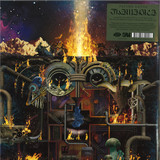
New Fly-Lo.. First outing since 5 years!
Drawing the lines between the galaxies of hip-hop, funk, soul, jazz, global dance music, tribal poly-rhythms, IDM and the beat scene of his hometown L.A, Lotus creates a universe that is uniquely his own. Calling on an all-star cast from the cosmos, Anderson .Paak, George Clinton, Little Dragon, Tierra Whack, Denzel Curry, David Lynch, Shabazz Palaces, Thundercat, Toro y Moi and Solange; Lotus takes these artists on an astral plane to explore his world of fire.
- A1: Heroes
- A2: Post Requisite
- A3: Heroes In A Half Shell
- A4: More Feat. Anderson .Paak
- A5: Capillaries
- A6: Burning Down The House Feat. George Clinton
- A7: Spontaneous Feat. Little Dragon
- A8: Takashi
- A9: Pilgrim Side Eye
- A10: All Spies
- A11: Yellow Belly Feat. Tierra Whack
- A12: Black Balloons Reprise Feat. Denzel Curry
- A13: Fire Is Coming Feat. David Lynch
- A14: Inside Your Home
- A15: Actually Virtual Feat. Shabazz Palaces
- A16: Andromeda
- A17: Remind U
- A18: Say Something
- A19: Debbie Is Depressed
- A20: Find Your Own Way Home
- A21: The Climb Feat. Thundercat
- A22: Pygmy
- A23: Carrots Feat. Toro Y Moi
- A24: Ff4
- A25: Land Of Honey Feat. Solange
- A26: Thank U Malcolm
- A27: Hot Oc
Sein letztes Werk "You're Dead" (2014) bescherte ihm eine Grammy-Nominierung, sein Brainfeeder-Label ist zu einem der innovativsten Klanglabors der Welt avanciert, er co-produzierte Kendrick Lamars mit fünf Grammies ausgezeichnetes Meisterwerk "To Pimp A Butterfly" (2015). Nun veröffentlicht Flying Lotus sein neues Album für Warp: "Flamagra" greift alle kreativen Quantensprünge und innovativen Elemente aus 12 Jahren FlyLo-Karriere auf und denkt sie weiter, größer, epischer und universeller: Hip-Hop, Funk, Soul, Jazz, Electro, IDM, die Ansätze der befreundeten Beatmaker aus L.A., Tribal-Elemente, Polyrhythmen. Aber selbst diese Liste reicht nicht aus, um "Flamagra" auch nur ansatzweise zu verorten, weil es immer wieder ausbricht aus diesem Koordinatensystem. Die Gästeliste liest sich wie ein Traum: Anderson .Paak, George Clinton, Little Dragon, Solange, Tierra Whack, Denzel Curry, Ishmael Butler (Shabazz Palaces), Toro Y Moi, sein musikalischer Stammesbruder Thundercat, ja selbst David Lynch ist zu hören. Der legendäre Regisseur steuert ein paar schaurige Worte bei, eine düstere Erzählpassage, mit der er uns eindringlich warnt: "Fire is coming". "Flamagra" ist die Essenz des letzten Jahrhunderts im Bereich der afroamerikanischen Musik, vollkommen neu und weitergedacht, kollektiv gefiltert und feingeschliffen. Auch wenn Flying Lotus ein Nachkomme seiner ehrwürdigen Großtante Alice Coltrane ist, die mit John verheiratet war (wobei auch Miles und Madlib, Dilla und DOOM als seine Vorfahren gelten dürfen), hat er inzwischen seinen eigenen Kult geschaffen: Eine Gefolgschaft, die alles Geniale aus der Vergangenheit absorbiert und in Bereiche überführt, die sich die genannten Vorfahren nicht mal im Traum hätten ausmalen können. Flying Lotus ist zurück. Fire is coming.
'Quasi' is Ariwo's second album, after the release of
their first self-titled album in 2017:
Despite Ariwo's diverse mix of musicians
(Cuba/Iran/Canada/UK) their music doesn't belong to any specific genre. In
''Quasi', Ariwo use the building blocks of deep bass, afro-Cuban polyrhythms,
carnival melody and immersive live electronics as a starting point to engage
with key players on London's jazz scene.
The result is a hypnotic journey for the listener from techno
to avant-garde jazz via West Africa and the Caribbean. 'Quasi' aims to mirror
the evolved direction of Ariwo's live set, which after extensive touring over
the past three years has gradually become more stripped back and club-oriented.
Many of the building blocks for this album started life as improvisations in
live sets and have been developed into full tracks on 'Quasi'.
The album features guest appearances from MOBO winning saxophonist
Binker Golding (Binker & Moses) and acclaimed UK keys player Joe Armon-Jones
(keys). Cuban trumpet players Thommy Lowry Garcia and Yelfris Valdes also
feature on the album, bringing carnival melodies that interweave through the
percussion and electronics.
Ariwo have used songs from 'Quasi' to create the music
for 'Portals' - a tour of Carlos Acosta's new contemporary dance company
'Acosta Danza' in Havana.
- A1: The Flood Feat Silka
- A2: May I Assume Feat. Jimetta Rose & Fatima
- A3: My-Story Of Love / Starring You
- A4: Dmt (The Whill)
- B1: Between Us 2 Feat. Bilal
- B2: Mrs Crabtree Feat. Erykah Badu, N\\'Dambi & Aset Sosavvy
- B3: On Our Way Home Feat. Fatima & Jimetta Rose
- B4: Walking Round Town Feat. Silka
- C1: Cycles Feat. Hiatus Kaiyote
- C2: Message In A Bottle Feat. Coultrain
- C3: Its Better For You Feat. Anderson Paak
- C4: Show Me How You Feel Feat. Karen Be
- C5: Hours Away Feat Om\\'Mas Keith & Coultrain
- D1: Twelve Feat. The Dove Society
- D2: Picking Flowers Feat. El Sadiq
- D3: Optimystical Feat. Robert Glasper
- D4: New Worlds Over
'The Loop' is the new LP by Los Angeles based polymath Shafiq Husayn, an epic project which saw its inception in 2012 through a series of studio sessions at Shafiq's home, including collaborations with the likes of Thundercat, Erykah Badu, Flying Lotus, Bilal and Anderson Paak. Amongst a close knit circle of friends and family the golden tones of The Loop were created, deeply rooted in ideas of song, story, history, guidance and spirituality. The album bumps, jumps and jangles through progressions in jazz, hip hop, soul and funk, following on from his debut album 'Shafiq En' A-Free-Ka' and adding further to his rich history of timeless, unique music. On The Loop past, present and future are brought together through a psychedelic concoction of time traveling drum machines, celestial string sections and trails of synthesizer vapour. Inflections of Sly Stone, Pharaoh Sanders and Earth Wind And Fire traverse with Marley Marl and Dilla-esqe drums making for an organic yet LA-trifying experience.
Shafiq has brought together an impressive array of LA's musical royalty, enlisting the likes of Thundercat, Miguel Atwood-Ferguson, Kamasi Washington, Chris 'Daddy' Dave, Eric Rico, Coultrain, Computer Jay, Jimetta Rose, Om'Mas Keith, Kelsey Gonzalez, I-Ced and more to provide the backbone to his recording sessions. Drawing in features from an international cast of performers and artists like Erykah Badu, Robert Glasper, Hiatus Kaiyote, Fatima and Karen Be amongst others. Now complete and finally ready for release in 2019 The Loop is truly something to behold. The records is accompanied by a series of paintings by acclaimed Japanese visual artist Tokio Aoyama, who worked in tandem with Shafiq to create a painting for each song on the record.