LOSOUL is back on SLICES OF LIFE with two minimal house gems!
Frankfurt-based DJ and producer legend LOSOUL is renowned for his unique sonic language and deep, captivating grooves.
On his latest release for the Berlin imprint, the tracks take us on a journey back to the roots of minimal house - raw, stripped-down, and deeply immersive.
"Post Service Pop" on the A-side flows deep and funky, spreading pads like hot oil, topped with subtly modulated vocal snippets.
"Modesty Bump" on the B-side dives into rawer territory with high-energy sounds and edgy sonic sparkles, while maintaining that minimalistic, steady, driving groove we all love in Losoul’s work: groovers and grinders for the long-distance runner’s soundtrack.
Cerca:pop 3
After “Comme Jean Reno”, Flora Fishbach unveils a new extract from “Val Synth”, due for release on Sept. 12. On “Des bêtises (pt. I)”, she continues her 80s vein with a Europop / FM sound inspired by Niagara. On a production by M. Declerck (Justice, Kavinsky), the singer reveals her radiant and popular side: she sings “Tout ce que je fais, c’est vraiment pour te plaire” like an acid candy.
La Machine (Sept 18) sold out in just a few days, Zénith and tour all over France starting in 2026!
repress !
A defining moment in dance music history was the day that Roy Davis Jr. teamed with vocalist and writer Peven Everett in 1997 to create this deep, ethereal, soul-music gem that helped launch an entire musical movement known affectionately as Speed Garage. The "Live Garage" mix is the most popular but the other mixes have grown in popularity over time. It is hard to believe that this record is almost 20 years old yet it still sounds as fresh today as it did so long ago. Truly a classic that deserves to be celebrated by a new generation of dance music lovers. Gabriel Play!
"This book is the forth volume in the Drug Dealer Bags series. It features over 100 baggies from Europe, sourced & classified by Hector Mosko. Used to transport drugs (primarily weed or hash) from seller to client, these small plastic zip bags began incorporating high-definition, pop-culture inspired designs and prints around 2018, blurring the lines between underground culture and commercial enterprise.
These visual elements quickly became a marketing tool, boosting both appeal and sales.
Within a remarkably short time, these designs transformed the market, becoming a widespread phenomenon. All items featured in this volume were collected in 2024 by Hector Mosko.
- A1: When Doves Cry
- A2: Pop Life
- A3: Soft And Wet
- A4: I Feel For You
- A5: Why You Wanna Treat Me So Bad?
- B1: When You Were Mine
- B2: Uptown
- B3: Let's Go Crazy
- B4: 1999
- B5: I Could Never Take The Place Of Your Man
- C1: Nothing Compares 2 U
- C2: Adore
- C3: Pink Cashmere
- C4: Alphabet St
- D1: Sign 'O' The Times
- D2: Thieves In The Temple
- D3: Diamonds And Pearls
- D4: 7
- 1: Take Me Back
- 2: Nothing Seems Impossible
- 3: Boss Love Maker
- 4: It’s Been Fun
- 5: Love Ain’t Easy Onesided
- 6: Blind Alley
- 7: Show Me How
- 8: If You Think It (You May As Well Do It)
- 9: Love Is The Hardest Thing To Find
- 10: Tricks Are Made For Kids
- 11: Boy. I Need You
black vinyl[32,14 €]
Girl group greatness, courtesy of the Chicago-based Hutchinson Sisters (with Theresa Davis on this record) and co-producers Isaac Hayes, David Porter and Ronnie Williams! Recording at Muscle Shoals and Stax studios seems to have added a little grit to The Emotions' sound, too; this 1971 classic on the Volt label offers the perfect blend of sweet and sassy. ''Show Me How'' was the hit, but it's ''Blind Alley'' that made Untouched one of the most collectible albums of its kind: that track's one of the most sampled in all of pop and hip hop, most notably by Big Daddy Kane (''Ain't No Half-Steppin''') and Mariah Carey (''Dreamlover''). Pressed in black and clearwater blue vinyl editions, and cut ALL-ANALOG from the original two-track master!
A1. Take Me Back A2. Nothing Seems Impossible A3. Boss Love Maker A4. It's Been Fun A5. Love Ain't Easy Onesided B1. Blind Alley B2. Show Me How B3. If You Think It (You May as Well Do It) B4. Love Is the Hardest Thing to Find B5. Tricks Are Made for Kids B6. Boy. I Need You
Hot Creations new Vinyl Sampler featuring four of the Hottest recent release on Hot Creations.
The A Side features Kolter’s superb slice of old school House, ‘Red Alert’ a stomping powerhouse of a trackk, delivering relentless grooves and serious intensity. The A Side also features and Jamie Jones’s hugely popular rework of ‘XTC by HoneyLuv & Mason Maynard, a head bobbing hypnotic groover an exemplary, underground dubby take on the Original, intertwining layered effects and hypnotic atmospherics for the ultimate dancefloor weapon.
On the flip we have Lauren Lane’s monstrous Ryde Or Die Anthem, a inspired rework of DMX - Ruff Ryder's Anthem, a robust house cut that weaves hypnotic guitar strums, driving beats, and a mix of rolling low-ends and rapped vocals, coming together for a tripped-out ride with a deep bass and playful groove. Finally, we have Carloh’s ‘Quisiera Tenerte’ is a magnetic dancefloor filler, pulsing with a lively Latin groove and dripped in resonant basslines groove-led percussion, and hooky as hell vocal’s.
2026 Repress
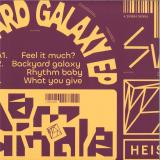
Dam Swindle's new 'Backyard Galaxy' EP is an ode to house music and the classic Swindle sound.
It's only been a few months since Dam Swindle released their highly acclaimed album "Open" and already the boys are back on Heist with a new release that takes you right back to the dancefloor. Where they've spent the better part of the last 3 years writing their album with all its sonic explorations and collabs, this new EP sees the duo return to their roots of club-ready house music. The 'Backyard Galaxy' EP comes with 4 high-energy house tracks made in their Amsterdam studio that have been road-tested all summer.
EP opener "Feel it much?" has all the ingredients of a classic Swindle heater, with warm pads, rich organic percussion and tons of soul. There's a simple and effective vocal running throughout the track that blends nicely with the classic house elements and electronic textures that are layered throughout the track. There's an effortless flow to this track and it comes as no surprise that it has been a highlight in their sets this summer.
The EP title track 'Backyard Galaxy' is an up-tempo Latin-themed jam with a hint of old school techno. The synth stabs hit you just right and the modulated vocal chops are a lovely boost for the build ups and add a touch of swing to a track that already has a tight groove. Add to that a huge breakdown and drum roll and you've got yourself a track that'll light up any dancefloor.
On the flip, we're moving into garage territory with the shuffling vibes of 'Rhythm Baby'. The current popularity of the genre is not missed on Dam Swindle, but when you look closely, you'll see this track is full of elements that the duo have built their legacy on. The vocal chops, transposed key samples and swing are all on point and work just as well below, as above 130 bpm if speed is your thing.
The EP closes with the NY-style house cut 'What you give', which reminds us of Dam Swindle's remix of Cinthie's Heist hit 'Won't U take me' with its lush organs and moody keys. It's perhaps the most classic house track they've made in a long time and you can hear they had a great time recording this. It's playful, vibey and catchy. Just the way we like it.
Dam Swindle might have delivered one of the standout cross-over albums of 2025, but on this EP the message is clear: Once a househead, always a househead.
As always, enjoy the music and play it loud!
Much love,
Heist HQ
- Satellites
- Who We Are
- And So I Goes
- Cloud On My Tongue
- The Great Escape
- Off-White
- Trigger Warning
- Stay
- Fallen Empire
- Let There Be Love
- True Love Waits
Viktoria Tolstoy, celebrated for her expressive voice, emotional storytelling and cross-genre artistry, seamlessly blends jazz, pop and original songs.
Her standout tracks ‘Autumn Breeze’ (4.6M streams) and ‘Calling You’ (6.5M streams) have reached millions of listeners worldwide.
Collaborations with top Scandinavian and European jazz artists, including Nils Landgren and Esbjörn Svensson, have positioned Viktoria as one of the leading female voices in European jazz.
Jacob Karlzon, renowned Swedish pianist and composer, is recognized for his virtuosic technique, cinematic soundscapes and inventive harmonic language.
Their collaboration began in the mid-1990s, forming one of the most enduring and successful partnerships in Scandinavian jazz.
Their music bridges Nordic lyricism and modern jazz sophistication, appealing to both jazz and a wider crossover audience. A trusted name on the European scene, they continue to tour internationally and attract strong streaming and media presence.
Their new duo album reflects and renews that bond - an intimate conversation shaped by time, friendship, and change. The world has shifted since their last recording and so have they. Yet their shared musical language endures - evolving, deepening, and gathering new shades of emotion. There is a rare ease between them: two Artists who no longer need to explain, only to listen and respond.
The result is music that feels unforced, sincere and alive - born of trust and the courage to explore the unknown. In the end, it’s the simple beauty of reunion: two musicians meeting again, with everything they’ve lived and everything still to discover
Belia Winnewisser and Fatuma Osman have known each other since childhood, a friendship rooted in shared afternoons of music and late 90s/early 00s girl core. Their first joint debut EP Vertex, released through the Swiss label Light of Other Days, emerges as both a continuation of that bond and an exploration of process, weaving together collective memories with their present-day musical language.
Resisting polished closure, the record circles around the idea of limerence in sound: suggesting rather than declaring, outlining atmospheres that leave room for the listener’s imagination to fill out the blanks. Across its five tracks Belia and Fatuma oscillate between the personal and the universal, immediacy and nostalgia. The opening track Emerald rises like morning light; fragile, blissful, and quietly radiant. Covering Madonna’s 80s single Angel feels natural and slots seamlessly into the EP’s arc: as a defining pop presence of the last four decades, she embodies less an idol than a subtle compass. Surrender, the first track on the B-side, draws you into the club, vibrating between vulnerability and release. Each step extends their vision further, revealing a cohesive body of work.
Vertex holds opposite poles in tension, creating a space where vulnerability and intensity create dialog. What lingers is a realm of possibilities: a conversation between two friends and collaborators who understand that sound can be as much about what is left out as about what is expressed. Vertex documents their progression, marking a milestone without concluding it.
- A1: Robert Pico - Le Chien Fidèle
- A2: Annie Girardot - La Femme Faux Cils
- A3: Spauv Georges - Je Suis L'état
- A4: Zoé - Zoé
- A5: Jacques Da Sylva - Fou
- A6: Valentin - Je Suis Un Vagabond
- A7: Jacques Malia - Histoire De Gitan
- A8: Bernard Jamet - Raison Legale
- B1: Jean-Pierre Lebort - Barbara Au Chapeau Rose
- B2: Les Concentrés - Fils De Dégénérés
- B3: Les Missiles - Publicité
- B4: Hegessipe - Le Credi D'hegessipe
- B5: Marechalement Votre - Ethero Disco
- B6: Mamlouk - Decollez Les
- B7: Mozaique - L'amour Nu
- B8: Jean-Marc Garrigues - Je Dis Non
- B9: Penuel - Astronef 328
The journey through French-speaking pop archives continues with this fifth volume, packed with fuzz, gimmicks, and dissent. Far from the charts, the selected tracks display a great creative freedom, often backed by corrosive humor. Welcome to the surprising, kaleidoscopic, and colorful world of the late sixties and early seventies, Wizzz!
Born in Montauban, Robert Pico stumbled into music by chance when he met René Vaneste, then artistic director at Pathé-Marconi. René brought him to Paris to record his first 45 RPM EP in 1964. A year later, Pierre Perret introduced him to Vogue, where he recorded his second album with Claude Nougaro’s orchestra. Sylvie Vartan then introduced him to RCA, where he recorded four singles, including the astonishing "Chien Fidèle," a track backed by a hair-rising fuzz guitar. Alongside his solo career, he also composed for other artists like Alain Delon (the song was recorded but remains unreleased), Magali Noël, Bourvil, and Georges Guétary. In the Paris of the sixties, he mingled with Mireille Darc, Elsa Martinelli, Marie Laforêt, France Gall, Françoise Hardy, Petula Clark, Régine, Dani, Serge Gainsbourg, Joe Dassin, Franck Fernandel, Charles Level, and Roland Vincent. Despite his efforts and winning a Grand Prix Sacem for his final record, Robert Pico didn’t achieve the expected success in show business and decided to leave Paris and return to the Southwest, where he devoted himself to writing. He is the author of 23 books (including Delon et Compagnie, Jean-Marc Savary Editions 2025, a memoir about his youth and his many encounters). Today, he is relieved to never have become a celebrity and devotes himself to his work with passion.
In 1969, the Franco-Italian movie Erotissimo was released, directed by Gérard Pirès (who later directed Taxi in 1998, written and produced by Luc Besson). This pop comedy features Annie Girardot, Jean Yanne, Francis Blanche, Serge Gainsbourg, Nicole Croisille, Jacques Martin, and Patrick Topaloff. The soundtrack was written by Michel Polnareff and William Sheller, with lyrics by Jean-Lou Dabadie. "La Femme Faux-cils," performed by Annie Girardot. It recounts the feelings of a rich CEO's wife who seeks to develop her sex appeal under the influence of advertisement and magazines. Groovy, sparkling and light, this track, with ITS lush arrangements humorously critiques consumer society and feminine beauty standards.
“Je suis l’Etat” (1967) is the flagship track of the first EP by singer-songwriter Spauv Georges, aka Georges Larriaga, better known as Jim Larriaga (1941-2022). Born into a family of bakers, the young man was initially planning to become a hairdresser when he discovered English-speaking music through Elvis Presley and the Beatles. After this revelation, he decided he would become a songwriter and gave himself five years to succeed. He recorded his first two EP’s independently for RCA under the pseudonym Spauv Georges; meaning “that poor George”, a nickname given to him by the mother of her friend Jean-Pierre Prévotat (future drummer of the Players, Triangle, or Johnny Hallyday). Portraying a depressed and eccentric young man, Spauv Georges created corrosive and amusing songs that didn’t reach a wide audience, despite a TV appearance with Jean-Christophe Averty.
Supported by his loyal friend and fellow songwriter Jean-Max Rivière, Georges Larriaga met the future singer Carlos in the early '70s, then Sylvie Vartan’s assistant. He wrote songs for Carlos, including the popular "La vie est belle," "Y’a des indiens partout," and "La cantine", which went onto become a huge hit in 1972. He also composed for Claude François (“Anne-Marie”, 1971), Charlotte Julian (“Fleur de province”, 1972), helped launch child singer Roméo (who sold 4 million records), and later wrote the hit "Pas besoin d’éducation sexuelle" (1975) for the young Julie Bataille. In 1971, Jim recorded an album for Disc'Az: “L’univers étrange et fou de Jim Larriaga”, which featured pop gems like “La maison de mon père”.
The story of the song "Zoé" began when Pierre Dorsay, artistic director at Vogue Records, asked Swiss singer and musician Pierre Alain to write a song for a new female singer. The inspiration came when he realized that Zoé (the artist's name) was also the name of France's first atomic battery, created in 1948, which consisted of uranium oxide immersed in heavy water! The lyrics reflect a bubbling energy that must be handled with caution, while the instrumentation echoes this atomic theme, notably with the use of a theremin.
Zoé’s career lasted only as long as a single 45 RPM, but it seems Christine Fontane was the vocalist behind this pseudonym, who is known for several EPs, a good "popcorn" album in 1964, and a handful of children’s singles in the '70s. Regardless, the photograph on the cover is of a different girl entirely.
Later, Pierre Alain continued his career, writing songs for himself, Marie Laforêt, Danièle Licari, Alice Dona, Arlette Zola (3rd place in Eurovision 1982), and achieving multiple gold and platinum records in Canada. Also an inventor with several patents, president of the Romande Academy, and head of the French Alliance in Geneva, he now composes atonal music, books, and poetry. Moreover, he is also the host of "Les Mardis de Pierre Alain" at "Le P'tit Music'Hohl" in Geneva.
Filled with oriental choruses and fuzz guitar, "Fou" is from Jacques Da Sylva's only EP released by Vogue in 1967. Despite the quality of this recording, all traces of this singer disappear after this first effort.
Valentin is a baroque pop singer born in Belgium. He is the songwriter and composer of most of the tracks on his three singles released in the late 60s in Canada. A legend says that he reincarnated himself as Jacky Valentin during the 1970s for a rock'n'roll revival career in Belgium, but his older brother sadly debunked this story. Valentin's first two singles were arranged by Claude Rogen, a Parisian session pianist who had come to Canada to promote the song “Mister A Gogo”, a cover of David Bowie’s “Laughing Gnome”, adapted by singer Delphine, his wife at the time. Far from his usual network, Claude Rogen arranged music for Polydor, including the arrangements for “Je suis un vagabond” in 1969, a jerk tune with string arrangements and a furious optimism.
Jacques Malia wrote, composed, and recorded his only 45 EP for Festival in 1966. “Histoire de gitan” is an incredible beat track with bohemian scat that tells the story of a gypsy musician who came to Paris to make it in the Music-Hall, to no avail. The hero of the song and its author probably shared a similar fate, as Jacques Malia faded into anonymity after this remarkable attempt.
Bernard Jamet recorded two EPs for Barclay in the late sixties and co-wrote several songs with Christine Pilzer, Pascal Danel, and prolific songwriters Michel Delancray and Mya Simile. The track “Raison Légale” (1968), his masterpiece, immerses the listener in a courtroom right when a murderer is being judged, with jerk rhythm and free arrangements. A unique, paranoid, judicial, and psychedelic oddity.
Jean-Pierre Lebrot-Millers started his career in show business in 1967 as a singer and songwriter for the Philips label. After three singles, he wrote several songs of a new kind with his friend Pierre Halioche, in the midst of the sexual liberation movement and the democratization of drugs. With provocative lyrics, “Les filles du hasard” and “Barbara au Chapeau Rose” were released on a Philips singles in 1968. The character of Barbara was inspired by a queen of Parisian nightlife during the psychedelic years: model Charlotte Martin, who dated Eric Clapton from 1965 to 1968, then Jimmy Page from 1970 to 1983. Jean-Claude Petit’s arrangements, with a table-filled intro, soul brass, and Hendrixian guitar, emphasize the flamboyance of a hedonistic and sexy character, whose dog is named Junkie because “Junkie est un nom exquis”! The track was recorded live in three takes with a full orchestra.
Upon its release, the record was censored by Europe 1 and RTL due to its references to drug use. Jean-Pierre Lebrot was then banned from the airwaves and later dismissed by his record label. He changed his artist name to Jean-Pierre Millers, while his companion Pierre Halioche became D. Dolby for a new dreamy composition, “Chilla”, which Jean-Pierre produced himself with arrangements by Jean Musy. Once again, the song was immediately censored everywhere. After this setback, he decided to stop singing and started taking on odd jobs to support his Swedish wife and their son until the day he met Jean-Pierre Martin, then production manager at Decca, who had worked with Manu Dibango. Martin offered Jean-Pierre Lebrot-Millers, then employed at Rank Xerox, the position of artistic director at Decca. He accepted and became, a year later, promotion director (radio, press, TV). He worked on Julio Iglesias’s first album for Decca, which became a massive hit and allowed him to meet Claude Carrère. The latter asked him to write new songs and find their performers, much like a “talent scout.” It’s through him that Jean-Pierre discovered Julie Pietri and Corinne Hermès. He composed “Ma Pompadour” for Ringo, Sheila’s husband, and took the microphone again for the syncope hit “Rendez-Vous” in 1982.
That same year, Jean-Pierre Lebrot-Millers tried to release a track for which he had heavily gone into debt: “Si la vie est un cadeau”. Having recorded it in London, he presented it to numerous professionals, all of whom refused to get involved. The same thing happened with Antenne 2 and the Sacem when he proposed the song as France’s entry for Eurovision. He then met Haïm Saban, who was producing cartoon soundtracks and had just launched the Goldorak theme song. Saban, having listened to the song, declared it had the potential to become a hit. He sent Jean-Pierre and Corinne Hermès to meet the CEO of the Luxembourg radio and television network. The latter received them, asked to hear a verse and chorus a cappella in his office, and immediately hired them to represent Luxembourg at Eurovision 1983. They reworked the arrangements and recorded a new version with Haïm Saban as co-producer. The song ended up winning Eurovision 1983, a great comeback for our hero. He continued producing and hung out with the band Nacash in Belgium when a couple came to introduce their daughter for an impromptu audition in a hotel room. The girl sang “Les démons de minuit” while dancing to a radio cassette. Impressed, he had her take singing lessons for a year and composed a song for her (for which he had the melody and title, but no lyrics). This required him to go on the hunt for a lyricist, who ended up being Guy Carlier. They recorded the song, which was initially a ballad, at Bernard Estardy’s CBE studio, and gave the singer a new name: Melody. They showed the song around their industry network without success. Later, Estardy called Jean-Pierre to suggest changing the rhythm and making it pop-rock. Orlando, Dalida’s brother, liked the result and decided to co-produce the track. “Y’a pas que les grands qui rêvent » became a classic hit. The song has since been covered by Juliette Armanet (as a ballad, like the original) and Valentina.
Born into an aristocratic Breton family, Hervé Mettais-Cartier worked as a DJ at Queen Kiss, a nightclub in Poitiers, where he formed the band Les Concentrés with Michel (an actor) and Christian (a radio technician). Together, they created a repertoire of whimsical songs (“Ma bique est morte”, “J’suis un salaud”, “Fils de dégénéré”...) that they performed on stage dressed in white (in homage to “concentrated milk”). They performed at Bliboquet and Olympia in 1968 for the 10th edition of the “Relais de la chanson Française” organized by L’Humanité-Dimanche and Nous les Garçons et les Filles, sponsored by Pepsi Cola. Winners in the author-composer category, alongside Danish singer Dorte, their visibility allowed them to record a 45, and appear on television in Jean-Christophe Averty’s show. The A-side of the disc features Bruno le ravageur, a casatchok dedicated to Bruno Caquatrix, the director of Olympia, nicknamed in the song “Coq Atroce” or “croque-actrices”. The B-side is dedicated to “Fils de dégénéré”, a quirky tribute to Hervé's aristocratic roots, mixing absurdity with sophisticated vocal harmonies.
After Les Concentrés, Hervé Mettais-Cartier formed the duo La Paire et sa Bêtise with his friend Olivier Robert. They performed in Parisian cabarets and toured with Pierre Vassiliu. In the late 1970s, Hervé began a solo career. He recorded two albums for the Motors label in 1978 and 1979, which did not achieve their anticipated success due to lack of promotion. In 1980, he met Bernadette, with whom he started a family and created a “Chansons à voir” (songs to see) show that he performed until his death at the end of 2024.
Publicité comes from the final EP by the Missiles (Ducretet Thomson, 1966), a disc that also includes “La (nouvelle) guerre de cent ans”, featured on Volume 4 of our Wizzz! series. Please refer to the booklet for the story of the band.
“He’s 1.82 meters tall, 28 years old, weighs 135 kg, is black and Belgian”: this is the description of singer Hegesippe on the back of his sole single (Decca, 1967). He appears on the album cover wearing a Greek toga, like a hippie gag – we are at the end of the year 1967. In “Le crédo d’Hegesippe”, this former bodyguard of Antoine and the Charlots plays the delightful card of the thick brute converted to Flower-Power and non-violence, with arrangements by Jean-Daniel Mercier, aka Paul Mille.
“Ethéro-disco” was released on a promotional record for clients of the Maréchal company (Liège, Belgium) for the New Year 1979. Over a funky rhythm, celebrity impersonations (Brigitte Bardot, Jacques Dutronc, Fernandel…) deliver an enigmatic text about pharmaceutical products like ether, bismuth, and aspartate. The track was composed by Dan Sarravah (responsible for Joanna's “Hold-up inusité” featured on Wizzz! Volume 3) and Tony Talado, who was also a singer (one 45 in 1967), songwriter (with over a dozen credits between 1964 and 1985 in various styles from surf music to disco), author (Devenez Végétarien, Dricot Editions, 1985), ad designer, and psychologist.
Décollez-les is on the A-side of Mamlouk's only single, a pseudonym for Marsel Hurten, who is known for his work on several EPs in the late sixties, as well as composing music for Hervé Vilard’s “Capri, c’est fini”, Claude Channes' “La Haine”, Annie Philippe’s “On m’a toujours dit”, and Nancy Holloway’s “Panne de Cœur”.
This strange song, with Afrobeat horns and absurd dialogues between a chef and his kitchen staff, is the result of a collaboration between Marsel Hurten and one of his neighbors, a photographer from Pavillon-sous-Bois (93), where the musician settled after returning from the Algerian War. A music video was shot to promote the record.
Marsel Hurten was born in Tourcoing (59) into a musical family. At a young age, he joined the brass band founded by his grandfather, playing the piston before studying trumpet at the conservatory, as well as teaching himself how to play the guitar. As an orchestra musician, he toured in France, Belgium, Germany, and England. He released a series of solo 45’s between 1965 and 1968 for the DMF and Az labels before stopping recording to focus on working for other artists (Gilles Olivier, Noëlle Cordier…).
“L’amour nu” (Vogue, 1971) is the work of the short-lived Belgian band Mozaïque. The track, written by singer Jacques Albin, closely resembles another of his compositions, “Carré Blanc”, which he recorded in 1969 for Disc’AZ.
Represented by the Lumi Son micro-label based in Marignane (Côte d'Azur), Jean-Marc Garrigues released two 45 RPMs in the late sixties, defending the French jerk sound. The song “Je dis Non” is a short, joyful ode to youth, pop music, and rebellion.
Songwriter and performer Jacques Penuel released three singles. The first one, “Astronef 328” (Fontana, 1969), features a dizzying series of chords punctuated by sound effects, a sci-fi story, and arrangements by Jean-Claude Vannier.
We would like to sincerely thank Pierre Alain, Moon Blaha, Marsel Hurten, Bastien Larriaga, Jean-Pierre Lebrot-Millers, Bernadette Mettais-Cartier, Robert Pico, Olivier Robert, Claude Rogen, Micky Segura.
- 1: Popular Demand
- 2: Sound The Alarm (Ft. Guilty Simpson)
- 3: Insane
- 4: Lookatusnow (Ft. Phat Kat)
- 5: U (Ft. Ty And Kory)
- 6: Shut It Down (Ft. Ahk)
- 7: So Gone
- 8: Say Something (Ft. Nametag And Slim S.d.h.)
- 9: Play The Keys
- 10: Watch Em (Ft. Fat Ray And Que Diesel)
- 11: Three+Sum
- 12: Action (Ft. Baatin And Slum Village)
- 13: Luvin It
- 14: One Song
- 15: I’m Out
- 16: Take It There
Detroit producer-MC Black Milk’s breakthrough album Popular Demand makes its long-awaited return to vinyl. Originally released in 2007, this project introduced Black Milk’s signature balance of warm soul chops, crisp drum programming, and sharp lyricism — earning praise from XXL, Pitchfork, and Okayplayer as one of the defining independent hip-hop releases of its era.
Unavailable on wax for several years and long sought after by collectors, Popular Demand now returns fully remastered for vinyl with updated packaging, making it available to new audiences and longtime fans alike.
- 1: Loyal Girl
- 2: Outnumbered
- 3: Going To Waste
- 4: Never Be Annoyed Again
- 5: Michael
- 6: Great School Trip
- 7: Garden Trouble
"Melodic, dreamy bedroom pop with a nostalgic sheen" is how Tom Davies, creator of brand new dream-pop artist Flopsy's dream, describes this charming little album.
Some of you may know him as GeoWizard; the mad British adventurer/YouTuber who travels in straight lines, but here you get to see or indeed hear a completely different side to him - one that sings in soft, tuneful tones reminiscent of Damon Albarn or Ray Davies, builds ethereal, layered harmonies that wouldn't sound out of place on a Fleet Foxes track, and crafts gorgeous guitar and synth parts that could easily have come straight out of John Frusciante or Kevin Parker's handbook.
Written in a young Davies's bedroom between the years of 2008 and 2014, the songs themselves are far from brand new, but with the help of his good friend and writing partner Liam Rhodes (with whom he played in Birmingham Psychedelic outfit "Kinds of light"), Davies has brought these sentimental tracks to life whilst keeping them bang in line with their original vision.
The result is an album that doesn't really fit into any specific genre, in fact you could argue it's just regular old generic pop, but there's an innocence and a playfulness in there that disarms the listener and transports them to a simpler time when melody ruled supreme.
- Primrose
- The Playground
- Mrs. Bean
- Grass
- Saturday
- Big Green Tree
- Tinker (She Heard The News)
- Everything Is Green
- Sixties
- Sun
- Carballo
Originally released in 1999, Everything Is Green is the debut album from Brooklyn based The Essex Green, a seminal band within the Elephant 6 collective. Combining chiming guitars, warm harmonies, and subtle psych-pop textures, the album stands as a timeless document of late-90s indie pop creativity. This official vinyl reissue brings back the band's beloved debut in a beautiful transparent lime pressing, giving fans and collectors a chance to experience its delicate, sun-drenched melodies on wax for the first time since their original release in 1999. A must-have for those discovering the Elephant 6 universe or revisiting a modern classic of indie pop. For fans of: The Apples in Stereo, The Olivia Tremor Control, Camera Obscura.
- 1: Lines
- 2: Taking It All In Stride
- 3: Inside Of You
- 4: Have You Seen My Baby
- 5: We're All Alone
- 6: Many Rivers To Cross
- 7: First Day
- 8: Brand New Tennessee Waltz
- 9: Hard To Be Friends
- 10: Dreaming As One
Following their successful comeback, they dropped another album featuring a variety of country and pop songs, as well as covers of artists such as Jimmy Cliff and Randy Newman. The album is a stylistic follow- up to No Regrets , where the group blends their pop songs with romantic orchestral arrangements. The singles "Lines" and "We're All Alone" became firm favourites with fans, and the album is widely regarded as a hidden gem among fans of country pop and yacht rock
- 1: You Could Perhaps
- 2: Dream Life
- 3: Antarctica
- 4 20: Days Of Summer
- 5: Alpha Centauri
- 6: Shoe Shaped Cloud
- 7: Neon Lights
- 8: Gold Mine
- 9: Some Days (Feat. Fenne Kuppens)
- 10: Oh, My Father
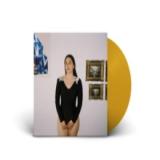
Die italienische Singer-Songwriterin Marta Del Grandi veröffentlicht Ende Januar 2026 ihr neues Album Dream Life bei Fire Records, ihre erste neue Musik seit dem raffinierten, hingebungsvollen Pop ihres Albums Selva aus dem Jahr 2023. Del Grandi kehrt mit einem Album zurück, das in einem Feld der Träume spielt, einer multidimensionalen Panoramaaufnahme, unterbrochen von gelassener Desillusionierung, die musikalische Grenzen überschreitet, während persönliche Hoffnungen und Sehnsüchte gegen die Weite der Sterne und darüber hinaus geworfen werden. Das Album beginnt mit ,Antarctica", einem Song, der sich mit dem ethischen Dilemma der Welt auseinandersetzt und uns mit einem Riff, das an Talking Heads in ihrer Blütezeit erinnert und mit abstrakten Phrasierungen à la Laurie Anderson durchsetzt ist, aus unserer Komfortzone reißt. ,Neon Lights" unterstreicht diese Stimmung, geht jedoch auf einer persönlicheren Ebene darauf ein. Die verzerrten Gitarren und der wandernde Bass bieten einen härteren Einblick in rebellische Selbstfindung, eingebettet in einen symphonischen Klangteppich. Weiter in ,Dream Life" ist ,Alpha Centauri" ein eindringliches, introspektives Stück Pop-Magie, das Martas wunderschöne Stimme in Nostalgie für die Teenagerzeit schwelgen lässt und ihr inneres Kind wiederentdeckt, während eine entfernte Tuba eine Gegenmelodie trägt. Der Titeltrack untersucht den Quantensprung zwischen Realität und unseren Träumen und Ambitionen und bildet einen Kontrapunkt zu ,Shoe Shaped Cloud" und seiner grüblerischen Untersuchung einer gescheiterten Beziehung, die von einer schmerzerfüllten Stimme vorangetrieben wird, die an Radiohead in ihrer zerbrechlichsten Phase erinnert. Das Album spiegelt das wachsende Bewusstsein wider, dass wir die Zukunft oder das Ergebnis unserer Pläne nicht vollständig kontrollieren können. Dieser rote Faden zieht sich durch das gesamte Album, eine Reise, die poetisch, ironisch und tief in der Gegenwart verwurzelt ist. ,Mein vorheriges Album Selva hatte einen poetischen und bukolischen Charakter - in meinem Kopf kann ich mir jeden Song als Ölgemälde vorstellen - Dream Life hat einen zeitgemäßeren Ansatz, mit Texten, die politische und soziale Themen berühren, einer expliziteren persönlichen Erzählweise und einem klareren Pop-Sound. Es ist eher wie ein Fotobuch, klarer und detaillierter." - Marta Del Grandi Limitiertes, goldfarbenes Vinyl, bedruckte Innenhülle, mit DLC oder Digi-Sleeve CD.
- 1: Hello, There
- 2: Gideon's Bible
- 3: Adelaide
- 4: Big White Cloud
- 5: Cleo
- 6: Please
- 7: Charlemagne
- 8: Bring It On Up
- 9: Amsterdam
- 10: Ghost Story
- 11: Fairweather Friend
'Vintage Violence' is John Cale's first post-Velvet Underground album and was originally released in 1970. Cale's signature sound with the Velvets was purposefully rough and aurally challenging, but 'Vintage Violence' is a startlingly user-friendly piece of mature, intelligent pop with a smooth, satin finish. The Welsh rocker shows a pop craftsman at work on ten tracks that reference everything from Country Rock to Beach Boys harmonies to The Band-style Americana and beyond.
A1 Hello, There
A2 Gideon's Bible
A3 Adelaide
A4 Big White Cloud
A5 Cleo
A6 Please
B1 Charlemagne
B2 Bring It On Up
B3 Amsterdam
B4 Ghost Story
B5 Fairweather Friend
- I Know Where Mark Chen Lives
- Falling Into It
- All My Friends Are So Depressed
- Well, Whatever It Was
- I Used To Go To This Bar
- After All You Put Me Through
- The Opossum
- Well, Don't It Seem Likeyou've Been Here Before?
- Grey Guitar
Clear Vinyl[23,49 €]
Joyce Manor are California pop-punk legends and I Used To Go To This Bar is this epochal band operating at the top of their game. They continue to deliver relentlessly satisfying rock music in a manner that makes it look simply effortless. The Torrance, California-hailing trio of Barry Johnson, Chase Knobbe, and Matt Ebert are at a point in their career where their position as one of the most beloved rock bands is a foregone conclusion. Their seventh album finds the group continuing to find rich new veins to tap in their short-and sweet songcraft without losing an ounce of bite that gained them such repute in the first place. I Used To Go To This Bar further situates Joyce Manor in the rich lineage of their influences and inspirations. Think AFI"s rapid-fire burn, Weezer"s indelible power-pop acumen, and the dusky emotionalism of The Smiths while further establishing them as leading lights in the current rock landscape. The fresh burst of inspiration that fuels I Used To Go To This Bar proves that Joyce Manor are far from content to rest on such laurels, moving forward with their sound and style in a way that reminds you of how they got to this point in the first place. Catch them live at Coachella 2026.
- Spandrel?
- Pitch Black
- Oil/Too Much
- Closer To Midnight
- Body/Prison
- Lies?
- Eyes/Not Enough
- The Lungs Of A Burning Body
- Xyz/Labyrinth
- Black Hole
In der Evolutionsbiologie beschreibt der Begriff ,Spandrel" die Merkmale eines Organismus, die nicht fürs Überleben wichtig sind und keinen offensichtlichen Zweck haben. Das Wort kommt aus der Architektur und bezeichnet die dreieckigen Räume in den Ecken eines Bogens: kleine ästhetische Elemente, die für Symmetrie sorgen und Grenzen markieren. Die Musikerin und Sängerin Evita Manji stellt auf ihrem Debütalbum eine undurchsichtige Frage und fragt sich angesichts eines großen Verlusts, welche Teile von uns zum Durchhalten beitragen und welche vielleicht nur Deko sind. Ihre Tracks, die aus den Dämpfen zeitgenössischer Clubmusik, Barock-Pop und experimentellem Sounddesign zusammengesetzt sind, sind für Manji eine Möglichkeit, ihre Beziehung zur Welt im Allgemeinen und zu sich selbst im Besonderen zu untersuchen, Kontrollsysteme zu zerlegen und die Vernetzung hervorzuheben. Manji ist seit einigen Jahren eine ätherische Präsenz in der Szene und arbeitet als Soundkünstler und Kreativdirektor mit zahlreichen Künstlern zusammen. Letztes Jahr starteten sie ihre eigene Plattform myxoxym, wo sie zwei Singles aus ,Spandrel?" veröffentlichten und eine ambitionierte Fundraiser-Compilation mit Rainy Miller, Palmistry, Cecile Believe und anderen zusammenstellten, um Geld für den griechischen Tierschutzfonds ANIMA zu sammeln. Manji trat weltweit auf Festivals wie Unsound, Lunchmeat und Rhizom auf, spielte in Clubs in Berlin und London und wurde ausgewählt, die Plattform Shape+ im Jahr 2022 zu vertreten. Diese Erfahrungen fließen in ,Spandrel?" ein und helfen ihnen, ein komplexes künstlerisches Gewebe zu weben, das weit unter die Oberfläche des Daseins blickt und versucht, das Unheil des globalen Klimawandels mit Themen wie Selbstverwirklichung, Liebe und körperlicher Autonomie in Einklang zu bringen. Das Album beginnt mit dem Titeltrack, einer einleitenden Zusammenfassung, die die Zuhörer auf das vorbereitet, was sie gleich hören werden. Manjis Gesang schwingt mit einem eingestöpselten Gefühl kybernetischer Melancholie und filtert die Flut von Rhythmen und harmonischen Themen der Welt zu geschmeidigem, clubtauglichem Pop, der von ihrer fortschrittlichen Klangwelt getragen wird. Von dort aus werden wir in die Traurigkeit des atmosphärischen Klagelieds ,Pitch Black" hineingezogen, einer Meditation über den Tod, die tiefe Bässe unter Schichten von choraler Glückseligkeit versinken lässt und an die Kirche und die Tanzfläche erinnert, ohne die Kraft der beiden gegensätzlichen Elemente zu opfern. Ihre Dunkelheit wird in ,Oil Too Much" von innen nach außen gedrängt, einem Kommentar zur Ölindustrie aus der Perspektive des Tierreichs, der gleichzeitig als neonfarbener Ausdruck der zeitgenössischen Depression dient. Aber in ,Body/Prison" klingt Manji am offensten, spricht ehrlich über die dunkelsten Momente ihres Lebens und gesteht ihre tiefsten Gefühle über sengende, von Trance inspirierte Synthesizer und groteske Percussion. ,Spandrel?" ist ein Album, das Zeit braucht, um sich zu entfalten, und Manjis Themen hallen durch eine Geschichte wider, die älter ist als die Popmusik. Es ist tragisch, romantisch und poetisch und weigert sich entschieden, sich von den drängendsten Themen unserer Zeit abzuwenden.
First-ever vinyl edition of Magic Castles' 2014 cult album The Lore Of Mysticore. A hypnotic blend of shimmering psych pop, hazy drones, and kaleidoscopic guitar textures, this record captures the Minneapolis band at the height of their creative powers. Originally released in 2014, The Lore Of Mysticore stands as one of the most compelling documents of the contemporary psychedelic underground. Minneapolis-based Magic Castles craft a hypnotic and immersive sound that blends shimmering psych-pop, hazy drones, and kaleidoscopic guitar textures into expansive, sun-drenched songs. This first-ever vinyl edition brings the band's beloved debut album to wax for the very first time, offering fans a chance to experience its swirling, cinematic beauty in a format that truly does it justice. Essential listening for fans of The Brian Jonestown Massacre, The Asteroid #4 and Spacemen 3