"The seven songs of Tombeaux comprise the Brooklyn-based composer and multi-instrumentalist’s third full-length recording, and her first written and arranged for a large ensemble. Frustrated by the limitations of self-production and solitary home recording, Sridharan set out to create something sonically broader, featuring sitar, vibraphone, woodwinds, horns, strings, and piano. Tombeaux is richly textured and deeply felt, weaving medieval and classical influences into a distinct art pop tapestry that will be much loved by fans of Laurie Anderson, Bel Canto, Anna von Hausswolf, and Julia Holter, who produced the record.
The record’s subject is as expansive as the ensemble; each song is a discrete tale of a death, imagined by Sridharan and told in the first person. From reimagining the work of 16th-century Indian poet Mirabai to exploring Ursula K. Le Guin’s Earthsea afterworld, The Dry Land, to writing about her own grandmother’s death, Sridharan teases out the varied nature of death, applying a broad range of historical and cultural lenses to this great inevitability.
Sridharan was raised by an Indian father who exposed her to Indian classical music and a mother whose passion for history, archeology, and medieval music informed and inspired her from an early age. Her upbringing in the woods of Michigan and high school years on the shores Lake Michigan perhaps further inspired her tendency toward reverie, imagined narratives, and the drama that unfolds between this shore and the next.
Though not intended as an exhaustive survey of ideas of death across cultures, Tombeaux’s scope is impressive, shot through with the feel of a book of short stories, or a performance of tales. It is enchanting and elegantly executed, sensitively shepherded by Holter’s production."
Поиск:pop 3
Все
"NY Psychedelic Art Rock!
Touted as the “new Doors,” Ars Nova’s second release shows the band genre-bending jazz and heavy psychedelia in a style that’s their own. Shifting from a largely classical centric sound, this was the group’s last album before going their separate ways. Pressed on pink vinyl!
Sunshine & Shadows takes the baroque-meets-psych sound of the debut and turns a bit more to the psych side. The stately brass interludes are gone, but horns still figure prominently in the mix. There’s some jazzy New Orleans flavor to a couple of the tunes, albeit twisted into a 7/4 vamp on “You Had Better Listen.”
The instrumentalists in the band, featuring trumpet and trombone, really give the music a unique flavor, setting them apart from the multitudes of other American psych bands. Ars Nova might be likened to Ultimate Spinach (but without the overly serious, pretentious lyrics) or later Zombies (though with less emphasis on the keyboards).
It’s all very well written and nicely played, and when they do a tender ballad like “Temporary Serenade,” the acoustic guitar is very lute-like, much more along the lines of classical than folk (like the later work of Jan Akkerman with Focus), and the trumpet descant adds a lovely spice.
“Well, Well, Well” is the heaviest rock tune in their repertoire, with a great electric guitar riff and hot organ playing, again set apart by trombone and trumpet. This one is definitely worth seeking out for baroque pop fans."
"NY Psychedelic Art Rock!
Touted as the “new Doors,” Ars Nova’s second release shows the band genre-bending jazz and heavy psychedelia in a style that’s their own. Shifting from a largely classical centric sound, this was the group’s last album before going their separate ways. Pressed on pink vinyl!
Sunshine & Shadows takes the baroque-meets-psych sound of the debut and turns a bit more to the psych side. The stately brass interludes are gone, but horns still figure prominently in the mix. There’s some jazzy New Orleans flavor to a couple of the tunes, albeit twisted into a 7/4 vamp on “You Had Better Listen.”
The instrumentalists in the band, featuring trumpet and trombone, really give the music a unique flavor, setting them apart from the multitudes of other American psych bands. Ars Nova might be likened to Ultimate Spinach (but without the overly serious, pretentious lyrics) or later Zombies (though with less emphasis on the keyboards).
It’s all very well written and nicely played, and when they do a tender ballad like “Temporary Serenade,” the acoustic guitar is very lute-like, much more along the lines of classical than folk (like the later work of Jan Akkerman with Focus), and the trumpet descant adds a lovely spice.
“Well, Well, Well” is the heaviest rock tune in their repertoire, with a great electric guitar riff and hot organ playing, again set apart by trombone and trumpet. This one is definitely worth seeking out for baroque pop fans."
"Led by the legendary pianist and composer Chick Corea - 27-time Grammy winner and National Endowment for the Arts Jazz Master - The Elektric Band stormed onto the jazz scene in the mid-1980s, making an immediate and lasting impact on the genre. With their electrifying performances and innovative blend of jazz fusion, the group produced a series of albums that set the bar for excellence in contemporary jazz.
Featuring a core lineup of virtuosic musicians - John Patitucci on bass, Dave Weckl on drums, Eric Marienthal on saxophone and Frank Gambale on guitar - the group created a dynamic and electrifying sound that came to define the jazz fusion style. Their collective musicianship was on full display on each album, as they seamlessly blended complex compositions with captivating improvisations.
With each outing, the band explored new sonic territories, incorporating elements of funk, Latin and Afro music, and pop sensibilities. Their 5-album studio discography is a masterful tapestry of multi-layered music, showcasing their creativity, innovation, and musicianship."
LP (coloured white vinyl) + Download Code + Poster Das Trio Topsy Turvy ist die jüngste Entdeckung aus dem scheinbar unerschöpflichen Pool der neuen Wiener Indie-Szene. Theresa Strohmer (Gitarre), Lena Pöttinger (Schlagzeug) und Victoria Aron (Bass) schaffen es auf ihrem Debütalbum, die Energie des britischen Post-Punk der 80er Jahre mit treibenden Surf-Einflüssen und schön schrägen Indie-Pop-Melodien zu verbinden. Auf ihrem knapp dreißigminütigen Debütalbum "Butt Sore", das von ihrem Siluh-Labelkollegen Peter T. von Euroteuro produziert wurde, erschaffen die drei Musikerinnen wunderbare Soundcollagen, die ihre Musik leichtfüßig und dennoch treibend durch die elf Songs ihres Debüts tragen und sich im Spannungsfeld zwischen dem Lo-Fi Spirit der Moldy Peaches und dem Rock'n'Roll der Black Lips bewegen. Trotz vielfältiger und teilweise gegensätzlicher Einflüsse lassen die Songs schöne, verrückte und organische Assoziationen entstehen, die den Hörer auf eine unruhig entspannte Reise mitnehmen. Jeder Song auf dem Debütalbum ist ein absolutes Unikat, ohne dabei gewollt oder wie ein Fremdkörper auf dem zeitlosen und trotz der verschiedenen Einflüsse homogenen Platte zu wirken.Topsy Turvy haben die große Gabe, Ohrwürmer zu kreieren. Diese Fähigkeit macht "Butt Sore" zu einem der spannendsten Alben des Jahres und die Band zu einem Aushängeschild einer neuen Wiener Indie-Szene, die sich mit Gruppen wie Salamirecorder, Telebrains, Potato Beach, Gardens, oder Laundromat Chicks rund um das Label Siluh Records formiert.
Two gypsies with pedigree backgrounds in Flamenco got together with a drum machine in a studio during the early 80's and the result was Chipen, a somewhat poppy chart oriented project featuring Peret Reyes the grandson of legendary Catalan Gitano musician Peret (aka "El Rey de la Rumba") and Johnny Tarradellas. "Volao" is a mid tempo effort to bridge Pop and Rumba, mixing catchy funk guitar riffs with elements of Flamenco in unprecedented ways. "Chiribiri" sounds like it could be the theme song to a Catalan morning show or even a Japanese 80's Toyota Camry ad, reeks of stereotype and cliche, except that Chipen is the real deal, as real as the darkness of the hair dye on the cover photo. Extended version of Volao on the B side. Remastered at Manmade Mastering in Berlin.
Bekannte Musiker:innen erzählen von den Umständen, in denen man im deutschsprachigen Raum Musik macht. "Never get old" und "Sex, drugs and rock"n"roll". Das sind die Mythen. Und die Koordinaten, zwischen denen sich der Popkosmos aufspannt. Aber wie sieht das eigentlich im wahren Leben aus? Hinter allen Bühnen und Kulissen: Wie wirkt sich das Alter auf eine Musiker:innenkarriere aus? Kann ein Frank Spilker dem Alter gelassener entgegengehen als eine Christiane Rösinger? Wird es, wenn man älter wird, auch schwieriger, mit Musik Geld zu verdienen? Lohnt sich das überhaupt finanziell, Musiker:in zu sein in Deutschland? Oder sind das eh alles reiche Erb:innen? Über Besuche beim Jobcenter und jünger retouchierte Bandfotos liest man selten in Musiker:innen-Interviews. Alles, was den Mythos zum Wackeln bringen würde, wird lieber nicht angefasst. Schließlich verkauft man nicht nur Musik, sondern auch einen Traum. Oder? "Kommst du mit in den Alltag" bricht mit allen Tabus und bringt in 18 Gesprächen Künstler:innen unterschiedlichen Geschlechts und Backgrounds zusammen, um sie einmal über all das reden zu lassen, was sonst ungesagt bleibt: Wie reagieren eigentlich Freunde und Familie auf den Musiker:innen-Job? Kann man überhaupt Kinder haben, wenn man beruflich kreativ ist? Und wie hält man als Künstler:in Freundschaften zu festangestellten Eight-to-Fivern? Tut man sich etwa gut daran, jemanden zu ehelichen, damit man sich auch "wenn es mal nicht so läuft" noch den Zahnarzt leisten kann? Gespräche u. a. mit Albertine Sarges, Peter Hein (Fehlfarben), Sophie Löw (Culk), Masha Qrella, Carsten Friedrichs (Superpunk), Christin Nichols, Christiane Rösinger, Hendrik Otremba, Michael Girke (Jetzt!), Frank Spilker (Die Sterne), Katharina Kollmann (Nichtseattle), Jan Müller (Tocotronic), Jana Sotzko, Jonas Poppe (Oum Shatt), Julie Miess, Tobias Bamborschke , Bernadette La Hengst, Max Gruber (Drangsal), Paul Buschnegg (Pauls Jets), Paul Pötsch (Trümmer), Pedro Crescenti (International Music), Rick McPhail (Tocotronic) ...
In March 2023, @ turned heads with their debut album Mind Palace Music that utilized an array of acoustic instrumentation and densely layered harmonies, like the great outsider folk records of the 60s and 70s and placed it in a modern setting. If Mind Palace Music was @ playing on story mode, their new EP Are You There God? It’s Me, @ is the darker, stranger side quest.
Mind Palace Music was written in very specific circumstances. The band was formed while they were confined to their homes during quarantine — Victoria Rose in Philadelphia and Stone Filipczak in Baltimore — exchanging musical sketches over iMessage and email. Even though the world has opened back up and they’ve been able to play together live, this EP was again created remotely while in their respective cities. What did change, however, was the production.
Are You There God? It’s Me, @ is @’s foray into electronic music — consisting primarily of software instrumentation (with the occasional flute, guitar or bass part sprinkled in). The band’s experience producing in this style was minimal, but they found the new process to be a rewarding exercise allowing them to explore new textures and structures made possible by computer music. Where their previous acoustic recordings had a looser and more human feel, these new songs allowed them to experiment with autotune and quantized beats. Rose was able to resurrect her passion for classical choir by singing and recording a capella vocal arrangements to be incorporated into Filipczak’s instrumentals.
Across five songs, @ call upon a higher power, as the title suggests, in search of fulfillment. While they try to remain hopeful, daily suffering casts doubt on whether that high power even exists. On “Soul Hole,” overtop an autotuned vocal loop and hyper-pop-esque production, Rose repeats “I’m going to the soul hole and I’m never coming back,” hoping to leave behind the material world and the desires that comes with it. “Webcrawler,” named after the pioneering search engine, might be considered Are You There God?’s epic. @ sees their search for meaning in life akin to how search engines pull together data from all over the internet to find answers. The music itself is even reminiscent of dial-up internet connection, with droning keys and machine-like drum programming until overheating and erupting into chaos, in the form of heavy-metal shredding, only to cool down again back on a loading screen.
While the band confesses the departure from their usual sound may only be temporary, it’s an exciting listen full of twists and turns that surprised even themselves. “We’re both really dramatic in our musical sensibilities and don’t shy away from ridiculous choices,” Rose recalls, “which can really be exaggerated when working mostly with electronic sounds.” Full of soul searching and sonic experimentation, Are You There God? It’s Me, @ is an encapsulating spiritual saga for the digital age.
Remixed and remastered reissue of the legendary ORQUESTA DEL DESIERTO self-titled debut album. Recorded at the Green Room Studio in Palm Springs in 2001 and released on the seminal desert rock label Meteorcity Records in 2002, the band's debut album immediately gathered critical acclaim for its ability to forge a new dynamic in a genre that was rapidly filling with groups cloning the heavier sounds of Kyuss. "There are, quite simply, no faults here - this is a beautiful, potent album that gives just as much attention to pop hooks as it does to atmosphere. As you can imagine, the results are astounding,"
Transparent Orange vinyl, limited to 350 copies. Remixed and remastered reissue of the legendary ORQUESTA DEL DESIERTO self-titled debut album. Recorded at the Green Room Studio in Palm Springs in 2001 and released on the seminal desert rock label Meteorcity Records in 2002, the band's debut album immediately gathered critical acclaim for its ability to forge a new dynamic in a genre that was rapidly filling with groups cloning the heavier sounds of Kyuss. "There are, quite simply, no faults here - this is a beautiful, potent album that gives just as much attention to pop hooks as it does to atmosphere. As you can imagine, the results are astounding,"
Back Home Again was originally released in June 1974 when John Denver was at his peak and is home to several of his most popular and enduring songs – "Annie’s Song" and "Thank God I’m A Country Boy". The album topped the charts in the US and reached No 3 in the UK. The album is presented in a gatefold sleeve as per the original release and makes a welcome return having been unavailable on vinyl for many years. This is the 50th anniversary edition in a x12 trk, Black LP Vinyl in gatefold sleeve. Marketing activity.
Everyone associates Liverpool with the Beat Boom – and that particular wave was led by groups, not solo artists. But Billy Fury is the shining exception. Born Ronald Wycherley on Merseyside in 1941, he was very much in tune with the American Rock’n’Roll that had turned the music world upside-down and, in the late Fifties, was a very credible response to ‘authentic’ American stars like Eddie Cochran, Buddy Holly, Ricky Nelson and Elvis. This LP illustrates the two sides of Fury – the dedicated rock’n’roller whose music stood up to comparison with the American pioneers, and the Pop-chart act his record label wanted him to be.
- Mad About The Boy
- What A Diff'rence A Day Makes
- A Rockin' Good Way (To Mess Around And Fall In Love) (With Brook Benton)
- Manhattan
- I Can't Believe That You're In Love With Me
- A Sunday Kind Of Love
- Time After Time
- Is You Is Or You Ain't My Baby
- Smoke Gets In Your Eyes
- September In The Rain
- Let's Do It (Let's Fall In Love)
- You're Nobody 'Til Somebody Loves You
- Fly Me To The Moon
- Cry Me A River
- Baby (You've Got What It Takes) (With Brook Benton)
- They Didn't Believe Me
- Unforgettable
- After You've Gone
Dinah Washington had one of the most distinctive and versatile voices in music. Washington could sell an R&B stomp just as well as she could interpret a torch song, and she could hold her own in the company of Jazz trumpet genius Clifford Brown and Bebop drum pioneer Max Roach. Her records, made for Mercury Records and the company’s Jazz offshoot EmArcy Records in the US appeared in the UK through Oriole and then EMI. Notably, the 1959 album release of What a Diff'rence A Day Makes featured the classics Cry Me A River, Manhattan, A Sunday Kind Of Love, Time After Time and What a Diff'rence A Day Makes. During the same year she visited the UK performing at the Bath Jazz Festival and recording an appearance for Granada Television’s The Variety Show. Washington’s discs regularly featured on BBC radio, but despite this, her only UK chart single came in November 1962 when September in the Rain reached number 35 from the album of the same title. Also taken from September Rain and featured on this LP is the popular Jazz standard composed by McHugh and Gaskill I Can't Believe That You're In Love With Me...
Continuing the re-issue program on STD Black LP - Rolling Stones No.2 - The second UK Rolling Stones studio album, released in 1965 following the success of their 1964 debut album The Rolling Stones. A huge success in the UK, the album was number one on the charts for 10 weeks and includes the band’s cover of ‘Time Is On My Side’ and ‘Everybody Needs Somebody To Love’. The album also contains three compositions from the still-developing Mick Jagger/Keith Richards songwriting team (‘What A Shame’, ‘Grown Up Wrong’ and ‘Off The Hook’), with all the other songs being covers of American R&B and rock and roll numbers, like the first album. December’s Children (And Everybody’s) US - The fifth American studio album, released in December 1965. The last Stones album in which cover material accounted for 50 percent of the content was compiled from a variety of singles, British LP tracks, outtakes, and a cut from an early 1964 U.K. EP. The album demonstrates the continuing development of Jagger & Richard’s songwriting with a further two pop classics – the string-laden affecting ballad – ‘As Tears Go By’ and ‘Get Off My Cloud’.
CLEAR VINYL EDITION[26,26 €]
On Yard, Wisconsin-bred, Chicago-based four-piece Slow Pulp nestles comfortably into pockets of nuance, impressions, contradictions-sonics and lyrics finessed together to bottle the specific tension of a feeling you"ve never quite been able to find the right words for. In that regard, listening to Slow Pulp can feel like being in a room with someone who"s known you so long that they can read your every micro-expression and pinpoint exactly how you"re feeling before you can. Perhaps this spawns from the band"s own shared history and chemistry; in various ways, the four of them grew up-are still growing up-together. The dreamy songs of the Midwest (United States) indie rock outfit draw on moody shoegaze, hooky grunge, and intimate lo-fi fare. The band made their full-length debut with Moveys in 2020. After the downcast 2021 7" Deleted Scenes, they put the focus on hooky grunge pop for singles like 2021"s "In Too Deep" and 2023"s "Cramps". After their label debut single the band toured throughout Europe and the UK earlier this year as main support for Death Cab For Cutie. The new album "Yard" is their second full-length album and first for ANTI-.
- A1: Wonka's Welcome Song
- A2: Augustus Gloop
- A3: Violet Beauregarde
- A4: Veruca Salt
- A5: Mike Teavee
- A6: Main Titles
- B1: Wonka's First Shop
- B2: The Indian Palace
- B3: Wheels In Motion
- B4: Charlie's Birthday Bar
- B5: The Golden Ticket / Factory
- C1: Chocolate Explorers
- C2: Loompa Land
- C3: The Boat Arrives
- C4: The River Cruise
- C5: First Candy
- C6: Up And Out
- C7: The River Cruise - Part 2
- D1: Charlie Declines
- D2: Finale
- D3: End Credit Suite
Tim Burton’s 2005 adaptation of Roald Dahl’s classic children’s book was conceived as long ago as 1991 and was in development for several years before Burton was involved in the production. He immediately brought regular collaborators Johnny Depp and Danny Elfman aboard.
Charlie and the Chocolate Factory represents the first time since The Nightmare Before Christmas that Elfman contributed to a film score using written songs and his vocals. The film was released to critical praise and was a box office success, grossing $475 million worldwide.
The wonderfully quirky melodic score and songs from one of Hollywood’s great composers harks back to Edward Scissorhands, Burtons’ and Elfman’s most personal work, and is a return to the composer’s “vintage” sound from the late 1980s and early 1990s.
First released on vinyl in 2015, this latest edition brings the popular soundtrack back to vinyl on Marshmallow Pink and Chocolate Brown Vinyl.
“It was more fun than I ever had working on a movie. It was so crazy and doing all the vocals was so much fun. I found myself falling into voices, singing vocal mannerisms. I was having such a gas.”
- Danny Elfman
One can hardly imagine the genre-busting, culture-crossing musical magic of Outkast, Prince, Erykah Badu, Rick James, The Roots, or even the early Red Hot Chili Peppers without the influence of R&B pioneer Betty Davis. Her style of raw and revelatory punk-funk defies any notions that women can’t be visionaries in the worlds of rock and pop. In recent years, rappers from Ice Cube to Talib Kweli to Ludacris have rhymed over her intensely strong but sensual music.
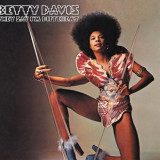
There is one testimonial about Betty Davis that is universal: she was a woman ahead of her time. In our contemporary moment, this may not be as self-evident as it was thirty years ago – we live in an age that’s been profoundly changed by flamboyant flaunting of female sexuality: from Parlet to Madonna, Lil Kim to Kelis. Yet, back in 1973 when Betty Davis first showed up in her silver go-go boots, dazzling smile and towering Afro, who could you possibly have compared her to? Marva Whitney had the voice but not the independence. Labelle wouldn’t get sexy with their “Lady Marmalade” for another year while Millie Jackson wasn’t Feelin’ Bitchy until 1977. Even Tina Turner, the most obvious predecessor to Betty’s fierce style wasn’t completely out of Ike’s shadow until later in the decade.
Ms. Davis’s unique story, still sadly mostly unknown, is unlike any other in popular music. Betty wrote the song “Uptown” for the Chambers Brothers before marrying Miles Davis in the late ’60s, influencing him with psychedelic rock, and introducing him to Jimi Hendrix — personally inspiring the classic album Bitches Brew.
But her songwriting ability was way ahead of its time as well. Betty not only wrote every song she ever recorded and produced every album after her first, but the young woman penned the tunes that got The Commodores signed to Motown. The Detroit label soon came calling, pitching a Motown songwriting deal, which Betty turned down. Motown wanted to own everything. Heading to the UK, Marc Bolan of T. Rex urged the creative dynamo to start writing for herself. A common thread throughout Betty’s career would be her unbending Do-It-Yourself ethic, which made her quickly turn down anyone who didn’t fit with the vision. She would eventually say no to Eric Clapton as her album producer, seeing him as too banal.
Her 1974 sophomore album They Say I’m Different features a worthy-of-framing futuristic cover challenging David Bowie’s science fiction funk with real rocking soul-fire, kicked off with the savagely sexual “Shoo-B-Doop and Cop Him” (later sampled by Ice Cube). Her follow up is full of classic cuts like “Don’t Call Her No Tramp” and the hilarious, hard, deep funk of “He Was A Big Freak.”
First time on vinyl!
Newly remastered. LP housed in a gatefold jacket.
Featuring Herbie Hancock, Martha Reeves, Alphonse Mouzon, Chuck Rainey, Patryce “Choc’let” Banks, Carlos Morales, and members of The Pointer Sisters.
In the 1970s, Betty Davis defied genre and gender by pushing her voice to extremes and embracing the erotic. She articulated a kind of pre-punk, funk-blues fusion that had yet to be normalized in mainstream music – a style that few musicians have come close to replicating. As one of the first Black women to write, arrange, and produce her own albums, Betty was a visionary who disregarded industry boundaries and constraints. Raw, unapologetic and in full control, Betty paved the way for generations of future artists who said “funk you” to the music industry and social norms.
In 1979, when Davis entered an L.A. studio to record her fifth and final album, she was reeling from a series of setbacks. Three years earlier, after recording her fourth album, Is It Love Or Desire, Davis was dropped from her label and the LP was subsequently shelved. In 1978, her beloved band Funk House went their separate ways. Looking for a fresh start, Davis relocated to Hollywood to focus on songwriting. Before long, British manager Simon Lait (Toni Basil), offered to fund her next project.
With renewed vigor, Davis reunited with former Funk House guitarist Carlos Morales and brought together industry veterans like fusion drummer Alphonse Mouzon and session bassist Chuck Rainey. Old friends Anita and Bonnie Pointer (The Pointer Sisters) and Patryce “Choc’let” Banks joined Davis on vocals, as did Motown legend Martha Reeves. The resulting album, Crashin’ From Passion, was her most musically diverse, blending elements of reggae and calypso (“I’ve Danced Before”), jazz (“Hangin’ Out in Hollywood,” “Tell Me a Few Things”), dark synth-pop (“She’s a Woman”), and even disco (“All I Do Is Think of You”). Equally exploratory are Davis’ vocals, as she trades in her signature sass and snarls for more nuanced stylings.
Among the album’s few funk tracks is “Quintessence of Hip,” in which Davis hails musicians like Bob Dylan, Billie Holiday, Stevie Wonder, and John Coltrane, while deftly integrating elements of their work. The song also offers a moment of stark vulnerability, as she sings, “Isn’t rich? Isn’t it queer? Losing my timing so late in my career.” It would prove to be a prophetic line in the months to follow.
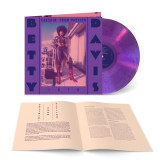
The mixing process was mired by artistic differences and then cut short, amid the death of Davis’ beloved father. Bereft and exasperated, Davis returned home for the funeral, setting into motion her retirement from the music industry. Crashin’ From Passion, meanwhile, would be shelved for 15 years and licensed for a CD-only release, without Davis’ consent, in the ‘90s. This 2023 edition of the album, made with Davis’ full approval and cooperation, marks its first official release and first time ever on vinyl. The package was designed by GRAMMY®-winning artist, Masaki Koike, while the album cover features an incredible shot of Betty captured in London in the mid-1970s by renowned photographer Kate Simon.
Crashin’ From Passion was remastered by Dave Cooley at Elysian Masters and pressed on vinyl at Record Technology, Inc. (RTI). The accompanying booklet includes a treasure trove of rare photos from the era, plus lyrics, and new liner notes by writer, ethnomusicologist, and Betty’s close friend, Danielle Maggio, who integrates interviews that she conducted with Davis, marking her last ever interviews.
With Pere Ubu on hiatus since 1982’s excellent ‘Song Of The Bailing Man’, David Thomas had recorded a` much-praised solo album and the band had now signed to a major label. In a period of rampant world commercialism, what would happen next? Another crucial era for the band unravelled, Pere Ubu’s journey charted new undulating territory and so began a three-album escapade that retooled our understanding of what pop music is. “Solid as the band can be, it's also likely to dissolve songs from the bottom up. For all Pere Ubu's uncertainty, the band isn't arbitrary; its music has the off-the-wall unity of a Marx Brothers routine,” said Jon Pareles of The New York Times. In 1991, ‘Worlds In Collision’ became “the most atmospheric, carefully sculpted recording in the band's 13-album catalog.” (Tom Moon, Spin).