After releasing SOUL FICTION in May 2023! Cosmo Klein & The Campers release a "Soul Fiction Remix"ed album with remix-management by Berlin based DJ Daniel W. Best of Best's Friends Music.
Remixers inc. Art Of Tones, Opolopo, Philippa, DJ Friction (Germany). In the past the Cosmo Klein from Berlin has dedicated himself to different genres of music such as Pop, House Music, Soul, Jazz & Funk. Numerous hits like "Beautiful Lie", "Feel Alive", "All I ever need" or the Duet with German singer Maya Saban have made Cosmo Klein one of the few internationally successful music exports from Germany.
Поиск:pop da funk
Все
The voice of Ella Thompson has been a fundamental part of Naarm’s soul and funk history. She has toured and recorded with funk pioneers The Bamboos, lit up dancefloors with electronic duo GL and won hearts and minds across Australia with indie cult favourites Dorsal Fins. Ella now returns to her soul roots and releasing music under her own name with a brand new single ‘Cool Down My Heart’, self-produced in collaboration with multi instrumentalist Liam McGorry and featuring cameos by local heavyweights Hudson Whitlock (drums) and Will Morrisey (saxophone). Cool Down My Heart is a rich, imaginative, pop/soul track which foregrounds Ella’s beautiful voice and considerable songwriting skills.
- A1: Where Is My Man (Vocal) / Eartha Kitt
- A2: I Need You (Extended 12” Mix) / Sylvester
- A3: Was That All It Was (12” Version) / Jean Carne
- A4: After The Rainbow (12” Version) / Joanne Daniëls
- B1: Searchin’ (I Gotta Find A Man) (12” Version) / Hazell Dean
- B2: Native Love (Step By Step) (12” Version) / Divine
- B3: He’s A Saint, He’s A Sinner (Extended Version) / Miquel Brown
- B4: Danger For Love (Full Length Version) / Deborah
- C1: Voyage Voyage (Pwl Britmix) / Desireless
- C2: Self Control (Extended Version) / Laura Branigan
- C3: Get Lost Tonight (12” Version) / Fancy
- C4: Brother Louie (Special Long Version) / Modern Talking
- D1: Stop… Bajon (Club Mix) / Tullio De Piscopo
- D2: Dolce Vita (Extended Version) / Ryan Paris
- D3: I’m So Hot For You (Dance Mix) / Bobby “O”
- D4: This Girl’s Back In Town (Extended Vocal Remix) / Raquel Welch
- E1: Paninaro (Italian Remix) / Pet Shop Boys
- E2: Sub-Culture (Remix) / New Order
- E3: Homosapien (Elongated Dancepartydubmix) / Pete Shelley
- F1: The Anvil (Dance Mix) / Visage
- F2: Fantasy (“Short” Album Version) / Hotline
- F3: The Dominatrix Sleeps Tonight (Dominant Mix) / Dominatrix
- F4: Duel (Bitter-Sweet) / Propaganda
- G1: Love On Top Of Love (Killer Kiss) (The Funky Dred Club Mix) / Grace Jones
- H3: Can’t Stop The Music (12” Version) / Village People
- G2: Pink Cadillac (Club Vocal) / Natalie Cole
- G3: Heat It Up (Acid House Remix) / Wee Papa Girl Rappers
- H1: Deep In Vogue (Banjie Realness) / Malcolm Mclaren And The Bootzilla Orchestra
- H2: Pistol In My Pocket (12” Version) / Lana Pellay
Box 1[96,01 €]
4LP set containing 29 original / extended / full-length / 12” versions of Queer club classics – 1980-1989
‘More Sin’ features Pet Shop Boys, Sylvester, Divine, New Order, Eartha Kitt, Grace Jones, Hazell Dean, Desireless and many more.
Highlights include the hard-to-find 12” version of ‘Can’t Stop The Music’ by Village People and the rarely compiled underground club anthems ‘Pistol In My Pocket’ by Lana Pellay and ‘After The Rainbow’ by Joanne Daniëls.
All tracks fully annotated and with a foreword by Ian Wade – author ‘1984: The Year Pop Went Queer’. Following the success of the first ‘Box Of Sin’ in 2023, Demon / Edsel and Disco Discharge are proud to announce the sequel – ‘More Sin: Box of Sin 2’ will be released on 31st January 2025.
Over 4 LPs, ‘More Sin’ presents 29 choice selections from the music you might have heard on Queer dancefloors between 1980 and 1989 – a decade of dance in all its devilish delights. Meticulously researched from the published gay club charts at the time, the LP set encompasses full-length versions of Diva, High Energy, Alternative, Pop, Europop and House classics. Not only were the ‘80s Queer clubs where you were most likely to hear the latest groundbreaking developments in dance music, there was a lot of diversity on offer – on a given night you might hear a legendary soul singer’s new opus right next to some post-punks from Manchester and the latest European pop chart topper.
‘More Sin’ aims to reflect this. On ‘More Sin’, the space-age soulful club sound of Jean Carne rubs up against the widescreen Europop beauty of Desireless and cutting-edge house music from London courtesy of Wee Papa Girl Rappers… and along the way come some of the most important and era-defining artists of the decade – from Sylvester to Siouxsie & The Banshees, from Pet Shop Boys to Divine, from Hazell Dean to Grace Jones. Producing and mixing these classics is like a roll-call of the era’s studio giants – Trevor Horn, Larry Levan, Clivillés & Cole, Ian Levine, John Luongo, Bobby “O”, Martin Rushent and Stock, Aitken & Waterman to name a few. It’s time to give in to sin again.
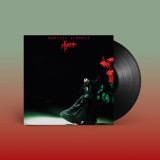
Bartees Strange begann die Arbeit an "Horror" in seinem Homestudio. Eine Session mit Yves und Lawrence Rothman (Yves Tumor, Lady Gaga) lieferte das rhythmische und klangliche Rückgrat für große Teile des Albums. Nachdem Bartees Strange Jack Antonoff (Taylor Swift, Lana Del Rey...) kennengelernt hatte und die beiden schnell Freunde wurden, arbeitete Strange an Material für Antonoffs Band Bleachers und Antonoff an "Horror". Die beiden beendeten die Arbeit am Album gemeinsam, indem sie die Songs roh bearbeiteten, editierten, arrangierten und sie in Kleidung kleideten, die Angst einflößt. Während des gesamten Albums legt Strange eine schwierige Wahrheit nach der anderen ab. Auf den 12 neuen Tracks des Albums finden sich genreübergreifende Fäden der Musik, die sein Vater ihm nahegebracht hat - Parliament Funkadelic, Fleetwood Mac, Teddy Pendergrass und Neil Young - die mit Stranges Interesse an Hip-Hop, Country, Indie-Rock und House verschmelzen. Seit dem Release seines 4AD-Debüts "Farm to Table" (2022) spielte Bartees Strange neben eigenen Headline-Touren (und einem Auftritt beim letztjährigen Reeperbahn Festival) im Vorprogramm von Acts wie boygenius, Clairo, Dijon und The National. Während eine Tour zum neuen Album noch angekündigt werden wird, gibt es schon eine Reihe von Release-Shows in 2025 in New York, Los Angeles, Washington D.C. und London. Geboren in Ipswich, England, als Sohn eines Militärvaters und einer Opernsängerin, verlebte Bartees Strange eine Kindheit, die geprägt war von diversen Umzügen bevor er sich schließlich in Mustang, Oklahoma, niederließ. Später spielte Bartees Strange in Hardcore-Bands in Washington D.C. und Brooklyn, während er in der Regierung von Barack Obama und der Bewegung für Umweltschutz arbeitete. In letzter Zeit wurde seine Musik auf mehreren populären TV- und Film-Soundtracks verwendet, darunter bei The New Look von Apple TV und I Saw The TV Glow von A24-Studio.
- A1: Capital Punishment In America
- A2: Buck Tha Devil
- A3: Lost In Tha System
- A4: You & Your Heroes
- A5: All On My Nut Sac (Feat. Ice Cube)
- A6: Guerillas In Tha Mist
- B1: Lenchmob Also In Tha Group
- B2: Ain't Got No Class (Feat. B-Real)
- B3: Freedom Got An A.k
- B4: Ankle Blues
- B5: Who Ya Gonna Shoot Wit That
- B6: Lord Have Mercy
- B7: Inside Tha Head Of A Black Man
Possessing lyrics heavily focused on political and social justice, inspired heavily by West Coast gang culture and Islam, Da Lench Mob made waves throughout the hip-hop scene when they first appeared on the track "Rolling With Da Lench Mob", off Ice Cube's famed 1990 solo record AmeriKKKa's Most Wanted. Initially, the titular "Lench Mob" of the track namesake referred to Ice Cube as well as the other participating rappers, but J-Dee, Shorty, and T-Bone would adopt the name for their own in time. Their standout appearance on the Ice Cube track would earn the trio critical interest, (as well as shout-outs on Ice Cube's 1991 follow-up Death Certificate) and generate palpable anticipation for a studio album of their own. Guerillas In Tha Mist, their 1992 debut record, was recorded in the wake of the Rodney King riots, taking its name from infamous comments made during the riots. The record was uncompromising and confrontational in its depictions of urban decay and an unjust system wreaking havoc on an economically disadvantaged Black population. It was starkly realistic (bordering on abrasive) in the content of tracks like the armed revolution-advocating "Freedom Got An A.K.", the kill-your-idols style of "You And Your Heroes", and the anti-pusher anthem "All On My Nut Sac." These harsh manifestos were made all the more smooth via Ice Cube's jazzy G-funk and Bomb Squad-influenced production, which sampled heavily from classic songs by Parliament, Kool & The Gang, The Incredible Bongo Band, and even Vangelis. Cube himself would make guest appearances throughout the record, as well as an appearance by B-Real of Cypress Hill on the track "Ain't Got No Class." Guerillas In Tha Mist was a Billboard success upon its release, reaching #24 on the Billboard 200, and rendering rap radio hits out of its title track and "Freedom Got An A.K.", but Da Lench Mob would fall into obscurity over the years, eventually going their separate ways after creative differences, financial rifts, and the life conviction of rapper J-Dee for suspected murder in 1993. Despite their loss of commercial fortunes, Guerillas In Tha Mist would develop a strong reputation as an unheralded gem among hip-hop heads, and would be considered one of the great lesser-known releases of the era among critics (in 2018 Complex would declare the title track as one of the 100 Best L.A. Rap Songs). Decades after its initial release, and in tribute to the memory of Da Lench Mob member Shorty, who passed in 2019, Get On Down now presents an exclusive LP reissue of Guerillas In Tha Mist, which previously was only released officially on wax in Europe. The LP is pressed on a deluxe Green and Orange Splatter-colored vinyl, and features remastered audio and a painstakingly recreated full color jacket.
- Tout Tremblant De Fièvre (1969, Single "Tout Tremblant De Fièvre")
- Fac,On De Parler (1971, Album "Acte Ii")
- Annie, Christine Ou Patricia (1972, Single "Il Faut Rêver")
- A Bas Tous Les Privilèges (1973, Compilation "La Révolution Française")
- Les Indiens Du Dernier Matin (1974, Album "Acte Iii")
- Mon Premier Hold-Up (1975,Album "N°1 Usa Hits Of The 60'S")
- Disco Circus (François K Edit) (1978, 12" Single)
- Bains Douches (1980, Album "De Sang Froid")
- J't'ai Vu Dans Le Canoe' (1983, Single "Solange")
- Pourquoi Tu M'la^ches Pas? (1985, Single "Trop Sentimental")
As soon as Martin Circus was born in 1969, the band laid foundations for the French "Pop Musique" genre, deliberately turning its back on both French yéyés and rock'n'roll to better embrace psychedelia and the French language. In 1971, they were a pioneering, innovative group moving as fast as a speeding train, building upon everything they found on the way. However, faced with band members changing often, management issues and music evolution, Martin Circus ended up trying to fit in every style: soul, R&B, glam rock, disco, new wave, 80s mainstream music. To follow their journey is to listen to the world shifting along music charts. Behind the scenes, since the very first days of the band, one man had been pulling all the strings. Manager and artistic director Gérard Hugé used to work for both the band and the label - this has never been good news. What he cared about the most was getting records out, no matter who played on them. In the mid-70s, he registered the Martin Circus name, granting himself full power over the band. Deciding that it no longer had either a lyricist or a composer, he made the remaining musicians embark on a series of American 60s hits adaptations. As a result, they made tons of money : "Marylène" was a huge hit and gave them a new impulse. The Martins adopted a new look by wearing shiny Courrèges-style suits and platform boots, and on stage they performed dance moves choreographed by the eccentric Amadeo. They completely fit into the disco craze which was about to take over. Still, their music blended doo-wop and rockabilly with glam rock and funk music. They eventually hit disco with a soundtrack in the mannerof French disco groups such as Space and Voyage. Effortlessly, they released the epic 14- minute "Disco Circus", a track which was to become a real underground gem. DJ and remixer François Kevorkian then released it on the American Prelude label in a self-edited version, shortened to 7 minutes while retaining all the dazzling passages of the original track. It came to be a hit in the clubs of New York and Chicago, making a lasting impression on everyone who heard it. It got sampled on at least 40 tracks over the following decades and featured in dozens of bootlegs and prestigious compilations - by Laurent Garnier, Carl Craig, Juan Atkins, Joey Negro, The Beatnuts, The Rapture, and by Danny Krivit in the DJ culture film Maestro. As the 80s arrived, Martin Circus once again changed the way they looked and their style. Inspired by Devo and their cold dance music, by Buggles' synthpop and Plastic Bertand's postpunk. Throughout their career full of ups and downs, Martin Circus nonetheless managed to keep up with one stable element: contrary to what they seemed, the musicians never took the easy way out. Their playing and arrangements were consistently flawless and polished, they relentlessly dedicated themselves to playing quality music and this can only compel admiration. As Coco Chanel once said, "Fashion goes out of fashion, style never does."
WHITE COLOURED VINYL[21,81 €]
Bartees Strange begann die Arbeit an "Horror" in seinem Homestudio. Eine Session mit Yves und Lawrence Rothman (Yves Tumor, Lady Gaga) lieferte das rhythmische und klangliche Rückgrat für große Teile des Albums. Nachdem Bartees Strange Jack Antonoff (Taylor Swift, Lana Del Rey...) kennengelernt hatte und die beiden schnell Freunde wurden, arbeitete Strange an Material für Antonoffs Band Bleachers und Antonoff an "Horror". Die beiden beendeten die Arbeit am Album gemeinsam, indem sie die Songs roh bearbeiteten, editierten, arrangierten und sie in Kleidung kleideten, die Angst einflößt. Während des gesamten Albums legt Strange eine schwierige Wahrheit nach der anderen ab. Auf den 12 neuen Tracks des Albums finden sich genreübergreifende Fäden der Musik, die sein Vater ihm nahegebracht hat - Parliament Funkadelic, Fleetwood Mac, Teddy Pendergrass und Neil Young - die mit Stranges Interesse an Hip-Hop, Country, Indie-Rock und House verschmelzen. Seit dem Release seines 4AD-Debüts "Farm to Table" (2022) spielte Bartees Strange neben eigenen Headline-Touren (und einem Auftritt beim letztjährigen Reeperbahn Festival) im Vorprogramm von Acts wie boygenius, Clairo, Dijon und The National. Während eine Tour zum neuen Album noch angekündigt werden wird, gibt es schon eine Reihe von Release-Shows in 2025 in New York, Los Angeles, Washington D.C. und London. Geboren in Ipswich, England, als Sohn eines Militärvaters und einer Opernsängerin, verlebte Bartees Strange eine Kindheit, die geprägt war von diversen Umzügen bevor er sich schließlich in Mustang, Oklahoma, niederließ. Später spielte Bartees Strange in Hardcore-Bands in Washington D.C. und Brooklyn, während er in der Regierung von Barack Obama und der Bewegung für Umweltschutz arbeitete. In letzter Zeit wurde seine Musik auf mehreren populären TV- und Film-Soundtracks verwendet, darunter bei The New Look von Apple TV und I Saw The TV Glow von A24-Studio.
- A1: Progetto Tribale - The Sweep
- A2: Onirico - Echo Giomini
- A3: Open Spaces - Artist In Wonderland
- B1: Alex Neri – The Wizard (Hot Funky Version)
- B2: M C.j. Feat. Sima - To Yourself Be Free - Instrumental Mix Energy Prod
- B3: Mato Grosso - Titanic Expande
- C1: Dreamatic - I Can Feel It (Part 1)
- C2: Carol Bailey - Understand Me Free Your Mind (Dream Piano Remix)
- C3: The True Underground Sound Of Rome - Secret Doctrine
- D1: Don Carlos - Boy
- D2: Lazy Bird – Jazzy Doll (Odyssey Dub)
Vol 2[28,99 €]
Volume 1 of this expertly curated project of 90s Italian House - put together by Don Carlos.
If Paradise was half as nice… by Fabio De Luca.
Googling “paradise house”, the first results to pop up are an endless list of European b&b’s with whitewashed lime façades, all of them promising “…an unmatched travel experience a few steps from the sea”. Next, a little further down, are the institutional websites of a few select semi-luxury retirement homes (no photos shown, but lots of stock images of smiling nurses with reassuring looks). To find the “paradise house” we’re after, we have to scroll even further down. Much further down.
It feels like yesterday, and at the same time it seems like a million years ago. The Eighties had just ended, and it was still unclear what to expect from the Nineties. Mobile phones that were not the size of a briefcase and did not cost as much as a car? A frightening economic crisis? The guitar-rock revival?! Certainly, the best place to observe that moment of transition was the dancefloor. Truly epochal transformations were happening there. From America, within a short distance one from the other, two revolutionary new musical styles had arrived: the first one sounded a bit like an “on a budget” version of the best Seventies disco-music – Philly sound made with a set of piano-bar keyboards! – the other was even more sparse, futuristic and extraterrestrial. It was a music with a quite distinct “physical” component, which at the same time, to be fully grasped, seemed to call for the knotty theories of certain French post-modern philosophers: Gilles Deleuze, Félix Guattari, Paul Virilio... Both those genres – we would learn shortly after – were born in the black communities of Chicago and Detroit, although listening to those vinyl 12” (often wrapped in generic white covers, and with little indication in the label) you could not easily guess whether behind them there was a black boy from somewhere in the Usa, or a girl from Berlin, or a pale kid from a Cornish coastal town.
Quickly, similar sounds began to show up from all corners of Europe. A thousand variations of the same intuition: leaner, less lean, happier, slightly less intoxicated, more broken, slower, faster, much faster... Boom! From the dancefloors – the London ones at least, whose chronicles we eagerly read every month in the pages of The Face and i-D – came tales of a new generation of clubbers who had completely stopped “dressing up” to go dancing; of hot tempered hooligans bursting into tears and hugging everyone under the strobe lights as the notes of Strings of Life rose up through the fumes of dry ice (certain “smiling” pills were also involved, sure). At this point, however, we must move on to Switzerland.
In Switzerland, in the quiet and diligent town of Lugano, between the 1980s and 1990s there was a club called “Morandi”. Its hot night was on Wednesdays, when the audience also came from Milan, Como, Varese and Zurich. Legend goes that, one night, none less than Prince and Sheila E were spotted hiding among the sofas, on a day-off of the Italian dates of the Nude Tour… The Wednesday resident and superstar was an Italian dj with an exotic name: Don Carlos. The soundtrack he devised was a mixture of Chicago, Detroit, the most progressive R&B and certain forgotten classics of old disco music: practically, what the Paradise Garage in New York might have sounded like had it not closed in 1987. In between, Don Carlos also managed to squeeze in some tracks he had worked on in his studio on Lago Maggiore. One in particular: a track that was rather slow compared to the BPM in fashion at the time, but which was a perfect bridge between house and R&B. The title was Alone: Don Carlos would explain years later that it had to be intended both in the English meaning of “by itself” and like the Italian word meaning “halo”. That wasn’t the only double entendre about the song, anyway. Its own very deep nature was, indeed, double. On the one hand, Alone was built around an angelic keyboard pattern and a romantic piano riff that took you straight to heaven; on the other, it showcased enough electronic squelches (plus a sax part that sounded like it had been dissolved by acid rain) to pigeonhole the tune into the “junk modernity” section, aka the hallmark of all the most innovative sounds of the time: music that sounded like it was hand-crafted from the scraps of glittering overground pop.
No one knows who was the first to call it “paradise house”, nor when it happened. Alternative definitions on the same topic one happened to hear included “ambient house”, “dream house”, “Mediterranean progressive”… but of course none were as good (and alluring) as “paradise house”. What is certain is that such inclination for sounds that were in equal measure angelic and neurotic, romantic and unaffective, quickly became the trademark of the second generation of Italian house. Music that seemed shyly equidistant from all the rhythmic and electronic revolutions that had happened up to that moment (“Music perfectly adept at going nowhere slowly” as noted by English journalist Craig McLean in a legendary field report for Blah Blah Blah magazine). Music that to a inattentive ear might have sounded as anonymous as a snapshot of a random group of passers-by at 10AM in the centre of any major city, but perfectly described the (slow) awakening in the real world after the universal love binge of the so-called Second Summer of Love.
For a brief but unforgettable season, in Italy “paradise house” was the official soundtrack of interminable weekends spent inside the car, darting from one club to another, cutting the peninsula from North to centre, from East to West coast in pursuit of the latest after-hours disco, trading kilometres per hour with beats per minute: practically, a new New Year’s Eve every Friday and Saturday night. This too was no small transformation, as well as a shock for an adult Italy that was encountering for the first time – thanks to its sons and daughters – the wild side of industrial modernity. The clubbers of the so-called “fuoriorario” scene were the balls gone mad in the pinball machine most feared by newspapers, magazines and TV pundits. What they did each and every weekend, apart from going crazy to the sound of the current white labels, was linking distant geographical points and non-places (thank you Marc Augé!) – old dance halls, farmhouses and business centres – transformed for one night into house music heaven. As Marco D’Eramo wrote in his 1995 essay on Chicago, Il maiale e il grattacielo: “Four-wheeled capitalism distorts our age-old image of the city, it allows the suburbs to be connected to each other, whereas before they were connected only by the centre (…) It makes possible a metropolitan area without a metropolis, without a city centre, without downtown. The periphery is no longer a periphery of any centre, but is self-centred”.
“Paradise house” perfectly understood all of this and turned it into a sort of cyber-blues that didn’t even need words, and unexpectedly brought back a drop of melancholic (post?)-humanity within a world that by then – as we would wholly realise in the decades to come – was fully inhuman and heartless. A world where we were all alone, and surrounded by a sinister yellowish halo, like a neon at the end of its life cycle. But, for one night at least, happy.
2024 was a big year for Regulate Recordings and their sister club night “Shake Your Rump”. DJ Deviant’s “The Rhythm” & “Make Em Bounce” burned up dance floors in spring, “Summer Jam” saw Atomphunk & Deviant team up with Seattle MCs Mugs and Pockets to devastating effect. “Summer Jam” lit up the second half of the year with support from the Allergies, Boca45 and 6 Music and was included in Craig Charles’s “Funkiest Tracks of 2024”.
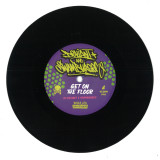
Regulate move into the new year by setting off two certified bangers. Master of the decks DJ Deviant is back on production duties; lead track “Get On The Floor” sees him once again collaborating with Swamburger (Mugs and Pockets) for a full force party starter. The production pulls influences from the earliest days when hip hop and disco were joined at the hip, with nods to The Sugar Hill Gang and The Furious Five, as well as the Golden Age and artists like Chubb Rock and Big Daddy Kane. Swamburger’s machine gun delivery and Deviant’s sharp cuts pull the track right into 2025 for maximum impact.
Flip side “Where’s The Party Clap” is a big trunk of cut and paste funk with a popping bass line, horns, claps, cuts and a groove that just doesn’t quit.
Here it is, the sixth chapter in the sonic journey of Mr. Mangiadischi.
Continuing the dance-floor assault, MD006 delivers four tracks, each with a unique story but all with the same aim: to make you move to the rhythm.
• A1 - Mamma
A Balearic groovy deep house nostalgic tribute to the most important person we have in our life. This track blends warm melodies with heartfelt emotions, making it the perfect homage.
• A2 - Genug Vans
Intergalactic soul/post-disco space-tech. A cosmic voyage through pulsating rhythms and celestial sounds, designed to take you on a dancefloor odyssey.
• B1 - Fenel
A very modern interpretation of this '76 Algerian artist's funk/pop/world/country mesmerizing masterpiece. This track merges elements of funk, pop, world, and country in a blend that transcends genres and eras.
• B2
A disco/funk/pop-rap in its most modern and groovy version. Infectious beats and catchy hooks make this track a surefire hit for any set.
Radioactive Man (Keith Tenniswood) presents his 6th album ‘Jam Out The Kicks’ released on self-operated label Asking For Trouble this November 28th. Written while immersed in the throes of touring over the last four years - the album showcases Tenniswood’s singular sound, honed for the international dance floors that he is charged with. Jam Out The Kicks will be released on a triple 12” vinyl package with artwork by renowned artist Lung.
Working together UK rave, jungle, breakbeat and Detroit electro and techno the album plays between these different genres and styles. It brings the grit, joy, grime and funk but also with a big lot of heart in its sensitive softer elements and moments. Opening track ‘Under The Counter’ has been the lead to his live performances - soft and gleaming and with deep warm bass tones it’s his reset track to set the tone for the set. We then move into slap bass funk on ‘See Above’ and through the many sounds on the release - from dense textured and kicking techno to bass heavy rave. Curveball on the release is ‘Sinkhole’ starting out as a collaboration with Suade Bergemann, vocallists Ali Love and Chloe Raunet (C.A.R) both put their touch on it. It’s just one example of Radioactive Man’s desire not to want to be held down to any one sound and to always be developing and moving forward.
Slum Dunk Music is proud to re-release Tropical Punk - a 12" EP by Brazilian mutant punk funk duo Tetine formed by Sao Paulo-born artists/musicians Bruno Verner & Eliete Mejorado, originally released in 2010 - and featuring 4 warm dance punk numbers taken from their the album "From A Forest Near You". The opener "Tropical Punk (Mutant edit)" comes with a brand new mutant funk re-edit with more percussion, more analog synths, warm drum machines, and a funky bassline. The result is a mid-tempo South American cannibalistic disco-pop with catchy lyrics & beautiful half-sang/half-spoken melodies. "Yr Daugther Lies" is a cosmic, experimental/new wave piece with plenty of old school synths, processed vocals, percussive drum machine & spooky live electronics flying around in the mix. It marks Tetine's first collaboration with L.A. electronicists Howardamb. On the B side, "Shiva" comes as a percussive tropical mutnat punk-funk number led by a swinged bassline & Eliete Mejorado's distinct post-feminist spoken word vocals on sordid domesticity set against organic drum beats, dissonant soundscapes, a lost trumpet & some great interplay of raw guitars. The last track "O Espaco" is a relaxed 6-minute cosmic disco piece of Brazilian tropical punk funk on the dangers & delights of being lost in the jungle - sang in Portuguese by Bruno & Eliete - & permeated by a discordant interplay of ultra-funky guitars, abstract synth-bass plus all sorts of FX & live electronics. Tropical Punk finds Tetine celebrating their art-punk roots back to the underground of Sao Paulo with a collection of wild & raw unconventional dance tracks.
1/4" / 15 IPS / Dolby A Analogue Copy to DSD 256 to analogue console to lathe
Carlos Santana and Company Return to a Dynamic Blend of R&B, Latin, Funk, and Rock: Amigos Aims for the Hips, Spreads Joy, and Includes “Europa (Earth’s Cry Heaven’s Smile)” Amigos has been beloved for decades by both long-time and recent Santana admirers, with multiple generations of fans drawn in by the record’s contagious blend of R&B, Latin, rock, and funk elements. As well as its immense accessibility. Coming off a series of albums that heavily leaned into jazz fusion, the band returns to the more dynamic and concise approaches of its earlier works without losing the sense of adventurousness, craftsmanship, and virtuosity that turned it into a juggernaut embraced by both the mainstream and experimentally minded communities.
Mastered at Mobile Fidelity’s in-house studio in California, pressed at Fidelity Record Pressing, and strictly limited to 3,000 numbered copies, Mobile Fidelity’s 180g 33RPM LP of Amigos presents the 1976 album in audiophile sound for the first time on a domestic release. Part of the reissue label’s Santana series, this collectible version features quiet surfaces and black backgrounds that help reveal the intricate details, distinguished tones, and cohesive interplay that cause Santana’s music to take flight.
The enhanced aural perspectives extend not only to Carlos Santana’s intoxicating fills and solos, but to the rich tapestry of the rhythmic, melodic, and vocal elements that help Amigos feel as fresh today as it did several decades ago. This LP shines a beaming light on the surrounding musicians that simultaneously feed off and inspire their bandleader. The solidity and depth of the bass lines; the wash of the organ; the scope and carry of the vocals; the grip and weight of the low-end frequencies; and, possibly the most enticing traits, the textures of the acoustic guitars, numerous percussive devices, and then-modern synthesizers: all come across with tremendous presence and energy.
Entirely appropriate for a set that kicks from the start, with the opening “Dance Sister Dance (Baila Mi Hermana)” true to the song title’s combination directive-invitation meaning. Tropical, soulful, upbeat, and liberating, it beckons hips to shake and delicious libations to pour. Clinking cowbells, spirited background vocals, hand-tapped congas, and Carlos Santana’s six-string magma pour forth with abundance. The song sets the mood and expectations for a record that contains not an ounce of filler, and which inspires and spreads joy at practically every turn.
On the gold-certified Amigos, the ensemble never seems to run short of zest or happiness. Key in on the Latin bite and searing guitar architecture of “Take Me With You,” an instrumental that shifts tempo at its midpoint and sparkles with a samba-like outro that aims to put everyone in earshot on the dance floor. Surrender to the slow-burn of “Tell Me You Are Tired,” sent up with Greg Walker’s sympathetic vocals and spun around with whirling funk accents. Marvel at the Spanish guitar introduction, Mexican folk foundation, group vocals, and extroverted grooves of the forward-propulsive “Gitano,” with lead singing by conga/bongo expert Armando Peraza.
Having reached the Top 10 in the United States and spawned the hit “Let It Shine,” Amigos marked the final stint for bassist David Brown, the last of the group’s famed Woodstock lineup to depart. His contributions feel especially spirited throughout the album, compass readings that the group uses to chart their course. Just listen to how his passages pop on “Let Me” and frame the can’t-get-it-out-of-your-head “what you need is what you want” refrain. And while Carlos Santana remains the centerpiece of the brilliant and meditative “Europa (Earth’s Cry Heaven’s Smile),” Brown serves as a trustworthy anchor and friendly advocate.
As Tele Novella, Chronis (who performs in the beloved and rekindled indie pop band Voxtrot) and Ribbons (who previously performed in the long-running “Victorian punk” project Agent Ribbons) have spent their past two albums creating "Medieval outsider country" on 2016’s House Of Souls and 2021’s Merlynn Belle. Poet’s Tooth – the band’s second album for Kill Rock Stars – steers the duo’s whimsical western-tinted quality into fascinating new directions: cinematic-pop balladry on the autoharp-tinged opener “Young & Free,” gently clip-clopping Americana-folk on “Hard-Hearted Way,” and bass-driven funk on the wry “Eggs In One Basket.” With help from producer Danny Reisch, Tele Novella have crafted their most genre-rich, poetic, and sincere album yet.
140g LP re-issue + original sleeve artwork, originally released 1979.
There can be little argument that CHIC was disco's greatest band. By the time CHIC appeared in the late '70s, disco was already slipping into the excess that eventually caused its downfall. CHIC bucked the trend by stripping disco's sound down to its basic elements. CHIC's distinctive approach not only resulted in some of the finest dance singles of their time, but also helped create a template for urban funk, dance-pop, and even hip-hop in the post-disco era. 'Les Plus Grands Succes de Chic' includes 'Le Freak', 'I Want Your Love', 'Everybody Dance' and 'Good Times'
Wewantsounds is glad to continue its Akiko Yano reissue series with the release of the singer's third studio album 'To Ki Me Ki', recorded in New York and released in 1978 in Japan. It follows her cult "Iroha Ni Konpeitou" LP and keeps the similar blend of Japanese pop and New York funk found in the latter. "To Ki Me Ki" features such musicians as Rick Marotta, Will Lee and David Spinozza and also programmer Hideki Matsutake who would soon join the YMO with Akiko for their international 1979/1980 tour before she recorded her next studio album "Tadaima" that year, featuring the YMO musicians. "To Ki Me Ki" is reissued outside of Japan for the first time, remastered in Tokyo by revered engineer Mitsuo Koike and featuring original artwork by Tsutomu Murakami with 4 page colour insert and new liner notes by Paul Bowler....
- I Just Need A Friend
- Road To Happiness
- To Love And Be Loved
- We All Need Love
- Incurable Romantic
- Really Should Know Better
- Sugar Coated
- Can't Come Back
- What The Funk (Theme)
- It's Not True
Back with a bang! "Road To Happiness" marks the triumphant return of Manchester"s one and only Dislocation Dance - after a 7-year long hiatus. The new album - their sixth - features ten new and fresh songs. Main songwriters Ian Runacres (guitar/vocals) and Phil Lukes (bass/vocals) most probably never sounded better. Kinda like Manchester"s Nile Rodgers & Bernard Edwards they create killer grooves a la Chic and The Real Thing. Melodies galore & disco euphoria plus beautiful vocals. To Love And Be Loved! Daft Punk meets Everything But The Girl. Ian Runacres formed DD in Manchester, and soon got trumpet player Andy Diagram on board who later joined The Pale Fountains and James. They created their unique mix of Post-Punk, New Wave, Jazz, Disco, 60s French Pop and Soundtracks. The band played their first ever gig at the legendary Factory in Manchester, recorded sessions for John Peel, Janice Long and Kid Jensen, and went on their own eclectic journey. Always maintaining their unique DD sound. Now they are back. With a truly fabulous album. On Marina - the perfect home for them. Let"s get (it) on... the road to happiness.
Newfangled popstar back-cat diggers label Bowie kick off their 7"s arm with an intention to "dig deep into the unreleased sides of pop superstars material from the past", focusing initially on two formerly unreleased funk instrumental tracks recorded by the label's namesake. Who knew an anisocoric kid from Bromley could end up playing funk? So he did, having, at an unnamed point in time, laid down funk versions of 'Fame' and 'Golden Years', two already towering moments in the discography. His trademark jerkiness shines as ever here, but it's the 'Fame' instrumental that really flexes his twanging side, flaunting long releases and dramatic two-tone movements.
Maybe this warning is not really relevant. It doesn’t scare anyone anymore. We all know that what is actually hiding behind this green fence is a sweet doggy only waiting to happily greet you.
First there's Gabriel, who you probably already saw playing crazy drums (with Terrenoire, Cola Boyy…). And then there's Facundo, the magician on the synth and on his choice of shirts.
Together they are Chien Méchant: a duo made of two friends who met at the hairdresser (and in high school), and that makes you wonder if groove, rock, funk and synths could maybe coexist one more time.
The release of their first self titled EP Chien Méchant gave prominence to their first inspirations - as first releases usually do - and showed off their influences. They were at the same time trying to prove themselves but also preparing us for what is to come: the real journey.
A journey that will start next January with Métamorphose. A first album that will display a cast smelling like leather, like a John Carpenter movie with GrandMarnier (Yelle) directing, Ouai Stéphane on the mix and of course Gabriel & Facundo taking a twisted pleasure in deconstructing our common preconception on pop music.
Métamorphose has many shapes - don’t forget a dog can have 3 heads. The track “Nuit Blanche” reminds us of our dancefloor trances. “Sens Contraire” is a drum/synth ballad that takes us by the hand and slowly whispers in our ear that it is ok to be anxious. “Point Final” is pretty self explanatory and makes us feel like we are back on the dancefloor saying “ok this is the last one”. There are ten tracks on this album that will be released alongside their label - Nowadays Records.
You will quickly understand that Chien Méchant is a live band. You will dream about these drums, these blinking synths, these psychedelic carpets, and about dancing without thinking about what’s next. But beware, Métamorphose also reminds us that they are way more than that.
- A1: Grenade
- A2: Just The Way You Are
- A3: Our First Time
- A4: Runaway Baby
- A5: The Lazy Song
- B1: Marry You
- B2: Talking To The Moon
- B3: Liquor Store Blues (Featuring Damian Marley)
- B4: Count On Me
- B5: The Other Side (Featuring Ceelo Green And B.o.b.)
Man of the moment Bruno Mars, currently the record breaking No.1 most listened to artist on Spotify, has his first two No.1 albums reissued on limited edition colour pressings.
Currently riding high with the 1 Billion plus streamed track with Lady Gaga ‘Die With A Smile’ as well as over half a billion streams for the debut single APT. with ROSÉ from Blackpink.
Doo-Wops & Hooligans Product Description
Limited Edition Neon Yellow Vinyl
Bruno Mars' chart-topping debut launched the singer-songwriter into superstardom and spawned a string of blockbuster hit singles including the No.1 singles "Just The Way You Are," "Grenade," "The Lazy Song," plus "Talking to the Moon," "Marry You" and "Count On Me" and has sold over 15 million copies worldwide, going 7 x Platinum in the UK.
Unorthodox Jukebox Product Description:
Limited Edition Neon Coral Vinyl
Bruno Mars' sophomore record has gone 3 x Platinum in the UK and features the smashes "When I Was Your Man" and "Locked Out Of Heaven," as well as "Treasure" and "Gorilla". The album presents a wide range of styles such as R&B, pop, reggae, rock, disco, funk and soul music, and includes production from Mark Ronson, Jeff Bhasker, Emile Haynie, Diplo and Supa Dups, as well as The Smeezingtons. The album has since sold over 6 million copies globally.