Point G remix by ,the new Point G project for 2019 features a very Serious 12 inch for the summer with two legends and two fresh youngsters on the A side “ Celestial” is getting remixed by New york City Legends Satoshi Tomiie , the Japanese Born who moved to new york to join the DEF mix crew along with Franckie Knuckles and david Morales Delivers a Minimalistic Bomb , a deep rollercoaster Jamed With Modular synth and all type of goodies FXs. A2 is “Can you “ Jay Ka remix who took a complete different angle , here we get a Dope funk trip , the prefect tool for Nu disco Strong driven set B1- The Classic Point G tracks “ Balea “ gets remixed by I Cube , The Mysterious French legend gives a super fresh reinterpretation of that bliss summers classic putting the Balearic feel somewhere else. A Must Have B2- Take Me - Siler remix , we know silver thru his label Pop corn records , he delivers here a Futuristic house vibe that s gonna put the Floor on Fire Point G records gives us a Serious Release for The Summer not to be Missed .
Cerca:pop da funk
“Ta Da” is the debut full length from J. McFarlane Reality Guest, the collective name for the trio headed by the eponymous McFarlane. As a member of the group Twerps, McFarlane has traversed guitar-centric, melodic pop music for some years while honing a highly unique, personal musical language. Ta Da is the first recorded unveiling of McFarlane’s affecting, oblique songwriting panache. Originally released in her native Australia on Hobbies Galore, Ta Da will be released worldwide by Night School in June 2019.
Wheezing into view with a troubled reed instrument set against a s of whoozy synth lines, Human Tissue Act is a foggy curtain the listener is invited to peel back. The dissonant notes are left to dance entwined, with clarinet heralding a Harry Partch-esque mallet percussion interlude. It’s a mood. With no resolution in sight, an audience dragged closer into uncertainty is suddenly drenched with the light of inter-weaving wah wah synth and saxophone. I Am A Toy introduces us to McFarlane’s vocal, an effortless and matter-of-fact, accented statement that quietly takes the reins. While McFarlane’s previous work in Twerps might reference 80s UK and antipodean guitar pop, Ta Da showcases a different influences immersed in psychedelic music and synths. It’s a brilliant, deft concoction swimming in Young Marble Giants-type minimalism washed with bare pop and harmony similar to Kevin Ayers making sense of a Melbourne suburb full of faces half-recognised in the blanching sun.
What Has He Bought begins with a Casio-keyboard rhythm pattern, palm-muted guitars and immaculately enunciated vocal give way to a burnt melodica part that elevates the spirits. Simple patterns repeated, like a well-tempered pop song that does what it needs to do and no more, build into the sound of summer leaking orange juice. They’re moments of joy, layered on top of each other like a melting cake. Do You Like What I’m Sayin’ recalls Marine Girls covering a classic ‘66 Garage nugget, organ lines fighting funk with guitar chords played just behind the percussion. “In a talking world, meanings are the same. Words want to hold on to the people they contain. Do you like what I’m sayin’?” We’re in a Beckett play perhaps, obtuse absurdities rendered pretty. Alien Ceremony is a heart-melter, given a melancholic timbre by bowed double bass it’s a tragi-comic piece that almost reeks of Robert Wyatt at his mid-whimsical twisting a fugue completely out of shape. Beneath the layers of harmony and twinkling instrumentation you sense there’s a genuine sadness somewhere even if it remains veiled.
Through out Ta Da, McFarlane plays with counterpoint and contrast to sometimes delirious effect. On Your Torturer, a simple, upbeat chord progression is hard panned, underpinning a flute solo which seems out of place, hence making it completely in place on this warmly surreal album. My Enemy is a slowly swinging eulogy to a failed relationship punctuated by analogue synth burbles, with our protagonist simply asking, in the aftermath, “can we be nice?” Here McFarlane’s vocal is straight forward, lyrically conversational but still not completely in focus, a surreal kitchen sink drama filtered through a dream where everything is in the wrong place. It’s a fine precursor to Heartburn, which similarly borrows BBC Radiophonic Workshop-style noise synths and the use of space to carve up the simple “You Will Make My Heart Burn” line. At this point, the listener has been in such close proximity to McFarlane’s show, the reality guest in a performance where they’re the sole audience member, that when Where Are You My Love rises on the horizon as a sleepy, psychedelic send off it’s uplifting. The vocal drifts away into the sunset, simple and direct. It leaves the listener slightly confused, perhaps, but grateful for the gentle surprise.
Gianni Marchetti is one of Italy's best kept secrets...
A composer with a long and elaborate list of writing credits in both pop music and movie soundtracks.
He penned proper anthems in Italy's post-war melodic tradition. Amongst his large and varied oeuvre, in 1977-1978 he composed and recorded the original soundtrack for the skin flick 'Disposta A Tutto'
A slow-burning mix of funky clavinets, scat vocals, wah wah guitars and sultry tenor sax lines, all tied together by a distinctly Italian sensibility.
Rather than fading into obscurity, the soundtrack became a prized collector's item for DJ's and rare groove enthusiasts.
In 2019, Heristal and Danilo Braca (AKA Dany B) are very proud to present a new version of 3 tracks from the Disposta A Tutto soundtrack, edited and extended for maximum dancefloor impact.
U Know Me Records proudly presents a special album showcasing Polish drumming scene - each track was produced by a different drummer - these are their portraits.
official video promo: https://youtu.be/qxuTYjMRUMM
In the 21st century drummers imperceptibly switched from the background to the front line, despite popular music not exactly pandering to them. In the early days of rock culture this joke made the rounds "What's the last thing a drummer says in a band?" "Perhaps we could play one of my songs…?"
In popular music the drummer became the first to compete with machines. They were the first band members that consequently began disappearing, however, as contemporary electronic music took hold, they were also the first to return. First they were incorporated into compositions but gradually - took centre stage. Thanks partly to the ubiquitous culture of Hip Hop recognising the drummer's role as key in any recording, alongside the eclecticism of new music, which demanded fluid transitions between musical forms, a drummer's adaptive skills – as a trained multi instrumentalist – became truly impressive. This new generation of drummers seen on Polish stages today are exceptional even against the backdrop of today's unusually creative and well-educated music scene which rejects narrow minded or genre-centric views.
This album exhibits portraits from the cream of today's Polish drummers. Kovalevo Tone Bank by Michał Bryndal tags the 1980's, the era which began stealing drummers' bread. Incidentally, the heavy groove laid down by the artist references a hit by Wham!, the same hit in which the group decided to cut the drummer's part because he was late and replace him with a LinnDrumm machine. Hubert Zemler in The Life and Death of Ben Bekele and Łukasz Moskal in Father Sparrow show they've found themselves perfectly in close cooperation with electronic instruments.
Multifaceted improvisors - Qba Janicki (Kabina projekcyjna) and Jan Młynarski (Roj) - transform their drums kits into multifunctional devices capable of delivering wildly diverse palettes of sound. Rafał Dutkiewicz (Displaced) showcases drums as the lead instrument on a club track. Marcin Rak (Alpaka) does the same, but with the conventions of Funk and Hip Hop, whereas Krzysztof Dziedzic (Vagabonde) gravitates towards the edges of jazz. Each of them here is a leader and… plays one of their songs.
Bartek Chaciński
(translation: Sean Palmer)
Following on from their debut band releases in 2018, Daytoner follow up with a single for this year's festival season, a double A-Side featuring 2 tracks that have proved popular in their live sets at over 30 UK festivals to date, both of which have already received radio support on The Craig Charles Funk & Soul Show on BBC6 Music and BBC Radio Cornwall.
"Daytoner knocking it out the park! Over the years I've known this Cornish crowd they've been going from strength to strength to be honest, this season continuing their one direction"
(Craig Charles on 'Shout Love' - BBC Radio 6 Music - Oct 2018)
"Daytoner continue in their love of updating the 60s sound, and they do it very well"
(Craig Charles on 'My Sweet Baby' - BBC Radio 6 Music - Jan 2019)
Mount Liberation Unlimited are Tom and Niklas, two Swedes from space who have spent the last 5 years
carving out a particularly vivid niche in contemporary electronic music. Their previous work has seen them
connect with an impressive list of global dance powerhouses: New York's Beats In Space, Melbourne's
Superconscious and Munich's Permanent Vacation have all released 12'' heat from the duo, while their
hometown buddies at Studio Barnhus provided an outlet for what has been perhaps their biggest and boldest
release yet, 2017's double smash single Double Dance Lover. Their live shows are fervent, fast-paced and very
multi-instrumental affairs, performed non-stop at an increasingly prestigious list of clubs and festivals, serving
as prime examples of the MLU boys' core obsession: the interaction of human rhythm and electronic pulse.
They have their own great little radio show on Gilles Peterson's Worldwide FM! Australia loves them! They
got their artist friend Tom-Hadar Elde to sculpt their heads for their debut album cover!
That self-titled debut, to be released May 31 on Studio Barnhus, has been in progress since the very formation
of the MLU project in 2014. It contains some of their earliest work and of course their very latest – all perfected
at the Neve desk of legendary Gothenburg studio Svenska Grammofonstudion, in cahoots with mix engineer
Christoffer Berg (Depeche Mode, Robyn, Fever Ray).
The result is a sonically fascinating, endlessly generous and straight up FUN record that takes the listener on a
joyride through bittersweet stoner disco, frenzied scando-kraut jams and some of the sweetest dance pop to
come out of Sweden this side of Super Trouper.
The record is preceded by a limited 10'' release of album track Climb Me Up, complete with an exclusive club
mix of the song.
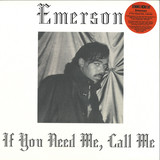
Kalita's obligatory Record Store Day offering is something rather special: synth-funk visionary couple Emerson and Leora Sandidge's mythical unreleased album finally sees the light of day, following Emerson's sole private press seven-inch single release way back in 1988. Those two tunes ("Sending All My Love Out" and "Why Are You So Cold?") make the cut on this belated debut set, alongside six other previously unreleased recordings from the same sessions. Their take on electrofunk, boogie and '80s soul is colourful, soulful and synth-heavy, with the included tracks veering from up-tempo club workouts (see "Raw Deal Cocaine Kills") and fizzing dancefloor pop workouts, to sugary ballads and seductive slow jams. In other words, it's a more than tidy selection of rare and unheard gems.
Back in 2007 Names You Can Trust was launched with an EP from Greenwood Rhythm Coalition. For NYCT's landmark 50th single release, the group returns, drawing on the same long-simmering stew of African, Caribbean and American funk and dancefloor vibes that flavored that first release, but with a sound more deeply infused and farseeing than anything they've done before. The spacey, arcing cut is woven through with guitar that blurs the lines between western twang and soukous popcorn and anchored by cabinet-rattling low end. Spread over two sides of a seven-inch single or available in unedited form digitally, "Jewels" is hypnotic and quite uncategorizable, except to say that sitting still will not be an option when it spins. Adventurous DJs, headphone journeyers, underground dancers, postmodern tropicalistas, and all those whose musical tastes dwell somewhere in the magical twilight of imaginary cities, take note.
Groove Line Records series of officially licensed disco / funk 12' reissues continues in 2019 with two fabulous cuts of gospel disco from The New York Community Choir (NYCC), 'I'll Keep My Light In My Window' & 'Express Yourself'.
The New York Community Choir (NYCC) began in the early 1970s, a gospel ensemble which developed a style that also gave secular R&B, soul, and pop songs a spiritual dimension; bridging Saturday night and Sunday morning, as it were.
'I'll Keep My Light In My Window' is a slice of joyful uplifting gospel disco, which is as needed in these times as it was when it was released in 1978. This was a great favourite of David Mancuso and Larry Levan at the time, and has remained a much loved dancefloor track for the disco cognoscenti ever since.
This came from NYCC's second LP for RCA, Make Every Day Count, produced by Warren Schatz (who also produced The Brothers, which was Groove Line's first reissue 12' in 2014).
NYCC released a self-titled debut album, also produced by Schatz in 1977 included the dance hit "Express Yourself," the B-side of this release in its 11m45s David Todd & Warren Schatz Disco Mix version.
All Groove Line Records releases are fully licensed and taken from the original master tapes, this 12' has been remastered and cut at half-speed by Matt Colton at Alchemy Mastering (Mastering Engineer of the Year 2013 & 2018). All vinyl is heavy weight 180g manufactured Optimal Media in Germany, one of the world's finest pressing plants.
Groove Line Records cut no corners when making sure that each and every one of our releases has the highest quality performance possible.
Groove Line Records' deluxe reissue of 'I'll Keep My Light In My Window' & 'Express Yourself' is an essential purchase for any serious Disco, Gospel, Funk, or Soul vinyl collector who demands the very best in quality vinyl pressings. Find out more at
Presenting 'Fire Zone'. Album written, produced & mixed by Zane Reynolds and pressed on 180g vinyl, by Ekster. Coming out May 2019, including poster 57x57cm artwork by the artist. Mastered & cut by Helmut Erler at Dubplates & Mastering.
The music of Zane Reynolds AKA SFV Acid celebrates lysergic life in small town America. His are urban hallucinations. Conceived in 'business parks, strip malls', in 'blue collar luxury'. On a diet of 'diner burgers'. From the self-released, hand-painted cassettes of his high school years, he has moved to work commissioned by locals 100% Silk, Japan`s Big Love, and Dutch imprint, BAKK. His latest long-player, Fire Zone, will be issued by Belgian label, Ekster.
The album continues to reference Zane's Los Angeles home, and in this case the devastation that rages there every Summer. The concept however, reaching away from the horror and flames, to offer an escape.
There are moments, interludes, that hint at, and hide, something darker. Where drone twists from tape hiss. Bends. Out of shape. Where chords distort. Their degraded edges disintegrating. Charred perhaps But Ai welcomes you to 'San Fernando Valley', and a low-riding 808 booms. Less L.A. More Overtown, or Liberty City. Its racing booty bass calmed by wind chimes. The rapid Electro-Funk clip countered by modal synths. Its sunny disposition reflecting the SFV climate.
Playful rhymes, fragmented dialogue, and answer phone messages, rub up against Rave sirens. Roland`s silver box squeezes out a Sci-Fi Jazz. Through ping-ponging percussion. Through a drum and bass battery. Punched by keys that wanna be horns. Rewinds that create a bin-blowing vacuum. Shore-line samples washing the more head-nodding tempos. Euphoria rising while a perfect beat pops and locks. (text: Robert Harris)
Margino (real name Kim Kallie) is a South African artist. She recorded her first song
at the age of eight, when she performed ''Montreal'' with her mother Judy Page. She
sang with the reggae group Kariba and jazz rock outfit Turbo in the early 80's, and
later did backing vocals for Future and others. She first shot to fame as a solo star
with a version of ''Holiday'' (written by Lisa Stevens and Curtis Hudson, credited as
Cathy Hudson), which was released at the same time as Madonna's version.
Margino also had a hit in 1983 with a cover of In-Deep's ''Last Night a DJ Saved My
Life'', that went to #16 on the South-African Top 30 and charted for 10 weeks. She
now runs a Performance Academy from her studio, and continues to perform on
stage at events around Cape Town.
Recorded at RPM Recording Studios (Johannesburg, South Africa) in 1985, Happy
People is a flawless album with dancefloor hits such as ''Happy People'', ''I'm
Getting Out'' and ''One Hot Night'' and downtempo tunes such as ''You Turn Me On'',
''You Need A Woman'' and ''You''. All rhythm tracks were played by Attie Van Wyk
(Keyboards, Synthesizer, Drum Machine) and Danny Bridgens (Guitar). The full
album is a cream of boogie funk, disco and pop.
For this reissue, Jamwax took the pleasure to remaster the sound from the original
tape. The artwork was also remake with Andy Warhol ''Marilyn Monroe'' pop art
style, for your eyes pleasure.
Beat Bronco Organ Trio play Soul Jazz, the sound of the 60's popularized by artists such as Jimmy Smith, Grant Green, Jimmy McGriff and Reuben Wilson. With a warm and solid sound, the Madrid combo breaks into the scene with a groovy funky 45. The Mid-tempo Jazz Funk cut "Easy Baby" on one side and the dancefloor burner "Geriatric Dance" on the flip. Soon on a turntable near you.
Gabri Casanova, Hammond.
Lucas de Mulder, Guitar.
Antonio "Pax", Drums.
Recording & Mixing - Santi "Sweetfingers" Martín.
Mastering: Victor García.
Originally released on Illuminated Records in 1983, "Viral Shedding" is surely one of the most important references for the industrial/funk dance music.
Between pure noise and electronic beats, 'Viral Shedding' is creating a twisted and percussive rhythmic urge, a funky disco sound permeated by digital industrial beats. Nigel Ayers and Caroline K take their inaccessible best and thrown it into the melting pot with a set of pumping rhythms. The result is the frustrated son of mutant disco, swimming in the same waters of Cabaret Voltaire, 23 Skidoo, Tackhead, Meat Beat Manifesto and Hula.
As Nigel Ayers recalls, "Popular music picked up on what we were doing 1983-1984, which helps explain why records such as -Viral Shedding- sound clubbier today than they did at the time, but the technology of music making locked in a seat of aesthetics in those days that shaped pop as a whole more than industrial music itself did. Whether by synthesizer manufacturers' musical design or through engineering limitations, the more automated a band allowed their music to become, the dancer it was likely to be."
Features the classics 'Suffering Stinks', 'Going Under' and 'No Separation'.
The Italian Duo Club Paradiso coming from diverse and ever-evolving music backgrounds, they started their collaborative project in 2016. Romagna, Adriatic Riviera, is what they call home and also the primal inspiration behind Club Paradiso. Their first album “Esotica Erotica Psicotica” is out on april 26th on Mondo Groove with Kompakt distribution, follow up to the acclaimed 2017 single Panoramica, and is a wonderful patchwork of colours. Opener Romagna Tropicale transports Riviera to a tropical island, Tuco mixes arpeggiating lines with a western harmonica and a distant spoken, Solo tu with the voice of Francesca Amati is a sensual, slo-mo synth-pop beauty, and Echoes a throbbing deep house number. The B-side opens with Flauto Cosmico, a killer Afro/Cosmic track with a folky flute, Okinawa has the voice of Niconote aka the legendary Nicoletta Magalotti of Violet Eves fame and it’s simply a memorable song with an eastern vibe in the music, La Rabbia Saudita, with a special Daniele Baldelli & Marco Dionigi featuring, is half part Arabic and half part funky, and the closing track, Mirage, is, yes, like a mirage. You can’t miss this.
Repress!
Following on from the standout D.J. Rogers release, South Street Disco turn their sights to reissuing two seminal and much sought after '70s jazz funk Loft classics. One side houses Miroslav Vitouš' cosmic disco delight 'New York City', the other uncovers the Latin infused whirlwind 'Whistle Bump' from Eumir Deodato.
First up, the Czech jazz bassist and founding member of Weather Report, Miroslav Vitouš, supplies the infectious vibrations of 'New York City'. Harnessing the spirit of the bubbling NYC underground club scene of the mid '70s, Vitous lays down a proto Arthur Russell flavoured jam, that blends whirling new-wave-esque vocals and brazen basslines over trademark cosmic keys from the master, Herbie Hancock. Combined with tight drumming and fiery, overdriven riffs it paved the way for this to become a dancefloor hit and a clear precursor to the early house scene. With originals trading hands for £120+ it's high time 'New York City' got an official remastered reissue.
On the flip side, a timeless Brazilian instrumental jazz-funk gem from Eumir Deodato that likewise became a certified classic through heavy rotations on New York's revered dancefloors, most notably via David Mancuso at The Loft. Feel good feelings amplified by spirited Rhodes, psychedelic strumming and that sure-fire Latin infused bongo / whistle carnival combo. Carefree, unbridled energy that sees Pops Popwell's funk bass perfectly accompanying blazing guitar solos and a horn section from heaven, it's impossible not to get down to. Pure South American sunshine bottled up and ready to be supplied at will.
- A1: Ich Will Dir Helfen
- A2: A La Manière (With Roya Arab)
- A3: Ondine
- B1: Aspiration (With Mona Soyoc)
- B2: One Of These Days (With Hafdis Huld)
- B3: Théorème
- B4: Mortel Battement / Nocturne (With Alain Bashung)
- C1: Organique
- C2: The Watcher (With Mona Soyoc)
- C3: Qu’est-Ce Qui M’a Pris (With Philippe Poirier)
- D1: Xr 116 / Messe Rouge
- D2: Untitled
- D3: Ondine (Alt Take)
- D4: Piasong
The sensitive mountain » (la montagne sensible) is the nickname Alain Bashung came up with for Arnaud Rebotini. At the height of his fame, after the success of Fantaisie Militaire in 1998, Bashung readily agreed to create an album with Rebotini. The two men didn’t know each other; their record label had introduced them. Bashung brought in “Mortel Battement” and “Nocturne,” two poems by Jean Tardieu, which he recited in a voice simultaneously warm and flat, and Arnaud produced an impressionist soundscape that ended with an apocalypse of metal. Bashung was so proud of their collaboration that he offered to give several interviews to promote the record. Today, listening back to this moving Léo Ferré influenced "talking singing" exercise, it’s hard not to hear the template for L'Imprudence, the album that Bashung went on to record with Rebotini two years later. In a similar way, the album Organique sparked a productive partnership between Rebotini and filmmaker Robin Campillo, which resulted in their being awarded a César for Best Original Music in 2018. The director, who trusted Rebotini to create the soundtracks for his films Eastern Boys and 120 Beats per Minute, never kept his love for the 2000 record a secret.
Yet it’s an understatement to say that when it was released, Organique was not in the spirit of times. That year was all about the French touch. The funky samples of Modjo’s “Lady” and Superfunk’s “Lucky Star” ruled the sweaty dancefloors. Although Rebotini was familiar with the electronic scene, he had something else in mind when he set about creating Organique. Under his own name or under the pseudonyms Aleph, Avalanche, Black Strobe, Maison Laffitte, and of course Zend Avesta, he had already released several quite bizarre and experimental techno, house, or jungle maxi singles on pioneering labels like P.O.F., Source, and Artefact, run by his friend Jérôme Mestre’s, whom he had met back when both were working as record salesmen at Rough Trade’s ephemeral Parisian store. It was at Artefact, still financed at the time by Barclay and Universal, that he naturally proposed this record project, which was a bit "different." It was his first real album.
Arnaud Rebotini has never hidden his love-hate relationship with the electronic scene. He’s a fan of rave music, Rex, and later Pulp, but he listens mostly to metal and contemporary music, mainly American minimalists such as Terry Riley, Philip Glass, Steve Reich. He wanted to mix this genre with a more French aesthetic inspired by Debussy, whose unconventionality fascinates him. From the first suspended guitar note of Organique, you can pick up another influence, possibly poppier. In the style of Mark Hollis, the erratic leader of Talk Talk, whose only solo album’s silences and dissonances left their mark two years earlier, we hear the fingers touching the keys of the clarinet on “Ondine.” The instruments have presence, character. Nothing is smooth. Everything is organic.
Although it’s sometimes labeled as electronica because of Rebotini’s career, there’s nothing digital about Organique. No "pro tools" editing or samples, only programmed drums and some synth layering. And his guest vocalists. Playing the role of electro producer, he invited Bashung, of course, to join him on the album, but also Roya Arab, who Rebotini first spotted while she was playing in Archive, and her sister Leila, Gus Gus alum Hafdis Huld, Kat Onoma’s Philippe Poirier on the “Samuel Hall” inspired track “Qu’est ce qui m’a pris,” and former KaS Product member Mona Soyoc.
The frustration of a tour where he had "little to do on stage," the desire to sing himself, and the creation of the Black Strobe project, a haunting mix of blues and rock, stopped Zend Avesta from putting out another album. Eighteen years later, the Organique we rediscover today has lost nothing of its strangeness, nor beauty. When it came out, Bashung said, "What is interesting for a musician is to feel that you have a piece of wasteland in front of you, something to clear.” That remains true today.
Véronique Sanson is one of the most famous French pop oriented female
singer, songwriter, and composer of the 80s. She began her career in the 70s,
and was the girlfriend of genius composer Michel Berger. Her world turnt
upside down when she met Stephen Stills of Crossby Stills & Nash. One Day,
during a recording session in Paris, she left the studio pretending to go buy
cigarettes, but never came back... She flew overnight to the USA, where she
married Stephen Stills. In LA, she records new music with superstar
composers such as Ray Parker JR and Harvey Mason. "On m'attend là-bas",
produced in 1974, was one of the single of the album Le Maudit.
Funky French League is an intergenerational collective (based in Paris)
formed by Young Pulse (Gamm) , Dabeull (Roche Musique), Arthur Chaps,
Woody Braun (Malka Family), Mr Willy, DJ Asko et Uncle T (Groove
Deluxe). All coming from different universe from hip-hop, to electronic music,
but united by their love for the groove and the funk.
With brand new interest in beats and rhythm once again coming into play, Puzzlebox label owner, Keith (K-1) Tucker, has now decided to revise and revisit the music from his catalog as "Puzzlebox Classics." The very first release is a valued gem of an EP called, "Atomaton", featuring:
"Nemesis" - An instant classic, which brings on Tucker's signature Electro/Techno beats (Aux88), a tough as nails funky bassline, and his trademark eerie strings. Robo-vocals recall us to remember that "The future of the electro movement is upon us"... Believe it.
"Oscillator (bonus beats)" - Brings us the perfect beat, a dramatic bassline, and swinging percussion attitude to the fold.
Sure to be a hit with new ears as well as "heads" from its mid-90's release. Additionally brought to popularity in Detroit by WGRP TV's, "The New Dance Show", as a favorite go-to party recording. Made with the intent of DJ's, by a DJ.
"(Techno) On My Mind" - Mind-bending arps and clicky pecussion shoot this off-world thumper into overdrive for your ears. While the relentless hard snare battles for attention against a triggered piece of electrofunk provided by a 'K-1' bassline, weaving itself around anything constant in the tune, listeners are guaranteed transport to a realm within an alternate universe and the urge to move their feet. A mental-mover, indeed.
#thetimeisnow
#getthisenjoythis'AUX QUADRANT' for what it is.
- A1: Moeder En Haar Jongens - Hollandse Taal
- A2: Jimmy Frey - Eva's Pakje
- A3: Lieven - Spitsuur
- A4: Daan Broos - Handicap 2000
- A5: Spectrum - Wie Weet
- B1: André Van Der Veken - Jimmy
- B2: Jan De Beer - Dat Soort Lui
- B3: Magenta - Als Je Iets Wil Doen, Dat Je Echt Doen Wil
- B4: Lamp, Lazerus & Kris - Huisje
- B5: Daan Broos & Dapokaster - Maan-Dag
- B6: Elly & Rikkert - Het Oink-Beest
- C1: Liesbeth List - Hee Ouwe Meneer
- C2: Josine Van Dalsum - Nooit Meer
- C3: Raymond Van Het Groenewoud - Ze Weet Niet Wat Ze Doet
- C4: Laurentius - Zomerliefde
- C5: Luk Bral - Het Huis Van Wilde Tederheid
- D1: Bizjoe - Lui
- D2: Lamp & Lazerus - Onheil
- D3: Schralen Tsjip En De Mussenschrik - De Mens Is Een Beest
- D4: Herman De Bruycker - Gemengd Gevoel
- D5: Della Bosiers - Rust
After taking a deep dive into the dusty crates with Belgian & Dutch music, Harde Smart now unearths a smooth selection of jazzy, funky & soulful gems from their collected vinyl stash. All the music you hear, was recorded and produced during the 1970's, in either Flanders (the Dutch-speaking part of Belgium) or Holland. Besides exquisite grooves and hard-pounding drums, the selected songs also have Dutch lyrics in common, making this a rather unique way to approach and compile lyric-driven Flemish and Dutch music from back in the days. Record collectors all over this language area seem to have neglected a considerable part of their own musical legacy for a few decades, while firmly searching for rare grooves and breaks in the bins with more exotic music.
Yet nothing is so certain as the unexpected. 'Flemish & Dutch grooves from the 70's' is the first 'Dutch' compilation album to uncover the genuine, Afro-American funk and soul vibe. A sound that - albeit infrequently - influenced the work of some of the popular and less popular singers and musicians in this small part of the world in the 70's. Although influences undoubtedly also derived from the French chanson and rock music from that era. This 21-track album smashes all musical predictability and takes you on a weird and nostalgic trip; offering a revised set of 'essential homegrown classics' for the local listener, yet also being very exciting to the ears of the non-Dutch speaking audience.
Véronique Sanson is one of the most famous French pop oriented female singer, songwriter, and composer of the 80s. She began her career in the 70s, and was the girlfriend of genius composer Michel Berger. Her world turnt upside down when she met Stephen Stills of Crossby Stills & Nash. One Day, during a recording session in Paris, she left the studio pretending to go buy
cigarettes, but never came back... She flew overnight to the USA, where she married Stephen Stills. In LA, she records new music with superstar composers such as Ray Parker JR and Harvey Mason. "Bernard's Song", produced in 1976, was the first single of the double gold album Hollywood.Funky French League is an intergenerational collective (based in Paris) formed by Young Pulse (Gamm) , Dabeull (Roche Musique), Arthur Chaps,
Woody Braun (Malka Family), Mr Willy, DJ Asko et Uncle T (Groove Deluxe). All coming from different universe from hip-hop, to electronic music, but united by their love for the groove and the funk