Cerca:pop district

Generi
Tutto
John Vincent III - Songs For The Canyon

John Vincent III, ein 26-jähriger Americana-Künstler, intensivierte seine Liebe zur Musik 2014 in Houston,
TX. Inspiriert von einzigartigen Lyrikern wie Bon Iver, The Districts und The Doors, begann John Vincent
III mit der Kreation seiner eigenen Songs. John Vincent III verbindet mühelos folkige, rhythmische Gitarrenklänge mit gefühlvoller, verletzlicher Lyrik und schafft so die perfekte Mischung aus Indie-Folk-Pop.
John hat seine Singles, seine EP und sein von der Kritik gelobtes Album ”Songs from the Valley” selbst
geschrieben und produziert. Ein großer Teil von Johns musikalischem Erfolg kommt von der unbestreitbaren
Leidenschaft und den rohen persönlichen Erfahrungen, die in ihm leben.
Es ist an der Zeit, das zweite Album von John Vincent III, ”Songs For The Canyon”, der Welt zu präsentieren. Dieses Album wurde in Zusammenarbeit mit renommierten Produzenten wie Tom Elmhirst (Amy
Winehouse, James Bay, HAIM, Florence & The Machine, Mumford & Sons), Tony Berg (Phoebe Bridgers)
und Ryan Hadlock (Lumineers) geschaffen. Es ist Johns erste Veröffentlichung seit seinem 2019er Debütalbum ”Songs from the Valley” und zeigt seine Weiterentwicklung als Musiker und Songwriter im Indie-FolkGenre. Das Album verspricht eine fesselnde musikalische Reise, bei der John Vincent III seine künstlerische
Reife zum Ausdruck bringt.

pre-ordina ora17.11.2023

dovrebbe essere pubblicato su 17.11.2023

32,35
Sneaky Jesus - For Chaching Taphed LP

Polish jazz rebels sneaky jesus are back with their second studio album For Chaching Taphed.The highly imaginative quartet out of Wroclaw comprising Maciej Forreiter (Guitar), Matylda Gerber (Saxophones), Ben Łasiewick i(Bass) and Filip Baczyński (Drums) have won fans around the world for their restless, quirky brand of jazz which takes in breakbeats, twisting chord progressions and improvisation as well as a wealth of musical influences.

The band have been touring their asses off ever since they surprised the world with their debut album For Joseph Riddle in 2021. From out of nowhere their debut LP of 500 copies sold out in a month and they quickly went on to sell close to 1,000 CDs of the album. Fast-forward to 2023 and the band are sharing stages with artists such as Ill Considered and Theon Cross.

For Chaching Taphed was created in complete isolation. The group locked itself in a barn at the Museum of Agricultural Technology in Piotrowice Świdnickie. It worked on its sophomore output surrounded by machinery, trucks and carriages. These new compositions mirror the abstract conversations which the group frequently has just for fun. Contrary to For Joseph Riddle, this album is simple and does not rely on ongoing grooves. This enabled the group to be much more experimental. The band was joined by friends Flautist Mariya Mavko on Piękno Niemożliwe (Impossible Beauty) and her playing is sampled in Hipotetyczny Taras (Hypothetical Terrace). Pięciu Pszczelarzy (Five Beekeepers) closes the album featuring EABS' Jakub Kurek on trumpet. His fiery solo is one of the most intense moments of the album.

Spacer Po Nadodrzu (A walk around Nadodrze) opens the album and is inspired by one of the districts of Wrocław. It is a sonic story depicting a walk through Nadodrze late at night. A steady bass rhythm imitates a careful pace and the responding sax line is a spooky theme that might pop to oneʼs head in a moment of uncertainty.

The album's first single Krztusiec (Whooping Cough) finds the group diving head first into their most recent influences. The trackstarts with drum improvisation, rolling into a solid hip-hop backbeat provided by Ben Łasiewicki on Bass and Drummer Filip Baczyński. Sax and Guitar weave steady but dissonant lines, written by Maciej Forreiter after many hours spent listening to the Ethiopian jazz greats. The track takes off right after that. Matylda Gerber delivers a fiery Sax solo, while the group picks up the tempo and quickens the groove. The essence is the middle section, a dubby collective improvisation. Forreiter, Gerber and Baczyński take turns playing both classic dub phrases and fierce avant grade lines. Łasiewicki keeps everybody in check with a steady bassline. The energy slows down until Baczyński's drum solo, which explores phrasing detached from the rest of the tune.

Second single Chiński Sprzedawca Smażonych Kasztanów (Chinese roasted chestnut seller) is a fusion of breakbeats, energized songo rhythms and motifs inspired by South African melodies. Presenting the group with spacious and rhythmic horn lines, guitarist Maciej Forreiter wrote a chord progression while Beniamin Łasiewicki and Filip Baczyński took care of the rhythm section. This first part of the track suddenly drops out and explodes into the dramatic main motif which includes double sax and fierce guitar playing in harmony, plus the rhythm section playing more and more jungle-esque. Powerful guitar and sax solos feature before we return to the main theme with a completely different rhythmic backdrop.

W Klatce z Bykiem (In a cage with a Bull), starts like a race. The music plays with an incredible nerve and when the theme is right on edge it suddenly stops. It is followed by an animalistic growl on the saxophone and a doom metal-esque bash of downtuned, distorted guitars and heavy drums. In this heavy fashion it slowly approaches the finishing line hitting one final metallic clang.

Piękno Niemożliwe (Impossible Beauty) features wonderful flute playing of Mariya Mavko (Kadabra Dyskety Kusaje). Her work in the opening motif evokes sounds of Polish and Ukrainian folklore. This brief mellow moment serves as a contrast to the usual frantic sounds of sneaky jesus. It is an appreciation of thepolish jazz music of the past, intrinsically-linked to folklore. The band took this idea and reworked it into their own unique style.

Hipotetyczny Taras (Hypothetical Terrace) is built on top of a lengthy vamp in an unusual 7/8 time-signature. The bass anchors the quartet in a simple line, while the rest of the quartet share an emotional conversation. This track is the most open of the whole project and it ends accordingly. The final burst is a call back to the basics ofspiritual jazzand the whole band shows every emotion simultaneously and gracefully fades out.

Pięciu Pszczelarzy (Five Beekeepers) is For Chaching Taphed's conclusion and is a non stop assault of heavy horn lines, punk rhythms and noise. The band is joined by the extraordinary trumpeter Jakub Kurek from EABS, who blends in perfectly with sax and guitar. His exchange of solos with Maciej Forreiter is a combination of classic jazz phrasing and discordant clatter. In the same fierce manner the whole group works within the motif, switching up accents and breaks.

In the short space of two years, sneaky jesus has gone from ambitious upstart looking to break out from its home city playing spit and sawdust venues, to touring Europe as well as prestigious Jazz clubs such as Jassmine in Warsaw. In the process, it has delivered two full-length albums that don't stay in lane or pander to established jazz sub-genres as so many groups do. Some artists make the same record twice or even more than that, but not sneaky jesus. For Chaching Taphed shows the band as restless, experimental, fun, irreverent but purposeful as never before.

“A lot of over-hyped improv / jazz projects out there at the moment and Sneaky Jesus are genuinely excellent and out on their own. Drawing on the expansive atmospherics of a barn as the recording's setting, the album immediately pulls you in with the unsettling 'Spacer Po Nadodrzu' and lifts off on 'Krztusiec', effortlessly moving from angular, abrasive jazz to trippy dub and cinematic intrigue. Tempos shift and intensities shift naturally. The whole set warrants a deep listen from start to finish and watch out for two great guest features from flautist Mariya Mavko and Jakub Kurek bringing some mad fuzz licks to the boisterous closer. Brilliant album.”
Quinton Scott — Strut Records

non in magazzino

Ordina ora e ordineremo l'articolo per te presso il nostro fornitore.

20,97

Last In: 3 months ago
The Postal Service - EVERYTHING WILL CHANGE LP 2x12"

"Everything Will Change" ist eine Dokumentation und Konzertfilm über den Auftritt von THE POSTAL SERVICE im Greek Theater in Berkeley auf ihrer 2013er Reunion Tour. Als Kollaboration zwischen Benjamin Gibbard von DEATH CAB FOR CUTIE und Jimmy Tamborello von DNTEL zusammen mit Jenny Lewis von RILO KILEY veröffentlichten THE POSTAL SERVICE ,Give Up", ihre erstes und einziges Album, 2003. Das Album sollte sich über eine Million Mal verkaufen. Die meisten Fans allerdings hatten niemals die Chance, die Band live zu sehen. Zur Feier des zehnjährigen Jubiläums von ,Give Up" kam die Band wieder zusammen, um durch die ganze Welt zu touren. ,Everything Will Change" fängt eine dieser Nächte ein, in der sich alles änderte. Das Konzert ist nun erstmals als LP Tonträger erhältlich. Die limitierte Erstauflage der 2xLP kommt gepresst auf hellblauem (Disk 1) und pinkem (Disk 2) Vinyl.

pre-ordina ora08.09.2023

dovrebbe essere pubblicato su 08.09.2023

34,41
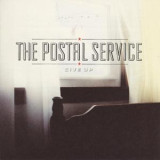
THE POSTAL SERVICE - GIVE UP

THE POSTAL SERVICE

GIVE UP

12inchSPLP595
Sub Pop
31.03.2023

Nachdem 2013 zum 10-jährigen Jubiläum die Deluxe Version veröffentlicht wurde, ist ,Give Up" nun wieder als einfache LP im Original Format zu haben. Man kann alle Zeit und alles Geld der Welt darauf verwenden, das perfekte Pop-Szenario zu erschaffen, aber manchmal müssen sich die Sterne von ganz allein in die richtige Position rücken. Und obwohl die Mitglieder von THE POSTAL SERVICE schon früh darüber Witze machten, dass ,Such Great Heights" der ,Hit" ihres Debüalbums ,Give Up" sei, konnte niemand ahnen, was für einen Einfluss diese Album haben sollte, das in Schlafzimmern des Mittleren Westens konzipiert wurde. Über zehn Jahre sind ins Land gegangen, seit das kleine Projekt aus Ben Gibbard von DEATH CAB FOR CUTIE und Jimmy Tamborello (DNTEL, FIGURINE) scheinbar aus dem Nirgendwo anrauschte und sich tief in die Ohren all derer eingrub, die in Kontakt mit dem ansteckenden Electropop von THE POSTAL SERVICE geraten waren. Natürlich war die Musik von THE POSTAL SERVICE zu jeder Zeit viel mehr als nur Electropop. Die Kraft, mit der Jimmy und Ben den Zeitgeist des Indie Rocks der frühen Nuller Jahre heraufbeschworen, machte sie zu einem derartigen Phänomen, dass Künstler wie BEN FOLDS, AMANDA PALMER, STREETLIGHT MANIFESTO und CONFIDE ,Such Great Heights" gecovert haben. Ein Zeugnis des zauberhaften Funken und der melodischen Kompaktheit des Songs. Der Sound der Band ist ein derartiger Meilenstein, dass der Terminus ,Postal Service-esque" ein akzeptiertes Adjektiv in der Musikwelt ist. Es war unmöglich, vorherzusagen, wie groß ,Give Up" werden würde, aber schon 2003 war klar, dass diese Herren etwas ganz Besonderes erschaffen hatten.

pre-ordina ora31.03.2023

dovrebbe essere pubblicato su 31.03.2023

20,80
ALTIN GÜN - ASK

ALTIN GÜN

ASK

12inchGBLP138
Glitterbeat Records
31.03.2023

The first thing that grabs you about Altin Gün"s new album is the energy. With Ask, the Amsterdam-based sextet turn away from the electronic, synth-drenched sound of their 2021 albums, Alem and Yol. While those two, created at home during the pandemic, paid homage to the electronic pop of the 80s and early 90s, Ask, marks an exuberant return to the 70s Anatolian folk-rock sound that characterised Altin Gün"s first two albums, On (2018) and Gece (2019). But there"s development here too. Ask is the closest the band have come so far to capturing the infectious energy of their live performances. "It"s definitely connecting more with a live sound - almost like a live album," says bassist Jasper Verhulst. "We, as a band, just going into a rehearsal space together and creating music together instead of demoing at home." "We didn"t record it like we did the last album," agrees vocalist Merve Dasdemir. "We basically produced that one at home because of the pandemic. Now we"ve gone back to recording live on tape." How many more worlds do Altin Gün visit in this joyful expedition? "Rakiya Su Katamam" is glowering space rock as though Gong had taken a stopover on the Bosphorus. "Canim Oy" is a psychedelic freak-beat stomper from a world where Istanbul"s Kadiköy district was the Carnaby Street of the east. "Güzelligin On Para Etmez" is a dreamy acid-folk anthem. And the finale, "Doktor Civanim," is an irresistible slice of sci-fi disco camp with lava-lamp synth squiggles that wouldn"t sound out of place next to Baris Manço"s "Ben Bilirim." Fresh yet timeless. Rooted in antiquity yet yearning for heavenly futures. Ask wants to take you places. All you have to do is strap yourself in

non in magazzino

Ordina ora e ordineremo l'articolo per te presso il nostro fornitore.

20,59

Last In: 6 months ago
HAILU MERGIA & DAHLAK BAND - WEDE HARER GUZO 2x12"

Hailu Mergia & Dahlak Band's Wede Harer Guzo is the third release on Awesome Tapes From Africa for Ethiopian keyboard and accordion maestro. In the years since Shemonmuanaye, Mergia has revamped his touring career, playing festivals and clubs worldwide, including a recent tour supporting Beirut. By 1978, Addis Ababa's nightlife was facing challenges. The ruling Derg regime imposed curfews, banning citizens from the streets after midnight until 6:00 am. But that didn't stop some people from dancing and partying through the night. Bands would play from evening until daybreak and people would stay at the clubs until curfew was lifted in the morning. One key denizen of Addis' musical golden age, Hailu Mergia, was preparing a follow-up to his seminal Tche Belew LP with the famed Walias Band. It was the band's only full-length record and it had been a success. But his Hilton house band colleagues were a bit tied up recording cassettes with different vocalists. Still Mergia, amidst recording and gigs with the Walias, was also eager to make another recording of his instrumental-focused arrangements. So he went to the nearby Ghion Hotel, another upmarket outpost with a popular nightclub. Dahlak Band was the house band at Ghion at the time. Together they made this tape Wede Harer Guzo right there in the club during the band's afternoon rehearsal meetings, with sessions lasting three days. Dahlak Band catered to a slightly more youthful, local audience, while Mergia's main gig with the Walias at Addis' swankiest hotel had a mixed audience that included wealthy Ethiopians, foreign diplomats and older folks from abroad. Therefore, their sets featured lighter fare during dinnertime and a less rollicking selection of jazz and r&b. Meanwhile, Dahlak was known more for the mainly soul and Amharic jams they served up for hours two nights a week to a younger crowd. Mergia released Wede Harer Guzo ("Journey to Harer," a city in eastern Ethiopia) with Sheba Music Shop, which was located in the Piazza district but has long since shut down. His cassette copy is the only known source we could find. Jessica Thompson at Coast Mastering managed to restore the recording to clean up layers of hiss, flutter and distorted frequencies, made worse by years of storage. Although there are some remaining sonic artifacts of the era's recording and cassette duplicating quality, this reissue captures the band's inimitable vibe. Recalling the audience's positive reaction to Wede Harer Guzo's novel arrangements, he says it sold well and found many fans. However, as no trace of the tape can be found online, there's no indication as to why the cassette appears largely forgotten until now

non in magazzino

Ordina ora e ordineremo l'articolo per te presso il nostro fornitore.

23,49

Last In: 3 years ago
Various - Tele Music, 26 Classics French Music Library, Vol. 3
 
26

Welcome to the third part of the TELE MUSIC saga, the label founded by Roger Tokarz. He deeply marked the era with his audacity and his vision of music on film. This irresistible new selection tells the story from 1968 to 1985 of a prolific label that sometimes produced ten albums a year, and which delighted many French and foreign film directors who, to 'flavour' their films, drew on this sumptuous catalogue.
In this volume 3 TELE MUSIC, we have highlighted legendary artists who have left an indelible mark on the history of the music bookshop and on the history of music in general:

• Janko Nilovic (also known as Yanko Nilovic, Anady Loore, E. Orti or Alan Blackwell),
• Jean-Jacques Debout with his irresistible “Mitsuko” released in 1967 and re-released in 1969 on “Music Bazaar”, • Bernard Lubat, the impressive percussionist, vibraphonist, multi-instrumentalist and very good “scator” (Bernard played in the Doubles Six with Quincy Jones and Eddy Louiss),
• Gabriel Yared, the man with a hundred film scores. Arranger and composer for Johnny Hallyday and Charles Aznavour, among others!
• Hervé Roy conductor and writer for Nancy Holloway,
• George Chatelain, pianist, guitarist, clarinettist, founder of the famous studio “CBE” created in 1966 with his sister Janine Bisson and his high school friend Bernard Estardy.

All these composers were renowned for their acute sense of composition, arrangement, conducting and inter- pretation, and in their own way left their mark on many sound recordings of musical illustration "made in France!
CBE, the Chatelain, Bisson and Estardy studio is located in the 18th arrondissement of Paris. Still in operation and run by Julie Estardy, it has been receiving major artists for over half a century. It is a place of reference. At the time: Johnny Hallyday, Claude François, Sheila, Carlos, Françoise Hardy, Nino Ferrer recorded their hits there.
Now it's the turn of Sebastien Tellier, Bertrand Burgalat, Keziah Jones, Tony Allen, Jeff Miles to name but a few. CBE and its giant Bernard Estardy put TELE MUSIC in the best conditions to produce an atypical and powerful sound.
Bernard Estardy had a custom- built mixing console built by his German friend Gunther Loof, offering the perfect tool for recording 4 and then 32-track Arp 2000, Moog, Korg, Prophet synthesizers and all acoustic instruments. The field of experi- mentation was limitless.
Until now, the titles of this collection were only available in vinyl format, via rare and expensive prints that collectors sell for a high price on dedicated websites. This volume 3 gives you access to the "crème de la crème" of the legendary repertoire made in France!

non in magazzino

Ordina ora e ordineremo l'articolo per te presso il nostro fornitore.

29,87

Last In: 3 years ago
LOS YORK'S - 67

Los York's

67

12inchMR434
MUNSTER
Release unknown

Los York's became the epitome of Peruvian garage sound and the kings of the multi-group concerts which teenagers flocked to on Saturday and Sunday mornings in Lima's main movie theaters. It took them a year to turn their ideas into songs for their first LP that was successfully released at Christmas in 1967. It features a beat-influenced go-go twang guitar garage psych tone throughout, including a bunch of covers like Alan y sus Bates' 'Pronto Un Doctor' or The Box Tops' 'The Letter', and amazing originals like 'No Puedo Amar' with an intense garage beat. First time official reissue. - DESCRIPTION: The group was in tune with the youth from popular districts who were gradually turning morning concerts into dynamic gigs as the fashion for solo rock-ballads waned and garage sounds by bands like Los Shain's, Los Derbys, Los Juniors, Los Flyers and, of course, Los York's took over. Their supportive fans would follow them to every gig. After releasing their three first singles on MAG, featuring covers of popular hits, it took them a year to turn their ideas into songs for their first LP that was successfully released at Christmas in 1967. The band was backed by Melcohita on vibraphone and Mario Allison on percussion.

pre-ordina ora

Questo articolo non è stato ancora rilasciato. È possibile pre-ordinare il prodotto ora.

22,98
PERKUTAO - MIS ANCESTROS

Perkutao

MIS ANCESTROS

12inchBUHRLP143
BUH RECORDS
30.12.2022

If, among the Afro-Peruvian music groups that have emerged in recent years, there is one that has dared to take the sound to new dimensions, it is Perkutao. Heirs to the best Afro-Peruvian tradition, they have been able to integrate Afro-Cuban elements and various contemporary popular styles, which they play with amazing with speed and precision. "Mis ancestros", is their debut album for Buh Records. Perkutao is an Afro-Peruvian percussion ensemble founded in 2005, directed by Percy Chinchilla, musician, percussionist, zapateador and teacher of young generations of percussionists. "Mis Ancestros" (My ancestors) is their first record under the production of Manongo Mujica and is the fourth title of the collection "Perspectivas de la Música Afroperuana" (Perspectives on Afro-Peruvian Music). Chinchilla shares the artistic direction of Perkutao with William Nicasio 'Makarito', another outstanding percussionist. Both grew up in the famous Callejón del Buque, in the district of La Victoria, a spot preferred by bohemians and known by local music partying -jaranas criollas. Both were also formed in Perú Negro, an emblematic Afro-Peruvian ensemble, and both carry in their blood the cult of percussion and Afro tradition. Chinchilla comes from a family of Afro-Peruvian musicians including Caitro Soto and Ronaldo Campos. And Makarito is the son of Macario Nicasio and grandson of El Niño, legendary Cuban percussionist in charge of introducing congas and bongo to Afro-Peruvian rhythms. Perkutao arose precisely from the merging of these traditions, Afro-Peruvian, Afro-Cuban and Caribbean music, and have become one of the most sought-after percussion ensembles due to the intensity of their sound and their powerful performances that include stage movements and surprising acrobatic skills. In addition to Chinchilla and Makarito, the ensemble is completed by Edu Campos, Andree Liendo and Víctor Sánchez Pitín. "I follow in the footsteps of my ancestors, to the beat of the cajita, the quijada and the cajón, to the rhythm of a zamacueca, a festejo and a good landó". This is an excerpt of the lyrics of "Poema", the opening track of the album, the rhythmic base accompanies Chinchilla's voice and then increases in a crescendo that announces the paths to be explored by Perkutao. "Azañero Colorao", "Trucutum Kiti Pa" and "Cancha con Sabor", composed based on minor percussion (cajita, quijada), zapateo and cajón, respectively, are compositions that serve as an introduction, a tribute to the essential instruments of the Afro-Peruvian tradition. The last one in particular already defines Perkutao's style: a trepidant and orgiastic rhythm, hypnotic and hard hitting, Dionysian and cathartic. With "Madre Africa" and "Al Tayta Bukense", for djembes and congas, respectively, we find Perkutao retaking the Afro-Cuban heritage embedded to the Afro-Peruvian sounds, abakuá and festejo. "Lloraré", a version of a famous Cuban song, mirror the ensemble's fascination with Caribbean music (salsa is another genre cultivated by its members). "Mis ancestros" is an album about a tradition, but it is also a renewal. Perkutao opens a new direction for Afro-Peruvian music, its sound is an evocation and the here and now, it is deep-rooted but freely flowing percussion. Perkutao are Percy Chinchilla, William Nicasio "Makarito", Edu Campos, Andree Liendo y Víctor Sánchez Pitín. Produced by Manongo Mujica y Daniel Mujica. Recorded and mixed by Juan José Salazar at La Encía del Leopardo Estudio, Chorrillos, Lima, Perú. Mastered by Mario Breuer en Sensei Mastering, Córdoba, Argentina. Cover and Design by Yerko Zlatar.

pre-ordina ora30.12.2022

dovrebbe essere pubblicato su 30.12.2022

34,41
Jucifier - Nazm

Jucifier

Nazm

12inchVIRUS510LP
Alternative Tentacles
16.12.2022

Experimental once-sludge metal duo branch out further with an album influenced by Middle East / North African / Asian pop and traditional music. Nazm sees Jucifer deploy their familiar studio tactic: writing, arranging, producing, engineering, and playing all instruments themselves to create a sprawling concept album. This time, it’s to celebrate their shared love for the Middle East and North Africa (MENA) and central / south / west Asian traditional and pop music cultures with fourteen highly textured, intensely personal and passionately delivered original songs. Fans of the band likely know they can expect surprises with each album, as well as recordings which differ drastically at times from their live sound. In this tradition, Nazm strays far from the brutal excess of a Jucifer show (and of their recent releases Futility and District Of Dystopia) but, as with all Jucifer’s recordings, the point is not to imply any static trait of the band but instead to bring to life a story they’re telling. Track Listing: 1. Return 2. Mood 3. Un Occupied 4. Welcome 5. Sahel 6. Endure 7. Pulverization (Becoming) 8. Displaced 9. Jucifer – Divided 10. Notice (Warning) 11. Water Woman 12. Mitochondria 13. The World Is A Sword 14. To The Lost

pre-ordina ora16.12.2022

dovrebbe essere pubblicato su 16.12.2022

54,58
HAILU & DAHLAK BAND MERGIA - WEDE HARER GUZO

Tape
Hailu Mergia & Dahlak Band's Wede Harer Guzo is the third release on Awesome Tapes From Africa for Ethiopian keyboard and accordion maestro. In the years since Shemonmuanaye, Mergia has revamped his touring career, playing festivals and clubs worldwide, including a recent tour supporting Beirut. By 1978, Addis Ababa's nightlife was facing challenges. The ruling Derg regime imposed curfews, banning citizens from the streets after midnight until 6:00 am. But that didn't stop some people from dancing and partying through the night. Bands would play from evening until daybreak and people would stay at the clubs until curfew was lifted in the morning. One key denizen of Addis' musical golden age, Hailu Mergia, was preparing a follow-up to his seminal Tche Belew LP with the famed Walias Band. It was the band's only full-length record and it had been a success. But his Hilton house band colleagues were a bit tied up recording cassettes with different vocalists. Still Mergia, amidst recording and gigs with the Walias, was also eager to make another recording of his instrumental-focused arrangements. So he went to the nearby Ghion Hotel, another upmarket outpost with a popular nightclub. Dahlak Band was the house band at Ghion at the time. Together they made this tape Wede Harer Guzo right there in the club during the band's afternoon rehearsal meetings, with sessions lasting three days. Dahlak Band catered to a slightly more youthful, local audience, while Mergia's main gig with the Walias at Addis' swankiest hotel had a mixed audience that included wealthy Ethiopians, foreign diplomats and older folks from abroad. Therefore, their sets featured lighter fare during dinnertime and a less rollicking selection of jazz and r&b. Meanwhile, Dahlak was known more for the mainly soul and Amharic jams they served up for hours two nights a week to a younger crowd. Mergia released Wede Harer Guzo ("Journey to Harer," a city in eastern Ethiopia) with Sheba Music Shop, which was located in the Piazza district but has long since shut down. His cassette copy is the only known source we could find. Jessica Thompson at Coast Mastering managed to restore the recording to clean up layers of hiss, flutter and distorted frequencies, made worse by years of storage. Although there are some remaining sonic artifacts of the era's recording and cassette duplicating quality, this reissue captures the band's inimitable vibe. Recalling the audience's positive reaction to Wede Harer Guzo's novel arrangements, he says it sold well and found many fans. However, as no trace of the tape can be found online, there's no indication as to why the cassette appears largely forgotten until now

pre-ordina ora09.12.2022

dovrebbe essere pubblicato su 09.12.2022

9,62
THE PINKS AND PURPLES REDS - SUMMER AT LAND'S END (CLASSIC BLACK VINYL)

Summer at Land's End is not an interlude or tangent for The Reds, Pinks & Purples but rather a perfect fourth movement following the albums Anxiety Art, You Might Be Happy Someday, and Uncommon Weather. As with these self-recorded records (the primary work of songwriter Glenn Donaldson), the songs on Summer at Land's End were crafted slowly and then drawn together to make a unified statement. But here, and more than before, Summer at Land's End combines Donaldson's rueful pop sensibility with a parallel musical universe, one composed of pictures, dreams, and feelings without words. Even if the underlying theme of this collection is one of conflict or unhappiness, the vision of the music presents an escape to a new world, always fading in and out of sight. For listeners who may not be familiar with Donaldson's corner of San Francisco--the Richmond district--or the current wave of hazy, melodic DIY pop groups performing in the city, Summer at Land's End pulls in images and scenes that feel like a collision of the mundane and the sublime of this present landscape. With this record, The Reds, Pinks & Purples give less focus to the vanities of a subculture and more to the challenge of connecting with someone, to the ordinary goals of being human and finding harmony with others. This deliberate saturation in drama and ambiance, along with some of Donaldson's best songwriting to date, is what gives Summer at Land's End its special class in the project's discography. Of the album's cinematic mood, Donaldson refers to films like Summer of '42 and the influence of the classic 4AD catalogue of the 1990s. This style informs much of Donaldson's prior and current ventures of course (The Ivytree, Vacant Gardens, and a dozen projects in between) but now The Reds, Pinks & Purples have taken the mantle, embracing this instinct for instrumental or dreamier modes of pop songwriting. It's a pleasure to experience Summer at Land's End, as this record finds a thrilling balance between songs and sounds, instruments and voices, and the ironic twin poles of art and life.

pre-ordina ora02.12.2022

dovrebbe essere pubblicato su 02.12.2022

22,48
THE PINKS AND PURPLES REDS - SUMMER AT LAND'S END (PALE GREEN STARS VINYL)

PALE GREEN STARS VINYL

Summer at Land's End is not an interlude or tangent for The Reds, Pinks & Purples but rather a perfect fourth movement following the albums Anxiety Art, You Might Be Happy Someday, and Uncommon Weather. As with these self-recorded records (the primary work of songwriter Glenn Donaldson), the songs on Summer at Land's End were crafted slowly and then drawn together to make a unified statement. But here, and more than before, Summer at Land's End combines Donaldson's rueful pop sensibility with a parallel musical universe, one composed of pictures, dreams, and feelings without words. Even if the underlying theme of this collection is one of conflict or unhappiness, the vision of the music presents an escape to a new world, always fading in and out of sight. For listeners who may not be familiar with Donaldson's corner of San Francisco--the Richmond district--or the current wave of hazy, melodic DIY pop groups performing in the city, Summer at Land's End pulls in images and scenes that feel like a collision of the mundane and the sublime of this present landscape. With this record, The Reds, Pinks & Purples give less focus to the vanities of a subculture and more to the challenge of connecting with someone, to the ordinary goals of being human and finding harmony with others. This deliberate saturation in drama and ambiance, along with some of Donaldson's best songwriting to date, is what gives Summer at Land's End its special class in the project's discography. Of the album's cinematic mood, Donaldson refers to films like Summer of '42 and the influence of the classic 4AD catalogue of the 1990s. This style informs much of Donaldson's prior and current ventures of course (The Ivytree, Vacant Gardens, and a dozen projects in between) but now The Reds, Pinks & Purples have taken the mantle, embracing this instinct for instrumental or dreamier modes of pop songwriting. It's a pleasure to experience Summer at Land's End, as this record finds a thrilling balance between songs and sounds, instruments and voices, and the ironic twin poles of art and life.

pre-ordina ora02.12.2022

dovrebbe essere pubblicato su 02.12.2022

27,27
Colorado - Colorado / Para Ti

"Matasuna Records" returns to Mexico for a third time to dig for rare treasures. They got their hands on a special gem - two obscure Latin/Jazzfunk tunes by a band called "Colorado" from "Mexico City". The songs were released in 1976 on the Mexican label Peerless and the super rare original 7inch is virtually unavailable. Fortunately, the release is finally available for the first time as an official reissue in a remastered edition. An unjustly under-the-radar Latin jazzfunk highlight!

The song "Colorado", named after the band, opens the "A-side" of the single. The hypnotic fender rhodes puts the listener in the right mood right from the start, before the drums and percussion set the rhythm. The horns also add depth and melodiousness before the song takes a turn and reveals its funky side with guitars, synths and bass. A nice guitar solo also reveals the affinity for rock music without losing sight of the vibe of the song or tipping it a different direction. Definitely a fabulous song that comes up with a lot of ideas and inspirations, offering an unexpected richness in the under 3-minute running time.

The "B-side" also continues musically energetic in the same way with "Para Ti". Here, too, you can feel and hear the playfulness and experimentation of these extraordinary musicians. Atmospherically dense passages alternate with quieter phases and solo parts, before the tension rises again and literally explodes. As in the song "Colorado", rhodes, brass, guitars & bass offer a great and varied interplay. The secret highlight, however, might be the drum and percussion parts in the middle of the track, which will surely enchant not only the B-Boys and B-Girls.

Artist info:

The internet, a source of almost endless knowledge, offers no information about the band Colorado. All the more fortunate that one of the band's founding members, "Emilio Espinosa Becerra", provides detailed info for the reissue.

In 1968 the three brothers "Luis", "Francisco" and "Emilio Espinosa Becerra" from Mexico City started to rehearse together to play wellknown rock & pop songs at friends or family parties. At first, they played on Japanese guitars and a Teisco bass borrowed from a school friend. They saved up money to then buy guitar & bass amps and a microphone, which they always had to rent until then. However, the budget was only enough for Mexican replicas of the legendary Fender Bassman and the Fender Super Reverb. Original equipment was simply unaffordable.

Shortly thereafter, more members joined the band. Three musicians from the school band "Tepeyac": "Marco Nieto Bermudez" (trumpet), "Raymundo Mier Garza" (tenor saxophone) and "Alfonso Romero" (trombone). Another classmate named "Carlos Mauricio Fernández Ordóñez", who studied piano, also joined the group. His father had a chemical factory in the United States and helped bring equipment (amplifiers and a Farfisa Fast 5 organ) - hidden in the back of a truck - to Mexico. In the time that followed, more instruments were acquired, including bass and guitars (from Gibson, Rickenbacher and Fender) and microphones (from Shure) for vocals and horns.

With a larger band and new equipment, they played many parties in their district of "Lindavista" in "Mexico City" and neighboring areas from 1970 to 1973, as well as gigs at various festivals and school events. The group's band name at the time was "Sound Core Brass". However, more and more often people with turntables and speakers showed up at parties, which were also able to heat up. The so-called "Sonideros", a sound system culture that was emerging in the 1960s, charged less than a multi-piece live band, so the band's performances declined.

During those years, three other "Espinosa Becerra" family members joined the band: "Jorge Rafael" (trombone), "Sergio Alejandro" (tenor saxophone) and "Felipe de Jesus" (drums and percussion).

A brother of the musicians, "Carlos Espinosa Becerra", studied electrical engineering at the University. Together with another fellow student, he designed and built a 10-channel console with a variety of functions and features that far surpassed the devices available at the time. They also went to the US again to buy JBL speakers & tweeters to build their own sound system. On another trip to Los Angeles, they bought Phase Linear amplifiers, which offered enormous power by the standards of the time and had an extremely low distortion factor. With this equipment they could turn up the volume really loud and noise-free.

This was also the time when they stopped playing music from English bands & youth groups and changed their repertoire completely. They played mambos, chachachas, pasodobles and tangos on special occasions in big ballrooms and halls. Also, every now and then they hired a string quartet of well-known Mexican violinists to provide the musical entertainment at dinner events.

During those years, classmate "Pablo Rached Diaz" joined the band, playing tenor saxophone. Pablo was very active and organized many parties. He was also the one who helped the band to record on the Mexican label "Peerless". So in 1975 they were asked by Peerles Records to record their own songs. They had recorded a total of 12 songs - six of these songs were released on three vinyl singles (45rpm). Most of the songs were composed by "Gustavo Ruiz de Chavez Sr.". The band was asked to adopt a more commercial name, and so they had chosen the band name "Colorado". In the course of the releases, the band made some promotional tours and appeared in shows on "Televisa", the most important television station in Mexico in those years.

Later, several members of "Colorado" graduated and began to pursue regular professions. They didn't stop playing at events, but priority was given to more formal duties and the band was no longer as active as it had been in its heyday.

About 8 years ago, the band got back together to play again. The next generation of musicians also joined the band: two sons, a nephew and a brother-in-law of the original band members. Currently, they are back playing at friends' parties and family gatherings in Mexico City.

non in magazzino

Ordina ora e ordineremo l'articolo per te presso il nostro fornitore.

10,71

Last In: 3 years ago
Pascal Comelade - Le Non-Sens Du Rythme
pre-ordina ora09.09.2022

dovrebbe essere pubblicato su 09.09.2022

24,16
LOS KINTOS - LOS KINTOS LP

Los Kintos

LOS KINTOS LP

12inchVAMPI261
Vampisoul
26.08.2022

1970 album that marked a milestone in the history of Peruvian tropical music comprising an outstanding repertoire of Cuban rhythms as a response to the trends of the moment: boogaloo and Colombian cumbia. Guitarist Pancho Acosta lead the band and Kiko Fuentes delivered the vocals across some juicy descargas and guarachas. In the late sixties, a generation of young Peruvian musicians, who were fans of tropical sounds, chose Cuban rhythms over the onslaught of boogaloo and Colombian cumbia. This musical movement attracted a legion of young followers, mostly from popular districts of Lima. In 1969, percussionist Domingo Guzmán Villanueva was commissioned by the MAG record label to get together a group to revive Cuban musical tradition. To lead the project he recruited, Francisco "Pancho" Acosta, founder and guitarist of the Company Quinto. The new group was baptized Los Kintos, in a nod to their desire to carry on playing in the Compay Quinto style. The link between the two groups appears on this first album, as the group's name is written in two different ways: Los Kintos, on the front cover; and Los Quintos, on the back. Recordings began in 1969 and included the stunning 'Descarga Kinto', Richie Ray and Bobby Cruz's original 'Pancho Cristal' -renamed here 'Pancho Guzmán- and Cuban classics from the repertoire of the historic Trio Matamoros like 'Lágrimas Negras' or 'Mentiras', all with lead vocals by Kiko Fuentes. The success of their concerts would take them on tours across the country, always recognized as outstanding figures of Cuban music in Peru. This reissue brings back an album that marked a milestone in the history of Peruvian tropical music and revives the fame of the group's legendary live performances. First time vinyl reissue.

pre-ordina ora26.08.2022

dovrebbe essere pubblicato su 26.08.2022

24,58
KARAMANDUKA Y MELCOCHITA - ACABO CON LIMA HUYO PA NUEVA YORK LP

This mega-rare 1969 album pays tribute to the Bronx and Brooklyn neighborhoods where young Latinos had invented the boogaloo a few years earlier. This record highlights the quality of Peruvian boogaloo and the talent of musicians such as pianist Otto de Rojas and percussionist Coco Lagos. First time reissue. In the mid-sixties, when young Latino musicians in New York fused Afro-Cuban rhythms with rock, soul and jazz, they had no idea that their boogaloo bang bang would reverberate just as strong and loud in a distant South American country. From 1955, La Sonora Macedo, took Cuban music to every corner of Peru, backed the leading musicians of the Peruvian tropical universe, such as Ñiko Estrada, Joe di Roma, the double bass player Pepe Hernández, and the trumpet players Tito Chicoma and Charlie Palomares. All diehard fans of Cuban music, always alert to any new artist arriving from the island. In the early sixties, light rock, doo-wop, ballads, Italian songs and bossa nova paraded across Lima's stages, making performances by Cuban bands, previously so frequent, a thing of the past. Moreover, the unanimous success of the Beatles from 1964 onwards, gave the impression that music from the English-speaking world would dominate the rest of the decade. But this was not the case. In large part because of Manuel Guerrero's good relations with U.S Latino labels, such as Alegre Records, which released the initial recordings by Johnny Pacheco and Charlie Palmieri, allowing listeners in Lima to follow the development of the salsa movement almost from the beginning. MAG was undoubtedly the best representative of these new sounds. In 1969, the LP "Acabo con Lima, huyo pa' Nueva York" was released on this label, a project which brought together three figures from Lima's show business world: Manuel Antonio Guerrero, owner and founder of MAG, who wasn't shy of joining in on the chorus and percussion during recordings, Pablo Villanueva "Melcochita", a multifaceted artist from a talented musical family from the popular district of La Victoria, was responsible for the vocals and percussion on the album. And the third Lima show business figure in this project was the musician, singer and comedian Alberto Montroy Laostervened, who gained fame in the sixties while still in his twenties for his imitation of Cantinflas, the Mexican actor. Alberto bore a devilish resemblance to Cantinflas, not only in his gestures but also physically. Under the name of Pepe Moreno "Karamanduka" he also went on to record songs abroad such as "El boogaloo de Cantinflitas". "Acabo con Lima, huyo pa' Nueva York" was immediately re-released in other countries, highlighting the quality of Peruvian boogaloo and talent of musicians such as pianist Otto de Rojas and percussionist Coco Lagos, who feature prominently on the album. Songs such as 'Vuela mi descarga', 'Peruvian boogaloo' and 'Peruvian guajira', pay tribute to the Bronx and Brooklyn, neighborhoods where young Latinos had invented the boogaloo a few years earlier.

non in magazzino

Ordina ora e ordineremo l'articolo per te presso il nostro fornitore.

24,58

Last In: 3 years ago
Ginger Root - City Slicker

Ginger Root

City Slicker

12inchACRO1071LP
Acrophase Records
30.06.2022

What would it sound like if Ginger Root was asked to make the soundtrack to an American adaptation of a fictitious Japanese film from 1981 entitled, “街のやつ” (Machi No Yatsu) You’d get their new EP, “City Slicker” While the previous Ginger Root albums have had themes of introspectiveness and observations on past personal experiences, this upcoming release is the first collection of songs written from an outside perspective. The first collection of songs that live in a fabricated world. A short 19-minute escape to a metropolis that never was. Following a protagonist whose neighbors call him the “City Slicker”. On this EP, Ginger Root continues to pioneer their self-proclaimed genre: “Aggressive Elevator Soul”. By blending the bones and blueprints from the works of Yacht Rock and City Pop, with textures from the ever-evolving Bedroom Pop scene, glueing them all together fruitions something uniquely Ginger Root. One may argue that the best way to listen to “City Slicker” is not by vinyl, nor by cassette, but by VHS (if such a merch item were to be created). major label,

pre-ordina ora30.06.2022

dovrebbe essere pubblicato su 30.06.2022

31,89
Ferkat Al Ard - Oghneya LP

Ferkat Al Ard

Oghneya LP

12inchHABIBI019-1
HABIBI FUNK RECORDS
22.06.2022

An absolutely legendary album from Lebanon by Issam Hajali’s group Ferkat Al Ard, “Oghneya” stands out as one of the great musical gems of the Arab world. A groundbreaking release from 1978 that represents the meeting point of Arab, jazz, folk and Brazilian styles with the talent of Ziad Rahbani, who did the albums arrangements. Filled with a variety of sounds and genres, from Baroque Pop to Psych-Folk to flashes of Bossa Nova, Tropicalia and MPB, “Oghneya” is like if Arthur Verocai took a trip to Beirut in the 70’s to record an album.

In 2015 we heard Ferkat Al Ard’s music for the first time, a Lebanese trio compromised of Issam Hajali, Toufic Farroukh and Elia Saba. It was a stunningly unique release that blends traditional Arabic elements, jazz and Brazilian rhythms hand in hand with poetic-yet-politically engaged lyrics. The band was active in the left-wing movement of Lebanon of the time and they communicated their political ideas candidly through their songwriting.

In our mind the idea was to see whether Issam was interested in re-releasing “Oghneya.” He was not opposed to it, but also made it clear that it was not his priority for a first project. He suggested we start with his first album, before Ferkat Al Ard was formed, “Mouasalat Ila Jacad El Ard,” which was recorded in 1977 in Paris together with his friend Roger Fakhr (whose work we have been privileged to re-release in the meantime as well.) “Mouasalat Ila Jacad El Ard” is melancholic, stripped-down, guitar-based folk intertwined with jazz-fused breaks, and the unique sound of the santour glistens through. While the music is very accessible, some song structures are rather atypical, neglecting common patterns of verse, hook, verse, hook. The lyrics mostly trace back to the poetic work of Palestinian author Samih El Kasem, with one song also written by Issam, who composed the music for the whole album.

We re-released Issam’s “Mouasalat Ila Jacad El Ard” in 2019 to a great reception, with positive reviews all over the place and an ongoing appreciation for the album. This meant it was time for us to undertake an “Oghneya” re-release again!

If you compare “Mouasalat Ila Jacad El Ard” and “Oghneya,” one apparent distinction is the strong Brazilian influence in the music. Issam Hajali explained that you can already hear traces of this influence on his debut, but it’s “Oghneya” where this musical relationship really peaks. Lebanon and Brazil have had a strong connection for nearly a century due to the continuous flow of immigrants from one country to the other. Today, Brazil has the largest Lebanese diaspora in the world, the “Brasilibanês”. The migratory route was not a one-way street, however, and some Lebanese returned to their home country, taking recordings of the music they learned to love in Brazil with them. They were followed by Brazilian musicians who visited primarily Beirut during the 1960’s and the first half of the 1970’s, just like many other musicians from around the world. In these years between the independence and the beginning of the civil war, Beirut became even more of a cultural center and regional hub than it already was.

Bossa Nova, at that time, was one of the defining sounds of Brazilian popular music. Issam Hajali remembers hearing it at a bar in Beirut’s Hamra district in 1974, which hosted musicians from Brazil playing the occasional gig. When Issam had returned from Paris in 1976 he got to know Ziad Rahbani, son of Fairouz, who had a shared passion with Issam for a lot of things, among them Brazilian music. Issam showed him some of the tracks he was working on, and Ziad agreed to help with arranging. The music that evolved from this cooperation between Ferkat Al Ard and Ziad Rahbani’s arrangement is, to put it lightly, outstanding. Issam’s singing is embedded into the uniquely beautiful string arrangements backed by the band’s poignant, swinging groove. The lyrics of the songs on “Oghneya” are based on poems by Mahmoud Darwish, Samih Al Qasem and Tawfiq Ziad, three pillars of Palestinian poetry within the last century, and their influence on “Oghneya” was itself a strong political statement during the Lebanese war.

“Oghneya” was eventually released in 1978 by the band themselves on cassette tapes. Finding a blank tape that fit the playing time proved to be impossible during the war so they needed to open up the case of each cassette to physically cut down the tape and customize it to the playing time. The album was well received, though some cultural critics deemed it too “occidental” in its sound. While the cassette was circulating, Ziad Rahbani started a label called Zida, together with Khatchik Mardirian. They decided to help the band with a re-release on vinyl in 1979, a year after “Oghneya” was originally released on cassette.

Sadly, there are two tracks from the original release of “Oghneya” that did not make it onto the reissue. “Ghfyara Ghaza” was replaced by the song “Juma’a 6 Hziran.” while “Huloul” was taken off without a replacement. This happened as a precondition from the band for this reissue to happen. We would have loved to include all tracks, but the decision ranged between having either a reissue like the one we put out or no reissue at all. Thus, an easy choice for us.

As always both vinyl and CD come with an extensive booklet with an interview with Issam as well as unseen photos from the recording sessions.

non in magazzino

Ordina ora e ordineremo l'articolo per te presso il nostro fornitore.

22,65

Last In: 3 years ago
TV Priest - My Other People

Tv Priest

My Other People

12inchSP1487
Sub Pop
17.06.2022

Second Sub Pop album by acclaimed UK act TV Priest finds them building on the
post-punk of their early material and maturing into a powerhouse of tense, politically
caustic, and thoughtful rock music.
Without a brutal evaluation of their own becoming, TV Priest might have never made
their second album. Heralded as the next big thing in post-punk, they were
established as a bolshy, sharp-witted outfit, the kind that starts movements with their
political ire. There was of course truth in that, but it was a suit that quickly felt heavy
on its wearer’s shoulders, leaving little room for true vulnerability. “A lot of it did feel
like I was being really careful and a bit at arm's length,” says vocalist Charlie
Drinkwater. “I think maybe I was not fully aware of the role I was taking. I had to take
a step back and realize that what we were presenting was quite far away from the
opinion of myself that I had. Now, I just want to be honest.”
Having made music together since their teenage years, the London four-piece piqued
press attention in late 2019 with their first gig as a newly solidified group, a raucous
outing in the warehouse district of Hackney Wick. Debut single ‘House of York’
followed with a blistering critique of monarchist patriotism, and they were signed to
Sub Pop for their debut album. When ‘Uppers’ arrived in the height of a global
pandemic, it reaped praise from critics and fans alike for its “dystopian doublespeak,”
but the band - Drinkwater, guitarist Alex Sprogis, producer, bass and keys player Nic
Bueth and drummer Ed Kelland - were at home like the rest of us, drinking cups of
tea and marking time via government-sanctioned daily exercise. As such, the
personal and professional landmark of its release felt “both colossal and minuscule”
dampened by the inability to share it live. “It was a real gratification and really
cathartic, but on the other hand, it was really strange, and not great for my mental
health,” admits Drinkwater. “I wasn’t prepared, and I hadn’t necessarily expected it to
reach as many people as it did.”
As such, ‘My Other People’ maintains a strong sense of earth-rooted emotion, taking
advantage of the opportunity to physically connect. Using ‘Saintless’ (the closing
song from ‘Uppers’) as something of a starting point, Drinkwater set about crafting
lyrics that allowed him to articulate a deeper sense of personal truth, using music as
a vessel to communicate with his bandmates about his depleting mental health.
“Speaking very candidly, it was written at a time and a place where I was not, I would
say, particularly well,” he says. “There was a lot of things that had happened to
myself and my family that were quite troubling moments. Despite that I do think the
record has our most hopeful moments too; a lot of me trying to set myself reminders
for living, just everyday sentiments to try and get myself out of the space I was in.”
“It was a bit of a moment for all of us where we realised that we can make something
that, to us at least, feels truly beautiful,” agrees Bueth. “Brutality and frustration are
only a part of that puzzle, and despite a lot of us feeling quite disconnected at the
time, overwhelmingly beautiful things were also still happening.”
This tension between existential fear born from the constant uncertainties of life, and
an affirmative, cathartic urge to seize the moment, is central to ‘My Other People’, a
record that heals by providing space for recognition, a ground zero in which you’re
welcome to stay awhile but which ultimately only leads up and out. For TV Priest, it is
a follow-up that feels truly, properly them; free of bravado, unnecessary bluster or
any audience pressure to commit solely to their original sound.

pre-ordina ora17.06.2022

dovrebbe essere pubblicato su 17.06.2022

25,17
Articoli per pagina:
N/ABPM
Vinyl