
out of Stock
Order now and we will order the item for you at our supplier.
13,87 €
Last In: 3 months ago
Order now and we will order the item for you at our supplier.

The third album by Popol Vuh, a collective of musicians founded in Germany by Florian Fricke in 1969. 'Hosianna Mantra’ was a departure from the band’s first two records. Leader Florian Fricke abandoned the use of the Moog synthesiser and instead employed acoustic instrumentation such as piano, oboe and tambura. The record also featured evocative vocals by Korean singer Djong Yun and guitar contributions from Conny Veit.
The resulting album was one of the most inspiring, evocative and beautiful works to emerge in Germany in the 1970s and its fusion of ethnic, classical and ambient influences remains unique.
It is little wonder that 'Hosianna Mantra’ remains regarded as one of the finest works by Popol Vuh and continues to be held in high regard by both critics and aficionados alike.
This Esoteric Recordings edition has been cut at Abbey Road studios and replicates the original album artwork.
expected to be published on 29.08.2025

'In den Garten Pharaos’ was the second album by Popol Vuh, a collective of musicians founded in Germany by Florian Fricke in 1969. The record successfully fused the experimental sounds of the Moog synthesiser with ethnic percussion which resulted in an album of stunning originality.
The record was an influence on successive generations of musicians and it continues to inspire.
This Esoteric Recordings edition has been cut at Abbey Road studios and replicates the original album artwork.
expected to be published on 29.08.2025

expected to be published on 15.05.2022

BMG is releasing Popol Vuh’s vinyl deluxe box set “Vol. 2 – Acoustic & Ambient Spheres” on November 26th. This edition includes the albums "Seligpreisung", "Coeur de Verre", "Agape-Agape" and "Cobra Verde", four important acoustic and ambient works by the band from the 1970s and 1980s. "Cobra Verde" and "Coeur de Verre" are the original soundtracks to the Werner Herzog cult films.
All albums have been remastered and will be released as audiophile 180g pressings with adapted original artwork, including a bonus track for each album.
The box set comes with an insert with extensive liner notes and photos, complete with three picture prints, a collector's film still poster from "Coeur de Verre" and the original movie poster from "Cobra Verde" (both in A3 format).
Each album will also be available as a CD with an extensive booklet. Following the highly acclaimed release of Popol Vuh's The Essential Album Collection - Vol. 1 in 2019, Vol. 2 - Acoustic & Ambient Spheres marks a magnificent continuation of this series of works.
expected to be published on 26.11.2021

repress !
On Stock and ready to ship

lim. 150 blue transparent 180 Gr LP + 7" + Poster / incl. Silent Servant Remix
A cross-cutting label exploring the boundaries between different disciplines based on deep listening and music research, Modern Obscure Music is set to release 'INRI' (INDUSTRIA NACIONAL DEL RUIDO INFINITO) on the 1st December, the new album from Dellarge.
Inspired by the scenic beauty of his studio's surroundings at Lake Pátzcuaro in Michoacan, Mexico, Alejandro Barba, aka Dellarge, delves deep into the depths of his artistic consciousness to craft a spiritual album that encapsulates the essence of the place. 'INRI' stands for Industria Nacional del Ruido Infinito (National Industry of Infinite Noise) and serves as a vessel for Dellarge's innermost self-expression and reflections on the potential of humanity.
A multifaceted artist and veteran of the music industry for over two decades, his latest musical creation is an intimate and personal album and a departure from previous Techno/EBM-orientated Dellarge releases. 'INRI' (INDUSTRIA NACIONAL DEL RUIDO INFINITO) offers a mesmerizing blend of ambient, futuristic, and industrial sounds that transport listeners into a realm of mysticism, futurism, and duality and stands as a testament to Dellarge's artistic growth and his ability to transcend boundaries, offering listeners an immersive experience that connects them to his world.
Drawing inspiration from numerous sources, Dellarge found creative fuel in books such as 'El Arte de los Ruidos' by Luigi Russolo, 'Manifiestos y Textos Futuristas' by F.T. Marinetti, and science fiction classics including 'Congreso de Futurología' by Stanislaw Lem, 'Neuromancer' by William Gibson, and 'Dune' by Frank Herbert. Musically, he delved into the works of Coil, Michael Bundt, The Threshold Houseboys Choir, krautrock legends CAN and Popol Vuh, early Kraftwerk, Arthur Brown, Yello, Esquivel, The Residents, and Hector Lavoe for inspiration.
When asked about the creative process behind the album, Dellarge revealed a disciplined routine that involved immersing himself in the sounds, focusing on minute details that connected with the vivid world he envisioned. Ethereal tracks such as 'Viento Androide' and 'Viaje al Sol' offer a glimpse of a hopeful future, while darker compositions such as 'Corpus de Sangre' and 'Toro de Falaris', explore the wickedness and compassion within humanity. Each piece in the album represents a unique sonic journey.
'Viaje al Sol', the first single to be taken from the album, is set for release on the 27th October, and is also available as an EP which includes a remix from Juan Mendez aka Silent Servant. The remix is also included on the digital version of the album and available on 7" vinyl alongside an exclusive reworking of 'Cascabel' by the founder of Modern Obscure Music, Pedro Vian.
On Stock and ready to ship

In the late 1980s, Klaus Wiese (Popol Vuh) deepened his connection with Tibetan culture. The result is a series of works solely dedicated to the universal purity of the Singing Bowls. Uranus, perhaps the most rigorous of these, is an intense meditation on the trans-personal sphere of the VI chackra. The music becomes like a single harmonic chant, the reflection of a constant flow of divine light, which transforms the psyche and dilates the secret passages of the heart. In the galaxy of pure sound, the accumulated overtones offer the intrepid listener the access to a prismatic, fluoriscence-rich consciousness. The ego thus becomes the sonorous composer of itself, of the vital circle flooded with beneficial acoustic vibrations. In this sense, Uranus, originally published on tape (Aquamarin Verlag/1988), also marks a parallel with the same research by Henry Wolff & Nancy Hennings or Nada Himalaya's Deuter.
This item has not yet been released. You can pre-order the product now.

The writer Max Sebald often pondered over the nature of human memory, specifically, how our thoughts and desires - and their results - overlap and mutate over time. In A Place in the Country, he writes of the significance of what see as “similarities, overlaps and coincidences”. Are they the “delusions” of the self and senses, or manifestations of “an order underlying the chaos of human relationships, ... which lies beyond our comprehension”?
Song of the Night Mists, the new album by post-classical composer Stefan Wesołowski, often feels it draws on Sebald’s premise.
On a simpler plane, the one where the market dictates the neatly ordered information we consume, Song of the Night Mists can be described thus: recorded in the main by Stefan Wesołowski in Gdańsk, both in his studio and in Saint Nicholas' Basilica, the album incorporates acoustic instruments - piano, violin, double bass - and classic synthesizers such as the Roland Jupiter-8, the Soviet Polivoks. A Roland Space Echo RE-150 tape delay was also pressed into service as an instrument. We also hear the basillica’s organ and field recordings from the Tatra Mountains. Other musicians were Maja Miro, who played the flute parts on ‘Glacial Troughs’ and brother Piotr Wesołowski, who played the organ on ‘Wilhelm Tombeau’. Sound engineer was Marcin Nenko, who was also on hand to record the basilica organ parts. The album was mixed in New York by Al Carlson (Oneohtrix Point Never, Jessica Pratt, Zola Jesus, Lady Gaga, and Liturgy) and Rafael Anton Irisarri handled the mastering.
Ostensibly, Song of the Night Mists is the last in a trilogy, following on from albums Liebestod (2013) and Rite of the End (2017). All three deal with existential matters such as love, death, decay and “an ultimate end”; apocalyptic and Promethean in spirit, and betraying very human conceits. The Sebaldian nature of the new record starts to make itself felt when Wesołowski talks of how he used sampling. One element is unexpected, that of sampling himself: “I go back to dozens of my own unused sketches and recordings, treating them as raw material to cut, slow down, reverse, and transform in every possible way.” Memory as sound, to be reemployed by the listener through their own imaginings.
Another set of samples made by Wesołowski plays another role. These are field recordings, originally created for an audio illustration of the formation of the Tatra Mountains, and used in a film by sound designer Michał Fojcik. Wesołowski: “You can hear cracking ice, streams, footsteps in the snow and the wind, and a real avalanche, recorded from the inside.” The “Tatra connection” on the album is also found in samples referencing composer Karol Szymanowski. The album’s title alludes to a poem about the mountains by Polish poet, Kazimierz Przerwa-Tetmajer.
Wesołowski’s Tatra recordings are “about a world without humans - about the fact that the world existed, was beautiful, and had meaning long before people arrived, and for the vast majority of its history, it was a place without us.” Wesołowski, using one iteration of the natural world, plays out in sound Sebald’s idea of another order, underlying the chaos of human relationships lying beyond human comprehension.
These feelings play themselves out on the five album tracks. Sonorous and rich, they illustrate tectonic shifts we have no control over. Wesołowski hints that the overall sound is a “meditation on the metaphysics of the non-human set against the spirituality that human presence has brought into it.” In that light, the opening number, ‘Core’, with its slow build, and crackling and straining sound effects, create an effect of the earth groaning into life in a creation myth. Once the piano part raps out a simple melody and modulated tonguing trumpet samples add to the overall atmosphere, the listener can certainly find a cue in the “spiritual”, or “human” side of the story. Human versus nature: from the strains and harmonic muscle stretches of the second number, ‘Glacial Troughs’, through to the powerful and filmic ‘Stalagmite’ and heart-on-sleeve romance expressed in closer, ‘Wilhelm Tombeau’, we listeners are cast as Friedrich’s wanderer, looking out over a landscape that will appear only if we engage with it.
Formations of melody appear incrementally, almost appearing by chance - like hidden footings in the rock shelves to give us something to grasp onto. Rhythms are used sparsely: the prolonged percussive taps on ‘Glacial Troughs’ are an anomaly and maybe there to give pace to the album to come; essentially to keep the listener strapped in. Elsewhere, percussion is used as an aid to mood, the two thudding, timpani-style passages on ‘Peak’ there to offset the short, beautiful, kosmische passage that splits them.
Elements of the borderline religious spirit that drove German electronic music in the late 1960s and 1970s also find a place on Song of the Night Mists. The swells and recessions of the organ find their emotional climax on ‘Wilhelm Tombeau’, a track which summons up echoes of the “mountain magic” vistas created by Popol Vuh or Tangerine Dream, especially with the slightly atonal wobble of the Mellotron that counters it.
This is a dramatic album, but it does feel a strangely short, or curtailed listen on ending, evoking the feeling one gets when waking from a dream, and, for all its incipient grandeur, a track like ‘Stalagmite’, for instance, ends on a minor note. Wesołowski admits that Song of the Night Mists is born of the all too human process of temptation, doubt and recalibration - Sebaldian overlaps and coincidences forming something that must live another life, away from its creator. In Wesołowski’s words, the album is “a newborn foal must stand up and walk right after birth.” Now it is yours to ponder.
On Stock and ready to ship

A selection of unheard tracks by argentine cult proto-industrial band Quum, recorded between the years 2012/2014. Xtraqt Vol. 1 is the second release of Tecnologías Elementales, a record label founded by Djs Diamin and F.A.N.G.O.
Formed in 1978, Quum is an argentine group (currently consisting of brothers and founders members Gustavo and Daniel Gatti) that offers hypnotic and rhythmical improvisations in the language of experimental electronics, with a great participation of randomness, risk and uncertainty. Their music is inspired by science fiction, Zen Buddhism, chaos theory, ecology, the UFO phenomenon and the wabi-sabi concept.
Quum subscribes to the driving attitude of the Madí Movement ("invent and create"), coinciding in a conceptual vector that unites their teachers Jorge L. Borges, Gyula Kosice and Xul Solar.
Quum is a quiché-maya word extracted from the Popol Vuh that means "the secret", "that which is hidden behind the apparent", or "the mystery". The symbol that identifies them is a replica of the huge spider drawn mysteriously on the Nazca-Peru plateau.
Quum is, in addition to music, a living gesture of alternatives to conventional paradigms and pre-established archetypal behaviors.
Some kind of dirty ambient, cybernetik trance and organic industrial music.
Contact our cult!
a A1 Traslación Activada Intro
On Stock and ready to ship

In the early 1990s, a handful of black metal artists were enticed by the possibility of conjuring new fantastical worlds from the deep isolation of their home setups. Rather than the dense metal sound of their existing projects, this new direction would be centred around intimate synth soundscapes: forlorn organs and otherworldly MIDI theatrics.
The music on ASCEND is predominantly from self-produced, self-distributed releases, typically manufactured in small numbers. Though some artists producing this style of music, most notably Mortiis and Burzum, gained wider recognition outside underground circles, it is only in recent years that the sound and its influence has really been appreciated. This is particularly the case with the late Matthew Davis and his recently reappraised Secret Stairways project, whose song ‘Lammas Tide’ (from the 1997 Enchantment of the Ring album) appears on ASCEND. A simple home recording on a Yamaha KX-W392 manages to be both elegant and tortured, ambiguously devotional and recalling latter years Popol Vuh.
This battle between dark and light is a constant thread through ASCEND, with simple minimal synth lines that can be both delicate and menacing. Compilation opener ‘The Dark Dreamquest’ from Italian black metal group Evol is loaded with occult warning, and Finnish act Kadotus 609’s ‘The Summoning Through Crimson’ is languid, twisted and dark. In spite of the darkness, several pieces of the music on ASCEND have formal similarities with the sometimes saccharine new age music that rose to prominence in that era: but to a rougher, darker ends. The closing song from Darkthrone icon (and past NTS radio host) Fenriz, under his Neptune Towers pseudonym, pulls us further out, with ‘To Cold Void Desolation’ — an astral synth project, akin to ’70s kosmische muzik masters Harmonia.
The gentler side can often amplify an uncannily sinister edge, heard in German act Dolch’s ‘Tumulus’, where orc marching horns contrast against delicate rompler harps and softly whispered chanting. It hammers home a deep loneliness and detachment constant throughout ASCEND, made possible by these unusual contrasts, both unsettling and otherworldly.
On Stock and ready to ship

Primordial Mind forms the mysteries and intensity of inner life into eight mandalic instrumentals where Mas Aya and Khôra, artists who share 15 years of music making, orchestrate an inspired, prismatic palette of percussive and melodic sources. Each composition presented stages a vigorous meshwork of colours and textures, contrasting riveting polyrhythms with towering arrangements for flutes, synths, and processed acoustic instruments. Tendencies which the artists trace in their solo practices are amplified, blended, and refracted sublimely in unison, serving as energetic portals to the collective awareness.
Combining trans-ethnic scaling alongside a heady brew of rhythmic influences and advanced electronic processing, the recordings on this album operate with a tactility that vaults between free jazz, dub, raga, ambient, and ritual music. Assimilated powers of primal drum patterning and psychoactive, ceremonial melodies, invoke fourth world adjacencies with the work of Don Cherry, Jon Hassell, Popol Vuh et al. There is an alchemical, Buddhist/Taoist/Hindu inflection that guides the record’s narrative, formed through dialogue between the artists over lifelong shared interest in spiritual modalities generally and the tantric approaches of the global east in particular. The album title is derived from an unexcelled esoteric work known as the Kalachakra (Wheel of Time)Tantra and its associated commentary the Ornament of Stainless Light which detail forms of inner and outer transubstantiation within its complex cosmology and metaphysiology.
Mas Aya is the moniker of Brandon Miguel Valdivia, acclaimed Nicaraguan-Canadian composer, producer, and musician whose electronic and jazz inspired works creatively interlace Colombian, Cuban, and a wide array of traditional music. Khôra is the name of the occult entity that uses multi-instrumentalist, producer, and writer Matthew Ramolo to pronounce itself. Returning to Marionette following 2024's monumental Gestures of Perception, Primordial Mind reinforces the rigorous and magical approach to creation which defines Khôra’s two decades of sonic output. Brandon and Matthew met back in 2011 and the pair toured around eastern Europe with Toronto band Picastro in 2013, also performing as a duo with Brandon contributing drums to Khôra's opening sets. After a short spate composing and playing in the ensemble Bespoken together, they continued to discover shared inspiration in psych/art rock, jazz, experimental and electronic music, providing a fertile soil for friendship and collaboration resulting in their collaged, lo-fi album Tangled Roots in 2017. Mythic and talismanic, the duo's Marionette debut weaves a luminous tapestry of organic pulses, offering itself as a support for resonant meditation and a motor for lucid action and intuition.
Brandon Miguel Valdivia: Percussion, Flutes, Log Drum, Korg Lambda, Angklung, Tambor Alegre, Udu
Matthew Ramolo: Modular Synth, Archival Samples, Angklung, Guitar, Duduk, Bass, Percussion, Arrangements and Mix
expected to be published on 08.05.2026
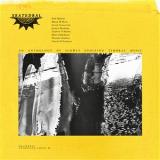
Die XKatedral Anthology Series III ist die dritte Ausgabe einer Reihe von Archivveröffentlichungen, die Musik von Komponisten zeigen, die sich mit langsam sich entwickelnder harmonischer und klanglicher Musik beschäftigen. Die hier vorgestellten Stücke konzentrieren sich auf die Verwendung von synthetischen und akustischen Klängen sowie auf algorithmische Komposition als Werkzeuge für präzises Arbeiten im Bereich der spektralen Erforschung. Dieses Doppel-Vinyl-Set erscheint anlässlich des zehnjährigen Jubiläums des Labels und enthält Werke aus den Jahren 2014 bis 2025. Es wird zusammen mit Neuauflagen der XKatedral Anthology Series I-II veröffentlicht. "My Falling Sinks" von Kali Malone ist eine sparsame, absteigende Melodie für justierte Orgel, Cello und Akustikgitarre mit Lucy Railton und Stephen OüfMalley. Das Stück ist eine kompositorische Skizze in septimaler reiner Stimmung, die 2021 während eines Aufenthalts in La Becque auf einer experimentellen Stimmorgel in La Temple de La Tour-de-Peilz entstanden ist. ,Empyrean Flare" von Maria W Horn wurde 2022 für ,The Dawn Chorus" der Choreografin Stina Nyberg komponiert. Dieses Stück nutzt die von Arvo Pärt entwickelte Tintinnabuli-Technik, um vier Supersaw-Oszillatoren in langsamen diatonischen Arpeggios zu animieren, die um eine Moll-Tonika-Dreiklang kreisen, und destabilisiert das harmonische Gerüst durch Glissandi und verstärkt die Summe seiner Teile durch analoge Bandsättigung. ,Tessellation" von David Granstrom wurde im Sommer 2017 mit generativen Synthesemethoden komponiert. Die musikalische Periodizität und harmonische Bewegung, die in dem Stück zu hören sind, entstehen durch feste synthetisierte Bandschleifen, die einen Raum zwischen gegensätzlichen Welten erkunden. "To Whoever Shall Inherit the Earth" ist das erste Solostück von Jessica Ekomane und entstand laut der Komponistin fast zufällig. Das Werk wurde vor einem Jahrzehnt spät in der Nacht aufgenommen und fängt einen flüchtigen, zerbrechlichen und unwiederholbaren Moment ein, der genau so festgehalten wurde, wie er sich ereignet hat. Smoking Mother von Stephen OüfMalley wurde für Gisele Vienneüfs Der Teich / LüfEtang von Robert Walser geschaffen. Es wurde 2018 während eines Aufenthalts im SMEM-Synthesearchiv in Freiburg komponiert und im August 2020 bei EMS produziert. Das Stück greift auf Werke von Zia Mohuiddin Dagar, Krzysztof Penderecki und Popol Vuh zurück und erkundet gleichzeitig die Wurzeln des Minimalismus. ,Att boja sjalarna" von Mats Erlandsson wurde 2018 komponiert und ist Teil von ,On Eternity", einer Sammlung von vier Texten und vier zehnminütigen Kassettenloops, die 2021 von Irrlicht Forlag als limitierte Box-Set-Edition veröffentlicht wurde. Dieses Werk enthält Darbietungen von Gaianeh Pilossian und Sara Fors, jeweils auf der Violine und mit Gesang. This will be my last piece for organ wurde 2025 von Theodor Kentros komponiert und nutzt Gruppen von Cluster-Oszillatoren durch resonante Rückkopplung, um die schwankenden Frequenzen zu synthetisieren, die beim Verstimmen einer Orgel im physischen Raum zu hören sind. "Fault Lines" wurde von Daniel M Karlsson mit generativen Methoden komponiert, wobei ein deterministischer und endlicher Output für diese Veröffentlichung festgelegt wurde. Dieses Stück enthält Gesangsdarbietungen von Sara Fors, Ansis B.ti. und Art.rs C.ukurs.
This item has not yet been released. You can pre-order the product now.

Luciano Cilio was born in Naples, Italy, in 1950. He studied music and architecture and, in the late '60s, collaborated with local artist Alan Sorrenti, American expat Shawn Phillips and various avant-garde theater groups. A virtuoso guitarist and self-taught composer, Cilio released only one LP before his untimely death at the age of 33.
Dialoghi Del Presente (1977) is a work like no other, one that sounds both ancient and ahead of its time. Produced by Renato Marengo, it features a series of muted tableaux for strings, woodwinds, guitar, chorus, piano and percussion. Cilio carves out a space where subtle, repetitive phrases yield – almost imperceptibly – to breathtaking silence.
As Jim O'Rourke writes, "These recordings sound as if they were to please no one but himself; they feel self-contained, introspective, and determined ... You can feel in the music a sort of necessity that can be rarely found, like in This Heat's debut or Nick Drake's Pink Moon."
While each subsequent "quadro" grows slightly more abstract, Cilio draws the listener into an expansive, pastoral soundscape. The closing piece, "Interludio," begins with a plaintive guitar, which is joined by haunting strings and woodwinds before concluding, poignantly, as the album began, with Cilio and his guitar, alone once more.
Superior Viaduct's edition reproduces the original sleeve design. Recommended for fans of Johann Johannsson, Talk Talk's Spirit of Eden, Arvo Part and Popol Vuh.
expected to be published on 06.03.2026
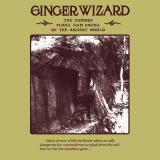
Crypt of the Wizard is proud to present Ginger Wizard - The Curious Flora and Fauna of the Ancient World on vinyl and digital formats.
About ten years ago in a record store in Prague, the Ginger Wizard discovered a copy of Bo Hansson’s Lord of the Rings LP. Although initially unfamiliar with the record, the reference to Tolkien’s masterwork and the incredible cover art drew him in and, rather fittingly, sent him off on a journey of discovery that would reshape his creative trajectory.
Years later while working in cassette tape manufacturing, Ginger Wizard noticed that most fantasy-inspired music fell into two camps: metal and dungeon synth. With little interest in the former, but intrigued by the latter, he began writing a few songs imagining a beautifully packaged and tactile cassette tape. However, dungeon synth he soon realized was “the most boring music to make”.
So began the Ginger Wizard’s own mythological discography. In 2022 came The Feast for the Dead King and Other Musical Themes recorded at home in a cold kitchen, is conversely an album full of warmth drawn from sheer exploration. A year later Can I Choose My Own Psychopompos? was recorded for the legendary Stoned to Death label - a 7” séance of semi-improvised noise and melody featuring allies from the Ginger Wizard’s live backing band The Peter Jacksons. The following year with Bathysburg Tales, a new approach was needed in order to keep the project interesting. Drawing inspiration from Popol Vuh and the inclusion of vocals lent by Protomartyr’s Joe Casey and Jakob Battick, a new more cinematic sound began to emerge.
Now, we present The Curious Flora and Fauna of the Ancient World marking a step into something stranger while still channeling the spirit of Bo Hansson. The new album rejects swords and sorcery for the mythology of the natural world “the ancient stuff,” he explains in the record’s insert, “has a similar taste for me as fantasy.” These songs bloom, creep, and shimmer like forgotten plants under distant suns while rooted in something real and organic. Inspired by the myths of nature rather than heroic quests, it’s an album that feels alive, equal parts archaeological dig and psychedelic garden.
Currently at work on a soundtrack for an imagined 1970s fantasy film in collaboration with The Peter Jacksons, the Ginger Wizard continues to expand his strange universe while The Curious Flora and Fauna of the Ancient World serves as a new map to somewhere ancient, beautiful, and unknown.
expected to be published on 16.01.2026

In between the folds of ceremony and commonality lies a perennial spring of musical expression.
A statement along the time continuum, or a testament to the resilient resourcefulness embedded in that truth, forms the philosophical approach of this album – the first outing of Dídac.
Studying an extensive archive of instruments, artifacts, and field recordings at the Musée d’ethnographie de Genève—a space steeped in folkloric gesture – Dídac encountered a cosmos of liturgical music and folk song. Anchored in reverance for tradition and transformation alike, this album navigates the old-world Mediterranean lore through a post-modern ambient lens, threading drone, gentle rhythm, electroacoustic textures and the crude tactility of archival material into one woven tapestry.
Under the guidance of Dr. Madeleine Leclair, Dídac was invited to work within one of the world’s most extensive ethno- musicological archives—L’AIMP. In the saturated basements and tape-lined backrooms of the museum, he submerged himself in the sounds of ritual and rural life: wax cylinders from the Eastern Mediterranean, tapes of liturgical hymn, the worn edges of communal song.
In a makeshift studio on the fourth floor of the museum, he sifted through the hours of material he collected, gradually discovering that the archive was no static source – It did not dictate; rather, it served as a companion—offering not answers, but questions. Not a beaten track, but a cluster of sonic clues and riddles. Samples do appear occasionally, tenderly interwoven into the dialogue of the songs. In Dídac’s self-titled debut, the past is not worn as ornament or kitsch; it is listened to and responded to. The museum, its archives, and the visit to Geneva became a foundational culisse of sorts, igniting a myriad of rough cuts and improvisational outtakes.
Dídac, or Diego Ocejo Muñoz, was born in Madrid in 1994 to a family of both Catalan and Castilian origin.
Brought up in a religious household, the influence of the Catholic Church innately shaped the social fabric, schooling and daily life. This lingering dominance led the adolescent Diego into a path of rejection of everything sacramental, promptly resorting to subversion in the shape of grafitti, skateboarding and underground music. Only later in life, after a rigorous venture as an acid and electro producer, the Church re-emerged before him in new light, invoking a deep fascination for its mysticism, iconography and choral tradition.
Spain in general and Catalonia in particular, has long served as a crossroads of the eastern–western Mediterranean continuum, with many of its cultures sharing aspects of way of life and ceremony. At the MEG, Diego found himself puzzled with this realization, resulting in a sonic amalgamation that reaches farther away from the rugged mountains of Catalonia than you might perceive at first encounter.
The deeply embedded memory of rite and public ceremony, religious hymn and landscape—sieved through the undercurrent of personal re-emergence, forms the emotional topography of this album. The record does not trace this landscape; it inhabits it. Its repetitive mysticism and ambient, wide-eyed gaze could possibly evoke (perhaps redundant) comparisons to artists such as Dimitris Petsetakis, or Popol Vuh’s late 70’s cinema scores.
The delicate lines between the sacred and the secular – between memory and re-invention – serve as a cipher to understanding this album in its entirety. Titles like Malpàs Mines or Pantocrator’s Portal Outro nudge toward a folkloric and devotional bedrock—places where labor and spirituality coexist, where names preserve both dust and veneration.
Nevertheless, this is far from mere nostalgia. It is a reclamation — singing alongside the spirits of the past, nurturing what still hums beneath the soil. It is an intimate reflection on tradition, rebellion, adolescence, ceremony and fantasy – a pastoral contemplation on what once was and what is to be.
Order now and we will order the item for you at our supplier.

Retinal Rivalry ist der Soundtrack zu Cyprien Gaillards neuem stereoskopischen Film Retinal Rivalry (2024). ,Es ist eine faszinierende Reise durch die deutsche Stadtlandschaft und ihre vielschichtige historische und soziale Bedeutung. Aufbauend auf seiner früheren Erforschung der skulpturalen Qualitäten dreidimensionaler bewegter Bilder geht das Werk über die Grenzen der Leinwand hinaus. Durch die Ausschöpfung des vollen Potenzials modernster Technologie bietet Gaillard eine erweiterte, geschärfte und tief bewegende neue Sicht auf die Welt um uns herum. Retinal Rivalry ist nach dem Phänomen der visuellen Wahrnehmung benannt, das auftritt, wenn das Gehirn zwei widersprüchliche Bilder gleichzeitig empfängt. Anstatt zu einem 3D-Bild zu verschmelzen, wechselt das neuronale System zwischen der Priorisierung des einen Bildes und der Unterdrückung des anderen, was beim Betrachter Verwirrung und Unbehagen hervorruft. Gaillards Film setzt sich mit diesen Komplexitäten der visuellen Verarbeitung und den Grenzen der Technologie auseinander und sammelt visuelle Informationen durch außergewöhnliche, oft augenzwinkernde Aufnahmen, die das Innere und das Äußere, das Eingeschlossene und das Verstreute sowie das Natürliche und das Gebaute miteinander verflechten. Seine Kamera nimmt ungewöhnliche Blickwinkel ein, wechselt von sanften Luftperspektiven zu einem niedrigen Blickwinkel aus der Perspektive eines Nagetiers, zu schwindelerregenden Ein- und Ausblendungen auf der knolligen Nase einer Skulptur oder zu einer langen Einstellung eines Zuges, der durch eine Landschaft fährt, und zieht uns in eine vielschichtige Erfahrung hinein, die zwischen einem schlechten Trip und unerwarteter Schönheit, die Trost spendet, schwankt. In ,Retinal Rivalry" deuten verschiedene Treppen, Spiralen und Aufzüge auf einen Zustand des ständigen Auf- und Abstiegs hin und betonen das Wechselspiel zwischen Distanz und Nähe, abgrundtiefer Tiefe und lebendiger skulpturaler Darstellung. Der Film pulsiert rhythmisch mit Bildern, die anschwellen und sich zusammenziehen, sich aufblähen und entleeren. Er manipuliert das Gefühl der Zuschauer für Tiefe, Maßstab und Textur und lässt vertraute Materialien und Orte unheimlich erscheinen, wobei er die inhärenten Ungenauigkeiten und Verzerrungen der Darstellung hervorhebt. ,Retinal Rivalry" zeichnet die gewöhnliche Welt in großartigen Details auf und versucht dabei, unter die Oberfläche der Dinge zu blicken. Der Film ist eine Darstellung von Raum und Zeit, die Darstellungsweisen destabilisiert und eine neue Hyper-Vision-Version der Realität bietet. Mit 120 Bildern pro Sekunde aufgenommen und mit derselben Geschwindigkeit projiziert - fünfmal so schnell wie im Kino üblich - fängt Gaillard mehr ein, als das menschliche Auge natürlich wahrnehmen kann. Die Filmmusik greift auf verschiedene klangliche Elemente zurück und unterstreicht so die Erforschung von Dissonanz und Synchronität. Indonesische Instrumentalmusik wird überarbeitet und mit Feldaufnahmen von rumpelnden schweren Maschinen und seltsam melodischem Würgen kombiniert. Der Soundtrack enthält auch die ersten Zeilen aus Werner Herzogs Aguirre, der Zorn Gottes (1972) sowie die dazugehörige Ouvertüre der deutschen Band Popol Vuh. Die Klanglandschaft von Retinal Rivalry steht im Kontrast zu den Bildern - was wir sehen, steht oft im Widerspruch zu dem, was wir hören. Nur in einem Abschnitt verschmelzen Ton und Bild: Ein gebrochenes Bein betätigt das Pedal einer interaktiven Orgel, um ein Stück von Johann Sebastian Bach zu spielen, das immer wieder ins Stocken gerät.
expected to be published on 31.10.2025

How does one approach the morning after a party for the end of the world? This is a question which Mamuthones had to ask themselves, in the wake of their last album for Rocket, 2018's Fear On The Corner. Nonetheless, from the aftermath of this uncertain period has risen the still more flourishing realm of From Word To Flesh - a colourful and multi-faceted creation very much befitting the outsider spirit of Rocket's new Black Hole imprint. “I believe that with this album a circle has been closed” reflects Mamuthones mainman Alessio Gastaldello. “We returned to the atmosphere of the first Mamuthones albums with the skills acquired throughout the journey, with new sounds and with new creative processes. I would say that what remains constant – and at the core of our music – is the obsessive rhythms and the search for a sonic rituality: this is for certain our trademark”. This is clear right from the curtain raiser 'Burn From Inside', which beams the emotive approach of the band through the shamanic prism of Coil's Ape Of Naples. From there, hypnotic repetition marries to abstract abrasion and mournful laments with equal finesse, as redolent of the spiritual zest of Popol Vuh and Ash Ra Tempel as the gnostic folk of Six Organs Of Admittance. Elsewhere, 'A Symmetry Of Faith' summons a union of post-punk and psychically charged folk aligned with the recent work of Bristol's Beak. The Sardinian ritual of the Mamuthones – in which sinister masked figures weighed down with cattle bells conduct a ceremonial procession to ward off evil forces - has gone on for some two thousand years, and it may be that these ghoulish avatars are engaged in a celebration of the endless cycles of death and rebirth, fortifying spirits for a new epoch. Amidst the chaos and tumult of the 2020s, the band of this name has undergone just such a change themselves, and ‘From Word To Flesh’ is the fruit of their struggle. As Alessio says “With this album I think the Mamuthones have never been so unmediated, so naked: all masks gone”
expected to be published on 18.04.2025

Last release of a productive year for Feral Child sees a fabulous mini LP from London based, Japanese Psych band BARBICAN ESTATE. Six beguiling tracks of atmospheric, occasionally acid folk flavoured, melodic > freakout shifts, taking in tips of the hat to Popol Vuh (check Miri’s beautiful vox on “Angel”), Amon Duul and fellow countrymen Acid Mothers Temple and Kikagaku Moyo amongst others. Formed in 2019, this three-piece consists of Kazuki Toneri (guitar, sitar), Miri (bass, flute, vocals), and Koh Hamada (drums, percussion). Each member is well-versed in music, film, and various other arts, drawing inspiration not only from experimental, psychedelic rock, and noise music but also from art across the world, both past and present. Their music weaves solid, architectural elements with destruction into a dark and gloomy soundscape, is often described as "dark psychedelic." They released their first album, “Way Down East”, in 2021. In 2022, they relocated to London, where they performed on UK tours and at festivals. Having already played nearly 50 live shows, they are gaining attention in the local scene. Their latest EP, "Viscum" was released in June 2024. “Barbican City of Tokyo” is a compilation of tunes previously consigned to digital release only that label head, Dom had free rein to assemble an EP from, which luckily the band wholeheartedly agreed upon! …and all four tracks appear on vinyl here for the first time. This release hopefully cements a growing interest in the band’s fabulous music, and early reviews of both the LP here and their live shows are overwhelmingly positive.
expected to be published on 17.01.2025

»Nuts of Ay«, the thirteenth album by the Berlin-based electronic pop duo Tarwater (Ronald Lippok and Bernd Jestram), is their first in a decade, since 2014’s »Adrift«. Beautifully poised and smartly dressed, it's an album that draws Tarwater’s various pasts into a high-definition present, while bringing the duo, yet again, into productive dialogue with all kinds of fellow travellers.
Tarwater’s music has always been marked by a hypnotic pop-ness, but that’s particularly evident on »Nuts of Ay«, where a song like »Hideous Kiss« weaves together jangling guitar, pastoral flute, and flittering electronics into a gem-like construction. While the lyrics of »Hideous Kiss« are written by the duo, »Nuts of Ay« also continues a longstanding Tarwater tradition of recasting the words of others in their own mould. This time, their remit is broad: poetry from Derek Jarman (»All Nuns«) and Millner Place (»Trapdoor Spider«); lyrics from Jean Kenbrovin (»I’m Forever Blowing Bubbles«), the late Shane MacGowan (»USA«) and, again, John Lennon (»Everybody Had a Hard Year«).
This cast of found and borrowed lyricists also finds collaborative echo in the guest musicians dotted throughout »Nuts of Ay«. Schneider TM turns up on the lovely, Felt-like »Spirit of Flux«, where guitars channel the tangled reveries of Vini Reilly and Maurice Deebank into lush pop. Carsten Nicolai joins, as Alva Noto, dappling »On Waves and Years« with intimate glitching textures; he also provides the album cover art. Elsewhere, Masha Qrella appears on »Down Comes the Goose«, and actor Lars Rudolph pitches in for »USA«.
It may have been ten years since the album's predecessor, but Lippok and Jestram have kept active with other projects. They’ve collaborated with Masha Qrella, Immersion, and Iggy Pop; worked on radio plays with Kai Grehn, some based on the writing of Nick Cave (»The Sick Bag Song«, featuring Tilda Swinton, Paula Beer and Alexander Fehling) and William S. Burroughs (»The Cat Inside«); and made music for several radio-tatorts (radio plays based on »Tatort«, a long-running German police TV series) by playwright Tom Peuckert.
Both voracious and committed in their creative energies, Jestram and Lippok report back from these experiments with »Nuts of Ay«, one of their most compelling, deeply lustrous, dreamlike albums yet. They say there was no concept for the album, which is surprising, perhaps, given its holistic mood, explaining it »grew together like a coral reef in the studio over a period of several years«. There’s something to be said for letting an album gather and mutate naturally, without an overarching framework in place, and »Nuts of Ay« certainly feels like an unforced collection of material that nonetheless inhabits a similar space, one where guitars twist like driftwood next to amorphous, aqueous electronics, Lippok’s droll yet completely convincing vocal delivery riding songs that pulse and plume with curious, unpredictable rhythms.
But you can also hear elements – submerged but still present – of other music that’s inspired the duo: they’ve drawn some connections for us with psychedelic folk, Bowie in Berlin, Burial, and the film music of Popol Vuh and Krzysztof Komeda. This music shares a strong sense of place – whether in the world, or the mind – and the twelve songs on »Nuts of Ay« have such similar presence; a shared mood, a shared world, a shared sense of the possibilities of what electronic pop music could, and should, be. A bold and brave pop experiment.
Artwork by Carsten Nicolai
Mastering by Bo Kondren, Calyx Berlin
»Trapdoor Spider«, »On Waves and Years« & »Breaking Day«: lyrics by Milner Place
»All Nuns«: lyrics by Derek Jarman
»USA«: lyrics by Shane MacGowan
»Down Comes the Goose«: lyrics from a traditional song
»Forever Blowing Bubbles«: lyrics by Jaan Kenbrovin
»Everybody Had a Hard Year«: lyrics by John Lennon
Order now and we will order the item for you at our supplier.
