Belgian label Music Man Records presents Boccaccio Life 1987-1993, a new compilation offering a fresh perspective on the legacy of the iconic Belgian club Boccaccio - often associated with the short-lived New Beat movement. The 40-track compilation highlights the raw and futuristic early house and techno sounds that were heard in the pioneering club.
Located in rural Destelbergen (Belgium), just a stone's throw from Ghent, Boccaccio has secured its place among legendary venues like Paradise Garage in New York and The Haçienda in Manchester. Its bold fusion of emerging electronic genres such as New Beat, Acid, House, and Techno was way ahead of its time, drawing music lovers and clubbers from across Belgium and beyond. Sundays at Boccaccio were unlike anywhere else-offering sounds you couldn't hear anywhere else.
Boccaccio Life 1987-1993 is carefully curated by resident DJ Olivier Pieters and club regular Stefaan Vandenberghe, standing as the ultimate testament to a club that was more than just a venue. For those who experienced it, it was a community - a way of life. Hence the club's full name: Boccaccio Life.
This compilation stands as a testament to an innovative time in electronic music, capturing the raw, futuristic sounds of early house and techno. It sheds light on another side of Boccaccio, one that goes far beyond the short-lived New Beat scene. A carefully curated selection of 40 tracks, resonating with those who were there by offering familiar classics, while also reaching a new generation-those who never experienced it firsthand.
With tracks from Blake Baxter, Virgo, Frankie Knuckles, Tyree, and A GuyCalled Gerald, the unmistakable influence of black American pioneers is clear-the originators of the first analog house and techno sounds. On the other hand, UK sound innovators such as The Orb and LFO bring both sharp textures and rough breakbeats to the table.
Club staple tracks include dreamy excursions from Roger Sanchez under his Egotrip moniker, the relentless basement house of Circus Bells by Robert Armani on Dance Mania, an uplifting take on a hip-house cut from The D.O.C. (Portrait of A Masterpiece in the CJ Ed-Did-It Mix), a timeless remix of UK Formation's Age of Chance from 1994, and an alternate take on The Tape by Boccaccio club regular and Belgian producer Frank De Wulf, taken from his B-Sides project.
While not always the obvious hits, these tracks have gracefully withstood the test of time, and were exclusive to Sundays at Boccaccio. Now, they are finally available to experience together in one collection,offering a timeless snapshot of a unique era.
Cerca:port
Belgian label Music Man Records presents Boccaccio Life 1987-1993, a new compilation offering a fresh perspective on the legacy of the iconic Belgian club Boccaccio - often associated with the short-lived New Beat movement. The 40-track compilation highlights the raw and futuristic early house and techno sounds that were heard in the pioneering club.
Located in rural Destelbergen (Belgium), just a stone's throw from Ghent, Boccaccio has secured its place among legendary venues like Paradise Garage in New York and The Haçienda in Manchester. Its bold fusion of emerging electronic genres such as New Beat, Acid, House, and Techno was way ahead of its time, drawing music lovers and clubbers from across Belgium and beyond. Sundays at Boccaccio were unlike anywhere else-offering sounds you couldn't hear anywhere else.
Boccaccio Life 1987-1993 is carefully curated by resident DJ Olivier Pieters and club regular Stefaan Vandenberghe, standing as the ultimate testament to a club that was more than just a venue. For those who experienced it, it was a community - a way of life. Hence the club's full name: Boccaccio Life.
This compilation stands as a testament to an innovative time in electronic music, capturing the raw, futuristic sounds of early house and techno. It sheds light on another side of Boccaccio, one that goes far beyond the short-lived New Beat scene. A carefully curated selection of 40 tracks, resonating with those who were there by offering familiar classics, while also reaching a new generation-those who never experienced it firsthand.
With tracks from Blake Baxter, Virgo, Frankie Knuckles, Tyree, and A GuyCalled Gerald, the unmistakable influence of black American pioneers is clear-the originators of the first analog house and techno sounds. On the other hand, UK sound innovators such as The Orb and LFO bring both sharp textures and rough breakbeats to the table.
Club staple tracks include dreamy excursions from Roger Sanchez under his Egotrip moniker, the relentless basement house of Circus Bells by Robert Armani on Dance Mania, an uplifting take on a hip-house cut from The D.O.C. (Portrait of A Masterpiece in the CJ Ed-Did-It Mix), a timeless remix of UK Formation's Age of Chance from 1994, and an alternate take on The Tape by Boccaccio club regular and Belgian producer Frank De Wulf, taken from his B-Sides project.
While not always the obvious hits, these tracks have gracefully withstood the test of time, and were exclusive to Sundays at Boccaccio. Now, they are finally available to experience together in one collection,offering a timeless snapshot of a unique era.
Belgian label Music Man Records presents Boccaccio Life 1987-1993, a new compilation offering a fresh perspective on the legacy of the iconic Belgian club Boccaccio - often associated with the short-lived New Beat movement. The 40-track compilation highlights the raw and futuristic early house and techno sounds that were heard in the pioneering club.
Located in rural Destelbergen (Belgium), just a stone's throw from Ghent, Boccaccio has secured its place among legendary venues like Paradise Garage in New York and The Haçienda in Manchester. Its bold fusion of emerging electronic genres such as New Beat, Acid, House, and Techno was way ahead of its time, drawing music lovers and clubbers from across Belgium and beyond. Sundays at Boccaccio were unlike anywhere else-offering sounds you couldn't hear anywhere else.
Boccaccio Life 1987-1993 is carefully curated by resident DJ Olivier Pieters and club regular Stefaan Vandenberghe, standing as the ultimate testament to a club that was more than just a venue. For those who experienced it, it was a community - a way of life. Hence the club's full name: Boccaccio Life.
This compilation stands as a testament to an innovative time in electronic music, capturing the raw, futuristic sounds of early house and techno. It sheds light on another side of Boccaccio, one that goes far beyond the short-lived New Beat scene. A carefully curated selection of 40 tracks, resonating with those who were there by offering familiar classics, while also reaching a new generation-those who never experienced it firsthand.
With tracks from Blake Baxter, Virgo, Frankie Knuckles, Tyree, and A GuyCalled Gerald, the unmistakable influence of black American pioneers is clear-the originators of the first analog house and techno sounds. On the other hand, UK sound innovators such as The Orb and LFO bring both sharp textures and rough breakbeats to the table.
Club staple tracks include dreamy excursions from Roger Sanchez under his Egotrip moniker, the relentless basement house of Circus Bells by Robert Armani on Dance Mania, an uplifting take on a hip-house cut from The D.O.C. (Portrait of A Masterpiece in the CJ Ed-Did-It Mix), a timeless remix of UK Formation's Age of Chance from 1994, and an alternate take on The Tape by Boccaccio club regular and Belgian producer Frank De Wulf, taken from his B-Sides project.
While not always the obvious hits, these tracks have gracefully withstood the test of time, and were exclusive to Sundays at Boccaccio. Now, they are finally available to experience together in one collection,offering a timeless snapshot of a unique era.
José James just can’t leave the ’70s alone. Or maybe it’s the other way around. The singer, songwriter, bandleader, and producer was born in 1978, after all, but over his past 17 years of fundamentally forward-looking, blessedly mercurial music, he keeps getting pulled back in. His 2013 Blue Note breakthrough No Beginning No End revisited the hooky, funky, jazz-streaked songcraft of the time through a modern crate-digger’s ears. On 2020’s No Beginning No End 2 — James’ debut on his own Rainbow Blonde Records — he went back through the portal with a small army of fellow celebrated eclecticists. Just last year, there was the album 1978, a richly layered love letter to said year that felt deep, luxe, and cool. It’s as if — vested with the restless fluidity of jazz, the tuned-in sensitivity of soul, and the revisionist grit of hip-hop — he is trying to play his way into the exact moment when, culturally speaking, everything was about to change.
“I'm still so fascinated by the tension in that era of all these seemingly clashing things happening at once,” says James. “The loft scene, the jazz scene, Elton and Billy, Bob Marley, the Isleys, Funkadelic, disco being this behemoth in a way I don't think we even understand today… And then there’s where everybody went from there — into hip-hop, into punk rock, exploding jazz. It's like a summation of the ’70s, and it's about to transform. It's the peak of the rollercoaster.”
Literally breaking into history is impossible, of course, but James’ new LP, 1978: Revenge of the Dragon, does feel like breaking through or bursting out. In loving contrast to its predecessor, the fresh set plays hot, like a Friday night out at the Mudd Club in its prime. Though he’s dreamt up albums with collaborator counts approaching the dozens, James gathered a tight crew for this one. Himself and Taali on vocals. BIGYUKI on keys and analog synth. Jharis Yokley on drums. Bass split between David Ginyard (Blood Orange, Terence Blanchard) and Kyle Miles (Michelle Ndgeocello, Nick Hakim). And an all-star brass lineup: Takuya Kuroda on trumpet, young lion Ebban Dorsey on alto sax, and genre-spanning ronin Ben Wendel on tenor sax. They set up in Dreamland Studios near Woodstock, a restored 19th century church, and recorded live to tape, two tracks, drums pushed to the max — “a small homage to the rise of punk,” says James.
In that place out of time, the band laid down a handful of choice covers and some wild originals, like the single “They Sleep, We Grind (for Badu),” a decades-collapsing cut powered by an ugly groove. Steeped in dub, funk, and sampledelia, James chants an artists’ mantra (“They sleep, we grind / Man, f--- your nine to five”), makes lyrical callouts to Marley and Nas, and channels everything from George Clinton to J Dilla, not to mention the earthy mysticism of Erykah Badu. In 2023, James released and toured his Badu covers LP, On & On. “Living in her musical house for a year was transformative,” he says. “This is my summary of everything I learned through her, tying it to this idea that artists move differently. We are in society but we are outside, too, looking out and in at the same time. Our hours are different, our schedules are different.”
To that point, James and co. actually began each day in the woods, filming the album’s visual companion piece, Revenge of the Dragon, an honest-to-God kung-fu short complete with bad overdubs, training montages, camera tricks, and plot twists. The film pays tribute not only to the genre’s greatest year (1978, of course), but also its cinematic exchange with Blaxploitation, plus James’ own recent Shaolin training and admiration for Bruce Lee as a culture-bridging force (the LP’s cover recreates an iconic shot of Lee). On top of that, says James, “We had this immediacy in the studio. Live, one take, no overdubbing. I feel like that's where the martial arts piece comes in, where it's about being relaxed but also aware, and there's immediacy in your movements.”
Across the project, tribute takes that refracted, multifaceted form. From his personal late-’70s playlist, James chose four covers reflecting the era’s disco-fied churn: the MJ-meets-Quincy dancefloor masterpiece “Rock With You”; Herbie Hancock’s prescient vocoder fever dream, “I Thought It Was You”; and a pair of Black-radio hits from two bands whose fans typically wouldn’t have been caught dead in the same stadium: “Miss You” by the Rolling Stones and the Bee Gees’ “Inside and Out.” All of it gets filtered through a contemporary Black (and beyond) lens, coming out loud, free, funky, and buzzing — dynamic, yes, but also of a joyous piece.
1978: Revenge of the Dragon transports you to a crowded room where all this is playing out in real time. That feeling is helped out by opener “Tokyo Daydream,” a bass-driven swan dive into a neverending night of boutique bar-hopping and neon revelry. Later, “Rise of the Tiger” finds James bringing rare braggadocio to a propulsive track with growling synth lines and a hunger for whatever comes next. And then there’s the closer, “Last Call at the Mudd Club,” which with its upbeat energy and string of Stevie-inspired pickup lines, evokes the sort of unabashedly elated track the DJ throws on at 3:56 a.m. before everyone is kicked out. “I wanted to leave the album on that note,” says James. “If this was a night out in New York, this would be the last thing you hear before you get in that taxi and go back to your apartment.” Or, perhaps, back to 2025.
- A1: New Flower! (Feat. Leon Thomas)
- A2: Feels So Good
- A3: Sage Time
- A4: I Think It’s You
- B1: Cool About It (Feat. Lido)
- B2: History (Feat. Waxahatchee)
- B3: Vacay
- B4: Familiar
- C1: Doing The Best I Can
- C2: Temptations
- C3: Be Easier On Yourself (Feat. Yebba)
- C4: Raspberry Kisses
- D1: 13Mos
- D2: Changer (Feat. Chlothegod)
- D3: Arc De Triomphe
- D4: Images (Feat. 454 & Toro Y Moi)
Purple[29,83 €]
“13 Months of Sunshine” is more than just a slogan for Aminé. Ethiopia’s marketing campaigns of the 60s and 70s used the phrase to entice Western visitors to the country, but for the Portland-born rapper raised by an Eritrean father and an Ethiopian mother, it holds deeper meaning. “13 Months of Sunshine,” a phrase adorned on posters in homes of his aunts and uncles, cousins, and family friends, became something more, a declaration of shifting perspectives and a reinvigorating jolt to one of rap’s most celebrated discographies. He's returned with a new offering, featuring artists as varied as 454, Toro y Moi, and Waxahatchee, that will go down as one of the most exiting rap releases of 2025.
After the release of 2017's Chroma, Buzz Kull (real name Marc Dwyer), has returned with his sophomore album. Traversing EBM, darkwave and goth sounds with ease, New Kind Of Cross traverses much darker waters than Dwyer’s last effort, speaking to the rapid change and tension at play in Dwyer’s own life.Marc spends a good portion of each year in a new city every night - and when settled in Sydney, is constantly between jobs. It makes perfect sense that New Kind Of Cross deals explicitly with themes of isolation, introversion and sometimes anger. The music on this record is heavy and unforgiving. Throughout the past, Dwyer has refined his sound to a knife's edge, proving his capabilities within the realm of darker music time and time again.
- A1: Watch My Hands
- A2: Sugar Water (Feat. Quelle Chris And Anjimile)
- A3: Crooked Stick (Feat. Ghais Guevera And Alfred.)
- A4: Recitatif (Feat. Teller Bank$)
- A5: Run, Run, Run Pt. Ii
- A6: We're Outside, Rejoice!
- B1: All The Loved Ones (What Would We Do???) (Feat. Icecoldbishop And Pink Siifu)
- B2: F.f.o.l. (Feat. Teller Bank$)
- B3: Listen Gentle
- B4: Magic, Alive!
- B5: Could've Been Different
McKinley Dixon’s Durchbruch begann in 2021 mit dem vielgeliebten "For My Mama and Anyone Who Look Like Her" und setzte sich 2023 mit "Beloved! Paradise! Jazz!“ fort, beides instrumentenreiche Glanzleistungen im Geschichten erzählen, die sich mit dem Trauma und der Trauer über den Verlust eines jungen Freundes befassen.
Das neue nicht weniger bedeutungsvolle Album "Magic, Alive!“ setzt in vielerlei Hinsicht die Arbeit seiner Vorgänger fort: Es ist die Geschichte von drei Kindern, die ihren besten Freund verlieren sowie eine umfassende Betrachtung dessen, was Magie im Leben ausmacht. Kann Magie der Glaube an etwas sein, das wir nicht sehen können, genauso wie das Vertrauen in Wunder, Zaubersprüche und Portale für etwas, das jenseits unserer eigenen Erfahrung liegt? "Magic, Alive!" wurde ins Leben gerufen, als Dixon eine unerwartete E-Mail vom englischen Produzenten Sam Yamaha erhielt. Dixons frühe Beats hatten Yamahas eigene Arbeit inspiriert. Es dauerte nicht lange, und Dixon traf sich mit ihm in London und wühlte sich durch sein Archiv, um eine Fülle von Beats zu finden, die mit seinem eigenen Ansatz und dem aufkeimenden Konzept für "Magic, Alive!" übereinstimmten. Im Juli 2024 kehrte Dixon in seine Heimatstadt Richmond im US-Bundesstaat Virginia zurück und brachte eine Reihe von Sounds von Sam Yamaha und Koff mit, mit dem er bereits zusammengearbeitet hatte. Zusammen mit einer Reihe von Gästen und Freund*innen, von der Sängerin Anjimile und dem einfallsreichen Alabama-Emcee Pink Siifu bis hin zu Posaunist Reggie Pace und Harfenist Eli Owens, hat Dixon diese Beats weit aufgespalten und mit Hooks, Bläsersätzen und Gastauftritten versehen. Außerdem hat er mehrere Songs aneinandergereiht, so dass sich "Magic, Alive!" wie ein Traum bewegt oder zumindest wie eine alternative Realität, in der neue Regeln herrschen.
During a month living with the Wampís in the Amazon Rainforest, Aboutface and the Wampís community collaboratively captured field recordings, music instrumentation and traditional Wampis Nampets – ancient songs sung from the perspective of animals living in their rainforest environment.
These recordings then informed 4 improvised performances to articulate the story of the 4 Nampet songs from within each animal's habitat, to depict nature and culture as inseparable, and to propose that humanity is not exclusive to humans but a multinaturalist characteristic available to all living organisms.
This is the first project of its kind in Wampís history and contains sound recordings of biodiversity that no longer exist due to deforestation.
Indigenous-managed Amazonian rainforests sequester around 340 million tonnes of CO₂ each year—equivalent to the UK’s annual fossil fuel emissions. In stark contrast, non-Indigenous-controlled forests have become sources of carbon emissions, therefore accelerating our global climate crises. Among the vital custodians of these precious ecosystems are the Wampís people, who protect 1.3 m ha of precious rainforest territory currently being decimated by mining for gold. This devastating practice is currently decimating Wampís territory, destroying their river habitats, leaving toxic methylmercury pollution that strips all biodiversity, contaminates the food chain, and causes widespread harm.
100% of all sales revenues from this release will directly go to the Wampís to protect their rainforest territory, to fund Wampís-led eco-initiatives against illegal mining, alongside ways to preserve Wampís cultural heritage– embedded in their songs, art and crafts, central to their conservation of their territory called The Iña Wampisti Nunke: A system of life that encompasses reciprocal relationships between humans, plants, animals, and spirits, central to the harmony of all its multi-dimensional ecology– which they term Tarimat Pujut.
For more project information, a short essay is provided alongside a nonstop-listening version of the album as part of the free Bandcamp download with every LP.
Credits
Nampet songs
Kutir, Wancha and Pinchichi by Elizabeth Huampankit Najamtai.
Manchi by Fernando Ijisam Tsakim.
Acoustic Percussion by Wampís band Guayabita
Fernando Ijisam Tsakim, Edilberto Ijisam Tello, Larry Tello Huampankit, Jose Luis Cahuata Pipa, Tedy Tello Cahuata, Heyner Tello Cahuata, Eli Artista Antonio, Never Tello Huampankit
Violin by Taro.
Peruvian bamboo quena, classical flute, acoustic guitar, electronics, composition and arrangement by Aboutface.
Original portrait painting of Fernando Ijisam Tsakim by Nyran Loomcal.
All other artworks, analogue photography and design by Aboutface.
Rainforest field recordings identified and collected by The Wampís of Guayabal and Aboutface.
An album announcement that was fifteen years in the making, GRAMMY®-winning, progressive music titans Dream Theater return in 2025 with their sixteenth studio album, “Parasomnia”. The album marks the first album featuring the iconic lineup of vocalist James LaBrie, guitarist John Petrucci, bassist John Myung, keyboardist Jordan Rudess and drummer Mike Portnoy since 2009’s “Black Clouds & Silver Linings”. “Parasomnia” was produced by Petrucci, engineered by James ‘Jimmy T’ Meslin, and mixed by Andy Sneap. Hugh Syme returns once again to lend his creative vision to the cover art. From the opening track “In The Arms Of Morpheus” to the closer of “The Shadow Man Incident,” Dream Theater returns with a collection of songs that showcase what has earned the band a loyal following for four decades. Clocking in at 71 minutes, “Parasomnia” takes the listener on a musical journey that has become synonymous with the band since the beginning of their career.
As several limited vinyl versions are already sold out, the album is now being released as a black and white marbled 2LP in a gatefold cover with LP booklet.
Mit 'Under a Familiar Sun' veröffentlicht The Vernon Spring alias Sam Beste ein faszinierendes Album zwischen Jazz, Ambient, experimentellem Pop und elektronischem Songwriting. Beste, einst Pianist in Amy Winehouse’ Band und Kollaborateur von u. a. MF DOOM, Joy Crookes und Beth Orton, entfaltet hier ein vielschichtiges Werk voller emotionaler Tiefe und klanglicher Finesse.
Entstanden in seinem Heimstudio in Brighton, verarbeitet das Album persönliche Themen wie Vaterschaft, Verantwortung und Selbstverortung in einer instabilen Welt - getragen von Beste’s charakteristischem, improvisationsnahem Klavierspiel und feinfühliger Produktion. Mitwirkende wie Autor Max Porter (Grief is the Thing with Feathers), Cellistin Kate Ellis und die in Brooklyn lebende Künstlerin aden verleihen dem Album zusätzliche Tiefe.
Ein durchkomponiertes, atmosphärisches Werk mit klarer Handschrift - für Fans von Bon Iver, James Blake, Nils Frahm oder Moses Sumney.
Running some cranky, tempestuous currents on the latest, courtesy of Berlin’s Okain.
A quartet of the meanest cuts to grace the label for a minute as he pulls no punches on propulsion. Hurtling through the temporal plane at break-neck speed.
Proper strapping accelerators rooted somewhere between third portal freak-out and girder-strength tech house flex. All four built like a brick shithouse, but the foundations have given out and we’re falling down a wormhole. Transcending epochs and realities with one foot in the free party and another in the big room.
Organ synth, searing 303 and lysergic flourish in abundance. Synths darting, drums impeccable.
Trippier than we’ve come to expect from the Talman Records founder, but no diminishing returns on dancefloor potency.
The Understated Debut That Launched a Peerless Career: Bob Dylan Is the Clearest Connection to the Singer-Songwriter's Folk Roots
Pressed on MoFi SuperVinyl for Reference Playback: Mobile Fidelity 33RPM SuperVinyl Mono LP Features the Direct Sound Dylan Intended
1/4" / 15 IPS analogue mono master to DSD 256 to analogue console to lathe
Bob Dylan's self-titled 1962 debut is as understated of an entrance as any significant musician as ever made. Well-versed in American roots music, Dylan simultaneously pays homage to tradition and extends it by putting his own stamp on classic material that metaphorically functions as the soil of contemporary songs and styles. Free of ego, and performed with masterful conviction, Bob Dylan ranks with the initial efforts of giants like Elvis Presley and the Rolling Stones.
Nodding to Woody Guthrie and re-imagining Blind Lemon Jefferson's "See That My Grave Is Kept Clean," Dylan straddles the past and future. He authoritatively displays the ability to handle weighty topics such as death, sorrow, and lamentation with the vaudeville flair, bluesy mannerisms, and poignant command of an artist three times his then-20-year-old age.
Sourced from the original master tapes, housed in a Stoughton jacket, and pressed on MoFi SuperVinyl at Fidelity Record Pressing, Mobile Fidelity's numbered-edition 180g 33RPM mono SuperVinyl LP brings the contents of this seminal release as close as they've ever come to live-in-the-studio quality. Transparent to the source, Dylan's voice, acoustic guitar, and harmonica come across with exceptional realism — the "husk and bark" to which Robert Shelton referred in his legendary New York Times review of a Dylan appearance at Gerde's Folk City — courtesy of the format’s nearly non-existent noise floor, groove definition, and quiet surfaces.
Heard in the original mono configuration, Dylan’s vocals are in the heart of the musical action and as one with the accompaniment. This reissue paints an incredibly accurate portrait of the concrete mass of sound that features no artificial panning and offers a straight-ahead immersion into the music producer John Hammond recorded in just two days in November 1961.
Though much has been made of the commercial indifference that greeted the album upon its low-key release, focusing on sales figures and the reaction of a public not yet hip to Dylan's name miss the forest for the trees. Distinguished from the era's other folk efforts by way of the singer-songwriter’s determination, brazenness, and lived-through-this worldliness, Bob Dylan lays the groundwork for the path he'd soon trailblaze and everyone else would follow.
As Dylan scholar and pop-culture critic Greil Marcus observed in 2010: "Everybody knew Joan Baez and the Kingston Trio; if you knew Bob Dylan, you knew something other people didn't, something that soon enough everybody had to know. Within a year, an album could put an adjective in front of the singer's name as if it were already common coin."
Mono is how almost everyone first heard Dylan’s opening salvo. A career like none other starts here.
MoFi SuperVinyl:
Developed by NEOTECH and RTI, MoFi SuperVinyl is the most exacting-to-specification vinyl compound ever devised. Analog lovers have never seen (or heard) anything like it. Extraordinarily expensive and extremely painstaking to produce, the special proprietary compound addresses two specific areas of improvement: noise floor reduction and enhanced groove definition. The vinyl composition features a new carbonless dye (hold the disc up to the light and see) and produces the world's quietest surfaces. This high-definition formula also allows for the creation of cleaner grooves that are virtually indistinguishable from the original lacquer. MoFi SuperVinyl provides the closest approximation of what the label's engineers hear in the mastering lab.
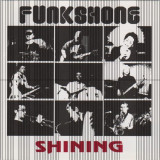
This is a single taken from UK jazz-funk outfit Funkshone's debut album which features a cover of the classic free-soul anthem 'I Believe In Miracles' by the Jackson Sisters. It's a raw and direct funk-soul sound that has been increasingly popular in recent years with champions like Floating Points often weaving it into his sets. On the B-side, they offer a freshly recorded take on 'Panama' by Roy Porter Sound Machine, which was previously only found on select CD editions. It is powered by an explosive drum break that hits with near-manic intensity from the very first beat and is a nice driving counter to the soulful A-side.
- Family Portrait
- Egon & Gertie
- First Self-Portrait Series
- Mime Van Osen
- Second Self-Portrait Series
- Wally, Egon, & Models In The Studio
- Promenade
- Third Self-Portrait Series
- Egon, Edith, & Wally Meet
- Egon & Wally Embrace And Say Farewell
- Egon & Edith
- Second Family Portrait
Originally released in 1996 on Quarterstick Records, Music for Egon Schiele is the soundtrack to a piece of dance and theater that was debuted by the Itinerant Theater Guild, May 18, 1995, in Chicago. Based on the life of the romantic and controversial Viennese painter, Egon Schiele was written and directed by Stephan Mazurek, who headed the group of performing artists. Rachel Grimes composed this music and performed it with two string musicians during the run of the performance. The Rachel's began recording in April of 1991 in Baltimore, MD, under the direction of Christian Frederickson and Jason Noble (Rodan, Shipping News). Subsequently, they met and became close friends with Rachel Grimes. In September of 1994 after a few more city moves, band break-ups, and general melancholy they decided to become a full time band and complete their first record for Quarterstick Records, Handwriting. Music for Egon Schiele is their second LP and contains a more stripped down and immediate musical focus. These songs are not sparse, they're beautiful. They build, they crash, and they make you wish you knew more about life and they mysteries its holds.
- Apartment Life
- The Machinist
- The Men Are Fighting
- Lakeland
- Seven And Seven
- Over & Over, Pt. 1
- Bells And Bells
Fit for Consequences: Original Recordings, 1984–1987 is the first ever archival release from Repetition Repetition, the “two-man electric minimalist band” consisting of Ruben Garcia and Steve Caton hailing from Los Angeles in the mid 1980’s. Repetition Repetition’s unique blend of cosmic art-rock minimalism / maximalism was self-released across a series of cassettes produced in micro editions, and while garnering the attention and participation of luminaries such as Harold Budd, remained under the radar during the band’s existence. Fit for Consequences: Original Recordings, 1984–1987 collects select material from across the duo’s catalog.
It was over a plate of Mexican breakfast food when Ruben Garcia and Steve Caton first told Harold Budd of Repetition Repetition and the worlds they intended to explore by respective way of synthesizers and guitars --- a rendezvous instigated by the former’s fan mail to the legendary composer. If the upstarts entered this restaurant from a one-way street of admiration, they would leave with not only Budd’s interest but, sometime later, a blessing in the wake of many hours shared by the three in Garcia’s Los Angeles home recording studio: “This is going to be difficult, but God help them, I think they’re great,” noted Budd in a USC lecture in 1985. Now several degrees removed from prior rock music aspirations, the real game was afoot.
Between 1984 and 1988, Repetition Repetition operated within something akin to the underground of the experimental underground, although even that designation perhaps overstates the case. The duo’s sparse output consisted of three cassettes self-released on Garcia’s Third Stone Music label: Repetition Repetition (1985), Lakeland (1987), and The Machinist (1987). Their songs would also be included during this period on Trance Port Tapes’ vital scene-scanning compilations assembled by A Produce. Live performances occurred with similar infrequency, but Garcia and Caton counted converts in quality over quantity, numbering among them the aforementioned Budd, a Chambers Brother, and, judging by a memorably drop-jawed reaction following a rare Repetition Repetition gig, Jackson Browne.
Likewise, critical support materialized in the form of KCRW deejays Brent Wilcox and Dean Suzuki, whose steady airplay positioned Repetition Repetition’s music amidst fearless company like Jon Hassell, Hiroshi Yoshimura, and Richard Horowitz. Yet, to hear fellow Trance Port featured players like Tom Recchion and Bruce Licher of Savage Republic tell it, Garcia and Caton moved as ghosts --- a notion more vexingly endorsed by the silence of record companies that failed to come knocking --- and therein lies an overarching truth to the work itself.
Journey to the heart of Repetition Repetition and one discovers a collective ear impossibly attuned to the hypnotic possibilities of stylistic convergence, the resulting music possessed of seamless multimodalities which beckon to a glimmering plane of the disembodied. Where Caton sought his artistic fixes at an intersection of popular genres, Garcia zoned in on the sonically spare, drawing from the same wellspring as the Enos and Rileys of his personal avant-garde pantheon, and in their coming together the two tapped into a deeper cosmic source. Synthetic walls of keyboard sound in forever states of reprise met waves of shimmering --- and at times even punishing --- guitar in reply, their soundscapes hovering convincingly between, as suggested in fittingly dualistic fashion in a press kit assembled by Garcia, such disparate sensations as bird flight in one song and oil drilling in the next.
But don’t call it a push-pull dynamic, as this was a creative partnership founded upon fluidity and organicism by way of, naturally, repetition. In contrast to, say, the Bressonian ideal of repetitive motion as a great stripping away, the concept in the hands of Garcia and Caton equated to ascendancy via continuous unfolding, a maximal route to minimalism. To be sure, their recording philosophy morphed over the course of the act’s short history, and what started as a process defined by consistent in-person interplay developed into a more isolated method formulated by Garcia, who eventually took to his own one-man bedroom-studio sessions in order to fully chart any and all potential ostinato-loaded paths which he could travel down, the Tascam-captured resonances subsequently provided to Caton as blueprints from which to take flight himself, adding layer upon layer of steel to the proceedings.
If the practice and execution changed, however, the evidence certainly didn’t rest in the results: The seamlessness remained, and, despite the brevity of their time together, so has Repetition Repetition. With this finely calibrated collection of songs in Fit for Consequences: Original Recordings, 1984–1987, Freedom To Spend sees to it that the private worlds of Garcia and Caton can now be visited by all rather than just the count-‘em-on-both-hands lucky few whose musical endeavors or collector vocations carried them into this once-distant dimension.
Repetition Repetition’s Fit for Consequences: Original Recordings, 1984–1987 will be released on Freedom To Spend in vinyl and digital editions on May 30, 2025. The collection includes extensive liner notes from Bill Perrine, and wil be offered alongside Over & Over, a supplemental collection of music available exclusively as a mail order cassette from Freedom To Spend and RVNG Intl.
2025 repress
Wilson Tanner come to shore with a new album of floating melodies, lightly salted. Throwing electroacoustic conventions overboard, Andrew Wilson (Andras) and John Tanner (Eleventeen Eston) recorded this new work aboard a 1950s riverboat with a resourceful array of weatherproof electronic instruments and a long extension lead. These eight compositions pull in a by-catch of maritime folklore; of Siren and Selkie, Seagull and engine oil slick. A change of course from their debut album 69 (Growing Bin Records, 2016), the ambient temperature drops as II casts out to sea in uncertain weather and returns to the safe harbours of Port Phillip Bay.
The seafarers head out to My Gull's poised optimism. The birds watch but do they listen? By the arrival of Loch and Key, the shoreline has dissolved completely, the boat floating in serene infinity as the rest of the world spins. Conditions soon take a treacherous turn on Killcord Pts I-III - a 12 minute odyssey that battens down the hatches as these sailors eye merciless waves and blinding ocean spray, jointly channelling Berlin-school electronics and sea legs. In the aftermath, the waterlogged bleeps of Idle survey the damage as our parched crew sound the distress signal and ultimately descend into delirium.
Known for navigating individual courses as solo musicians, Wilson and Tanner's collective storytelling is saturated in detail, buoying between tension and harmony. II modestly stands as some of both artists' most accomplished material.
- A1: Tequila Coma
- A2: The Girl Who Sold Her Face
- A3: Eko
- A4: 1967
- A5: Vv
- B1: Dudu
- B2: What3Vr
- B3: Saiko
- B4: Evangelic Girl Is A Gun
- B5: Skullcrusher
Red-marbled Vinyl[25,63 €]
„Evangelic Girl Is A Gun“ ist yeules bisher hemmungslosestes und emotional entblößendstes Werk, in dem sie sich mit Ideen einer selbstzerstörerischen Identität auseinandersetzen, die sich durch die Leinwand der Postmoderne brennt. Begleitet von visuellen Kunstwerken, die in Zusammenarbeit mit dem Künstler Vasso Vu entstanden sind, und einem Video für die neueste Single, das von dem bereits erwähnten Neil Krug gedreht wurde, erforschen yeule die Dualität der Dunkelheit sowie ihre persönliche Geschichte mit ihrer Rolle als „Maler“. Durch die hypnotischen Melodien des Albums präsentieren sie ein Porträt des/ der gequälten Kunstschaffenden, der/ die in einem Bild gefangen ist, während yeules eindringliche Vocals wie ein emotionaler Würgegriff auf die Dance-Beats wirken.
Mit „Evangelic Girl Is A Gun“ verleihen yeule dem Triphop aus Bristol und dem Gothic-Style der 90er Jahre ihre eigene „cyborgianische“ Note. Das Album enthält Produktionen von A.G. Cook, Chris Greatti, Mura Masa, Clams Casino, Fitnesss und Kin Leonn, yeules vertrauter Kollaborateur und Co-Produzent des Vorgängeralbums, „softscars“ (2023). yeules unbehandelter Gesang auf dem Album trägt ebenfalls zu einem Gefühl von brennender Authentizität bei; die Rohheit kommt zum Vorschein, wenn sie auf Auto-Tune verzichten. Dieser schrille künstlerische Stil ist eine Abkehr von ihren früheren, glitchigen Werken. Als Gegenpol zum Aufkommen von KI wollten sie ihren Gesang mit einer „rohen, unersetzlichen Kante“ versehen.
„Evangelic Girl Is A Gun“ ist yeules bisher hemmungslosestes und emotional entblößendstes Werk, in dem sie sich mit Ideen einer selbstzerstörerischen Identität auseinandersetzen, die sich durch die Leinwand der Postmoderne brennt. Begleitet von visuellen Kunstwerken, die in Zusammenarbeit mit dem Künstler Vasso Vu entstanden sind, und einem Video für die neueste Single, das von dem bereits erwähnten Neil Krug gedreht wurde, erforschen yeule die Dualität der Dunkelheit sowie ihre persönliche Geschichte mit ihrer Rolle als „Maler“. Durch die hypnotischen Melodien des Albums präsentieren sie ein Porträt des/ der gequälten Kunstschaffenden, der/ die in einem Bild gefangen ist, während yeules eindringliche Vocals wie ein emotionaler Würgegriff auf die Dance-Beats wirken.
Mit „Evangelic Girl Is A Gun“ verleihen yeule dem Triphop aus Bristol und dem Gothic-Style der 90er Jahre ihre eigene „cyborgianische“ Note. Das Album enthält Produktionen von A.G. Cook, Chris Greatti, Mura Masa, Clams Casino, Fitnesss und Kin Leonn, yeules vertrauter Kollaborateur und Co-Produzent des Vorgängeralbums, „softscars“ (2023). yeules unbehandelter Gesang auf dem Album trägt ebenfalls zu einem Gefühl von brennender Authentizität bei; die Rohheit kommt zum Vorschein, wenn sie auf Auto-Tune verzichten. Dieser schrille künstlerische Stil ist eine Abkehr von ihren früheren, glitchigen Werken. Als Gegenpol zum Aufkommen von KI wollten sie ihren Gesang mit einer „rohen, unersetzlichen Kante“ versehen.
- Be The Man
- Dust On A Dime
- Out Of Tomorrows
- Standing Again
- More Than A Friend
- Dragonfly
- Scared (To Admit It)
- Young Girl
- To Lose Your Mind
- Say Goodbye (And Mean It)
This project started in 2022 in the basement of Graham Jonson's (Quickly, Quickly)'s home in Portland, Oregon. They made `Scared (To Admit It)' in a day, and let it sit for a long time. Ava's song `From Me' blew up online, which led to new creative friendships. Ava started to work with Acrophase Records, it all felt very new and unreal. What followed was a writing frenzy, going through old voice memos looking for promising song ideas, and working with four different producers that each allowed Ava to tell a different story with their incredible help and talents. Ava spent a month in Nashville recording the majority of the project with Josef Kuhn. She felt free to experiment, ask questions, change her mind, and they ate so many epic sandwiches on lunch breaks. "Dragonfly" feels like a patchwork quilt of post-college. Surviving sexual harassment and assault, and allowing herself to speak about it freely after spending almost a decade being ashamed. It's kinda all over the place, but so is she. Ava feels no longer afraid to say everything on her mind since working on this project.
- Violent Change
- Asylum
- Tyrants In Distress
- Social Fears
- Energetic Disassembly
- Argonne Forest
- Cimmerian Shadows
- Meltdown
Black Vinyl RE-MIX (LP)[30,88 €]
Re-Mix Golden Vinyl[30,88 €]
O-Mix Black Vinyl[30,88 €]
Als Watchtower im Jahre 1985 ihr Debütalbum "Energetic Disassembly" veröffentlichen, stellen sie die Metal-Welt auf den Kopf. Das Material setzt völlig neue Maßstäbe. Innovativer (und extremer) geht zu dieser Zeit niemand zu Werke. Unbeholfene Stilbeschreibungen wie "Jazz Metal" oder "Techno Thrash" werden kreiert. Ursprünglich werden Watchtower im Mai 1982 in Austin, Texas, aus der Taufe gehoben. In jenem Monat schließt sich Sänger Jason McMaster Bassist Doug Keyser, Schlagzeuger Rick Colaluca sowie Gitarrist Billy White an. In ihrem frühen Stadium zeigen sich Watchtower stark von der NWOBHM inspiriert und spielen Songs von Iron Maiden, Angel Witch und Raven nach - dazu natürlich etliche Nummern der kanadischen Prog-Götter Rush. In der Folge entwickelt die Band sukzessive ihren individuellen Stil und nimmt Demos mit eigenen Stücken auf. Aber die Plattenfirmen wollen nicht anbeißen. Aus diesem Grunde entschließt man sich dazu, auf dem eigenen Label Zombo Records das wegweisende Album "Energetic Disassembly" zu veröffentlichen (gepresst werden 3.500 LPs und 1.000 Kassetten).
"Ich kann mich noch lebhaft daran erinnern, wie ich Demokassetten an Fanzines verschickt habe und nahezu täglich Briefe mit Tapetradern ausgetauscht wurden," erinnert sich Sänger Jason Mc Master heute. "Ich erhielt u.a. Briefe von Gene Hoglan, Mike Portnoy, Jason Newsted und sogar Alan Tecchio Die Reaktionen waren fantastisch, aber wir klangen einfach so andersartig. Die Labels wussten nicht, wie sie uns seinerzeit hätten vermarkten sollen. Waren wir zu extrem? Ich denke schon." Pünktlich zum 40. Jubiläum von "Energetic Disassembly" erscheint über High Roller Records nicht nur eine De-Luxe-Edition des originalen Albums, sondern auch eine neue Abmischung. Die Re-Mixes wurden im Jahre 2009 von Jared Tuten, einem engen Freund von JasonMcMaster, in den Top Hat Studios angefertigt. Als Sahnehäubchen gesellen sich dazu vier Bonus-Stücke: eine Art Drum-Soundcheck namens "Rick On Parade", das kurze Gitarren-Instrumental "BW115" sowie frühe Fassungen von zwei Songs, die später auf dem zweiten Watchtower-Album landen sollten, hier aber noch mit Jason McMaster am Gesang - "Instruments Of Random Murder" und "The Eldritch". Jason McMaster verließ Watchtower im Jahre 1988 in Richtung Dangerous Toys. Sein Nachfolger war Alan Tecchio (von Hades). Zusammen mit ihm wurde 1989 in West-Berlin das zweite Album "Control And Resistance" für Noise Records aufgenommen.