Vinyl reissue of the most acclaimed album by Brazil's legendary female vocal quartet, this LP captures the group at their creative peak, featuring sophisticated arrangements by Edu Lobo and Luiz Eça (Tamba Trio), A post-bossa gem filled with stunning vocal harmonies. Originally released in 1972 on the Odeon label, Quarteto Em Cy stands as a high-water mark in the group's prolific discography-and a hidden gem for collectors of Brazilian vinyl. Known for their intricate vocal harmonies and deep roots in the bossa nova movement, the quartet ventures into post-bossa territory here, where sophistication meets groove in all the right ways. Arrangements by Edu Lobo and Luiz Eça (of Tamba Trio) lend the album a richly layered sound-elegant, jazzy, and emotionally resonant-while the group's harmonies remain as mesmerizing as ever. It's a masterclass in vocal interplay and tasteful orchestration, with an unmistakable Brazilian soul running through every track. Highlights include their stunning interpretation of Milton Nascimento's 'Tudo Que Você Podia Ser,' along with deep cuts like 'Quando o Carnaval Chegar,' 'Canto de Obá,' and 'Cantoria.' These recordings capture a moment when the group, already respected collaborators of Vinícius de Moraes, Jobim, and Chico Buarque, hit a new creative stride. A MPB landmark and long out of print, often cited as QEC finest work, this self-titled LP has become a sought-after piece among collectors of MPB, bossa, and 70s harmony pop. For those drawn to groups like The Free Design or The Mamas & The Papas-but with a distinctly Brazilian elegance-this album offers a rare and rewarding listen. Reissue on 180g vinyl.
Search:pos
- A1: Tonic
- A2: Murmuration
- A3: Orange
- B1: Cascade
- B2: Sun
- B3: Tapestry
- B4: Ensō
‘No Fixed Point In Space’, the third full-length album by Jack Cooper’s Modern Nature, takes the palette of sound and themes that were honed on 2021’s ‘Island Of Noise’ and launches them into an expansive world of openness and vivid technicolour.
It’s a music that hasn’t been heard before; as melodic as anything Cooper has produced but framed by rhythms and instrumentation that reflect the chaos, unpredictability and colour of the natural world.
Certain moorings - woodwind, percussion, strings and Cooper’s lambent voice - are still present and recognisable from No Fixed Point In Space’s predecessor, ‘Island Of Noise’, but the new record marks a shift to utilising musical notation as a point of departure, from which the group explore the space around suggested notes and rhythms to create a semiimprovised, semi-composed ensemble performance.
These explorations of partly organised chance were recorded live and directly to tape.
This approach gives the music a remarkably fresh feel; songs pulse and evolve. The changes between movements, verse and choruses are almost all ambiguous. During the album’s opener, ‘Tonic’, a verse of hushed brevity washes away into a passage of overwhelmingly vibrant orchestration.
CD in four-panel digisleeve with 10-panel booklet with lyrics. LP pressed on 140g black vinyl with printed inner
sleeve and stamped postcard.
Swan Song
The vinyl LP at the heart of this éthiopiques 31 tracks 2 to 11 was one of the very last vinyl records ever released in Ethiopia. But above all it represents, we felt, the absolute masterpiece of the Ethiopian Groove – the Swan Song of Swinging Addis. The album leaves a clear idea for posterity of the level of sophistication and mastery that modern Ethiopian music had achieved, before being crushed under the Stalino-military heel of the Derg – as the bloody revolution that was unfolding came to be called.
Ethiopia1976.
The Revolution that broke out in February 1974 rolled on in a ruthless march. The whole of Ethiopian society was utterly stunned. The bouquets of flowers handed joyfully to the first tanks of the coup d'état were to wilt very rapidly. From September 1976 to February 1978, 18 months of Red Terror (the name given by the junta itself) spilled blood throughout the country. This fratricidal conflict took its heaviest toll among students and youth. The shift from feudalism to a cruel and primitive Stalinism left the country's citizens deeply traumatised, and snuffed out any pretence of activism, whatever the sector of society. This ice age was to last for seventeen long years.
ሙሉቀን፡መለሰ Mulukèn Mellèssè Muluqän Mälläsä
It was three tracks by Muluken that served as the opener for éthiopiques-1 more than 25 years ago. Seven more tracks appeared on éthiopiques-3 and 13, all accompanied by The Equators, which was soon to become the Dahlak Band.
The first track, Hédètch alu, also the very first piece that Muluken ever recorded, left audiences both unsettled and amazed. Reflecting the singer's extremely young age (he was just 17 at the time), this angelic voice mystified many, who thought they were in fact listening to a feminine voice. He was not yet 22 when he released his last vinyl record in 1976 with Kaifa Records (KF 39LP), one of the very last to be issued in Ethiopia, before the cassette tape became the dominant medium for music distribution – and before the new revolutionary regime put a stop to all independent musical life, via an unspeakable barrage of prohibitions and other persecutions.
Mulu qèn, literally, “A well filled day”. This tender maternal intention wasn't enough to ward off the cruelty of fate. His mother's premature death drove Muluken to leave his native Godjam, in northeast Ethiopia, to live with an uncle in Addis Ababa. Born Muluken Tamer, he took his uncle's last name – Mèllèssè.
The spelling Muluken appeared in his administrative records. Transcription of Amharic to the Latin alphabet, both in Ethiopia and for scholars, gives rise to controversies and quibbles that can never be neatly settled. French allows for a closer approximation of the original pronunciation, thanks to its battery of accent marks, confusing as they may be to anglophones.
Between rather accommodating administrative record-keepers and the various versions that pop up in interviews given by the artist, Muluken's year of birth oscillates between 1953 and 1955…
1954? One thing is certain: the artist's talent made itself known very early indeed, because he got his start in 1966-67, at the age of 13 or 14. Photos from the period attest to his extreme youth. It's a strange sort of initiation for a very young teenager to become a sensation in the heart of Addis's nightlife at the time, Woubé Bèrèha – the Wilds of Woubé. And what's more, in the club of the Queen of the Night, the Godjamé Assègèdètch Alamrèw herself, the very same that was portrayed by Sebhat Guèbrè-Egziabhér in his novel-memoir Les Nuits d’Addis Abeba2… The legendary female club owner who is remembered to this day by the capital's ageing boomers.
Muluken first tried his hand at the drums, before he grabbed the microphone. He emigrated briefly to the Zula Club, across the street from the old Addis Post Office, one of the ground-breaking bars of the burgeoning musical scene, before joining the Second Police Band in 1968, for around three years. He spent a few months with the short-lived Blue Nile Band founded by saxophonist Besrat Tammènè. As the musical scene grew increasingly successful, and pulled slowly but decisively away from its institutional ties, Muluken released his first 45rpm single in February 1972 (Amha Records AE 440). It was included in two LP Ethiopian Hit Parade compilation albums in September of the same year. All in all, Muluken released eight two-track 45s and the same number of original cassette tapes between February 1972 and 1984, the year that he departed for permanent exile in the USA. After converting to Pentecostalism in 1980, Muluken gradually abandoned all secular musical activity. In 1985, at the end of a concert in Philadelphia, he decided to quit concerts and recording for good. Mèlakè Gèbré, the historic bass player from the Walias band who was playing with him that night, recalls that everything appeared so irredeemably diabolical in Muluken's eyes, that it was to be the end of his contribution to Ethiopian Groove.
The end of the story, the beginning of a legend.
Dahlak Band, forgotten by History
Aside from his personal history and vocal talents, it must be remembered that Muluken Mèllèssè was one of the biggest names in the musical innovations that marked the end of the imperial period. These éthiopiques aim to convince those who are just discovering this hidden gem... As for Ethiopians themselves, they are to this day captivated by this singular and atypical figure in the Abyssinian pop landscape – even though he withdrew from public life some 40 years ago. Incorrigible devotees of poetic twists, of more or less hidden meanings, Ethiopians appreciate above all the care Muluken took in choosing his lyrics and the writers who penned them, such as Feqerte Haylou, Alemtsehay Wodajo and, here, Shewalul Mengistu (1944-1977). Love songs, written by women, a far cry from the conventional drivel that pleases sappy sentimentalists.
Muluken is equally acclaimed for his perfectionism when it came to music, the opposite of the overly casual approach that is all too common. He remained a faithful partner of musicians who came from a lineage that borrowed from several inventive and pioneering bands (Venus, Equators, Dahlak). Amongst them were certain artists who began their musical lives with Nersès Nalbandian at the Haile Sellassie Theatre and who come of age in around 1973 – at just the wrong time, you might say. Among them were the pillars Shimèlis Bèyènè (trumpet), Dawit Yifru (keyboards) and Tilayé Gèbrè (sax & flute). Most notably Tilayé Gèbrè, certainly one of the most important musicians, composers and arrangers of his generation, of the end of the imperial era, and of the early years of the Derg.
It was only in 1981 that a miraculous opportunity arose for Tilayé to escape the Stalinist paradise of the dictator Menguistou Haylè-Maryam. Once again it was Amha Eshèté (1946-2021) who provided a solution. The spirited and courageous producer, who had been in exile in Washington since 1975, succeeded, thanks to his incredible perseverence, in bringing the Walias Band to the USA. It was, in fact an extended Walias Band comprising ten musicians3, six of whom chose to slip away after a few concerts and the recording of an LP (The Best of Walias, WRS 100). Tilayé Gèbrè was one of these. He has been living in the USA ever since. There he joined the then-nascent Ethiopian diaspora, which lived largely unto itself, and was making only very modest headway in the American musical market. It seems unfair that Tilayé Gèbrè and the Dahlak Band were not able to benefit earlier from the public recognition that they do deserve.
A similar draining away of the top-rate talents would lead to the reorganization of the major groups of the “Derg Time”. The remaining artists spread themselves around between Ibex Band (renamed Roha Band), Ethio Star Band and a remodeled Walias Band. That spelled the end of the Dahlak Band.
With this record, produced by the essential Ali Abdella Kaifa a.k.a. Ali Tango, we can appreciate everything that the Derg not only destroyed, but also prevented from flourishing. This gem of Ethiopian-style afrobeat came out in 1976 (and, by way of a parenthesis, before the FESTAC 1977 in Lagos, which was attended by an impressive delegation of Ethiopian musicians — although Fela was already personna non grata in his own country). Despite everything that might distinguish this ethio-groove from Fela’s music – no colonial axe to grind, no question of political confrontation with the authorities, no claims to negritude or Africanism for the Ethiopian musicians, and less extrovertion! –, this LP fits beautifully into the saga of intense and electrified soul of the new “African” groove that Fela and Manu Dibango embodied so well from that point onwards.
In restoring this record to its place in the afrobeat epic, it can be seen that, if nothing else, the timeline bestows a legitimate pedigree and a historical primacy to works that had no international impact when they were originally released.
Warning! Masterpiece!
Alchemy: An Index of Possibilities ist das zweite Soloalbum von David Sylvian, entstanden zwischen Brilliant Trees und Gone to Earth. Das Werk vereint verschiedene Projekte zu einem atmosphärischen Klangkosmos, in dem Sylvians charakteristische Stimme auf experimentelle Soundscapes trifft.
Für diese Edition wurde die jüngste Remaster-Version verwendet. Sie erscheint als Corona Gold Opaque Red Vinyl – ein Sammlerstück für Fans von Sylvian und Liebhaber außergewöhnlicher Pressungen.
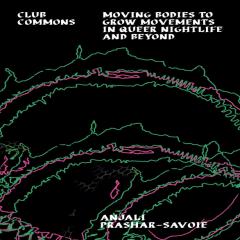
Queer communities have long transformed parties into something powerful: spaces where care flourishes, injustice gets challenged, and new worlds are danced into being. But today, DJs command huge fees while behind-the-scenes workers earn below minimum wage. Corporations profit from our culture while communities that created these spaces are displaced. As venues shut and workers burn out, it’s clear that something has gone deeply wrong.
Club Commons: Moving Bodies to Grow Movements in Queer Nightlife & Beyond by Anjali Prashar-Savoie takes you inside hidden stories of resistance and reinvention. We meet the people reshaping nightlife from below: abolitionist security teams creating safety without police, sober raves doubling as mental health support, radical childcare at parties, venues becoming worker cooperatives, and free party crews reclaiming public space. Through their work, we see how party-throwing skills build movements, how refusing to play changes everything, and why protecting queer nightlife means transforming who owns it.
Quotes
“When Anjali shines her perceptive light on dancefloor culture, everything is better illuminated. I can’t wait to read this book. It’s one we need.” Emma Warren (author of Dance Your Way Home/Up the Youth Club)
“Anjali’s one of the most exciting and insightful voices writing about dance music today, bringing fresh perspectives, intellectual rigour and emotive power to a conversation that’s too often homogenous, superficial or cynically commercial. Club Commons promises to be an essential and overdue book: a chance to reexamine the queer history of club culture, celebrate and critique its present, and map out radical possibilities for its future.” Ed Gillett (author of Party Lines)
“Beautifully written and unique, Anjali Prashar-Savoie’s behind-the-scenes journey through queer nightlife is as thorough as it is fascinating. Documenting a world that commercial interests are rapidly destroying, Club Commons is proof that queer culture holds the key to a better future for the dancefloor and beyond.” Professor Sam Parsley (author of Minor Keys, coach, DJ and founder of In the Key, a directory and platform championing the careers of women, trans and non-binary electronic music producers)
“Club Commons: Moving Bodies to Grow Movements in Queer Nightlife & Beyond is a vital reminder of how important the dance floor is to connect, unfurl and envision new futures. The text highlights the historic and existing care work entangled with the club space, particularly in providing temporary sites of refuge and embodied joy for Black and LGBTQIA+ communities. This is juxtaposed with research on the corporate and carceral commodification of nightlife in recent years, which exposes the false premise that club spaces are always radical. This book affirms my belief that the non-commercial nightlife ecosystem is an essential part of our social change infrastructure, rather than a luxury. Club Commons is a call to action to reclaim this space on our own terms and revive the underground.” Camille Sapara Barton, (author of Tending Grief: An Embodied Guide to Being with Grief Individually and in Community)
- A1: Al Sayf
- A2: Alemuye
- A3: Maximum Self-Care
- A4: Le Palais De Bachar
- A5: Embeyto
- B1: Il Fait Trop Cuit
- B2: Scarlett Chien
- B3: Post-Aventures
- B4: Al 3Mal
- B5: La Tour Eiffel
After a critically praised debut in 2023 and numerous tours across Europe, Yalla Miku returns with "2", a new record that further asserts their unique identity. Still based in Geneva, the band moves forward with a reimagined lineup - not as a departure, but as the natural continuation of a project envisioned from the start as a space for encounters, movement, and musical reinvention. Blending post-kraut grooves, mutant folklore and electronic trance, Yalla Miku continues to spark dialogue between traditions from the Horn of Africa and the most unrestrained experiments of Geneva"s underground.
- Ich Nehme Das Amt Nicht An
- Ändern Wir Je Den Akkord?
- Gnzrznd
- Wenn Es Liebe Ist
- Open Water
- Ich Habe Nichts Gemacht (Außer Weiter)
- Es War Nur Ein Traum
- Easy Auf Rezept
- Fan Von Irgendwas
- Immer Noch Sprachlos
Mit „Wenn es Liebe ist“ veröffentlichen Die Sterne ihr neues Studioalbum – ein Werk, das die Band einmal mehr als scharfsinnige Chronisten unserer Zeit zeigt. Zwischen Indiepop, Post-Punk und subtiler Elektronik verbinden sich gesellschaftliche Beobachtungen mit persönlicher Reflexion, Humor mit Haltung. Die Songs klingen frisch, direkt und unerwartet vielseitig – mal politisch, mal romantisch, immer mit dieser unverwechselbaren Sterne-Handschrift.
Neben deutschen Texten finden sich erstmals auch englischsprachige Stücke sowie zwei Songs mit Dyan Valdés am Leadgesang. Das Ergebnis ist kein Rückblick, sondern ein mutiger Schritt nach vorn – kompromisslos, lebendig und voller Energie.
Zur Veröffentlichung geht die Band auf große Tournee durch Deutschland, Österreich und die Schweiz – inklusive eines besonderen Konzerts mit dem Filmorchester Babelsberg im Potsdamer Nikolaisaal.
- Bray
- Weightless
- Thirteen
- October
- Valence
- Kabul
Pullman ist eine im Studio entstandene Akustik-Supergroup, die Ende der 90er Jahre aus der Post-Rock-Szene Chicagos hervorging und Ken ,Bundy K." Brown (Tortoise/Directions in Music), Curtis Harvey (Rex), Chris Brokaw (Come) und Doug McCombs (Tortoise/Eleventh Dream Day) vereinte. Später kam Schlagzeuger Tim Barnes hinzu, wodurch die Kernbesetzung der Gruppe gefestigt wurde. Ihr Debüt bei Thrill Jockey gaben sie 1998 mit "Turnstyles & Junkpiles", einer leisen, live auf zwei Spuren aufgenommenen Sammlung verwobener Gitarrenklänge, die Kritiker mit John Fahey, Leo Kottke und Gastr del Sol verglichen. Ihr Folgealbum "Viewfinder" (2001) erweiterte die Palette um Percussion, subtile elektrische Texturen und Mehrspur-Layering, wobei die rustikale, filmische Zurückhaltung von Pullman beibehalten wurde. Mit beiden Alben wurde die Band zu einem Maßstab für akustische, songorientierte Instrumentalmusik: folkig im Geist, postrockig in der Methode und zeitlos im Klang. Zwei Jahrzehnte später kehrt Pullman mit "III" zurück, einem Album, das von Freundschaft und Widerstandsfähigkeit geprägt ist. Im Jahr 2021 gab Barnes seine Diagnose einer früh einsetzenden Alzheimer-Erkrankung im Alter von 54 Jahren öffentlich bekannt. Trotz seines fortschreitenden Gesundheitszustands begannen er und Brown fast täglich, oft aus der Ferne, mit einem großen Kreis von Mitwirkenden aus Barnes' musikalischer Vergangenheit zusammenzuarbeiten. Was als einzelner Beitrag für eine Compilation begann, entwickelte sich nach und nach zu einem vollständigen Pullman-Album, das zwischen 2021 und 2023 fertiggestellt wurde. "III" wurde von Brown bearbeitet und gemischt, mit frühen Beiträgen von Barnes, und führt die für die Gruppe charakteristische Intimität und Räumlichkeit fort, während es gleichzeitig den Geist der Gemeinschaft verkörpert, der ihre Arbeit seit jeher geprägt hat. "III" ist sowohl eine Fortsetzung der einzigartigen Ästhetik von Pullman als auch ein Beweis für die nachhaltige Kraft der Musik und schwebt mit der stillen Schwere der Erinnerung, der Beharrlichkeit und der Anmut.
- 1: On Stubborn Defiance
- 2: A Worldwide Clique Pt. Ii
- 3: Before Judge And Jury
- 4: When They Come For Me
- 5: Death Is Not Our Only Option
CLIQUE exists not as a traditional band but as a forum for radical discourse within hardcore's landscape. Formed in 2022 in California with members spanning the Bay Area and Los Angeles, CLIQUE has quickly made a name for itself through an undeniably vicious live show and a depth that's been long missing from the scene. In a world increasingly defined by individual recognition, CLIQUE operates anonymously, rejecting the spotlight in favor of their message and finding strength in collective struggle.
Unlike many of their contemporaries, CLIQUE was formed with explicit political intent. In an era where hardcore’s content has drifted toward toothless posturing, they aim to reintroduce radical thought into a scene that has lost much of its subversive edge. Drawing from influences spanning Crass to Neurosis, Earth Crisis to MBV, they forge a sound that defies easy categorization while undoubtedly belonging to hardcore.
CLIQUE isn't interested in raising awareness for impotent establishment causes or upholding the system. Their vision extends beyond reform to revolution - the dismantling of structures that exploit people, degrade cultures and destroy the earth. Each show is an invitation for people of all walks of life to participate, a reminder that hardcore’s true strength lies in the connection of everybody in the room, erasing the boundary between stage and crowd.
As they put it: "This is a prayer for those we've lost along the way. This is a celebration of our liberation to come. This is a eulogy for the state and its worthless existence." In an increasingly commercialized hardcore landscape, CLIQUE stands apart - anonymous, uncompromising, and unwavering in their conviction that another world is possible. The message is clear: no one is coming to save us, we can only make our own future, together. This music is both a reflection of our hellish reality and an invitation to imagine and create something better. Clique up. Say nothing.
- 1: Stay Away
- 2: Call Me
- 3: A New Type Of Grey
- 4: Blood For Blood
- 5: Say That You Hate Me
- 6: Dark Clouds
- 7: Salt Lines
Calling All Captains have built a reputation for turning personal struggle into explosive, emotionally charged punk rock. Blending post-hardcore grit with the melodic urgency of pop-punk and alt-rock, the Edmonton-based band delivers music that’s as volatile as it is vulnerable. Their upcoming EP, The Things That I’ve Lost (out January 9, 2026 via New Damage Records), is their most personal and sonically refined work to date. Recorded at The Audio Department in Edmonton, Alberta with longtime collaborator and producer Quinn Cyrankiewicz, the seven-track release features a standout co-write on “Blood for Blood” with world-acclaimed songwriter Tom Denney (A Day to Remember, Pierce the Veil, Neck Deep, etc.) Mastered by Stuart McKillop at Rain City Recorders, the EP explores burnout, grief, and the quiet collapse of identity; capturing a band reckoning with itself in real time: honest, raw, and entirely unfiltered. “This is the most personal release we’ve ever put out,” says Gauthier. “These songs came from a place of reflecting on everything we’ve been through, personally and as a band. It’s raw, but it’s real. And I think people will feel that.”
- Nur
- Wahrheit Teil I
- Wahrheit Teil Ii
- Zerfall
- Übertritt
- Ode Ans Licht
- Zeitenwende Teil I
- Zeitenwende Teil Ii
- Reise
Splatter Vinyl[31,30 €]
"Over the years, Ellende has released six full-length albums and three EPs. They achieved four official chart positions (Austria: #14, #21; Germany: #31, #37) with recent full-lengths, while the band has performed more than 120 international shows and reached over two million Spotify streams in the past year.
The lyrical themes have evolved alongside the music. From early reflections on misanthropy, nature, and isolation to later explorations of human nature, social criticism, war, loss, despair, and dementia. The upcoming full-length album “Zerfallˮ portrays the state of being shattered into fragments and the slow, painful process of rebuilding oneself: a confrontation with the void and ultimately a triumph over it. Shaped also by a tragic event in the life of its mastermind, Ellendeʼs work continues to fuse raw intensity with profound emotional depth."
Auf seinem Debütalbum stellte sich der aus Newark/New Jersey stammende Tenorsaxofonist Tyrone Washington 1968 als neue, vitale Stimme des Jazz vor. Daraus, dass er vor allem von John Coltrane, aber
auch ein wenig von Albert Ayler und Archie Shepp beeinflusst war, machte der damals 23-Jährige keinen
Hehl. Dabei präsentierte er mit einem exzellenten Sextett überwiegend gleichaltriger Musiker eine durchaus
eigene Mischung aus Post-Bop mit avantgardistischem Einschlag und groove-basiertem Soul-Jazz.
- Dragging Dirt
- Shadow
- Echo
- Tiber Creek
- Nothing
- Voice In Headphones
- Context
- God Knows
- Underwater
- Context Ii
Lillian King's debut album In Your Long Shadow is out October 24th. It is about letting the wind in, Lake Michigan in the winter, and the silence of a long summer evening. And really it's about the grief of losing her dad, Neil King Jr. When her dad died in September 2024, grief permeated every facet of Lillian's life. The loss is felt in everything, but especially when doing the things her dad loved the most -- the simple everyday good things that make life worth living: cooking, walking the longer way to work, swimming in cold water. In the throes of grief it feels impossible to find anything that doesn't just make you sadder, but when Lillian did find those things, she grabbed onto them. Soon it was clear that the best coping mechanisms weren't gin and tonics, but talking to her mom and sister as much as possible, and producing an album. The album arrangement came together in a couple of weeks as Lillian brought bandmates and friends Robert Salazar and Nick DePrey new and old songs to build on. Robert played the drums, while Nick played keys (with a smattering of bass and guitar). The process was collaborative and intimate, and only got better when Jack Henry (producer of albums by Friko and Free Range) joined to record and mix it. Some of the songs on this album are years old, including "Underwater", which Lillian wrote one late night in Montreal a decade ago. However, most came together in the months approaching recording."Dragging Dirt" was written just a week before getting into the studio. Despite the bummer material, the recording process was spontaneous and light hearted. The song "Echo" came together unexpectedly during a break between songs. In the midst of recording In Your Long Shadow, Lillian had concerns about making a "grief album." Her sister Frances, as usual, had the right advice: "Every album from now on is going to be a grief album." In Your Long Shadow is about loss as much as it is about living with it. Take it outside on a walk.
Es ist alles überlebensgroß, düsterer als der Tod und das beste Album, das die Horror-Punks von Creeper je aufgenommen haben.
Das Album "SANGUIVORE" hat Creepers ohnehin schon überlebensgroße Ambitionen auf neue Höhen geführt, was zu den positivsten Kritiken ihrer Karriere führte und in ihrem ersten Headliner-Konzert in der OVO Wembley Arena in London gipfelte. Historisch gesehen schließt die Band am Ende einer Creeper-Ära den Sargdeckel, um sich erneut neu zu erfinden. Doch dieses Mal trotzt die fünfköpfige Band den Erwartungen, indem sie das kreative Universum des Vorgängeralbums erweitert und am 31. Oktober mit "Sanguivore II: Mistress Of Death" aufs Neue ins Vampir-Universum eintaucht.
"Sanguivore II: Misstress Of Death" ist eher eine thematische Fortsetzung als eine direkte Weiterführung der ursprünglichen Geschichte. Wie eine klassische Horror-Anthologie spinnt es eine neue Geschichte aus derselben Blutlinie wie das Original, diesmal mit dem blutigen Vampirherz als roter Faden, um eine brandneue Erzählung einzuführen.
Die Geschichte führt uns zurück in die moralische Hysterie der Satanic Panic und ihre Auswirkungen auf die Welt des Hardrock und Heavy Metal der 80er Jahre. Es war eine Zeit, in der der verstorbene Prince of Darkness, Ozzy Osbourne und Judas Priest von Gerichtsverfahren verfolgt wurden. Iron Maiden spielte tief im Herzen Amerikas, während W.A.S.P. und Mötley Crüe mit ihrer skandalösen Theatralik und Dekadenz die Gemüter der Konservativen erhitzten.
Wie schon das Original wurde auch "Sanguivore II" von Tom Dalgety (Ghost, Rammstein, Royal Blood) produziert.
- A1: Canvas 11
- A2: Canvas 2
- A3: Speed Table
- A4: More Frog Poems
- A5: Beautiful Holy Jewel Home
- B1: Canvas 8
- B2: Bird Spells
- B3: I See Poseurs Every Day
- B4: The Suite Goes Quiet
“So, how did this band even happen?” That’s the question most often asked of Winged Wheel, a creatively and geographically scattered collective who have somehow congregated to make a noise that’s unexpected but undeniable. The band includes Whitney Johnson (Matchess, Circuit des Yeux), Cory Plump (Spray Paint, co-owner of the dream venue Tubby’s), Matthew J. Rolin (solo guitar wizard and half of the Powers/Rolin Duo), Steve Shelley (Sonic Youth), Lonnie Slack, and Fred Thomas (Idle Ray, Tyvek), each player living in a different city and bringing their own unique element to the group’s chain reactions. Early long distance file-trading between a few members yielded 2022’s No Island, a debut album that was accidentally really good. Good enough for the band to expand their membership and meet in person for the sessions that became 2024’s Big Hotel, a surgically-assembled murk of high energy kosmische rock with jammed-out tendencies.
Fast forward just a little and all of a sudden the band that started out as a passing idea has completed multiple tours, become a taper’s dream with sets that drift through structure and improvisation, and ridden the momentum to places unforeseen on their third album, Desert So Green. After a run of shows across the Midwest in the spring of 2025, the group settled into a studio on the outskirts of Chicago to track their next record. Though the full lineup had only been solidified for a little over a year at this point, time together on stage led to a quickly-expanding sound and a unified vision of always going somewhere new. To this end, Winged Wheel abandoned the play-now-sort-it-out-later approach of Big Hotel and instead spent hours refining flashes of inspiration into coherent songs.
3 Monate Anzeigenkampagne in Orkus und Sonic Seducer.
Interviews and features - Sonic Seducer / Orkus / Post Punk more to be announced
Weltweite Promokampagne durch UTM Music
DAC Bemusterung
The RIOT DJ-BACKPACK XL is a high-end, extremely rugged-built backpack designed for the heavy-travelling Pro-DJ. It comfortably holds any digital gear from Kontrol S4 to battle-mixers such as Rane Sixty-Two or Pioneer DJM-S9 along with a laptop and accessories. Constructed entirely from hardwearing PVC Tarpaulin, its outer shell and all zippers are fully waterproof which ensures your gear is protected even in the worst weather. The featured “Zip-Around-Expansion-System” means the main compartment’s capacity can be doubled, turning the RIOT DJ-Backpack into the ultimate versatile packing monster.
+ FITS
Laptop up to 17"
Ableton Push2
Akai MPK-25
Akai MPC Renaissance
Denon MC-4000
NI Kontrol S5
NI Kontrol S4 MK2
NI Kontrol S2 MK2
NI Kontrol S2 MK3
NI Kontrol D2
NI Kontrol Z2
NI Maschine+
NI Maschine
Numark Mixtrack Pro 2
Pioneer DDJ-SB2
Pioneer DDJ-SB3
Pioneer DDJ-400
Pioneer DDJ-RB
Pioneer DJM-S11
Pioneer DJM-S9
Pioneer DJM-S7
Pioneer DJM-900 SRT/NXT
Rane Seventy-Two
Rane Sixty-Two
Rane Sixty-Eigth
Reloop Elite
Roland DJ-202
Vestax VCI-400
Vestax VCI-380
12“ Vinyl
Accessories
+ BASICS
Crafted from hardwearing and 100% waterproof PVC Tarpaulin
Soft-fleece lining
PVC-coated (waterproof zippers)
Lockable zippers on main and laptop compartment
Rubber corner protectors and rubber feet
Main compartment includes several removable adjustment foams, a divider and a protection panel
The “Zip-Around-Expansion-System” doubles the main compartment’s capacity
Main compartment can be packed and unloaded in the “DJ-booth-friendly” stand-up position or in the fully opened and unfolded position to gain easy access
Separate and fully padded laptop-compartment up to 17”
Two large front pockets with internal mesh pouches provide perfect organization of small accessories
Padded back panel with airflow system, ergonomic backpack straps and chest straps
Top and side carrying handles
Detachable trolley sling
Hand luggage compatible
+ SPECS
+ Outer dimensions: 56 x 37 x 23 cm
+ Inner dimensions: 51 x 32 x 8 cm
+ Weight: 3,0 kg
!!! not possible to ship by UPS !!!
EN: Product information "Disco-Antistat BiDest, 1 litre"
- NEW - High purity special water for record cleaning - NEW -
Disco-Antistat BiDest
1 litre bidistilled water, chemically pure, demineralised
For the production of approx. 1 litre of cleaning liquid for records (in a ratio of 1:25, e.g. with Disco-Antistat Ultraclean)
Suitable for all record washers!
According to VDE 0510, DIN EN 285, ISO 3696 (II) and DIN 43530
Disco-Antistat BiDest is a high-purity special water, such as is used in laboratories or cosmetics. All dissolved substances have been removed from the water by means of complex physical processes, which means that it is pure H2O, in contrast to the water available in DIY stores, for example. Therefore, it is ideally suited for all applications where purest water is required. For an optimal cleaning result with our Disco-Antistat Ultraclean concentrate, we therefore recommend the use of Disco-Antistat BiDest for the preparation of the cleaning liquid. Of course, Disco-Antistat BiDest is also suitable for a variety of other applications.
Disco-Antistat BiDest is suitable for use with all record washers!
DE: Hochreines Spezialwasser zur Schallplattenreinigung
Disco-Antistat BiDest
1 Liter bidestilliertes Wasser, chemisch rein (Laborqualität), entmineralisiert
Zur Herstellung von ca. 1 Liter Reinigungsflüssigkeit für Schallplatten (im Verhältnis 1:25, z.B. mit Disco-Antistat Ultraclean)
Für alle Schallplattenwaschgeräte geeignet!
nach VDE 0510, DIN EN 285, ISO 3696 (II) und DIN 43530
Disco-Antistat BiDest ist ein hochreines Spezialwasser, wie es beispielsweise auch im Laborbereich oder der Kosmetik eingesetzt wird. Dem Wasser wurde durch aufwendige physikalische Verfahren alle gelösten Stoffe entzogen, wodurch es sich, im Gegensatz zu dem z.B. im Baumarkt erhältlichen Wasser, um reines H2O handelt. Daher eignet es sich bestens für alle Anwendungen, bei denen reinstes Wasser erforlderlich ist. Für ein optimales Reinigungserrgebnis mit unserem Disco-Antistat Ultraclean Konzentrat empfehlen wir daher die Verwendung von Disco-Antistat BiDest zur Herstellung der Reinigungsflüssigkeit. Selbstverständlich ist Disco-Antistat BiDest auch für eine Vielzahl anderer Anwendungen geeignet.
Disco-Antistat BiDest eignet sich zur Anwendung mit allen Schallplattenwaschgeräten!
The roots of African music are always open to new possibilities. This is revealed in the music of this unprecedented quartet. Alongside the Malian singer Rokia Traore', Mamah Diabate, Malian griot and djeli ngoni player, has been playing for several years with Stefano Pilia (Afterhours, Massimo Volume). Now, their path intertwines with the artistic and human partnership between Jabel Kanuteh, Gambian griot and kora virtuoso, and percussionist Marco Zanotti(Classical Afrobeat Orchestra, Cucoma Combo). The union of these two pairs develops unusual geographies and architectures, where dual African and Italian identities merge into one universal sensibility. The predominant Malian and Gambian modes chase each other, but all is fused into a broader rhythm factory or embellished by more abstract and liquid experimental digressions. The curiosity and pliability of the individual musicians search for a language that is both current and contemporary, always poised between ancient and modern, landscape and narrative, with jazz, rock and folk influences.