Chansons for the replicates. Hymns for the algorythmed. Operatic minimal wave. Spoken words. Otherworldly electronica. Oh pop, Oh techno. Oh Pose Dia. Now on R.i.O. simulating herself on an album full of weeping synthlines, melding melodies, unreeling theatre between the notes, camouflaging in fashion and rhyme. Impulsive, destructive, yet so perceptive, gently repetitive. “Simulate Yourself” is her second album since “Front View,” released in 2020 on Bureau B.
Now the Hamburg-based filmmaker, DJ and musician Helena Ratka, aka Pose Dia, brings a notion of digital archeology. Nine otherworldly chanting cold blooded Lieder and tracks, manic, longing for the real in the un- real. The matter of her poetic-abstract lyrics is rhizomatic, linking psychological “Suspiria” fantasy with sociology, media theory and all that never obsolete post-structuralism. Hyperreality for the hyped. Fully illusionistic. Wrapped in touching airs, drilling into cold waving Risiko spheres. X-mal rotating towards novel corners, shading light on old ones. Track make-up transforms into lacquered songs. Fog and fire. Night and light. Hairspray and cigarettes. Pose Dia transfers fine-tuned dissatisfaction to all those fully satisfied. Welcome to the other side of the Ocean.
Поиск:pose dia
Все
- 1
- A1: Sepehr - Twilight Calls
- A2: Sissy Fuss - No Restraint Instrumental Def
- A3: God Is God - Na Gore More Dub Edit
- A4: Alex Loveless - Voicenote
- A5: Suemori - Kisou
- A6: Mari Herzer - Limbal Ring
- A7: Elena Colombi Feat Juno Roche - Lost In A City
- A8: Loma Doom - Sisterresister
- A9: Decha - Mujeres
- B1: Pose Dia - Lovers Rock
- B2: Low End Activist - Need To Know Blue Room Version
- B3: Decha Wir Sind Da
- B4: Mayurashka - Libra Man
- B5: Nar John Silvestre - Ensel Ham
- B6: E-Bony - Slow Machines
- B7: Riva Ft Tommy Khosla - Resurfacing
- B8: Anenon - Length-Of-Night Improvisation
Following on from the celebrated first instalment, the second part of The Male Body Will Be Next compiles an entourage of daring sonic experiments, composed in response to bell hooks’ landmark book The Will to Change. Prompting artists and musicians to envision cross-gender solidarity, Osàre! Editions founder Elena Colombi presents an enrapturing, narrative album, conceptualised around collective transformation.
Resonating with hooks’ challenge to men to reclaim the sensitivity that patriarchy denies them, the name of the record arises from a photograph by Peter de Potter and Rebecca Salvadori’s film of the same title. In these depictions, naked flesh is exposed, made vulnerable and trembles with emotion as the fragility of masculine bodies are examined through the queer and female oppositional gaze. Transforming this visual language into musical expression, The Male Body Will Be Next swirls with punk vitriol, electrified noise, acid, electro and free-wheeling encounters charged by love, lust and limerence.
Gently plunking chords signal Pose Diva’s reimagining of lover’s rock before Sissy Fuss smashes in with a heavy-weight instrumental version of their erotic anthem ‘No Restraint’.
Made up of Turkish musician Etkin Çekin and Belarussian songstress Galina Ozeran, God is God delivers a gentle lullaby, while Low End Activist flirts with dark and brooding bass, shattering penetrating frequencies into luminous fragments. Riffing off the 2020 documentary about female early electronica pioneers, Loma Doom crafts a slowly oscillating drone zenith, the ultimate climax. In line with the conceptual underpinning, there are plenty of collaborations – Daytripper’s Riva and Sitar player Tommy Khosla, Lebanonese experimentalist N R and Swiss-French producer John Silvestre (AKA Typhon), as well as Colombi herself and trans author/activist Juno Roche. Within these partnerships, new modalities come alive as mediums, practices and perspectives are ignited and pushed in otherworldly, metamorphic directions.
Operating under the moniker Eat Them, Johannes Hofmann ravenously ingests and rearranges pretty much everything of interest that electric guitar music has produced over the last 50 years. King Crimson, Dinosaur Jr, Talking Heads or Germany's Tocotronic all resonate in Hofmann's expansive oeuvre. Having begun to record music as a 13-year-old for the main purpose of burning compilation CDs of his work for his grandma, the Eat Them catalogue now spans around 20 Bandcamp albums.
Chosen from these, a selection of 12 tracks will be released via Fun In The Church on March 1st. Entitled "All" in keeping with the holistic aspect of the project - and, of course, complementing the band's name - the album covers everything from Sonic-Youth-with-drum-machine-style mashups to nervous post-funk and anthemic lo-fi indie rock, recorded and sung entirely by Hofmann himself.
The first single, out today, is "Do You Love Me When I'm Dead?", a DIY pop diamond whose sonics are lovingly and firmly rooted in a garage-cum-teenage practice space. The track reflects the project's live line-up, which has been expanded to include bass and drums. However, Hofmann transcends the suburbs with urgent echoing vocals expressing an emotional need to stay on the move, to resist being pinned down.
This is framed by guitar arpeggios that actually point in a more introspective direction. This penchant for contrast and movement can be found in many Eat Them pieces - they are snapshots of an ongoing development, a work that you listen to as it grows and lives. To rephrase the question posed in this single's title: Would we love it if it was already dead?
There may already be 20 albums on Bandcamp - and that CD at Grandma's - but the journey has only just begun. Bon appétit!
- 01: 808'S N Trance Gates
- 02: Shalom Aleichem Ft. David Berman
- 03: Minouma Remix
- 04: Lekha Dodi
- 05: The Lock Ft. Muha
- 06: Sol
- 07: Talmuds Ft. Derya Yildrim
- 08: The Noise (Hitbodedut)
- 09: This Song Has A Different Title But It Can't Be Pubished Here Because Of "Reasons"(Questions With Rael)
- 10: Aleichem Shalom
On his second album for Bruk, hoyah חיה continues to take an unflinching look at his Jewish identity while confronted with the heinous actions of the Israeli state. Echoing the name of his Refuge Worldwide radio show, he examines the shared histories of the Jewish diaspora across the Middle East and North Africa — from Morocco to Uzbekistan and everywhere in between. Can I Get A Chayah? is an honest attempt to explore what Judaism could become at a time when the culture faces an existential crisis.
The sonic approach hoyah חיה takes on Can I Get A Chayah? is central to the album's theme, as hard-gated processing on every sound creates a disorienting effect aiming for a kind of 'functional transcendentalism'. From the opening strains of preceding single '808s n Trance Gates' the jagged stop-start intensity of the samples sets a head-spinning tone for the album. The source material comes from across the aforementioned Jewish diaspora, challenging the nationalist idea of the single Jewish state.
Balancing beauty and aggression, hoyah חיה also reaches to a strong cast of collaborators to round out his cultural explorations. Principle among these is the late David German, the US-born guitarist and songwriter behind Silver Jews, whose repeated, bewildered mantras on 'Shalom Aleichem' embody hoyah חיה's own struggles with faith in the face of current horrors. Internationally celebrated Turkish-descent German musician Derya Yıldırım graces 'Talmuds' with her haunting vocal — a tribute to ancient Jewish mysticism that gets passed through the album's unrelenting sonic framework. On 'The Lock' Muha tackles African transcendentalism, while Rael pulls no punches with the questions he poses on the barbed 'This Song Has A Different Title But It Can't Be Published Here Because Of "Reasons"'.
With further prayer recitals on 'Lekha Dodi' and 'The Nose' and videos examining the psychedelic nature of reading the talmud and repetitive prayer movement shuckling, hoyah חיה has taken his research deep into the spirituality of his heritage at a time of crisis for Jewish identity. Naturally, Can I Get A Chayah? is not an easy listening experience, but neither is it a bleak one. There is beauty, mystery, complexity and nuance woven within the stark approach — an intentional, considered statement on a culture much deeper and wider than the barbaric acts of an unrepresentative group of twisted ethno-nationalists.
Do you believe in spring? Simon Wangen (cello) and Philipp Sutter (piano) pose this question as the title for their new project. Whereas Bill Evans made a demand in 1981, the two Cologne-based musicians believe that in times of uncertainty, crisis, and environmental destruction, it is ok to set a questin mark here. But politics and world events aside: Do you believe in spring? Of course! It's never too late to start something new, get creative, and test your own limits. Simon Wangen is a classically trained cellist, Philipp Sutter a trained jazz pianist. Their different musical roots merge on this instrumental album into a lively mix of neoclassical, new jazz, and Cinéma Nordique. Ten pieces come across as sometimes dark, sometimes wild, sometimes delicate, always focusing on the dialogue between the two instruments that harmonize so well. The subtle use of electronic effects constantly opens up new perspectives and builds a bridge to contemporary sound aesthetics. Cello and piano—this combination has been established for centuries, but can still add new facets today. Do you believe in spring? begins stormily and turbulently, oscillating between romantic, sad, and beautiful moments, and leads from a rather dark beginning to the final and eponymous piece in C major, which leaves the listener with a glimmer of hope. Do you believe in spring? From October 24, 2025!
Do you believe in spring? Simon Wangen (Cello) und Philipp Sutter (Klavier) werfen den Titel für ihr neues Projekt als Frage in den Raum. Wo Bill Evans 1981 eine Forderung formulierte, sind die beiden Kölner Musiker der Ansicht, in Zeiten der Unsicherheit, der Krisen und Umweltzerstörung durchaus ein Fragezeichen setzen zu können. Aber abgesehen von Politik und Weltgeschehen: Do you believe in spring? Natürlich! Es ist nie zu spät, etwas Neues zu beginnen, kreativ zu werden und die eigenen Grenzen zu testen. Simon Wangen ist klassisch ausgebildeter Cellist, Philipp Sutter studierter Jazzpianist. Die unterschiedlichen musikalischen Wurzeln verschmelzen auf diesem Instrumentalalbum zu einer lebendigen Mischung aus Neoklassik, New Jazz und Cinéma Nordique. Zehn Stücke kommen mal düster, mal wild, mal zart daher, stets die Zwiesprache der beiden so gut harmonierenden Instrumente im Fokus. Der dezente Einsatz elektronischer Effekte öffnet immer wieder neue Perspektiven und schlägt eine Brücke zur zeitgenössischen Klangästhetik. Cello und Klavier - diese Besetzung ist seit Jahrhunderten etabliert, aber kann auch aktuell immer wieder neue Facetten hinzubekommen. Do you believe in spring? beginnt stürmisch und aufgewühlt, changiert zwischen romantisch - traurig - schönen Momenten und führt von einem eher düsteren Beginn hin zum letzten und namensgebenden Stück in C-Dur, das die Zuhörenden mit einem Hoffnungsschimmer entlässt. Do you believe in spring? Ab 24.10.2025!
Italian producer, musician, DJ, and groove architect Sam Ruffillo drops his long-awaited debut album Tipo Così on Toy Tonics – a sun-drenched, genre-blurring statement that blends classic house with Mediterranean flair, romantic funk, and tongue-in-cheek Italo vibes. Over 11 expertly crafted tracks, Ruffillo delivers a dancefloor-ready, emotionally rich LP that connects deep musicality with irresistible rhythm and light-hearted elegance.
After three acclaimed EPs and collaborations with revered artists such as Barbara Boeing, Kapote, and Fimiani, Ruffillo has firmly cemented himself as a core artist on the Berlin-based label. Known for his unmistakable signature sound — a warm mix of vintage disco, 90s house, and Italian vocals — Sam’s music has garnered widespread DJ support from tastemakers like Gerd Janson, Palms Trax, Seth Troxler, and DJ Tennis, while becoming a staple on Italian airwaves. His infectious summer anthems like Danza Organica and Perfetta Così have soundtracked countless club nights and festivals, creating a loyal following that eagerly awaited this full-length debut.
Tipo Così is the natural culmination of a musical journey that’s both playful and profound — a travel diary written in grooves, synth stabs, and melodies that feel like postcards from a parallel Mediterranean universe. The album expands and deepens Ruffillo’s world into a fully immersive experience: lush emotional chords meet tight syncopated grooves, vintage synth textures collide with irresistibly catchy pop refrains, and the boundary between sincerity and playful irony is exquisitely blurred.
Entirely written, produced, and recorded in Italy, in his beloved hometown of Bologna, the album finds Ruffillo at the helm on keys, drum machines, and production, supported by a talented cast of musicians contributing live bass, guitar, and other organic elements — further enriching his trademark fusion of electronic grooves and natural instrumentation. There’s a tactile warmth in these tracks, a hands-on feel that adds soul and depth to every beat.
This album also marks Ruffillo’s heartfelt return to singing in Italian, with standout tracks like House Tipo Così, Mi Fa Volare, Ancora, and Dentro Di Me, where romantic naïveté meets pulsing club energy in a way that feels both timeless and refreshingly new. The vocal performances add an intimate, human touch to the music, reinforcing the personal stories woven into each song. There’s poetry in the casual, a bittersweet elegance in the way the lyrics float over groove-heavy production.
Having toured extensively across Europe, Australia, Indonesia, New Zealand, and Mexico — with sets at iconic venues like Panorama Bar and festivals such as Sónar Barcelona — Ruffillo has fine-tuned much of this album in front of live audiences. The real-world testing ground infused the record with a dynamic energy and immediacy that only comes from genuine crowd interaction. These songs weren’t just made in the studio — they were lived on dancefloors around the world.
Tipo Così is not just a collection of tracks. It’s a philosophy — playful, stylish and unmistakably personal. A modern club album bursting with heartfelt emotion and sophistication. Music for dancers with taste; for lovers of beauty, rhythm, and the little imperfections that make things feel real.
But what exactly is Tipo Così? More than just a phrase, it’s a way of being. It’s about embracing elegance without effort, mixing irony with sincerity, and letting nostalgia slip into the room without taking over the party. It’s Sam Ruffillo’s signature language: relaxed, confident, meticulous yet never rigid — where a chord progression can say as much as a lyric, and every beat carries intention.
The album’s visual identity complements this vision perfectly. The artwork and promotional materials lovingly reference Italian design from the ’80s and ’90s, combining bold graphic elements with playful pop culture nods. This aesthetic mirrors Ruffillo’s music — a fusion of vintage warmth and contemporary freshness, delivered with authenticity and charm.
Sam Ruffillo belongs to a new generation of European artists who are reshaping electronic music by blending past and present, analog and digital, groove and emotion — without nostalgia or pose. His artistic universe is coherent, vibrant, and alive; a rich tapestry of sound, images, and stories that coexist with lightness, precision, and a distinctive voice.
Reflecting on his artistic journey, Sam describes music as a vital, deeply human impulse — a tribal connection to rhythm and body that has driven him since he was a teenager. His creative process balances meticulous planning with room for spontaneity, usually sparked by clear melodic ideas that evolve naturally. Collaborations with close friends, especially vocalists like Ninfa, add warmth and authenticity, exemplified in tracks like “House Tipo Così.” For Sam, music is honest self-expression — crafted for listeners who crave memorable melodies and rhythms imbued with genuine feeling.
While technical perfection is tempting, Sam prioritizes emotion, knowing that what truly resonates is the soul behind the sounds. His long-standing partnership with Toy Tonics has been key in nurturing his vision, offering a blend of creative freedom and professional support. Looking ahead, Sam Ruffillo is excited to broaden his live performances, and release new projects that continue to blend electronic grooves with organic, heartfelt sounds — maintaining the delicate balance between playful irony and sincere emotion that defines Tipo Così.
Kurzversion:
Italian DJ, producer and musician Sam Ruffillo drops his debut album Tipo Così on Toy Tonics - a sunny blend of house, funk, Italo and pop, full of groove and emotion. Written and recorded in Bologna with live instruments and Italian vocals, it’s a playful, elegant journey shaped on dancefloors worldwide. A stylish, sincere club album where nostalgia, irony and rhythm meet in perfect harmony.
- Mi Fa Volare
Road-tested across continents and now finally released, “Mi Fa Volare” channels 90s uplifting euphoria with big breakbeats, lush chords, and Italian vocals built to stick. Somewhere between balearic bliss and piano house nostalgia, it’s a feel-good club weapon made for peak-time moments - already sung back by crowds after just one listen.
- Ancora
“Ancora” is a vibrant hi-NRG track inspired by 80s Italo disco, sung entirely in Italian. It blends driving rhythms with dreamy melodies, capturing the radiant spirit of the decade. This fresh yet nostalgic song delivers euphoric vibes and timeless energy, making it a perfect fit for both dancefloors and reflective listening moments worldwide.
- Dentro Di Me
“Dentro Di Me” channels ‘90s sensuality through a fast-paced, UK house-inspired lens. Entirely in Italian, it’s a bold and contemporary dance track where hypnotic vocals meet high-energy grooves. Blending nostalgic textures with forward-thinking production, the result is a seductive and euphoric trip - equal parts emotional and club-ready.
- Amigo
“Amigo” blends Latin groove, acoustic guitar-driven rhythm, and Mediterranean flair into a warm, magnetic, cross-cultural dance anthem. Sung in Spanish and Italian, it celebrates connection, inclusivity, and the joy of moving together - whether stranger or friend. With its unstoppable rhythm and vibrant energy, it’s a feel-good track with a unifying spirit.
- Ma Sei Fuori
“Ma Sei Fuori” is a tongue-in-cheek dancefloor bomb blending raw house energy with catchy vocal phrases and a nod to classic French touch. Driven by hypnotic vocal lines and a playful attitude, it doesn’t take itself too seriously - while still proving serious club impact. Built for late-night moments, it’s bold, bouncy, and impossible to ignore.
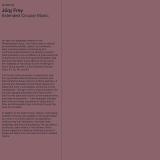
Since its founding back in 2014, Blume has carved a unique place in cultural landscape, issuing free-standing works, spanning the historical and contemporary, that represent singular gestures of creativity within the field of experimental sound. Joining their broad efforts in building networks of context and understanding that already includes the works by Werner Durand, Sarah Hennies, Bruce Nauman, John Butcher, Jocy de Oliveira, Mary Jane Leach, Valentina Magaletti, Alvin Curran, Julius Eastman, Alvin Lucier, and following the first ever vinyl release to attend to James Tenney's legendary Postal Pieces, the label now presents the first LP published by the visionary Swiss composer Jürg Frey. Drawing from the transformative power of breath and resonance, this release represents one of the most profound explorations of musical metamorphosis to emerge from the contemporary experimental landscape.
The completed work represents a "conjunction of these two artists" that has "activated a transformative form of experimentalism." These renderings "dance with an airy lightness, humour, and play, imbuing them with a beauty and emotiveness that can be rare within experimental music." They exist as "breaths, carrying the curiosities of life, belonging to no time and all time, to no one and everyone: a human music to be inhaled and pondered, for which the outcome remains unknown." In this liminal space between composition and interpretation, between breath and resonance, Zurria and Frey have created something that transcends the boundaries of experimental music itself, offering what might be called a metaphysical cartography of sound in its most essential form. As Bradford Bailey observes in his penetrating liner notes, "music is rarely a fixed entity," existing instead in a state of perpetual flux, "taking on the influences of its interpreters and performers." This fundamental truth finds its most eloquent expression in the transformative collaboration between Italian flutist Manuel Zurria and Frey, longtime member of the Wandelweiser Group. Where conventional recordings might preserve a definitive version, this release activates what Bailey calls "states of unknowing and continued experimentation," allowing Frey's compositions to evolve into entirely new dimensional territories. The original string quartet and piano works dissolve into breath-carried architectures of sound, where "the original remains in a constant dialogue with its transformation." This is not mere arrangement but ontological metamorphosis - an alchemical process through which crystalline harmonies are reborn as atmospheric phenomena.
The metaphysical dimensions of this transformation become clear through detailed analysis of the musical result. Where Frey's original compositions operate through what he calls "basic confidence in the clear and restricted material," Zurria's interpretation activates entirely new perceptual territories. Space holds almost atomic sense of weight against the airy punctuations of timbres, textures, and tones, creating "suspensions of time within which questions and identities posed by instrumentation fade." The Extended Circular Music pieces - each comprising "a small number of bars to be repeated an undetermined number of times" - become organizations of sound that defy being definitive or fixed. Originally scored for different combinations of violin, viola, cello, and piano, these works now exist as pure phenomena of breath and resonance, where "hanging, breath-length utterances dance and intertwine amongst complex harmonic clusters and conjunctions."
The philosophical implications of this transformation illuminate a lineage of composers who have moved "away from abstraction and responding to the need to create" something beyond mere technique. Drawing parallels to Morton Feldman's understanding of non-functional harmony, Zurria's approach represents "a transformative form of experimentalism" that activates what Frey calls the "thaumaturgic power" of music - its capacity to heal and transform consciousness itself. The result is "a radical reimagining of ambience: sprawling sonorities and resonances adrift in space, carrying the liberated traces of the work's former incarnations and their truths." In Zurria's interpretation, Frey's String Quartet n.3 becomes something approaching "an organ played in slow motion, its seals leaking," while the Extended Circular Music pieces transform into "glacial chords from a diverse palette of voicings, harmonies, timbres, and tones."
Performed by Manuel Zurria. Recorded and mixed by Zurria at BigCardo, Catania between 2022-2024, with mastering by Bruno Germano at Vacuumstudio, Bologna, this Blume release represents a profound exploration of musical transformation.
Earthly Measures are very excited to bring to you 'Doroja', an album by Santiago Córdoba & The Bauls of Bengal. Different to past releases, EM explores another part of the world, introducing you to the traditional sounds of Bengal & its talented musicians.
Doroja, is the third album by Argentinian musician Santiago Córdoba, this time in collaboration with The Bauls of Bengal. Recorded at the Hansadhwani Studio in Calcutta, India, where Santiago arrived with only a synthesiser, some effects, and a Legüero Bass Drum (an Argentine percussive instrument used mostly in local folklore) - this album was first conceived in December 2017 during a residency in this mythical city, together with The Bauls of Bengal.
The Bauls believe the body and mind are the sources of all truths and that the expression of freedom cannot be restrained by the labelling of genres or religions, something which is evidently expressed in their music. This provides the perfect foundations for this album to develop without limitations and too effortlessly flow to whichever realms both Santiago and the Bauls of Bengal wish to take us too.
The album combines traditional songs of the Bauls, rhythmic Jhumar instrumental improvisations with the Argentinian legüero bass drum, and other compositions created together in the studio. The result is a melodic mixture/dialogue of cultures, folklore and ancestral sounds with modern influences that help create an experimental and addictive sound full of electronic textures.
Participating in these first recordings: Arpita Chakraborty (vocals), Chandan Ray (dotara), Pijush Baul (Vocals, Dubki) and Tanmoy Pan (percussion), who later, are joined by other artists from different latitudes to achieve a captivating fusion: Matías Romero on strings (Formosa, Argentina), Guilherme Peluci from Mineiro on winds and Daniel Guedes on percussion (Belo Horizonte, Brazil), Porteños Walter Broide on tabla and Cobra Rod on bass (both members of Poseidotica), and the Spanish Ángel Calvo on trumpet.
The album was mixed by Rodrigo Cursach at Delta Uno Estudio, mastered by Daniel Ovie, and the fascinating cover art is by Alejandro Sordi. It will be released on vinyl by the UK based label Earthly Measures, in addition to being available on all digital platforms.
‘Doroja’ means portal, and this album is indeed a magical portal to music, song and dance. Santiago's only means of communication with Bengali colleagues functioned as an astral portal to build the sounds of this journey through strange and unfathomable landscapes that captivate and surprise by building bridges between different cultures of our planet.
Santiago Córdoba is a multi-instrumentalist musician born in the city of Buenos Aires who has been developing his unique sound both with his solo project and with prominent bands from the Argentinian independent music scene. He has been developing his solo career through deep musical and spiritual searching, with the infinite journey as a primary objective.
In recent years, he has lived in places such as Madrid, Beirut and Berlin and has released two albums: ‘Corso’ (2015) and ‘En Other Places’ (2019).
180g black vinyl - limited to 200 numbered copies.
"What is my heart now"is the debut solo album by Ziemowit Klimek, known so far from bands such as Immortal Onion, Hania Rani, and Magda Kuraś Quintet. It is a cycle of five improvised compositions – "What," "Is," "My," "Heart," and "Now" – unified by a unique artistic concept, with each piece created in collaboration with a different musician.
The creative process for each of the five duets began with a conversation between Ziemowit, the guest artist, and the video team. Deconstructing the title word into its fundamental elements through questions like "What does 'What' mean? What emotions and associations does this word evoke in us? How can we capture its essence in sound and image?" became the starting point for artistic exploration.
To preserve the authenticity of the material as much as possible, both sound and image were recorded live, with no cuts or post-production editing. Equally important was the choice of spaces that corresponded to the meaning of each title word. Instead of sterile studios, the recordings took place in a variety of unique locations – "Heart" was captured in Ziemowit's most personal space, his bedroom, while "Now" was recorded inside a car during a dynamic drive, where the physical forces acting on the musicians significantly influenced their decisions while playing.
The album resonates with dialogue – not only musical but also emotional and intellectual. It is a meeting of individualities who, for Ziemowit, are not only inspirations as artists but also significant people in his life."What is my heart now"is an album about defining one's identity and capturing the moment, created in an atmosphere of honesty and trust. Ultimately, the question arises: is it even possible to definitively answer the question posed in the album's title?
"What Is My Heart Now"
Ziemowit Klimek (Double bass, Bass, Piano, Moog)
feat.
Krzysztof Hadrych - Guitar
Michał Jan Ciesielski - Saxophon, Volca
Hania Rani - Piano
Mikołaj Kostka - Violin
Jacek Prościński - Drums
- A1: Bonoufo Part 1 - Ft Innocent Kimpe
- A2: Zele - Ft Jahelle
- A3: Dr. Balafon - Ft Innocent Kimpe
- A4: Balani Factory - Ft Lansine Kouyaté
- A5: Transe Funebre - Ft Sly A 10
- B1: Zima
- B2: Dafra - Ft Dafra Keita
- B3: Balheureux - Ft Innocent Kimpe
- B4: Djeguele - Ft Lansine Kouyaté
- B5: Bonoufo Part 2 - Ft Innocent Kimpe
Reflets de ses voyages, reflets de ses imaginaires, et figures tutélaires, notre bagpacker préféré prend un peu plus la route du western africain avec ses synthétiseurs comme unique boussole . Le fil rouge qui s'impose rapidement à lui c'est cet instrument qui
a traversé les siècles : le balafon. Il invite également leseprésentant.es du monde moderne, icône de la scène afro électronique à participer à l'écriture de cet incroyable deuxième album .
La production débute en novembre 2022 par une résidence à Korhogo, au nord de la Côte d'Ivoire. À cette occasion, Praktika invite le balafoniste burkinabé Innocent Kimpe pour sept jours de jam session. La transe s’opère et se matérialise dans 4 tracks aux sonorités très organiques.
Le voyage se poursuit par la rencontre avec le grand balafoniste malien Lansiné Kouyaté (Kouyaté & Neerman,Salif Keita, Fatoumata Diawara, Damon Albarn…).
Dans une atmosphère plus soutenue, techno de détroit et touches acides viennent colorer le timbre des lames de bois de vène, donnant vie à deux nouveaux morceaux.
Reprenant ses recherches, Praktika découvre par hasard l’existence de Zélé de Papara, chanteuse ivoirienne des années 90 méconnue du grand public, dont la voix et l’histoire singulière éveillent sa curiosité.
De retour à Abidjan, il propose à la chanteuse Jahelle ainsi qu’à la rare griotte Burkinabé Dafra Keita de poser chacune leur voix sur un morceau en hommage à la chanteuse Zélé de Papara, la cantatrice Sénoufo.
Nourri de l’énergie des rencontres, il collabore enfin avec Sly A 10, ancien batteur de (Tiken Jah Fakoly) et grand percussionniste en Côte d'Ivoire, qui lui partage ses rythmes dans un Track sombre teinté de bass music.
“It was a rainy day at the recycling centre in Leitrim. There, amongst the tangle of discarded kettles and broken-down toasters, I first laid eyes on her…” A few years after her stand-out contribution to our ‘Wacker That’ compilation and following a bunch of purple patch releases for Nyahh Records, TakuRoko, Fort Evil Fruit and Eiderdown Records, Natalia Beylis graces Touch Sensitive with a true landmark album for the label – ‘Mermaids. Recorded both at home in Leitrim and at neighbour Mat Warren’s studio (Studio Moo Moo – a converted cow shed), ‘Mermaids’ was inspired by two salvaged items: a CRB Elettronica Ancona - Model: Diamond 708 E electric keyboard from the local tip and a photo taken by her father found in a pile of old family scraps. Smuggled home in the back of the van and ridded of the nine purple crayons lodged inside, the keyboard sounded perfect to Natalia; “The sounds that come from her when I play always move me like water; swimming in rivers and floating in the murk beneath the surface.” The striking image which would become the cover art features Natalia’s mother and two friends during a dip in the ocean. We see three women hanging out on a large rock – their bad-ass hairdos and poses perfectly framed and saturated in sepia. “There are complete siren vibes coming from the rock. Three women, three girls, three witches, three mermaids. I wish I was one of them. Or friends with them.’ After testing compositions and recordings for months on the rescued keys, the discovery of her father’s image formed the final work: “A confluence of the sounds and the image charged through me, and the album began to flicker into being.” Much like the push and pull of the River Shannon, Natalia’s own local swimming spot, ‘Mermaids’ flow is both organic but unstoppable. Anchored around the album’s hypnotic 17-minute title track, we are fully immersed within this subaquatic suite from the first splash. Alongside the keyboard’s glistening tone, field recordings from Natalia’s expansive archive bring us back up for air; taking stops to check in with the chittering chickens and ducks of Athlone. In keeping with her back catalogue and extensive body of work, ‘Mermaids’ exists within its own imagined universe. This is truly singular work that continues to underline Natalia as one of the finest underground artists of her time. We wholeheartedly encourage you to take a forty-minute sonic dip into a deep, murky, watery world of her own creation.
- A1: Gloria: In Excelsis Deo / Gloria (Version) - Patti Smith
- A2: Survive - The Bags
- A3: Iama Poseur - X-Ray Spex
- A4: I Gave My Punk Jacket To Rickie - Mary Monday & The Bitches
- A5: I Didn’t Have The Nerve To Say No - Blondie
- A6: You’re A Million - The Raincoats
- B1: Popcorn Boy (Waddle Ya Do?) - Essential Logic
- B2: Expert - Pragvec
- B3: My Cherry Is In Sherry - Ludus
- B4: Kray Twins - Mo-Dettes
- B5: Earthbeat - The Slits
- B6: Das Ah Riot - Bush Tetras
- C1: Bitchen Summer (Speedway) - Bangles
- C2: Shakedown - Au Pairs
- C3: It’s About Time - The Pandoras
- C4: Come On Now - The Pussywillows
- C5: Rules And Regulations - We’ve Got A Fuzzbox And We’re Gonna Use It!!
- C6: Her Jazz - Huggy Bear
- C7: Bruise Violet - Babes In Toyland
- D1: Rebel Girl - Bikini Kill
- D2: Pretend We’re Dead - L7
- D3: What’s Wrong With You - Bratmobile
- D4: Let Go Of The Past - The Tuts
- D5: Hot - The Regrettes
- D6: Silver Spoons – Skinny Girl Diet
• “Guerrilla Girls!”, Ace Records’ much-anticipated first release of 2023, takes us on a thrilling ride from punk’s mid-70s origins, via the left-field post-punk groups, jangly female combos, grunge bands and vigilante Riot Grrrls of the 80s and 90s, to the she-punk bands of recent years – a five-decade alternative to the macho hegemony of rock.
• The collection highlights songs that emerged out of a dynamic underculture of female creative expression. What unites the featured artists is a healthy disregard for the way the music industry ties up its female performers into pretty, neo-liberal packages. From Patti Smith, universal mother of the punk movement, to the Bags, Bikini Kill and Skinny Girl Diet, this music is anti-A&R. Including lesser-known names such as San Francisco street punk Mary Monday and London-based experimentalists pragVec, it shows that, rather than being a few novelty bands existing on the margins, these performers represent a stronger, more three-dimensional version of the female experience.
• Glorious resistance was on display in the first wave of UK female-fronted punk bands. Poly Styrene’s charged vocals on X-Ray Spex’s ‘Iama Poseur’, for instance, were a deliberate refusal to be a pretty punkette. With 15 year-old Lora Logic on saxophone, X-Ray Spex epitomised a fearless, self-defined agency that was at odds with the pastel shades and flowery, submissive Laura Ashley version of 1970s girlhood. By the early 80s, there was a hugely vibrant scene propelled by the diverse rhythms and voices of post-punk feminism. Lora Logic had left X-Ray Spex to form the interweaving textures of Essential Logic, the Mo-dettes mangled ska and off-kilter pop, and Birmingham band Au Pairs sliced political rigour into their lyrics and funky guitar work.
• Some female artists took that elemental energy into pop, creating pop-punk with a twist. We’ve Got A Fuzzbox And We’re Gonna Use It!! made a statement on music technology and female power with a cheeky play on words. Their song ‘Rules And Regulations’ shows that what Guerrilla Girls do well is debunking – taking genres of popular song and turning them inside out – like the way the Pandoras and the Pussywillows would amp up the driving beat and high vocals of the 60s girl group style, and subvert it with a DIY garage element.
• In its fanzine culture, use of montage and DIY music, 90s Riot Grrrl bands such as Bikini Kill and Bratmobile drew direct inspiration from 70s punk, articulated through the prism of Third Wave feminism. Too often, Riot Grrrl gigs were invaded by men intent on heckling “the enemy”. Liz Naylor, manager of British Riot Grrrl band Huggy Bear, says that their concerts became war zones. From the US grunge and Riot Grrrl scenes emerged more female instrumentalists, with bands such as L7 and Babes In Toyland proving that it was possible to recruit cutting-edge drummers, bass players and guitarists. Lori Barbero, whose relentless power drumming is a major element of Babes In Toyland, took the one instrument that has been a staple of male rock’n’roll and made it her muse.
• In the 2000s a new generation of girl-punk bands drew on the Riot Grrrl underculture to form their own sound. London trio the Tuts refashioned C86, Riot Grrrl and lush dream pop on songs like the ironically titled ‘Let Go Of The Past’, while the Regrettes injected shots of ska and doo wop into their explosive West Coast pop-punk. What began with Patti Smith and 70s punk has grown into a vast, spikey infrastructure of girl music. Many take inspiration from their foremothers, like Skinny Girl Diet whose vigilante feminism and punk distortion has been championed in return by Viv Albertine of the Slits. As long as these female artists stay aware of their musical vision and what they are trying to express – in a sense, A&R themselves – the underculture will continue to grow and flower. And this “Guerrilla Girls!” compilation is a celebration of that power.
• The back sleeve of the release features a scene-setting introductory essay by Lucy O’Brien (author of She Bop: The Definitive History Of Women In Popular Music). Each of the two discs come in a swanky inner bag containing a track commentary by compiler Mick Patrick (Ace Records’ long-serving champion of female artists of all persuasions) and exclusive interviews with many of the featured artists by Vim Renault and Lene Cortina (founders of the Punk Girl Diaries webzine).
Lava Love is the new album by Zoe’s Shanghai. Led by singer Zoé Renié Harris, the band has
made a splash into the crowded neo-soul scene with their debut EP A Mirage (Meant To Last
Forever) released in 2019 - a deeply evocative sound and Zoe’s extraordinary voice gained them
immediately the spotlight as ones to watch (“a worthy torchbearer for heady and hearty soul music”-
Earmilk).
Following a successful string of EPs and singles, the Barcelona & Paris-based four-piece band is
now ready to share with the world their first full-length album.
Lava Love was recorded in an old stable in the French region of Auvergne - known for its mountain
ranges and dormant volcanoes, this region could not have been a more apt setting.
Lava and love portray in fact a dynamic flow of memory and meaning pouring out of Zoe’s
Shanghai’s heart. In and out of the metaphor, Lava and love can be powerful, frightening, beautiful,
dangerous and at the same time are essential elements that create fertile change and growth.
Through the 11 songs, the band evoke memories and pose questions - inner dialogues, life stories,
encounters and relationships – the album depicts a kaleidoscope of moods and feelings, prompting
the listener to open to the conversation: while each song presents a microcosm on its own, the album
manifests itself in the shared musical experience - immersive music to listen to and enjoy with your
loved ones.
Produced with Oli Barton-Wood (Nubiyan Twist, Joe Armon-Jones, Nilufer Yanya), the sound of
Lava Love brings together hypnotic melodies, groovy rhythms and thoughtful lyrics - fusing the
essence of multiple music styles and forging Zoe’s Shanghai unique contemporary soul.
The album follows the critically acclaimed EP ‘A Mirage’, which garnered the support of Gilles
Peterson & Huey Morgan (BBC 6 Music), Jamz Supernova (BBC Radio 1Xtra), Worldwide FM and
Earmilk to name a few.
** 12” LP edition of 300 copies with cover artwork and booklet featuring illustrations by Ettore Tripodi ** In September 2019 Alessandro Bosetti was invited by fellow composer and curator Riccardo La Foresta to create a new work for a newly created ensemble as part of a residency program hosted by Centro Musica in Modena, Italy. The very first encounter took place on Skype – kind of a prediction of the forthcoming physically distanced pandemic times. The first, straight-to-the-point question Bosetti posed to each musician was to tell him the history of their life. The materials collected in the interviews subsequently underwent a process of anonymization, selection and cut-up in order to create the imaginary autobiography of Didone, a genderless character on whom Bosetti composed a combinatory poem in 84 aphorisms, six of which have been translated into music. The ensemble consists of extremely different musical profiles: the contemporary soprano Giulia Zaniboni, minimalist banjo and acoustic guitar player Glauco Salvo, and four musicians with a jazz background such as guitarist Luca Perciballi, drummers Andrea Grillini and Simone Sferruzza, and saxophonist Dan Kinzelman (also part of Hobby Horse trio and long-time collaborator of Enrico Rava). Some of the stylistic features of Bosetti’s project Trophies (along with Kenta Nagai and Tony Buck) can be detected here and there. Persistent repetitions, mesmerizing sonic masses and extended, oblique melodic lines are here led by the clear and precise voice of soprano Giulia Zaniboni.
The voice is at the heart of this work: the textual fragments of the autobiographies are filtered through Zaniboni’s contemporary vocality, while informing the instrumental writing as well. Themes and textures unveil traces of words or sentences; fragments of biographies are embedded in the intricate instrumental dialogue between the two drummers. A final layer was added by Ettore Tripodi, a unique and out-of-time visual artist who imagined Didone in a series of illustrations accompanying the poem. "Didone" is a work about the reconfiguration and recombination of identities, where every specific sense of belonging melts into an indistinct swarming of possibilities.
Alessandro Bosetti is a Marseille-based composer and sound artist with a particular interest in the musicality of language and in the voice, conceived as an autonomous object and an instrument of expression. His works enact a dialogue between language, voice and sound within complex tonal and formal constructions, often crossed by oblique irony. He builds surprising devices, often linked to the radio medium and to a tireless reflection on the relationships between music and language, questioning aesthetic categories and listening postures.
His work has been shown in reference venues such as the GRM / Présences Electronique festival in Paris, Roulette and The Stone in New York, Café OTO in London, the Liquid Architecture Festival in Melbourne and Sydney, the Serralves Museum in Porto and the San Francisco Electronic Music Festival. His music is released by labels such as Errant Bodies Press, Holidays Records, Rossbin, Sedimental, Unsounds, Monotype, Weird Ear Records.
For it’s 4th release, Melodeum Records embarked on an epic quest in the search of a treasure which has remained hidden in the musical ether for many suns. After months of digging, a hidden gem emerged, a true diamond in the rough, a life form who only goes by the name of Roluce.
Roluce mastered the binding powers of enthralling House with the drawing influence of Minimal rhythms. Every frequency on the Rogustine EP was individually curated to forge this powerful composition. All 4 original tracks have the power to destroy dancefloors and cause mass euphoria - please play with the utmost care.
Support:
Dewalta, Arapu, Sascha Dive, Norm Talley, Herck, Cosmjn, Sublee, Andrea Ferlin, Barbara Preisinger, Pheek, Charliee, Matheiu, Dan Primaru,
“Easy rider, come and take me higher”. When the world seemingly crumbles around, music can provide an escape few other mediums can. For their debut self-titled LP, Velour effortlessly levitate you above the madness below, each track taking a new turn, cruising over hazy flecked skylines, bustling walkways and bleary eyed bedlam. A trajectory that takes in all of jazz’s vibrancies, blending elements of neo soul, broken beat and hip hop coupled with a much-needed sense of hope across nine deep, soul-searching tracks released via WOLF Music Recordings.
A style and sound taking influence from genres and moods, environments and experiences, Essen-based Velour stretch their legs for this, their first full length album. From the off, they nestle you under their wing with the rustling sax washes of opener ‘CLP’ before diving into an epic slo-mo burner, swooping down into the chaos as singer, Eva Czaya, wistfully narrates the scenes beneath.
Unafraid to shift pace within songs, the likes of ‘Pose’, sauntering from soulful summer groove into woozy late night affair, and ‘Tom's Garage’, that progresses from roadside recounting to grungy basement blowout, finished with a sample of jazz-tinged dusty beats, show that accomplished and adept heads rest on the shoulders of these relative newcomers.
WOLF Music mainstay Mr Fries continues to head up production for Velour, his trademark touch capturing the intimacy of Velour’s sound presenting it in a way that’s considered yet raw - nothing feeling rushed, nor cluttered. A separation and space that gives each element the room it deserves to breathe, with short interludes and skits providing the perfect bridge between tracks, guiding you through smokey jazz bars and twilight whisperings.
Moving through the album, Czaya at points wanders in a serene spoken dialogue, at others letting her voice loose, but always with an ethereal demeanour that comes off with natural ease. One of many highlights, ‘Anthony Davis’ shows off this celestial prowess whilst perfectly embodying Velour’s dream-like escapism. A pent up release of creativity, as moody bass tones mix with deft keys, rolling snares sit behind swirling saxophones.
The journey ends with ‘Luminate’, a transcendent closer laced with space-echoed vocals that reverberate around over-driven Rhodes and feverish drums. Cymbals crash, as modulated synths rise, building and building before easing you off into the night and on your way to a parallel universe.
As a body of work, ‘Velour’ is a shining example of the freedom, energy and enthusiasm of the new school of jazz that’s been captivating minds the world over. An instant on repeat staple - let go, feel the flow, it’s what we need in a time like this.
Mit "Front View" legt die Filmemacherin und Musikerin Helena Ratka alias Pose Dia ihre erste Solo-LP vor. Neben ihrer Tätigkeit als Soundtrack- und Theaterkomponistin sowie als Resident DJ im Hamburger Golden Pudel Club, machte Ratka auch als Teil des Duos Shari Vari (gemeinsam mit Sophia Kennedy) auf sich aufmerksam. All diese verschiedenen künstlerischen Wege und Abzweigungen münden nun in dem neu geborenen Projekt Pose Dia und einem Album, das zu einem beeindruckend vielschichtigen und eigenwilligen Debütwerk geraten ist.
Angel-Ho is known as one of the founders of Non Worldwide, alongside Chino Amobi and Nkisi. Highly regarded as a DJ and electronic music producer, on 'Death Becomes Her' she shifts things up to another level.
Pulling on inspiration from her flamboyant favourites from Lady Gaga, Missy Elliot, and Bjork through to Kanye West, this ambitious, artful and sometimes radical album of neo-pop pushes the pop framework even further, often teetering on the brink of vertiginous chaos and dissonance, whilst slowly revealing its depth and grandeur once you settle into its sound world.
Alongside a cast of collaborators that include French producer Nunu, South African producer Baby Caramel, Asmara Maroof from Nguzunguzu, Bon and Gaika, Angel re-orientates the usual trans-atlantic pop sound to encompass a brace of experimental, diasporic producers to create beats that alternate between angular, propulsive, murky, loose, abrasive and breezy.
On top of these often advanced rhythms, she also raps and sings for the first time with lyrics about love, sex, glamour and struggle, universal fantasies, treated with an ambiguity that restructures the narrative within a trans-identity. Her choice of guest MCs also reflects this energetic queering with K-$ and Qweezy from Cape Town, plus underground Asian American rapper K-Rizz laying down assertive bars.
On 'Death Becomes Her', Angel-Ho carves out a new space with her unique take on contemporary pop. Overflowing with charisma, sometimes reminiscent of Grace Jones, this album is fiercely sassy and celebratory. It feels like the start of something very exciting.
- A1: Shiver
- A2: I Experienced Love
- A3: Pillow Talk
- A4: Swedish Modern
- A5: I Beat The System
- A6: The Dossier On Virna Lindt
- B1: Attention Stockholm
- B2: Underwater Boy
- B3: Letter To Sergei
- B4: Intelligence
- C1: Windmills Of Your Mind
- C2: Model Agent
- C3: Young & Hip
- C4: Man Talk
- C5: Groom
- C6: Episode 1
- D1: Attention Stockholm (Inst.)
- D2: Shiver (Inst.)
- D3: The Dossier On Virna Lindt (Inst.)
- D4: I Beat The System (Inst.)
- D5: Underwater Boy (Reprise)
Les Disques du Crepuscule present an extended double disc reissue of Shiver, the acclaimed debut album by seminal Swedish artist Virna Lindt, originally released by The Compact Organization in 1983.
Written and produced by Virna Lindt and Tot Taylor, Shiver offers 12 slices of chic orchestrated pop informed by 'foreign film' soundtracks, movie composers John Barry and Ennio Morricone, Modernist musique concrete and Cold War spy thrillers. The album spawned three singles: Attention Stockholm, Intelligence and I Experienced Love. For the most part Lindt provides the voiceover for her own narratives, occasionally striking reflective poses amid orchestral swells and multi-layered atmospherics; a clear influence on later acts such as Pulp, St Etienne and Air.
This new edition of Shiver showcases acoustically-enhanced mixes prepared by Taylor and Lindt in 1997, augmented with non-album singles Model Agent and Young & Hip, and immaculate instrumental versions of key album tracks such as Underwater Boy and The Dossier on Virna Lindt. The extended tracklist also finds room for a leftfield cover of Windmills of Your Mind, originally written by Michel Legrand and Alan & Marilyn Bergman for The Thomas Crown Affair and recorded for the Crepuscule compilation album Moving Soundtracks.
Cover photography is by E.A. Janes. The 2xCD edition is housed in a 6 panel digipack with a 12 page booklet. The double vinyl set comes in a stylish gatefold sleeve and includes a free digital copy.
Praise for Shiver: 'Eurocentric Virna Lindt casts herself as a mysterious blonde in a loving pastiche of Continental movie music' (Sounds); 'I think of Shiver as Ingmar Bergman's All These Women cast as 50-odd minutes of musical dialogue. Tot Taylor's fantastic orchestrations cast a brilliant pale of modern love throughout' (Fond/Sound); 'Instead of mere cool styles, there's far more here than a restrictive stereotype' (All Music Guide);
- 1