Brian Jonestown Massacre, Velvet Underground, TOY. “Upon the highways of Freedom, where Evil is like a Ferrari… “ Unbeknownst to its members, Index For Working Musik was born on an evening in late 2019 amidst the discovery of a collection of faded b&w photocopies that had been marinating on the floor of a urine-alley in the Gothic Quarter of Barcelona. An assortment of sacred and profane imagery were crumpled amongst an essay on early Christian hermits, entitled Men Possessed by God, the meaning of which was enticingly vague. Received together, they planted the seeds for a new endeavour. Though Max Oscarnold and Nathalia Bruno were already engaged in a creative ping-pong of sorts, the results to this point had only totaled a 30 min long ½ inch tape containing one track and four interludes. They needed a page and they needed ink, and they needed a place and it needed energy. Suddenly by chance or divine intervention, their experimental venture had been given form and direction. Back home in London’s cursed smog, they moved themselves and their 8-track studio into a basement in E8, where the project’s gravitational pull gained strength, quickly developing into an unexpected collective with the incorporation of drummer Bobby Voltaire, double bass player E. Smith and guitarist J. Loftus. As the world shifted around them and the Plague Years followed, it became increasingly clear that they were not going to leave that small basement room. The scarcity of light or outer world presence was less a limitation, instead the main tool at hand, allowing the recording to stretch for boundaryless days in architectural isolation, and forcing them to make straight forward free guitar music, adopting a ‘first thought, best thought’ approach. 35 minutes of repeat phrased guitars, slow-clipped drums and dulcet vocals where the recurring landscape is the desert. Reel-to reel-loops of Afghan music compete with the found sound overlays of voices recorded at the queue of the pharmacy and drum machines borrowed from Spanish heroes, channelling both far-off climes and snippets from a closer reality. It’s a strange psychic brew, built of imagined mysticism and domestic realities, of fever dreams and days that stretched into weeks of months. What was sparked by that discovery in the Gothic Quarter was actually a realisation that what they were looking for was with them all the while, buried as it was in piles of voice memos and recorded guitar feedback. Men Possessed By God they may be not: it was self-possession that was to guide their way in the end. “Life, despite all its destructive changes, remains indestructibly powerful and joyful
Cerca:pow pow
American Football (LP3) is the third album from the scene giants - American Football. American Football’s original triumph, on their 1999 self-titled debut, was to reunite two shy siblings: emo and post-rock. It was a pioneering album where lyrical clarity was obscured and complicated by the stealth musical textures surrounding it. Like Slint’s Spiderland, or Codeine’s The White Birch, even Talk Talk’s Laughing Stock, American Football asked far more questions than it cared to answer. But there wasn’t a band around anymore to explain it, anyway. The three young men who made the album – Mike Kinsella, Steve Holmes, and Steve Lamos – split up pretty much on its release. Fifteen years later, American Football reunited (now as a four-piece, with the addition of Nate Kinsella). They played far larger shows than in their original incarnation and recorded their long-anticipated second album, 2016’s American Football (LP2). The release was widely praised, but the band members still felt like their best work was yet to come. ‘I feel like the second album was us figuring it out,’ says Nate. ‘For me, it wasn’t quite done. I knew there was still more.’ Enter American Football (LP3). ‘We put a lot of time and a lot of energy into it,’ says Mike. ‘We were all thoughtful about what we wanted to put out there. Last time, it was figuring out how to use all of our different arms. This time, we were like – Ok we have these arms, let’s use them.’ The band used the same producer, Jason Cupp, and recorded the album at the same studio (Arc Studios in Omaha, Nebraska) as its predecessor – yet they approached it in a markedly different way. There was a determination to let the songs breathe, to trust in ideas finding their own pace. The final result is a definite, and deliberate, stretching of the band.
Wolf is a Swedish heavy-/power-/speed metal band from Örebro. Formed in 1995, the band has released nine studio albums and toured with bands such as Saxon, Evile, Tankard and Trivium. Legions Of Bastards is the band's sixth album which was originally released by Century Media in April 2011. Now available on vinyl for the fist time since its release year! "Musically, it carries harder, faster chords and angered anguish from frontman Niklas Olsson. While Wolf have stayed true to the traditional heavy metal template, with "good times" vibes in tow, they have also pushed for a harsher edge to make their own sound. Here, they've gone even further with that direction, concentrating on solos and picking up the pace. The result is not just heavier, but also sleazier and grittier." -Invisible Oranges Legions Of Bastards is available on a limited Svart exclusive turquoise/red marble vinyl, limited transparent yellow vinyl and classic black vinyl.
Tucked in the heart of Koreatown, Los Angeles, lies The Libra Hotel—the titular architecture of Nick Malkin's new album and site of his musical and psychogeographic exploration. Unlike most musical "site-specific" studies, Malkin remains wholly ambivalent to the documentarian approach, instead sharpening an auteur-like focus on the site as a conceptual and highly expressive backdrop. The Libra is musically explored as a space that houses a noir fragmentation of identity—the exhausted trope of a complicated protagonist walking through rain-soaked street corners and fumy neon lights—where an inner monologue is rendered in both miniature and at a cosmic scale. Casting aside stifling tropes around field recording, ambient, and improvised music, Malkin's work finds its own unique fidelity and emotional core through the assembly and reassembly of memory. Nearly every sound on the album—from frayed saxophones, lambent pianos, and dissected jazz drum kits—are multiplied, shattered, and reconstituted into shapes that adorn The Libra in a motion-blurred fog. The narrative of the Hotel suddenly appears as if out of the mist, with intersecting characters interacting within its walls by happenstance. Adminst the languid set pieces, wraith-like sonic grains gravitate around wide subbass beams that give structural form to The Libra, a narrative tension like when a scene is shot from hundreds of different perspectives: an image both luminous and veiled.
Much like Frank Sinatra's own spatial residency immortalized on "Live at The Sands," "At The Libra Hotel" showcases an exuberant view of entertainment, hospitality, and a form of masculinity, one that can quickly detourn into darkness. Knowing this, Malkin extracts a melancholic core out of The Libra locale. The flickering shadows of American decadence are shown in their ephemeral honesty, lines that trace how even in everyday life virtue is tested, sanity is tested, even reality is tested within the confines of desire, within the night. The album is draped in fleeting textures, carefully arranged with a trance-like microtonality, the faint inflections and articulations of a jazz band cascading into dissipated stillness. Voicemails about changed locations and covert eavesdropping on guests' whispered conversations provide an atmosphere of missed connection and voyeurism—a purloined letter of desire receding into a vanishing point. Like the music itself, The Hotel, a chapel perilous at the intersection of desolation row, the center of it all, yet simultaneously at the edge of town, becomes a structure between libidinous virtuality and actuality—our inevitable half-light.
Ultimately, the pensive atmosphere of "At The Libra Hotel," powerfully asserts a plea for the kinds of intimacy only possible in transient spaces. Here, memory cascades into a force that feels like something supernatural, perhaps even religious, yet always subject to the infidelity of our imagination. Here, the album opens into its primary psychodrama, the transient nature of subjectivity itself and how this becomes fractured in the tumult between our commitments and desires. Within this nocturnal space, to quote Louise Bourgeois, "you pile up associations the way you pile up bricks. Memory itself is a form of architecture."
High Roller Records, reissue 2023, bone/ red splatter vinyl, ltd 300, insert, mastered for vinyl by Patrick W. Engel at Temple of Disharmony
We are absolute fans of Powel's work, no doubt, but what he have done for his frst vinyl in Seven Villas is something else, he goes beyond boundaries.
These four original tracks have no gendre, and this is something realy special. Powel always delivers the finest electronica, his album in All Day I Dream proves the techno craftsman he is.
Please take your time to listen to this excellent songs, and discover all the hidden details and messaged thay have, this is pure magic.
Glitching through pop music, cruising around the borders of the avant garde, passing by the edge of coldwave and tumbling into dance and club vibes: after her debut Bad Woman Céline Gillain is back with her second album: 'Mind is Mud'.
On Mind is Mud' Gillain let herself sink in the swamp of emotional confusion, the perpetual brain fog caused by a post Covid-world asking herself: do we have to get used to paradox as a way of life from now on?*
A musical dissection in nine songs of the mudflow, a flow which reveals its rich complexity the more Gillain dived into it: from the demanding intro 'Together' Céline opens up her highly personal and unique vision, shifting between high definition lost dimensions and emotionsthe mud slowly transfers in a crackling and sparkling stream of consciousness.
The mud is well alive in all its weirdness and unclarity. At times, it even glows in the dark.
The answer to that question is yes. The story of Mind is Mud by Céline Gillain: "Music is a place where intuiting is a work in itself. For me, it's the one place where I'm in charge, free to think and do what I want. Mind is Mud is the fruit of a collaborative practice with a DAW, a research around the palliative power of rhythm and the dancefloor, music as a space where emotions and ideas merge, storytelling, the comic potential and imaginative nature of sound. I don't really write, I copy paste and then I arrange and rearrange. Every sound I use comes from software, field recording, Instagram, movies and midi scores I collect here and there. In the hierarchy of sounds, you might call them cheap sounds. The lyrics are collages as well, made of pieces of texts from various contradictory sources. In addition to using the voice as a vehicle for ideas, I investigate its percussive and polyphonic potentialities, the possibility to have more than one voice/mouth."
- A1: Scott Mckenzie - San Francisco (Be Sure To Wear Some Flowers In Your Hair)
- A2: The Byrds - Mr Tambourine Man
- A3: Cher - Blowin' In The Wind
- A4: Tommy James & The Shondells - Crimson And Clover
- A5: Cream - Sunshine Of Your Love
- A6: The Beach Boys - Good Vibrations
- B1: Zager & Evans - In The Year 2525 (Exordium & Terminus)
- B2: The Mamas & The Papas - California Dreamin
- B3: The Troggs - With A Girl Like You
- B4: Free - All Right Now
- B5: The Moody Blues - Nights In White Satin
- B6: Albert Hammond - It Never Rains In Southern California
- C1: John Lennon - Imagine
- C2: Tim Hardin - If I Were A Carpenter
- C3: The Spencer Davis Group - Gimme Some Lovin
- C4: The Kinks - Lola
- C5: Joan Baez - Love Song To A Stranger
- C6: Cat Stevens - Peace Train
- D1: The Animals - The House Of The Rising Sun
- D2: Melanie - Brand New Key
- D3: Joe Cocker - Feelin' Alright
- D4: Procol Harum - A Whiter Shade Of Pale
- D5: The Who - Pinball Wizard
- D6: Canned Heat - On The Road Again
Die Kopplung „Flower Power – Best Of Love, Peace and Happiness” erinnert an die Zeit von Woodstock, Hippiebewegung und nicht zuletzt an ziemlich gute Musik.
Das Lebensgefühl der damaligen Zeit spiegelt sich in diesen Songs wieder: Freiheit, Liebe, Verbundenheit.
Auf 2LPs bzw. 1CD befinden 24 Songs aus den 60er und frühen 70er-Jahren. Von Künstlern, wie Joe Cocker, Cat Stevens, The Mamas & The Papas, Joan Baez, The Beach Boys, Melanie, The Who und
vielen anderen.
Die 2LP kommt im Gatefold-Cover und in farbigem Vinyl.
One of the masterworks of 20th century electronic music, "The Electric Lucifer" by Bruce Haack. Originally recorded in 1968 and 1969 (and released in 1970) it is an album both unique in conception and superb in realization. Your your gateway to the profound yet playful universe of Bruce Haack, a "far-out" place where flower-power and inner-space electronics collide!
In the quiet surrounding the pandemic, Madeline Kenney made sonic sketches in the basement studio she shared with her then-partner. She arranged phrases that called her—the sharp knife of a synth cutting a path along a blooming arpeggio, drums stuttering firm and tight. Working this way, she amassed a collection of songs she had no particular aims for. Some formed her 2021 EP Summer Quarter, others languished.
But in 2022, Kenney’s partner left suddenly and without warning, plunging her into the solitary act of untangling what happened. In the wake of her ensuing depression, she revisited these songs and found in them something prescient. She’d already laid the foundation for A New Reality Mind.
That her relationship’s end came without warning is only half true, though. The warnings were in the feelings and fears that inspired Kenney’s critically-acclaimed third album, Sucker’s Lunch (2020), which was co-produced by Jenn Wasner (Flock of Dimes) and centered around the idea of flinging oneself freely into the seemingly-assured destruction of new love, come what may.
If sonically Sucker’s Lunch was letting yourself be pulled into the warm bath of a good story, A New Reality Mind reflects the harsh light of truth coming to break the spell. But as sobering as morning light can be, there’s brilliance to it, too. To see in the clarity of day is a gift. A revolution. Rather than reckoning with love lost, the songs on A New Reality Mind grapple with the self that chose to fall. “I guess I only needed to look twice / Reflected in my attitude, my constant compromise,” Kenney sings on “Red Emotion,” the musical landscape screeching and gasping around her observations of how she made herself small to keep the dream of love alive.
These notions of sight and vision pervade the record as Kenney stands before the infinity mirror of selves she’s been to preserve bonds in her life. On “I Drew a Line,” Kenney contends with the stories she’s told herself to keep plodding along, and the way those stories shape her perceived reality. She invokes John Berger’s Ways of Seeing—“Everything around the image is part of its meaning,” we hear him say. “Everything around it confirms and consolidates its meaning.” Here, Kenney isn’t interested in shaming herself for being carried away by the fantasies of the heart, but rather in investigating the unavoidably human propensity to do so. “I, like everyone else, am muddling through my most ordinary disaster of a life,” she acknowledges, a sentiment which reverberates through album opener “Plain Boring Disaster.” “I don’t need to start again,” she sings at the song’s close. “But I can change when it ends.” We may all be doomed to repetitive, ordinary heartbreaks, Kenney realizes, but at least we can cultivate a capacity to witness our missteps and build new realities for ourselves.
This is Kenney’s most expansive work, while also her most solitary. Produced and recorded alone in her basement, these songs are manifestations of what it feels like to be transformed by pain. Textures collide and collude; sonic ornaments emerge and dissipate capriciously; saxophones soar untamed, as on the 80s pop elegy to self-sacrifice, “Reality Mind”. These songs beg you to dance, then pull the rug out from under you once you’ve caught the beat, leaving you dizzy like the whiplash of love’s end.
But in the propulsive power of A New Reality Mind, there’s also acceptance, self-forgiveness, and a willingness to move forward into life, with all its ways of making a sucker of you. “That way of living, I’m over it,” Kenney declares of the habits that hold her back on “Superficial Conversation”. “I do not need to be reminded of what I did,” she assures, the song opening wide and beaming, like a smile expanding to taste a new breath of air.
Eaux proudly announces the second full length LP from Rrose, Please Touch, released on vinyl, CD, and digital download. The LP follows 2019's Hymn to Moisture in ways that are both subtle and striking: Please Touch further hones the artist's tensile sound while exploring new aesthetic vistas and basking in an undeniably erotic sense of play. Moving with undulating power, the album's nine tracks drift across tempos from a weightless 0 bpm to a crawling 100 to a lunging 140 and back, with a rich palette of sculpted noise and cross-talking microtones.
Rrose's compositional process, rooted in their studies with West Coast avant garde trailblazers at Mills College, centers on "seed" sounds being fed through elaborate webs of interrelated audio processing. The result is a world where changes in any one element have downstream implications for some or all the others. It's a rich interdependence that lets the tracks breathe, grow and mutate with uncanny organicism. Please Touch addresses in equal measure the perceptual and the corporeal: these are sounds that sink into the body, exhibiting a tactility that pushes, pulls, bends and yields with fearsome vibrancy.
The album splits its time between radical techno iterations and pieces which pare back the percussion, letting the synth textures uncurl in their own time and space. The quivering drone and rolling sub-bass of "Joy of the Worm'' set the tone for the record, while "Rib Cage," Spore" and "Spines " swing with stepping rhythmic underpinnings. Building with finely calibrated tension, they use their few elements to startling, snarling effect. "Pleasure Vessels" is a rare moment of becalmed introspection in Rrose's oeuvre, hinting at a melodic ambiance that is practically unseen in previous works. It glows with a soft, dawn-like light before dissolving into a tidal fizz. "The Illuminating Glass'' brings the tempo down to a languorous chug, nodding its way through a field of glistening chirps and leaden gasps. "Feeding Time," "Disappear" and album closer "Turning Blue'' meanwhile nod to the cerebral psychedelia of Rrose's forebears, with mesmeric, looping textures and long, magisterial tones not dissimilar to the spectral works of James Tenney (whose work Rrose regularly performs) and the deep listening pieces of Pauline Oliveros.
The title of the album refers playfully to the tactile quality of the music while hinting at a forbidden sensuality that is only permitted within the confines of this microcosm. The phrase is also another nod to Marcel Duchamp, who gave this title to a 1947 exhibition of Surrealist art. Across the nine tracks, Rrose follows the lead of the sound(s) rather than trying to impose on the flow of the sonic material. Each move changes the parameters of a track's evolution. Thus, a non-hierarchical, symbiotic relationship forms between the so-called "music-maker" and the music itself. Please Touch acts as a collection of limbs, organs, parasites, and growths which both devour each other and keep each other alive.
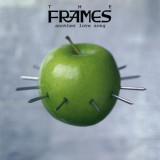
"Another Love Song - The Frames are an Irish indie rock band formed in Dublin in 1990. The band is known for their passionate and emotive sound, which blends elements of rock, folk, and traditional Irish music. Over the years, they have released several critically acclaimed albums, including ""Another Love Song,"" which is widely regarded as one of their most influential works.
""Another Love Song"" was released in 1991 and marked a turning point in the band's career. The album featured a raw, stripped-down sound that was a departure from their earlier, more polished work. The songs on the album were deeply personal and introspective, exploring themes of love, loss, and the complexities of human relationships. The album's title track, ""Another Love Song,"" became an instant classic, showcasing the band's signature sound with its driving rhythms and soaring vocals. The song's bittersweet lyrics and haunting melody struck a chord with listeners and quickly became a fan favourite.
In addition to ""Another Love Song,"" the album features several other standout tracks, including ""Say It to Me Now,"" ""The Dancer,"" and ""Downhill."" Each song on the album showcases the band's dynamic musicianship and poetic lyricism, earning the album a reputation as a seminal work in the Irish indie rock scene. Over the years, The Frames have continued to evolve and innovate, releasing several more critically acclaimed albums and earning a dedicated following of fans around the world. With their unique blend of raw emotion and musical artistry, The Frames continue to inspire and captivate audiences with their powerful, soulful music.
Fitzcarraldo - ""Fitzcarraldo"" is the sixth studio album by the Irish rock band The Frames, released in 1995. The album marked a significant departure from the band's earlier work, with a more experimental sound that blended rock, folk, and experimental elements.
The album takes its name from the Werner Herzog film of the same name, which tells the story of a man who attempts to build an opera house in the Amazon jungle. This theme of ambition and perseverance in the face of adversity runs throughout the album, as frontman Glen Hansard explores themes of love, loss, and the human experience. The album opens with the hauntingly beautiful track ""Revelate,"" which sets the tone for the rest of the album with its soaring vocals and intricate guitar work. From there, the album takes the listener on a journey through a diverse range of sounds and emotions, from the upbeat rock of ""What Happens When the Heart Just Stops"" to the melancholic balladry of ""Fitzcarraldo.""
One of the standout tracks on the album is ""Lay Me Down,"" a tender and heartfelt ballad that showcases Hansard's powerful vocals and poetic lyricism. The song has become a fan favourite and is often performed live by the band. Another highlight of the album is the epic nine-minute track ""Fitzcarraldo,"" which features lush instrumentation and intricate guitar work. The song is a tribute to the film of the same name and explores themes of ambition and determination in the face of seemingly insurmountable obstacles.
Overall, ""Fitzcarraldo"" is a powerful and deeply personal album that showcases The Frames at their most ambitious and experimental. With its diverse range of sounds and emotions, the album remains a fan favourite and a landmark in the Irish rock canon.
Dance the Devil
Dance the Devil is the fourth studio album by the Irish rock band, The Frames. Released in 1999, it marked a significant departure from the band's earlier sound and was a critical and commercial success.
The album features 10 tracks, including the hit single ""Pavement Tune,"" which received extensive radio play and helped to propel The Frames to greater prominence in the music industry. Dance the Devil showcases the band's versatility and musical prowess, blending elements of rock, folk, and pop to create a unique and compelling sound. The lyrics are introspective and poetic, exploring themes of love, loss, and self-discovery.
Produced by Steve Albini, the album was recorded in just five days, giving it a raw and unpolished feel that perfectly captures the energy and passion of The Frames' live performances.
Dance the Devil remains a beloved album among fans of Irish music and continues to inspire new generations of musicians. Its enduring popularity is a testament to the artistry and vision of The Frames and their commitment to pushing the boundaries of what is possible in rock music.
"
"Another Love Song - The Frames are an Irish indie rock band formed in Dublin in 1990. The band is known for their passionate and emotive sound, which blends elements of rock, folk, and traditional Irish music. Over the years, they have released several critically acclaimed albums, including ""Another Love Song,"" which is widely regarded as one of their most influential works.
""Another Love Song"" was released in 1991 and marked a turning point in the band's career. The album featured a raw, stripped-down sound that was a departure from their earlier, more polished work. The songs on the album were deeply personal and introspective, exploring themes of love, loss, and the complexities of human relationships. The album's title track, ""Another Love Song,"" became an instant classic, showcasing the band's signature sound with its driving rhythms and soaring vocals. The song's bittersweet lyrics and haunting melody struck a chord with listeners and quickly became a fan favourite.
In addition to ""Another Love Song,"" the album features several other standout tracks, including ""Say It to Me Now,"" ""The Dancer,"" and ""Downhill."" Each song on the album showcases the band's dynamic musicianship and poetic lyricism, earning the album a reputation as a seminal work in the Irish indie rock scene. Over the years, The Frames have continued to evolve and innovate, releasing several more critically acclaimed albums and earning a dedicated following of fans around the world. With their unique blend of raw emotion and musical artistry, The Frames continue to inspire and captivate audiences with their powerful, soulful music.
Fitzcarraldo - ""Fitzcarraldo"" is the sixth studio album by the Irish rock band The Frames, released in 1995. The album marked a significant departure from the band's earlier work, with a more experimental sound that blended rock, folk, and experimental elements.
The album takes its name from the Werner Herzog film of the same name, which tells the story of a man who attempts to build an opera house in the Amazon jungle. This theme of ambition and perseverance in the face of adversity runs throughout the album, as frontman Glen Hansard explores themes of love, loss, and the human experience. The album opens with the hauntingly beautiful track ""Revelate,"" which sets the tone for the rest of the album with its soaring vocals and intricate guitar work. From there, the album takes the listener on a journey through a diverse range of sounds and emotions, from the upbeat rock of ""What Happens When the Heart Just Stops"" to the melancholic balladry of ""Fitzcarraldo.""
One of the standout tracks on the album is ""Lay Me Down,"" a tender and heartfelt ballad that showcases Hansard's powerful vocals and poetic lyricism. The song has become a fan favourite and is often performed live by the band. Another highlight of the album is the epic nine-minute track ""Fitzcarraldo,"" which features lush instrumentation and intricate guitar work. The song is a tribute to the film of the same name and explores themes of ambition and determination in the face of seemingly insurmountable obstacles.
Overall, ""Fitzcarraldo"" is a powerful and deeply personal album that showcases The Frames at their most ambitious and experimental. With its diverse range of sounds and emotions, the album remains a fan favourite and a landmark in the Irish rock canon.
Dance the Devil
Dance the Devil is the fourth studio album by the Irish rock band, The Frames. Released in 1999, it marked a significant departure from the band's earlier sound and was a critical and commercial success.
The album features 10 tracks, including the hit single ""Pavement Tune,"" which received extensive radio play and helped to propel The Frames to greater prominence in the music industry. Dance the Devil showcases the band's versatility and musical prowess, blending elements of rock, folk, and pop to create a unique and compelling sound. The lyrics are introspective and poetic, exploring themes of love, loss, and self-discovery.
Produced by Steve Albini, the album was recorded in just five days, giving it a raw and unpolished feel that perfectly captures the energy and passion of The Frames' live performances.
Dance the Devil remains a beloved album among fans of Irish music and continues to inspire new generations of musicians. Its enduring popularity is a testament to the artistry and vision of The Frames and their commitment to pushing the boundaries of what is possible in rock music.
"
- Asking Is There Anything You Believe That You Would Be Willing To Die For, And The Difference Between The Way That Most Beliefs Have Been Accepted/Tolerated And
- A1: Broken And Beaten In 5/8 Time Part 1. Beaten 6:34
- 2: What's It All For?10:39
- 3: Broken And Beaten In 5/8 Time Part 2. Broken 7:6
- 4: Mass Exodus (A Hymn)
- Acceptance Is Not Respect Part One: The Revolution Of Defiance(23:19)
- 1: Anthem For A New Beginning
- 2: Slide Down To Power Off
- 3: What Failure Looks Like
- 4: And So We Rise Again Part Two: Three Martyrs: Pressing, Stoning And Saltire 1/St. Stephen 6:29
- 2: St. Andrew 7:7
- 3: St. Margaret 7:50
In August 2020, following some typical delays at the plant, Fourth Dimension Records released the limited edition 2LP (and now sold out) set of Kleistwahr's This World Is Not My Home and Over Your Heads Forever albums, originally released by the same label in 2014 and 2016 respectively. Packaged together in a single sleeve with printed inners reproducing all the artwork found on the original CDs, the 2LP was always designed to represent the first volume in a series of them. This next volume gathers everything on the next two albums, Down But Defiant Yet and Acceptance is Not Respect, both also initially released on CD in, respectively, 2017 and 2018, and presented in the exact same way. 2017's long sold out at source album, Down But Defiant Yet, collects four lengthy cuts which catch Gary Mundy (also known for Ramleh, Breathless and Broken Flag Records) furrowing his distinct and recognisable take on a kinda contemporary psychedelia with dystopian leanings. Each piece nods towards the fug generated by certain ‘krautrock’ groups whilst retaining threads of those uncompromising power-noise surges he built his reputation on, this is music guaranteed to take you to new spaces before forcing you to nervously look over your shoulder. 2018's Acceptance is Not Respect collects two lengthy pieces themselves broken down into seven parts often tempered to the point restraint assumes new, often disturbed (and disturbing) psychedelic or even filmic, properties, this music arrives like a spitting and foaming scream into the insanity of the void and the myriad challenges and questions it inexorably keeps hurling at us. Whereas Ramleh captures the sound of at least two people dealing as best they know how with the constantly rising rivers of shit around us, Kleistwahr is akin to one man having scaled a great height poking out of an infinite chasm and wondering why he bothered. This is uneasy listening sometimes renderedvirtually elegiac by dint of a prowess rarely found in such realms. Of this, Gary himself quite prophetically, in light of how events have shaped the world since said, “I was trying to make the music more spiritual sounding this time as the album is about belief. The first half is about personal and political belief and the second half about religious belief. I was wondering about whether in the 21st Century, you can seriously get anyone to completely change their beliefs and [am] asking is there anything you believe that you would be willing to die for, and the difference between the way that most beliefs have been accepted/tolerated and [are] supposedly respected in recent times in [the UK]. Now our society is starting to break down, it becomes clear that that acceptance tends not to actually be the same thing as respect at all.”
The continuing growth of Maik Krahl as a melodic improviser, bandleader, and composer is distinctly evident in this new release. In-Between Flow, Krahl’s third outing as leader, is a portrait of a young artist who has gone through many years of dedicated hard work, study, experimentation, and refinement in order to achieve this level of instrumental and artistic progress. Krahl belongs to a new generation of improvisers who have acquired a breadth of technical and theoretical facility, while not losing the spontaneity and rawness of this music we call jazz. As a bandleader, he chooses his colleagues wisely and for this date is joined on a few tracks by the visionary guitarist Kurt Rosenwinkel, whose brilliant playing adds a cherry on top of this already delicious line up.
The title In-Between Flow refers to ever evolving progression of our human condition. As in nature, the human spirit can expand and unfold, maturing to a new state where it may settle for a while until some new impulses inspires another transition. These transitions, sometimes subtle, sometimes abrupt; as well as the times of contentedness and serenity are the inspirations for this music.
The record opens up with an ode to the town Krahl calls home. Cologne 4 AM, begins with a haunting melody by Krahl’s soft yet powerful horn before settling into a perfect vehicle to display his command of melodic and motivic story telling. There is something about the time of 4 AM that seems to permeate literature and music, and this track will add to the canon of artistic references to this magical time where the night meets the morning.
Mr. Rosenwinkel joins the band for Slosetta, which is a great example of Krahl’s ability to craft a tune. As is to be expected, Rosenwinkel weaves through the changes with grace and mastery, obviously enjoying the communication with the rhythm section, who are undeniably inspired by his harmonic, rhythmic and melodic ingenuity.
Jakob Kühnemann, a Bandleader and composer is his own right, has been an in demand bassist on the German and European scene for several years, and his contribution to this record is proof of why that is. Although Krahl takes the lead on Drizzle Counter, in a great display of technical virtuosity, it is Kühneman who stands out on this track. It is not only in his improvisation, but more so in his poly rhythmic pulses dancing up from the deep and the harmonic insinuations in his accompaniment of Krahl’s solo that demonstrate his musical mastery.
Rosenwinkel joins again for No Claim Claim, a composition so balanced that I would not be surprised to hear other artists recording or performing it in the future. After Krahl’s melodically inventive statement, Rosenwinkel shifts the band to the next gear building the intensity towards the out head.
Constantin Krahmer has been Krahl´s piano player since his debut record, Decidophobia. His patience, ingenuity, and big ears make him a perfect accomplice to Krahl, and his sensitive yet powerful approach and accompaniment on Reconstruction of a Dream as well as his harmonic and melodic inventiveness on Vinaceous Clouds (where he plays Fender Rhodes) make it clear why he is an integral part of this unit.
Ms Ludgate is a funky composition with angular melody that is another feather in the cap of the band leader. Kurt Rosenwinkel is back, and seems more than willing to engage in some rhythmic dialogue with the spectacular young drummer on the date, Fabian Rösch. Throughout this entire record Rösch is subtly but strongly guiding the band, playing his role as a supportive and interactive proponent to the music. We will surely be hearing much more from this young man with such a refined sound and clear rhythmic conception.
Flawless Sunday, a perfect closing statement for this record. The melody is another great example of Krahl’s growth as a composer. The whole rhythm section really shines on Krahmer’s choruses, where the three colleagues push and dare each other rhythmically as well as harmonically before Krahl enters and brings the record to a close with his beautiful rich tone and melodic playing.
It is a great pleasure to hear the growth of a young artist with such dedication and vision. Hearing how Krahl and his band mates navigate through the vicissitudes of this music is an inspiration that can be mirrored in everyday life. A lesson in accepting the ever changing flow from one state to another. Growing, learning, and evolving into a new state, until the process begins anew. In-Between Flow.
Repress!
Japanese crustpunk and grindcore icon Eri Fuzz-Kristiansen, aka Gallhammer’s Viviankrist, keeps
the curveballs coming on Diagonal with a bloodied mastication of charred noise and and rhythmic
electronics, following up the label’s acclaimed sides by Sote and Not Waving/Jim O’Rourke
Co-released with the metal-minded Ritual Productions label, ‘Cross-Modulation’ is a brutal
testament to the acridly personalised sound that Viviankrist has explored solo since 1995 in Tokyo,
when she performing vocals, sax and SP-202 sampler in her first industrial/noise unit. 23 years
later her music is still sorely raw, yet riddled with a new found poignance and atmospheric unease
that places her music sometimes as close to Kali Malone’s see-sawing dissonance as the power
electronics of Pan Sonic or the possessed pulses of Conrad Schnitzler and Merzbow.
Since the demise of Eri’s main project Gallhammer at the start of this decade, when she moved
from Tokyo to Oslo (home of her husband and bandmate in Sehnsucht, Maniac - also former
vocalist for BM legends Mayhem), she returned to her early Viviankrist alias from 2017 as a place
to express her primitivist-futurist urges, resulting a trio of CDs including the vicious solo strike
of ‘Morgenrøde’ for Cold Spring. Now on ‘Cross-Modulation’ she intuitively tempers that album’s
phosphorous burn with a deadly incisive application of what Black Metal/Techno pioneer Black
Mecha terms “mentation electronics.”
Alloying avant-metal with rhythmic noise, ambient techno and mind-bending drone to a
metallurgic tang, ‘Cross-Modulation’ serves a dense flux of energies in seven parts, piercing a path
thru maelstrom electronics in ‘Eleventh’ to churn up grizzled Vainio-esque rhythms in ‘Blue Iron’,
while the tenderly bruised ambience of ‘Midnight Sun’ provides a bittersweet palette cleanser for
the tart technoid prang of ‘Insects’, a bout of slow gripping psychedelia in ‘Out of Body’, and the
rugged North European pastoralism of ‘Behind Mirror.’
repressed !
Number 060 in our catalogue, and we are keeping it tight and sharp. Oscar Mulero is the mind behind this creature, offering three cuts of merciless techno exercises both physically and digitally.
Opening track is "Tormenta", Storm in spanish, a fast paced groove with almost all elements up from the very beginning. Wisely distorted drums, continuous filtered sequences, a sharp elastic line running and mutating across the structure. Direct and mental at the time.
"Espectro Rojo", Red spectrum translated begins with obsessive distorted evolving lines, shuffled hi hats and precise kicks. The stereo field is constantly worked out augmenting the experience exponentially.
"Gradiente de Voltaje" closes the EP, the overall feel is less distorted and more opaque and lo-fi. The liquid filtered bassline is soon joined by distorted hats, alternating patterns and twisting the sounds wisely. No sudden interruptions, no abrupt changes, just the right dose of hypnosis to use as a powerful tool.
The Search for God is a wake-up call for a troubled world that’s still worth saving, animated by a belief in the power of small connections to add up to big changes. At 10 songs delivered in a brief 15 minutes, Jimmy Whispers’ long-awaited sophomore album feels present in a way that feels brand new for the cult auteur. Like many of us, Jimmy has been affected by the pressure of the past few years. After embracing sobriety in 2019, and now as a filmmaker sharing the stories of lesser known Los Angeles community members, he’s brought his dreaming down to earth, while turning its direction even further out.
Recorded with his longtime friend Ziyad Asrar of the band Whitney (and re-recorded after a hard drive incident destroyed the original files), The Search for God was created in the wake of Jimmy’s COVID isolation, and returns to some teen influences that are out of step with the chill/lo-fi LA indie rock scene he’s found himself lumped in with. Created mostly with two vintage synths, a single Roland CR5000 drum machine, and a busted karaoke machine, it channels Midwestern emo, the Beach Boys’ Smile, subtle nods at hyper-pop production, and forgotten jewel-box era college radio of the early aughts into a pure pop sound that transcends easy categorization.
The album’s standout single—and its statement of purpose—is “Hellscape,” which packs more into a minute and 40 seconds than you’d think possible: multiple immediately-unforgettable hooks, kaleidoscopic keyboards, and a bracing reminder that even the most transcendent moments are rooted in a world full of suffering. “This is a fucking hellscape,” Jimmy sings. “This is real life / this is happening.”
That may sound like punk nihilism, but The Search for God is anything but. Every lyrical acknowledgment of how fucked things are right now comes with a promise that we can still make positive changes. Jimmy calls it “God”; you might call it Love or Peace or A Place In the Universe That Makes Some Kind of Sense.
Will The Search for God deliver whatever that is to you? Of course not. At its heart, it’s still just a really good pop album. But maybe that’s enough. For a minute or two at a time, Jimmy’s music cracks open a space where the divine can enter our lives. The utopia we’ve all been dreaming of is already here if we’re just willing to build it. Jimmy Whispers is there, ready to add his voice, whenever we want to reach out.