- A1: Making Time
- B1: Try & Stop Me
- C1: Painter Man
- D1: Biff Bang Pow
- E1: If I Stay Too Long
- F1: Nightmares
- G1: Life Is Just Beginning
- H1: Through My Eyes
- I1: How Does It Feel To Feel
- J1: Tom Tom
- K1: Midway Down
- L1: The Girls Are Naked
- M1: Bony Moronie
- N1: Mercy, Mercy, Mercy
- O1: For All That I Am
- P1: Uncle Bert
- Q1: Cool Jerk
- R1: Ostrich Man
- S1: Can I Join Your Band
- T1: I Am The Walker
Buscar:pow pow
- 1: Filthy Air
- 2: Fibonacci
- 3: Love Spell
- 4: Do You Believe¿
- 5: Age Of Aquarius
- 6: Age Of Pisces
- 7: Spellcaster
- 8: Mystery Ft. Lojii
- 9: Hometown Hero
- 10: Telekinesis Freestyle Ft. Marco Plus
- 11: Curses
- 12: Wtf Did You Summon¿ Ft. Vash Noir
- 13: Enchanted Herbs Ft. Dev Slang 02:00
- 14: 3Am Gems Ft. Uptown Slang
- 15: Fashion Week Ft. Kent Loon
- 16: Yahseh Ft. Hekate Kai
- 17: Continuum
- 18: Magic Or Miracle Ft. Archibald Slim
- 19: Hexagram Ft. Gabe Nandez
- 20: Smell The Marigolds Ft. Chuuwee
- 21: Hoodwink Ft. Og Xiv
- 22: Protection Charm
- 23: Black Opal
Before he was old enough to legally drink, there were "Best Of," rarities compilations, and .zip files floating through the ether.
Whenever industry prospectors earmarked him as the next big thing, he disappeared back underground, only to reemerge sharper, leaner, weirder.
Though only 26, the St. Louis- born rapper and producer has seen enough for several lifetimes--and raps as if he's tapped into many more. But after a few years of highs, lows, and traumatic odysseys, he was able to stare straight into the abyss and conquer it. This regained confidence is exhibited on fish don't climb trees, the largely self-produced new album that reaffirms him as one of rap's great auteurs.
While working on "fish", he vowed to be more true to the emotions and experiences he'd endured. Being true to those fractured, discordant feelings requires a prismatic approach. And so you get fish's exhilarating hairpin turns: from downtempo dub ("bora bora") to 808s rattling through a haunted house ("tourniquet"), beats that sound as if they're molting into new shapes in real time (the two- song suite of "daze" and "grey theory") to ones that that plunge to the
bottom of a pocket ("spirits").
The album's title comes from the maybe-apocryphal Einstein quote, about how a fish judged by its ability to climb trees will "spend its whole life believing it is stupid." For Watson, this meant embracing the cheery first half of the quote ("Everybody is a genius"), but also being cognizant of the dark undercurrents that flow just beneath seemingly innocent misjudgments and mis-categorizations.
In early 2023 PNFG will bring the definitive expanded version of Biff Bang
Pow's seminal "The Girl Who Runs The Beat Hotel" available on both Pink
and White vinyl and featuring an expanded track listing as below
"Someone Stole My Wheels""Love's Gone Out of Fashion" "She Never Understood"
"He Don't Need That Girl" "She Shivers Inside" "The Beat Hotel" "The Happiest Girl
in the World" "If I Die" "Five Minutes in the Life of Greenwood Goulding" "The
Whole World Is Turning Brouchard!" + "It Happens All The Time" "It Makes You
Scared" "Sunny Days" "The Death of England"
In early 2023 PNFG will bring the definitive expanded version of Biff Bang
Pow's seminal "The Girl Who Runs The Beat Hotel" available on both Pink
and White vinyl and featuring an expanded track listing as below
"Someone Stole My Wheels""Love's Gone Out of Fashion" "She Never Understood"
"He Don't Need That Girl" "She Shivers Inside" "The Beat Hotel" "The Happiest Girl
in the World" "If I Die" "Five Minutes in the Life of Greenwood Goulding" "The
Whole World Is Turning Brouchard!" + "It Happens All The Time" "It Makes You
Scared" "Sunny Days" "The Death of England"
SABROSA pays tribute to the BEASTIE BOYS with two instro-mental cuts that borrow elements from "Sure Shot" out of their classic album, "Ill Communication".
Sure Pow is a great fuzzy, wah wah guitar Grant Green-on-steroids soundtrack approach to "Pow" from "Check Your Head", while Tangerine Shot is a cover of Suco De Tangerina, an instrumental track out of their "Mix-Up" Lp that takes a twist into Dub territoire…Pure fiyah!
A new sub-label of the longstanding Canadian electro imprint Suction Records, Ice Machine — focusing on old-school wave/post-punk sounds — is thrilled to present a new, deluxe reissue of “Pow Wow”, the debut 1982 solo LP from Cabaret Voltaire’s Stephen Mallinder. Now expanded to a double-LP, and also released on CD/digital, it’s a definitive reissue which now includes Mallinder’s early solo discography in its entirety. This collection of mutant dub/funk/postpunk sounds just as fresh and contemporary in 2020 as it did in 1982 (note Autechre’s inclusion of standout cut “Del Sol” in a mix earlier this year), and highlights Mallinder’s crucial contributions to Cabaret Voltaire.
Some words from Mr.Mallinder on the scene and era from which “Pow Wow” was born: “It was an interesting, and inspiring, time. The primal caterwaul of punk was dying and lots of really significant things were emerging from the fires. Much looser vibes were in the air and there was a much more exploratory feel. Punk had championed a visceral, anti-intellectual approach but in truth the real characters brought so much more to the table, and what began to happen - from people like The Pop Group to Throbbing Gristle, and emerging scenes from No New York to Factory Records - is we began to embrace the art of it all. There was acknowledgement of the importance of books, films, graphic art, and experimentation with all those mediums. We were just as interested in turning over rocks to see what lay beneath, as throwing them. There was a sense of new magik emerging.”
“Pow Wow” was commissioned by the Fetish Records label, and recorded at the Cabs’ Western Works studio, where Mallinder would spend his days recording with Cabaret Voltaire, and continue on alone into night recording his debut solo material. “I slept very little in those days,” he adds, continuing: “It was done on 8 track and very multi-tracked, so lots of recording, then bouncing, and overdubbing, to get the integrated feel of the tracks. I became very adept at pressing record then jumping onto equipment to play it - it was actually a very 'live' record in that sense. I've always seen rhythm at the core of what I do so I loved the layering of counter rhythms. The sequence/arpeggiator parts were all drum machine triggers that were played live. It was about creating a distinct groove so arrangements came from weaving in and out of those linear grooves. It was fun to play everything from drums, guitars, keys, trumpet, percussion, tapes… and record and produce it all. Prince got it from me!”
Surprisingly, Mallinder’s first solo LP would also prove to be his last - that is, until last year’s critically-acclaimed solo return “Um Dada”, on Dais.
This new edition of “Pow Wow” contains 14 songs, and is housed in a recreation of the original, iconic Neville Brody jacket, painstakingly recreated using scans of Brody’s original artwork elements. The 2LP vinyl edition is in a reverse board, thick-spine jacket, and adds a 12”x24” folded poster/insert, featuring unused elements from Brody’s original designs, sketches, and instructions for the LP. The CD edition comes in a reverse board, 6-panel digipack.
2-11 from the Pow-Wow LP on Fetish Records, 1982.
13-14 from the Temperature Drop / Cool Down 12” on Fetish Records, 1981.
12 from the Fetish Records compilation The Last Testament, 1983.
1 edit from the Pow-Wow Plus LP on Fetish Records (Japanese pressing), 1984.
Two all time Jazz dancers: Nancy Ames release two great album back in the late 60s Latin Pulse' was first & Spiced with Brazil was second, both Dynamite Cuts is releasing one track from each album to make this limited edition 7' 45 x500 only
club classics
DYNAM7009
Track A - Carcara' Boom, this just jumps right out at you. An amazing Latin dancer. Which also has Dynamite Vocals that just drag you into the song. Nothing but Explosive Jazz vocals, FIRST TIME ON 7'
Track B - Pow, Pow, Pow' a masterful version of this dance floor anthem. Nancy yet again delivers a superb vocal. Perfect sound of the day.
never before on 7' 45 vinyl must have track
- A1: James Booms - Psalms 20
- A2: The Upsetter - Proverbs Of Dub
- A3: Errol Walker - Better Future
- A4: The Upsetter - Future Dub
- A5: Zap Pow - River
- A6: Earl Sixteen - Freedom
- B1: The Hombres - Africa
- B2: The Upsetter - Foundation Dub
- B3: Leo Graham - Voodooism
- B4: The Upsetter - Dubism
- B5: The Black Notes - African Style
- B6: Lloyd & Devon - Wolf Out Deh
- B7: The Upsetter - Shepherd Rod
2022 is the 40th Anniversary of Iron Maiden’s Iconic third album The Number of The Beast. The first Iron Maiden album to feature Bruce Dickinson on vocals, The Number of the Beast was also the band’s first album to hit the number 1 spot in the UK. The album spawned the crossover hit singles Run To The Hills and The Number of The Beast, and introduced the band to a truly global audience.
To celebrate this milestone anniversary Iron Maiden release a very special 3LP collectors vinyl featuring the original album with revised track list plus the legendary 1982 live show from Hammersmith Odeon ‘The Beast Over Hammersmith’.
The original album replaces Gangland with Total Eclipse in a revised track list. The accompanying double live album The Beast Over Hammersmith is presented on vinyl for the first time.
This collectible 180g 3LP vinyl set is packaged in a double gatefold sleeve featuring a special ‘split’ cover image and many rare photos from the time. Also, featured are excusive sleeve notes from Steve Harris.
- CD1 1: Life Is Strange
- CD1 2: The Black Frame - Black Rainbow Woman
- CD1 3: Maceo Plex - Discotico Plexico
- CD1 4: Paulor - Discotico Desertico
- CD1 5: Superpitcher - Rainboy Superspacer
- CD1 6: Pow Pow
- CD2 1: A Numb Gas To The Future
- CD2 2: Fantastic Twins - Fantastic Pow Pow
- CD2 3: Want
- CD2 4: Mike Simonetti - Discotico Simonettico En Panico
- CD2 5: Mike Simonetti - Discotico Simonettico Hypnotico
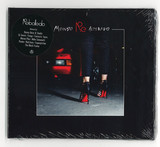
Following 2016's much-acclaimed solo album Mondo Alterado (HIPPIE 008CD/LP), original Pachanga Boy and Hippie Dance mentor Rebolledo returns to the limelight with the jam-packed Mondo Re-Alterado, tapping into his vast and varied network of friends and fellow soundsmiths. Artists such as Superpitcher, DJ Tennis, Maceo Plex, Red Axes, Fango, or Fantastic Twins deliver stunning takes on Rebolledo's unique signature sound, creating a full suite of exclusive remixes, cover versions, and reinterpretations. From the super-energetic club rumblings of Maceo Plex's "Discótico Pléxico" to DJ Tennis's dreamy "Pimiento Drive Version" of "A Numb Gas To The Future" or Fantastic Twins' party bomb "Fantastic Pow Pow", the journey through Mondo Re-Alterado is full of twists and turns -- a world where an epic, cinematic soundscape such as Superpicher's "Rainboy Super Space" sits comfortably alongside the claustrophobic, punishing banger that Fango sculpted from stand-out cut "Pow Pow". Meanwhile, Red Axes turn the casual narrative of "Life Is Strange, Life Is Hard, Life Is Great" into a bouncing workout -- a great companion piece to "WANT", Danny Daze and Shokh's propulsive, jagged dub version of "Fears Come True". Other highlights include Jörg Burger aka The Black Frame with the lush "Black Rainbow Woman", Paulor's country rock extravaganza "Discótico Desértico" and not one, but two excellent contributions from former Italians Do It Better honcho Mike Simonetti. It's a magical, surprising ride that finds beauty in contrasts -- while staying tuned to Rebolledo's spirit of adventure and powerful sense of style.
After his successful debut album SUPER VATO (CÓMEME CD LP 01) from two thousand eleven, his highly praised mix CD MOMENTO DRIVE (KOMPAKT CD 117) from two thousand fourteen, and all-around mayhem during his adventures as one half of the Pachanga Boys, Xalapa's finest REBOLLEDO returns with his second solo album MONDO ALTERADO: a recollection of moments and experiences from recent years, colorful mnemonics encompassing the brightest and the darkest. The result is a kind of soundtrack for a movie that doesn't exist, a sonic journey designed like a mixtape that faithfully reflects Rebolledo's background as DJ and producer. Nine tracks connect for one overarching narrative, sharing elements, motives, details as they blend together. The artist's signature can be found all over the place, roaming between straight, rock-drenched drumming, sinister atmospheres, raw synth textures, exciting peaks and foggy bottoms - but always following this kinetic flow and drive which is such a big part of Rebolledo's compelling charme.
Arguably one of Get Physical’s most influential tracks, ‘O Superman’ sees a new release with remixes from Man Power and SIS alongside the 2008 version from Robag Whrume and a remaster of the now classic original. Man Power kicks off the new interpretations with an epic, ten and half minute version that patiently stretches the original’s melodies into pads and held bass tones across crisp, micro-house styled beats before unleashing loose, clattering breakbeats after a striking, extended breakdown. SIS’s dreamy, percussive version sees the German producer in hypnotic, and tracky form, focussing on the ebb and flow of the original’s tuneful vocoder and synth work that drift across his perfect groove. Robag’s Pumper-Nikkel remix, for those that missed it some years back, is yet another funky, chopped, sliced and diced piece of work from the playful producer and still sounds as fresh as ever. M.A.N.D.Y. vs Booka Shade feat. Laurie Anderson - O Superman Remixes are released on Get Physical 12” in late July with a digital release following in the Autumn.
Bosconi Records proudly introduces Neon Cyberwave, the first solo EP on the label by Italian electronic visionary Miguel Herrnandez, marking a milestone in the evolution of an artist who has consistently bridged Detroit-rooted aesthetics with the experimental pulse of the European underground.
Based in the Val d’Elsa region between Florence and Siena, Miguel has forged a unique sonic identity shaped by his devotion to vinyl, his deep connection to the techno capital the “Motor City”, and his passion for deeply rooted yet still futuristic electronic culture.
His productions and DJ sets—built on a seamless fusion of raw electro, deep house attitudes, new beat flavors, and timeless grooves—have appeared on respected labels such as Bosconi, Rawax, and Norm Talley’s Upstairs Asylum. With Neon Cyberwave, he now delivers his most complete and personal statement to date.
The EP opens with “Neon Cyberwave”, a powerful acid-driven stomper built around a rolling 303 bassline, warm melodies, and an emotional breakout moment that captures both the effectiveness and the sensitivity of Miguel’s approach. It flows naturally into “Italo FM”, a track infused with Italo disco spirit—choir-like harmonies, a punchy bassline, and a groovy, ecstatic progression that turns into a genuine dancefloor trigger.
The journey deepens on the flip, where “VHS Direct Drive” introduces a dystopian atmosphere characterized by constantly shifting, unusually toned bass movements—unpredictable yet catchy, fresh yet rooted in classic electro DNA. This is followed by “Electric Soul Stranger”, where Miguel navigates Drexciyan undercurrents and subtle Gigolo-era references, balancing between straight rhythmic propulsion and broken-beat twists to create a cold, mental, transportive electro experience.
The record closes with the epic “Punky Shift”, a dramatic and powerful finale echoing the spirit of artists like The Hacker. Dramatic strings, an intense acid bassline, and a massive groove come together to shape a timeless closing track—one designed for peak emotional moments, sunrise sets, and long-lasting memories.
With Neon Cyberwave, Miguel Herrnandez has crafted a work that feels fresh yet nostalgic, classic yet forward-facing, and deeply personal. It stands as a versatile DJ weapon, a tribute to electro’s past and future, and a defining chapter in the artistic evolution of one of Tuscany’s most intriguing electronic voices.
- A1: Les Masques - Il Faut Tenir (1969)
- A2: Isabelle Aubret - Casa Forte (1971)
- A3: Christianne Legrand - Hlm Et Ciné Roman (1972)
- A4: Jean Constantin - Pas Tant D'chichi Ponpon (1972)
- A5: Billy Nencioli & Baden Powell - Si Rien Ne Va (1969)
- B1-: Marpessa Dawn - Le Petit Cuica (1963)
- B2: Jean-Pierre Sabar - Vai Vai (1974)
- B3: Sophia Loren - De Jour En Jour (1963)
- B4: Isabelle - Jusqu’à La Tombée Du Jour (1969)
- B5: Sylvia Fels - Corto Maltesse (1974)
- C1: Frank Gérard - Comme Une Samba (1972)
- C2: Ann Sorel - La Poupée Des Favellas (1971)
- C3: Charles Level - Un Enfant Café Au Lait (1971)
- C4: Andrea Parisy - Les Mains Qui Font Du Bien (1970)
- C5: Audrey Arno - Quand Jean-Paul Rentrera (1969)
- C6: Aldo Frank - T’as Vu Ce Printemps (1970)
- D1: Christianne Legrand - Cent Mille Poissons Dans Ton Filet (1972)
- D2: Clarinha - Lemenja (1970)
- D3: Hit Parade Des Enfants - Aquarela (1976)
- D4: Jean-Pierre Lang - Tendresse (1965)
- D5: Magalie Noël - Une Énorme Samba (1970)
- D6: Françoise Legrand - La Lune
Ever since the late 1950s bossa-nova revolution, Brazil’s influence on French music has been undeniable. Pierre Barouh, Georges Moustaki and a vast array of lesser known artists, all made the Musica Popular Brasileira (MPB) an axis of promotion at the service of a cool and metaphysical, modern and mixed Brazilian lifestyle. Some were seduced by the poetic languors of the bossa, some were looking for fun, and others just loved the American hybridization of jazz-bossa, jazz-samba.
What is bossa nova? One of its creators, Joao Gilberto said: "Its style, cadence, everything is samba. At the very start, we didn't call it bossa nova, we sang a little samba made up of a single note - Samba de uma nota so .... The discussion around the origins of bossa nova is therefore useless”. It is nevertheless useful to remember that these magnificent Brazilian songs, which the guitarist describes as samba, were shifted and balanced around improbable chords. "I like things that lean, the in-betweens that limp with grace," said Pierre Barrouh, quoting Jean Cocteau.
With emotion, arrangements for violin and supple guitar licks, bossa nova rapidly changed. A transformation that can be heard in the Tchic, tchic, French Bossa Nova 1963-1974 compilation, the result of a cultural reappropriation, which traveled through the United States and supplemented itself in France.
A musical revolution that has remained significant, bossa nova was born in Rio. From 1956 to 1961, Brazil lived through its golden years. In five years, the country had invented its modernist style. Elected president in 1956, Juscelino Kubitschek de Oliveira, an elegant man with a broad forehead, brandished a promising slogan: "Fifty years of progress in five years". He quickly got to work. Not worried about increasing debt, he launched the project for a new federal capital, Brasilia, designed by the communist architect Oscar Niemeyer. Volkswagen opened state-of-the-art factories and created the “fusquinha”, the Beetle. In Rio, the Vespa made its first appearance. The Arpoador Surf Club crew run into the “girl” from Ipanema, Helô Pinheiro - the tanned garota ("chick"), between a flower and mermaid, who at 17 walked by the Veloso bar, where the fiery author and composer, Tom Jobim and Vinicius de Moraes, were getting drunk on whiskey. From then on, bossa symbolized cool.
In 1958, Joao Gilberto recorded Chega de Saudade, which the directors of Philips denied, calling it "music for fagots". The marketing director, who believed in it, secretly pressed 3000 78-inch vinyls and distributed them at schools around Rio, creating a tidal wave.
American jazzmen then took over. In particular, trumpeter Dizzy Gillespie and guitarist Charlie Byrd. In November 1962, the Brazilian Ministry of Foreign Affairs funded a "Bossa-Nova" concert at Carnegie Hall in New York, inviting the genre’s pioneers. Unprepared, the show soon turned to disaster. But the troupe was invited to the White House by Jackie Kennedy. The first lady loved "the new beat" and in particular Maria Ninguem, a song by Carlos Lyra, later covered by Brigitte Bardot.
In Brazil, the 1964 military coup quickly ended this euphoria. The destructive atmosphere that ensued pushed many Brazilian musicians to leave, if not to exile. Thus, Tom Jobim, Sergio Mendes and Joao Gilberto arrived to the United States. In New York, Joao Gilberto met saxophonist Stan Getz. At the time, he was married to the Bahianese Astrud Weinert Gilberto, who had a German father. She had never sung before, but she knew how to speak English. Getz therefore asked her to replace her husband on The Girl From Ipanema. The Getz/Gilberto record with Tom Jobim on piano, was released in March 1964. Phil Ramone, the "pope of pop" was in charge of sound.
Bossa nova arrived in Paris through the classic “guitar-voice” channel (Pierre Barouh, Baden Powell, Moustaki…) But France loved jazz and Paris had already welcomed its American contributors. All these good people were to pass through Saint-Germain-des-Prés. The cabaret l'Escale became the Mecca of Latin American sound where one could find Pierre Barrouh and his friends, such as the Camara Trio, samba-jazz aces, whose only record was published by the Saravah label. With a band strangely called Les Masques (a band that included Nicole Croisille and Pierre Vassiliu, among others), the Camara Trio recorded an interesting Brazilian Sound, including the track Il faut tenir which is present on this tasty compilation of rarities.
Other enlightened musicians can also be found on the compilation, such as Jean-Pierre Sabar (songwriter for Hardy, Auffray, Leforestier ...) and the French pop rock organist Balthazar. In 1975, Sabar recorded Aurinkoinen Musiikkimatka on a Finnish label, which featured the crazy Vai, Vai, included on this record. We are now following the footsteps of Brazilian electronic musicians such as Sergio Mendes, Eumir Deodato or Marcos Valle who created funk and disco sounds on their keyboards and synthesizers. A style that influenced Véronique Sanson when she wrote Jusqu’à la Tombée de la nuit in 1969 for Isabelle de Funès, the niece of Louis and a great friend of Michel Berger - Sanson did end up singing this track on her 1992 Sans Regret record.
The pinnacle of exoticism and travel, Sylvia Fels’ Corto Maltese includes bongos, sea mist and ocean sounds. The title was taken from Jacky Chalard’s concept album written in 1974, Je suis vivant, mais j’ai peur (I am alive, but I am scared), based on Gilbert Deflez’s science fiction novel.
However, bossa nova extended the scope of popularity. "In the 1970s, I was a fan of Sergio Mendes, Getz / Gilberto. I fell in love with this music that I knew because I had been an orchestral singer, " explained Isabelle Aubret, who in 1971 delivered a composite record of covers by the very funky Jorge Ben, Orfeu Negro, Tom Jobim, Vinicius de Morais and Jean Ferrat. "I recorded this album for Meys Records in Paris, far from Brazil, with wonderful musicians, François Raubert, Roland Vincent, Alain Goraguer...". The latter wrote the arrangements for Casa Forte, a very percussive title borrowed from Edu Lobo, one of the initiators of the bossa who spent time in California. "Jazz and bossa came together and produced very rhythmic music. I love singing, it allows me to dream, to have fun, to feel a high on stage, and these songs brought me joy, made me swing, my singing felt like a dance.”
The world tours of French singers and their desire for the tropics, often brought them to Rio with its hills, forests, caipirinhas and tanned bodies. There are surprises though, like this Iemenja (Iemenja is the goddess of the sea in the Afro-Brazilian candomblé religion). Not unlike the composer and musician Jean-Pierre Lang, based in Sao Paulo, Claire Chevalier taught Brazil to Brazil. In 1970, the singer and painter published a 45-inch vinyl, Mon mari et mes amants (My husband and my lovers), under the improbable pseudonym of Clarinha (little Claire). She was then living in Rio, with her husband, Joël Leibovitz, who founded a band called Azimuth, and who owned a record label specialized in "sambas enredos" songs for samba school parades.
For its B side, she asked Pierre Perret to come up with lyrics for a song composed by Carlos Imperial: "Oh goddess of the sea, o goddess Iemenja, I bring a white rose to adorn your long hair ..." . "Perret came to see us, and we had fun, remembers Joël Leibovitz. We wrote Lemenja for fun, we recorded it at the Havaí studio, behind the Central do Brasil the central station. Erlon Chaves, the arranger who worked with Elis Regina, joined us" adding his share of Afro-Brazilian percussions and funky brass to the mix.
There is a common misunderstanding in Franco-Brazilian history: that bossa, admittedly hedonistic, is perceived as funny, even though the poets who wrote the texts are often philosophizing on the human condition. Its French interpreters pull it towards a carnival inspired universe, far removed from its fundamental essence. Thus, Jean Constantin covered the famous Samba da minha terra, an ode to the art of samba written by the classic Bahian composer Dorival Caymmi, renaming it with the enticing title of Pas tant de tchi tchi pompon: "On your pier there is no tchi tchi / when you arch your back, you know everything is alright ”(lyrics by Gérard Calvi). This expedited bossa aims for the absurd, but retains a certain elegance.
Indeed, Jean Constantin was not an idiot, the rather large man had a huge mustache and liked fantasy, (Les pantoufles à papa, Le pacha, inspired by cha-cha-cha-cha, salsa and jazz) but he was also the lyricist of Mon manège à moi interpreted by Edith Piaf, the composer of Mon Truc en plume by Zizi Jeanmaire and the soundtrack of François Truffaut’s 400 Blows. Le Poulpe, published in 1970, from which this bossa is extract, was arranged by Jean-Claude Vannier, an accomplice of Serge Gainsbourg’s Melody Nelson. In short: "There is enough of samba / By looking at the parasol / Because my poor cabeza / Is going to die in the sun".
Even the American actress Marpessa Down, who was at the heart of the bossa nova revolution with her role as Euridyce in Marcel Camus’ film Orfeu Negro, winner of the 1959 Cannes Palme d'or, fed the clichée with Je voudrais parler au petit cuica - "Tell me how you manage to always make people want to dance / It's true, I must admit that I cannot resist your magic" - in consequence, once can hear the cuica, a little drum inherited from the Bantu.
But bossa nova had many angles. Societal, of course, pushing actresses who were symbols of women's liberation like Brigitte Bardot, Jeanne Moreau, or Sophia Loren to engage in the exercise of accelerated bossa. In February of 1963, Sophia Loren made a record in French in Rome, Je ne t'aime plus, featuring the song De jour en jour, a bossa written by two Italians, Armando Trovajoli and Tino Fornai, which was released a little later by Barclay. Bossa accompanied the 1960s, a decade of moral liberation. Ann Sorel, who interpreted La Poupée des favellas, caused a sensation with L’amour à plusieurs, a provocative song written by Frédéric Bottom and Jean-Claude Vannier. As for the actress Andrea Parisy, she displayed her bourgeois cheekiness in Marcel Carné's Les Tricheurs before interpreting Les mains qui font du bien. And Magalie Noël, the friend of Boris Vian, who sung Johnny fais-moi mal, was hired to sing Une énorme Samba, composed by Alain Goraguer (arranger to Gainsbourg, Bobby Lapointe and Jean Ferrat) with lyrics by Frédéric Botton.
But in the end, of what wood is bossa nova made of? The answer is given by Christianne Legrand, daughter of Raymond the conductor, and sister to Michel the composer: "With me, with jà" - jà means "immediately" in Portuguese. In 1972, the singer, an expert in vocal jazz and a member of the Double Six, published Le Brésil de Christianne Legrand. Two songs included on the Tchic Tchic compilation that demonstrate how bossa, jazz, funk, rock, etc. work like a swiss army knife: the music is used to denounce broken systems, or miracles, HLM et ciné roman, Cent mille poissons dans ton filet, two songs from the O Cafona soundtrack, a successful telenovela broadcast, at the time in black and white, on TV Globo. The first was adapted in French by the fighter and friend of the Legrand tribe, Agnès Varda. The second is content with a play on words, jostling them into a summer fun.
Véronique Mortaigne
- 1: I Need Her
- 2: Bendita Ilusin
- 3: Una Traicin
- 4: Amor Perdido
- 5: Juliana
- 6: Phoenix
- 7: La Bendicin
- 8: La Realidad
Joe Bataan's Ghetto Records released Joe Acosta's "The Power of Love" LP in 1971. It is now beloved among both salsa dura fans for the tough uptempo numbers and with the lowrider "souldies" crowd for its sweet and slow Latin soul track 'I Need Her.' There are a number of funky mid-tempo son montunos, as well as three super hard guaguancos enough variety to make for a solid dancing-and listening experience. Reissued once again thanks to our collaboration with Now-Again Records. Our release includes an insert with liner notes.
- 1: Room To Breathe
- 2: Not Tough Enough
- 3: Love Beyond
- 4: Wrong All Along
- 5: Eyes Open Wide
- 6: Shake Me
- 7: No Afterglow
- 8: Bridges Are Burned
- 9: Won't Quit On You
- 10: Invading My Space
- 11: In A Heartbeat
Out Loud is the debut solo album from Gary Klebe, guitarist/vocalist of the power-pop band Shoes. Formed in Zion, Illinois in 1974, Shoes was influenced by British Invasion groups of the 1960s and artists like Big Star, Bowie, the Move, Todd Rundgren, Nils Lofgren. The band first gained attention by self-releasing records on their own Black Vinyl Records label before signing to Elektra Records. Albums like Black Vinyl Shoes, Present Tense, and Tongue Twister earned them critical acclaim and cult-favorite status, with songs such as “Too Late,” “Tomorrow Night,” and “Your Imagination” becoming genre touchstones. Shoes’ melodic craftsmanship and independent spirit have made them hugely influential, inspiring generations of power-pop and indie rock bands.
- 1: Isla
- 2: Secuela. 03:13
- 3: Experiencia Av. 04:47
- 4: Auto Reverse. 0:6
- 5: Rotorama. 04:8
- 6: Por Un Perro. 04:57
- 7: Héroe Del Trabajo 2025. 05:00
- 8: Introspectivo 04:26
- 1: Control 04:59
- 2: Disco Rojo Fm. 04:34
- 3: Pak 2022. 04:59
- 4: Shinkansen. 0:59
- 5: Central 0:23
- 6: Raíl. 05:05
- 7: Trybuna V. 05:02
- 8: Renacer 05:52
El Pulso del Acero: Shinkansen is Esplendor Geométrico's electrifying new album, blending trance-inducing industrial rhythms with bold voice and noise collages. Featuring 16 tracks, it revisits the raw power of their 80s classics while exploring futuristic industrial sounds, with recordings from Tokyo (2025) and a rare previously limited tracks now on vinyl for the first time. After over 40 years of continuous innovation, the influential Spanish duo continues to shape industrial, techno, and experimental noise music worldwide. Available on double vinyl and CD digipack. The raw power of their early work is also present here in some brilliant reconstructions of 80s tracks turning out very different from the originals (Rotorama, Trybuna V, Shinkansen, Héroe del Trabajo 2025, or Introspectivo). Songs such as Auto Reverse will be especially appreciated by the most avid fans of EG's early sound. Other tunes of futuristic industrial music closer to their previous album, Strepitus Rhythmicus, are also included (Experiencia AV, Isla, Por un Perro_) Ten tracks were recorded in 2025 in Tokyo, where Arturo Lanz (founding member of E.G.) currently resides. The other six were released, only on CD,in an ultra-limited edition shared with the group De Fabriek in 2023, long sold out, now finally on vinyl for the first time. Born in 1980 as a trio, and currently a duo formed by Arturo Lanz (founding member) and Saverio Evangelista (member since 1991), Esplendor Geométrico is an influential and international electronic cult band and also a rare case in the Spanish music scene, as they have developed their own independent path aside from tags, fashion or trends, in spite of being often classified as industrial music. Their career for more than four decades hasn't had interruptions. They haven't stopped composing, releasing albums or playing live.Their influence has marked many later artists, usually classified in the so-called industrial music or rhythm & noise, as well as artists from current techno and certain types of experimental noise music.