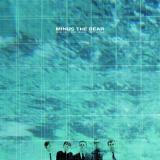
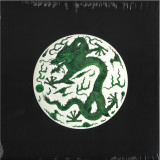
Originally released in 1983 on independent label For Sale (sub-label of the highly influential Baby Records, home of some of the most striking italo-disco ever), this album is quite a different monster. Produced, composed and arranged by Maestro Gian Piero Reverberi (once part of the progressive cult heroes Le Orme and then the man behind the ‘classical gone disco’ project Rondò Veneziano) Presage lives in a ‘twilight-zone’ where new-wave, post-prog and disco weirdness collides. Some of these numbers could have been easily played at the Hacienda in Manchester or even used as a soundtrack for some mid-eighties Argento movie. Part of the musicians used to be involved in the prog band from Genova Struttura & Forma, while others spent time behind the desk with some minor disco stars. All in all quite an unusual heavy rare-groove collection.
Search:presage
- 1
New pressing on black vinyl (500 units). Following the recently released and highly praised Trees 50th Anniversary box set on Earth Recordings, Trees reissue their debut album ‘The Garden of Jane Delawney’as a standalone release. It’s now over fifty years since Trees’ formation, a band who helped define ‘Acid Folk’, creating a sub-category in the lexicon of record dealers and music critics alike. “When we are talking about psych folk or acid folk, we are really talking about music like this by Trees” Stuart Maconie, BBC6 Music. Trees first album, ‘The Garden of Jane Delawney’ (1970) snuggles nicely into contemporary nu-folkies’ idea of the genre, and shares some of the pastoral-whimsy that characterised The Incredible String Band or Donovan, offset by some stunning interpretations of traditional material and Bias’ own songs. The record includes readings of ‘Lady Margaret’, ‘Glasgerion’, the old standard ‘She Moved Thro’ The Fair’, and the extended fade of the group’s own ‘Road’, presage the explosive instrumental duelling that would come to characterise the follow up album, ‘On The Shore’. // “The music’s arcane power remains intact” Mojo. // “A fantastic band” Record Collector. // “Spectacular” Uncut. // “Sublime” Shindig. // Timeless” Prog. // “It’s these two original albums that stand as pinnacles of form” The Wire. // Track listing: A1. Nothing Special A2. The Great Silkie A3. The Garden of Jane Delawney A4. Lady Margaret B1. Glasgerion B2. She Moved Thro' The Fair B3. Road B4. Epitaph B5. Snail's Lament
- A1: Anticipation
- A2: Legend In Your Own Time
- B1: Our First Day Together
- B2: The Girl You Think You See
- B3: Summer’s Coming Around Again
- C1: Share The End
- C2: The Garden
- D1: Three Days
- D2: Julie Through The Glass
- D3: I’ve Got To Have You
Carly Simon’s quietly intense sophomore album comes across like an assertive notice nailed to a telephone pole for all to see. Bold, personal, and autobiographical, Anticipation announces the arrival of an artist who won’t back down. While Simon stands her ground on her eponymous debut, she elevates her passion and persona to heightened levels throughout this gold-certified record, dealing in private matters related to love, relationships, and desire. At times, Simon is nothing short of primal. She reflects on the difficulties of retaining your own identity while also giving yourself to a partner. Simon’s connection to her folk roots would never be stronger.
Sourced from the original master tapes, strictly limited to 3,000 numbered copies, pressed at Fidelity Record Pressing in California, and housed in a Stoughton gatefold jacket, Mobile Fidelity’s 180g 45RPM 2LP set of Anticipation lays bare the rich tapestries afforded by the spare blend of soft guitars, mellow orchestration, and dreamy melodies. Audiophiles and record collectors, take note: This is the first time Anticipation has been available on 45RPM. The wider grooves and dead-quiet surfaces prove extremely rewarding.
The rhythmic framework anchored by session pro Andy Newmark’s drumming sounds dynamic and balanced, with songs benefiting from a focused midrange and taut low-end. Simon’s attachment to and investment in each lyric is made evident by way of the intimate, hushed atmospherics and expansive responsiveness. And just as Simon’s vocals feel more transparent and direct, so, too, do the supporting choral arrangements.
Released before the singer-songwriter movement reached full bloom, Anticipation remains remarkable for the high-quality songwriting and Simon’s gutsy stance. The album cover — depicting the vocalist holding the gates at Queen Mary’s Garden in Regent’s Park and seemingly defying anyone to take her on — serves as a metaphor for the content within.
Known for having relationships with high-profile partners, Simon was heavily involved with Cat Stevens leading up to the recording of Anticipation. She draws from her experiences to craft tunes that resonate because of their honesty, realism, and strength. Few of those moments are better known than the Top 20 title track, which Simon composed in just 15 minutes as she waited for Stevens to pick her up for a date. Imbued with the nervousness, tension, and excitement that accompany the moments when a romance could go either way, the Grammy-nominated song presages the feminist-minded vulnerability and burning longing that informs a majority of the record.
On the soulful “Legend in Your Own Time,” also inspired by Stevens, Simon harnesses yearning as a conduit to feel-good paradise. Deemed by Rolling Stone an “absolute clincher, an awesome description of the psychic ravages of gone-nuts, know-nothing love,” her cover of Kris Kristofferson’s “I’ve Got to Have You” moans with no-holds-barred desire and breathtaking sensuality.
For all the wanting Simon pursues on Anticipation, her way of staying in control — vocally and personally — make the record a courageous statement of contemporary femininity. For further evidence, look to the bossa nova of “Summer’s Coming Around Again,” somber “Share the End,” soothing “Three Days,” and sincere “Julie Through the Glass,” a tribute to her young niece.
Simon would achieve international fame with her next album, No Secrets. Yet as this definitive reissue shows, Anticipation suggests the rest of the world was just a little late catching up to her.
Takeshi Fukushima, better known as Takecha, is an electronic music artist from Shiga, Japan. This producer with tons of experience has been creating music since the 1980s and running the label “Groove with Machine” since 1995. His expertly crafted sound is deep and thoughtfully layered, blending elements of electronic besides ambient music to create a unique and captivating story. From the pulsing rhythms and soaring synths to the immersive melodies and ambient soundscapes, makes it a must-discover to any fan of electronic music.
Sakskøbing is proud to celebrate its 20th release anniversary and welcome Takeshi’s latest offering, a collection of deep electronic music that is sure to captivate and entice. With his technical prowess and musical vision, Takecha has crafted a sonic journey that is both thought-provoking and mesmerizing.
Black Vinyl[20,38 €]
Uzed is the fourth album by Belgian band Univers Zero. It was released three years after 'Ceux du Dehors', due to a change in line-up and a new repertoire, although the EP 'Crawling Wind' had been released in the meantime.
The album marked a turning point for the band. Univers Zero explored new electric colors, giving it a more rock feel with the addition of new musicians such as Jean-Luc Plouvier, who introduced the synthesizer, guitarist Michel Delory, who played a memorable solo in 'Célesta (For Chantal)', and André Mergen on electric cello and alto saxophone, who enriched the orchestral texture. Dirk Descheemaeker on clarinet and soprano saxophone, the return of Christian Genet on bass, this evolution can also be explained by the arrival of new musicians. UZED'is entirely composed and arranged by Daniel Denis
The recording and mixing were done at Daylight Studio in Brussels in 1984, but to bring out UZED, the sound had to be improved by giving it more dynamic range, which was done at ICP Studios in 2024.
Marbled Vinyl[21,22 €]
Uzed is the fourth album by Belgian band Univers Zero. It was released three years after 'Ceux du Dehors', due to a change in line-up and a new repertoire, although the EP 'Crawling Wind' had been released in the meantime.
The album marked a turning point for the band. Univers Zero explored new electric colors, giving it a more rock feel with the addition of new musicians such as Jean-Luc Plouvier, who introduced the synthesizer, guitarist Michel Delory, who played a memorable solo in 'Célesta (For Chantal)', and André Mergen on electric cello and alto saxophone, who enriched the orchestral texture. Dirk Descheemaeker on clarinet and soprano saxophone, the return of Christian Genet on bass, this evolution can also be explained by the arrival of new musicians. UZED'is entirely composed and arranged by Daniel Denis
The recording and mixing were done at Daylight Studio in Brussels in 1984, but to bring out UZED, the sound had to be improved by giving it more dynamic range, which was done at ICP Studios in 2024.
- A1: Sister Hell
- A2: Prelmnlrl
- A3: It Wasn't Me
- A4: Of Toes, Yark
- A5: Keeps Repeating
- A6: Sports Car
- A7: Burning Up
- B1: What Time Is It?
- B2: Change Your Mind
- B3: Mr. Whitey Tighty
- B4: Cold Cold Cold Ground
- B5: Choke
Originally released in 1989 on the band’s own Thwart Productions label, Tangle was the first vinyl release from Thinking Fellers Union Local 282. Coming after their debut cassette, Wormed, By Leonard, it shows the band leapfrogging stylistically into a more mature phase of their patented surreal compositional modus operandi. Tracks like the opener, "Sister Hell," foreshadow the band's later evolutionary mutations and was a minor hit in the underground circuit at the time. The rest of the album is a sleek maelstrom of crackpot dissonance, noise-rock power balladry, schizo-telepathic improv and some of the finest underground music of the era. In short, Tangle is a template and Proclamation of Intent that presages TFUL's classic 90s releases. Originally produced by their longtime engineer and thaumaturge, Greg Freeman, this reissue is impeccably remastered from the original master tapes by Mark Gergis. New and contemporary artwork ties a saucy bow around this astonishing reissue.
Keyboardist/composer Doug Carn was the
biggest star on the legendary Black Jazz Records
label, with four releases to his credit (all reissued
by us at Real Gone Music), and remains a
touchstone for spiritual jazz fans and musicians
alike. But very, very few folks have heard his
debut record, cut for the venerable Savoy label
back in 1969. In fact, it’s so rare that we couldn’t
even find a copy to use for artwork, so, with
Doug’s help, we enlisted his daughter Eroniffa
Ibrahim to create illustrations for our reissue
based on the original cover photos. But you know
what we did find? That’s right…the original master
tapes! So, not only is this the first LP reissue for
The Doug Carn Trio, but it’s an all-analog edition to
boot, pressed at Gotta Groove Records with their
proprietary GrooveCoated stampers to minimize
high-frequency loss with each successive pressing.
And, we’ve added an insert with liner notes by Aaron
Cohen based on an exclusive interview with the man
himself. As for the music, it’s a tight organ trio set
that starts cooking right from the get-go with a groovin’ cover of Gus Cannon’s “Walk
Right In,” which became a folk hit for The Rooftop Singers. Carn’s fluid, forward-thinking
playing anticipates Larry Young’s future keyboard forays, and originals like “Butter from
the Duck” and “Yna Yna’s Delight” presage the compositional prowess he flashed on the
Black Jazz releases (note: that’s Don Hales on guitar, not Gary Starling as credited on the
original record). The opening salvo from a scintillating career, finally available again!
In 1999, The Aquabats! enter experimental territory with the release of "The Aquabats! vs. the Floating
Eye of Death!" Expanding beyond their ska roots, the band flexes their imaginative songwriting muscles
both in subject matter and style. A retroactive favorite with fans, The Aquabats! push into a more
electronic sound that presages their future records.
“All this I do for glory” is a reasoning and exploration of the machinations of ambition and legacy, an examination of the concepts of afterlife, and the first half of a doomed love story in the model of the greek tragedies. As a narra- tive, it exists temporally somewhere between 2015’s “Never were the way she was” (with Sarah Neufeld) and the 1st volume of the NHW Trilogy.
With this, his first solo outing since 2013’s “To See More Light”, Colin Stetson ventures into territory both familiar and strange. Here still, is the dogmatically stripped down approach to performance and capture (all songs recorded live with no overdubs or loops) but there is an immediacy to the album that belies a more invasive and thorough miking of the various instruments being utilized and a seeming influence drawn from the early nineties electronica of artists like Aphex Twin and Autechre, evident in the more pointed role played by the instruments’ many percus- sive elements.
There are ancestries, motivic and timbral, woven through these six songs that plainly anchor them within the shared universe of his Trilogy, though the overall experience is one of extreme intimacy, the sounds and imagery more tangible and immersive than previous offerings. The brief and brutal “In the clinches” recalls (or presages) echoes of songs like “Judges”, though now feeling like one has fallen down the bell of Stetson’s ancient bass sax- ophone itself. “Spindrift”, crystalline and serene, calls to mind the ambient works of Aphex Twin, while “Between Water and Wind” with it’s “Immigrant Song” swagger, relentlessly carves it’s way into the bedrock here, paving the way with an increasing focus on the minute and the minimal, with a deepened sense of patience shared by most of the album’s six tracks.
Engineered and mixed by Stetson himself, this album represents a decidedly independent approach across the entire creative process and finds him at the top of his game, both as a composer and instrumentalist as well as a producer.
Most audiophiles know Alan Parsons Project's I Robot by heart. Engineered by Parsons after he performed the same duties on Pink Floyd's Dark Side of the Moon, the 1977 record reigns as a disc whose taut bass, crisp highs, clean production, and seemingly limitless dynamic range are matched only by the sensational prog-rock fare helmed by the keyboardist and his creative partner, Eric Woolfson. Not surprisingly, it's been issued myriad times. Can it be improved? Relish Mobile Fidelity's stupendous UltraDisc One-Step 180g 33RPM box set and the question becomes moot.
Mastered from the original master tapes and pressed at RTI on MoFi SuperVinyl, I Robot comes to life with reference-setting realism on this numbered, limited-edition reissue. Boasting immaculate highs and lows, generous spaciousness, and see-through transparency that takes you into the studio with Parsons and Woolfson at Abbey Road, this definitive edition is designed to demonstrate the full-range capabilities of the world's best stereo systems while offering listeners the convenience of having all the music on one LP.
Featuring a nearly inaudible noise floor, this transcendent UD1S edition functions as a repeat invitation to savor reference-grade soundstages, immersive smoothness, sought-after instrumental separation, three-dimensional imaging, and consummate tonal balances. Able to be played back at high volumes without compromise or fatigue, it is a demonstration record for the ages – the likes of which are no longer being made. This is the very reason you own and invest in high-end audio gear.
The special characteristics of this UD1S version extend to the premium packaging. Housed in an elegant slipcase, the reissue features special foil-stamped jackets and faithful-to-the-original graphics. Aurally and visually, it is made for discerning listeners who prize sound quality and production, and who desire to fully immerse themselves in everything about this conceptual landmark. The Alan Parsons Project's most famous record deserves nothing less.
Inspired by and loosely based around the Isaac Asimov stories of the same name, I Robot delves into themes of artificial intelligence and technological dominance that make the record extremely relevant in the 21st century. Indeed, Parsons and Woolfson's pinnacle creation dovetailed with the ascendency of Star Wars, which itself is experiencing a rebirth in an age of self-driving cars, smart devices, and mindless automation. Lyrically, songs such as "The Voice" call into question human behavior – and their relationship to increasing robotic supremacy – in everyday life. Parsons and Woolfson reflect the associated paranoia, dichotomy, and transformation via shifting sci-fi arrangements steeped in drama and moodiness.
The absorbing tunes on I Robot also continue to fascinate due to their perfectionism and innovation. Borrowing from Pink Floyd's strategies, Parsons and Woolfson utilize a looped sequence on the title track to create new downbeats. "Some Other Time" employs two different lead vocalists and yet gives the illusion that only one is involved. Captivating strings, a piccolo trumpet, and bona fide pipe organ grace "Don't Let It Show." The origins of "Nucleus" stem from a unique analog keyboard concoction dubbed "the Projectron," devised by Parsons and electronic engineer Keith Johnson. Andrew Powell's orchestral and choral arrangements top it all off, with "Total Eclipse" arriving as a frightening track that presages the climactic "Genesis Ch. 1 V. 32."
Does man or machine win in the end? Decide as you get lost in Mobile Fidelity's UltraDisc 180g 33RPM LP pressing. Secure your numbered copy today!
More About Mobile Fidelity UltraDisc One-Step and Why It Is Superior
Mobile Fidelity Sound Lab's UltraDisc One-Step (UD1S) technique bypasses generational losses inherent to the traditional three-step plating process by removing two steps: the production of father and mother plates, which are created to yield numerous stampers from each lacquer that is cut. For UD1S plating, stampers (also called "converts") are made directly from the lacquers. Since each lacquer yields only one stamper, multiple lacquers need to be cut. Mobile Fidelity's UD1S process produces a final LP with the lowest-possible noise floor. The removal of two steps of the plating process also reveals musical details and dynamics that would otherwise be lost due to the standard multi-step process. With UD1S, every aspect of vinyl production is optimized to produce the best-sounding vinyl album available today.
MoFi SuperVinyl
Developed by NEOTECH and RTI, MoFi SuperVinyl is the most exacting-to-specification vinyl compound ever devised. Analogue lovers have never seen (or heard) anything like it. Extraordinarily expensive and extremely painstaking to produce, the special proprietary compound addresses two specific areas of improvement: noise floor reduction and enhanced groove definition. The vinyl composition features a new carbonless dye (hold the disc up to the light and see) and produces the world's quietest surfaces. This high-definition formula also allows for the creation of cleaner grooves that are indistinguishable from the original lacquer. MoFi SuperVinyl provides the closest approximation of what the label's engineers hear in the mastering lab.
Exocrine verschiebt weiterhin die Grenzen des Extrem- und Präzisionsspiels und schlägt die Brücke zwischen der Wildheit von Archspire und Cryptopsy und den kraftvollen progressiven Tendenzen von Obscura und Gorod. Auf ihrem neuen Album „Legend“ strebte die Band noch mehr danach, technischer und schneller zu werden, legte aber auch Wert auf die Epik ihrer Musik und erhöhte diese. Damit haben Exocrine ihrer Musik einen noch grandioseren Sound verliehen.
FFO: Archspire, Gorod, Fallujah
Exocrine verschiebt weiterhin die Grenzen des Extrem- und Präzisionsspiels und schlägt die Brücke zwischen der Wildheit von Archspire und Cryptopsy und den kraftvollen progressiven Tendenzen von Obscura und Gorod. Auf ihrem neuen Album „Legend“ strebte die Band noch mehr danach, technischer und schneller zu werden, legte aber auch Wert auf die Epik ihrer Musik und erhöhte diese. Damit haben Exocrine ihrer Musik einen noch grandioseren Sound verliehen.
FFO: Archspire, Gorod, Fallujah
Roxane Métayer is a french musician and artist based in Brussels. Between folk and experimental music, her project is made of sound recordings made in nature, violin, wind instruments, percussion, and his own voice. Her albums have been released by Kraak label, Morc, Primordial Void, Wabi-Sabi tapes, Marionnette Label and Matière Mémoire.
Roxane Métayer was born in France in 1992. She learned to play the violin at a young age, and then continued her studies in Belgium, at the Ecole de Recherches Graphiques, where she obtained her Master’s degree, in Speculative Narration, Narratives and Experiments.
Roxane Métayer is a french musician and artist based in Brussels. Between folk and experimental music, her project is made of sound recordings made in nature, violin, wind instruments, percussion, and his own voice. Her albums have been released by Kraak label, Morc, Primordial Void, Wabi-Sabi tapes, Marionnette Label and Matière Mémoire.
Roxane Métayer was born in France in 1992. She learned to play the violin at a young age, and then continued her studies in Belgium, at the Ecole de Recherches Graphiques, where she obtained her Master’s degree, in Speculative Narration, Narratives and Experiments.
Unlike the majority of previous Davis albums, E.S.P. consisted entirely of new compositions written by members of the group. Despite the profusion of new material, only one tune ("Agitation") is known to have appeared in the group's live performances. "Little One" might be best known for being revisited on Hancock's landmark album, Maiden Voyage, recorded a few weeks later. This version is somewhat more embryonic; Carter's bass is halting, and Davis and Shorter state the theme with winding, interlocking contrapuntal lines that evoke Davis and Coltrane's version of "Round Midnight". Hancock's solo on Carter's composition, "Eighty-One", also presages his work on that LP - particularly its title track.
The title track is reminiscent of Jackie McLean's "Little Melonae", which Davis had recorded with John Coltrane in 1956. "Iris", by contrast, is another Coltrane-like ballad, not too dissimilar to "Infant Eyes" on Shorter's Speak No Evil album. Shortly thereafter, Shorter's compositions would begin to dominate the Quintet's recordings, though here he contributes only two of the seven songs.
This was the first time Wayne Shorter recorded with Miles, and the band - in this configuration - had been together for less than a year. As you will hear, the connection between the musicians is uncanny, as if they had been playing together for decades. Especially notice Wayne Shorter's brilliant interplay with Miles on the closing track "Mood," the haunting ballad written by bassist Ron Carter. At over forty-eight minutes, E.S.P. is one of the longest jazz albums of its period.
The 1st volume of »San Francisco Moog: 1968-72« introduced the world to a trove of recordings from a little-known hinge point in electronic-music history. Vol. 2 brings to light the rest of tapes—and the rest of the story. In 1968, Bay Area native Doug McKechnie got hold of one the very first modular Moog synthesizers ever made and began finding his own way to play it. Soon, he was hauling the finicky instrument around to perform improvised concerts at colleges and psychedelic ballrooms, as well as an ill-fated appearance on the bill at Altamont. Some of the performances were recorded, and the surviving tapes—never before released—capture a free-flowing, transportive sound that fills in the gap between the austere mid-century academic avant-garde and the expansive cosmic suites of Tangerine Dream and the rest of the Berlin School in the ’70s.
Vol. 2 captures a wider range of sounds and moods, encompassing austere sonic experiments, early sequenced pulses, and melodic etudes.
“These pieces represent amazingly fully formed early approaches to the very idea of musical synthesis...arresting even to modern ears.” — Goldmine
“Presages both Tangerine Dream’s soundtracks and, in its most grimy moments, Acid Tracks.” — The Wire
Black Vinyl[30,88 €]
In late 1996, after two years of persistent touring,
Chisel were eager to document their quickly
evolving sound. Decamping from their native DC to
Brooklyn’s Rare Book Room, the power trio of Ted
Leo, Chris Norborg, and John Dugan teamed with
engineer Nicolas Vernhes and came away with
‘Set You Free’, a remarkable, but largely
overlooked, classic of the era.
Originally issued on the venerable Gern Blandsten
imprint in April 1997, ‘Set You Free’ presaged the
turn of the century 1960s rock revival, providing a
counterpoint to second wave emo.
This deluxe 25th Anniversary edition, available on
River High Brown coloured vinyl or black vinyl, has
remastered and expanded the original’s 17-song
tracklist with five period alternates and rarities, and
both formats include a booklet of lyrics, photos,
and an essay by Jes Skolnik
Opaque Brown Vinyl[32,31 €]
In late 1996, after two years of persistent touring,
Chisel were eager to document their quickly
evolving sound. Decamping from their native DC to
Brooklyn’s Rare Book Room, the power trio of Ted
Leo, Chris Norborg, and John Dugan teamed with
engineer Nicolas Vernhes and came away with
‘Set You Free’, a remarkable, but largely
overlooked, classic of the era.
Originally issued on the venerable Gern Blandsten
imprint in April 1997, ‘Set You Free’ presaged the
turn of the century 1960s rock revival, providing a
counterpoint to second wave emo.
This deluxe 25th Anniversary edition, available on
River High Brown coloured vinyl or black vinyl, has
remastered and expanded the original’s 17-song
tracklist with five period alternates and rarities, and
both formats include a booklet of lyrics, photos,
and an essay by Jes Skolnik
David Cunningham was born in Ireland in 1954. His work ranges from pop music to gallery installations including several collaborations with visual artists. His first significant commercial success came with The Flying Lizards' single "Money," an international hit in 1979.
Originally released in 1976, Cunningham's first solo album Grey Scale has become a landmark statement of DIY minimalist composition – continuing in the vein of the wild explosion of arthouse experimentation from the early '70s. Cunningham, then a student at the Maidstone College of Art in Kent, drafted fellow student non-musicians and (using whatever instruments available) crafted an endlessly shifting sonic palette with an improvisor's keen sensitivity to space, texture and tone.
As Cunningham states in the liner notes, his approach was to "pursue something (which may appear trivial or meaningless) so rigorously or relentlessly to the point that it reveals something new."
Cunningham was influenced by live performances he was attending at the time by English composers Cornelius Cardew, Gavin Bryars and Michael Nyman as well as free improvisors Evan Parker, Derek Bailey, David Toop and Paul Burwell.
The inaugural release on Cunningham's own Piano label, Grey Scale was indeed "something new" in 1976. The artist quickly integrated his experimental sensibilities to produce art-rock pioneers This Heat, whose debut appeared on Piano in 1979. His popular success performing as The Flying Lizards (with two electro-punk albums on Virgin during the New Wave era) was presaged by this seminal work of fascinating sound collage and tonal freedom. First-time reissue.
- 1: On Warmer Music
- 1: 2 All My Kin
- 1: 3 It's Alright, You're O.k
- 1: 4 The Mutable Mercury
- 1: 5 The Town Crusher
- 1: 6 The Unthinkable Is True
- 1: 7 River High
- 1: 8 Every Is A Good Trip
- 1: 9 Do Go On
- 1: 0 Privileged & Impotent
- 1: Oh Dear Friends
- 2: 1 An Amateur Thief
- 2: In Our Time
- 2: 3 Morley Timmons
- 2: 4 The O.t.s
- 2: 5 Rip Off The Gift
- 2: 6 The Last Good Time
- 2: 7 The Guns Of Meridian Hill
- 2: 8 The Town Crusher (Live)
- 2: 9 Morley Timmons (Early Version)
- 2: 10 Every Is A Good Trip (Extended)
- 2: 11 The O.t.s. (Early Version
Black Vinyl[30,21 €]
In late 1996, after two years of persistent touring, Chisel was eager to document its quickly evolving sound. Decamping from their native D.C. to Brooklyn's Rare Book Room, the power trio of Ted Leo, Chris Norborg, and John Dugan teamed with engineer Nicolas Vernhes and came away with Set You Free, a remarkable, but largely overlooked, classic of the era. Originally issued on the venerable Gern Blandsten imprint in April 1997, Set You Free presaged the turn of the century 60s rock revival, providing a counterpoint to second-wave emo. This deluxe 25th anniversary edition has remastered and expanded the original's 17-song track list with five period alternates and rarities, plus a booklet of lyrics, photos, and an essay by Jes Skolnik. Get ready for the invasion.
- 1: On Warmer Music
- 1: 2 All My Kin
- 1: 3 It's Alright, You're O.k
- 1: 4 The Mutable Mercury
- 1: 5 The Town Crusher
- 1: 6 The Unthinkable Is True
- 1: 7 River High
- 1: 8 Every Is A Good Trip
- 1: 9 Do Go On
- 1: 0 Privileged & Impotent
- 1: Oh Dear Friends
- 2: 1 An Amateur Thief
- 2: In Our Time
- 2: 3 Morley Timmons
- 2: 4 The O.t.s
- 2: 5 Rip Off The Gift
- 2: 6 The Last Good Time
- 2: 7 The Guns Of Meridian Hill
- 2: 8 The Town Crusher (Live)
- 2: 9 Morley Timmons (Early Version)
- 2: 10 Every Is A Good Trip (Extended)
- 2: 11 The O.t.s. (Early Version
Brown Vinyl[31,51 €]
In late 1996, after two years of persistent touring, Chisel was eager to document its quickly evolving sound. Decamping from their native D.C. to Brooklyn's Rare Book Room, the power trio of Ted Leo, Chris Norborg, and John Dugan teamed with engineer Nicolas Vernhes and came away with Set You Free, a remarkable, but largely overlooked, classic of the era. Originally issued on the venerable Gern Blandsten imprint in April 1997, Set You Free presaged the turn of the century 60s rock revival, providing a counterpoint to second-wave emo. This deluxe 25th anniversary edition has remastered and expanded the original's 17-song track list with five period alternates and rarities, plus a booklet of lyrics, photos, and an essay by Jes Skolnik. Get ready for the invasion.
Most audiophiles know Alan Parsons Project's I Robot by heart. Engineered by Parsons after he performed the same duties on Pink Floyd's Dark Side of the Moon, the 1977 record reigns as a disc whose taut bass, crisp highs, clean production, and seemingly limitless dynamic range are matched only by the sensational prog-rock fare helmed by the keyboardist and his creative partner, Eric Woolfson. Not surprisingly, it's been issued myriad times. Can it be improved? Relish Mobile Fidelity's stupendous UltraDisc One-Step 180g 33RPM box set and the question becomes moot.
Mastered from the original master tapes and pressed at RTI on MoFi SuperVinyl, I Robot comes to life with reference-setting realism on this numbered, limited-edition reissue. Boasting immaculate highs and lows, generous spaciousness, and see-through transparency that takes you into the studio with Parsons and Woolfson at Abbey Road, this definitive edition is designed to demonstrate the full-range capabilities of the world's best stereo systems while offering listeners the convenience of having all the music on one LP.
Featuring a nearly inaudible noise floor, this transcendent UD1S edition functions as a repeat invitation to savor reference-grade soundstages, immersive smoothness, sought-after instrumental separation, three-dimensional imaging, and consummate tonal balances. Able to be played back at high volumes without compromise or fatigue, it is a demonstration record for the ages – the likes of which are no longer being made. This is the very reason you own and invest in high-end audio gear.
The special characteristics of this UD1S version extend to the premium packaging. Housed in an elegant slipcase, the reissue features special foil-stamped jackets and faithful-to-the-original graphics. Aurally and visually, it is made for discerning listeners who prize sound quality and production, and who desire to fully immerse themselves in everything about this conceptual landmark. The Alan Parsons Project's most famous record deserves nothing less.
Inspired by and loosely based around the Isaac Asimov stories of the same name, I Robot delves into themes of artificial intelligence and technological dominance that make the record extremely relevant in the 21st century. Indeed, Parsons and Woolfson's pinnacle creation dovetailed with the ascendency of Star Wars, which itself is experiencing a rebirth in an age of self-driving cars, smart devices, and mindless automation. Lyrically, songs such as "The Voice" call into question human behavior – and their relationship to increasing robotic supremacy – in everyday life. Parsons and Woolfson reflect the associated paranoia, dichotomy, and transformation via shifting sci-fi arrangements steeped in drama and moodiness.
The absorbing tunes on I Robot also continue to fascinate due to their perfectionism and innovation. Borrowing from Pink Floyd's strategies, Parsons and Woolfson utilize a looped sequence on the title track to create new downbeats. "Some Other Time" employs two different lead vocalists and yet gives the illusion that only one is involved. Captivating strings, a piccolo trumpet, and bona fide pipe organ grace "Don't Let It Show." The origins of "Nucleus" stem from a unique analog keyboard concoction dubbed "the Projectron," devised by Parsons and electronic engineer Keith Johnson. Andrew Powell's orchestral and choral arrangements top it all off, with "Total Eclipse" arriving as a frightening track that presages the climactic "Genesis Ch. 1 V. 32."
Does man or machine win in the end? Decide as you get lost in Mobile Fidelity's UltraDisc 180g 33RPM LP pressing. Secure your numbered copy today!
More About Mobile Fidelity UltraDisc One-Step and Why It Is Superior
Mobile Fidelity Sound Lab's UltraDisc One-Step (UD1S) technique bypasses generational losses inherent to the traditional three-step plating process by removing two steps: the production of father and mother plates, which are created to yield numerous stampers from each lacquer that is cut. For UD1S plating, stampers (also called "converts") are made directly from the lacquers. Since each lacquer yields only one stamper, multiple lacquers need to be cut. Mobile Fidelity's UD1S process produces a final LP with the lowest-possible noise floor. The removal of two steps of the plating process also reveals musical details and dynamics that would otherwise be lost due to the standard multi-step process. With UD1S, every aspect of vinyl production is optimized to produce the best-sounding vinyl album available today.
MoFi SuperVinyl
Developed by NEOTECH and RTI, MoFi SuperVinyl is the most exacting-to-specification vinyl compound ever devised. Analogue lovers have never seen (or heard) anything like it. Extraordinarily expensive and extremely painstaking to produce, the special proprietary compound addresses two specific areas of improvement: noise floor reduction and enhanced groove definition. The vinyl composition features a new carbonless dye (hold the disc up to the light and see) and produces the world's quietest surfaces. This high-definition formula also allows for the creation of cleaner grooves that are indistinguishable from the original lacquer. MoFi SuperVinyl provides the closest approximation of what the label's engineers hear in the mastering lab.
After a long silence New Zealand bestial death metal horde Exaltation finally unveil their first proper full-length offering, "Under Blind Reasoning", after a demo tape had surfaced back in 2017 amongst generalized obscurity. Indeed what we find on this debut offering is something distant from the lo-fi quality of the promising but under-produced demo, and sees the band tap instead into a realm of vehemence and aural destruction of unseen magnitude and terror. Feral, enveloping, monumental and sprawling in its unrelenting wrath, "Under Blind Reasoning" sees the obscure New Zealand death-bringers whip the sum of their influences (Immolation, Morbid Angel, Incantation, Deicide, Blasphemy) into a coercive realm of shell shocking torment and rise from the depths of obscurity like a cataclysmic weapon of mass-destruction. The album's dense and multidimensional recording quality (courtesy of engineers Raj Singarajah and Cam Sinclair along by mastering from Luke Finlay of Primal Mastering) has yielded a death metal beast of truly unsettling proportions. Every instrument and the utter violence with which it is wielded appears on full display, as the listener is helplessly left annihilated, blow after to blow, to witness the band's tight, savage and merciless performance and technical proficiency literally maul down the fabric of reality piece by piece. These are death metal songs from a realm of perpetual darkness that bare a load of death and ruin of unprecedented traits. Songs of boundless terror and oblivion that evoke eons of darkness and an immanent and oppressive presage of complete inevitability as the music roars out of the speakers with ominous grimness and near-weaponized violence. All hail the realm of darkness and death conceived by Exaltation, one where the death metal craft is reborn as a feral ungovernable force to inflict merciless ruin unto this mortal plane and all that dares to attempt to exist within it. Tracklisting: 1. Iron Rebellion 2. Impending Deceased 3. Exaltation 4. Ascension 5. Fate Revolt 6. Impious Massacre 7. Blaspheme Mortality 8. Divider of Redemption
Less than a year after their debut, Brazil’s Lasso returns with their second EP. While Lasso’s razor-sharp riffing and songwriting remain intact, this time around the sound is thicker and meaner, as if what was presaged in the first EP’s foreboding, ominous sound has finally come to pass. Indeed, as the world has slid into previously unthinkable depths of darkness and brutality, Lasso’s sound has evolved to match, a hard-won sense of steadiness now augmenting the anguish so palpable on their first record. Lasso also introduces a few new musical wrinkles here. A surf-y, Dead Kennedys-esque lead guitar elevates tracks like “Fechado Em Copas” and “Atarantado” to even higher levels of catchiness than their already-infectious debut, while “Mendaz” closes the record with an apocalyptic, mid-paced stomp. Desperate times call for desperate music, which makes Lasso the perfect soundtrack for 2022. Limited to 400 copies.
After turning heads with the densely orchestrated Riddles, produced by Dan Deacon, the Baltimore-based duo Ed Schrader’s Music Beat have given us another giant leap forward with their fourth record Nightclub Daydreaming. The whiplash-inducing stylistic shifts between aggressive noise rock and operatic gloom pop that have become the band’s trademark have given way to a single aesthetic that fuses both impulses. On Nightclub Daydreaming, menace teems just below the surface as propulsive, stark arrangements leave space that Schrader fills with strident, reverb-soaked narration.
LIMITED GOLD VINYL w/ Download Card
When Ed Schrader and Devlin Rice began writing the record in 2019, the idea was to make a fun, danceable album, but an underlying moodiness proved unshakeable. As Schrader puts it, “The cave followed us into the discotheque.”
The duo road-tested the songs “This Thirst,” “Echo Base” and “Black Pearl” with drummer Kevin O’Meara on tour with Dan Deacon in February 2020. COVID restrictions cut the tour short, squashed plans to go immediately into the studio and sent the touring party on a sprint from LA to Baltimore. “We broke down outside Roswell,” Schrader recalls. “And these cops laughed at our dumb asses as we used all our pent-up stress and fear to propel our half-submerged bus out of the muck, yelling epithets to the sky.”
It was one of the last experiences they had with O’Meara, whose death in October 2020 weighed heavily on Rice and Schrader’s minds as they worked on the record. It was also a cathartic moment that presaged the aesthetic that would permeate the songs on Nightclub Daydreaming: “mad euphoria in the face of doom,” as Schrader puts it.
“This Thirst” is an alienation-fueled barn burner barely restraining itself through musically sparse, lyrically dense verses to culminate in a howling, synth-saturated chorus that beats horror punk at its own game. “Came from the north with a twisted planetarium, rock salt, nervous tic and novocaine,” Schrader sings, assuming the guise of a vagrant whose irresistible urges lead him through a fever dream of chemicals, back-alley bartering and existential threats.
The hyperactive “Echo Base” exudes agitated-cool, with breakneck drum fills and a relentless bass line. The narrator is stranded in a frozen landscape and running out of options. “She is just a night train away,” we are assured, and yet we sense that may not be an altogether good thing.
The band recorded and mixed Nightclub Daydreaming over a two-week period with Craig Bowen at Tempo House in Baltimore with David Jacober on drums, turning demos with artificial sounds and placeholder melodies into fully realized songs playable by a live band. The end result is not the album of “sunny disco bangers” that Rice says the band set out for, but something deeper, darker and more rewarding.
A deep dive into the one of most collectable jazz catalogues in the world, a selection of some of the rarest and most sought-after recordings from the 60s and 70s, a time when British jazz began to find its own identity. Drawn from the iconic labels of Decca, Deram, Argo, EMI Columbia/Lansdowne Series, Fontana, Mercury, & Philips. If one were asked to pick an album that represented the best of British jazz in the 1960s, Le Déjeuner Sur l’Herbe by the New Jazz Orchestra would be a serious contender. Recorded in September 1968, it draws together many of the key streams that had developed in British jazz in the preceding years, and also presages much of what was to come. Notwithstanding the line-up, which includes some of the very best British jazz musicians directed by an inventive and ingenious leader in Neil Ardley, the session features pieces written by the most distinctive jazz composers active in Britain at that time alongside idiosyncratic interpretations of works by John Coltrane and Miles Davis. And it’s all captured beautifully by engineer Howard Barrow and producer Tony Reeves and it features a stella cast of some of the greatest musicians, not just from that era or genre but beyond; Jack Bruce, who would become one of the founding members of Cream, Barbara Thompson, Ian Carr, Michael Gibbs, Dave Gelly, Dick Heckstall-Smith and Jon Hiseman, who went on to form one of the greatest jazz/progressive/rock bands – Colosseum.
ATA00BS will be released in a Number Stamped Edition, with Full Cover Art made by Pepe and will be Sealed / Shrinkwrapped.
'Keep it simple' 103636;"Reissue- Tracklist A1. Unknown A2. Pain Is Full B1. Damaged Memory B2. Damaged Memory ( Iori Remix ) Shortinfo: Roberto Bosco has selected Kiny's music to better prepare his first 12, consisting of four tracks, named 'Damaged Memory'.The track Unknown (A1) leads off the dance of the release on Last Drop Records imprint. It's a proper exploration in an unknown sonic territory to most of the people, and also a difficult element to make out for those who are novice to the visonary component in the musical poetic of Kiny. The track starts with rounds of recurring sirens, almost deafening, framed by dark and ghostly noises. Something not easily identifiable, ambiguous and unknown, as the title itself says, is perceptible in its sound. All this helps to shape a bad presage that fades away into the mystery. On the same side we find Pain Is Full (A2) that, according to the producer, was born in a moment of pain which can be overcome only by fighting. In fact, the track is characterized by a more combative and insistent tone, made up by the sound of snare and tom entering since the start and determining an atmosphere of contrast able to shake the listener until the end. Shouts of encouragement suggest an initiation rite in which there is struggle for survival. The titletrack, Damaged Memory (B1) has more quiet register with less ghostly vocals, perceived at times, unlike the previous tracks. The sounds have a vanished effect, such as when you create a halo on a white sheet with the dust of a pencil just sharpened. You will hear a sort of democracy among the sounds held together by the voice, a metaphor of a damaged memory, as the title itself recite, that always makes the same process till the end: it commences by recalling but then forgets. Last, is the version of the producer Iori, Damaged Memory (B2), on the same side.
- 1