Hi-NRG synth pioneer Patrick Cowley moved away from his usual robotic steeliness on 1982’s “Primitive World,” drawing instead on the groove rock of early 1970s gay discos. It’s a percussion track influenced by Baba- tunde Olatunji’s 1959 hit “Jin-Go-Lo-Ba,” made more famous by Santana’s 1969 cover. Cowley updated the sound for the 1980s with electronics and drum machines but kept the playful attitude of the original. Two choirs of voices chant back and forth to each other, giving Cowley a chance to include many of his friends from the San Francisco dance music community.
This has been DJ Hifi Sean’s year, with a best-selling album with David McAlmont , count- less live gigs and high-profile remixes to his name. His interpretation of Cowley’s “Primitive World” can be counted among his best, bringing an intense TB-303 acid house vibe that perfectly complements Cowley’s weird electronic blips and bleeps. The effect is a disorienting mix of psychedelic 70’s groove, 80s synth pop, and 90s tacky house vibes. “Primitive World,” is one of the brilliant standouts on Cowley’s final record, Mind Warp, the so-called “death album” written as his health was rapidly sinking. Hifi Sean’s new remixes pay tribute to Cowley’s genius while fusing the track even more strongly to dance music’s electronic future.
Buscar:primitive world
- 1
These tracks were recorded early-to-mid `74, almost a year after the band had formed and almost 2 1/2 years before the release of the first Saints` single in 1976. The recording was made in Ed Kuepper`s parents` garage, except for "Misunderstood" which was recorded at Queensland University, direct onto a mono cassette-deck and features the second line-up of the band. Before this the Saints were a 3-piece, with Ivor Hay on piano and no drummer. It captures the band near the beginning of its first phase, as opposed to the EMI release which was at the end, and without getting into a debate about aesthetics, this one`s probably better. In a different universe this would have been the first Saints LP.
Repress 2026
We’re very happy to announce the vinyl release of kuniyuki’s masterpiece “all these things”.
Originally it’s released on only cd in 2007. it was his 2nd album but it’s substantially his first album because the first album was a col-lection of kuniyuki’s early productions.
The first track “the guitar song” is one of our most favorite song of kuniyuki,it’s like a real good mixture of jazz, fusion, world music and electronic music.
The second track featuring african vocalist and percussionist “omar guaindefall”,we still love amazing henrik schwarz remix.
The third track “you get me” featuring our favorite singer “josee hurlock”,we’ve knew about her from the fantastic album “residue” by hefner in 2000. she is featured to the fourth track “all these things” too. we’re hoping to repress an amazing joe claussell remix.
The fifth track “flying music” featuring our good friend “alex from tokyo” as poetry reading and shuichiro sakaguchi( a popular trumpeter in tokyo) as a trumpeter. this long version was put to single cut release on 12inch.
The sixth track “the session” is a collaboration of song with henrik schwarz. they have met at mule musiq’s party in tokyo and clicked immediately.
The seventh track “touch” sounds very nostalgic african jazz or spanish fusion which is popular these days as balearic music.
The last track “rain of ocean” is a primitive african minimal deep house.this song is put to the single cut from this album(not put to the album) and we almost forgot this song but when we’re compiling the vinyl edition of album, we noticed how this song is beautiful.
Here are the collection of eight timeless and genreless music.
'Matsuli Music is proud to announce the first vinyl reissue of Philip Tabane’s Sangoma ("Spiritual Healer") since its 1978 release. Remastered from the original tapes with lacquers cut by Frank Merrit and pressed on 180g heavyweight vinyl at Pallas in Germany, this definitive edition re-asserts the power of one of South Africa’s landmark recordings. Featuring new liner notes by cultural critic Kwanele Sosibo and artwork restoration by Siemon Allen, Sangoma returns in full force through an extended Malombo line-up, fronted by Tabane's spellbinding guitar - ancestral, timeless, and unbound.
'Philip Tabane (1934–2018), the mercurial guitar genius of South African music, forged a sound that was as rooted in the spirit world as it was in daily life. With the Malombo Jazzmen of the 1960s, Tabane disrupted Western notions of “jazz,” bringing the resonant rhythm of cowhide malombo drums into the foreground. While outsiders and the uninitiated often reached for labels like “primitive yet sophisticated,” Tabane and his collaborators named it more truthfully: “music of the spirit.”
'By the time of Sangoma, Tabane stood at a crossroads. Fresh from a period of three years’ touring in the United States where he graced the Newport Jazz Festival, and played alongside Miles Davis, Herbie Hancock, Pharoah Sanders and others, he brushed off comparisons with characteristic self-assurance: “No, I don’t play like Miles. Miles plays like me.” Back home in South Africa, and with a newly signed international distribution deal with WEA Records, he harnessed this momentum into a larger band setting, capturing a rare intensity.
'The result was Sangoma—an album that bridges contradictions: expansive yet intimate, celebratory yet haunted by exile and return. Tracks such as “Sangoma,” “Hi Congo,” and “Keya Bereka” are not simply performances but living testaments, songs that would remain in his repertoire for decades. Unlike the moody, immersive character of much of his work, here Tabane is on the move—urgent, restless, uncontainable. As he announces on the second track, “Maskanta wa tsamaya” (“something that kicks ass”).
More than four decades on, Sangoma is both an historical document and a timeless invocation. From his home in Mamelodi to the world and back again, Tabane’s spiritual healing endures—raw, electric, and unbowed.'
DISPLACES represents Fabris' most personal musical journey to date, inspired by the concept of hyperobjects and cartographic practices. The album sculpts a high-dimensional phased time-space composed of concrete materials and digital archetypes in a state of constant displacement. It delves into the symbolic and philosophical realms of mapping as one of the greatest sense-making mechanisms for life, in dialogue with object-oriented environments, superimposition and non-locality applied to cosmic, temporal, and emotional memory.
The sonic ecosystem expands on the image of navigating a path through a set of places, from the microcosm of quanta to the macro force of dark matter, from underwater depths to overland terrains, encapsulating the cyclical flow between birth and death, both in ecological and anthropological sense. The intersection of these shifting states is explored through the extensive processing of the langspil, Iceland's only traditional instrument, intertwined with manipulated field recordings of biophonies and geophonies captured across Icelandic and Venetian territories. These recordings form the backdrop for a meditative process that relocate familiar objects into unfamiliar realms, reflecting on the transformative power of self-reflection while encapsulating the fragmentation and entanglement found in nature and the human state. The record plunges the listener into a disconcerting and physical soundscape, as a “ghostly spectrality that comes in and out of phase with normalized human spacetime,” evoking sensations of suffocation and release as each layer continuously unfolds the palimpsest of the enclosed labyrinth.
“Extraction of the I” embodies a subatomic reaction—erupting as a molecular force that rises, only to re-submerge with a solitary exhale underwater. In this mutated dark space, beluga whales breathe into "Xanadu Phasing," creating a pulsating tension that releases only to unveil a frozen landscape.
In “Barricading the Ice Sheets” the glacial material morphs into a liquid tunnel of digital artifacts, building a wall of noise that shatters into scattered fragments of ice, resembling bird calls from another world.
A moment of stasis is offered with the appearance of an asymmetrical loop in Monolith I, evoking a primitive rite before an unknown force emerges.
The physical intensity of subsonic material in "A Quake in Being" interrupts the hieratic tone, detuning into polluted sonic matter sourced from relics of the First World War in the Venetian Prealps. The geography of this place reconciles with the original homeland in "The Map is the Territory," blending negative space with anthropogenic elements and exploited sounds of the langspil.
The burning density of "Wolf-Rayet" projects into the void, echoing the residual sounds of a local church as relics of fossilized religions. Wolf tones are the remains in Monolith II, introducing the final track, "Topography of Extinction," where evolving psilocin textures invite the listener to uncover deeper layers of meaning and dislocation.
On the cover: The Body & Dis Fig. Inside: Farida Amadou, Steve Beresford, Pavel Richter, Dialect, petals, Erica Dawn Lyle, H-Fusion, Invisible Jukebox: Melt-Banana, The Inner Sleeve: Eve Libertine, Epiphanies: Roy Claire Potter, Global Ear: Barcelona, Unlimited Editions: YOUTH, plus in the review sections: Laurie Anderson, Belong, Seefeel, Three Quarter Skies, Dhangsha, NicoNote, Laura Cannell, Primitive Percussion Youth Orchestra, Endon, Bobby Hutcherson, Harold Land, Red Kross, David Corio’s images of Black musicians, the Gnaoua & World Music Festival, Gary Stewart, Lonnie Holley, specialist columnists, and more.
- 1: Urn Burial
- 2: The Redness In The West
- 3: The Third Migration
- 4: They Came Like Swallows
- 5: The Living Theater
- 6: The Oceans Are Crying
- 7: Insight
Black Vinyl[30,67 €]
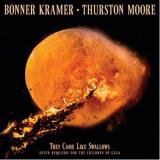
They Came Like Swallows is the first album-length collaboration between Thurston Moore and Kramer (now officially Bonner Kramer), two giants of alternative/ experimental music. The accomplishments and influence of these two artists in the world of independent music cannot be overstated and the result of their artistic union is a startlingly cohesive statement that burns through landscapes of primitive outsider rock, avant-garde composition, progressive ambient and further locales boldly and beautifully unnamable. “Kramer and I reconnected in Miami, Florida, a few years back, many many years after each of us had departed NYC on separate life adventures. It was only a matter of time before Kramer and I started making plans to record together and with his irrepressible due diligence he quickly set up a mobile recording contraption in the pad I was decamped in, the Florida sunshine flowing through the palm leaves, lithe lizards skittering across the windowsills, and we just went for it.
Kramer had the idea to cover a Joy Division tune, a left turn from the improvisations we had been tracking, though wholly in keeping with both our sensibilities of light and dark unifying in transcendent songwriting, both of us devotees of 'the song' as well as 'the freedom.’ What transpired is They Came Like Swallows, a session we immediately felt should exist as a prayer to the war-torn souls of the families of Palestine continually decimated by the brutality of genocide. We agreed beyond words to offer our music as a sonic activism and as a beneficent energy. This album is our duo exchange for human dignity, it is our soul music for any semblance of a peaceful planet.” ~ Thurston Moore “For the first time in our nearly 45 years of friendship, we had identical time windows open to make a record together,” recounts Kramer. After all this time not a moment is wasted as the duo immediately taps into the heightened core of improvisational tension across these seven offerings. Volcanic opener “Urn Burial” notches a similar historic union (John Cale and Terry Riley) to meet the circumstances of the moment, with swirling mists of organ and pounding toms over guitar that thickens the atmosphere with jagged, grimy dissonance.
Solemn strings open the second track, “The Redness In The West,” with Kramer’s cello and viola in dueling bow beneath the high tension drive and sustain of Thurston’s electric guitar, tapping out a Morse code of tension that mounts endlessly into a fog of inevitable war by the end. Moore and Kramer’s sense of experimentalism is in free and full grandeur throughout They Came Like Swallows, though the duo keep a strong and constant sideways eye on melody, composition and architecture, to the ends that any strict lines between song and improvisation are blurred beyond qualification.
As if to punctuate this point, Swallows closes with a nightwork cover of Joy Division’s “Insight,” a doleful coda that breathes out with a solemn inner grace under Thurston’s instantly stylistically recognizable guitar melodies as they weave into he and Kramer’s unison voices. As the lone vocal piece and only traditional ‘song’ form on the album, “Insight” is unique to this set and as a closing statement draws connective lines back to the kind of dynamic, electrified melodicism that wove deep, melancholy patterns into the untamed fire of Sonic Youth’s Sister and Daydream Nation. In the album’s final moments, the two voices repeat the lyric “I’m not afraid anymore” as mantra, underscoring the heavy, unsettled themes and methods that preceded it. Kramer describes the creative process of They Came Like Swallows: “I had composed and recorded a few pieces at my home studio over the course of a couple weeks. Thurston was spending the winter in South Florida, so I flew down and spent a few days recording his guitar parts in his home there. Watching him spontaneously compose his parts was pretty astonishing, to say the least. Once we'd finished working on those pieces, we began improvising and following wherever the music pointed us, and another few pieces were born. We got straight to it, without anything driving us other than the joy of finally working together.
My personal goal was to remain present and catch as many surprises as I could from Thurston's guitar work, and there were plenty during those few days. We had a fucking blast.” Thurston’s contributions here will be readily familiar to any acolytes of his other works, the through-line between his inspired playing, cradled in Kramer’s meticulous, solid arrangements. “If I had to make this record again, I'd do it all exactly the same way,” Kramer says. “It’s like jazz, you don't think about it. You just do it. It was miraculous, and you don't fuck with a miracle.”
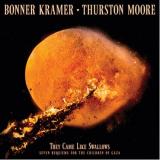
They Came Like Swallows is the first album-length collaboration between Thurston Moore and Kramer (now officially Bonner Kramer), two giants of alternative/ experimental music. The accomplishments and influence of these two artists in the world of independent music cannot be overstated and the result of their artistic union is a startlingly cohesive statement that burns through landscapes of primitive outsider rock, avant-garde composition, progressive ambient and further locales boldly and beautifully unnamable. “Kramer and I reconnected in Miami, Florida, a few years back, many many years after each of us had departed NYC on separate life adventures. It was only a matter of time before Kramer and I started making plans to record together and with his irrepressible due diligence he quickly set up a mobile recording contraption in the pad I was decamped in, the Florida sunshine flowing through the palm leaves, lithe lizards skittering across the windowsills, and we just went for it.
Kramer had the idea to cover a Joy Division tune, a left turn from the improvisations we had been tracking, though wholly in keeping with both our sensibilities of light and dark unifying in transcendent songwriting, both of us devotees of 'the song' as well as 'the freedom.’ What transpired is They Came Like Swallows, a session we immediately felt should exist as a prayer to the war-torn souls of the families of Palestine continually decimated by the brutality of genocide. We agreed beyond words to offer our music as a sonic activism and as a beneficent energy. This album is our duo exchange for human dignity, it is our soul music for any semblance of a peaceful planet.” ~ Thurston Moore “For the first time in our nearly 45 years of friendship, we had identical time windows open to make a record together,” recounts Kramer. After all this time not a moment is wasted as the duo immediately taps into the heightened core of improvisational tension across these seven offerings. Volcanic opener “Urn Burial” notches a similar historic union (John Cale and Terry Riley) to meet the circumstances of the moment, with swirling mists of organ and pounding toms over guitar that thickens the atmosphere with jagged, grimy dissonance.
Solemn strings open the second track, “The Redness In The West,” with Kramer’s cello and viola in dueling bow beneath the high tension drive and sustain of Thurston’s electric guitar, tapping out a Morse code of tension that mounts endlessly into a fog of inevitable war by the end. Moore and Kramer’s sense of experimentalism is in free and full grandeur throughout They Came Like Swallows, though the duo keep a strong and constant sideways eye on melody, composition and architecture, to the ends that any strict lines between song and improvisation are blurred beyond qualification.
As if to punctuate this point, Swallows closes with a nightwork cover of Joy Division’s “Insight,” a doleful coda that breathes out with a solemn inner grace under Thurston’s instantly stylistically recognizable guitar melodies as they weave into he and Kramer’s unison voices. As the lone vocal piece and only traditional ‘song’ form on the album, “Insight” is unique to this set and as a closing statement draws connective lines back to the kind of dynamic, electrified melodicism that wove deep, melancholy patterns into the untamed fire of Sonic Youth’s Sister and Daydream Nation. In the album’s final moments, the two voices repeat the lyric “I’m not afraid anymore” as mantra, underscoring the heavy, unsettled themes and methods that preceded it. Kramer describes the creative process of They Came Like Swallows: “I had composed and recorded a few pieces at my home studio over the course of a couple weeks. Thurston was spending the winter in South Florida, so I flew down and spent a few days recording his guitar parts in his home there. Watching him spontaneously compose his parts was pretty astonishing, to say the least. Once we'd finished working on those pieces, we began improvising and following wherever the music pointed us, and another few pieces were born. We got straight to it, without anything driving us other than the joy of finally working together.
My personal goal was to remain present and catch as many surprises as I could from Thurston's guitar work, and there were plenty during those few days. We had a fucking blast.” Thurston’s contributions here will be readily familiar to any acolytes of his other works, the through-line between his inspired playing, cradled in Kramer’s meticulous, solid arrangements. “If I had to make this record again, I'd do it all exactly the same way,” Kramer says. “It’s like jazz, you don't think about it. You just do it. It was miraculous, and you don't fuck with a miracle.”
Forever Records
Music springs eternal. Recognising the enduring power of timeless albums to guide us through life, Forever Records is a reissue series dedicated to rediscovering lost musical treasures from across the spectrum of head-feeding, heart-rending electronic music.
Established by Rush Hour co-founder Christiaan Macdonald and Delsin founder Marsel van der Wielen, Forever Records places heartfelt faith in a carefully curated sequence of seminal, largely forgotten records from disparate eras, scenes and spaces within electronic music history. Tipped towards the mellow and introspective, these are albums that stop time when the needle hits the groove, stirring only when it's time to flip over before you sink back into the experience. That's what albums were always meant to be about, back then, right now, always and forever.
The Release:
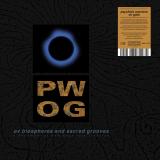
Dancing on the wildest edge of the 90s outsider techno zeitgeist while proudly independent of any so-called scene, Ov Biospheres And Sacred Grooves: A Document Ov New Edge Folk Classics is both of its time and out of time. Rooted in the experiments of electronic music pioneers, industrial culture and ethnic music from around the globe while responding to the house and techno explosion, Robbert Heynen, Reinier Brekelmans, Reinoud van den Broek and Tim Freeman's freewheeling masterpiece takes in lush electronica and murky abstraction on its singular voyage through parts unknown.
Forever Records presents an extensive reissue edition of the first 'fully released' Psychick Warriors Ov Gaia album. Originally released in 1992, this is the first time the full, previously CD-only, version of Ov Biospheres and Sacred Grooves will be pressed on vinyl. The original LP and CD artwork from the various editions released in the early 90s has been combined and designed by the band, and the audio has been remastered with their full approval. As well as a new LP edition of the album, there will also be a uniquely numbered, limited edition available housed in a gatefold sleeve that comes with a bonus 10" featuring two previously unreleased tracks.
Press response to Ov Biospheres and Sacred Grooves - A Document Ov New Edge Folk Classics:
“That’s Magick! The Psychick Warriors Ov Gaia are Holland’s best kept secret.”
Sherman, NME, UK 1992
“PWOG’s debut LP is an organic invocation rite — the soundtrack to a new world coming to life, an odyssey. Cross-cultural rhythms, ambiences and environmental samples segue into one another like a fluid relay, and unlike the majority of dance records, it never settles into a routine. It’s always evolving, always unpredictable, an indefinitely religious experience.”
John Selzer, Melody Maker, UK 1992.
"Grown men, who snorted their first ecstasy to this record, stammered with tears in their eyes about divine experiences and the cosmos, man."
Peter Erik Hillenbach, Marabo Magazine, Germany 1992.
Sacred Grooves’ introduces tribal dance music for the mind, body music leaning on the avant garde. Its ripples of sound drift through tranced out ritualistic beats into ambience and serenity resembling something akin to The Orb meeting Klaus Schulze at a brain tuning session.
Sherman, NME, UK 1992
"There's still dance for a moment, in the opening track "The Challenge," then Psychick Warriors roam the earth, where African drummers, tropical sounds, and science-fiction chords have found their place in a spiralling interplay of rhythms and sounds. A captivating, almost magical ritual." Corné Evers, Oor Magazine, Netherlands 1992.
"It's truly astonishing what these Dutchmen have come up with for their first LP. Their roots might explain the enigma, for Psychick Warriors are more in the tradition of Psychic TV than in the desolate temples of techno-house fetishists, to which they are wrongly relegated. Here, chromosomes dance, not instincts." CMK, Tip, Germany 1992.
"The transcendental essence of this album is spread throughout, with musical gravitations emerging unexpectedly from sonic experiments that are sometimes primitive, sometimes
futuristic in intention… But there is always an aura of cosmic magic that constantly puts all the parts involved in conflict and which, upon closer analysis, ends up being the main reason for the final result." Blitz Magazine, Portugal 1992.
Forever Records
Music springs eternal. Recognising the enduring power of timeless albums to guide us through life, Forever Records is a reissue series dedicated to rediscovering lost musical treasures from across the spectrum of head-feeding, heart-rending electronic music.
Established by Rush Hour co-founder Christiaan Macdonald and Delsin founder Marsel van der Wielen, Forever Records places heartfelt faith in a carefully curated sequence of seminal, largely forgotten records from disparate eras, scenes and spaces within electronic music history. Tipped towards the mellow and introspective, these are albums that stop time when the needle hits the groove, stirring only when it's time to flip over before you sink back into the experience. That's what albums were always meant to be about, back then, right now, always and forever.
The Release:
Dancing on the wildest edge of the 90s outsider techno zeitgeist while proudly independent of any so-called scene, Ov Biospheres And Sacred Grooves: A Document Ov New Edge Folk Classics is both of its time and out of time. Rooted in the experiments of electronic music pioneers, industrial culture and ethnic music from around the globe while responding to the house and techno explosion, Robbert Heynen, Reinier Brekelmans, Reinoud van den Broek and Tim Freeman's freewheeling masterpiece takes in lush electronica and murky abstraction on its singular voyage through parts unknown.
Forever Records presents an extensive reissue edition of the first 'fully released' Psychick Warriors Ov Gaia album. Originally released in 1992, this is the first time the full, previously CD-only, version of Ov Biospheres and Sacred Grooves will be pressed on vinyl. The original LP and CD artwork from the various editions released in the early 90s has been combined and designed by the band, and the audio has been remastered with their full approval. As well as a new LP edition of the album, there will also be a uniquely numbered, limited edition available housed in a gatefold sleeve that comes with a bonus 10" featuring two previously unreleased tracks.
Press response to Ov Biospheres and Sacred Grooves - A Document Ov New Edge Folk Classics:
“That’s Magick! The Psychick Warriors Ov Gaia are Holland’s best kept secret.”
Sherman, NME, UK 1992
“PWOG’s debut LP is an organic invocation rite — the soundtrack to a new world coming to life, an odyssey. Cross-cultural rhythms, ambiences and environmental samples segue into one another like a fluid relay, and unlike the majority of dance records, it never settles into a routine. It’s always evolving, always unpredictable, an indefinitely religious experience.”
John Selzer, Melody Maker, UK 1992.
"Grown men, who snorted their first ecstasy to this record, stammered with tears in their eyes about divine experiences and the cosmos, man."
Peter Erik Hillenbach, Marabo Magazine, Germany 1992.
Sacred Grooves’ introduces tribal dance music for the mind, body music leaning on the avant garde. Its ripples of sound drift through tranced out ritualistic beats into ambience and serenity resembling something akin to The Orb meeting Klaus Schulze at a brain tuning session.
Sherman, NME, UK 1992
"There's still dance for a moment, in the opening track "The Challenge," then Psychick Warriors roam the earth, where African drummers, tropical sounds, and science-fiction chords have found their place in a spiralling interplay of rhythms and sounds. A captivating, almost magical ritual." Corné Evers, Oor Magazine, Netherlands 1992.
"It's truly astonishing what these Dutchmen have come up with for their first LP. Their roots might explain the enigma, for Psychick Warriors are more in the tradition of Psychic TV than in the desolate temples of techno-house fetishists, to which they are wrongly relegated. Here, chromosomes dance, not instincts." CMK, Tip, Germany 1992.
"The transcendental essence of this album is spread throughout, with musical gravitations emerging unexpectedly from sonic experiments that are sometimes primitive, sometimes
futuristic in intention… But there is always an aura of cosmic magic that constantly puts all the parts involved in conflict and which, upon closer analysis, ends up being the main reason for the final result." Blitz Magazine, Portugal 1992.
- 1: Lake Walk
- 2: Lazy Daisy
- 3: Ups & Downs
- 4: Silently
- 5: There Was A Nice Sunset
- 6: Somewhere Good
- 7: Slow Island
- 8: Movin’ On
If – in some parallel universe (or perhaps a not-so-distant-future version of the one we’re already sentenced to living in) – the evil overloads of artificial intelligence were actually successful in their attempts to create convincingly enjoyable “original music,” more specifically tasked with wholly encapsulating my own personal tastes by data-chugging some cocktail of – oh, I don’t know – the posters on my wall, the records in my “most listened to” pile, the mixtapes I made for others, intensive physical scans of my auditory cortex, amygdala, hippocampus, heart strings, whatever else they have splayed out on their autopsy table with the intention of generating one all-encompassing “perfect band” based on the fruitful sum of their findings – that band, for me, would be (or would at least sound exactly like) the Tara Clerkin Trio. It is, quite simply, without exception, the music I wish to hear.
Formed in Bristol UK (where none of them are from yet all of whom are deeply engrained) in 2020, the Tara Clerkin Trio – as it somewhat democratically exists today, despite the singular authority implied by its name – consists of the titular Tara Clerkin, her partner Sunny Joe Paradisos, and Sunny’s brother, Patrick Benjamin. I’ll confess, I don’t know what their respective roles are within the operation and there’s only a very small part of me that cares to learn, as one of my favorite qualities in an objective listening experience is the mystery of who is playing what, which sounds are “authentic” versus synthesized, which chunks are performed “live” in a room together versus meticulously Frankenstein’ed from measure to measure, or how exactly the overall sound is so (seemingly) effortlessly achieved. Though, I suspect, if and when I do witness a live performance by this band at any point, my enjoyment of the music will not be lost in my better understanding of it.
With two extraordinary mini-albums – In Spring (2021) and On The Turning Ground (2023) – making a splash on London’s formidable World of Echo label in wake of their self-titled 2020 debut, this upcoming Somewhere Good LP is, in many ways, the band’s most realised work. In running their usual gauntlet of idiosyncratic (*an overused adjective for which here there is regrettably no sufficient alternative) approaches, Clerkin & co. colour in and outside of compositional lines over the course of 40+ celebratory minutes - never wallowing, despite inherently somber subject matters of self-defeat, disease, displacement, restlessness, gentrification - allowing their arrangements and improvisations ample space and time to situate, stretch out, breathe, cross-pollinate, and ultimately take deeper hold on the listener’s imagination – all while somehow sounding more like themselves than ever before.
Of course, there are traceable influences herein, if one felt that such comparisons were necessary to properly examine and enjoy this music (they aren’t)… Being the big dumb American from the small boring town that I am, cornfed on ‘90s alternative radio with the enchantingly exotic sounds of Maxinquaye and Mezzanine emanating from my chunky tube television, I can’t help but to make a blatantly obvious reference to a “Bristol sound”, ie the whole trip-hop trip, the pastoral crooning over the suggestive urban grime of cracked electro/piano treatments, the digitally-yet-primitively reconstructed James Bond soundtrack string-beats, etc.. But the Tara Clerkin Trio is so infinitely much more than that. There are elements of avant-pop, modern classical, kraut-folk, audio verité, dare I say indie rock (and not of the beer guzzling, masturbatory fuzz-flex variety but perhaps more like a Trish Keenan-fronted Faust, Adrian Sherwood at the mixing desk of If You’re Feeling Sinister, or – in expanding on our alternate reality – a world in which High Llamas cut a full-length for Warp Records with Andrew Weatherall on coffee duty).
The hazy, unmappable skyline-mirage of droning harmonium, upright bass, peculiarly accentuated wind instruments, acoustic guitar, hushed yet literally mighty keys combine to hypnotizing effect. The band may make underlying nods to jazz, sure, but it’s not appropriation, it’s that they have the actual chops to build it out. Beneath the janky samples and oddball percussive embellishment lies actually great drumming. Beyond the manipulated vocal witchery and woefully reflective plain-spoke moments are Tara’s subtly inspired melodies, sung with what might honestly be the glue to the whole crazy equation. A calming consistency throughout the otherwise unpredictably dynamic, boldly intuitive, uniquely British exploration of this (their own) universe in song. – Ryan Davis (Chicago, February 2026)
The electronic producer Franz Kirmann returns to Bytes for his eighth solo album. The “Almadies” are long wooden boats used by Senegalese fishermen. It is also the name of the neighborhood where Kirmann grew up, in the suburbs of Dakar, Senegal, near the Atlantic Ocean. "These new compositions are the result of sound experiments conducted over the past few months and reflections on the concept of mind-constructed geographies," Kirmann explains. "The way memories and souvenirs shape an image of a place or country that is part reality, part fantasy, part cliché, yet also deeply personal. This experience is influenced by education, social background, history, and other socio-economic factors. " The ten tracks are crafted from collages of electronic sounds blended with field recordings from various places Kirmann has visited — from Dakar to the Caribbean, as well as London and Paris. His aim is to blur the line between electronically generated sounds and real soundscapes, creating music where it becomes difficult to distinguish the real from the constructed. All the sounds on the album were produced using synthesizers and field recordings. No drum machines, percussion or traditional acoustic instruments were used. Influences include Brian Eno and John Hassell’s Fourth World, Vol. 1: Possible Musics (1980), described by Hassell as "a unified primitive/futuristic sound combining features of world ethnic styles with advanced electronic techniques" , which also works in the context of Almadies. Another big influence was Ariel Kalma’s Le Temps Des Moissons (1975) as well as artists including O Yuki Conjugate and Robert Aiki Aubrey Lowe to Susumu Yokota and Michael Banabila.
Mister Joshooa consolidates his delivery on Party store this time with a proper full length EP,
with 3 originals and 2 remixes from Delano Smith and Mass Prod that will keep the dancefloor
busy for a while.
A very solid release that goes from Bass to House to Techno, all solid club tools that will keep
the club busy, five bangers that all evoke the Party Store blueprint feeling: FRESH OUTTA JAIL
Strong of his release on Planet E and his Performances in the world's temple of Techno Music
between his own Detroit and Berlin, Josh is always on point with cutting edge productions that
go straight to the point, to party.
Cosmo is a timeshifting bass tool, so abstract yet so powerful, so empty yet so present that it
will allow you to take your crowd towards the most twisted cuts of club music, perfect to merge
Bass, Minimal House and Techno.
Delano Smith and Mass Prod both deliver a more 4 to the floor/ Club friendly version of Cosmo.
Delano takes the core groove of the track and brings it up on a monstrous Detroit House Tool,
heavy on basseline and chords, it flows like water on day 3. you just wanna play this more and
more, the more you listen to it.
Mass Prod delivers a darker, lower body versions of the title track, a Minimalistic after hour tool
where aerie vocals and percussions are rolling over a primitive House groove that will keep the
dancefloor simmerin for a while.
Adult use is a perfect party track to set the vibe and to get completely weird. Dub Acid Stepper
at his best, proper after party fuel, one to make people stand from couches and blankets in the
morning!
Ketchup popsicle is a pure Detroit Banger with psych vocals and digital acid at his best with full
on trancey effects and percussions, not for the faint of heart, a track that will take you to new
levels of party time!
STRANGER STILL was Julian Cator (guitar), Paul Cator (piano, organ, synthesizer), Tim Warnes (bass), Frank Warnes (vocals, drums) and Ian Johnson (vocals, drums) from King’s Lynn, Norfolk, UK. The two sets of Cator and Warnes siblings had been playing together in bands since 1974, with Ian joining in 1979, and with their musical style evolving from glam influenced rock to punk/new wave (punk came late to Norfolk) and finally post-punk, influenced by Ultravox!, Magazine, Joy Division, Bauhaus and Killing Joke. Their first gig together was in September 1979 with John Peel being in the audience. The Solitude/Survivor single was recorded in July 1981, released in November and sold well locally. John Peel played Solitude, between singles by Winston and Screen 3. When Julian left in autumn 1981 the others continued, later changing their name to Nothing Sacred. Ex-members have since played in a number of other bands, most notably Paul and Tim in Shine!, and Julian and Paul in Ivy.
Solitude opens in a perfect analogue way with a ‚primitive’ rhythm machine pattern and a dark synth sound fading in. We shall be glad for the band’s move towards electronics while knowing „given the negative reaction we got from some of the local bands when we got the synth a Moog Satellite“, quoting Julian. When the real drums, guitar, bass and vocals also come in, you’re in for one of the most perfect post-punk songs, yet playful but ultimately bleak. “And then I can feel nothing more. Alone again, with no sensation.“ Survivor is more uptempo and bass-driven, reminiscent of early Death In June (who came later though). Lyrics like “4 minute warning warning – the sound of today. Our new dream world – Enola Gay.“ set the mood there.
The band composed a dozen of songs, demos to get gigs, which were unfortunately never recorded properly in a studio. So these are demos or rehearsal tracks, never released to the public and presented here for the first time ever as an additional 15 tracks download-only (due to the poor sound quality). You’ll find fantastic tracks like Brave New Berlin or Cardiac Arrest, which is reminiscent of Death In June’s In The Nighttime, and then, there is a demo of Solitude too!
Here’s to a piece of post-punk history!
Lars Bartkuhn returns to Rush Hour with “See The Light”, as deep and complex as we have come to expect but as always his ever-present hunt for new inspiration and unique approaches is clearly evident across all 3 mixes of this beautifully deep yet pulsating track!
Originally written as a final foray into house music for the legendary Needs co-founder, this production aimed to “push boundaries within the world of electronic dance music, integrate fresh new elements, bring new compositional perspectives to the listener and to create overall rewarding experiences.”
It’s a deeply personal track, best summarised by the incredible piano solo in the Full Experience Mix. In Lars’ own words, “I am ten million light years away from being a good pianist, but for some reason I NEED to play those kind of things…even if they are raw, primitive and incomplete and lack parameters like elegance, fluidity and wisdom - I need to express myself in that very moment in this exact way.” It’s these unrestrained moments of brilliance that create rich palettes of sound with deep textures, organic rhythms and joyful melodies that keep your ear constantly engaged.
The Full Experience Mix is a near-13 minute trip through lush vocals, complex percussion, deep chords and raw piano solos that guides the listener through the changing motions of “See The Light”. Backed by two dub mixes, Inner Experience hones in on the keys and synths - truly elevating those striking notes. Opening with atmospheric percussion, the Dub Reprise settles into a chugging rhythm that brings the drums to the forefront.
“When a musician/composer really goes ‘all in’ there is almost nothing impossible. If you really pour out your heart and give all the sweat and tears you have you create a kind of zone where everything fits together in mysterious ways.” - Lars Bartkuhn
Mannequin Records is proud to present the official reissue of Caroline K's outstanding 1987 album, "Now Wait For Last Year."
This haunting, wistful work of post-industrial synthesizer music sees the late Nocturnal Emissions co-founder only solo record, which has accrued a fervent cult following over the past 40 years, and copies of the original pressing are today extremely rare and sought-after.
The music on "Now Wait For Last Year" seems to exist firmly outside of it. Tags like industrial, minimal synth or proto-techno can't really do justice to the richly cinematic sound-world that Caroline K describes: from the sustained ambient tension of sidelong opener "The Happening World" to the future-primitive rhythms and stately piano flourishes "Animal Lattice", and the melancholic, deep-frozen synth sequences of "Cheart".
For fans of Throbbing Gristle, Chris Carter, Nocturnal Emissions and even early Detroit techno lovers should pay special attention to it.
All selections composed, arranged and played by Caroline K
Recorded and produced by Caroline K
Photograph by Jake Kirkwood
Original design by Nigel Ayers
The first five tracks of Now Wait For Last Year were originally released as a vinyl LP by Earthly Delights in 1987
Manda Moor steps out on Mood Child for the first time as the label co-founder links with mysterious talent Trangaz for four fresh productions on their collaborative ‘Peligro’ EP.
Ever since dropping her debut release in 2020, Danish-Filipino talent Manda Moor has been on an impressive upwards curve and one that doesn’t seem to be slowing anytime soon.
Having dropped back-to-back releases on Jamie Jones and Lee Foss’ iconic Hot Creations imprint, the hotly-tipped DJ/producer and label founder heads to her Mood Child label for the first time. Founded and created alongside Sirus Hood, the label serves as an artistic platform, a community-focused label, and an events series that delivers quality music via digital and physical formats, plus NFTs, unique experiences, and more. An ‘invitation to a journey that blends feelings, emotions and desires’, with takeovers at Hï Ibiza, Café Mambo, Lovefest, Fabrik and more, the first release saw Sirus partner with fellow Frenchman Malikk, and now the second arrives in perfect time for the peak summer months as Manda combines with Boogeyman and Pakate signee Trangaz.
New York City born-and-raised, he draws lines between primitive and futuristic sounds and rhythms influenced by world travel and different cultures, and the two reunite for their four-track ‘Peligro’ EP.
Crafted together in Ibiza, the EP showcases sonics capturing the island’s unique magic. Lead cut ‘El Peligro (Ibiza Mix)’ is a production made after a special day at the coves and hidden treasures of Atlantis, under full moonlight near Talamanca, with the rolling organic drums grooves, playful vocal murmurs and vibrant melodies journeying deep into the night.
Next, ‘Tagalog’ keeps the energy bubbling with another percussive workout sprinkled with vocal interjections and spoken words in the native Filipino language it is named after, while B1 ‘Chatita’ is a slinking production as wonky stabs meet and snaking low-end grooves. Closing the EP, the pair deliver the most stripped-back track with ‘Buena Vibra’ as a killer groove guides vocal chants to wrap things up in fine fashion.
Manda Moor & Trangaz ‘Peligro’ EP drops via Mood Child in July 2023.
- A1: Mlo - Birds & Flutes
- A2: Pulusha - Isolation (Part Two)
- A3: Space Time Continuum - Fluresence
- B1: David Moufang - Sergio Leone's Wet Dream
- B2: La Synthesis - Frozen Tundra (Dub)
- C1: Richard H Kirk - Oneski
- C2: A Positive Life - The Calling (Loved'ub Mix)
- D1: Sideral - Mare Nostrum
- D2: Primitive Painter - Levitation
- D3: Sun Electric - Love 2 Love
- E1: Lfo - Helen
- E2: Dubtribe Sound System - Sunshine's Theme (Sunshine Remix)
- E3: Human Mesh Dance - 8 (Infinit) (Infinit)
- F1: Link - Arcadian (Global Communication Remix)
- F2: The Arc - Orphic Mysteries
- F3: Bedouin Ascent - Joyriding Iii
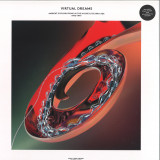
Music From Memory is delighted to be turning 50 with a special release: MFM050 - V/A - Virtual Dreams: Ambient Explorations In The House & Techno Age, 1993-1997 (3xLP/2xCD). The first in a series of compilations, alongside more in depth artist-focused releases, Virtual Dreams will delve into music produced during the 1990’s that redefined the boundaries of ‘Ambient’. This was music that explored the possibilities of Ambient music within a new setting, created often by House & Techno music producers for a world beyond dance floors but made very much with the pre and post-clubbing listener in mind.
When House and Techno exploded out of America in the mid 1980s a whole generation was redefined not only musically but also culturally and chemically speaking. Peaking, quite literally, with a second ‘Summer of Love’ in 1988, millions of young people across the world would experience the life-changing ups of a brave new world but with it of course came the downs; enter the concept of a ‘Chill-out’ room. Whilst early Chill-out rooms lacked a specific sound and were often soundtracked by music such as reggae and soul, slowly young Techno and House producers themselves would become increasingly interested in developing a futuristic ‘Ambient’ soundtrack to a world beyond the thud of the main room.
‘Ambient’ in this new age now though had sharper teeth than in Brian Eno's key text for ‘Music for Airports’, instead here the sounds were the mode of transport rather than the backdrop. While the melodies were pretty, the soundscape steered away from the pastoral, dreaming of outer-space and technology as opening up exciting new dimensions. Much like in the first Summer Of Love; the musicians were again exploring psychedelic, mind-altering and transcendental possibilities of music. And also much as in the first Summer Of Love, a psychedelic visual language would accompany the music. Though now the tracks could be accompanied by music videos, utilising early CGI techniques, they would look almost entirely to the future: envisioning technology, nature and humanity intertwined in a new Utopian future. Virtual Dreams of a better world.
From Ambient and early Chill-out classics, to lesser known one-off projects, as well as Ambient deviations by some of House and Techno’s leading producers, Volume One of Virtual Dreams features tracks by Bedouin Ascent, LA Synthesis, LFO, Marc Hollander, Mark Pritchard & Kirsty Hawkshaw, Richard H. Kirk and more.
To celebrate our 50th release the first 1000 copies include a holographic 'Virtual Dreams' sticker plus a special insert poster with artwork by Victoria Pacheco and design by Steele Bonus.
- A1: Il Principe Delle Modificazioni
- A2: Il Respiro Si Blocca
- A3: Il Castello (Dedicato A F Kafka)
- A4: La Notte È Piena Di Echi
- A5: Madame Edwarda Parte 1
- A6: Madame Edwarda Parte 2
- A7: L’uomo È Morto
- B1: Spiragli In Spazi
- B2: L’isola Nuda
- B3: Un Passo Precipitato
- B4: Effigi Inquietanti
- B5: Al Dio Ignoto
- B6: Potrebbe Dire Il Tipografo Hans
- B7: Contenta Dei Deserti
From a research work started in full lockdown three years ago, finally sees the light (or darkness) Echi Senza Fine, a remastered collection of sound material by Tasaday. Inspired by the controversial media story in 1971 of the discovery of a tribe in the Philippines that apparently had technology that had stood still in the Stone Age, the project officially borrows the name Tasaday in 1984 from the evolution of Nulla Perreale, in turn union of Die Form (musical part) & Orgasm Denied (performative part).
To put it in the words of Marcello Ambrosini, the Tasadays find in Die Form the controlled destruction of the form after its careful design and construction, while in Nulla Iperreale the spontaneity free from any possible superstructure. They declare themselves new primitives, not in the perspective of a nostalgic return to a pre-industrial or prehistoric external world, but in the exception of an inner experience in stark contrast to the leviathan of the single utilitarian thought that has dominated the West for centuries.
Their production-action does not allow itself to be tempted by the repetitiveness used by many industrial groups of those years, thus resulting seminal in the evolution of the scene. Their impulse to go further and not remain caged in the format of the new wave is witnessed by their particular sound vocabulary that sees, along with the use of conventional instruments, the use of DIY tools such as Chopper Vox and highly sui generis tools, like the Camolofono, cariole loaded with sheets, stones, tubes, chains and “garbage” of various shapes and sizes.
A discography dotted with primordial electronic experiments that reaches the new millennium through several vinyl records and an endless number of cassettes. From this undefined and mysterious number of tapes that is born Echi Senza Fine: 14 tracks (+ 2 digital bonuses) remastered, collected by Asymmetrical, who also edited the release insert, a collage of visual and textual material from their fanzines. A series of 300 transparent vinyl + Insert.
UILTY RAZORS, BONA FIDE PUNKS.
Writings on the topic that go off in all directions, mind-numbing lectures given by academics, and testimonies, most of them heavily doctored, from those who “lived through that era”: so many people today fantasize about the early days of punk in our country… This blessed moment when no one had yet thought of flaunting a ridiculous green mohawk, taking Sid Vicious as a hero, or – even worse – making the so-called alternative scene both festive and boorish. There was no such thing in 1976 or 1977, when it wasn’t easy to get hold of the first 45s by the Pistols or the Clash. Few people were aware of what was happening on the fringes of the fringes at the time. Malcolm McLaren was virtually unknown, and having short hair made you seem strange. Who knew then that rock music, which had taken a very bad turn since the early 1970s, would once again become an essential element of liberation? That, thanks to short and fast songs, it would once again rediscover that primitive, social side that was so hated by older generations? Who knew that, besides a few loners who read the music press (it was even better if they read it in English) and frequented the right record stores? Many of these formed bands, because it was impossible to do otherwise. We quickly went from listening to the Velvet Underground to trying to play the Stooges’ intros. It’s a somewhat collective story, even though there weren’t many people to start it.
The Guilty Razors were among those who took part in this initial upheaval in Paris. They were far from being the worst. They had something special and even released a single that was well above the national average. They also had enough songs to fill an album, the one you’re holding. In everyone’s opinion, they were definitely not among the punk impostors that followed in their wake. They were, at least, genuine and credible.
Guilty Razors, Parisian punk band (1975-1978). To understand something about their somewhat linear but very energetic sound, we might need to talk about the context in which it was born and, more broadly, recall the boredom (a theme that would become capital in punk songs) coupled with the desire to blow everything off, which were the basis for the formation of bands playing a rejuvenated rock music ; about the passion for a few records by the Kinks or the early Who, by the Stooges, by the Velvet mostly, which set you apart from the crowd.
And of course, we should remember this new wave, which was promoted by a few articles in the specialized press and some cutting-edge record stores, coming from New York or London, whose small but powerful influence could be felt in Paris and in a handful of isolated places in the provinces, lulled to sleep by so many appalling things, from Tangerine Dream to President Giscard d’Estaing...
In 1975-76, French music was, as almost always, in a sorry state ; it was still dominated by Johnny Hallyday and Sylvie Vartan. Local rock music was also rather bleak, apart from Bijou and Little Bob who tried to revive this small scene with poorly sound-engineered gigs played to almost no one.
In the working class suburbs at the time, it was mainly hard rock music played to 11 that helped people forget about their gruelling shifts at the factory. Here and there, on the outskirts of major cities, you still could find a few rockers with sideburns wearing black armbands since the death of Gene Vincent, but it wasn’t a proper mass movement, just a source of real danger to anyone they came across who wasn't like them. In August 1976, a festival unlike any other took place in Mont-de-Marsan – the First European Punk Festival as the poster said – with almost as many people on stage as in the audience. Yet, on that day, a quasi historical event happened, when, under the blazing afternoon sun, a band of unknowns called The Damned made an unprecedented noise in the arena, reminiscent of the chaotic Stooges in their early adolescence. They were the first genuine punk band to perform in our country: from then on, anything was possible, almost anything seemed permissible.
It makes sense that the four+1 members of Guilty Razors, who initially amplified acoustic guitars with crappy tape recorder microphones, would adopt punk music (pronounced paink in French) naturally and instinctively, since it combines liberating noise with speed of execution and – crucially – a very healthy sense of rebellion (the protesters of May 1968 proclaimed, and it was even a slogan, that they weren’t against old people, but against what had made them grow old. In the mid-1970s, it seemed normal and obvious that old people should now ALSO be targeted!!!).
At the time, the desire to fight back, and break down authority and apathy, was either red or black, often taking the form of leafleting, tumultuous general assemblies in the schoolyard, and massive or shabby demonstrations, most of the time overflowing with an exciting vitality that sometimes turned into fights with the riot police. Indeed, soon after the end of the Vietnam War and following Pinochet’s coup in Chile, all over France, Trotskyist and anarcho-libertarian fervour was firmly entrenched among parts of the educated youth population, who were equally rebellious and troublemakers whenever they had the chance. It should also be noted that when the single "Anarchy in the UK" was first heard, even though not many of us had access to it, both the title and its explosive sound immediately resonated with some of those troublemakers crying out for ANARCHY!!! Meanwhile, the left-wing majority still equated punks with reckless young neo-Nazis. Of course, the widely circulated photos in the mainstream press of Siouxsie Sioux with her swastikas didn’t necessarily help to win over the theorists of the Great Revolution. It took Joe Strummer to introduce The Clash as an anti-racist, anti-fascist and anti-ignorance band for the rejection of old-school revolutionaries to fade a little.
The Lycée Jean-Baptiste Say at Porte d’Auteuil, despite being located in the very posh and very exclusive 16th arrondissement of Paris, didn’t escape these "committed" upheavals, which doubled as the perfect outlet for the less timid members of this generation.
“Back then, politics were fun,” says Tristam Nada, who studied there and went on to become Guilty Razors’ frontman. “Jean-Baptiste was the leftist high-school in the neighbourhood. When the far right guys from the GUD came down there, the Communist League guys from elsewhere helped us fight them off.”
Anything that could challenge authority was fair game and of course, strikes for just about any reason would lead to increasingly frequent truancy (with a definitive farewell to education that would soon follow). Tristam Nada spent his 10th and 11th unfinished grades with José Perez, who had come from Spain, where his father, a janitor, had been sentenced to death by Franco. “José steered my tastes towards solid acts such as The Who. Like most teenagers, I had previously absorbed just about everything that came my way, from Yes to Led Zeppelin to Genesis. I was exploring… And then one day, he told me that he and his brother Carlos wanted to start a rock band.” The Perez brothers already played guitar. “Of course, they were Spanish!”, jokes their singer. “Then, somewhat reluctantly, José took up the bass and we were soon joined by Jano – who called himself Jano Homicid – who took up the rhythm guitar.” Several drummers would later join this core of not easily intimidated young guys who didn’t let adversity get the better of them.
The first rehearsals of the newly named Guilty Razors took place in the bedroom of a Perez aunt. There, the three rookies tried to cover a few standards, songs that often were an integral part of their lives. During a first, short gig, in front of a bewildered audience of tough old-school rockers, they launched into a clunky version of the Velvet Underground's “Heroin”. Challenge or recklessness? A bit of both, probably… And then, step by step, their limited repertoire expanded as they decided to write their own songs, sung in a not always very accurate or academic English, but who cared about proper grammar or the right vocabulary, since what truly mattered was to make the words sound as good as possible while playing very, very fast music? And spitting out those words in a language that left no doubt as to what it conveyed mattered as well.
Trying their hand a the kind of rock music disliked by most of the neighbourhood, making noise, being fiercely provocative: they still belonged to a tiny clique who, at this very moment, had chosen to impose this difference. And there were very few places in France or elsewhere, where one could witness the first stirrings of something that wasn’t a trend yet, let alone a movement.
In the provinces, in late 1976 or early 1977, there couldn’t be more than thirty record stores that were a bit more discerning than average, where you could hear this new kind of short-haired rock music called “punk”. The old clientele, who previously had no problem coming in to buy the latest McCartney or Aerosmith LP, now felt a little less comfortable there…
In Paris, these enlightened places were quite rare and often located nex to what would become the Forum des Halles, a big shopping mall. Between three aging sex workers, a couple of second-hand clothes shops, sellers of hippie paraphernalia and small fashion designers, the good word was loudly spread in two pioneering places – propagators of what was still only a new underground movement. Historically, the first one was the Open Market, a kind of poorly, but tastefully stocked cave. Speakers blasted out the sound of sixties garage bands from the Nuggets compilation (a crucial reference for José Perez) or the badly dressed English kids of Eddie and the Hot Rods. This black-painted den was opened a few years earlier by Marc Zermati, a character who wasn’t always in a sunny disposition, but always quite radical in his (good) choices and his opinions. He founded the independent label Skydog and was one of the promoters of the Mont-de-Marsan punk festivals. Not far from there was Harry Cover, another store more in tune with the new New York scene, which was amply covered in the house fanzine, Rock News (even though it was in it that the photos of the Sex Pistols were first published in France).
It was a favorite hang-out of the Perez brothers and Tristam Nada, as the latter explained. “It’s at Harry Cover’s that we first heard the Pistols and Clash’s 45s, and after that, we decided to start writing our first songs. If they could do it, so could we!”
The sonic shocks that were “Anarchy in the UK”, “White Riot” or the Buzzcocks’s EP, “Spiral Scratch” – which Guilty Razors' sound is reminiscent of – were soon to be amplified by an unparalleled visual shock. In April 1977, right after the release of their first LP, The Clash performed at the Palais des Glaces in Paris, during a punk night organised by Marc Zermati. For many who were there, it was the gig of a lifetime…
Of course, Guilty Razors and Tristam were in the audience: “That concert was fabulous… We Parisian punks were almost all dressed in black and white, with white shirts, skinny leather ties, bikers jackets or light jackets, etc. The Clash, on the other hand, wore colourful clothes. Well, the next day, at the Gibus, you’d spot everyone who had been at this concert, but they weren’t wearing anything black, they were all wearing colours.”
It makes sense to mention the Gibus club, as Guilty Razors often played there (sometimes in front of a hostile audience). It was also the only place in Paris that regularly scheduled new Parisian or Anglo-Saxon acts, such as Generation X, Siouxsie and the Banshees, the Slits, and Johnny Thunders who would become a kind of messed-up mascot for the venue. A little later, in 1978, the Rose Bonbon – formerly the Nashville – also attracted nightly owls in search of electric thrills… In 1977, the iconic but not necessarily excellent Asphalt Jungle often played at the Gibus, sometimes sharing the bill with Metal Urbain, the only band whose aura would later transcend the French borders (“I saw them as the French Sex Pistols,” said Geoff Travis, head of their British label Rough Trade). Already established in this small scene, Metal Urbain helped the young and restless Guilty Razors who had just arrived. Guitarist for Metal Urbain Hermann Schwartz remembers it: “They were younger than us, we were a bit like their mentors even if it’s too strong a word… At least they were credible. We thought they were good, and they had good songs which reminded of the Buzzcocks that I liked a lot. But at some point, they started hanging out with the Hells Angels. That’s when we stopped following them.”
The break-up was mutual, since, Guilty Razors, for their part, were shocked when they saw a fringe element of the audience at Metal Urbain concerts who repeatedly shouted “Sieg Heil” and gave Nazi salutes. These provocations, even still minor (the bulk of the skinhead crowd would later make their presence felt during concerts), weren’t really to the liking of the Perez brothers, whose anti-fascist convictions were firmly rooted. Some things are non-negotiable.
A few months earlier (in July 1978), Guilty Razors had nevertheless opened very successfully for Metal Urbain at the Bus Palladium, a more traditonally old-school rock night-club. But, as was sometimes the case back then, the night turned into a mass brawl when suburban rockers came to “beat up punks”.
Back then, Parisian nights weren’t always sweet and serene.
So, after opening as best as they could for The Jam (their sound having been ruined by the PA system), our local heroes were – once again – met outside by a horde of greasers out to get them. “Thankfully,” says Tristam, “we were with our roadies, motorless bikers who acted as a protective barrier. We were chased in the neighbouring streets and the whole thing ended in front of a bar, with the owner coming out with a rifle…”
Although Tristam and the Perez brothers narrowly escaped various, potentially bloody, incidents, they weren’t completely innocent of wrongdoing either. They still find amusing their mugging of two strangers in the street for example (“We were broke and we simply wanted to buy tickets for the Heartbreakers concert that night,” says Tristam). It so happened that their victims were two key figures in the rock business at the time: radio presenter Alain Manneval and music publisher Philippe Constantin. They filed a complaint and sought monetary compensation, but somehow the band’s manager, the skilful but very controversial Alexis, managed to get the complaint withdrawn and Guilty Razors ended up signing with Constantin with a substantial advance.
They also signed with Polydor and the label released in 1978 their only three-track 45, featuring “I Don't Wanna be A Rich”, “Hurts and Noises” and “Provocate” (songs that exuded perpetual rebellion and an unquenchable desire for “class” confrontation). It was a very good record, but due to a lack of promotion (radio stations didn’t play French artists singing in English), it didn’t sell very well. Only 800 copies were allegedly sold and the rest of the stock was pulped… Initially, the three tracks were to be included on a LP that never came to be, since they were dropped by Polydor (“Let’s say we sometimes caused a ruckus in their offices!” laughs Tristam.) In order to perfect the long-awaited LP, the band recorded demos of other tracks. There was a cover of Pink Floyd's “Lucifer Sam” from the Syd Barrett era – proof of an enduring love for the sixties’ greats –, “Wake Up” a hangover tale and “Bad Heart” about the Baader-Meinhof gang, whose actions had a profound impact on the era and on a generation seeking extreme dissent... On the album you’re now discovering, you can also hear five previously unreleased tracks recorded a bit later during an extended and freezing stay in Madrid, in a makeshift studio with the invaluable help of a drummer also acting as sound engineer. He was both an enthusiastic old hippie and a proper whizz at sound engineering. Here too, certain influences from the fifties and sixties (Link Wray, the Troggs) are more than obvious in the band’s music.
Shortly after a final stormy and rather barbaric (on the audience’s side) “Punk night” at the Olympia in June 1978, Tristam left the band ; his bandmates continued without him for a short while.
But like most pioneering punk bands of the era, Guilty Razors eventually split up for good after three years (besides once in Spain, they’d only played in Paris). The reason for ceasing business activities were more or less the same for everyone: there were no venues outside one’s small circuit to play this kind of rock music, which was still frightening, unknown, or of little interest to most people. The chances of recording an LP were virtually null, since major labels were only signing unoriginal but reassuring sub-Téléphone clones, and the smaller ones were only interested in progressive rock or French chanson for youth clubs. And what about self-production? No one in our small safety-pinned world had thought about it yet. There wasn’t enough money to embark on that sort of venture anyway.
So yes, the early days of punk in France were truly No Future!
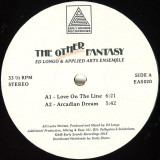
We Welcome Ed Longo And His Studio Project The Applied Arts Ensemble Debut On Early Sounds With the Other Fantasy', The Result Of Many Recording Sessions That Took Place In Different Places Around Europe.
Conceived With A Strong Jazz-funk, Fusion And Boogie Sound It Has Been Conceptualized Around The Idea That The Schizophrenia Of The Internet-age, The Visions Of Otherness (the Undiscovered Lands, The Primitive Happiness, The Impossible Love) Permeate The Collective Consciousness And The Idealized "other" Loses Any Correspondence With The Physical World.
Don’t believe your ears - Pepper’s Ghost is the latest offering from NYC project Nuke Watch.
Whatever you think it is - it is not. By the same token it really can be whatever you want - electronica, jazz, improv, noise, new age, ambient - it’s none and all of these. Like the primitive visual illusion it’s named for - Pepper’s Ghost is a projection of a thing, it’s not the thing.
The Nuke Watch method - like that of Aaron Anderson and Chris Hontos’ other primary project Beat Detectives - leans almost entirely on live improvisation, with some advanced studio alchemy in post. Where the Beat Detectives palette draws from club music tropes, Nuke Watch blends recognizable tones (hand drums, woodwinds, keys, fretless bass) with sounds of providence unknown, the line between organic and synthesized instrumentation unintelligibly smudged. What is real and what is projection? It’s hard to say. What do our ears tell us? This is where we arrive at Pepper’s Ghost.
Warped as the sounds may be, the playing belies a crew of deeply expressive, learned improvisers who have their craft honed. Their friendship and psychic connection enhances the ritualistic rhythms, mutant modular synthesis, nimble keyboard runs, absurdist sampling and unidentified skronk. They’re wonderfully complemented across several tracks on this set by Cole Pulice’s levitational, sublime saxophone.
As unhinged as this might all appear, once the mind and music meet on the same wavelength this is profoundly moving, energizing and uplifting Alive Music that recalibrates the sense of what music can be.
Nuke Watch is Aaron Anderson and Chris Hontos, with an array of friendly guests. They’ve released records as Nuke Watch on The Trilogy Tapes, Commend and Moon Glyph. As Beat Detectives they’ve released records on Not Not Fun, 100% Silk and their own studio imprint NYPD Records.
Pepper's Ghost was written and produced by Aaron Anderson and Chris Hontos. Additional instrumentation on these recordings by Cole Police, Leonard King, Eric Timothy Carlson, Chris Farstad and William Statler. It was mixed by Chris Hontos and mastered by Jack Callahan. Painting on the cover is “The Unity Of Being” (2020), by Ry Fyan. Design and layout by Aaron Anderson.
RIYL - Musical illusions, puzzles and magic tricks, downtempo, music of the spheres, good journey, Eddie Harris, Ketron, "world building", orange sunshine, suspension of disbelief.
- 01: Ellipse For Bluejay
- 02: Solace Stone Somewhere
- 03: Bent City I
- 04: Ethan Dreams Two People
- 05: Ever Surprised Blue Eyes
- 06: Bent City Ii
- 07: Vision At 1000 Centigrade
- 08: Lizard-Watcher&Apos;S Theme
- 09: Wave Your Moonlight Hat For The Snowfall Train
- 10: Bent City Iii (Alternate Take)
Uno Loop presents the first-ever licensed reissue of Phil Yost's Bent City (1967), a rare Takoma Records title and a landmark of jazz-folk-psych experimentation. Long out of print and previously unavailable digitally, Bent City has gained strong early support with airplay on BBC Radio, Worldwide FM, KCRW, and WFMU, alongside praise from Bandcamp Daily and Aquarium Drunkard. Yost's cult following - particularly within spiritual jazz, American Primitive, and experimental ambient and folk communities -positions this reissue as a high-interest archival title with strong cross-genre appeal.
This edition is fully authorized by the Phil Yost Estate and Concord Records and pressed in a limited run, packaged with an 8-page archival booklet featuring previously unseen photographs, biographical notes, and original research on the enigmatic Bay Area musician. Bent City is the first release in a broader, multi-title restoration of Yost's catalog, with three additional albums to follow (at minimum), including Fog-Hat Ramble (1968), Touchwood's Dream (1970) and Yost's unreleased Sunflower Sojourn - creating a sustained narrative for continued retail engagement. With growing press attention, renewed visibility among collectors, and its unique place in Takoma and outsider jazz-adjacent history, Bent City is a standout catalog builder for stores specializing in jazz, experimental, ambient, and private-press reissues.
At the end of the 1980s, Mariolina Zitta approached the world of natural sounds, studying musicology and developing a passion for speleology. Her encounter with Walter Maioli was fundamental, guiding and influencing her definitive research into sound archaeology and the primitive sources of musical acoustic phenomena. In these recordings Mariolina conducts a magical ritual as a cave priestess, celebrating the icons par excellence of the mysteries of the an ancestral enchantment on the border between consciousness and dreams, a symbolic liturgy of primordial reverberations, echoes and whistles. Edition of 200 copies.
“Detraex Corp arrives on Sagome to deliver a heady journey through experimental rhythm and dub-informed weight and release with their new album Live at Pompeii. The album, much like its Carlo Gabriele Tribbioli created artwork, represents a journey, a collection of sounds and emotions, sequenced to share with us, the listener, a variety of experience, and of memory, which are at once familiar and other.
"Live at Pompeii sets things off with the tone-setting Tykes of, where frazzled, shuffling drums meet sub bass weight and ketamine oud, sounding something like Wordsound’s Scarab leaving the 90s and entering the future. Tombaroli invites the head nods, clearly communicating the album’s intentions and inviting us to that party under that out-of-town bridge with its insistent percussion and pulsing weight.
"Other tracks, such as Bullet Holes, carry us further into a psychedelic alternative, with its lysergic fever-dream soundtrack to an unnamed mediterranean plaza, and No Minus’s sounding like a nascent, primitive distant cousin to Jeru’s Premier-produced Come Clean.
"Channel 83 firmly returns us to the club, weaving mystical soundsystem magic with its stunted horns and swirl of voice, driven forward with the most chest-rattling of stomps, before the album enters its finale, where the grimey judder of Expect Excerpt slides to a bleary-eyed half-speed, evoking the club which won’t let you leave.
"Mount Point eventually provides that release, an early morning sunrise of a track, with rich, slow trudge and post-club shimmer, before Landings Dub signals the end of the journey, a metallic elegy to what has preceded, and a contemplation of your upcoming repeat listen, and re-entry, to the world of Detraex Corp.”
Words by Daniel Magee
Music by Detraex Corp
Mastered by Giuseppe Ielasi
Artwork and Layout by Carlo Gabriele Tribbioli
- A3: Main Theme & Final Boss Medley
- A4: Dignity Palace (Kain R. Heinlein Stage)
- A5: All Over With Blood (Freeman Stage)
- A6: Fullmoon - A Groan (Gato Stage)
- A7: Destruction Maniac (Grant Stage)
- B1: The Twelve Challengers (Player Select), Exotic Lady (Charlotte)
- B2: Darkness (Shiro Tokisada Amakusa 2)
- B3: Banquet Of Nature (Nakoruru) - Part 1 & Part 2
- B4: Ryuhaku Todoh Stage
- B5: The Primitive Age
- B6: The Age Of Rome
- C1: Ponponella
- C2: Vixen
- C3: The Super Spy, New World
- C4: Imputation
- C5: Game Start, Powering Up
- C6: Stage Medley
- C7: Change (Theme 2)
- C8: Termination (Ending 1)
- D1: Bioinformatics (Ufo Interior Passage 3)
- D2: The Cenotaph (Stage 4 Alternative Route~Ancient Ruins), Desert (Stage 4)
- D3: Secret Factory (Stage 3 Alternative Route~Armory)
- D4: Into The Cosmos (The Void Of Space)
- D5: Opening, Napolitan Blues, Duel R&D, Yuu, Psycho Soldier "K.o.f Version
- A1: Snk - Rhapsody For Piano
- A2: Intro, Stage 1, Stage Boss Medley
Relive the excitement of SNK's greatest games with this album featuring cult titles arranged entirely for piano!
Arranged and performed by pianist Nicolas Horvath, a Steinway and Sons artist renowned as a leading interpreter of composers such as Philip Glass, Franz Liszt, Claude Debussy, and Erik Satie.
The album contains a rich selection of tracks composed by the legendary SNK Sound Team, ranging from Prehistoric Isle to The King of Fighters 94, Samurai Shodown, The Last Blade, and Metal Slug 3.
Sometimes dark, sometimes bright, the arrangements beautifully and emotionally revisit the melodies that have marked several generations of gamers!
b a2 Intro, Stage 1, Stage Boss Medley [PREHISTORIC ISLE]
[c] a3 Main Theme & Final Boss Medley [PREHISTORIC ISLE]
[d] a4 Dignity Palace (Kain R. Heinlein Stage) [GAROU: MARK OF THE WOLVES]
[e] a5 All Over With Blood (Freeman Stage) [GAROU: MARK OF THE WOLVES]
[f] a6 Fullmoon - A Groan (Gato Stage) [GAROU: MARK OF THE WOLVES]
[g] a7 Destruction Maniac (Grant Stage) [GAROU: MARK OF THE WOLVES]
[h] b1 The Twelve Challengers (Player Select), Exotic Lady (Charlotte) [SAMURAI SHODOWN]
[i] b2 Darkness (Shiro Tokisada Amakusa 2) [SAMURAI SHODOWN]
[j] b3 Banquet of Nature (Nakoruru) - Part 1 & Part 2 [SAMURAI SHODOWN]
[k] b4 Ryuhaku Todoh Stage [ART OF FIGHTING]
[l] b5 The Primitive Age [TIME SOLDIERS]
[m] b6 The Age of Rome [TIME SOLDIERS]
[n] c1 PonPonella [ALPHA MISSION]
[o] c2 Vixen [THE SUPER SPY]
[p] c3 The Super Spy, New World [THE SUPER SPY]
[q] c4 Imputation [THE SUPER SPY]
[r] c5 Game Start, Powering Up [Vanguard]
[s] c6 Stage Medley [Vanguard]
[t] c7 Change (Theme 2) [THE LAST BLADE]
[u] c8 Termination (Ending 1) [THE LAST BLADE]
[v] d1 Bioinformatics (UFO Interior Passage 3) [METAL SLUG 3]
[w] d2 The Cenotaph (Stage 4 Alternative Route~Ancient Ruins), Desert (Stage 4) [METAL SLUG 3]
[x] d3 Secret Factory (Stage 3 Alternative Route~Armory) [METAL SLUG 3]
[y] d4 Into the Cosmos (The Void of Space) [METAL SLUG 3]
[z] d5 Opening, Napolitan Blues, Duel R&D, Yuu, Psycho Soldier "K.O.F Version" [THE KING OF FIGHTERS '94]
[b] a2 Intro, Stage 1, Stage Boss Medley [PREHISTORIC ISLE]
[c] a3 Main Theme & Final Boss Medley [PREHISTORIC ISLE]
[d] a4 Dignity Palace (Kain R. Heinlein Stage) [GAROU: MARK OF THE WOLVES]
[e] a5 All Over With Blood (Freeman Stage) [GAROU: MARK OF THE WOLVES]
[f] a6 Fullmoon - A Groan (Gato Stage) [GAROU: MARK OF THE WOLVES]
[g] a7 Destruction Maniac (Grant Stage) [GAROU: MARK OF THE WOLVES]
[h] b1 The Twelve Challengers (Player Select), Exotic Lady (Charlotte) [SAMURAI SHODOWN]
[i] b2 Darkness (Shiro Tokisada Amakusa 2) [SAMURAI SHODOWN]
[j] b3 Banquet of Nature (Nakoruru) - Part 1 & Part 2 [SAMURAI SHODOWN]
[k] b4 Ryuhaku Todoh Stage [ART OF FIGHTING]
[l] b5 The Primitive Age [TIME SOLDIERS]
[m] b6 The Age of Rome [TIME SOLDIERS]
[n] c1 PonPonella [ALPHA MISSION]
[o] c2 Vixen [THE SUPER SPY]
[p] c3 The Super Spy, New World [THE SUPER SPY]
[q] c4 Imputation [THE SUPER SPY]
[r] c5 Game Start, Powering Up [Vanguard]
[s] c6 Stage Medley [Vanguard]
[t] c7 Change (Theme 2) [THE LAST BLADE]
[u] c8 Termination (Ending 1) [THE LAST BLADE]
[v] d1 Bioinformatics (UFO Interior Passage 3) [METAL SLUG 3]
[w] d2 The Cenotaph (Stage 4 Alternative Route~Ancient Ruins), Desert (Stage 4) [METAL SLUG 3]
[x] d3 Secret Factory (Stage 3 Alternative Route~Armory) [METAL SLUG 3]
[y] d4 Into the Cosmos (The Void of Space) [METAL SLUG 3]
[z] d5 Opening, Napolitan Blues, Duel R&D, Yuu, Psycho Soldier "K.O.F Version" [THE KING OF FIGHTERS '94]
- Fabulist
- Just Don't Know (How To Be You)
- October
- Vera
- Doubt It's Gonna Change
- You
- Bo's New Haircut
- I'm Not Sad
- Yes It's True
- Weird Feeling
- Done With You
- Rather Not Stay
- When You Said Goodbye
Comprising of sisters Eva and Grace Tedeschi, The Cords are the brightest new indiepop band from Scotland and this is theri debut. They started playing drums when they were little kids and later found that they liked 80s and 90s indie music more than their peers did, and so formed a band, just the two of them, with Grace on drums and Eva on guitar - and the songs started to flow. With only a cassette and a flexi single released so far (both of which sold out in a matter of hours), Eva and Grace honed their skills by playing a whole series of gigs with some of the biggest names in Scottish pop. Their first show was with The Vaselines, and since then they have played with Camera Obscura, Belle and Sebastian, BMX Bandits and others, while also sharing stages with the new generation of indiepop stars: the Umbrellas, Chime School, Lightheaded. Like all great pop bands, The Cords have taken familiar ingredients and created something utterly fresh. Older indie fans will hear echoes of The Shop Assistants, The Primitives, Tiger Trap and Talulah Gosh, but they will hear something else too: a yearning, dreamy melodic power that takes the songs into darker, stranger places. Younger pop fans won't care about these old reference points: what they will hear is the sound of two young women doing something utterly exciting: playing loud guitar and loud drums, taking analogue instruments and hitting them hard in the service of immediate and infectious pop tunes, and not giving a second thought about the digital world that wants to own everything we do. The Cords sound free: they remind us that pop music, played right, is expressive, liberating, joyful and deeply personal. First single `Fabulist' is a sweet and catchy pop song that races along, so headlong and hooky that, on first listen, you could miss the fact that it's a wholehearted take-down of people who lie for a living. And the album is a fun rollercoaster ride from that point onwards, with the real stars of this record being Eva's sinuous guitar and silky vocals, and Grace's clattering, expressive sing-song drums. It's the sound of two sisters having an intense musical conversation with each other, pushing each other on to greater heights, exhilarated by the set of perfect pop songs they have magicked up. DIGIPAK CD, LP on BABY BLUE VINYL.
- Outside
- Demon Time
- Never Say Die
- Behold A Pale Horse
- Magic Of The World
- Fission/Fusion
- The Matador
- I've Got My Ownblunt To Smoke
- Radioactive Dreams
- Inside
- A Tear For Lucas
Black Vinyl[26,01 €]
A collaboration forged in the heart of the American Midwest, In The Earth Again unites Oklahoma City"s noise rock institution Chat Pile with Texas/Oklahoma"s visionary guitarist and composer Hayden Pedigo. What began as a casual split release idea spiraled into thirty-six-minute album that threads their contrasting sensibilities into something entirely new. Pedigo"s panoramic, primitive guitar, meets Chat Pile"s industrial decay, creating a record that explores unknown emotional registers and atmospheric depth for both, In The Earth Again sounds like a post-apocalyptic transmission from rural nowhere. Instead of making concessions, the five artists work as a single unit, and each decision is made in support of the greater vision. The result is both intimate and expansive, a tribute to the modern wasteland. Cover art by Malcom Byers.
- Outside
- Demon Time
- Never Say Die
- Behold A Pale Horse
- Magic Of The World
- Fission/Fusion
- The Matador
- I've Got My Ownblunt To Smoke
- Radioactive Dreams
- Inside
- A Tear For Lucas
OXBLOOD VINYL[26,01 €]
A collaboration forged in the heart of the American Midwest, In The Earth Again unites Oklahoma City"s noise rock institution Chat Pile with Texas/Oklahoma"s visionary guitarist and composer Hayden Pedigo. What began as a casual split release idea spiraled into a thirty-six-minute album that threads their contrasting sensibilities into something entirely new. Pedigo"s panoramic, primitive guitar, meets Chat Pile"s industrial decay, creating a record that explores unknown emotional registers and atmospheric depth for both, In The Earth Again sounds like a post-apocalyptic transmission from rural nowhere. Instead of making concessions, the five artists work as a single unit, and each decision is made in support of the greater vision. The result is both intimate and expansive, a tribute to the modern wasteland. Cover art by Malcom Byers.
- A1: That Musician Thats Dead
- A2: Preference Is A Good Friend, Mind
- A3: No One Can Sing That Well
- B1: Last Herald
- B2: Mo**Real
- B3: Things Keep Happening
OOOOH! by Alex Bad Baby Lukashevsky with Cocoa Corner (2025)
Celebrated veteran of Toronto’s music scene, known for his boundary-pushing approach to folk and avant-garde music, twists rock music into strange and brilliant new shapes with the help of young jazz players, U.S. Girls, and his own immensely talented son.
OOOOH! is hard on the outside and soft on the inside. Made in the spirit of unity,
humanity, and poetry — disobediently renouncing the glory of personal triumph for the
generosity of an honest experiment. On the last track of the album you’ll hear “Or do you only ever never want to make a single enemy? / That’s not freedom or humility / It’s nothing, honestly.” Oooh, that's a bad baby!
A celebrated Toronto songwriter and performer, Alex Lukashevsky has always been disobedient. Which simply means, nothing is off the table when he’s looking for his
poetic voice; when trying to find the realest I of the teller. As he sings on the lead track “that musician that’s dead” The musician is radical/ it’s the world that’s demented/ listening with their eyes, the music looks dented/ they’re over-represented.
OOOOH! was recorded in January 2024 at Sound Department in Toronto, engineered by Patrick Lefler (ROY), mixed by Grammy-nominated producer Matt Smith. All the songs were tracked live off the floor in two days, with one extra day for recording vocals, to keep the recording fully alive and breathing. As leader of Deep Dark United, as a solo performer, and a sideman in Brodie Wests’ Eucalyptus and Luka Kuplowsky’s Ryokan Band, Alex has been an outsized influence on the Toronto music scene that spawned acts like Broken Social Scene and Owen Pallett. (Pallett, who has toured with Lukashevsky, went so far as to record an entire album’s worth of Alex’s songs, backed
by a full orchestra.)
Lukashevsky has approached each of his albums and projects as something completely new, using only the musical boundaries he creates with each song. Even when he
has recorded songs with nothing but his voice and his own acoustic guitar accompaniment, the results are never “stripped down” or “back to basics,”
Gong! How do you get to heaven / have fun! have fun!
It’s cool to approach music as a game of “spot the influence”; Burt Bacharach-meets-Black Flag; Lana Del Rey-meets-LCD Soundsystem etc. Glorified mash-ups are promising because of their conversational nature. But they can turn us into hyperboreans; blowing cold air beyond ourselves while doing what we can to remain warm. To devise a game or a narrative is to have a winner and a loser, but we all know that just as you win/ so you lose. And does anything really change? Alex Lukashevsky and Cocoa Corner are more at ease drawing blind contours or playing an old game like consequences. They let things add up without knowing particularly how. Cognition is recognition.
Lukashevsky, in addition to writing all the songs, plays guitar and sings on OOOOH!, doing both in ways that are soulful and spikey at the same time. Joining him on guitar and vocals is his oldest child, Charlie Lukashevsky, who, at 23, is already a talented performer and songwriter in his own right. Cocoa Corner also includes Aidan McConnell, an in-demand drummer and composer, Jack Johnston, a jazz bassist and Barry Harris acolyte, and percussionist Evan Cartwright (The Weather Station, U.S. Girls, Cola, Tasseomancy), who plays steel pan and marching drum.
Working with his son and with other younger musicians is central to the album’s
unpredictable aesthetic. It reinvigorated the sound in unexpected ways. Lukashevsky says, “I had to reconsider my own instincts. I had to deal with being 99 years old.”
In addition to these performers, the album includes a tasty contribution from Meg
Remy, the visionary musician and producer who is the leader of the critically acclaimed
project U.S. Girls. Remy duets with Lukashevsky on the imagistic and sprawling album
closer “things keep happening.”
About that album title: OOOOH! is taken straight from “that musician that’s dead” an
arch and unhinged comment on the exertion required to navigate a lifetime of music making.
Lukashevsky’s delivery of that one emotive word is a kind of cultural posture, but also a
hundred percent primitive expression. The impact is never less than visceral. His vocal
delivery ranges through rich baritone blues to keening falsettos to a kind of sprechstimme that periodically steps out from the music to grab the listener’s shirt. He
doesn’t sound too nice, but he is sincere. When life gives you lemons lament.
For OOOOH! his first official full-length album since 2012’s Too Late Blues, (a collection of knotty-yet-effervescent tunes built upon the enchantingly serpentine harmonies of Lukashevsky and his vocal collaborators, Felicity Williams (Bahamas, Bernice) and Daniela Gesundheit (Snowblink, HYDRA)), Alex has once again broken apart and rebuilt his own approach to music. Or rather (because that sounds too over-determined), he
has allowed his music to build itself into strange new shapes that only fleetingly and
coincidentally, but happily, resemble anything that might be called rock and roll. There is some editorializing within the song’s lyrics— Lukashevsky even cheekily contributes to the “spot the influence” game with the line “Muddy Waters, Rite of Spring!” a funny preemptive strike against anyone already reaching for some variation of avant-blues to describe what the song is up to here. In fact there are many names checked on this record (literally and in spirit); they are the lily pads that trace the path of this expression! Palestrina, Peter Pears and Benjamin Brittain, Andrés Segovia, Stravinsky, Lotte Lenya, Alice Coltrane, Skip James, Chuck Berry, D’Gary, Betty Carter, Mukhtiyar Ali, Chuck D, Yoko Ono, Hailu Mergia, David Bowie, Jane Siberry. rhythm is a skeleton mansion / haunted by melody / feckless prodigy / the world is under a spell / cast by some demon angel / Practice day and night / Try as hard as hell / no one can sing that well Musicians are often worried by the way in which they are prepared to fail rather
than how they would like to succeed; it’s such a deep concern that it tempers their creativity and shackles their process. Current cultural proclivities, tend to comfort a certain kind of artistic failure and abnegate another kind. How many testimonials, full of heartfelt care and investment, have you heard for Taylor Swift, and yet a craftsman like Chris Weisman is often dismissed easily as though he’s doing something anti-social. what’s throwing itself in my ears and my eyes / arrogant devil ad hominem christ.
The music you will hear on this recording veers off in multiple directions at once,
and features a rock and roll spirit with a divergent heart. This is no sclerotic clomp of the Average Rock Song, but in fact a flood of humanity in all its darkness and moodiness and unpredictability. If most performers make songs that are like sports cars or pickup trucks to drive around, Lukashevsky has built something more akin to a rowboat in a tree: it’s weird and beautiful.
2026 Repress
Tame Impala’s fifth full-length album ‘Deadbeat’. On it, Parker sculpts a collection of wickedly potent club-psych explorations as a vehicle for some of his most direct, brain-wormy songwriting to date, recasting Tame Impala as a kind of future primitive rave act in the process.
Deadbeat sounds like the work of an artist with a levelled-up mastery and bristles with a revitalized energy for experimentation. 12 songs crafted with a newfound embrace of spontaneity for the renowned perfectionist. How that manifests is a distinct minimalism and crunch to many of the tracks, with a clutch of crucial details, timbres and textures that add an ineffably new dimension to the sound, as well as a richer, more playful vocal range than ever.
Pruillip is a new Belgian band founded by Louis Evrard (Bert Dockx Band, Grid Ravage, Ottla) and Annelies Van Dinter (Echo Beatty, Takh & Naga Ghost). The duo started about 2 years ago after a request to play at De Nor, the open air sculpture park and venue of Dennis Tyfus. For this occasion Annelies and Louis decided to do a position switch and play each other's instruments: Annelies beating the hell out of the drums and Louis ripping up the guitar.
Pruillip: the record
Visceral meditation: that's what the self titled debut album of Pruillip is all about. Eight songs channeling elemental emotions, kickin' deep into the internal organs of the body. Low end frequency swagger droning up from Louis Evrard's amp, ready to slip into 'Place All Your Cards', slow burning sludge nugget, bolstered by the steady drum kicks of Annelies Van Dinter, where every note and strike seems to carry the weight of the world. Navigating through life, seducing you with her gloomy voice. Entering a quest into the unknown, a place you don't want to leave. A feeling increased by the abrasive and brutal 'Boterham': a punk sludge anthem for the hungry and the wild at heart, countered with the reverb-shrouded murmur 'Distracted Enthusiasm'. The lonely 'Zonnedauw' sets the mark of an apparently more resigned B-side, stretching the Pruillip universe with primitive, but so addictive, riffs in 'Mirrors', echoing vibes of 90's desert sessions while 'Offload' and the lucid state of Ataraxia seems to drift on raw emotions and a sweaty claustrophobic tension, which would fit perfectly in Wim Wenders Paris Texas movie. A whirlwind of a record, straight to the bone, leaving you flabbergasted and wanting for more.
Another future-grail rarity unearthed by Chicago's own Star Creature, remastered and reissued for the first time as a giant 2 sided 7 inch slice. TZ & Co have been pushing both sides hard over the last 5 years and judging by the recent discogs history on the OG, the world is starting to catch up. Originally an extremely limited 1-off house 12" EP the demand has been creeping up especially turning heads on the net as a track ID? requests during TZ's opening sets on the Jamie XX tour earlier this year. An overall Hardcore Punk Funk, pre-house experiment from prehistoric primitive era of the genre, this one is finally ready to debut and go global.
Swedish trio Death And Vanilla follow their much-praised re-imagined soundtracks to `Vampyr' (2017) and `The Tenant' (2018) with their interpretation of the soundtrack to cult 1968 TV show `Whistle And I'll Come To You'. Ltd White Vinyl LP, Soundtrack / Electronic / Indie At a time when post-ambient electronica and bedevilled folk music are co-habiting, and the public's interest in Pagan rites and rituals has been sparked by a new generation of fans. The bizarre storyline of Whistle And I'll Come To You seems even more pertinent_ and strangely haunting. The Jonathan Miller-adapted 1968 ghost story was originally part of BBC's Omnibus series and featured Michael Horden as a fussy professor who discovers an ancient whistle which summons up the spirits. A black and white folkloric tale in the style of The Wicker Man, the original TV programme received rave reviews. The esoteric live score was recorded at the Hypnos Theatre in Malmö. The 42-minute soundtrack utilises stuttering tape loops on `Intro' before breathing new life into the primitive John Carpenter-like drum machine on `Supernatural Breakfast', while `Walk On The Beach 2' sounds like a hauntological rendition of a Broadcast classic. Indeed, that effect is amplified on `Nightmares', with its swirling wind and other-worldly choral effect, before the feeling of some supernatural presence is suggested on the penultimate cut `Evidence Of Spiritualism'.
- 1: F.y.e.o
- 2: Waste The Day
- 3: Green Crack
- 4: Town
- 5: Silhouette
- 6: D.s.c
- 7: Rat Dog (Crime & Stickmen With Rayguns)
It has been a long time since Creepy Crawl released any music – the return to the fray was not something we had had thought about – times have changed, the world of underground music is almost unrecognizable – however things came back into focus earlier this year when the underground legend that is Mike Vest came calling…. Mike Vest is a one man musical tour de force known for his extensive work with such bands as Bong, Drunk in Hell, 11 Paranoias, Blown Out and Mienakunaru to name a few, releasing records on many underground labels such as Riot Season, Ritual Productions and Cardinal Fuzz etc For Brain Pills Mike has teamed up with Adam Stone from the excellent Poundland on vocals and Nick Raybould from Thought Bubble on drums and art – the result is very impressive indeed – primitive but deadly drums, pulverizingly heavy riffs – lots of fuzz and distortion going on coupled with Adam Stones demented and haunting vocal style all topped off by the excellent and disturbing artwork courtesy of Nick Raybould.
The LP Goatshead is homage to Mike's hometown of Gateshead – Goatshead being the ancient pagan name. The record has been mastered for this vinyl release by crust punk legend Bri Doom, known for his work with Sore Throat, Doom, Lazarus Blackstar and most recently with the excellent Disciple BC - the sound is massive, just what you would expect. Released on clear yellow vinyl with OBI strip and limited to just 300 copies – consume or die!
It’s very difficult to describe someone as prolific as Misha Panfilov. So, I feel the best way to define him is to think of a “Trivial Pursuit Playing Piece,” where each pie piece represents one of the bands he heads up, and each band has its own distinct style and genre. Yet, when looked at all together, create the whole musical persona of Misha. This is the lens I would like to view his latest endeavor, Days As Echoes.
The vibe on this sophomore release channels Krautrock philosophy and Library music, peppered with elements of jazz, Ethiopian, cinema, ambient and bits of everything between. This atmosphere is created from all the instruments Misha uses and the resulting compositions are heard as repetitive patterns that are forged from the multiple layering of melodies. Thus, creating six unique songs with emotional granularity, yet collectively encompass a genuinely positive “feel good” vibe…with a hint of nostalgia.
Moods of the day, moods like echoes say, A future of hope is yours, by following the Sun’s ray.
The opening track, “Days As Echoes,” is a dedication to a much simpler time when the sky was bluer and the snow was whiter…just like how you remember it when you were a child. A time when people honestly cared more about everything as a given, and not as a selfish accolade. A time when optimism seemed within reach. In other words, nostalgia marred by awareness.
…Leading to a path where the skies are not gray. Where dreams of castles in the air are the mainstay.
“In A Dream” has a style that pays homage to both spiritual jazz and ambient music. A simple theme is introduced and leads to the climax of this stormy dream, putting it all in perspective. That pivotal point when one realizes the truth by re-tracing the events, which led to the epiphany of how to find the answer while traveling within this airy soundscape.
…Diurnal or nocturnal, day or night, Traveling the path of truth must be done without fright.
One can’t help but feel a definite traveling vibe that comes from “Moonscape Waltz” To me, it has a dual-characteristic that can be visualized as a train trip, either at sunrise or sunset. Regardless, the time is not of major relevance, but the actual pursuit is. Lao Tzu said, “The journey of a thousand miles begins with that first step.” This track takes you beyond that initial step into this vast world toward your destination as you search for the truth.
…The unknown is real, but you know the deal. People need people to show which direction you point the wheel.
“Together” is the most peaceful and solo oriented compositions of this album. It shows how one cannot achieve happiness alone, but the importance of having someone special or a group of others to help along the way. Not only to help seek your goal, but also the ability to enjoy the scenery while on your journey
…The end of this tunnel has a light that’s so bright. Illuminating the trodden way, your destination, now in sight.
One is free from the chains of the unknown as you listen to a “Few Layers For Smith”, a dedication to a friend. A song that draws energy from the ECM works of Steve Reich, thats married with a primitive lo-fi basement setting. Its positive force breaks those encumbrances and gives you a glimpse of your prize. But you ruminate on this and come to the conclusion that the path that led you there is equally important as the goal itself. Question is, how do you share your realizations and experiences?
…The route was cast, the trials have passed. The glittering treasure you sought is yours now, at last.
“Ocean Song” meanders from the ritual rhythms of its shoreline to the crashing riptides of unbridled guitar feedback, creating this raging ocean atmosphere. However, its message is quite clear and states that people’s goals and experiences are not just meant for personal growth, but to be shared with
others, so that they too can live vicariously thru your story and somehow utilize it for their own.
…The prize has been won, but the journey is never done. You now have the responsibility to share everything under the Sun.
These six songs, each with its own sound, collectively comprise the vibe of this album. One cannot help but feel a sense of joy and fulfillment when listening to it. Each song has its own unique mood, yet together create an atmosphere of hope and happiness that has no choice but to spill out of the listener. I feel this was the ultimate goal of Misha’s on this record. Quite a challenge for the man who never sleeps, but is always searching for the perfect beat. One may not fully grasp his musical mind, but this album does give you a gateway into the moods and magic of Misha!
- Brent Sawicki
- A1: Intro
- A2: Arrival
- A3: Has It Been Good Here?
- A4: Spooky Breakfast
- A5: Walk On The Beach
- A6: Whistle
- B1: Supernatural Breakfast
- B2: Walk On The Beach 2
- B3: Nightmares
- B4: Evidence Of Spiritualism?
- B5: The Apparition
At a time when post-ambient electronica and bedevilled folk music are co-habiting, and the public’s interest in Pagan rites and rituals has been sparked by a new generation of fans. The bizarre storyline of Whistle And I’ll Come To You seems even more pertinent… and strangely haunting.
The Jonathan Miller-adapted 1968 ghost story was originally part of BBC’s Omnibus series and featured Michael Horden as a fussy professor who discovers an ancient whistle which summons up the spirits. A black and white folkloric tale in the style of The Wicker Man, the original TV programme received rave reviews.
The esoteric live score was recorded at the Hypnos Theatre in Malmö. The 42-minute soundtrack utilises stuttering tape loops on ‘Intro’ before breathing new life into the primitive John Carpenter-like drum machine on ‘Supernatural Breakfast’, while ‘Walk On The Beach 2’ sounds like a hauntological rendition of a Broadcast classic. Indeed, that effect is amplified on ‘Nightmares’, with its swirling wind and other-worldly choral effect, before the feeling of some supernatural presence is suggested on the penultimate cut ‘Evidence Of Spiritualism’
DOUBLE-DISC EDITION OF DARKTHRONE'S 1993 PURE NORWEGIAN BLACK
METAL MASTERPIECE, INCLUDING THE 30TH ANNIVERSARY MASTER, PLUS
ADDITIONAL DISC WITH COMMENTARY FROM FENRIZ
Darkthrone began life in the late 80's as a thrash/ death metal act & progressed
through technical death/doom metal experimentation to become legends of the black
metal world & one of the original leading bands of the Norwegian scene, as well as
inspiring a whole generation of metal bands, as they continue as strong as ever to this
day.
'Under A Funeral Moon', Darkthrone's third album, was originally released by Peaceville
in 1993. The album is a bleak reflection of contemporary times, featuring harsh guitar
riffage & hateful vocals in what was the band's first 100% pure black metal opus; a
work completely stripped of the death metal traces of former releases & in its place, a
stark & primitive execution. This was aided by an intentionally lo- fi sound that is
powerfully cold & entirely unconcerned with any modern- day aesthetics. 'Under A
Funeral Moon' is the album that many Darkthrone fans hail as the ultimate manifesto
for Black Metal.
This edition of 'Under A Funeral Moon' is presented on double- disc CD format &
includes an audio master created for the album's 30th anniversary in line with the
original 1993 version, plus the 2013 commentary disc from Fenriz with his
recollections on the tracks & the time period.
- A1: Corn Rigs - Magnet & Paul Giovanni
- A2: Morning Way - Trader Horne
- A3: Nottanum Town - Oberon
- A4: Graveyard - Forest
- A5: The Skater – Midwinter
- B1: Winter Winds - Fotheringay
- B2: Lord And Master - Heron
- B3: Fly High - Bridget St John
- B4: Sheep Season - Mellow Candle
- B5: The Bells Of Dunwich - Stone Angel *
- C1: The Seagulls Scream - Christine Quayle
- C2: Forest And The Shore - Keith Christmas
- C3: Rosemary Hill - Fresh Maggots
- C4: Fine Horseman - Anne Briggs
- C5: The Werewolf - Barry Dransfield
- D1: Another Day - Roy Harper
- D2: Window Over The Bay - Vashti Bunyan
- D3: Eleven Willows - C.o.b. (Clive's Original Band)
- D4: The Herald - Comus
Compiled by Bob Stanley to document the acid folk scene, “Gather In The Mushrooms” was first issued in 2004 on Sanctuary as a CD-only release; it proved popular enough for a sequel entitled “Early Morning Hush” two years later.
This new edition of “Gather In The Mushrooms” contains the cream of both long-deleted compilations with a few additions – COB, Roy Harper, Fotheringay – that weren’t available to Sanctuary at the time. Though they aren’t traditional, these songs have an authenticity of their own, an autumnal atmosphere and a naivety which proved influential in the 00s neo-folk boom (Devendra Banhart, Joanna Newsom, Alasdair Roberts, Tuung et al) but impossible to replicate. For many of these acts at the end of the 60s, folk music and the hippy world that surrounded them was a way of life, a way of opting out from the Vietnam war, Angry Brigade and three-day-week early 70s. Anne Briggs lived in a caravan in Suffolk, Shelagh McDonald lived in a tent, Vashti Bunyan eschewed electricity; they weren’t part-timers. Listening to “Gather In The Mushrooms”, we are transported to a time when no one used the term post-modernist.
It may not have resonated with dyed-in-the wool political folkies, but over five decades later this music sounds very evocative of an England of yore – not necessarily one of poachers and pedlars, but one of long-haired youths in tie-dye T-shirts, bikers and hippies, acoustic guitars played in white stone cottages. Groups such as Stone Angel, Midwinter and Oberon made primitive, privately recorded folk albums; today they sound as distant and mystical as the field recordings of Alan Lomax. The sincerity and folk knowledge of a group like Forest becomes irrelevant once you hear something as eerie and evocative as ‘Graveyard’. Home-made, homely, warm as soup or chilling as a hoar frost, this is music of innocence and rare beauty.
Every so often an album of such deceptive genius, of such aesthetic clarity, comes across our desk and transfixes us. Thought Leadership's III Of Pentacles is one such work of art. It's an instant classic and glides into the pantheon of timeless guitar-soul totems. Originally out on cassette only, we present the first ever vinyl issue. It's a hideously limited pressing of 300 for the world, so don't sleep on this.
Thought Leadership has already garnered big support from such tastemakers as Ruf Dug, Jason Boardman, Nathan Gregory Wilkins, J Walk, Evan Woodward, Justin Robertson and Heavenly's Jeff Barrett. The first time we heard III Of Pentacles, we nearly wept at the thought that something so beautiful, so bursting with real hope, could even exist in this brutal world. To quote the Quietus, "imagine if Stockport was situated somewhere along the Pacific Coast Highway rather than the M60, and you’ll have some idea of the coordinates to the post-industrial, sunburnt dream space opened up here."
So, who is Thought Leadership? What do we know about them? They reside in Stockport and are obsessed with ethereal guitar records. That’s about it. That and these X ideas shared with you, the listener.
Captured on a multitrack recorder in a terraced house in Stockport, this is as DIY as it gets. Glaringly obvious is a love for classic Factory and early 4AD. Perhaps it is the proximity to the River Mersey where the ideas arrived, and there being but three miles between where this and the Durutti Column’s classic “LC” was recorded, as the two operate across a familiar aural plain. Be it geographic or otherwise, limited by a true economy of means, namely guitar, pedals and drum machine, the fruit borne from these humble tools has been indelibly shaped by the perma-gloom that hangs low over the Manchester and Stockport environs.
Ushered in on 808 kicks, “I” opens the record as a beautiful Sketch for Stockport; a chiming maj7 chord dripping in chorus and delay sets us on our way. The Vini Reilly comparisons are unavoidable. “II” is all John McGeoch, with its trippy goth-psyche arpeggiated pattern cascading across the stereo image. Do those drums swing? But goths don’t swing?! They do here. We’re treated to a bit of crunch on the lead guitar part and some really lush reverb. We even step forth into shoegaze territory, albeit briefly, for the middle eight. “III”, a firm Be With favourite, continues the dreamy psyche leanings of the previous track, with an even bigger melody this time. We’re hearing The Teardrop Explodes on quaaludes here. A proto-dream pop cut soaked in melancholy. But watch out! The coda finds Johnny Marr has gotten into the ‘ludes and gatecrashed the final bars with some incredibly ignorant B minor pentatonic noodling.
“IV” ditches the drum machine for the first in a suite of three beatless electric guitar duets. The first of these semi-improvised rubato ideas is a striking departure from the earlier playful pieces, coming over emo and moody. Greyscale sulking for Stratocaster. Sign us up. “V” contains some really lyrical phrasing; a gorgeous conversation between two guitars. Real Stopfordian Primitive; meditative, crude, rain-soaked. We cycle through the same feels, then end on an alluring chord that breaks the pattern. Sometimes thoughts are like this. “VI” creeps in all plaintive, then a huge reverberating descending guitar line comes tumbling in like something off those classic Dif Juz 12”s. There’s some Maurice Deebank in there too, for sure, and the coda nods to early Meat Puppets.
“VII” rounds out the A Side, and succinctly presents a summary of all ideas explored thus far on our journey. The drum machine is back, this time with some wispy delay, before both guitars enter together playing interlocking lines. As we start, we end, with the delayed 808 guiding us out.
Opening Side B, “VIII” sees us embark on the other side of our journey as we slow down and space out. The drum machine is here, but the guitars are different now. Think Sensations Fix or Göttsching at his most peeled out. Drones, ambient drifts of broken chords and distorted lead lines all swirl round the mix. Side B is one for headphones for sure. “IX” is almost too exquisite for words. A New Age Mixolydian voyage through the cosmos. If you’re unmoved by the end you’ve probably got no pulse. We were left blunted ineffable by this one, such is the smudged elegance radiating from this idea. All hail the Thought Leader.
“X” is a full circle moment, and a fitting end. If you’ve not already elsewhere across the platter, you will be getting heavy Robin Guthrie vibes from this piece. Like the rest of Side B, this improvised jam sticks within a framework of related chords but the celestial energies channelled might invite us to wander “outside”, especially when the Tubescreamer is engaged.
RIYL Durutti Coulmn, Cocteau Twins, Dif Juz, Sensations Fix, Spike and adjacent guitar musicks – but, ultimately, this is just its own thing; such is the strength of ideas presented. "It’s good music to chill out to." (??)
Be With is honoured to present the first ever vinyl release of III Of Pentacles, carefully remastered by Be With's engineer Simon Francisco to ensure it sounds better than ever after its initial tape release. Cicely Balston's expert skills have made sure nothing is lost in the cut whilst the records have been pressed to the highest possible standard at Record Industry, in Holland. The original tape cover artwork, so crucial to Thought Leadership's striking visual aesthetic, has been rejigged for vinyl issue here at Be With. Its stark presentation befits the music contained within. They inform us that they shuffled their tarot deck to ask what the album should be called and the card you see on the cover popped out. The III Of Pentacles tarot card represents teamwork, shared vision and the ability to achieve goals through collaboration. We like to think Thought Leadership and Be With have nailed this one.
"“We can still hold the line of beauty, form, and beat. No small accomplishment in a world as challenging as this one... hard times require furious dancing. Each of us is proof” Alice Walker, Hard Times Require Furious Dancing
Snapped Ankles have given up trying to make sense of it all. The forest only offers so much protection. Feeding on a diet of fractured narratives, meme culture, viral moments and the very worst of human impulses weighs heavy. The woodwose hold up a mirror to the absurdity of modern life once again. The only sane response is to dance. Make your way to the clearing, gather around the megalith of speakers, drum machines, amps and synthesisers and dance like there’s no tomorrow.
Hard Times Furious Dancing is an invitation to all those lost in the unrelenting noise of the present, to leave it all behind and come together in the forest. Driven by the primitive thrust of their single-oscillator ‘log’ synths, high and low culture collide in a surreal, free flowing narrative - but the rhythm is universal. This is easily the closest Snapped Ankles have come to capturing their rapturous live energy in the studio.
The sound of Hard Times Furious Dancing evolved at Snapped Ankles’ South London ‘Forest Rayve’ club nights in 2024 in response to that age-old primal urge to bring people together and make them move. It’s the first time the woodwose have road tested new material to this extent before committing it to tape since debut album Come Play The Trees, and in doing so have harnessed that feral energy once again. This surreal human/woodwose connection is the very best release from an algorithm that knows you better than you know yourself. Dance it all loose."
- 1: Carried In The Wind
- 2: Chaotic Shimmer
- 3: The Path (I'd Like To Follow)
- 4: Bring To Bloom
- 5: Caught Waiting
- 6: Music For The People
Chaotic Shimmer is a collection of songs that vary in texture and genesis. The A side has a stronger sense of familiarity with the more rocking numbers, while the B side stretches out in more exploration. Some of the same electronic elements of 2024's Black Holes Don't Choke can be found in songs like "Music For The People" and "Caught Waiting". There is also a subtle nod to Minor Threat in the lyrics of "Caught Waiting". The track "Path I'd Like to Follow" is dreamy and meditative - channeling JJ Cale or late sixties San Francisco fog. The opening track is a rocket ship waiting to escape the dull confines of this singular consciousness, and it creates a space for the title track to transcend at will. All of the songs were recorded by Charles Moothart at his studio in Los Angeles. He wrote, performed, recorded, and mixed everything heard on this album. Reserving the right to do as thou wilt is rock and roll 101. The world is chaos, and chaos is creativity. To accept and embrace this is to tap in to the Chaotic Shimmer - a transcendent energy. Music is for the people. Charles Moothart is a multi-instrumentalist based in Los Angeles. He plays guitar in bands like FUZZ and Primitive Ring, as well as drums in GØGGS and Moonhearts. He was the touring drummer for Ty Segall's Freedom Band, as well as the Ty Segall and White Fence collaborative tours. Moothart has also released solo work under his initials CFM.
- 1: Pristine Christine
- 2: Get Out Of My Dream
- 3: Truck Train Tractor
- 4: Once More
- 5: Almost Prayed
- 6: If She Doesn’t Smile (It’ll Rain)
- 7: Talulah Gosh
- 8: Crash
- 9: It’s A Good Thing
- 10: Hang-Ten!
- 11: When It All Comes Down
- 12: Kaleidoscope World
- 13: Somewhere In China
- 14: I’ll Still Be There
- 15: Abandon Ship
- Someone Stole My Wheels
- 2: Dying Day
- 3: Hammering Heart
- 4: Why Does The Rain
- 5: Yesterday
- 6: Ten Miles
- 7: Sensitive
- 8: Brighter
- 9: Adam’s Song (Pour Fenella)
- 10: She Looks Right Through Me
- 11: Therese
- 12: Velocity Girl
- 13: Will He Kiss Me Tonight
- 14: Some Candy Talking
- 15: Candydiosis
Needle Mythology, the label founded by music writer, author and broadcaster Pete Paphides, is thrilled to announce the release of SENSITIVE the first ever vinyl anthology to cover the indiepop scene of the 1980s. SENSITIVE features 30 songs in total by artists who defined the indiepop aesthetic, among them The Jesus & Mary Chain, The Sea Urchins, Primal Scream, The Pastels, Talulah Gosh, Orange Juice, The Field Mice, The Primitives, The Wedding Present, Miaow, Razorcuts, Dolly Mixture, The Bodines, Shop Assistants, The Soup Dragons, The Loft, The Chills, That Petrol Emotion and The Railway Children. SENSITIVE takes its name from the single released by The Field Mice, and marks the first time that The Field Mice have allowed one of their songs to be used on a compilation released by any label other than Sarah Records, who released all their records at the time. Also features on SENSITIVE is Dying Day from Orange Juice’s hugely influential debut album You Can’t Hide Your Love Forever – marking the only time that Edwyn Collins and his wife and manager Grace Maxwell have given permission for an Orange Juice song to be featured on an anthology. Many of the records featured on SENSITIVE have become highly sought-after collectors’ items since their original release. The Sea Urchins’ Pristine Christine changes hands for up to £400. Original mint copies of April Showers’ only single Abandon Ship command up to £380. If you were to try and individually buy all the records featuring the songs on SENSITIVE, you can expect to pay something around £1150. SENSITIVE features 10,000 words of extensive track-by-track notes and an essay by Pete Paphides, who was and remains an avid proponent of the indiepop scene that this collection chronicles. All the songs on SENSITIVE have been newly mastered at Abbey Road by Miles Showell. SENSITIVE will be released on double LP and double CD Needle Mythology Records.
Alkisah Versi Hitam is a radical deconstruction and reimagination of Indonesian duo Senyawa's most recent album Alkisah by Hamburg's Marc Richter aka Black To Comm. The original album was released to critical acclaim in February of this year as a decentralized release on a multitude of labels from all corners of the world, Germany’s Dekorder being one of them. Richter is now completely reinventing the original album from scratch by doing an almost Teo Macero-level production job here, cutting up the originals and (re)constructing new material from scratch.
Arcane chants and vocal cut-ups, fierce freeform percussion, grimy No Wave collage, monochrome drones exploding into multicolour streams, unearthly psychedelic Noise and sheer sonic mayhem, warped discordant rhythms between moments of calming beauty - it's never easy to digest but the outcome is both ecstatic and transcendental - never sounding anything less than a fully formed singular album.
A special cassette version of the album will be released by Jordanian label Drowned By Locals.
BLACK TO COMM is the moniker of Hamburg composer/musician Marc Richter who is creating intricate multi-layered collage based works for labels like Thrill Jockey, Type and Dekorder. His 2019 album "Seven Horses For Seven Kings" revealed an increasingly angry, transcendental and fearless approach, attaining new levels of urgency through noise, volume, rhythm, repetition, atonality and beauty.
Jogjakarta’s SENYAWA embody the aural elements of traditional Indonesian music whilst exploring the framework of experimental music practice, pushing the boundaries of both traditions. Their music strikes a perfect balance between their avant-garde influences and cultural heritage to create truly contemporary Indonesian new music. Their sound is comprised of Rully Shabara’s deft extended vocal techniques punctuating the frenetic sounds of instrument builder, Wukir Suryadi’s modern-primitive instrumentation. Inventions like his handcrafted ‘Bamboo Spear’; a thick stem of bamboo strung up with percussive strips of the animal skin along side steel strings. Amplified it fuses elements of traditional Indonesian instrumentation with garage guitar distortion. Sonically dynamic, the instrument can be rhythmically percussive on one side whilst being melodically bowed and plucked on the other.
They have collaborated and performed with many notable musicians such as Stephen O'Malley of Sunn o))), Otomo Yoshide, KK Null, Keiji Haino, Rabih Beiani, Trevor Dunn, Greg Fox, Arrington De Dionysus, Melt Banana, Damo Suzuki and Oren Ambarchi.
- A1: Kim Blackburn- Lizards In Love
- A2: The Kiwi Animal- Woman & Man Have Balance
- A3: Rupert- Soul Brothers
- A4: Stiff Herbert- I Could Hit The Ceiling
- A5: Drone- Nothing Dominant
- A6: Norma O'malley- Some Tame Gazelle
- B1: The Headless Chickens- Throwback
- B2: Blam Blam Blam- Respect
- B3: Roger Knox- Whole Weird World
- B4: Tom Ludvigson & Graeme Gash- Ulläng Jnr
- B5: Ballare- Dancing
2024 Re-Edition
Strangelove's personal Inventory of NZ 1980's odd pop; 'Kiwi Animals' recasts the local charts in a parallel universe of misfit melodics, gonzo-tronics & strange waves. Channelling South Pacific voodoo and edge of world melancholia, the album highlights electronic tangents from iconic NZ groups Blam Blam Blam & Headless Chickens. It dredges the cassette revelations of art avante-gardists' Drone & Kim Blackburn, alongside bittersweet moments from Rupert & Norma O'Malley. There's the infectious minimal wave of Ballare and a reprised electro-boogie dance suite (?!) from Tom Ludvigson & Graeme Gash. The furthest depths of Flying Nun's catalog are also plundered- a brilliant earworm from Stiff Herbert and a mysterious "Roger" Knox birthday promo. Mining disparate seams of a local indie label awakening, the various tangents of 'Kiwi Animals' congeal with a future/primitive sensibility and an underlying Antipodean mischievousness…
- 1: Peach Blossom Paradise
- 2: Demon Cicadas In The Night
- 3: The Cold Curve
- 4: Saying Yes To Everything
- 5: Lighthouse
- 6: Revisionist Mystery
- 7: The Meander
- 8: The Wheel Of Persuasion
- 9: Another Tomorrow
- 10: Common Exotic
Prairiewolf make easy listening music for an age of fracture. They almost do it in spite of themselves. No one can seriously question the head music bona fides of the members of this Colorado-based trio.
Guitarist Stefan Beck has already assembled a formidable discography of jewel-toned guitar zone-outs under his Golden Brown moniker. And keyboardist and guitarist Jeremy Erwin and bassist Tyler Wilcox have both made their reputations as chroniclers of the vast world of out-music. Erwin helms the indispensable Heat Warps blog, a performance-by-performance archive of Miles Davis’s labyrinthine electric period. And Wilcox has been covering the ragged edges of psychedelia and experimental rock at Aquarium Drunkard and other publications, not to mention his own virtual basement for heads, the great bootleg blog Doom and Gloom from the Tomb.
These guys come by it honestly. And yet, given their backgrounds, Prairiewolf’s self-titled debut last spring was remarkably free of face-melters, brown acid blowouts, and ascendant spiritual jazz odysseys. Instead, they dropped a record of beautiful, elegant, low-key cosmic groovers that sounded like the piped-in background music to a resort hotel on Jupiter. It was an unlikely psychedelia, brocaded with mid-twentieth century sonic threading from the hi-fi era: vintage synthesizers, smears of spaghetti western, luxe tropical details, the faint schmaltz of space age pop. Imagine something like a Harmonia residency in the airport lounge. And yet somehow it all worked brilliantly. Prairiewolf became last summer’s cool-down standard. After a year woodshedding around Colorado’s Front Range region, the Prairiewolf boys have fired up their trusty Korg SR-120 drum machine for another outstanding collection of suborbital exotica. The appropriately titled Deep Time operates in its own chronology, unspooling at its unhurried pace. All its incongruous period and stylistic references—the new age pulses, Hawaiian steel, shaggy hippie rambles, lysergic guitar spirals, and orchestral synthesizer flourishes—float atop the album’s own singular temporality. Deep Time makes its own time.
From the moment Beck folds his slide guitar, origami-like, into a sound resembling the call of gulls on the tranquil album opener, “Peach Blossom Paradise,” there is a sense of departure from everyday life. The shimmering “Lighthouse” has a similar sunbaked nonchalance, like an afternoon passed day-drinking in a seaside bar. That they named their lush, kaleidoscopic downtempo track “The Meander” pretty much says it all. The ranging, propulsive “Saying Yes to Everything” seems like a nod in the direction of Rose City Band’s brand of wookie krautrock. And the motorik noir of “Demon Cicadas in the Night” also goes hard. Beck and Erwin’s intertwined guitar jam on the eerie album standout “The Cold Curve” evolves into something that sounds like primitive computer music. A genteel bassline from Wilcox on another album highlight, “Revisionist Mystery,” sets the stage for a loopy space jazz turn from guest clarinettist Matt Loewen of Rayonism. The title of post-rock cowboy tune “Another Tomorrow” might refer to the alternative future that so many critics heard in the music of Prairiewolf’s first album. Or it might simply refer to the persistence of time, however deep. Either way,
I’m thankful for the way Prairiewolf make each of their tunes a little oasis or sanctuary, each subsisting according to its own crystalline little logic for a few minutes. It is no simple task to filter out the omnipresent anger and anxiety of everyday life these days. But Prairiewolf are out here making it seem easy.
Brent S. Sirota
- A1: The Springfields - Are We Gonna Be Alright
- A2: Talulah Gosh - Talulah Gosh
- A3: Blueboy - Meet Johnny Rave
- A4: The Flatmates - I Could Be In Heaven
- A5: Primal Scream - Velocity Girl
- A6: The Primitives - Way Behind Me
- A7: The Orchids – I’ve Got A Habit
- A8: Popguns - Waiting For The Winter
- A9: Mccarthy - Should The Bible Be Banned
- B1: The Soup Dragons - Soft As Your Face
- B2: The Darling Buds – Burst
- B3: The Wedding Present – A Million Miles
- B4: 14 Iced Bears – Sure To See
- B5: The Wake - Crush The Flowers
- B6: Even As We Speak - Falling Down The Stairs
- B7: The Pooh Sticks - Indie Pop Ain't Noise Pollution
- B8: Brighter - Does Love Last Forever?
- C1: Heavenly - Over And Over
- C2: Bmx Bandits - I Wanna Fall In Love
- C3: Blake Babies – Look Away
- C4: The Vaselines - Jesus Wants Me For A Sunbeam
- C5: Velocity Girl – Sorry Again
- C6: Milky Wimpshake – Scrabble
- C7: Helen Love - We Love You
- D2: Veronica Falls - Waiting For Something To Happen
- D3: Joanna Gruesome - Do You Really Wanna Know Why Yr Still In Love With Me?
- D4: The Hit Parade - You Didn't Love Me Then
- D5: Allo Darlin' - My Heart Is A Drummer
- D6: The Spook School - Speak When You're Spoken To
- D7: Ribbon Stage – Playing Possum
- D8: The Lost Days - Mess You Made
- D9: The Goon Sax - Boyfriend
- C8: The Pains Of Being Pure At Heart - Young Adult Friction
- D1: Dum Dum Girls - Blank Girl
Two-Piers bringt mit "Come To My World" eine kurze Geschichte und Tauchgang in die Welt des Indie-Pop, von seinen bescheidenen Anfängen in den 1980ern bis zu den vielen grossartigen Bands, die heute die Flagge hochhalten.
"Come To My World" beginnt mit coolen Bands wie Talulah Gosh, The Flatmates, Blueboy, Primal Scream, McCarthy, 14 Iced Bears und The Springfields auf bahnbrechenden DIY-Labels wie Sarah Records, The Subway Organization und Creation. Über die einflussreichen C86-Kassettenjahre gelangen wir zu den kommerzielleren Spät-1980er-Sounds von The Primitives, The Soup Dragons und The Darling Buds. Wir navigieren durch die 1990er mit der unterschätzten Brillianz von Heavenly, der florierenden schottischen Szene mit Acts wie BMX Bandits und The Vaselines, bis zum Durchbruch der Indie-Pop-Sounds von Velocity Girl und Blake Babies in den USA. In den 2000ern brachte die US-Szene exzellente Bands wie Dum Dum Girls und The Pains Of Being Pure At Heart hervor, neben Underground-Acts wie Joanna Gruesome, The Spook School und Veronica Falls. Die Zusammenstellung endet mit einem Blick in die glänzende Zukunft des Indie-Pop mit Künstlern wie The Goon Sax, The Lost Days und Ribbon Stage.
Für Indie-Pop-Liebhaber ist diese Underground-Musik seit fast 40 Jahren eine ständige Quelle der Freude. 2LP mit 34 Tracks. 2CD mit 40 Tracks.
- A1: The Springfields - Are We Gonna Be Alright
- A2: Talulah Gosh - Talulah Gosh
- A3: Blueboy - Meet Johnny Rave
- A4: The Flatmates - I Could Be In Heaven
- A5: Primal Scream - Velocity Girl
- A6: The Primitives - Way Behind Me
- A7: The Orchids – I’ve Got A Habit
- A8: Popguns - Waiting For The Winter
- A9: Mccarthy - Should The Bible Be Banned
- B1: The Soup Dragons - Soft As Your Face
- B2: The Darling Buds – Burst
- B3: The Wedding Present – A Million Miles
- B4: 14 Iced Bears – Sure To See
- B5: The Wake - Crush The Flowers
- B6: Even As We Speak - Falling Down The Stairs
- B7: The Pooh Sticks - Indie Pop Ain't Noise Pollution
- B8: Brighter - Does Love Last Forever?
- C1: Heavenly - Over And Over
- C2: Bmx Bandits - I Wanna Fall In Love
- C3: Blake Babies – Look Away
- C4: The Vaselines - Jesus Wants Me For A Sunbeam
- C5: Velocity Girl – Sorry Again
- C6: Milky Wimpshake – Scrabble
- C7: Helen Love - We Love You
- D2: Veronica Falls - Waiting For Something To Happen
- D3: Joanna Gruesome - Do You Really Wanna Know Why Yr Still In Love With Me?
- D4: The Hit Parade - You Didn't Love Me Then
- D5: Allo Darlin' - My Heart Is A Drummer
- D6: The Spook School - Speak When You're Spoken To
- D7: Ribbon Stage – Playing Possum
- D8: The Lost Days - Mess You Made
- D9: The Goon Sax - Boyfriend
- C8: The Pains Of Being Pure At Heart - Young Adult Friction
- D1: Dum Dum Girls - Blank Girl
Black Vinyl[34,41 €]
Two-Piers bringt mit "Come To My World" eine kurze Geschichte und Tauchgang in die Welt des Indie-Pop, von seinen bescheidenen Anfängen in den 1980ern bis zu den vielen grossartigen Bands, die heute die Flagge hochhalten.
"Come To My World" beginnt mit coolen Bands wie Talulah Gosh, The Flatmates, Blueboy, Primal Scream, McCarthy, 14 Iced Bears und The Springfields auf bahnbrechenden DIY-Labels wie Sarah Records, The Subway Organization und Creation. Über die einflussreichen C86-Kassettenjahre gelangen wir zu den kommerzielleren Spät-1980er-Sounds von The Primitives, The Soup Dragons und The Darling Buds. Wir navigieren durch die 1990er mit der unterschätzten Brillianz von Heavenly, der florierenden schottischen Szene mit Acts wie BMX Bandits und The Vaselines, bis zum Durchbruch der Indie-Pop-Sounds von Velocity Girl und Blake Babies in den USA. In den 2000ern brachte die US-Szene exzellente Bands wie Dum Dum Girls und The Pains Of Being Pure At Heart hervor, neben Underground-Acts wie Joanna Gruesome, The Spook School und Veronica Falls. Die Zusammenstellung endet mit einem Blick in die glänzende Zukunft des Indie-Pop mit Künstlern wie The Goon Sax, The Lost Days und Ribbon Stage.
Für Indie-Pop-Liebhaber ist diese Underground-Musik seit fast 40 Jahren eine ständige Quelle der Freude. 2LP mit 34 Tracks. 2CD mit 40 Tracks.
“Friends, they are my ticket out of this place I am in… feels like nothing more than a dirt bike vacation stop between Phoenix and San Diego.” Dirt Bike Vacation—for Worried Songs Records—explores the sonic world of the late amateur guitar player, Charles ‘Poppy Bob’ Walker, through a captivating set of instrumental songs made in the mid-1980s. Recorded on a single-track, Marantz field recorder, the project is a transportive document of Walker’s days spent as a meatpacking employee in Yuma, Arizona and the dailiness of that existence: driving to work, sitting in his backyard, walking around drunkenly, unwinding on the couch with a friend. These sketches, showing an experimental tendency, are surprisingly ahead of their time; some exhibit ad hoc tape delay (“Granite Bluffs,” “Goodbye YMCA”), while others make use of primitive overdubbing (“Continuation to Moon Doctor”). Not dissimilar to works such as Bruce Langhorne’s The Hired Hand soundtrack, Walker’s guitar playing is melodic, texturally rich and beautifully sober. On a musical tour from Nashville to Los Angeles, musician-archivist, Cameron Knowler, uncovered these songs from a series of dusty cassette tapes housed at a branch of the Yuma County Library. Originally tipped off by cryptic metadata entries found through an online finding aid, Knowler requested a sound sample and was immediately drawn in by their eerie, yet hopeful nature: “I didn’t care what they sounded like at first, but once I heard just a few seconds, I had to find out everything I could about Charles, who he was, and if he was still alive.” As it turns out, the two had miraculously crossed paths over 20 years prior when Cameron was a young boy accompanying his mother, a gem trader, on a biyearly sojourn to Quartzsite, a town 80 miles north of Yuma: “Charles, sitting down and smoking in a recliner, withdrawn, held what I now understand to be a mid-1990s Martin D-28 guitar. Unlike other old-timers, his instrument was sharply tuned and had a nice sound, even to my young and uncalibrated ears. Though his left hand showed signs of highly developed arthritis, his musical ideas were animated by a palpably deep understanding of fretboard anatomy, arrangement and harmony.” Sorting through the index cards associated with these tapes, Knowler was able to gain a detailed sense of most recording’s provenance, whereabouts and time: Walker’s Datsun pickup truck chugging along boiling hot Interstate 80, the Marine Corps Air Station parking lot, the Eastern Wetlands on the banks of the Colorado River, a fishing trip to Martinez Lake. Trying to reduce the amount of his own subjectivities coloring the work, Cameron constructed titles and track sequences by borrowing information gleaned from Charles’ handwritten notes: “I tried to organize everything by time of day, giving the listener the sense of how a Yuma day might sound and feel like, and each song title—even the record itself—is borrowed from his own words.” This proved no small task, as many notecards had to be deciphered and then coupled with their native tapes which needed extensive restoration treatments. The result is a project very much out of the blue, and one that is intensely personal to Knowler, having grown up in the same town under similar circumstances. “It feels like a part of my own journey as a guitarist reckoning with the defining marks of a gothic border town,” he remarks. “At the time I would’ve met Walker, I didn’t have much outside influence, but he has been in there all the while.” In their current form, the tracks combine to create a sonic journey that boldly contributes to the traditions of acoustic guitar soli, archival digs and field recordings all the same; most importantly, it is a creative document which shows a day-in-the-life of a man grappling with the human experience under a ubiquitous Yuma sun.
Green[23,95 €]
‘What makes Sex Swing so powerful is that they transcend the limitations of rock music. Their sound is so full of possibilities, violence, sexuality, sacrifice, even religion. If there was a future to look forward to for heavy guitar music, this is it’ The Quietus The locals call it Sop Ruak – eighty thousand square miles of mountains and mystery and unholy medicine. “It really is an endless seam of activity,” Sex Swing frontman Dan Chandler explains of Golden Triangle – both the title of their new album and the region between Myanmar, Thailand and Laos that inspired it. To know this contradictory corner of the world is to understand fully why the cult-beloved noise-rock artisans turned to it when writing their hotly-anticipated third full-length. The real-life Golden Triangle is a groundswell of both natural wonder and drug production, and who combines beauty and narcotic brutality better than Sex Swing? For a decade now, this
collective of revered UK underground musicians, comprising members of Earth, Mugstar, The Keep and Jaaw, have been pulling audiences into drug- like slipstreams with their alchemy of pummelling rhythms, towering guitars, and unrelenting saxophone through which glimmers of light occasionally pierce through. No wonder their Golden Triangle is an album telling distortion-shrouded tales from one of the most storied, enigmatic places on the planet, with enough invention within to fill eighty thousand miles and more.
Where does this violent, hypnotic aural travelogue take you within the Sop Ruak? The seven tracks that make up The Golden Triangle see the band – completed by bassist Jason Stoll, drummer Stuart Bell, guitarist Jodie Cox, synthesist/guitarist Oli Knowles and saxophonist Colin Webster – adventure first to ‘The Confluence of the Ruak and Mekong Rivers,’ full of shimmering orchestration and feather-light ambience. Then come stops in ‘Myawaddy’, named after a small town embroiled in bloodshed on the border of Myanmar
and Thailand, and ‘Boten, Route 13’ – sparked by stories of a seemingly endless stretch of road from Laos into China. Before long, listeners are plunged into ‘Hpakant’, one of the album’s most invigorating and singular moments, lyrically inspired by a jade mine in Myanmar, where the spoils of forced labour are exchanged for prostitution and methanphetamine. The result is a mesmerising slow-burn of sax, snaking rhythms and sinister spoken word courtesy of the Scottish-born Bruce McClure, who “took the theme and turned it into a sci-fi story of exploitation and vice,” explains the frontman. It’s a track that, like the rest of Golden Triangle, underlines the evolution Sex Swing have undertaken since forming in 2014. From the raw and primitive sounds of the self-titled debut full-length, followed up by the coruscatingType II in 2020. Sex Swing’s third effort retains those early primitive elements and adds layers of structure and complexity. Golden Triangle initial formation was that of programmed beats and bedroom recordings shared electronically in the height of the pandemic. Those ideas were then completed during intensive writing sessions at a secluded farm in Oxfordshire.
Album credits consist of recording by Stanley Gravett at Holy Mountain Studios in Hackney, mixing by Wayne Adams at Bear Bites Horse, mastering from James Plotkin, and the continued aesthetic collaboration with artist Alex Bunn. Golden Triangle bristles with a rawness familiar to fans of the British sonic punishers, but adds new elements indicative of a group never resting on their laurels or sitting in one place. Why would they, after all? There’s an entire world of mountains and mystery and unholy medicine out there to be explored. The Golden Triangle, it seems, is just the beginning.
Black[23,95 €]
‘What makes Sex Swing so powerful is that they transcend the limitations of rock music. Their sound is so full of possibilities, violence, sexuality, sacrifice, even religion. If there was a future to look forward to for heavy guitar music, this is it’ The Quietus The locals call it Sop Ruak – eighty thousand square miles of mountains and mystery and unholy medicine. “It really is an endless seam of activity,” Sex Swing frontman Dan Chandler explains of Golden Triangle – both the title of their new album and the region between Myanmar, Thailand and Laos that inspired it. To know this contradictory corner of the world is to understand fully why the cult-beloved noise-rock artisans turned to it when writing their hotly-anticipated third full-length. The real-life Golden Triangle is a groundswell of both natural wonder and drug production, and who combines beauty and narcotic brutality better than Sex Swing? For a decade now, this
collective of revered UK underground musicians, comprising members of Earth, Mugstar, The Keep and Jaaw, have been pulling audiences into drug- like slipstreams with their alchemy of pummelling rhythms, towering guitars, and unrelenting saxophone through which glimmers of light occasionally pierce through. No wonder their Golden Triangle is an album telling distortion-shrouded tales from one of the most storied, enigmatic places on the planet, with enough invention within to fill eighty thousand miles and more.
Where does this violent, hypnotic aural travelogue take you within the Sop Ruak? The seven tracks that make up The Golden Triangle see the band – completed by bassist Jason Stoll, drummer Stuart Bell, guitarist Jodie Cox, synthesist/guitarist Oli Knowles and saxophonist Colin Webster – adventure first to ‘The Confluence of the Ruak and Mekong Rivers,’ full of shimmering orchestration and feather-light ambience. Then come stops in ‘Myawaddy’, named after a small town embroiled in bloodshed on the border of Myanmar
and Thailand, and ‘Boten, Route 13’ – sparked by stories of a seemingly endless stretch of road from Laos into China. Before long, listeners are plunged into ‘Hpakant’, one of the album’s most invigorating and singular moments, lyrically inspired by a jade mine in Myanmar, where the spoils of forced labour are exchanged for prostitution and methanphetamine. The result is a mesmerising slow-burn of sax, snaking rhythms and sinister spoken word courtesy of the Scottish-born Bruce McClure, who “took the theme and turned it into a sci-fi story of exploitation and vice,” explains the frontman. It’s a track that, like the rest of Golden Triangle, underlines the evolution Sex Swing have undertaken since forming in 2014. From the raw and primitive sounds of the self-titled debut full-length, followed up by the coruscatingType II in 2020. Sex Swing’s third effort retains those early primitive elements and adds layers of structure and complexity. Golden Triangle initial formation was that of programmed beats and bedroom recordings shared electronically in the height of the pandemic. Those ideas were then completed during intensive writing sessions at a secluded farm in Oxfordshire.
Album credits consist of recording by Stanley Gravett at Holy Mountain Studios in Hackney, mixing by Wayne Adams at Bear Bites Horse, mastering from James Plotkin, and the continued aesthetic collaboration with artist Alex Bunn. Golden Triangle bristles with a rawness familiar to fans of the British sonic punishers, but adds new elements indicative of a group never resting on their laurels or sitting in one place. Why would they, after all? There’s an entire world of mountains and mystery and unholy medicine out there to be explored. The Golden Triangle, it seems, is just the beginning.
2024 Repress
The unassuming maestro of techno music Donato Dozzy returns to Tresor Records on its 30th year with a new EP entitled 124.
The record follows a majestic appearance on the Tresor 30 anniversary compilation and his expert devotion to the Roland TB-303, Filo Loves The Acid. True to form, 124 meddles sharp rhythmic minimalism and diverse textures, each track pushing at the epiphanic threshold as the boss of Spazio Disponibile allows his deeply intuitive productions to take effect.
messy kafka world introduces a frenetic and concentrated atmosphere of rhythmic forces, hallucinatory and euphoric in effect. Its dizzying staccato loops are given structure by strengthening beats and bleak synthetic pillars. synthi chase emits radical powers, as buzzing rhythms and monotone synths make raw gestures towards altered states. It shares a kindred spirit with cassiopeia 36, seen in particular through its determined and primitive pulses, nested within wobbling wood percussion and nervous synth repetitions. wooden dolls don’t cry stamps a warm groove, its tempered percussion taking centre stage as shimmering melodic loops threaten spiralling feedback.
These dark, hypnotic tracks are flawlessly programmed to cast mesmeric momentums onto club floors and into loosened limbs. 124 represents Donato Dozzy ever-expanding his powers and musical freedom. His innate groove and inventive sound design push minimal and serene techno with a substantial weight and voice that sets him apart from others.
Hellstain Productions are proud to present you with "Et Alter Av Forakt» - the second release by the Norwegian Black Metal entity ENE, following the debut «Lang Kald Natt» from 2021. The new album is a natural next step musically, while still focusing on primitive and atmospheric black metal.
«Et Alter Av Forakt» shines with a far more refined production, but holds the same cold and desperate feelings. Lyrically, the tracks describe the souls of a lost world, where our purpose and existence is fragile and perhaps equally lost.
The Heads’ Simon Price returns to his kandodo project with 'theendisinpsych'; "primitive pieces of psychedelic tuneage+years of wasted time=43 minutes of headphone bliss." It's the follow up to the 2019 collaboration with Wayne Maskell and Hugo Morgan, Kandodo 3 – K3, but this time back in solo-mode. He is now relocated in Northumbria, and has recorded the album himself in his home studio, drawing on his wide collection of music/instruments and the rural environment for inspiration. The new album fizzes and crackles with a verve that will activate the “turn on, tune in, drop out” sense in all listeners… Simon explained the album in a focused/out of focus track by track way… is this Price’s paean to his obsession with Bowie? chamba7 - octave mandolin through fuzz, tambo beat, in praise of Bowie compilations. chamba is malawian weed theendisinpsych - bought a reel to reel tape off ebay in 2005, ('Bowie radio interview tape, USA, 1970, 3 minutes?') then bought a machine to play it on in 2015. Heard the words and laid them onto a fuzzy break bed. Thought it all too relevant to today, prophetic David from his 'hippy' days (not a prophet or a stone age man) fuzzy oceans - played on 1 string spamjo, bouncing echo over 70's drum machine, 'we've fucked the oceans' freefalling - rolling cello and hissing cymbals with vocoder dreams comes with african/stationtostation artwork stylings for the sleeve..pre-apocalypse blues (and pinks), the world isn't going a good way a sumptuous 4 course sonic supper, tuck in.
The birth and growth of the Jamaican recording industry…
Records have played an integral part in the history of Jamaican music and the importance of making records, as opposed to making music, can never be overstated. These are the stories, told through first-hand accounts wherever possible, of the men and women… manufacturers, musicians, arrangers and record producers… who made the records and who made the sound of reggae available worldwide.
“An absolutely crucial survey of the origins of the Jamaican music industry replete with chapter and verse quotes from many of the pivotal movers and shakers. A wealth of new information, expertly marshalled: this is a book whose time has come."
Steve Barrow
Co-author of ‘Reggae The Rough Guide’
“Noel Hawks’ history of Jamaican studios and the characters involved provides an intriguing insight into the development of ska, rock steady and reggae. His lifelong love and deep knowledge of the music prove to be invaluable assets as he takes us on a journey from the primitive ‘direct-to-disc’ mento recordings of the Fifties through to the sophisticated roots and dub reggae of the Seventies. As both a music fan and a reggae business insider he has had access to the main players in the Jamaican music scene, and this book offers a genuine and unique insight into Kingston’s studios and the producers and musicians who worked in them.”
Chris Lane
Fashion Records
“Any music reference book should balance knowledge of an expert and enthusiasm of a fan in roughly equal measure. Noel Hawks’ ‘Jamaican Recordings’ unquestionably succeeds in doing both. The wealth of facts and information that Noel has amassed in almost fifty years of researching and collecting reggae and its musical antecedents are presented here in a way that will show any reader that Noel still gets as much pleasure out of finding new classic music, not to mention acquiring new know how about it, as he and others among us did when we started our individual collector odysseys.
‘Jamaican Recordings’ is a fine read and a book that anybody with more than a passing interest in Jamaican recordings will need to add to their library right away.”
Tony Rounce
Author & Music Historian
"WINDSWEPT is yet another creative vehicle for the esteemed Roman Saenko, known worldwide for his pioneering work in Drudkh, Precambrian and Hate Forest among others. While most of his musical creations stem from black metal, thankfully, WINDSWEPT is consistent in this regard and unapologetically restrictive, retaining Saenko's characteristically hypnotic riffing coasting atop a wintry atmosphere.
Now, after a couple albums with Season of Mist, WINDSWEPT join forces with PRIMITIVE REACTION, who released the debut album of his PRECAMBRIAN project in 2020, with the brand-new mini-album "Der eine, wahre König". Uniquely, this four-song / 28-minute recording features two equally esteemed vocalists - Winterherr of Paysage D' Hiver, and Meilenwald of Ruins of Beverast - with both men splitting duties evenly.
Indeed, with such a structure, "Der eine, wahre König" is a portrait of evenness: unwavering, unflinching, immovable, engrossing. Movement manifests in subtlety, as is Saenko's stock in trade; further and deeper listens reveal a wealth of nuance even if it's not always apparent. All four tracks comprising the record feature all-German lyrics, evoking a different-yet-related sense of austerity from the mainman's proudly Ukrainian ruminations, and both vocalists rise to the challenge of pushing their respective throats to the limit whilst remaining rooted to WINDSWEPT's core consistency. That "Der eine, wahre König" attacks from the very first second and successively expands, concluding with the near-11-minute "Jedes Todes Lohn", and retains its a stute balance of urgency and epicness speaks to Saenko's never-faltering mastery.
Mystery colored vinyl (a unique and kooky mix-up from an exotic palette) and limited edition of 600 copies only!
From the mystical realms of a secluded ancient island, rising from the icy spray of the forbidden northern waters, comes the haunting, savage beat of a mysterious and primitive ritual. In this forgotten place, awash with wonder and enigma, echoing with the booming of sharkskin drums and bone rattles, the rock speaks with the voice of the gods. Weaving strange and terrifying tales, and tales of beauty and joy, Pagan Rites is a breathtakingly exotic tone poem that will make any Tiki bar come alive. Ixtahuele - the modern masters of exotica - legendary debut album finally back in print! The aim of the group is to provide the perfect soundtrack to bring your mind's eye on a time-traveling, round-the-world trip; taking you to faraway exotic islands, lost lands, and ancient cities - bringing back the Ottoman Empire, Port Royal, or even the mythical continent of Mu. Ixtahuele try to push the limits of where they can take you while still staying true to the genre; because after all the true armchair traveler can't make the Hawaiian Village the destination for every trip, but must also go to the Amazon, Micronesia, the Middle East, the Caribbean, and Indochina. All aboard!
Cardinal Fuzz / Feeding Tube Records in collaboration with Deep Water Acres and in tribute to Sunrise Ocean Bender Records bring to you: Elkhorn – ‘Other Worlds.’ Drew Gardner and Jesse Sheppard, the two-guitar duo of Elkhorn, share a musical brotherhood that spans several decades. From their nascent high school socialist-realist post-punk band Mayfirst, to teenage scavenger trips to the Princeton Record Exchange and City Gardens, the two came of age goofing along to the Dead Kennedys, the Butthole Surfers, and Sonic Youth in the dank Jersey/Philly-scene music holes. Elkhorn has long traversed the valleys between fried cosmic psychedelia and American Primitive, particularly the latter style’s reverence for a wide range of folk and blues idioms ranging from County Records compilations to the Mississippi Sheiks. While the pair is best known for their acoustic guitar explorations, ‘Other Worlds’ continues their recent experiments with other instrumental possibilities. For instance, on the previous Elkhorn release ‘On the Whole Universe in All Directions,’ Drew switched to vibraphone and drums, with Jesse playing 12-string guitar. ‘Other Worlds,’ on the other hand, finds them in a recognizable ‘rock trio’ format (in improvisational mode)—Drew is on electric guitar, with Jesse playing bass, and they are again joined by Ian McColm on drums, with the free-flowing groove he brings. On the opening track ‘Watching the Skies’ you can feel the forward propulsion this—dare I say—power trio sets up, a cosmic widescreen which Elkhorn proceed to rock and groove across the whole of ‘Other Worlds.’ Three flawless musicians in their own right, together they form a telepathic psychic link that taps into the otherworldly flow that is ‘Other Worlds,’ as the synergy created by Jesse and Ian leaves Drew plenty of space to take off on exhilarating and soaring flights of fuzzy haze fire that results in a musical journey toward transcendence. Elkhorn demonstrate again and again that there is no height they won't scale, no direction they won't travel. Have Elkhorn ever sounded as heavy or as on fire as the recordings laid down here? You be the judge. The trio is multitudes. The trio is one. Mastering - Chris Hardman Artwork - Brett Savage
Das letzte reguläre Studioalbum der THE PRIMITIVES feiert
den 10. Jahrestag und beschert uns klares rotes Vinyl und
drei Extra-Tracks! Die Zeit ist spurlos an ihnen
vorbeigegangen und sie klingen genauso frisch wie immer.
Ihre mitreissenden Melodien bringen uns zrück ans Ende der
80er, als sie mit Klassikern wie "Lovely", "Pure" und "Galore"
den Britpop vorwegnahmen
Als THE PRIMITIVES 2009 wieder zusammenkamen, um
ihrem verstorbenen Bassisten Steve Dullaghan Tribut zu
zollen, begann die neue Geschichte. Die Fans ihrer ersten drei
Alben zwischen Ende der Achtziger und Anfang der Neunziger
konnten nicht glauben, sie noch einmal auf der Bühne zu
sehen und neue Veröffentlichungen von Tracy Tracys Band zu
genießen würden. Sie waren eine der wichtigsten Gruppen in
unserem Leben und deshalb wollen wir das zehnjährige
Jubiläum von „Spin-O-Rama“ mit einer ganz besonderen
Veröffentlichung feiern.
A new album from the masters of exotica! Mix up a mighty rum typhoon and emerge yourself in this excitingly dazzling audio fantasy! Experience the fearsome Jungle Chase. Behold the secret world of the majestic Moonflower or lose yourself for a while inside the Hookah Parlor. What’s your pleasure? Ìxtahuele continues to develop their sound and song writing while exploring the heart, nuances, and boundaries of classic exotica. Venture into the unknown with the music for noble savages and urban primitives.
Church Andrews and Matt Davies weave intricate patterns from Fibonacci sequences on new mini-album, Yucca.
Producer and composer Church Andrews (aka Kirk Barley) and drummer Matt Davies return to explore the outer limits of rhythm on a six-track suite that is at once angular and fluid, natural and systematic. Drawn to the restrictions of working solely with one synth and live drums, the pair found creativity in limitation, developing a compositional dialogue between the sonic timbres of Kirk’s productions and Matt’s percussive practice.
Evoking the primitive yet complex form of the plant from which it takes its name, Yucca features tracks that are built around rhythmic ratios of the Fibonacci sequence. Mirroring spiral patterns exhibited in nature, each track evolves like a cellular structure of its own, from the livewire syntax of ‘Chirp’ and the deconstructed ebb and flow of ‘Ferns’, to the mini-album’s title track, where crisp grooves flit between modulated electronics like fireflies.
“I’ve always been inspired by music that is complex without sounding complex,” Matt explains. He maintains a sense of bounce amid the intricate phrasing and cites drummers Roy Haynes and his grandson Marcus Gilmore as inspirations, alongside sabar drummers from Senegal and Mridangam drumming of South India.
With a shared background in hip-hop and the swung beats of J Dilla and Flying Lotus, Kirk Barley and Matt Davies were also inspired by the minimalism of Terry Riley and the sparse palette of dub techno.
Written and recorded in Lewisham in the spring and summer of 2023, Yucca follows the release of Axis in 2022, with the duo having also performed at festivals such as Rewire and Waking Life, and recorded live sessions for FACT magazine and Worldwide FM.
The third release on Yorkshire-based Odda Recordings, following Kirk Barley’s Marionette and Flaer’s Preludes, Yucca confirms the label’s reputation for championing music on the unstable ground between the organic and the synthetic.
The legend continues. The pioneer cult band Esplendor Geométrico offers us their new album, Strepitus Rhythmicus, of machine-like and futuristic post-industrial music. The new album includes 9 tracks on a limited-edition vinyl LP and 11 tracks on the CD digipack version. After recording an album of the amazing new project ASA together with Uwe Schmidt/ATOM TM (Raster 2023), the pioneer cult band Esplendor Geométrico offers us their new album. Electric pulse of mechanical rhythms, hidden voices, and factory noises. E.G. reinvent themselves again and again without losing their unique essence. Based now in Islamabad and Rome, Arturo Lanz & Saverio Evangelista have not stopped their live performances all over the world in the last years with great success. Born in 1980 as a trio, and currently a duo formed by Arturo Lanz (founding member) and Saverio Evangelista (member since 1991), Esplendor Geométrico is an influential and international electronic cult band and also a rare case in the Spanish music scene, as they have developed their own independent path aside from tags, fashion or trends, in spite of being often classified as industrial music. Their career during this four decades hasn't had interruptions. They haven't stopped composing, releasing albums or playing live (with more intensity since the nineties), and they have continued for the simple pleasure of making music. Esplendor Geométrico has achieved a personal and distinct style that can be appreciated from their 80's albums, when they used analog synthesizers and primitive electronic percussion, to the present time with new digital tools. Their influence has marked many later artists, usually classified in the so-called industrial music or rhythm & noise, as well as artists from current techno and certain types of experimental noise music.
Culled from three 1985 gigs in the UK during a transitional and transcendent time in the band's story, Sonic Youth's `Walls Have Ears' appeared as a 2LP set in 1986, not just a live album but an artful tapestry full of live experimentation with songs, between-song tape segues, darkness, humor and audio verité on par with elements of side B of `Master Dik' to come later. With a bit of complexity to the situation of the release itself. But that's a different story. Deleted as quickly as it appeared then, it's now issued for the first time officially under the band's auspices. In this 2LP set brimming with primitive classics like "The Burning Spear", "I Love Her All The Time", "Death Valley 69" and "I'm Insane" (uncredited on sleeve), segues and live guitar changes ooze together threaded by Madonna tapes and vocal loops off the board. The first two sides of `Walls' are massive, cavernous, with newly-drafted drummer Steve Shelley in tow taking on past tunes and unveiling "Expressway To Yr Skull" in glorious form. They tear it up especially on one trash-fi excerpt of "Blood On Brighton Beach" (actually "Making the Nature Scene") from a legendary outdoor gig November 8th where Moore, Gordon and Ranaldo's guitars treble-blast dissonant shockwaves over the black-stoned beach of Quadrophenia fame. The record's second slab spotlights an April 1985 pre-Shelley gig supporting Nick Cave at London's Hammersmith Palais and was one of the final appearances live of Bob Bert, again featuring some molten takes on "Brother James", "Kill Yr Idols", "Flower" (Iisted as "The Word (E.V.O.L.)"), "Ghost Bitch" and others. The emergence of the Jesus and Mary Chain in the world gave Brit scribes a lazy and easy parallel, addressed here with a wink with the inclusion of "Speed JAMC", another offstage tape interlude playfully scrolling through one of that band's songs at fast-forward. This document remains an essential representation of some lean and mean years of the quartet's throttling march out into the world in the mid eighties. Coloured vinyl, one red, one yellow LP.
New Heaven, INTER ARMA’s latest album, is a compelling testament to perseverance, top to bottom. Its thicket of ever-dense layers of doom, death, and black metal occasionally let bits of light slip in, fleeting reminders to keep going amid the tumult. New Heaven marks a sharp turn for the band, showcasing some of the most extreme and angular songwriting INTER ARMA has ever laid bare. Known for their cinematic take on sludgy, extremely cavernous, and borderline psychedelic Metal, the Richmond band broadens their dynamics by seesawing between piledriving momentum and swirling oblivion. New Heaven crushers and conquers, and illustrates what INTER ARMA can truly be. Take the title track, with its hair-raising lead riff stemming from drummer/songwriter TJ Childers’ challenge to himself to write a nonsensically dissonant part that he ended up loving. The song spirals upward into a punishing Death-Metal march, Meanwhile, vocalist Mike Paparo’s stentorian bellows the bludgeon, above an impossibly complicated web of riffs and rhythms. From the get go, New Heaven and the opening title track eschews any restraint - INTER ARMA is completely unchained. Paparo’s keen and empathetic lyrics about innocent victims of war, addiction, and social apathy affirm that feeling, as a survivor grimaces at the carnage behind him and presses ahead best he can. “You stared into the brutish jaws of strife’s heartless device,” he growls into a chthonic blitz during “The Children the Bombs Overlooked,” a late-album powerhouse. “And you turned your back to hell.” That forward march out of madness is New Heaven in an armor-plated nutshell. Though this is indeed another INTER ARMA triumph, it is not a triumphant album, meant to offer some glib or naïve assurance that everything will be fine. What evidence is there for that, really, either on a record where friends are forced into submission, addiction, suicide, or retreat to a world where suffering remains the lingua franca? No, INTER ARMA and New Heaven are too realistic and experienced for that. This is, instead, a record about enduring brambles and curses and lasting long enough to make something profound, honest, and even affirming about it all every now and again—exactly as INTER ARMA has on New Heaven. FFO: Amenra, Neurosis, Full of Hell, Cult of Luna, Yob, Primitive Man, Thou, Ulcerate, Mastodon, The Body, Panopticon
The 13th studio album from Old 97’s arose from what vocalist / guitarist Rhett Miller refers to as a ‘de-evolution’: “As much as I want us to calm down and grow up, the songs that felt right for this record were mostly big and loud and brutal and dirty.”
Produced by Tucker Martine and featuring appearances from Peter Buck (R.E.M.) and Scott McCaughey (The Minus 5), ‘American Primitive’ is gloriously rowdy, revealing a band more attuned than ever to the raw, reckless energy of timeless rock-and-roll
Second studio album from this Doom metal supergroup! Steeped in purest old school metal and the dirtiest doom. Featuring members of Impaled Nazarene, Nifelheim, Electric Wizard and Mystifier.
Heavy metal has a long history and profound connection with devilry, deviance and the dark side. The ignominious return of Friends Of Hell can only strengthen that bond.Are you ready to feel the flames?
The long-awaited follow-up to Friends Of Hell’s demonically thrilling debut, God Damned You To Hell is a scorched earth campaign against all that is holy. Even more defiantly old school and obnoxious than its predecessor, its primitive barrage of horrified heaviness owes a ghoulish debt to the greats of heavy metal and doom, while summoning some abominable demons of its own.
Now joined by Hellbutcher (Nifelheim) on vocals and bassist Beelzeebubth (Mystifier), Friends Of Hell are ready to take this rotting world into even lower depths of hell than previously imagined
Primitive Love is the ninth studio album by Miami Sound Machine, originally released in August 1985. The album has sold over six million copies worldwide. Primitive Love was the band’s first appearance on the American albums chart, reaching #21 on the Billboard 200. The album ended the year on the 1986 Billboard Year End Charts at #10. It spawned 4 hit singles; “Words Get In The Way”, “Conga”, “Bad Boy” & “Falling In Love (Uh-Oh)”.
Primitive Love is available as a limited edition of
individually numbered copies on red coloured vinyl. 1000
Culled from three 1985 gigs in the UK during a transitional and transcendent time in the band’s story, Sonic Youth’s The Walls Have Ears appeared / disappeared as a 2LP set in 1986, not just a live album but an artful tapestry full of live experimentation with songs, between-song tape segues, darkness, humor and audio verité. It’s now issued for the first time officially under the band’s auspices.
The ’85 shows were the second time the band appeared on UK soil, Brits now getting juiced to the mythos of the emerging guitar-slinging American independent underground; an art / punk band from NYC sporting casual attitudes and tees sporting Bruce Springsteen, Madonna, and Prince made some good press copy on top of their bludgeoning stage appearance. Paul Smith of the newly-founded Blast First label acted as an overseas diplomatic envoy for Sonic Youth through their SST years as well as issuing their classic 1988 Daydream Nation outside the USA. However the Smith-produced ‘bootleg’ of their ’85 UK gigs surfaced much to everyone’s surprise, just before EVOL was to be released. It turned out to be a marker of the group’s dissatisfaction that ultimately led to the release’s deletion, and the band and Smith parting ways after Daydream.
In this 2LP set brimming with primitive classics like ‘The Burning Spear,’ ‘Death Valley 69,’ and ‘I’m Insane’ (uncredited on sleeve), segues and live guitar changes ooze together threaded by Madonna tapes and vocal loops off the board (somewhat a necessity for distraction until the band had a full fledged stage crew to prepare guitars). The first two sides of Walls are massive, cavernous, with newly-drafted drummer Steve Shelley. SY tear it up especially on one trash-fi excerpt of ‘Blood On Brighton Beach’ (actually ‘Making The Nature Scene’) from a legendary outdoor gig November 8th where Thurston Moore, Kim Gordon and Lee Ranaldo’s guitars treble-blast dissonant shockwaves over the black-stoned beach of Quadrophenia fame.
The record’s second slab spotlights an April 1985 at London’s Hammersmith Palais and was one of the final appearances live of Bob Bert on drums, again featuring some molten takes on ‘Brother James,’ ‘Flower’ (listed as ‘The Word (E.V.O.L.)’), and others. This document remains an essential representation of some lean and mean years of the quartet’s throttling march out into the world. (by Brian Turner)
Culled from three 1985 gigs in the UK during a transitional and transcendent time in the band’s story, Sonic Youth’s The Walls Have Ears appeared / disappeared as a 2LP set in 1986, not just a live album but an artful tapestry full of live experimentation with songs, between-song tape segues, darkness, humor and audio verité. It’s now issued for the first time officially under the band’s auspices.
The ’85 shows were the second time the band appeared on UK soil, Brits now getting juiced to the mythos of the emerging guitar-slinging American independent underground; an art / punk band from NYC sporting casual attitudes and tees sporting Bruce Springsteen, Madonna, and Prince made some good press copy on top of their bludgeoning stage appearance. Paul Smith of the newly-founded Blast First label acted as an overseas diplomatic envoy for Sonic Youth through their SST years as well as issuing their classic 1988 Daydream Nation outside the USA. However the Smith-produced ‘bootleg’ of their ’85 UK gigs surfaced much to everyone’s surprise, just before EVOL was to be released. It turned out to be a marker of the group’s dissatisfaction that ultimately led to the release’s deletion, and the band and Smith parting ways after Daydream.
In this 2LP set brimming with primitive classics like ‘The Burning Spear,’ ‘Death Valley 69,’ and ‘I’m Insane’ (uncredited on sleeve), segues and live guitar changes ooze together threaded by Madonna tapes and vocal loops off the board (somewhat a necessity for distraction until the band had a full fledged stage crew to prepare guitars). The first two sides of Walls are massive, cavernous, with newly-drafted drummer Steve Shelley. SY tear it up especially on one trash-fi excerpt of ‘Blood On Brighton Beach’ (actually ‘Making The Nature Scene’) from a legendary outdoor gig November 8th where Thurston Moore, Kim Gordon and Lee Ranaldo’s guitars treble-blast dissonant shockwaves over the black-stoned beach of Quadrophenia fame.
The record’s second slab spotlights an April 1985 at London’s Hammersmith Palais and was one of the final appearances live of Bob Bert on drums, again featuring some molten takes on ‘Brother James,’ ‘Flower’ (listed as ‘The Word (E.V.O.L.)’), and others. This document remains an essential representation of some lean and mean years of the quartet’s throttling march out into the world. (by Brian Turner)
- A1: Clan Of Xymox - Stranger (Demo)
- A2: Det Gylne Triangel - Maskindans
- A3: Zahgurim - The Living Room
- B1: The Human League - 4Jg
- B2: Liaisons Dangereuses - Dias Cortas
- B3: Sociedades En Tetra Brik - Detector Martenot (Original Version)
- C1: Batang Frisco - Sewing Machine
- C2: Chris And Cosey - Hybrid C
- C3: Im Namen Des Volkes - Alles Ist Gewinn
- D1: Stephen Huss - Infinity Sign
- D2: Richard Bone - Alternate Music For The Hindenberg Lounge
repressed !
Birthed at the turn of the ‘80s, synth and wave music has remained a constant force over the last four decades, with a recent spike in interest in the sound offering further proof of its’ timeless, out-of-this-world quality. It’s against this backdrop that Dutch DJ Interstellar Funk presents his celebration of the style, “Artificial Dancers – Waves of Synth”.
A bumper compilation bristling with obscure and hard-to-find gems, the set sees the Artificial Dance label founder joining the dots between synthesizer and drum machine-driven tracks in a variety of subtly different styles. It’s the result of hundreds of hours spent digging through dusty old records, tapes, and the Bandcamp accounts of DIY musicians who have been active since the sound’s first boom in the early 1980s.
The 11-track set draws on tracks made and released at different times over the last 40 years, with the earliest cut committed to tape in 1978 and the most recent in 2018. While the tracks date from the ‘80s, ‘90s, noughties and 2010s, the showcased cuts are united by a primitive but futuristic quality that makes dating them difficult. In many cases, it’s hard to tell which tracks were made in the early 1980s and which were conjured up in 21st century studios.
As you’d expect, highlights are plentiful with a number of the most unknown or sought-after cuts appearing on vinyl for the first time. In this category you’ll find the Human League’s odd but inspired early number “4JG”, a near mythical 1982 live version of Liasons Dangereuses’ “Dias Cortas” (previously only available on a VHS video) and Chris and Cosey’s “Hybrid C”, a brilliant mid-’90s cut plucked from their CD-only album “Skimble Skamble”. You’ll also find a rare demo version of Clan of Xymox’s Dutch darkwave classic “Stranger”, which became a club smash across Europe in 1983.
Interstellar Funk has also chosen to showcase tracks by a range of DIY producers and lesser-known artists. These include Californian band Batang Frisco, who self-released a sole private press album in 1986 (their contribution, “Sewing Machine”, is dedicated to founder member Bill DiMichele, who passed away this year), Matthias Schuster’s Im Namen Des Volkes project – which contributes the previously unreleased 2014 track “Alles Ist Gewinn” – and Zahgurim, a short-lived early ‘80s act who reunited in 2018 to record their first new material since 1983.
If that wasn’t enough to set pulses racing, the compilation also showcases a solo track by sadly departed Psyche member Stephen Huss. Nobody is quite sure when Huss recorded “Infinity Sign”, but we can confirm this is the first time that one of his solo productions has ever appeared on vinyl.
Part of The Optic Sevens 5.0 Reissue Series.
Limited to 750 copies worldwide . Pressed on Purple Vinyl . Includes poster.
The Primitives' second single was originally released in 1986 on Lazy Records.
This issue contains all three tracks from the 12” . (None of which were included on their debut album), with a slightly different sleeve design that is a mixture of the original 12” and 7” release.
Repress of the out of print 2nd reformation album, initially released in 2017. The duo of GODFLESH, Justin K Broadrick and Ben Green, augmented by Machines, are seen as a pivotal entity in the world of 'heavy' music, impacting entire cultures of heavy music since the bands inception in 1988. It is regarded as a cultural icon, and its impact can be felt across generations of 'heavy' music, both mainstream and underground. It is credited as being one of the first bands to cross old British industrial music with down tuned primitive minimal metal, accidentally pioneering the 'industrial metal' sound, yet the band has so much more to offer than what that term displays.
20 years ago Sunburned Hand of the Man released "Headdress" and it
cracked there world open
This is not hyperbole. The album resulted in the band becoming the cover children for a scene / genre-defining story titled "New Weird America" by the Wire and also saw the album given a 9.0 / Best New Music tag from Pitchfork ("...the music flows so readily with complete and utter disdain for trend and fashion that it feels simultaneously primitive and advanced..."). Largely out of print since back then, "Headdress" is back to help put the world back on a better path.
Remastered for this 20th anniversary edition freshly from the original masters and housed within a gatefold bearing archival photos, this is true head music for true heads.
Tune in, shake yr ass and drop out with this ever-providing slab.
On "Hy!", industry newcomer A.L. Viktor combines experimental song structures, electro acoustics, and 4th world-infused sound design to create a unique blend of rhythm-driven electronics, psychedelic ambient, and archaic percussion jams.
Delicate melodies collide with primitive drum work outs - An audio version of a bull in a ceramics shop.
Written, recorded & produced in Berlin, Wedding in 2022, mastered by The Cologne Wizard,
recorded on Studer A80 Mastering Recorder
Denver, Colorado’s PRIMITIVE MAN unleash a filthy, malignant maelstrom of blackened doom on their debut album ‘SCORN’. Thrillingly misanthropic in their approach, PRIMITIVE MAN drench their post-apocalyptic vision of the world in waves of feedback, pummeling guitars and hopelessly frightening vocals. If a bright end of summer record is what you’re in need of, run as fast as you can from PRIMTIVE MAN’S ‘SCORN’—this is grade-a hateful, soul-annihilating music of the darkest order.
German post-punk band Onyon scrambled our brains when we heard them for the first time last year, so much so that we signed them & reissued their eponymous debut cassette EP (originally co-released in limited quantities by the Flennen/U-Bac labels) in June of '22. "Last Days On Earth" is the band's latest & first proper full-length for Trouble In Mind. The oddball, synth-soaked world of Onyon is disorienting at first - the band's herky-jerky rhythms may operate in a familiar fashion to bands like Devo, Kleenex/Liliput or label-mates LITHICS, but Maria Untheim's woozy synth squiggles that populate & punctuate the band's songs keeps everything at arms-length. Flirting with the primitive cool of 80's minimal-synth and the wire-haired cretinism of 60s garage, especially on tunes like the manic `Dogman' or first single `Alien, Alien'. Guitarist Ilka Kellner's six-string salvos rage unpretentiously with edges torn & frayed, rarely (if ever) soloing, but never afraid to unleash a spindly lead-line over Florian Schmidt's rubbery bass lines & Mario Pongratz's stuttering drum patterns that phase in & out of time imperceptibly like drunks doing their best to seem sober. Kellner & Untheim share vocal duties (in both English & German - sometimes in the same song), but the real magic comes when the two sing together, voices merging in loosely harmonic gang vocals; one deadpan, the other slightly unhinged. The group's beguiling lyrics add to the mystique - inscrutable neu-world fables about egg machines, ghosts, worms that talk, and urges to consume newspaper that ooze a rural, old-world understanding of life & the imperceptible spaces in between reality & fiction, transmuted thru a modernist sci-fi lensflare. Recorded, mixed & mastered in late 2022 by Martin Müller, "Last Days On Earth" is released on CD, black vinyl & limited purple vinyl (while supplies last) as well as streaming via most digital platforms.
A long-in-the-works project of ours, here comes A Tribe Called Kotori's first foray into full-length territories, as the immensely talented Rampue takes us on a melancholy-riddled ride across his phantasmatic mindscapes. A true sound explorer, deftly steering his ship down the junction of electronica, abstract and balearic-infused prog house, the Berlin-based vibist has us transfixed and elevated throughout the twelve cuts that form the backbone to this lushly textured promenade in sound - at times understatedly euphoric, at others rivetingly exotic.
Of the creative process that lead to 'Bubblebath Trance', Rampue explains "It all started and ended in the same moment: my cherished feline companion, my laptop awash with an unintended bath, and alas, a dearth of backups. The resultant calamity, an echo of chaotic tranquility." Under the generous layer of irony lies some unaltered truth about Rampue's debut long-player for A Tribe Called Kotori: this sense of serenity that goes with stepping into this warm and bubbling primitive chaos of sorts infuses the listening experience far and wide. Distantly emulating the "euphonious strains" of iconic PS1 video games soundtracks from his youth days, the album has us surfing a constant paradox of emotions, wistful but not abandoning itself to sorrow, dynamic yet suspended in some sort of mind-expanding stasis. As if you were looking at the world beneath you in exploded view, conscious of all thing, slowly moving up the many layers of our atmosphere towards uncharted skies.
A paragon of Rampue's most poignant take on classic electronica tropes, 'Harmonie' blazes with a poetic fire that engulfs about everything in its wake. Just figure yourself riding a chocobo across the sand-covered expanse of North Corel (toasting to the FFVII nerds here) as this blasts out in the distance. From this trancey bubblebath emerge lots of musical shades and nuances, from the nicely dubbed-out, brass-heavy coastal jazz of 'Schattenschranz' to the choppy, trip-hop-adjacent future electronics of 'Inside', via the exuberantly joyous mess of faux-organic number 'Tripomatic' and cinematic charisma of 'Ich hasse Sonne' high-flying orchestrations.
Connecting the dots between that trance-indebted ebullience and further downtempo-friendly attraction, 'Verfahren' perhaps encompasses best what 'Bubblebath Trance' is about: gracefully walking the tightrope in-limbo nostalgia-soaked inner movements and a powerful outward thrust, burning to let the feelings ooze out from the shell that holds them.Clad in purely 90s-compatible breaksy motion, 'Salz' is another attempt to reconcile emotional and physical dissonance, like kneading all states - solid, liquid and vaporous - into an impossible mega-vibe of its own; malleable, strong and enveloping in equal measure. Borrowing from two-step and UK garage, 'Take Away' is a definite high in Rampue's master unfolding of musical twists and turns, summoning a Boarder Community-esque atmosphere and clashing it alongside floor-ready footwork motifs to fascinating effect.
An ode to his studio companion, 'Buchla Trip' finds Rampue's exploring his machinic friend's quirky yet soulful array of electronic potentialities - making it sound like a conversation you'd have with R2-D2 in the heart of a Sandcrawler, whereas 'Kajal' beams us up to a fragmented headspace, halfway altered PC-Pop and arps-loaded electronica on amphetamines. Effusive and transporting, the title-track 'Bubblebath Trance' could well figure as the album's no.1 medley in essence: a bountiful lucid dream of dancing forms, colours and sentiments to wrap your head around, confidently drifting from a liminal state of consciousness down the rapids of one's troubled inner workings.
Rounding off the package, the languid ambient finale of 'Die Leiden des hungrigen Fruehstuecks' rubber-stamps the feeling that 'Bubblebath Trance' belongs to that rare category of albums. The ones that mint their own alphabet aside from typical norms and expectations, teaching you the ropes of their new language as it unreels between your ears - real and unreal, elusive to any other meaning than the one your guts and brains will be inclined to give it to, in real time. A crystal-pure object if you will, that shall not reveal its secrets, even after a thousand listens and just as many wowing moments.
- A1: Track 1
- A2: Track 2
- A3: Track 3
- A4: Track 4
- A5: Track 5
- A6: Track 6
- A7: Track 7
- A8: Track 8
- A9: Track 9
- A10: Track 10
- A11: Track 11
- A12: Track 12
- A13: Track 13
- A14: Track 14
- A15: Track 15
- A16: Track 16
- A17: Track 17
- A18: Track 18
- B1: Track 19
- B2: Track 20
- B3: Track 21
- B4: Track 22
- B5: Track 23
- B5: Track 24
- B6: Track 25
Imagine a world in which you are permitted, by a warlock, to go back in time to use an advanced yet primitive submarine to investigate the deepest waters in and around Japan, for the first time in human history. You are not permitted, but two Japanese scientists were allowed on such an aquatic adventure!
Here we have an underwater in-submarine field recording of their adventures, intermixed with a slippery-watery score, that surely represents the lurking fresh surroundings of the deep as they retreat further and further to the bottom of the ocean. The cameras, the retracting mechanical sea tentacle, their communication devices, are all audible now for you, as Deep Sea Animals is played out as a fresh digital radio play. All the audio has been preserved at Studio Isabellalei, by Milan W. from the original laserdisc, which was a part of the cinematic curatorial program at the opening for Spencer Clark’s album Avatar Blue, in Antwerp, Belgium.
With a purchase of the vinyl album of Deep Sea Animals on Pacific City Discs, you not only return to the prehistoric times of 1986, when two brave Japanese submarine pilots were to record deep underwater creatures, but you are also thus thrust back in time to Antwerp 2018, to a romantically titled, Event Horizon Cactus Cooler Laserdisc Theater. Just as well, the proceeds of this disk, tirelessly edited by Spencer Clark, will be donated to the preservation of the ocean, via the inspiring Sylvia A. Earle’s foundation, Mission Blue. Its not that you may or may not believe what I am now discussing with you, its that you can believe, because this disk is real, and thanks to Pacific City and Discrepant we will ride further into the super-natural realms of real life.
Black Truffle is pleased to announce Symphony No. 107 –The Bard, a previously unheard archival recording of the legendary improvising ensemble MEV (Musica Elettronica Viva), captured in concert at Bard College, New York in 2012. Formed by a group of American expat composers in Rome in 1966, the MEV ensemble played an important role in the development of free improvisation, bridging the live electronics tradition begun by Cage and Tudor and the high-energy squall of free jazz. Early recordings like Spacecraft or The Sound Pool unleash volleys of metal and glass amplified with contact microphones, howling winds, primitive synthesizer bleep and raucous audience participation, the intensity of which puts much later ‘noise’ to shame. In later decades, the ensemble would go through many iterations, often including legendary free players like Steve Lacy and George Lewis. In its final years, MEV settled into the core trio of founding members heard here: Alvin Curran, Frederic Rzewski, and Richard Teitelbaum, using piano, electronics, and small instruments.
Curran, Rzewski, and Teitelbaum were life-long friends blessed, as Curran says, with ‘incompatible personalities’: major figures in the post-Cagean experimental tradition, they explored countless divergent and even contradictory paths as composers and performers, from agitprop songs to brainwave-controlled synthesis. MEV is the sound of these three personalities coming together, their contributions radically individual yet attaining a state of ‘fundamental unity’ that Rzewski, in a text written in the collective’s earliest years, defined as the ‘final goal of improvisation’. Of course, listeners familiar with aspect of the trio’s individual works might hazard some guesses about who is doing what: the crisp piano figures are probably Rzewski’s, the cut-up hip-hop samples most likely Curran’s, the sliding, squelching synth possibly Teitelbaum’s. But often these identities are dissolved in a constantly shifting hall of mirrors, the listener unable to tell which of these pianos is live and which is a sample of a past virtuoso, or whether a horn blast derives from ethnographic documentation or Curran cutting loose on Shofar. The two side-long sets here occupy a similar terrain of constantly shifting texture and instrumentation, unexpected interruptions, and moments of sudden beauty. The first set is sparser, at times almost ominous, as a bell repeatedly sounds across wheezing harmonica, seasick orchestral textures, and creaking wood, making room for episodes of yodelling and delicate prepared piano before exploding into a storm of buzzing synth and piano fragments. The second set is more frenetic, moving rapidly across centuries and continents: cars crash into post-serial piano pointillism, wailing voices collide with chopped and screwed hip-hop samples, Hollywood strings are buried under layers of electronic gurgles. The performance slows in its final moments, making way for a sampled voice repeating the phrase ‘protest and the good of the world’, reminding us that MEV’s idea of freedom was always more than musical. Symphony No. 107 –The Bard is a beautifully recorded example of the endlessly multi-layered later MEV sound, accompanied by new liner notes by Alvin Curran (now the only surviving member of the group) and a selection of previously unseen photographs from across the many decades of the group’s activity. Arriving in an elegant sleeve bearing a beautiful photograph by Francis Zhou of the Olin Hall at Bard College where the concert was recorded, this is an essential document from a major group in the history of experimental music. As Rzewski wrote, this music is ‘like life, unpredictable, sometimes making sense, mostly not’.
Abstrakce recover this lost gem recorded in 1999 and published by Keliehor himself in a very short-run CD named "Create Music", which had almost no diffusion.
An outstanding collection of exotic tracks with a wide range of influences from primitive cultures all over the world. An unexplored region where the Minimalism concepts developed by Steve Reich, La Monte Young, or Terry Riley and renewed by Midori Takada meet Jon Hassell's 4th world ideas.
You will find here repetitive patterns that evolve and transform the sound space, unlikely instruments gathered together in a perfectly harmonic way, making flow an unusual melodic sense when the uncommon combinations of these instruments interact with one another. Simple instruments, yet exotic, primitive sound makers with complex personalities, timeless sound treasures unchanging a hundred years. Crude or sophisticated, most of the instruments, compel us to listen to them. A more flexible and wider range of tonality is discovered by limiting the number of instruments that play together and choosing those whose tones and harmonics resonate together.
The record results from a didactic project for nursery and primary school environments while searching for ideas to guide children in following the details of music. The music architectures are often transparent, even repetitive, but the culminative effect soon becomes more than that. These pieces are aural landscapes for dreams and adventures, doorways to imaginative worlds.
The Artists:
Jon Keliehor and Signy Jakobsdottir performed together in Seattle, Venezuela, and Scotland. During their stay in Seattle, both had studied gamelan music with Gamelan Pacifica under the direction of Jarrad Powell. After returning to Scotland, they continued to study and perform with Gamelan Naga Mas, in Glasgow, in projects directed by dhalang Joko Susilo, dancer/director Nyoman Wenten, and Professor Matthew Issac Cohen.
In Scotland, they created adult and children's workshops under the banner of Luminous Music. Preceding the formation of Luminous Music, Keliehor had worked as percussionist and composer with contemporary dance companies, both in London and Seattle. Following on studies in percussion music at Dartington College of the Arts, Signy moved to Seattle to begin work with Jon. The partnership that ensued brought them to Caracas, Costa Rica, Brazil and Spain to create music for the dance company DanzaHoy. In 1996, they returned to Glasgow, and continued to work together at the newly created Luminous Music Studios. Signy's involvement with musicians/groups has continued beyond this to include genres in Scottish/Celtic traditions, in Jazz, as well as music innovations of her own design.
THE CULT DEBUT ALBUM OF INDUSTRIAL BLACK METAL FROM THE
NORWEGIAN PIONEERS, PRESENTED ON VINYL FORMAT WITH
ORIGINAL COVER ART
One of the pioneering industrial black metal forces to emerge in the early 90's,
Mysticum brought to the world a completely unique brand of extreme &
psychedelic discordant black metal with insane drum machine patterns & synths.
They were originally signed to Euronymous' Deathlike Silence Productions label;
such was his belief in the band (Mysticum even featured Hellhammer from
Mayhem in their line-up for a brief period). However, this venture proved to be cut
short following his death, forcing Mysticum to look elsewhere for the release of
their eventual debut album, 'In The Streams Of Inferno', finally surfacing in 1996.
A perfect concoction of cold, primitive black metal & forward-thinking ideas from
an act unafraid to push boundaries, the hell of 'In The Streams Of Inferno' has had
a lasting & profound impact on many since 1996. For this release, the album has
had some extensive remastering work courtesy of Tom Kvålsvoll at Strype
Studios in Oslo to give a better representation of the sound the band initially
intended & includes 2 bonus songs in the form of 'Eriaminell' & 'Black Magic
Mushrooms'.
This vinyl edition of 'In the Streams Of Inferno' includes the original's cover art,
plus printed inner sleeve.
- A1: La Danza Delle Foglie (The Dance Of Leaves)
- A2: Flauti (Flautes)
- A3: Osso D’aquila Per La Danza Degli Spettri (Eagle Bone For The Ghost Dance)
- A4: Rombi Volanti (Flying Rhombs)
- A5: Il Corno, La Tartaruga, L’arco E La Selce (The Horn, The Tortoise, The Bow & The Flintstone)
- A6: Le Pietre Sonore Della Caverna (Sonorous Stones In The Cave)
- B1: Le Pietre Del Fiume (River Stones)
- B2: I Semi Vegetali Voci Della Jungla (Vegetable Seeds: Jungle Voices)
- B3: Lo Spirito Della Palude (The Spirit Of The Marshed)
- B4: Il Linguaggio Del Mare (Sea Language)
- B5: Reperti Amazzonici (Amazonian Finds)
Art Of Primitive Sound is a sensational journey to the origin of Music. In his crucial research chapter on the Paleolithic, Walter Maioli between 1986 and 1991 investigates the soundscape of different geographical, climatic and botanical environments, in which the mystery of the ancient human-nature relationship resides. What emerges is an expanded and unprecedented Paleorganology, with a range of acoustic and natural instruments from all over the World. Rubbing of fossils, animal artefacts, plant elements of all sorts, everything becomes sound and each object opens up forms of imaginary communication, psychic effect and unexplored languages. Whistles, flutes, leaf and shell rattles, rhombuses, horns, bone pipes, slate slabs, bamboo arches, stones, vertebrae, seeds, stalagtites etc...how great can be the Natural Orchestra inherent in the spirit of forests, rivers, caves, seas, swamps or Amazon jungles? Thanks to an interdisciplinary partnership (Anthropology, Archaeology, Botany, Ethnomusicology) of collaborating friends, Maioli directs an Opera of universal character inspired by the archaic essence of sound and infrasonic dimension.
“Arguably his generation’s best lyricist” – Mojo // “The year’s stand-out album for me” – Stewart Lee // “A sort of modern-day pastoral” – Simon Armitage, Poet Laureate // The follow-up to last year’s first volume, English Primitive II continues the themes introduced previously in a harder, more electric and psychedelic style. The songs were mostly recorded during the same sessions but, if EPII showcased the ‘songs of innocence’, this new set comprises ‘songs of experience’. Callahan's lyrical themes here are frequently the sleaze and corruption of our ‘betters’, the intentional and unintentional brutality meted out on those weaker and the sometimes perverse ways in which this happens. There are moments of reflection among the broken mirrors, but they allow scant solace or reassurance. Dressed in another of Scottish artist Pinkie McClure’s witty and detailed stained glass creations and recorded at home and under a railway arch, EPII rises above its origins and invades the wider world, in all its colour, gritand glory. Each song serves as a monument to its internal tale – in fact, the whole LP is as much a collection of musical short stories as it is an album of songs. Opening with Invisible Man, the impression of a regular person with hidden grievances, biding his time and waiting to lash out is given. Waves of distant samples ebb and fall as the warped guitars swell and crash behind the main themes. We don’t know when this explosion will happen – we only know it will. A sleazy celebration of Britain’s position as the laundering capital of the world follows in the form of Beautiful Launderette. It’s good that we keep everything nice and clean for the whole planet, isn’t it? Business as usual, keeping the globe turning – that’s our role and we love it. The Parrot rocks like only a prolonged evisceration of governmental mouthpieces and their court stenographers can. It’s a thankless task making sure that the powers that be retain their authority in all things and patrolling the borders of what is allowed to be said and believed, but somebody’s got to do it. If you’re providing a service, you’ll need to present a united front against the grievances of the public, so you’ll need The Scapegoat. Mistakes and accidents can’t be the company’s fault, so you’ll need to pay someone to be publicly and repeatedly sacked to make it appear as if you’re solving problems and getting better. Lessons will be learned, going forward. The disturbing tale of Bear Factory begins side two and is the real-life story of the murder of one of the singer’s primary-school classmates in the 1970s, and true in every detail. The victim’s body was never found but the killer justifiably imprisoned for life. A more ancient scent of death pervades The Burnet Rose. This ground-hugging plant covers the graves of the victims in a seventeenth-century plague village on the Yorkshire coast to this day, commemorating their sacrifices when all around have forgotten. It’s this particular songwriter’s favourite flower. Orgy of the Ancients describes the intimate intricacies of ageing politicians and the press as they decide whether to go to war. In grotesque scenarios worthy of Caligula, they decide the fates of our children. And it’s not even half the truth. To finish, the songwriter looks back to an admired predecessor, when he sets William Blake’s famous poem London in a groovier setting than we’re used to – in the form of London by Blakelight. If London swings, it’s from the Tyburn tree. Tracks: Invisible Man / Beautiful Launderette / The Parrot / The Scapegoat / Bear Factory / The Burnet Rose / Orgy Of The Ancients / London By Blakelight
A NEW, STELLAR & ECLECTIC JOURNEY OF OLD METAL IN THE
DARKTHRONE ODYSSEY
From their formation back in 1986, to becoming one of Norway's finest musical
exports (with a number of highly revered black metal masterpieces released in
the early 90's helping to solidify their legacy), Darkthrone has continued to evolve
& challenge in equal measure, throughout their illustrious recording career
spanning over three decades. And now, the ever- productive duo of Nocturno &
Fenriz continue their own metallic saga with a new selection of fine, vintage
sounding headbanging classics in the making. 'Astral Fortress' is itself a swift
follow- up to 2021's 'Eternal Hails' opus, because of Darkthrone's consistent &
ongoing writing process, which has been in force for some years now. For
Darkthrone does not sleep - it only waits.
Carried on the brisk wind of eager rock, with foundations in black, thrash, doom &
heavy metal, 'Astral Fortress' is the latest album of stellar, eclectic old metal in the
Darkthrone odyssey. With a seemingly endless dungeon full of heavy metal
influences channelled through Darkthrone's dynamic riff-machine, plus also with
many increasing inspirations taken from their own past catalogue, Darkthrone
has truly become its own beast within the metal world. Even though sprinkled
with atmospheric touches such as synthesizers & mellotron on 'Astral Fortress' to
great effect, the Darkthrone sound remains stripped down to the core; always
primitive & organic.
'Astral Fortress' was recorded at Chaka Khan Studios in Oslo, the same location
used for the 'Eternal Hails' album, with Ole Øvstedal & Silje Høgevold.
- A1: Tenison Stephens - Don&Apos;T Rip Me Off!
- A2: Leontine Dupree - Standing On His Word
- A3: Frankie Staton - Love One Another (Feat Speckled Rainbow)
- A4: Joe Washington &Amp; Wash - Blueberry Hill
- B1: Reno &Amp; The Chosen 3 - Soul Bagg
- B2: Don Patterson Trio - Paddy Wagon
- B3: Bill Cole - Bring It On Back To Me
- B4: Unknown Organist - Untitled
- B5: Roy Long - Mercy Mercy Mercy
- C1: Mckinley Edmonds - Hard Times
- C2: Marva Josie - I&Apos;M Satisfied
- C3: Shirley Wahls - Tell The Truth
- C4: The Echomen - Talk Is Cheap
- C5: Unknown - Damn You Sheriff Black
- D1: Rick Bowen - Snake In The Grass
- D2: 101 Gold Street Band - You Came A Long Way From St Louis
- D3: Bobbi Lane - Black And White
- D4: Dave Stockwell - I Can&Apos;T Get Enough
- D5: Delores Eiler - He Won&Apos;T Love You
** SISTER FUNK, SOUL-JAZZ and BLUE-EYED-SOUL - OBSCURE RARE GROOVES ALL THE WAY THRU! **
- the double vinyl LP comes with a full album download code
- deluxe double-gatefold LP with detailed liner notes & unseen photographs
- ALL songs appear on LP & digital for the very first-time
- sales notes by Joel Ricci (aka Lucky Brown)
When Tramp Records was founded, there really were very few ways in which the music lover could discover new music besides the traditional methods of digging, good luck, and inheritance. First there were torrent sites such as Napster and Limewire where generous collectors might digitize and upload portions of their accessions, and sometimes you could find entire radio show broadcasts of live vinyl curation made by real Disc Jockeys out there, a lot of the Deep Funk I heard for the first time in around 1999 I found this way via Disc Jockeys on radio shows from the UK, tunes were faded and mixed together and of course veiled with that unmistakable Mp3 'whoosh'. And unless you have been living as an off-grid hermit for the past 20 years, you know the rest of the story.
But though our world has changed, and even though everyone from our grandparents to our 5-year old nieces are curating their own internet playlists, I submit that the role of DJ has become even more vital, not less. We as a culture have always relied on our Disc Jockeys to introduce us to sounds that speak to their souls, to control the vibe and most importantly put forth the narrative that speaks to society as a whole. DJs are our tribal storytellers, and the music they bring us are the stories. And when a DJ like Tobias Kirmayer is telling us that story clearly and with conviction, it speaks to our souls as well.
"Countdown to...SOUL" is a compilation series that, much like Tramp Records' other critically-acclaimed comps such as Movements, Feeling Nice, and the Praise Poems Series' examines a unique facet of the Golden Era of Soul, Funk, Jazz and R&B. Perhaps, in this case the dawning of the Soul era, "proto-soul", "primitive soul", or even "pre-soul" if you will. When they were recorded, many of these tunes were still firmly ensconced in the Black Radical Jazz tradition, but there was a change in the air, something happening in the coming years that would revolutionize popular music forever. In fact, Soul had already taken over the world by the time many of these tunes were released on 45, but for various reasons, the artists and their music occupied the fringes of the idiom and therefore remained obscure. Countdown to...SOUL chronicles that beginning, that buildup, those heady moments before the lid blew off and American Black music would explode across the planet, while scouring the outskirts and tide pools for specimens that were emanating in their own respective neighborhoods and communities, so often overlooked by the American pop music machine.
Side A features barrier-breaking pioneer Frankie Staton and her message of "Love One Another" to the world that is as fresh and vital today as it was when it first came out in the late seventies. In that spirit, Tenison Stevens' appeal "Don't Rip Me Off" reminds us to treat each other as brothers and sisters.
Side B meets us at the altar of the formidable Hammond Organ with an Unknown and uncredited Organist found languishing on a one-of-a-kind unreleased acetate and moving on to explore the nexus of Soul, Bebop, and R&B with Don Patterson's "Paddy Wagon".
Side C satisfies our hunger for the blaring horn sections, big beat drums, wailing Hammonds, pleading vocals and gritty guitars of authentic Soul music (both brown and blue-eyed) with Marva Josie, Shirley Wahls and The Echomen, among others, but then takes a hard left turn into undoubtedly uncharted territory with the hybrid folk/country/soul story of Sherrif Black and poor Sally who, though she is tragically met with a terrible fate, thanks to the careful and conscientious mastering of our German engineers, the song itself remains alive and is a genuine addition to the canon.
For the remaining side, I'm gonna just let you discover this music on its own terms, as you won't find these tunes anywhere else, not on Napster, not even on Limewire, or anywhere else. I want to personally thank you for putting your trust in the DJ and for continuing to listen, study, appreciate, and share the work and mission of Tramp Records.
-Joel Ricci (May 2022)
REPRESS
Acid bass, slow funk and cosmic energy make for a mind expanding trip in the Liquid Canoe.
Load up on edibles, make it a macro-dose and let the music lead the way.
Whether you’re hard at work on a Hamburg allotment, basking in the heat of a Balinese beach or enjoying the cool waters of the Salish Sea, remember that the same sky stretches over all of us.
And if you forget your finger for a minute and soak in the heavenly beauty instead, you might just catch the cosmic vibrations of Liquid Canoe, the latest members of the Growing Bin family.
A loose ensemble, Liquid Canoe is the brainchild of Wolfgang Matthes, a lost Angelino who’s swapped the rush and push of a mega city for the space of the Pacific Northwest - and listening to this eight track offering, you’ll realise that space is the place. Armed with an array of vintage synths and programmed rhythms, Wolfgang sketched out a slew of inter dimensional transmissions, inspired by the commune electronics and space rock of 70s Germany and inhabited by the spirit of the boogie. Inviting friends to drop by and lend their own instrumental skill, Wolfgang quickly turned Liquid Canoe into a true collaboration. Finalised in a converted stable on Galiano Island, the LP is a perfect marriage of the electronic and organic, shimmering arps and spheric synth bass intertwined with American primitive guitar, nuanced hand percussion and glassy chimes. As this mind expanding collection stretches out towards infinity, you’ll hear Floyd-ian funk, cosmic dub, tangerine daydreams and micro-dosed ambience, all imbued with the memories of New York lofts, Bay Area warehouses, skyscraping pines or the world wide web of fungi. Liquid Canoe taking you on an oarsome trip.
On High Flying Man, the third LP by Matt Berry’s pseudo-eponymous project The Berries, loss and desire take center stage. Berry delves deep into 21st century malaise, crafting densely layered songs which project an unshakable yearning for deliverance from the world’s shortcomings. Each track extends an outstretched palm towards universal connection, blending a complex of mix of pop hooks, rock swagger, and psychedelia into dejected populist anthems. Faced with the perils of an isolating world, High Flying Man reignites the tradition of great American songwriting, speaking in the voice of the longing masses. At heart, Berry demands more life, rejecting both arty cynicism and nostalgic escapism.
Berry cut his teeth at a young age playing in the bands Happy Diving (Topshelf Records) and Big Bite (Pop Wig), and has since regularly served as a touring member for bands like Angel Dust and Dark Tea. His early work with Happy Diving and Big Bite solidified his position as an upcoming star in the world of fuzzed-out indie rock, earning him tours and opening slots with the likes of Turnstile, Dinosaur Jr., Nothing, The Swirlies, and The Coathangers. With The Berries, however, Berry turns the Big Muffs down (although not off), creating sonic space to stretch his wings as a burgeoning pop songwriter. The psychedelic-surrealist textures of his earlier output are not gone, per say, but rather find themselves folded into more expansive, rock-oriented arrangements, becoming accoutrements as opposed to the driving force of each song itself.
High Flying Man follows The Berries’ previous releases, 2018’s Start All Over Again and 2019’s Berryland. While longtime listeners will undoubtedly recognize Berry’s disaffected drawl and melodic sensibility, High Flying Man’s complex arrangements and expansive sonic landscape place it well apart from its predecessors. Berry enlisted live band members Danny Paul (drums), Emma Danner (backing vocals), and Lance Umble (bass) during the recording of High Flying Man, as well as the mixing talents of Rob Schnapf (Elliott Smith, Beck, Guided by Voices), breaking from the self-produced home recording ethos of the previous Berries LPs. The collaborative nature of High Flying Man’s recording process is reflected in the quality of each song’s arrangement. Freed from the pressure of being individually responsible for every detail committed to tape, Berry was able to focus his attention more fully on the creative demands of constructing a dynamic and cohesive record. High Flying Man pivots away from any sort of obvious nod to Americana tropes, baggy British attitude, or Neil Young-esque riffing, leaning head on into a lush, idiosyncratic grandeur.
Each track evokes the irreverent and flashy style of a songwriting voice finding itself for the first time. Berry’s guitar heroics extend towards new heights, channeling the simple pop mastery of Lindsay Buckingham (“Prime”) and the wicked emotion of a 21st century “November Rain” (“High Flying Man”). Unusual stylistic juxtapositions give certain songs an almost timeless quality: Bert Jansch-esque crooning finds its counterpoint in sweeping, distortion-soaked riffs (“A Drop of Rain”), the primitive rhythms of Amon Duul are given an arena-sized, Britpop facelift (“Life’s Blood”). On High Flying Man, however, the ballad reigns supreme. “Down That Road Again” drips with sentimentality, powered by soft, undeniable pop melodies and pared-down chord progressions. Album-centerpiece “Eagle Eye” teeters between pure grace and extreme sorrow, unfolding into a massive, immediately memorable tide of melancholic beauty.
Lyrically, High Flying Man is both simple and direct. Although often bitter about the state of the world, Berry has no overtly political axe to grind. In some instances, he takes jabs at the moral laziness of aging millennials, expressing his yearning for a return to vitality and conviction (“Prime”). In other instances, Berry turns his criticism inwards, examining his longing for a better life and his repeated tendency to self-sabotage (“Down That Road Again”). These two poles balance each other out, creating a thematic tenor which is more so self-implicating and empathetic than critical. If anyone is to blame, it is the world we have been saddled with, not the people left to pick up its pieces. Although often personal, Berry’s words evoke a universal experience of continued belief in the face of loss. “High Flying Man” chronicles the growing distance between Berry and an old friend who has been shipwrecked by the weight of trauma, evoking the sorrow of trying to love someone who is no longer able to keep up with reality. Even the most somber passages of “Eagle Eye” (“long before I become aware of it, my friend/it’s 6 AM and I’m gonna die”) find their redemption in a burning devotion towards something worth living for (“If there’s one thing I can depend on/it’s my old friend/my shining light/my eagle eye”).
With High Flying Man, Matt Berry embraces undying love in the face of isolation. Daring to want more life becomes a spiritual rallying cry against a world that has failed to make life either meaningful or beautiful. At their core, these songs are not about revolution, but they are about the faith that gives something like revolution a purpose in the first place.
Stockholm post-punk band V**gra Boys (**= "ia" because spam FILTERS) are announcing a new album Cave World due out July 8th via YEAR0001 Produced by past collaborators Pelle Gunnerfeldt (The Hives, The Knife, etc.) and DJ Haydn, the album is inspired by current events, and aims to tear through the insanity and confusion the world currently finds itself in. Like sin- eaters if sins had to be ingested from a very small spoon, V**gra Boys have consumed the utterly incomprehensible chaos of our era and distilled it into the 12 immaculate tracks that make up Cave World.
As 2021’s Welfare Jazz was earning rave reviews from the likes of Pitchfork, NPR, GQ, NME, Stereogum, Fader, and more, Viagra Boys were in the midst of rerecording what would become their followup. After putting together an entire album at the legendary Silence Studio in the town of Koppom, the band decided they could push harder. "We let it marinate for a while and then rerecorded absolutely everything," Murphy explains. S
ome of the music made it through to what would become Cave World, but replacing the lyrics. In that iterative process,
Murphy found himself returning time and again to a misconception with deeper roots: the idea that humanity is moving forward. After watching a video late one evening about a theory that suggests evolution involved trading in some cognitive
abilities for others, Murphy began stewing on the fact that the result was mass shootings and science denial. "I just wrote down, 'Who is the true ape?'" he says.
"People look down at apes as primitive life forms, but we're just this horrible, lazy society killing each other and starting wars, while they’re able to love and feel.
Does that make them the true ape or us?"
- Eye For An Eye
- No Hope = No Fear
- Bleed
- Tribe
- Bumba
- First Commandment
- Bumbklaatt
- Soulfly
- Umbabarauma
- Quilombo
- Fire
- The Song Remains Insane
- No
- Prejudice
- Karmageddon
- Back To The Primitive
- Pain
- Bring It
- Jumpdafuckup
- Mulambo
- Son Song
- Boom
- Terrorist
- The Prophet
- Soulfly Ii
- In Memory Of…
- Flyhigh
- Downstroy
- Seek 'N' Strike
- Enterfaith
- One
- L.o.t.m
- Brasil
- Tree Of Pain
- One Nation
- 9-11: 01
- Call To Arms
- Four Elements
- Soulfly Iii
- Sangue De Bairro
- Zumbi
- Prophecy
- Living Sacrifice
- Execution Style
- Defeat U
- Mars
- I Believe
- Moses
- Born Again Anarchist
- Porrada
- In The Meantime
- Soulfly Iv
- Wings
- Cangaceiro
- Ain't No Feeble Bastard
- Possibility Of Life's Destruction
- Chaos
- Soulfire
- I Will Refuse
- Under The Sun
- Tribe (Tribal Terrorism Mix)
- Quilombo (Zumbi Dub Mix)
- Umbabarauma (World Cup Mix)
- Terrorist (Total Destruction Mix)
- Berimbau Jam
Driven by Max Cavalera's unrelenting energy, unmistakable growl, and instantly recognizable riffage, the earthy tones and motivational rhythmic bounce of Soulfly maintain a gritty spiritual heart while pushing the boundaries of what's possible in metal. Nowhere is that more apparent than on the four triumphant, redemptive, and crucial eclectic offerings presented in this brand new box set, celebrating the first six years of the band career.
Soulfly (1998) was a riotously heavy escalation of the innovation established on Max's final album with Sepultura, launching a brand-new era. Primitive (2000) and 3 (2002) stomp with tribal groove; Prophecy (2004) is as unsettling but evocative as the tombs of the martyrs across Europe. Max introduced metalheads to the berimbau. His music is brutal yet unapologetically transcendent punk-infused extremity. To commune with the burning muse of metal's shamanistic tribal leader is to envelop oneself inside a post-modern sonic sweat lodge. Brutal riffs, trippy esoteric ritual, unrelenting percussion, primal screams; no matter what Cavalera hammers out on his four-string guitar, it always sets souls free.
"Don’t be afraid, old son, it’s only me,
though not as I’ve appeared before,
on the battlements of your signature,
or margin of a book you can’t throw out"
~ Michael Donaghy
Whytwo is a young, enigmatic artist from Scotland, UK. A talented multi-instrumentalist and performer with an extraordinarily broad range.
First coming to Blu Mar Ten's attention after entering their 2017 remix competition, Whytwo created a wildly different take on their track 'Titans', bending it into a skittering, menacing groove while somehow maintaining a playful edge.
Fast-forward a little and we've now arrived at Whytwo's debut LP, 'Ghost', an exhilarating and elasticated take on Drum & Bass that exists in the hinterland between elation, melancholy and longing.
Mirroring Whytwo's music, the album's title, 'Ghost', is richly layered word, meaning, in different places and at different times; a memory of something or someone; to disappear without communication; to move quietly and quickly; to secretly do work for another; and, of course, a being caught between worlds.
From the old English, 'Gast', meaning 'breath' or 'spirit', the word eventually transformed into 'Ghost' coming to describe "a slight suggestion, mere shadow or semblance". All of these definitions relate, in some way, to the album now before us.
In conversations with Whytwo, he describes how his Jazz musician Grandfather was the person responsible for first giving him music-making software, and whose clarinet features on some of the album tracks. At the same time that 'Ghost' was being created, Whytwo was looking after a young child and some of the drums on 'Ghost' are recordings of the child hitting things. Whytwo describes the feeling of existing between these two extreme states, young & old, naive & experienced, primitive & advanced, and taking the role of a medium 'caught between worlds' whose task was to stitch together this generational fabric.
The result is nothing less than spectacular. Despite having its roots in Drum & Bass, the rules and conventions of the style are ruthlessly disobeyed resulting in glittering cascades of melody, harmony and rhythm that somehow burst with both sadness and joy, hope & loss, memory and anticipation. The music swoops and dips, briefly casting shadows before blasting them away with sunlight, evoking memories both personal and collective. This is 'Lost Soul Music' that manages to speak to all of us.
Despite being deceptively listenable, Whytwo insists this is not relaxing background music. Listeners should fully engage with the music beyond its attractive surface and absorb it at the same deep human level where it was created. 'Ghost's production levels are astoundingly high but focussing on those would be a mistake. They only serve to carry the spiritual content of the music across to the audience and unlock the valves of feeling. The beauty here is not the machine, but the ghost in the machine.
Matthew Halsall unveils new band and announces 'Salute to the Sun'
his new album on Gondwana Records
Limited edition Double Clear vinyl, printed on reverse board with Gold foil artwork plus double printed reverse board inner sleeves including download code. Cover Artwork by Daniel Halsall with design and layout by Ian Anderson of The Designers Republic.
Comes packaged in a resealable, re-usable Polypropylene anti-static, acid-free, crystal clear sleeve for maximum protection.
Composer, trumpeter, producer, DJ and founder of Gondwana Records, Matthew Halsall has always worn many hats. But at the heart of everything that he does Halsall is first and foremost an artist and a musician. A trumpeter whose unflashy, soulful playing radiates a thoughtful beauty and a composer and band-leader who has created his own rich sound world. A sound that draws on the heritage of British jazz, the spiritual jazz of Alice Coltrane and Pharoah Sanders, as well as world music and electronica influences, and even modern art and architecture, to create something uniquely his own. A music that is rooted in Northern England but draws on global inspirations.
Salute to the Sun is his first album as a leader since Into Forever (2015) and marks the debut of his new band. A hand-picked ensemble featuring some of Manchester's finest young musicians: Matt Cliffe flute & saxophone, Maddie Herbert harp, Liviu Gheorghe piano, Alan Taylor drums and Jack McCarthy percussion as well as long-time Halsall collaborator, bassist, Gavin Barras who has been at the heart of Halsall's bands for over a decade. For Matthew it was important to have a band based locally and able, pre-Covid, to meet and play each week, and who also performed a sold-out monthly basement session at Yes in Manchester. The album draws energy from these sessions and inspiration from themes and ideas that have inspired Halsall through the years (on albums such as Oneness, Fletcher Moss Park and When the World Was One) ideas of ecology, the environment and harmony with nature.
"I feel Salute to the Sun is a positive earthy album. I wanted to create something playful but also quite primitive, earthy and organic that connected to the sounds in nature. I was listening to lush ambient field recordings of tropical environments such as jungles and rainforests and found myself drawn to percussive atmospheric sounds which replicated what I was hearing (bells / shakers / chimes / rain sticks) and I started to experiment with more wooden percussive instruments such as kalimba and marimba".
Salute to the Sun features lush wholly improvised tunes inspired by ambient rainforest and jungle field recordings, deeply soulful tunes built around hypnotic harp and kalimba patterns, deep Strata-East inspired spiritual jazz grooves and some of Halsall's most beautiful playing and inspiring healing melodies yet recorded.
The album was recorded at the band's weekly sessions, using Halsall's own recording set-up, giving the recordings a relaxed vibe and unforced energy that really lets the music breath. The album is also very much a family affair as Halsall's brother Daniel Halsall, artistic director of Gondwana Records, was an important presence at the sessions and co-produced the album. It is also his memorable artwork that adorns the cover of Salute to the Sun, an album beautifully designed by legendary designer Ian Anderson of The Designers Republic, who also created the covers for the recent archival releases Oneness, Sending My Love and Colour Yes and is one of Halsall's favourite designers. Together Daniel Halsall and Ian Anderson have designed all of Matthew's seven albums to date, so it felt extra-special to bring them together for, Salute to the Sun, an album that Halsall was determined to present in the very best way possible. The album was mixed with another long-time collaborator, George Atkins at 80 Hertz in Manchester, who works tirelessly with Halsall to perfect the sound and was mastered by noted engineer Peter Beckmann who brings an added depth to the sound specially around the bass notes as well as Halsall's trumpet. The magnificent double vinyl was cut as a Half Speed master by Barry Grint at Alchemy Mastering for the best possible analogue experience.
The result is arguably Halsall's most beautiful and complete recording to date, playful, charming and imbued with the warmth of the sun and the energy of life.
The new album from Cambridge's pop-surrealist Pete Um, a world unto
himself, but also a standard-bearer for the kind of heroic DIY
befuddlement and unfinching self-analysis that Deep Freeze Mice, Mick
Hobbs, Robert Storey and the Homosexuals minted
Pete Um is a lyrical troubadour and lo-f electronic maverick. Um has supported
Thom Yorke, received critical acclaim from The Wire and released more music
than most artists have written.Um's sprawling catalogue is a beast that can't be
tamed or reasoned with, but it's endlessly rewarding: time and time again he nails
that going-mad-in-the-potting-shed-ness that is the historic, and perhaps eternal,
English condition. Even at its most demented and disorderly your man sounds
like he's wrenching everything he possibly can out of his primitive keyboard-andmic set-up.
While the infuence of 80s UK squat-whimsy looms large, we're reminded too of
the synth-fuelled early-noughts of the The Soft Pink Truth and Safety Scissors,
and, more than anything or one, R. Stevie Moore – unexpectedly powerful and
unforgettable songs emerging unexpectedly out of awkward, enervating loops
and the more obviously pranky vignettes.
"It takes a while to enter Pete Um's world: his songs are brief, dense and
ramshackle; he revels in a reviewer's dismissal of his live act as "grindingly
awkward shithop", and wears his self-doubt on his sleeve - Can't Get Started is an
ironic title, for Um is prolifc across videos, blogs and music. A Remarkable,
coherent document, an excellent introduction to Um's misft creativity." The Wire
- A1: Wake Up The Red King
- A2: Intelligent Life
- A3: Fantasy Ball
- A4: Tally Ho!
- A5: Painting By Numbers
- A6: Cold Statements
- A7: It's Our World Too
- A8: How The Other Half Die
- B1: Food For Thought
- B2: T'll Never Happen Here
- B3: Another New Testament
- B4: So Why Fight?
- B5: Poll Tax
- B6: Token Slogans
- B7: Crisis? What Crisis?
Karma Sutra were an anarcho pacifist band from Luton, Bedfordshire who formed in the early 80’s after the demise of the legendary the Phallic Symbols. Karma Sutra only had one release at the time - an album self released in 1987 called Daydreams of a Production Line Worker which came towards the end of their lifetime. Sealed Records now release the earlier years of demos and compilation tracks on a 15 track round up. Be Cruel with Your Past and all Who Seek to Keep you There includes their first and primitive demo The New Economy Roast from 1983. It’s very basic and has a Bullshit Detector Compilation quality to it. A few years later came the second demo Shoppers Paradise which is the best material Karma Sutra recorded. Six tracks of well produced classic 80’s Anarcho punk with a driving sound. It’s passionate, tuneful and politically aware. How this wasn’t released at the time on vinyl, is a travesty. Also included is two tracks from the Mortarhate Compilations Who? What? Why? When? Where? and We Don't Want Your Fucking Law!. Finally the last three tracks were from the final line up of the band and were recorded with Spon from UK Decay adding more post punk elements to the sound. The LP comes with a 40 page booklet of Lyrics, handouts, fanzine interviews and statements. FFO: OMEGA TRIBE, CRASS, EXIT STANCE, ALTERNATIVE
Recommended if you like: Com Truise, Toro Y Moi, Tycho, Tourist. British Columbia producer Jamison Isaak didn’t anticipate an adulthood of globe-trotting songcraft, but teenage exposure to iconic French house music videos cast a spell on him that still holds: “I knew then this is what I wanted to do'’ Catalyzed by synthetic sights and sounds from oceans away, he patiently taught himself primitive software and recording programs, reverse engineering the heady, swooning horizons of the dance music that had permanently bewitched him. A decade later, having amassed an expansive discography of soft-focus synth pop and romantic electronic a crisscrossing the planet many times in the process the subtext of his project’s journey rings clear: “Teen Daze is dream fulfillment'’ Enter Interior. An ode to electric futures glimpsed in ecstatic heights, from bedrooms to big rooms, it’s an album of first loves refracted through prisms of wisdom, wounds, and wonder. Filter house and flashing lights; soft acid and vaporous neon; bumping clubs in spiral towers: “Like what the teenagers in Akira might be listening to'’ Collaborative cameos by multi-instrumentalist Joseph Shabason (on sublime fantasia opener “Last Time In This Place”) and vocalist Cecile Believe (on the glitch-glamorous anthem “2AM (Real Love)”) evocatively expand the record’s palette but otherwise Interior is Izaak’s love letter to his own artistic awakening, to the paradigm shifts inherent in youthful discovery and remote dreaming — your world exploded, your life forever changed. Years of devotion and divergence have honed his craft radically; tracks like “Nite Rune “Nowhere and“Translation”are among the most supreme bangers in the entire Teen Daze canon, a delirious fusion of textural finesse and emotional transcendence. It’s music of skylines, escape, and sensual energy, forever cresting through nights that never end.
Seminal early 80's HI-NRG / Synth disco emanating from the gay clubs, bath houses and discotheques of San Francisco. A truly original and groundbreaking sound and style helmed by studio genius Patrick Cowley. Heavily informed by sonically charged science fiction fantasy and the darkest corners of nightlife, 'Mind Warp' is a cornerstone of electronic music that still astonishes today. Originally released on Cowley's own Megatone imprint in 1982 the album marks a definitive change in direction of post-disco dance music, undoubtedly inspired by European artists such as Kraftwerk, Moroder, Yello and more. A huge influence on what was to come through in later years via house and techno music, 'Mind Warp' is a bonafide classic and every single self respecting music lover or DJs home should have a copy!
Celebrate 40 years of the label with this unmissable reissue package beautifully presented on wondrous coloured vinyl by your friends over at Unidisc.
Over the course of the decade, Meatbodies’ Chad Ubovich has been
a perennial candidate for MVP of West Coast’s fertile rock scene. The
LA native could be seen peeling off guitar solos in Mikal Cronin’s
backing band, supplying the Sabbath-sized low end for Ty Segall and
Charlie Moothart as the bassist for Fuzz, and, of course, fronting his
own Meatbodies. Today the recently dormant experimental noise /
freak-rock outfit has announced their return with 333—a corrosive
stew of guitar scuzz, raw acoustic rave-ups, and primitive
electronics that charts Ubovich’s journey from drug-induced darkness
to clear-eyed sobriety. 333 simultaneously reflects on how the world
he re-entered was still pretty messed up—if not more so. “These lyrics
are dark, but I think these are things that a lot of people are feeling
and going through” he says. “Here in America, we’re watching the
fall of U.S. capitalism, and 333 is a cartoonish representation of that
decline.”
In mid to late 2019, the band—Ubovich and drummer Dylan
Fujioka—had a new album in the can, ready to be mixed. But
when COVID hit, like so many other artists, they put their release
on hold as they rode out the pandemic’s first wave. During that idle
time, Ubovich discovered a cache of demos that he and Fujioka had
recorded in a bedroom back in the summer of 2018, and he really liked
what he heard. In contrast to Meatbodies’ typical full-band attack, it
was deliriously disordered. “It sounded gross, like a scary Magical
Mystery Tour,” he recalls proudly. After subjecting them to some
mixing-board freakery, Ubovich fast-tracked the songs into becoming
this third release of theirs, 333. It proves Meatbodies have greatly
expanded their palette, opening new portals to explore. And for an
album that wasn’t supposed to exist, 333 is the ultimate testament to
Meatbodies’ renewed vitality.
- KF61: Cru-L-T - Baby / Oh Yeah / Baby Breaks
- KF62: Kingsize & Vibena - Got To Have It / Hot Temptation / Now My Selecta
- KF63: Luna-C - I Got This / I Need You / The Light
- KF64: Luna-C, Jimmy J & Cru-L-T, Dj Ham - Piano Progression (Scott Brown Remix) / Ool Lortnoc (Ant To Be Remix) / It Would Be (Luna-C Remix)
- KF65: Dj Force & The Evolution, Future Primitive, The Trip - Fall Down On Me (Bunter & Sanxion Remix) / Ban This (Nicky Allen Remix) / The ‘Erb (Scartat Remix)
- KF66: Alex Jungle - The Need In Me / 5Th Season / I Cant Explain / Elevated
- KF67: Luna-C, Scartat, Gothika Shade - Ammo Bag (Luna-C Remix), Grave Of Fireflies (Luna-C Remix), Piano Possession, Technical Shmecnical
- KF68: 2 Croozin, Dj Poosie, Alk-E-D, Dj Force & The Evolution - Code Red (Fat Controller Remix) / Its Gonna Be (Justin Time Remix) / Shining Bright (Dj Jeph Remix) / High On Life (Saiyan & Cru-L-T Remix)
- KF69: Luna-C, Cru-L-T, Richie Whizz - Free As The Sky (Hyper-On Experience Remix) / Snow In Summer (Alex Jungle Remix) / Song Of Angels (Shadowplay Remix)
- KF70: Sanxion, Nicky Allen, Tno Project, Mannik - Waiting On My Feelings / All The Time / The Orphanage / Sounds From Hell
- KF71: Luna-C - Into Insanity / Back To Cause Mayhem / Black Static / Alice
- KF72: Idealz - Run The Tune / Icebreaker / War On Jungle
- KF73: Mannik - I Need A Man / Dream Logic / Computers Are Taking Over The World / Everything Is Getting Dark
- KF74: Alex Jungle - Dance & Hover / Believe In It / Mutant Effect / What Are You Made Of
- KF75: Future Primitive - Right Now / Double Axle / Safety Catch (Alex Jungle Remix) / Yellow Twinkie No 6 (Luna-C Remix)
- KF76: Shadowplay - Calling Me / I Need Time / Born Again / Angel
- KF77: Sanxion - Gettin It / The Science Of The Clams / Always Waiting / Scopin For Love
- KF78: Dj Ham - Most Impressive / The Chicken Tune
- KF79: Shadowplay, Ant To Be, Luna-C & Saiyan, Paul Bradley - 1234 / Demomorgon / My Kinda Rush / Fat Hands
- KF80: Luna-C & Saiyan - I Need You / No Errors / Old Skool Heaven
The Kniteforce Complete Collection Volume 4 does exactly what it says on the box, giving you the full Kniteforce Vinyl releases of the tracks from KF61-KF80, fully remastered, in both Wav and MP3 format. These tracks have NEVER been released on the digital stores, and until now have never been avaialbel in any digital format. All the tracks here are from the beginning of the new vinyl era, and as such feature some of the names that have made themselves in recent years, such as Mannik, Nicky Allen and Shadowplay, not to mention tracks from old skool masters such as Hyper-On Experience, Billy Bunter and The Fat Controller, right beside Kniteforce’s legendary roster of Dj Ham, Dj Force & The Evolution, Luna-C, Alk-e-d and many more…
Club / DJ Support
Jay Cunning, Ray Keith, Nookie, El Hornet, Billy Bunter, the Fat Controller, Liquid, Hyper On Experience, Glowkid, Slipmatt, Dj Jedi, Dj Luna-C, Dj Brisk, Jimni Cricket, Bustin, Sc@r, Doughboy, Saiyan, Dave Skywalker, Ponder and many others
- A1: The Fate Of The World On Our Shoulders
- A2: Existential Terror
- A3: Necromantic Fantasies
- A4: Crawling King Chaos
- B1: Here Comes A Candle.. (Infernal Lullaby)
- B2: Black Smoke Curling From The Lips Of War
- B3: Discourse Between A Man And His Soul
- B4: The Dying Of The Embers
- C1: Ashen Mortality
- C2: How Many Tears To Nurture A Rose?
- C3: Suffer Our Dominion
- C4: Us,Dark.invincible
- D1: Sisters Of The Mist
- D2: Unleash The Hellion
Black vinyl[30,71 €]
Belched from Hell’s depths into the rustic charms of the Witch County, Suffolk thirty long and disturbing years ago, CRADLE OF FILTH are undisputed giants of the heavy metal realm. Imperious purveyors of a perennially unique strain of dark, dastardly and wilfully extreme metal, with deep roots in the worlds of gothic horror and occult curiosity, the band led by Dani Filth has weathered three decades of tumult and trial, earning a formidable reputation as both a singular creative force and one of the most riotously entertaining live bands the metal world has ever produced.
From primitive early works like 1992 debut »The Principle Of Evil Made Flesh« to more expansive and theatrical classics like ‘Cruelty And The Beast’ and ‘Midian’, CRADLE OF FILTH defied trends and constructed their own idiosyncratic world of foul grandeur, becoming one of the UK’s most notable metal bands in the process. Since then, they have traversed the world countless times, hoovering up plaudits and praise from an ever-expanding international fan base. Resolutely prolific, the band’s catalogue has grown in depth and stature all the while, irrespective of line-up changes or the whims of the faithful.
In more recent times, CRADLE OF FILTH have hit an unmistakable hot streak of creativity and urgency. As a new line-up coalesced around the creation of 2015’s »Hammer Of The Witches«, fresh impetus propelled the band to new heights, as the revitalised crew became more in demand around the world than ever before. 2017’s ‘Cryptoriana - The Seductiveness Of Decay’ repeated the trick with even more explosive flamboyance. Until a global pandemic brought the music industry to a jarring halt, CRADLE OF FILTH were almost permanently on the road and absolutely fucking flying. As a result, it should surprise no one that the band’s brand new album, ‘Existence Is Futile’, is yet another monumental and electrifying journey through the dark.
Buoyed by these recent triumphs, CRADLE OF FILTH recorded »Existence Is Futile« during 2020, piecing the record together in isolation, at Grindstone Studios in Suffolk with studio guru Scott Atkins (Devilment/Benediction/Vader). Although instantly recognisable as the work of these veteran blackhearts, the thirteenth CRADLE OF FILTH album is a wholly different beast from its immediate predecessors. Pitch-black, perverse and at times absurdly brutal and extreme, it hangs together with mesmerising fluidity. It is also absolutely rammed with giant, rousing melodies and moments of jaw-dropping invention. No one could mistake the venomously catchy likes of ‘How Many Tears To Nurture A Rose?’ or monstrous ballad ‘Discourse Between A Man And His Soul’ for anything other than CRADLE OF FILTH, of course, but ‘Existence Is Futile’ confirms that the band’s exploratory instincts remain as sharp as ever.
Underpinned by its huge and disarmingly organic production, »Existence Is Futile« is plainly the darkest and most unsettling album CRADLE OF FILTH have made in a while. Eschewing the band’s trademark twisted storytelling in favour of horrified glimpses into the mortal void and ruminations on the inevitable destruction of life on Earth, its poignancy and relevance to the cluster of nightmares facing humanity in 2021 is impossible to ignore, even if Dani Filth insists, not unreasonably, that he didn’t anticipate a global pandemic when the news songs were being written.
With the best possible timing, CRADLE OF FILTH were already due to make a new album during those long, lonely months of lockdown in 2020. Having grabbed the opportunity with both hands, Dani avows that unavoidable isolation from the rest of the world was the best possible incentive to get the job done, while also adding plenty of eerie atmosphere to the whole experience.
Sonically speaking, ‘Existence Is Futile’ is easily the most powerful and dramatic record CRADLE OF FILTH have ever made: it’s the sound of band’s enviable onstage chemistry spilling over into the studio, propelling each member of the band to new levels of intensity. Combined with the expected labyrinthine arrangements and moments of spellbinding bombast, ‘Existence Is Futile’ may be the most vivid representation of the CRADLE OF FILTH experience yet.
Also, diehard fans will be thrilled to learn that horror icon Doug 'Pinhead' Bradley makes a welcome return to the CRADLE fold, lending his dulcet tones to the epic ‘Suffer Our Dominion’, and to one of the forthcoming new record’s bonus tracks, as Dani explains.
“There are also two bonus tracks in addition to the album, one of which is the culmination to the ‘Her Ghost In The Fog’ trilogy, which began on »Midian«.
For this we had little hesitation in enlisting our friend and actor Doug Bradley to reprise his narrative role. Doug lives in Pittsburgh, which he refers to ‘The Pit’, thus we directed his narrative over Skype from his local studio. He adopts this almost David Attenborough-ish role on ‘Suffer Our Dominion’, which is possibly the most politically astute song we’ve written of late. As a band we usually shy from branching into politics, but it’s something that needed spouting. The fact we’re fucking our ecology up and desperately need to address the situation pronto…”
So, if we’re all going to perish in the fire of our own stupidity, we might as well have a suitably deranged and destructive soundtrack to do it by.
A bewitching, fearless nosedive into the abyss, the band's thirteenth studio album confirms the ferocious efficacy of CRADLE OF FILTH in 2021. Bold, brave, wildly imaginative and heavy as hell, the band’s latest runaway train-ride through the flames is the perfect album for these most imperfect of times. As Dani concludes, “Be like the virus! Mutate and survive!”
- A1: The Fate Of The World On Our Shoulders
- A2: Existential Terror
- A3: Necromantic Fantasies
- A4: Crawling King Chaos
- B1: Here Comes A Candle.. (Infernal Lullaby)
- B2: Black Smoke Curling From The Lips Of War
- B3: Discourse Between A Man And His Soul
- B4: The Dying Of The Embers
- C1: Ashen Mortality
- C2: How Many Tears To Nurture A Rose?
- C3: Suffer Our Dominion
- C4: Us,Dark.invincible
- D1: Sisters Of The Mist
- D2: Unleash The Hellion
Purple/Black Marbled Vinyl[39,62 €]
Belched from Hell’s depths into the rustic charms of the Witch County, Suffolk thirty long and disturbing years ago, CRADLE OF FILTH are undisputed giants of the heavy metal realm. Imperious purveyors of a perennially unique strain of dark, dastardly and wilfully extreme metal, with deep roots in the worlds of gothic horror and occult curiosity, the band led by Dani Filth has weathered three decades of tumult and trial, earning a formidable reputation as both a singular creative force and one of the most riotously entertaining live bands the metal world has ever produced.
From primitive early works like 1992 debut »The Principle Of Evil Made Flesh« to more expansive and theatrical classics like ‘Cruelty And The Beast’ and ‘Midian’, CRADLE OF FILTH defied trends and constructed their own idiosyncratic world of foul grandeur, becoming one of the UK’s most notable metal bands in the process. Since then, they have traversed the world countless times, hoovering up plaudits and praise from an ever-expanding international fan base. Resolutely prolific, the band’s catalogue has grown in depth and stature all the while, irrespective of line-up changes or the whims of the faithful.
In more recent times, CRADLE OF FILTH have hit an unmistakable hot streak of creativity and urgency. As a new line-up coalesced around the creation of 2015’s »Hammer Of The Witches«, fresh impetus propelled the band to new heights, as the revitalised crew became more in demand around the world than ever before. 2017’s ‘Cryptoriana - The Seductiveness Of Decay’ repeated the trick with even more explosive flamboyance. Until a global pandemic brought the music industry to a jarring halt, CRADLE OF FILTH were almost permanently on the road and absolutely fucking flying. As a result, it should surprise no one that the band’s brand new album, ‘Existence Is Futile’, is yet another monumental and electrifying journey through the dark.
Buoyed by these recent triumphs, CRADLE OF FILTH recorded »Existence Is Futile« during 2020, piecing the record together in isolation, at Grindstone Studios in Suffolk with studio guru Scott Atkins (Devilment/Benediction/Vader). Although instantly recognisable as the work of these veteran blackhearts, the thirteenth CRADLE OF FILTH album is a wholly different beast from its immediate predecessors. Pitch-black, perverse and at times absurdly brutal and extreme, it hangs together with mesmerising fluidity. It is also absolutely rammed with giant, rousing melodies and moments of jaw-dropping invention. No one could mistake the venomously catchy likes of ‘How Many Tears To Nurture A Rose?’ or monstrous ballad ‘Discourse Between A Man And His Soul’ for anything other than CRADLE OF FILTH, of course, but ‘Existence Is Futile’ confirms that the band’s exploratory instincts remain as sharp as ever.
Underpinned by its huge and disarmingly organic production, »Existence Is Futile« is plainly the darkest and most unsettling album CRADLE OF FILTH have made in a while. Eschewing the band’s trademark twisted storytelling in favour of horrified glimpses into the mortal void and ruminations on the inevitable destruction of life on Earth, its poignancy and relevance to the cluster of nightmares facing humanity in 2021 is impossible to ignore, even if Dani Filth insists, not unreasonably, that he didn’t anticipate a global pandemic when the news songs were being written.
With the best possible timing, CRADLE OF FILTH were already due to make a new album during those long, lonely months of lockdown in 2020. Having grabbed the opportunity with both hands, Dani avows that unavoidable isolation from the rest of the world was the best possible incentive to get the job done, while also adding plenty of eerie atmosphere to the whole experience.
Sonically speaking, ‘Existence Is Futile’ is easily the most powerful and dramatic record CRADLE OF FILTH have ever made: it’s the sound of band’s enviable onstage chemistry spilling over into the studio, propelling each member of the band to new levels of intensity. Combined with the expected labyrinthine arrangements and moments of spellbinding bombast, ‘Existence Is Futile’ may be the most vivid representation of the CRADLE OF FILTH experience yet.
Also, diehard fans will be thrilled to learn that horror icon Doug 'Pinhead' Bradley makes a welcome return to the CRADLE fold, lending his dulcet tones to the epic ‘Suffer Our Dominion’, and to one of the forthcoming new record’s bonus tracks, as Dani explains.
“There are also two bonus tracks in addition to the album, one of which is the culmination to the ‘Her Ghost In The Fog’ trilogy, which began on »Midian«.
For this we had little hesitation in enlisting our friend and actor Doug Bradley to reprise his narrative role. Doug lives in Pittsburgh, which he refers to ‘The Pit’, thus we directed his narrative over Skype from his local studio. He adopts this almost David Attenborough-ish role on ‘Suffer Our Dominion’, which is possibly the most politically astute song we’ve written of late. As a band we usually shy from branching into politics, but it’s something that needed spouting. The fact we’re fucking our ecology up and desperately need to address the situation pronto…”
So, if we’re all going to perish in the fire of our own stupidity, we might as well have a suitably deranged and destructive soundtrack to do it by.
A bewitching, fearless nosedive into the abyss, the band's thirteenth studio album confirms the ferocious efficacy of CRADLE OF FILTH in 2021. Bold, brave, wildly imaginative and heavy as hell, the band’s latest runaway train-ride through the flames is the perfect album for these most imperfect of times. As Dani concludes, “Be like the virus! Mutate and survive!”
- Generation Genocide
- Let It Slide
- Good Enough
- Something So Clear
- Thorn
- Into The Drink
- Broken Hands
- Who You Drivin’ Now?
- Move Out
- Shoot The Moon
- Fuzzgun ‘91
- Pokin’ Around
- Don’t Fade Iv
- Check-Out Time
- March To Fuzz
- Ounce Of Deception
- Paperback Life (Alternate Version)
- Fuzzbuster
- Bushpusher Man
- Flowers For Industry
- Thorn (1St Attempt)
- Overblown
- March From Fuzz
- You’re Gone
- Something So Clear (24-Track Demo)
- Bushpusher Man (24-Track Demo)
- Pokin’ Around (24-Track Demo)
- Check-Out Time (24-Track Demo)
- Generation Genocide (24-Track Demo)
The classic 1991 album remastered and expanded with rare and previously
unreleased tracks. Extensive liner notes by band biographer Keith Cameron.
A landmark of the grunge era.
By going back to basics with ‘Every Good Boy Deserves Fudge’, Mudhoney
flipped conventional wisdom. Not for the first time - or the last - they would be
vindicated. A month after release in July 1991, the album entered the UK
album chart at Number 34 (five weeks later, Nirvana’s ‘Nevermind’ entered
at 36) and went on to sell 75,000 copies worldwide. A more meaningful
measure of success, however, lay in its revitalisation of the band, casting a
touchstone for the future. The record is a major chapter in Mudhoney’s
ongoing story, the moral of which has to be: when in doubt, fudge it.
The album began at Music Source Studio, a large space equipped with a 24-
track mixing board - downright futuristic, compared to the 8-track setup that
birthed the band’s catalytic 1988 debut, ‘Touch Me I’m Sick’. The Music
Source session quickly turned into a false start when the results, in guitarist
Steve Turner’s words, “sounded a little too fancy, too clean.” Lesson learned,
the band went primitive and got to work at Conrad Uno’s 8-track setup at Egg
Studio. Named after the cartons pasted on the walls in an optimistic attempt
at sound-proofing, Egg boasted a 1960s vintage 8-track Spectra Sonics
recording console, originally built for Stax in Memphis.
So it was that, in the spring of 1991, Mudhoney made ‘Every Good Boy
Deserves Fudge’. The resulting album is a whirlwind of the band’s influences
at the time: the fierce ‘60s garage rock of their Pacific Northwest
predecessors The Sonics and The Lollipop Shoppe, the gnashing posthardcore of Drunks With Guns, the heavy guitar moods of Neil Young, the
lysergic workouts of Spacemen 3 and Hawkwind, the gloomy existentialism
of Zounds and the satirical ferocity of ‘80s hardcore punk. The quartet’s
special alchemy meant these fond homages never slid into pastiche.
Ultimately, ‘Every Good Boy Deserves Fudge’ epitomised the best of
Mudhoney: here was a band reconnecting with its purest instincts and, in the
process, reinventing itself.
This 30th Anniversary edition, remastered by Bob Weston at Chicago
Mastering Service, stands as testimony to the creative surge that drove them
in this period. The album sessions yielded a clutch of material that would
subsequently appear on B-sides, compilations, and split-singles. This edition
includes all those tracks and a slew of previously unreleased songs,
including the entire five-track Music Source session.
“I don’t want to be a product of my environment. I want my environment to be a product of me.” The debut LP from Ocean City Maryland’s Jarhead Fertilizer is a hot dose in your veins. Our modern dystopian reality meets a brutal mixture of death and grind with primitive groove with blistering low end. On Product of My Environment, Jarhead Fertilizer makes a simple statement. Death is easy. Life is hard
“Montreal’s genre-defying post-rock combo BIG|BRAVE could very well be the most noteworthy recent heavy curiosity to come out of the city in recent years.” - NOISEY
“…combines elements of Björk, Neurosis and Sunn O))) into a cohesive whole; but this whole is an ever evolving and challenging sonic mass.
- THE QUIETUS
Minimalism and instinct, structure/freedom and meticulous timing form the cornerstones of their precise, rhythmical sound.
Lyrically, the album explores the weight of race and gender, endurance and navigating other people’s behaviours, observation and protest. The band further comment “this album involves what it means navigating the outside world in a racialized body and what it does to the psyche as a whole while finding individual worth within this reality.”
This time featuring the core trio Robin Wattie, Mathieu Ball and Tasy Hudson, for their most collaborative record they’ve made so far. The band elaborate “having cut our teeth in very different musical backgrounds respectively, our intuitions vary, which has an interesting effect on our individual approaches and ears.”
For this record, BIG | BRAVE once again made the trek down to Rhode Island to record with Seth Manchester at Machines with Magnets. They remark “we fully trust his instinct as an engineer and his creative output, getting to experiment with textures, concepts, layers, and with pretty much every single recorded sound, the process of making records with Seth is an absolute journey and pleasure.”
With the initial seeds planted in 2012, with no other goal than simply experimenting with the instruments in their possession, Robin Wattie and Mathieu Ball started writing subtle ambient/minimalistic folk songs together. When long time friend Louis Alexandre Beauregard joined on drums, the goal still remained to play as tranquil as possible. After an incident where Wattie’s acoustic guitar broke, and having borrowed a friend’s electric as a replacement, larger amps that Ball had in storage from previous bands started to get incorporated to the outfit. Now with amplitude as a compositional tool, BB never lost interest in the power of minimalism and fragility. It became clear that loud volume would become just as effective as the lowest possible ones and the juxtaposition of both would become something BB still uses as their main MO to this day.
After self-releasing Feral Verdure in 2014, the band had the opportunity to open for Thee Silver Mt Zion in Montreal QC. After which, Efrim Manuel Menuck found something meaningful in the members and the band and invited them to open on future shows with Mt Zion and with Godspeed! You Black Emperor.
In 2015, the band entered the studio with Menuck and recorded “Au De La”. With no home for the record, they decided to take a chance in writing to Southern Lord. As luck would have it, Greg Anderson happened upon their email among hundreds and responded. Since then, the band has had a home with Southern Lord Records. (Along with Au De La, Southern Lord has released Ardor in 2017, A Gaze Among Them in 2019 and VITAL in 2021).
After Beauregard’s departure in 2018, the band traveled down to Rhode Island with Loel Campbell on drums to make a first record with Seth Manchester at Machines with Magnets. After the album’s release, with Campbell unable to tour, Tasy Hudson joined the ranks and the band spent most of the year touring their 2019 album “A Gaze Among Them”.
In 2020, the core trio of Ball, Wattie and Hudson once again made the trek down to Machines with Magnets to record their 5th LP “VITAL”.
Since their inception, the band has had many honours and privileges of touring a number of times in North America and Europe with bands such as Sunn O))), MY DISCO, The Body, Thou, Primitive Man and Thee Silver Mt Zion.
Pekka Laine is leading a double life. There is his daytime persona, a longstanding journalist and maker of award-winning documentary series for radio and television. Then there is the other side to him that comes out at night: the guitar player and DIY-composer. As a driving force of The Hypnomen, a band with a cult following, Laine has explored the world of instrumental music since the 1990s. In his intrepid journeys from primitive noise art to the spheres of soulful psychedelia, he has now reached one important milestone. As a result of a series of unpredictable twists and turns, Pekka Laine’s first solo album was born. The making of the album has been a highly personal journey. It is a declaration of his undying love of the enchanted instrument that is the electric guitar and the cosmic echoes that tie together the primal 1960s space sounds, psychedelia, dub music and weird film soundtracks to form one futuristic continuum. What started as an innocent and unexpected email in last March has turned into a process mentored by Esa Pulliainen, the fearless leader of the legendary band Agents. From his seat behind the mixing console, the guitar legend captured the sound waves and created the right mood. Multi-instrumentalist and producer Toni Liimatta, a serious alchemist in the world of instrumental music, added his invaluable expertise and experience. The spirit during the sessions where Laine’s compositions were transformed from dreamy ideas into reality was free and almost childlike in zeal. No holds were barred and nothing could stop the stream of influences, associations and sounds ricocheting off the studio walls. Joe Meek, electronic space sounds, Spaghetti Westerns, experimental tape music, London, California, Moscow, Jane Birkin, library music, Björn Olsson, Link Wray, early hip hop, the Wrecking Crew, folk, Roy Anderson’s films – there was no end in sight when the party started raving about all things inspiring. The music, however, is authentic. It came straight from the composer’s own head and heart.
Kink Gong is back with his unique take and re-interpretation of the music he’s been recording and documenting for years in the South East Asian highlands.
Zomia Vol.1 takes the conceptual idea of ZOMIA, proposed by James C Scott in The Art of Not Being Governed, an Anarchist History of Upland South East Asia, to construct its very own mythological soundscape inspired by a semi-utopic region where state rules don’t apply. Zomia might be (almost) gone but Kink Gong is keen keep its spirit alive by releasing a series of albums celebrating the region’s quasi mythological features.
‘’Zomia is an idea, a concept that, not so long ago, there were two very distinct worlds in southeast Asia, the valley VS highland/hinterland, the civilisation VS the primitive, paddy rice VS slash and burn agriculture, Buddhism VS Animism, fixed territory VS movement/migration, written system VS oral culture, the state VS anarchy, property VS squat, controlled population VS autonomy, bricks VS bamboo and wood and, at my level museumified traditional mainstream music VS real emotions/songs of devastated lives and/or gongs ceremonies with buffalo sacrifices, extreme heat in the valleys VS shade in the jungle. I could go on and on but let’s not forget that ZOMIA is disappearing fast, if not altogether already. How many of the people I’ve recorded are still alive?
As you might know, before composing new music from my own ZOMIAN experience (from 2001 to 2014 in Cambodia, Laos, Vietnam, Thailand and China) I had to find those musicians, be able to communicate with them, record them as good as I could with very limited finances and gradually release a collection of 160 CDrs. It is very important for me to make sure you to listen to the fantastic original recordings before or after you’ve listened to this experimental reconstruction I called ZOMIA!
Expect more volumes to come, this is my biggest source of inspiration, and the reason why I’ve been involved for years in constructing a mythological experimental musical ZOMIAN soundscape.’’
Laurent Jeanneau, Berlin 2020
Svart Records is proud to present The Limit. Punk & Doom originators go straight to the soul of heavy rock on their new album Caveman Logic to be released via Svart Records on the 9th of April 2021. More than a super-group, The Limit goes over the edge, to deliver real-deal, soulful Rock and Roll. Consisting of members of legendary Punk instigators The Stooges, the founders of Doom Rock Pentagram, legendary NYC Punk originators Testors and infamous Portugese metal band Dawnrider, The Limit break out from the foundations of heavy rock and defy all expectations, to show a new generation what doom and punk really means. On the new album Caveman Logic, Bobby Liebling, singer and main-man of Pentagram, one of the originators of early Doom Rock and an inspiration for generations of Heavy Rock fans, on vocals, gives the performance of his career, singing like his life depended on it. Sonny Vincent, enigmatic legend of the early NYC Max's Kansas City, CBGB Punk scene with his band Testors, having been on the road and recording with members of The Velvet Underground, lays down the guitar driven songs, his writing bearing all the hallmarks of ground-breaking Rock history in it’s filthy DNA. Phenomenal bass playing from Jimmy Recca, ex- The Stooges, and Ron Asheton’s New Order, gives The Limit the intense and world-class, speaker-destroying bottom end. Joined by Hugo Conim on Guitar and João Pedro Ventura on Drums from Portuguese band Dawnrider, The Limit fuses star-dust pedigree with an organic incendiary chemistry that’s instantly raw and real. A dream come true to those that know their Doom/Punk history, The Limit brings the past right up to date on Caveman Logic, with an essential, burning passion at the heart of their songs. Seldom has a collaboration of well known stars in music sounded so vigorous and frenzied as The Limit’s caveman-like roar. The Limit is an astoundingly fresh and hot-blooded shot to the veins that Heavy Rock needs in this day and age. Conjured forth by stone-age pioneers, Caveman Logic goes to the heart of impassioned Heavy Rock and Punk, to deliver the basic and vital elements often missing in so much of today’s music. If you want primitive and straight to the soul primal rock, fresh from the grave and exhumed for a new unwitting future, look no further than Caveman Logic. This is it.
- A1: A Shell Immerse In The Dark
- A2: Back To Chambi Lake
- A3: Sepik Dream
- A4: The Frogs Of Darana
- A5: Virgin Of The Dawn
- A6: Dance Of Heinghene
- B1: Kaluli Crayfish Song
- B2: Voices Of The Spirits
- B3: Vaihiti
- B4: Wahnui, The Guardian Of The Yam
- B5: Incantation Chant
- B6: Kaluli Storm Song
- B7: Twilight In The Low Tide
A journey back in time, maybe thousands of years ago, somewhere in the isolated islands of Melanesia. Here, just like a sound alchemist, Roberto Musci transforms organic nature elements into a unique sound performance of self-estrangement.
In the artists’ laboratory, we will discover a melting pot of ancestral ceremonial sounds collided with contemporary chamber music and experimental-electronic methods based on music research. Among these, ethnical music of the populations of Kanaki, Itamul, Kaluli, Niugini, Abelam, Huli, Enga unconventionally search for an intrinsic connection between humankind and music, part of our lives since the dawn of times. Several studies have highlighted in the DNA of the people of Melanesia genetic traits that trace their origins back to the man of Neanderthal and Denisova (about 70,000 years ago). Their isolation has preserved primitive culture and, perhaps, music.
Roberto Musci composed “Melanesia” based on the Plunderphonics technique mixing traditional ethnic music with contemporary chamber music and concrete music. Mastered by Kassian Troyer at Dubplates & Mastering, “Melanesia” is released in a limited edition 12", 180g vinyl, with a cover artwork created by Giuseppe Lo Schiavo.
Roberto Musci is an Italian music composer, performer, saxophonist and guitar player, born in 1956 in Milan, Italy. From 1974 to 1985 he traveled around the world to research African, Indian, Near East, and Far East music. During his travels, he recorded on-field music, studied and collected ethnic music instruments from across many countries and cultures.
His LP “Water messages on desert sand” composed and performed with Giovanni Venosta was Grammy-nominated in the UK in 1987. Roberto Musci released LPs and CDs with many European labels, including Raw Material, Island Records, Music from Memory, and Recommended Records. He collaborated with musicians and researchers from all over the world, composed and performed music for films, live soundtracks for silent movies, audio-video installations, poems, dance, and theatre.
His latest project, "Melanesia", is composed based on the Plunderphonics technique mixing traditional ethnic music with contemporary chamber music and concrete music. The artist puts together live recordings of tribal ethnic music of indigenous people from the Pacific islands of Melanesia, performed with the body and with archaic instruments. Along with these, contemporary chamber music collides with the sea, wind, rain, thunderstorms of the Melanesian islands, modified according to the techniques of Concrete Music, in homage to Pierre Schaeffer and Pierre Henry, two of the artists who shaped his way of experiencing sound.
1980 veröffentlichten Killing Joke ihr selbstbetiteltes Debütalbum, ein bahnbrechender Ausflug, der den Grundstein für eine Karriere legte, die von Kontroversen, farbenfrohem Verhalten, prophetischen Ankündigungen, äußerst einflussreichen Aufnahmen und weitreichendem Respekt geprägt war. Jetzt, 40 Jahre später, nach der Wiedervereinigung der ursprünglichen Besetzung, unternimmt Spinefarm Records, eine Reihe offizieller Neuveröffentlichungen, die am 11. Dezember mit 4 Titeln beginnt...
”Killing Joke” - das klassische Debütalbum mit so wichtigen Titeln wie ”Requiem”, ”Wardance” und ”The Wait” wurde vom Artwork-Originaldesigner Mike Coles liebevoll nachgebildet und erscheint sowohl als schwarze als auch zweifarbige Vinyl.
Part 2 of the compilation series sees the journey evolving, this time with a more upbeat affair. Not much has changed in terms of selection, as we continue to draw inspiration from the wider world, we bring to you the sounds of artists originating from Argentina, Japan, Netherlands, Portugal, Brazil and the UK. Beyond the restrictions of this physical realm, let you ears nourish the mind & soul as they traverse the world for you…
Argentinian resident Silvio Astier introduces us to the record with the aptly named ’Santa Maria del Buen Ayre’ - the former name of his hometown Buenos Aires. Easing us in with a wonderfully atmospheric piece, carefully mixing simple percussion patterns with his own well-crafted luscious guitar work.
Next up, we have Japan native/Berlin resident Kotoe continuing the flow of downtempo sounds that slowly settle us into this compilation. ‘Ondami’ conjures up images of a distant dream… the floating vocals and echoing chimes capable of drifting the listener to a place of blissful escapism.
The tempo is turned up a notch for the last track of side A, provided by UK born folklorica maestro El Buho. Renowned for his love of merging the traditional and natural sounds of South America with modern electronica, ’Swifts’ certainly ticks those boxes with an added touch of dance-floor-ready groove.
Portuguese native duo Oxhala continue to push the sounds on the flip side into heavier territory. ’Earth Spirit’ builds from an amalgamation of stomping tribal drums, hypnotically playful keys and distorted vocals, channeling the listener to our innate primitive spirit - this is one for the body & mind.
Dutch party-starter Mytron’s contribution ’Oil’ provides the fuel for the party as he turns to fast-paced conga rhythms, cowbells and elephant trumpets. These exotic sounds bounce along with ever-persistent energy to create the soundtrack to a hedonistic carnivalesque celebration of all things wild.
If you haven’t already peaked with the previous offering, Brazilian native El Peche wraps things up nicely with track ‘Rastro De Fogo’ (ft. Mari Branco). Tripped out vocals phase in and out as the track is dominated by a tight bassline before delicate keys bring in a softer element to finish.
A 38 minutes exorcism, dionysac sexyness fueled with romanticism, made of mechanical incantations mixed with spectral vocals of forgotten imaginary tribes, words from a physicist (Incomprehensible Image), and mystical breathings… To remind you that music is demanding your soul and body, fully.
A master irritator, disclosing this talent all the way, down to every chosen title, for the album itself and all of its components (would you put Milk in Water ?). As repetitive or minimalist music may already make some of you feel nervous, it seems more accurate to talk here about primitive music – notwithstanding a non violent anarchism. But those are only words and vain attempts to attach TLT to a region or a family. Neither the burden of classical European music legacy, which eventually lead to pop music, seemed to interfere with his wild mind, and if it is no surprising to hear Bach in German electronic music, there is here a clear statement that you are out of this sirupy prison…
For D.W. is a sorcerer. He’s been empirically learning the speaking of trance with years of touring and experimenting with all kinds of audience and venues, from clubs to museums, from Mongolia to Brazil, from his performances with his bands Kreidler or Toresch to solo ones, sustained by a steady limited set up, as the one used when he’s recording : one MPC, rudimentary synths, few effects and a mixer. No sound engineer on stage as only he knows his secret language… Raw dubmaking, leaning towards hip hop, indubitably underlining here a significant distanciation from his previous industrial inspirations. The bewitchment of this record is operating with no warning from the very first seconds until the last epiphany of Sales Pitch.
He is using his knowledge of techno, psychedelism (Inverted Sea), UK bass (Jumping Dead Leafs), only to bring you out of it. We all tend to be slaves, without even being conscious about it, and a balance must be existing between being a slave and showing off. Mr. Weinrich’s answer is unsettling because it is an utter call to this balance, in our world of black and white and political correctness. There is no morality in music… Don’t expect anything else than an unaccountable liberating immediate experience. Don’t expect any kind of music because you are already in the past or the future… From his recording technique mainly relying on one takes, his adoration of mistakes and jeopardy, to the core essence of repetitive music, it is all here about being in the present. No ears no glasses.
The Magic Movement welcomes Anatta to the family with her Fields Of Play EP.
Following her debut Album on Random Collective, her new EP comes as a four-track package:
In the original mix, Anatta invites us to discover a sonic world between pitched down UK House and future-primitive downbeat.
Rough Drumbeats, quirky synths, and catchy vocal chops guide us through a sophisticated arrangement with unforeseen twists and turns.
Salon des Amateurs resident Tolouse Low Trax delivers the 'Knights & Wheels Remix' in his signature style: While a hypnotic vocal loop hooks you up from the very beginning, minimalistic and dreamy synths slowly submerge the listener into a jam of stripped-down Lo-Fi funk.
The 'Beat Mix' by Rio de Janeiro's sound wizard Carrot Green and long time family member of the label, speeds up the tempo, and puts together a groove of classic electro boogie vibes with a P-Funky bassline that sounds like a futuristic liaison between Afrika Bambaataa and George Clinton.
Increasing the UK house vibe with strong drums and a wobbly bassline, Noema's 'Acid Ghetto Style Remix' works the mysterious vocals of Anatta into a delicious hook and creates a highly animating and fun dancefloor monster.
And now, let's get weird!!!
Another win for the Glowing Pin as Müller & Wandt drop a fresh new age groover on a killer club dub tip. Elsewhere Phazer Boys, Suzanne Kraft, Philipp Otterbach and River Yarra remix the pscht out of their favourite tracks from ‘Instrumentalmusik..’. Expect Goan hits, cosmic trips, loved up rave and chilled out wave on this flawless five tracker.
Growing Bin becomes Glowing Pin for the most anticipated rematch of the century. Back at the beginning of 2018, Wolf Müller and Niklas Wandt went head to head for a box office smash, throwing a high school percussion tray, wall of hardware and voodoo skull into the ring for the tribal trip of ‘Instrumentalmusik Von Der Mitte Der World’. Now the multi-instrumental duo face off once again, but this time it’s a royal rumble with Phazer Boys, Suzanne Kraft, Phillip Otterbach and River Yarra all bringing the noise to the Glowing Pin.
Müller and Wandt dominate the action on the A1, playing loose with sampler vox, serene pads and future primitive rhythms on the unreleased ‘Fun Dub’ of the also unreleased ‘Dub Dub’. Imagine Ferris Bueller’s trampoline tumble trading Chicago to the Weissenhof and you’ll sense the mood of this New Age groove. Germany’s number one party dudes, those freaky Phazer Boys take a break from dropping killer Candomblé cuts to reach for the lasers on the A2, taking ‘Ahu’ to another dimension. Dripping in neon body paint and armed with fire poi, the Düsseldorf duo power up progressive house sequences, didgeridoo bass and thumping tribal house percussion for a wall-shaking, speaker-breaking remix.
The B1 belongs to synth whiz Suzanne Kraft who revels in glistening, gliding glory on an expansive remix of ‘Auflösung’. Sleek, serene and futuristic, the track shimmers like Fritz Lang’s Metropolis, free from inequality and rendered with the 5D(ub?) majesty of a DMT breakthrough.
B2 hears Salon associate and serious talent Philipp Otterbach take over on a stripped back and psychedelic post punk dub of ‘Expedition’. Angular bass by Süne Große and a stuttering rhythm underpin astral flourishes and the hazy vocals of Lucas Croon before the African elements begin to move to the forefront.
Last man standing is Australian outlier River Yarra, who leads us into the Krautback with a chugging dub of ‘Weltraumsandalen’. Lent a lysergic sparkle by a percolating one-note bassline, this slow motion stunner masters perpetual motion amid the eerie echoes of the bush, organic percussion and electronic animal cries fading into the night. Let the pins glow again.
Patrick Ryder
smokey vinyl / label sleeve / incl. dl code
Next on the label that only releases tracks at One Hundred and Seventy Five beats per minute, come two tracks that are quite different from one another.
"The Opposites" strongly relies on the contrast between melody and extremely energetic percussion, tied together by the voice of a girl who wonders how close two people can get without triggering "their crazy". The track's friendly atmosphere almost makes it a Crossbreed love song of sorts.
The much harsher flip side of this release entitled "More Primitive" deals with a different kind of issue: what happens when people get pushed hard, forced to act on instinct... the moment their true, often damaged, selves are revealed.
The seventeenth release on One Seven Five is proof that The Outside Agency still has a lot more tricks up its sleeve, showing the world what Crossbreed is all about.
- A1: Laurent Garnier - Water Planet
- A2: Mono Junk - Beyond The Darkness
- B1: Psychick Warriors Ov Gaia - The Valley
- B2: Melody Boy 2000 - Plenty Of Love
- C1: Drax Ltd Ii - Amphetamine
- C2: Dan Curtin - 3Rd From The Sun
- C3: Front 242 - U-Men
- D1: The Prince Of Dance Music - E3 E6 Roll On
- D2: Pan Sonic - Lahetys/Transmission
- D3: Burial - Archangel
Beyond Space And Time is the new record label from Japanese music festival, Rainbow Disco Club (RDC). RDC has been welcoming music loving people to Japan for over a decade. Throughout the festival's history, RDC have been fortunate to constantly encounter performers and DJs who've collaborated with them in establishing a beautiful dance floor year in, year out. These relationships have lead RDC to start their own label, and now gives them the opportunity to reveal one of the best-kept secrets: What is in a DJ's record bag?
This time around, festival regular DJ Nobu kindly opens up his collection and shares the music he loves with us all. On visual duty we welcome Senekt - his representational yet contemporary drawing illustrates the emotion we feel from DJ Nobu.
We have much more music to come in future from artists that we trust and respect.
▼ DJ Nobu describes 10 tracks this way ▼
A1. Laurent Garnier - Water Planet
Highly respected French DJ/Producer Laurent Garnier has been releasing tracks for decades capturing the very essence of Detroit Techno and Breakbeat. He always manages to create something truly emotional. This is not his biggest hit, but it's my favorite.
A2. Mono Junk - Beyond The Darkness
This track represents the very early days of Techno with it's ravey atmosphere. It has a primitive feel, and the obscure mixdown sounds almost unbalanced. That said, this one really stands out when DJing. Very cool.
B1. Psychick Warriors Ov Gaia - The Valley
It was always my intention to include this track in a compilation if were I ever to do one. It has a fat underlying groove, with some indigenous spices thrown in. The whole thing is put together beautifully. No complaints!
B2. Melody Boy 2000 - Plenty Of Love
I wanted to include a track that had Jacking feel to it - that is my definition of dance music. This track mixes well in both Techno and House DJ sets.
C1. Drax Ltd. II - Amphetamine
This is my all time favorite track by Thomas P Heckman. It asks questions and strikes down all the boring 'wanna be cool' techno tracks. It is obviously a well known tune already, but I include it here because I'm often asked for it's track ID from new kids in the game. This is a classic that should be passed down.
C2. Dan Curtin - 3rd From The Sun
Curtin's refined synth grooves and bass lines make this a true timeless classic. It do not get tired of listening to his rhythms and melodies - he always gets it just right.
C3. Front 242 - U-Men.
The originator of Electric Body Music. Their husky vocals, hard rhythms and strong synth basslines made the group very popular at the time, and they are still to this present day. To me, this track represents what the Belgian New Beat scene is all about.
D1. The Prince Of Dance Music - E3 E6 Roll On
This is the track I played the most up until around 2006. It is a genuine house track that cuts through trends in music. A hidden floor killer.
D2. Pan Sonic - Lähetys / Transmission
Electronic music has existed for decades, and if you are to choose some of the best from all scattered & hidden places, Pan Sonic's 'Lähetys / Transmission' must be considered. The track emerges beautifully - breaking structures and transcending the past. Every layer of the piece is produced with such delicacy and care, that as a whole it magically drags you into the world of the unknown.
D3. Burial - Archangel
This track merges melancholic emotions with technological prowess at the highest level, and deeply impacted the dance music scene on it's release. I recently played this track at the end of my set at the forward thinking Terraforma Festival in Milan. It faded out to huge applause from the open minded crowd. A moment to be remembered.
lack Truffle present In Real Life, the latest in a flurry of releases from Berlin-based guitarist and composer Julia Reidy. Having drawn acclaim for solo performances on 12-string acoustic guitar that bridge microtonality, ‘American primitive’ stylings and classic minimalism, Reidy’s recent releases have utilised an increasingly broad sonic palette, fleshing out guitar-based composition with electronics, field recordings, and – most strikingly – heavily auto-tuned vocals. On In Real Life, Reidy pushes one step further, crafting an epic LP-length suite that moves from abstracted song to lush electronics and explorations in contemporary musique concrète. Beginning with a passage of eerie electronics and creaking percussive interjections, Reidy’s heavily auto-tuned voice quickly takes centre stage. Surrounded by explosions of electric guitar and synthesised arpeggios, the auto-tuned voice delivers a melancholic ode, bringing together poetic images to reflect on the instability of experience and mutability of identity in a contemporary world saturated by digital technology. This concern with the unsettled relationship between the physical and digital is reflected musically by the constantly shifts in emphasis between Reidy’s physically demanding guitar-picking and the various forms of synthesis deployed. Similarly, the dynamic imagery of cutting, shattering, and ‘racing streams’ present in Reidy’s lyrics also serves to characterise the structure of In Real Life, which ceaselessly shifts between distinct episodes. The song-based opening, long sequences of frenetic 12-string guitar shadowed and eventually overtaken by synth tones, passages of delicate chiming harmonics, electro-acoustic cut-ups – each flows seamlessly into the next, often recurring throughout the record’s duration, which lingers over interstitial moments between these episodes.
Mixed and mastered by Joe Talia at Good Mixture, Tokyo. Vinyl cut at 45rpm for maximum fidelity by Rashad Becker at D&M, Berlin. Artwork by Suze Whaites. LP desgn by Lasse Marhaug.
Billy Milligan Trio, 3rd release of the label Lowlife Cartel, collects new ambient music that reflects our present moment. The musical aesthetic is described as a unified primitive/futuristic sound combining features of world ethnic styles with advanced electronic techniques. Predominant melancholic atmosphere, work on textures and hybridation with acoustic inherited by experimental jazz. Its title "Billy Milligan Trio", is a reference to sci-fi book from Daniel Keyes "The Minds of Billy Milligan".
The EP begins with "The Sky Was Pearl Grey" , by Shcaa (Archipel, Sharingtones), track, without beat, a guitar note accompagnied by a drone lament releases a trippy and introspective atmosphere. A light vocal, by Shcaa himself, comes subty at the middle of this gloomy exploration.
"Useless Man" by Mårble (Hair Del Records) is a leftfield saturated complaint, mixing jazzy and electronic elements. A distorted voice accompagnied by a piano as the key melody. "Para La Olimpiada" by Mårble is defined by fourth world music genre. The release ends with "Toll Fraud", by L:E:R (Archipel), cut from a full electronic live session, oscillating between a minimal beat and slightly evolving ambiance. In its entirety Billy Milligan Trio is a spirograph of uniquely experimental artists merging together to create something even more beguiling. A truly arresting listen.
- A1: The Sound Of Confusion
- A2: 2.35 (Version 1)
- A3: Losing Touch With My Mind
- A4: Amen
- B1: That's Just Fine (Vocal Version)
- B2: Come Down Easy
- B3: Mary Anne
- C1: Feel So Good
- C2: 2.35 (Feedback Version)
- C3: Hey Man
- C4: It's Allright
- D1: 2.35 (Version 2)
- D2: Things'll Never Be The Same
- D3: Transparent Radiation (Organ Version)
- D4: Repeater (Demo)
Double LP on heavyweight 180 gram audiophile black vinyl in a wide spined sleeve with new artwork layout. Re-mastered by John Rivers at Woodbine Studios especially for vinyl release. Includes a bonus track not on the CD version and new artwork design. Never has a record been so aptly titled, or so perfectly descriptive of a band's particular vision of the universe. For all that, the original appearance of Taking Drugs was in fact a bootleg on the semi-legendary/semi-notorious Father Yod imprint in 1990, later supplemented with contemporary outtakes and cuts for the Bomp reissue in 1994 and one further song for the Space Age version in 2000. The original seven tracks, dated January 1986 and the first recordings to feature Pete Bain on bass, are collectively known as the Northampton Demos, understandably named for the recording location in a studio outside said English city. Both Sonic and Pierce have been on record as long preferring these takes to the eventual versions that surfaced for the most part on Sound of Confusion. Certainly it's a fine set of performances, showing a definite step toward the more familiar sound of the group and away from the rougher takes on For All the Fucked Up Children of the World. "The Sound of Confusion," aka "Walkin' With Jesus," rips along with fierce energy, Pierce's singing and the rampaging, primitive wail and rumble of the band just wonderful. "Losing Touch With My Mind" takes things to an even higher level, a huge wallop of feedback and beat (Natty Brooker's drumming in particular delivers just what the doctor ordered), Pierce delivering the lines with a flat, cutting drawl. On the slightly lighter tip, "Come Down Easy" is more or less fully in place (aside from singing about it being 1986!), possessing a more upfront but less vocally distinct feel than the Perfect Prescription take. The tracks that surfaced on the later reissues come from a variety of different sessions, including the original take on "Feel So Good" and a good live version of "Things'll Never Be the Same," one of several cuts featuring Brooker's drumming replacement Rosco.
Nick Klein is an artist making electronic music born in southern Florida and based in Brooklyn, New York since 2012. Upon moving to New York the concentration of his works output has been to mine and investigate the troped qualities in various forms of electronic music, and then to realize singular directions in how to communicate these ideas himself. Alongside Miguel Alvarin~o he runs the music imprint Primitive Languages.
His latest offering since the January 2018 EP "Lowered Flaming Coffin" (Alter) is a continuation of his burnt dance music explorations with "The Bathroom Wall" on Bank Records. As a totem to reflect onto with text, to rest ones eyes in blur, or to physically hold ones self up in the throes of intoxication, the bathroom wall takes and gives numerous gestures of use. Klein uses the symbology of the bathroom wall to construct five disparate wall scrawlings and hazed meditations into the compositional grounds for four meaner mid-tempo, rhythmic purges. Tracks "The Worst Band In The World" and "American Gut" take on the pulsing build of an intoxicated night out. The record divides in on and itself in tone with "Rather Be Your Enemy", an homage in title to the legendary Lee Hazelwood song, wherein the synthesizer convulses slowly conjuring the bleaker qualities of tinnitus taking the lead over your senses. Side B of the record throbs quickly with the blown bass drums and hissing rhythms of "Pushing Your Luck" and comes to a drawn conclusion with the ten minute come-down at sun rise burner of "Poor Me Another".
The record was recorded using a modular synthesizer to tape by Nick Klein and mastered by Josh Bonati. Design work taken on by visual provocateur Chris Norris (Steak Mountain).
Antechamber's debut explores the ghost architecture of industrial music, etheric and oppressive in its suspension.
The newest alias from Mahk Rumbae a.k.a. Codex Empire and one half of Industrial act Konstruktivists, Antechamber sees a spacious almost dub influenced realm being explored, a dark-ambient nether in which lurching rhythmic giants consume the fragments of their composition, as though some military exercise had arrived at the collapsed edge of history and remained forever there suspended, war-games in the ether, anodic purgatory.
The LP is at times drone-scape, at times big-room stepping; white noise carved into shuddering rhythms & barrel bomb impacts; Antechamber's debut shows a producer who is able to both summon and resuscitate worlds with only the bare minimal elements, a contained violence and a violent restraint.
* Drum and Bass pioneers Flex Record release their first Vinyl since the chart topping Ricky Force "Real Love/ Nice & Easy. The 2x 12" offered up here is an amalgamation of 2 years work, showcasing the worldwide talent involved in this unique package. Black Hole is uncompromisingly dark, with new and old flavours seamlessly interlinking, daring the listener to listen deeper and look into what the Black Hole contains.
* Kilim ' Dj Hype full support and play on Kiss. Welcome back flex - found this in my inbox from Mr LDouble'
* Emulations - Amen!. Younghead.
* New and Old tearing tracks love it the general vibe from mailing list responces. (62 direct responses in total)
"The art of the future, therefore, will not be poorer, but infinitely richer in subject-matter. And the form of the art of the future will also not be inferior to the present forms of art, but infinitely superior to them. Superior, not in the sense of having a refined and complex technique, but in the sense of the capacity briefly, simply, and clearly to transmit, without any superfluities, the feeling which the artist has experienced and wishes to transmit." - Leo Tolstoy, "What is Art"
This statement can be made of Lucky Brown's attempt to "briefly, simply, and clearly" capture the feeling of the sound, soul, smoke and soil of the Texas Hill Country with his upcoming album "Mesquite Suite".
A little more than one year after the release of his firebrand "Mesquite Beat/Justice" single on imprint "Tramp Tapes" (TR-1040) Lucky Brown offers us here another glimpse into the sound and concept of the Mesquite Suite.
Saints & Beggars is a rustic pentatonic horn-led 6/8 anthem that builds upon a simple primitive melody assembled from two opposing figures set against two repeating figures. Brown conceived the motif while in meditation in a yoga-turned-composition studio in San Marcos, Texas. He later delicately draped the parts around it like woodsmoke. The overall effect of the composition is one of economy and restraint - nothing could be added or taken away. The horns, guitar and vintage electric combo organ begin in unison and then the figure brazenly explodes like a flock of white winged doves from a pecan tree in humid dusk. Here are featured extemporizations from Jason Cressey - trombone, Peter Daniel - saxophone, Colin Higgins - guitar, and drummer Ollie Klomp, with an exposition of open horns in the climax. The tune is drenched in shitty reverb which engenders a mysterious dimension begging the record diggers' favorite questions: "...when is this from", "...where is this from".
'Bout To Blow, remaining uncompiled in the upcoming "Mesquite Suite" (exclusively released on this single only), is a specimen of the generic Deep Funk on 45 that lit a fire in Lucky's heart more than 20 years ago. The use of the word generic here is not meant to be derogatory. Rather, it is to transmit the sense that this tune falls squarely within the confines of the so-called Deep Funk canon. 'Bout to Blow offers classic dancefloor essentials: driving bassline, hard drum beat, chanky guitar, and outrageously distorted horns fiercely executing a devastatingly primitive horn line. Also, for devout followers of Lucky Brown's recorded work, there is hidden in the bridge an easter egg in the form of a self-referential quote: the bridge of 'Bout To Blow is also the head of T.D. & The Jimmy James 3's "Jalapeño Pep" (TR-1025)!
It has been Lucky Brown's aim to paint for the world a picture of the vernacular jazz that America's neighborhoods once crafted as their own homegrown cultural heritage. Lucky Brown's music is a rejection of the elitism, classism, and status of the music industrial complex and is an antitoxin to it's resultant homogeneity. He wants with his heart and his art to transmit an everyday people's sound, made by everyday people, dedicated to the upliftment of all people. Could this be the "art of the future" that Tolstoy wrote of in 1904
Key-selling points:
- "Bout To Blow" is available on this 7" release only
- "Saints & Beggars" is taken from the forthcoming album "Mesquite Suite" (out september 2018)
proper mixed bag this one.. soothing, grinding, banging, and disturbing!
.
New York City by way of Miami, Alex Suarez delivers his debut lp the eight track "Autogolpe" for L.I.E.S. Autogolpe, is a term for military coup initiated by a dictator to take control of an existing government and Suarez uses this loose idea to create the sonic equivialent of the pain, strife, oppression, isolation, and joyous freedom associated with said act. Musically he expands on his prior releases for Bank and Primitive Languages as heavy industrialized sonic beatings sit next to somber passages, oil drum slow beat tribal clangers provide a back drop for screams shooting out of the dark. Musically it paints a distorted picture of world in decline, an exile from another land and arrivial to anothers in chaos or the clinging hope of something better on the other side.
New York City has had a long history of dance music fused with confrontational performance. Whether it came from within the late 70's No Wave canon projected through venues like the Mudd Club or the downtown avant-garde galleries such as The Kitchen, the feeling that influences and infects Brooklyn-based duo Wetware's overall being as a cohesive and confrontational unit is as much enigmatic as it is familiar. Formed in 2015, Wetware eased into its performative role with their live shows around their home base of Brooklyn, NY.
Vocalist Roxy Farman, who's familiar voice was last seen on Drew McDowall's 'Unnatural Channel' album, stole audience's attention from the moment they started, using her body in tandem with her voice as a weaponised vehicle for the band's anxiety filled performance. Matthew Morandi cut his teeth in the electronic music world through his solo tech-industrial project Jahiliyya Fields and partner to Inhalants, the techno collaboration of Morandi and Max Ravitz (Patricia). The synergy that developed between Farman and Morandi has been explosive. Wetware's live antics and behaviour has caused alarm and envy amongst their local audiences, causing Wetware the group to 'not be missed' on any particular bill that they are allowed to take part in.
Wetware stepped out from their live persona and self-recorded a selection of songs that viewers had grown accustomed to and were debuted on the flawlessly curated Primitive Languages imprint. Shortly following their recorded premier was an EP collection of demo recordings on the much praised Bank NYC label. Once the band reconciled with documenting their work, they set out, with the help of engineer Kris Lapke (Alberich / Hospital Productions) to formalise their most recent output in the context of their first full length album entitled 'Automatic Drawing'.
Given Wetware's penchant for endurance, as displayed by their 3 hour long production at Koenig & Clinton Gallery in the Summer of 2017, one would expect the usual restlessness on Wetware's debut full length. All of the apprehension and unease in Wetware seems to have been channeled into a string of cohesive electronic statements found on songs 'Frequent Dreamlands' and 'Ode to Joe'. Industrial dance rhythms bounce around Farman's poetic stance on 'Where Ever You Were', causing flashbacks of an early 80's dystopia that jumps around a confusing, uncomfortable backdrop. Inter-spliced with modular electronic instrumentals like the album's opener 'Pantomime', Wetware's devastating portrait is that of a society in peril.
Inside Out is a brand new series that invites DJs and producers to blur the boundaries between traditional artist albums and mix compilations. Coming from Aus Music label head and DJ-Kicks curator Will Saul, the concept encourages artists to showcase their own music and or the music of those in their own individual circles. The mix will be release digitally and on CD, while a selection of the tracks will also be available on double gatefold vinyl. Each instalment will feature 100% new and unreleased music. It is a chance for artists to take sole creative charge, A&R as they see fit and then commission brand new music specifically for the cause. Depending on who is at the helm, Inside Out will take different forms: producers may wish to represent their own sound with only music they have made themselves or with close collaborators, while DJs and label heads may wish to reflect the sounds and scenes that surround them. The results will be a window into an artist's world that works as a coherent mix, but also as a treasure trove of fresh new music that steps outside the usual lines of a dance album. The idea stems from Will Saul's own approach in the club, which often finds him seeking out brand new and unheard music to play for the first time. That feeling of taking people into the unknown is one that reminds him of the energy and excitement of his early days as a dancer.
The fourth release on Trevor Jacksons Pre- Label is by SKULL. A visceral journey into experimental noise and no wave avant grade beatscapes
The last SKULL release 'SNAPZ' appeared on Jacksons own Output Recordings label in 1999. A seminal collection of tracks that had previously featured on the first two legendary Mo wax 'Headz' compilations (also featuring Autechre, Beastie Boys, Air, and DJ Shadow) as well as tracks that had also appeared on Kevin 'The Bug' Martins notorious Macro Dub Infection albums during the mid 90's.
Reactionary sonic statements aimed at the coffee table world of Trip Hop, fuelled by his dissatisfaction and dissillustionment with Hip Hop of the time, Trevor pushed himself into uncomfortable and far more extreme areas than he had before, areas he felt unable to explore with his Underdog productions, which were mainly being utilised for major label remixes at the time.
Influenced as much by the industrial pioneers, post punk and new wave of the past as the burgeoning post rock scene in the mid 90's, This new set of previously unreleased recordings originally produced between 1996-2000 are equally as intense and visceral as the early releases. Dusty samples, raw beats, tape loops, and primitive effects combine to sound as relevant now as when they were initially created.
'Y.O.U' is an emotive album of tripped out ambient hip hop instrumentals by FROM, written and recorded in the mid 90s under Trevor Jackson's infamous production persona The Underdog. Originally planned as a vocally-led, song-based project that should've surfaced between his production for The Brotherhood's legendary British hip hop album 'Elementalz' in 1996 and his acclaimed debut PLAYGROUP release in 2001, for multiple reasons it hasn't seen the light of day, until now.
Only Available as a ultra limited edition Vinyl and CD release, the LP consists of 11 tracks. Dream-like synth lines, ambient melodies, blissful guitars, raw beats and soft, fractured vocals draw you into a hallucinatory 12bit world. Drawing on Jackson's progressive and jazz rock influences as well as psychedelia and early electronics, the album closes with 'Belladonna'- a piano-sampled homage to the east coast golden age hip hop pioneers. NB: The CD features a longer version of 'Veratrum' not available on the vinyl version. All created on an Akai S950 mono sampler (limited to only 20 seconds sampling time), an Akai MG1212 12 channel mixer (which recorded on Betamax style tapes) and primitive outboard gear, Jackson honed his skills from his bedroom, where he produced the majority of his output at the time. With a huge collection of obscure vinyl, he dug deep into uncharted territories for samples and sound clips
- using material no one knew about (or would think about touching) in the mid 90s. The Underdog's initial releases were on Jackson's own Bite It! recordings label, which was started in 1991. A unique platform for UK hip hop with a visual aesthetic and ethos more akin to ECM and Factory
than other rap labels, its mission was to push artists beyond musical and cultural limitations prevalent at the time.
Home to artists like The Brotherhood, Scientists of Sound, Little Pauly Ryan and Lewis Parker (who later signed to Massive Attack's Melancholic label), Bite It! became a great success;
finally British rap had artists and releases that looked and sounded as good as their revered American counterparts. In 1993 Richard Russell (who had just started running XL recordings) asked Trevor to remix House of Pain, resulting in a top ten record, which helped launch Jackson's musical career via further remixes Massive Attack, Run DMC, U2, The Cure and countless others. Off the back of his remix success, The Brotherhood signed a deal in 1994 with Virgin Records. Their 'ELEMENTALZ' album was produced by Jackson and is still lauded by many as one of the finest British hip hop albums of all time.
Jackson continued to remix and produce as The Underdog until managerial issues forced him out of the project he'd been instrumental in instigating.
Soon after his close friend and manager tragically passed away - which when combined with the UK hip hop scene becoming increasingly volatile and the moral demise of rap culture in general - convinced Trevor to hang up his hip hop hat for good.
After leaving The Brotherhood he started Output Recordings. Internationally and sonically diverse, it gave Jackson a free reign to do as he pleased, with genre twisting releases from the likes of Fridge, Four Tet, Sonovac, Colder, his own PLAYGROUP project, The Rapture and LCD Soundsystem. With a non-compromising attitude, strong DIY aesthetic and consistently groundbreaking releases across its ten year life between 1996 and 2006, it became one of the most important and respected independent labels in the world.
Supernovas originally formed the basic chemical elements which subsequently merged in a myriad of variations, creating life as well.
All the components of our world descend from that single original replicating molecule.
In a primitive stage, a functional distribution of energy was regulating the self-selection as the only workable explanation for the design and variety of all life on this planet. Such harmony meant prosperity of hearth as a whole unique entity, a perpetual thriving of life cycles.
Meanwhile, humans developed their own ego to the point to think that they were fallen angels rather than risen apes. Their unique highly developed intelligence made humans the only rational beings on the planet, but it is by rational choice that they consciously keep inflicting pain and humiliation, a planetary torture running through the ages.
Proliferation of humans doomed the dynamics, tampering with the energy fluxes and distorting the relationships amongst the entities. By rationally choosing to ignore their native compassion, humans become guilty and they self-sentence their own end. We have gone too far and sacrificed too much to disdain the future that we designed now, while the metastasizing process of the planet grows, the past increases and the future recedes.
- 1