Kastil, aka of the spanish Mario Castillo, is well known and especially for his role as a producer of furious and intricate techno works with a high industrial influence. But at 30D we like that our close people (and Kastil is very close, since he is responsible for the mastering of all our label's releases) have absolute freedom to release what they consider appropriate, here is a clear example: Mario leaves aside his usual four-to-the-floor vision to immerse himself -completely on purpose- into classic IDM and into the most beautiful, musical and even epic electronica. Only one of the four tracks that conform the EP ('Polymorphic') clearly looks to the dance floor although it shares, along with the three remaining tracks, the artist's passion for the timeless sound of the 90's. QuadroQuill EP will be released on 30D Records' sub-label ExoPlanets, in both, vinyl (strictly limited edition) and digital format.
quête:pro tech
New York techno luminary Adam X debuts on Pinkman with 4 tabs of extra-strength acid specially designed for peak-time club sets. Opening in typically thunderous fashion, the overdriven kick of A1's aptly-named Laying It On Thick sets a tone that doesn't relent for the duration of the record. No-nonsense and straight to the action, Adam X's distinct approach to crafting dancefloor hits shines throughout as multiple 303 refrains weave through stripped back drum patterns for unforgettably hypnotic results. While A2's Trailing Effect drops the tempo a couple of notches, its head-scrambling acid psychedelia would take any bustling dancefloor on a trip long into the early hours. The three remaining tracks give no let-up, fostering a frenetic energy that just can't be contained. In the game since the very beginning, the Sonic Groove label-head has dedicated years to his craft and they're all on display here with slick, classy productions that punch through the speakers to move bodies and minds.
Milanese techno shaman MAIKE DEPAS travels from the dark to the dreamy side of the dance floor on his EP "Euphoria" (out 24 November on The Innovation Studio)
"Techno emissary Maike Depas storms back onto the scene with 'State of Techno', a bold fusion of past and present influences set to reshape dance floors in 2023." (Magnetic Mag)
"State of Techno is the Milanese producer's visionary work fusing 80's and 90's sounds through a modern lens creating an exhilarating release weaving through 30 years of underground club music." (The Brvtalist)
On the back of the breaky Grand Prix 2049 anthem "Midnight Ride", Milanese techno shaman MAIKE DEPAS (Michelangelo De Pasquale) travels from the dark ("We Move", "Inner Voices" and "Techno Appeal") to the dreamy side ("Midnight Ride" and "Green Hornet") of the dance floor on his EP "Euphoria", coming out on 24 November via The Innovation Studio. One foot in stoic Schranz techno of Chris Liebling"s CLR, the other one in eschatological goa trance of Dragonfly Records, never going under 134 BPM, Depas strikes the perfect balance between dystopia and utopia. "This is my idea of what the ravers want to listen inside the club's Depas reckons.
"Euphoria has two sonorities: the dark vibe, and the dreamy one. This is my idea of what the ravers want to listen inside the club's Maike Depas
With the complex arrangements of the past Depas-releases left out and the trusted workhorse a custom-made pitch black Roland TR-909 from 1983 responsible for doing the heavy lifting in the drum sections, "Euphoria" is a beat-heavy affair that draws its relentless drive and rhythmic richness from merging polyrhythmic patterns merged with streamlined melodies and nifty vocal samples such as the double entendre "quiero jugar una horas mas" (Engl. "I want to play one hour more") on the no-holds-barred hard trance number "Techno Appeal", and the riveting juxtaposition of mesmerizing female vocals and handclaps of roaring crowds in hypnotic "Inner Voices".
"These demoniac figures resemble human transformation and the idea of achieving euphoria through esotericism's Maike Depas
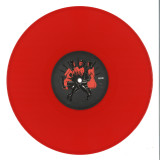
However, when it comes to Depas, there is always more to his music than merely being dead set on setting the dance floors on fire. The antler-wearing figures and witches" circles depicted in the artwork hint at Depas" invitation for the clubbers to let his music move them far beyond the physical world. "These demoniac figures resemble human transformation and the idea of achieving euphoria through esotericism's
Bristol’s four-piece outfit Quade's debut album.
The first single ‘Of The Source’ will be released 4th October, alongside the album announce.
‘Of The Source’ opens in familiar territory for Quade, with distant drones and searching violin, before breaking down into perhaps the album’s most experimental track.
‘Nacre’ is the culmination of three years of work from the band, the blueprints of their songwriting and sound firmly established in the sprawling, haunting and yet hopeful record. Traipsing between gothic expansiveness and cosmic psychedelia, the record cannot be pinned down into one recognisable place. By the album’s close, the listener may be left wondering whether it was all a memory or a dream.
The recording and production of the record was collaborative, with the band drawing upon the services of Jack Ogbourne and Larry ‘Bruce’ McCarthy - two divergent pillars of Bristol’s music community - for engineering and mixing respectively.
Minimal don Kepler strikes a balance between dancefloor utility and introspection on his latest record, and debut for X-Kalay. Big house and techno incursions straight out of Yorkshire – Leeds, to be precise. It’s a strong testament to the region’s long standing reputation as a hotbed for late-night minimalism.
Subtle flourishes and details stand out across all four tracks. Uncovering relics from ancient futures, ‘Lowlife’ stimulates the pineal gland with a mescaline-strength take on classic ‘90s tech house. While it dials the trippier elements down just a tad, ‘Control’, like its predecessor, recalls golden era Wiggle or Asad Rizvi under his Silverlining moniker.
No half measures on the next one. Bringing heft in spades, ‘Stranded’ comes hurtling in with swinging, jacking 4 AM NRG. It’s some serious gear, which makes the EP closer such an unexpected left-turn. ‘Need’ offers proper heads-down introspection, complete with widescreen, nebulous chords that ripple out into the vastness of space.
Much has been written about Young Marble Giants' small, perfect catalogue, which contained roughly two-dozen songs, nearly each one a perfect gem. Less is known about his long wilderness years after the break-up of his first professional band. His next project, The Gist, chopped YMG's minimalism into a new sound. This Is Love, Public Girls and Fool For A Valentine showed his songs to be razor-sharp, but the album's fragmented pieces were a step too far for some, though even the strangest, Carnival Headache, when cast in sunlight by Alison Statton's combo Weekend, was as fine a song as any he'd written - and Love At First Sight became a million-seller when covered by Etienne Daho. Then Stuart disappeared. A rmid-90s resurgence led to fine albums done on low budgets, before more silence followed. The Gist's 2018's release Holding Pattern - unexpected and then quickly followed by YMG singer Alison Statton's first new album with her accompanist Spike in two decades, adding fuel to public interest. The Devil Laughs, recorded a few years back, is a compelling addition to the canon of the 21st century songwriting. Stuart's generally unadorned musical presentation does not hinder his appreciation for the skills of Louis Philippe, whose iconic arrangements across an array of Él label albums inspire the fierce devotion of aficionados around the world. Nor does the unvarnished solidity of Stuart's arrangements deter Louis from hearing possibilities for their presentation in styles which take inspiration from the perfection of 1960's studio technology that led to the rise of Brian Wilson, Burt Bacharach, along with less-recognised names such as Bones Howe and Roy Halee. Tidy Away is Young Marble Giants redux, though the backing vocals hint at maturity which band didn't live to see. Fighting To Lose, written with producer Ken Brake, would pass as a worthy b-side to Bridge Over Troubled Water, and although the songs are otherwise Stuart's, Louis fans will delight at several, like Love Hangover and Sky Over Water, which display his style and production genius as succinctly as anything on his own albums. The Devil Laughs is as out of its time as Colossal Youth was - its subtle but immediate beauty, devoid of "rock", is a recording best understood in the light of those obscure groundbreakers who inspired it - the faux barbershop vocals of Smile-era Beach Boys, the studio lustre of Tom Wilson's work with Simon & Garfunkel, a dash of The Swingle Sisters and French chanson - along with enough hints of Young Marble Giant's modernist folk abstraction to satisfy longtime fans. The Devil Laughs is a small masterpiece of pure expression.
Gloam is the highly anticipated sophomore album from alternative folk band MAYBEL. Similar characteristics from their debut, Gathering, are carried forward: elegant harmonies, soft instrumentals and a shared optimism coupled with a wide open vulnerability. The songs still echo the intimacy, warmth and closeness of their relationships, yet the band has matured. MAYBEL's evolution shines through with ambitious compositions, thoughtful songwriting, and a deeper understanding of themselves as the album’s themes pierce with growing pains, anxieties and hopes for change. It’s a record about movement and stopping; the ongoing act of coming apart and coming together. Gloam is for listening in your bedroom or in transit, missing friends, on your way to see them. It holds an optimism that rings clear yet nestles and dwells in a brooding, muddy darkness - placing it firmly in the illustrious Canadian folk canon. This is the first album for which all four members (Fez Gielen, Ali Hendra, Loris Kecaj and Lauren Spear) wrote songs. For the most part, they were written during the pandemic separately and then shared in the upstairs living room where Lauren, Ali and Loris used to live together. The result is a shared diary on love, grief and moving on. The band's ability to effortlessly blend traditional folk elements with modern production techniques is reminiscent of the collaborations between Emmylou Harris and Daniel Lanois. Just as Harris and Lanois brought a fresh perspective to country music, MAYBEL embraces experimentation in their sound without compromising the warmth and intimacy inherent to folk music. As with their debut Gathering, MAYBEL recorded Gloam with producer/engineer Jonas Bonnetta at Port William Sound in Mountain Grove, Ontario. Resonating with a sound borne of the studio’s deeply intimate rural environs it is no wonder the band chose to return. Here they were joined by Eliza Niemi on bass/cello, Caylie Runciman on bass/drums with Jonas adding synths and percussion. Gloam is an old Scottish word for twilight. It appears like a fantasy between the day and night, a time seemingly frozen, drifting, or ignored all together. Gloam is the mood and time within which the album takes place. MAYBEL describes it as being: “In transition, between sleeping and waking—a quiet underworld where one is alone with their thoughts, in true presence with the in-between.” The final track on the album, “For Nothing”, captures something of the album’s twilight hope. It begins with lilting solos and gracefully builds in energy and color. MAYBEL sings to its listeners, “All that work for nothing” with a buoyancy and radiance that chimes against the lyrics. They repeat: “All that work for nothing”. For all of the band, the last few years have resulted in significant change and stress. Yet they continue to try, through their music, to will themselves towards optimism. They ask for you to marvel with them at the charming and terrifying possibility of life. They harmonize again, not despairingly, but almost ecstatically “All that work for nothing!”
Die-cut sleeve. In the fall of 2013 Bry Webb was putting the finishing touches on his second album Free Will. Released on May 20th 2014, Bry, with his newly assembled band The Providers, spent the following few years traversing North America playing clubs, festivals and storied stages such as Toronto’s Massey Hall. Nothing new for an artist who had spent the aughts in a constant state of motion with Constantines, a band who on average had performed one of every three nights on a stage somewhere in the world. In fact, running in parallel to Bry’s solo touring schedule was a reunion with his former Constantines’ bandmates to once again present their incendiary live show and celebrate the 11th anniversary reissue of the band’s Shine A Light. It is what happened as the decade wound down that seemed out of character for an artist who had spent close to 20 years immersed in the studio and on the stage: the music stopped altogether. Bry explains his feelings at that time, “I lost the musical plot about 5 years ago and stopped playing music entirely, sold instruments and recording equipment, and committed myself to the idea that I was absolutely done”. Webb dedicated himself to his ongoing work in community radio, months turned to years and musical life seemed to be all but gone from view. Now in an unexpected turnaround 10 years on from the recording of his last studio album, there is not only a return to the stage for Bry but also a new record. Primarily composed in a season of upheaval, Run With Me contains some of Bry’s rawest sentiments. Fresh and painfully present there is an immediacy one can hear as emotional walls collapse in real time. Bry explains the context of the album’s creation: “In early 2023 my personal life exploded. In the process of dealing with that, I started writing music again and started recording at home. Advised that I needed to figure out how to ask for, and accept, help from other people, I sent early recordings of songs to friends from twenty-five years of music making - many folks I hadn’t connected with in years - and asked if they’d contribute anything to the songs. People came through in ways that overwhelmed me to the point that I cried when I wrote out the list of players for the liner notes. I felt incredibly cared for. From Andy Magoffin, who recorded the first Constantines album in 1999, to members of the Cons, to my nieces Addy and Ella playing drums, and a doppler recording of my daughter’s heartbeat, the record is a document of my creative life, and the people who made it possible to make music again.” If the cover of Run With Me looks familiar, it is with full intent. The album’s technicolor marbling and die cut text serve to signal the inclusion of the album in a trilogy started with Bry’s first record Provider. Just as that album starts with the track Asa, this new one introduces itself with the instrumental Webb. The trilogy is now completed with his daughter's first, middle and last names represented as the first tracks on each of the three albums. While the LP’s package signals its place in the collection, and tracks such as Older Than The Dirt and What I Do revisit their predecessor’s familiar sonic starkness, Run With Me is the outlier of the trio. A number of new tracks forego the quietude of Provider and Free Will, clearly recalling the rallying rhythms of Constantines’ anthems. Thunder Bay (instrumental backing courtesy of The Harbourcoats circa 2009), with its insistent kick drum and wall of electrics, support one of Webb’s most indelible melodies, and the not so subtly psychedelic Modern Mind reveal an expansion of Webb’s palette. Perhaps the furthest afield is the contextual centerpiece of the album, Goodbye, where we not only hear a joyful voice that lay dormant for years, but hear it reclaim its power. Backed by Constantines’ Will Kidman, Doug MacGregor and Dallas Wehrle, Bry belts out “I’m through with all the rage, now watch the light pour out of me.” As with all of Bry’s work, Run With Me’s lyrics take their time to settle in. Songs of self-examination, reconfigured love ballads, and songs for those who work to help others. Songs of singing abound. It’s there in Older Than The Dirt’s second verse: "Logic to the last intention, logic in the way we kept holding on forever, singing as the floor- was swept”, ten thousand birds sing a warning song in Thunder Bay and again in Goodbye’s telling of a cathartic return to one’s true self with its celebration of those “Who sing - sing all joy - all joy of language, in a single word”. Joining Bry in singing Run With Me’s songs of “death, transition and hope,” are kindred spirits Jennifer Castle, Julie Doiron, Daniel Romano and Steph Yates. All of these singers elevate the album’s healing sentiments and help express the album’s central plea; a prayer of sorts wrapped in the traditional Scottish Gaelic melody of She Is Here’s second verse: “Let the sun rise in the morning and any witness bring. Let all the blooming cosmos teach us to sing”.
- 01: Intro Descent
- 02: Live Eternal
- 03: Bigger, Stronger, Faster
- 04: Capture
- 05: Main Titles
- 06: The Brothers
- 07: Drone Interrogation
- 08: A Symbol Of Life
- 09: Heavy Weight
- 10: Reflective Dreams
- 11: Infinity Techno
- 12: Escape Suite
- 13: Aftermath
- 14: Rip Fights
- 15: Final Fight
- 16: Ascend Finale
- 17: Divinity 2 Infinity: The Odyssey
Der legendäre Hip-Hop-Pionier DJ Muggs und der häufige David-Lynch-Kollaborateur Dean Hurley haben gemeinsam den Original-Soundtrack zum 2023 beim Sundance-Filmfestival uraufgeführten Spielfilm "Divinity" geschrieben und produziert, der am 24. November über Sacred Bones auf CD und LP erscheinen wird. "Divinity" ist eine dystopische Science-Fiction-Odyssee, die von Steven Soderbergh produziert und vom visionären Regisseur Eddie Alcazar inszeniert wurde. Das Zusammenspiel von DJ Muggs und Dean Hurley ergibt einen Soundtrack, der "Divinity" über den Bildschirm hinaus zu einem multidimensionalen Erlebnis macht und den Hörer zu einer unvergesslichen Klang-Odyssee auf unbekanntem Terrain einlädt. Inmitten der außergewöhnlichen Ästhetik und Thematik des Films ist die Filmmusik eine zehn Tonnen schwere Hantel aus Klanggewichten. Mit 8-Bit-Samplern, Wavestation-Synthesizern, erweiterten Chor- und Streichertechniken schafft es der Soundtrack, wild zwischen den Arenen von Musik und Sounddesign zu pendeln. Ein Klangerlebnis, das die gleiche Intensität wie der Film einfängt und wiedergibt. Tracks wie "The Brothers" und "Reflective Dreams" überschlagen sich mit Vangelis-esken Tönen und malen mit breiten Strichen cineastische Erhabenheit und ätherische Wunder. "Main Titles" und "Infinity Techno" hingegen schwingen sich zu unerbittlichen, strafenden Klängen auf, mit brutaler, pulsierender Energie, die für das verdrehte, unerbittliche Streben nach Unsterblichkeit steht. Ein herausragendes Stück des Albums ist zweifellos "Divinity 2 Infinity: The Odyssey" featuring Kult-Hip-Hop-Legende Kool Keith. Der Song wurde speziell für den Film geschrieben und ist eine gelungene Reminiszenz an die End-Credit-Songs der 90er Jahre, die damals auf die Themen des jeweiligen Films zugeschnitten wurden.
Keplar releases a vinyl reissue of 2001’s »Curve,« the second album released by Frank Bretschneider on Mille Plateaux under his real name. »Curve« saw him pick up on the underlying concept of 1999’s »Rand,« but gave his explorations of the sonic and stylistic range of electronic music notably more space and time to unfold.
Merging compositional minimalism with sonic complexity, the eight tracks display an affinity for the production techniques of dub music, which had already been a major reference point for Bretschneider’s work before. Its subtle grooves, especially in the rhythmically charged pieces towards the end of the album, also nod at the dance music-inspired work of contemporaries such as SND or Vladislav Delay. Produced during a prolific time for Bretschneider, who had previously co-run the Rastermusic label and was at that time still active under his Komet moniker, he considers »Curve« to be a crucial album in his discography.
Bretschneider was an important figure in the 1980s Karl-Marx-Stadt (Chemnitz) scene and released his first solo experiments with electronic music through his own klangFarBe tape label as early as 1985. Throughout the 1990s, he was part of projects such as Produkt and Tol and also released solo albums as Komet on Rastermusic, which he had co-founded in 1995 together with Olaf Bender a.k.a. Byetone. At the turn of the millennium, he gradually started releasing more solo records under his real name. After 1999’s »Rand,« followed »Rausch« on 12k—with whose owner Taylor Deupree he would collaborate for 2002’s »Balance,« reissued in 2020 by Keplar—in the following year and, finally, »Curve.« Produced after he had moved to Berlin, Bretschneider used a Clavia Nord Modular as his primary sound source and the Logic DAW to modulate and synchronise the sounds, adding only drum loops to some tracks in the second half of the album.
»Curve« is a record that is hard to pigeonhole and thus an archetypical Bretschneider album: marked by a meticulous attention to detail, infinitely playful, and fully dedicated to pushing the envelope of electronic music. It is no wonder that it left a lasting mark on the international scene for adventurous electronic music.
All tracks composed and recorded by Frank Bretschneider.
Originally released on Mille Plateaux in 2001.
Remaster and cut by Lupo @ Loop-O.
Artwork by Frank Bretschneider & Tim Tetzner.
Text by Kristoffer Cornils.
For fans of post-Chicago post-"Second Summer of Love" acid; Chris & Cosey, Terekke, Cabaret Voltaire, Anthony Naples, JTC, D.K., Luke Vibert, Khotin. The latest by Texan-turned-Angeleno progressive vaporwave producer Carlos Ramirez aka AURAGRAPH finds him shifting focus to the dance floor across eight chrome clockworks of cosmic acid house and liquid rave glide: New Standard. Inspired by lessons learned during a 5K mile American road trip tour in the summer 2022, he set to work in his Simi Valley Tuff Shed of synths and hardware, pursuing an explicitly DJfriendly muse: "I realized I wanted to make a record where every track could go off in a live setting." These cuts do just that, revved and rhythmic, peppered with slap bass, Madchester whistles, filtered acid, gated snares, baggy cowbell, and sample pack classics - record scratches, orchestral stabs, the "Yeah! Woo!" from Lynn Collins "Think (About It)." Ramirez describes the process as immediate and instinctual: "I'd turn on the MPC, pick a tempo, and just improv - it was incredibly fun." From sleek freeway techno ("110 Cruising") to arcade lurker acid ("Coast 2 Coast") to big room bangers ("666 Ambience"), the tracks time-travel across the canon of club music, sifting tricks and styles to fashion fresh anthems of hypnagogic jack. It's an album channeled as much as crafted, tapping into the decks of mythic warehouse infinities past and present, where the system rips all night and acid never dies.
SUFR047 features brand new remixes of an old-school SUF classic SEE-SAW from Carbine (Chris Liberator & Geezer). All 4 remixes show off the thriving new-school Acid Techno producers at their best with a slamming Bad Boy Pete remix, a pumping acid Bubbless remix, a bouncy driving Benji303 remix, and an analogue 303 fest from OB1. Classic Stay Up Forever.
This publication combines an artfully designed book (design: Martin Stiehl) and a USB-Stick with high-quality audiovisual recordings of the three parts of the project. The book offers an introduction to the project as a whole but also expands it with articles from the past and the future (co written by Marko Ciciliani and Nicolas Trépanier), as well as a link to online content. Published by MILLE PLATEAUX (MP70) and Galerie der Abseitigen Künste, 2023
"In 1833, Sieglinde Stern, a professional weaver and amateur engineer, invented the first
electromagnetic pickup and thus the first electrically amplified stringed instrument. One hundred years later, in 1933, her invention enabled the production of the first electric guitar, which became one of the most popular and widely played instruments in the history of Western music. Yet today, another 150 years later, no one plays this instrument anymore! What led to the rise and fall of the electric guitar? What is it about this instrument that had its suppressed origins in the craft of weaving and that in its final evolution mutated back into a loom? And who was its inventor Sieglinde Stern, erased from history and only resurrected as David Bowie's Ziggy Stardust?" Why Frets? consists of three works - an audiovisual performance, a mixed-media installation and a performance-lecture - that illuminate different aspects of this fictional history of the electric guitar from various angles. The story is based on speculative fabulation - a deliberate reinvention of the past. Rather than pursuing the idea of creating novelties as an envisaging of the future, speculative fabulation and the rewriting of history proceed from an examination of the conditions under which society and culture arrived at their present state. In this way, the three individual works Why Frets? - Downtown 1983, Why Frets? - Tombstone and Why Frets? - Requiem for the Electric Guitar complement each other in the sense of transmedia storytelling: Each is a self-contained entity, but taken as a whole, the three works shed different lights on the electric guitar, focusing on aspects such as technocultural developments, inscriptions of gender, and social values
»Arches« is the first collaborative album by brothers Simon and Tobias Lanz. It was written for and performed on self-built prototypes of wind instruments that were inspired by the classic pipe organ, but allowed the two composer-performers to go beyond its limitations in several ways. The music on this 40-minute long album for the Swiss Hallow Ground label was conceived and recorded by the two co-founders of the CRTTR collective and label during an artist residency in May 2022 in their home town of Bern. More than a mere document of a performance however, »Arches« combines the artists’ interest in exploring uncharted new creative and tonal ground inside of and beyond the realm of drone music with their background in visual art and design as a conceptually concise whole.
Simon and Tobias have a combined background in electronic music as well as a shared penchant for drone music. They hence designed these novel instruments in a way that allows for microtonal tuning to be able to overcome the restrictions inherent to the dominance of a twelve tone-based scale in Western music and work with a sonic palette that is much wider and nuanced than that of the conventional pipe organ. Furthermore, the physical design of these instruments widely differs from that of those which inspired them. This allows—or more precisely, forces—the musicians to freely invent and explore entirely novel playing techniques.
These factors, of course, also have an impact on the compositional process, which by design needs to be unconventional. The Lanz brothers worked with a graphic score for the four movements of the piece that forms »Arches« so as to adequately visualise the manifold tonal nuances of their instruments. This graphic score in turn was reinterpreted for the album release by Ramon Keiming, adding another dimension to it. Read from left to right, this remix of the score allows the listeners to follow an interpretation of the evolution of these dronescapes while the record plays, urging them to add their own interpretation.
This retroactive visualisation and thus spatialisation of the music is perfectly in line with its performance, which at all times factored in the acoustic affordances of the Prozess Bar in Bern. In many different ways, the Lanz brothers now invite their audience to join them there and explore the near-infinite possibilities of their curious instruments together with them. Much like Hallow Ground label mates such as Kali Malone or FUJI||||||||||TA, they are dedicated to enriching and expanding upon the musical and sonic qualities of pipe organs, but with widely different aesthetical results. To call »Arches« a unique record with an unheard-of sound is not hyperbole, but only factually correct.
»Tropic of Capricorn« is the second album by Lawrence English and Werner Dafeldecker. Based on field recordings made by the prolific Room40 owner that were subtly but decisively altered with electroacoustic techniques through the German improv legend, these two long-form pieces blur the lines between acoustic ecology and aesthetic interventions, concrete local sound worlds and boundary-defying art. They put a focus on our relationship with nature as listeners as much as they call into question where nature ends and human perception begins. They are deeply confusing, disorienting perhaps, in the most beautiful ways.
English recorded the material that form the basis of the duo’s Hallow Ground debut on two different field trips. One led him from the Western coast to the Pilbara region in the North of the country called Australia, the other to the central desert into the lands of the Arrernte people. »These are vast spaces, and in some respects they shun contemporary ideas of civilisation which seek not to listen to the country,« says English. When recording the soundscapes, the artist put a focus on the residues of failed colonial aspirations. »The buildings and objects that remain from the failed cattle pastures and other endeavours create uneasy sound worlds of their own,« he says of the regions that are also places of extraction, especially the heavily mined Pilbara. »There is a distant drone of industry in even the most remote of places; an unsettled sense of heavy breath on the land.« He brought home a document of natural reclamation in time.
The rich source material was then given to Dafeldecker. Spatialising the recordings with transducers applied to different surfaces such as wood, stretched animal skin, glass, or metal surfaces and also re-recording parts of the recordings, he created discrete events that were inserted into, or rather enmeshed with English’s recordings. You’ll hear plenty of birdsong, insect noises and the sound of rain during these 39 minutes; the sounds of a life you can tap into if you tune into your environment. But there are also other things, things that are impossible to categorise even after repeated listens and that call into question whether or not those were really birds, insects, or the sound of rain in the first place. What »Tropic of Capricorn« invites its listeners to listen beyond the preconceived notions of how nature is supposed to be represented in sound and to instead embrace the immediacy of the sensation.
Lady Tazz's Mind Medizin label welcomes Marcal for an adventurous new techno two-tracker.
Brazilian-born and based, Marcal has now reached a global audience with his spellbinding techno and haunting atmospherics. His intelligently designed sounds on labels like Rekids Special Projects have found favour with everyone from Charlotte de Witte to Richie Hawtin. He has built a local scene in his hometown of Goiânia and now lands on the forward-thinking Mind Medizin label.
Opener 'Infectious' is a mind-altering and wonky techno workout. The unbalanced synths warp and wrap around each other to dynamic effect, while oversized hi-hats ramp up the pressure. The drums hit hard and it results in supple, stylish and high impact backroom techno. The equally excellent 'LambdaCore' is more dark and glitchy, with scraping hits and scuffed-up kicks. The textured sound designs really bring this track alive as ghoulish vocals and hyposonic loops take you down a late-night techno tunnel.
This is a brilliant brace of muscular and emotive techno tunes.
Volume 3 of the TRUST XY recombination series again sees four unique artists channel sonic echoes from the label's past. Stenny is up first, the Italian producer whose name is synonymous with Ilian Tape's much acclaimed crossover of techno and bass music. He complements the deep pads of Versalife's 'Nova Prospekt' with a scorching bass line and rolling breaks programmed in his unmistakable style. Canadian producer and Planet Euphorique label owner D.Tiffany is a champion of complex percussions and an obvious choice to rework Alex Cortex's percussive electro anthem 'We Run Your Life'. Her take chops and warps Cortex's vocals around a twitching techno beat that's both experimental and effective. Side B has UK electro and breakbeat pioneer Clatterbox return to TRUST, reshaping one of the very first Microthol tracks into modern form. At his hands 'Intertronic' turns into a bleeping and hissing, snarling and growling electro bass monster. Lastly Delsin's dub master and TRUST alumni VC-118A takes on 'Tides' by /DL/MS/, replacing the original's sparse funk with a low slung dub techno groove that serves as the foundation for perpetually cascading ebbs and flows of lush and dreamy soundwaves.
For this special release he provides 8 cuts of advanced techno, from mental and hypnotic to broken and industrial or simply arpeggiated and beatless.
WHEN THE UNCANNY ARISES starts with No Gender Role an elastic mental exercise with metallic and processed components flying over a solid kick and white noise percussive elements add some hypnotic pads and you have a powerful mind and body tool.
Blue follows in a similar approach, clean drum programming, bleepy synth lines and a progressive arrangement constantly evolving and changing Flipping the vinyl, it’s time for the broken rhythms of Feel and understand combining distorted kicks with gummy sequences again administered in a quite wise structure.
Klonger closes the B side with obsessive metallic hits repeating until madness, a powerful industrial beat for the experienced dj’s out there.
The second vinyl slice begins with Negative One, returning to the martial beat combining a precise drum workout with floaty and liquid components, followed by Anonimo coercitivo exploring the deepest side of techno using textures and drones to spice the relentless beat.
Zero opens the C side, providing a solid distorted groove with metallic details and sci fi interstellar bell like sequences, proper futuristic vibes here.
Saying goodbye, the beatless Nothing To fear, an arpeggiated synth solo reminiscent of the old Berlin School of electronics from the seventies.
A touchable proof of his craftsmanship in the studio by one of the key figures in the European techno scene.
- A1: Scream + Dance - In Rhythm
- A2: Talisman - Wicked Dem
- B1: Animal Magic - Get It Right
- B2: X-Certs - Untogether
- B3: Electric Guitairs - Don't Wake The Baby
- C1: Talisman - Run Come Girl
- C2: Scream + Dance - Giacometti (Wicked Mix)
- D1: Ivory Coasters - Mungaka Makossa
- D2: Animal Magic - Trash The Blad
- D3: Scream + Dance - In Pink & Black
Collecting orders for repress!
Afro Dub Funk & Punk Of Recreational Records '81-‘82
Emotional Rescue returns to what it does best by unearthing musical gems of the British post punk scene with a double pack compilation of Bristol's short lived Recreational Records.
Teaming up with Bristol Archive Records, 10 songs are remastered, reissued and cut loud for DJs and collectors. What is most striking is, although created in the space of just two years, with a disparate collection of artists, musicians and producers coming together, the music holds a considerable cohesive sound.
Set up in 1981 by Bristol based shop, Revolver Records, Recreational was formed as an independent label with its own distribution, as part of the co-operative, Cartel. The label was a natural progression from the shop's punk's DIY aesthetic, acting as a hang out and inspiration for local artists from Mark Stewart to later staff member, Daddy G.
'Get It Right' starts with a one-off project in Scream + Dance, who similarly, alongside local bands Glaxo Babies, Maximum Joy and Rip Rig & Panic, explored post-punk with funk and jazz all underpinned with heavy tribal and dub influenced rhythms. 'In Rhythm', with its infectious groove, acts as a call to arms for the compilation, coming in two parts, the latter dropping away to explore the links with dub.
Next is possibly the label's biggest band in Talisman, going on to be active up to today, their release 'Run Come Girl / Wicked Dem' are both featured in long 12" mixes that explore the classic 'discomix' of vocal and dub in longform.
Animal Magic lead with the pack's title, 'Get It Right' a short-driven punk funk burst that captures the label's sound to perfection. However, much of the compilation is given over to the more experimental side of the bands, with a high percentage the B sides where they headed to the mixing desk for echo chambered dub inspired versions.
X-Certs' 'Untogether; Electric Guitars' 'Don't Wake The Baby' and Animal Magic's 'Trash The Blad' are culled from the flips of various 7" singles and all are a fusion of percussive rhythms, studio trickery and dub inspired techniques, played out against the "Do it Yourself" aesthetic of the time.
To complete is London based, soukous, kwela and afrobeat inspired collective, Ivory Coasters' 'Mungaka Makossa' and two rhythmic curveballs by Scream + Dance in 'Giocometti (Wicked Mix)' and their riotous (and short) closer, 'In Pink & Black'. "Get it right this time, get it right!".
T4T LUV NRG presents “Name It”, the latest album by Oakland’s Bored Lord, aka DJ Daria. The internationally beloved producer and DJ has created a truly stunning album of impeccably produced and mixed work, each song an enticing chapter in a complexly woven story about love. This album of uninhibited, hook-laden tracks conveys a narrative of love that is not only romantic and personal, but also communal and familial— a love that refuses to limit itself to just two people, but instead spills forth into the world, embracing everyone open to its power. With her emotive, tenacious album, Bored Lord reminds us that to truly allow yourself to be enveloped in desire, you have to endure the pain that comes alongside it. You have to adapt and stretch yourself in order to experience the immense growth love has to offer. You have to believe there's more to this world than suffering and isolation. You have to look within and accept whatever you find, even if it is ugly or difficult. Love is the peace you find amidst the chaos of living, and it doesn't just fall into your lap. You have to want it. You have to be ready for it. And if you are ready, you have to name it.
As a producer known in no small part for her edits, Bored Lord presents “Name It” as a work undeniable in its artistry, completely authentic in its messaging, and absent of the industrial notion of production. The songs on “Name It” have instant hooks and each is deeply inspired by the genres Bored Lord loves—broken beat, drum n’ bass, jungle, UK bass, Florida breaks and house among them—but rather than simply reproducing, these tracks expand each genre beautifully. Daria’s technique is decidedly hardcore, with samplers, romplers and a bone dry aesthetic, each song and sound all her own. In the artist's own words “I want the industry people to be confused while the ravers understand the very moment they press play. I want to challenge everyone to name it.” And we expect that indeed they will, play after play after play. Now, close your eyes and believe there is more, more, more….