Blue Vinyl
Throughout his productive career, Carl Oesterhelt has proven to be an artist who finds it easy to move between musical genres and concepts. Much of his work has been within classical and chamber music, but he has also scored museum exhibitions and he is sometimes part of The Notwist crew as an angular figure on the Munich scene.
In Umor Rex we have been lucky enough to publish an array of Oesterhelt's universes. In Eleven Pieces for Synthesizer (Umor Rex 2019) we heard his kosmische side, where the connections with Harmonia or Klaus Schulze were amalgamated with ecclesiastical organ pieces and intense semi-automatic rhythms. A deeply melodic, fresh album. Pure syntax of the modern synthesizer. Further, in The Aporias of Futurism (Umor Rex 2021), in collaboration with Andreas Gerth (Driftmachine, Tied & Tickled Trio), Oesterhelt showed what is perhaps his darkest side —a work full of nuances within concrete music and midnight atmospheres. As deep and cerebral an album as it is surprising and catatonic.
Yet it seems that Carl Oesterhelt has another ace up his sleeve. Now he surprises us with The Dualistic Principle, a fantastic album full of weird but charming electronic melodies, rhythms that push the body to movement, sometimes syncopated and abstract, others permanent and fluid. In this work, Oesterhelt invited Johan Simons to give voice to the lyrics. The Dualistic Principle is a sort of rendition of a philosophical review or a nostalgic memory of the glamorous years. There is also underlying humor in the Post / Space-pop / Munich-disc assortment. The Dualistic Principle is the score to an imaginary film of contemporary hedonism.
All music & lyrics by Carl Oesterhelt. Voice by Johan Simons. Additional strings played by the Ensemble für synkretische Musik. Recorded in Munich & Bochum, Germany. Mastered by John Tejada in Sherman Oaks, USA. Artwork by Daniel Castrejón in Mexico City.

Поиск:pro tech
Все
Written and recorded between 1972 and 1982 in Western Oregon, Back to the Woodlands is a previously unreleased, and nearly lost, album made by Ernest Hood during the same era as his near mythical album Neighborhoods. A visionary combination of field recordings, zithers, and synthesizers, Back to the Woodlands offers an unprecedented depth of access to this singular artistic mind.
Born into a musical family, Ernest Hood began a promising career as a jazz guitarist during the 1940s, touring internationally with his brother Bill Hood and the saxophonist Charlie Barnet, before contracting polio in his late twenties. The disease left Ernest unable to play the guitar and confined him to a wheelchair for the rest of his life. It also forced him to adapt and innovate around his musical practices in the face of adversity; Hood’s value of sound matured with a remarkably democratic and nonhierarchical approach and application.
Taking up the zither, a less physically-demanding stringed instrument to the guitar, embarking upon the unprecedented process of incorporating field recordings into his work as early as 1956, and eventually discovering the synthesizer, Hood’s music became imbued with optimism and subtle cultural critique. This ethos and technique - refined over the coming decades - would lay the groundwork for a sprawling body of radio work, mail order recordings for homebound listeners, and Neighborhoods, self-issued as a small vinyl edition in 1975.
Where Neighborhoods, a nostalgic opus, drawing from a well of collective memory of the 1950s, is defined by traces of human activity, Back to the Woodlands leaves the modern world behind, delving into Hood’s love for nature. Only recently discovered in his archives, the album dramatically expands his concept of “musical cinematography,” imagistically triggering states of sensory memory from within its zither and synthesizer melodies, intertwined with field recordings made during Hood’s extensive travels throughout Oregon. If Neighborhoods is a retreat into the gauzy joys of a romanticized past, Back to the Woodlands is an immersion in the timeless sanctuary of the natural world.
- A1: Ulakanakulot (2022 Remaster)
- A2: Decline And Fall (2022 Remaster)
- A3: Sweethome Under White Clouds (2022 Remaster)
- A4: Bau-Dachöng (2022 Remaster)
- B1: Baby Turns Blue (2022 Remaster)
- B2: Ballad Of The Man (2022 Remaster)
- B3: Walls Of Jericho (2022 Remaster)
- B4: Caucasian Walk (2022 Remaster)
- B5: Theme For Thought (2022 Remaster)
…If I Die, I Die was released only weeks before the Heresie box set. The two albums show very different faces of the Virgin Prunes – one that explored mythical worlds and another that showed their surrealistic interest in the creative power of insanity. They also highlight the ways in which the band enjoyed experimenting with different genres, sound forms and recording techniques. As Friday has commented recently, ‘The Virgin Prunes contained four different bands at the same time.’
The album was recorded at the Windmill Studios in Dublin in the summer of 1982 and produced by Wire’s Colin Newman. Rather than adopt an A/B format, the sides of the 1982 vinyl and album cover, which was designed by Steve Averill, were given brown and blue colours, signalling earth and sky respectively. The art work on each side of the sleeve was also inverted so that either side could be read as the front cover. Ursula Steiger’s photography captured, on the brown side, the band running through a forest like a nomadic tribe. On the blue side we then find them in different costumes, performing with fire and mannequins within a derelict building.
This 40th Anniversary Edition of the album sees a full remaster housed in a Limited Edition Special Finish Gatefold Sleeve on Transparent Vinyl. This Deluxe LP also comes with a 16 page booklet featuring sleeve notes by Dr. Jonathan Wood exploring the writing, recording and production of the record. Plus an exclusive 12x12 Art Print. The album is also available as 2CD Mediabook & Digital Deluxe.
Yellow and black splatter
While frontman Tom Greenhouse’s off-kilter observations and bizarro anecdotes remain front and centre, this time round the band up their game with a more vigorous sound that keeps pace with Greenhouse’s wholly distinctive lyrical style. Greenhouse continues to revel in telling increasingly surreal short stories, rejoicing in the power of the deadpan one-liner and bedecking his songs with far-flung cultural references. But now the band employ a variety of techniques with improved pro- duction, from the impulsively bashed keyboards and jubilantly repetitive guitar stabs that have be- come their trademark, to flirtations with–heaven forbid!–melody, chord progressions and arrangements which elevate their tried-and-tested blueprint into a more exciting and cohesive whole.
Opener Musicians is the perfect embodiment of this conscious development. Here, Greenhouse re- counts a sarcastic tale of half-truths that see him galavanting around town trying to put a band to- gether. Sonically, it begins with a caustic callback to the group’s first EP Crap Cardboard Pet and its über-minimalist aesthetic. But by the end of the song a joyous festival of afrobeat-inspired in- struments including samba whistles, bongos and saxophones are added to the mix as the front- man, ironically, fails in his mission to recruit more players.
With Get Unjaded, the band have somehow conjured something close to pop, without abandoning the repetition and wit that’s relished by their early fans. I Lost My Head also adopts a jangle-pop sheen with a luscious synth melody, as the frontman ditches the spoken-word for a surly croon (his first known attempt at actual singing!) that provides a welcome breather from the onslaught of dense recantations that are the band’s bread-and-butter.
While the lyrics here are still often humorous and political, Greenhouse has also notably expanded his interests on this album to include a new host of topics. The influence of extraterrestrials, for ex- ample, infiltrates the subject matter frequently. On The UFOs, the mysterious protagonist Blinkus Booth’s isolationist lifestyle is apparently interrupted by the spectres of otherworldly visitors, while closer The Neoprene Ravine feels like an extract from a deep space rock opera. Here, jaunty and angular instruments pile-on as we are fed images of an interstellar Spinal Tap, the titular fictional band “The Neoprene Ravine” who are “the alien equivalent of the Velvet Underground” and include an alien Lou Reed yelping “too busy sucking on my little green ding dong!”.
Meanwhile, Hard Rock Potato is propelled by a vortex of keys and synths, a real noise-pop gem comprised of real guitar chords (!) and rock-orientated riffs. Here the stream-of-consciousness lyrics take shots at the sinister financial industry, and include one of the many top-tier one-liners on the album: “It’s not gambling if you’re wearing a tie (even if you’ve got no trousers on)”.
On Sod’s Toastie, The Cool Greenhouse have pushed their distinctive flavour of post-punk to the point of perfection – their incongruous riffs, alchemical instrumental chemistry, and irreverent spo- ken-word vocals are a delight throughout. Sod’s Toastie is hilarious at times, and at others just hilariously good – a not-so-difficult second album.
Ethan James Startzman is a synesthete with chromesthesia, meaning his brain converts sounds to colours and shapes, and this album is an attempt into the use of sounds to “paint" a picture. Shamanic Verse is an audio journey through dark forests, cold lonely mountains, and bustling cities using Eurorack modular synthesis and the meditative technique of following the sounds to their next evolutionary destination to create a film score-like atmosphere. Ethan began as a dancer, working his way up to professional ballet dancer and later found music after an injury ended his career. Originally a bassist, who has played in every style of music from country to rock to salsa, he also works as a film composer in his native New York City. His film work is primarily orchestral and experimental electronic. Shamanic Verse will be released on 4th November, via digital platforms and limited edition pressed vinyl.
Robert Groslot's Concerto for Bass Guitar and Orchestra represents the
next step in the evolution of the bass guitar
Groslot's composition pushes the instrument to its technical limits, while creating
a unique symbiosis between the soloist and the orchestra. Although he may not
be the first composer to write for the bass guitar in a symphonic setting, Groslot
brings a level of artistry and sophistication to the composition that will continue
and accelerate the legitimation of the bass guitar within contemporary classical
music. "The idea of a concerto for bass guitar is something that I have been
dreaming of for decades. Since its invention, the bass guitar has firmly
established itself as an essential and integral part of practically every genre of
music. The bass guitar, as we now know it, was invented and produced by Leo
Fender starting in 1951. The more portable bass guitar, in comparison to the large
and unwieldy double bass, was capable of playing at higher volumes via
amplification and satisfied the new sonic demands created by the widespread
use of electrification in popular music. By increasing the overall scale of the
electric guitar and only using the lowest four strings (E, A, D, G), Fender gave birth
to a new instrument. Traditional double bassists could quickly adapt, with the
added benefit of more accurate intonation due to the frets. Hence the original
name: The Precision Bass. At the same time, guitarists could also become bass
players when called upon. As a result, many of the early bass guitarists began
their musical life as guitar players, with the most well-known example being Paul
McCartney of The Beatles.
The fact that the bass guitar had no direct lineage like the evolution of the piano
or violin over time, led to a variety of disparate playing styles without any
fundamental methodology. Unlike the more traditional instruments, the bass
guitar does not sit upon a foundation of centuries of proven methods and
established schools of playing. The evolution of the bass guitar has been a
patchwork of trial and error by active musicians. This has led to a plethora of
personal approaches and hybrid-styles, effectively leading to the rapid evolution
of bass guitar technique. Given its relatively young history, it is remarkable how
the bass guitar has grown from being an instrument taken up out of necessity, or
as an afterthought, to being as respected and vital to modern music as any of the
older, more established instruments." - Thomas Fiorini
TIME TO ENTER THE DUNGEON! DJ DOOM is returning for a slip-slapping record full of bass-heavy dance floor fillers on Goddess Music. A side features a 13 minute adventure through techno, hardcore, electro and contemporary club while the B side provides pure club material in the form of breakbeat, house, donk and acid electro. What's your excuse? Throw that C64 the f*ck on and bzzz... bzzzzz... Buzz up!!!
Michele Manzo is an esteemed producer, musician and DJ who has collaborated with a fine list of globally recognised talents such as Omar Lye-Fook, Georgia Anne Muldrow and Declaime, and Yancey Boys, amongst many others. His new EP on Detroit don Wajeed's Dirt Tech Rack label showcases his original house style with opener 'Around Brasilia' bring that South American flair. The bird claps, shuffling samba beats and lively percussion all bring the heat. Wajeed then remixes it into a tougher, more drum lead rhythm. The flip side offers the deep but metallic percussive workout that is 'A Minha Vida' and the soul drenched grooves of 'Brilhante's Anthem.'
Two decades at the highest level in this industry is a landmark really reached. Pig&Dan celebrate this major milestone with an immense, twenty-track album project ‘20 Years: Pig&Dan’ of which this eight track, 2 X 12” vinyl sampler cherry-picks some of the finest moments.
Released via their long-standing record label ELEVATE, the album delivers some of the duo's most forward-thinking techno productions to date. It is a remarkable opus of intelligent, cutting-edge dance music from two artists who came together back in 2002 to form what would become one of the most prolific and globally revered acts in electronic music.
Unyielding in their commitment to originality, eclecticism and tradition, the album will feature an array of brand-new Pig&Dan productions, alongside a selection of new 'update mixes' of some of the duo's most celebrated anthems.
Speaking about the twentieth-anniversary project Pig&Dan commented:
"It's almost hard to take in that we are celebrating a 20-year milestone of producing and performing together. This project features an array of fresh unreleased euphoric productions that hold a sound that we hope represents our growth in sound. We've also included a selection of new, updated 2022 versions of some of our more celebrated productions from the last two decades. We really see it as more of a statement than an album, hence the fact there's a track that represents every year on our musical journey."
(reissue)
Pluto Shervington's move from his native Jamaica to Miami had a huge influence on the musician, singer, engineer and producer's sound. That is captured in this gloriously fresh take on reggae: it reflects The Magic City's bright lights and shiny metropolitan feel, technological advancements of the time and urban swagger of the people. It was recorded by the former member of the Tomorrow's Children show band at Earthman Studio in late 80's Miami and brings in lashings of funk, soul and disco to the clean digital sounds and fleshy reggae drums. His own mic work adds to a sound that calls 'urban reggae folklore' and makes for a superb listen.
Sunda Arc are brothers Nick Smart and Jordan Smart. Best known as key members of folk and jazz influenced minimalists Mammal Hands, their Sunda Arc project takes inspiration from the likes of Jon Hopkins, Rival Consoles, Moderat and Nils Frahm as well as their own music world. Their debut EP 'Flicker' was released in December 2018 and now the duo are set to release their debut LP, 'Tides' on 7th February 2020.
Named for a volcanic arc in the Indian Ocean, created by the process of massive tectonic plates colliding, Sunda Arc strives to mingle electronic and acoustic sounds until they become almost indistinguishable from each other. It's a process where they draw the acoustic properties and quirks out of electronic sounds and find the electronic potential in acoustic sounds. "Finding the ghost in the machine or blending the human elements of playing live is something we are always trying to explore in our work.
Experimentation is a large part of our process and we tend to combine carefully composed material with chaotic ideas to find the balance between the two" — Sunda Arc 'Tides', their debut album, takes its name from the idea of unseen forces that can affect our lives in myriad ways, being pushed and pulled and at the whim of powerful forces outside of our control as well as offering a nod to things such as the tides on our planet, tectonic plate movements and weather systems. There are often chaotic elements in these systems that function in a way that produce a type of controlled randomness on a large scale. This is something they try to reflect in their music by adopting some of the ways these systems work into musical sequences, and using ideas such as chaos theory to control musical parameters. "Tides is a reference to themes we were thinking a lot about during the making of this album. These include the similarities between macro and micro systems, or the circulatory and nervous systems in the body. Things that produce a type of controlled randomness on a large scale". — Sunda Arc 'Hymn', the first single from the album, uses Nick's voice sampled and played back through a keyboard to create a human yet electronic feel.
It mixes soft vocals with heavier electronic elements to create a danceable yet human sound world. 'Dawn', is best described as uplifting-techno, its use of repeated phrases building in intensity and variations to put you into a hypnotic state whilst also being industrial and danceable. 'Daemon' is one of the tracks that really resonates live. Drawing on the sound of UK dubstep it's intense but fun and the bass clarinet blends with synths at the end to create a sound almost like a vocal. 'Secret Window' brings forward another side of the band, focusing around a lo-fi recording of felted piano and bass clarinet.
These are blended with granularised and processed versions of themselves which emerge like ghosts of the instruments throughout the track. 'Cluster' is another key track. It utilises a small group of notes looped in an unusual way to create a sense of cascading patterns over a solid danceable drum groove. It emphasises soprano sax blended into the sound world half-way through to lift into the final section.
We are delighted to bring out this timeless classic techno track signed by the brilliant MARINE BOY with his ATOMIX crew, the fabulous "S.T.K. (Eternal)" released in 1991 (!) (prices on discogs are ridiculously unsane) and which has never been repressed until this day. This record represents for us all that techno has best, an incredible dynamic, sounds coming from space, when techno rhymed with FUTURE. We even think that this record also strongly influenced what later became breakbeat, led by the legendary Prodigy. Huge honor, Marine Boy also gratifies us with an unreleased from 1991 "The wonder of science" which could appear easily (& sound a million times better !) in any techno & trance mix in its noblest form today. Cherry on the cake S.T.K. (Eternal) is remixed by the great HECTOR OAKS in a version that will delight today's techno dancefloor as well as by HARDROCK STRIKER & JOE LEWANDOWSKI in an italo techno version. The sound is more than perfect since we had the chance to get the master tapes. This 12 inch is a concentrate of rage and madness, capable of reducing any dancefloor to ashes. A wonder.
Repress !
Heavy 180g black vinyl. Expanded Edition w/ liner notes, obi tag & photographs. Sirio Ultra Black debossed sleeve. Half Speed Mastering) 25th anniversary audiophile edition. Sublime and perfectly produced cutting-edge ambient techno masterpiece made in 1996, an album as underrated as it is essential. A true timeless and unique classic that exists within its own genre and which still pushes the envelope of electronic music that transcends the club experience.
A meeting of the minds between two Israeli DJs and producers. Adam Ten & Mita Gami release a combined two-tracker in September on Crosstown Rebels, dipping into dark and hypnotising waters while maintaining a club-cut aesthetic.
The pair pen a slow-burning chugger on the title track, merging tones of tech house, progressive house and techno. A high-pitched vocal weave’s throughout, in tandem with a distorted synthline and oddball sound FX—one for a wavey dancefloor. On the flip, Night Shift glistens with emotion as tribal-tinged percussion collides with long, drawn-out piano notes. A cosmic creation that blurs the line between melancholia and warmth.
Adam Ten is a Tel Aviv-born producer and resident DJ of institutional club The Block, located in his home city. Ten is a key artist on the Israeli scene, recognised for his all-night sets that blend a myriad of moods in electronic music. He’s played worldwide, spanning stints in Miami, Cape Town and Mykonos, amongst several other regions, and he’s channelled his compelling sound on labels like Diynamic, Multinotes, Disco Halal and Selador. As a co-founder of the event series TERRA, Ten curates some of the finest nature-orientated parties in Israel. Mita Gami hails from Tel Aviv. A multi-instrumentalist from a young age, he goes beyond the trope of entertainer. Instead, Gami invites his audience into immersive and almost trippy journeys during his performances via a hybrid set-up and enticing energy on-stage. Releases on REALM Records and Diynamic display his metaphysical approach. Beyond producing, Gami co-runs the label Blue Shadow Records and the Sunrise Kingdom area in Midburn Festival, based in the Negev Desert in Israel.
Ian Pooley returns to Rekids with Studio A Pt.3 this September.
The third and final entry in a three-part release series based on his studio, Ian Pooley’s ‘Studio A Pt. 3’ for Radio Slave’s imprint sees him drop yet another set of bumping, hardware-focussed tracks.
Leading the A-side, ‘PSS480’ combines swinging drums, modulated low end, and trippy bleeps for a party-starting house track. ‘SP12 Electric Mistress’ brings flanged-out drums and lush pads together for a wonky yet driving cut. On the flip, ‘Viola’ sees Pooley heading toward heavier territories with rumbling kicks and heaving synths forming a pumping techno track before the ‘303 Version’ of ‘SP12 Electric Mistress’ closes out the EP, introducing tweaked-out acid lines and freaky FX to the original version.
Active since the early 90s, the German DJ/producer has released on the likes of Force Inc, V2 Records, and his own Pooledmusic, remixing for the likes of Deee-Lite, Carl Cox and many more, as well as being one of the few to be remixed by Daft Punk.
On their debut LP “Pome”, Liai has given us a stunning work of expertly crafted rhythmic ambience, inspired by the intimacy and solitude of the midwestern countryside. Having grown up in rural Missouri, Liai channels the mixed feelings that can accompany solo contemplation in nature - expansiveness, sentimentality, vulnerability and eeriness. This deeply personal set of tracks took 3 years to make, revealed in the precision of sound design and use of space. The work feels at once familiar and organic, yet technical and futuristic, almost alien - a product of digital melodies, granular processing and frequent sampling of their own previous works.
Bio:
By way of rural Missouri to Chicago to New York, Liai melds sonic elements of each city from pastoral, expansive drones to Chicago experimentalism and the rhythmic ambient that’s arriving on both coasts of the US. With two albums forthcoming, their work marks the meeting point of experimental sound design with emotional pop-like melodies.
Black & Opaque Silver vinyl. ZZK Records Presents Uji's TIMEBEING. A prehistoric tribe dances around the fire. Young revelers lose themselves on a packed dancefloor. Explorers fly a rocket toward another galaxy. In the TIMEBEING universe, these things are all connected. From the earliest days of humanity, people have strived to expand their reality beyond the limitations of the here and now and have used technology to make it happen. Their methods and machines may have changed across the centuries, but the drive remains constant, vibrating through history and occupying a space where time loses all meaning. "The art of making music is the art of manipulating time," says Uji. "I have had experiences where time shifts dramatically; sometimes it slows down to a halt, while moments seemingly become infinite. This is where the magic happens. This is when the fabric of what we call reality begins to show its seams." An Argentinian electronic producer and ethnomusicologist, Uji has been navigating those seams for more than two decades, initially as one half of the pioneering duo Lulacruza, but more recently with his own solo work. TIMEBEING continues that lineage, but also elevates it, taking shape as a interdisciplinary multimedia journey that includes a new album, an accompanying short film, an immersive live show and the birth of a new decentralized community of like-minded artists, creators, seekers, and dreamers. Mesmerizing and deeply psychedelic, the TIMEBEING LP certainly reflects the rich sound palette of Latin America and its intersection with various strains of electronic music but Uji taps into traditions both musical and spiritual that can't be hemmed in by borders and boundaries. Transcendence is the goal, and the album moves through fantastical spaces that may or may not exist: a metallic jungle, a Balkan spaceship, a cloud that morphs into a tumultuous whirlpool. All the while, Uji criss-crosses history, consulting elders and futurists alike as he throws open the doors of perception and pens a new mythology about what it means to be human. Some of that mythology takes shape in the TIMEBEING film. Written by Uji himself, the eight-part opus has been brought to life by Jazmin Calcarami, who makes her directorial debut following years of working as an experimental make-up artist with the likes of Björk and Cirque de Soleil. On stage, the transportive TIMEBEING live show is set to premiere at the Artlab Cultural Center in Buenos Aires, where it will be debuted as a part of a weekly residency this spring. More than just a concert, it's a dazzling theatrical experience, complete with dancers, costume changes, arresting visuals and even an on-stage "ship" (shaped like mollusk) where Uji himself will perform. "What we see on the surface, is only that the surface," says Uji. "There is so much more. Music is the bridge and the possibilities are limitless." Track listing: 1. Mito 2. Oropo 3. Truenatruena 4. QuemaQuema (feat. Nyaruach) 5. Kinto 6. Lunay (feat. Zola Dubnikova) 7. Flechas 8. Sirios (feat. Kristine Barrett)
- A1: Philipp Gorbachev - Ivan, Come On, Unlock The Box (Kraviz Edit)
- A2: K-Hand - The Box
- B1: Nikita Zabelin - Bells
- B2: Vladimir Dubyshkin - Lose Yourself
- C1: Barcode Population - Marduk
- C2: Roma Zuckerman - Geburt Part 2
- D1: Barcode Population - Internum
- D2: Nina Kraviz - I Believe I Can Fly (Klm Delayed Flight Version)
2022 Repress
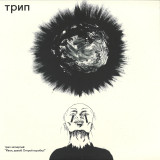
Trip Recordings follows the huge success of its first three releases with a third double-vinyl album, once more curated by label owner Nina Kraviz and featuring gatefold artwork by in-house artist Tombo. The release draws on contributions from established Trip members Kraviz, Population One and Nikita Zabelin, in addition to new artists added to its expending roster including K-Hand, Philipp Gorbachev, Vladimir Dubyshkin and Roma Zuckerman.As established with the label's first three releases, TRP004 will function as a soundtrack to a scenario and its accompanying artwork from Kraviz and Tombo. The title 'Ivan, Come On! Unlock The Box!' (, ! !) is inspired by the track contributed by Philipp Gorbachev (Comeme/PG Tunes), from which Kraviz has extrapolated a story of a rule-defying Russian maverick who is 'searching for the key to the future'.Set for release in mid-November, TRP004's two twelve-inches orbit around a nucleus of talent drawn from label boss Nina Kraviz's homeland of Russia. In addition to 'I Believe I Can Fly (KLM Delayed Flight Version) - one of her own 'road tracks' produced during the producer's hectic global touring schedule - Kraviz has enlisted a quartet of her countrymen for this latest collection. Philipp Gorbachev contributes his most uncompromisingly techno track yet, while Moscow's Nikita Zabelin follows his label debut on TRP003 ('De Niro Is Concerned') with the sinister minimalism of 'Bells'. In addition, TRP003 marks the label debuts of Vladimir Dubyshkin and Roma Zuckerman, both of whom were recommended to Kraviz by Zabelin. The former - a true outsider, just 17 years of age and based in the remote Russian town of Tambov - follows an early 2015 LP for SUB-AMP Records with the disorienting off-kilter techno of 'Lose Yourself', while the latter marks his first ever release despite years of producing with the unsettling 'Geburt Part 2'.
Completing TRP004 are two defiantly individual international artists: K-HAND makes her Trip debut following a two-decade career that's seen her become on of Detroit's true underground, and relatively unsung, heroes. Her contribution, 'The Box', finds her clipping effortlessly within Trip's aesthetic, with a heady textured acid potboiler. Two more Barcode Population tracks, excavated from a mine of undiscovered Nineties-made rarities, complete the release with furiously paced techno rollers which will remain strictly vinyl-only.
After Mani Festo's last contribution to our techno-oriented Basement Tracks series, a sequel was a no-brainer. It's no exaggeration to say that over the last couple of years the DJ, producer and label boss has become widely recognised as one of the UK's most exciting techno artists, given his easily identifiable sound, each release just as bold and hard-hitting as the last - this one included.
Synkron EP boasts Mani Festo's ability to create raw, industrial electronics which never sacrifice movement nor swing. Each track is crafted with a precise direction, some via industrial electro instrumentals ('Barrier'); others with acidic accents and the introduction of breaks ('Grass Snake') and another with hard techno proclivities ('Synkron'). If this weren't enough, we're stoked to draft in iconic Bristol producer Addison Groove who adds sharp rim shots and spasmodic synths to 'Barrier' to give it even more movement and body.
Synkron EP drops 28th October 2022 via Basement Tracks.
On August 26th Gwilym Gold releases his third album, Blue Garden, on SA Recordings. Alongside the record we are pitching the beautiful Blue Garden. Gwilym began playing improvised music as a pianist and may be fondly remembered as the singer and keyboardist in psychedelic pop trio Golden Silvers but has since worked widely as a soloist. 2012 saw the release of his high-concept solo piece Tender Metal which was composed and released using Bronze; a new music technology which Gold created with producer Lexxx alongside Mick Grierson. Using Bronze, a song is enabled to rebuild itself on each playback from the musical seeds and ground sown by the writer. Music composed with Bronze is not restricted to just one playback possibility, it is a dynamic, ever-transforming representation of itself where the artist builds a new model as part of each song’s writing process. Gwilym has since collaborated with artists such as Arca, Jai Paul, Philippe Parreno and Nicolas Becker, introducing them to this new technology. One of the hopes for Bronze is that it brings some of the characteristics of performance back into previously inert musical documents, and alongside his work with Bronze, Gwilym has maintained a wide performance practice. Performing recently alongside musicians such as Dave Okumu, Tom Skinner and Lucinda Chua and collaborating with artists Eddie Peake and Holly Blakey. His two recent collections of songs, A Paradise and Sky Blue Room, stem from this, the second being recorded almost entirely live in three days alongside Okumu and drummer Dan See. Blue Garden is Gwilym’s first collection written and recorded entirely in solitude and he hoped to unburden the process of anything beyond the most primary elements. Setting up a sort of hybrid harp in a small isolated room, the aim was to let the songs flow out unadorned and record them as they were. The only addition to the album is the accompanying sound of rivers and birdsong by sound recordist and founding member of Cabaret Voltaire, Chris Watson. Gwilym started to play the new album alongside Watson’s recording ‘The Drinking Boy’ which led him to reach out to Watson. Gwilym explains “I played it to a friend once I had recorded it with Chris’ field recordings, they said it almost sounded like the quarantine birds, there was a feeling of it being a little sanctuary”. The songs on Blue Garden were written during a bittersweet time, where Gold was experiencing moments of love, loss and rebirth. The album is a loose and abstract exploration of love in all its forms, how familial, platonic and romantic love are all intertwined.