Stroboscopic Artefacts is proud to present the debut album of Malaysian born Bangkok based artist Wanton Witch.
Born in an isolated community of Borneo Island in 1993 Wanton Witch is a DJ and producer with a hyper-sensitive connection and approach to sound through performance. Coming of age in the relative isolation of island life, it wasn’t until relocating to Bangkok that she was able to access the different communities of musical genres that she would later travel between. With an early taste for trap and hip hop, she began working in the deconstructed club and techno scene where she found her musical voice, beginning her DJ career in 2018. Wanton is also a cofounder and original member of Queer underground creative collective ‘Non Non Non’ that has become a Bangkok nightlife staple.
Being an “outsider” musician and producer with no formal training, it was the fortuitous crossing of paths online that has sparked the creative collaboration between Wanton and label owner and creative director Lucy. Last year Stroboscopic Artefacts celebrated ten years established between experimental and dance floor spectres and this is the first record the label is releasing after one year break, marking the launch of a new chapter for the imprint. It is with releases like the eponymous debut album from Wanton Witch and the support given to emerging artists like her that the imprint continues to forge pathways within the industry.
Featuring 11 tracks, these recordings are the first body of work from the Bangkok producer, and include many different snapshots of electronic music genres from IDM and experimental to hardcore and rave, using caustic electronics to deconstruct traditional track conventions. This collection of cuts read more as a complete soundscape, like listening to a live set. The phrenetic jump from genre to genre, the mixing of diverse sound textures and landscapes reflect Wanton Witch’s own experience navigating a hostile world as a Queer trans woman in Malaysia. The intense energy with which each track is cut together reminds the listener of the nostalgia of mixtapes and a time in life when identity is being constructed.
Wanton Witch has created an album which feels like a reflection of the aggregation that already exists within musical internet sub-cultures and communities. A place where many diverse and contrasting sound palettes, textures, and structures can fit together to create a new different, Queer way of seeing the world.
Following up on Wanton’s LP, label head Lucy will also present an actual full length album named ‘Lucy Plays Wanton Witch’ featuring re-interpretations of the original material in a whole new body of work. This upcoming follow up release will not represent a mere remix edition, but a recreation from scratch and the rebirth of “one into another” so to say. Expect the quintessential Lucy treatment.
Search:pro tech
Kapingbdi came together in Liberia, West Africa, during the late 1970’s and had their own unique style. This six to seven-piece band played original compositions in a vibrant mix of African Rhythms, Soul, Spiritual Jazz, Funk and Rock. Led by Kojo Samuels on sax, flute and vocals “Born in The Night” presents the essential tracks from their rare studio LPs produced between 1978-1981. The work has been carefully edited and remastered in 2019 for vinyl LP and a 6-Page Digipack CD, which includes two additional recordings. Kapingbdi toured through Europe and the U.S. and were the only Afro funk band to ever come out of Liberia.
Kapingbdi hail from Liberia, West Africa and have their own imitable style. They effortlessly combine traditional African music in a modern mix of Jazz, Funk, Soul and Rock. The band is a fusion of the old and the new.
The word "Kapingbdi" is taken from the Sierra Leone language Mende and means "born in the night". Kojo Samuels was given the name by his Latin teacher whilst attending high school in Freetown, They often meet and debate at night in the city and soon after Kojo is called Kapingbdi. The name serves as a description of his origin. Born In Lagos, Nigeria in 1943. The son of slave children. His mother from Nigeria and father from Sierra Leone who moved the family to Liberia, during the 1950’s.
Kojo has played music for as long as he can remember. He starts with the harmonica and later becomes a drummer and percussionist in his first band at school. During his art studies 1965-1972, he tours Germany and works as an art teacher in the USA. His band Kapingbdi is reorganized five times and consists of up to seven musicians. In a VW-Bulli he drives the group from concert to concert and if the drummer fails, he jumps in himself. Between 1978 and 1981 three Kapingbdi LPs are produced for the independent label Trikont, recorded in Hamburg and Munich. During this creative period, the band plays at festivals in Africa and Europe. In 1984, the band tours the United States and shortly after, they came to an end.
At their best, Kapingbdi would rouse the audience with original compositions like "Human Rights", justice for all, especially for South Africans, and "You Go Go You Go Come". The officials and employees in the government departments have no time for the common man, for any questions such as job search, scholarship or similar, he receives the answer "go, come back tomorrow" and the same thing the following day. Or "Now Is The Time For Cry For Love." Now it is time to scream for love and finally, time for humanity and justice. Despite immense difficulties, the musicians consciously live and work in Africa and are at home in Liberia.
On April 12, 1980, ordinary soldiers and non-commissioned officers organize a coup against the government. This is an attempt to put an end to a policy of exploitation of the Liberian people. Whilst efforts to eradicate poverty, lawlessness and illiteracy are obvious throughout the country, Liberia is still Americanized to a high degree. This is evident, as the radio programs of that time almost exclusively played American disco music. Under these conditions, the people seek a reconnection to their folk music, and Kapingbdi were aware of this. Kojo tried many times to come together with traditional Liberian musicians. This passion takes him north of the country. Meeting and playing with the old hornblowers and playing music on traditional instruments, such as the elephant tusk.
Kapingbdi make high quality tape copies of their own vinyl LPs and patiently try to displace all unauthorized tapes from the domestic "market". Nevertheless, it is hard to make a living through music in Liberia. Kapingbdi, is now celebrated. The radio plays are in abundance, but royalties are not forthcoming. Their musical link is the feeling of Afrobeat and Highlife, which is found in each of the many Kapingbdi pieces. They embody Jazz, which is understood to be the most refined example of black music outside of Africa. In Liberia, Jazz is virtually impossible to hear. Bright shining names such as John Coltrane, Charlie Parker or Miles Davis were widely unknown. Thus, the Black Jazz, including its Back-To-Africa movement of the 60’s and 70‘s, passes by without leaving a trace in Africa itself.
Kojo's claim at the time, was to make African music with the depth, sensitivity and the freedom of the technical level of Jazz. This makes Kapingbdi the torchbeares. The underpaid prophets in small Liberia. It is the passion with which the founder of the band continues to work on their music for years. Tirelessly, stimulating and encouraging his fellow musicians. This is ultimately responsible for the success of Kapingbdi in Liberia itself. The local audience seems to listen to the band in fascinated astonishment. One wonders about the ability to develop as demonstrated by Kapingbdi on the basis of their music. It is African and unusually jazzy, danceable and better than the American disco music heard on the radio.
Rather than chase the money and the job opportunities in Europe, Kapingbdi are firmly rooted in Africa. The musicians live in Monrovia, the capital of Liberia, at the Kabingbdi workshop, located in the Congotown area on the eastern edge of the sprawling city. Kojo works here as a sculptor, painter, batik artist and musician. The sales revenue that his activities generate, gives him the opportunity to support the development of African Jazz music. The highest percentage of funds are from Germany and Kojo’s work ethic is “to work on your own thing“. The stance taken aims to support the welfare of Liberians and Africans. The other musicians of the group live in a second house that is nearby.
For the sake of consistency, Kapingbdi is a full-time band. However, the revenue, from all of the sources, could not keep them afloat. Equally, as important to the group are Kojos's knowledge of traditional African music and his sculpting skills. His knowledge is shared with others at the afternoon workshops. It is here that they discuss new lyrics, engage in political debate and the self-imposed task of improving conditions in Africa. At times the debate became heated, especially during rehearsals. This was regarded as good and integrative, sowing the seeds of innitiative to keep the band together.
From 1980 to 1985 Kojo also opened and ran the club "Panjebota", located on the grounds of the U.S. Consulate in Monrovia. Almost every evening Kapingbdi perform the song "Wrong Curfew Walk", whose lyrics lament the killing of citizens during the curfew imposed by the Liberian government. When the head of state Samuel Doe hears the song, he behaves agressively and forces Kojo to close the "Panjebota". Kojo had already moved on. Soonafter he meets Fela Kuti at the Africa-Festival and plays concerts in Germany with Cecil Taylor's workshop band.
Kapingbdi is for thinking, dreaming, dancing. What they sing about is what they have experienced. Kojo Samuels is 76 years old today and still follows his vocation as a critical musician, artist and activist.
Ekkehart Fleischhammer / Sonorama 2019 (with the help of original press sheets and the memories of Kojo Samuels)
Hot on the heels of his Position Displacement EP, Fraxinus follows up with 4 warehouse-ready cuts on Powerplant Green — kicking off a new series of colour-coded white label 12”s for his label Powerplant. Further stripped back and even more dancefloor-focused, this series sees the artist developing his knack for propulsive rhythms & colossal kick drums. Less of a journey than the label’s first release, Powerplant Green sheds all semblance of emotion. Straight from the first beat, ‘Disruptor’’s rasping acid twinge doesn’t let up, even amid clattering percussion folding in on itself. ‘Torsion’ features a rolling, swung-out rhythm; slow & stepping, but with enough groove for the dance. On the flip, an intense barrage of drums drives ‘Proponent’ through its blistering 6 minutes, backed by disembodied voices calling out from the ether. ‘Pacer’ rounds out the sequence with its steady, controlled build-up, before ejecting the surplus percussion & dropping the listener down a precipice. Fraxinus once again serves up a singular selection of driving futurist techno, built for club-deployment. This time around the intensity is heightened, elements stripped back, rhythms pushed further.
The Zephyr Bones’ psychedelic rock expands in a precise and determined sophomore album. A warm and accessible record that speaks about love, self-affirmation, loss and hope.
A quicksilver track that glides on a buoyant bassline and glistening melodic interplay, “No One” is the sound of joy. While it’s easy to pigeonhole it as a dreampop track, there’s undoubtedly hints of psych, funk and Kraut all nestled in there, The Zephyr Bones blurring the lines with ease in this intoxicating track that shows growth in their sonic heft without losing their feathery lightness.
Beats per Minute
"No One" opens up like a traditional indie dance track, with sparkling guitars and a vibrant synth lead reminiscent of a cut from The Strokes or Tame Impala. But it progresses in a fascinating way, bringing in a crunchy psychedelic guitar solo and a funky instrumental breakdown at the end. This track has a variety of sounds, but it's prog rock more than anything, as the dynamic instrumentation sticks out the most. Every layer here is not only an excellent piece to the larger puzzle while also being technically impressive on its own. Despite these nods to the more experienced rock nerd, what's the most fascinating is how accessible the tune really is. The wild drum beats, dense synth layers, and lightning-quick guitars demonstrate the true cerebral chemistry of the group. The sheer musical talent doesn't hurt either.
Earmilk
When The Zephyr Bones first burst into the scene they crushed everything that got in their way. Their music slapped us like a wave when it reaches shore. It took us by surprise and left us asking yearning for more. They coined their style “beach wave”. All this became a first album titled Secret Place, something like the sonic coordinates of a sunny place with a soundtrack of guitars with reverb and intoxicating melodies. You can’t tell whether you’ve been there or not, but you definitely want to go back.
In Neon Body they are the same people, but it hits differently. Their melodies and suggestive guitar riffs are on point. They are able to take you back to places. You will never finish these 10 tracks in the same place where you were when you first hit play. Speaking of The Zephyr Bones is speaking of pure freedom. And yet, in this second album we get to know them in a different way, more determined and with a renewed intensity. The landscape has also changed and now the tone reminds us of the twilight, and in some songs you can even feel the reflection of neon light on your skin.
But let’s not lose the point. What matters here are the songs, and in this album you can find pretty damn good ones. “No One”, the first single, is an excellent entry into the universe created in Neon Body. Addictive and irresistible, it will instantly get you dancing and singing along. “So High” is a dizzying and fast-paced first track. By the time “Verneda Lights” arrives, you have fully surrendered to Brian Silva (vocals, guitar and synthesizers), Jossip Tkalcic (guitar and vocals), Marc López (drums) and Carlos Ramos (bass). “Sparks” shines with its own light: it is a controlled fire until the final part of the song makes everything burn again. “Plastic Freedom” goes all-in with an infallible riff. “Velvet” is as elegant as its title suggests, and “Rocksteady” hits the bullseye again with a chorus that hits like a poisonous dart. “Neon Eyes’’ lifts you up with heavenly back up vocals and “Afterglow” keeps you with your feet on the ground – Why? Because begs you to dance. And then comes “Celeste V”, a song that speaks about loss that puts an end to the recording.
Neon Yellow
The Zephyr Bones’ psychedelic rock expands in a precise and determined sophomore album. A warm and accessible record that speaks about love, self-affirmation, loss and hope.
A quicksilver track that glides on a buoyant bassline and glistening melodic interplay, “No One” is the sound of joy. While it’s easy to pigeonhole it as a dreampop track, there’s undoubtedly hints of psych, funk and Kraut all nestled in there, The Zephyr Bones blurring the lines with ease in this intoxicating track that shows growth in their sonic heft without losing their feathery lightness.
Beats per Minute
"No One" opens up like a traditional indie dance track, with sparkling guitars and a vibrant synth lead reminiscent of a cut from The Strokes or Tame Impala. But it progresses in a fascinating way, bringing in a crunchy psychedelic guitar solo and a funky instrumental breakdown at the end. This track has a variety of sounds, but it's prog rock more than anything, as the dynamic instrumentation sticks out the most. Every layer here is not only an excellent piece to the larger puzzle while also being technically impressive on its own. Despite these nods to the more experienced rock nerd, what's the most fascinating is how accessible the tune really is. The wild drum beats, dense synth layers, and lightning-quick guitars demonstrate the true cerebral chemistry of the group. The sheer musical talent doesn't hurt either.
Earmilk
When The Zephyr Bones first burst into the scene they crushed everything that got in their way. Their music slapped us like a wave when it reaches shore. It took us by surprise and left us asking yearning for more. They coined their style “beach wave”. All this became a first album titled Secret Place, something like the sonic coordinates of a sunny place with a soundtrack of guitars with reverb and intoxicating melodies. You can’t tell whether you’ve been there or not, but you definitely want to go back.
In Neon Body they are the same people, but it hits differently. Their melodies and suggestive guitar riffs are on point. They are able to take you back to places. You will never finish these 10 tracks in the same place where you were when you first hit play. Speaking of The Zephyr Bones is speaking of pure freedom. And yet, in this second album we get to know them in a different way, more determined and with a renewed intensity. The landscape has also changed and now the tone reminds us of the twilight, and in some songs you can even feel the reflection of neon light on your skin.
But let’s not lose the point. What matters here are the songs, and in this album you can find pretty damn good ones. “No One”, the first single, is an excellent entry into the universe created in Neon Body. Addictive and irresistible, it will instantly get you dancing and singing along. “So High” is a dizzying and fast-paced first track. By the time “Verneda Lights” arrives, you have fully surrendered to Brian Silva (vocals, guitar and synthesizers), Jossip Tkalcic (guitar and vocals), Marc López (drums) and Carlos Ramos (bass). “Sparks” shines with its own light: it is a controlled fire until the final part of the song makes everything burn again. “Plastic Freedom” goes all-in with an infallible riff. “Velvet” is as elegant as its title suggests, and “Rocksteady” hits the bullseye again with a chorus that hits like a poisonous dart. “Neon Eyes’’ lifts you up with heavenly back up vocals and “Afterglow” keeps you with your feet on the ground – Why? Because begs you to dance. And then comes “Celeste V”, a song that speaks about loss that puts an end to the recording.
Tape
The Zephyr Bones’ psychedelic rock expands in a precise and determined sophomore album. A warm and accessible record that speaks about love, self-affirmation, loss and hope.
A quicksilver track that glides on a buoyant bassline and glistening melodic interplay, “No One” is the sound of joy. While it’s easy to pigeonhole it as a dreampop track, there’s undoubtedly hints of psych, funk and Kraut all nestled in there, The Zephyr Bones blurring the lines with ease in this intoxicating track that shows growth in their sonic heft without losing their feathery lightness.
Beats per Minute
"No One" opens up like a traditional indie dance track, with sparkling guitars and a vibrant synth lead reminiscent of a cut from The Strokes or Tame Impala. But it progresses in a fascinating way, bringing in a crunchy psychedelic guitar solo and a funky instrumental breakdown at the end. This track has a variety of sounds, but it's prog rock more than anything, as the dynamic instrumentation sticks out the most. Every layer here is not only an excellent piece to the larger puzzle while also being technically impressive on its own. Despite these nods to the more experienced rock nerd, what's the most fascinating is how accessible the tune really is. The wild drum beats, dense synth layers, and lightning-quick guitars demonstrate the true cerebral chemistry of the group. The sheer musical talent doesn't hurt either.
Earmilk
When The Zephyr Bones first burst into the scene they crushed everything that got in their way. Their music slapped us like a wave when it reaches shore. It took us by surprise and left us asking yearning for more. They coined their style “beach wave”. All this became a first album titled Secret Place, something like the sonic coordinates of a sunny place with a soundtrack of guitars with reverb and intoxicating melodies. You can’t tell whether you’ve been there or not, but you definitely want to go back.
In Neon Body they are the same people, but it hits differently. Their melodies and suggestive guitar riffs are on point. They are able to take you back to places. You will never finish these 10 tracks in the same place where you were when you first hit play. Speaking of The Zephyr Bones is speaking of pure freedom. And yet, in this second album we get to know them in a different way, more determined and with a renewed intensity. The landscape has also changed and now the tone reminds us of the twilight, and in some songs you can even feel the reflection of neon light on your skin.
But let’s not lose the point. What matters here are the songs, and in this album you can find pretty damn good ones. “No One”, the first single, is an excellent entry into the universe created in Neon Body. Addictive and irresistible, it will instantly get you dancing and singing along. “So High” is a dizzying and fast-paced first track. By the time “Verneda Lights” arrives, you have fully surrendered to Brian Silva (vocals, guitar and synthesizers), Jossip Tkalcic (guitar and vocals), Marc López (drums) and Carlos Ramos (bass). “Sparks” shines with its own light: it is a controlled fire until the final part of the song makes everything burn again. “Plastic Freedom” goes all-in with an infallible riff. “Velvet” is as elegant as its title suggests, and “Rocksteady” hits the bullseye again with a chorus that hits like a poisonous dart. “Neon Eyes’’ lifts you up with heavenly back up vocals and “Afterglow” keeps you with your feet on the ground – Why? Because begs you to dance. And then comes “Celeste V”, a song that speaks about loss that puts an end to the recording.
In an age of never-ending genre caveats, there’s something refreshing in a band simply referring to themselves as a rock band, plain and simple. Lonely Pirate Committee define themselves in such a way, and while their music encompasses a number of different strands and influences, they like the openness of that descriptor, the space it leaves for exploration and experimentation.
Moving through various iterations over the years, Lonely Pirate Committee remains in 2021 as the musical project of childhood friends Pearce Gronek and Fletcher Barton. Together, the pair has guided the band’s studio work, before bringing varying members to flesh out LPC’s high-volume and high-intensity live performances that juxtapose the more mellow and laid-back sound that mostly defines their recordings to date, save for the band’s occasional moments of skewed eccentricity.
Formed in Cleveland, the pair work both together and apart, splitting the band’s songwriting down the middle, working on their ideas at home before bringing them together under one defined vision. In early 2020 LPC released their second album, Everyday Ordinary, and it showcased a more refined version of the band than what had come before, the pair’s songwriting drifting into creative and hazy new textures across the album’s ten songs.
In early 2022, Lonely Pirate Committee release their first new work since those album sessions in the form of a brand new 7” single for Saddle Creek’s Document series. Formed of two new tracks, both recorded in late 2020, the release is led by “He Was in the Father”, a song which should be seen as a caricature of Middle-American suburbia; a white picket fence daydream through a shadowy lens. The track began simply as a sonic experiment but soon evolved into the full song we hear today – albeit one shaped by AI. “The track is partially written using AI music generation technology, in direct collaboration with the human composer,” the band explain.
Formed in 2014, Once Human have steadily established themselves as one of the most distinctive and destructive metal bands of the modern era. 'With their new album SCAR WEAVER, ONCE HUMAN delivers their very own and unique style of modern American Metal in combination with a groovy Technical-, Melodic-Death-Metal attitude – all in the veins of bands such as Lamb Of God, Arch Enemy, Machine Head or Jinjer. On the album Lauren provides a strong mix and range of hellish extreme vocals alongside with more “melodic“ vocals.
"In Vivo" is the result of the photographic work of Klavdij Sluban at the Fleury-Mérogis Young Offender Institution (France) from 1995 to 2016 Beds in addition to his work from Izalco prison, located in El Salvador, from 2008 visiting rooms connected to the music of Gareth Davis.
Gareth Davis is an artist, composer and musician living in Amsterdam. He plays clarinet(s), the result of a somewhat impulsive purchase whilst window shopping in Covent Garden, London, around ten years before the turn of the century. The serendipitous location of a rather wonderful (and equally important, rather cheap) second hand record shop less than 10m from the bus stop required for seven years of schooling, combined with delivering newspapers on a daily basis, lead to a somewhat eclectic, dusty and generally unclassified taste in music.
The result. Activity covering sonic art and contemporary classical music through rock, improvisation and noise with collaborations that have included the premiering of new written pieces by composers such as Bernhard Lang, Peter Ablinger, Toshio Hosokawa and Jonathan Harvey, soloist with orchestras including the SWR Symphonieorchester, Warsaw Philharmonic and Orquesta de la Comunidad de Madrid, performances with groups and performers ranging from the Neue Vocalsolisten and Arditti Quartet through to improvisers Elliott Sharp and Frances Marie Uitti, electronic artists Robin Rimbaud and Merzbow and multimedia work with artists including Christian Marclay and Peter Greenaway.
"In Vivo" is his second solo release after to have recorded a bunch of collaborative albums with artists such as Scanner, Machinefabriek, Steven R. Smith, Kleefstra Brothers, Frances-Marie Uitti, Merzbow, Adain Baker, Duane Pitre and more...
Klavdij Sluban, winner of the European Publishers Award for Photography 2009, of the Leica Prize (2004) and of the Niépce Prize (2000), main French prize in photography, is a French photographer of Slovenian origin born in Paris in 1963.
He develops a rigorous and coherent body of work, nourished by literature, never inspired by immediate and sensational current affairs, making him one of the most interesting photographers of his generation. The Balkans, the Black Sea, the Baltic Sea, the Caribbean, Central America, Russia, China and the Antarctic (first artistic mission in the Kerguelen islands) can be read as many successive steps of an in-depth study of a patient proximity to the encountered real.
His images have been shown in such leading institutions as the Metropolitan Museum of Photography of Tokyo, the Maison Européenne de la Photographie in Paris, the Rencontres d’Arles, the Museum of Photography in Helsinki, the Fine Arts Museum in Canton, the Musée Beaubourg, the Museum of Texas Tech University. His many books include East to East (published simultaneously by Actes Sud, Dewi Lewis, Petliti, Braus, Apeiron & Lunwerg with a text by Erri de Luca), Entre Parenthèses, (Photo Poche, Actes Sud), Transverses, (Maison Européenne de la Photographie) and Balkans -Transit, with a text by François Maspero (Seuil). Since 1995, Sluban has been photographing teenagers in jails. In each prison he organizes workshops with the young offenders to share his passion. First originated in France, in the prison of Fleury-Mérogis with support of Henri Cartier-Bresson during 7 years, as well as Marc Riboud and William Klein punctually. This commitment was pursued in the disciplinary camps of Eastern Europe –Serbia, Slovenia, Ukraine, Georgia, Moldavia, Latvia – and in the disciplinary centres of Moscow and St Petersburg as well as in Ireland. From 2007 to 2012, Sluban has been working in Central America with imprisoned youngsters belonging to maras (gangs) in Guatemala and Salvador. In 2015, he started photographing imprisoned teenagers in Brazil. In 2013, the musée Niépce showed a retrospective of K.Sluban’s work, After Darkness, 1995-2012. In 2015/16, he was awarded the Villa Kujoyama Residence in Kyoto, Japan. K.Sluban is member of national and international jurys, such as prix Niépce, prix de la Jeune Photographie de Niort, prix Leica, All About Photo…
For Fans Of : LVL UP, Crying, Paear, Sheer Mag, Krill. When his primary music project, LVL UP, stopped working together in 2018, prolific multi-instrumentalist and illustrator Nick Corbo began working on a new body of music and visual art as Spirit Was. On his debut studio album Heaven’s Just a Cloud, haunting, beautiful scenes of the natural world feel just as represented in the warm, classic, wooden floors of country rock as they do in the dark, droning, shadows of doom and black metal. With new creative liberties, Corbo is allowed an opportunity to keep exploring the heavy, distorted instrumentation and experimental techniques that have shaped his music to date. His ability to focus on small details and weave them into vast networks has been evident in all of the music and visual art in his catalogue. In its density, Heaven’s Just A Cloud is threaded with memorable lyrics and recapitulating musical themes that guide the listener. Spirit Was feels at home among the technical, melodic songwriting of Harry Nilsson’s studio recordings, or the dusty, psychedelic oblivion of Earth and Wolves in the Throne Room. A departure from his previously collaborative recordings, the album features Corbo on drums, bass, guitar, and keyboards, weaving sweet, intentional melodies and vocal harmonies over a slamming, distorted rhythm section.
Auslandsländer neigen dazu, südamerikanische Länder als „exotisch“ zu betrachten. Aber wir können Ihnen versichern, dass es nichts Exotisches
ist, wenn 95 % der Bevölkerung um ihre Grundbedürfnisse kämpfen, hohe Kriminalitätsraten und Regierungen nacheinander nichts tun, um die
Situation zu ändern – tatsächlich folgen sie ihrer eigenen Agenda, um den Ball am Laufen zu halten.
Aus diesem Grund haben Bands wie die brasilianischen NERVOCHAOS eine solche Atmosphäre echter Brutalität und Authentizität. Sie machen
keinen „südamerikanischen Death Metal“. Sie nahmen einfach ihre harte Realität, nahmen den Einfluss von frühen Death Metal-Bands wie Morbid Angel, Vader und Sinister auf und spuckten sie so aggressiv wie möglich aus. Nervochaos, 25 Jahre alt und Teil der ältesten Generation der
brasilianischen Extremszene – zusammen mit Sepultura, Krisiun, Rebaelliun oder Abhorrence, um nur einige zu nennen – haben natürlich die
Erfahrung, die Abstammung und das technische Know-how, um tun Sie es in Pik.
Genau das ist „All Colours Of Darkness“, das zehnte (!) Studioalbum des São Paulo-Fünflings: Pechschwarzer Death Metal, so rauh gemacht, wie
es eine Band nur kann, mit der brutalen Atmosphäre, die wir von brasilianischen Extrem-Metal-Bands zu erwarten. Mit lyrischen Themen, die
sich um die dunkelsten Gefilde des Satanismus und der dunklen Magie drehen, beschwört Nervochaos den Metal über den Tod, wie es heute nur
noch wenige Bands können – mit einem brutalen Ansatz, einem technischen Rückgrat und einer effektiven Tiefe der Themen.
Nervochaos haben durch ihre harte Arbeit in den letzten 25 Jahren Kultstatus in der Musikszene erlangt und bieten auf ihre einzigartige Weise
eine klangliche Extravaganz. Die Gruppe hat neun Studioalben in voller Länge herausgebracht und tourt ständig weltweit, um ihre Veröffentlichungen zu unterstützen, und gibt rund 100 Konzerte pro Jahr – von Clubs bis hin zu Festivals.
Auslandsländer neigen dazu, südamerikanische Länder als „exotisch“ zu betrachten. Aber wir können Ihnen versichern, dass es nichts Exotisches
ist, wenn 95 % der Bevölkerung um ihre Grundbedürfnisse kämpfen, hohe Kriminalitätsraten und Regierungen nacheinander nichts tun, um die
Situation zu ändern – tatsächlich folgen sie ihrer eigenen Agenda, um den Ball am Laufen zu halten.
Aus diesem Grund haben Bands wie die brasilianischen NERVOCHAOS eine solche Atmosphäre echter Brutalität und Authentizität. Sie machen
keinen „südamerikanischen Death Metal“. Sie nahmen einfach ihre harte Realität, nahmen den Einfluss von frühen Death Metal-Bands wie Morbid Angel, Vader und Sinister auf und spuckten sie so aggressiv wie möglich aus. Nervochaos, 25 Jahre alt und Teil der ältesten Generation der
brasilianischen Extremszene – zusammen mit Sepultura, Krisiun, Rebaelliun oder Abhorrence, um nur einige zu nennen – haben natürlich die
Erfahrung, die Abstammung und das technische Know-how, um tun Sie es in Pik.
Genau das ist „All Colours Of Darkness“, das zehnte (!) Studioalbum des São Paulo-Fünflings: Pechschwarzer Death Metal, so rauh gemacht, wie
es eine Band nur kann, mit der brutalen Atmosphäre, die wir von brasilianischen Extrem-Metal-Bands zu erwarten. Mit lyrischen Themen, die
sich um die dunkelsten Gefilde des Satanismus und der dunklen Magie drehen, beschwört Nervochaos den Metal über den Tod, wie es heute nur
noch wenige Bands können – mit einem brutalen Ansatz, einem technischen Rückgrat und einer effektiven Tiefe der Themen.
Nervochaos haben durch ihre harte Arbeit in den letzten 25 Jahren Kultstatus in der Musikszene erlangt und bieten auf ihre einzigartige Weise
eine klangliche Extravaganz. Die Gruppe hat neun Studioalben in voller Länge herausgebracht und tourt ständig weltweit, um ihre Veröffentlichungen zu unterstützen, und gibt rund 100 Konzerte pro Jahr – von Clubs bis hin zu Festivals.
More from mystery artist Surrogate, reportedly a veteran Detroit-based techno producer operating under a new alias for the first time in 20 years. As with the publicity-shy artist's recent debut on Misstress Recordings, the four cuts showcased on this EP combine crunchy, distorted and sometimes extremely lo-fi techno and electro beats with dubbed-out electronics, deep space motifs and subtle nods towards vintage rave culture. There's much to admire throughout, from the soul-flecked deep techno crunchiness of 'Poison' and hypnotic, early morning brilliance of 'LX', to the fractured techno minimalism of closing cut 'Moderno'.
These three offerings from Michael James might fit into the minimal/tech bracket comfortably but there's a free flowing, shuffling sense of funkiness that undeniably runs through them all that defies all the usual 'shoulder twitch' stereotypes about the genre. 'Signal Issues' employs a panther-like bass hovering under the radar, with the briefest of breakbeat snippets adding the growing syncopation. 'Still Waiting' continues the technofunk mission, a sea of underplayed bleepery augmenting the groove, while 'Rush Hour' has a breezier and more open vibe and perhaps a more classic techno feel, proper graceful like.
Influential house and techno titan wAFF is branching out with his own new label, Nature. As well as donating a portion of profits to animal charities, the label will become a platform for music that in some ways heals us, just like nature itself. The innovative DJ and producer kicks it off with his own new three tracker, Colours.
You name it, wAFF has done it. The UK artist has headlined every major club and festival in the world, has released for labels like Cocoon, Hot Creations, Desolat and Moon Harbour Recordings and always brings his own flavours every time he steps out. It is now almost a decade since he broke through, so is the perfect time to start his own imprint.
Says wAFF, "There’s so much that’s happened over the past two years that I really wanted to create a platform of expression and creativity that would be meaningful not just for me but for everyone. I hope the label will be something that brings us back down to earth, to ground us. Nature is so important to me so I wanted something that felt like an extension of myself and what I care about so much. Nature, provides all life with what we need, nature heals us and that’s something I like to think of with this label. By providing the best quality of music for everyone, it can help with healing."
The stylish Colours is a taught, driving house track with slinky hi hats and rubbery drums. The monstrous bassline bobbles away down low and is sure to lock in any crowd. Django is another inventive groove, with lush claps and a knotted bassline that drives the track along beneath infectious percussion and silky smooth synths. Switchin is the most raw of the lot with its busy leads, razor sharp tech house drums and glitchy effects. Add in some turbocharged chords and you have a sleazy and standout banger.
These are three vital tunes that start off this label in fantastic fashion.
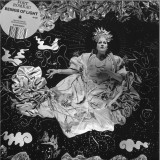
- Followup to 2015's Insides. - RIYL: Jacques Greene, Leon Vynehall, DJ Seinfeld, Project Pablo - Features cover art by Salvador Dalí protégé Steven Arnold. - Silver halide (gray + black marble) vinyl limited to 1,500 copies worldwide - Vinyl is housed in a black dust sleeve inserted in to a matte varnish jacket with metallic silver spot color // After a run of critically-acclaimed singles and EPs, British producer Michael Greene, aka Fort Romeau, returns to the full-length format with Beings of Light, the long-awaited follow-up to 2015's Insides and his second LP on Ghostly International. While a prolific DJ who orients many of his productions for the dancefloor, Greene still sees the album as the ultimate statement of intent, "a space to stretch out, to speak in full paragraphs rather than stunted sentences." He has explored several stylistic fragments in recent years (including the summer 2018 anthem "Pablo," hailed a Best New Track by Pitchfork), but when faced with the extended pause to the dance community in 2020, Greene felt compelled to focus on a larger body of work. Embracing a back-to-basics mentality, he amassed over a dozen hours of sounds, asking himself throughout the sessions: "Does the music move you? Is it honest?" He came out the other end with Beings of Light, an expressive collection traversing rainy day ambient, moonlit disco, and dream-like techno in pursuit of the power found within our subconscious. Album opener "Untitled IV" ushers in a sprinting tempo in its exploration of the human voice, a recurring device in the Fort Romeau project. Greene uses it as a compositional layer, disembodied with its context often opaque or reduced to a single phrase. Here the voice is scattered in percussive twitches, colliding with a kick drum to induce a near state of hypnosis as horns sound off in the distance. Propulsive standout "Spotlights'' is Greene's ode to the romanticised New York City that lives in our hearts, nocturnal and carefree. A vocal snippet repeats the title with a breezy poise, reminiscent of classic house cuts. "Ramona'' honors the beloved Robert Johnson club in Offenbach, Germany. Hazy, spacious, and sustained, Greene designed the beat with their system in mind, "also with a strong nod to the more modern lineage of exceptional minimal house music from Frankfurt," he says. Two ambient pieces surround the track, "(In The) Rain" sets the scene and "Porta Coeli" (a Latin phrase which loosely translates to "heaven's gate") soundtracks the comedown. The album's closer, the title track, is an arc constructed with atmospheric textures, euphoric swings of percussion, and a well-placed piano refrain, "Beings of Light" is adaptive; one could imagine it reverberating from a club, scoring the emotional apex of a film, or radiating through the realm of dreams.
Maniacal Laughter quickly gives way to a non-stop onslaught of irresistible electronics and a ceaseless, pounding groove. Boom! You are embedded in Maedon’s world. Dark and futuristic, her album “Now I have Become Death” is another worthy addition to the Sonic Groove catalogue. This is music that works the body and captures the mind. It’s her 3rd release for the imprint, following up 2020’s “Escape to Berlin” and 2019’s “Against His Will” EP. Maedon crafts some very melodic jams, with refreshing song structure and storytelling trips achieved through excellent sample work and programming prowress. Make no mistake, this is fghting music. It’s blazing hard, with grueling energy, and a fair for the dramatic. Maedon likes relevant content, as tracks like “Rave-Act Never Forget” expose pathetic pledges from poser politicians who have dared to protest against the dance music scene in their past. You have been exposed Biden. The madness continues with the menacing “Destroyer of Worlds”, a massive rave jam with otherworldly synths based around the words of a certain man’s famously guilty post-atomic quote from the Hindu scripture known as the Bhagavad Gita. It’s a reminder of your sins, Oppenheimer. The selection continues to concoct clever experiments with pressure and feels at times like riding a roller coaster thru outer space “Destroy the Status Quo” with subtly pitch-shifting metallic highs and ravey tone-work captivates the mind as gravity drops jerk the body into uncontrollable motion. “Rudersdorf Trip” is a sick adventure into the darkness, with whispered vocals ‘this is what you want this what you need’ leading the charge of hypnotic, spiraling acid. “Childhood dreams” is an excellent ending to the LP, an innovative melodic charmer with nostalgic future vibes pumped up by a broken techno beat. In truth, all the tracks stand out; a solid efort from start to fnish. It serves as a lesson in production for her peers. She enjoys the process, creating a chance for all to dance away their pain. For Maedon, our ears are like trophies to collect. no one is safe.
The Madness, originally released in May 1988, is the only album recorded by Suggs, Chas Smash, Chrissy Boy and Lee Thompson of Madness. Calling themselves “The Madness”, the group explored a new direction without Mike Barson, Woody and Mark Bedford. The result was an album bathed in all the new technology the late 1980s had to offer, and features some of this incarnation of Madness’ most experimental work.
Lead vocals were shared between Suggs and Chas Smash, while all members of the group contributed music and lyrics. The album also features a host of other musicians including Steve Nieve (Elvis Costello & The Attractions) on keyboards and The Specials’ Jerry Dammers on piano.
Although short-lived, this version of Madness marked a significant detour from the original band’s trajectory and preceded one of the most extraordinary music comebacks ever witnessed, when the whole band reformed in 1992 for two sold-out “Madstock” shows in London’s Finsbury Park. The fans’ excitement led to a legendary mini-earthquake, and ‘Madstock’ would prove that no members of Madness ever truly leave the band.
This LP reissue is pressed on 180g black vinyl and features brand new liner notes by Chrissy Boy, Chas Smash and Lee Thompson.