Impromptu muscovite supergroup Lilipulu turn the needle neon with a quartet of unexpected killers for club cosmonauts, rainforest ravers, anxious insomniacs and giddy punks.
Unplanned, inspired and all the way live – the pin is glowing! Ever wondered why the Growing Bin releases sound so damn good? Well, it has more than a little to do with mastering magician Sergey Luginin, whose eagle-ears and technical know how have been a part of the process since GBR002. For the latest Glowing Pin powerplay, our man in Moscow joins some close friends on the other side of the console, letting the creative juices flow for ‘Four Amazing Tracks’. Luring Simple Symmetry brothers Sasha & Sergey and DJ & photographer Ivan Pustovalov into his studio with the promise of an afternoon stroll through the nearby Elk Forest, Sergey set the circuitry in motion and the quartet got lost in music. What begin with a plan for some simple edits and a woodland walk quickly became a full scale studio throw down, reimagining forgotten favourites amid a multi-instrumental stew of propulsive polyrhythms, low slung bass, cosmic synths and frazzled guitars. There’s techno-tribal hypnosis on the mind bending, brain blending A1, poetic post punk on the angular, janglier A2, outrageous Afro-cosmic on the freaky Floyd-in-Lagos B1 and languid ambience on the lysergic lullaby which closes the set. Recorded as they worked and presented in chronological order, this EP is a triumph of inspiration over perspiration - a snapshot of a moment which will last forever.
Patrick Ryder
Search:process
Palette 71 kicks off with legendary Warp artist Plaid on remix duties. Transforming the title track, re-synthesized 909 samp-les and lua scripted sequencing, Plaid builds melodies and ar-rangement to epic proportions in classic Plaid fashion.
Tejada’s new EP is an homage of sorts to the sample heavy production style of the late '90s. "Limiting the options and just creating and manipulating a batch of samples is my happy place,” says Tejada. The title track hints back to a personal favorite, Optical’s "Moving 808s." While the sound is quite different, the approach is similar: samples, editing, some fil-ters and not a whole lot more opens up a lot of creative possi-bilities without too much getting in the way. Of course, the bass plays an important role. Combing through some older influences of varying styles, the production became more in line with Tejada classics like “Timebomb” and “Western Star-land,” both sample collage pieces focused on groove.
The final track, "Infinity Room" also follows this production process while resulting in a slightly moodier sound.
2020 Split release with contributions by ELEH and NYZ.
ELEH: This side is possibly the artist's most complicated electronic composition. It navigates myriad timbral, tuning and temporal processes while winding itself to completion. It was composed/constructed over a period of months in early 2019.
NYZ: Two crunchy microtonal drone meditations in mono, using techniques of digital FM and hybrid analogue/digital modular synthesis. FM60P::fbk1#03 is from a number of sessions recorded on my very battered SY99 recorded from 2013 to 2014. As the name suggests, this particular session revolved around using feedback in the FM algorithm. EML DRNPi was recorded as part of the 2015 Plum Island Sessions where I had a host of synths on loan from John Brien at Important Records. For this recording I used the EML ElectroComp 101 and my own 4 voice digital microtonal oscillator running a Lambdoma Matrix to make a hybrid analogue/digital system.
This split release between ELEH and NYZ (David Burraston) is packaged in a heavy duty sleeve printed on both sides of the packaging and utilizing metallic inks. This is a first edition of 500 copies and a brand new full length from NYZ is being released at the same time via Important Records.
Substance, the second album by producer Moisture, sets out to deliver an immersive tech-noir fantasy of emotional and physical deconstruction. Inspired in part by William S. Burroughs 1959 novel Naked Lunch, the conceptual narrative of the album follows a humanoid subject through an urban landscape and the exploration of its depravations.
Sampling and filtering sounds from other music, movies and own field recordings, the tapestry of Substance is a three-dimensional world of hard industrial spaces and fluid organic matter. While it's conception is rooted equally in literature and film as well as music, one can draw comparisons in particular to Barry Adamsons 1989 album Moss Side Story, in that it also works as a chronological narrative; the tracks aligning to make a world of its own.
And while Adamson was aiming to create an imaginary soundscape of his native Manchester, the geography of Substance is based on the city of Malmö. Using field recordings from it's city streets, the album paints a rain soaked, neon-clad portrait of the city's hedonistic nightlife.
On the opening "The Marketplace" we are teleported to Bergsgatan at night (the track title a subtle nod towards Eden Ahbez 1960 song of the same name).
This introduction is similar in line with the experience Burroughs once had in 1957 upon entering Malmö for the first and only time, which he details briefly in Naked Lunch: "averted eyes and the cemetery in the middle of town (every town in Sweden seems to be built around a cemetery), and nothing to do in the afternoon (...)"
This image of Malmö portrayed with dread and loathing holds a longstanding narrative tradition over the cultural geography of the town. Yet it is often paired with an image of great promise and bohemian splendor, seemingly a paradox but often perversely intertwined. This duality has always been a vital mindset in the underground music scene of the town and its illegal after hours clubs. Substance is a work steeped in the grayscale prism of techno and its post-industrial fetischism. Yet in picking it apart, one can find elements of everything from post-punk, drum & bass, trip hop and new age.
The theme of depravation that soaks through Burroughs Naked Lunch seems oddly befitting to this side of Malmö (one wonders what the author would have made of it had he stayed longer) Through rhythmic excursions and the exploration of repetition, the tracks of Substance are arranged to convey this self-destructive longing for depravity. Michel Foucault's ideas on limit experiences serves as context for this peculiar form of endeavour, as he puts it: "the point of life which lies as close as possible to the impossibility of living, which lies at the limit or the extreme."
Apollo are delighted to welcome Steve Legget & Mark Hand to the fold with their lush new single ‘If You Cannot Try’ featuring the dulcet vocals of Greg Blackman. Originally released as an uplifting bumping house track on Ramrock Records Blackman sent the stems of the release to longtime collaborator Steve Legget for a rework. Legget tore the original to pieces, deconstructing it into a much more ambiguous form. ”I’ve never been a fan of a chorus in a song,” Legget muses. "I like songs that are not direct that leave room for your imagination - Mark and I ended up building a new song around the texture of the original.”
Hand and Legget met in the early 90s at the Northern College of Art in Middlesbrough, and have collaborated at various times in the intervening years, through a shared love of Detroit techno, experimental electronic music, jazz and funk. Their creative process involves sending audio files back and forth - “The release was written in collaboration over the internet Greg in Colchester, Mark in Hartlepool, and me in St Albans."
Hand added spaced out textures and riffs from his collection of vintage Fender Rhodes and classic synths - taking the track into sunny space funk realms that comes on like a lost release from joe Claussell’s Spiritual Life label or Basic Channel jamming with Herbie Hancock.
Using their new version as the seed - Hand decided to try his own ’Teesside Techno’ version - "I wanted to give the track more of a 'machine funk' vibe with my rework” he explains. “I generally like to work by jamming with hardware - the bass line is generated by triggering the arp on my Juno 6..using triggers from a TR606 kick drum and hats replaced by a TR909.. the result being more of a jackin' electronic funk mutation!"
This continuing game of musical pass the parcel has indeed born some juicy fruit -
F.S.Blumm enters Andi Otto's studio with a whole palette of strings and a mission to create quirky, peaceful soundscapes. The artists intertwine acoustic and electric guitars, harps, electric bass, psaltery and cello in eleven electronica compositions ranging from neo-classical gravity ("Entangleland") to spaced-out dub jams ("Active Fault Map"). "Yukiyama" evolves in multilayered patterns braided over warm tape-noise. "Kilani" reminds of Rabih Abou Khalil's ECM recordings, with its oriental scale and a beat that counts to seven. The tunes shine most when silence takes over, when the sounds find space to unfold and decay. Far from being trivial ambient lullabies, these compositions burst with detail: Bells rattle, a kalimba resonates, and vintage synths induce their voltage into the acoustic framework. Andi Otto and F.S.Blumm have been musical collaborators in the studio as well as on stages between Berlin and Tokyo for more than a decade now, the heyday being their previous duo album "The Bird And White Noise" in 2014. On "Entangleland", Andi Otto contributes the cello, harp and synth recordings and takes care of the mixing. Compared to his recent releases on Multi Culti or Shika Shika, these tracks are less dancefloor oriented. The calm of this album is a flourishing environment for Otto to pluck the acoustic cello which we usually hear in a more processed way in his solo works. F.S.Blumm contributes guitar and bass recordings as well as saturated percussion echoes from his self-made spiral box. Blumm is famous for his acoustic solo productions since his early outings on Morr Music or Tomlab. He has also appeared on Pingipung a few times, for example with his album "Up Up And Astray" or as a Lee 'Scratch' Perry collaborator with the "Quasi Dub Development" project. He recorded three duo albums together with Nils Frahm and is a member of the mighty "Jeff Özdemir & Friends" collective in Berlin. "Entangleland" sees the two artists weave together a mass of acoustic motifs, synthetic melodies, riddims and improv jams where the magic emerges from the sum of the parts. "It's not about accompanying a cello theme with the guitar or vice versa," Andi Otto says. "Entangling sound means letting go of hierarchies, that no one is first. Our studio is not a control room, it's a place of imagination where we take things apart and make things whole."
‘Rock Sutra’ is the new space rock album from Sun Araw.
‘Roomboe’, the first track, illustrates this process.
Experience is elastic. Humans alive right now tend to think
there is some sort of ‘baseline’ experience of a thing, a
room, a person, a feeling, some version we all agree on.
This isn't true at all: experience is completely dependent
on the quality of attention of the experiencer. There is a
granularity to experience that, when tuned up, reveals
deeper and deeper space inside of things. When you zoom
in (by pure observation: by not-articulating, not-thinking),
you create ‘room’, you make space. Just like that. For
instance, ‘Roomboe’ has an extremely limited tonal
framework; about 9 notes for the main guitar melody. As
the guitar pushes against these melodic limitations with
continually renewed attention and energy, it begins to
create space around itself. And all of the sudden (at about
4:57), out of this constriction, space balloons up from
everywhere simultaneously. ‘Roomboe’ is a clue about how
to open a portal outwards into free space.
‘78 Sutra’ is about orbital motion. ‘Catalina’ is about taking
a walk. ‘Arrambe’ is about a peculiar feeling you can get
when you zoom in far enough. The music is offered in a
spirit of generosity and adventure; it doesn’t stay put and
it keeps zooming in to reveal more and more.
The album was recorded live-to-midi with the band and
this is the first Sun Araw album recorded like that. That
band is Jon Leland on drums and percussion and Marc
Riordan on synthesizers and Cameron Stallones on
synthesizers and guitar and vocals.
Entitled ‘My Heart Is Hungry And The Days Go By So Quickly’ Danish singer and songwriter Jacob Bellens presents his fifth solo album. Thanks to his unique voice and his talent for heartfelt melodies, over the years Jacob, also known as frontman of I Got You On Tape and Murder, has become one of the most distinctive figures on the Scandinavian music scene. Slightly darker in tone than its predecessors ‘Trail Of Intuition’ (2018) or ‘Polyester Skin’ (2016), the new album lets us see the world through Jacob’s eyes.
Somewhere between left-field pop and a classical singer/songwriter approach, the songs were recorded in two sessions with producer Mads Brinch, drummer Tobias Laust, bass player Jonas Westergaard, keyboardist Malthe Rostrup and guitarist Tobias Fuglsang. “So many good friends and amazing instrumentalists have contributed to the sound“, explained Jacob. “And mostly, people were playing what they felt the song needed, which was an incredibly inspiring way of just letting the process develop naturally, and take on a life of its own.” As such, the recordings give off a distinct light-footed and organic feel. Rich in metaphors, the lyrics deal with personal perceptions based on everyday life occurrences that at the same time hint at the meaning of life in general - or at least suggest a higher perspective. The sonical expression is timeless but also modernistic and the lyrical point of view is refreshingly diverse, never just black or white. The sad songs have uplifting, often surreal qualities, and the lighter, uptempo songs also invite to a certain darkness. A flower basket full of difficult emotions, sprinkled with magical fairy dust that somehow makes everything worthwhile.
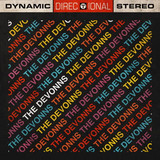
The Devonns dust off the golden age of 70's Chicago Soul with their self-titled debut album on Record Kicks. Straight from the streets of Chicago, Illinois, The Devonns (pronounced "De vaughns") are the brand new soul outfit and the latest addition of the Record Kicks' family, whose self-titled debut album that drops April 03, is an assortment of influences taking us back to the heyday of soul.
Drawing influences from bands such as The Dramatics, The Isley Brothers and Leroy Hutson, yet bringing in their own unique modern twist, influenced by artists such as Jamie Lidell and Raphael Saadiq; singer Mat Ajjarapu explains how unintentionally, the rich heritage of Chicago's history with soul music influenced him.
"The city was at the epicentre of a lot of good music back in the 50's all the way to the 80's, a lot of the labels specialising in soul were based in the Chicago and we even had our own sound known as "Chicago soul". Through several years of crate digging it surprised me how many songs I loved were recorded in this city, for example one of my favourites is this great little song by The Natural Four, produced by Leroy Hutson 'Can This Be Real', and released via Curtom Records."
The band started in 2016 after multi-instrumentalist and songwriter Mathew Ajjarapu dropped out of med school and found himself unemployed and drifting. Listening to music constantly at the time, he found inspired to put a band together and create his own music. Pairing up with some of the best musicians Chicago has to offer, he founded The Devonns: the rhythm duty is entrusted to Khalyle Hagood (bass), Ari Lindo (guitar) and Khori Wilson (drums).
Originally he wanted to focus on 50s style doo-wop, similar to The Flamingos; rich in reverb and vocal harmonies, but in the first initial practise they had it was evident the band clicked on their love of soul music from the 70s, so their music took a natural turn towards that sound, with tracks such as the Wilson Pickett-esque single 'Tell Me'.
The release took almost two years to complete as Mat explains "I am a perfectionist, I had a very specific vision in my head about how it should sound and I wasn't going to rest until I achieved it."
"This is a definitely a throwback soul record, as well as being drawn to lush and intricate arrangements of Motown, I was also inspired by the more lo-fi works of smaller labels such as Chess and Capsoul, and I wanted to capture the magic they had in those recordings in our record, as everything feels too precise nowadays" clarifies Mat.
It was thanks to his engineer Mike Hagler, who introduced him to Paul Von Mertons (Mavis Staples, Paul McCartney, Elton John) who arranges and conducts for Brian Wilson's live touring show and after a 45 minute phone conversation about what Mat wasn't keen on, on the album, he realised Paul totally understood where he was coming from.
After a few months wait for Paul to get back from touring they entered the studio with "Paul's players" and as soon as they hit record, Mat explains "I was getting chills up my neck, it was one of the happiest days of my life, and finally we had nailed it!"
Tracks such as 'Come Back; which Mat wrote in ten minutes on a $300 Daneelectro Singlecut guitar initially, came to life, with Paul's rich string arrangements and features guitarist and percussionist Ken Stringfellow (R.E.M.).
It still took a few months to get the recording process finished but finally after a torturous nineteen months they album was finally finished.
The result is an album filled with lavish arrangements and catchy melodies which take us on a nostalgic musical journey inspired by chic 70s soul, yet the band don't hesitate to add their own unique and elegant contemporary stamp to the record.
R&S welcome electronic composer Matthew Puffett AKA Future Beat Alliance with his killer single ’Never Forever’ a sublime slice of broken beat techno that originally had a limited release on his “Patience and Distance” album in 2009. It now comes backed with a first rate remix courtesy of R&S regular Afriqua.
A veteran of the UK electronic scene originally from Oxford but now located in Berlin, Puffett made his name in the late 90s with a string of sought after releases on Void Records under the aliases Mode-M and Soul Electrik before settling on the Future Beat Alliance handle. Notching up releases with the likes of Delsin, Rush Hour and Versatile as well as with the storied Tresor imprint, both as a DJ and an artist. In 2019 Matt started his new imprint Reward System to self release new creations.
Life long friend from Oxford, Mo’ Wax and Unkle maestro James Lavelle reached out in 2012, which led to a further creative chapter in Puffett`s story that culminated with him co-writing & programming on Unkle’s 5th studio album ’The Road Part 1’ as well as some singular work in film and television. “The moving image plays a key creative motive in my process,” Matthew explains. “Sound & picture married together is such a powerful combination that always inspires me every time to make my own version, 'Never Forever' is one of my many attempts to try and
capture that.”
Taking cues from modern cinema masters like Denis Villeneuve, Panos Cosmatos, Steven Soderberg and Jonathon Glazer and their respective composers, Puffett's widescreen sonic craftsmanship alongside his irresistible rhythmic sense are a key part of what makes Future Beat Alliance music so alluring; "I want my tracks to guide the listener on a exit route far from this world”
Legendary album of Jacaszek from 2009, first time on vinyl, 180g, gatefold, with downloadcode
PENTRAL (lat: inside, spirit, temple).
Michal Jacaszek's new project is an attempt to describe a gothic church interior by means of sounds. A temple owes its special atmosphere not only to visual elements but also to characteristic acoustics – reverb, enhancing and prolonging a slightest whisper into infinity. Jacaszek spent several days in three Gdansk historic churches (Oliwa Cathedral, St. Nicolas' church, St. Mary's Basilica) recording chanting, organs, and also a broad spectrum of accidental noises. Source sounds were were used only as a stimulus which releases the sound of the whole inside, and as such, they were consequently retouched in the post production process. Studio work and also the atmosphere of melody and arrangements were subordinate to the idea of portraying the church as a place filled with distant mysteries, a huge music instrument.
Life Notes returns with its 3rd transmission and proudly presents the Mentality EP. After starting the label under his Motion Process moniker, Life Recorder is welcoming on board 2 of his favorite producers with the Birmingham UK based producer, Jayson Wynters who already left a strong impression with releases on Mr G's Phoenix G, or Don't Be Afraid and one of the best current Chicago's deep sound purveyors and Perpetual Rhythms co-founder, Taelue.
Guided by a natural artistic and human being connection, the 3 producers and dj's are sharing the wax here to present their vision of deep, meditative house/techno speaking to the mind and the dancefloor.
- A1: Donde Esta The Donner Party?
- A2: How Many Contracts Do I Have, Linda?
- A3: Cannibal Cowgirl
- A4: How Many Fur Coats Do I Have, Edith?
- A5: Archetypal Unitized Seminar
- A6: How Many Head 'O Cattle Do I Have, Sally?
- A7: Gold Gush Epilogue
- B1: You Pay Rent On Your Brain
- B2: I Feel Like A Martian
- B3: Japanese Disease
- B4: I'm Hungry
Unreleased album from 1981, a collaborative project by David Behrman, Paul DeMarinis, Fern Friedman, Terri Hanlon and Anne Klingensmith recorded at Mills College in 1981.
Previously known only to cognoscenti through an obscure self-released three-track 7”, this is the first publication of the complete album, an outrageous confection that mixes art-song and theatrical monologue with live electronics. Starting life as a performance art piece described by the artists as ‘Western Performance Noir’, the record centres on a series of texts written by Friedman and Hanlon in which female narrators comically embody a series of iconic roles (The Recording Artist, The Former Movie Star, and The Rancher). Other lyrical themes include recurring references to the notorious cannibal pioneers, the Donner Party, an ironic take on Japanophilia, and the luscious “Archetypal Unitized Seminar,” a satirical poke at self-help culture, whose lyrics are rendered in Indian raga style to the accompaniment of electronic glissandi and toy noisemakers. Delivered by Friedman, Hanlon, Klingensmith and special guest Maggi Payne in forms ranging from spoken monologue to Country & Western waltz, the texts are accompanied by instrumental and electronic contributions by Behrman and DeMarinis. Musically, She’s More Wild is truly unique, demonstrating these two pioneers of live-electronic performance adapting their signature processes to something approaching a ‘pop’ format: we hear the gliding, frequency-sensitive electronics familiar from Behrman’s classic On the Other Ocean and the mutant hacked Speak n’ Spell heard on DeMarinis’ Songs Without Throats propelled by drum machines and twisted into song forms. Perhaps comparable only to the David Rosenboom and Jacqueline Humbert’s contemporaneous Daytime Viewing in its interweaving of performance art tactics, high-tech electronics and pop sensibilities, She’s More Wild is an essential document, both immediately gratifying and ultimately thought provoking.
Key Clef launches her own imprint Ipnotica Erotica with 'Mental Groove' EP
Key Clef is a Berlin based, italian dj and producer with strong passion for analogue instruments.
After experiencing the last years of the flourishing rave scene in Rome and accomplishing a degree in sound engineering her creative process evolved into different directions from club music, to performance art and electro acoustics.
In 2013 she released her first digital EP followed by releases on Love Blast, KKY, MinimalRome, BlackWater, DelirioRec e Mitten.
In her own world music is a continuous dialogue between styles and hybridation. Her music productions as well her live performances include synth, drum machines and analogue effects reflecting her ethereal trajectory while her dj sets show the full prism of her music taste and knowledge of the dance floor.
Key Clef sound doesn’t hit on surface instead aims to channel emotions and contact between her music and the listener. After maturing her sound over the years she is finally ready to launch her own imprint Ipnotica Erotica rec where she will soon release a new EP.
To coincide with the announcement, the pair have shared a video for the album’s title track directed by Sam Davis and Tom Andrew, who has previously received two UK Music Video Awards nominations for his work with Avery. Speaking about the video, Andrew explains, “We were keen to capture a visual representation of the tempo and atmospheric emotion of the track and make a video exploring the notion of collaboration. A super-motion approach allowed us to explore details of motion shared between two people, in tactile actions of aiding and supporting.” Cortini adds, “The video embodies the volatility and hidden nature of the music’s subject and meaning. A meaning that is ultimately personal and unique the listener/spectator.” Watch the clip .
Beginning as a collaborative experiment before the pair had even met, Avery and Cortini then worked remotely and free of concept or deadline over several years. The result, finally completed when both artists were touring with Nine Inch Nails in 2018, is a quietly powerful album rooted in trust, process and experimentation. The first fruits of their labour were unveiled last year when ‘Water’ and ‘Sun’ appeared online, subsequently released as a very limited 7” run that was sold at FYF Festival and Mount Analog in Los Angeles, and Phonica Records in London. Both tracks are included on the album.
“It was very much a shared process”, notes Avery. “I would like to credit Alessandro with his belief that music has a life of its own, as well as the importance he places on the first take... That even something that may be considered out-of-step by some should be respected. Some of the tracks were borne simply out of a tiny synth part, or a bit of tape hiss that we had recorded. And that approach taught me a lot. It’s a record that’s been worked on hard, but not laboured over.”
“I was a big fan of Daniel’s, and his work always spoke to me in a certain way,’’ explains Cortini. “Then, when we started working together, it just clicked. It’s very hard to explain, but I can always hear the love in his work, and that is true on this record. After our first collaboration, we just kept sending each other music and maintaining that dialogue. Next thing you know, we’re sitting in a hotel room in New York and had finished the record in three hours.”
The collaborative album follows Avery’s second record Song For Alpha, released in early 2018, and last year’s expanded edition B-sides & Remixes. Mixmag called the sophomore LP “A beautiful maturation of Avery’s work as a producer,” while The Guardian hailed its “Majestic, cavernous techno” and Loud & Quiet praised Avery as “A producer fast approaching the peak of his powers,” “This album cements Daniel Avery as one of the best,” wrote DIY. The London-based producer will perform at BBC Radio 3’s Unclassified Live on April 3rd, a new series of concerts in the Southbank Centre's Queen Elizabeth Hall presented by Unclassified host and presenter Elizabeth Alker and conducted by André de Ridder – tickets are available here. Avery has also just been announced in the first wave of acts for London festivals Re-Textured and the inaugural Wide Awake, taking place in April and June respectively.
Cortini released his most recent solo album Volume Massimo on Mute in July 2019, following Fine, the Italian artist’s final album under his SONOIO alias, which came out the previous year. The Quietus called the former “an album that showcases just how much Cortini‘s aesthetic has developed since his early days,” while Exclaim! hailed it “a melodic exploration of textures and layers … an instrumental masterpiece that adds to an already incredible body of work by the gifted and skilled composer.”
Kicking off 2020 – Great Circles takes a step away from the dance floor with the release of the monolithic new work from Philadelphia-based artist Radere, ‘I Do Not Want What I Have.’ This long-in-gestation set of slow burning electronics and shadowy drones is part of the label’s growing selection of releases dedicated to deep listening, following on from the 2017 Prefix Moniker LP.
Radere is the ongoing project of Carl Ritger, who has worked under the nom de plume since 2009 and has deep ties to the Great Circles family. He played some of his earliest shows at Inciting HQ, the recently shuttered, label-affiliated venue, and invited Justin Gibbon AKA Westov Temple and Great Circles label founder to contribute to some of his earlier recordings. While he started out as a more straightforward ambient guitarist, Ritger’s work developed into more experimental textures as he explored modular synthesis and processed found sounds.
Ritger’s releases from his time spent living in Denver, CO c. 2011-2018 are marked by a particular strain of east coast nihilism and an angular aesthetic that keeps the listener off balance. Now back in his native Philadelphia, the two long-form pieces that comprise ‘I Do Not Want What I Have’ represent a perhaps more nuanced meditation on pain and loss. “Spitty Kisses,” the 15-minute album opener, takes aim at the listener with a brutal salvo. It is almost sadistic in its sonic intentions – acerbic modular sound and abrupt stuttering in the material leave a listener personally affected. “You’ve Been A Ghost Your Whole Life,” on the flip, delivers a salve for the A-side’s wounds and resolves its masochistic tones.
Written through a period of intense personal trauma as a means to seek comfort and solace through creative action, it’s clear that the puerile humor of nihilism is gone and grown out of in Ritger’s work.
FFO: taking long walks off of short piers, the legend of the monk Kelpius living among the trees of the Wissahickon, traditional creation and destruction stories in polytheistic faiths, and John Coltrane.
The record is accompanied by a digital-only series of remixes by friends of the artist and regular collaborators, including new works from Borne and Shivers, as well as Great Circles alums Westov Temple, Chaperone, and WOLF DEM.
Max Graef and Julius Conrad are Ratgrave. ‘Rock’ is their
second album - ongoing transmissions of Electronic PFusion from Earth. It follows a stellar debut on Funkineven’s imprint Apron. The duo’s sound palette draws inspiration from 80's funk, soul, rock and electronic but through a contemporary lens from two versatile multiinstrumentalists.
In their own words: “Rock is the essence of energy and
vibration we felt in different styles of music, almost like a
parallel component connecting all things we like. In the
process of recording the new album we kept coming back
to this essence no matter what style the original idea was.
There was the raw and brutal energy of Jazz-Rock, a lot of
video game influences that somehow adhered this essence
just as well as quieter Pop and Psychedelic passages that
we recorded. Among other things we absorbed a lot of
heavy music during the time of the recording like Blue
Cheer, Black Sabbath, Frank Zappa or Jimi Hendrix and
realized while writing our own music how much impact
they had even on quieter songs. This is why ‘Rock’ felt like
the perfect title although the music ranges from P-Funk
and Spiritual Jazz to various styles of Pop and beyond.”
Max Graef has previously collaborated with Glenn Astro on
records for Ninja Tune and both artists have previously
released on Tartelet.
This marks the fourth official album on Black Focus, a
London label founded by Kamaal Williams.
4pp digipack. 180g vinyl LP in reverse board printed sleeve
with 3mm spine and digital download card.
‘Visions’ is a new collaborative album from BADBADNOTGOOD co-founders, Matthew Tavares and Leland Whitty. The Grammy Award winning, multi-platinum producers have been performing and writing music together for 10 years. They have achieved international acclaim with BADBADNOTGOOD and Tavares’ recent solo single ’Self-Portrait’ has been championed by tastemakers such as Gilles Peterson and Benji B. ‘Visions’ is the latest upshot of their incredibly fruitful partnership.
Recorded in Toronto, it was produced by Tavares and Whitty - with Tavares also mixing the album and arranging strings. After a three-week writing period it was played in its entirety in one continuous studio session; almost all the tracks on the album are the first take. Tavares is on piano and guitar, Whitty on saxophone and flute. The rhythm section of Julian Anderson-Bowes on bass and Matthew Chalmers on drums completes the players. They make an impressive collective and are performing at the peak of their powers.
Conceptually the album is a canvas for a combination of composition and group free-form improvisation. Tavares and Whitty are the sole composers, but with some tracks collectively improvised, there is also a group dynamic running through the album. The outcome is a sublime melting pot of modern jazz, impressionist classical music and Arthur Verocai-esque arrangements. It is a sound that is hard to date; it is certainly of the now but is also reminiscent of a lost classic. Similar to the process of its creation, the optimal listening experience for ‘Visions’ is in its entirety. As a coherent body of work it draws the listener in with waves of intensity and crescendos that release back into tranquility - there is both darkness and light in the album’s narrative arc. There is also rawness and honesty to the music, which makes it feel like an intensely personal and intimate offering.
Wildflower (Leon Brichard, Tom Skinner, Idris Rahman) continue to explore areas of groove-based improvised jazz on their 2nd album. Taking a slightly freer approach to the writing process, simple but effective melodies and bass motifs are explored to to create fully realised pieces with dynamic extremes that bring a full range of emotion. Recorded over a two day session at Fishmarket Studios in London, the band sounds relaxed and at ease, giving space to explore intricate improvised interplay and dialogue fully whilst at the same time building to fiery powerful climaxes and emotional peaks. Skinner is on fire here whilst Rahman and Brichard trade riffs and push the harmonic and rhythmic boundaries. Rahman’s use of clarinet and bamboo flute plus additional layers of woodwinds, Skinner’s unique approach to stripped-down use of his very personalised kit, and Brichard’s use of both acoustic and electric basses make for a sonic landscape that is both unique and highly approachable. Touching on heavy spiritual vibes whilst taking in dark alternative grooves and delicate folk-like tunes, the overall sound remains instantly accessible
Sax, Flutes and Clarinet: Idris Rahman
Electric and Double Bass: Leon Brichard
Drums: Tom Skinner
buffering juju, the title of dumama + kechou's debut album, relates to the process of "excavating spiritually charged content from within". The duo's textural sound, driven by cyclical song structures and chant making, not only captures the angst of the modern world but mines this state of affairs for regenerative potential.
dumama (vocalist and uhadi player) + kechou (multiinstrumentalist with a focus on indigenous African instruments and handmade instruments) met in Cape Town in 2017. There was an instinctive pulse to the initial clutch of shows they played together, blowing open vast sonic and conceptual possibilities. "I guess we were in similar places with our music processes in trying to push healing music to the edges and be more experimental with it," says dumama. The narrative of the album unravels as a piece of magical realism informed by South African folklore and reality, detailing a woman's liberation story where the characters shift shape and traverse multiple realms, deploying various iterations of their power or lack thereof. "It has an organic, natural, cyber and modern kind of energy - all rooted in African aesthetics of sound and storytelling," says kechou. All of this sits on a bed of the duo's unique musical language, one that, although applied electronically in the form of looping and soundscaping, is founded on approaches to string, vocal and percussion tones that reflect a merger between Northern and Southern African heritage.
Recorded primarily in Cape Town and Johannesburg over the first quarter of 2019, buffering juju is a conduit to a past we were not necessarily present for, and a future where threatened indigenous technologies thrive in an increasingly digitised world.