Silicon Scally and Fleck E.S.C. need no introduction at this stage. Both artists are veterans not just of Sheffield's Central Processing Unit label but of modern electro as a whole, with the pair having decades of skin in the game at this point. Their new release, a four-track EP entitledSlipwhere Silicon Scally handles the first half and Fleck E.S.C. the second, carries itself with the adventurous confidence of a record made by masters of their craft.
Slipopener 'Phased Array' is exactly the kind of top quality machine-funk tackle you'd expect from this meeting of minds. The beat programming is deliciously tactile from the off, hissing and clanking like machinery in an old Detroit factory. The feel of 'Phased Array' is altered, though, when the chords come in, a series of alternating floating sounds which give the track an altogether eerier feel. When all of this is coupled with the otherworldly synth blurts that periodically force their way to the front of the track, the overall effect is a piece of real depth assembled by an expert practitioner.
'Phased Array' is followed up by 'Stax', another brilliantly propulsive number. Here we find the drum beat - one which is a little reminiscent of that Kraftwerk tune about the numbers, no less - once more offset by some decidedly more shadowy synth work, all while arpeggiated keyboard licks work against an intricate web of basslines, chords and unidentifiable flying synth tones.
Fleck E.S.C. opens theSlipB-side with 'Good Ride', a number where the nudge-wink title is borne out by a track built around looped snippets of sighing vocals. That said, with a bassline that sounds like a blurting old landline telephone, a ghoulish synth lead and all manner of motion-sick breakdowns, the 'ride' in question could just as well be aWipeout-style whizz through hyperspace as anything more suggestive. 'Good Ride' also sets itself apart from the other joints here by showing off a swaying halftime breakdown.
'Intox Remedy',Slip's closer, wraps the EP in a manner which continues some of the trends of the record's earlier tracks - richly tuneful chords, precision-engineered broken beat drum programming and a wide palette of delightfully unusual synth tones are all present and correct. However, there is also something about the chords here which pares back the eeriness of previous joints for a bit more of a wide-eyed, stargazing feel, and as such 'Intox Remedy' sees the record out by placing the listener firmly back in the cosmos.
Tough enough for the dancefloor and intricate enough for home listening, theSlipEP is a fabulous collaboration from two of the most respected voices in the electro game.
Buscar:process
Joe Fujinoki centered the compositions of his latest album Glass Torso round the idea of the fragility of the human body. Fujinoki described the narrative thread of the album as that of “holding the shape of a human body as if it might shatter like glass”. The precariousness of the body, the essence of the body as defined by Fujinoki as the torso, and the object relations between the boundaries of dialectical exercises pack themselves into his creative process.
Fujinoki recorded Glass Torso exclusively with analog synthesizers, stumbling in and out of structural loops to find space for accidental discoveries. The ten pieces of recorded material feel somewhere on the edge of typified form, feeling like a vascular system pumping in and out its undulating liquidities. Maybe this is the hollowed space held together by Fujinoki’s notion of the torso where you hear a microscopic world, dubby and generative. Fujinoki is adept at organizing this realm of subtle sound sources, giving proper considerations of shared tonal space. Seemingly, this handling of the precarity of sonic material elucidates Fujinoki’s mature attention to detail.
Ambient music genre tropes often affirm the listeners vessel for escape and dissociation. It provides an intoxicating allure by respite from an overwhelming exterior reality far outside the listeners controls. Here this space becomes apolitical, or its protest vocabulary softer and subtle. Fujinoki does not aim to tackle hyperobject topics on how to course correct the world, but he does something increasingly rarer to come across. On Glass Torso an alternative space is created not as shelter, but as a meditation on negotiation and compromise. This twenty eight minutes of audio lays down a foundation for imagination, for imagining how to negotiate the fragility of the self. Zoomed out, the implications of his negotiative sonics can be a playground for broader reflections on distributive care and attention.
Fujinoki says he feels “alert” to his physicality and placement in the world amidst vast digital cultures creating impositions on him and his surroundings. On Glass Torso he creates a concretized space on a vinyl record, where the virtual and the tangible antagonize one another that create the spectacle of the listening experience. This spectacle is a soft one, a considered one, and an utmost enjoyable one. Fujinoki juggles opposing forces brilliantly, and formulates an exquisite palette of soft passing music so he can also help the listener with the exquisite burden of their own Glass Torso.”
- Nick Klein, January 2026
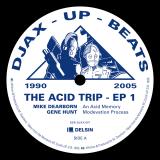
Delsin is pleased to announce an extensive compilation series combing through the catalogue of landmark Dutch techno label Djax-Up-Beats. The series, curated by Rush Hour co-founder Christiaan Macdonald, launches with a look at the label's legacy in the development of acid music through the 90s. In total, this first entry in the Djax-Up-Beats 1990-2005 series comprises 20 tracks, presented as a main triple-vinyl album plus two additional 12" EPs. This first additional EP brings four tracks, by Dutch pioneers Spasms and Random XS, and Chicago heavyweights Mike Dearborn and Gene Hunt. Crucially, every track featured on the series has been carefully mastered by Johanz Westerman, bringing the best out of tracks that often had very little post-production treatment before they were originally pressed to wax. With five more, equally extensive, volumes to come in this series, Djax-Up-Beats 1990-2005 is a thorough exploration of a true totem of techno culture - a renegade label that operated on its own terms and carried surprises and slammers in equal measure.
Saxophonist, producer and composer Brian Allen Simon explores darker hues, transposing waking and altered states under his studio veil Anenon. On the deeply evocative new album 'Dream Temperature', he shifts electronic processing to the foreground, introducing digitized wind instruments and unworldly atmospherics, not heard since his innovating mid-late 2010s output.
A longtime Los Angeles resident, born and raised, Brian Allen Simon has expressively operated under the moniker Anenon, releasing the highly revered 'Petrol' (2016), 'Tongue' (2018) and the viscerally beautiful 'Moons Melt Milk Light' (2023), in a line of unwavering musical dialogues. While the penultimate album was a deliberate, reductive, entirely acoustic detour that was born out of a want to unplug, 'Dream Temperature' sees Brian primed with a newly discovered wind synthesizer as his central compositional tool, alongside acoustic piano and tenor saxophone. The entirety of the album's electronics are triggered by Brian's lungs, generating otherworldly synths modulated by expressive breath control, channelled through the laptop as the core processing chamber for added textural components and field recordings.
A free floating and heavy emotional resonance marks 'Dream Temperature' from beginning to end, invoking the feeling of waking up, still heavy from a night of half-remembered dreams, and continuing one's day in this state. Simon maps out the album's spatial voice early on the statement title track, a deep, yet compact cut, generated from digital saxophone rasps that whistle by in close proximity, along with haze filled textures and sub bass. There is a sonic oscillation of urban grit and pastoral drift throughout as tracks pass by like introspective thoughts, fueling both a tense and ethereal quality that underpins the album. Interluding solo and part-solo piano improvisations 'Last Sun 1' and '2' are positioned adjacent to the buffering digital soundscapes. Their softer, still processed timbres pierce the melancholic exterior, offering a contrasting tenderness that could echo the grace of Ry?ichi Sakamoto, the spiritualist rigor of ECM's Keith Jarrett and a touch akin to Aphex Twin's piano miniatures. 'Nulle Part 1+2' signals the first appearance of an acoustic wind instrument, as tenor saxophone flourishes are juxtaposed against noisy drones, all shouting at the void, with notes resurfacing like lost digital data.
The album was recorded at home during either sunset or nocturnal hours between September of 2024 and October of 2025, a period in which Brian found himself craving more lengthy and intimate studio time as he searched for more pronounced textural qualities amidst his new sonic ambitions. 'When The Light Appears, Boy' shows further evidence of this deeper universe, revealing a grittier edge as the album's essential blueprint is sonically inked. A sprawling expanse of wind synths rhythmically encircle the listener before a dreamy, ghostly ambience blankets 'Toyama'. The sound is evocative of the productions of post dubstep era luminaries such as Burial or the productions of HTRK's Nigel Yang. More isolating and enveloping than the previous all acoustic record, this is music both disorienting and yet warmly inviting all at once. A sonic diarist at heart, personal field recordings were also taken from Sardinia, Japan, Big Sur and LA which intersect at unexpected moments throughout the album's 31-minute play time.
'Dream Temperature' is a vital coalescence of both Simon's electronic and acoustic practices with repositioned electronics akin to earlier works, both haunting and elegant, yet still profoundly personal. Simon continuously resonates as an experimental outlier treading an enthralling, non-linear musical path. This music resolutely glows with an unknowing aura, like an untapped energy source waiting to be discharged.
Artist and multi-instrumentalist Flaer looks to the landscape to explore pastoral melancholy on debut release, Preludes. It is released in a second edition black vinyl, with an alternate cover artwork.
Ensconced in his family home in rural Leicestershire in the early months of 2020, painter and musician Realf Heygate (b. 1994) picked up his childhood cello for the first time in several years and began to play. Setting himself parameters to only record onto 4-track tape with acoustic instruments – cello, piano and acoustic guitar – he assembled a suite of instrumental compositions that form the basis of Preludes, his debut album as Flaer and the inaugural release on Odda Recordings.
Channelling the tension and unease between the pastoral idyll of the English countryside and the darkness which lurks beneath the surface, the mini-album draws inspiration from the analogue aesthetic of 1970s folk horror films, weaving field recordings of birdsong, church bells and the natural environment into chimerical melodies that reflect on Heygate’s childhood experiences of rural England.
“It was really important not to isolate the sound from its environment,” he explains, describing the compositional and recording process as “site-specific”. Developed over a series of intuitive musical enquiries, the mini-album’s uncanny quality emerges from combining raw demo takes with overdubs of almost orchestral grandeur.
Heygate points to the final track as indicative of the work as a whole: “‘Follow’ really is the mantra for the release and embodies the practical approach I was taking to music making: not to force the music but see where it takes you.”
As a painter, Heygate’s practice takes artefacts through sequences of reproduction that embrace the fluctuating materiality of the copy. Since obtaining a degree in Fine Art from Central Saint Martins in 2017, he has exhibited solo at Peter von Kant and Springseason galleries in London, and has participated in group shows at Saatchi Gallery, Cob Gallery and Senesi Contemporanea.
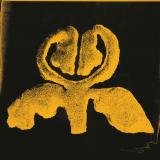
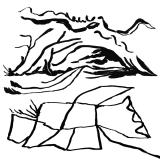
Describing his artistic practice as one of self-erasure, music instead provides Heygate with a more personal and autobiographical outlet. Where the two worlds combine is on Preludes’ striking artwork, which features paintings of 13th century stone carvings from the font of the church in the town where he grew up.
Speaking to a time where people were connected to the land in a more profound way, each symbol is assigned to a track on the album, which Heygate likens to giving them a title.
“To add that one juxtaposition might open a whole new interpretation or language that might be hard to find otherwise,” he explains.“Over time it might reveal itself to you, which is why I'm excited about it being released. To throw them out there and see what comes of it.”
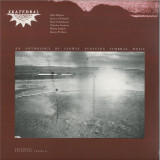
XKatedral Anthology I is the first in a series of archival releases dedicated to presenting music by XKatedral affiliated composers working within the realm of slowly evolving harmonic and timbral music. This double-vinyl set contains an array of pieces dating from 2010 - 2020. Four of the works included here were originally released on cassette tape early on in the label's history, while the two remaining pieces are presented by the label for the first time.
"The works Ir Himinn, Grooenn by Kristoffer Svensson, Disquiet (Heart) by Marta Forsberg and Lamé by Isak Edberg were first released on the compilation XKatedral Volume II in 2016. Svenssons piece from 2014 combines justly tuned gamelan percussion and prepared piano intricately interwoven in a way that obscures the boundaries between the two instrument groups. Forsberg and Edbergs pieces both use a monolithic form to explore the timbral and harmonic spaces provided by the Düben Baroque organ situated in Tyska Kyrkan in the oldest part of Stockholm. While similar in terms of instrumentation the two works differ formally - Edbergs Lamé composed in 2010 uses the registers of the organ to articulate a seamless spectral transformation while Forsbergs Disquiet (Heart) from 2014 deals in blocks of sound with a varying degree of opacity, saturation and intensity.
Glory for two electric guitars by Caterina Barbieri and Kali Malone was composed and recorded in Tempo Reale in Florence, Italy, and was originally released on the cassette compilation XKatedral Volume III in 2016. This music takes the form of an ever-evolving hypnotic pattern shared by the two instruments articulated through an additive and subtractive canon. Dissolving Ceremony, composed in 2012 by Edberg/Erlandsson/Lisinski, was first presented publicly on the self-released record Stratum. The music contained in that release was formed from a collection of gamelan percussion instruments augmented by two sets of live-electronic instruments tuned to the harmonic framework formed by the partials of the metal percussion. Originally positioned in the center of the record running order between two long monolithic process-based pieces, Dissolving Ceremony now stands on its own as a memory of a time and methodology from the not so distant past.
The newest piece in this set is Shipwrecks by Daniel M Karlsson. While this work is a recent one Karlsson should be considered one of the forerunners of the musical expression contained within this record set. Active within new music for two decades his strongly articulated musical ideas and constantly evolving craftsmanship has resulted in an enormous body of work, and has served as an inspiration for many of his fellow composers. This piece is a celebration of transposition and its immense capacity for timbral transformation using a vast array of instruments performed, recorded and electronically treated by the composer to form a liquid uncanny topography where a deeply personal harmonic language constantly shifts, slides and shivers."
XKatedral Anthology Series II (An Anthology Of Slowly Evolving Timbral Music), featuring exclusive music from Kali Malone, Jessica Ekomane, Mats Erlandsson, Theodor Kentros, Wilma Hultén, and Maria W Horn.
"XKatedral Anthology II is the second instalment in a series of archival releases dedicated to presenting music by composers affiliated with XKatedral working within the realm of slowly evolving harmonic and timbral music. This double-vinyl set contains an array of pieces dating from 2018 - 2020. This collection of pieces focuses on the use of synthetic sound and algorithmic composition languages as tools for precise work within the realm of spectral exploration. In addition to this, the electronic instrumentation in many of the pieces is augmented by acoustic instruments.
The first piece on side A is Kali Malone’s Music for Low Quartet. This piece is an adaptation of the composition “Rose Wreath Crown” originally released on The Sacrificial Code in 2019. In this iteration, the music is scored for two double basses played by Vilhelm Bromander and Zach Rowden, and sine tone electronics performed by Malone herself. The recording of this piece was made at EMS in 2019.
Closing side A is Jessica Ekomane’s ‘First Light’. This computer music piece focuses exclusively on digital sound, layering razor sharp synthetic textures into an otherworldly dynamic weave. The music heard here is a reworked version of a piece originally commissioned by Semibreve in 2020.
Side B contains the work ‘Hands Melt In The Sun’ by Mats Erlandsson. This composition is built from electronically processed tuned zithers and synthetically generated tones arranged in a series of chordal inversions over a sustained fundamental tone. This music, written as a love-letter to the localized drone tradition of Stockholm in the years 2008-2012, was composed and recorded in seven days while in residence at Ställbergs Gruva in Bergslagen, in the summer of 2018.
Opening the second half of the collection is Rough Draft v.7 by Theodor Kentros. Kentros’ compositional practice usually combines acoustic and electronic source material and in this piece he molds the sound of the Buchla 200 and a collection of recorded wind instruments into a molten mass of sound. In its original form, this music was presented as a multichannel immersive work and even in the current stereo configuration it retains some of that enveloping sense of depth.
The second piece on side B, Inertia, is by Wilma Hultén, who makes her debut on record here. An exclusively synthetic piece, Inertia utilizes internal digital feedback in a sealed synthetic system to manifest a harmonic field that swells and abates throughout the length of the piece, interspersed by small gestural elements.
Closing Anthology II is Maria W Horn's work ‘Dies Irae’ for female vocal quartet, pitched glass and synthesis. ‘Dies Irae’ uses a modified form of traditional tonal harmonic language to invoke an uncanny and restless middle ground between the classical western polyphonic vocal tradition and contemporary electronic music. The version heard here is a live recording from Eric Ericssonhallen in Stockholm on May 30th 2020. Performing the piece here are the vocalists Katarina Henryson, Lisa Holmgren, Vilma Ogenblad and Paula Wegmann, as well as Maria herself on glass and electronics."
Scissor and Thread presents Tailored Cuts, Vol. 06, a four-track selection that accompanies the digital compilation album. All four tracks appear on vinyl for the first time. Opening the A-side is a brand new and exclusive dub mix of Soela & Module One’s Drowning, reworked by Matthias Reiling (one half of Session Victim). Originally taken from Soela’s Dark Portrait album, the track is reshaped here into a spacious and hypnotic dub that emphasizes texture, atmosphere and patient groove. "I have been a fan of both Soela's and Module One's music for quite a while now," says Reiling, "so getting the chance to remix their collaboration from Soela's beautiful Dark Portrait album is a huge honor. I tried to keep the elegant and somewhat tender synth work close to it's original spirit and combine it with simple drumkit samples, acoustic guitar, electric bass and a dash of space echo. The process put me in a slightly eerie, yet romantic mood, which, so I hope, translates a little when listening to the result."
Also on the A-side, Black Light Smoke’s Love Triangle appears in ZG’s remix, a lush and understated reimagining that balances warmth with rhythmic precision. On the B-side, Hidden Spheres remix of Francis Harris’ Earth Moves feat. Eliana Glass appears alongside DaRand Land’s Passion Motion from his album Wander Being, "a more upbeat ride, with melodic overtones that drive the “passion”. Personally, it’s my interpretation of some of the sounds from mid-90’s Chicago." says DaRand Land.
Superonda’s debut release, Aurora Spectralis, introduces the latest project from Mahatmos, a duo emerging from long-established practices in electronic music, sound design and composition for moving images. Released on 12” vinyl and digitally, the EP unfolds across four tracks of electronic ambient music shaped by atmosphere, con1nuity and restrained propulsion. Ambient textures open a broad emotional and spa1al field, while slow, insistent rhythms provide steady forward motion.
Superonda has created a space for Mahatmos to sharpen their focus on sound as material. Modular synthesis, analogue instruments and live processes techniques are balanced with precision and restraint, resulting in music that moves between progressive and hypnotic forms, informed as much by underground club culture as by cinematic composition.
Mahatmos is a Rome-based duo with complementary and deep-rooted practices. Gianluca Meloni brings a long-standing presence in techno and experimental music scene, with international releases and performances (as Laertes and as part of Modern Heads). Maurizio Loffredo contributes an extensive background in composition, production and sound engineering across popular music and film, with a refined sensitivity to timbre, structure and sonic narrative.
Superonda is a Rome-based label founded by artists engaged in deep sonic research and advanced technical exploration. Operating as an open platform, it connects collaborators working across recording, synthesis and composition, approaching music as a process-driven practice rather than a fixed genre. Each release stands as a distinct exploration, linked by shared sensibilities rather than formal constraints.
The physical edition of Aurora Spectralis is conceived as an extension of the work itself. Alongside a standard black vinyl pressing, a limited run of color and marbled copies has been produced, each one unique. Variability and tactility are embraced as part of the object’s identity, reinforcing the record as something to be experienced gradually, over time.
- A1: Moonlight Feat. Elena Moroder
- A2: Side To Side
- A3: Darkness
- B1: Here For The Summer
- B2: Miraflores
- B3: It's Time For A Change
- C1: Fantasy Feat. Kučka
- C2: Believe In Yourself
- C3: Mesmerized Feat. Jessica Care Moore
- D1: Tryna Find A Way Feat. Leanne Louise
- D2: Keepin' Me High Feat. Tropics
- D3: Wide Awake Feat. Tom Did It
- E1: Linger (Interlude)
- E2: Distant Within
- E3: If You Doubt Me
- F1: Destination (Interlude)
- F2: What Makes You Feel
- F3: Set Sail On Another Ship
- F4: It Feels Natural
After years of shaping dancefloors worldwide and carefully curating the sonic and visual identity of Up The Stuss, Dutch favourite Chris Stussy presents his most expansive and personal statement to date with his debut album, ‘Lost, Found & Forgotten...’. Landing on 3rd April, the album unfolds across three interconnected chapters - ‘Lost’, ‘Found’, and ‘Forgotten’ - each revealing a different side of his creative world across 19 tracks while remaining tethered to a singular wider vision.
At its core, ‘Lost, Found & Forgotten...’ is an exploration of creative freedom. Visually and conceptually guided by the image of a kite, the album reflects movement, perspective, and balance. Floating freely yet always anchored, the kite mirrors Chris’s approach to music: unrestricted in emotion and imagination, but grounded in groove, craftsmanship, and intention. It’s a symbol that naturally extends the Up The Stuss identity; pointing skyward, embracing openness, and encouraging curiosity.
“This album has been a long time in the making, and I’m excited to finally share it with you. The process behind it - exchanging ideas with other artists and creating music outside of my comfort zone - has been an incredible experience. It gave me a true sense of freedom, allowing me to not think about boundaries or expectations. I’ve never been more proud of a project than this one. It’s deeply personal, and it represents my sound as a whole. I hope you listen with an open mind and find something in it that resonates with you.” - Chris Stussy.
The ‘Lost’ chapter opens the album by giving new life to music once left behind. These are tracks written across different moments in Chris’s journey, ideas that never quite found a home until now. Rather than relics of the past, they emerge re-discovered, refined, and fully realised. ‘
Found’ represents inspiration in motion. Sparked by collaboration, digging, and shared creative exchange, this chapter captures the moment when ideas connect, and colour floods the sky.
The album closes with ‘Forgotten’ - a nod to the deeper cuts, the B-sides, and the moments that reward patience. This chapter is for the heads and diggers; tracks that may not demand immediate attention but reveal their value over time.
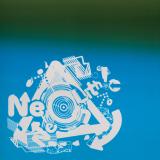
With Neolithic Neon, Appleblim creates a kaleidoscopic reflection of the spirituality inherent within electronic music — the ineffable frequencies and communal traditions that spring from exploratory synthesis, deep-rooted rhythms and myriad other sonic codes.
Throughout his third album for Sneaker Social Club, Laurie Osborne continues to express a fascination with the ancient resonance held within modern rave as he guides his own studio practice towards more purposefully analogue processes. It's reflective of his desire to let go and trust his instincts within the more chaotic realm of voltages and signals, not to mention turning to a wider spread of instrumentation and opening up to noisier avenues. This direction defines the character of Neolithic Neon, which bristles with the living imperfections of the gear in the context of incisive and wide-ranging cuts touching on jungle, dubstep, techno, electro, acid and experimental electronic music of all stripes.
Across Osborne's solo output from 2018's Life In A Laser to 2021 tape Infinite Hieroglyphics, a strong melodic sensibility spills out of the richly layered production. It's equally audible in his Wrecked Lightship collaboration with Adam Winchester, and it charges Neolithic Neon with its star-gazing, contemplative streak. From the knotty plucks and licks weaving through opener 'Moorland' to the vaporous synths darting across the top of hardcore conductor 'Thunderstorm', a dreamlike evocation takes the sound off terra firma, musing on cosmic events and our connection to the enormity of the universe.
Eternally in thrall to the maverick vocabulary of pioneering beat scientists and fuelled by the inspiration of great thinkers dwelling on our purpose and place, Neolithic Neon unfurls big ideas without heavy-handed messaging. Instead, it trusts in the universal and time-honoured language of experimentation and rhythm to present its ideas, true to Appleblim's legacy to date while opening a new chapter in his ongoing sonic quest.
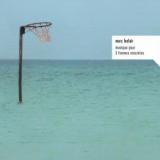
In Sheep’s Clothing announces the long-awaited vinyl pressing of Marc Leclair’s beloved 2005 album Musique pour 3 femmes enceintes. The album will also be available on streaming for the first time via Community Music Group.
For years after Marc Leclair released Musique pour 3 femmes enceintes, he heard from listeners who had lived with the record in an unusually intimate way. Many described how the music became part of the emotional landscape of the months leading to birth. “I never expected that,” Leclair says. “Many women told me they listened to the record throughout their pregnancies. They said it made a real difference, that it helped them. It became more than just a record.”
First issued on CD in the early 2000s, Musique pour 3 femmes enceintes (Music for Three Pregnant Women) now returns in a new edition from In Sheep’s Clothing Hi-Fi, appearing on vinyl for the first time as a double LP. The record is being pressed in Detroit at Archer Record Pressing, the historic plant behind deep-groove classics by Juan Atkins, Kevin Saunderson, Underground Resistance, UR’s Jeff Mills, and J Dilla.
Listeners who know the Montreal-based Leclair through his better-known work as Akufen might be surprised by the tone here. During the same years he was shaping the intricate micro-sampling tracks that made Akufen a cult figure on labels including Perlon, Force Inc. and Trapez, Leclair was quietly developing this far more personal project. The meticulous craftsmanship remained the same, though the focus shifted from the hyper-detailed cut-up rhythms of his dance records toward something slower and more atmospheric. “I always compare my work to a jeweler,” Leclair says. “It’s really very precise. I’m a bit of a detail freak. I can spend hours or days on just one phrase in one song. Everything has to be perfectly put together.”
The project began almost accidentally. A few members of Leclair’s circle became pregnant nearly simultaneously, including one who had long believed she couldn’t conceive. The first track he recorded for the project wasn’t meant to advance a larger concept, he says. “It was meant to highlight the fact that three of my closest friends became pregnant at exactly the same time.”
Leclair was already a father with a three-year-old daughter, so the emotional terrain of early parenthood was familiar. Gradually the idea expanded. “I began thinking, why not make a whole album that celebrates this and also follows the entire pregnancy, the nine months,” he says. The music developed piece by piece, including a track originally commissioned by the Berlin experimental duo Rechenzentrum that would later become the album’s opening movement.
Nearly seven years passed between the first composition and the finished album, and the music mirrors the strange arithmetic of pregnancy itself. What begins as a single idea multiplies outward, sounds layering and branching until the album feels less like a sequence of compositions than a living process unfolding in time. “I work very slowly,” Leclair says. “Everything has to be something I’m completely behind. I never want to rush anything. I want things to come naturally.” Across its 72 minutes, the album blossoms with the patience of a long meditation on time, growth and emergence.
When Musique pour 3 femmes enceintes first appeared via Mutek, it circulated quietly but steadily. Critics who discovered it later recognized its unusual scope. In a 2006 Pitchfork review, Mark Richardson gave the record an 8.1, calling “150e Jour” “an unfailingly gorgeous and tightly sequenced quilt of guitar and piano samples reminiscent of Tangerine Dream,” and describing “85e Jour” as infused with “viscous pop ambient drift, the gauzy synth pads ebbing and flowing with rhythm.” Boomkat described the album as “a majestic opus from a producer that's always promised so much — here delving into a panoramic construction of almost visibly radiant music that works so beautifully through each and every second of its 72 minute lifespan.”
The new In Sheep’s Clothing Hi-Fi edition finally presents the record in the format Leclair long imagined. “I always thought that record deserved a vinyl edition,” he says. Spread across two LPs, the music now has room to unfold at its natural pace. More than twenty years after it first appeared, Musique pour 3 femmes enceintes remains what it was from the start: a carefully shaped meditation on transformation and the quiet miracle of life beginning.
- 1: Nuvole I
- 2: Nuvole Ii
- 3: Nuvole Iii
- 4: Nuvole Iv
- 5: Nuvole Ix
- 6: Nuvole V
- 7: Nuvole Vi
- 8: Nuvole Vii
- 9: Nuvole Viii
- 10: Nuvole X
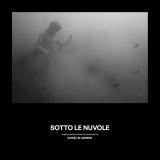
In Gianfranco Rosi’s portrait of Naples, Sotto le Nuvole, the ground shakes periodically. Between Mount Vesuvius and the Tyrrhenian Sea, the fumaroles of the Phlegraean Fields hiss volcanic gas and steam. Below the sleeping volcano, modern day Naples emerges in black and white and fills with voices, with lives. From the traces of history and the concerns of the present, Rosi documents a city immersed in its continuous past, with Daniel Blumberg’s minimal soundscape hovering in a sonic space between liquid and air.
Tasked with creating a soundscape that would suspend space within Rosi’s film, Blumberg called upon the extended technique of saxophonists Seymour Wright and John Butcher to create a gossamer fabric of traces and sounds abstracted from their instruments. Having transitioned from theoretical physics to the saxophone, John Butcher has always deeply considered space in the context of his playing. His concerns are with flow, density and how the saxophone is situated in the living world. Zeroing in on the core sonic properties of the mechanical and acoustic components of the saxophone, Seymour Wright has integrated its every breath, reed vibration, keypad clatter and hissed microtone of his alto into his own, unique improvisational language. In his work with these two seminal players, Blumberg makes his most concentrated soundtrack to date - reinforcing the film's sense of overlapping time and space, and pushing at the limits of experimentation.
Initially recorded in Daniel’s flat in London, Butcher and Wright centre themselves around long, consistent tones, so soft that it seems breath is being gently pulled from the saxophone's bell by an invisible hand. Blumberg himself adds haunting bass harmonica, and recordings of Wright’s launeddas - a traditional and ancient triple pipe polyphonic reed instrument from Sardinia, Italy. Blumberg then travelled to the volcanic region of Baia, next to Pompeii. Once a flourishing classical Roman city loved by Nero, Baia slowly sank under hydrothermal pressure, leaving the city in a kind of geological purgatory. Using specialised geophones and hydrophones, Blumberg took those initial recordings and amplified them underwater, sending them calling out across the ruins of Baia’s mosaics, Nymphaeum statues and villas.
“It was important to me that the music was whispered in the same landscape that Gianfranco has worked for the past three years, so that you can hear the volcanic air gulping, the lapping of the waves, the steam and bubbles popping against John and Seymour’s saxophone breaths – an echo from a suspended time.”
What emerges is deeply melancholic, tender, subtle and right at the edges of audio technology. Submerged in an aquarian mausoleum, the mysterious vibrations of the saxophone and its bell become an echo of an echo, wading from the future into the past. ‘Sotto le Nuvole’ is less a soundtrack than a process of aeration - a sonic puncture in the material of the film which allows its central message to breathe, and a remarkable experiment at the limits of the saxophone’s possibility.
- 1: Pass Between Houses
- 2: Theatre For Change
- 3: Real Home
- 4: Treat Me A Stranger
- 5: Utopia Of Bog
- 6: Void Attentive
- 7: My Love, Let's Take The Stage Tonight
- 8: The Kiss
- 9: He Had Always Led
Cathartic avant-rock, literate DIY folk & experimental composition exploring displacement, love, climate change, belonging & the places we call home - RIYL Jim O’Rourke, Richard Youngs, This Heat, Richard Dawson, Flying Nun. ‘Real Home’ is the new album by the Manchester-born, London-based artist Kiran Leonard. His sixth album proper (not including innumerable tour-only CD-Rs and short-run cassettes), since his precocious debut in 2013, ‘Real Home’ finds Leonard invigorated by inspiration and experience, making passionate, literate, and mercurial music that explores displacement, love, memory, climate change, connections to home and more. Encompassing songs recorded after moving to South London, ‘Real Home’ reflects on ideas of belonging and domesticity through folkloric, stream-of-consciousness songwriting. Across nine tracks, Leonard traces lived impressions of the household and the city, expressing sentiments of dislocation, alienation and stasis, but contentment too. Infusing the avant-rock effervescence, terraced dynamics and visionary lyricism of his music with what he defines as a greater sense of openness, Leonard is as versatile, fervent and imaginative as ever on ‘Real Home’, yet his music is somehow more intimate, affecting, and acutely expressive. Shaped by dual considerations of simplicity and formalism, ‘Real Home’ is by turns beautiful, allusive, and ruminative, an album on which Leonard considers what his songs have resembled in the past and what they mean now. In recent years, Leonard has crafted eloquent chamber music inspired by the likes of James Joyce and Clarice Lispector (‘Derevaun Seraun’), responded to contemporary politics and communication breakdown in the digital age (‘Western Culture’), and compiled solo works and ensemble recordings for a longform ode to Jonas Mekas and to one of Leonard’s enduring themes; home (‘Trespass On Foot’). On ‘Real Home’, Leonard reiterates this abiding thematic focus yet ascends to new, different heights, in music of cathartic delicacy and dissonance where all the myriad dimensions of his work to date seem to crystallize. There are sinuous songs about struggle and defying the pace of city life through drift and diversion (‘Pass Between Houses’), stirring songs of intense feeling and crescendo, described as a form of speculative detective fiction (‘Theatre for Change’). There are touching solo piano ballads (the title track), symbolic contentions with carbon capture and climate change (‘Utopia of Bog’), modes of experimental minimalism (‘Void Attentive’), and other profuse feats of compositional range, embroidered with wild tendrils of narrative and lyrical depth. A record to pore over, and get lost in. Exemplifying the vast aesthetic scope of Leonard’s music, lead single ‘My Love, Let’s Take The Stage Tonight’ is inspired by country lodestar Hank Williams, Russian poetry and a late period love poem by William Carlos Williams. Yet for Leonard, the song signals a sense of accessible materiality, and is the product of a more linear approach to writing songs: “My imitation of the great Hank Williams, in spirit if not in substance…This is one of the best efforts on Real Home at a song-as-object. Looking at it now I realise I was trying to write a song that made itself known as a song to the listener, and I wonder whether that’s crucial if you want a song to transcend its context. And that this is either accomplished through a total openness – by being inviting, by laying the tricks of the song out plain to see, as Williams and his many ghostwriters did so well – or by adopting a knowing aloofness, positioning oneself against the listener but letting it be known that that’s what it’s doing. In this song I try both, but mostly the former: as in, I wanted to write a song where every line follows on from the next.” Imbuing the endlessly elaborate and inventive qualities of his music with a newfound streak of candid, clear-cut melodicism, Leonard has reached a special place in his artistry, on a record that feels familial, and expresses closeness. Assembled with affiliates including Lauren Auder, Otto Willberg, Jasper Llewellyn (caroline), Tom Hardwick-Allan (Shovel Dance Collective), Magda McLean (caroline, The Umlauts), Alex Mckenzie (caroline, Shovel Dance Collective), Isabelle Thorn (Dear Laika) & more, the recording process had a significant influence on the subject matter of ‘Real Home’, in sessions defined by close-knit camaraderie and artistic eccentricity: “The theme of the home obviously recurs throughout the record; the album was mostly recorded in domestic spaces with friends, and the name of the album is Real Home. I like the qualifier ‘real’, like you’re getting past the cloak of the word and towards the thing-itself…also nearly all the percussion in this record was recorded on items from my dad’s shed (jam jars, sandpaper, blocks of wood, etc). Real home record!” ‘Real Home’, like anything by Kiran Leonard, is a record of dazzling multiplicity. Yet it’s a companionable prospect with a central premise; a collection of songs where listeners old and new can find a home. An album led by a scene; of Leonard standing at the threshold, ready to welcome you inside. “Exceptional songs that linger” - The Guardian // “An autodidact of amazing talent & energy” – Pitchfork // “A ridiculous amount of talent…confrontational, celebratory, provocative or perverse – he manages all of these emotions & more” - The Quietus /
Reframed is Vitess’ third album, released on his own label Retro Futura, and marks a new turning point in his artistic journey. Unlike his previous albums — the first fully exploring the Retro aesthetic, the second embodying the Futura — Reframed brings these two worlds together within a single, coherent yet eclectic body of work. The album opens with sounds inspired by 90s progressive music and gradually moves toward more futuristic textures. This album format gives Vitess complete freedom: the freedom to build a full, living musical experience, introducing for the first time a strong instrumental dimension — most notably through the use of live drums — and allowing each track to interact with others, transform, or mirror one another, while maintaining a clear narrative thread that guides the listener throughout.
The title Reframed directly reflects this approach. The album is built around tracks conceived as Recto / Verso, offering a form of double listening experience. On the one hand, electronic, club-oriented and progressive versions, designed for energy and dancefloor movement; on the other hand, more introspective, pop and instrumental counterparts, created for listening and storytelling. Starting from the same musical foundation — a vocal sample, a percussion element, or a melody — Vitess develops two distinct interpretations of the same track, generating contrasting yet deeply connected sonic worlds. This method, central to his creative process, highlights his ability to explore a single detail in depth and let a micro-element lead him toward radically different sonic dimensions, while ensuring coherence and a strong identity across the album.
For Reframed, Vitess also collaborates for the first time with other artists: Stupid Flash, ATOEM, and Lucile, selected for their ability to enrich his universe and push it toward new aesthetics. These collaborations recreate a sense of collective energy reminiscent of his early days playing in bands, while remaining true to the essence of the Vitess project: a primarily solitary approach rooted in exploration, experimentation, and embracing the unexpected paths each idea can take.
In September 2024, Nacho Piek, Rapha Mundi, Odd Signals and Ibai Machín gathered for four days in a beautiful house in Etxeberri, a small village in Navarre with barely 50 inhabitants. Isolated from everyday rhythm and surrounded by nature, the goal was clear: to create a production camp dedicated exclusively to club music.
The result is Etxeberri EP, the debut of Buenobueno Soundsystem — a work that captures that coexistence in the form of direct and timeless music, designed for the dancefloor. An organic crossing of influences ranging from House, Techno and late-90s Minimal Trance to contemporary UK Bass.
Etxeberri EP will be released on March 13 exclusively on vinyl, in a limited edition of 200 copies. Each record includes an inlay with photographs of the creative process and private access to an audiovisual piece shot by Jesús Iriarte documenting the experience and the spirit behind the project
First released back in 1998, Random Factor's Too Fast Into The Future returns to wax and serves as a reminder of just how far UK mainstay Carl Finlow was already thinking ahead. The album was also a standout moment in the Leeds-based 20/20 Vision label catalogue that threads house, techno and electro into something more unsettled and brilliant. 'Lead Me Blind' and the title track fold processed vocals into stark machine rhythms, while 'First Principles' and 'When Daylight Fades' remain DJ touchstones. There is tension in every bar and introspection rubbing against dancefloor drive. Decades on, it still bangs.
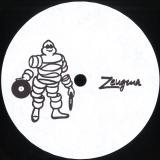
ZGMDP001 marks the first dubplate release on Zeugma Records.
Po-Sobachi. Set in place.
Four tracks engineered for structural pressure and dancefloor endurance. Reduced motion, reinforced grooves, concrete-weight frequencies designed to realign bodies under load.
Featuring Rikha, Pabloisnotkind, Eliptica (Rikha & Antonio Valente live project) and Lucretio (The Analogue Cops - Timeless) on remixing duties showing off his skills.
No gimmicks, just strenght.
Straight to the point, pure power.
Cut at Burbidub
Mastered by Riccardo Chiarucci (Rikha) in Colle di Val d'Elsa
Additional processing on B1, B2 by Andrea Pedra (Kian T)
Artwork by Luigi De Santis
The next chapter in Axis Expressionist Series. A collection of vinyl and limited digital releases, curated by Millsart, an alias of Jeff Mills, of his most eclectic and transcendent compositions that derive from his Every Dog Has Its Day project as well as new unreleased works.
Vernacular creations that fall off from the "other side" of the Electronic Music tree, this project is designed for the experienced Techno music listeners, and its goal is to reflect upon the pure artistry of the craft of storytelling. A realization between music and life. Whereas "dancing" is the goal of Dance Music, the goal of this music is about "reflecting on the complexity and simplification of life". Soundtracks for people in their evolutionary process.
'We Fell In Turn' is the solo debut from Brooklyn-based trombonist, composer, and quartet leader Kalia Vandever. Vandever, who plays with Harry Styles and Japanese Breakfast, “sculpts her trombone’s golden tones into dazzling compositions” (Pitchfork), writing music that tends to “dip you into a feeling or a pattern or a breathing speed, and keep you there” (The New York Times). In 2022, Vandever released Regrowth, an album that “features the ecstatic, brilliant melodies that have become Vandever’s signature sound” (Bandcamp). This spring, Vandever brings contemplative reflection to We Fell in Turn, a brave and understated work from an ascending voice in American jazz.
Recorded over three days in upstate New York, 'We Fell In Turn' is improvisational — a stark palate of solo trombone, voice, effects, and little more. “My solo process has always been heavily rooted in improvisation,” says Vandever. “I wanted the process to feel similar to the way I perform. Lee Meadvin, who engineered and produced the album, had a heavy hand in the creative process as well. He would dictate prompts before I started improvising and those pieces ended up shaping a lot of the imagery that comes up throughout the record.”
Connecting the dots between Jeff Parker’s 'Forfolks', and early releases from Grouper, 'We Fell In Turn' is a study of space and patience, embracing vulnerability in its sparse adornment. At times, the album is reminiscent of Patrick Shiroishi’s 'Hidemi', both in its familial inspiration and solo instrument study, while sharing the ineffable feel of William Basinski’s 'The Disintegration Loops' — the traces of her trombone folding in on themselves in an organic loop. Emotionally generous throughout, Vandever acts as a torchbearer for jazz’s historical yearning for connection.
On 'We Fell in Turn' Vandever draws inspiration from childhood memories — events that shaped her approach to love, community, and partnership, and her maternal homeland of Hawaii. “We were exploring childhood memories, earliest experiences with disappointment and pain, and my Hawaiian roots,” says Vandever. “We Fell In Turn came after I titled the track "We Wept In Turn". Both come from the intangible feeling of waking up from vivid dreams, particularly the experience of falling right before waking up or waking up in tears.”
Through this exploration into her heritage, Vandever also found guidance. “In Hawaiian mythology, ‘aumākua are known as ancestral spiritual guides that manifest in different forms, whether physical or intangible,” says Vandever. “My ‘aumākua visits me in my dreams, usually with a reassuring hug or a reminder of my past. Memories and early experiences seem to escape me, but find their way back in dreams.” And now they’ve found their way into 'We Fell in Turn', Kalia Vandever’s stunning solo debut.
Macclesfield 3-piece Cassia make their extremely welcome return with the announcement of their most ambitious release yet in new studio album everyone, outside - out April 11th.
The album marks a bold new chapter, and recently served up a tropical-tinged first offering in ‘heat’ - with today serving a superb Round Two with the stomping, insatiable, hook-laden new single ‘friends’.
everyone, outside takes Cassia’s sound to new heights. Written fresh off the back of two years of relentless touring, the band channelled every ounce of their renowned live energy into the album, returning to a studio they built themselves in Macclesfield, after creating their previous album in Berlin. The journey provided an added twist, recording the majority of tracks live on TikTok, giving fans a unique, inclusive experience to be part of the process.
The album’s title is a metaphor for embracing your truest self and reflection of a band who are at their happiest outside. It’s a message that speaks to the idea of reconnecting with nature and Britain’s finest summers. As frontman Rob explains, “That title, ‘everyone, outside’ started as a song about how weird it is that we stay inside all the time when being out in nature always makes us feel better. Over time, it came to mean more than that - like a metaphor for being your truest, most natural self, unburdened, like when no one’s watching.”
Drawing influences from a host of genres and cultures, everyone, outside reveals Cassia’s venn diagram of global sounds and intimate storytelling. A trip to Mexico during the writing process injected the record with a new energy, while their time spent in their new space back home gave the band a freedom to try new instruments, new sounds, acquire new tools to hone their production skills - and to simply have fun and explore. “The time we spent in Berlin taught us so much, but coming back home to Macclesfield allowed us to really focus on making something that felt like it came from us. No distractions, just pure creativity,” says drummer Jacob Leff.
Cassia’s rise has been impressive. From their early days busking the streets of Cornwall to playing major festivals, touring the world and receiving critical acclaim from BBC Radio 1, Radio X, The Independent, Rolling Stone UK, Clash & many more, the band has carved out a unique niche. Their sound, influenced by the African music Rob’s father introduced him to, combined with the indie heritage of nearby Manchester, combines the positivity of bands like Foals and Vampire Weekend, with the jazz-tinged afrobeats of Fela Kuti and Ebo Taylor.
After signing to Distiller Records in 2018, the band gave up their full-time jobs and ventured to Bath to record their debut album, Replica. Tracks such as ‘Right There’, ‘Drifting’ & ‘100 Times Over’ have amassed millions of streams, seeing the band sell out multiple headline Tours both in the UK and Europe. Playing to a homecoming capacity crowd at Manchester’s O2 Ritz, as well as sold out headline shows at London’s KOKO & The Garage, the band have accrued a huge, loyal following and their live shows earned them a nomination for Best Live Act at the AIM Awards alongside Idles and DMA’s, as well as making them the winners of Reeperbahn’s Anchor Award in 2022.
Cassia will tour the UK in May 2025, playing songs from the new album and some of their biggest tracks - headlining Leeds, Bristol, a newly added night in Southampton, a special Manchester homecoming, Glasgow, Birmingham, & a huge show at London’s HERE @ Outernet - dates below & Tickets Here. The band will also take things Stateside this year for their first ever run of headline shows in the US & Mexico.
Music From Memory presents 'Spacious Heart', the debut solo album from Los Angeles-based musician Anthony Calonico. Known for his work as part of the trio Total Blue, Calonico steps forward here with a collection of songs and instrumentals that invite the listener into his lush, expansive yet intimate world.
Written and recorded gradually between 2020 and 2024, 'Spacious Heart' emerged through a slow and open process, allowing the music to develop without rigid expectations. The album’s sonic landscape sits in a somewhat similar zone to Total Blue, with warm keys, synthesizers and rich production creating spacious environments where melodies and textures unfold naturally. Drawing together influences that move fluidly between spiritual jazz, synthesizer-driven explorations and ambient textures, the record balances harmonic richness with a gentle sense of openness. Where it diverges from Total Blue is through the presence of Calonico’s voice, the emotional anchor of the record. Smooth, luminous and quietly expressive, his singing carries a sense of earnestness and vulnerability while remaining delicately restrained.
‘Spacious Heart’ unfolds as a gentle conversation between song and atmosphere, where vocal pieces drift in and out of focus, intimate and reflective. The surrounding instrumentals open up space for these emotions to breathe, settle and expand, creating a quiet, reflective world where feeling, texture and restraint move softly together.
Sleeve art and design by Michael Willis.
Following on from his debut album, Miles Spilsbury returns to New Dawn with Spirit Level. A new project in collaboration with close friend Gorse Panshawe (formerly known as Slugabed - who also produced Miles Spilsbury's first album Light Manoeuvres).
Recorded over one weekend in a weaving shed in Frome, in the English countryside. Surrounded by reels of yarn, they explored saxophones, flutes, dusty old keyboards & drum machines. The resulting record conjures the murk and moss of Forestland and grounds with grooves from the Bongo setting on a Casio keyboard. Jake Long added mallet drums from his London studio to round off the album.
Eco Edizioni debuts in 2025 as an Italian publishing and recording project dedicated to mapping radical sound aesthetics. The label explores the territories of unconventional electronic music, giving space to forgotten productions that outline complex soundscapes through the experience of expert synthesis producers. The first vinyl release embodies this philosophy through a dialogue between different generations of the European industrial and electronic scene. The dark atmospheres of Okиho meet the analytical and methodic techno of Andrew Lagowski, taken from his 1995 album Prismatic.
The album Malnovnova is the culminating synthesis of this synergy, presenting itself as a manifesto of avant-garde sound engineering. The work pushes the Okиho duo’s research towards a totalising and hyper-technical electronic abstraction, where granular signal processing is mitigated by Lagowski’s atmospheric industrial layers.
DISPLACES represents Fabris' most personal musical journey to date, inspired by the concept of hyperobjects and cartographic practices. The album sculpts a high-dimensional phased time-space composed of concrete materials and digital archetypes in a state of constant displacement. It delves into the symbolic and philosophical realms of mapping as one of the greatest sense-making mechanisms for life, in dialogue with object-oriented environments, superimposition and non-locality applied to cosmic, temporal, and emotional memory.
The sonic ecosystem expands on the image of navigating a path through a set of places, from the microcosm of quanta to the macro force of dark matter, from underwater depths to overland terrains, encapsulating the cyclical flow between birth and death, both in ecological and anthropological sense. The intersection of these shifting states is explored through the extensive processing of the langspil, Iceland's only traditional instrument, intertwined with manipulated field recordings of biophonies and geophonies captured across Icelandic and Venetian territories. These recordings form the backdrop for a meditative process that relocate familiar objects into unfamiliar realms, reflecting on the transformative power of self-reflection while encapsulating the fragmentation and entanglement found in nature and the human state. The record plunges the listener into a disconcerting and physical soundscape, as a “ghostly spectrality that comes in and out of phase with normalized human spacetime,” evoking sensations of suffocation and release as each layer continuously unfolds the palimpsest of the enclosed labyrinth.
“Extraction of the I” embodies a subatomic reaction—erupting as a molecular force that rises, only to re-submerge with a solitary exhale underwater. In this mutated dark space, beluga whales breathe into "Xanadu Phasing," creating a pulsating tension that releases only to unveil a frozen landscape.
In “Barricading the Ice Sheets” the glacial material morphs into a liquid tunnel of digital artifacts, building a wall of noise that shatters into scattered fragments of ice, resembling bird calls from another world.
A moment of stasis is offered with the appearance of an asymmetrical loop in Monolith I, evoking a primitive rite before an unknown force emerges.
The physical intensity of subsonic material in "A Quake in Being" interrupts the hieratic tone, detuning into polluted sonic matter sourced from relics of the First World War in the Venetian Prealps. The geography of this place reconciles with the original homeland in "The Map is the Territory," blending negative space with anthropogenic elements and exploited sounds of the langspil.
The burning density of "Wolf-Rayet" projects into the void, echoing the residual sounds of a local church as relics of fossilized religions. Wolf tones are the remains in Monolith II, introducing the final track, "Topography of Extinction," where evolving psilocin textures invite the listener to uncover deeper layers of meaning and dislocation.
- Sea Ceremony (With Karen Vogt)
- Coral And Bones (With Laryssa Kim)
- Heartsea (With Vargkvint)
- Naiade (With Mt Fog)
- Moon And Mirrors (With Elska)
- Daughter Of The Abyss (With Singer Mali)
- Serpentine (With Nightbird)
- Their Voices Rise Above The Waves (With Yellow Belly)
- For All The Sea-Girls (With Nadine Khouri)
- Ondine (With Astrid Williamson)
- Coda (With Camilla Battaglia)
Oceanine, Jolanda Moletta’s third album and her first for Beacon Sound, is a powerful and ethereal statement of artistic community. Expanding on her previous work, each track represents a collaboration with a different female vocalist, with the foundational elements being generated entirely by her own voice. By turns haunting, enchanting, and inspiring, you won’t want to come up for air once you’ve been pulled under. Representing a
musical practice that is distinctly feminist, this is an album with a longer view in mind, to an age when the altars were to goddesses and women were centered as powerful beings representing the earth’s cycles of regeneration and renewal. Oceanine then, in all its beauty, can be viewed as an album of survival. It is deeply transportive, accessing something that lies within all of us. As the late, great Lithuanian folklorist and archaeologist Marija Gimbutas noted, “We must refocus our collective memory. The necessity for this has never been greater as we discover that the path of 'progress' is extinguishing the very conditions for life on earth.”
Jolanda Moletta is a multimedia artist and one-woman electronic choir. She creates wordless compositions through extended vocal techniques, integrating wearable-controlled live processing, alongside symbolic visuals. Moletta considers her performances to be a collective ritual and creates her Sonic & Visual Spells following the cycles of nature and the moon. Jolanda's 2022 critically acclaimed album Nine Spells was released on the Ambientologist label, followed by Night Caves on Whitelabrecs in 2025. Moletta’s artistic practice is a radical and spiritual journey through sound art, ritual, and the symbolic archaeology of the feminine.
Oceanine is inspired by sirens, water nymphs, and the timeless call of the sea. At its core lies Jolanda’s deep, lifelong connection to the Mediterranean Sea and to the ancient and modern myths and folklore that have emerged from its waters. Growing up by the Mar Ligure, Jolanda was surrounded by stories carried by salt, wind, and waves: legends of sirens, echoes of ancient voices, and the sea as both origin and oracle. This intimate relationship with the Mediterranean is not merely a backdrop, but a living source that shapes Oceanine’s emotional, symbolic, and sonic world.
Each track features a different female vocalist, creating a rich tapestry of voices, styles, and perspectives. This artistic choice not only broadens the album’s sonic palette, but also deepens its narrative core: celebrating the power, beauty, and mystique of feminine energy through myth, history, and sound.
The entire album is built exclusively from the human voice, processed and layered, yet always remaining voice, and nothing else. For each piece, Jolanda invited every vocalist involved to contribute a raw stem: a short, unedited melodic fragment of just a few seconds, inspired by the album’s themes. These intimate vocal seeds became the foundation of each track: the guest artists’ voices appear as brief, melodic stems, while the entire surrounding “orchestral” fabric is created solely from Jolanda’s own layered and processed voice. In this way, Jolanda’s voice becomes the Ocean itself, embracing, absorbing, and carrying the sirens’ calls within a vast, immersive soundscape. Every song is a unique expression of the feminine experience, revealing its depth, complexity, and emotional range, echoing the call of the sea and the many faces of the siren archetype.
The figure of the siren has transformed across centuries. In myths of Ancient Greece and Rome, sirens were hybrid beings, part woman, part bird, whose irresistible songs lured sailors to their doom. During the Middle Ages, the image shifted toward the half-woman, half-fish figure, often associated with temptation and danger. Historically, the voice of women has often been feared. Sirens were considered harbingers of misfortune not simply because they seduced or destroyed, but because they were powerful liminal beings.
In Ancient Greek, sirens functioned as psychopomps: figures who existed between worlds and guided souls, especially between life and death. Their songs were believed to carry forbidden knowledge, including prophetic insight and the ability to reveal truths about fate and the future. The danger of the sirens lay in what they revealed: knowledge that humans were not meant, or ready, to hear.
Oceanine confronts this legacy head-on. The voices heard throughout the album are not merely beautiful: they are dark and luminous, wild and enchanting, magical, soothing, dreamy, and at times fractured or distorted. They whisper, lament, beckon, and enchant. Like sirens, they skim the surface of the water and sink into its depths, hovering on the edge between tenderness and danger, vulnerability and power. They rise toward the sky, dissolve into mist, and return as echoes charged with raw, elemental emotion: voices that seduce, warn, mourn, and remember. They refuse to be reduced to decoration.
Alongside the album’s release in May, Oceanine will also unfold as a visual and performative work through a short art film. The film includes a live session recorded inside a sea cave facing the Mar Ligure, the very coastline where Jolanda spent her childhood, dreaming of sirens and listening to the sea as if it were speaking directly to her. This site-specific performance reconnects the music to its place of origin, allowing the voice to resonate within stone, water, and air, and transforming the cave into both a sanctuary and a threshold between myth and reality.
What if the sirens’ songs were considered dangerous because they carried another truth, an ancient truth long forgotten?
Oceanine embraces the idea that we are still deeply woven into myth. Though we may see ourselves as rational and modern beings, our world is saturated with ancient symbols and archetypes, often distorted, simplified, or stripped of their original meaning. And if those symbols are allowed to shift, if the mirror once held by the siren becomes an invitation to look beyond appearances and into what has been obscured, then we may finally uncover a deeper truth and reclaim the voice that was always ours.
Oceanine is not just an album. It is a reclamation, a spell, and a call from the depths.
Presenting the remarkable second album by the Chinese musician, DJ and creative chef Yu Su. An evolution from her 2021 debut LP and two track single released last year, Foundry radiates a fresh, fully-fledged and far-reaching sound.
The nucleus of Foundry began with material penned for live performance at MUTEK in 2025, alongside a move to London which brought about new shifts in perspective. Searching for a style that was true both to her roots and progression as an artist, Yu ventured in a post-orientalist direction, and came upon a language of ‘in-between music’.
Mixing the eclectic influence of her DJ sets with genre-defying collaborators and newfound taste for minimal and ambient techno, a dusky, dub-inflected character began to emerge. This broad palette reiterates Yu’s prior form in making connections across disciplines, which have not only consisted of music, but also multisensory endeavors which incorporate taste and smell.
With cover art featuring hammered metalwork by the artist Brendan Ratzlaff, for Yu the foundry represents a nexus of creation; a shared workspace where collaborators combined their materials and skills. With the input of Seefeel, Dip In The Pool, and Memotone, together their broad spectrum of aural elements underwent a chemical transformation, and were forged into something new.
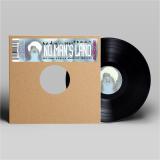
Well-designed, ergonomic yet occasionally amorphous, the effect is that of meticulous freedom, both controlled and free flowing. Using immersive sound design, Yu creates inspiring spaces to revel in, which are warm yet steeped in shadow, with flashes of silvery light.
Featuring Yu in with duet Miyako Koda of cult Japanese art pop duo Dip In The Pool, the record kicks off in swirling but poised fashion with ‘A Jewel’. The dusky, reverberant underwater minimalism of ‘Sunless’ follows, which features British composer Memotone, and was influenced by Chris Marker’s 1983 film Sans Soleil.
The dubby, sunkissed affirmation on ‘Cul De Sac’ leads to the thumping acid stomp of ‘Foundry’, and onto the hazy glow of ‘One Place After Another’, featuring lauded soundheads Seefeel, where Yu’s voice is joined by Sarah Peacock’s, alongside Mark Clifford’s seductively gauzy fuzz guitar.
Venturing into more ominous territory is the liminal ambient dub of ‘Wanli’, followed by the rich textured flutter of ‘Os Cionn’, which translates from Gaelic as ‘above’. The album ends with the reflective, processional pulse of ‘Ripe Fruits’, which was inspired by Frederic Leighton’s 1892 oil painting The Garden of the Hesperides.
The LP’s visual was art directed by Lucas Dupuy, whose approach perfectly encapsulates Yu’s spatial sonics: “We both think in layers”, she comments. “Not linear layering, but horizontal layering, like weaving metallic threads, where a bigger picture of a grainy sphere will occur at the end.”
Mastered by Miles
Art by Lucas Dupuy & Brendan Ratzlaff
Wasteland is a record that is unafraid to plunge into the darkness of the modern world and embrace the weirder, edgier and more unnerving moments that come from doing so. It is an album that captures all the enormity of life from the micro to the macro, zooming in on the personal as well reflecting on broader societal issues.
“Wasteland is about the idea of a place once known or familiar that is now broken down and unrecognisable,” says Ghedi. “It’s about exploring the process of watching someone’s surroundings and environment collapse.” And within that you have a lot going on. “It also explores death, personal loss, grief, mental health and how the natural world provides solace and meaning for that loss and how these worlds blur into one another.”
Ghedi has always been an artist that in many ways perfectly encompasses folk music in its purest form but he is also someone that frequently pushes the boundaries of that label and no more so is that apparent than on this record. As like previous albums, such as 2018’s A Hymn for Ancient Land and 2021’s In the Furrows of Common Place, Ghedi uses traditional folk songs as a means to explore contemporary issues via modern and experimentally-leaning music. “With the traditional material on this album I wanted to find songs with content that resonated with me,” says Ghedi. “But also that were based roughly around the north of England.” This is a central underlying theme to the album for Ghedi. The feelings of loss, erosion, and degradation are often most pronounced in working class communities and this was something he wanted to weave in. “It was important to voice and choose material that represented or expressed issues that correlated with things going on around me.”
However, as remarkable as some of the traditional material is, some of the most arresting work on the album is Ghedi’s entirely original compositions. Lead single ‘Wasteland’ is a stunning piece of work that while rooted in an environment being corrupted and broken – “there’s violence on these hills” Ghedi sorrowfully sings, before claiming this is no longer somewhere that can be called home – it is also a stirringly beautiful composition that soars and glides as it opens up, as sweeping strings swoop and in and out of Ghedi’s twangy electric guitar.
The decision to incorporate more fuller sounds, such as electric guitar and huge drums, results in a notable shift and evolution in tone for Ghedi. “The lyrical content needed something more band-driven and loud to deliver them,” he explains. “Incorporating the electric guitar in my songwriting was also a big part of opening the sound up, using drop tunings pushed me to use my voice in a wider range, which forced me to use falsetto a lot which I haven’t previously done before. That then opened the sound up and gave me creative ideas for bigger arrangements and to sonically really push things.”
What Ghedi has done in creating his masterpiece is construct a remarkable space where deeply intimate and personal feelings coexist with reflections on environment, place and society, while also interweaving historical context via traditional songs. Wasteland is as much of a world to explore and exist in as much as it is an album, with Ghedi carving out his distinctly unique sonic language and voice to explore that singular environment.
Wasteland is a record that is unafraid to plunge into the darkness of the modern world and embrace the weirder, edgier and more unnerving moments that come from doing so. It is an album that captures all the enormity of life from the micro to the macro, zooming in on the personal as well reflecting on broader societal issues.
“Wasteland is about the idea of a place once known or familiar that is now broken down and unrecognisable,” says Ghedi. “It’s about exploring the process of watching someone’s surroundings and environment collapse.” And within that you have a lot going on. “It also explores death, personal loss, grief, mental health and how the natural world provides solace and meaning for that loss and how these worlds blur into one another.”
Ghedi has always been an artist that in many ways perfectly encompasses folk music in its purest form but he is also someone that frequently pushes the boundaries of that label and no more so is that apparent than on this record. As like previous albums, such as 2018’s A Hymn for Ancient Land and 2021’s In the Furrows of Common Place, Ghedi uses traditional folk songs as a means to explore contemporary issues via modern and experimentally-leaning music. “With the traditional material on this album I wanted to find songs with content that resonated with me,” says Ghedi. “But also that were based roughly around the north of England.” This is a central underlying theme to the album for Ghedi. The feelings of loss, erosion, and degradation are often most pronounced in working class communities and this was something he wanted to weave in. “It was important to voice and choose material that represented or expressed issues that correlated with things going on around me.”
However, as remarkable as some of the traditional material is, some of the most arresting work on the album is Ghedi’s entirely original compositions. Lead single ‘Wasteland’ is a stunning piece of work that while rooted in an environment being corrupted and broken – “there’s violence on these hills” Ghedi sorrowfully sings, before claiming this is no longer somewhere that can be called home – it is also a stirringly beautiful composition that soars and glides as it opens up, as sweeping strings swoop and in and out of Ghedi’s twangy electric guitar.
The decision to incorporate more fuller sounds, such as electric guitar and huge drums, results in a notable shift and evolution in tone for Ghedi. “The lyrical content needed something more band-driven and loud to deliver them,” he explains. “Incorporating the electric guitar in my songwriting was also a big part of opening the sound up, using drop tunings pushed me to use my voice in a wider range, which forced me to use falsetto a lot which I haven’t previously done before. That then opened the sound up and gave me creative ideas for bigger arrangements and to sonically really push things.”
What Ghedi has done in creating his masterpiece is construct a remarkable space where deeply intimate and personal feelings coexist with reflections on environment, place and society, while also interweaving historical context via traditional songs. Wasteland is as much of a world to explore and exist in as much as it is an album, with Ghedi carving out his distinctly unique sonic language and voice to explore that singular environment.
- A1: Quartzite Stereo Band
- A2: Taos Hum
- A3: Tricks Of Love
- A4: Which You Are You
- A5: Alejandra
- A6: Sunny Smile Raining
- B1: Beauty Mark
- B2: Turning The Furrow Filling The Earth
- B3: Tuesday June
- B4: Chorus In Green
- B5: Lifeless Down A Dirt Road
VERY LIMITED BLACK VINYL WITH DOUBLE-SIDED INSERT (NON-RETURNABLE)
California composer Phil Geraldi’s vinyl debut both refines and refracts his signature muse of interstitial Americana across 11
melted glass mosaics of processed guitar, decayed radio glow, and Harmonia synth horizons: Rural Deceased Undiscovered. He
describes his vision for the pieces as “multilinear,” rearranging classic radio songbook elements like hooks, choruses, and
emotional cues into unfamiliar topographies of “alien country.”
Shards of acoustic guitar and pedal steel flicker in long shadows of amplifier hum and airwave static, like the scrambled
broadcast of some heartland station along a desert highway. It’s music both rustic and placeless, warped by weather and
technology, shimmering like northern lights over the badlands.
- 1: Urn Burial
- 2: The Redness In The West
- 3: The Third Migration
- 4: They Came Like Swallows
- 5: The Living Theater
- 6: The Oceans Are Crying
- 7: Insight
Black Vinyl[30,67 €]
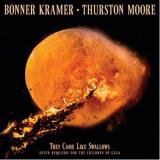
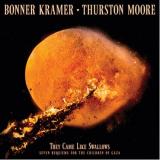
They Came Like Swallows is the first album-length collaboration between Thurston Moore and Kramer (now officially Bonner Kramer), two giants of alternative/ experimental music. The accomplishments and influence of these two artists in the world of independent music cannot be overstated and the result of their artistic union is a startlingly cohesive statement that burns through landscapes of primitive outsider rock, avant-garde composition, progressive ambient and further locales boldly and beautifully unnamable. “Kramer and I reconnected in Miami, Florida, a few years back, many many years after each of us had departed NYC on separate life adventures. It was only a matter of time before Kramer and I started making plans to record together and with his irrepressible due diligence he quickly set up a mobile recording contraption in the pad I was decamped in, the Florida sunshine flowing through the palm leaves, lithe lizards skittering across the windowsills, and we just went for it.
Kramer had the idea to cover a Joy Division tune, a left turn from the improvisations we had been tracking, though wholly in keeping with both our sensibilities of light and dark unifying in transcendent songwriting, both of us devotees of 'the song' as well as 'the freedom.’ What transpired is They Came Like Swallows, a session we immediately felt should exist as a prayer to the war-torn souls of the families of Palestine continually decimated by the brutality of genocide. We agreed beyond words to offer our music as a sonic activism and as a beneficent energy. This album is our duo exchange for human dignity, it is our soul music for any semblance of a peaceful planet.” ~ Thurston Moore “For the first time in our nearly 45 years of friendship, we had identical time windows open to make a record together,” recounts Kramer. After all this time not a moment is wasted as the duo immediately taps into the heightened core of improvisational tension across these seven offerings. Volcanic opener “Urn Burial” notches a similar historic union (John Cale and Terry Riley) to meet the circumstances of the moment, with swirling mists of organ and pounding toms over guitar that thickens the atmosphere with jagged, grimy dissonance.
Solemn strings open the second track, “The Redness In The West,” with Kramer’s cello and viola in dueling bow beneath the high tension drive and sustain of Thurston’s electric guitar, tapping out a Morse code of tension that mounts endlessly into a fog of inevitable war by the end. Moore and Kramer’s sense of experimentalism is in free and full grandeur throughout They Came Like Swallows, though the duo keep a strong and constant sideways eye on melody, composition and architecture, to the ends that any strict lines between song and improvisation are blurred beyond qualification.
As if to punctuate this point, Swallows closes with a nightwork cover of Joy Division’s “Insight,” a doleful coda that breathes out with a solemn inner grace under Thurston’s instantly stylistically recognizable guitar melodies as they weave into he and Kramer’s unison voices. As the lone vocal piece and only traditional ‘song’ form on the album, “Insight” is unique to this set and as a closing statement draws connective lines back to the kind of dynamic, electrified melodicism that wove deep, melancholy patterns into the untamed fire of Sonic Youth’s Sister and Daydream Nation. In the album’s final moments, the two voices repeat the lyric “I’m not afraid anymore” as mantra, underscoring the heavy, unsettled themes and methods that preceded it. Kramer describes the creative process of They Came Like Swallows: “I had composed and recorded a few pieces at my home studio over the course of a couple weeks. Thurston was spending the winter in South Florida, so I flew down and spent a few days recording his guitar parts in his home there. Watching him spontaneously compose his parts was pretty astonishing, to say the least. Once we'd finished working on those pieces, we began improvising and following wherever the music pointed us, and another few pieces were born. We got straight to it, without anything driving us other than the joy of finally working together.
My personal goal was to remain present and catch as many surprises as I could from Thurston's guitar work, and there were plenty during those few days. We had a fucking blast.” Thurston’s contributions here will be readily familiar to any acolytes of his other works, the through-line between his inspired playing, cradled in Kramer’s meticulous, solid arrangements. “If I had to make this record again, I'd do it all exactly the same way,” Kramer says. “It’s like jazz, you don't think about it. You just do it. It was miraculous, and you don't fuck with a miracle.”
They Came Like Swallows is the first album-length collaboration between Thurston Moore and Kramer (now officially Bonner Kramer), two giants of alternative/ experimental music. The accomplishments and influence of these two artists in the world of independent music cannot be overstated and the result of their artistic union is a startlingly cohesive statement that burns through landscapes of primitive outsider rock, avant-garde composition, progressive ambient and further locales boldly and beautifully unnamable. “Kramer and I reconnected in Miami, Florida, a few years back, many many years after each of us had departed NYC on separate life adventures. It was only a matter of time before Kramer and I started making plans to record together and with his irrepressible due diligence he quickly set up a mobile recording contraption in the pad I was decamped in, the Florida sunshine flowing through the palm leaves, lithe lizards skittering across the windowsills, and we just went for it.
Kramer had the idea to cover a Joy Division tune, a left turn from the improvisations we had been tracking, though wholly in keeping with both our sensibilities of light and dark unifying in transcendent songwriting, both of us devotees of 'the song' as well as 'the freedom.’ What transpired is They Came Like Swallows, a session we immediately felt should exist as a prayer to the war-torn souls of the families of Palestine continually decimated by the brutality of genocide. We agreed beyond words to offer our music as a sonic activism and as a beneficent energy. This album is our duo exchange for human dignity, it is our soul music for any semblance of a peaceful planet.” ~ Thurston Moore “For the first time in our nearly 45 years of friendship, we had identical time windows open to make a record together,” recounts Kramer. After all this time not a moment is wasted as the duo immediately taps into the heightened core of improvisational tension across these seven offerings. Volcanic opener “Urn Burial” notches a similar historic union (John Cale and Terry Riley) to meet the circumstances of the moment, with swirling mists of organ and pounding toms over guitar that thickens the atmosphere with jagged, grimy dissonance.
Solemn strings open the second track, “The Redness In The West,” with Kramer’s cello and viola in dueling bow beneath the high tension drive and sustain of Thurston’s electric guitar, tapping out a Morse code of tension that mounts endlessly into a fog of inevitable war by the end. Moore and Kramer’s sense of experimentalism is in free and full grandeur throughout They Came Like Swallows, though the duo keep a strong and constant sideways eye on melody, composition and architecture, to the ends that any strict lines between song and improvisation are blurred beyond qualification.
As if to punctuate this point, Swallows closes with a nightwork cover of Joy Division’s “Insight,” a doleful coda that breathes out with a solemn inner grace under Thurston’s instantly stylistically recognizable guitar melodies as they weave into he and Kramer’s unison voices. As the lone vocal piece and only traditional ‘song’ form on the album, “Insight” is unique to this set and as a closing statement draws connective lines back to the kind of dynamic, electrified melodicism that wove deep, melancholy patterns into the untamed fire of Sonic Youth’s Sister and Daydream Nation. In the album’s final moments, the two voices repeat the lyric “I’m not afraid anymore” as mantra, underscoring the heavy, unsettled themes and methods that preceded it. Kramer describes the creative process of They Came Like Swallows: “I had composed and recorded a few pieces at my home studio over the course of a couple weeks. Thurston was spending the winter in South Florida, so I flew down and spent a few days recording his guitar parts in his home there. Watching him spontaneously compose his parts was pretty astonishing, to say the least. Once we'd finished working on those pieces, we began improvising and following wherever the music pointed us, and another few pieces were born. We got straight to it, without anything driving us other than the joy of finally working together.
My personal goal was to remain present and catch as many surprises as I could from Thurston's guitar work, and there were plenty during those few days. We had a fucking blast.” Thurston’s contributions here will be readily familiar to any acolytes of his other works, the through-line between his inspired playing, cradled in Kramer’s meticulous, solid arrangements. “If I had to make this record again, I'd do it all exactly the same way,” Kramer says. “It’s like jazz, you don't think about it. You just do it. It was miraculous, and you don't fuck with a miracle.”
- A1: Hekt & Valeria Litvakov - Someday
- A2: Hekt - Up In The Air, So
- A3: Hekt - Baby
- A4: Hekt - Without You
- A5: Hekt - Beautiful
- A6: Hekt - You Won’t Believe
- B1: Hekt - Big Things
- B2: Hekt & Smerz - Forever
- B3: Hekt - Anytime Anywhere
- B4: Hekt - Promise
- B5: Hekt - Dream
- B6: Hekt - But I Can’t Really Show You
- B7: Hekt - Just Like You Said
Hekt's debut album Forever is released 1st May 2026 on Numbers, with the first single "Someday" featuring Valeria Litvakov out now.
Made with his friends Henriette Motzfeldt & Catharina Stoltenberg (solo and together as Smerz), Copenhagen-based composer/producer Fine Glindvad (who records as Fine), and Valeria Litvakov, Forever is built around juxtaposition: pop and bass brushing shoulders with dopamine fueled EDM. The record is a funhouse of mirrors where polystyrene arpeggios skitter underneath uplifting chords.
As Hekt describes the record: "Forever is desire and digital synthesis, car rides and lingering perfume. It’s missing someone who was never really there, holding on to something you didn’t want in the first place. The songs you hear when you’re falling in love on the dancefloor, and the songs you hear when you open your eyes and realize it’s just you alone with the DJ, the last one to leave. Songs to make out and break up to. A party so good you get depressed it can’t last forever."
Forever is a continuation of Hekt's work exploring the emotional core of pop music. "Someday" is the soundtrack to a hundred imagined futures with strangers in the club, as pristine arps and heartswelling chords skitter under Valeria Litvakov's ruminations, both lovestruck and terrified. Smerz add a level of fantastic to the slanted otherworldly pop of "Up in the Air, So" and "Forever." On both tracks, the melodies are squishy and impressionistic, the sound of all those memories we make in dance floors, taxis home, and in the blurry morning sunshine as we adjust to reality.
And while guest vocalists abound on Forever, Hekt also takes a turn at the mic himself. On "Without You" he shakes up a perfectly mixed cocktail of melancholy and beauty. And on "Promise" his voice is turned into another melodic accent against the fragile IDM sound design. Elsewhere he turns up the aggro. Dueting with Catharina Stoltenberg on Boys Noize's secret weapon, "Anytime Anywhere," the two trade bars across a compressed field of static and feedback while little hints of sub and wiry synths circle the edge of the stereo.
Hekt's music has always attempted to redefine what club music can and might be. This reimagining of the very basic building blocks of the dance floor is felt across Forever where he leans into the emotions of 2010s EDM. "What I loved about hardstyle and jumpstyle was the emotional intensity that kind of music can bring if you’re in the right setting. And I think that is what has stuck with me from EDM too. Emotional intensity," he explains. "It’s just been the soundtrack to some of the most fun moments in my life." On "But I Can't Really Show You," he compresses the EDM-era into 3-minutes. Vocal catharsis, dubstep womp, and soaring chords make it sound like the entirety of Tomorrowland being processed through MAX/MSP. This Skrillex-meets-Calvin Harris colossus is designed to destroy every sub woofer as it pulls on every last heart string.
And then there are the straight-up club stompers. "Baby" is UK club music reimagined with the steely lines of Danish modernism - think DJ Q going b2b with Errorsmith. It has a bassline made out of flubber with a vocal chopped beyond recognition as it bounces across chromatic synth lines. Even when he strips things down on the slinky garage-esque "Big Things," there are still unexpected twists and turns. The melody sounds like an Ibiza House compilation played in reverse, alongside drums that swing in and out of psilocybin bleeps and bloops. On other tracks like "Dream" and "You Won't Believe," the tropes of dance musics past, present, and future are dissolved in baths of synthesis and polished sound design.
Forever is a record where club music and Scandinavian EDM seamlessly mixes into avant-garde pop. Hekt has crafted singular and unclassifiable love songs alongside effortless bangers, making an ode to those eternal dance floor moments where time stops and you start hoping for something big.
Double 12" release
The Story — From the Streets of Rome to the Male Productions Label
In the early 1990s, Rome lived in a kind of suspended moment. The city was still tied to its historic clubs, yet in the outskirts—inside abandoned warehouses, quarries along the coastline, and the wooded parks north of the capital—something new was beginning to stir. A nocturnal, constantly shifting movement fuelled by a hunger for freedom and a sonic curiosity that reached far beyond the mainstream.
Moving through this ferment was Francesco “Chicco” Furlotti. First an organizer of unconventional parties and underground nights, he soon became one of the driving forces behind Rome’s itinerant rave scene. Furlotti sensed that a wave of change was about to sweep across the city. It wasn’t just about parties: it was the rise of a culture, a new way of thinking about music, community, and belonging.
It was within those nights—later held with official permits, properly built sound systems, and an ever-growing crowd—that Furlotti recognized the existence of a distinctly Roman sound, and the need to capture it, preserve it, and give it tangible form.
So, in 1991, he decided to take a bolder step: to found an independent record label—small, determined, and far removed from the commercial logic that dominated at the time.
That was the birth of Male Productions.
Male was not a label like any other: it was a workshop, a gathering point, a creative hub where DJs, producers, friends, and wanderers converged. Within that environment, an artistic core took shape—Stefano Di Carlo, Leo Young, and Mauro Tannino, along with other collaborators orbiting around Furlotti. From their synergy emerged a project whose very name declared its mission:
The True Underground Sound of Rome.
The collective did not simply aim to release music; it sought to tell a story of Rome through sounds that defied categorization: house, techno, ambient, electronic mysticism, psychedelic visions… a unique blend, instantly recognizable, emotional, and experimental. The sessions unfolded using essential yet razor-sharp gear: Roland drum machines, analogue synthesizers, Akai samplers, stripped-down mixers. Few tools, endless imagination.
The first result of this work was the 12” Secret Doctrine, released in 1991 in an extremely limited run—around 500 promotional copies, according to accounts. The record captured something that until then had floated only in the air of Roman raves: enveloping atmospheres, deep rhythms, melodies built to make the mind travel far beyond the dancefloor. A sound that did not imitate what was happening in Detroit, London, or Berlin, but absorbed those influences and re-sculpted them with a distinctly Roman sensibility.
Yet, precisely because it was independent and detached from commercial circuits, Male’s output remained sparse: few EPs, few copies, irregular distribution. Over time, those records became rare artifacts—almost mythical objects within the Italian electronic scene. The legacy of Male Productions seemed destined to survive only in the memories of those early years, in the stories told after raves, and in the private archives of a handful of collectors.
Many years later, thanks to the almost accidental rediscovery of a few original copies of the first two releases issued by Male Productions, it became possible to undertake a meticulous process of recovery and restoration of the audio etched into those grooves, with the aim of preserving as fully as possible the quality and character of that unrepeatable sound.
We are therefore able today to present — at last in a complete and faithful form — the first two mixes created for Male Productions, now released on a double vinyl that brings back into the present the exact moment when it all began: the nomadic nights of the raves, Furlotti’s vision, the creativity of Di Carlo, Young and Tannino, and the sonic identity of a Rome in the midst of transformation.
This is not merely a reissue.
It is a historical document.
A fragment of a culture that changed the city.
The authentic sound of the Roman underground, finally returned to the world.
- A1: Matter Of Time
- A2: Origins
- A3: Bad Boy Sound
- B1: The Genie (Ft. Cleveland Watkiss)
- B2: Solitary
- B3: Blue Codes
Album Sampler[22,27 €]
HLZ delivers his debut album for Metalheadz with 'All My Life', a project shaped by patience, experience and a deep rooted connection to the label's sound. The album began with the title track, first played during Goldie's residency at XOYO before eventually making its way to the label, and it was from that moment that the idea of a full-length record started to take shape. Around the same time HLZ moved back to Italy, embracing a slower pace of life that gave him the space and focus to bring the project together. Rather than following a fixed concept, 'All My Life' grew naturally in the studio. HLZ approached the process with what he calls a sense of humble confidence, trusting his instincts while staying grounded in the culture that shaped him. The aim was simple: to make music that could last beyond the short cycles that often define modern releases. Across the album, HLZ moves between soulful depth with a classic Metalheadz twang, into moments that push beyond his usual territory. From the title track's unmistakable Headz spirit to more exploratory pieces like 'Roadblock' and the introspective 'Solitary', 'All My Life' captures an artist fully settled in his voice. More than anything, the album reflects HLZ's deep connection to the music and the sound that has influenced him from the very beginning.
With their upcoming album Waves, Moonchild enters a bold new chapter. A deeply personal and emotionally raw project, Waves explores themes of grief, healing, resilience, and self-worth, eschewing the love songs that once dominated their catalog. "This album is about processing loss and stepping into your power," says Amber. "It's a lyrical departure, but it reflects what I've been going through these past few years."
The project also marks a return to in-person collaboration and a new embrace of sampling and sonic experimentation. The result is an album that feels more vulnerable and grounded than ever, while still pushing the boundaries of their signature sound.
f 06: Fear (Hey Friend) feat. PJ Morton
f 06: Fear (Hey Friend) [feat. PJ Morton]
With their upcoming album Waves, Moonchild enters a bold new chapter. A deeply personal and emotionally raw project, Waves explores themes of grief, healing, resilience, and self-worth, eschewing the love songs that once dominated their catalog. "This album is about processing loss and stepping into your power," says Amber. "It's a lyrical departure, but it reflects what I've been going through these past few years."
The project also marks a return to in-person collaboration and a new embrace of sampling and sonic experimentation. The result is an album that feels more vulnerable and grounded than ever, while still pushing the boundaries of their signature sound.
f 06: Fear (Hey Friend) feat. PJ Morton
[f] 06: Fear (Hey Friend) [feat. PJ Morton]
Complimenting his singular debut LP, 2025’s ‘Light Months Will Fly Over Us’, singer-songwriter and producer Addy Weitzman sees his thoughtful artrock and new wave aesthetic expanded by The Time & Space Machine for a limited three-track 12".
The long-running alias of British DJ, archivist and acid pioneer Richard Norris, this trio of remixes from The Time & Space Machine’s central processing unit finds Norris in a jubilant raving mode, his trademark psychedelia contributing to Slacker at its best and baggiest. The initial mix captures Weitzman’s songwriting in full, including his portentous vocal hook – “No man is a prophet in his own land” – a proverb first found in the gospels, blessed with the innovative Norris’s application of hypnotic groove, fat low-end and a ton of percussion.
The B-side sees Norris stripping things back in two directions: the Shango Dub draws focus on the higher vibrations found in the track’s beautifully intertwined percussive and synth elements, while the Riddim Mix reduces the frequencies further still, with a phased, slightly fried drum workout primed to spin heads as the night gets deeper and darker.
Introducing The Hard Line is available on translucent green vinyl
Neither Fish, Nor Flesh is available on red coloured vinyl
Symphony Or Damn is available on gold coloured vinyl
Vibrator is available on blue coloured vinyl
JUST 400 AVAILABLE IN UK!!
180 gram audiophile vinyl, Newly remastered audio, processed at Artone Studio, approved by Sananda Maitreya
Anti-static black poly lined inner sleeves, Deluxe heavyweight sleeves on uncoated paper
All 4 albums include separate inserts with brand new introduction liner notes written by Sananda Maitreya
Box set is a limited edition, Hype sticker
Sananda Maitreya proudly announces “JUVENILIA : The Columbia Years”, a meticulously curated 4-LP box set bringing together
his first four groundbreaking albums, originally released between 1987 and 1995 Introducing the Hardline, Neither Fish Nor Flesh, Symphony or Damn, and Vibrator.
Set for release on February 6th, 2026, JUVENILIA mark the first time these iconic works have been remastered and presented together on
premium 180-gram vinyl, complete with restored artwork and new liner notes by Sananda.
Produced in collaboration with Sony Music UK, Music On Vinyl and Treehouse Publishing, “Sananda Maitreya’s JUVENILIA : The Columbia Years”,
pays tribute to a pivotal creative era that helped redefine the sound and spirit of modern soul, pop, and rock in the late 1980s and 1990s.