2026 Repress
Laurie Torres is a Canadian musician and composer raised in Montréal, Québec by Haitian parents. Since 2008, she has been a trusted stage and studio performer for Julia Jacklin, Pomme, and Land of Talk, as well as being a founding member of Folly & The Hunter, with whom she recorded four studio albums and toured Canada, Europe and the UK.
In 2023, Laurie shifted focus to work on her own creations, a process of making time - the will and the need becoming omnipresent. Drawing creative inspiration from contemporary artists like Tirzah, Gia Margaret, Valentina Magaletti, Tara Clerkin Trio and ML Buch, 'Après coup' finds Torres intersecting at a pivotal moment where artists whose marginalized identities are at the forefront in creating a beautiful array of "other options".
"Being othered and tokenized as a woman who plays music, as well as a queer and black person, takes a toll, while also positively feeding a strong urge to push and be seen."
Centering around piano, drums and synthesizer with interweaving field recordings, 'Après coup' follows the precursor ep 'Correspondances' in the form of a sprawling 11-track album. Translating directly from French - afterwards, after the event - its title subliminally points at something deeper between the lines. Recorded in 2023 between tours in a small window of time where 'normal' life hadn't quite recommenced, Torres meticulously crafted her debut solo material in view of surrounding nature, all providing the perfect nourishment for long streams of improvisation. Built right up to the edge of a lake, Studio Wild in St-Zénon, Québec offered an unparalleled location and set up for her freeform creativity.
Instrumental music seemed like a natural response and evolution for Torres who had long basked in the world of "pop music" as she elaborates: "I had an urge to use creativity as a sort of resting place, a place where things can unfold slowly and take time to reveal themselves. In other worlds words, I felt the need to make something slower, more elusive"
The immediacy of Torres' recorded takes doubled with minimal overdubs create a fiercely direct, intimate and unpolished lo-fi beauty. 'Après coup' then is self-reflective, open and inclusive with Torres allowing herself to be fully seen. An album to be felt at close distance with unrivalled authenticity. This album stands as a testament to Laurie's artistic evolution and serves as a beacon, inspiring her to continue nurturing her own creative pursuits and finding exhilarating freedom.
Buscar:process
- 1: Apis Bull
- 2: Moon Of Urd
- 3: Phlegraean Fields
- 4: Blind In Abyssal Realms
- 5: Hierothesion
ORDH's debut, "Blind In Abyssal Realms", sets out to redefine what the term 'progressive death metal' truly means. But before ORDH, there was BARISHI. When their bass player threw in the towel to pursue other interests in life, guitarist and vocalist Graham Brooks, "looking for a fresh start", decided the time had come to finally dwell in his favorite genre: death metal. But not just any kind of death metal_ Having drafted BARISHI drummer Dylan Blake, with whom Graham has been playing since he was twelve years old, and Josh Smith from KIEFCATCHER on bass, the trio then spent a few gruelling years working on their debut, with Graham writing most of the music and ironing the songs out with Dylan and Josh. Having toured with COME TO GRIEF when BARISHI was still around, Graham and the latter's singer Jonathan Hébert had hit it off really well, so when the time came to find a vocalist, Jonathan was called upon, "right on time to jump straight into the recording and writing process, as most of the music was ready to go".
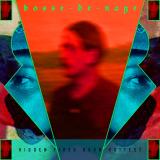
There's a tendency in metal to mistake aggression for honesty, volume for depth. To confuse the performance of darkness with its actual weight. Hidden Fires Burn Hottest, the new album from San Francisco-based post-black metal band Bosse-de-Nage, sidesteps this entirely. It’s the group’s most fully realized work yet, precisely because it refuses to be pinned down.
Bosse-de-Nage have been working with The Flenser for over fifteen years. They were one of the first bands the label ever partnered with and have the longest active relationship in the label's history. But unlike most bands who build momentum through constant touring and visibility, Bosse-de-Nage has largely existed apart from the music world's usual machinery. They've evolved on their own terms, in relative isolation, allowing the work to develop without outside pressure or influence. What began rooted in black metal anonymity has mutated into something that actively defies categorization. The aggression is still there, but it's no longer the point. Hidden Fires Burn Hottest finds the band treating emotions like physical objects, feelings with spatial properties. “No Such Place"" describes a space that can't exist but does anyway, somewhere between thought and location. ""Immortality Project"" examines infinite possibility not as promise but as problem, endless options collapsing under their own weight. These songs don't use metaphor to describe emotion. They make emotion into something you could theoretically touch.
Tracked by Jack Shirley (Deafheaven, Oathbreaker) at Atomic Garden East and mixed and mastered by Richard Chowenhill of Agriculture, Hidden Fires Burn Hottest was years in development, with some tracks beginning in 2018.
The long writing process offered time that most records don't get. Time to live with ideas, revise endlessly, to let structures settle. For the first time, lyricist Bryan Manning wrote everything in advance, creating a surplus to pull from rather than working under deadline pressure. The difference shows.
Coming off Further Still, an album built on constraint and economy, Bosse-de-Nage sought the opposite: sprawl, strangeness, fewer rules. Space for ideas to develop without rushing them. Dynamics that move through quiet as much as noise. Presence earned through atmosphere instead of volume. The record even includes ""Mementos,"" which might be considered the first love song the band has ever written.
Nothing here coheres into a theme. These are pieces pulled from low moments and private feelings made public through sound. The band has never been interested in positivity, in music that resolves cleanly or offers comfort. But bleakness doesn't mean humorlessness. There's something darkly funny running through much of it, even when it shouldn't be.
Hidden Fires Burn Hottest doesn't explain itself. It just insists: what you feel is as real as what you can see."
Analog Tara’s Life of the Mother is a sonic meditation on the depth, expansiveness, complexity, and power that this phrase holds. This album is made from layers of generative processes and interactions with them. Analog Tara uses a Zillion sequencer and Xone mixer as system guides, and sounds of the ARP 2500, Jealous Heart, Access Virus, Oberheim OB-6, Jomox XBase, Moog DFAM, and more to create a compelling electronic narrative.
Composed, recorded + mixed by Tara Rodgers. Mastered by Piper Payne, assisted by Colby Gustafson, at Neato Mastering in Nashville, TN. Art by Jackie Milad, She Goes Ancient, mixed media, 2019.
"Life & Death has been a bucketlist label for me since day one. I've always been inspired by the way DJ Tennis approaches music and the whole philosophy around the label. What always stood out to me is the variety in the releases. One record can be deep and emotional, the next one raw and club-focused, but it still feels like it belongs to the same world. That balance is something I am always chasing in my music. Next to this: in a world that is focussed more and more on short term wins and commercial performance, i really can tell that Tennis still values the art and process of making music the most, which is something i really appreciate"
I remember hearing him play at Circoloco in Ibiza and later in the Loft in Amsterdam and thinking: 'fuck, I should've send him the tune I made last week.' When I came back home, I immediately put together a pack of tracks to send to him. Two were released as part of the Fabric release, and 4 of them are on this EP.
For me, this release is a next step in my career, and I'm happy and proud to be part of a label that is both legendary and super relevant in 2026."
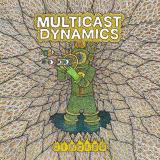
Several years after the release of ‘Metamorphosis’ (with Sid Hille), Multicast Dynamics (Samuel van Dijk) reemerges on Astral Industries with ‘Circles’ - an enchanting two-part work venturing into deep unconscious realms. Sonic landscapes unfold in a sequence of hidden spaces and intimate revelations, featuring detailed sound design and rich thematic content.
Circle One initiates the process, opening gently with glassy drones and the patter of distant voices. A faint light shimmers through swirling pools of liquid memories and melting forms. The atmosphere builds, and everything is engulfed in the act of transfiguration.
Passing through the threshold, Circle Two traverses further into cavernous territories. Boundless drifting soon becomes a gravitational pull toward something deeper. Submitted to the powerful undercurrent, incoming primordial pulsations signal a quest that reaches its fated culmination.
Perhaps the revelation of something long-lost, entering the Circle eludes to that which on the surface remains hidden, yet its rediscovery inevitable.
- A1: Miami
- A2: Lullaby
- A3: Dryer
- A4: Dazzle
- A5: Green Eyes
- B1: Born Again
- B2: Did A Dj Ever Save Your Life
- B3: It Stopped Raining
- B4: The Walk
- B5: Seq24
- B6: Summers Almost Gone
- C1: Intro
- C2: St Nazaire
- C3: Open Window
- C4: Cemetary
- C5: Hot Day
- C6: Rome
- C7: 5Am
- D1: Too Tired To Sleep (Awake)
- D2: 12 Hours
- D3: Peace
- D4: Wildly Oscillating
- D5: Sugar Plums
- D6: Still
- D7: My Lovely
Once I Was Young and The Airplane Album find the producer taking yet another sonic right turn. "These records were made in the same year with a very similar creative process. I moved almost completely away from sampling, experimented more than ever with ambient and techno elements and used the album format as a way to tell a story about moments in my life." Once I Was Young is a storytelling work that journeys through analogue synth-pop, modulated techno and raw, dusty drums with otherworldly melodies. Moments of beauty come through escapist, naturalistic ambient tracks and fusions of Kraftwerkian sequencing with more classical piano, while stark, clubready grooves keep things moving. Airplane contrasts similar shades of light and dark, synthetic and organic, rough and smooth. Glitchy, imperfect analogue sounds, knackered drum machine grooves and eerie synth phrasing evoke a post-human world with icy atmospheres. Elsewhere, warmth comes from bittersweet melodies and loose, funky drums that ooze retro-future charm.
Once I Was Young and The Airplane Album show a diff erent side to Escobar, one that embraces introspection and experimentation while exploring a whole other world of meaningful machine soul
Following Parnell March’s Back Bar Grooves EP in February and November’s release of the Dust Tears (lead song from Sarah/Shaun’s debut) remixes, Edinburgh’s Hobbes Music label returns with a second EP of dream pop from husband-and-wife duo Sarah/Shaun (pronounced simply Sarah Shaun), alias Sarah and Shaun McLachlan (pronounced McLochlun), who wooed hearts and wowed critics with debut EP ‘It’s True What They Say?’ last year.
‘It’s True What They Say?’ attracted fans across the board: Artist Of The Week in The Scotsman, rapturous reviews from The Skinny and Tokyo's Ban Ban Ton Ton blog, BBC 6Music airplay courtesy of Nemone (Mary Anne Hobbs' Morning Show), more radio play from Radio Scotland's Roddy Hart & Vic Galloway, plus Simone Butler (Primal Scream) and Jim Sclavunos (Bad Seeds) via their respective Soho Radio shows, not forgetting ringing endorsements from the likes of David Holmes, Youth, Kevin Bales (Spiritualized), Brent Rademaker (Beachwood Sparks) and Julian Corrie (Franz Ferdinand).
They played gigs supporting Glasgow's huge Glasvegas, at festivals (Kendall Calling, Dunbar Music, Hidden Door), plus a slew of venues across the Scottish capital, ending the year with a trio of shows supporting Glaswegian 80s pop legends The Bluebells at Aberdeen’s Tunnels, Dunfermline’s PJ Molloys and Edinburgh’s Liquid Rooms, while The List magazine tipped them among their Ones To Watch For 2025, with journalist Fiona Shepherd suggesting they were “blending the starry-eyed pop of Sonny & Cher with the electronic experimentation of Chris & Cosey.”
Very much the companion piece to the debut EP but arriving a full twelve months later, Someone’s Ghost is emblematic of the duo’s desire not to rush things or release anything half-baked.
“I’ve always wanted to create the perfect pop record and I do really feel that we’ve achieved that with this one,” says Shaun. And he’s clearly not the only person who thinks so.
REVIEWS, FEEDBACK ETC:
"I LOVE that! Dreamy dreamy pop." ROY MOLLOY (Marvellous Crane/Alex Cameron) on BLAST RADIO, Sydney
“the Scottish music scene’s cream of the cool... buzzy drum beats, high, distant chimes, and heavenly electronics…. very ethereal.” THE SKINNY
"Listening to Sarah/Shaun is like eavesdropping on a noir dreampop, long-distance phone call between them both, across two separate sonic locations. On this stunning 4-song EP, Sarah’s voice, effortlessly mesmerising, draws you into these big beautiful and haunting passages of perfect dream-pop. All beautifully produced in a multi-layered-scape of low-fi analogue textures, epic cinematic crescendos, intense electro-pulse grooves and warped psycho-pop guitar riffs. Within the songs lurk a sense of unresolved emotions, longing and pathos. There are shades of classic Lee Hazelwood & Nancy Sinatra but also Post-Punk Electronica and Beach House. But what a unique sound they’ve created of their own. I love it" DAVID MCCLUSKEY (The Bluebells)
"Absolutely beautiful" SEAN JOHNSTON (A Love From Outer Space)
"Lovely stuff here! Total quality." MARTYN 'MASH' HENDERSON
"Ooooh. Everything the last record promised is here. Well done" GEORGE T aka George Demure (Accident Machine)
"Vince clark Era Depeche Mode in places" KEVIN BALES (Spiritualized)
"Sounds cool. Well done" PETE KEMBER (Sonic Boom, Spacemen 3)
"Glorious, it (Debbie Harry) grabs hold of you and doesn't let go." IAIN DAWSON aka RAVECHILD (Everyone Wants To Play The Hits Podcast)
SOMEONE’S GHOST
Born out of an incredibly anxious, stressful time, the songwriting process for these recordings has been something of a personal tonic for Shaun…
“There was a period when I was having nightmares,” he reveals. “Apparently I was saying there was someone in the room, I was talking to that person and Sarah was seeing all this while I was still asleep.
So, I was thinking that this was my ghost. I started writing songs because I was going through something and I was dealing with something and writing songs was a comfort. My ghost was a comfort, whether it was real or not. The idea of it was a comfort.”
“I firmly believe that everyone has someone who watches over them but all of the songs are essentially about being there for someone,” he says. “Everybody needs someone but also everyone needs to stay real and keep what you have, keep it close, never let it go. If you don’t have it, continue to tell people you’re there for them. It’s about loving and hoping people will be good to you in return.”
While Shaun took the songwriting lead on Filter Of Love and EP closer The Sound Which Stresses The Sound Of My Ears, Debbie Harry was originally instrumentally conceived by producer Jaguar Eyes, alias Ali Chisholm, later lyrically completed by Shaun, and the EP’s lead track, Anhedonia, and one of its stand-outs (much like Starbed on the debut) was conceived by Sarah, as a result of experiencing a bit of a spiritual epiphany of her own.
“When I first heard the word Anhedonia, I didn't know what it meant but when I found out I thought about it quite a bit. How sad it would be to have no enjoyment in anything,” she explains. “This song is really about my own personal beliefs. When I have been down, that's one of the things that helps me the most. It talks about trying to make amends but realising, for some things, you can't. But I think with any kind of faith comes hope… which is always a good thing.”
A record about hope, truth, honesty, a belief in something bigger than oneself… and all set to a soundtrack that wouldn’t feel out of place in a David Lynch or Eighties feature film. What more could anyone ask for, really?
There’s equally a desire to offer something universal and positive to anyone who tunes in. The labels for the 12” edition reveal the dual mantras “Who just wants to survive?” and “It’s about time to live a little”, with both messages also engraved in each record’s run-out grooves. T-shirts accompanying debut EP It’s True What They Say? bore the slogan “Kill Them With Kindness” - leading caps intentional. Shaun carries the acronym KTWK everywhere he plays, as a reminder: it’s stitched into his guitar strap. And this particular wee pebble has already caused a few ripples: people have been approaching him at gigs to acknowledge their appreciation and respect for it.
"We feel we have made an honest, open, colourful, body of work,” say the duo. “We hope to go out and play the songs with the guys (our band) and then potentially make more records. We are taking things as they come. Everything has been organic so far, after all. We are looking forward to whatever this brings."
Returning to Peak Oil for a second expedition, veteran Russian producer Kirill Vasin, aka Hoavi, explores an untrodden path on 'architectonics', drawing from his lifelong appreciation of Indonesian gamelan musics to mastermind a rhythmelodic hybrid sound that's sinuous, subtle and remarkably dubby. Over the last three and a half years, Vasin has used the music's methodologies and rhythmic forms to evolve his existing processes and signatures and transform his musical philosophy. To start the exercise, he knew he needed percussion, so used his phone and a contact microphone to pick up nearby sounds, drumming on various tables, railings, empty glasses and other objects to create a library of textured, tonally complex percussive sounds. But the work wasn't done yet - in fact, it was just the beginning of a long process of trial and error: Vasin created two full versions of the album before 'architectonics' was finished.
There are still echoes of the chrome-plated sci-fi atmospheres and complex, stuttering beatscapes that underpinned 2021's 'Invariant', but 'architectonics' asks very different questions, prompting fresher, more innovative responses. Leaning on his bank of organic percussive sounds, Vasin is able to concoct a tactile aura that he fills with eerie fluctuating repetitions that shift subtly, sometimes imperceptibly. The cavernous reverb and booming bass that supported his last few albums is still present, now employed as scaffolding for different architectures: skittering sequences and ornamented overlapping phrases that owe as much to Steve Reich's hallowed minimalist compositions as they do to Indonesian traditional forms. Lulling, almost hypnotic tessellations appear like fractals on the polished surfaces, morphing from jazz to techno and dub while retaining gamelan's haunting xenharmonic resonances and Vasin's concept becomes crystal clear. 'architectonics' isn't an attempt to make a gamelan album, it's Vasin's way of developing his own artistic process by looking far beyond the traditional boundaries of electronic music.
- A1: 10-22-38 Astoria
- A2: Haloid Xerrox Copy 4
- A3: 03-10-06 Astoria
- A4: Haloid Xerrox Copy 3 (Paris)
- B1: 03-10-06 Astoria 2
- B2: Haloid Xerrox Copy 2 (Airfrance)
- B3: Haloid Xerrox Copy 6
- C1: 05-10-06 Astoria
- C2: Haloid Xerrox Copy 11
- C3: Haloid Xerrox Copy 1
- D1: 02-10-06 Astoria 1
- D2: Haloid Xerrox Copy 111
- D3: 09-10-19 Astoria
- D4: Haloid Xerrox Copy 9
Xerrox Vol. 1 is the third studio album by German electronic artist Alva Noto. It was released in 2007 as part of the ongoing Xerrox pentalogy, based on the concept of digital replication of source material.
Using the process of copying as a basis, the Xerrox series deals with the manipulation of data through endless reproduction. Due to the inherent fallacy of making copies from other copies, everyday sounds become so altered that they are hardly associated with their source material. As a result, entirely new sounds are created: copies of originals become originals themselves.
Together with Christoph Brünggel, Nicolai designed a "sample transformer" that takes audio fragments and manipulates them beyond recognition. In this process of taking something familiar and defamiliarizing it, samples from obvious sources-advertising jingles, airport tones, telephone hold music, and film soundtracks-were used and altered, resulting in sounds totally unlike their original source. The result is a series of haunting, intricately realised pieces that recontextualise Nicolai's "glitches and bass" sound into extended, cinematic, organic, and almost orchestral works.
Xerrox Vol. 1 was followed by Xerrox Vol. 2 (2009), Xerrox Vol. 3 (2015), Xerrox Vol. 4 (2020), Xerrox Vol. 5 (2024). This remastered version will be reissued on NOTON in 2026
---------------------------------------------------------
Medium: 1 // Side: A // Track: 1
Artist: Alva Noto
Title: 10-22-38 Astoria
Playtime: 00:00:19
Explicit Lyrics: No
ISRC: DE1N62500001
(P):
---------------------------------------------------------
Medium: 1 // Side: A // Track: 2
Artist: Alva Noto
Title: Haloid Xerrox Copy 4
Playtime: 00:03:53
Explicit Lyrics: No
ISRC: DE1N62500002
(P):
---------------------------------------------------------
Medium: 1 // Side: A // Track: 3
Artist: Alva Noto
Title: 03-10-06 Astoria
Playtime: 00:00:38
Explicit Lyrics: No
ISRC: DE1N62500003
(P): 2007 2007
Country: Germany
Composer: Carsten Nicolai
---------------------------------------------------------
Medium: 1 // Side: A // Track: 4
Artist: Alva Noto
Title: Haloid Xerrox Copy 3 (Paris)
Playtime: 00:11:17
Explicit Lyrics: No
ISRC: DE1N62500004
(P): 2007 2007
Country: Germany
Composer: Carsten Nicolai
---------------------------------------------------------
Medium: 1 // Side: B // Track: 5
Artist: Alva Noto
Title: 03-10-06 Astoria 2
Playtime: 00:00:36
Explicit Lyrics: No
ISRC: DE1N62500005
(P): 2007 2007
Country: Germany
Composer: Carsten Nicolai
---------------------------------------------------------
Medium: 1 // Side: B // Track: 6
Artist: Alva Noto
Title: Haloid Xerrox Copy 2 (Airfrance)
Playtime: 00:05:07
Explicit Lyrics: No
ISRC: DE1N62500006
(P): 2007 2007
Country: Germany
Composer: Carsten Nicolai
---------------------------------------------------------
Medium: 1 // Side: B // Track: 7
Artist: Alva Noto
Title: Haloid Xerrox Copy 6
Playtime: 00:06:40
Explicit Lyrics: No
ISRC: DE1N62500007
(P): 2007 2007
Country: Germany
Composer: Carsten Nicolai
---------------------------------------------------------
Medium: 2 // Side: C // Track: 8
Artist: Alva Noto
Title: 05-10-06 Astoria
Playtime: 00:00:22
Explicit Lyrics: No
ISRC: DE1N62500008
(P): 2007 2007
Country: Germany
Composer: Carsten Nicolai
---------------------------------------------------------
Medium: 2 // Side: C // Track: 9
Artist: Alva Noto
Title: Haloid Xerrox Copy 11
Playtime: 00:03:40
Explicit Lyrics: No
ISRC: DE1N62500009
(P): 2007 2007
Country: Germany
Composer: Carsten Nicolai
---------------------------------------------------------
Medium: 2 // Side: C // Track: 10
Artist: Alva Noto
Title: Haloid Xerrox Copy 1
Playtime: 00:09:16
Explicit Lyrics: No
ISRC: DE1N62500010
(P): 2007 2007
Country: Germany
Composer: Carsten Nicolai
---------------------------------------------------------
Medium: 2 // Side: D // Track: 11
Artist: Alva Noto
Title: 02-10-06 Astoria 1
Playtime: 00:00:51
Explicit Lyrics: No
ISRC: DE1N62500011
(P): 2007 2007
Country: Germany
Composer: Carsten Nicolai
---------------------------------------------------------
Medium: 2 // Side: D // Track: 12
Artist: Alva Noto
Title: Haloid Xerrox Copy 111
Playtime: 00:07:56
Explicit Lyrics: No
ISRC: DE1N62500012
(P): 2007 2007
Country: Germany
Composer: Carsten Nicolai
---------------------------------------------------------
Medium: 2 // Side: D // Track: 13
Artist: Alva Noto
Title: 09-10-19 Astoria
Playtime: 00:00:18
Explicit Lyrics: No
ISRC: DE1N62500013
(P): 2007 2007
Country: Germany
Composer: Carsten Nicolai
---------------------------------------------------------
Medium: 2 // Side: D // Track: 14
Artist: Alva Noto
Title: Haloid Xerrox Copy 9
Playtime: 00:11:04
Explicit Lyrics: No
ISRC: DE1N62500014
(P): 2007 2007
Country: Germany
Composer: Carsten Nicolai
2026 Repress
London based composer, multi-instrumentalist and producer Akusmi announces 'Lines', an exhilarating new collection of works born from the desire to take where the acclaimed debut album 'Fleeting Future' left off - in search of new forms.
" 'Secant', I must have listened to this tune 3 times in a row, this one soundtracked my night drive through the winding roads" - Benji B, BBC Radio 1
'Lines' is presented as a Limited edition clear vinyl (500 copies only worldwide), printed in heavy-weight reverse board sleeve with a hand-numbered edition sticker. The vinyl edition also features 'Oblique' (A2), an exclusive version for the vinyl format, plus the now revered 'Longing for Tomorrow' - (Brandt Brauer Frick Remix), previously unreleased physically and now pressed on vinyl format, ending side B. The cover artwork features another collaboration with Dutch visual artist Sigrid Calon and design by label founder Adam Heron.
Formed with a sense of urgency and a reductive approach 'Lines' is almost entirely comprised of alto saxophone, clarinet and piano with embellishments of ambience and minimal percussive elements. Recorded in full at his home studio in London, Pascal Bideau speaks about the process:
"I wanted to go a bit more a bit more horizontal and ambient, work with layers of lines, might they be dotted or straight, and leave them to unfold and see where they would take me."
Akusmi uniquely finds the spaces in between experimental jazz, crossover classical and ambient music.
glow-in-the-dark clear vinyl
In 1998, Carsten Nicolai, also known as Alva Noto, visited a sound installation created by Robert Lippok for a group exhibition in Weimar, Germany. Soon after, he invited Lippok to release music on his label raster-noton. »Open Close Open« was released in 2001 and marked the beginning of Lippok's solo career. Before, Lippok had already played in Ornament und Verbrechen (with his brother Ronald Lippok) and To Rococo Rot (with Ronald Lippok and Stefan Schneider).
The title of the EP is a linguistic reference to the instructions found on everyday objects. In fact, the sound of birds or a closing door can be heard. Besides field recordings, cultural fragments were used – including the sample of the famous Adagietto from Gustav Mahler's Symphony. No. 5. – and integrated into three loop-based pieces, that have been praised by Fact Magazine as »a masterclass in collage, looping and tactile processing.«
The source material for »Open Close Open« initially served as a soundtrack for a video by Takehito Koganezawa, a visual artist from Japan. For this remastered vinyl reissue, Lippok revisited the original sound material and produced a new track called »Licht.«
The process of making this mini-album “anaiis & Grupo Cosmo” was truly life-altering for me. It changed my approach to making music and really brought me back to the roots of what creation is about. I went to Salvador for a month-long artist residency in February 2020 and during that time, I not only fell in love with Brasil’s culture and music, but I also wrote “Toda Cor” with the wonderful Luedji Luna. A few years later, I reached out Biel who’d co-produced “Estrela Acesa” with Sessa to see if they’d be interested in re-developing “Toda Cor” with me. They were enthusiastic and we fully reproduced the record in December, remotely. The connection between us all was electric and it felt like there was a collective enthusiasm for creating more together so I flew out to Brasil in April 2023 to continue this exploration. The beauty behind this record really lies in the experience of making it. We all stayed together in Biel’s house in Ilhabela for a week with Cabral, who co-produced the record with us and plays bass. We would go to the beach, eat communally, share stories, be around the kids, but then spend most of the days creating and jamming together. Each day we would record our songs live to tape, not a computer in the room. By the end of the week we had this album. It was refreshing to make music in this way. The music and approach really held us in that moment and gave us a chance to create freely, in a big moment of transition in our lives in a way that truly embraces imperfection, spontaneity, just very human.
For her new and most radical album »Electroacoustic Works for Halldorophone«, Martina Bertoni used the electronic instrument at EMS Stockholm to create four pieces that are massive in scale and incredibly intimate, sonically restrained and emotionally overwhelming—almost ambient and always demanding your full attention.
Martina Bertoni returns to Karlrecords with »Electroacoustic Works for Halldorophone,« her most radical album yet. The foundation for the four electroacoustic pieces was laid during a residency at Stockholm’s legendary Elektronmusikstudion (EMS) that the Berlin-based cellist and composer used to explore the curious instrument, originally designed by Halldór Úlfarsson in 2008, as an algorithmic system in order to examine tunings and the mathematical relationships between Aiming to analyse and understand their interaction beyond the composer’s control, Bertoni sought to engage more deeply with the concepts of time, tuning, and, most importantly, control. Accordingly, her four »Electroacoustic Works for Halldorophone« seem both massive in scale and incredibly intimate, sonically restrained and emotionally overwhelming— almost ambient and always demanding your full attention.
While the halldorophone—famously used by Hildur Guðnadóttir for her »Joker« score—roughly resembles a cello and can be played like one, it is an electronic instrument. The vibration of its strings is being picked up, amplified, and then routed through a speaker. This creates a feedback loop that becomes increasingly complex depending on how much gain is added to individual strings. Úlfarsson gave Bertoni a carte blanche for how to handle the instrument, but she stresses that she relied on »minimal interventions—some string strumming and plucking« that set the interactions of different sounds and frequencies into motion. »I decided to not approach it like a cellist would,« she explains. »Instead I used it as a kind of generative organ by turning it into a feedback machine, with tuned feedback triggering more feedback depending on the tuning, which was based on tetraphonic scales that I could apply on the four main strings as well as the sympathetic group of strings.«
Bertoni recorded the material in the EMS studio, later composing and arranging the four complex pieces in her home in Berlin, after which they were mixed and mastered by Ciaran O’Shea. While this can be considered a compositional abstraction process, traces of her concrete work as a performer are firmly ingrained in the music. »The halldorophone doesn’t have a line output, just a double set of speakers, which is why I recorded all sounds with two microphones in the EMS studio,« she explains. »That’s why there’s plenty of breathing sounds here and there—label owner Thomas Herbst and I jokingly refer to the album as my ›chamber music record‹.« And indeed, there is a striking sense of intimacy to these four pieces throughout which individual sounds, harmonic frequencies, and even subtle rhythmic figures seem to move both on their own accord but also according to a underlying vision that steers their interplay.
Indeed, »Electroacoustic Works for Halldorophone« is an album built on and marked by contrasts. The soothing polylogue of single sounds in the higher register on opener »Omen in G« is counterpointed by massive bass drones, while the second piece, »Nominal in D,« plays a cunning game of repetition and difference by combining thick textures with all kinds of rhythmic elements. »Fades in C«—the longest of the four pieces, clocking in at 17 minutes—unlocks the emotional potentials of the sonic qualities of the halldorophone, sounding at once serene and anthemic, and »Organon in D« closes the album by underscoring how Bertoni’s unconventional approach allows her to seamlessly transform simple, quiet tones into complex, towering walls of sound.
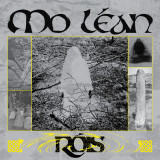
Rose Connolly has a beautiful voice with a wide melodic range, which she bends, twists, strains and warps through both her physical exertions and a sample-based granular synthesiser. The results recall both the Gaelic tradition of séan-nos singing, and the work of experimental artists such as Meredith Monk, Yoko Ono and Hatis Noit, while the beats meld folk with gothic, 4AD-era soundscapes unmatched since the glory days of This Mortal Coil.” – The Guardian (10 Best Folk Albums of 2024) “RÓIS is a composer, vocalist, multi-instrumentalist, and electronic artist from Fermanagh, whose songs breathe new life into a forgotten Ireland. Self-released, written and produced by RÓIS with additional production from John Spud Murphy (OXN/Lankum), 'MO LÉAN' is a concept album, taking the listener through the grieving process from start to finish, from the chaos that loss brings, to the intense emotional outpourings and finally, a cathartic release.
‘MO LÉAN' features several new original recordings and reworks of songs and hymns based around the concept of death, life, mourning and catharsis. RÓIS re-imagines the tradition of 'keening' in Ireland that goes back to pre-christian times, a practice in which women would 'keen' a lamenting wail at the side of a coffin during a wake. After discovering the last two recordings of keening songs, RÓIS was inspired by their ethereal melodies to give them a modern reworking yet honouring the original women by sampling them in her adaption. 'Keeners', through their voices, movements and laments, conveyed the communal expression of grief and allowed those suffering a way to release their sorrow and loss. RÓIS aspires to do the same with 'MO LÉAN', by expressing the power of the voice to transcend death and help us relinquish our fear of it
There’s no direct English translation for the word “hiraeth”. In the Welsh language, it describes a form of longing for an intangible something, somewhere or someone that no longer exists. Sofie Birch and Antonina Nowacka draw on the concept to guide their second collaborative album, a suite of vulnerable, open-hearted improvisations and reflections that attempt to grasp an image of the past that’s chimeric, dissolving almost as soon as it materializes. The duo’s process follows the same distant beacon; unlike Languoria, their critically acclaimed debut, Hiraeth is, at heart, an acoustic record, informed by in-person improvisations with voices and string instruments that gesture to an era before computers, AI and DAWs. It’s just as lush, but Hiraeth is warmer and more muted than its predecessor.
Nowacka and Birch conceived the album in the wake of a slew of collaborative live concerts, spurred on by serendipitous improvisations and an interest in paring down their setup. Unsound arranged a retreat in Sokołowsko, an idyllic village nestled in the verdant hills of Southern Poland, close to the Czech border. Sokołowsko surrounds a large ruined sanatorium that’s rumored to have inspired Thomas Mann’s 1924 novel The Magic Mountain, and has long been a magnet for artists. The two took the opportunity to rethink their approach completely, arriving with just a guitar, a zither and a portable Nagra reel-to-reel machine. Recording directly to tape, they sketched out ideas with just their voices and instruments, reflecting their surroundings without being distracted or mediated by modern technology.
“We wanted to get away from screens as much as possible,” says Birch, “to bring to the world something vulnerable and honest. Without advance preparation, every day we went out into the open air, finding places to sit, during sunset or the midday sun. We discovered new tunings on our instruments, picked up a melody, and started the machine, playing over
and over till we got a take.” In the autumn, they met again in a Copenhagen studio, sparingly and carefully layering old synths and organs to add more depth without muddying the mix.
Both Nowacka and Birch sing throughout, their voices threading the acoustic instruments and tangling with each other, almost becoming one. But it’s the environment of Sokołowsko, “the birds and the light, even the wind playing against the harps,” that’s woven into the music’s lining. Affected by time spent meditating and in nature, as well as the fact that Birch was pregnant whilst recording, the album feels alive and remarkably present. Even the sound quality of the tape machine gives Hiraeth a tactile, organic quality, as Nowacka puts it, “like being in a warm bath.”
They still have the raw recordings from Sokołowsko on old reels, physical souvenirs of their time spent making music in a “habitat for intuitive songs, a little ecosystem, alive and spirited.” The outmoded gear and remote setting helped the duo disengage from the modern world for a few moments and imagine an existence that’s been lost to time and nominal progress. With digital technology receding into the background, Nowacka and Birch had space to make “intuitive connections with frequencies and people,” as Birch explains. Hiraeth is a testament not to nostalgia, but to the power of kinship.
Loud Ambient 2 picks up directly from where Loud Ambient left off. After picking the drum machines back up, we returned to the colourfield ideas that shaped the first record. Rothko remained a key reference, along- side a strong recommendation to spend time with the work of Josef Albers. We did exactly that, and it paid off.
Alongside the music, we created 50 new pieces of artwork for Loud Ambient 2. These became tools rather than decorations. Working this way felt open and rewarding, and brought a real sense of play back into the process. We already understood what a Loud Ambient track could be, so slipping back into that headspace felt natural. The tracks came together quickly, full of energy, movement and that familiar noodle quality.
The creative side landed easily this time. There is some- thing about working with colourfields that frees you up and pushes you further into abstraction. It removes hesitation and keeps the focus on instinct and response.
With the drum machines and synths loaded, we kept our heads down and made the kind of music we want to hear on a dance floor. Loud Ambient 2 is the result.
Xerrox Vol. 3 is the eighth solo studio album by German electronic artist Alva Noto, released in 2015 as part of the ongoing Xerrox penthalogy, which began with Xerrox Vol. 1 (2007) and Xerrox Vol. 2 (2009).
Inspired by formative influences such as Andrei Tarkovsky's 1971 film Solaris, La Isla Misteriosa y el Capitán Nemo by Juan Antonio Bardem, and Henri Colpi, Carsten Nicolai exchanges austerity for cinematographic lushness in the remarkably widescreen third volume of his Xerrox series.
In line with the series' focus on "using the process of copying as a basis," the eleven compositions of this volume can be heard as copies of memories, exploring emotional data patterns that are reflected as melodic vectors and noise.
This remastered version will be reissued on NOTON in 2026
Tracklisting
---------------------------------------------------------
Medium: 1 // Side: A // Track: 1
Artist: Alva Noto
Title: Xerrox Atmosphere
Playtime: 00:01:22
Explicit Lyrics: No
ISRC: DE1N62500026
(P): 2025 NOTON
Country: Germany
Composer: Carsten Nicolai
---------------------------------------------------------
Medium: 1 // Side: A // Track: 2
Artist: Alva Noto
Title: Xerrox Helm Transphaser
Playtime: 00:06:45
Explicit Lyrics: No
ISRC: DE1N62500027
(P): 2025 NOTON
Country: Germany
Composer: Carsten Nicolai
---------------------------------------------------------
Medium: 1 // Side: A // Track: 3
Artist: Alva Noto
Title: Xerrox 2ndevol
Playtime: 00:03:44
Explicit Lyrics: No
ISRC: DE1N62500028
(P): 2025 NOTON
Country: Germany
Composer: Carsten Nicolai
---------------------------------------------------------
Medium: 1 // Side: A // Track: 4
Artist: Alva Noto
Title: Xerrox Radieuse
Playtime: 00:06:00
Explicit Lyrics: No
ISRC: DE1N62500029
(P): 2025 NOTON
Country: Germany
Composer: Carsten Nicolai
---------------------------------------------------------
Medium: 1 // Side: B // Track: 5
Artist: Alva Noto
Title: Xerrox 2ndevol2nd
Playtime: 00:05:04
Explicit Lyrics: No
ISRC: DE1N62500030
(P): 2025 NOTON
Country: Germany
Composer: Carsten Nicolai
---------------------------------------------------------
Medium: 1 // Side: B // Track: 6
Artist: Alva Noto
Title: Xerrox Isola
Playtime: 00:08:07
Explicit Lyrics: No
ISRC: DE1N62500031
(P): 2025 NOTON
Country: Germany
Composer: Carsten Nicolai
---------------------------------------------------------
Medium: 2 // Side: C // Track: 7
Artist: Alva Noto
Title: Verrox Solphaer
Playtime: 00:06:08
Explicit Lyrics: No
ISRC: DE1N62500032
(P): 2025 NOTON
Country: Germany
Composer: Carsten Nicolai
---------------------------------------------------------
Medium: 2 // Side: C // Track: 8
Artist: Alva Noto
Title: Xerrox Mesosphere
Playtime: 00:05:55
Explicit Lyrics: No
ISRC: DE1N62500033
(P): 2025 NOTON
Country: Germany
Composer: Carsten Nicolai
---------------------------------------------------------
Medium: 2 // Side: D // Track: 9
Artist: Alva Noto
Title: Xerrox Spark
Playtime: 00:06:10
Explicit Lyrics: No
ISRC: DE1N62500034
(P): 2025 NOTON
Country: Germany
Composer: Carsten Nicolai
---------------------------------------------------------
Medium: 2 // Side: D // Track: 10
Artist: Alva Noto
Title: Xerrox Spiegel
Playtime: 00:03:32
Explicit Lyrics: No
ISRC: DE1N62500035
(P): 2025 NOTON
Country: Germany
Composer: Carsten Nicolai
---------------------------------------------------------
Medium: 2 // Side: D // Track: 11
Artist: Alva Noto
Title: Xerrox Exosphere
Playtime: 00:03:47
Explicit Lyrics: No
ISRC: DE1N62500036
(P): 2025 NOTON
Country: Germany
Composer: Carsten Nicolai
Colophon creates electronic music using synthesizers and drum machines from the '80s and '90s that are no longer in production. Everything beeps and crackles, shaping atmospheric soundscapes layered with deep basslines and melancholic pads full of character.
'Dimension Six EP' delivers a six-track journey, moving through techno, acid, slow burners, and ambient. Imperfections are left intact, giving the music a raw, human feel rather than something overly clean, clinical, or artificial. It's the meeting point between old and new technology that makes the process so fascinating and inspiring - the endless places you can go, discovering new sounds within sounds.
Alongside producing music, Colophon also runs 'Loop of Life', a record label where music, fine art, and graphic design converge, releasing limited-edition vinyl with handmade artwork covers.
Reviews
'The excellent, excellent sounds of Colophon' Ben Sims on NTS Radio, London
'My favourite tracks of the moment' ASOK on Rinse FM, London
Coming in hot on Berlin's Toy Tonics label: a new EP by the talented duo ALMA NEGRA!
Founded in 2013, Alma Negra is a Swiss collective centered around the brother duo Dersu and Diego Figueira, whose diverse roots in Switzerland and Cape Verde inform their sound. The project was launched with the ambitious vision to explore the world's diverse rhythms and drive musical innovation by mixing different styles. Their work is anchored in a process of digging and sampling, skillfully blending traditional sounds-from Fela Kuti-influenced Nigerian afrobeat and Angolan Lamento to Caribbean Zouk and the Maloya sound of Réunion-into a contemporary dance music context.
The Figueira brothers' eclectic DJ sets embody this ethos, peppering disco and house with salsa, samba, jazz, and Afro-Caribbean carnival rhythms, all under their guiding motto: "As long as it's Funky."
Since 2014, Alma Negra has made an important contribution to intercultural exchange in their hometown of Basel. Their international presence began in 2015 with their first shows abroad in countries like France, the Netherlands, and Portugal. From 2016 to 2019, their reach expanded significantly, with performances in major hubs like London, Paris, and Berlin, as well as Istanbul, Tel Aviv, and Tunisia. Highlights from this period include sets at the Montreux Jazz Festival, Dimensions Croatia, and Fuse Club in Brussels. Their standing is further cemented by releases on respected labels like Heist Recordings, Sofrito, and Basic Fingers, alongside remixes from an elite group of peers, including Soulphiction, Kuniyuki, and Yuksek.
Parallel to their studio and DJ work, the project expanded into the Alma Negra Live Band, formed with jazz musicians from Basel. While the band is currently on hiatus, this collaboration made live instrumentation increasingly central to their productions, creating a dynamic they feel is essential for any dancefloor. The live band has performed in cities like London and Hamburg and has led to collaborations with artists such as French singer Pat Kalla and jazz trumpeter Bodo Maier.