Buscar:prod


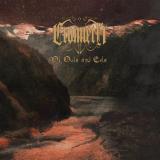
- A1: Old Incineration Hymn
- A2: Past Forever
- A3: Owls In The Fog
- A4: Ice Curse
- A5:
- B1: Eels (Part I)
- B2: The Quiet Witness
- B3: Mordlust
Orange Vinyl[27,10 €]

- A1: Old Incineration Hymn
- A2: Past Forever
- A3: Owls In The Fog
- A4: Ice Curse
- A5:
- B1: Eels (Part I)
- B2: The Quiet Witness
- B3: Mordlust
Black Vinyl[26,68 €]

Clear Black Splatter Vinyl[20,13 €]

- 1: A.o.a - Murder In The Woods
- 2: A.o.a - For Those Who Suffered
- 3: A.o.a - All Our Anger
- 4: A.o.a - Death On A Plate
- 5: A.o.a - Holy Hypocrisy
- 6: A.o.a - O.s.a
- 7: A.o.a - Aftermath
- 8: Oi Polloi - Go Green
- 9: Oi Polloi - You Cough/They Profit
- 10: Oi Polloi - Punx Or Mice
- 11: Oi Polloi - Nuclear Waste
- 12: Oi Polloi - The Only Release
- 13: Oi Polloi - Apartheid Stinx
Nearly 40 years ago A.O.A. and OI POLLOI joined forces to condemn what they saw as an Unlimited Genocide. Fast forward to 2025 and nothing has changed for the better, with everybody witnessing a genocide unfolding in front of our eyes daily, while humanity hits rocks bottom. So Sealed Record decided it was the right time to bring back this classic slice of Scottish punks and skins protest music.
Originally released on the ever impressive Children of the Revolution Records Unlimited Genocide features the hardest side of the OI POLLOI vast catalogue. Full of rage and anger, tensely tuneful with earnest anarcho conviction. With A.O.A. On the flip side delivering seven tracks of full in your face hardcore punk, carrying the torch of the DISCHARGE influenced thrash of the era.
The record has a strong 80’s production and touches on green and environmental issues, apartheid, nuclear power, religion, vegetarianism and much more. It’s raw, direct and a great snapshot of an era that is often mimicked but never bettered.
This reissue has been remastered and includes a printed inner sleeve as well as a slightly altered artwork.

- 1: Any God Of Yours (Instrumental)
- 2: Swell (Instrumental)
- 3: Arise Dear Brother (Instrumental)
- 4: Ammi Ammi (Instrumental)
- 5: Buffed Sky (Instrumental)
- 6: Sex With Nobody (Instrumental)
- 7: Eye’s Drift (Instrumental)
- 8: The Sea Liner Mk 1 (Instrumental)
- 9: Empty Vessels (Instrumental)
- 10: New Builds (Instrumental)
- 11: Dull Boys (Instrumental)
- 12: Thames Water (Instrumental)
XL Recordings is proud to mark the 10th anniversary of Archy Marshall’s (aka King Krule) A New Place 2 Drown with the release of a newly remastered instrumental edition.
Originally released on 10 December 2015, A New Place 2 Drown remains a singular entry in the Archy Marshall catalogue. Known to many for his work as King Krule, Marshall released A New Place 2 Drown under his own name, highlighting a different facet of his creative identity. An atmospheric blend of submerged beats, woozy textures, and diaristic storytelling, the project earned widespread acclaim upon release, including Pitchfork’s Best New Music.
Developed in parallel with a visual world shaped with his brother and longtime collaborator Jack Marshall, the quietly influential project stands as a multidisciplinary love letter to their home of South London, originally released alongside a Will Robson-Scott–directed short film and a book of artworks, photography, and poetry by the Marshall brothers.
The 2025 instrumental edition offers a newly illuminated perspective on the record’s sonic core, drawing fresh attention to the production craft that underpins the project. By stripping the songs back to their foundations, the release highlights the intricate textures, rhythmic detail, and atmospheric depth that have helped A New Place 2 Drown grow into a cult favourite over the past decade.
“A New Place 2 Drown evokes a septic world filled with flickering halogen bulbs, sticky synth keys, and corroded outputs. Marshall has made tremendous strides as a producer, gorgeously reproducing the gloom and loneliness of early '90s hip-hop and finding a way to integrate it into his own style.” - PITCHFORK

"Produced by Billy Mannino (Oso Oso, Prince Daddy & The Hyena, Macseal), Kerosene Heights' LP Blame It On The Weather cements the band's place as one of the greatest of this current wave of punk/emo revival. BrooklynVegan writes ""...it’s been a minute since I’ve heard a band do mathy Midwest emo as clear, punchy, and hook-driven as Kerosene Heights are doing it.” Blame It On The Weather (their first LP with SideOneDummy Records) releases August 15, and they'll be on the road supporting this rollout every month the rest of the year including tours with TRSH, Free Throw, Dikembe, Michael Cera Palin and more, and appearances at Warped Tour and FEST in Gainesville.
FFO: Joyce Manor, Glocca Morra, Fiddlehead, Prince Daddy & The Hyena, Michael Cera Palin, etc."
Beautifully remastered and presented 3LP set of exceptional Kanzai psych. Truly classic and very essential business. This stuff melts your heart, brain and face simultaneously..
Temporal Drift presents the first-ever officially sanctioned reissue of celebrated Japanese cult band Les Rallizes Dénudés’ three albums, originally compiled and released in limited quantities on CD in 1991. Led by the enigmatic Takashi Mizutani, Les Rallizes Dénudés has gained an almost mythical status the world over with their delicate balancing act between transcendent psychedelia and pure sonic assault, maintaining its status as an underground phenomenon throughout their three decade existence and beyond.
‘67-’69 STUDIO et LIVE, MIZUTANI / Les Rallizes Dénudés, and ‘77 LIVE are the only albums released during Les Rallizes Dénudés’ lifetime, between its formation in 1967 at Doshisha University in Kyoto to its last-ever show in 1996 at Club Citta in Kawasaki. Produced by Mizutani, the three discs collectively provide a window into the (in)famously impenetrable band’s first decade of existence.
‘77 LIVE is an explosive live set from Tokyo that captures the glorious noise of the Rallizes at their full potential. Recorded on March 12, 1977 at Tachikawa Social Education Hall in Tachikawa, Tokyo, ‘77 LIVE showcases Mizutani’s unmistakable, overdriven, feedback-drenched guitar, played on a newly purchased Gibson SG, soon to become his signature ax. Includes wholly transformed versions of “Memory is Far Away” and “The Last One” reaching the kind of highs that no unsuspecting listener could have imagined coming from Mizutani or the Rallizes just a few years prior, as heard on ‘67-’69 STUDIO et LIVE and MIZUTANI / Les Rallizes Dénudés.
Produced in collaboration with The Last One Musique, the new label set up by former members and associates of Les Rallizes Dénudés, ‘77 LIVE features newly remastered audio by former Rallizes member Makoto Kubota and new liner notes by Yuasa Manabu.

Editions Mego is proud to release the new album by Australian producer Jasmine Guffond. Developed over a two year period, Microphone Permission is an unsettling musical journey utilising contemporary tools of communication to display Guffond's ongoing research into online surveillance and sound as a method of investigation.
Source material on Microphone Permission are from various projects Guffond has been working on; a commission to sonify the data of the city of Melbourne, a dance performance about the future sounds of an extinct forest, an installation that sonifies Twitter meta data in real time, a job as a composer for a theatre work about music and feminism by five young female identifying performers in Western Sydney and a site specific installation at the Linachtalsperre dam that employed the harmonic frequencies of electric currents.
The results are a stark, brooding, disorientating journey into a paranoid musical field that sits somewhere between ambient club music and a dystopian soundtrack. Elements of techno, classical music and sound art form a dark intriguing masterwork that questions the nature of invasive, algorithmic and computational listening practices.
For example Microphone Permission refers to the consent we routinely give when installing various apps. onto our smart devices. Inspired by a 2018 scandal in which fans of Spain's most popular soccer team were effectively turned into unwitting spies by granting the La Liga application microphone permission. No matter which make or model, all smart devices are built with a microphone that is by default, forever listening. Listening in these situations often takes on an algorithmic form that enables tech developers to bypass public response to what is intuitively considered invasive practice, that is, traditional modes of eavesdropping such as using the microphone to listen and record audio.

Editions Mego presents The Psychologist, the sophomore album by the Istanbul born and raised, Berlin based electronic music composer and sound artist Hüma Utku.
As the title suggests, The Psychologist, is a series of sonic essays based around themes of psychological phenomena and can be read as a musical enquiry into the human condition. With Utku’s background as a graduate of Psychology and her current practice as a conceptual music composer we see the two main threads in her professional career intertwine on this unique and ambitious release.
Including recordings of Buchla 200 from Utku’s Elektronmusikstudion residency in October 2020,The Psychologist is a genre aversive work that embodies elements of synthesiser music, electroacoustic, experimental techno, industrial, modern composition and spoken word. Piano, string compositions and vocals hold weight throughout a number of pieces providing a dramatic acoustic edge to the psychological explorations contained within.
The foreboding mood of much of this release is the product of investigation that lends the unsettling theme of anticipatory grief to the mood of the tracks Light of All Lights and Continuing Bonds. Islands of Consciousness refers to Jungian metaphor for consciousness whilst the unnerving Rüya twists around dream analysis in Gestalt psychology. Fuel For The Flames proceeds as a buzzing and swirling representation of alchemy and psychological symbolism. Dissolution of I is haunted by a strange sensation of dissociation whilst defense mechanisms support the sublime Sublimation. The bright shapes of Chironian Wound represent archetypes and analytical psychology whilst the fried soundscapes and rhythms of Ataxia encapture neurological states.
The results unravel with both the clockwork rhythms of the human body and the unpredictable nature of the psyche, the pieces follow arrhythmic patterns in a harmonious way. It tells the raw and intimate story of the human experience with a new work whereby the predictable operates in parallel with the unexpected and like human experience itself, is dark and complex.
Composed, Written & Produced by Hüma Utku
Piano by Hüma Utku
Vocals by Hüma Utku
Double Bass performed by Adam Pultz Melbye
Cello performed by Florina Speth (aka Schloss Mirabell)
Violin performed by Marta Forsberg
Cover photography & art by Gözde Güngör
Design by Eloise Leigh

Mexican DJ and producer Hotmood indeed brings the heat on his new EP for the Blur Records gang. It is a fine fusion of disco and house music with rich instrumentals, nice organic sound and plenty of smart samples. Opener 'Disco Power' is a funky and upbeat cut with a powerful bassline and big vocal stabs. Things get more deep and laidback with 'Malandro' which has big sax energy and sunny chords then 'To The Beat Y'all' rounds out the EP with real disco energy. The drums hit hard, big guitar riffs brighten up the mix and subtle filters and FX also pump things to the next level.

- A1: Tonic
- A2: Murmuration
- A3: Orange
- B1: Cascade
- B2: Sun
- B3: Tapestry
- B4: Ensō
‘No Fixed Point In Space’, the third full-length album by Jack Cooper’s Modern Nature, takes the palette of sound and themes that were honed on 2021’s ‘Island Of Noise’ and launches them into an expansive world of openness and vivid technicolour.
It’s a music that hasn’t been heard before; as melodic as anything Cooper has produced but framed by rhythms and instrumentation that reflect the chaos, unpredictability and colour of the natural world.
Certain moorings - woodwind, percussion, strings and Cooper’s lambent voice - are still present and recognisable from No Fixed Point In Space’s predecessor, ‘Island Of Noise’, but the new record marks a shift to utilising musical notation as a point of departure, from which the group explore the space around suggested notes and rhythms to create a semiimprovised, semi-composed ensemble performance.
These explorations of partly organised chance were recorded live and directly to tape.
This approach gives the music a remarkably fresh feel; songs pulse and evolve. The changes between movements, verse and choruses are almost all ambiguous. During the album’s opener, ‘Tonic’, a verse of hushed brevity washes away into a passage of overwhelmingly vibrant orchestration.
CD in four-panel digisleeve with 10-panel booklet with lyrics. LP pressed on 140g black vinyl with printed inner
sleeve and stamped postcard.

Peter Rehberg is known for his pioneering electronic work with computer software which over time evolved into a modular set up alongside running MEGO and then Editions Mego labels.
Rehberg was a prolific collaborator, with other musicians and with contemporary dance and theatre productions, most notably with French artist and choreographer, Gisèle Vienne with whom he created a series of soundtracks from Showroomdummies, released under the name DACM in 2002 (Showroomdummies MEGO 056), to Crowd in 2017. A collection of Rehberg’s solo works for Vienne was released in 2008 (Work for GV 2004-2008 EMEGO 092). The outfit KTL, with Stephen O’Malley, was initiated by Gisèle Vienne for her work Kindertotenlieder and subsequently made a series of soundtracks for Vienne’s works branching off into a prolific series of live shows. The work Rehberg did for theatre and performance teased out aspects of his practice one may not have encountered in his own solo work as PITA or that of collaborations with other musicians.
Editions Mego is proud to present a previously unreleased theatre soundtrack made for Icelandic choreographer Margrét Sara Guðjónsdóttir, whom Rehberg had a decade long collaboration with until his untimely passing in 2021. The original composition for Liminal States was created by Rehberg for the performance Pervasive Magnetic Stimuli in 2018 and then revisited as a catalyst for the concepts behind Liminal States. This work is based on an ongoing artistic research conducted by the choreographer into altered states of perception through phenomenological embodiment. It is the last in a trilogy dealing with the notion of larger forces that act on us beyond our conscious mind. The trilogy consists of Pervasive Magnetic Stimuli (2018), Boundless Ominous Fields (2024) and now Liminal States (2024).
Rehberg's score for Liminal States is a vast canvas of spectral ambience at once tangible and unfathomable in its constantly shapeshifting lysergic dread. The results are a psychological journey through the mental effects of sound on space and subsequently the mind. The first part presents cascading waves of shimmering electronics laying the groundwork for the second part where the psychological illusion splinters into all manner of sonic effects taking the listener on a deep mental voyage. If references are witnessed the late period long form hallucinatory works of Coil, such as Time Machines and Constant shallowness leads to evil, are amongst a similar mind message delivered here. Unlike any other release in Rehberg’s output Liminal States is a single long form work which, despite the form, retains Rehberg’s idiosyncratic sound vision.
Guðjónsdóttir and Rehberg’s collaboration blurs that relationship into a greater force which truly enables the theme of liminal states to unfold in a brave new fashion. Rich in timbre and sonic invention this is powerful work easily holding its own outside of the intended performance whilst still complimenting the missions statement entirely. This profound collaboration has the cumulative effect where the concept and soundtrack are one and may be one of the strongest works in the entire Rehberg canon.

Spanish producer Pedro Vian and Japanese noise icon Merzbow reunite for A Wheel of Mani, out June 20, 2025, on 12” vinyl via Modern Obscure Music. Building on their previous collaboration, the album fuses hypnotic atmospheres with extreme noise, blending spirituality and digital experimentation. Vian’s ethereal pads meet Merzbow’s blistering textures, dissolving boundaries between harmony and chaos.
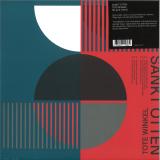
In spring 2022, Sankt Otten released their album “Symmetrie und Wahnsinn”, and now the next record is ready to enlighten our maltreated minds. “Tote Winkel” (Blind spots) is once again part of an album series with a geometric context, both creatively and musically.
Stephan Otten and Oliver Klemm made productive use of 2021, which has been decelerated to the maximum by Corona. For the first time, an external studio was booked (Mühle der Freundschaft, Bad Iburg) and the pool of analog synthesizers and other sound generators there was dusted off. Sankt Otten came up with the master plan to first free the spirit of 50 years of German electronic music trapped in the antiquated keyboards and oscillator housings, then to dismantle it, turn it inside out and reinterpret it. Echoes of music from Düssel- dorf are joined by sounds familiar from the Weserbergland, or mystical, sublime arcs of sound and, of course, the sequences typical of the Berlin School - whether side by side or interwoven. In a departure from the usual way of working, the majority of the tracks were created in the studio and in part from improvisations, which makes “Tote Winkel “ the most organic material we have heard from Sankt Otten to date.
New York-based Rafael Anton Irisarri mastered “Tote Winkel”, as he has done on productions by Biosphere, Ryuichi Sakamoto, Tycho, Terry Riley, Fennesz and many more. As part of the series of graphic covers, this extraordinary die-cut artwork was also designed by Daniel Castrejon. The vinyl version comes in a die-cut cover and colored vinyl, the CD in an elegant cardboard slipcase.
The Osnabrück duo Sankt Otten, founded in 1999, have been releasing on DENOVALI since 2009. “Tote Winkel” is their 14th album of timeless (instrumental) music. The band has dedicated itself to the holy trinity of Krautrock, Ambient and contemporary Elecronics.

- A1: The Leper Affinity
- A2: Bleak
- B1: Harvest
- B2: The Drapery Falls
- C1: Dirge For November
- C2: The Funeral Portrait
- C3: Patterns In The Navy
- D1: Blackwater Park
- D2: The Leper Affinity (Live)
Opeth’s fifth album is widely considered to be not only the Swedish group’s best work but also simultaneously one of the greatest metal albums and one of the best progressive rock albums ever made. Issued in March 2001, it was the first of several collaborations with co-producer Steven Wilson and something of a commercial breakthrough for the band as well as a critical success. This vinyl pressing is based on the definitive 20th anniversary version, which was issued on seven different vinyl colours, but not on ‘classic’ black.

Swan Song
The vinyl LP at the heart of this éthiopiques 31 tracks 2 to 11 was one of the very last vinyl records ever released in Ethiopia. But above all it represents, we felt, the absolute masterpiece of the Ethiopian Groove – the Swan Song of Swinging Addis. The album leaves a clear idea for posterity of the level of sophistication and mastery that modern Ethiopian music had achieved, before being crushed under the Stalino-military heel of the Derg – as the bloody revolution that was unfolding came to be called.
Ethiopia1976.
The Revolution that broke out in February 1974 rolled on in a ruthless march. The whole of Ethiopian society was utterly stunned. The bouquets of flowers handed joyfully to the first tanks of the coup d'état were to wilt very rapidly. From September 1976 to February 1978, 18 months of Red Terror (the name given by the junta itself) spilled blood throughout the country. This fratricidal conflict took its heaviest toll among students and youth. The shift from feudalism to a cruel and primitive Stalinism left the country's citizens deeply traumatised, and snuffed out any pretence of activism, whatever the sector of society. This ice age was to last for seventeen long years.
ሙሉቀን፡መለሰ Mulukèn Mellèssè Muluqän Mälläsä
It was three tracks by Muluken that served as the opener for éthiopiques-1 more than 25 years ago. Seven more tracks appeared on éthiopiques-3 and 13, all accompanied by The Equators, which was soon to become the Dahlak Band.
The first track, Hédètch alu, also the very first piece that Muluken ever recorded, left audiences both unsettled and amazed. Reflecting the singer's extremely young age (he was just 17 at the time), this angelic voice mystified many, who thought they were in fact listening to a feminine voice. He was not yet 22 when he released his last vinyl record in 1976 with Kaifa Records (KF 39LP), one of the very last to be issued in Ethiopia, before the cassette tape became the dominant medium for music distribution – and before the new revolutionary regime put a stop to all independent musical life, via an unspeakable barrage of prohibitions and other persecutions.
Mulu qèn, literally, “A well filled day”. This tender maternal intention wasn't enough to ward off the cruelty of fate. His mother's premature death drove Muluken to leave his native Godjam, in northeast Ethiopia, to live with an uncle in Addis Ababa. Born Muluken Tamer, he took his uncle's last name – Mèllèssè.
The spelling Muluken appeared in his administrative records. Transcription of Amharic to the Latin alphabet, both in Ethiopia and for scholars, gives rise to controversies and quibbles that can never be neatly settled. French allows for a closer approximation of the original pronunciation, thanks to its battery of accent marks, confusing as they may be to anglophones.
Between rather accommodating administrative record-keepers and the various versions that pop up in interviews given by the artist, Muluken's year of birth oscillates between 1953 and 1955…
1954? One thing is certain: the artist's talent made itself known very early indeed, because he got his start in 1966-67, at the age of 13 or 14. Photos from the period attest to his extreme youth. It's a strange sort of initiation for a very young teenager to become a sensation in the heart of Addis's nightlife at the time, Woubé Bèrèha – the Wilds of Woubé. And what's more, in the club of the Queen of the Night, the Godjamé Assègèdètch Alamrèw herself, the very same that was portrayed by Sebhat Guèbrè-Egziabhér in his novel-memoir Les Nuits d’Addis Abeba2… The legendary female club owner who is remembered to this day by the capital's ageing boomers.
Muluken first tried his hand at the drums, before he grabbed the microphone. He emigrated briefly to the Zula Club, across the street from the old Addis Post Office, one of the ground-breaking bars of the burgeoning musical scene, before joining the Second Police Band in 1968, for around three years. He spent a few months with the short-lived Blue Nile Band founded by saxophonist Besrat Tammènè. As the musical scene grew increasingly successful, and pulled slowly but decisively away from its institutional ties, Muluken released his first 45rpm single in February 1972 (Amha Records AE 440). It was included in two LP Ethiopian Hit Parade compilation albums in September of the same year. All in all, Muluken released eight two-track 45s and the same number of original cassette tapes between February 1972 and 1984, the year that he departed for permanent exile in the USA. After converting to Pentecostalism in 1980, Muluken gradually abandoned all secular musical activity. In 1985, at the end of a concert in Philadelphia, he decided to quit concerts and recording for good. Mèlakè Gèbré, the historic bass player from the Walias band who was playing with him that night, recalls that everything appeared so irredeemably diabolical in Muluken's eyes, that it was to be the end of his contribution to Ethiopian Groove.
The end of the story, the beginning of a legend.
Dahlak Band, forgotten by History
Aside from his personal history and vocal talents, it must be remembered that Muluken Mèllèssè was one of the biggest names in the musical innovations that marked the end of the imperial period. These éthiopiques aim to convince those who are just discovering this hidden gem... As for Ethiopians themselves, they are to this day captivated by this singular and atypical figure in the Abyssinian pop landscape – even though he withdrew from public life some 40 years ago. Incorrigible devotees of poetic twists, of more or less hidden meanings, Ethiopians appreciate above all the care Muluken took in choosing his lyrics and the writers who penned them, such as Feqerte Haylou, Alemtsehay Wodajo and, here, Shewalul Mengistu (1944-1977). Love songs, written by women, a far cry from the conventional drivel that pleases sappy sentimentalists.
Muluken is equally acclaimed for his perfectionism when it came to music, the opposite of the overly casual approach that is all too common. He remained a faithful partner of musicians who came from a lineage that borrowed from several inventive and pioneering bands (Venus, Equators, Dahlak). Amongst them were certain artists who began their musical lives with Nersès Nalbandian at the Haile Sellassie Theatre and who come of age in around 1973 – at just the wrong time, you might say. Among them were the pillars Shimèlis Bèyènè (trumpet), Dawit Yifru (keyboards) and Tilayé Gèbrè (sax & flute). Most notably Tilayé Gèbrè, certainly one of the most important musicians, composers and arrangers of his generation, of the end of the imperial era, and of the early years of the Derg.
It was only in 1981 that a miraculous opportunity arose for Tilayé to escape the Stalinist paradise of the dictator Menguistou Haylè-Maryam. Once again it was Amha Eshèté (1946-2021) who provided a solution. The spirited and courageous producer, who had been in exile in Washington since 1975, succeeded, thanks to his incredible perseverence, in bringing the Walias Band to the USA. It was, in fact an extended Walias Band comprising ten musicians3, six of whom chose to slip away after a few concerts and the recording of an LP (The Best of Walias, WRS 100). Tilayé Gèbrè was one of these. He has been living in the USA ever since. There he joined the then-nascent Ethiopian diaspora, which lived largely unto itself, and was making only very modest headway in the American musical market. It seems unfair that Tilayé Gèbrè and the Dahlak Band were not able to benefit earlier from the public recognition that they do deserve.
A similar draining away of the top-rate talents would lead to the reorganization of the major groups of the “Derg Time”. The remaining artists spread themselves around between Ibex Band (renamed Roha Band), Ethio Star Band and a remodeled Walias Band. That spelled the end of the Dahlak Band.
With this record, produced by the essential Ali Abdella Kaifa a.k.a. Ali Tango, we can appreciate everything that the Derg not only destroyed, but also prevented from flourishing. This gem of Ethiopian-style afrobeat came out in 1976 (and, by way of a parenthesis, before the FESTAC 1977 in Lagos, which was attended by an impressive delegation of Ethiopian musicians — although Fela was already personna non grata in his own country). Despite everything that might distinguish this ethio-groove from Fela’s music – no colonial axe to grind, no question of political confrontation with the authorities, no claims to negritude or Africanism for the Ethiopian musicians, and less extrovertion! –, this LP fits beautifully into the saga of intense and electrified soul of the new “African” groove that Fela and Manu Dibango embodied so well from that point onwards.
In restoring this record to its place in the afrobeat epic, it can be seen that, if nothing else, the timeline bestows a legitimate pedigree and a historical primacy to works that had no international impact when they were originally released.
Warning! Masterpiece!

»Hug of Gravity« is the second solo album by Raphael Loher and his first for Hallow Ground. The Swiss pianist and composer uses piano preparations, tape machines, and digital means to forge an aesthetic of playful reduction and rhythmic abstraction. The source material for these four sprawling pieces was culled from recordings of the artist performing the album’s predecessor, 2022’s »Keemuun.« Loher used them in a painstaking two-part working process to create an album that is both a product of and an ode to transformation, exploring themes of alternative temporalities and spatialities. »Hug of Gravity« oscillates between experimental electronic music, ambient, and minimal music and calls to mind the work of artists like William Basinski, Linda Catlin Smith, or label mate Andrius Arutiunian.
Loher laid the foundation for »Hug of Gravity« in 2020 with ten solo performances at his studio, during which he presented the pieces from his debut album. For these intimate concerts, he prepared the piano with modelling clay in order to move beyond the well-tempered tuning that dominates most of Western music. He then used a consecutive three-month residency in the Blenio Valley to refine the recordings. »I cut up and rearranged the material, then transferred the results—around 30 pieces—to a varispeed tape machine and then back to the computer. After that was done, I cut them up and rearranged them again,« he laughs. By radically reworking the material, he created an album that eschews traditional notions of time and space.
Loher points out the influence that his surroundings had on him. »The process created the music—and the place was essential to the process.« he says. He wandered through the mountains for up to nine or ten hours a day, which gave him a sense of what he calls expanded temporality. »Time just felt longer, my experiences seemed more diverse and nuanced, and it was as if I perceived my environment more clearly,« he explains. This shift in Loher’s perception of time and space—the latter also expressed in the album’s title—influenced his work with the varispeed tape machine. It allowed him to change the pitch of different recordings while layering them to let interference patterns emerge and emphasise the emotional qualities of the unconventional tunings he had used.
In this way, Loher constructed numerous interlocking narrative arcs throughout »Hug of Gravity,« an album that is ever-changing; an exercise in calm ecstasy that provides its audience with the feeling of being removed from conventional time and space. This approach is also reflected in the artwork for »Hug of Gravity,« which is based on drawings Loher made during his residency at Blenio Valley. Their fine hand-drawn lines run in parallel and let incidental patterns emerge, an effect that is only multiplied when the six different drawings that accompany each vinyl copy of the album are overlapping, forming ever-new visual constellations.

US ambient powerhouse and Past Inside the Present label head Zake is one of the most prolific producers in the game. He puts out new music more often than most of us put out wheelie bins. That doesn't stop him from revising what has come before, as he does here. Wash Away was made with Lucy Gooch and Black Brunswicker back in 2020 and now gets a series of subtle edits before being dropped on heavyweight wax. It is a mirage of vocal whispers, soft drones, and mindless (in a good way) musical daydreaming marbled with acoustic strings and backed with signature tape hiss. Yet another crucial work from Zake and co.
