Stepping forward with 'Owebimataeto', the new four-track EP by Colombian producer Zemog. Drawing influences from the Sikuani language and the traditions of the Guahibo people, the EP channels a raw, propulsive energy anchored in its ancestral references.
'Alai' sets the tone with a driving bassline and metallic overtones, punctuated by fluid, organic sounds that twist through shifting layers of rhythm and resonance. 'Biaba' follows with a tribal current of dense, interlocking patterns within a steadily unfolding pulse. The momentum bends sideways with 'Beaxayo', a half- time whirlwind of swirling patterns and psychedelic pull, before 'Wako' sinks into a slow, sludgy finale.
'Owebimataeto' stands as a statement of Zemog's approach to techno- immersive, bold, and steeped in Colombia's indigenous world, transforming ancient cadence into something unmistakably alive.
Cerca:prod
An exclusive collaboration lands on Drumcode, with Bart Skils linking up with rising German artist A.D.H.S for the divine ‘Can’t Hear You’. Fresh off the excellent ‘Torn Clouds’ single with Weska on Drumcode, Bart Skils is on-point as ever with his production output. The Dutchman has enjoyed a strong summer highlighted by Awakenings and a sunrise set at the iconic Fusion Festival. Meanwhile A.D.H.S is no stranger to Drumcode, having shared slick contributions to past A-Sides compilations including ‘Razor’ and ‘2Step’. He’s otherwise dropped strong releases on Exhale, Spannung and Electric Ballroom. “Can’t Hear You” was born during a Sri Lanka holiday after A.D.H.S injured his back and spent time sketching ideas on his phone. “I started playing around with samples on my phone and found this beautiful vocal and just started sketching some ideas. No pressure, just emotions,” A.D.H.S explains. “Back at the little jungle studio I had set up, I kept working on it – really taking the time to find the right chords to match what I was feeling at that moment. It’s a bit of an unusual track, and I had no intention of ever releasing it. It was just for this moment,” he shares. A.D.H.S begun testing an early version at open airs and festival, later uploading a teaser clip onto Instagram. When Skils heard the track’s unique vocal line, he was hooked. “It was a no-brainer for me to decide to work on the track with Bart, I’d been a big fan of his for years. He brought in his ideas, worked on the mix and arrangement, and together we shaped it into a version that we both absolutely love.
It’s one of those rare tracks that just capture a moment.” Indeed ‘Can’t Hear You’ is an emotional behemoth; one of those rare tracks that sounds genuinely unique and is simultaneously a banger and tear-jerker in one. “When I first heard the clip Michael (A.D.H.S.) shared of ‘Can’t Hear You,’ I was hooked by the infectious vocal. We decided to craft a full collab blending both our signature sounds, and the result is a rolling party weapon that’s become my go-to closing track,” shares Bart Skills.
With a multi-decade spanning back catalogue behind him, Bearface aka Raj Panasa shows no signs of slowing down. Over the years he has built a sturdy reputation around his distinct and innovative feel-good touch whether that be on his own Beartone Records, or the many other labels he has shared his classy sound with.
“Remakes and Raw Cuts Vol. 1” is the launch of a new vinyl series from the London-based producer, a safe place for him to showcase his eclectic sound, alongside edits and remakes of some of his favourites over the years, all finding a home on his Beartone label.
Starting off on the A side Bearface provides a funk fuelled latin explosion with his version of the classic “Tudo Que Você Podia Ser”, sassy disco attitude ready for the summer months, presenting some unforgivable dance floor mania. The A2 “Got To Be” is an original cut, meandering between playful guitar licks, and stripped back, hypnotic percussion, there is a curious atmosphere as the track continues to simmer.
On the flip side an edit from the revered beatmaker. First up he edits “Tell Me I’m Not Dreamin’” by Jermaine Jackson, the infectious vocal injects a zesty life into a killer electro groove, a playful and animated trip ready to rock the floor! Closing out the EP is the retro sounding “Everything”, the robotic vocal flashes in and out, nodding towards Daft Punk, boasting beautiful strings and crispy hi-hats bringing that day time energy.
Bearface teasing those summer moments with a jam packed EP brimming with sunshine and positivity, dive in and feel the fun!
Following up a string of releases on labels such as Mana, Sun Ark, Orange Milk Records and Abyss, Other People are honoured to present the new album Fobia by Argentinian musician and sound artist aylu, real name Ailin Grad. Inspired in part of Grad's many collaborative projects over the last few years, Fobia sees her collecting and rearranging the music and sounds fostered within these to create an intimate, spiritually charged album that turns personal struggle into collective resistance and resilience. What initially started as a way for Grad to process her own experiences with agora- and claustrophobia, and an attempt to navigate feelings of shame and a perceived demand to keep these feelings bottled up and hidden from the world, she began to realise how mental health struggles are not isolated incidents but part of broader systems of collective suffering and injustice. “It took a long time for me to discover that my issues were part of a system that produces these kinds of symptoms and that it takes a lot of courage to find a way around them. I have the feeling that more and more people suffer from these kind of things in some way or another, and what was at first taught as something you should be silent about and keep private, I discovered that the more you talk about it and share it with people you trust, the more you realise that it’s part of something much bigger.” This tension and constant pull between fear and joy, light and dark, is present throughout the album. From the strained breathing featured in opening track Yodo echoing the suffocating feeling from claustrophobia interspersed with the lighter textures of Obelisco Elysium and Prospero offering up a sense of relief, to the almost cacophonous, immersive soundscapes of El Sol Mal, mirroring the complex, often contradictory emotions when navigating mental health challenges. Fobia invites listeners to move through pain with honesty, finding strength in shared experiences.
Ani004 marks a pivotal moment for Animism Records, delivering a versatile VA that captures the label’s evolving sound.
Thoma Bulwer opens with a breaks-and-garage-infused cut, setting a crisp and percussive tone. Tommy Vicari Jnr follows with a bassline-driven house stomper, primed for peak-time floors, while US producer John Manhard brings a deep, rolling groove to B1.
Closing the VA, Tred Benedict shifts the energy with a warm ambient piece, rounding off this finely balanced release.
After the warm reception of its first VA release, Phosphor is back with a new chapter: darker, more mysterious, and with a solid line-up of artists. The A-side sets the tone with two club-focused tracks made to move the floor, while the B-side drifts into a more hypnotic and introspective territory.
The record opens with “Satisfaction”, a club-driven cut marking Jesse Maas’ first appearance on Phosphor. Heavy basslines, crisp percussion and a vocal hook give it a strong presence on the dancefloor.
Next up, “Unlimited” sees the label’s founders, Blue Vision, reaffirming their style: melancholic yet groovy, nostalgic yet forward-looking. Deep electro wrapped in lush synths and a powerful low end, it’s a track that continues to shape their identity.
On the B-side, Light Blue File steps in with “Consciousness”, a hypnotic journey marked by his signature production. Rolling basslines and intricate breakbeat drums build a tense, immersive energy.
The VA concludes with B.AI delivering a spacious, emotional piece. Floating textures, drifting pads and a subtle pulse create a deep and introspective finale.
- A1: Chargie - Sigma, Scrufizzer, Jamakabi
- A2: Superstylin' - Sigma, Danny Byrd, Basslayerz
- A3: R U Sleeping - Sigma, Dizzee Rascal, Coco
- A4: Jungle - Sigma, Stefflon Don, Yung Saber
- A5: Legendary - Sigma, Dynamite Mc
- A6: Chemicals - Sigma, Mali-Koa
- B1: Magnetic - Sigma, Julia Church
- B2: Soundboy - Sigma, Sweetie Irie, Jamakabi
- B3: Outtaspace - Sigma
- B4: Pickle - Sigma
- B5: Back To Life - Sigma, Sacha
- B6: Up All Night - Sigma, Gardna
Sigma proudly present DAY ONE - their highly anticipated fourth studio album and their first as independent artists. 2025 has seen Sigma embark on a bold new chapter in their career, starting their own label and embracing the freedom to create on their own terms. With the duo now fully independent, they are taking back control and taking it back to DAY ONE, making the music they love.
DAY ONE embodies this ethos and is inspired by their love of the underground. The gritty jungle beats and anthemic soundscapes of early rave culture that form the foundation of their artistry can all be heard in these 12 songs. From hard-hitting tracks like Chargie and Soundboy, to dancefloor weapons like Magnetic and Outtaspace, all the way through to the orchestral Back To Life, Sigma demonstrates an impressive diversity and quality that showcases their exceptional production skills and studio craft.
DAY ONE is more than an album; it’s a celebration of the duo’s journey and the people who have supported them from the start. Featuring collaborations with legends like Dizzee Rascal and rising stars such as Julia Church, the record balances nostalgia with forward-thinking innovation. “Being independent has brought us back to what it’s all about—making music for the love of it,” the duo says.
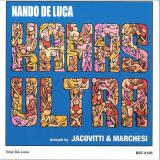
Italian leftfield funk heat reissued on Best Record, with artwork by famous cartoonist Jacovitti! The link between music and art has always been constantly renewed! Even when the union between these profound expressions of the soul manifests itself in an eccentric, surreal way, as happened in 1978 with Kamasultra a downtempo, vaguely funky that only the courageous record producer, talented musician and conductor Aldo Pagani had the courage to release. Nando De Luca, a Milanese composer and acclaimed jazz musician, who 10 years earlier, had arranged Paolo Conte's Azzurro for Adriano Celentano, accepted the strange recording project as a joke, or rather for fun, strongly influenced, like co-author Roberto Rizzo, by Jacovitti' s cheeky and impertinent artwork. Danilo Braca' s restoration and editing work, well supported by talented musicians, reestablishes the balance between music and art. It is also worth his respect for the two original versions of Kamasultra and Kama Kama just extended for the DJ's work in the club. Then the New York-based Italian DJ - known to his friends as Danyb - performs two robust house-style arrangements, evoking memories and emotions, making this reissue unique and rich. Best Record 's main aim is to make us smile and reflect on the talent of Jacovitti, able to assert his own style without indulging in conformism.
Long-standing friend of Stampo and affiliated labels, SJV heads up the third release on the label. The UK producer shines strong with his debut vinyl release—four cuts immersed with emotion but a distinct drive we have grown fond of over the years as he shared tracks with us. Now they will gain their deserved recognition as we release them into the wild, ready for those deeper moments on the dance floor.
Twin Dots is a brand new Music label founded by Alexia & Just1 based in Berlin exploring the interplay between sound & sight. The first release on the Twin Dots is by Moroccan/French DJ & producer Kizoku.
In Arabic, "Suad" suggests happiness, yet these nine tracks navigate more complex emotional terrain – bittersweet foundations supporting quirky, smile-inducing melodies born from contemplative moments.
"Suad" documents a musical journey from sample-heavy constructions toward more synthesized landscapes, paying tribute to the hip-hop Kizoku loves, from its organic roots to electronic contemporary developments. Each composition is a carefully assembled patchwork of sounds, transformed through his distinctly dreamy yet melancholic lens.
The vinyl release features a trippy illustration by Achot, whose dripping style echoes Kizoku's sonic world. Roger brought Achot's artwork to life through analog animation, adding his own experimental touch.
Anfang 2021 standen die Bandmitglieder von Lankum hoch über Dublin, den Winden der irischen Ostküste zugewandt, mit einem wundervollen Blick auf die Stadt, in der sie über 10 Jahre lang gemeinsam Musik gemacht hatten und dennoch spürten sie ein Gefühl der Unverbundenheit. Sie hatten die Stadt noch nie aus diesem Blickwinkel betrachtet, da sie immer fest in ihr verwurzelt waren und die Schönheit von Dublin immer aus dem Blickwinkel ihres Alltags sahen. Der kleine Perspektivwechsel half der Band bei den Aufnahmen in den Hellfire-Studios, wo sie nach der langen Stille der Pandemie begierig mit den Aufnahmen zu ihrem vierten Studioalbum "False Lankum" begannen. Wer jemals bei einem Lankum-Gig war, kennt die Energie, die diese Band erzeugen kann. Der unverwechselbare Drone-Sound, der sich durch ihre Arbeit zieht, wie bei ihren bekanntesten Stücken "The Wild Rover" (von "The Livelong Day", 2019) und "What Will We Do When We Have No Money" ("Between the Earth and Sky", 2017) hat die Kraft, einem den Boden unter den Füssen wegzuziehen und erzeugt dabei einen einmaligen Klang. "The Livelong Day" war das Album, mit dem Lankum aus der Schublade der "irisch traditionellen" oder "Folk"-Musik herausbrachen. Es ebnete ihnen den Weg zu medialem wie kommerziellem Erfolg, der ihnen 2019 den RTE Choice Music Prize einbrachte und dazu führte, dass sich ihre Shows in der traditionsreichen Konzerthalle Vicar Street in Dublin in nur 20 Minuten ausverkauften. Die neue Musik bringt auch neue Stimmen und so ist es das erste Mal, dass Cormac Dermody einen kompletten Song auf einem Lankum-Album singt. In Kombination mit seiner besonderen Tonlage erzeugt er eine poetische Kraft, die den Sound von Lankum bereichert. Mit "False Lankum" bewegt sich die Bands ins Unbekannte, ein Album getrieben von der wilden und oftmals seltsamen Schönheit des Schmerzes und der Freude, von Himmel und Hölle. Es ist gleichermaßen ein Album der Widersprüche und des Einklangs und sicherlich eine der spannendsten Produktionen, die in letzter Zeit aus Irland kamen. Nur wer mutig wagt, wird Herzen gewinnen - "False Lankum" ist der Schlüssel dazu.
Peek of Normal is the new label from disco veteran Stevie Kotey, whose productions have graced the Bear Funk, Ambassador's Reception, Strut, Electric Minds and many more labels in the past. Pretty much its first move was to ink a deal with Dutch master Mark du Mosch, who'd been friends with Kotey since the latter moved to Rotterdam in 2005 and discovered his neighbour had similar tastes in disco. This new label's inaugural release, Sterling Melody, is quite the labour of love, and with eight tracks spread across a double vinyl pack collection lean more towards the coldwave, electro and synthpop of the early 80s rather than 70s disco. There are echoes of some pretty classic sounds here, from the Vince Clarke-esque throb of '77777st' and 'A5G Neowise' - not unlike the soundtrack work of mid period Tangerine Dream - to the slower motioning Italo-tinged shininess of 'Soluzio'. Our favourite is the title track itself, perky and full of sparkle, like the incidental music for a lost series about a mullet-clad, white linen suited detective who doesn't play by the rules, only much, much better. Definitely worth a Peek.
BLUE VINYL EDITION[23,95 €]
Époque - Charlotte De Witte's archival label of KNTXT - and Vinyl Classics proudly present a special 12" that aims to both preserve and reimagine the spirit, sounds, and discotheque culture of the late ’90s and early 2000s for a brand-new generation.
Originally released in 1999 and produced by Jan Vervloet & Daniël Moerenhout, this track is still a guaranteed floor-filler decades later. Now, Charlotte De Witte delivers a stunning rework as a heartfelt tribute to one of her all-time favorites — with the original mix included on this release.
Charlotte de Witte’s standout performances across continents - including being the first techno (and female) DJ to headline the mainstage at Tomorrowland - Mixmag and DJ Mag covers, high-ranking positions in the charts and lists confirm her status as nouveaux techno royalty.
YELLOW VINYL EDITION[23,95 €]
Époque - Charlotte De Witte's archival label of KNTXT - and Vinyl Classics proudly present a special 12" that aims to both preserve and reimagine the spirit, sounds, and discotheque culture of the late ’90s and early 2000s for a brand-new generation.
Originally released in 1999 and produced by Jan Vervloet & Daniël Moerenhout, this track is still a guaranteed floor-filler decades later. Now, Charlotte De Witte delivers a stunning rework as a heartfelt tribute to one of her all-time favorites — with the original mix included on this release.
Charlotte de Witte’s standout performances across continents - including being the first techno (and female) DJ to headline the mainstage at Tomorrowland - Mixmag and DJ Mag covers, high-ranking positions in the charts and lists confirm her status as nouveaux techno royalty.
La Rama’s club ready sub-label RamaJam is back after a long stretch with 6x new traxx for the dance. Introducing for the first time on record, two Montréal duos that have been rocking the city for the last few years.
The Wet Steppahz are Boogaloo Jones & Pitza Dave, young producers extraordinaire, engineers at local studio Breakglass, live PA performers and organizers of the 140/160 party series. You can also find Boogaloo every weekend laying it down with the Fella’s Q-Tips & Curls crews. Young guns on the come up, be sure to follow their label STEPPATRAXX for some hot fire.
DAPASHU? is the meeting of veteran producer Shash’U & long time local DJ, promoter and studio fiend Dapapa. A quick lookup on Shash’U will have you inundated with originals and versions for you to drop at any jam. A mainstay at dance competitions, a regular feature of institution Loop Sessions, and always ready to share a tip from his production tool kit. Dapapa gets busy on the regular at venues around the city & heads both the Ol’Jack Nu Jack organization and DASA (a Montréal production suite bridging local and international likeminded artists). A fellow who takes no tune for granted.
Musically we make it easy, 3 cuts per side, representing each crew’s essence. No need to describe each tune, listen in and take notes on the mood + we laced you with those BPMs on the label so you can throw them in to the mix at any moment, no stress!
Mastered and cut in the city by our man Cristobal Urbina. Pressed in Canada & distributed from our brick and mortar shop located at 77 rue Bernard O, Montréal QC, H2T 2J9.
PS Props: These tunes were selected from recordings of the Steppahz and DAPASHU? playing live for a Seer Records party at Osmo x Marusan in April 2024… Big shout out to Emiliano & Maximum Enemi <3
Reflective Records releases Cahl Sel’s first full-length album, “Traces”. While rooted in beat-driven production, this 2xLP unfolds as a more introspective work, weaving between techno and ambient compositions, a style typically reserved for his hardware-based live sets. Now distilled in the studio, these recordings display refinement of delivery, checking into the ambient-techno stratosphere and resonating in the deep recesses of the chillout zone.
C.A.R. (Choosing Acronyms Randomly) is the musical project of Chloé Raunet, a Canadian-born, London-based artist known for her icy synths, warm vocals, and left-field pop sensibility. Drawing from post-punk, electro, and experimental songwriting, she creates music that’s both emotionally charged and sonically adventurous.
Following a five-year hiatus, C.A.R. returns with Shyana, the first single from her long-awaited fourth album, Dance at Oscar’s. Produced by Nathan Ridley, the release marks a creative rebirth: a new label, a new live formation with Joni Green, and a sound pulsing with revitalised energy. After a pandemic-induced break to focus on filmmaking — and a period of burnout and disillusionment — Raunet was ready to walk away from music altogether. But a pair of carried-over festival dates and an impromptu onstage reunion with longtime friend Joni Green unexpectedly reignited the spark. What was meant to be a farewell became the start of something new.
Shyana is a shimmering slice of machine-funk — a warped and groovy tribute to Paul Anka, filtered through C.A.R.’s surreal pop lens. A meditation on teen hysteria, pop manufacture, and the strange alchemy of early fame, the track pulses with wonky elegance and strutting confidence. One of the most playful cuts from Dance at Oscar’s, it showcases Nathan Ridley’s tight, swaggering production while capturing the album’s embrace of movement, humour, and the weirdness of cultural nostalgia.
On the B-side, Cecilia Road offers a more reflective counterpoint — a nostalgic, synth-drenched ballad built around a call-and-response vocal, throbbing melodies, and emotional tension. Intimate yet expansive, it hints at vulnerability without losing the pulse.
Artwork by Chloé Raunet, Craig Richards and Oliver Hupfau.
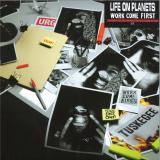
Tuskegee continues apace with ‘Work Come First’ from Life on Planets, a flawless blend of classic house, R&B, and conscious songwriting, remixed with finesse by Omar S and Soul Clap’s Charles Levine.
A modern-day hymn to hustle and stride, ‘Work Come First’ doesn’t chip away at the soul in pursuit of success. Working in collaboration with like-minded producer Seven Davis Jr., Phill Celeste applies his key alias to a triumphant, full-bodied songwriting moment. Led by beautiful organ piano, mingling with the artist’s defiant vocals and defined by the feel of a full live band, ‘Work Come First’ continues Life On Planets' beguiling, genre-crossing journey.
In ever-charismatic and minimal mode, Detroit icon Omar S breaks down ‘Work Come First’ into core elements for the floor, blowing out the system and applying Life on Planets’ vocal performance to a raw, lo-fi arrangement with a hint of street soul. In neat parallel, Charles Levine delves into the more full-bodied, rich elements of the track, tripping on the sophisticated funk long associated with the Soul Clap founder’s oeuvre.
Complimenting both takes, producer Seven Davis Jr. provides an alternate ‘Sev’s mix’, a little rougher around the edges for dancers under red lights.
Celebrated DJ, producer, and sonic explorer Auntie Flo (aka Brian d’Souza) — described by The Guardian as “one of global club culture’s most vital voices” — returns this autumn with ‘Birds of Paradise’: a rhythmically rich, emotionally resonant, and ecologically grounded new album, out 23 October via his A State of Flo imprint. The album will be launched with a special live show at London’s Jazz Caféon the same day.
‘Birds of Paradise’ draws on d’Souza’s global club experience while deepening his connection with the natural world. Built around classic Roland drum machines and iconic vintage synths, the record is a joyful, body-driven celebration of rhythm and movement, but one grounded in ecology and place. The album’s spiritual centre lies in Saligao, Goa, near d’Souza’s maternal homeland where his Auntie Florie (where the name is derived from) is buried. Where he found his ‘paradise’ nearby, staying in a converted fisherman’s hut and recorded dawn choruses from a riverside studio overlooking mangrove-lined waters. Environmental textures from Japan also make their way into the music, creating a sonic map rooted in lived experience.
“Birds of Paradise is about finding beauty and rhythm in a chaotic world. It’s about listening, to nature, to our bodies, to what’s real. It’s a reminder that dance music can be both joyful and grounded.” The album blends Afro-Latin polyrhythms with Western 4/4 patterns, fusing instinctive, dancefloor energy with field recordings that anchor the music in the earth. Described by d’Souza as “tropical with a few deeper edges, a balance of light and dark.”
The new record follows the acclaimed ‘In My Dreams, I’m A Bird and I’m Free’, which earned 4 stars and Global Album of the Month from The Guardian, featured in Disco Pogo’s Albums of the Year, and received support from Luke Una, Resident Advisor, Juno, Bandcamp, Mixmag, DJ Mag, Electronic Sound, The Skinny, Beatport, Ban Ban Ton Ton, and more. The album’s launch show at Omeara London sold out. Other recent projects include the ‘Outernational Dance’ EP on cult label Multi Culti, event series ‘Plants Can Dance (and Mushroom’s Sing)’ which explore plant and fungi bioelectricity as a means of live composition, and ‘Black Beacon’, a haunting cassette release and soundwalk series recorded on the abandoned military island of Orford Ness. There, d’Souza explored the eerie intersection of nature, decay, and deep time, gaining special access to restricted buildings to capture long-form soundscape compositions.
Alongside his production work, d’Souza has emerged as a leading voice at the intersection of sound and science. He curated music for Imperial College’s groundbreaking psychedelic therapy trials, developing six-phase playlists to guide participants through psilocybin-assisted sessions treating conditions such as fibromyalgia and gambling addiction. His five-hour ambient set at Watching Trees Festival, selected as Resident Advisor’s Mix of the Day, continued this exploration into the therapeutic potential of sound in altered states. He also spent six months collaborating with BBC producer Tom Raine on a documentary for BBC World Service, centred on a two-week journey through Kenya and Goa. There, he performed live, led plant music workshops, and joined a deep listening retreat rooted in field recording. “I realised my studio isn’t just four soundproofed walls filled with instruments — it’s the journey itself. It’s the people I meet, the natural world I listen to, and the connections I feel.”
This same commitment to deep listening fuels his live concept Plants Can Dance, a project that combines the biosonification of plants and fungi with modular synthesis. The next event, on 14 September at Hideout Hackney Wick, will feature performances by Stella Z and Lapalace, with d’Souza and resident Lamine playing live alongside responsive plants in collaboration with Repot Hackney Wick and the label Music To Watch Seeds Grow By. “I’ve spent years exploring how electronic music can connect us, not just to each other, but to the natural world. Whether it’s translating mushroom data into melody or capturing birdsong at dawn, it’s about finding resonance across bodies, ecosystems, and machines.”
Rooted in his Goan and Kenyan heritage and shaped by years of travel and collaboration, d’Souza’s creative mission is simple: to reconnect the electronic world with the natural one. Through A State of Flo, he continues to blur the boundaries between club culture, sound art, and ecological awareness.
- A1: Tafese Tesfaye - The Dove &Amp; The Pigeon
- A2: Yetemwork Mulat - Heathen &Amp; Earth
- A3: Alemu Aga - The World Is But A Place Of Survival
- B1: Sosena Gebre Eyesus - Save Us From Our Death
- B2: Abiy Seyoum - The Last Judgement
- B3: Tafese Tesfaye - You Who Take Good Care Of Me
- C1: Sosena Gebre Eyesus - When I Say Your Name
- C2: Akalu Yossef - Who Can Doubt
- C3: Abiy Seyoum - We Are All Mortals
- D1: Yetemwork Mulat - The Second Coming Of Christ
- D2: Akalu Yossef - Our Father
- D3: Alemu Aga - Song Of Praise Played With A Plectrum
Cassette[16,18 €]
The begena is a large ten-stringed lyre which is part of the traditional Amharic heritage of Ethiopia. The Amharas, who have long formed the politically and culturally dominant people of Ethiopia, mainly inhabit the central and northern part of the country. In the majority, they follow the monophysite Orthodox Tewahido Church established in the early fourth century AD.
Music plays a very important part in the life of the church. Most of the liturgy is sung and, contrary to secular music, it is accompanied by percussion instruments only. The begena occupies a special place because it is the one melodic instrument exclusively dedicated to the spiritual repertory. Because of its mythical origin, it is highly respected. Tradition holds that the begena was given to king David by God, and brought to Ethiopia by Menelik I, together with the Ark of the Covenant. It has always been the instrument of kings and nobles. Played by pious men and women of letters, it never became widespread. But it never disappeared either, not even under the Derg regime (1974-1991) which had banned the instrument.
Among Amhara string instruments, the begena is the most carefully crafted, especially with regard to the ornately sculpted crossbar. Its ten gut strings are cleaned and twisted several times. The characteristic buzzing timbre equalled by no other Amhara instrument is due to the enzirotch, that is, small bits of leather placed between each string and the bridge. This plays an important part in the sound production by creating a brief contact between the string and the upper rim of the bridge, thus modifying the vibrating properties of the string. In this manner, the spectrum of the sound is considerably enhanced (up to over 10 kHz).
The begena is a very powerful instrument, it keeps the devil thirty steps away, and its presence in the home wards off malicious spirits. Priests and preachers recommend its presence, especially during Lent (Fassika Tsom) when the Orthodox Amharas ponder their sins and repent. Because of its spiritual import, the begena generates intense emotion. According to some musicians, playing the begena brings them into direct contact with God or the Virgin Mary. The religious role of the begena is underscored by the shape of the instrument, each part symbolises an important element of the faith. The crossbar for instance, which reaches across the entire width of the instrument, represents God who is above all things. The belly which "gives birth" to the sound represents the Virgin Mary, and the ten strings recall the Ten Commandments.
Recorded by Stéphanie Weisser in Addis Ababa, Ethiopia, March 2002-December 2005.
Mastered by Renaud Millet-Lacombe.
Issued under license from VDE-Gallo, Switzerland.