Inner Image is a series of live studio recordings by Kamran Sadeghi, an Iranian, New York City-based composer and interdisciplinary artist working across electronic music, sound art, and multichannel composition. The EP is focused on rhythm programming and non-sample-based, hyper-sculpted synthesis. Audible artifacts become compositional material, producing shifting textures while exploring auditory illusion, spectral layering, and spatial perception. This debut release on amenthia recordings bridges Sadeghi's club sound system music with his ongoing work in sound art and avant-garde composition.
quête:programm 2
This record is like the lost crown jewels of House Music with a story that spans decades. Originally programmed in 1998 on an Akai S3000XL, this was meant to be released on Bjørn Torske's Footnotes in 2001. Unfortunately the original matrix and the master DAT tapes got lost under crazy circumstances. Yet several years later the tapes were found by Sex Tags Mania in the studio of mastering engineer Helmut Erler and the record eventually got issued in 2009 when a totally different House sound was "en vogue." Then due to some unfortunate coincidences most of the records ended up in far flung Japan, and so this record stayed totally underground. Yet it became a cult hit when House Music and later Disco got a proper revival around 2010/11. So over the years prices for this rarity were rising and rising... Then fast forward to 2025: after a sunny day off Berlin's modular synthesizer show "Superbooth" ATJ boss Mr. Fonk and Doc L. Junior teamed up to finally reissue this gem with new masters by Andreas Kauffelt of "Schnittstelle" / Berlin. On this 12“ Norwegian Disco and Balearic sounds meet: funky but deep to the core, playful but hypnotic, stripped down but with baroque details. Truly one of House Music's greatest productions.
Part 1[34,66 €]
We're excited to announce 2 stone cold classics from Theo Parrish on Peacefrog - First Floor Part 1 and First Floor Part 2.
Originally released in 1998 "First Floor” is Detroit/Chicago auteur Theo Parrish’s debut album. Released on vinyl in two parts for maximum playability; the raw bluesy, soulful offbeat grooves have long since buried themselves deep under the skin of the house community.
Showcasing Theo’s innovative use of drum programming and effects its uniquely loose but taut knit of minimalist elements worked to maximal, hypnotic effect have solidified its reputation as a contemporary classic and served as a corner stone for Theo’s truly legendary status.
"First Floor” is one of those albums that has transcended generic borders to influence heads of all stripes with its unmistakable soul-nuzzling texture and groove. Essential.
Cristi Cons makes his Crosstown Rebels debut with his latest EP, ‘Give Me Love’.
The three-track exploration of rhythm, tension, and hypnotic club craft lands on 16th January 2026.
Damian Lazarus’ Crosstown Rebels imprint opens its 2026 release schedule with a special label debut from Romanian favourite Cristi Cons, as he delivers a magnetic three-tracker in the form of his ‘Give Me Love’ EP. Known for his precise, minimal-infl ected approach and unwavering command of groove, Cristi’s arrival onto the label brings a release that distils his signature tension-and-release architecture into some of its most direct club form yet.
The title track, ‘Give Me Love’, unfolds with subtle vocal refrains, shadowy atmospheres, and a rolling, elastic groove built for late-night momentum. On the B-side, ‘Can You Hear Me’ channels a sleeker, more hypnotic pulse, with dubby textures, restrained bass pressure, hooky vocals, and a snaking groove to keep dancers moving. Closing the EP, ‘You Ain’t Got Nothin’ brings vibrant synths, tight drum programming, and more captivating vocal use into a head-down trip that leans into Cons’s innate ability to craft late-night and early-hours journeys.
A longstanding architect of Romania’s influential underground, Cristi Cons has carved a reputation through his solo work, his collaborative SIT project with Vlad Caia, and their shared imprint, Amphia, which now stands as a true force within the minimal landscape. Alongside regular appearances across Europe’s key institutions and collaborations with revered names, including Raresh as part of their Verico project along with Caia, Cristi continues to evolve with each release - and ‘Give Me Love’ delivers yet another side to his diverse sound as he steps into the Crosstown Rebels fold to open the year.
We're excited to announce 2 stone cold classics from Theo Parrish on Peacefrog - First Floor Part 1 and First Floor Part 2.
Originally released in 1998 "First Floor” is Detroit/Chicago auteur Theo Parrish’s debut album. Released on vinyl in two parts for maximum playability; the raw bluesy, soulful offbeat grooves have long since buried themselves deep under the skin of the house community.
Showcasing Theo’s innovative use of drum programming and effects its uniquely loose but taut knit of minimalist elements worked to maximal, hypnotic effect have solidified its reputation as a contemporary classic and served as a corner stone for Theo’s truly legendary status.
"First Floor” is one of those albums that has transcended generic borders to influence heads of all stripes with its unmistakable soul-nuzzling texture and groove. Essential.
- A1: Design - Premonition
- A2: Vision - Lucifer’s Friend
- A3: Richard Bone - Alien Girl
- A4: John Howard - I Tune Into You
- A5: Ian North - We’re Not Lonely
- A6: Selwin Image - The Unknown
- B1: Harry Kakoulli - I’m On A Rocket
- B2: Rich Wilde - The Lady Wants To Be Alone
- B3: Billy London - Woman
- B4: Alan Burnham - Science Fiction
- B5: The Microbes - Computer
- B6: The Goo-Q - I’m A Computer
- C1: Gerry & The Holograms - Gerry & The Holograms
- C2: The Warlord - The Ultimate Warlord
- C3: Die Marinas - Fred From Jupiter
- C4: Dee Jay Bert & Eagle - I Am Your Master
- C5: Peta Lily & Michael Process - I Am A Time Bomb
- C6: Sole Sister - It’s Not What You Are But How
- D1: Alasdair Riddell - Do You Read Me?
- D2: Karel Fialka - Armband (The Mystery Song)
- D3: John Springate - My Life
- D4: Idncandescent Luminaire - Famous Names
- D5: Disco Volante - No Motion
- D6: Dream Unit - A Drop In The Ocean
2025 REPRESS ON TRANSPARENT GREEN VINYL
Compiled by Philip King “And then came the rise of synth pop : blokes with dodgy haircuts hunched over keyboard-operated machines stuffed with wires and do-it-yourself tone oscillators making sounds like a brood of geese passing gas in a wind tunnel. Whoopee! This is the way the ‘70s ended : not with a blood-curdling bang bang but with a cheap, synthesized, emasculating whimper.” NICK KENT, NME. All The Young Droids: Junkshop Synth Pop 1978-1985 is a new compilation that charts the underbelly of the epoch-defining sound of the synthesiser in 80s popular music. Compiled by Philip King (previously seen compiling All The Young Droogs, Glitterbest and Boobs - The Junkshop Glam Discotheque), the music here connects the dots between DIY synth enthusiasts grappling with new, cheap synthesisers at the tail-end of punk and wannabe, jobbing songwriters enthral to the new music pioneered by Gary Numan, Depeche Mode and Daniel Miller’s Mute Records. Featuring rare tracks of auto-didactic progressive pop music, proto-techno punk, shoot-for-the-stars-land-in-the-gutter chart flops and heralded, underground synth classics, School Daze paints a picture of beautiful failure. Complete with extensive sleeve notes written by King and never before seen imagery, all 24 tracks were remastered by RPM in-house engineer Simon Murphy, many from vinyl copies due to lost master tapes. The story told on All The Young Droids is one of the dawning opportunity presented by both the emergence to the market of cheaper analog synthesisers and the distribution networks plus indie labels that exploded with the advent of punk music in 1976. While the music that sprouted out all over the globe in the wake of these factors was decried as fake, plastic, a refutation of punk’s guitar-led revolution, it’s telling that much of the music on All The Young Droids.. was created in bedrooms, ramshackle studios and home-made set ups with often borrowed equipment. In the era of record labels jumping to capitalise on the success of The Sex Pistols, The Clash (both on major labels, of course) these artists struggled to stand out from a new gold-rush with next to no budget or PR team. With radio and labels desperate for the new Yazoo, what resulted was a testament to necessity being the mother of invention. At the time, the synthesiser was the music of the future, a shiny new machine that could paint like an orchestra with a single finger and a 4-track. In the hands of Manchester avant-pranksters Gerry & The Holograms it’s a pulsing, sardonic weapon.. the only instrument on the Messthetics classic lampooning of New Wave fashion. In Hamburg, a 16 year old Andreas Dorau used it to write and record (with his female classmates on vocals) a global smash in Fred Vom Jupiter (later licensed to Mute Records). The hard-to-find English version (Fred From Jupiter, natch) is included here. Many artists with alreadystoried careers caught the bug and recorded synthesiser-fuelled peons to space, computers, the future and, of course, love-interests. Harry Kakoulli, late of Squeeze, recorded a solo album in 1979 that included the incredible power-synth-pop smash-that-never-smashed I’m On A Rocket. Similarly, Ian North of Neo and American Power Pop stalwarts Milk ’n’ Cookies bought a Korg MS20 and used a tape machine to record We’re Not Lonely, an absolute lost-classic of minimal synth pop. We’re Not Lonely also features on the Junkshop Synth Pop sampler 7” twinned with John Howard unreleased track You Will See, released April 12th 2025. There are plenty of compilation debuts in evidence. Sole Sister were a mysterious trio who were featured on the Scaling Triangles compilation of female-fronted, queer-adjacent post-punk / underground music that also featured The Petticoats. Selwin Image were from San Francisco and featured members of the recently defunct power pop/punk group The Pushups. Their stupidly catchy The Unknown fizzes with New Wave energy - think XTC to Sparks but remains unreleased until now. Dream Unit’s A Drop In The Ocean is an early synth wave cut, positively teaming with Joy Division instrumentation, previously only released on a long-forgotten and super rare, self-released EP. Incandescent Luminaire’s Famous Names belies an archetypal struggle of a small-town trying to make it in a cruel industry but is a thrilling New Romantic-Synth Wave cross over with a OMD gloominess that’s a joy to hear. Feminist Minimal Wave track I Am A Time Bomb by performance artist Peta Lilly and Michael Chance is a revelation destined for new found cult status. It was released on 7” and lost until now. The flipside to the subterranean, never-made-it synth pop mentioned above are the ambitious, even fruity attempts at success that have a perennial elegance to their confidence. New Jersey-ite Billy London (real name Ed Barth) tried to cash in on the synth boom with Woman, released by a major label, a lurching new wave track built on the Louie Louie rhythm and a wonderfully camp Lou Reedstyle sleazy vocal before exploding in the synthesised chorus. The song bombed but with a chorus like this, you have to wonder why? Ex-Glitter Band member John Springate’s My Life is truly epic, with doomed chord progressions and massive sounding drums turning into at least 3 different songs in the course of the track. Before you wonder what’s going on the song resolves with a glorious return to the main refrain. The dry-ice-dressed dance floor is well catered for too. Design’s Premonition and Vision’s Lucifer’s Friend are stone-cold minimal synth bangers, well loved but given a new lease of life here. The Warlord’s The Ultimate Warlord was released in 1978, a homespun proto Hi NRG banger that was later re-recorded by The Immortals in Canada who had a club hit with it. One-man- band Disco Volante’s No Motion was re-issued by Synth wave label Medical in 2012 but makes its first vinyl compilation appearance here. Close your eyes and you can imagine what Lawrence of Felt would have sounded like with some cheap Korgs a little earlier in his career. Gibraltar-based trio The Microbes imagined a computer programming people to dance - how prescient - and ended up with a propulsive, robo-funk track with splendid rubbery bass playing over a tectonic drum machine. Previously picked up by Belgian label Stroom TV, Dee Jay Bert & Eagle’s heavily Euro-accented I Am Your Master demands the listener to “come to paradise!” In a frankly terrifying manner. All The Young Droids is the first compilation to peel away from the narrative that dour, Minimal Synth and Cold Wave were the only musical children of the first rush of synth pop. Philip King and School Daze Records describe a much more complicated world: along with the austere, Brutalist children of Daniel Miller (who produced Alan Burnham’s Bowie-Low-influenced Science Fiction here) was a plethora of desperate cash-ins, accidental mainstream hits, ambitious pop dramas and major label punts that went nowhere. Crucially, the compilation blurs the line between junk and treasure. What if the two things are interchangeable. What if it’s all science fiction?
Inspired by Sam Kidel’s ›mimetic hacking‹ concept, Berlin-based composer Jasminev Guffond pipes opiated brass and woodwind motifs into a reverb chamber modelled on an Amazon fulfilment centre.
»Muzak for the Encouragement of Unproductivity« is a poetic inversion of Muzak’s traditional role in stimulating seamless productivity in the workplace. Beginning as a pre-radio music distribution network (1934, U.S.), Muzak was transmitted along electrical wires with the intention of being at once ubiquitous and indiscernible, always present yet easily ignorable. As a pseudo-science the aim was to capitalize on the potential of music to have a psychological effect on listeners, and with the goal of maximum productivity, was employed as a sonic disciplinary force in the work place.
Previously installed for Dystopia Sound Art Biennial (2024), at the Amazon Packing Station located before HAUNT-Frontviews in Berlin, Muzak for the Encouragement of Unproductivity sonically addresses utopic notions of seamless, efficient productivity, inherent to capitalist cultures, and their very real dystopic effects from labour exploitation to the impacts of over-production on the environment. This poetic inversion, further developed as an album, is not meant as a kind of melodic control but rather a reflective space in which to consider the benefits personally, globally and environmentally, of slowing down.
Reverb, essential to the Muzak aesthetic, is programmed (using convolution reverb) with the dimensions of the Berlin Amazon fulfillment centre, DBE2. Amazon fulfillment centers are global contemporary factories, promising a consumer utopia of next day delivery of almost any product imaginable. Inspired by Sam Kidel’s concept of »mimetic hacking«(1), the reverberation characteristics of the DBE2 facility perform a symbolic sonic break-in to the guarded Amazon fulfillment center, a trespass to the flow of production.
Guffond’s ambient Muzak with its drifting horn, clarinet and synth-like modulations is just too down-tempo for upbeat spending. If this is Muzak it is possibly Muzak for the end of the world, thoughtfully seeking transcendence through implied questioning after all avenues for shopping have been exhausted.
2025 Repress
The breakthrough dance collective of the year bar none! Having made a name for themselves creating the evilest drum&bass music the world has ever seen, in recent months Noisia have been seen DJ-ing at house clubs, releasing singles with prominent house labels and most recently remixing for the likes of Robbie Williams! However, it wasn't long before they decided to go back to the dark side and join forces with good friend Mayhem (USA) to come with something more disgusting than ever, oh and they got KRS-One to provide the vocal!
A truly breathtaking intro bursting with evil foreboding sets the scene, before Noisia and Mayhem unleash the darkness with their signature drum programming alongside futuristic never heard before beats and breaks. Be sure to wait for the hip-hopesque interlude that features the immense vocal talents of none other than KRS-One. If you're not nodding your head by that point, you best check your neck isn't broken!
Comes in standard full colour Vision Recordings repress sleeve.
The Éthiopiques series returns! Essential archive recordings from an extremely fruitful period in Ethiopian music.
Before “Swinging Addis” took over the world, there was Moussié Nerses Nalbandian — the Armenian-born composer who shaped modern Ethiopian music. Mentor, arranger, and pioneer, he laid the foundations of Ethio-jazz.
This Éthiopiques volume revives his forgotten legacy, recorded live by Either/ Orchestra First issue ever with new exclusive photos and in depth liner 8-page insert.
“Ethiopian jazzmen are the best musicians that we have seen so far in Africa.
They really are promising handlers of jazz instruments.”
Wilbur De Paris
(1959, after a concert in Addis Ababa)
አዲስ፡ዘመን። *Addis zèmèn* **A new era.**
The time is the mid-1950s and early 1960s, just before "Swinging Addis" bloomed – or rather boomed – onto the scene. Brass instruments are still dominant, but the advent of the electric guitar, and the very first electronic organs, are just around the corner. Rock’n'Roll, R’n’B, Soul and the Twist have not yet barged their way in. Addis Ababa is steeped in the big band atmosphere of the post-war era, with Glenn Miller's *In the* *Mood* as its world-wide theme song, neck and neck with the Latin craze that was in vogue at the same period. Life has become enjoyable once again, with the return of peace after the terrible Italian Fascist invasion of Ethiopia (1935-1941). The redeployment of modern music is part and parcel of the postwar reconstruction. *Addis zèmèn* – a new era – is the watchword of the postwar period, just as it was all across war-torn Europe.
The generation who were the young parents of baby boomers** were the first to enjoy this musical renaissance, before the baby boomers themselves took over and forever super-charged the soundtrack of the final days of imperial reign. Music is Ethiopia's most popular art form, and very often serves as the best barometer for the upsurge of energy that is critical for reconstruction. Whether it be jazz in Saint-Germain-des-Prés or the *zazous* who revolutionised both jazz and French *chanson* after the *Libération*, be it Madrid's post-Franco Movida, or Dada, the Surrealists and *les années folles* that followed World War I, the periods just after mourning and hardship always give rise to brighter and more tuneful tomorrows. Addis Ababa, as the country's capital, and the epicentre of change, was no exception to this vital rule.
**Two generations of Nalbandian musicians**
Nersès Nalbandian belonged to a family of Armenian exiles, who had moved to Ethiopia in the mid-1920s. The uncle Kevork arrived along with the fabled "*Arba Lidjotch*", the** "*40 Kids*", young Armenian orphans and musicians that the Ras Tafari had recruited when he visited Jerusalem in 1924, intending to turn their brass band into the official imperial band. If Kevork Nalbandian was the one who first opened the way of modernism, pushing innovation so far as to invent musical theatre, it was his nephew Nersès who would go on to become, from the 1940s and until his death in 1977, a pivotal figure of modern Ethiopian music and of the heights it. Going all the way back to the 1950s. Nothing less. And it is Nersès who is largely to thank for the brassy colours that so greatly contributed to the international renown of Ethiopian groove. While the younger generations today venture timidly into the genealogy of their country's modern music, often losing their way amidst a distinctly xenophobic historiographical complacency, many survivors of the imperial period are still around to bear witness and pay tribute to the essential role that "Moussié Nersès" played in the rise of Abyssinia's musical modernity.
Given the year of his birth (15 March 1915), no one knows for sure if Nersès Nalbandian was born in Aintab, today Gaziantep (Turkiye/former Ottoman Empire) or on the other side of the border in Alep, Syria... What is certain is that his family, like the entire Armenian community, was amongst the victims of the genocide perpetrated by the Turks. Alep, the place of safety – today in ruins.
Before Nersès then, there was uncle Kevork (1887-1963). For a quarter of a century, he was a whirlwind of activity in music teaching and theatrical innovation. *Guèbrè Mariam le Gondaré* (የጎንደሬ ገብረ ማርያም አጥቶ ማግኘት, 1926 EC=1934) is his most famous creation. This play included "ten Ethiopian songs" — a totally innovative approach. According to his autobiographical notes, preserved by the Nalbandian family, Kevork indicates that he composed some 50 such pieces over the course of his career. This shows just how much he understood, very early on, the critical importance of song as Ethiopia's crowning artistic form. Indeed, for Ethiopian listeners, the most important thing is the lyrics, with all their multifarious mischief, far more than a strong melody, sophisticated arrangements or even an exceptional voice. (This is also why Ethiopians by and large, and beginning with the artists and producers themselves, believed for a long time — and wrongly — that their music could not possibly be exported, and could never win over audiences abroad, who did not speak the country's languages).
Last but not least, one of Kevork's major contributions remains composing Ethiopia's first national anthem – with lyrics by Yoftahé Negussié.
Nersès Nalbandian moved to Ethiopia at the end of the 1930s, at the behest of his ground-breaking uncle. Proficient in many instruments (pretty much everything but the drums), conductor, choir director, composer, arranger, adapter, creator, piano tuner, purveyor of rented pianos,... he was above all an energetic and influential teacher. From 1946 onwards, thanks to Kevork's connexion, Nersès was appointed musical director of the Addis Ababa Municipality Band. In just a few years, Nersès transformed it into the first truly modern ensemble, thanks to the quality of his teaching, his choice of repertoire, and the sophistication of his arrangements. It was this group that would go on to become the orchestra of the Haile Selassie Theatre shortly after its inauguration in 1955, which was a major celebration of the Emperor's jubilee, marking the 25th anniversary of his on-again-off-again reign.
At some point or other in his long career, Nersès Nalbandian had a hand in the creation of just about every institutional band (Municipality Band, Police Orchestra, Imperial Bodyguard Band, Army Band, Yared Music School…), but it was with the Haile Selassie Theatre – today the National Theatre – that his abilities were most on display, up until his death in 1977. To this must be added the development of choral singing in Ethiopia, hitherto unknown, and a sort of secret garden dedicated to the memory of Armenian sacred music, and brought together in two thick, unpublished volumes. Shortly before his death (November 13, 1977), he was appointed to lead the impressive Ethiopian delegation at Festac in Lagos, Nigeria (January-February 1977).
His status as a stateless foreigner regularly excluded him from the most senior positions, in spite of the respect he commanded (and commands to this day) from the musicians of his era. Naturally gifted and largely self-taught, Nerses was tirelessly curious about new musical developments, drawing inspiration from the very first imported records, and especially from listening intensely to the musical programmes broadcast over short-wave radio – BBC *First*. A prolific composer and arranger, he was constantly mindful of formalising and integrating Ethiopian parameters (specific “musical modes”, pentatonic scale, and the dominance of ternary rhythms) into his “modernisation” of the musical culture, rather than trying to over-westernise it. It even seems very probable that *Moussié* Nerses made a decisive contribution to the development of tighter music-teaching methods, in order to revitalise musical education during this period of prodigious cultural ferment. Flying in the face of all the historiographical and musicological evidence, it is taken as sacrosanct dogma that the four musical modes or chords officially recognised today, the *qǝñǝt* or *qiñit* (ቅኝት), are every bit as millennial as Ethiopia itself. It would appear however that some streamlining of these chords actually took place in around 1960. It was only from this time onward that music teaching was structured around these four fundamental musical modes and chords: *Ambassel*, *Bati*, *Tezeta* and *Antchi Hoyé*. A historical and musical “details” that is, apparently, difficult to swallow, especially if that should honour a *foreigner*. Modern Ethiopian music has Nersès to thank for many of its standards and, to this day, it is not unusual for the National Radio to broadcast thunderous oldies that bear unmistakable traces of his outrageously groovy touch.
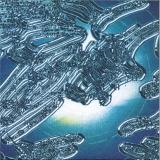
Jacksonville returns with Heavy & Gold, a powerful five-track EP rooted in the raw energy of underground house and analog machine funk. Produced by Chris Lyth, the record blends Chicago-influenced drum programming, hypnotic basslines and deep melodic textures into a set of highly functional DJ cuts built for the dancefloor. The EP moves between muscular jack tracks and deeper hypnotic moments, balancing driving groove architecture with subtle emotional tension. Heavy & Gold opens with the title track, a dense and rolling house cut driven by heavy drums and warm synth layers, before Just Another High delivers a tighter, more stripped-down groove with classic underground swing. Rapido pushes the energy further with a direct, rhythmic workout built for peak-time transitions. On the flip side, Parallel Love expands into a deeper and more atmospheric territory with evolving textures and hypnotic momentum, while closing track Miz & Ida delivers a long, hypnotic groove combining analog warmth and late-night dancefloor pressure. True to the Skylax philosophy, this release focuses on timeless groove design rather than trends, offering DJs and collectors a record built to last in the bag for years. Written and produced by Chris Lyth with executive production by Hardrock Striker and artwork by H5 (Simon Renaud), Heavy & Gold continues the Skylax tradition of uncompromising underground house music.
- 1: Toronto 20Xx
- 2: Theme From Scott Pilgrim Ex
- 3: Player Select
- 4: One More Summer
- 5: Stephen's House
- 6: Shopping District
- 7: High Fashion
- 8: High Park
- 9: Wallace's House
- 10: Downtown T.o
- 11: Hollie Hawkes
- 12: Food Court
- 13: Julie Powers
- 14: Coffee Break
- 15: Window Shopper
- 16: Wallace Wells
- 17: Band Practice
- 18: Ice Age
- 19: Dino Surf Rock
- 20: The Beaches
- 21: Vegan Banter
- 22: Vegan Brawl
- 23: Playtime
- 24: King Of The Rails
- 25: Chill Minigame
- 26: Benvie Tech 1F
- 27: Benvie Tech 2F
- 28: Benvie Tech 3F
- 29: Benvie Tech Boss Battle
- 30: Vpd Hq
- 31: Eldest Son
- 32: Vpd Boss
- 33: Medieval Julienne
- 34: Subspace Ex
- 35: Unchill Minigame
- 36: Demon Chat
- 37: Demon Attack
- 38: Casa Vania
- 39: Lady Envy
- 40: Let's Fight!
- 41: Movie Studio
- 42: Let's Throw Down!
- 43: Peaceful Casa
- 44: Throne Room
- 45: Demon Boss
- 46: Let's Do This!
- 47: Old Timey Movie Studio
- 48: Big Band Intro
- 49: Big Band Boss
- 50: Riff Rift Revisited
Scott Pilgrim EX, the newest video game from the Scott Pilgrim franchise developed by Tribute Games, is out now with an all new original soundtrack from Anamanaguchi. The sprawling soundtrack, which accompanies a brand-new storyline co-written by series creator Bryan Lee O’Malley, perfectly connects the band's legendary electronic past with their fuzzed out garage rock present while maintaining their unmistakable punchy style. Known for resonant world building across past projects, the depth of emotion and the range of styles displayed on Scott Pilgrim EX are uniquely Anamanaguchi while delivering a host of melodically anthemic and new energetic hooks that are sure to pack a punch for both newcomers and old school fans of the band alike.
Anamanaguchi's collaborative relationship with the Scott Pilgrim universe goes back to the early days of the band. After cutting their teeth programming music with playable Nintendo cartridges and helping to bring a wider audience to a largely internet based 8-bit chiptune scene, the band was brought in to score the fan-favorite soundtrack for Scott Pilgrim vs. the World: The Game. The success of this game soundtrack would help them to launch an early crowdfunding success story with their campaign for their debut album, 2013's Endless Fantasy. From there the band would go on to collaborate with virtual pop star Hatsune Miku (resulting in the perpetually viral, Fortnite featured hit, “Miku”), and later develop the intricately soundscaped compositions displayed across their second album, USA, but throughout it all the connection between the band and the Scott Pilgrim universe would remain a pivotal source of inspiration.
After being brought in to score the animated Netflix series, Scott Pilgrim Takes Off, in 2023, band members Peter Berkman and Luke Silas would credit the live kinetic energy they channeled when writing songs for the in-universe garage band Sex Bob-Omb with helping them get back in touch with the roots of how they learned to play music even before Anamanaguchi's earliest releases. This process would eventually lead to Peter and Luke alongside the remaining two band members — Ary Warnaar and James DeVito — flipping their typically meticulous digital writing process for the more collaborative, straight to tape, distorted angst that can be found on 2025's Anyway, marking another significant evolutionary turn for the band to come out of their relationship with Scott Pilgrim.
Now fresh off the heels of a nationwide tour in support of Anyway, Anamanaguchi have returned to the 8-bit beat em up world of Scott Pilgrim with a relentlessly high energy and genre defying original soundtrack for Scott Pilgrim EX. A return to form that comes with a depth of knowledge and innovative skills that have allowed the band to continue to evolve and grow alongside the characters in the Scott Pilgrim universe and the multi-generational fanbase that continues to follow along with them.
The new soundtrack for the latest installment in the Scott Pilgrim franchise, Scott Pilgrim EX
Repress!
Belgian tastemaker Charlotte de Witte returns to her own KNTXT to serve up the well regarded label's seventh EP. Rave On Time is about reminding us of the joys of being lost on the dance floor and is another hard hitting EP filled with her distinctive techno energy.
Charlotte is at the centre of her own musical movement, with a hard hitting, no frills style. Her powerful grooves, whether solo or in collaboration with the likes of Chris Liebing, come laced with ambient and synth beauty. She has mesmerised crowds all over the world as well as at her own special KNTXT events, and has been as creative as ever during lockdown, as this new EP shows.
Says the artist herself of this latest offering, "Rave On Time. Three words that probably have never been more relevant. In a time where raving feels like a distant memory, it seems increasingly important to bring music back in our lives, in reverse. Let's not forget where we came from and let's not lose hope. We'll be together again soon. Rave On Time."
Opener Rave On Time is built on hammering, distorted kicks that bend you to their whim. Freaky vocals and monstrous hits add extra pressure and ensure you stay locked before shooting laser synths and retro hoover sounds bring the rave. There's No One Left To Trust keeps up the energy with scintillating synths rattling over rock solid drum programming that never lets up. The World Inside is brain frying material, with serrated synths firing out and growing ever more acid as the groove pounds on. Common Era is brilliant hands in the air acid-trance-techno that froths with energy and flashing strobes. Finally, vinyl only track 'Wahr Ist Sie Dann’ is a distorted, brain melting techno workout with brutalist kicks and vast walls of synths that are hugely powerful.
As ever from de Witte, this is pure, unadulterated club music that makes a gargantuan impact.
Follow up to last years 12" on Voyage Direct from this active Amsterdam DJ/Producer. TIP!
.
" Back in December 2014, Elias Mazian debuted on Voyage Direct with a 12' that perfectly encapsulated his open-minded but interconnected approach to electronic music. He'd already showcased this ability to blend sounds and styles by becoming one of the most talked-about DJs on the Amsterdam scene. With Future Times' (and its superb flipside, They Don't Know'), Mazian gave notice of his undeniable production credentials.
Fast forward to the summer of 2017, and Mazian is ready to drop an EP that not only confirms his status as a rising star of Dutch dance music, but also showcases a newfound ability to combine a finely-tuned sense of what works on the dancefloor with the kind of compositional skills that can take a lifetime to perfect.
The Duplicate EP is an altogether more mature proposition than his debut 12', but retains many of the sounds and influences that marked out his first appearance on Voyage Direct - not least his love of spacey electronics, mood-enhancing chord progressions and sparkling synthesizer motifs.
This can be heard in particular on the title track, an ear-catching club jam that wraps chiming melodies, Mazian's own rapped vocal refrains and electro-era synths around a gently jacking, Chicago style house groove. It's deep, poignant and attractive, with subtle nods to the dreamy Windy City deep house of Larry Heard, the retro-futurist boogie business of Moon B and Dam Funk, and the kaleidoscopic electronic funk of Parliament.
Further proof of Mazian's increased musical maturity can be heard in the breathtaking Dream Mix' of Duplicate'. Featuring a yearning, almost melancholic vocal from the producer himself, the remix offers an analogue style deep house interpretation bristling with cascading melody lines, classic Chicago house bass and bubbly, deep space electronics.
The EP closes with superb bonus cut Ride That Shit Baby', an expansive chunk of mind-altering analogue deep house full of restless ride cymbals, crunchy drum machine hits, starburst electronics, delay-laden organ lines and swirling chord progressions. It's as intricately programmed and produced as anything Mazian has released to date, and twice as emotion-rich. In some ways, it's the perfect end to an EP in which Mazian brilliantly showcases the depth and breadth of his emerging talent."
SPTLP008 - Aural Imbalance - Fractional Spaces LP
Returning for his third solo album on Spatial, Aural Imbalance continues his journey through the cosmos with a breathtaking array of breaks, bass and inimitable ambient wizardry.
A1 - Fading Reality
Kicking off the album we are treated to a blissfully ambient intro akin to a perfect sunrise across a tranquil unfurling landscape - just as we have come to know and love from Aural Imbalance. Long, airy washes of textured pads usher in a fantastically snappy break pattern which brings an alluring energy to proceedings, driving the track along with funnels of tuneful melodies lazily drifting by in the ambience.
A2 - This Time
Jumping right into the breaks DJ-style with a delicious Hot Pants pattern, This Time's central theme utilises a hypnotic simple but effective chime melody that plays a key role throughout the track, alongside fluttering birdsong and a luscious array of samples. The exquisite breakdown which delights with an incredible blend of bass atmospheric synths & pads is both beautiful and poignant.
B1 - Always With You
Introduced by what sounds like footsteps echoing through the darkness, Always With You lives up to its title by surrounding you with a warmth usually reserved for arriving home and nestling by the fire. Driven by delicate but vibrant breakbeats, this track showcases Aural Imbalance's relentless dexterity with ambient soundscapes dancing in perfect harmony with deep 808 bass and old school beats.
B2 - Solarity
Lightly excitable hats and elegantly filtered breaks open Solarity, a deeply evocative track with breakbeats rising through the intro towards a drop with solid analogue kicks and a wonderfully deep and persistent bassline. Sporadic micro melodies cruise the waves of floating synthwork, effects rippling gently in the foreground and background of the mix like playful phosphorescence.
C1 - First Protocol
Up next we see Aural Imbalance crack the amen knuckles with a real treat for old school heads - an ambient, synthy ambient laden with incredibly light spaced-out hats through the flowing waves is soon jolted into life by a satisfyingly crisp amen break, edited and programmed with flair and majestic detail that sits perfectly with the light, often sullen textured soundscape drifting above.
C2 - Crystals
An otherworldly landscape brimming with wonder and intrigue unfolds with Crystals, an atmospheric delight with a twist. The serene opening leads into a terrific old school break which takes center stage, punchy in the mix and edited with a precision as shimmering textures and meditative synthwork are expertly layered around the ever-rolling beats, perfect for any occasion at home or the 160bpm dancefloor.
D1 - Velarious
Continuing his showcase of breaks from across the atmospheric drum & bass spectrum, Aural Imbalance introduces Velarious with a quietly epic ambient flow, with filtered drums creeping in before the drop arrives, breakbeats buoyed by some seriously deep 808 bass and distinct hi hats. Micro melodies intersect and reverberate throughout the track to complete an enduring and eclectic composition.
D2 - South Coast Sunrise
Closing with a good old fashioned love letter to the Hot Pants break, South Coast Sunrise perfectly encapsulates its title with a gorgeous panoramic overlay of ambience, spread over an intensely memorable edit of that classic break - programmed and mixed to remarkable effect and cementing Aural Imbalance's ongoing rise as a master of edits as well as ambience, fully realised for our listening pleasure on Spatial.
On “Cold Sweat,” James Brown famously called to “give the drummer some.” In 1974, Philadelphia vibraphonist Khan Jamal called to Give the Vibes Some, with superb results. Pianist and composer Jef Gilson’s PALM label gave Jamal the platform he needed to deliver a thorough exploration of contemporary vibraphone. After launching PALM in 1973, Gilson quickly demonstrated that he would only produce records not found anywhere else. Give the Vibes Some, PALM number 10, was another confirmation of this guiding principle.
Raised and based in Philadelphia, Khan Jamal took up the vibes in 1968, after two years in the army during which he was stationed in France and Germany. Decisively drawn to the instrument by the work of the Modern Jazz Quartet’s Milt Jackson, Jamal studied under Philadelphia vibraphone legend Bill Lewis and soon made his debuts in the local underground.
Early in 1972, Jamal made his first recording, with the Sounds of Liberation. The band attempted an original fusion of conga-heavy grooves with avant-garde jazz soloing. Saxophonist Byard Lancaster, an important figure in Jamal’s development, contributed much of the solo work. Later in 1972, Jamal made his leader debut with Drum Dance to the Motherland, a reverb-drenched, never-to-be-replicated experiment with live sound processing. Both albums appeared on the tiny musician-run Dogtown label.
“We couldn’t get no play from nowhere. No gigs or recording sessions or anything. So I took off for Paris,” Jamal recalled in a Cadence interview with Ken Weiss. “Within a few weeks, I had a few articles and I did a record date. It didn’t make me feel good about America.” That was in 1974, while Byard Lancaster was recording the music gathered on Souffle Continu’s recent The Complete PALM Recordings, 1973-1974.
Jamal’s record date delivered Give the Vibes Some. At its core, it was an exploratory solo vibraphone album, even if two tracks added (through technological resourcefulness?) a très célèbre French drummer very much into Elvin Jones appearing under pseudonym for contractual reasons. Another track, for which Jamal switched to the vibes’s wooden ancestor, the marimba, added young Texan trumpeter Clint Jackson III. The most notable article published on Jamal during this stay in France was a Jazz Magazine interview. Jamal’s last word there were “The Creator has a master plan/drum dance to the motherland.” “Give the vibes some” could be added to this programmatic statement.
SPTLP007 - ASC - Vanishing Point LP
Evolving further with each release, ASC delivers his latest monumental album on Spatial, a varied and memorable journey through stunningly realised fusion of modern and classic atmospheric breakbeats.
A1 - Mystic Street
Setting a murky tone with light cymbals and synthwork flecking the intro, Mystic Street calmly purrs and growls towards a drop of analogue kicks and a sparse, menacing drum pattern to kick off this incredible album. Enveloped by a dense cloud of darkly atmospherics, the track coils with tension, each element rippling through the mix like distant memories as the suitably enigmatic bassline rumbles beneath.
A2 - Convergence
Straight into the beats with a DJ-friendly two step intro, ASC utilises sparse, sci-fi hits and persistent danceable breakbeats with a melodic bassline. As the atmosphere builds, percussive tones punctuate the swirling pads, creating a luscious sense of forward motion with echoing samples and effects combining in the mix to create a dreamlike soundscape perfect for the dancefloor and headphones alike.
B1 - Invisible Borders
No ASC album would be complete without an amen workout, and we certainly have that here as Invisible Borders rushes into view with simmering intent, melodic samples tore from battlegrounds of yesteryear providing a truly epic atmosphere, rippling breakbeat trickery teasing the listener before crushing full contact amens arrive with panache and veracity - twisted across yearning bass with an unflinching fighting spirit.
B2 - Celestial Bodies
Up next a moment of calm as we soak up the charms of the dreamlike Celestial Bodies, a soothing journey of beats, breaks and atmosphere from Spatial's label head. Melodic notes ripple across the mix with old school breaks filtering to and fro, conjuring images of a cosmic journey unfolding, where old school breakbeat rhythms pulse like distant constellations, echoes shimmering in the vast expanse of ASC's versatility.
C1 - Losing Track Of Time
Into an absolute stunner next as ASC unleashes a modern classic which has a wonderfully instant familiarity to it - like it was lifted directly from the golden era of atmospheric drum & bass. The old school breaks have a distinctive feel while a variety of pads teaming with life swirl around above. A myriad of spirited melodies develop and maintain your attention with classic 808 basslines to complete this remarkable composition.
C2 - Slipstream
Switching up the vibe in style, ASC delivers an intense, cosmic intro to Slipstream which builds gradually with whooshing effects and long female vocals before a crisp, crunchy slice of Hot Pants breakbeat heaven tears through the mix, chock-full of excitable edits portrayed in a brilliant clarity. Warm sub bass punctuates the track while a reverberating earworm melody slowly etches itself into your mind.
D1 - Paradigm Shift
A good old fashioned roller up next as Paradigm Shift sees ASC blend a superb 2-step rhythm with a sumptuous smooth bassline - guaranteed to move the dancefloor. Atmospherics take no back seat either as elegant synthwork swirls and washes across the soundscape with subtly used vocal samples adding texture and warmth to an impressively layered mix that maintains its pace right through to an echoing conclusion.
D2 - Transmitter
Sending us back to interstellar space for an inspired mission through vast unexplored star systems, Transmitter sees ASC create a stunningly evocative, ethereal collage of atmospherics with sonar-like beeps punctuating and persisting throughout. Driving the track along are the superbly programmed drums, filtered and layered with twisted, distorted vocal samples to complete this exhilarating album in pure Spatial style.
Meltdown Deejays Recordings, a long-standing pillar of Finland’s underground scene, continues its beautiful streak with Kitkatone. Known for his stripped yet soulful productions, the Helsinki-based artist delivers four timeless cuts that capture the label’s spirit, honest, functional, and deeply musical.
Four tracks that balance tight drum programming with a dry sense of funk, shaping a sound that’s both stripped and full of motion.
No tricks, no drama, just proper dancefloor tools from start to finish.
Mixners and Slidey Thingys flows effortlessly between house and techno, balancing raw rhythm and subtle groove. A record full of character, made for DJs who appreciate precision, warmth, and that unmistakable Meltdown touch.
- A1: Sir Thomas Beecham - Ouverture
- A2: Sir Thomas Beecham - Air De Carmen "L'amour Est Un Oise
- A3: Sir Thomas Beecham - Air D'escamillo (Le Toréador) & Ch
- A4: Sir Thomas Beecham - Final Don José, Carmen & Choeur
- B1: Herbert Von Karajan - Suite No I Prélude
- B2: Herbert Von Karajan - Suite No I Iv. Carillon
- B3: Herbert Von Karajan - Suite No Ii Iii. Menuet
- B4: Herbert Von Karajan - Suite No Ii Iv. Farandole
Die renommierte Klassikreihe "The Masterpieces of..." widmet sich in dieser Ausgabe dem französischen Komponisten Georges Bizet - einem Meister der Melodie und Dramatik. Diese sorgfältig kuratierte Zusammenstellung vereint ikonische Werke aus Bizets Opern- und Orchesterrepertoire, interpretiert von zwei der größten Dirigenten des 20. Jahrhunderts: Sir Thomas Beecham und Herbert von Karajan. Im Mittelpunkt stehen unvergessliche Auszüge aus der Oper Carmen, darunter die berühmte Habanera "L"Amour est un oiseau rebelle", das temperamentvolle Toréador-Lied "Votre toast, je peux vous le rendre" sowie das dramatische Finale. Ergänzt wird das Programm durch die farbenreichen Suiten Nr. I & II aus L"Arlésienne, die Bizets Gespür für Atmosphäre und französischen Esprit eindrucksvoll unter Beweis stellen. "The Masterpieces of Georges Bizet" ist Teil einer 13-teiligen Sammlung, die die größten Namen der klassischen Musik vereint - von Bach bis Brahms, von Chopin bis Debussy. Ideal für Klassikliebhaber, Sammler und alle, die in die Welt der großen Meister eintauchen möchten.
To celebrate two decades of passion, innovation, and dedication to underground music, Playbeatz Labels Network proudly launches "Tribe", a new compilation project that pays tribute to the artists and sounds that have shaped its journey.
For over 20 years, Playbeatz has been a platform for creative freedom and genre-crossing experimentation—championing independent voices and uncovering unique talents from across the electronic music spectrum. "Tribe Vol. 1" is the first chapter in a special series of releases that reflect the label family’s diversity and forward-thinking spirit.
Kicking off with a limited edition vinyl, Vol. 1 features four carefully curated tracks by long-time Playbeatz affiliates —each bringing their unique sonic identity, from house to melodic textures, tech tools to soulful grooves.
A1. Erly Tepshi – Dreamer Emotionally charged and atmospheric, a deep dive into the melodic house realm, “Dreamer” wraps a haunting male vocal around lush synth lines and hypnotic rhythms.
A2. DJ Simi & Antonio Grassia – Nuestro Fuego With its driving groove and minimal yet powerful arrangement “Nuestro Fuego” is crafted as a peak-time tech and house tool. The track is all about raw energy and club efficiency.
B1. Mind The Gap DJs – Eclipse Of The Soul This old-school house jam delivers uplifting piano riffs, classic drum programming, and a timeless sense of groove. A heartfelt homage to the golden era of house, reimagined for today’s floors.
B2. Giomini & Marcus Raute – Tape Sweat A fresh and summery house cut with shimmering grooves and playful percussion. The track recalls the clean, infectious style of Deetron, blending crisp drums with melodic finesse. A pure dancefloor delight for the warmer seasons.