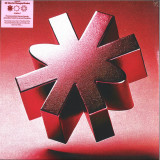
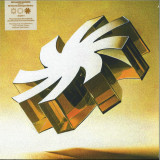
A cosmic journey in 8 parts: live drums and percussion looped through analog synths and vintage effects, unfolding into lush solos, deep basslines, and otherworldly textures. Anti-Planeting is Cappellato’s most exploratory statement yet—an album born of live experimentation, pressed for deep listening.
Releasing music – or art in general – goes beyond merely showcasing one’s performance skills or pursuing fame. Often, artists feel compelled to share certain works as a way to grow and transition into the next phase of their journey. The material may not always be easily digestible, but it is within these complexities that deeper meanings and innovative ideas emerge. This is what “Anti-planeting” embodies within Cappellato’s current musical landscape: a yearning to break free from a mindset that has long influenced society on this planet. Each track on “Anti-Planeting” carries a title that contributes to the overall narrative, revealing different aspects of the artist’s personal journey. Through these subtle feelings and intuitions, the album unfolds, gradually unveiling a complete puzzle that reflects the artist’s exploration and musical growth. “Anti-Planeting” is a fully realized album consisting of 8 tracks that emerged from these live experiments. The foundation of this project revolves around the use of live drums and percussion samples, which were then processed through an Electroharmonix 45000 looper and a Kaoss Pad II.
Cerca:project narr
Harap-Alb is the first full-length album by Articulat, following a trilogy of EPs (two released on vinyl) and previous appearances on Rotterdam’s Afrobotic Musicology label. This new project deepens Articulat’s commitment to narrative-rich electronic music — blending structure, rhythm, and texture to evoke both dancefloor tension and cinematic storytelling.
“This album began as a personal exploration—an attempt to deconstruct a story that has been familiar to me since childhood and reimagine it through sound. I first encountered Harap Alb as a crackling, timeworn radio play on vinyl, and its atmosphere has lingered with me ever since. This is my way of keeping that story alive—not by preserving it in amber but by passing it forward in a different form, hoping it resonates in a new way.”
Perhaps, years from now, someone will discover this record the same way I found the original. And in doing so, they too will add their own craft and love to the tale.
Based on the 1964 radio play adaptation by Vasile Mănuceanu
Original story: Povestea lui Harap Alb, written by Ion Creangă in 1877
‘Absurd Matter’ is a labyrinthine sonic conundrum that spirals around the two poles of extreme noise and hiphop. It's Berlin-based Italian producer Shapednoise's first album in four years and confidently advances his narrative into the next chapter, building on the groundwork of his prior abstractions to emerge with a coherent genre-warped fusion of urgent rap, crushing bass weight and idiosyncratic sound design. After spending years scrupulously deconstructing club music, Nino Pedone has rebuilt it brick by brick in his image.
The album is the first release on Pedone's brand new imprint WEIGHT LOOMING, a multidisciplinary label platform that's set to explore the depths of bass music, textured noise and abrasive transcendence. It follows a slew of acclaimed releases for Numbers,
Opal Tapes, Type and his own Cosmo Rhythmatic label, and forward thinking collaborations with Kenyan beat alchemist Slikback and Hyperdub-signed Angolan producer Nazar. Pedone's most ambitious project to date, ‘Absurd Matter’ taps into kinetic energy from a hand-picked selection of collaborators, including New York rap duo Armand
Hammer, French DJ/producer Brodinski, Bruiser Brigade's ZelooperZ and vanguard Philly poet, musician, and activist Moor Mother.
On ‘Family’, Billy Woods and Elucid weave a dismal, apocalyptic landscape with their razor-sharp anecdotes. The duo’s macabre imagery is given artificial life by Pedone's industrial scrapes and rattles that curl around their worlds like thick smoke. It's still rap, just about, but lodges itself in the back room of a factory, machines running themselves to an early death. Pairing with techno-rap trailblazer Brodinski, Pedone edges further towards the sound system, spatializing rhythms in four dimensions around Detroit rapper
ZelooperZ's playful expressions. This is the Italian producer's sci-fi tinged liquefaction of radio echoes, a way to fire familiarity into the void and sublime the human voice into weightless mist. When Moor Mother arrives shouting "me me me" on the aptly-titled 'Poetry', it sounds as if all of Pedone's loose threads are being tightened into a knot. His misshapen neo-grime beats sound like a broken jet engine, but smartly cede power to Moor Mother's resonant rhymes. "You can't cancel me" she assures. ‘Absurd Matter’ is a defining personal development for Pedone that not only appraises his career so far, but diverts its logic into frighteningly new sonic territory. From great loss, the producer has determined his work's cardinal themes, and sounds more strident and far heavier than ever before.
For the first time on vinyl a collection of tracks by Cortex, Alain Neffe (Bene Gesserit,Insane Music) experimental spoken-word project originally released on tape in 1984.
Cortex was never intended to be a conventional musical project.
From the very beginning it was centered around free live performances. These encounters were stripped down and highly visual: Alain Neffe constructed a trapezoidal fluorescent white screen lit by black light.
The narrator—la récitante—was only illuminated in the face, while the rest of the stage remained in complete darkness.
This created a ghostly effect where the audience could see only her glowing face and dark silhouette. She was a beautiful young woman, with a striking presence, and beside her, Alain Neffe played synthesizer and created sonic effects.
The aim of Cortex was to deliver a minimalist and emotional experience, one centered on text and the voice of the narrator.
Most of the tracks that exist today were recorded informally during rehearsals, using two microphones placed in front of Marshall amps, captured directly to cassette.
La récitante could choose a text from a collection of hundreds. Then, the music was improvised in real time around her voice. That process, simple, direct, and instinctive produced a body of work that’s rough around the edges, but full of presence. It’s not polished, but that’s the point.
Cortex was focused entirely on the connection between voice and sound.
Limited to 300 copies
- A1: Transmission
- B1: Reception
- A1: Unvulnerable Prototypes (Obtane Variation)
- B1: Unvulnerable Prototypes (Giorgio Gigli Variation)
- A1: The Different Perception Of Silence
- B1: The Different Perception Of Silence (Smear Remix)
- B2: The Different Perception Of Silence (Drone Edit)
- A1: Psychological Scene Of The Imagination
- B1: Psychological Scene Of The Imagination (Milton Bradley Remix)
- B2: Psychological Scene Of The Imagination (Psychoacoustic Edit)
- A1: Hidden In The Darkness
- B1: Memory Shadows
- B2: Elsewhere
- A1: Chemistry Of Human Life
- B1: Chemistry Of Human Life (Mike Parker Remix)
- B2: Chemistry Of Human Life (Abstract Narrative Edit)
- A1: Giorgio Gigli | Obtane - You Can’t Hide Yourself
- B1: Milton Bradley - Escaped From The Dark
- B2: Escaped From The Dark (Zooloft Remix)
- A1: Obtane | Giorgio Gigli - Social Deconstruction
- A1: Theory Of Radical Structures
- B1: Theory Of Radical Structures (Orphx Remix)
- B2: Patterns Of Behaviour
- A1: Underlying Destruction Of The Environmental Ties (Claro Intelecto Remix)
- B1: Tin Man - Ghost Of Techno
- B2: Obtane | Giorgio Gigli - Individual Submission To The System
- B1: The Revolt Of The Objects (Svreca Remix)
- B2: Complementary System (Brando Lupi Remix)
Deep techno, sometimes nostalgic and melancholic: that what Zooloft Records is. Giorgio Gigli and Francesco Baudazzi (Obtane), balancing soul and body, give birth to intense storytelling through sound, enhanced by an intimate reflection about childhood innocence.
Introspection is driven by a vein of subtle and rarefied nihilism, pervaded in each release. Project's graphics evoke the idea of abstract thoughts written on blank paper, where shadows meet memories.
Future, maybe, is the memory of a beautiful past. So, we are here, today, and proud to present you a special, collector-item vinyl boxset, limited to 100 pieces only, handsigned and remastered, containing the full Zooloft discography.
London-based producer, vocalist, and DJ System Olympia is set to unveil her latest project, M3 Opera,
a five-track EP that fuses her signature sensual synth soundscapes with a bold conceptual twist.
Dropping on April 25th 2025 via her own Okay Nature Records, the EP features a unique collaboration with five distinct female vocalists, each lending their voice to a standalone "act" in this sonic drama.
Inspired by the sleek power of the BMW M3 and the theatrical grandeur of opera, M3 Opera reimagines the EP format as a multi-act narrative.
Each song accelerates through a different emotional gear—romance, tension, liberation—while the lush pads, gritty drums, and dreamy melodies System Olympia is known for provide the horsepower. "This is about motion and drama," System Olympia explains. "The M3 is that late-night drive, the pulse of the road. The opera is the story unfolding with every voice, every act."
The EP showcases an all-female lineup of vocalists, each bringing their own flavour to the journey. From sultry confessions to soaring crescendos, the tracks weave together a tapestry of feminine energy that’s both intimate and expansive—think *Delta of Venus* meets horsepower under green neon lights.
Following the success of 2024’s *Sanctified* EP with Working Men’s Club and her acclaimed NTS Radio residency, M3 Opera solidifies System Olympia’s reputation as a visionary who blends retro-futuristic
sounds with raw emotion. The EP promises to be a ride worth taking, whether cruising the streets or losing yourself on the dance floor.
»White Noise« is a cooperation project between raster-media and the Max Planck Institute for Empirical Aesthetics. Artistic sound projects generated in the context of the scientific research institute will appear at irregular intervals. The themes and questions of empirical aesthetics research are taken up, questioned or challenged in very different ways. »White Noise« is conceived as an audio archive of the MPIEA artists in residence which records the artistic works on vinyl and documents the respective concepts and working methods in text form.
Victioria Keddie’s »Pshal P’shaw« (white noise #002) is a multimedia exploration delving into phonetic expression’s auditory and rhythmic nuances of phonetic expressions through an amalgamation of text, sound, video, data, and customized learning software. Drawing inspiration from the painter and architectural theorist Hermann Finsterlin who made speculative architectural renderings, the project originated during a residency at the Max Planck Institute of Empirical Aesthetics in Frankfurt in 2023.
The project’s engagement with the sonic landscape of the eight diphthongs in US English, documented through recorded sessions at EEG labs with participants of diverse international backgrounds, is not just a technical analyses. The applied script for the recording session, infused with a contemporary Western US dialect, ventures beyond, exploring the primal essence of phonetic expression and its impact on the oral landscape of mouth, throat, and tongue.
This work focuses on the spoken aspect of language: the art of oration, conversation, and mimicry. It reflects the beauty of our perpetual change, speaking directly to our humanity and the raw, tender moments of existence. It embraces the awkward, beautiful and vulnerable essence of our shared human experience.
Victoria Keddie is a multidisciplinary artist delving into sound, video, installation, and performance. Her work uncovers hidden narratives within ordinary artifacts and spaces, emphasizing their role in shaping our collective story. The examination of acoustic phenomena and language is a recurring theme in her artistic work. Keddie’s current projects navigate the acoustic complexity of language and dialects.
For over a decade, Keddie was co-director of E.S.P. TV, exploring the televisual medium for performance and sound. Keddie has performed and exhibited internationally. Recent fellowships include the NYSCA/NYFA for Music/Sound (2022), the Max Planck Institute for Empirical Aesthetics (2023), and the Bemis Center for Contemporary Art, Sound Art and Experimental Music Fellowship (2024).
»White Noise«, 40 p. magazine English/German, vinyl LP, cardboard box
- A1: Banchee - Evolmia
- A2: The Dirty Filthy Mud - Forest Of Black
- A3: Wool - Love, Love, Love, Love, Love
- A4: Spencer Mac - Ka-Ka Baya Mow-Mow (Sing A Little Love Song)
- B1: Trifle - One Way Glass
- B2: Brainticket - Black Sand
- B3: Emma De Angelis - Trip
- B4: Blonde On Blonde - Castles In The Sky
- C1: The Braen's Machine - Fall Out
- C2: Eddie Warner & Roger Roger - Shut Up
- C3: Köy Karde?Ler - Shürük
- C4: The Children - Beautiful
- D1: Moebius & Beerbohm - Doppelschnitt (Richard Norris Edit)
- D2: Demon Fuzz - Past, Present & Future
"Throughout all my time as a musician and producer, ever since Jack the Tab, I've been focused on developing a single idea: Blending psychedelic sounds and effects with rhythm." Richard Norris, Strange Things Are Happening White Rabbit 2024
Over the past few years Eskimo Recordings have invited some of the best crate diggers around to curate compilations that don't just reveal the hidden contents of their record bags but something about themselves too. Now, following in the footsteps of the likes of Bill Brewster and Psychemagik, producer, musician, DJ, writer and more, Richard Norris, takes us on a globetrotting psychedelic journey with the epic 42 track collection, Mr Norris Changes Brains.
For over forty years Richard has played a part in many of the UK's most important music subcultures. Whether sharing stages with the likes of Tracey Thorn as a pubescent punk in St. Albans, or running freakbeat nights in Liverpool and working at the pioneering psychedelic label Bam Caruso, co-producing the UK's first acid house inspired LP with Throbbing Gristle's Genesis P. Orridge or riding the wave of creativity that the second summer of love unleashed all the way to the Top of the Pop studios as The Grid, Richard's career has continually seen him work to expand both his own and the public's musical horizons.
With Mr Norris Changes Brains it's the most recent part of his mercurial career that he's focused on. Drawing inspiration from his post 2006 adventures as one half of Beyond the Wizard's Sleeve, alongside Trash's Erol Alkan, this compilation shows how a more connected world has blown the dust off a paradoxically sometimes straightjacketed scene. The result is a dizzyingly wide-ranging collection that explores the further out there reaches of worldwide psychedelia and dancefloor mayhem.
"A lot of these tracks are fairly recent discoveries, things that I've discovered from around the time I started working with Erol and going right up to today," Richard explains. "Whether that's from going out to play and finding new records in places like Istanbul or just connecting with people online from all around the world. Psych can sometimes be a sort of narrow-minded field, with everything having to sit in its specific niche, but more and more people are open to new sounds and that's allowed for a much broader selection."
Despite their disparate origins what does unite these tracks is that they aren't just there to zone out to on a bean bag as projections of swirling coloured oils and psychedelic patterns wash over you. Mr Norris may change brains but his DJ sets also move feet, and whether it's their killer guitar riffs, oscillating synths floor shaking drums or soulful Hammond organs these are all cuts that from festival tents to underground clubs have proven time and time again to get people dancing.
"With a lot of these tracks there's a kind of fun element in them," says Richard. "It's still psychedelia, but they've also got these solid, funky grooves. They sound phenomenal on the dancefloor and as much as these records might excite old psych heads, this compilation is also for a new generation out there who might have never heard anything like this before and, just like when I was 18 and heard The 13th Floor Elevators for the first time, think 'Oh, my God, what on earth is this and more importantly what else is out there?'"
- A1: Iron Butterfly - Iron Butterfly Theme
- A2: Rare Bird - Devil's High Concern
- A3: Paul St. John - Flying Saucers Have Landed
- A4: Chris Hodge - We're On Our Way (2010 Remaster)
- B1: Juantrip - Shadows
- B2: 62 Miles From Space - Time Shifts
- B3: White Trash - Road To Nowhere
- C1: Blue Phantom - Diodo
- C2: The Mannheim Rock Ensemble - Hungarian Dances
- C3: Limousine - Barriers
- D1: Ugo Busoni - Rullio
- D2: Bernard Estardy - Cha Tatch Ka
- D3: Kate - Shout It
- D4: Dyna-Might - Need You
- D5: La Metamorfosi - Scusa, Eh!
"Throughout all my time as a musician and producer, ever since Jack the Tab, I've been focused on developing a single idea: Blending psychedelic sounds and effects with rhythm." Richard Norris, Strange Things Are Happening White Rabbit 2024
Over the past few years Eskimo Recordings have invited some of thebest crate diggers around to curate compilations that don't just reveal the hidden contents of their record bags but something about themselves too. Now, following in the footsteps of the likes of Bill Brewster and Psychemagik, producer, musician, DJ, writer and more, Richard Norris, takes us on a globetrotting psychedelic journey with the epic 42 track collection, Mr Norris Changes Brains.
For over forty years Richard has played a part in many of the UK's most important music subcultures. Whether sharing stages with the likes of Tracey Thorn as a pubescent punk in St. Albans, or running freakbeat nights in Liverpool and working at the pioneering psychedelic label Bam Caruso, co-producing the UK's first acid house inspired LP with Throbbing Gristle's Genesis P. Orridge or riding the wave of creativity that the second summer of love unleashed all the way to the Top of the Pop studios as The Grid, Richard's career has continually seen him work to expand both his own and the public's musical horizons.
With Mr Norris Changes Brains it's the most recent part of his mercurial career that he's focused on. Drawing inspiration from his post 2006 adventures as one half of Beyond the Wizard's Sleeve, alongside Trash's Erol Alkan, this compilation shows how a more connected world has blown the dust off a paradoxically sometimes straightjacketed scene. The result is a dizzyingly wide-ranging collection that explores the further out there reaches of worldwide psychedelia and dancefloor mayhem.
"A lot of these tracks are fairly recent discoveries, things that I've discovered from around the time I started working with Erol and going right up to today," Richard explains. "Whether that's from going out to play and finding new records in places like Istanbul or just connecting with people online from all around the world. Psych can sometimes be a sort of narrow-minded field, with everything having to sit in its specific niche, but more and more people are open to new sounds and that's allowed for a much broader selection."
Despite their disparate origins what does unite these tracks is that they aren't just there to zone out to on a bean bag as projections of swirling coloured oils and psychedelic patterns wash over you. Mr Norris may change brains but his DJ sets also move feet, and whether it's their killer guitar riffs, oscillating synths floor shaking drums or soulful Hammond organs these are all cuts that from festival tents to underground clubs have proven time and time again to get people dancing.
"With a lot of these tracks there's a kind of fun element in them," says Richard. "It's still psychedelia, but they've also got these solid, funky grooves. They sound phenomenal on the dancefloor and as much as these records might excite old psych heads, this compilation is also for a new generation out there who might have never heard anything like this before and, just like when I was 18 and heard The 13th Floor Elevators for the first time, think 'Oh, my God, what on earth is this and more importantly what else is out there?'"
- A1: André Brasseur - Saturnus
- A2: Contessa Vittoria - Can We Stay Together
- A3: Klaus Weiss - Time Signals
- A4: Brainstorm - You Are Whats Gonna Make It Last
- B1: Paladin - The Fakir
- B2: A To Austr - Thumbquake & Earthscrew
- B3: Dave - In My Mind
- C1: Relatively Clean Rivers - Journey Through The Valley Of O
- C2: The Advancement - Stone Folk
- C3: The Pretty Things - The Sun
- C4: Poll - Psachno Na Vro To Filo Mou
- D1: Higamos Hogamos - Moto Neurono
- D2: The Invisible Girls - Huddersfield Wastes
"Throughout all my time as a musician and producer, ever since Jack the Tab, I've been focused on developing a single idea: Blending psychedelic sounds and effects with rhythm." Richard Norris, Strange Things Are Happening White Rabbit 2024
Over the past few years Eskimo Recordings have invited some of the best crate diggers aroundto curate compilations that don't just reveal the hidden contents of their record bags but something about themselves too. Now, following in the footsteps of the likes of Bill Brewster and Psychemagik, producer, musician, DJ, writer and more, Richard Norris, takes us on a globetrotting psychedelic journey with the epic 42 track collection, Mr Norris Changes Brains.
For over forty years Richard has played a part in many of the UK's most important music subcultures. Whether sharing stages with the likes of Tracey Thorn as a pubescent punk in St. Albans, or running freakbeat nights in Liverpool and working at the pioneering psychedelic label Bam Caruso, co-producing the UK's first acid house inspired LP with Throbbing Gristle's Genesis P. Orridge or riding the wave of creativity that the second summer of love unleashed all the way to the Top of the Pop studios as The Grid, Richard's career has continually seen him work to expand both hisown and the public's musical horizons.
With Mr Norris Changes Brains it's the most recent part of his mercurial career that he's focused on. Drawing inspiration from his post 2006 adventures as one half of Beyond the Wizard's Sleeve, alongside Trash's Erol Alkan, this compilation shows how a more connected world has blown the dust off a paradoxically sometimes straightjacketed scene. The result is a dizzyingly wide-ranging collection that explores the further out there reaches of worldwide psychedelia and dancefloor mayhem.
"A lot of these tracks are fairly recent discoveries, things that I've discovered from around the time I started working with Erol and going right up to today," Richard explains. "Whether that's from going out to play and finding new records in places like Istanbul or just connecting with people online from all around the world. Psych can sometimes be a sort of narrow-minded field, with everything havingto sit in its specific niche, but more and more people are open to new sounds and that's allowed for a much broader selection."
Despite their disparate origins what does unite these tracks is that they aren't just there to zone out to on a bean bag as projections of swirling coloured oils and psychedelic patterns wash over you. Mr Norris may change brains but his DJ sets also move feet, and whether it's their killer guitar riffs, oscillating synths floor shaking drums or soulful Hammond organs these are all cuts that from festival tents to underground clubs have proven time and time again to get people dancing.
"With a lot of these tracks there's a kind of fun element in them," says Richard. "It's still psychedelia, but they've also got these solid, funky grooves. They sound phenomenal on the dancefloor and as much as these records might excite old psych heads, this compilation is also for a new generation out there who might have never heard anything like this before and, just like when I was 18 and heard The 13th Floor Elevators for the first time, think 'Oh, my God, what on earth is this and more importantly what else is out there?'"
This 59 minute piece was conceived as part of a total environment for the exhibition Deus Ex Machina.
The project as a whole seeks to define and articulate the emotional, cultural and aesthetic manifestations of man’s uneasy relationship with technology. The music takes the form of a film score complete with stylized dialogue and actions.
During the 59 minutes four basic layers repeat in various configurations.The effect is to provide a template of narrative in which the pieces exhibited may become protagonists, situated in hypothetical scenarios which illustrate the contentions of Deus Ex Machina and the transmission of information.
Review:“Paul Schütze’s debut album from 1989 sets his stall out from the start; with a cyber update on Jon Hassell’s notion of ‘Fourth World Music”. Schütze’s music always sounds like it could be an alternative soundtrack to ‘Blade Runner’ (be aware fellow purists, I did state “alternative”), and this album is probably the perfect candidate if in some other dimension the Vangelis OST was no longer deemed satisfactory (such a dimension surely cannot exist). The listener feels like they’re walking through the rain soaked, neon-lit streets of a future LA with Deckard.” – Jay Harper
An immersive long-form composition in two parts that seamlessly blends a collage of spoken word, field recordings and drones with elements of dub, jazz, fourth world and ambient music.
Son Of Chi is the latest project of Rotterdam-based multi-instrumentalist, composer and producer Hanyo van Oosterom. Van Oosterom’s prolific career spans multiple decades and genres; among countless projects he has been involved in, he is known for founding the Dutch ambient collective CHI in the early eighties, and in recent years for his prolific collaboration with CHI co-founder Jacobus Derwort as Chi Factory. Following Derwort’s passing in 2019, van Oosterom decided to close the CHI circle with the birth of Son Of Chi.
Sonically, the world of ‘We Carry Eden’ is fully immersive; it ripples with depth and shimmers in detail. Motifs, ideas and fragments, arise and disappear like passing thoughts, drawing the listener deeper and deeper inwards. For those familiar with Oosterom’s work as Chi Factory, the depth and meditative nature of the work will come as no surprise; however it is Oosterom’s skill with grooves that shines equally bright here; his infectiously dubby basslines and percussion rise up from the ether, grounding the listener to the earth. ‘We Carry Eden’ at times invokes the fourth world landscapes of Jon Hassell, (with whom Oosterom has collaborated) but as a whole, it remains the unique work of an artist fully in tune with their vision.
Thematically, storytelling traditions lie at the heart of ‘We Carry Eden’, with van Oosterom’s long-time collaborator Omar Ka playing a central role. Ka, who hails from the West African nomadic Fulani tradition of storytelling, responds to the collage of field recordings and sounds collected by Oosterom. His voice is woven throughout ‘We Carry Eden’, creating a narrative that binds the multiple sound sources of the album together.
As with much of van Oosterom’s musical output, inspiration is drawn from the Greek Island of Patmos and the wisdom and prophecies of the Native American Hopi Tribe. Since his work with CHI in the early eighties, van Oosterom has often incorporated quotes from Hopi Elders into his music. Gods, spirits, animals and humans, all existing in one unchangeable relationship tied to nature; ‘We Carry Eden’ is rooted in this philosophy, serving as a peaceful message of beauty, harmony and respect for the wisdom of the Elders and ancient traditions.
Sleeve art and design by Michael Willis.
“To Model Phenomena” is a scientific concept that describes a computer’s ability to emulate, regardless of whether the emulated phenomenon exists outside its circuits or is purely imaginary.
Modeling communication platforms enables us to interact with each other or with computers. Modeling behavior patterns, nuclear fusion, or, as in the case of scientists from the Human Brain Project, a virtual human brain, allows us to simulate cognitive processes such as perception, memory, and decision-making, providing insight into the nature of human thought.
In this record, the phenomena modeled are those moments when the mind leaps into the void, confronting new paradigms. For instance, when science, art, or mass media introduces new information, propelling us into a transformed reality.
From this starting point, European musician Shifting Heigo maps a path between realities, evolving his narrative as his music unfolds. This work draws inspiration from Curtis Roads (vice chair of Media Arts and Technology at the UCSB) and his studies on granular synthesis and time scales, where each track on To Model Phenomena evokes a sense of movement, where nothing begins or ends in quite the same way.
A musician with strong ties to new technologies, Shifting Heigo has collaborated with the University of Málaga (Spain) in its PH Degree Program in video game design, composing interactive music, while also singing as part of the tenor section in the Qatar Concert Choir, affiliated with the Qatar Philharmonic Orchestra.
Currently based in Abu Dhabi, he is now part of a circle of electronic musicians surrounding the New York University Abu Dhabi, an institution that supports electronic and experimental music across the Middle East.
To Model Phenomena is the result of his search for a unique voice as a musician, where ternary rhythms, noise, and silence shape the narrative. This is a discourse from a musician’s perspective on the changes that science, technology, art, and the rapid flow of information demand of us. A direct gaze into the fear of change.
Neba Solo, whose real name is Souleymane Traoré, is a true living legend of Malian music. His voice and balafon playing are unique, instantly recognizable, and deeply cherished throughout Mali.
He gained international recognition with his iconic track CAN 2002, composed for the famous African Cup of Nations. This success opened doors to global stages, leading to tours in the United States, Asia, and Europe. Prestigious labels such as Cobalt and Secousse supported this exceptional period in the artistic journey of this musical genius.
For many years, Neba Solo has closely collaborated with Yaya Diarra, the sound engineer of the legendary Bogolan studio in Bamako. Diarra played a key role in preserving and recording the works of the balafon master from Sikasso. He was also the one who invited Dom Peter to work on a bold and resolutely modern project: an album with more electronic sounds, enriched with drum machines, offering a new artistic direction to Neba Solo’s compositions.
Dom Peter and Yaya Diarra immersed themselves in the studio to conceive and produce this album, titled TUMA DUMA. The result is a perfect alchemy, where electronic rhythms blend seamlessly with traditional percussion, redefining the richness of Malian musical heritage.
These nine tracks explore classic themes of the Mandingue repertoire while showcasing Neba Solo’s unique way of narrating both everyday life and universal stories
Saṃsāra Cycles – A Spiritual and Ode to Dance Music Trilogy by B From E
Rising French label Happiness Therapy unveils Saṃsāra Cycles, an extraordinary trilogy of EPs crafted by Danish treasure B From E. This ambitious and evocative project dives deep into the spiritual dimensions of music while paying homage to the transformative power of dance.
Through Saṃsāra Cycles, B From E demonstrates the full breadth of his artistic and technical mastery. Spanning ethereal dream house, uplifting garage / piano house and hypnotic neo trance, each record in the trilogy is a testament to his unparalleled versatility and creativity.
This trilogy, available on vinyl and digital formats, will be released between February and April 2025. Each EP embodies a unique stage of the Saṃsāra cycle, creating a cohesive narrative that connects sound, spirituality, and the energy of the dancefloor.
Erudite, the upcoming album by Thomas Decock, is a powerful exploration of modern jazz fusion that uniquely intertwines literature and music. Inspired by iconic literary characters and novels, the album aims to bring the profound emotions and complex themes of these stories to life through music. This project reflects the collective creativity of Thomas Decock and his band, pushing the boundaries of jazz and redefining them with an innovative approach.
Compositions such as the exhilarating and dynamic Rodya, inspired by Dostoevsky's renowned novel Crime and Punishment, and the refined interpretation of Joni Mitchell's Cherokee Louise, showcase both technical virtuosity and profound emotional engagement. From the sharp, angular theme of Rodya to the lyrical melody of Emma-inspired by the character from Flaubert's Madame Bovary-which also highlights the acoustic qualities of the ensemble, Erudite offers a wide palette
of musical colors, ranging from intense improvisation to expressive, lyrical moments.
The music on the album is characterized by the remarkable interaction between the musicians, who are equally at home in jazz and electronic music. Both individual and collective improvisation form the core of the band's musical expression. The sound is crafted through a blend of electronic and acoustic instruments. Erudite is not only an album for jazz enthusiasts but also for listeners intrigued by how music can complement and deepen literary narratives.
Released under the W.E.R.F. label, the album promises an engaging listening experience for a broad audience, from jazz purists to fans of innovative music. Erudite is a work that brings the spirit of both music and literature to life, taking the listener on a journey through the musical translation of classic stories.
Saṃsāra Cycles – A Spiritual and Ode to Dance Music Trilogy by B From E
Rising French label Happiness Therapy unveils Saṃsāra Cycles, an extraordinary trilogy of EPs crafted by Danish treasure B From E. This ambitious and evocative project dives deep into the spiritual dimensions of music while paying homage to the transformative power of dance.
Through Saṃsāra Cycles, B From E demonstrates the full breadth of his artistic and technical mastery. Spanning ethereal dream house, uplifting garage / piano house and hypnotic neo trance, each record in the trilogy is a testament to his unparalleled versatility and creativity.
This trilogy, available on vinyl and digital formats, will be released between February and April 2025. Each EP embodies a unique stage of the Saṃsāra cycle, creating a cohesive narrative that connects sound, spirituality, and the energy of the dancefloor.
Saṃsāra Cycles – A Spiritual and Ode to Dance Music Trilogy by B From E.
Rising French label Happiness Therapy unveils Saṃsāra Cycles, an extraordinary trilogy of EPs crafted by Danish treasure B From E. This ambitious and evocative project dives deep into the spiritual dimensions of music while paying homage to the transformative power of dance.
Through Saṃsāra Cycles, B From E demonstrates the full breadth of his artistic and technical mastery. Spanning ethereal dream house, uplifting garage / piano house and hypnotic neo trance, each record in the trilogy is a testament to his unparalleled versatility and creativity.
This trilogy, available on vinyl and digital formats, will be released between February and April 2025. Each EP embodies a unique stage of the Saṃsāra cycle, creating a cohesive narrative that connects sound, spirituality, and the energy of the dancefloor.
The album’s title deftly gestures to the sheer vastness of astronomical dimensions, while simultaneously capturing the musical breadth within, where the eight planets are imagined as the eight notes of an octave. The work draws inspiration not only from earlier compositions —most notably Gustav Holst’s The Planets—but also from the rich astronomical and cultural contexts surrounding these celestial bodies. Here, the focus transcends direct citation of melodic motifs, instead embracing an intriguing conceptual approach on a meta level, unfolding in a series of vividly contrasting soundscapes. These contrasts shape a sweeping sonic journey, one that fully embraces the album format with both arms, inviting the listener to venture into realms both strange and wondrous, feeling the immensity of the interstellar space that lies between them. Contrast, after all, is the brushstroke that enriches our world.
Embarking on an auditory voyage, "Astral Guide" establishes the sonic framework that propels us into the boundless expanses of the cosmos. Its ethereal tones evoke the vastness of space, crafting a mood ripe for exploration within the realms of sci-fi. The subsequent tracks unfold like constellations, weaving a rich tapestry of sound that seamlessly marries cinematic soundscapes with pulsating, club-oriented rhythms. This album invites listeners to traverse its immersive landscapes, whether nestled in the comfort of home or dancing under the starlit sky, each note a guide through the transcendent experience of a nocturnal journey.
"Solar Flares" draws its inspiration from the awe-inspiring expanse of solar phenomena, capturing the majestic power of the sun as it reaches into the cosmos. This track resonates with the idea that energy, while vital, can also be a force of destruction when unleashed with overwhelming intensity. The composition beautifully mirrors the sun’s duality, where brilliance and devastation coexist, inviting listeners to reflect on the delicate balance between creation and annihilation. Through its rich textures and dynamic shifts, "Solar Flares" serves as both a homage to the celestial and a poignant reminder of nature's formidable power.
"Mercury – The Winged Messenger" embodies a meticulously crafted soundscape where artistry meets astronomy. The tempo of 173.6 BPM, derived from precise astronomical data, propels the composition into a vibrant realm that resonates with cosmic energy. Synthwave sound design intertwines seamlessly with the fluid rhythms of Drum’n’Bass, imbuing the piece with an uplifting dynamism that evokes the ethereal grace of Mercury itself. In this sonic exploration, listeners are invited to ascend on wings of sound, navigating the celestial tapestry of the universe with each invigorating beat.
"Venus, The Bringer of Peace" strikes a decidedly cozy note, presenting a poignant contrast to the more tempestuous themes often found in cosmic narratives. This composition evokes a nostalgic vision of an optimistic era, one in which humanity transcended borders and embraced the infinite possibilities of space exploration, where no destination felt too distant. The dense, languid atmosphere envelops the listener, creating a tangible sense of serenity that unfolds gradually, allowing for a meditative journey through sound. Each note serves as an invitation to linger in this tranquil embrace, reflecting on the harmonious potential of our collective aspirations and the beauty of connection in a vast universe.
The central theme of „Gaia, The Bringer of Life“ —originally not part of the planetary cycle— is the profound enabler of life on Earth. The arrangement delicately mirrors the slow, tentative unfolding of this potential, marked by an initially sparse orchestration that gradually builds in momentum. This progression crescendos, embodying the explosive dynamism of the Cambrian burst of life, ultimately culminating in a euphoric fanfare—a triumphant, celebratory flourish echoing life’s victorious emergence.
"Blue Moon" unfolds as a contemplative reverie on the tranquil clarity of a night sky, now seldom glimpsed in its natural purity, unclouded by the relentless haze of urban light. The listener is drawn into the vast embrace of the star-strewn firmament, a journey that sways between euphoric awe at nature’s sublime beauty and a profound melancholy for its fragile and imperiled state. Musically, this duality finds expression in the delicate interplay of modal mixtures, while an ever-shifting triplet groove, poised at the intersection of Outrun and melodic house, lends a pulse that is both nostalgic and forward-looking—echoing the beauty and transience of a world on the brink.
Rather than replicating the original composition of „Mars, The Bringer of War“, this interpretation seeks to evoke its profound, foreboding atmosphere. Cyberpunk emerges here as an ideal genre, channeling the dark, relentless march synonymous with Mars, the ancient god of war. The piece reverberates with intensity, as distorted vocalizations rise, embodying the anguish and visceral torment that shadow war’s violent crescendo. This auditory descent into conflict captures the relentless pulse of warfare, where sound itself becomes an embodiment of suffering and fury.
Majestically, "Jupiter, the Bringer of Jollity" emerges on the celestial stage, sweeping away the somber tones with its radiant vigor. Drawing inspiration from the triumphant strains of the original, and borrowing a melodic motif in the refrain, the piece expresses joy and buoyancy through a shift to a major key and the lilting sway of a danceable 12/8 meter. Spirited and exuberant, it leaps boldly from major to minor and back again, playfully shifting time signatures to capture a mood of unbridled festivity and jollity.
Here, a more conciliatory concept is chosen than in the original inspiration. „Saturn“ aligns with the number six, being the sixth planet from the Sun and bearing the iconic hexagonal pattern at its northern pole. What, then, could be more fitting than to render this piece in a 6/8 time signature? The arrangement unfolds with a multifaceted richness, mirroring the countless stones and ice fragments that form the foundations of Saturn’s majestic rings.
„Uranus“ adopts the theme of a light-footed, dancing instrumentation, giving the impression of perpetual motion, never quite settling. This musical choice harmonizes with the planet’s own orbit, as it spins with breathtaking velocity, teetering and swaying, seemingly unable to attain rest or stability.
The chill and vastness of the cosmos find expression in „Neptune, The Mystic“. At its core, an electronic soundscape envelops a classical arrangement, its unreachability intensified by an ethereal, otherworldly choir. Hovering at the outermost boundaries of the solar system, where warmth is but a distant memory, the composition lingers in a slow, contemplative tempo, evoking a realm where space for speculation stretches wide and silence reigns supreme.
Though Pluto may have lost its planetary status, and its companion Charon never achieved one, this shift in classification subtly aligns with the cosmic scale invoked here—one that mirrors the musical tradition of an eight-note sequence. Fittingly, the album closes with „Kuiper Belt“, a composition emblematic of the turbulence and vitality of countless smaller
celestial bodies that, though diminutive, find their rightful place within the vast architecture of the solar system.
They say nature is the greatest composer, shaping the universe with a symphony of chaos and order, beauty and danger. It is this duality that fuels the artistic vision of Edictum—a producer who, armed with a doctorate in chemistry, delves as deeply into the mysteries of molecules as he does into the depths of sound. In the tension between the vastness of the cosmos and the microscopic processes that dictate life’s rhythm, Edictum creates sonic landscapes that dissolve the boundaries between science and art.
His music is a story of contrasts—a sonic tale where the raw forces of nature clash with the intricate structures of human culture. Opposites intertwine to form a harmonious whole: the primal rhythms of the earth meet the celestial melodies of the cosmos, the rigid laws of physics blend with the boundless freedom of art. Edictum explores these polarities with meticulous devotion, each composition an expedition into uncharted soundscapes—a quest to give voice to the unfathomable.
With over 20 years immersed in the realms of electronic music, Edictum has honed a keen sense for rhythm and movement. His driving beats compel both body and mind into a hypnotic flow. Yet beyond the pulse of dance lies a complex framework of conceptual thought. Today, his creative focus revolves around holistic album projects—self-contained worlds with overarching narratives that embrace contrast and complexity. Each track stands alone as a fragment of the whole, but together, they weave a cohesive tapestry, much like the chapters of a novel that guide the listener on an emotional and sonic journey.
Edictum’s distinctive musical signature has earned him international recognition. With over 150 releases, many on prestigious platforms like the iconic *NewRetroWave* label, and collaborations with artists such as Jan Johnston, Azumi Inoue, Powernerd, and Turbo Knight, he has solidified his place in the global electronic music scene. His latest work, *A Cosmic Scale*, marks his seventh vinyl album and is released under his own label, *Echoes of Expanse*. The label’s name is no coincidence—it captures the essence of his art: echoes of infinity, the vibrations of the universe distilled into a singular sonic experience that carries the listener ever further into the boundless expanse of sound and space.
While they’ve been active for more than two decades, it’s only been in recent years that the Berlin and New York based contemporary sonic arts platform, Soundwalk Collective, has begun to gather the accolades and attention that they rightfully deserve. Firmly rooted within a multi-disciplinary practice that engages the narrative potential of sound within the contexts of visual art, dance, music and film, as well as tapping anthropological, ethnographic, and psycho-geographic research, they’ve gained great note for collaborations with Jean-Luc Goddard, Nan Goldin, Sasha Waltz, Charlotte Gainsbourg, and numerous others.
Building on the back of 2023’s brilliant “All the Beauty and the Bloodshed”, Soundwalk Collective now returns with “Khandroma”, one of their most fascinating and singular endeavours to date, which re-engages their enduring creative partnerships with Patti Smith. Issued by Ubi Kū, a brand new imprint founded by the Italian Buddhist Union dedicated to the relationships between Buddhist cultures, music, and sound, across the album’s stunning two sides this incredible ensemble draws inspiration from and conjures Tibetan deities, the Himalayan Plateau, the valleys of Nepal and the highest peaks where the most ancient Buddhist temples reside, culminating as a sprawling sonic tapestry like little else. Issued as a beautifully produced, limited edition vinyl LP and CD, mixed and mastered by Giuseppe Ielasi, complete with a booklet featuring liner note essays penned by Chiara Bellini and Filippo Lunardo, and images by Stephan Crasneanscki, it’s hands down among our favourite releases by Soundwalk Collective to date and not to be missed!
An international experimental sound art collective founded in 2001 by the artists Stephan Crasneanscki, who was joined in 2008 by producer Simone Merli, Soundwalk Collective is a contemporary sonic arts platform, featuring a rotating constellation of artists and musicians, that, in vastly varied number of ways, has continuously explored the remarkable potential of sound within the contexts of visual art, dance, music and film, offering particular emphasis to anthropological, ethnographic, and psycho-geographic research, examining conceptual, literary or artistic themes. In addition to their many collaborations and accolades that attend to an increased ambitious catalog of releases, they scored Laura Poitras’ film, “All the Beauty and the Bloodshed”, which won the Golden Lion at the 2022 Venice Film Festival, as well performed and exhibited at Berghain, CTM Festival, documenta, Manifesta, New Museum, and Centre Pompidou, where they notably opened “Evidence”, a exhibition with Patti Smith comprising an audio-visual journey from the work of French poets Arthur Rimbaud, Antonin Artaud and René Daumal. While Soundwalk Collective’s output and use of sonority - sometimes original composition and others manipulated archival recordings - and context is varied, the project’s endeavours are unified by a focus on sound as material that is both tactile and poetic, pursuing layered narratives that address ideas of memory, time, love and loss. Their latest, “Khandroma”, enlisting Patti Smith’s contribution on one of its tracks, stands among the most exciting and rich of these explorations yet.
Perhaps the best way of approaching “Khandroma” is through Soundwalk Collective’s longstanding focus on the discipline of psycho-geography - a practice that interrogates the impact of an environment’s embedded histories and meanings on the psychology of the present - as well as the group’s integration of observations of nature, and uses of non-linear narrative, as a vehicle for recording and the synthesis of meaning. Like previous projects that have encountered them traveling extensively across the world, occupying diverse environments for long periods of investigation and fieldwork, during which they source materials for subsequent works, the material roots of “Khandroma” are a body of field recordings made by Crasneanscki, Francisco López, and Merli at altitudes between 2,760 and 4,500 meters, in varying locations across Upper Mustang during 2016.
Drawing the album’s title from the Tibetan feminine deity who reigns the skies, the album’s two compositions weave a stunning sonic tapestry from collaged sounds of nature, bells, drones, unplaceable tones and vocals, and in the case of its second piece, “Chasing the Demon”, the voice of Patti Smith, culminating as a deeply emotive and imagistic expanse that taps something far more profound than any of its single parts. As the collective states: “the album traces the continuous morphing of the wind into sound expressions. The Himalayan Plateau seems designed to amplify and echo the encounter of the breaths, the prayers, and the chants emerging from around and within those temples; amid the sounding of bells, the turning of prayer wheels, and the billowing of flags. A resonant musical body that we recorded so as to capture its boundless mutations; an unstoppable force that cries, whispers, and blows through and over stones, wood, empty halls and monastic robes, etching an ever-changing sonic landscape onto the surfaces it encounters.”
Immersive, stunningly beautiful, and haunting, “Khandroma” draws the ancient and distant into the consciousness of the present, close to home, bordering on the profound. Issued by Ubi Kū as a beautifully produced, limited edition vinyl LP and CD, mixed and mastered by Giuseppe Ielasi, complete with a booklet featuring liner note essays penned by Chiara Bellini and Filippo Lunardo, and images by Stephan Crasneanscki, we can’t recommend it enough.