Klaus Mäkelä brings the Orchestre de Paris to Decca Classics for a major new album of Stravinsky’s most iconic ballet scores. The album represents Mäkelä’s first recording with his French orchestra, which will be followed by a further Ballet Russes release in 2024 featuring Stravinsky’s Petrushka and Debussy’s Jeux and L’Apres midi d’une faune. Klaus Mäkelä has electrified the musicians and audiences of the Orchestre de Paris since the start of his Music Directorship in September 2021. One of the major projects of his second season at the Philharmonie de Paris was a traversal of Stravinsky’s pivotal ballet scores The Firebird and The Rite of Spring that proved anything but routine. The performances captured live on Decca’s new release carry the combination of intensity, intelligence and authority on which the young conductor is building his extraordinary career.
Поиск:project one
Все
From Alehouse to Playhouse Bjarte Eike and his barnstorming Barokksolistene capture the vital spark of Restoration London’s entertainment scene with a captivating new recording for Rubicon Classics! The Playhouse Sessions will be released on 23 September 2022 to coincide with Barokksolistene’s concert double-bill at London’s Southbank Centre.
‘A smattering of Purcell, dances from Playford’s Dancing Master, shanties, reels and ballads succumb to a nine-piece ensemble drawing on Baroque, jazz and folk styles for a no holds barred hooley of riotous improvisatory give and take,’ (BBC Music Magazine review of The Alehouse Sessions, August 2019)
London’s musicians, pushed in the 1650s, to the margins of society by order of Oliver Cromwell, found room for new forms of entertainment in city-centre taverns and alehouses. They remained there long after the restoration of the monarchy, performing sets of dances, theatre songs and bawdy ballads to audiences glad to be free from Puritan constraints on pleasure.
Norwegian violinist Bjarte Eike and his Barokksolistene have restored the spirit and substance of those long-forgotten performances with their Alehouse Sessions, hailed by The Times as ‘irresistible’ and ‘fabulously unrestrained’ by The Guardian. Five years ago the Norwegian violinist and his band scored a best-selling album with The Alehouse Sessions on Rubicon Classics. They return to the label with another compelling collection of music and words of the kind on offer more than three centuries ago at Henry Purcell’s favourite Westminster watering holes. The Playhouse Sessions, set for release on Rubicon Classics on 23 September 2022, reflects the uplifting energy and engaging emotional contrasts of Barokksolistene’s Alehouse performances.
“The album contains a sort of inner narrative that runs through the recording,” says Bjarte Eike. “It has become like a play in its own right, with each track being a small tale within a larger story.” The recording’s tracklist includes Eike’s beguiling arrangements of music from Purcell’s semi-opera The Fairy Queen and his own original compositions on words from the play on which it is based, Shakespeare’s A Midsummer Night’s Dream; popular songs and ballads such as ‘The Irish Washerwoman’, ‘I often for my Jenny strove’ and ‘The Three Ravens’; tunes from Purcell’s welcome odes and stage shows, Come ye sons of art and Dido and Aeneas among them; the ‘Willow Song’ from Shakespeare’s Othello; Eike’s own voice in Puck’s monologue from Act 5 of A Midsummer Night’s Dream; and John Dowland’s sublime air ‘Can she excuse my wrongs’.
London’s theatres were closed at the start of the English Civil War in 1642 and remained shut until the Restoration. Alehouses offered redundant musicians, actors and dancers a place to scrape a precarious living and soon became their creative refuge. “Although a few surviving theatres reopened in 1660 with the return of Charles II, there was little money around to rebuild those that had been demolished,” observes Bjarte Eike. “And a generation of musicians had already found an audience in places like the Black Horse in Aldersgate Street. So popular were their alehouse sessions that Cromwell tried to abolish them! But they outlived him and became part of Restoration musical life.” The form of a Barokksolistene Alehouse, he adds, is like a creative room. “Within its framework I can frequently refurbish the show with new contents. The Playhouse project is likewise an extension of the ever-evolving Alehouse Sessions. Together they tell the story of music and theatre in London during Cromwell’s time and after the Restoration. Of course there’s an historical context to what we do. But there’s also the practical context – which is even more important to me – of connecting with a contemporary twenty-first century audience. An Alehouse / Playhouse performance is not something for the museum; it's about music made in the present moment, just as it was in the London alehouses of Purcell’s day -- with their playhouses annexed to the rear of the beer-drinking saloons. The encounter of musicians onstage and the audience in the hall is the real magic of it. We have to fuse the audience into the action of our performance!”
The Playhouse Sessions will be launched on Friday 23 September with a late-night concert at the Purcell Room and a post-concert Alehouse Session in the foyer of the Queen Elizabeth Hall. Soprano Mary Bevan is set to join Eike and his Alehouse Boys for the first half of their Southbank Centre double-bill, offering unique interpretations of songs from Purcell shows and other hits from the late seventeenth-century London stage. “The Southbank Centre is a direct descendant of concerts given in the 1650s in the alehouses of London,” notes Eike. “These alehouses after all staged some of the world’s first public concerts. Later, after the Restoration, it became common for promoters to advertise alehouse concerts in the press and offer subscription tickets. Purcell and his fellow musicians were thus just as at home performing there as they were in the chambers of the royal court or in London’s new theatres.”
Bjarte Eike launched his Alehouse Sessions in company with like-minded musicians 15 years ago. The ensemble comprises a core of regular performers, all of whom have committed to memory a huge setlist of up to four hours of music. Typically they meet a day or so before a concert tour to share a meal and make music together; then next day, re-grouping thirty minutes before the show, they discover Eike’s select-menu for the evening. “That ensures that every show is fresh,” he notes. “I make sure we never repeat the same programme twice. It’s therefore essential to work with people who share my outlook and dare to adventure. We’re into a high-risk sport, with lots of traps and places where the unexpected appears - for good or for ill. And so the audience knows we’re vulnerable. But our skill is seen in how we re-act on the hoof to the unpredictable. That’s authenticity and honesty - and above all it’s a performance that’s genuine.”
Armed with a classical training and a background in folk music and improvisation, Bjarte Eike was drawn naturally to Early Music in all its stylistic variety. “I never really felt at home with only one genre,” he recalls. “Early Music allowed me to study profound, complicated compositions, but performing it has also opened up the chance of rebellion and uproar! Early music offers wide, multi-faceted areas of musical exploration for me. You find, for instance, links to different types of music wherever you look in seventeenth-century English repertoire. And I am fascinated by all these connections. They offer a foundation for the Alehouse Sessions and for all Barokksolistene performance more generally. Every member of the group plays, sings, dances and improvises without limitation. We’re all interested in the many different fields of being a stage performer and pushing hard at the ‘normal’ boundaries of what it means to be a classical musician.”
The Junkyard 2 came into fruition when it was released in May of last year, as an intimate collection of what she considered her best material. Scott has been taking piano lessons since she was eight years old growing up in California, and that instrumental talent is one of the most striking elements on the record. The songs reckoned with touchy subjects -- emotional labor, insecurity, healthcare -- with razor-sharp wit and care. Even if it was recorded poorly, the brilliance of the writing and performance still resonated. After that, she realized she had to do better, and so she unveiled Public Void in September. She ditched the piano, played with software, and gave her music a texture that was bolder, weirder, and catchier. Together, the two projects and Scott’s other singles have combined to amass 87.8 million on-demand U.S. streams, according to MRC data. The landscape of TikTok is cluttered, and hits are ephemeral, but Scott’s strike a unique chord and her image is constantly growing. When asked if she considers that music will be her full time job, she pauses, reluctant to think too far ahead. “I think, for the near future, yes,” she ultimately answers. “I’m definitely not leaving college for it. But the next couple of years are locked in.” As of April 2022, “Rät” is now a gold single. The album has streamed over 350M times in under 2 years.
The Junkyard 2 came into fruition when it was released in May of last year, as an intimate collection of what she considered her best material. Scott has been taking piano lessons since she was eight years old growing up in California, and that instrumental talent is one of the most striking elements on the record. The songs reckoned with touchy subjects -- emotional labor, insecurity, healthcare -- with razor-sharp wit and care. Even if it was recorded poorly, the brilliance of the writing and performance still resonated. After that, she realized she had to do better, and so she unveiled Public Void in September. She ditched the piano, played with software, and gave her music a texture that was bolder, weirder, and catchier. Together, the two projects and Scott’s other singles have combined to amass 150 million on-demand U.S. streams, according to MRC data. The landscape of TikTok is cluttered, and hits are ephemeral, but Scott’s strike a unique chord and her image is constantly growing. When asked if she considers that music will be her full time job, she pauses, reluctant to think too far ahead. “I think, for the near future, yes,” she ultimately answers. “I’m definitely not leaving college for it. But the next couple of years are locked in.”
- 1: Find Yourself (Ft. K.o
- 2: Wake Up (Ft. Chuuweee & Bob Styles)
- 3: Everything (Ft. Derek Minor)
- 4: How Many More (Ft. Lando Chill)
- 5: Aquimibee (Ft. Michael Christmas)
- 6: Eastside With Love (Ft. Kadence / J Rolla / Td Badazz / Marvaluzz Thug / Grand National)
- 7: Moozie (Ft. Psyrotiual)
- 8: Lnb
- 9: Melody Lingers On (Ft. First Verse)
- 10: Duke Lucky (Ft. Krum)
- 11: Trouble (Ft. Runt & Ronni Wit Tha K)
- 12: Whatever Happens, Happens (Ft. Dewey Binns)
- 13: The Burden
- 14: Black Star (Ft. Scoopay)
- 15: Indulgence (Ft. Boldy James)
- 16: Wishing (Ft. Blu)
- 17: Savior
- 18: Key Of Life (Ft. Murs & Yah Ra)
- 19: Angels (Ft. Mistah F.a.b.)
- 20: All We Know (Ft. M1 Platoon)
- 21: Blessings (Ft. Che Noir & John Gives)
- 22: Enough
Jabee's Am I Good Enough is the prolific OKC hip-hop artist’s most ambitious project to date. Several years in the making, Am I Good Enough compiles four EPs of brand-new music (22 tracks total), each recorded entirely with a different producer. The resulting four EPs each could stand alone as powerful individual works, but combine to make one of the most remarkable and compelling artistic statements of Jabee’s career. Am: produced by Derek Minor I: produced by Blu Good: produced by Conductor Williams Enough: produced by Havoc (of Mobb Deep). Am I Good Enough is available on 2xLP, housed in a gatefold jacket with inner sleeves showcasing each of the four EP’s individual covers.
Brian Jonestown Massacre, Velvet Underground, TOY. “Upon the highways of Freedom, where Evil is like a Ferrari… “ Unbeknownst to its members, Index For Working Musik was born on an evening in late 2019 amidst the discovery of a collection of faded b&w photocopies that had been marinating on the floor of a urine-alley in the Gothic Quarter of Barcelona. An assortment of sacred and profane imagery were crumpled amongst an essay on early Christian hermits, entitled Men Possessed by God, the meaning of which was enticingly vague. Received together, they planted the seeds for a new endeavour. Though Max Oscarnold and Nathalia Bruno were already engaged in a creative ping-pong of sorts, the results to this point had only totaled a 30 min long ½ inch tape containing one track and four interludes. They needed a page and they needed ink, and they needed a place and it needed energy. Suddenly by chance or divine intervention, their experimental venture had been given form and direction. Back home in London’s cursed smog, they moved themselves and their 8-track studio into a basement in E8, where the project’s gravitational pull gained strength, quickly developing into an unexpected collective with the incorporation of drummer Bobby Voltaire, double bass player E. Smith and guitarist J. Loftus. As the world shifted around them and the Plague Years followed, it became increasingly clear that they were not going to leave that small basement room. The scarcity of light or outer world presence was less a limitation, instead the main tool at hand, allowing the recording to stretch for boundaryless days in architectural isolation, and forcing them to make straight forward free guitar music, adopting a ‘first thought, best thought’ approach. 35 minutes of repeat phrased guitars, slow-clipped drums and dulcet vocals where the recurring landscape is the desert. Reel-to reel-loops of Afghan music compete with the found sound overlays of voices recorded at the queue of the pharmacy and drum machines borrowed from Spanish heroes, channelling both far-off climes and snippets from a closer reality. It’s a strange psychic brew, built of imagined mysticism and domestic realities, of fever dreams and days that stretched into weeks of months. What was sparked by that discovery in the Gothic Quarter was actually a realisation that what they were looking for was with them all the while, buried as it was in piles of voice memos and recorded guitar feedback. Men Possessed By God they may be not: it was self-possession that was to guide their way in the end. “Life, despite all its destructive changes, remains indestructibly powerful and joyful
Following hot in the footsteps of his debut HF release ‘Cocoa Butter’, ‘Off The Grid’ sees Renelle 893 team up with producer Bay29 on a body of work that offers an escape route from the monotonous every day; the duo taking us further and further off the beaten track, marrying moments of purest hedonism with stark reminders that the real world lies in wait, just after sunrise, with no pause button in sight.
Laying the foundations with summer anthem (and lead single) ’Spaghetti’, Renelle wrestles with the fleeting nature of youth, and his topsy turvy relationship with the finer things in life. The dynamic is both gritty and nostalgic as Renelle walks the fine line between Hollywood hedonism and slurry excess, his mood swinging between moments of invincibility and vulnerability, expertly scored by Bay29’s ethereal, bass dripping instrumentals.
Another SE London / Brighton hook up, one of many on the label in recent years, Renelle utilised his late night train rides to-and-from Bay29’s Brighton studio as an opportunity to refine the verses that make up the bones of the project.
Twelve-tracks; six vocal, six instrumental, ‘Off The Grid’ is the first in a series of new works from Renelle 893 & Bay29. A perfect scene-setter for what’s to come.
As Renelle 893 explains… “Off The Grid is about soul searching and figuring out what kind of adult I am looking to be, navigating a world filled with distractions that will do everything to numb the pain as life inevitably passes you by…”
Repress!
‘Shapes,’ the third album from London-based multi-instrumentalist, Robohands, fuses elements of jazz, krautrock, hip hop and ambient music. For fans of Khruangbin, Yusef Dayes, CAN, Coltrane and 70s library music moods.
Shapes is the solo project of London based composer, instrumentalist and producer Andy Baxter. His debut LP Green was released on Village Live Records in 2018 and was received with much love and acclaim in the UK Jazz, hip hop and surrounding scenes.
His follow up full-length, 'Dusk’, dropped in 2019, combining soul, funk, Latin & experimental moods. It featured vocalists & musicians from around the world including legendary New York French horn player, John Clark, who has worked with Isaac Hayes, Gil Evans Orchestra, McCoy Tyner, Jaco Pastorius, Ornette Coleman and many more greats.
'Shapes' is inspired by 1970s library music and their legendary composers including Piero Umiliani, David Axelrod, Brian Bennett and co. The album builds on these influences and incorporates modern motifs, contemporary jazz/hip hop drumming styles with a nod to 1990s Mo Wax artists such as DJ Shadow. The theme for the record is future/nostalgia, mixing vintage & modern instruments and production techniques.
Much of ‘Shapes’ was recorded with JB Pilon at Buffalo Studios in Limehouse, London. Due to the COVID restrictions that changed everything in 2020, the remaining parts were recorded in Andy’s flat using a collection of old mixing desk preamps and instruments.
For the heads – ‘Shapes’ features an array of vintage snares, including a 1960's Ludwig Pioneer and a mono, overhead ribbon mic on the drum kit provided extra old school points! The kick drum was re-amped through a huge vintage bass amplifier on a couple of tracks to give it some real character: “My favourite guitar sound achieved on this LP project is a Sontronics Sigma ribbon microphone in front of a WEM Dominator amp, which you can hear on the track 'Odysea'. The bass sound for all the tracks is a 1973 Fender Precision into an old Altec valve preamp, the one used on most Motown recordings."
- A1: Intro
- A2: Supa Emcees
- A3: The Bizness
- A4: Yunonstop
- A5: Wonce Again Long Island
- B1: Dinnit
- B2: Brakes
- B3: Dog Eat Dog
- B4: Baby, Baby, Baby, Baby, Ooh Baby
- B5: Long Island Degrees
- C1: Betta Listen
- C2: Itzsoweezee (Hot) (Hot)
- C3: 4 More
- C4: Big Brother Beat
- D1: Down Syndrome
- D2: Pony Ride
- D3: Stakes Is High
- D4: Sunshine
Cassette[18,91 €]
It's hard to think of any other act whose music being added to digital streaming sites would make as many headlines as De La Soul. It has been followed up with a big reissue project that's brought all their many great albums - they made more than just that one iconic one, you know - back to print. Stakes Is High brought the same high levels of wordplay, great beats and overall narrative as any of the band's albums, and all at a time when hip-hop's initial popularity began to wane. Fact fans, take note - Mos Def guested on one tune 'Big Brother Beat' and Common on 'The Bizness' way before anyone knew who either of them was.
- A1: Daytime Tv (Rainy Miller Remix)
- A2: It’s Hard To Get To Know You (Space Afrika Ambiv)
- B1: Pigeon Flesh (Mobbs' Butcher Mix)
- B2: Love Like An Abscess (Aho Ssan Remix)
- C1: Nervous Energy (Teresa Winter Remix)
- C2: I Was Born By The Sea (Morgane Polanski Remix)
- D1: I Was Born By The Sea (Fila Brazillia Remix)
- D2: Dream About Yourself (Bonus)
Richie Culver had been waiting his whole life to record I was born by the sea. His debut album immediately and messily inscribed the artist into the canon of outsider music and experimental electronics, serving both as an arresting statement of intent and a painful reckoning with the difficult path that lead up to it, stealing one last glance back at a place he always knew he had to escape. Between grim lamentations, faded memories and anxiety attacks, all told with searing honesty and disarming openness, I was born by the sea excavates a space for hope, finding Culver digging through Humberside silt to find a world weary optimism, the raw material from which his visual and sound art is shaped. For this collection of expansions and inversions, Culver invites a collection of kindred spirits, contemporary inspirations and old heroes to wade into the salt water of his formative years spent living for impromptu raves and afterparties, connecting vivid memories of his birth place of Withernsea to artists hailing from as nearby as Preston and Bridlington, further afield, from Manchester and London, Berlin and Paris, before returning back to Hull, to where it all began.
For some, responding to I was born by the sea means diving even deeper into the record’s furthest reaches. Space Afrika clear away the pummelling loops of noise from ‘It’s hard to get to know you,’ revealing a cool and cavernous expanse in its wake. Distant chatter, previously heard as though through thin, plasterboard walls, now echoes from outside the maddening claustrophobia of the original’s Sisyphean sonics, illuminated as a dense storm cloud suspended amidst a more open scene, washed clean by a lighter rain, allowing the tender heart of the track to beat clear. London producer MOBBS stretches out ‘Pigeon Flesh’ into an epic, 10-minute, cold-sweat spiral, strung-out tension wrung from disconnected phone tones twisted in unexpected directions, snatches of Culver’s voice turned inside-out and deep fried bass threatening to tip the track over into oblivion, the build-and-release of a nervous breakdown experienced in real time. In an act of subversive self-reflection, Morgane Polanski switches one kind of ennui for another in her adaption of ‘I was born by the sea,’ swapping the sea for the city, English seaside towns in January for summer evenings in Paris and flashing lighthouses and sparkling oil rigs for the Eiffel Tower and the traffic around L’Arc de Triomphe. Even Culver finds time to revisit ‘Dream About Yourself,’ a track taken from his EP Post Traumatic Fantasy, breathing new words into its glacial drift, the half-remembered testimony of a shut-in: Woke up in the evening / Pray for me / Don’t trust anyone / Pray for algorithm. Reframed in a more melancholy light, the track’s reverberant keys even more clearly evoke a mournful nostalgia, fresh pain felt in old wounds.
Others find a parallel universe in Culver’s visceral world building. Rainy Miller flips the script with a scorched, avant-drill rework of ‘Daytime TV’, threading puncturing hi-hats and queasy low-end surge through the track’s steady ambient cascade, invoking the irresistible Preston beat magic of Miller’s own essential debut album, Desquamation. Aho Ssan melts away the crystalline textures of ‘Love Like an Abscess’ with the ominous crackle of a nascent fire, building through swathes of organic Max/MSP squelch and brittle, nails-down-chalkboard scrape, swelling and metastasising the original to spill over Culver’s desperate hymn to corporeal desire, at once flesh and not. Teresa Winter transports us an hour up the coast from Withernsea to her native Bridlington, replacing the sea wall of synthesis on ‘Nervous Energy’ with muffled ASMR murk and fever dream whispers, transforming Culver’s unflinching observations into a haunting call-and-response, filling in the blanks with her own eerie utterances, a fleeting conversation with a ghost. In a touching victory lap, Fila Brazillia, eccentric stalwarts of beloved ‘90s trip hop imprint Pork Recordings, whose performances at Hull institution The Lamp convinced a young Culver of the necessity to make his mark on club culture, resurface for their first remix in 20 years. Steve Cobby and David McSherry lead a low-slung, heartfelt stroll back through a suite of tracks from I was born by the sea, tracing a full circle saunter from Culver’s origins to his current musical practice, the sounds of his present repurposed by the sound of his youth. In a gesture that reflects the emotional complexity of the project, Fila Brazillia find joy at the end of Culver’s troubled reflection, picking out an undeniable groove in the stasis of feeling trapped in your hometown. Underlining Hull’s vital musical legacy, from Baby Mammoth to Throbbing Gristle, Cobby and McSherry demonstrate that, though there are certainly storms, by the sea there is also sun and through the fog, if you listen, you can hear a singular sound, a sound now carried by Richie Culver.
Participant is a record label and creative studio run by William Markarian-Martin and Richie Culver
- A1: Micksun - Pagliocca Sad Clown
- A2: Dunn - Vision
- A3: Stan Barber - I Saw The Light In Your Eyes
- A4: Bill Welsh - So Very Long
- B1: Laura Michele - You Always Hurt The One You Love
- B2: Perry Lisa - Eye Of The Tiger
- B3: Marv Dee - Taking A Chance On Love
- B4: Mark Suzann Farmer - Waiting For The Dawn
- C1: Victoria - Bop Solo
- C2: Stu Cisco - Night Out
- C3: Fx - Things Are Not What They Seem
- C4: Harley Toberman - Thoughts In Time
- C5: Don Armstrong Victoria Garvey - Japanese Clouds
- D1: Dunn - Believe
- D2: David Marr - This Time
- D3: Ed Pat Gibson - Ode To Bill-Joe Tucker
1000 Die-cut leather structure gatefold with eight artist photo cards & insert.
"Welcome to the America Dream Reserve, home to husband & wife duos, pub legends, one-man-bands, preachers’ sons, and country-lounge entertainers..."
About: America Dream Reserve is a home for kindred souls. An hour-long journey into the world of lo-fi drumcomputer folk, disco-pop-lounge, haunting ballads, obscure vanity pressings, and synthesized string ensembles. A collaborative compilation between Charles Bals, creator of the inimitable Club Meduse, and Smiling C.
Sleeve: This is a premium edition of ADR housed in a die-cut leather structure gatefold. It comes with eight loose double-sided swappable photo cards with artist photos on both sides, and an insert with write-up about the project. Limited run.
Compiled by: Charles Bals & Henry Jones.
Deepriver is the recently formed intercontinental project of Cape Town-based Jason van Wyk and long time Stockholm-based collaborator Joni Ljungqvist.
Having worked previously in collaboration mining the more introspective side of trance, Deepriver’s inaugural aural statement, “Volume One”, finds the two experimenting with atmosphere and composition to maximal effect. Van Wyk's recent viscerally experimental direction seamlessly coalesces with Ljungqvist's conceptually reflective approach in a way that recalls the sounds and nostalgia of electronic music from decades past.
- A1: Smackos - We Can Watch Alf In The Hotel Room
- A2: Astral Engineering - Seashore Dub
- A3: Minus Group - Black Shadow
- B1: Ken Dang - Born In Borneo (Jura Soundsystem Edit)
- B2: Trevor Bastow - Integration
- C1: Kash - Percussion Sundance
- C2: Tabou Combo Superstars - Ooh La La (Jura Soundsystem Edit)
- D1: Blindboy - Traumerei
- D2: Mix-O-Rap- All Party People (Special Mix) (Go-Go Style)
- D3: Jura Soundsystem - Jungle Ambient Tool
- D4: Jura Soundsystem - Ocean Ambient Tool
- D5: Jura Soundsystem - Time Ambient Tool
- D6: Jura Soundsystem - Pyramids Ambient Tool
Repress.
The first in a series of compilations by Jura Soundsystem is a blend of Dub, Ambient, Downtempo, Boogie and Proto House with a focus on music never before released on Vinyl, sought after out of print titles and some special versions edited specifically for the album.
.
The intention with this project was to delve deeper into the reissue pond and unearth some lesser known tracks and artists. Highlights include Smackos (AKA Legowelt) Ambient epic 'We Can Watch Alf In The Hotel Room', never before released on Vinyl, the Dub / Psych hybrid of Minus Group's 'Black Shadow', Kash's sought after 'Percussion Sundance' and special edits of Ken Dang and Tabou Combo.
The end of the album includes some soothing Ambient tools.
Skepta and fellow BBK member Jammer launch house label Más Tiempo, with the pair collaborating for the debut EP ‘Mas Murder’
The release sees the Mercury Prize-winning MC, songwriter, and producer showcase his house sounds ahead of the label launch party at London’s KOKO on 30th April 2023.
Skepta, the influential Mercury Prize-winning MC, producer, designer, director, and founding member of seminal British grime collective Boy Better Know, unveils his new label Más Tiempo on 28th April alongside instrumental LOTM founder and BBK mainstay Jammer, as the pair launch the house-centric project with their ‘Mas Murder’ EP.
Featuring London talents J Kolo and Ossie (Club Bad/Madhouse), the debut EP showcases a first glimpse of the musical direction of the label, with the imprint set to provide a platform for producers to ‘expand their current portfolio range’ - with Skepta building on his iconic DC10 debut for Circoloco last summer, plus forthcoming appearances in Milan, Ibiza and more.
“‘This generation rules the nation, with version’... that really resonated with us for the Más Tiempo journey. Musical Youth sampled on ‘Mas Murder’ was perfect to showcase the way we feel about giving people our spin on house production with instrumentals while paying homage to the ones that came before us.” - Jammer.
Collaborating on the lead cut, Skepta and Jammer’s ‘Mas Murder’ is a low-slung, heady house cut shaped for bustling terraces and built for clubs, fusing crisp percussion, a snaking bassline and eerie melodies for a heads-down effort. Handing over to Jammer, who links up with J Kolo and Ossie, ‘Touch Me’ draws from UK house influences for a skippy, slinking production.
Alongside the EP, Más Tiempo will also take over legendary London venue KOKO on 30th April, with the event being the first standalone show for the collective, having collaborated with The Martinez Brothers and Cuttin Headz at The Beams in December. Featuring performances from Benji B and DJ Maximum alongside sets from both label heads, the show will see Skepta return to the venue for the first time since 2016 following the release of his critically acclaimed LP ‘Konnichiwa’.
What’s happening in the streets? This right here, a celebrated engineer Yas Inoue and Dj Takaya Nagase come together in the studio and rework the Voltage Brothers rare groove jam “Happening In the Streets” with a cleverly put together edit with filters, effects and sonically tweaking it to perfection. They've created a perfect dance floor masterpiece already championed by Louie Vega, Joe Claussell, Spinna, Mike Dunn, and Rich Medina. This choon has everyone in anticipation for it’s release.
Japanese sound engineer Yas Inoue, based in New York began his career in the world renowned Maw Studios in the late 90s and has engineered for producers such as Masters At Work, Patrick Adams, Leroy Burgess, and Randy Muller contributing to the creation of various New York house and disco hits.
Takaya Nagase, a New York based Japanese Dj started as an A&R for Japanese record label Soundmen On Wax. He learned and studied under the great David Mancuso of the Loft Party NYC and later held his own Joy parties along with other Loft members. Having had regular gigs at Club Shelter from 2006 to 2007 and at Club Output from 2017 until the closing in 2019, he built his dj chops and now currently djs at New York City's top venues such as Le Bain, Good Room and Nowadays along with monthly shows on the famed Lot Radio in Brooklyn.
Together they are Domo Domo and with their first project on Vega Records they are on their way to becoming New York household names in the dance music industry. Look out for “Happening In The Streets” coming soon at all digital and streaming outlets with vinyl releases on 12” and 7”. Lookout everyone, this one’s a sure HIT!!!
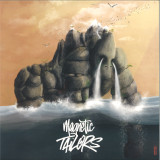
Introducing the freshest entry to our Little Beat More family with the very debut album by Magnetic Tailors out now!
The self-titled 'Magnetic Tailors LP' showcases the diverse influences that have shaped the style of this emerging project straight from Marseille's deepest underground, in a perfect blend of two unique sounds that represent the very soul of the group. Half hip hop and soul, half reggae the album features some of the most talented African artists such as Bhekiwe, Indigo Saint and Adam Raad, as well as leading exponents of underground hip hop such as Blurum13, DJ Vadim's partner in the Oneself project, and Blacc El, protagonist, among others, of an exceptional duet with the amazing voice of Giulietta Passera, from Sweet Life Society and Mangaboo.
A sound that reflects the influences and roots of the Magnetic Tailors and their city, a vibrant place of encounter and contamination for very different cultures and realities that come together in a unique and original artistic expression.
- 1: Home
- 2: Prana 10:9
- 3: Holy 0:58
- 4: Amok
- 5: Open
- 6: Game Over
When I first heard Natalie Rose LeBrecht's time-suspending, air-ionizing music, more than twenty years ago, I thought "this kid is on to something." She's been proving that thought right ever since. Her recordings, from the teenage 4-track tapes she made as Greenpot Bluepot to the recent albums under her own name, have been fascinating dispatches from her progressively deeper dives into her gorgeous, weird, wildly idiomatic aesthetic. Holy Prana Open Game is a jewel of intensely personal cosmic music, created through a remarkable process of openness, craftiness, addition and subtraction. It belongs to a tradition of albums that document a rich, meditative sound as it rises up to join the world outside its creators' minds: Alice Coltrane's Universal Consciousness, Harmonia's Musik von Harmonia, Philip Glass's North Star, Talk Talk's Laughing Stock.
"Meditative" is specifically the idea here: Holy Prana Open Game had its origins in the fourteen days LeBrecht spent silently meditating in her home's small music room in the summer of 2019. "I came out of that bursting with the will to create new music," she says, and she created it sound-first. LeBrecht taught herself to program an analog synthesizer's timbres from scratch, and built a new set of glacial, heady compositions out of them, eventually singing to accompany the keyboard parts she was playing.
Then she closed her eyes at her computer, "let my mind be clear and open, imagined light pouring down through me, and began auto-writing to my memory of the music playing through my mind. Most of the lyrics emerged this way, and then I used my conscious mind to refine them a bit at the end." One other song came along with LeBrecht's new pieces, a cover that seems wildly unlikely from the outside and makes total sense in its context: it's a version of Atoms for Peace's "Amok" (which had been created by improvisation and editing, too), mutated into her own idiolect.
In early March of 2020, LeBrecht recorded Holy Prana Open Game's analog synth parts with Martin Bisi at his studio in Brooklyn--and then the world shut down. As you may have gathered, LeBrecht is very much a spiritual, head-in-the-stars type. She is also extremely hardcore, and if making the art she wants to make means doing things the hard way, she cracks her knuckles and gets down to it. Within weeks, she had taught herself how to record, mix and edit with a digital audio workstation. She recorded her vocal parts (sometimes multi-tracked into a radiant choir) at home, assembled a rough mix of the album, and sent it off to her collaborators.
LeBrecht spent some years studying with and assisting La Monte Young and Marian Zazeela at their legendary sound-and-light installation, the Dream House. As with their work, her singular, precisely focused vision is shored up by its openness to artistic voices beyond her own. For Holy Prana Open Game, she worked with the Australian guitarist Mick Turner and drummer Jim White (both of Dirty Three, the Tren Brothers and innumerable other projects), as well as woodwind player David Lackner, a longtime presence on her recordings.
Turner and White have been playing together in one context or another since 1985; in the summer of 2020, they were only blocks from each other in Melbourne, Australia, whose strict lockdown meant they couldn't meet up to record together. So both of them, as well as Lackner, recorded their improvisational additions to LeBrecht's rough mixes individually, often without hearing each other's contributions. "I had asked them to play as much as they could on each track," she says, "and told them that I would edit it all down in post, so I had a lot of source material of theirs to work with."
LeBrecht arranged and edited the recordings from all four of their homes to flow together like breath across the duration of her suite. Prana, one of the album's central conceits, is in fact the Sanskrit word for breath, with the connotation of the breath of life. Like LeBrecht's music, prana flows at its own pace, and demands stillness to take in fully--but it's also subtly playful and surprising, a force that can be as light as air or as immersive as the atmosphere itself.
- A1: Psychonautic Escapism (Cold Alienation) (Cold Alienation)
- A2: Acetoxyhexorchid I (Cluster Phase) (Cluster Phase)
- B1: Lattice Dysmorphism Of Lysothymic Oneiroid
- B2: Ultraviolet Circumzenithal Arc
- C1: Trench Through Pink Death
- C2: Acetoxyhexorchid Ii (Dispersed Phase) (Dispersed Phase)
- D1: Sirencipher Eidolon In Chimeric Photisms (Cascade Xenofluora Entwining) (Cascade Xenofluora Entwining)
- D2: Sun Shimmer Repeater
Born from the fractal innerworld of Vymethoxy Redspiders,
better known as Urocerus Gigas from Leeds-based xenofeminist
crisis energy rock duo Guttersnipe, The Ephemeron Loop's
debut is a synaesthetic acid bath that cracks open the doors of
perception to reveal a sonic landscape of ineffable beauty,
divine femininity and continual transformation.
"PsychonauticEscapism" sublimes Guttersnipe's teeth-gnashing spacegrindaesthetic leaving washes of dream pop ambience, dilated
speedcore fusillades and shapeshifting psychedelic dub effects.
It's an album that lodges itself creatively between Cocteau
Twins, Arca, Basic Channel and Napalm Death, lysergically
fluxing imperceptibly between seemingly contradictory sonics
and philosophies. Miss VR took 14 long, difficult years to write
the album, which developed cautiously as she broke through
the misery of her pre-transition life with shoegaze music, rave
and psychedelic drugs in Leeds' queer underground. An
existence languishing in negativity, soundtracked by extreme
music was replaced with the opportunity to experience
euphoria, elation and ecstatic freedom, emotions that coalesce
sensually on "Psychonautic Escapism".
These formativeexperiences are the album's initial building blocks, assembled between 2007 and 2018 as Miss VR came to grips with her
reality as an autistic/ADHD trans woman and the multidimensional psychotropic experiences that assisted that realization. And as V's worldview expanded and shifted as she lived a fresh life, the music itself developed spiritually. In 2018,after being impressed with producer Ross Halden's work with Guttersnipe, Miss VR asked him to assist her with developing The Ephemeron Loop's fragmented songs and visions. "I learned a lot about why people don't usually combine various kinds of sounds or styles in music," she admits. "It is very difficult to get it to all work together!" But after two-and-a-half years of the duo navigating a "labyrinth of fragmented Reason 5 and Logic
projects," re-recording and processing, and working tirelessly on
complex arrangements and compositions, they eventually found
a light at the end of the tunnel. The finished album is towering
and ambitious, Escher-like in its illusory reconstruction of
familiar elements into brain-altering forms. The album begins
with 'Psychonautic Escapism (Cold Alienation)', decorating Miss
VR's disembodied moans with throbbing dub techno synths,
insectoid digital percussion and disorientating high-BPM
electronics.
Her vocals hover weightlessly between My Bloody Valentine's Bilinda Butcher and Cocteau Twins' Elizabeth Fraser, and on 'Lattice Dysmorphism of Lysothymic Oneiroid Cytoterrain' drift against grinding industrial hardcore kicks, serrated bass and Lorenzo Senni-esque trance pointillism. On 'Trench Through Pink Death', Miss VR's voice mutates into a shrill scream as she directs the music from splattered freeflowing doom into harsh hyper-speed death metal and
breakcore. Woven together with both precision and delicacy, "Psychonautic Escapism" turns a rough patchwork of ideas,
experiences, feelings and vivid emotions into a glorious neon
tapestry. In living and exploring the realities of autism, ADHD
and trans identity, Vymethoxy Redspiders has masterminded a
sonic language that feels fresh, urgent and shockingly honest.
Psychedelic is a term that gets thrown around far too loosely at
the moment - in this case there's just no better way of
describing the album's scope.
BABY BLUE VINYL
"Workin' all day, trying to forget about the old me." Like most of us, Martin Frawley is busy trying to work himself out. He lives alongside the long shadow of his late dad, musician and songwriter Maurice Frawley, a cultural icon of the Australian underground and collaborator of Paul Kelly, Tex Perkins and Mick Thomas. Most of Martin's 20s were spent writing and playing songs in locally beloved Melbourne band Twerps - a collection of pals who were on the forefront of the city's jangle pop renaissance. A few albums, US tours and band rotations under its belt, Twerps split up in 2018 and Martin turned his compass towards a solo project. His first album, Undone at 31 (2019), was a bit of a reckoning; a wild ride through the wreckage of both a band and longterm romantic break up. His new album The Wannabe is a personal, cheeky and, at times, self-depreiciating collection of songs unpacking the reality of finding his way as an adult without his dad around, and ultimately falling back in love with life, music and someone new. Martin and his band - friends Dan Luscombe (The Drones), Steph Hughes (Boomgates, Dick Diver), Nik Imfeld (Tyrannaman) and Dan Kelly - had heaps of fun recording The Wannabe in Melbourne. The title track is a particularly spicy take on an entertainment industry that seems to give more shits about marketing than music. The album is a bit of an emotional tour, from anger and derision, through to comedy, through to deep and honest love. It's positive with a lot of sadness. Not unlike Martin himself. As well as the guitar, Martin had some fun playing the piano on this record. The technical term is `multiinstrumentalist' but Martin's more of a musical explorer of sorts. No one is exactly sure how these things work - if Martin was born into music or if it was born into him, but it doesn't really matter. Music is what he loves. It's what he does. It's not about the industry or about success - not anymore. It's about the freedom of creating songs on his own terms, and trying to let go of the feeling he has something to prove: to his dad, to his critics, and to himself. And while he's not sure he'll ever fully shake that feeling, he's at least relaxing and having a bit of fun doing it. Like his dad, Martin has a reputation as a `musician's musician'. He hosts a pretty sporadic podcast Dive For Your Memory, where he has fast and loose chats with musicians while doing a deep dive into their musical inspirations and canon. He and his fiancé Lauren also make wine under the label El'More Wines, named after the farm and small town where his dad grew up. It's all come a bit full circle, really.
Back in 2018, two mysterious twelve-inch singles appeared in underground record sthops. Credited to Blotter Trax, a previously unknown outfit who cherished “faceless” anonymity, the pleasingly twisted and mind-altering music on show was a mutant form of electronic psychedelia. The included tracks were variously informed by analogue techno, acid, electro and minimal, but inhabited their own clandestine sonic space. These tracks were, we later discovered, lightly edited “straight to tape” jams, crafted on the fly by their creators in one of Berlin’s most admired studios.
By the time Blotter Trax delivered their follow-up on Clone offshoot Frustrated Funk a year later, the secret was out: the project was in fact a collaboration between two storied artists, techno titan Magda – a DJ/producer who should need little introduction – and serial underground aggravator (and man of many aliases) Jay Ahern, sometime Hauntologists member and acid techno royalty thanks to years spent releasing similarly shadowy EPs as T.B Arthur.
In the years that followed, and before the COVID-19 pandemic grounded them in Berlin, the pair took their incendiary, modular-driven live show to esteemed clubland institutions (Fabric included), on an acclaimed tour of Japan, and onto the stages of festivals across Europe.
Four years on from that appearance on Frustrated Funk, Blotter Trax are back in updated and expanded form. Now a trio thanks to the addition of bassist Hannes Strobl, the band is set to release their far-sighted, funk-fuelled debut album, Super Conductor – a pulsating, thrill-in-minute ride includes contributions from a swathe of notable guests (Nina Hynes, Ilhem Khodja and David Moss provided vocals, Shigeru Tanabu played guitar, Matthew Styles mixed the set and old friend John Tejada mastered it).
While rooted in electro and acid, the album is impressively low-slung, stylish and funky, with nods towards Blotter Trax’s mutual love of Arthur Russell, early ‘80s NYC downtown disco, leftfield new-wave pop and flash-fried punk-funk. Released by JD Twitch’s Optimo Music imprint, it charts the ongoing dancefloor evolution of a band whose days of mystery and mischief are now a distant memory.