Sometimes, - despite today's high-octane, fast-track and hyper-hysteric music business - you come across things that seem so pure, perfect and poetic that it almost hurts. "Socialo Blanco" is one of these objects.
It appears understated at a first listen, startling at the second and totally enamouring by the third run. To lay it all out on the table: it sounds like a Music from Memory re-issue, looks like a Growing Bins Records discovery and feels like a flea-market-hippie-uncle-record-collection find.
Based on the language (coincidences and misbehaviour included) and direction of the classic EMS Synthi AKS and recorded by hand and directly to tape (no midi, no sync, no computer), it is at once out of time and out of touch with current sound aesthetics, but that only makes it even more contemporary (vintage) - like a great piece of furniture.
Unsurprising, if you know that Feater is helmed by Daniel Meuzard. Hailing from Vienna and having made a name for himself as a trustworthy and skilled studio equipment dealer and working closely with producer and studio engineer Sam Irl, the man has a knack for turning yesterday into today.
Already is his project's second album, "Socialo Blanco" is the result of all of this and some magical and effortless sessions. The voice of Vilja Larjosto from Finland and Ghana's Eric Owusu (Pat Thomas, Ebo Taylor) on percussion, spontaneously invited to the recording sessions by fellow Viennese Giuseppe Leonardi, are the icing on the cake. All of that and especially the non-conformist pop song "Time Million" symbolizes the heart and soul of an album that deserves to be billed as such. And that is no mean feat.
Search:project one
The Naturals' debut album is more than just an rediscovery of one of the great lost albums of the last decade, but of how things were always intended. When Eddie Ruscha (Secret Circuit) and Thomas Bullock (Rub'n'Tug/STD) appeared as The Laughing Light of Plenty, their journey offered untold troves. Now at last the pulse is set for outer orbit and all are welcome to join.
After a mind-melting debut EP sold again and again, an album expanding their unique psychebalearicfolk imaginings was prepared and even pressed before being lost somewhere between a lock up in New York and limited quantities reaching Asian shores and dealers
trading at dizzying Yen.
Lost, but never forgotten, years passed until a nagging memory that an earlier, rawer mix had always been superior. A return to the original band name seemed The Natural(s) choice and so a project idea started to be (re)born.
A sunny Spring afternoon in a grand English garden, pots of tea, talk of life's travails, deep yogani, love affairs, kids growing up, the power of now and music, always music led to two labels coming together to dust down the desk and not just resurrect, but seek and offer the original intentions.
Here at last is the double album as intended. Of two great friends jamming their deepest vibes and flowing with love to offer tales of higher consciousness. Travel inward, beyond meer chakras. Aim for the stars. The devil is in the details so see the trails and follow to some avail.
Begin your own journey.
Black Vinyl[14,50 €]
Released on CD by Aurora Borealis back in 2010, we're overjoyed to finally see this on vinyl.
- limited edition of 300 copies - 180g black vinyl - reverse board heavyweight sleeve - includes download code and printed insert - mastered for vinyl by James Plotkin - cut at The Carvery, London
An ode to the Lovecraftian lore of Shub Niggurath, 'Black Goat of the Woods' was conceived as "the soundtrack from some lost low budget horror movie, rediscovered on an old and faded VHS cassette found mouldering in a deserted house in the depths of the woods".
The one man project of J.R Moore, Black Mountain Transmitter has released several albums, all to great critical acclaim, and the quality of his work speaks volumes. The original AB 'Black Goat of The Woods' CD version was the first official release and a reissue of the long sold out and much sought after limited CDr.
On describing the recording, Moore said: "The music was certainly very much influenced by that certain breed of 70s horror films. Things like the soundtrack to the original "Texas Chainsaw Massacre", Giuliano Sorgini's atmospheres in "Living Dead At The Manchester Morgue"; Carl Zittrer's soundscapes in "Deranged", "Children Shouldn't Play With Dead Things" and "Dead Of Night", and of course people like Fabio Frizzi in Italian horror and the BBCs Radiophonic Workshop's electronic sounds in something like "The Stone Tape" and countless creepy old TV productions..."
An excellent, macabre and psychedelic release that spans electronica, soundtracks and experimental genres in its 40 minute playing time, 'Black Goat of the Woods' pays perfect homage to the dark denizen of the nocturnal glades, and is a true paean to backwoods horror.
Consisting Neither Of One Lone Woman, Nor Hailing From Either The Eurasian Country Or The North American State, This Georgia Is In Fact Comprised Of Two Human Males Working Out Of China Town, N.y.c., Namely Brian Close And Justin Tripp. Together They Form A Creative Partnership Responsible For Not Just A Slew Of Output Upon Such Highly Regarded Imprints As Meakusma, Palto Flats And Emotional Response, But Also For A Kaleidoscopic Variety Of Multimedia Work With A Whole Host Of Clients, From The Corporate To The Counter Cultural. With An All Embracing, Freeform And In Some Ways Contradictory Approach To Production, Their Sound Is At Turns Stimulating, Terrifying, Comforting And Confounding. Separated From Any Visual Representation, The Audio On Its Own Becomes A Soundtrack For The Listeners' Own Intense Internal Projection Screen.
With 'time', Georgia's Vision Is Especially Well Realised As Here, In Collaboration With Fellow Intuitionists Firecracker Recordings, They Release Into This World An Album Which, With Any Luck, Shall Help You Unlock Your Inner Portals - Should They Need Assistance In That Regard Anyway. Unquantisable Polyrhythms Knock Against One Another In An Uncannily Externalised, Conflicting Collage Of Half Remembered Dance Ritual Memories. Fragmented Melodies, Disembodied Vocal Snippets, A Hint Of Ethnomusicality In Places All Give Deep Nods Simultaneously To Ancient Experience And To Post Human Intelligence, Condensing Past Present And Future Into One Eternal Instant.
'time' The Album Asks Us: What Happens When One Removes Ones Expectations Of Where In Time A Piece Of Music Or Art Must Sit And What Of Time Itself As A Construct, Now That We Have Myriad Ways Of Measuring It, Even At The Atomic Level; But Still Its Passing Is Completely Relative According To The Observer, And Indeed May All Be In Our Minds Anyway Equally, You Can Always Just Put It On - Again, And Again - Empty Your Mind Of Such Thoughts Completely, And Allow All Of Your Particles To Move Around Freely To This Joyful Noise... After All, That's The Point, Isn't It We're Gonna Have To Stop Asking Questions Eventually.
London's elusive Lukid has never been one for convention. In the few short years between 2007-2012, he struck out on a seemingly effortlessly impeccable run of releases on fellow iconoclast Darren 'Actress' Cunningham's mighty Werkdiscs imprint, as well as his own label Glum. Those albums and EPs flaunted genre distinctions and embraced a freewheeling approach to melody, rhythm and atmosphere that felt at once exotically psychotropic and yet grounded in a resolutely english eccentricity. Thus, they feel like especially-prescient recent classics that continue to find new fans.
In the intervening years, Lukid's energy has been poured into his stunning monthly transmissions on NTS while his output has been sparse aside from a pair of mindbending EPs via Liberation Technologies and Glum, respectively. Those radio sets serve as a telling blueprint for his contribution to the ongoing Arcola project. From low slung Memphis rap mixtape cuts to clattering industrial cassette rarities, turbulent grime and outsider synth hallucinations there is a warped palette that comes vibrantly alive across the four included tracks here. The stormy bump and spectral melancholy of 'The Drip' and 'Clappers' seems to wed them together as thematic bedfellows across both sides of the EP while 'Head Shrinker' tries to squeeze an overcast psych-pop opus out of a rack of malfunctioning hardware. Spit out the other side of this ride you exit to the chopped-and-screwed goth grime of 'Conked Out', having had your brain smeared with the uniquely viscous ectoplasm that only Lukid can excrete. Perfectly slimy.
Alien Transistor and Tokyo-based label Afterhours release a vinyl-version of tenniscoats' masterpiece "music exists". It consists of 4 LPs, which will be released over the year, full of intimate, wonderful, psychedelic folk-music. With the fourth LP, there will be a strictly limited box available, either for putting in your already purchased other 3 records, or as the whole glorious 4-LP-package.
Tenniscoats have devoted followers allover the world, but their releases were always hard to find outside of Japan. Except for their album "Tokinouta", which saw a very limited run on vinyl, and the seminal "Two Sunsets", their collaboration with the Pastels (and a small handfull of 7"s ), there were never any vinyl-releases, and also the CDs were hard to get for any-one, who doesn't speak or read japanese.
So, this is the chance to dive deep into the beautiful, unique world of the tenniscoats and their opus magnum "music exists".
The Tenniscoats are a duo that have enjoyed a long career in the music scene of their home country of Japan. They have collaborated with unique artists from different backgrounds (Tape, Pastels, Pastacas and Jad Fair), while maintaining their own laid back approach and sound. Their songs are built primarily from guitar and vocals with lyrical themes focusing on everyday life. It could be their expansion on simplicity that has captivated music lovers of all ages throughout their existence.
While the aforementioned collaborations produced bold and sensitive experiences and results, it has taken Tenniscoats five years to release an entire studio album of their own. The wait has not been in vain, as four discs will be released consecutively beginning with 'Music Exists - disc 1'. Music Exists saw a previously limited release on the Tenniscoats' own majikick label.
'We started recording around January of 2013 with just the two of us in our 10 tatami-room in Tokyo we were using as a private studio. Arrangements were produced without computers by overdubbing on an analog console with mixing assistance provided by Saya. As we sent selected songs to be mastered by Yasushi Utsunomia, we were able to see the tracks grown into a full length album.'
What turned into a huge 4 disc project began in earnest three years ago. Tenniscoats wrote and recorded themselves using an analog console, a microphone, and what few instruments they had. As the project developed, they were surprised to find that they had amassed several albums' worth of material.
'We tried throwing up the ideas we had in the beginning and not put too much of our strength into playing in order to develop the ideas of each song. Utsunomia, who did the mastering was the first person to ever hear the material for this album outside of the band. We sent songs to him carefully choosing an order that we felt would not make him bored. Thanks to his distinctive way of mastering, we were inspired to go further and further into the process.'
2016 marks the Tenniscoats' 20th anniversary together. You could consider 'Music Exists' as a sort of compilation of material stemming from these years spent together. With their unique combination of melodies, unexaggerated arrangements, and detailed mastering, Alien Transistor are extremely delighted to make this recording available to the public!
Alisú is the electronic project of Chilean producer and graphic designer Jessica Campos de la Paz. Alisú started her career in 1998 by performing live sets of dub, techno, IDM and experimental sounds, not only as Alisú but also in the project Manziping with Rodrigo Rivera and Antonio Díaz, performing at many South American festivals. On her first release for Bottom Forty, Alisú composes three beautiful, purely hardware based tracks for the Rompiente EP with rhythmic vibes that take you from resonant underwater depths up into reflective cosmic atmospheres.
The opening track “Cyberspace” shows Alisú’s synth prowess with a driving and building yet ambient electric world that eventually dissolves into different sparkling arpeggiations, while “Rompiente’s” fractured vision of a perfect aural reality spreads across a beautiful seven minutes of hyper active arp’s and bass rhythms. “Wake Up” has been a club and festival favorite as it’s dance floor driving kicks create a solid groove mixed with transcendent pads and spaced out sounds are the perfect formula for keeping a dance floor moving while also elevating the listener to a higher level of emotion. Rounding out the Rompiente EP is a percussive rhythmic remix from one of our all time favorites In Flagranti who give us the deep and disco influenced bass lines we know and love.
French producer Erell Ranson's affinity for the deeper shades of Detroit sound is well known, but his ability to absorb those influences and create beautiful music with his own signature is the reason we're so excited to welcome him into our family. Having previously released on labels such as Kalahari Oyster Cult, aDepth audio, Nice & Nasty Records and his own MySelf Recordings, amongst others, Erell's became quite skilled in crafting sophisticated and emotional tracks which still seem to feel perfectly at home in a crowded 3 AM club situation. EP for Barba, titled "Dreams Of Nila", is a 4-tracker consisting of "Dreams Of Nila", "Reminiscence 0f The Past", and "Far Away Of Your Side", with the latter receiving an additional remix treatment by a Rotterdam-based project Duplex. "Dreams Of Nila" is a somewhat more leaning towards Chicago-ish side of things, with its huge bassline enveloped by shuffling 707 drums. Soft-sounding synth pad sequences work as an emotion injection and appear perfectly timed, without removing the edge of this, essentially, club track. "Reminiscence Of The Past" is the most direct of the bunch. Syncopated bass drum, forward-leaning groove and those classic techno snare roll fills make this track hard to ignore as it is, without mentioning complex interaction of synth lines, chords and beautiful detroit-reminiscent string stabs. Wonderfully executed counterpoint of hard edge and soft touch is what makes this cut a truly special one. Techno in its fullest form. "Far Away Of Your Side" is somewhat closer to the energy level of "Dreams Of Nila", and is a well-paced deep cut perfect for later moments in the night when subtle approach is everything. Slow synth pads give your mind some time to relax while the groove keeps your body occupied. Duplex remix of "Far Away Of Your Side" takes the track another notch down but in a more sideways manner. Broken electro groove is what keeps the foundation of the track while Chris Aarse & John Matze (aka Duplex) masterfully work their synths and pads to keep the tension for the whole duration of the track. Melancholy mood is tangible here, and at its best, ready for the dancefloor.
See Through is a new collaboration between Aidan Baker (Nadja), Faith Coloccia (Mamiffer, Mara, Sige Records) and renowned percussionist Jon Mueller.
The project was brought to life through Baker exploring textural rhythms created by sampling small, sharp and abrupt sounds on the electric guitar and then sequencing them in a drum machine to form the bedrock of the tracks. Mueller then added his particular, signature brand of intricate, hypnotic percussion to the mix and the compositions began to grow and take shape. The pair agreed that the pieces needed a more human touch and Coloccia was invited onboard, contributing processed vocals via looping, tape manipulation and microphone feedback.
The result is an other-worldly record that seamlessly flows from beginning to end, immersing the listener in waves of ambient movements and soporific beats. There is a trance-inducing aspect to this work, deserving to be consumed in one sitting and allowed to manifest itself for the duration. The trio have crafted a piece of work that stands up to the quality and integrity of their combined back catalogues and indeed adds something completely new for fans to discover and devour.
doctor umezu diva is a japanese sax player kazutoki umezu's one off project which he invited two female artists, one is a legendary marimba player midori takada and one more is a vocalist&pianist and half of japanese newwave band colored music in the end of 80's.
this album was one of the best kept secret jazz album from japan. dubby from ondas tokyo(he compiled 'va/midnight in tokyo vol.2' on studio mule) brought me this record. it was really hard to find as the amount of copies has been very limited.
this album is a unique mixture of modern classical sound and avant-garde jazz which is kind of similar with strata east or nimbus.
Considering He Was A Self Taught Pianist, Brian Auger's Progress Into The Heart Of The British Modern Jazz Scene Of The Late 1950's And Early 60's Was Particularly Impressive. He Gained Invaluable Experience The Hard Way, Paying His Dues At The Cottage Club, And The Original Ronnie Scotts On Gerrard Street, Working With Renowned Saxophonists Tommy Whittle, Dick Morrisey And Jimmy Skidmore - And Sessions In Smoky East End Pubs With His Friend, Arguably Britain's Greatest Jazz Saxophonist Tubby Hayes.
The Inclusion Of Several Of His Rare, Early 60's Piano Trio Tracks On Both Volumes Of 'back To The Beginning - The Brian Auger Anthology' Brought Long Overdue Attention To Brian's Early Jazz Career, Which Many Were Simply Unaware Of Prior To Their Release. The Enthusiastic Reaction To Those Tracks That Stuck In Brian's Mind, And Later, Fate Intervened, As He Himself Explains, "a Couple Of Years Later, Ken Greene, The Music Director Of Bogie's, Called And Told Me That He Was Starting A Project, To Whit, A Week At Bogie's With A Different Jazz Piano Trio Each Night".
The Material Brian Decided To Play Features Tracks From A Selection Of His Musical Influences, Heroes And Friends Including 'chelsea Bridge' By One Of His Favourite Composers, The Great Billy Strayhorn, Freddie Hubbard's Ever Green 'little Sunflower', The Much Loved Standard 'there Is No Greater Love' Which Brian Used To Play In His Original Early 60's Piano Trio, And His Own Composition Victor's Delight He Wrote A Tribute To The Great English Jazz Musician Victor Feldman Who He First Discovered Via His Tenure With The Cannonball Adderley Quintet.
Surprisingly, This Is Brian's Very First Jazz Piano Album Of His Illustrious And Award Winning Career, And Marks A Return To The Instrument And The Music That First Entranced And Enthralled Him As A Young Boy. His Musical Journey, Which Began In Austere Post War London, And On Which He Absorbed So Many Varied Styles Of Music, And Literally Took Him Around The World, Enrapturing Audiences Worldwide, Has Indeed Come Full Circle.
Born out of a chance encounter in 2012 that led to a lasting friendship, Rhythm Section Int'l & producer, DJ, label boss, radio host, and record store owner Ruf Dug join forces to present 'The Committee'. Sitting somewhere between fictional band and studio collaboration, the record is the first fully in-house production for Rhythm Section, recorded start to finish at their own South East London studio and featuring vocals from label founder Bradley Zero and label mate FYI Chris's Chris Watson.
Right from the studio's initial creation, Ruf Dug felt inspired by the space's unique musical identity, jumping at the opportunity to create a collaborative record there over a two week studio residency. And between his DJ residencies at Pikes, Gottwood and NTS radio the Manchester-via-Ibiza computer game freak and renowned vinyl digger found the time to meld his wide range of influences. Having been a key driving force behind Be With's Holy Grail reissue of Bô'vel's - Check 4 U , Ruffy has more than earned his stripes as a boss level Street Soul collector, pre-empting the resurgent interest in the genre, which began in the mid 80s and is still a popular sound in Manchester today. This new release draws parallels between the DIY attitude of Street Soul labels like TSR, Intrigue, Jam Today & Elite and the modus operandi of the RS studio.
A wholly synergetic work, the project's title 'The Committee' reflects the collaborative nature of this release, as Ruf Dug states: 'Authorship is a strange concept at the best of times but this genuinely is a group effort and I very much enjoyed feeling like just one piece of a larger entity - the complete opposite to my usual production experience of being all alone in my room for days at a time.' The EP also features additional production from Rhythm Section's own Mali Baden-Powell, who DJ's and produces as Z Lovecraft and comes from a background in Street Soul music, his father was also in legendary UK acid jazz collective D'Influence. In addition, the record features a dynamic range of vocalists: sultry deliveries from Natalie Wildgoose and Sienna Mustafa, a rap from her sister Nadina, and the vocal debuts of FYI Chris's Chris Watson and Bradley Zero. 'I had been joking with Bradley that he needed to be on the record somehow and he did appear, playing an egg shaker at one point, but his singing wasn't in the least bit planned... I got back from lunch, and the next thing you know he just starts singing...So I dragged him reluctantly down the corridor to the studio and that's it- now he's a pop star!'
Also playfully melding digidub, soul, chicago house and acid jazz, the release not only marks a new chapter in the development of the Rhythm Section sound, but also catalogues a crucial turning Point in Ruf Dug's musical development. Still oozing with the cheeky DIY approach that won his own label, RUF KUTZ an army of fans, this latest Collab steps things up and opens a whole new realm of possibilities for one of Manchester's favourite sons.
- A1: Ich Will Dir Helfen
- A2: A La Manière (With Roya Arab)
- A3: Ondine
- B1: Aspiration (With Mona Soyoc)
- B2: One Of These Days (With Hafdis Huld)
- B3: Théorème
- B4: Mortel Battement / Nocturne (With Alain Bashung)
- C1: Organique
- C2: The Watcher (With Mona Soyoc)
- C3: Qu’est-Ce Qui M’a Pris (With Philippe Poirier)
- D1: Xr 116 / Messe Rouge
- D2: Untitled
- D3: Ondine (Alt Take)
- D4: Piasong
The sensitive mountain » (la montagne sensible) is the nickname Alain Bashung came up with for Arnaud Rebotini. At the height of his fame, after the success of Fantaisie Militaire in 1998, Bashung readily agreed to create an album with Rebotini. The two men didn’t know each other; their record label had introduced them. Bashung brought in “Mortel Battement” and “Nocturne,” two poems by Jean Tardieu, which he recited in a voice simultaneously warm and flat, and Arnaud produced an impressionist soundscape that ended with an apocalypse of metal. Bashung was so proud of their collaboration that he offered to give several interviews to promote the record. Today, listening back to this moving Léo Ferré influenced "talking singing" exercise, it’s hard not to hear the template for L'Imprudence, the album that Bashung went on to record with Rebotini two years later. In a similar way, the album Organique sparked a productive partnership between Rebotini and filmmaker Robin Campillo, which resulted in their being awarded a César for Best Original Music in 2018. The director, who trusted Rebotini to create the soundtracks for his films Eastern Boys and 120 Beats per Minute, never kept his love for the 2000 record a secret.
Yet it’s an understatement to say that when it was released, Organique was not in the spirit of times. That year was all about the French touch. The funky samples of Modjo’s “Lady” and Superfunk’s “Lucky Star” ruled the sweaty dancefloors. Although Rebotini was familiar with the electronic scene, he had something else in mind when he set about creating Organique. Under his own name or under the pseudonyms Aleph, Avalanche, Black Strobe, Maison Laffitte, and of course Zend Avesta, he had already released several quite bizarre and experimental techno, house, or jungle maxi singles on pioneering labels like P.O.F., Source, and Artefact, run by his friend Jérôme Mestre’s, whom he had met back when both were working as record salesmen at Rough Trade’s ephemeral Parisian store. It was at Artefact, still financed at the time by Barclay and Universal, that he naturally proposed this record project, which was a bit "different." It was his first real album.
Arnaud Rebotini has never hidden his love-hate relationship with the electronic scene. He’s a fan of rave music, Rex, and later Pulp, but he listens mostly to metal and contemporary music, mainly American minimalists such as Terry Riley, Philip Glass, Steve Reich. He wanted to mix this genre with a more French aesthetic inspired by Debussy, whose unconventionality fascinates him. From the first suspended guitar note of Organique, you can pick up another influence, possibly poppier. In the style of Mark Hollis, the erratic leader of Talk Talk, whose only solo album’s silences and dissonances left their mark two years earlier, we hear the fingers touching the keys of the clarinet on “Ondine.” The instruments have presence, character. Nothing is smooth. Everything is organic.
Although it’s sometimes labeled as electronica because of Rebotini’s career, there’s nothing digital about Organique. No "pro tools" editing or samples, only programmed drums and some synth layering. And his guest vocalists. Playing the role of electro producer, he invited Bashung, of course, to join him on the album, but also Roya Arab, who Rebotini first spotted while she was playing in Archive, and her sister Leila, Gus Gus alum Hafdis Huld, Kat Onoma’s Philippe Poirier on the “Samuel Hall” inspired track “Qu’est ce qui m’a pris,” and former KaS Product member Mona Soyoc.
The frustration of a tour where he had "little to do on stage," the desire to sing himself, and the creation of the Black Strobe project, a haunting mix of blues and rock, stopped Zend Avesta from putting out another album. Eighteen years later, the Organique we rediscover today has lost nothing of its strangeness, nor beauty. When it came out, Bashung said, "What is interesting for a musician is to feel that you have a piece of wasteland in front of you, something to clear.” That remains true today.
An exploration of traditional Chadian music with an electronic twist...
Chad is in many ways a blind spot on the map of today's global musical conversation. Overlooked, misunderstood and misrepresented, outside observers rarely concede the country an autonomous voice over its past, present and future. N'Djamena, the dusty capital of Chad with its well-kept stories of boundary-breaking musical collaborations and thirst for experimentation is a city that reflects the country's diversity: the arid North, bordering the Sahara, where nomadic tribes revere the endless desert with their handcrafted instruments. The lush tropical South, where the frenetic drumming of local initiation ceremonies blends with sounds of neighboring Congo and Cameroon. Right in the middle: N'Djamena, a forgotten melting pot of cultures and peoples bursting with unrecorded stories of life at the margins of the world's attention.
Tackling this view is precisely one of the aims of Pulo NDJ. In May 2018, Nickodemus accepted an invitation from Hape Collective to travel to N'Djamena to teach a group of young adults DJ'ing and electronic music production, which resulted in the encounter between and a group of talented artists from Cameroon, Chad, Congo and Togo. After a weeklong series of listening to original songs & demos, the recordings continued in a pop-up studio created by DJ Buosis & Nickodemus which culimated in Desert To Douala, an album featuring 11 songs, all originally written and recorded in N'Djamena.
The project found its inspiration in the city's un-narrated diversity and seeks to explore the possibilities offered by technology to demonstrate how the country's rich heritage connects with existing musical conversations. It strives to create bridges in a world of walls. It has been a yearlong creative process that built friendships and fostered understanding among people united by a passion for music and creation.
Unshrouded in mystery: what once started as an anonymous underground project with stamped white labels and a clever take on sampling, has since then unfolded to be one of the longest-running and most successful teams in current dance music. Nurtured by the sounds of the past and blessed with the techniques of today, the music of Tiger & Woods always kept evolving in and around the tropes of disco, house and boogie. Classic dance music, if you will.
Celebrating the 10th anniversary this year, Marco Passarani and Valerio Delphi managed to arrive at album number three. A.O.D. is a pun on A.O.R. (adult oriented rock) and a play on their own sound. Defying the restricting rules electronic music record shop crates, it's a departure and an arrival at the same time. Inspired by the faded buildings and images of discotheques on the Italian countryside, the romantic start and bittersweet endings of summer, beach life and the excitement of travelling through the landscape to get to aforementioned temples of dance and subsequently the morning after.
Except for the 100% sample-free 1:00 am, everything on A.O.D. is based on a quiver of cleared samples from the Roman institution that is Claudio Donato and his Full Time and Goodymusic emporium. In Tiger & Woods hometown Rome, the often very electronic and futuristic sound of Italo Disco had a different twist. Much more boogie-based and influenced by the song-writing styles of New York City's dance scene, it played in a league of its own. Tiger & Woods use these materials to take them apart, out of context and into contrasting areas. Molding something completely new, one gets fooled to recognize Sade songs that aren't, pop music instrumentals and a reprise of memories that never existed. A ride through ones brain in a convertible with an Italian FM radio station playing in the background. Or to use less stiff poetry: a chill out album you can dance to or a dance album you can chill out to. Adult Oriented Dance.
- Utopia Music are extremely proud to present UM022, Hydro's debut album 'Lateral Thinking'. - Spread over 3 plates (4 including the sampler), Hydro manages to really showcase the variety and musicality that he's known for. With over 20 years of experience, he manages to comfortably wear his many influences whilst offering something both fresh and new at the same time. The palette covers light and dark, warm & cold, ambience, jungle, funk, soulful, techy, rolling, half time, 130 & 140 bpm, hip hop, jazz, tribal, and even meditative vibes. Inspired by a lifetime of music, travel and memories the aim was to deliver an eclectic album that could satisfy both the DJs and the headz whilst also being able to transport the listener elsewhere on an emotional and cerebral level. Dance music that can work beyond the dance floor.
- Hydro has been releasing incredible music since 2003 on almost all of the big labels. Since his production beginnings collaborating with Break, he has continued to work on many different styles and with many other different producers. He's become known for his musical diversity and his name is synonymous with quality & finesse. It's an absolute honour to be able to introduce his debut album to you. This project also features War, who again establishes himself as one of the best engineers in the game. Since first collaborating in 2011, Hydro & War have proven to be a formidable team, known for consistently delivering essential releases, including for Utopia. The only other artist featured on the album is Mateba, who joins in for two of the more uplifting tracks. A talented French producer and a long time collaborator of both Hydro & War.
Wehbba collaborates with ghetto tech legend DJ Deeon, to deliver another superlative EP on Drumcode.
Since his debut on Drumcode in 2017, Brazil's Wehbba has become one of the most dependable and impressive artists on the roster. Last year saw two standout EP's 'Eclipse' and 'Catarse' drop on the imprint, alongside 'Just', his strong contribution to A-Sides Vol.7. He also made his mark playing Drumcode events at OFF Week, Resistance Ibiza and the much talked about double header in Manchester and Bristol when DC took over Warehouse Project and Motion respectively.
A true master craftsman in the studio, his first contribution for 2019 is typically impressive. A huge inspiration to Wehbba since his nascent raver days, ghetto tech icon DJ Deeon contributes a fierce vocal to 'We Have Bass', after a serendipitous hook up in São Paulo. A peak career moment collaborating with one of his original heroes and the artist responsible for the classic 'Freak Like Me', the resulting percussive-heavy cut kicks like a rodeo bull. 'Third Wave' is coffee geek Wehbba's homage to his favourite brew, constructing the production to mirror the experience of a caffeine fix, as a loopy trance-inducing groove leads to powerful synth stabs that are heavy on impact. 'Steamroller' is a stripped back slice of techno driven by the Brazilian's Korg MS-20 and found form after it initially begun as a studio jam inspired by Richie Hawtin's 'Minus Orange'.
A Jean-Michel Jarre fan stretching back to his childhood, 'Another Mistake' was conceived after Wehbba saw the French legend in concert last year and was subsequently able to meet him backstage through a mutual friend. While creating the track, the producer imagined Jarre playing the main layers of the hook on his famous Laser-harp, eliciting an almost celestial quality with the melody. This is a stirring slice of techno fit for stadiums. The EP ends with 'Purge', the artist's stream-of-consciousness expression recorded in one-take and a beautiful beat-less way to conclude the work.
apologia /ˌapəˈləʊdʒɪə/ noun: apologia; plural noun: apologias ● a
formal written defence of one’s opinions or conduct Introducing you the
name of the third release of Insulin. 3 original tracks made by
Damaskin. An artist who comes from Belgium. He is also known as
Seraphym Rhythm, his ambient side-project. This talented genius
offers here a real homeric journey, a travel through the abyssal depths
of his mind and the darkness of his music, thank to those hypnotic and
granular sounds with an incredible sound design, fabricated and melted
at perfection. In already hostile and tumultuous places, Codex Empire
is bringing the last hint of an overwhelming and chimerical
environment.
SDH (Semiotics Department of Heteronyms) is the new project of two key figures of the synth-wave/industrial scene of Barcelona. Andrea P. Latorre and Sergi Algiz, founders of the Cønjuntø Vacíø label and also in the post-punk band Wind Atlas, unveil a new act more oriented towards pop music. SDH is change, alteration, distortion, metamorphosis. Their synth-pop songs, sprinkled with EBM and techno, are mysterious, obtuse and suggestive. The project seems to revolve around the idea of fiction. What is the language of feigned personalities What is fiction An individual is one and another, is liquid. It is physical. Incarnating someone is doing it in a corporeal way: making it flesh. Conceive: everything is real: reality does not exist. How is a fiction embodied They have already supported artists such as Marie Davidson and Merchandise and performed at the Swedish festival Kalabalik På Tyrolen, one of the reference festivals of the darkwave scene.
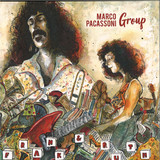
I cannot exactly remember when the idea of this album was born in my mind. What I am sure of is that I always wanted to complete such a project, which was to realize the dream of a vibraphone and marimba tribute to the music of my favorite musician composer, Frank Zappa. I met Marco Pacassoni about six years ago. I called him because we were looking for a vibraphonist for a tour with the artist Bungaro. We immediately developed a real friendship and when I told him about my idea and my fascination with Ruth Underwood, explaining that for me the best Zappa albums were the ones on which she played, he admitted that he knew only a part of that music, but that he would love to learn more. So I began to feed him tunes to listen to, sharing with him an imaginary track list. When Marco decided to really go for it (about two years ago), his first statement was that it was impossible not to include Peaches en Regalia and The Black Page on the album. That made me very happy because those are two of my favorites, and there was no better way to acknowledge the technical challenges behind this adventure. Marco studied Ionisation by Edgard Varese when he was in Conservatorio Rossini of Pesaro, even before he graduated in percussion at Berklee. It was strange for me that he could know more about Varese than about Zappa! I liked his idea of playing The Black Page alone at the marimba, just adding the beat, as if hearing the footsteps of an imaginary listener turning around. Who could it be My very first wish was to include Pink Napkins with Zappa's guitar solo played at the vibraphone.