‘In Virus Times’ is an acoustic instrumental piece by Lee Ranaldo.
Composed during the pandemic, ‘In Virus Times’ is released as a onesided LP with an etching on Side B. The cover is a beautiful photo by
Lee’s friend, the great Brazilian photographer Anna Paula Bogaciovas.
Originally released as one track as part of a collaboration with Lucien
Jean for Le Presses du Reel, the music was featured on a mini CD that
accompanied a book that featured two short stories.
‘In Virus Times’, released by Mute, sees the track transformed into 4
pieces and is available on transparent turquoise vinyl with digital
download and an exclusive poster, designed, signed and individually
numbered by Lee Ranaldo. The poster design is based on an electron
microscope photo of the COVID-19 molecule.
Lee has written some of his own ‘loner notes’ for the release:
“This recording began on an evening in September 2020, stuck at home
in lower Manhattan during the dark days of the Covid-19 pandemic as
we came out of a deadly summer. A heightened sense of anxiety
stemming from the then-upcoming US Presidential elections as well as
the virus seemed to pervade all aspects of life, for myself and everyone I
knew. Its minimal quality reflects the sense of ‘motionless time’ that
many of us felt. I set up some microphones in our darkened living room
(studios being closed due to Covid restrictions), coaxing out one simple,
repetitive phrase, and then another, sounding them out into the air. The
casual home ambience - a siren or truck rumbling down the street out
the window; someone talking around the table in another part of the loft;
water running - intrudes at points. I worked to develop a few simple
thematic elements, but mostly I wanted to hear the notes and chords
ringing out, hanging in the air for a long time on that evening when the
world seemed close to stopped on its axis.
“I’d been listening closely to Morton Feldman’s catalog throughout the
pandemic. His sparse, long-duration music could often be heard playing
on repeat as we spent endless days locked inside. His willingness to do
very little, with very simple elements, and to such profound effect, has
been inspirational. I found the vast open spaces in his works thrilling,
miraculous, and comforting in those empty times. Additionally, the Drop
D guitar tuning used here has prompted my own variations on Bach’s
works for solo cello, open strings droning against melodic lines, so
simple and perfect…” - Lee Ranaldo, New York City, August 2021
Search:prompt
- 1: Noorj - Y
- 2: Kc - Cold Metal, Heavy Mind
- 3: Tibslc - Washed Ashore
- 4: Lamina - Our Fluids
- 5: Arendse Krabbe & Felisha Ledesma - We Are All Fish
- 6: Halo Error - Aquachile
- 7: Estle & Mia Moon - I’d Still Love To See You
- 8: Yatta - Are You Coming To
- 9: Kissen & Swaya - Soft Skin
- 10: Lucy Duncombe & William Aikman - Small-Nothing-Avenging-Something
- 11: Yetsuby - We Chant
- 12: Fui - Commu 13. Slowfoam & Slyn - Hydrabubby
- 14: Ophélie - Salty Skin 1
- 15: Enereph - Elixir
- 16: Nahi Mitti & N.x.o. - Matahari2Tāra
- 17: Comechelet & Ϙue - Forbidden Love 1
- 18: Ursula Sereghy & Dorota Barová - Underwater
- 19: Flora Yin Wong - Kotohiki 20. Lipsticism - Where Do You Go (Mutilate)
- 21: Muein - Reprise
Gravity Pleasure's inaugural release is a rippling compilation of womxn, trans, and non-binary artists and
collaborators that invites listeners into an aqueous paraworld of fluid resistance and sonic kinship. Across 21 tracks from the likes of Yetsuby, Flora Yin Wong, Felisha Ledesma, Ursula Sereghy, tibslc, and more, Water Bodies spans a post-genre miasma of ethereal mermaid music, cathartic flows, and glistening sibilants. Inspired by a poetic prompt from Lou Croff Blake, each track is an exquisite message in a bottle of deep diving emotionality. Pulling from a wide range of musical perspectives – field recording, lovesick ballads, shimmering downtempo, post-party comedown, and percolating ambient – the compilation contains multitudes yet maintains deep sentimental coherence. Like a wave crashing in slow motion, each artist sonifies possible ways of being, insisting on the porous, the interdependent, and the deep and unruly. Water Bodies reminds us that home is a body made of water, to which we all belong.
Credits Curated by Ashlynn White & Madelyn Byrd
Artwork by Dre Roelandt
Layout by Madelyn Byrd Mastered by Estle
Distributed by Rubadub
Published by Gravity Pleasure ❊ GP01 ❊ 2025
Building upon the striking elegance of their first collaboration, Tobias Freund and Shun Watanabe reunite as Tobias. Doltz. for another extended excursion into designer electronica with a warm, dubby glow at its centre. Their first album Versus arrived on Delsin in early 2025 as a result of a chance meeting at Eden Festival the year before. The spark of inspiration led quickly to a complete and coherent first body of work, and the same can be said for its prompt, equally inspired follow-up. Dealing in the gentle hum of digitally sculpted ambience and needlepoint micro-pulses, Freund and Watanabe evoke the experimental spirit and mellow immersion of golden-era clicks n' cuts techno. While that early 00s phenomenon sometimes cracked around the edges of its DSP limitations, here a rich and porous sound world blooms out from the crisply defined structure of each track. At times the palette opens up to more organic sound matter, and there is ample space for full-bodied synths to ratchet down the rhythm, but a strong digital core of granular processing and exacting sound design form the bedrock of the album's subtle, sublime sound. Even though its calm demeanour radiates an instant charm, like all great electronica Frontiers Of Science is an album of hidden depths to be absorbed steadily over subsequent trips.
- 1: Wayang
- 3: After A Day Of Silence
- 4: Song Of The Forgotten
- 5: Shadows Of The Limits
- 6: Keris
- 7: Blue Krait
- 8: Colossus
- 9: After The Cyclone
- 10: Contradiction
- 11: Thousand Cycle
Returning to Peak Oil for a second expedition, veteran Russian producer Kirill Vasin, aka Hoavi, explores an untrodden path on 'architectonics', drawing from his lifelong appreciation of Indonesian gamelan musics to mastermind a rhythmelodic hybrid sound that's sinuous, subtle and remarkably dubby. Over the last three and a half years, Vasin has used the music's methodologies and rhythmic forms to evolve his existing processes and signatures and transform his musical philosophy. To start the exercise, he knew he needed percussion, so used his phone and a contact microphone to pick up nearby sounds, drumming on various tables, railings, empty glasses and other objects to create a library of textured, tonally complex percussive sounds. But the work wasn't done yet - in fact, it was just the beginning of a long process of trial and error: Vasin created two full versions of the album before 'architectonics' was finished.
There are still echoes of the chrome-plated sci-fi atmospheres and complex, stuttering beatscapes that underpinned 2021's 'Invariant', but 'architectonics' asks very different questions, prompting fresher, more innovative responses. Leaning on his bank of organic percussive sounds, Vasin is able to concoct a tactile aura that he fills with eerie fluctuating repetitions that shift subtly, sometimes imperceptibly. The cavernous reverb and booming bass that supported his last few albums is still present, now employed as scaffolding for different architectures: skittering sequences and ornamented overlapping phrases that owe as much to Steve Reich's hallowed minimalist compositions as they do to Indonesian traditional forms. Lulling, almost hypnotic tessellations appear like fractals on the polished surfaces, morphing from jazz to techno and dub while retaining gamelan's haunting xenharmonic resonances and Vasin's concept becomes crystal clear. 'architectonics' isn't an attempt to make a gamelan album, it's Vasin's way of developing his own artistic process by looking far beyond the traditional boundaries of electronic music.
The long-awaited reissue of Toba makes it clear, once and for all, to fans and industry insiders that disco music produced in Italy between the late 70s and early 80s had no chance of success. What was disparagingly called "spaghetti disco", considered a poor imitation of real American disco music, only good for Japanese cartoons. This was the main reason that prompted Italians to record their songs abroad, as Fratelli La Bionda with their pseudonym D.D.Sound in Munich. Luigi Figini, with "Supercool" and "Percussion Sundance" by Edo Martin and Pino Santapaga (the same as "Step By Step" by Koxo), claimed that Kash was a one-off Swedish disco project, a lie that came to light when an Italian test pressing from the previous year, made by GDB, was posted !!! Amin-Peck followed the trend of passing off their songs as foreign music on the intuition of their Roman producers. So ''Love Disgrace'' was released on 7'' by a label called Connection, which never really existed, created for the purpose by Giancarlo Meo, confident that this would bring success to the Bolognese duo who were already creating 'proto Italo-Disco tracks' with a new-wave trend. To make the whole operation seem real, the London agency Ellie Jay Ltd. was involved, contacting Andy Fernbach of Jacobs Studios Ltd. The vinyl was also produced in the UK, otherwise the deception would have been discovered, then imported to Italy by Best Record. Italo-Disco was officially born after this, in 1982, not before! Everything makes sense now ! Real events that actually happened and purely invented names and anecdotes. Just think, even the image of Tony Balch used for the cover of Toba was taken from Grand Theft's 1978 album "Have You Seen This Band?" and reproduced on the new redesigned cover, as were the heads of the other musicians. The idea of a real band called Toba had finally come to fruition and would lead to a second sensational success the following year. Now it all makes sense! Facts and anecdotes that really happened and names and circumstances that are purely fictional. Finally, everything adds up! Real things and invented names of musicians and collaborators. It's important to clarify what we've said above, but we haven't talked about "Make Your Mind Up" and "Don't Take It" and the two masterful remixes performed by Dave Mathmos. In short: with the original versions we'll make Italo-Disco purists happy, with the remix versions we'll please new younger followers with more modern sounds and versions more in line with today's tastes and trends.
Isa Gordon and Tony Morris were first brought together through their individual releases on Optimo Music, which established mutual respect within the label’s community. While they had not previously performed live together, they were invited to take part in a fundraiser hosted by Queen’s Park Arena in support of Glasgow NW Foodbank and later for JD Twitch’s end-of-life care. Tony asked Isa to contribute guitar and backing vocals to his set, including a track then called Last Night I Had a Dream. That performance became the seed for their collaboration.
The first phase of fleshing it out, recalls Tony: “Somebody said Isa sang like Shania Twain. That got me thinking about country music and call and response, prompting me to come up with alternative lyrics.” Isa remembers: “I cycled over to Tony’s house with my guitar, and we spoke about what the tune meant. It was about him being wrapped up in dreamland, luxuriating in his subconscious, while my character — impatient and trapped in her own routines — barely had time to remember her own dreams.” Tony continues: “Brilliantly I realised that I could never collaborate with anyone in situ and so I sat in the garden for two hours watching my wife tend to plants. Every now and again I would creep up the stairs and put my ear to the door. I could hear Isa warbling away and so would resume my garden watch. After two hours I went back upstairs to see how she was getting on, only to find that she had written one of the greatest songs I’d ever heard. I still think that.” Tony adds: “My overwhelming sentiment about Wake Up Baby is pride. I can honestly say that I’m more proud of it than anything else I have done. It ticks a whole load of boxes. Isa’s singing in various Scottish modes is unique. The way her electric guitar adorns the dance beat makes it a rock song as well as a dance and a C&W song — truly multi-genre.”
The B-side of the 12” release, Syringe Moustache, is a surreal, darkly playful counterpart to Wake Up Baby. The track was inspired by a dream Tony had: “I was in a shopping mall, in a two-level shoe shop, and my attention was taken by a little girl with a syringe taped beneath her nose like a moustache. She went about her business trying on shoes, confident and wise beyond her years. In the dream, I imagined her as the daughter of cultured, intelligent parents determined to raise her independently. I was struck by my own feelings of inadequacy — I knew I could never have coped with such a contraption myself.” Isa’s take on the meaning of this song somewhat differs: “Tony sent me the tune over Instagram months before I met him, and I was spooked — as far as I knew, he didn’t know anything about me, but the story felt like it was written about me as a little girl, growing up around heroin addiction. The syringe beneath the girl’s nose became a symbol of the inescapable constraints of that environment, literally written on her face, yet something you just have to carry on through. On a buzz from the serendipity, I added a full instrumental backing to this most bizarre of works.”
The result is absurd, unsettling, and strangely empowering, staking out its own surreal, cinematic space. The 12” dance single is a format Tony had long wanted to explore — a tangible artefact to leave for family, a medium that celebrates the physicality of sound and the ritual of listening. It allowed the artists to maximise the format’s potential: a strong, multi-genre A-side, a surreal B-side, and remixes that expanded the record’s sonic world. Glasgow music staples Auntie Flo and 100% Positive Feedback were invited to reinterpret the tracks, bringing their distinctive touch — Auntie Flo transforming the A-side into a luscious, dancefloor-ready meditation, and 100% Positive Feedback twisting Syringe Moustache into absurd, playful shapes with false-start drops and over-the-top vocal editing.
The cover photograph, taken at the University Café by Harrison Reid, captures Isa and Tony embodying the characters they brought to life in the songs — a visual reflection of the record’s narrative and emotional stakes. The Café also holds personal significance: it’s where all of Isa’s meetings with Keith McIvor took place, where she first remembers visiting Glasgow as a child, and a place Tony fondly likes to go to drip egg yolk down his tie and watch the world go by. Together, the 12” format, the remixes, and the artwork create a cohesive, tactile experience, amplifying the duality, theatricality, and emotional breadth of the collaboration.
After a busy summer on the road, Silverlining launches Forgotten Chorus, a new imprint for deep, hypnotic and abstract body music. The idea was born at a festival, where low frequencies drifting through the natural filter of English woods prompted him to mentally fill the gaps of the higher registers. Three weeks later, he wrote ‘Salvaged Chimes (From the Rubble of Sound)’, an almost verbatim recreation of the track he’d imagined. For Silverlining, this moment of embracing discarded sound became emblematic of how overlooked voices, such as those of the oppressed and forgotten, can still resonate if we choose to listen differently.
This concept led to experimentation with flint-knapper John Lord and conceptual artist Antonia Beard, whose recordings he sampled of the ancient practice of striking flint, humanity's first technology. Those sounds were then cut and made into all the instruments, save for the TR-909, that comprise 'Attuned To Detune'. The EP’s lead track, ‘Folk Dust’, pushes high-tempo breakbeats through Silverlining’s own lens on UK broken techno, balancing raw energy with ethereal melodies.
Forgotten Chorus seeks to celebrate the beauty in sounds and stories that fall outside the dominant narrative. Its debut release, a fast-paced, three-track techno EP by Silverlining, embodies this spirit and marks another step in his evolving exploration of new sonic ground.
The formative years of Hunter Thompson’s music as Akasha System were seeded and shaped by the shrouded meadows and wet woodlands of the Pacific Northwest: Sea Glass, Shadow Self, Echo Earth, Geomind. But pandemic flux flipped the script, prompting a migration to the monsoon tropics of Tampa. Heliocene ushers in a fresh chapter in the Akashic record, recasting the project’s precision synergy of cellular melody, holographic pads, spiral tribalism, and eco-futurist swing for a new solar age.
The album’s eight songs were recorded across 2023 and 2024, inspired by explorations of the many sanctuaries hidden in Florida’s ragged paradise: singing towers, ancient grottoes, emerald lagoons. From vortex house (“Purity Vector,” “Sun Particle”) to mirage electronica (“Haunted Planet,” “Soma Totem”) to hand drum divination (“Terraform Dream”), the sides flow, glow, and gleam, dialed in but dreaming out, tracing radiant waves of the eternal now.
“This album is a meditation to experience where and when you are, fully and wholly, regardless of where the path leads.”
2026 Repress
Brooklyn duo Fundido team up with Philadelphia's Universal Cave to press their first physical release titled ‘Paradise Tempo’, a love letter to dance floor music that sits in the cross section of the tougher sounds of the city and the softer sounds of the balearic and the backwoods.The A side kicks off with a flawless downtempo mix from California based Dirty Dave and Alex Pasternak, who find a rare cover of the Cathy Denis classic and refurbish it to perfection. Next up is ‘Emotional Jungle’, a jazzy midtempo weapon led by a massive saxophone hook and edited to optimum club efficiency by NY based Nick Stropko. LA via Serbia’s Masha Mar unearths extremely rare gem ‘Take Me to Mecca’ and reworks it into a dreamy midtempo journey that carries both a children’s choir vocal and a middle eastern synth melody effortlessly across a foggy dance floor. And closing out the A-side is the wonderful ‘Charlie’s Vision’ from Universal Cave, a spooky AOR tinged cosmic trip that is only available on this vinyl pressing.The B Side leads with balearic beach party stomper ‘Amor’ from Fundido themselves; complete with Spanish vocals, lofty piano jamming and a contagious growling bassline. Next up is ‘Sex-O’ from Seoul man Tucan Discos, who reworks a tribal classic into a hypnotic and seductive club mix; followed by ‘Freak Estilo’ from Spain’s Ritmal Astral boss Orion Agassi who offers a bumping freestyle breaks mix with an addictive r&b vocal hook. Last but not least, the ‘Be Careful Operator’ edit from Miles Felix aka Sisserou closes down the function with a block party jam swimming with jazz, swing and soul.When asked what visual imagery they had in mind for Paradise Tempo, the prompt given to artwork maestro Ray Fernandez was ‘salt of the earth utopia’ and ‘working man’s paradise’ … and Ray delivered exactly that. Enjoy Paradise Tempo !
2025 Repress
Chlar returns to his Primal Instinct label with 'Modern Survival'
Following the widely praised Funk Assault (Chlar & Alarico) 'Minimum One Post A Week' EP, which kicked off the Primal Instinct label last summer and won the support of the likes of Rodhad, Tasha, and Luke Slater, as well as routine plays from Sarah Story on BBC Radio 1, Chlar now returns to his imprint with solo venture 'Modern Survival'. While the first Primal Instinct release saw references to artist urges and behaviours on social media, this next instalment explores a modern recontextualisation of humanity's hierarchy of needs in yet another high-concept EP.
First up, 'Internet Soulmate' boasts a crunchy bassline as its drum work chugs along the track playfully. The groove twists and turns before the hypnotic and tribal 'Supermarket Hunting' continues with sounds of nature, loopy rhythm and syncopated bleeps.
On the B-side's 'Body Control Officer', human-made grooves intertwine with machine-like thrum, synths whirring and zapping, while 'Competitive Influencing' takes off with rolling percussion, subtle whistles and distorted vocal one-shots. Closing out another stellar offering from the Primal Instinct frontman, Chlar brings the dark 'Scout My Algorithm', a brooding slow-burner offset by smooth arpeggio snippets and warped slices of digital noise.
"In an era where technology entwines our everyday existence, where the virtual realm shapes our interactions, and where the pursuit of influence takes centre stage comes an EP that delves deep into the modern tapestry of human existence. 'Modern Survival' is not merely a collection of songs and visual clips, but a poignant reflection on the intricate dance between our primal instincts and the brave new world we navigate today. The EP invites listeners on a journey of self-discovery and reflection, prompting them to ponder the fundamental essence of our existence in an environment of fast-paced technological evolution." - Chlar
- A1: Sepehr - Twilight Calls
- A2: Sissy Fuss - No Restraint Instrumental Def
- A3: God Is God - Na Gore More Dub Edit
- A4: Alex Loveless - Voicenote
- A5: Suemori - Kisou
- A6: Mari Herzer - Limbal Ring
- A7: Elena Colombi Feat Juno Roche - Lost In A City
- A8: Loma Doom - Sisterresister
- A9: Decha - Mujeres
- B1: Pose Dia - Lovers Rock
- B2: Low End Activist - Need To Know Blue Room Version
- B3: Decha Wir Sind Da
- B4: Mayurashka - Libra Man
- B5: Nar John Silvestre - Ensel Ham
- B6: E-Bony - Slow Machines
- B7: Riva Ft Tommy Khosla - Resurfacing
- B8: Anenon - Length-Of-Night Improvisation
Following on from the celebrated first instalment, the second part of The Male Body Will Be Next compiles an entourage of daring sonic experiments, composed in response to bell hooks’ landmark book The Will to Change. Prompting artists and musicians to envision cross-gender solidarity, Osàre! Editions founder Elena Colombi presents an enrapturing, narrative album, conceptualised around collective transformation.
Resonating with hooks’ challenge to men to reclaim the sensitivity that patriarchy denies them, the name of the record arises from a photograph by Peter de Potter and Rebecca Salvadori’s film of the same title. In these depictions, naked flesh is exposed, made vulnerable and trembles with emotion as the fragility of masculine bodies are examined through the queer and female oppositional gaze. Transforming this visual language into musical expression, The Male Body Will Be Next swirls with punk vitriol, electrified noise, acid, electro and free-wheeling encounters charged by love, lust and limerence.
Gently plunking chords signal Pose Diva’s reimagining of lover’s rock before Sissy Fuss smashes in with a heavy-weight instrumental version of their erotic anthem ‘No Restraint’.
Made up of Turkish musician Etkin Çekin and Belarussian songstress Galina Ozeran, God is God delivers a gentle lullaby, while Low End Activist flirts with dark and brooding bass, shattering penetrating frequencies into luminous fragments. Riffing off the 2020 documentary about female early electronica pioneers, Loma Doom crafts a slowly oscillating drone zenith, the ultimate climax. In line with the conceptual underpinning, there are plenty of collaborations – Daytripper’s Riva and Sitar player Tommy Khosla, Lebanonese experimentalist N R and Swiss-French producer John Silvestre (AKA Typhon), as well as Colombi herself and trans author/activist Juno Roche. Within these partnerships, new modalities come alive as mediums, practices and perspectives are ignited and pushed in otherworldly, metamorphic directions.
To speak to Luca Daniel Schwarz aka LDS about his music is to be enthusiastically guided into a complex world of his own creation: clean and powerful techno which pulses with life from the textured patterns and drum sequences that have fills and accents that would make anyone who’s picked up a set of drumsticks envious. Yet this ecosystem of noise is deceptive; Schwarz’s process for making music is very different to how a live drummer would create the same subtlety of performance. Forever researching new technology, Luca got deeply interested in different programming languages, and created a series of probability-based music tools for manoeuvring sounds and sequencing.
Manipulating those probabilities takes a skilful alchemy, needing understanding of both musical structure and how the tools he devised work. To return to the drummer analogy, if the drummer is focussed and intentional in the moment of playing, then the method used in LDS tracks is almost diametrically opposed, with all of the intention coming in the assembly of the instruments, potential paths, and gateways; once play is pressed the music flows, following all the rules that were set in advance, not unlike a domino run or Rube Goldberg machine. And like a domino run, the results are fascinating and, ultimately, fun: staccato vocals pop in and out in ‘zipp prompt’; laser-like synths pulse; background noises sweep across the aural plane of the dub techno of ‘diff, blockmix’ and ‘pow’ adding texture that brings vitality all-too-easily missed out when complex mathematical
processes become entwined with music creation. The high sensitivity to texture and rhythmic detail in Stadion Progg is multiplied further on Jean Redondo's remix - whose track, Hypersonic, was the backbone of 2023’s ‘yet’ compilation on Tresor.
The balance between technology and a sense of fun might also come from the maker; it’s not easy to overstate Schwarz’s passion for what is now his favourite way to make music, “it never gets boring. There’s always a moment of anticipation to see what actually emerges.” And the true “power of 2” comes into play when the resulting music can be fed back through the system again and again, potentiating the music in exponential ways.
An imperial phase Actress commits a lushly amorphous installation piece made for the Berliner Festspiele to vinyl, rendering a post-industrial symphony full of iridescent shifts in gyring, OOBE-like spatial coordinates landing somewhere between nutopian ambient, kankyō ongaku and sawn-off bass science.
‘Grey Interiors’ was made in collaboration with Actual Objects and is an absorbing animation and navigation of those post-human ideals that have prompted Darren J. Cunningham to his best work across the preceding two decades. In its hypnagogic symphony of the elements, he short-circuits distinctions of classical music’s metric freedoms and the hyperspatial sensuality of concrète/electro-acoustic and ambient musics with an artistic license that has come to distinguish his work in the contemporary field, and arguably identified him as this generation’s most vital electronic abstractionist.
The first half of the album is bewitchingly airless, materialised in a twinkling vacuum. Naturalistic environmental recordings and a half-heard piano swirl around nauseous airlock whooshes and eerie bass drones. It's all pulverised to a powdery, shimmering residue; if Actress's music is defined by its character and texture - that sweet spot between the bedroom and the soundsystem - then this one advances the narrative without losing its backbone. And like a lot of his best work, it comes into its own on the back of zonked eyelids, conjuring a play of shifting geometric patterns within its imaginary physics and nuanced narration of ephemeral melodic phrasing and vaporous textures.
At about the halfway point, that dissociated piano finds its groove, coalescing into a jerky drum machine rhythm popping like bubbles in the stifling atmosphere. We can draw some intersecting lines here thru electronic music lore - traces of vintage AE, Push Button Objects, UR - but Actress always leaves an indelible fingerprint on anything he touches. Even when he's rubbing against the gallery-industrial complex, he manages to fill a stagnant space with electricity and wit; look at the title itself: is it a reference to the "landscape beyond man" as the installation's press release might have us believe, or the institutions themselves?
Ron Henderson is the North Carolina-based singer-songwriter who, along with his group Choice of Colour, released their sole album Soul Junction in 1976. This now mad rare record has fetched prices over $800 at auctions which prompted a 2020 reissue by P Vine which quickly sold out. Recently discovered, the 1983 hit single 'Gemini Lady' which was included as a bonus track on that reissue was an alternate take, not the original. Consequently, P-VINE decided to reissue the single in its authentic form. As such this formerly hard-to-find 7" single is reissued and replicates the original label design making it a must-cop.
- A1: Ozzobia - Ndi Oma
- A2: Sammy Obot - Edue Ukot Akpa Itong
- A3: Eppi Fanio - Farofa Dancer
- B1: Etiene T Boy - Jealousy
- B2: Ayo Manuel - Do Good (Dub)
- B3: Feladey - Experience
- C1: Chimex G Udensity And His Afrikan Band - Okpoko Na Azo Eze (Edit)
- C2: I S.c.a.c. Band - Igbo Nwe Egwu (Edit)
- C3: Jeje - Jeje
- D1: Dizzy K - Omoge
- D2: Blackman Akeeb Kareem - Oya A (Eje Kajo)
- D3: Jimi Solanke - Owo Orisa Ancestral Respects
- E1: Soki Ohale - Wumaya Awuma
- E2: Jap Band & Feladey - Japadodo
- E3: Pal Sagie - Esan
- F1: Mannix Okonkwo - Ka Anyi Gbaa Egwu
- F2: Sonny Okosuns - Highlife (Dub)
- F3: Wura Fadaka Band - Eyo
Soundway Records presents a collection of Nigerian music chronicling a time when drum machines, synthesisers, imported pop, reggae, disco and soul collided with highlife, juju and cultural music. The late 70s saw a period of political turbulence and prompted change across the country. Following suit, musicians and producers entered a period of experimentation, adaptation, modification and innovation, using new technology to renew and refresh cultural traditions.
Nigerians formed their own unique approach to the limitless creativity these new instruments offered, to reveal a distinct sound which would dominate local airwaves for the decade to come. Nigeria Special Volume 3 celebrates the rich diversity of culture and musical styles of the nation, showcasing eighteen tracks across various genres which laid foundations for the innovation of Afrobeats artists of today. Triple Vinyl gatefold LP compiled by Miles Cleret and Jeremy Spellacey, includes a large 8 page booklet with detailed liner notes, record scans and never-seen-before photos.
- A1: The Right Way
- A2: Pocket
- A3: What Do You Believe In?
- A4: I Ron
- A5: Hideaway
- A6: All I Know
- B1: Rush Of Blood
- B2: Feeding All These Fires
- B3: Put A Little Hurt On Me
- B4: Chokehold
- B5: Wreckage
- B6: Hope You Felt Loved At The End
- C1: Bleed The Same
- C2: Sorry For My Broken Heart
- C3: Ghosts
- C4: Lovers In A Past Life (Acoustic)
- C5: Lovers In A Past Life
Rag’n’Bone Man is ready to accept joy into his life. Born Rory Charles Graham, the Sussex-born singer known for his gravelly blues vocals, took the world by storm with his debut album ‘Human’ in 2016. Now multi award-winning, the British vocalist is embracing newfound balance, returning to his creative foundations while building anew.
It’s the most vital chapter to date in one of British music’s defining stories. A truth-telling voice that has framed an era, Rag’n’Bone Man’s success speaks for itself: his debut album ‘Human’ went platinum four times over in the UK and multi-platinum in a further twenty-seven countries - becoming the fastest selling male debut album that decade. While his latest release ‘Life By Misadventure’ debuted at #1 and spent seven weeks in the Top 10, making it the fastest-selling album by a solo artist in 2021. With over nine-billion worldwide streams (and counting) over his entire catalogue, Rag’n’Bone Man is a voice that can be heard across the globe. Now he’s ready to eclipse this: assured, and built with love, his uplifting new album “What Do You Believe In?” finds the multi award-winning British artist (with three BRITs, two MTV Europe awards, and an Ivor Novello to his name) facing the future with passionate excitement.
‘What Do You Believe In?’ is anchored in the blossoming of confidence and the enduring support network he finds in family life. It’s taken time, but Rag’n’Bone Man is in a secure, loving place - and he wants to share that feeling. The period surrounding second album, 2021’s ‘Life By Misadventure’, was marked by self-doubt, with troubles weighing down on the singer’s shoulders – but then things changed - As a result, new album ‘What Do You Believe In?’ has a bold, yet radiant touch.
With the pairing of the poignant and ubiquitous themes and the sonic brightness of both 00s hip-hop and the youthful memories they prompt, the release of the albums title track ‘What Do You Believe In?’ sets the tone for the for the thrilling musical journey Rag’s is preparing to take fans on.
Archeo Recordings is a record label. Old, lost, obscure and forgotten gems and a boundless focus on the new Balearic scene for a wider audience of collectors, DJs and music lovers. All releases are limited edition.
This release is 350 copies limited edition: 12"" with 4 new special Remixes by Hear & Now, Manu Archeo, Mushrooms Project and Ocean Moon + CD with 6 previously unreleased Original songs + Insert.
For the latest essential offering from Archeo Recordings, Infradisco harness the power of the Po, serving a six-part suite inspired by the life giving power and natural beauty of water. An immersive journey through balmy downbeat, Balearic melancholy, smooth jazz and subtle house, the ‘Aqua Cheta’ CD comes accompanied by a diverse 12" of remixes from Hear & Now, label head Manu Archeo, Mushrooms Project and Ocean Moon. Album opener “Caduca” evokes the energy of an Umbrian waterfall, its spheric bassline growing ever more acidic before falling away as focus shifts onto the misty pads and plangent guitar.
The gentle bossa rhythm of “Dulcis” transports us to the confluence of the Rio Negro and the Amazon, where a snaking bassline underpins beguiling horns and subtle Sade-sque chords progressions. On “Fluminea”, the trio return to the heart of Reggio Emilia, following the fluctuation of the river Po, which runs past their studio, in an exquisite example of tension and release. Awash with emotion, both via the piano and redolent woodwind, this heady track intersects melodic house and Balearic trance, prompting horizontal dancing and skyward gazes. The tone shifts through the pensive and propulsive “Marina”, a sax led masterpiece accented with gorgeous acoustic guitar, before the tabla beat and emotive sitar of “Pluvia” add intensity to a slow-flowing piece of progressive house.
The CD closes with the cinematic splendour of “Surgiva”, an expansive ambient composition which sees delay-drenched fretwork tug at our heartstrings.
It's been 40 years since Michal Turtle released his seminal, ground-breaking album "Music From The Living Room" into the world and promptly disappeared back into the aether.
An extremely obscure cult classic known only to deep diggers and aficionados of the finest order, it wasn't until Music From Memory reissued some of the tracks from it via retrospective compilations of Turtle's unreleased music almost 30 years later that his name become more widely known and a new generation were able to discover the artist's unique and pioneering style of experimental electronic music production, the majority of it very much ahead of its time, and to this day, still timeless.
Invisible Inc contacted Turtle in the summer of 2023 about releasing something else by him and it was during this exchange of emails that ideas were expressed about releasing not simply a straightforward reissue of "Music From The Living Room" to mark its 40th anniversary (the album has never been reissued in full) but rather a re-imagined/re-constructed take on the album bringing contemporary techniques, styles and newly recorded vocal and instrument parts into the mix and breathing new life into these wonderful compositions.
Collaborators old and new were brought into the studio and the songs re-created from the ground up. Familiar songs like "Are You Psychic?" and "Village Voice" get overhauled and echo remnants of their original counterparts but simultaneously sound like completely new tracks. The always mesmerising "Phantoms of Dreamland" is represented through a live recording at Café Oto featuring original album vocalist Lucianne Lasalle and regular collaborator HOVE on electronics. The remaining tracks, however, will be completely new to the ears of most people, never having been reissued or heard in these new forms ever before.
Regardless, whether in some way familiar or not, these hypnotic and repetitive pieces of beautiful sound art, all very different in style from one another, have an entirely new identity that even diehard devotees of the originals will fall in love with.
“Holy shit. This record is amazing. 'Are You Psychic?' is really something” dj_2button Dummy Hand / Weirdos Inc.
“What a record!” Cosmo Vitelli I'm A Cliché
“Amazing release. Probably your best release yet! Does everything an amazing record should and more...” Alexis Le-Tan Oddity Radio / Full Circle / Offen Music
Aphrose reveals her sophomore album, 'Roses,' a captivating amalgamation of Neo-Soul and R&B, delving into the wellspring of ancestral strength and love.
Hailing from Toronto, Canada, Aphrose, also known as Joanna Mohammed, unveils her sophomore album, establishing her as one of Toronto's best-kept musical treasures. Known for her commanding vocal prowess within her hometown, this gifted songwriter and vocalist is rapidly garnering global acclaim and accolades from both fans and music critics alike. Signed to independent Soul label LRK Records, 'Roses' remains firmly rooted in Aphrose's signature style characterized by resounding R&B vocals. However, it also embraces a softer, more introspective aura that brilliantly showcases her remarkable versatility in navigating diverse genres, moods, and musical approaches with remarkable finesse.
This album offers a little something for everyone, catering to enthusiasts of Neo-soul, traditional Soul, Hip Hop, and R&B. Produced by her longtime friends/collaborators at SafeSpaceship Music (Scott McCannell, Chino De Villa, Ben Macdonald), the album serves as a compelling testament to the collective creativity of Aphrose and this exceptional production trio, delivering a kaleidoscope of soundscapes, textures, rhythms, and grooves. 'Roses' weaves together both lighthearted and profound elements as Aphrose explores her life journey, delving into her familial past and present, grappling with the challenges of new motherhood, and contemplating her relationships with herself, her partner, and her friends. Across the 35-minute LP, Aphrose draws inspiration from Neo-soul icons like Jill Scott and Erykah Badu, pays homage to Soul legends such as Aretha Franklin and MJ, and infuses contemporary R&B influences from artists like Frank Ocean, SiR, and SZA. The result is a sound that distinctly bears the 'Aphrose sound,' reflecting her deep admiration for her inspirations while imparting a refreshing twist to familiar genres.
The album commences with its title track, 'Roses,' which was released as a single on August 25th. This song sets the stage, invoking the strength of Aphrose's ancestors, particularly her late Grandmother Rose. Following suit is 'YaYa,' also released as a single on July 7th. This buoyant dance track whisks listeners back to the disco era of the late 70s and early 80s. The album's third track, 'Heavenly Father,' offers a brief interlude featuring a recording of Aphrose's Grandmother Rose engaged in prayer, setting the tone for the subsequent track, 'In The Time Of Sorrow.' This contemplative, chill piece captures Aphrose's musings on navigating a world often shrouded in fakery, while craving authenticity. 'Honey (Don't) Come Back' seamlessly transitions between two distinct musical personalities, commencing with a deep, almost Trap-like bass/drum beat before transforming into a spirited Funk/Soul jam—an anthem of empowerment encouraging the listener to leave a situationship that is no longer working. 'What You Don't See' strips the production down to its core, as Aphrose and guitarist/co-writer Heather Crawford craft an intimate ode to a friendship's sad ending.
The B-side opens with the evocative 'Weapons,' featuring a five-person choir including LRK label-mate Claire Davis, Nevon Sinclair (Daniel Caesar and LOONY), Kyla Charter (Aysanabee and Alessia Cara), Lydia Persaud, and Marla Walters. The track is adorned with a stirring string arrangement courtesy of Jessica Deutsch. 'Chop The Cake' acts as a breather, interlude-style, easing the intensity. 'Soft Nuclear' channels the spirit of the early 2000s R&B movement, bearing traces of influence from Lucy Pearl. 'Good Love,' released as the first single off this body of work on May 19th, transports listeners to the 70s with its soulful resonance, drawing inspiration from the likes of Michael Jackson and Teddy Pendergrass. 'Higher' stands as Aphrose's tribute to Prince, capturing the essence of his music within its hook and production. The album's culmination arrives with 'ZAG,' an acronym derived from Aphrose's daughter's name, commencing with the sound of her daughter's heartbeat in-utero from a sonogram taken when Aphrose was pregnant. This heartfelt composition serves as a dedication to her daughter and all parents navigating the rollercoaster of parenthood, emphasizing the imperative of nurturing love to shape the future.
'Roses' stands as Aphrose's homage to her history—her Grandma Rose and the ancestral trailblazers who paved her path to the present life she enjoys; her current experiences—her self-discovery, her relationships with her partner and friends; and her aspirations for the future—her daughter and the generations to come. This album crystallizes these temporal dimensions, prompting introspection, celebration, laughter, and tears. 'Roses' is a musical odyssey that scrutinizes the multifaceted beauty of existence, inviting listeners to partake in this thing called life.
The radio world has taken notice of Aphrose's talent, with national Radio Capital's Italy Massimo Oldani spinning her latest single "YaYa" for the entire month of July on his show "Vibe." And both singles getting to number 10 in the UK soul chart.Additionally, Aphrose has received national radio play on renowned stations such as BBC in the UK, RTVE in Spain, and Radio France FIP.
Aphrose has also made CBC's Top 100 finalist list for their Searchlight competition.
Huey Morgan played "YaYa" the second track off the album on his BBC radio six show
- A1: Ciência
- A2: Iix 03
- A3: Qliq 07
- A4: Untitled 01
- A5: #04
- A6: Butô 05
- A7: Nandemo 12
- A8: Sem Título I
- A9: Spam 08
- A10: Qliq 02
- A11: Lctrnc 08
- A12: Sem Título
- B1: Excerto Da Trilha Sonora Do Vídeo "The Kids
- B2: Sjc 01
- B3: Spam 05
- B4: Croquis 2 06
- B5: Nandemo 05
- B6: Mimevoc 05
- B7: #03
- B8: Lctrnc 06
- B9: Spam 12
- C1: Mbiẽta 02
- C2: Ar 02
- C3: Mbiẽta 01
- C6: #1
- C7: Sjc 06
- C8: Cnandemo 08
- C9: Qliq 08
- C10: Mbiẽta 05
- D1: Sem Título
- D2: Cerâmica 03
- D3: Cerâmica 06
- D4: Cerâmica 08
- D5: Spam 10
- D6: Sjc 04
- D7: Qliq 05
- D8: #06
- D9: Qliq 09
- D10: Sim
- C4: Ar 05
- C5: Untitled 02
Tracks are mixed together.
"In this album, Akira Umeda mixes 42 recordings, dated between 1988 and 2018, which, in a sense, reflect the incredible range of his creative work: from songs, to ambient music; from field recordings to prank calls. The cassette tapes, whose contents make up this double-LP, had been stored in Umeda’s house in São José dos Campos, in São Paulo, Brazil.
Restless, and easily bored, Akira moved seamlessly from one activity to another – he was a little bit of everything (and nothing at all). Such people usually go unnoticed and unrecognized, something which Umeda found perfectly acceptable. Nevertheless, unlike most people, he had no right to see himself in this light – in the light of ephemerality and anonymity –, for in everything he tried his hand at, he inevitably left an impressive and distinctive mark.
The term cruising refers to the practice of seeking and obtaining instant, no-strings-attached sexual gratification with strangers. Akira Umeda was well-acquainted with this term, but his practice of it was not restricted to the aforementioned context. Rather it extended into all spheres of his life and work. A historian by training, he later became a ceramicist, a photographer, a visual artist, a draftsman, a graphic designer, a DJ, a musician, an audio technician, a writer, a researcher... He made forays into a myriad of artistic and academic fields – with a single intention: to achieve a specific objective and promptly exit stage left, as it were."
Back in 2011 when I was tentatively looking for a second release for my fledging record label Clay Pipe Music, I stumbled upon a mysterious MySpace page by a group called ‘Tyneham House’, the page was decorated with artwork by Rena Gardiner (who was unknown to me at that time) and the music was an otherworldly mix of field recordings, Mellotron and acoustic guitar. It turned out that Tyneham was promised to Glen Johnson’s Second Language label, so I offered to do the artwork, and in January 2012 the two labels co-released it on tape and CD in a cardboard box with a handmade booklet of my illustrations.
In 2016 Clay Pipe reissued it on 10” vinyl, in an edition of just 300, which has since become sort after. The new 2023 pressing is on blue and transparent marbled vinyl, with a reverse board cover and inner sleeve, and the booklet of illustrations has been given a complete redesign. Frances Castle 2023
The pastoral, wistful yet ineffably disquieting music of Tyneham House is made by artists who wish to remain anonymous here, save for their eponymous title. The musicians are happy, however, to let it be known that these recordings have been around for some years (many of them complied from old cassettes) and that they take inspiration from the 1960s/’70s/’80s work of the Children’s Film Foundation – a body who really ought to have made a film about this mysterious West Country curio. At least now we have its endlessly poignant soundtrack.
The small village of Tyneham, on the beautiful Isle of Purbeck, in Dorset, was once a thriving little community – that is until the British Government requisitioned it for training manoeuvres and other ‘strategic purposes’ in the run up to WWII. This was supposed to be a temporary measure, but the area remained in military possession long after hostilities had ceased, causing distress among former inhabitants, many of whom were farmed out to prefabs in nearby Wareham and Swanage.
Tyneham was characterised by its red telephone box, a tiny parade of shops – Post Office Row – and a grand country pile which stood about half a mile away from the village: Tyneham House. The army removed the building’s oak panelling and ornate decorative details and promptly set about using it for target practice. So great was the shame expressed locally about the damage inflicted upon one of Dorset’s grandest houses that the powers that be decided to grow a copse around the remains of the structure to give the impression that it was no longer there. Despite this, a substantial part of the structure remains intact, including its Saxon hall.
Land access around Tyneham was opened up in the 1970s, but admission to the house remains strictly verboten. Those who’ve been found around the premises, especially anyone wielding a camera, have felt the full weight of military trespass law. Tyneham today is regarded as a nature reserve by some – as a national embarrassment by others. It’s still a political hot potato, in Dorset at least.
- A1: The Language Of Love Ft Adam Evald, Антоха Мс
- A2: Strong Accent Ft Curly Castro, Sindysman, Lovvlovver
- A3: Forget, Forgive Ft Mishinuki
- A4: Ingen Förstår Ft Adam Evald, Ni!
- A5: The Closing Shift At The Jazz Cafe Ft Jimi Tenor, Starving Yet Full, Ÿorik, Mak Glonti
- A6: Breed Ft Ÿorik
- A7: Praise This Ft Sindysman
- B1: In The Mood For Dub (Memories Of Love) Ft Mishinuki
- B2: Light Ft Fotiniya
- B3: Obey (Reprise) Ft Mishinuki
- B4: Kabwato Ft Budūchi, Ni!, Lipelis
- B5: Magic Mystery Tour Ft Adam Evald
- B6: Track 04 (りんロゴ) Ft Jimi Tenor, Fotiniya, Rich Thair
- B7: The Sun Is Still Up Ft Noteless, Adam Evald, Saya Siiang, Alina Royz, Katya Panterrra
Green Monster, the 4th Kito Jempere studio album is a journey through love, interconnectedness and creative freedom, bound together by musical friendship that breaks through walls, borders, languages and shapes; accumulated over a celebrated twenty year career and ten years of Kito Jempere.
Over fourteen tracks Kito teams up with over 26 artists from all over the world: a range of talented artists including Warp records artist Jimi Tenor, Red Snapper drummer Rich Thair, Azari & III ex-vocalist Starving Yet Full, L.I.E.S. records Lipelis (on bass), Curly Castro and SINDYSMAN. The album blends hip-hop, free-flowing jazz and world-building soundscapes into a piece dedicated to Kito’s musical roots; marrying multiple artforms, cultural influences and international artists into a body of work that feels deeply personal, healing and detailed. The accompanying artwork is a world created by Kito made using Midjourney prompt, connecting the albums audio world with visible objects — both vinyl and CD will contain booklets with lyrics and the visual world of Green Monster.
Kito describes the album ‘like getting Ennio Morricone, Weezer, The Beatles, Oneothrix Point Never, Eduard Artemiev, Jaga Jazzist, Massive Attack, Fugazi, Jimi Tenor, Hans Zimmer, Radiohead, John Cage and Aphex Twin all together, then collaborating with movie-directors Wes Anderson, David Lynch, Dziga Vertov and Andrei Tarkovskiy.’ Used as a metaphor to help create his album.
Italian DJ and producer DIMMISH is one of the most appreciated artists of the high energy, yet minimal panorama thanks to his innovative sound and style. He began studying Sound Engineering and Music Technologies at Scuola di Alto Perfezionamento Musicale, and then embarked on the path of music production.
Later his passion for analog synths and modular systems prompted him to experiment more until he found his own sound and musical imagery. This four-track EP is nothing short of his high-energy, up-beat, groovy flavour. ‘Orbit’ kicks things off with dubby effects and a deep bass power, ready for any peak dancefloor moment.
Continuing to ‘Lemon Life’, which squeezes soft synths over an understated house groove. ‘Singularity’ has a slightly tougher feel, with the chugging bassline and rolling synths for a darker club side. Finally concluding with ‘Dissolve’, a delightfully deep and breezy minimal dub house roller with pensive chords draped over hypnotic lyrics.
**Debut album from former 'Eighties Matchbox B Line Disaster' front man Guy McKnight's new band.** **ORANGE MARBLE COLOURED VINYL - VERY LIMITED!!** The DSM IV’s debut album, “NEW AGE PARANOIA,” is an impressive collection of stories, beats, guitars, and noise. The album seamlessly weaves together sobering but dream-filled songs that explore the ways in which our collective minds are influenced by mass media, entertainment industries, and social media. Formed by Guy McKnight of critically acclaimed and cult favourite The Eighties Matchbox B-Line Disaster. The DSM IV has a dark sound that blends noise-rock, synth-pop and industrial, that delivers a unique musical experience. Their music is cacophonous and epic, featuring rich textures and melodic hooks that keep listeners captivated. The band’s powerful soundscapes, combined with their thought-provoking lyrics, create a mesmerizing atmosphere that both entertains and encourages introspection. The album prompts important questions about our society, such as what’s driving the normalization of a narcissistic culture that prioritizes personal desires over altruism. It delves into the ways in which technology, social media, and mass media shape our collective psyche and affect our relationships with ourselves and each other. The DSM IV’s music offers a timely and compelling commentary on these issues. The DSM IV is a band that creates music with a powerful message that resonates with people who feel that a kinder world is possible. Their songs are both nasty and nice, reflective and entertaining. With “NEW AGE PARANOIA,” The DSM IV has crafted an album that will captivate and inspire listeners, while also prompting deeper reflection on our society’s values and priorities.
Efficient Space is honoured to share the little-heard recordings of three Yolngu songmen from Northeast Arnhem Land - Bobby Bunnungurr, Jimmy Djamunba and Peter Milaynga (d. 2007) - working in collaboration with Victorian musician Peter Mumme. Yolngu are the indigenous peoples of Arnhem Land in Northern Territory, Australia; their clans are the Marangu and Malabirr, the languages Djinang and Gannalbingu. Their songs are of instruction, story and ceremony.
A connection first initiated by Yolngu actor David Gulpilil, Waak Waak Djungi's mid-90s recordings were preceded by years of respectful sharing of culture. Mumme explains that 'the aim was to produce something that is new, not in the sense of a breakthrough, but what emerges from the combining of existing ideas'. What developed was sonically unique - sprawling vocal/electronic soundscapes and field recordings that reimagine the traditional songs of black crows and white cockatoos, sharing, creation spirits and of leaving and returning home to country. Spacious and patiently durational, the songs resound in a big land with a big story to tell.
On the 1997 Waak Waak Djungi album Crow Fire Music, these interpretations were assembled with traditional recordings and additional material from Sebastian Jörgensen and Sally Grice. Falling short of generating public interest, it became well known in the Yolngu homeland. Nearly two decades later, a CD copy filed away in the 3RRR FM library would prompt a three year investigation to meet the people behind the music.
Waak Waak ga Min Min (Black Crow, White Cockatoo) combines the previously unreleased Gandi Bawong with five contemporary versions from the original album, with a new cover painting by Bobby Bunnungurr. Tracing 1997 back to many millennia ago, this is a captivating window into the richness of Aboriginal culture and collaboration.
Stefan Robbers is one of the most known and respected non-U.K.-based European techno producers, and (along with Speedy J) one of the only Dutch techno artists to reach a wide audience outside of Holland. Recording as Terrace, Florence, and under his own name, Robbers has been responsible for some of the most memorable moments in experimental dance music in the last few years, from the first release on the now-commanding D-Jax label (Terrace's 1990 EP 916 Beuna Avenue) to recent Terrace and Florence full-lengths released on his own Eevo Lute imprint. Although tracks have appeared through GPR and New Electronica as well, his focus since 1994 has been on Eevo Lute, likely in an effort to raise awareness about Dutch techno artists and which also prompted the astablishment (by Robbers and Speedy J's Jochem Paap) of a Dutch remix network. Most often cited in connection with the sort of "listening techno" associated with the Warp, GPR, and New Electronica labels, Robbers' recent releases have moved increasingly toward the incorporation of du jour electronica hybrids such as trip-hop and ambient jungle, although his trademark mixture of intricate, off-kilter rhythms and sweet melodies has remained. Along with Robbers' own releases, Eevo Lute has also issued material from David Caron, Max 404, and Wladimir M., as well as two label compilations (Agenda 21 and Agenda 22). A remixed version of Terrace's 1996 Konnekt LP, entitled Re-Konnekt, was released in 1996, featuring Speedy J, Global Communication, Sean Deason, Kirk Digiorgio, Orlando Voorn, and Thomas Heckmann.
Never Sleep charity tape series ends up in Thornton Heath, London for the grimiest of bedroom work outs.
Early Fruity Loops philosopher Plasticman aka Plastician teams up with fellow trailblazers DJ Suicide & N Double A crew for a prompt internet radio set of prototype Grime. Rugged, raw and filled with the occasional KAOS Pad trigger / gunfinger FX; the devilish miscreants bring the lyrical vehemence.
Broadcasting from his parents place and utilising early productions Plasticman keeps the fibre optical momentum burning with early production, laser precision polyphonic instrumentals and quantified eski.
N Double A crew have so many quotables but its a "pass the mic" affair as limited equipment fort his bedroom bedlam. L Man spits certified gold on demand whilst Narstie echoes his signature cadence, Typah goes in hard with the colder than waiting in a queue outside Plastic People flow and Uzi destroys the stream with typical flair.
A landmark moment in innovation, internet radio was a key player in the growth of Grime and Dubstep. Helping build profile, connections and galvanize the online community.
- More Guitar
- I Wish
- Youth
- Across The Bardo
- Double Bounce
- New Way Up
- Oo
- Follow The Water Down
Guitars On Life solves a nagging mystery about the fate of a musician who stood out as a singularly spectacular bloom even in the verdant creative fields of the San Francisco Bay Area at the turn of the century. After more than two decades of recording silence and about a dozen years away from the bandstand, Jack West is back, still immediately recognizable as a guitarist and composer but miles from the last stop on his ongoing musical journey. There’s poetic symmetry in discovering that his detour from life as a performing musician involved fruitful work devising innovative solar technologies, as he had similarly distinguished himself as an inveterately inventive musician. When we last heard from West he’d carved out a vibrant niche as a guitarist with a percussive attack and lustrous group sound. Wielding a custom-built eight-string acoustic guitar with uncommon rhythmic dexterity, he released six albums featuring his original tunes, mostly recording with his band Curvature (though he also played mesmerizing solo recitals). West’s knack for crafting glistening, minutely detailed soundscapes full of surprising twists and oddly inviting textures prompted NPR to describe his work as “a whole new sub- genre of jazz.” Drawn back to performing in recent years, West saw guitarist Walter Strauss at Berkeley’s Freight & Salvage in 2022 and suspected he’d found a kindred spirit. Intrigued by Strauss’s unusual approach to guitar, West “wondered what a musical conversation might sound like between two guitarists who had developed such uniquely different ways of playing the instrument.” An invitation to play together led to them writing the tune ‘More Guitar,’ the bravura opening track that launches Guitars On Life. Several months later they spent a week in Florida together writing intensively, resulting in most of the material for this consistently thrilling project.
- A1: Grayt
- A2: Bitch I’m Scared
- A3: No Gods
- A4: Icecream (Interlude)
- A5: Slinky (Feat. Alex Zhang Hungtai)
- B1: Bwv 639 (Feat. Iris Moldiz)
- B2: Techno 127 Bpm
- B3: Medicine
- B4: Mcarthur (Feat. Alex Zhang Hungtai)
Berlin-based composer and vocalist FRANKIE, also known as Franziska Aigner, and Dominican-American producer Kelman Duran meet at the Twelve Apostles Church, in the Berlin district of Schöneberg, sometime in 2022, at the beginning of the spring season. They were each asked to engage the space’s solemnity, and its reverence, through distinct performances. Their chance encounter, abounding with mutual curiosity towards each other’s practices, smoothened the path for a years-long collaboration, culminating in McArthur, their first joint album. Following a period of exchanging musical fragments and prompts at a distance, Aigner and Duran come together in Athens, and later in Los Angeles, to prepare the stuff and material for the album, slowly developing a body of work informed by shared hauntings, and a commitment towards the disjointed and the residual. Aigner describes her process as writing “into the negative space” of Duran’s beats—filling in, if not invigorating, their thudding and inflections, but without rearranging the integrity of the whole. The result is an album where time and geography are made elastic, and where sonic improvisations become a site for quiet, and cryptic, articulations of intimacy.
- A1: Get Up I Feel Like Being A Sex Machine
- A2: Brother Rapp (Part I & Part Ii)
- A3: Bewildered
- A4: I Got The Feeling
- B1: Give It Up Or Turnit A Loose
- B2: I Don’t Want Nobody To Give Me Nothing
- B3: Licking Stick
- C1: Lowdown Popcorn 9.Spinning Wheel
- C2: If I Ruled The World
- C3: There Was A Time
- C4: It’s A Man’s Man’s Man’s World
- D1: Please, Please, Please
- D2: I Can’t Stand Myself (When You Touch Me)
- D3: Mother Popcorn
James Brown wants to know one thing before he and his band begin Sex Machine. “Can I get into the thing, really?,” he asks. His cohorts enthusiastically respond in the affirmative. And for the next hour and change, Mr. Dynamite gets into it and more, turning in a sweat-soaked, feet-moving, hip-swiveling, emotion-purging, in-the-red, drop-everything-you’re-doing-and-dance performance for the ages. Ranked by Rolling Stone among the 500 Greatest Albums of All Time, the sweeping 1970 effort towers as a testament to Brown’s inimitable legacy as well as the peak powers of his voice, vibrancy, and bands.
Sourced from the original master tapes, pressed at Fidelity Record Pressing, and housed in a Stoughton gatefold jacket, Mobile Fidelity’s numbered-edition 180g 33RPM 2LP set presents Sex Machine in audiophile sound for the first time. It explodes with the energy the lightning-strike music demands. Dynamic, immediate, present, airy: Everything from the brassiness and fluidity of the horns to the snap and decay of the snare to the swell and carry of the organ comes across in full-range perspective.
Then there’s Brown’s superhuman singing, which here emerges with a purity, naturalism, and transparency that ensure you feel everything. Screeching, shouting, pleading, moaning, preaching, stinging, commanding, testifying, crooning, humming: The Godfather of Soul contributes one of the finest vocal performances known to man. This definitive 55th anniversary reissue of Brown’s monster funk statement further exhibits a combination of clarity, solidity, separation, and imaging that helps bring to light what he and his crack ensembles committed to tape. Both in the studio and on the stage.
Just how lifelike does this reissue sound? Senior Mobile Fidelity Sound Lab engineer Krieg Wunderlich, who handled the remaster, notes: “There were some artifacts that sounded a bit like mistracking. But they turned out to be breath blasts on the vocal microphone. That is part of history. JB was workin' hard, and breathin' hard. And there was an edit the timing of that was truly strange. Again, a part of history.”
Originally marketed as a live album, Sex Machine contains six songs recorded in the studio and later overdubbed with canned crowd noise and reverberation. Save for “Low Down Popcorn,” the tracks on the latter half stem from a phenomenal performance captured in October 1969 at Bell Auditorium in Brown’s adopted hometown of Augusta, GA. The special relationship between the singer, the audience, and the location is palpable.
As the 1960s gave way to a new decade, Brown experienced immense success and dealt with unexpected change. Soul Brother Number One soon expanded his idea for an official live album captured in Augusta when the ensemble that backed him on that date morphed into the original version of the world-famous J.B.’s just months after the show. The virtuosic abilities, sticky chemistry, and rhythm-forward nature of the J.B.’s prompted him to book a one-off session in Cincinnati, OH, on a late July night.
Anchored by brothers William “Bootsy” Collins and Phelps “Catfish” Collins, the group — as well as two different drummers — laid down a nearly 11-minute rendition of “Get Up I Feel Like Being Like a Sex Machine” and a thrilling medley of “Bewildered,” “I Got the Feeling,” and “Give It Up or Turnit a Loose.” A pair of then-recent studio singles cut in separate locations in 1969, “Brother Rapp” and “Low Down Popcorn,” each featuring his prior group, took care of the second LP worth of material that complements the originally planned live set.
Complicated? Somewhat. Unusual? Definitely. But just as he elevated the expectations for all present and future R&B artists, Brown not only makes it all work. He makes it positively electrifying.
“Get Up I Feel Like Being Like a Sex Machine” is alone deserving of a dissertation on the art of funk music, seeing it moves up and down akin to an oil derrick, witnesses Brown unleashing a trademark series of grunts, squeaks, and “good god” asides, and glides to a hypnotic groove that won’t quit. Or look to the syncopated rhythms of “Brother Rapp (Part I and Part II),” one of multiple pieces here that signify the point where Brown began viewing every instrument as a percussive tool. Brown closes the three-song medley with his new band with a skedaddling “Give It Up or Turnit a Loose,” which provides jolts on the order of sticking your finger into a socket.
Not that the actual live material falls short in any way. Setting an insistent tempo for the vitality that follows, “I Don’t Want Nobody to Give Me Nothing” positions Brown as a role model, leader, and self-sufficient entrepreneur. All simmer and boil, the short and sweet “Licking Stick” dares you to keep pace. The floating, almost comforting “Spinning Wheel” spotlights the instrumental prowess of Maceo Parker and company, and functions as a seamless segue into the tender, horn-saluted “If I Ruled the World.”
And Brown and his mates still aren’t done. Just try to resist the one-two closing punch of “I Can’t Stand Myself (When You Touch Me)” and “Mother Popcorn.” Mercy.
Ain’t it funky? Sure ‘nuff.
GATEFOLD DOUBLE VINYL WITH SPOT UV FRONT COVER
Following the skewed-unself-help-brilliance of ‘Sus Dog’ (which marked his first full foray into songs, abetted by Thom Yorke), and its companion piece ‘Cave Dog’, Chris Clark returns to the dancefloor’s simple, but no less affecting pleasures, with ‘Steep Stims’.
“I found it hard to pull away from listening to this record, hard to stop making it, I had to remove myself from the Stims and stop enjoying it at some point. The album feels like nature to me. I love it when electronic music feels more naturalistic than acoustic music, more potent, that’s the devil’s trick, the promise of electronic music.” comments Chris.
“I used an old synth - the Virus on all of the tracks. I used it at Mess in Melbourne - run by my friend Robin Fox - I loved it so much I had to buy one when I got back to the UK, it took a while to find. They’re a bit clunky to program but make some of my most favourite sounds.”
‘Steep Stims’ marks a back-to-basics approach, invoking the early years of gung-ho creativity enforced by limitations in technology at the time. “Most of the tracks on this album capture the spirit of making music on old samplers, which don’t have much memory time”, explains Clark. “It reminds me of making ‘Clarence Park’, my first album, where I would have to finish tunes in the session, as they would be saved on floppy disks and I couldn’t easily go between tracks. This new record is just a few synths and a few choice sounds; the writing is the important thing.”
Made quickly, ‘Steep Stims’ reflects the immediate rave energy of his live show, but that’s not to say it’s basic floor fodder, as it’s rife with personality, synth magic, and knack for melody. Although swift and impressionistically captured rather than laboured over, it’s still formidably deft, with plenty of oddball weirdness lurking beneath the dancefloor.
Soft, orange, scorched, brutal, the opening track ‘Gift and Wound’ captures the classic dance music dread / awe / euphoria combo perfectly, before ‘Infinite Roller’ merges sparkly-minimalism with snarling bass and soft sines, which turn more dense and metallic as it progresses.
The melancholic smoke belch of ‘No Pills U’ gives strong classic vibrations, which is belied by its creation, made in just 20 minutes. “I love working quickly sometimes”, comments Clark. “Inspiration hits, rough and ready. It’s off the cuff but also screams ‘don’t gild the lily with nonsense, keep it simple keep it clean’”. Segueing into its elder brother, the piece becomes bigger and beatier on ‘Janus Modal’, where it permutates for over 7 minutes of fluttering, beatific club majesty.
At ‘18EDO Bailiff’ you inexplicably find yourself at a clearing, things have suddenly got much quieter. You enter a decrepit and eerie old house, and as you move through its unsettling interior, you arrive at ‘Globecore Flats’. A real piano tuned to 18 notes per octave gives the pair of tracks a haunted, olde worlde feel, which promptly gets eaten by a huge tech step tearout monster, birthing a strange but exotic beast.
The white hot ‘Blowtorch Thimble’ is all hooktasm-rave-hyper-amen-energy, whilst acidic flute leaps around like Ian Anderson on pingers throughout the catchily simple jump-up lurch of ‘Civilians’.
“‘In Patient’s Day Out’ is like some sort of Morricone-does-kraut-rock-with-drum-machines, but that’s probably just in my head” says Clark. “I made several versions of this then went with the early mix but cranked through some choice outboard because it just had something.”
Drumless, yet still full of exhilarating-big-trance-drama, ‘Who Booed The Goose’ flashes by in stroboscopic fast forward, then ‘5 Millionth Cave Painting’ gives a palate cleanser, letting “the virus with its delicious broken, luxurious reverb have a moment”, before ‘Negation Loop’ swoops down in all its glory, with Clark’s tweaked vocals leading deconstructed trance breakdowns, tape edits and brutal noisebursts.
An antidote to the bombast of its predecessor is ‘Micro Lyf’, which closes the set on a poignant note, of sorts. Muted staccato gives way to field recordings “that gradually put it in this outside space; alien in a meadow somewhere nameless. It feels like a sinkhole. The record kinda swallows itself up and then is gone”, ends Chris.
Sonetos del Amor Oscuro is an ode performed by four enchanted souls who have intertwined their hearts and conjured harmonies and rhythms that wander endlessly among the spellbinding words of a poet from Granada... Federico García Lorca;
He wrung, pushed and vibrated words like tectonic plates, transforming plains into poetic mountain landscapes. He then covered them with a Moorish carpet of snow crystals and had them reflected by the dark locks of hair of a gypsy girl from Albaicín who, with a voice forged in gold and silver, sings her little sister to sleep with a soothing lullaby.
Helena Casella – vocals
Myrddin De Cauter – flamenco guitar
Stijn Kuppens – cello
Stefan Bracaval – flute, bass flute
Helena Casella, the Belgian-Brazilian vocalist with a deep, soft and warm voice, translates her multicultural background and personal thoughts into music in a passionate, soulful and refined way. With her roots in an exceptionally musical family, her music exudes this unique heritage. She effortlessly interweaves genres such as R&B, soul, hip hop and modern jazz, while remaining true to the vibrant sounds of Brazil, an essential part of her roots.
Her debut album was released earlier this year on W.E.R.F. records.
Myrddin De Cauter's music is deeply moving, complex, passionately rhythmic and deeply emotional. He has mastered the compás of flamenco, which gives him the freedom to converse with elements from jazz or classical music. His speed sometimes seems otherworldly, but those who take the time to listen closely to his music will quickly discover an immense world of pure emotion, beauty and tranquillity. After six albums and countless concerts, Myrddin proves that great virtuosos do not necessarily have to come from Spain. At the tender age of eleven, his father taught him to play the clarinet in jazz and gypsy swing style; he became part of the family orchestra and gained his first experiences on stage. A classical melody composed on the guitar prompted him to ask his father to teach him the basics of flamenco guitar. Soon after, Myrddin seemed ready for the real thing and went to Andalusia to learn from Manolo Sanlucar and Gerardo Núñez. This inspired him to compose in his own unique language, deeply rooted in the pure flamenco tradition but enriched by boundless creativity.
Stijn Kuppens is a cellist, composer and producer. In his own genre, which he describes as non-classical cello, he uses the cello in his own unique way. His profound knowledge of the complex history and techniques of the style is clearly audible: Kuppens' mastery of classical music is evident in every note he plays, whether he is performing solo or collaborating with other musicians. His skill as a musician and ambition to explore the boundaries of conventional classical music is evident in his ability to seamlessly blend different genres.
Stefan Bracaval is a classically trained flutist who graduated from the Royal Conservatory of Antwerp. His fascination with the expressive potential of improvisation led him to jazz, where he became a self-taught jazz flutist. Bracaval has collaborated on projects with prominent jazz figures such as Charles Loos, Bert Joris and the Brussels Jazz Orchestra. In addition, he worked as a soloist and arranger with the VRT Radio Choir in 2016. Bracaval leads the Stefan Bracaval QU4RTET, which emphasises the flute as a central jazz instrument and brings new repertoire rooted in jazz traditions.
Live
31/10/2025 – Café Silverio, Gent (BE)
15/01/2026 – Kloosterkapel Diepenbeek (BE)
16/01/2026 – ‘t Ey, Belsele (BE)
17/01/2026 – Sint-Luciakerk (kerkconcerten Merode), Engsbergen (BE)
23/01/2026 – Muziekcentrum Dranouter (BE)
In between the folds of ceremony and commonality lies a perennial spring of musical expression.
A statement along the time continuum, or a testament to the resilient resourcefulness embedded in that truth, forms the philosophical approach of this album – the first outing of Dídac.
Studying an extensive archive of instruments, artifacts, and field recordings at the Musée d’ethnographie de Genève—a space steeped in folkloric gesture – Dídac encountered a cosmos of liturgical music and folk song. Anchored in reverance for tradition and transformation alike, this album navigates the old-world Mediterranean lore through a post-modern ambient lens, threading drone, gentle rhythm, electroacoustic textures and the crude tactility of archival material into one woven tapestry.
Under the guidance of Dr. Madeleine Leclair, Dídac was invited to work within one of the world’s most extensive ethno- musicological archives—L’AIMP. In the saturated basements and tape-lined backrooms of the museum, he submerged himself in the sounds of ritual and rural life: wax cylinders from the Eastern Mediterranean, tapes of liturgical hymn, the worn edges of communal song.
In a makeshift studio on the fourth floor of the museum, he sifted through the hours of material he collected, gradually discovering that the archive was no static source – It did not dictate; rather, it served as a companion—offering not answers, but questions. Not a beaten track, but a cluster of sonic clues and riddles. Samples do appear occasionally, tenderly interwoven into the dialogue of the songs. In Dídac’s self-titled debut, the past is not worn as ornament or kitsch; it is listened to and responded to. The museum, its archives, and the visit to Geneva became a foundational culisse of sorts, igniting a myriad of rough cuts and improvisational outtakes.
Dídac, or Diego Ocejo Muñoz, was born in Madrid in 1994 to a family of both Catalan and Castilian origin.
Brought up in a religious household, the influence of the Catholic Church innately shaped the social fabric, schooling and daily life. This lingering dominance led the adolescent Diego into a path of rejection of everything sacramental, promptly resorting to subversion in the shape of grafitti, skateboarding and underground music. Only later in life, after a rigorous venture as an acid and electro producer, the Church re-emerged before him in new light, invoking a deep fascination for its mysticism, iconography and choral tradition.
Spain in general and Catalonia in particular, has long served as a crossroads of the eastern–western Mediterranean continuum, with many of its cultures sharing aspects of way of life and ceremony. At the MEG, Diego found himself puzzled with this realization, resulting in a sonic amalgamation that reaches farther away from the rugged mountains of Catalonia than you might perceive at first encounter.
The deeply embedded memory of rite and public ceremony, religious hymn and landscape—sieved through the undercurrent of personal re-emergence, forms the emotional topography of this album. The record does not trace this landscape; it inhabits it. Its repetitive mysticism and ambient, wide-eyed gaze could possibly evoke (perhaps redundant) comparisons to artists such as Dimitris Petsetakis, or Popol Vuh’s late 70’s cinema scores.
The delicate lines between the sacred and the secular – between memory and re-invention – serve as a cipher to understanding this album in its entirety. Titles like Malpàs Mines or Pantocrator’s Portal Outro nudge toward a folkloric and devotional bedrock—places where labor and spirituality coexist, where names preserve both dust and veneration.
Nevertheless, this is far from mere nostalgia. It is a reclamation — singing alongside the spirits of the past, nurturing what still hums beneath the soil. It is an intimate reflection on tradition, rebellion, adolescence, ceremony and fantasy – a pastoral contemplation on what once was and what is to be.
The Sator Arepo, or Sator Square, is an ancient word puzzle comprising five palindromes that's etched on various historical sites throughout the Western world. Its origins are unknown, but the square has long been thought to hold magical properties, used as a charm against illness and evil, to cure insanity or to determine whether someone was guilty of witchcraft. Self-styled "punk ethnomusicologist", acoustician and musician Julien Hairon uses this mystical symbol as the starting point for his debut Judgitzu album in an attempt to reconnect with his Celtic heritage, exploring how its hallowed messages might harmonize with contemporary Tanzanian dance music.Hairon has been traveling across the world for over a decade, collecting field recordings from countries such as Indonesia, Australia, Cambodia, China and Bangladesh, and presenting them on his Les Cartes Postales Sonores label, re-issuing any curious cassettes and CDs he came across on the PetPets' TAPES imprint. It was during this time that he became fascinated by rituals that involved spirits, prompting him to examine his own ancestry when he returned to Brittany. "Many artifacts in the landscape remain," Hairon explains, "and the power of spirits is still palpable." He represents this Celtic mysticism on 'Sator Arepo' with murky drones and magickal synth tones, using xenharmonic scales (tuning outside of standard 12-tone equal temperament) that reach back to the ancient world. These sounds are augmented with fast-paced, sci-fi rhythms informed by his time in Tanzania; "Singeli has contaminated me," admits the producer.The most astonishing example of this is 'Miracle', a thrusting soundsystem experiment that layers serpentine, bagpipe-esque electronic wails over extravagant clusters of blocky percussion. Driven by the frenetic 175BPM pulse that echoes through the streets of Dar Es Salaam - popularized globally by forward-thinking producers like Sisso, Duke and Jay Mitta - Hairon opens up a rare conversation, seeking to draw parallels between today's most urgent dance forms and the archaic rituals of antiquity. On 'Vitalimetre', Hairon drives his sonic palette into the red, harmonizing with Dutch hardstyle and gabber, and splaying distorted drones over maddeningly blown-out kicks and ratcheting percussion. 'L'or Des Fous' takes a more meditative route, prioritizing Hairon's eccentric tonality with expressive sheets of pitch-warped sound that ghost walk across energized, rattling beats.If you heard Hairon's last Judgitzu release 'Umeme / Kelele', described by Boomkat as "one of 2019's deadliest dancefloor sessions," then you'll know how mindboggling this material can be. And with 'Sator Arepo', the French producer deepens his reach, grasping a world that we've almost forgotten and juxtaposing it with a landscape most of us barely comprehend.
- Bethnal Green Blues
- Freak Out City
- The Only Dream I Know
- All The Time
- That's The Way The World Goes 'Round
- All I Need
- Eyes On The Sun
- Too Young
- Highs And Lows
- Shouldna Come Here Tonight
Bret McKenzie ist ein Grammy- und Oscar-prämierter Künstler, der vor allem durch seine Band Flight of the Conchords und die gleichnamige Fernsehshow bekannt wurde. "Freak Out City" ist sein zweites Album mit geistreichen, anspruchsvollen Solosongs und baut auf den Stärken seines Debüts "Songs Without Jokes" auf (das vom FarOut Magazine als "musikalische Version eines Kurt Vonnegut-Romans" beschrieben wurde) und wird sicherlich Fans von nachdenklichen Singer-Songwritern wie Harry Nilsson, Elvis Costello, Father John Misty und klassischem Pop-Rock der 70er Jahre Freude bereiten. McKenzie ist international bekannt dafür, witzige, seltsame und einzigartige Songs zu singen und zu schreiben, vor allem für Film und Fernsehproduktionen. Bret McKenzies Lieder wurden bereits von Kermit dem Frosch, Celine Dion, Lizzo, Benedict Cumberbatch, Brittany Howard, Homer und Lisa Simpson, Fred Armisan, Miss Piggy, Amy Adams, Jason Segal, Ricky Gervais, Benee, Isabela Merced, Spongebob Schwammkopf, Tony Bennett, Mickey Rooney und vielen anderen gesungen. Das selbstbetitelte Debütalbum von Flight of the Conchords wurde 2025 mit Gold ausgezeichnet und ging prompt in einer limitierten Gold-Vinyl-Variante über den Ladentisch.
Close The App, Make The Ting is a collection of ideas shared by Elijah that began in July 2021, as the Covid 19 lockdowns were ending in the UK. They started as simple notes questioning what the music and creative scenes would look like after being shut down for 18 months shared regularly on Instagram, then developed into a multimedia project that spanned visual installations, an album with grime MC Jammz, a club night and a lecture series that toured the world.
Close The App, Make The Ting: Transformative Prompts for the Modern Artist brings together the best of the ideas and the projects they inspired. This book is for anyone producing or thinking of producing creative work, that needs something outside of ‘advice’, these are evergreen artistic prompts that will inspire new ways of approaching being an artist in the 2020s.
The book is 25cm x 25 cm, and the 144 pages are printed on premium heavyweight paper.
- 1: Coyote
- 2: Amelia
- 3: Furry Sings The Blues
- 4: A Strange Boy
- 5: Hejira
- 6: Song For Sharon
- 7: Black Crow
- 8: Blue Motel Room
- 9: Refuge Of The Roads
Mobile Fidelity's UltraDisc One-Step 180g 45RPM 2LP Set Plays with Authoritative Tonality, Airiness, and Clarity:
Pressed on MoFi SuperVinyl and Strictly Limited to
3,000 Numbered Copies
1/4” / 15 IPS Dolby A analogue master to DSD 256 to analogue console to lathe
Joni Mitchell is the only artist who could’ve made Hejira. The legendary singer-songwriter said as much when discussing the album decades after its release. Yet that fact seemed obvious from the moment the gold-certified effort streeted in fall 1976. An adventurous travelogue, probing narrative, and offbeat homage to freedom, Hejira remains an inimitable entry in the catalog of recorded music — a spare, gorgeous, meditative series of sonic vignettes comprised of floating harmonic pop, cool jazz, soft rock, and sensitive vocal elements that beckon feelings of motion, discovery, and self-examination.
Sourced from the original analog master tapes, pressed at Fidelity Record Pressing on MoFi SuperVinyl, and strictly limited to 3,000 numbered copies, Mobile Fidelity's UltraDisc One-Step 180g 45RPM 2LP set presents the record ranked the 133rd Greatest of All Time by Rolling Stone with definitive detail, richness, accuracy, and directness. Marking the first time the revered LP has received audiophile treatment, it's one of six iconic 1970s Mitchell records Mobile Fidelity is reissuing on vinyl and SACD.
Playing with a virtually nonexistent noise floor, dead-quiet surfaces, and superior groove definition, this collectible reissue reproduces in enveloping fashion the tones, textures, and craftsmanship that help Hejira function as the equivalent of a liberating trip down an open road with nothing but blue sky, natural landscape, and fresh air in the immediate vicinity. Passages bloom, carry, decay as they do amid an acoustically optimized environment. Soundstages extend far, wide, and deep, with black backgrounds and pinpoint images adding to the realism.
The reference-grade immediacy, airiness, and presence put in transparent perspective Mitchell’s dense strings of words, stream-of-conscious-like phrasing, and unhurried albeit forward momentum. Likewise, the instrumental contributions of her A-list support musicians — a cast that includes L.A. Express members John Guerin, Max Bennett and Tom Scott, plus Neil Young, Victor Feldman, and Abe Most — emerges with breathtaking clarity and dimensionality.
While Mitchell, whose intimate vocals and abstract guitar parts center everything, Mobile Fidelity's restoration of Hejira further reveals the visionary breadth of guitarist Larry Carlton and bassist Jaco Pastorius. Though heard on only four tracks, Pastorius' fretless bass epitomizes the fluid, subtle, flexible, roomy, and shape-shifting characteristics of songs that often appear to transpire out of nowhere akin to the formation of a puffy cumulus cloud overhead. In sync with Mitchell’s voice, Pastorius’ fusion hovers and floats, suspended in a fog you want to deeply inhale. The "grace notes" Mitchell desired on Hejira can now be heard in full. Ditto the luxurious tapestries of alinear lines, fills, and supplements unreeled on Carlton’s six-string.
Visually, the packaging of this UD1S set complements its identity as the copy to own. Housed in a deluxe slipcase, the LPs come in foil-stamped jackets with faithful-to-the-original graphics. This version is for listeners who desire to become immersed in everything about Hejira, including the unforgettable album cover — a pastiche of 14 different photos Mitchell used a Camera Lucida to assemble into one image that’s anchored by a portrait of her in a stoic pose — and the interior shots of Mitchell skating on a frozen Wisconsin lake wearing a pair of black skates, black shirt, and fur cape.
The notion of skating, feeling an awakening wind whipping against your face, and losing yourself to the surroundings are extremely apt for Hejira, which Mitchell wrote after a sequence of trips and relationships prompted her to reflect on the complicated conflicts between independence and marriage, success and satisfaction, duty and desire — and, more specifically, “the cost of being a woman.” The Canadian native delved into such themes before. But never as she does on Hejira, whose liberating, running-away aura doubles as another of Mitchell’s rejections of tradition as well as a suggestion of a better alternative.
At once observational and personal, expansive and insular, cheerful and poignant, Hejira spans a sea of human conditions, emotions, and circumstances. It addresses drifting, isolation, pleasure, place, time, and surroundings with strikingly poetic discourse matched with music that, save for the crooned ballad “Blue Motel Room,” forgoes conventional structures and choruses.
The jazz-based arrangements, marked by scaled-down percussion and all manner of bent, rounded, and unsettled notes, hint that Mitchell has no exact destination in mind. Excursions such as the moody “Furry Sings the Blues,” funky “Coyote” and edgy “Black Crow” throw open previously locked doors to possibility and journey. They signal it’s time for a welcome departure from norms and the past, one that leads to a heightened sense of clarity and perspective. Or, as Mitchell said upon choosing the album title, it’s time for “leaving the dream, no blame.”
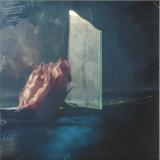
- A1: Eyeroll (Feat Elvin Brandhi) (4 01)
- A2: Malikan (Feat Abdullah Miniawy) (4 08)
- A3: Move On (Feat Iceboy Violet) (3 44)
- A4: 99 Favor Taste (Feat Juliana Huxtable) (0 57)
- A5: Nontrival Differential (Feat Elvin Brandhi) (4 25)
- A6: Partygoodtime (Feat Ledef) (0 09)
- B1: Cut Cut Quote (Feat Elvin Brandhi) (4 22)
- B2: Pique (4 26)
- B3: If The City Burns I Will Not Run (Feat Abdullah Miniawy & James Ginzburg) (3 23)
- B4: Hasty Revisionism (3 14)
- B5: Lacrymaturity (2 43)
Black Vinyl LP. The world has changed, we shouldn't try and pretend otherwise. While we were shut away in isolation our routines shifted, social patterns evolved, and our hopes and dreams were twisted into cobwebs we're still trying to wipe from our fingers. Ziúr tentatively approached this on her last album Antifate, an ambitious and complex hybrid pop fever dream that looked back to a Medieval escapist fantasy as the scent of revolution seemed to hum in the air. But when restrictions were eased, she found herself staring down a discombobulated society that had trapped itself in a spiral of microwaved nostalgia and detached, narcotic repetition. Eyeroll then is Ziúr's musical panacea, a tincture to wake us from our creative slumber and prompt external connection and reflection. It's a polyphonous hex that demands human interaction, and Ziúr's hand-picked alliance of collaborators - Elvin Brandhi, Abdullah Miniawy, Iceboy Violet, Juliana Huxtable, Ledef, and James Ginzburg - each provide distinct voices that together herald a bewildering sonic epoch. Ziúr's palette had to evolve to match the scope of the project, but it was pure necessity that informed the album's defining tone. Recording mostly at night, Ziúr was conscious of the noise she was making so developed a unique way to record organic percussion. Using a set of rototoms - low profile tunable drums - she scratched, scraped and gently tapped the skins to build up the undulating and unstable rhythmic backdrop for each track. It's the first sound we hear on the opener 'Eyeroll', rattling like lost marbles against Elvin Brandhi's primal croaks and screams. And when Brandhi's twisted articulations form words, Ziúr matches the energy with chaotic thuds and serrated blasts of saturated electronics. "I roll the shittiest cigarette," she squeals like she's about to start a mosh pit at Paris's GRM Studios. Without pause, Abdullah Miniawy takes over on 'Malikan', building on the promise of material with Simo Cell, Carl Gari and HVAD with corrosive trumpet blasts and charged, politically incendiary Arabic vocals. Inspired by pre-Islamic poetry and the Qu'ranic chanters he heard growing up in Saudi Arabia and Egypt, he spins labyrinthine stories that cross between the worlds, breaking down physical and spiritual borders simultaneously. Miniawy's scope is expanded even further on his second collaboration, 'If The City Burns I Will Not Run'. "If it rains and the city drowns," he utters over gaseous electronics, "I will not run away, but I will be anxious for the heart of one close to me." After a supple vocal turn from Manchester's Iceboy Violet on 'Move On' and a surreal interlude from poet- DJ-artist-theorist Juliana Huxtable on '99 Favor Taste', Brandhi returns with two more hyperactive collaborations: ,'Nontrivial Differential' and 'Cut Cut Quote'. On the former she slices into Ziúr's skeletal jazz eruptions, screaming and crooning interchangeably, fluxing between the rap battle and the cabaret. The latter is completely different meanwhile, with Brandhi settling into her role as front-woman and groaning dizzying improvised passages that sound like grunge crossed with psychedelic no-wave. Brandhi's spiky musical history has prepared her well for this collaboration; she's a prolific producer and has been using her voice spontaneously since debuting with father-daughter improv duo Yeah You in the mid 2020s. She's found an ideal foil in Ziúr, a producer who matches her restless energy and willingness to bend formality, and leaves an indelible mark on Eyeroll. But the album's most tender moments are from Ziúr herself, who winds the album down on 'Hasty Revisionism', growling over collapsible beats and cascading strings, and comes to an unexpected conclusion with country coda 'Lacrymaturity'. Its feverish amalgamation of country music and euphoric, experimental electronics might seem incongruous at first, but in context with the rest of the album is the only possible conclusion. With Eyeroll Ziúr is making a firm statement about togetherness, humanity, and the renewal of hope when all seems lost. By bringing together such a wide but philosophically harmonic team of collaborators, she's conducted a body of work that speaks to the creative fringe in no uncertain terms. Now's the time to throw away what you think you know, and build bridges you didn't think you need. Now's the time for action. She may have spent her entire career avoiding the solipsistic trappings of "queer art", but by assembling a communal statement that questions so many normative assumptions about music, politics, and beyond, Ziúr has chanced upon her queerest album yet. Cringe? Eyeroll.
- 1: Waves Of Laughter
- 2: These Hills
- 3: Thieves
- 4: Trying In Hell
- 5: Liar
- 6: I Am The Land
- 7: Witches
- 8: Just Tell Me How It Ends
- 9: Twos And Threes
- 10: Faces
- 11: Like December
The Isle Of Lewis is the largest such of the Outer Hebrides archipelago, and a place where myth and folklore are abundant, The Callanish Stones, a cruciform circle reckoned by tradition to be the forms of petrified giants who would not convert to Christianity, once prompted notable chronicler of the ancient Julian Cope to pronounce himself “Lashed by wind and rain but surrounded by vibe”.
This was where Holy Scum decided to take a pilgrimage for the recording of their second album proper for Rocket Recordings, All We Have Is Never. Frustrated by the physical and logistical challenges keeping the band members from collaborating, they decided the best way forward was at the residential Black Bay Studios on Great Bernera, a two hour plus ferry ride from anywhere. “The isolation of Black Bay was our salvation, a much-needed cleanse after a year of relentless misfortune” reckons the band’s Peter Taylor. Taylor describes the Holy Scum approach jokingly as ‘No riffs’ yet this belies an ability to carve abstraction and minimalism into monolithic and ominous shapes. Whilst the band are as handy as ever with excoriating and ear-splitting experimentation - as on the feverish guitar scree that underpins the taut‘Thieves’ - they also excel in a grittily vital charge as analogous to the ballsy kinetics of Fugazi and The Ex (the primal ‘I Am The Land’) as the overcast catharsis of Killing Joke and Voivod (the infectious ‘Witches’). “The title is a nod to the fact that everything ends - good, bad, ugly, beautiful “ reflects vocalist Mike Mare (Dälek) of their most focused work to date. “That is not a bad thing - it is a rebirth every time. We can spend a lifetime 24/7 together having shared experiences but living separate realities”. “I don’t think it is nihilistic,” he adds. “The despair turns into hope for sure”.
- A1: Wireless Yearning
- A2: Syzygios
- A3: Space Dust Expert
- A4: 4.3 Billion Kilometres
- A5: Deriva Nello Spazio I
- A6: Periodic Comets
- A7: C-Beams G_Lammer
- A8: Deriva Nello Spazio Ii
- A9: The Oort Cloud
- A10: Extragalactic
- B1: Spherical, Flat Or Shaped Like A Saddle_
- B2: 18 Billion Miles Outbound From Kepler-1606B
- B3: Skulk
- B4: No-Holds-Barred Darkness
- B5: 51.7 Au
- B6: Exoplanets
- B7: Infinity Times 2 Is Still Infinity!
- B8: Translunar Twinkling
Eighteen Berlin-schoolish Synthwave tracks published under pdqb's moniker Aipd Q41/B47. Carefully prompted and edited many moons ago with an AI model that is already outdated.
To become aware of transience in our fast-paced world, the album is not available digitally or via streaming. It exists only on tape. A relic on a relic! It's as if reading this text on the paper of an extinct tree.
To remind the listener of their own transience, the tape's appearance is mirror-like silver; one can see their reflection in it, look at themselves, and with the next glance, the previous one is gone.