The Neptune Power Federation brings back the love song and rocks as furiously as ever on their fifth studio album, Le Demon De L’Amour! The Imperial Princess and her crew of Aussie rockers lord over eight love songs that prove few can push the boundaries of rock and metal like The Neptune Power Federation! Heading into the creation of their fifth studio album, Le Demon De L’Amour, Australian psychedelic rock and roll brigade The Neptune Power Federation couldn’t let go of the fact that love songs had been commandeered, in their words, by “soft rockers, bedwetters and the introvert crowd.” Whereas rock had its glory period during the 1970s and 80s, the art of the love song is now lost within heavier music. Few bands are now willing to venture into such territory — metal and rock have settled comfortably into typical, predictable lyrical tropes that fail to pull at the heartstrings the way they used to. On Le Demon De L’Amour, The Neptune Power Federation reclaims the art of the love song as their own. Off the heels of their acclaimed 2019 Memoirs of a Rat Queen studio album, the members of The Neptune Power Federation utilized the unexpected downtime afforded from the 2020 COVID-19 pandemic to craft an album that takes more chances than its predecessor. While the band’s trademark rock swagger and prog tendencies still come into play, Le Demon ups the voltage and energy. True, there is a multitude of genre-blurring taking place, but the album’s infectious choruses and leaden riffs easily re-imagine metal and rock’s glory eras without blatant thievery.
Of course, all roads to The Neptune Power Federation run through lead vocalist Screamin’ Loz Sutch and her stage persona, “The Imperial Priestess.” Le Demon’s eight cuts find the indomitable frontwoman in top form, belting out tales of love from a female’s perspective, weaving in stories of cult worship, murder and hypnotism. The album’s artwork (created by guitarist Inverted CruciFox) also introduces her new nemesis — The Wizzard Princess. Recorded at bass player JayTanic Ritual’s The Ped Food Factory in Marrickville, Sydney, with mixing duties provided by Clem Bennett, Le Demon De L’Amour leads The Neptune Power Federation into their tenth anniversary next year. Their journey has taken them from the sweaty clubs of Sydney to a global audience. Now armed with eight love songs sure to melt and captivate the most hardened metal hearts, The Neptune Power Federation boldly goes where few bands dare to go.
"Maybe their best album so far!" - Deaf Forever (DE), 8.5/10, Soundcheck pos. 7 !!
"They can even top the phenomenal predecessor!" - Metal Hammer (DE), 5.5/7
"'Le Demon De'L'Amour' is definitely their most mature and complete album to date!"
"Finest party rock music of the most beautiful kind!" -(DE), 9/10
"An album full of thick, good riffs, solos, melodies and choruses that stick in mind - definitely recommended!" - Rockmuzine (NL), 85/100
"They are in impressive form!" - Saitenkult (DE), 8.5/10
"The Neptune Power Federation add a great piece of music to their list of achievements." - Heavy Music Blog (DE), 8/10
"The band rocks a bit straighter and more pleasing than before through their love song concept." - Rock Hard (DE), 8/10, Soundcheck pos. 6 / Dynamit !!
Buscar:psy
E-L-Rs zweites Album "Vexier" oszilliert elegant zwischen samtener Dunkelheit und Ausbrüchen wilder Energien. Der Stil der Schweizer wird oft als "Doomgaze" oder "Post-Metal" bezeichnet, und beide Begriffe treffen durchaus auf die mäandernden Down-Tempo-Doom-Epen des Trios zu. E-L-R variieren und verzerren hypnotische Riffs in sich wiederholenden Schleifen, die an schamanische, mit psychedelischen Farbspielen durchtränkte Rituale erinnern. Ausdauernd und sorgfältig webt das Trio einen subtilen Klangteppich, dessen Motive in ein Labyrinth voller verschlungener Details und verborgener Schätze locken.
"Vexier" gibt seine Geheimnisse nicht so leicht preis, denn in seinen Klangschatten verbergen sich zahlreiche Details und überraschende Wendungen, so wie es der Albumtitel bereits andeutet. Dieser leitet sich vom lateinischen Wort "vexare" ab, was so viel wie "plagen, irritieren" bedeutet und sich im Begriff "Vexierbild" wiederfindet. Dialektal kann "Vexier" auch ein Geduldsspiel meinen.
E-L-R wurde 2016 in der Schweizer Stadt Bern von I.R. (Bass) und S.M. (Gitarre) gegründet, die beide auch den Gesang beisteuern. Bald gesellte sich der Schlagzeuger M.K. dazu, dessen gefühlvoller und komplexer Stil sich als die perfekte Ergänzung erwies. Ihr Debütalbum "Mænad" (2019) wurde von Fans und Kritikern gleichermaßen hoch gelobt.
Mit "Vexier" machen E-L-R einen weiteren entscheidenden Schritt nach vorne und laden auf eine abenteuerliche Reise durch ihren ebenso faszinierenden wie multidimensionalen musikalischen Kosmos ein.
Bristol based band Cousin Kula announce their debut album Double Dinners. With co-signs from the likes of BADBADNOTGOOD and newly signed to Rhythm Section, Cousin Kula have created their own musical universe of otherworldly pop serenity with vastly distinct, but complementary elements: “the possibilities of jazz, the emphatic energy of club culture, and the sonic tapestries of psychedelia” CLASH Magazine remark.
Living and recording together, nestled in the sun-drenched hills on the outskirts of Bristol, Cousin Kula are masters of their craft, and also of restraint; widely regarded by their fans for their superior live show. Having performed live in various bands for the past 10 years since their early teens, not being able to hit the stage during lockdown took its toll on these musicians. Ever resourceful, however, Cousin Kula began a series of their own home-made live sessions, which lead in turn to a Boiler Room Session and further a request from XL signees BADBADNOTGOOD to record a live adaptation of their new single.
Now, Cousin Kula flutter into the collective consciousness with a timeless slice of psychedelic soul on debut album Double Dinners. The latest band to emerge out of the buoyant Bristol music scene,
they have stripped back all excess baggage for their most accomplished recordings to date. Existing on a similar plane to contemporaries such as Connan Mockasin, Mildlife, Toro Y Moi, Mac DeMarco and HOMESHAKE, the band caught the attention of renowned tastemaker Bradley Zero with their 'Casa Kula Cassette' EP at the end of 2020, with the Rhythm Section founder swiftly taking the 5 piece under his wing, with him commenting:
“The band balance an outsider approach with more hooks than you can shake a stick at... the result being a gently beguiling sound that effortlessly draws you in, revealing more character with each listen.”
- 01: Los Gatos - Tiggy
- 02: Los Joviales - Libre De Ti
- 03: Los Geminis - Eres Algo Salvaje
- 04: Los Gatos Negros - Ring Dag Doo (Anillo De Voodoo)
- 05: Los Tiburones - Tacones Altos
- 06: Los Bohemios - QuÉ Chica Tan Formal
- 07: Els 4 Gats - El Miner
- 08: Los Pirombodas - EsperarÉ
- 09: Los Watts - Al Rojo Vivo
- 10: Los Flecos - Correr
- 11: Locomocion - Mentirosa
- 12: Es Amics - Un RomÁNtico Amor
- 13: Els Xocs - Mes ÉNllÀ
- 14: Los Pasos - NacÍ De Pie
- 15: Los Diana - Minifalda
- 16: Los Pajaros Locos - Silvia
- 17: Los Nivram - Un Amor Sin Igual
- 18: Los Brujos - Solo Quiero Amor
- 19: Los Shakers - Me ReirÉ
- 20: Los Yunios's - Miguel
- 21: Los Zooms - Algo MÁS
- 22: EscÚChame Atardecer
- 23: Los Protones - No Te DejarÉ
- 24: Los Yetis - MontaÑA Y Mar
- 25: Los No - La Llave
- 26: Bertas - Me Has Perdonado Por Fin
- 27: Los Faros - Golpes
- 28: Los Watusi - Bohemio
The long awaited third volume of our "Algo salvaje" series, featuring untamed 1960s beat and garage nuggets from Spain. "Algo salvaje" is an anthology devoted to a rich period when hundreds of bands appeared all over Spain and, after paying attention to what their US and British contemporaries were doing, found their own way to vent their teenage rebellion through loud guitars. With amazing results! Many of the 28 tracks are reissued for the first time, including very hard-to-find records. This double LP gatefold package includes extensive notes by Vicente Fabuel featuring all the original record sleeves and artist photos. "Algo salvaje" ("Something Wild"), now reaching its third volume, celebrates the darkest, neglected and rebellious side of Spanish beat. Internationally labelled as nuggets (after the original compilation of the same name concocted by Jac Holzman and Lenny Kaye in 1972 for the Elektra label), the more common garage rock label has been used to place and describe one of the most fertile chapters of rock & roll history during its most creative years. An underground story which has luckily become known, with participants from all around the globe which included anonymous musicians, independent record labels with impossible names and ridiculously limited pressings, often not more than a few hundred copies. The tracks chosen for the occasion, a selection filtered strictly by their musical value, adhere to the rules of the classic nugget genre while demonstrating the permeability of garage sound and its inevitable evolution at the turn of the decade (1967-1974) through mixes that embraced psychedelia, soul and even prog rock. Epic and pretty wild. Just the kind of material that this record label usually handles. Many of the 28 tracks are reissued for the first time, including extremely hard-to-find records. This double-LP package includes extensive notes by genre-expert Vicente Fabuel featuring all the original record sleeves and artist photos. So let the band play...
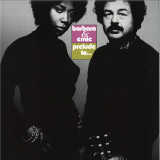
Barbara & Ernie’s only release is a complex combination of soul, folk rock, and late 60’s psychedelia. The constant use of electric sitars, funk leaning bass e multi-layered vocals offers a different take on contemporary pop music, approaching several jazz and world influence. oul singer Barbara Massey and jazz guitarist Ernie Calabria paired up for this rare 1971 album. With Calabria having worked with Nina Simone and Harry Belafonte, among others, and Massey having sung backup for artists including Jimi Hendrix, Cat Stevens, and Herbie Hancock, the pairing was an inspired one and resulted in this superb soul-jazz outing. Massey has a dry yet passionate and evocative vocal quality that often brings to mind Grace Slick. Fittingly, the duo takes on Jefferson Airplane's "Somebody to Love," turning the Summer of Love anthem into a steamy and hypnotic soul-funk jam. Elsewhere, the duo touches upon such varying styles as folk, Latin, and psychedelic rock with cuts like "For You" and "Do You Know?," bringing to mind such similarly inclined acts as the Free Design and Bill Withers.
The brand new album from David Luximon (Formerly Vive La Rose) is a sonic step forward, an album both challenging and comforting, blending classic 60's psych with contemporary harmonics - Produced by Olly Betts (Thurston Moore) and Simon Willey (Brian Ferry/Prince) the album features art from 2020 Vinyl Art nominee Gareth Halliday
Using vintage analogue equipment the album tips a cap to the likes of David Axelrod and Captain Beefheart.
Bààn is a Belgian instrumental duo, formed in 2016 in Brussels by Pascal N. Paulus (keyboards) and Jean-Philippe De Gheest (drums).In their music they interweave ambient, psych, jazz and rock and they create an infectious atmosphere that immediately transports the listener to distant places
The Coral is the eponymous debut studio album by British rock band the Coral. It was released on 29 July 2002, through the Deltasonic record label. After finalising their line-up, the band had a residency at The Cavern Club, where they were spotted and signed by Alan Willis of Deltasonic. Following the release of a single and an EP, and two UK tours, the band began recording their debut album. Sessions were held at Linford Manor Studios, Milton Keynes in early 2002, and were produced by the Lightning Seeds frontman Ian Broudie and the Coral. Described as a psychedelia and folk rock album, frontman James Skelly's voice was compared to Eric Burdon of the Animals and Jim Morrison of the Doors.
The Coral toured the United Kingdom twice (one stint as a co-headliner with the Music), and supported Pulp and Oasis for a few shows, leading up to the release of The Coral's lead single "Goodbye" on 15 July 2002. Following an appearance at that year's V Festival, the band toured the UK again in October 2002 to coincide with the album's second single "Dreaming of You" on 7 October 2002. The Coral was released in the United States on 4 March 2003, through Columbia Records.
The Coral received universal acclaim reviews from music critics, many of whom praised the high quality musicianship. The album peaked at number five in the UK, while also charting in France, Ireland, Japan, Scotland, and the US. It, alongside "Dreaming of You", would later be certified platinum in the UK. "Goodbye" charted at number 21 in the UK, and number 28 in Scotland, while "Dreaming of You" peaked at number 13 in the UK, and number 14 in Scotland. The album was nominated for the Mercury Music Prize, and a Brit Award.
The Coral is the eponymous debut studio album by British rock band the Coral. It was released on 29 July 2002, through the Deltasonic record label. After finalising their line-up, the band had a residency at The Cavern Club, where they were spotted and signed by Alan Willis of Deltasonic. Following the release of a single and an EP, and two UK tours, the band began recording their debut album. Sessions were held at Linford Manor Studios, Milton Keynes in early 2002, and were produced by the Lightning Seeds frontman Ian Broudie and the Coral. Described as a psychedelia and folk rock album, frontman James Skelly's voice was compared to Eric Burdon of the Animals and Jim Morrison of the Doors.
The Coral toured the United Kingdom twice (one stint as a co-headliner with the Music), and supported Pulp and Oasis for a few shows, leading up to the release of The Coral's lead single "Goodbye" on 15 July 2002. Following an appearance at that year's V Festival, the band toured the UK again in October 2002 to coincide with the album's second single "Dreaming of You" on 7 October 2002. The Coral was released in the United States on 4 March 2003, through Columbia Records.
The Coral received universal acclaim reviews from music critics, many of whom praised the high quality musicianship. The album peaked at number five in the UK, while also charting in France, Ireland, Japan, Scotland, and the US. It, alongside "Dreaming of You", would later be certified platinum in the UK. "Goodbye" charted at number 21 in the UK, and number 28 in Scotland, while "Dreaming of You" peaked at number 13 in the UK, and number 14 in Scotland. The album was nominated for the Mercury Music Prize, and a Brit Award.
- A1: Music For The Head
- A2: Jupiter Island
- A3: Third Eye Surfer
- A4: On The Sunday Of Life
- A5: The Nostalgia Factory
- B1: Space Transmission
- B2: Message From A Self Destructing Turnip
- B3: Radioactive Toy
- B4: Nine Cats
- C1: Hymn
- C2: Footprints
- C3: Linton Samuel Dawson
- C4: And The Swallows Dance Above The Sun
- C5: Queen Quotes Crowley
- D1: No Luck With Rabbits
- D2: Begonia Seduction Scene
- D3: This Long Silence
- D4: It Will Rain For A Million Years
TRANSMISSION 2LP EDITION OF PORCUPINE TREE'S 1991 DEBUT
ALBUM
Having recently announced that Snapper Music will be representing
Porcupine Tree's Transmission label worldwide, new CD & LP reissues of
the band's extensive catalogue continue to roll out throughout 2021
Porcupine Tree's 1991 debut album 'On The Sunday Of Life' is an album that
stands up as a modern-day pop-psych classic.
With acid warped lyrics courtesy of Alan Duffy (the brains behind the late
lamented Imaginary Records label) the album is a surreal delight containing gems
such as "Jupiter Island" & "Linton Samuel Dawson" filled with quirky melodies,
effected vocals & trippy backwards guitar work. "Nine Cats", the undoubted
masterpiece of the album, is pure Edward Lear styled psychedelia.
'On The Sunday Of Life' also hints at the direction the band would later take with
more progressive influenced material such as the epic "Radioactive Toy".
Porcupine Tree released their last album, 'The Incident', in 2009, marking another
step forward in the incredible journey of the band that began as a solo studio
project created by Steven Wilson in the late eighties to a multi grammy nominated
act & one of the world's most revered live bands, selling out arenas across the
globe & wowing fans with their incredible performances.
"Refreshingly original – a wonderful musical adventure" Record Collector "A debut
disc of unearthly delights… deadly seducing stuff" NME 2LP 140g Gatefold
Edition
Back in stock! Ghanaian Afro-Rock From Producer/Composer JJ Whitefield, Inspired By His Karl Hector & The Malcouns And Whitefield Brothers Projects JJ Whitefield, who in the early ‘90s revived the gritty, analogue Funk sounds of the ‘60s and ‘70s with his Poets Of Rhythm, has been working with Now-Again Records for over decade, releasing a flock of acclaimed projects with Karl Hector & The Malcouns, Whitefield Brothers, Rodinia and the Original Raw Soul anthology. He first started exploring African rhythms with the Whitefield Brothers in the late ‘90s, continuing in the ‘00s with Karl Hector & The Malcouns. He’s been instrumental in launching Ghanaian Afro Beat/Funk legend Ebo Taylor´s international career, decades after the maestro recorded the landmark albums that have inspired thousands. Whitefield recorded two new studio albums with Taylor and toured in his band between 2009 and 2013, where he met Taylor’s son Henry and percussionist/Singer Eric Owusu. The trio now front the Johnny! band and find inspiration not only in Ghana’s hypnotic grooves, but also the full frontal fuzz guitar assault heard on the legion of 70s Zambian Zamrock albums reissued by Now-Again. Indeed, Whitefield credits his tours with Zamrock godfathers Rikki Ililonga and WITCH’s Jagari Chanda as instrumental in creating the Johnny’s sonic backdrop. The band is rounded out by Turkish drummer Bernd Oezsevim (Woima Collective, Rodinia) and Indonesian bassist/multi instrumentalist Tomi Simatupang (Whitefield Brothers). This is what was oft-called “Afro Rock” at the core, with the possibilities to stretch out into swinging highlife, sweet soul or psychedelia . The results, point at a new direction for the music inspired by the Great Continent. One that takes a direction once mocked as derivative and asserts its importance on the globe’s current musical stage.
On a balmy Brazilian night in February, 1981, a crowd gathered in Rio de Janeiro's Gávea neighbourhood under the iconic dome of the city's Planetário (Planetarium). Alongside musicians like Helio Delmiro and Milton Nascimento (who were in the audience that night), they were there to see the great "Bruxo" (sorcerer) Hermeto Pascoal live in concert, with his new band formation which would become known simply as "O Grupo" (The Group).
Growing up on a farm in Brazil's northeastern state of Alagoas, Hermeto has always been deeply in tune with, and inspired by nature. In his youth he would make his own flutes to play call and response with the birds and frogs. He would build scrap-metal instruments in his blacksmith grandfather's forge, and sit for hours by the lake listening to the sounds of nature. On the Planetário Da Gávea recordings though, Hermeto is cast as the "sorcerer" or the "cosmic emissary" (as the great Brazilian guitarist Guinga once called him), exhibiting an intuitive sense of harmony and melody beyond that of our own world.
"Tudo e Som" (All is Sound). It's a phrase Hermeto regularly returns to, and it points to the fact that not only can music be made from anything, but also alludes to something much more profound. It's an understanding of the universe as being in a state of constant movement, forever vibrating at the quantum level, like the string of a guitar, or a saxophone's reed. "Tudo e Som" is a declaration of the mystical and spiritual power of sound, as a fundamentally vibrational force.
The series of concerts at the Planetário marked the birth of "O Grupo" which would last with the same line-up (apart from Zé Eduardo Nazário) for the next eleven years. Every member of O Grupo was a phenomenal musician in their own right. It was one of saxophonist/flautist Carlos Malta's first gigs with the group, and the concert unusually featured two drummers, Zé Eduardo Nazário and Marcio Bahia. Nazário, from São Paulo, had played with Hermeto during the mid-70s (as well as with Milton Nascimento, Egberto Gismonti and Toninho Horta, to name a few). Bahia though had just joined the group. Acclaimed keyboard player Jovino Santos Neto was on keyboards, piano and organ, and the great Itiberê Zwarg (who remains in Hermeto's band to this day), played bass. Rounding the group off was the percussionist Pernambuco. During this period (up until the early 90s) the group would rehearse for hours on end, virtually seven days a week, with a total dedication to music and Hermeto's musical vision.
Most of the compositions performed that night at the Planetário had never been recorded before, and many are unique to this album, including the wild 'Homônimo Sintróvio', the exaltant 'Samba Do Belaqua', 'Vou Pra Lá e Pra Cá' and 'Bombardino', which features Hermeto's wonderfully absurd call and response mouthpiece soliloquy. Then there's the stunning 7/4 Samba 'Jegue' which builds with inventive dissonance, before releasing yet another celestially colourful, celebratory refrain. The show also features the first recorded performances of 'Era Pra Ser e Não Foi' and 'Ilza na Feijoada' (inspired by Hermetos' wife Ilza's famed black bean and meat stew), which Hermeto later recorded on his 1984 studio album "Lagoa Da Canoa Município De Arapiraca".
Dubbed by Miles Davis as "one of the most important musicians on the planet", a Hermeto Pascoal live show was (and still is) an experience like no other. Across the recording of the Planetário concert, wild improvisation meets groovy, virtuosic vamping on progressive, extended psychedelic jams. The tracks are generally built around a beautiful, transcendent melody; instantly recognisable as being Hermeto's, and for the most part, the musicians then solo over extended two chord vamps. There's a plethora of powerfully delivered rhythms, wild solos and the performances are punctuated by Hermeto's unpredictable, at times comical sonic antics.
Over forty years since this historic happening, Far Out Recordings is overjoyed to release this magical recording of Hermeto Pascoal e Grupo Live at Planetário Da Gávea, on double vinyl LP, CD and digitally for a February 4th 2022 release.
Limited!
Gaïsha - Oriental Psychedelic Sounds and Funky Grooves
Gaïsha is a collaboration between the Belgian-Moroccan singer, Aicha Haskal, and Les Cerveaux Lents.
Aicha Haskal’s voice is smooth and warm voice and switches seamlessly between Arabic chants, parlando and even rap. The Arabic lyrics of the song ‘Ghalat’ were written by the Egyptian poet Abdelhamid Farag, who calls himself a ‘poète de l’ éloignement’. His lyrics are permeated with deep melancholy and romance. The song is a tribute to Abdelhamid, who passed away in 2020.
B-side ‘L’Amour Digital’ is based on ‘Sihtou Wajdan’, a traditional Muwashah. Muwashah is a poetic form that originated in Al- Andalus (Muslim Spain in the 11th century). Aicha adds to the poem a reply in French, giving the song a universal and interconnecting flair.
‘Ghalat’, een ode aan de Egyptische dichter Abdelhamid Farag, knalt uit je speakers met een geweldige levenslust”- Cutting Edge
Wie fan is van de muziek van Altin Gün, heeft met deze nieuwe single van het Gentse Gaïsha er een leuke ontdekking bij. - Indiestyle
"Het ritme, de synths en de groove lijken westers, maar verder ademt alles aan deze track een oosterse melancholie uit.” - Damusic
On the album "Kabinett der Phantasie", Keshav Purushotham's second, and the first with his partner Niklas Schneider, you hear music to which you flex your limbs in slow motion, smoke a meerschaum pipe, drink heavily sweetened mocha and roll your eyes to the beat. An album for which the long overdue niche „Phantastische Musik" finally belongs, if only to avoid having to label the sound with appropriate but unwieldy labels such as “Exotic Spiritual Pop” or “Outernational Downbeat Psychedelia”.
Limited Edition Vinyl LP – 1971 album cover, thick tip-on sleeve, 700 copies only
Finally putting an end to a long wait for library music lovers, Four Flies Records is proud to present the first reissue of Piero Umiliani's Paesaggi – a record that, despite remaining for many years pretty obscure compared to other titles in the maestro's discography, is now regarded by collectors and experts as the gold standard in Italian library music.
Originally released in two versions with different sleeves, the first on Liuto Records in 1971 and the second on Ciak Record in 1980, the album features tracks composed by the maestro himself (under his alias Zalla) and performed by the legendary super-group of Italian session players I Marc 4, this time with Angelo Baroncini instead of Carlo Pes on guitars (which probably explains the name being spelled with a 'k' instead of a 'c' on the album cover).
The Italian word paesaggi means "landscapes", and that is exactly what the music in the album has been designed to evoke – a journey of moods and emotions, through exotic and pastoral scenery, with loungey sounds that caress your ears like the song of an enchanted nightingale. Mysterious yet captivating soundscapes transport you to a faraway and peaceful place, possibly somewhere in rural Asia. While listening to the record, you'll feel as if you are sitting under a pavilion, right in the middle of a tea plantation, enjoying a freshly brewed green tea and watching the calm sunset.
In addition, Paesaggi is paradigmatic of Italian library music and its genre-defying nature. By using a multitude of instruments, such as flute, vibraphone, harpsichord, sitar, gong and others, it brings together a variety of arrangements, styles, and genres spanning from bossa nova to jazz, easy listening to psychedelic, Latin, exotica, and many more.
Under Umiliani's brilliant direction, the pianos and keyboard instruments of Antonello Vannucchi, the guitars of Angelo Baroncini, the bass of Maurizio Majorana, and the drums of Roberto Podio dance together and – enriched by other instruments played by top session musicians like Bruno Battisti D'Amario (sitar), Franco De Gemini (harmonica), or Franco Chiari (vibraphone) – create the sound that makes Paesaggi so unique.
With the honour of reissuing this masterpiece so many decades since its release comes a responsibility to do full justice to one of the greatest Italian composers of the 20th century and his now celebrated legacy. Four Flies have done their best to put out a record that replicates as closely as possible the value of the original as a cultural artefact, providing Italian library connoisseurs and novices alike with an exquisite sonic, and tactile, experience.
Breaking News! DJs Pareja and Matias Aguayo have joined to form the dance project MDM Factory!
Modern transcendental Techno music for those who know, and those who want to learn!
In a turmoil of events nightlife would change forever, and confined to their respective places - A flat in Buenos Aires and a house in the jungle Diego Irasusta, Mariano Caloso and Matias Aguayo joined forces to create new communication on distance via music.
Taking all their dance floor knowledge and dreaming of sound systems and togetherness in a better future, DJs Pareja & Aguayo put their minds, bodies and souls to work on this stunning EP that will please the forward thinking underground freaks as well as the big room techno pros.
Let’s dive into this divine mess of glorious dance floor jams from the future...
A1. Curvas Peligrosas
With the first track it becomes clear what this is all about: Wobbly metamorphous sounds from outer space jamming with stomping and bass driven techno beats of tomorrow, a new kind of rave, hypnotic and seductive, utterly strange but wonderfully catchy and contagious in a good sense, harsh shuffled hiatus and alternating kick drums, a relentless bassline and sophisticated electronic sounds in a a permanent evolution resembling and invoking altered states of consciousness.
A2. Love Boat
This new rave anthem seems like a classic you haven’t heard about. Muscle memories from dancefloor days trigger your body as you listen on your headphones, awaiting the chance to play it out soon, hopefully, as the dance floors slowly reopen. Alternating between parts of kickdrum, clap and snare awesomeness, and the mangled rave signals that slowly morph into a more concrete melody reminiscent of ancient dreams of the future, this track has it all for the club kids of today.
B1. La Vida Loca
The title track is a tech banger that will please those who dig Kenny Larkin, Claude Young, The Surgeon, Dave Clark or any other star in the nocturnal sky of Techno Techno, as well as the lovers of DJs Pareja’s classic Cómeme Clubbangers, or the more Techno side of Mr. Aguayo. Definitely has the potential to become a huge hit if enough djs that don’t rely on algorithms get their hands on it
B2. Las Llaves
The closer is hyper modern tech funk at its best. Percussive greatness as you can find it on many Cómeme releases is triggered in a different way, “sabroso” rhythms that are played in the light and purposeful way of an elegant jazz drummer, pave the way for an always evolving psychedelic lead synth sound, that will be a useful tool for the dj who knows when to keep the groove, prolonging those magic times between the risings...
repressed !
Free your mind and float away, you’re now entering the mode of the Growing Bin. Hamburg’s centre for audio enlightenment is back with another sublime sensory experience, this time from the land of the rising sun. Keen to get another stamp on his passport, Basso reached out to Japanese duo Singu, two open minded cats who just love to jam. Marrying Kiyo’s free drumming with Keta Ra’s melodic mastery of keyboard and guitar, the two-piece fuse free jazz, post-rock, kosmische and ambient into immersive and esoteric improvisations. Free from any compositional concerns, the Hiroshima outfit trade in energy, emotion and expression. The frenetic percussion and ephemeral melodies of opener ‘Aurora Gate’ instantly transport you to the breathless churn of a Tokyo crossroads, where thousands of people rush by but you stand still in the eye of the storm. Though they may be explosive, the drums sit back in the mix, offering a soft intensity behind the shimmering wall of melody. A nimble and nuanced affair, ‘Bop’ brings rapid fire rhythm, slick syncopation and hypnotic piano refrains. Cool bass rolls along like KDJ’s ‘Rectify’, as Singu update the acid jazz template like Toshio Matsuura covering Carl Craig. Singu journey from far out to Furthur on Aside closer ‘Nagebu’, strapping in for psychedelic synth wig out which is heavy on the resonance and free on the filter. Blooming out of the darkness on the B1, Basso favourite ‘Fazaria’ soothes and moves you with its twinkling keys, nebulous wave forms and delicate guitar, leaving you wide eyed in wonder as the drum fills burst like fireworks across a star-filled sky. ‘828’ sweeps into abstraction as Kiyo and Keta Ra combine snapping glitches and aquatic electronics with fractal guitar tones and woozy bass, pushing through a portal to see what’s beyond. An a-grade wal
While previous albums, most notably Leland and Minutes of Sleep (2014) as well as two albums released as one half of the duo Aris Kindt (most notably the stellar Swann and Odette from 2017) have relied on singular thematic and narrative drives that were often of a personal, collaborative, or hermetic in nature, Thresholds is an album that aspires to sonic universality and the presentation of a fully formed psychoacoustical world. That being said it is not an “album of ideas”. Inspired by the ecological and political upheavals of the present and the role of speculative thought as an avenue of global transformation Thresholds is the work of a mature artist fully in control of his powers. Both expansive and nuanced the album widens the aperture of the affective possibilities of the electronic assemblage; themes skip from one track to the next, elevating and informing each other in tangible fields of abstract figuration. The titles, while often heady, concisely allude to strategies implicit in the construction and arrangement of the works: Cut Up, within the context of the album, is exactly that. Luck Takes a Step juxtaposes stately synths with just the right touch of playful fluctuation and latent atonality. The title track itself is a knotted mass of uncertainty and propulsive beats the breakdown of which is a nervous series of fits and starts that resonate not just within the track but as the fulcrum of the entire album: the threshold of our Threshold: “…we are caught up in our own original transversals of time to the point of dissolution, and that which remains a part of the contrivance of ourselves is ultimately that which crosses the threshold and is somehow, miraculously, reconstituted on the other side of it. Because it is via the threshold that we can best observe the conditions of experience as lived even as we cross to the other side of understanding, rejoining the ancient equilibriums of which we, in our depths, are comprised.” (From the liner notes)
No track overstays its welcome and with the help of standout vocalist Eliana Glass, and instrumentation by Dave Harrington (Darkside with Nicolas Jaar), Mark Nelson (Pan American), Will Shore, Greg Paulus and Gareth Redmond, and mixed by Phil Weinrobe, the result is a dizzyingly pure inward gaze that is first and foremost an album about connection.
- A1: 1/4 Dead
- A2: Blissful Myth
- A3: The Psycho Squat
- A4: Rotten To The Core
- A5: Poppycock
- A6: Cosmic Hearse
- A7: The Cloud Song
- A8: Vampire State Building
- A9: Blasphemy Squad
- A10: When You Are A Martian Church
- A11: Pig In A Blanket
- B1: Inside
- B2: Nothing But A Nightmare
- B3: Flesh Crucifix
- B4: Slimy Member
- B5: Love Is Not
- B6: Radio Schizo
- B7: Happy Farm
- B8: Alice Crucifies The Paedophiles
- B9: Army Of Jesus
- B10: Dutchmen
The words legendary, seminal, and classic get thrown around at will these days, but Rudimentary Peni’s debut album is all of them. Recorded over two days at Southern Studios by John Loder and originally released in 1983 by CRASS off-shoot label Corpus Christi, “Death Church” showed a band moving away from the urgency of their two early 7”s and into their own realm. Creating a template that bands have been trying to replicate ever since, while ticking all the boxes to become a genre-defining album. Iconic artwork, a unique sound and their own lyrical universe. All merging seamlessly. Sonically the album is full of Nick Blinko’s extraordinary vocals and equally remarkable guitar, Grant Matthews’ big meandering driving basslines and Jon Greville's tight and relentless drum work which together made something intricate and hard hitting, with a sequence that makes the 21 songs on the album flow perfectly. Visually, the album is every outsider art lover’s wet dream. A six-panel poster sleeve with every inch covered in Nick Blinko’s claustrophobic black and white line drawings, while lyrically the songs deal with madness, religion, death, and questioning humankind from a dark poetic place rarely found in any art form. Remastered from the original master tapes by Arthur Rizk and housed in a replica poster sleeve, including the original insert, “Death Church” is back in print in LP, CD and cassette after nearly a decade of no official reissues.
Following his debut on the label in 2019 - ‘Mind Dweller’ (COUNTER013) - Frankfurt’s Stefan Alexis is back with his next chapter of four atypical, undulating club tracks.
The EP features ‘Eratosthene’, a shimmering up-tempo weapon in collaboration with label founder Inland, alongside three other diverse cuts highlighting some of the Macedonian psychotherapist’s favourite modes of play: filter-funk, acid, broken-beats, sampling.
This release comes on 180g 12’’ vinyl and digital, featuring artwork by Berlin-based Norweigan painter Tyra Tingleff.