In ihrer bisher zwölfjährigen Band-Historie veröffentlichten Nicolás Jaar und Dave Harrington, zusammen bekannt als DARKSIDE, die beiden Alben ""Psychic" (2013) und ""Spiral" (2021). Mit ihrem langjährigen Freund und Kollaborateur Tlacael Esparza als neues Bandmitglied und Schlagzeuger kommt jetzt ihr drittes Album ""Nothing". Das Ergebnis ist faszinierend und vielschichtig. DARKSIDE schmücken ""Nothing" mit prägnanten Rhythmen, verzerrten Vocals und kreieren eine ganz eigene, wie ungewöhnlichen Ästhetik.
Um die Entwicklung zu verstehen, muss man die Hintergrundgeschichte kennen: Jaar und Harrington lernten sich in den frühen 2010ern während ihrer Schulzeit in Providence kennen. Während der Tour zu Jaars Solo-Debütalbum fand eine spontane Aufnahmesession an einem freien Tag in einem Berliner Hotelzimmer statt. Die Session war wortwörtlich brandheiß, denn sie endete mit durchgeschmorten Lautsprechern. Der Raum füllte sich mit Rauch und der an diesem Tag entstandene Song wurde ihre erste gemeinsame Single ""A1", DARKSIDE war geboren.
Zwischen den ersten beiden Alben legte das Duo eine sechsjährige Pause ein. In dieser Zeit verfolgten Jaar und Harrington jeweils eigene kreative Wege: Jaar etablierte sich als Solokünstler und Produzent, während Harrington als innovativer Gitarrist und Experimentalmusiker die Underground-Szene in L.A. aufmischte und die Rock-Band Taper"s Choice gründete. Die Geschichte setzt sich dann im Herbst 2022 in Los Angeles fort als das Duo eine Reihe von Shows buchte, um sich nach acht Jahren erstmals wieder als Live-Band zu vereinen. Esparza kam als festes Mitglied hinzu und veränderte grundlegend den Klang und die Energie der Band. Die Idee von ""Nothing" entstand während der Suche nach Achtsamkeit und Harringtons stillen Momenten mit seiner neugeborenen Tochter, in denen er Schönheit im Nichtstun fand. Für Jaar wurde ""Nothing" zu einem Symbol für die allgegenwärtigen, wie überwältigenden Probleme, unausgesprochene Gefühle und den Stillstand in globalen Krisen wie Klimawandel, politischer Heuchelei und wiederkehrender Gewalt.
Suche:psychic
- Respite For The Tulpamancer
- Gajo
- Doll Park Doll Park
- Dissimulato
- Losing Faith
- Busy Walks Into The Memory Palace
- Paraphrase Of A Shadow
- Riddlecraft
- Gaolbreaker's Dream
- Tip The Ivy
,respite -- levity for the nameless ghost in crisis", aka ,r--L4nGc`, ist Colin Selfs drittes Album, nach dem gefeierten ,Siblings` (2018) und der dazugehörigen EP ,Orphans` (2019).In ,r--L4nGc" bewegt sich die Musik des in Berlin und New York lebenden Künstlers, Komponisten und Puppenspielers nahtlos zwischen schwebenden, unheimlichen Pop-Vocals, immaterieller experimenteller Elektronik und knallharten Dancefloor-Rhythmen. Strahlende, grenzenlose Schönheit und unentrinnbarer Terror sind ein und dasselbe. Unter Einbeziehung von Selfs langjähriger Praxis des Puppenmachens und auf der Grundlage eines bewussten Exils, das es dem Künstler ermöglichte, sich mit verlorenen Seelen auf anderen Existenzebenen zu unterhalten, ist ,rünL4nGc" eine integrierte Vision der eklektischen Praxis des Künstlers. Self singt in Polari, einer vergessenen Form des Slantwise-Englisch, das von queeren Subkulturen seit Jahrhunderten verwendet wird, um sich der Entdeckung zu entziehen, und performt für unsere verstorbenen Lehrer und Freunde und für den Rest von uns, die bereit sind, mit unheimlichen Geistern zu kommunizieren. Für Fans von Perfume Genius, Björk, Holly Herndon, Psychic TV, Oneohtrix Point Never, Lyra Pramuk, Bat For Lashes, SOPHIE, Talk Talk. "respite - levity for the nameless ghost in crisis", aka "r-nL4nGc", is Colin Self's third full length album, following the acclaimed "Siblings" (2018) and its companion EP "Orphans" (2019). In "r-L4nGc" the Berlin and New York based artist, composer, and puppeteer's music travels seamlessly from soaring, uncanny pop vocals to immaterial experimental electronics and hard-hitting dance floor rhythms. Radiant, limitless beauty and boundless, inescapable terror are one and the same. Incorporating Selfü's long standing practice of dollmaking, and drawing upon a conscious exile that allowed the artist to settle into conversation with lost souls on other planes of existence, "r-L4nGc" is an integrated vision of the artist's eclectic practice. Singing in Polari, a forgotten form of slantwise English used by queer subcultures for centuries to evade detection, Self performs for our departed teachers and friends, and for the rest of us, ready to commune with uncanny spirits. For fans of Perfume Genius, Björk, Holly Herndon, Psychic TV, Oneohtrix Point Never, Lyra Pramuk, Bat For Lashes, SOPHIE, Talk Talk.
[f] [CANTING]
Latest recordings by Cluster Lizard – an interdisciplinary mixed media project by two Ukrainian artists Dmytro Fedorenko and Kateryna Zavoloka, based in Berlin.
In previous centuries, Ukrainian warriors invented an audacious macabre ritual called Herts, a courageous death dance. Before the battle, a few ruthless Cossacks would leave their ranks to perform a mocking dance right in front of their enemy lines, laughing and shouting insulting indecencies at them. Herts, a mixture of laughter and death, was a psychic attack to crumble and degrade the enemy soldiers' morale.
Orange Crush Vinyl[25,17 €]
"Bad Bad Hats are an indie rock trio from Minneapolis, Minnesota. Known for bringing a joyful, exuberant presence to their live shows, touring with The Beths, Margaret Glaspy, The Front Bottoms, Hippo Campus, and Third Eye Blind, the group took specific care to bring their fun-loving spirit to their third LP, Walkman.
Kerry (guitar/vocals), Chris (bass), and Con (drums) let their collective hair down on Walkman, bringing raucous and explosive riffs alongside witty lyrics. Though you might not notice from their indie rock exterior, Bad Bad Hats draws a heavy influence from classic pop songwriting that shines through in their hooky choruses and strong melodic sensibilities.
For this release the band set out to push their capabilities as a trio. Subtle changes in process helped the band achieve this goal, such as shifting Chris from a wider multi-instrumental role to allow him to prioritize his bass playing, having Kerry record the bulk of the guitars instead. “You can hear all of our musical voices a lot better on this record.â€
A carefully crafted studio sound brings the record to life, injecting it with an energetic voice that is unique to Bad Bad Hats. Walkman is the group’s fourth time working with producer Brett Bullion, including their previous two LPs, Psychic Reader and Lightning Round, and the Wide Right EP. Bullion and the band use the studio as an instrument, resulting in their most polished work to date."
- Evanescent Psychic Pez Drop 02:48
- Demons 03:18
- Fog Over Frisco 03:46
- Too Late 05:57
- Hanky Panky Nohow 02:58
- Something To Do 02:11
- Ultra-Powerful Short Wave Radio Picks Up Music From Venus 01:32
- Up To You 04:03
- Somebody's Baby 03:38
- Walking Away From You 05:58
- Artificial Heart 03:00
- Cast A Shadow 02:24
- I'm Set Free 04:10
- Barnaby, Hardly Working 03:54
- Some Kinda Fatigue 07:38
- Speeding Motorcycle 03:30
- Nutricia 05:01
- Her Grandmother's Gift 02:39
- From A Motel 6 # 2 04:29
- Gooseneck Problem 00:04
- Surfin' With The Shah 02:07
- Ecstasy Blues 02:47
- Too Much, Part 1 01:18
- Blitzkrieg Bop 02:18
- One Self: Fish Girl 05:31
- Enough 05:26
- Drum Solo 00:08
- From A Motel 6 # 1 03:35
- Too Much, Part 2 00:21
- Sunsquashed 26:20
- 1: Alan Vega, Bobby Gillespie, Andy Mackay - Blood On The Moon (Mekon Rebuild)
- 2: Renegade Soundwave - A.d.i.d.a.s
- 3: Bobby Gillespie - I Put A Spell On You
- 4: Robert Ames & Ben Corrigan - Chrome Ocean (Mekon Mix)
- 5: Rema-Rema - Rema-Rema (Mekon Mix)
- 6: Leslie Winer - When I Was Walt Whitman (Mekon Remix)
- 7: Hbar - Hendy
- 8: Mekon & Schooly D - Saturday Night (Hit By A Rock - Fucked Up Mix)
- 9: Mona Mur - Tied (Mekon Vs Hit By A Rock Mix)
- 10: Jiz - I Am The Moon
- 11: Zos Kia & Isabelle De Jour - May Day
John Gosling (aka Mekon) the English big beat/industrial musician and electronica producer, is set to launch his new label Hua Hua (pronounced wah wah) with an 11-track compilation album this July. A quick scan at some of the featured artists showcases a line up of legends - eighties rap sensation Schooly D sitting alongside Primal Scream mainstay Bobby Gillespie and John’s recently departed punk hero Alan Vega - even Roxy Music’s saxophonist and founder member Andy Mackay makes an appearance. And while John’s electronic alter ego Mekon is always on hand to remix and arrange, he’s far from the only producer behind the proverbial wheel.
“It’s stuff I had lying around and now I am finding ways to get it out of my system,” he says. “It’s all been brought to the world with brilliant new artwork by Isabelle de Jour, who also features on various tracks.”
Gosling is well known as a member of both Psychic TV and Coil (for the album Transparent). Gosling founded the groups Zos Kia with John Balance and Bass-o-Matic with William Orbit before recording as Mekon. He has also remixed under the name Sugar J. And that’s before we get to the fact that he has soundtracked some of the most forward-thinking fashion shows in the world - crafting the soundscapes for Alexander McQueen shows since the show Dante in 1996. Firstly working hand in hand with the late great Lee “Alexander” McQueen, then with his successor Sarah Burton. In the mid-to-late-nineties he was a core member of the group Agent Provocateur along with Matthew Ashman (originally of Bow Wow Wow), Dan Peppe, Danny Saber (of Black Grape) and Cleo Torez. He has also worked with artists such as Roxanne Shanté ('Yes Yes Y'All'), Marc Almond ('Delirious'), and Afrika Bambaataa. His third album “Something Came Up” featured artwork by Alexander McQueen.
John is as passionate about Suicide and Alan Vega and what he describes as “the new stuff”. Besides, he says, “that’s how people listen to music now. I think kids – my kids anyway – listen right across the board. People don’t see genres anymore. So it’s my definition of good music.” It’s safe to say that this is very much Volume 1. “Yes, it doesn’t cover everything and Volume 2 will be completely different.”
Signing off 2024 in style, Berlin’s Pure Hate Trax brings you PH008 Execution Style EP by DJ Speedsick. The Wisconsin-born Chicago based recording & visual artist who also owns and operates as Snake Eyes & Sevens and Escalationist has previously released on labels such as Ophism Records, Bank NYC, Psychic Liberation, Psy X Records & Techno Is The Devil’s Music. Described as taking Techno to uncompromising places he delivers five hardware tracks direct out of the box implementing harsh instrumental industrial noises alongside Acid and Techno to create a signature Speedsick EP. PH008 is available in stores from 4th December 2024, distributed by Ready Made Distribution, Berlin. Mastered by Joe Farr. Artwork by Slave To
Society. Tracklist:
- Obsession
- The Duke Ellington Bridge
- Conduit
- Fascist Discotheque
- Restructuring
- Apocalyptic Boom Boom
- Angola
- Elvis And Nixon
- Miles Davis Headwound Blues
- Backwards Man
- Arthur Lee Bomb Squad
- Psychic Bloc
- Des Demonas Against Fascism
Washington, DC’s DES DEMONAS have been hailed as a favorite of Henry Rollins (KCRW FM/Black Flag), Marc Riley (BBC6 Music/The Fall), and Iggy Pop (BBC6 Music/The Stooges) since the release of their debut LP on In The Red Records and their subsequent singles and EP. DES DEMONAS’ much anticipated follow-up LP “APOCALYPTIC BOOM! BOOM!” is out this fall on In The Red Records. The group is made up of some familiar names from the DC punk, garage, and indie scenes. A Kenyan punk-poet-politique Jacky “Cougar” Abok (Foul Swoops, Thee Lolitas) is on vocals & percussion, Mark Cisneros (Hammered Hulls, Kid Congo and the Pink Monkey Birds, The Make-Up) is on guitar, Paul Vivari (Benjy Ferree, DJ Soul Call Paul) is on Farfisa organ and bass machine, and Matt Gatwood (Two Inch Astronaut) is on drums. Des Demonas’ music is a melding of disparate sounds and influences, hitting with a driving pulse and fiery intent. “The sonic fuel of the band is a blend of post punk, punk, funk, blues, psych rock, Afro beat, even bubble gum but the noise you hear is pure Des Demonas.” - Kim Salmon / The Scientists “Dig the Des Demonas. Play it loud. Twist your wig.” - Kid Congo Powers
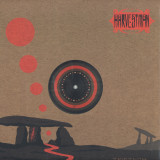
Woven together from home studio recordings that span two decades, and with some notable guest appearances including; The Bug, Douglas Leal of Deafkids, Wayne Adams of Petbrick, Dave French of Yob and Sanford Parker, this final part of the Harvestman Triptych seeks once again for a lost world, with the voice of poet Ezra Pound extolling the virtues of "gathering from the air a live tradition".
Cloudy Clear plus Black Galaxy effect vinyl in dub style jacket. Limited and Non-Returnable.
At its heart, music has always been a questioning of inheritance – a dialogue with predecessors and forebears, the forging of one’s own perspective in relation to what has come before, and for some, a plunge into the boundless realms between. For Steve Von Till, that process has always taken on an added dimension to become the most sacred of tasks. Whether through the apocalyptic uprising of Neurosis, the sonic deconstructions of their sister project, Tribes of Neurot, the invocatory intimacy of his eponymous solo albums or his instrumental psychedelic reveries in the guise of Harvestman, that dialogue has never just been with musical influences, but with what underpins them: the primordial, elemental forces now banished to the peripheries of our contemporary consciousness, yet still broadcasting a signal for all who will listen.
Drawn to the megaliths, ruins and ancient sites mapped out along the British and European mainland’s geographical and psychic landscapes, the folklore and apocrypha forever resurfacing as portals from a rational world, Triptych is a meditation forged from traces and residues, and an hallucinatory recollection of artists who have tapped into that enduring otherworldliness embedded within us all. It’s a dream diary narrating a passage through Summer Isle where Flying Saucer Attack are wafting out of a window, a distant Fairport Convention are being remixed by dub master Adrian Sherwood, celestial scanners Tangerine Dream are trying to drown out Bert Jansch and Hawkwind are playing Steeleye Span covers, all prised out of time yet bound to its singularity.
"Herne's Oak" provides seismic bass waves that physically halt the track in its steps - giant footfalls as Herne's antlers themselves are dragged along a corridor. Another curious and mysterious piece of British folklore brought to life by Harvestman.
If Triptych is a multi- and extra-sensory experience, it extends to the remarkable glyph-style artwork of Henry Hablak, a map of correspondences from a long-forgotten ancient and advanced civilization. As with Triptych itself, it’s an echo from another time, an act of binding, a guide to be endlessly reinterpreted, and a signpost to the sacred that might not indicate where to look, but how.
Cover art is by Henry Hablak, who also designed the art for Part One and Part Two.
Esoteric Warfare is the fifth full-length studio album by Norwegian black metal band Mayhem. It was released by Season of Mist on 6 June 2014 in Europe and Asia, and on 10 June 2014 in North America. It is the band's first album with Teloch on guitar since Blasphemer's departure from the band in 2008. As with the previous album, the lyrics focus less on the classically Satanic themes of the band's early work, instead referring to occult and conspiracy theory concepts such as psychic powers, mind control and alien tampering with human evolution. (For instance, the song "Corpse of Care" appears to be a direct allusion to Bohemian Grove and the Cremation of Care ceremony performed there.)
- A1: Diva Dj & An)Qua Cosmic Boys - Bright White Light
- A2: Next Generation - Mystic Force (Psychic Harmony Mix)
- A3: Synchro - Illogical Simmetry (Revisited Mix)
- A4: Diva Dj & Antiqua Cosmic Boys - Rain Forest
- B1: Diva Dj & An)Qua Cosmic Boys – Céline
- B2: Voyager - City Of Night
- B3: Pano Dj - Spiritual (Original Vrs )
- B4: Overture - Poem Without Words (Spanish Dream)
- C1: Diva Dj & An)Qua Cosmic Boys - La Sirena
- C2: Marco Carola - Apollo 13
- C3: Tin Drums - Tin Drums (Noisemaker Snare)
- C4: Diva Dj & An)Qua Cosmic Boys - Benededa Campana
- D1: Dj Lux & Diolac - Project 106 (Club Version)
- D2: Smorphya Dj - Symmetry (Synchro Remix)
- D3: Ramses - Supers))Ous (Rmx By Smorphya Dj)
- D4: Diva Dj & An)Qua Cosmic Boys - Peace On Earth
Shock Room it’s a double vinyl release who takes the name from the main room of the discoteque.
ULTIMO IMPERO DI Torino; an historic temple of the techno music from the ‘90s. in this compila)on are all included the most iconic and an)cipated “techno, trance & progressive” grooves that have made dance en)re genera)ons of people, nowadays again on track and well
spinned up by djs all arounf the world.
"We could go so far as to say that it is the human condition to be grotesque, since the human animal is the one that does not fit in, the freak of nature who has no place in the natural order and is capable of re-combining nature's products into hideous new forms." So reckoned Mark Fisher in 'The Weird And The Eerie', which chronicled the means by which the uncanny can enter the everyday. Mwg Drwg, the second album from South Wales psychic seers Obey Cobra, is an album that dwells in exactly this kind of headspace, where the otherworldly meets the kitchen sink. Always a band who've sought out new dimensions to explore via their trademark warped post-punk, electronic and industrial influences, Obey Cobra have crafted surreal new shapes here. Taking influences as diverse as Diane Arbus, David Lynch and Sonic Youth, they balance out heaviosity and grace on the likes of the majestically discordant 'Ten Of Wands' Elsewhere, on the title track, the band sculpt a Jesus Lizard-esque rhythmic pulse, eerie vocal abstraction and the crepuscular downtempo atmosphere of Massive Attack's Mezzanine into a uniquely haunting dreamscape. Mwg Drwg is where the weird and eerie are amplified to intimidating proportions It's where grotesquely and beauty happily cohabit. It's an aural exorcism of William Friedkin proportions that demands your immediate attention.
Camelot, the legendary seat of King Arthur's court in Early Middle Ages Britain, was probably not a real place. A corruption of the name of a real Romano-Briton city, the word "Camelot" accumulated symbolic, mythic resonances over centuries, until achieving its present usage as a near-synonym of "utopia." In the mid-20th century alone, Camelot inspired an explosion of representations and appropriations, among them the violent, affectless Arthurian court of Robert Bresson's 1974 film Lancelot du Lac and the absurdist iteration of Monty Python's 1975 Holy Grail, both of which feature armored knights erupting into fountains of blood; the mystical Welsh world of novelist John Cowper Powys's profoundly weird 1951 novel Porius, with its Roman cults, wizards and witches, and wanton giants; and the nationalist nostalgia of President John F. Kennedy's White House. Unsurprisingly there are fewer Camelots in more recent memory. Camelot, Canadian songwriter Jennifer Castle's extraordinary, moving 2024 chronicle of the artist in early middle age, charts a realer, more rooted, and more metaphorical place than the fabled Camelot of the Early Middle Ages (or its myriad depictions), but it too is a space more psychic than physical. In Castle's Camelot, the fantastic interpenetrates the mundane, and the Grail, if there is one, distills everyday experience into art and art into faith, subliming terrestrial concerns into sublime celestial prayers to Mother Nature, and to the unfolding process of perfecting imperfection in one's own nature. Co-produced by Jennifer and longtime collaborator Jeff McMurrich, her seventh record is at once her most monumental and unguarded to date, demonstrating a mastery of rendering her verse and melodies alike with crisply poignant economy. For all their pointedly plainspoken lyrical detail and exhilarating full-band musical flourishes, these songs sound inevitable, eternal as morning devotions. "Back in Camelot," she sings on the lilting, vulnerable title track, "I really learned a lot / circles in the crops and / sky-high geometry." The album opens with a candid admission of sleeping "in the unfinished basement," an embarrassing joke that comes true. But the dreamer is redeemed by dreaming, setting sail in her airborne bed above "sirens and desert deities." If she questions her own agency_whether she is "wishing stones were standing" or just "pissing in the wind"_it does not diminish the ineffable existential jolt of such signs and wonders. This abiding tension between belief and doubt, magic and pragmatism, self and other, sacred and profane, and even, arguably, paganism and monotheism, suffuses these ten songs, which limn an interior landscape shot through with sunstriped shadows of "multi-felt dimensions" both mystical and quotidian. The epic scale and transport of "Camelot," with its swooning strings, gives way dramatically to "Some Friends," an acoustic-guitar-and-vocals meditation in miniature on Janus-faced friends and the lunar and solar temperatures of their promises_"bright and beaming verses" versus hot curses_which recalls her minimalist last album, 2020's achingly intimate Monarch Season. (In a symmetrical sequencing gesture, the penultimate track, the incantatory "Earthsong," bookends the central six with a similarly spare solo performance and coiled chord progression, this time an ambiguous appeal to _ a wounded lover? a wounded saint? our wounded planet?) Those whom "Trust" accuses of treacherous oaths spit through "gilded and golden tooth"_cynics, critics, hypocrites, gurus, scientists, doctors, lovers, government, the so-called entertainment industry_sow uncertainty that can infect the artist, as in "Louis": "What's that dance / and can it be done? What's that song / and can it be sung?" Answering affirmatively are "Lucky #8," an irrepressible ode to dancing as a bulwark against the "tidal pools of pain" and the "theory of collapse," and "Full Moon in Leo," which finds the narrator dancing around the house with a broom, wearing nothing but her underwear and "big hair." But the central question remains: who can we trust, and at what cost faith, in art or angels or otherwise? Castle's confidence in her collaborators is the cornerstone of Camelot. Carl Didur (piano and keys), Evan Cartwright (drums and percussion), and steadfast sideman Mike Smith (bass) comprise a rhythm section of exquisite delicacy and depth. This fundamental trio anchors the airiness of regular backing vocalists Victoria Cheong and Isla Craig and frames the guitars of Castle, McMurrich, and Paul Mortimer (and on "Lucky #8," special guest Cass McCombs). Reprising his decennial role on Castle's beloved 2014 Pink City, Owen Pallett arranged the strings for Estonia's FAMES Skopje Studio Orchestra. On the ravishing country-soul ballad "Blowing Kisses"_Pallett's crowning achievement here, which can be heard in its entirety in the penultimate episode of the third season of FX's The Bear_Jennifer contemplates time and presence, love and prayer_and how songwriting and poetry both manifest and limit all four dimensions: "No words to fumble with / I'm not a beggar to language any longer." Such rare moments of speechlessness_"I'm so fucking honoured," she bluntly proclaims_suggest a state "only a god could come up with." (If Camelot affirms Castle as one of the great song-poets of her generation, she is not immune to the despairing linguistic beggary that plagues all writers.) Camelot evinces a thoroughgoing faith not only in the natural world_including human bodies, which can, miraculously, dance and swim and bleed and embrace and birth_but also in our interpretations of and interventions in it: the "charts and diagrams" of "Lucky #8," a daydreamt billboard on Fairfax Ave. in LA in "Full Moon in Leo," the bloody invocations of the organ-stained "Mary Miracle," and all manner of water worship, rivers in particular. (Notably, Jennifer has worked as a farmer and a doula.) The album ends with "Fractal Canyon"'s repeated, exalted insistence that she's "not alone here." But where is here? The word "utopia" itself constitutes a pun, indicating in its ambiguous first syllable both the Greek "eutopia," or "good-place"_the facet most remembered today_and "outopia," or "no-place," a negative, impossible geography of the mind. Utopia, like its metonym Camelot, is imaginary. Or as fellow Canadian songwriter Neil Young once sang, "Everyone knows this is nowhere." "Can you see how I'd be tempted," Castle asks out of nowhere, held in the mystery, "to pretend I'm not alone and let the memory bend?"
Silver Metallic Vinyl[31,72 €]
Body Meπa is the New York-based quartet of Greg Fox (drums), Sasha Frere-Jones (guitar), Melvin Gibbs (bass), and Grey McMurray (guitar). As luminaries in the intersecting traditions of improvised music, rock, jazz, fusion, and contemporary classical music, the four artists have each spent decades building diverse practices that extend beyond sound into multiple disciplines. Prayer in Dub, their second release on Hausu Mountain, follows the band’s 2020 album The Work Is Slow.
The album presents a band whose collective intuition as instrumentalists and live-in-the-room songwriters has deepened with each take that they put to tape. Prayer in Dub finds Body Meπa taking up new experiments with song structure and atmosphere, fanning out into a wide menu of both longer and more concise pieces that suggest deliberate shifts in energy and emotional resonance. The album presents a thrilling contrast between storms of precise rhythmic interplay and slowly expanding fields of multi-guitar and bass texture, alternately pushing the narrative toward explosive peaks of intensity and dipping into ambient expanses. Contemplative guitar lines, both bone dry and effected into total abstraction, ripple together over dub-indebted rhythm section grooves before shifting the dial towards beatific twang. Knotty distorted solos surge out of the fray over networks of arpeggios and drum fills.
On Prayer in Dub, Body Meπa pursues a strain of euphoria charged with elegiac grandeur and the looming potential to crumble at any moment under the psychic weight of confusion. It speaks to the band’s goals and general outlook that chaos never completely consumes their sessions. The band channels the kinetic energy of a “supergroup” of veteran musicians into communal works that evolve beyond their creators’ extensive pedigrees into new forms both intimate in sentiment and majestic in scope.
Black Vinyl[28,99 €]
Body Meπa is the New York-based quartet of Greg Fox (drums), Sasha Frere-Jones (guitar), Melvin Gibbs (bass), and Grey McMurray (guitar). As luminaries in the intersecting traditions of improvised music, rock, jazz, fusion, and contemporary classical music, the four artists have each spent decades building diverse practices that extend beyond sound into multiple disciplines. Prayer in Dub, their second release on Hausu Mountain, follows the band’s 2020 album The Work Is Slow.
The album presents a band whose collective intuition as instrumentalists and live-in-the-room songwriters has deepened with each take that they put to tape. Prayer in Dub finds Body Meπa taking up new experiments with song structure and atmosphere, fanning out into a wide menu of both longer and more concise pieces that suggest deliberate shifts in energy and emotional resonance. The album presents a thrilling contrast between storms of precise rhythmic interplay and slowly expanding fields of multi-guitar and bass texture, alternately pushing the narrative toward explosive peaks of intensity and dipping into ambient expanses. Contemplative guitar lines, both bone dry and effected into total abstraction, ripple together over dub-indebted rhythm section grooves before shifting the dial towards beatific twang. Knotty distorted solos surge out of the fray over networks of arpeggios and drum fills.
On Prayer in Dub, Body Meπa pursues a strain of euphoria charged with elegiac grandeur and the looming potential to crumble at any moment under the psychic weight of confusion. It speaks to the band’s goals and general outlook that chaos never completely consumes their sessions. The band channels the kinetic energy of a “supergroup” of veteran musicians into communal works that evolve beyond their creators’ extensive pedigrees into new forms both intimate in sentiment and majestic in scope.
. For Fans Of: The Weather Station, Weyes Blood, Adrianne Lenker, Phoebe Bridgers, Joan Shelley, Lana Del Rey, Cass McCombs, Angel Olsen & Neil Young. Camelot, the legendary seat of King Arthur’s court in Early Middle Ages Britain, was probably not a real place. A corruption of the name of a real Romano-Briton city, the word “Camelot” accumulated symbolic, mythic resonances over centuries, until achieving its present usage as a near-synonym of “utopia.” In the mid-20th century alone, Camelot inspired an explosion of representations and appropriations, among them the violent, affectless Arthurian court of Robert Bresson’s 1974 film Lancelot du Lac and the absurdist iteration of Monty Python’s 1975 Holy Grail, both of which feature armoured knights erupting into fountains of blood; the mystical Welsh world of novelist John Cowper Powys’s profoundly weird 1951 novel Porius, with its Roman cults, wizards and witches, and wanton giants; and the nationalist nostalgia of President John F. Kennedy’s White House. Unsurprisingly there are fewer Camelots in more recent memory. Camelot, Canadian songwriter Jennifer Castle’s extraordinary, moving 2024 chronicle of the artist in early middle age, charts a realer, more rooted, and more metaphorical place than the fabled Camelot of the Early Middle Ages (or its myriad depictions), but it too is a space more psychic than physical. In Castle’s Camelot, the fantastic interpenetrates the mundane, and the Grail, if there is one, distills everyday experience into art and art into faith, subliming terrestrial concerns into sublime celestial prayers to Mother Nature, and to the unfolding process of perfecting imperfection in one’s own nature. Co-produced by Jennifer and longtime collaborator Jeff McMurrich, her seventh record is at once her most monumental and unguarded to date, demonstrating a mastery of rendering her verse and melodies alike with crisply poignant economy. For all their pointedly plainspoken lyrical detail and exhilarating full-band musical flourishes, these songs sound inevitable, eternal as morning devotions. “Back in Camelot,” she sings on the lilting, vulnerable title track, “I really learned a lot / circles in the crops and / sky-high geometry.” The album opens with a candid admission of sleeping “in the unfinished basement,” an embarrassing joke that comes true. But the dreamer is redeemed by dreaming, setting sail in her airborne bed above “sirens and desert deities.” If she questions her own agency whether she is “wishing stones were standing” or just “pissing in the wind” it does not diminish the ineffable existential jolt of such signs and wonders. This abiding tension between belief and doubt, magic and pragmatism, self and other, sacred and profane, and even, arguably, paganism and monotheism, suffuses these ten songs, which limn an interior landscape shot through with sunstriped shadows of “multi-felt dimensions” both mystical and quotidian. The epic scale and transport of “Camelot,” with its swooning strings, gives way dramatically to “Some Friends,” an acoustic-guitar-and-vocals meditation in miniature on Janus-faced friends and the lunar and solar temperatures of their promises—“bright and beaming verses” versus hot curses which recalls her minimalist last album, 2020’s achingly intimate Monarch Season. (In a symmetrical sequencing gesture, the penultimate track, the incantatory “Earthsong,” bookends the central six with a similarly spare solo performance and coiled chord progression, this time an ambiguous appeal to … a wounded lover? a wounded saint? our wounded planet?). Those whom “Trust” accuses of treacherous oaths spit through “gilded and golden tooth” cynics, critics, hypocrites, gurus, scientists, doctors, lovers, government, the so-called entertainment industry sow uncertainty that can infect the artist, as in “Louis”: “What’s that dance / and can it be done? What’s that song / and can it be sung?” Answering affirmatively are “Lucky #8,” an irrepressible ode to dancing as a bulwark against the “tidal pools of pain” and the “theory of collapse,” and “Full Moon in Leo,” which finds the narrator dancing around the house with a broom, wearing nothing but her underwear and “big hair.” But the central question remains: who can we trust, and at what cost faith, in art or angels or otherwise? Castle’s confidence in her collaborators is the cornerstone of Camelot. Carl Didur (piano and keys), Evan Cartwright (drums and percussion), and steadfast sideman Mike Smith (bass) comprise a rhythm section of exquisite delicacy and depth. This fundamental trio anchors the airiness of regular backing vocalists Victoria Cheong and Isla Craig and frames the guitars of Castle, McMurrich, and Paul Mortimer (and on “Lucky #8,” special guest Cass McCombs). Reprising his decennial role on Castle’s beloved 2014 Pink City, Owen Pallett arranged the strings for Estonia’s FAMES Skopje Studio Orchestra. On the ravishing country-soul ballad “Blowing Kisses” Pallett’s crowning achievement here, which can be heard in its entirety in the penultimate episode of the third season of FX’s The Bear Jennifer contemplates time and presence, love and prayer and how songwriting and poetry both manifest and limit all four dimensions: “No words to fumble with / I’m not a beggar to language any longer.” Such rare moments of speechlessness “I’m so fucking honoured,” she bluntly proclaims suggest a state “only a god could come up with.” (If Camelot affirms Castle as one of the great song-poets of her generation, she is not immune to the despairing linguistic beggary that plagues all writers.) Camelot evinces a thoroughgoing faith not only in the natural world including human bodies, which can, miraculously, dance and swim and bleed and embrace and birth but also in our interpretations of and interventions in it: the “charts and diagrams” of “Lucky #8,” a daydreamt billboard on Fairfax Ave. in LA in “Full Moon in Leo,” the bloody invocations of the organ-stained “Mary Miracle,” and all manner of water worship, rivers in particular. (Notably, Jennifer has worked as a farmer and a doula.) The album ends with “Fractal Canyon”s repeated, exalted insistence that she’s “not alone here.” But where is here? The word “utopia” itself constitutes a pun, indicating in its ambiguous first syllable both the Greek “eutopia,” or “good-place” the facet most remembered today and “outopia,” or “no-place,” a negative, impossible geography of the mind. Utopia, like its metonym Camelot, is imaginary
Angelo Harmsworth's lands on Warm Winters Ltd. with his newest album titled 'Without Blinking', imbued, as usual, with a kind of gentle de(con)struction. Comprising of two longer compositions and a shorter piece featuring Felisha Ledesma, 'Without Blinking' is music on the verge of collapse, barely held together by its syrupy textures, intoxicated rhythmic gestures and characteristically raw emotionality. It's Harmsworth trying to map the limits of the senses, playing with our perceptions of time, place and sound, creating something hallucinatory, pseudo-slow-motion, yet fundamentally cathartic in its extremes. He describes his approach as "gestural complexity alongside uncomplicated tonality", and recommends listening with your "eyes wide shut" – telling descriptions from an artist who tries to reconcile false dichotomies through intense yet captivating sonics.
'Without Blinking' follows Harmsworth's releases on enmossed/Psychic Liberation, Angoisse, Opal Tapes, and Lime Lodge, and continues his ongoing collaboration with Felisha Ledesma.
Inverted Hyperspace Splatter Vinyl[19,96 €]
Cassette[14,08 €]
TRANSPARENT GREEN VINYL[21,43 €]
Death and the Maiden’s Uneven Ground draws back the velvet curtain on the trio’s crepuscular dreamworld with nine songs of their distinctive shadowy slow-motion fusion of underground electronic dance music and post-punk guitars washed through with psychic unease. The trio’s name is taken from that of a nineteenth century engraving by Edvard Munch: an artwork steeped in mythology, exploring the dark boundaries between love and death, strength and frailty, beauty and decay. Their three albums to date each reinforce the symbolism of the name, and Uneven Ground’s title could apply as much to their own journey in the years since Wisteria, their previous album, as to the times in which we live. Bassist and vocalist Lucinda King is the bedrock, guide and storyteller. Guitarist Hope Robertson weaves swooping, soaring motifs and sometimes deconstructed layers of noise to build analogue atmosphere for these alternate worlds. Danny Brady’s beats mix old-school drum machines with electronic tones and distortion, while his synth arrangements blend elements of psy-trance and acid house with more amniotic ambient and industrial textures. While Uneven Ground may be the most overtly “pop”-sounding album in their catalogue, it also ratchets up the ominous atmosphere, noise and experimentation. Once again King’s evocative lyrics appear as cryptic stories, built from events, memories, dreams, moments, warnings, regrets; where questions raised are left unanswered, and possibilities remain open.