Long overdue, we are happy to welcome Damiano von Erckert to Cocoon Recordings with his debut single, bringing late summer vibes that were well worth the wait. Damiano's lovely energy shines through in this EP, resulting in music that blends soulful character with his signature house sound.
“Steam (Staub Mix)” lifts your spirits from the very first beat, and the summery vibe of the housey Rhodes piano brings a smile to your face. Yet, the track retains a somewhat wistful and melancholy feel. Skillful intonation gives the break a jazzy feel, it's this friction that makes it special. Von Erckert showcases his skill with this playful arrangement, sure to have dancers' hands reaching skyward. The second track “Das Was Not Around” is a masterclass in purism, where simplicity meets profound emotion. Swirly synth pads unfold to create a dreamy, immersive atmosphere, pulling listeners into its depths. Despite its introspective title, a sense of hopefulness permeates the track, as if reaching for light through the shadows. Damiano’s approach allows every element to shine, making the deep grooves and ethereal sounds feel both intimate and expansive. It’s a journey of reflection yet imbued with a quiet optimism that lingers long after the final beat fades.
The essence of reduced Chicago drumming is brilliantly embodied in “Roh”, channeling a raw, stripped-back rhythm that strikes with precision and purpose. This forms the bedrock of a composition that feels timeless. The track carries an unmistakable grandeur, echoing the majestic hymns of certain legendary French artists. As the beats develop, they evoke a profound sense of reverence and nostalgia, seamlessly blending classic house influences with a modern edge. It's a track that honors the roots while confidently advancing the frontiers of contemporary house music. "Fantazia 93" is a nostalgic dive into a ‘90s House vibe, channeling the essence of that unforgettable era with authenticity. Damiano's signature sounds are front and center, infusing the track with a unique touch that’s fresh while reminiscent of classic house anthems. The track exudes an Ibiza after-hour feeling, transporting listeners to those sun-drenched days where time seems to stand still. It’s a sonic journey that feels like sunbeams warming the skin, bathing the senses in a radiant, feel-good energy that resonates long after.
Buscar:pu
This October Jamiroquai celebrates the 30th anniversary of ‘The Return Of The Space Cowboy’. Their second album, it will be reissued as a double-LP set on 140g “moon grey” vinyl and includes Michael Gray’s Good Vibe Zone edit of ‘Space Cowboy’ - which has never been released on a physical product. The packaging has also been re-designed for this anniversary release including foil enhancement of the original cover design.
‘The Return Of The Space Cowboy’ is the follow up album to the band’s huge 1993 debut, ‘Emergency On Planet Earth’. Selling over 3 million copies globally, ‘Emergency On Planet Earth’ put the band on the map with their distinctive sound standing them apart from other popular acts of the time.
‘The Return Of The Space Cowboy’ was released just one year later and was met with great critical and public acclaim. Certified Platinum in the UK, Japan and France, it achieved chart success in multiple countries and spawned the single ‘Space Cowboy’ which remains one of their biggest tracks to date. Critically the album was lauded with Rolling Stone saying "Jamiroquai parlay jazzy soul pop so tight it crackles… Nowadays, when most funk comes out of cans, Jamiroquai's live spark glows", The Guardian said “... this second album sounds like vintage Stevie Wonder and Johnny 'Guitar' Watson, but Kay's vocals are as snappy and engaging as his extrovert persona" and Q magazine said it “combines intricate arrangements with several long, free-form workouts crammed with virtuoso performances".
For many, this album is defined by some of the most complex songwriting the band have ever produced and Jay Kay called it “one of our most creative and accomplished albums”. The process of making the album came with many challenges. Having to recruit a new drummer (after Nick Van Gelder failed to return from holiday), the band were met with second-album syndrome with Kay proclaiming since that lyrics weren’t coming "... because suddenly I wasn't homeless, I had everything I needed. So I found myself creating problems to write about." The songwriting process was complex for the band as Jay Kay was often dissatisfied with the results, leading songs to be scrapped or rewritten, but half-way through recording Kay wrote ‘Space Cowboy’, a song which reflects darker times during the recording session, and it became the catalyst of creative inspiration helping them finish the record. On this 30th anniversary edition of the album Space Cowboy gets a modern dance makeover courtesy of DJ Michael Gray, shedding new light on the track and emphasising it’s already infectious groove.
The album built on the success of ‘Emergency On Planet Earth’ and Jamiroquai have become one of the UK’s most pioneering and ground breaking bands of the past 30 years. Pushing boundaries and bringing jazz and funk to a mainstream audience, their sound is not only unique, but immediately recognisable.
The Allergies return to their 100% sample-heavy roots, with a reworked slice of dancefloor friendly Southern soul on 'Knock Me Off My Feet'. Flipping a much sought-after 45 from the late-sixties, they take an already pumping Motown-influenced arrangement and bolt on fat drums, beefy bass, percussion and horns, taking it further than the OG band could ever imagine.
'Let Me Hear You Say' on the b-side takes us way back to New York club scene of the early 80s. Re-working old school MC chants over strutting disco loops, this finger-snapping slice of retro realness is packed with sleek and slinky grooves, and a beat that won't quit.
For this 6th edition of our "Vinyl Only" series, our loyal friends Christian Burkhardt, Nils Twachtmann and Filou are at the helm and are joined by the experienced Chris Llopis. On the A side, Christian Burkhardt with his track "Rytm Mod" throws his sexy and pumpy house beats while Chris Llopis with his track "Dubster" will make you vibrate with his dancing and catchy bass as he has the secret. On the B-side, Nils Twachtmann with his track "Space Odyssey" and Filou with his track "Sophe" offer you deeper and melodic approaches to a minimal house that will delight purists.
- A1: Kobza– Bunny
- A2: Shapoval Sextet– Oh Get Ready Cossack There Will Be A March
- A3: Vodohrai– Remembrance
- A4: Кирило Стеценко– Play The Violin Play Featuring – Tetiana Kocherhina
- B1: Vadym Khrapachov– Dance
- B2: Krok– Breath Of Night Kyiv
- B3: Кирило Стеценко– Oh How How? Featuring – Наталья Гура
- B4: Valentina Goncharova– Silence
- B5: Radiodelo– 90
- B6: Цукор Бiла Смерть– The Great Hen-Yuan' River
- C1: Er Jazz– Tea Ceremony
- C2: Iury Lech– Barreras
- C3: Yarn– Viella
- D1: The Hostilnia– Sick Song
- D2: Svitlana Nianio– Episode Iii
- D3: Omi – Transference
- D4: Ihor Cymbrows'kyj– Beatrice
Color Vinyl[56,26 €]
Die erste umfassende Compilation ihrer Art, "Even the Forest Hums: Ukrainian Sonic Archives 1971-1996" erforscht die blühende ukrainische Musikszene des späten 20. Jahrhunderts. Von subtil vom politischen Kurs abweichenden Singles aus der Sowjet-Ära bis hin zu DIY-Aufnahmen aus der pulsierenden Kiewer Underground-Szene zeichnet die Zusammenstellung die Entwicklung der reichen ukrainischen Musiklandschaft anhand seltener Folk-, Rock-, Jazz- und Elektronikaufnahmen nach. Sorgfältig kuratiert in Zusammenarbeit mit dem ukrainischen Label Shukai Records und mit voller Unterstützung der einzelnen Künstler. Vitalii "Bard" Bardetskyi, ein in Kiew lebender Filmemacher, DJ und Autor, führt die Hörer durch die physischen Ausgaben des Albums mit aufschlussreichen Linernotes und Track-by-Track-Details. Die 2xLP ist in einer wunderschönen Klappverpackung untergebracht, die die geliebten und ikonischen Folk-Gemälde der ukrainischen Künstlerin Maria Prymachenko präsentiert. Die Vinylausgabe enthält ein 20-seitiges Booklet mit Künstlerfotos und Linernotes in Englisch und Ukrainisch, gepresst auf Clear Blue Sky & Sunflower Yellow Wachs; die CD-Ausgabe enthält Bonusmaterial in einem 64-seitigen, gebundenen Deluxe-Buch. Ein Teil des Erlöses wird an Livyj Bereh gespendet, eine in Kiew ansässige Freiwilligengruppe, die sich für den Wiederaufbau in den vom anhaltenden Krieg in der Ukraine betroffenen Regionen einsetzt.
This is a limited print with each copy featuring a different handmade artwork on the center.
Following the "Hey Oh Let’s Go!" 7-inch debut and the second release “so Iride ep”, label owner Dove Quiete is back on Muovo Musica Records withhis uncles Sapo and Cristian Croce foritsthird release: a 4-tracker mixtureof Acid, Bass, Electro, Punk, Techno, and a whole lot else. Written andproduced by Guglielmo Prati aka Dove Quiete in the infamousSerendeepity basement studio.Mastered at Prisma Sonoro Studio. Milan.
DJ Support: Massimiliano Pagliara, Lauren Lo Sung, Make A Dance, ADMNTi, Jeremy Sylvester, Locky, SUCHI, Daisy Moon, Martyn Bootyspoon, Storm Mollison
Beeyou Records proudly presents False Promises, the latest EP from Dennis Quin, an artist known for his timeless, soul-moving House music.
First up on the A side Reactivate delivers a high-energy garage vibe with punchy basslines and crisp percussion. This is then followed by Diamond Hunting is a bumpy 4x4 track that works on every dancefloor.
Flipping on the B side Dennis opens up with Accidentally that blends classic House grooves with playful modern production, followed by False Promises (Original Mix) bounces with a lovely vocal and vibrant House energy. The EP finishes off with Well Conducted a track that howcases Dennis’ other styles with a downtempo, chilled vibe.
A sense of destiny hangs over Sentir Que No Sabes, Mabe Fratti’s fourth solo-credited album released in a five year span. Her work has always possessed a finely tuned sense of drama capable of expressing a range of emotional states, and across this new album, she conveys the struggle to process various relationships or situations–and the actions that come next. Sentir Que No Sabes is urgent and clear, poppy, generous and approachable, while showcasing a considerable emotional hinterland. It is also, as Fratti is quick to mention, “groovy.”
Written and recorded with her partner, multi-instrumentalist, and co-composer Héctor Tosta (I.La Católica, Titanic), Sentir Que No Sabes is the result of an intense, detail-oriented process. Fueled by a new confidence gained in their collaborative project, Titanic, and its critically acclaimed 2023 LP, Vidrio, the two hunkered down in the familiarity of their studio (aka Tinho Studios) to bash out the initial sonic coordinates of her new record. “We talked and talked, and discussed ways of playing and recording, until things became inevitable,” Fratti explains. “We recorded a bunch of demos at our home studio and that meant we had a lot of time to re-edit and experiment. We really dug in. We were super focused on detail.” Tosta also took up the controls as producer and arranger-in-chief for all additional instruments. The album was later completed at Willem Twee Studios in Den Bosch in the Netherlands, and Pedro y el Lobo Studios and Soy Sauce Studios, in Mexico City.
For the final studio recordings, the pair were joined by drummer Gibran Andrade and trumpetist Jacob Wick to fill out and expand on Tosta’s percussion and brass arrangements. This small group of friends were able to work quickly and openly, and without fear: a testament to the exhaustive groundwork put in at Tinho Studios. This can be heard in three short, intermediary tracks that also manage to be the most aggressive on the record: “Kitana” (a scratch-laden instrumental that acts as a strange prelude for the last track, “Angel nuevo”) and a pair of two-minute instrumental interludes, “Elastica” I and II. None are throwaway mood pieces; rather they act as emotional cue cards, and hint at the way Fratti and Tosta created the overall atmosphere of Sentir Que No Sabes.
A strong sense of rhythm irrigates the sound from the jump, as heard on the glorious opening track, “Kravitz.” Here, the brilliant plucked cello line acts as a bassline and props up the steady thump of the kick drum. The cello’s growl serves as a conduit for a set of slightly paranoid lyrics that tell us “Quizás haya oídos en el techo” (“maybe there are ears in the ceiling”), while the song also introduces another staple of the record: the clever brass stabs, whistles, parps, and other interjections that paint a canvas of traffic in a city. It’s a postmodern, widescreen sound that for some might recall The Blue Nile’s Hats.
Sentir Que No Sabes is a record full to the brim with a modern pop sensibility, invoked by the sort of magpie spirit that ensnares anything it can find, repositioning sounds for the here and now. The keys and melody on the melancholy “Pantalla azul” (“Blue screen error”) transport us back to the glossy mid-1980s. “Oídos” (“Ears”) is a beautiful slice of contemporary, hybrid pop, in which Fratti’s vocal lines delicately spin themselves around the lean structures erected by the brass and drums, and the descending “plink” of a set of piano chords. Then we have a gloriously strong ending with the swell of “Angel nuevo” (“New angel”), another cinematic track full of gentle, instrument-rich swells and eddies that manages to be almost endless in its range–and yet intensely personal, as Fratti’s voice is close, almost whispering in your ear. A much needed lullaby for our fractious times.
The lyrics, for their part, have a stop-start quality to them, and hint at the small, incremental emotional taxes we pay through just living our lives. They circle around the music like birds waiting to swoop. There is something of the spiritual in all of Fratti’s work that expresses itself in a form of yearning: she looks to new horizons while personal dramas find themselves internalized, contextualized, and then dealt with through metaphor. Here, she was keen to mention Tosta’s constant encouragement in her finding a path to best sing or phrase her words to impart their maximum effect. “Hector was super inquisitive about my lyrics and asked me questions about what I meant, which sometimes is something you don't wonder so much about in isolation,” Fratti explains. “Besides, he is a great poet, and you can see that in what he did on the Titanic record. This made me go deeper into my lyric writing and definitely transformed it into something that I feel super happy about now.”
Take “Enfrente” (“In Front”), a track that initially comes across as a languid, glossy number, with plucked cello strings standing in for a bass line and brittle synth parts. Soon we catch on to a brilliant minor chord switch, which mirrors the fear and doubt expressed in the lyrics as someone “trembles up to the podium” in a “search for meaning.” There’s also the startling introduction of a vocoder in “Quieras o no” (“Whether you want it or not”); it comes precisely at the point Fratti sings “Quieras o no es un desastre” (“Whether you want it or not, it's a disaster”). Moments like these leave room for interpretation and, over time, create a strong bond between the listener and the record.
In fact, across Sentir Que No Sabes, each phrase–whether instrumental or vocal–becomes at some level emblematic of acts and moods that impart deep emotional significance. We see this best on “Intento fallido” (“Failed attempt”), which could be the score to feeling trapped in self-doubt, only to suddenly be sprung free by the song’s gloriously upbeat ending. On “Márgen del índice” (“Index margin”), the quicksilver switch between initial disharmony and a beautiful melody is breathtaking, all augmented by evocative arrangements, textured production, and the slightly playful, gnomic lyrics. The track’s emotional ecosystem allows another brilliant ending, which uses the simple repeated phrase, “Cómo lo va a ver?” (“How are you going to see it?”).
So what to make of Sentir Que No Sabes? High gloss Pastoralism? The sound of a city-bound, post-post modern soulscape? No matter the emotions evoked, it's the work of an artist coming into their own, and creating a benchmark record.
Lo-x3 returns with the bold and electrifying release, "Shoc_orridor", a sonic journey that pushes the boundaries of contemporary techno while paying homage to its roots.
On the A-Side, Lo-x3 transports us back to the golden age of 90s techno with the raw energy of "Pima" and "Thereon". These two tracks are a masterclass in minimalist rhythms and hypnotic loops, offering an authentic nod to the iconic sounds that shaped a generation of underground dancefloors. The vintage textures and driving beats create an irresistible momentum, blending nostalgia with a modern edge.
Flipping to the B-Side, the mood takes a deeper, more experimental turn. "CB-190301" crafts a vivid sonic landscape, weaving together intricate soundscapes and unconventional rhythms. The track challenges listeners to go beyond the ordinary, sparking both reflection and revelation with its complex layers and detailed production. This is a track for the mind as much as the body, inviting you to lose yourself in its enigmatic progression.
Finally, "Beth" delivers a powerful finale. Anchored by a relentless bassline and fractured, broken beats, this track is pure, unbridled energy. It embodies the raw intensity of the dancefloor, ready to shake the walls of any club or festival it encounters. The track's aggressive groove and infectious rhythm make it an undeniable force, promising to leave a lasting impact wherever it's played.
After an extensive catalog of digital deep, minimal and tech house releases, Mole Music makes its debut in the realm of vinyl with a fresh selection of dancefloor weapons from a fine array of artists, each offering their unique takes on deep house, tech, and minimal sounds. The A-side kicks off with JHNS "Nevermind", a minimalistic, low-end heavyweight groove driven by rubbery drums and a tight bassline. Steve End & Colau follow with a silky late-night hypnotic track, while El Funkador closes the A-side with an uplifting, drum-shuffling deep house cut, complete with funky synths and chord progressions. On the B-side, "Night Strobe", a collaboration between Alben, LAJE, and Erratic, brings a retro-futuristic feel with a fast-paced, garage-tinged vibe. This sets the stage for HOT DLVRY's "Friction", a thumping deep groove led by spacious chords and keys, all anchored by an analog bassline. To round off this well-balanced compilation, Craftsmanship delivers a warm, humid deep house sound featuring bold chords and punchy drums - one of the defining motifs of this standout EP.
Bogotá-based Colombian composer Eblis Álvarez, known as Meridian Brothers, has been concocting a unique blend of psychedelic sounds since 1998. With his latest project, "Mi Latinoamérica Sufre," Álvarez explores the untapped potential of the electric guitar in a tropical Latin context. Drawing inspiration from African highlife and soukous traditions, Álvarez crafts a fearless sonic experiment infused with invention, playfulness, and emotion. Unlike typical tropical guitar records, this album eschews distortion and clichés, opting for a pure, clean approach. Through intricate compositions blending cumbia, champeta, soukous, Brazilian tropicalia, and underground psychedelic rock, Álvarez pays homage to the golden era of Congolese rumba, Ghanaian highlife, and Nigerian afrobeat.
"Mi Latinoamérica Sufre" delves into the ego trip, presenting a humorous yet introspective journey of self-discovery and identity. The central character, Junior Maximiliano the Third, navigates through the complexities of self-discovery using psychedelic substances, political philosophy, and folklore. As he grapples with nostalgia, paranoia, and shared suffering, Álvarez showcases his vocal prowess, creating a sonic theater of the mind. Accompanied by visual narratives from Colombian artist Mateo Rivano, the album portrays various psychological states of disorientation, self-pity, enlightenment, and optimism. "Mi Latinoamérica Sufre" emerges as a worthy and innovative addition to the concept album tradition, offering a distinctive blend of bitter-sweet flavors inspired by Latinoamérica.
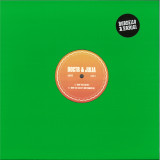
Doctr is no stranger to the Bordello. Now You Can Fly is his third visit to the label, his first with company. Paired with Julia, the offering is pure peak-time elation. Bending bars are cut through by beats and synth stabs, Doctr building a palpable energy with vocals synergising perfectly. Daring key shifts unveil the full track, inspirational words and melodic wizardry waltzing arm-in-arm. Flying ever higher, electrical pulses of hi-nrg jolt this dancefloor burner. Julia’s vocals are parred back for the flip, leaving those sun-kissed synthlines to soar above calypso-infused percussion. Two works of sheer happiness; just what the Doctr ordered.
Open Space is proud to present our first ever full-length LP by LA’s newest 3-man band, Puli. Some words from our dear friend Matt McDermott below:
In recent years, a cadre of musicians from the east side of Los Angeles have reestablished the city of angels as the first city of Balearica. Alex Ho’s “Move Through It” followed in the lumbering footsteps of Project Sandro’s “Blazer.” Now, there’s a new landmark for the floating west coast sound. Swirling, the first album from LA supergroup Puli.
If you’ve got your ear to the ground you know the names involved here. Drummer and producer Damon Palermo’s pedigree stretches back a good 15 years or so, starting off with dub punks Mi Ami. Phil Cho is one of the busiest DJs, musicians and advocates for the deep stuff in LA, throwing legendary hillside parties under the Third Place banner. John Jones, the preternaturally talented guitarist and electronic tinkerer, records as AV Moves, is a key member of the Suzanne Kraft and Baba Stiltz live configurations and plays in The Trilogy Tapes-affiliated act Geo Rip.
But this listing of personnel and credentials puts too fine a point on it. Puli are three close friends who go to parties, DJ and get tacos together, repairing to their Chinatown studio a few times a week and coming out with remarkably textured, idiosyncratic downtempo jams. Building off the solid foundation of their 7-inch of heavyweight dubs for Melbourne’s Constant Delay, Swirling is an exploration of new horizons in chill out.
“Ramona” acts a statement of purpose—with halftime/double-time dub-tinged rhythms, hazy yet bright synth motifs and atmospheric guitar from Jones, not terribly far from the expansive approach of Japanese dub aesthetes Pecker. “Cloudy,” meanwhile, is a sort of deconstructed and bittersweet Balearic pop featuring Cho’s ethereal vocals. “Bongo Springs” is steppers’ house not far from close LA peer Benedek or the Mood Hut crew up north.
But what truly sets this record apart is the space and layers in the production—while it’s nominally an electronic record, Puli is a band that has slowly crafted these songs in the rehearsal space. “Havana Jam” cruises along a sliding roundwound bass guitar take with dubby chords and textural guitars. Palermo’s hand drums and live percussion enmesh perfectly with icy pads on “Leech Seed Dub.” Cho is back on the mic for the gorgeous closer, “C.S.B.”, underpinned by breakbeat and trunk-rattling sub bass. Puli doesn’t sound like anyone else, and is ultimately reflective of the city itself. Listening to Swirling feels like navigating a warren of side streets in the eternal sunshine. Take the drive and dive.
“Artifact” by Novo Line makes a departure from his Atari ST fueled FM synth journeys, here reimagining the soundtrack of our collective memory. Born from a live performance at a listening festival in Berlin by the Camp Cosmic crew, this LP transforms universally recognized pop anthems, beckoning listeners into a kaleidoscopic realm of sound, where familiar melodies fracture and our brains attempt to reconstitute them.
Using era-consistent equipment – turntable, 12″ maxi singles, classic samplers, and iconic drum machines – Novo Line deconstructs and reassembles songs etched into our cultural DNA. From the soaring emotions of “I’ve Had the Time of My Life” to the disco beat of “Heart of Glass,” these are melodies that have scored countless lives, now reborn in startling new forms.
Recorded live to tape, ‘Artifact’ doesn’t just play; it unfolds like an auditory hallucination. It taps into the deep emotional reservoirs these songs have built over decades, twisting familiar refrains into new shapes. One festival goer recollected that it uncovered “the dark inner universe of Kenny G, suddenly splayed out into a whole new cosmos.”
As the needle traces its path, ‘Artifact’ peels back layers of shared musical experience. It’s an aural alchemy that transmutes the known into the profoundly strange, yet achingly familiar. Listeners may find themselves adrift in a sea of frequencies, where every warped note triggers a cascade of personal and collective memories.
Rooted in the “copyriot” tradition of 1980s punk and industrial scenes, “Artifact” challenges notions of authorship while celebrating the universal language of pop. It doesn’t merely suggest a trip – it becomes a journey through the very fabric of our shared musical consciousness.
Mastered by Rude66, cut by Helmet Erler, and pressed at Objects Manufacturing.
London-based label Dancing With Strangers is back, after a brief hiatus, with the third edition being served up by none other than head honcho Oliver Moon.
On his third solo outing as an artist, Moon delivers two solid tracks in the shape of ‘Downstream' and ‘Drifting’. Both of which exercise his signature raw take on production and showcase an ability to carry a consistent groove whilst weaving deep, dreamy sounds into classy percussive work.
Dancing With Strangers Co-founder Agile Kind returns on remix duties to tackle ‘Downstream’ and does so wonderfully. Following the lead baseline, he layers lush pads around crisp skippy drum programming and lands on pure euphoria.
Last but certainly not least, the inimitable Carl Finlow (2020 Vision) rounds off the EP with a stellar electro remix of ‘Drifting’. Leading with a thick, growling bass and fusing cinematic synth work with playful acid stabs, Finlow captures the essence of the original. The end result is a beautifully emotive track entwined with stunning melodic elements destined for the dancefloor.
"Cheugy" is a slang term used to describe someone who is out of style or trying too hard to be trendy (or both). Often associated with millennial culture, it refers to fashion, trends, or behaviors that were once popular but now seem outdated or overly mainstream. According to Rolling Stone magazine it is commonly used by Gen Z to roast Millennials. Essentially, it's the opposite of being effortlessly cool.
Y’KNOW returns to Spiritual World on October 4th with Why Now, an 8 track 12” that is so stacked with groove that you can physically feel the claps when you run your hand over the record.
Why Now lifts the fog established on the duo’s digital 2023 two-song debut, pushing their signature beat forward minimalism into digital dancefloor soundscapes. Following in the tradition of dub records, Why Now features four vocal cuts on the a-side backed with four reimagined and stripped back dub versions on the b side.
Lyrically, Bally takes on the narrative of a detective in search of the perfect groove, even if it ultimately leads to their own fictional demise. Y’KNOW is clearly in pursuit of the perfect vibe, and while doing so exceeds the imagination of most traditional guitar-based bands with a mesmerizing mix of dub, post-punk and synth pop.
Limited to 200 12” copies.
RIYL: Colour Box, Maximum Joy, Tom Tom Club, George Clinton & Brenda Ray
Cultured Swiss techno label Acquit has put together this cheeky little 7" from Trecci with one great tune on each side. 'Invisible Self' is the opener and it is a delightfully curious, inviting blend of soft focus synth loops and smeared pads that sounds like waking up on a distant planet. On the flip, 'Sit And Wonder' starts with pensive piano chords which are eventually carried away on a supple deep house grove with loopy bongos and a feel-good sense of late-night cruising. Tasteful stuff for sure.
TrioRox is a project born from the meeting of three protagonists of the Italian music scene (and not only): pianist Giovanni Guidi, bassist Joe
Rehmer and electronic musician DJ Rocca (Luca Roccatagliati). Three characters who boast an eclectic and consistent curriculum. Guidi, enfant prodige of Jazz piano, has published several albums for the prestigious ECM label, and has collaborated with the best jazz and electronic musicians, from Enrico Rava to Matthew Herbert, from Joe Lovano to Ricardo Villalobos. Joe Rehmer, an American transplanted to Italy, is one of the most sought-after bass players, sharing stages and recording studios together with authorities such as Bob Mintzer, James Moody and Danny Gottlieb.
DJ Rocca is a DJ and musician active since the nineties, and boasts numerous albums, singles and remixes with, and for key protagonists of the alternative dance scene (Andrew Weatherall, Dimitri From Paris and Howie B), as well as a militancy in the jazz scene with several albums together with Franco D’Andrea.
The music that the trio proposes is a mix of electronic, dance, Jazz and pop, with groove impulses in the field of house and techno music, without neglecting mixes between electro, classical and minimalism. A melting pot of styles between Keith Jarrett and Carl Craig.
Album to be released by IRMA Records in October 2024, with guests Luigi Di Nunzio, Gianluca Petrella, Dan Kinzelman and Jacopo Fagioli.
“Moods” is the debut album of Triorox that represents the photograph of the ‘Here and Now’. All the music was born from a studio session that lasted a few days, in which the mood of the three musicians gave the album its sound imprint. What came out of it became incandescent material to elaborate the musical flow of the entire work, which had three different phases.
The first, in which the tracks were born from the recordings, some developed as creations with a common denominator (the three moments of Mood), some as thematic suggestions (Angels, Corea and Next To Canada), and others as a stylistic challenge (the techno of Space Rain, or the drum and bass of Sax & The City).
The second phase, where the compositions were subjected to the test of live concerts, in which it was understood how the tracks could be better arranged, optimizing them and keeping the best ones. The last phase was the choice and insertion of the guests, reasoning according to the type of suggestion that we wanted to give to the specific song. So we gave free rein to Luigi Di Nunzio, who also participated in phase two, playing with us on stage on some occasions. In the same way, Gianluca Petrella chose the piece where he felt most at ease, also contributing to the arrangement.
Dan Kinzelman, a historic collaborator of both Guidi and Rehmer, was included because we wanted his bass clarinet in a specific suggestive situation. Finally, we wanted Jacopo Fagioli (the Tuscan reincarnation of Don Cherry), we wanted him in a specific episode of Mood, for his particular style, impeccable in determining the mood that the piece needed.