- A1: Dream On (Bushwacka Tough Guy Mix) 6 08
- B1: Dream On (Dave Clarke Remix) 5 15
- B2: Dream On (Bushwacka Blunt Mix) 6 50
- C1: Dream On (Single Version) 3 42
- C2: Easy Tiger (Full Version) 4 45
- C3: Easy Tiger (Bertrand Burgalat & As Dragon Version) 4 53
- C4: Dream On (Dave Clarke Acoustic Version) 4 27
- D1: Dream On (Octagon Man Mix) 5 24
- D2: Dream On (Octagon Man Dub) 7 00
- D3: Dream On (Kid 606 Mix) 4 43
- E1: I Feel Loved (Danny Tenaglia Labor Of Love Edit) 7 56
- F1: I Feel Loved (Danny Tenaglia Labor Of Love Dub) 11 52
- G1: I Feel Loved (Umek Mix) 8 12
- H1: I Feel Loved (Thomas Brinkmann Remix) 5 25
- H2: I Feel Loved (Chamber Remix) 6 27
- I1: I Feel Loved (Single Version) 3 33
- I2: Dirt (Single Version) 4 58
- J1: I Feel Loved (Extended Instrumental) 8 24
- J2: I | Feel Loved (Desert After Hours Dub) 7 06
- K1: Freelove (Console Remix) 4 44
- K2: Freelove (Schlammpeitziger Little Rocking Suction Pump Version) 6 50
- K3: Zensation (Atom Stereonerd Remix) 5 27
- L1: Freelove (Bertrand Burgalat Remix) 5 28
- L2: Freelove | (Dj Muggs Remix) 4 26
- M3: Freelove (Josh Wink Vocal Interpretation) 8 46
- N1: Freelove (Deep Dish Freedom Remix) 11 44
- N2: Freelove (Power Productions Remix) 7 54
- O1: Goodnight Lovers 3 50
- O2: When | The Body Speaks (Acoustic Version) 5 57
- P1: The Dead Of The Night (Electronicat Remix) 7 28
- P2: Goodnight Lovers (Isan Falling Leaf Mix) 5 52
- M1: Freelove (Flood Mix) 3 58
- M2: Zensation 6 25
Search:pu
To mark Grid's second anniversary back in 2023, the label brought together 13 tracks from the bass scene's most forward-thinking artists, all of which sank you into deep sonic chambers. Now, six of those tracks are available on wax for the first time in what is an essential sampler featuring boundary-pushing contributions from forward-thinking artists. Sister Zo opens with the percussive pressure of 'EMP,' Ronan lays down a lithe rhythm that befits its 'Shadowbox' title and Seekersinternational drill down into warped low-end chaos. There is a deftness to Jonny From Space's tumbling perc and E-Unity brings clean lines and a futuristic sheen to his deep dub workout 'Of All The Places I Could Be'. Tammo Hesselink brings ambient soundscaping with his floating delight, 'Paint Reduce Trick.' This is high-quality, original music that moves both mind and body.
- 1: Written Down (Feat. Pink Siifu)
- 2: Talk To The Mass (Feat. Fly Anakin, Goya Gumbani & Fatima)
- 3: Serti Dial (Feat. Navy Blue)
- 4: Did You Hear The News (Feat. Ruqqiyah)
- 5: Faith In The Unknown (Feat. Maxo)
- 6: Stay Alive (Feat. Pink Siifu)
- 7: Last Time (Feat. Liv.e)
- 8: Thin Line (Feat. Chester Watson)
- 9: Pray 4 My Friends (Feat. Dreamcastmoe)
- 10: Butterfly (Feat. Zekeultra)
- 11: It Echoes And Sings Like You (Feat. Fatima)
- 12: The Wind Must Have Heard Your Voice Once
- 13: The Devil Might Want Me Gone (Feat. Pink Siifu & Maxo)
- 14: All I Need Was A Little Bit (Feat. Pink Siifu)
Black Vinyl[28,36 €]
“I've always dreamed of making an album where I could bring together artists I deeply admire, curating voices, energies, and sensibilities that have inspired me,” says Brussels-born producer and multidisciplinary artist ShunGu of his new record, Faith in the Unknown. “It took time, and it grew into something very human, rooted in trust, patience, and creative risk. These songs are conversations, not just between me and the artists, but between worlds, eras, and ways of feeling.”
That spirit of dialogue and discovery is what defines Faith in the Unknown. Emerging from years of steady, meticulous work in the underground, the album is both a bold statement of identity and an invitation into Shungu’s world. Across 14 tracks, each a self-contained vignette, ShunGu guides the listener through shifting moods and perspectives- moments of intimacy, defiance, reflection and release, coalescing into a much larger story.
His distinct touch threads through the surefire cast of collaborators - Pink Siifu, Liv.e, Fly Anakin, Chester Watson, Fatima, Maxo, Navy Blue, Dreamcastmoe, Ruqqiyah, Zekeultra and Goya Gumbani — each track unfolding as a new dimension in the same universe.
ShunGu has long been a boundary-pusher, known for weaving jazz-inflected samples, skilfully constructed textures, and MPC-driven grooves into production that feels timeless yet untethered. With Faith in the Unknown he pushes further still: a project as much about collective energy as it is about personal vision. It’s a leap into uncertainty, carried by trust in the process and the people involved.
From the lo-fi beat tapes that first won him a cult following, to collaborations that span the globe, Shungu has forged a body of work rooted in exploration and community. Faith in the Unknown crystallises those qualities into his most ambitious statement yet; a record that doesn’t just blur boundaries between genres, but asks what happens when vulnerability and experimentation are treated as shared ground.
The result is a record that trades in subtlety. Each artistic contribution adds its own shade to the larger mosaic, pulling the listener deeper into an expanding narrative. If Faith in the Unknown has a message, it’s that art can thrive in uncertainty - that in the spaces where trust, risk, and vulnerability intersect, something entirely new can emerge.
- A1: Written Down (Feat. Pink Siifu)
- A2: Talk To The Mass (Feat. Fly Anakin, Goya Gumbani & Fatima)
- A3: Serti Dial (Feat. Navy Blue)
- A4: Did You Hear The News (Feat. Ruqqiyah)
- A5: Faith In The Unknown (Feat. Maxo)
- A6: Stay Alive (Feat. Pink Siifu)
- A7: Last Time (Feat. Liv.e)
- B1: Thin Line (Feat. Chester Watson)
- B2: Pray 4 My Friends (Feat. Dreamcastmoe)
- B3: Butterfly (Feat. Zekeultra)
- B4: It Echoes And Sings Like You (Feat. Fatima)
- B5: The Wind Must Have Heard Your Voice Once
- B6: The Devil Might Want Me Gone (Feat. Pink Siifu & Maxo)
- B7: All I Need Was A Little Bit (Feat. Pink Siifu)
Cassette[16,39 €]
“I've always dreamed of making an album where I could bring together artists I deeply admire, curating voices, energies, and sensibilities that have inspired me,” says Brussels-born producer and multidisciplinary artist ShunGu of his new record, Faith in the Unknown. “It took time, and it grew into something very human, rooted in trust, patience, and creative risk. These songs are conversations, not just between me and the artists, but between worlds, eras, and ways of feeling.”
That spirit of dialogue and discovery is what defines Faith in the Unknown. Emerging from years of steady, meticulous work in the underground, the album is both a bold statement of identity and an invitation into Shungu’s world. Across 14 tracks, each a self-contained vignette, ShunGu guides the listener through shifting moods and perspectives- moments of intimacy, defiance, reflection and release, coalescing into a much larger story.
His distinct touch threads through the surefire cast of collaborators - Pink Siifu, Liv.e, Fly Anakin, Chester Watson, Fatima, Maxo, Navy Blue, Dreamcastmoe, Ruqqiyah, Zekeultra and Goya Gumbani — each track unfolding as a new dimension in the same universe.
ShunGu has long been a boundary-pusher, known for weaving jazz-inflected samples, skilfully constructed textures, and MPC-driven grooves into production that feels timeless yet untethered. With Faith in the Unknown he pushes further still: a project as much about collective energy as it is about personal vision. It’s a leap into uncertainty, carried by trust in the process and the people involved.
From the lo-fi beat tapes that first won him a cult following, to collaborations that span the globe, Shungu has forged a body of work rooted in exploration and community. Faith in the Unknown crystallises those qualities into his most ambitious statement yet; a record that doesn’t just blur boundaries between genres, but asks what happens when vulnerability and experimentation are treated as shared ground.
The result is a record that trades in subtlety. Each artistic contribution adds its own shade to the larger mosaic, pulling the listener deeper into an expanding narrative. If Faith in the Unknown has a message, it’s that art can thrive in uncertainty - that in the spaces where trust, risk, and vulnerability intersect, something entirely new can emerge.
Flanked by a team of collaborators - including Nick León, more eaze, Ultrafog and Kissen - Ben Bondy captures the Kwia-pop zeitgeist on 'XO Salt Lif3', sluicing down dappled emo and downtempo grooves with log drum thwacks, tempered field recordings and sandblasted shoegaze guitars.
Forget what you think you know about Ben Bondy; like Naemi's fuzzy 'Breathless Shorn', ‘XO Salt Lif3’ is a decisive shift away from the ambient world and towards contemporary underground pop. Last year's amapiano-tinted loosie 'Bend' serves as the album's opener and is the best taster, its slick DSP squelches, granulated drones and sub rumbles immediately swapped out for breezy acoustic guitar riffs, tuned log drum hits and Bondy's own Autotuned vocals. When Bondy turns down the temperature a little, letting the orchestral synth arrangements slip into fuller view on 'Halfmoon', a collaboration with Nick León and Aussie producer Lovefear, it's tempered by low slung emo riffs and mumbled sweet nothings.
By the time we hit 'Dreamseed', Bondy's in full swing, offsetting slow breaks and multi-tracked vocal harmonies with full-spectrum shoegaze power chords that cut into the mix like a chainsaw, with crunchy amp crackle foreshadowing the Bark Psychosis-like drop. Bondy hits a cruise when More Eaze helps out on 'There Is A Place'. Maurice's unmistakable pedal steel draws us in, used by Bondy to add an Americana accent to his euphoric fusion of amapiano and indie pop. It's music that'll make perfect sense if you've caught one of Bondy's notorious DJ sets, where you might hear anything from American Football and Jessica Pratt next to Gwen Stefani, Skinny Puppy or Sneaker Pimps. It’s this chaotic, open-hearted approach - which also plays a part in the Shineteac material - that makes 'XO Salt Lif3' so effortlessly enjoyable.
Reliance is one of many labels run by British powerhouse Burnski and it continues to establish itself here with a fifth EP, this time from Oldboy. It opens with a naughty, filthy, throwback dark garage shuffler, 'How'd Ya Feel', complete with old school vocals and warehouse vibes that get heads down and feet marching. 'Straight Hittah' is another throwback with a bumping low end and urgent drums that are brought to life with withering pads and killer bass. 'Hustla' closes down with another bumping and authentic dark garage wobbler. Pure sleaze from front to back.
GAMM is proud to welcome New Zealand born, but these days based in Berlin, Philippa to our camp.
Over the last years, Philippa has been releasing amazing, warm, soulful, and highly distinctive dance music on labels like Slothboogie and Freerange as well as building her DJ roster. For her premier GAMM release,'Cloud Walking EP', Philippa has three amazing tracks that all mix up samples, live musicality, and vocals. If you put Moodymann and Henrik Schwarz in a blender somewhere in the Balearic Islands, you're kinda close. Either way, it's deep, organic, and almost kinda orchestral at some points. If you ask us, we would simply call it dance MUSIC.
Opening the EP is the title track 'Cloud Walking' which is a deep Fender Rhodes affair with vocals inspired by Aretha's Day Dreaming classic. Moving on, on 'Hear Me' Philippa shows off her musical piano skills with a lush and atmospheric deep house jam. On 'Return To The Red Kite' we follow a similar theme but with big warm orchestral strings, spoken words, and live guitars. Again, very Balearic yet very soulful and incredibly pleasant to your ears :)
A1. Cars
Smoove tears this classic apart to reveal its raw, drum-heavy break and solo bass riff. Epic synth lines weave through the extended rework, seamlessly transporting us from the 1980s straight into the modern era.
A2. Midnight Rider
An unexpected choice, but irresistibly funky nonetheless. The signature 12-string guitars are replaced with lush Fender Rhodes and Hammond organ, both pushed forward in the mix. The drums hit hard, backed by crisp percussion that drives the groove home.
B1. You Belong to Me
Opening with an extended Fender Rhodes intro, this rework builds gradually with real strings, subtle guitar licks, and groovy drums. Smoove reshapes the structure, dubbing out Carly’s lead chorus vocals to spotlight the stunning harmonies underneath.
B2. Searching
Luther’s vocals are utterly transcendent here. Smoove slows the pace and strips back the arrangement, leaving only Fender Rhodes and a string orchestra to accompany the soulful performance — a truly breathtaking moment.
For this release, we’re thrilled to welcome Chilean artist Jose Luis Seguel, also known as Statickman. This one feels special — not only because it marks our 10th installment as a label, but also because it’s Statickman’s first-ever physical release, delivering a dose of pure ’80s-inspired bliss.
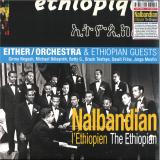
The Éthiopiques series returns! Essential archive recordings from an extremely fruitful period in Ethiopian music.
Before “Swinging Addis” took over the world, there was Moussié Nerses Nalbandian — the Armenian-born composer who shaped modern Ethiopian music. Mentor, arranger, and pioneer, he laid the foundations of Ethio-jazz.
This Éthiopiques volume revives his forgotten legacy, recorded live by Either/ Orchestra First issue ever with new exclusive photos and in depth liner 8-page insert.
“Ethiopian jazzmen are the best musicians that we have seen so far in Africa.
They really are promising handlers of jazz instruments.”
Wilbur De Paris
(1959, after a concert in Addis Ababa)
አዲስ፡ዘመን። *Addis zèmèn* **A new era.**
The time is the mid-1950s and early 1960s, just before "Swinging Addis" bloomed – or rather boomed – onto the scene. Brass instruments are still dominant, but the advent of the electric guitar, and the very first electronic organs, are just around the corner. Rock’n'Roll, R’n’B, Soul and the Twist have not yet barged their way in. Addis Ababa is steeped in the big band atmosphere of the post-war era, with Glenn Miller's *In the* *Mood* as its world-wide theme song, neck and neck with the Latin craze that was in vogue at the same period. Life has become enjoyable once again, with the return of peace after the terrible Italian Fascist invasion of Ethiopia (1935-1941). The redeployment of modern music is part and parcel of the postwar reconstruction. *Addis zèmèn* – a new era – is the watchword of the postwar period, just as it was all across war-torn Europe.
The generation who were the young parents of baby boomers** were the first to enjoy this musical renaissance, before the baby boomers themselves took over and forever super-charged the soundtrack of the final days of imperial reign. Music is Ethiopia's most popular art form, and very often serves as the best barometer for the upsurge of energy that is critical for reconstruction. Whether it be jazz in Saint-Germain-des-Prés or the *zazous* who revolutionised both jazz and French *chanson* after the *Libération*, be it Madrid's post-Franco Movida, or Dada, the Surrealists and *les années folles* that followed World War I, the periods just after mourning and hardship always give rise to brighter and more tuneful tomorrows. Addis Ababa, as the country's capital, and the epicentre of change, was no exception to this vital rule.
**Two generations of Nalbandian musicians**
Nersès Nalbandian belonged to a family of Armenian exiles, who had moved to Ethiopia in the mid-1920s. The uncle Kevork arrived along with the fabled "*Arba Lidjotch*", the** "*40 Kids*", young Armenian orphans and musicians that the Ras Tafari had recruited when he visited Jerusalem in 1924, intending to turn their brass band into the official imperial band. If Kevork Nalbandian was the one who first opened the way of modernism, pushing innovation so far as to invent musical theatre, it was his nephew Nersès who would go on to become, from the 1940s and until his death in 1977, a pivotal figure of modern Ethiopian music and of the heights it. Going all the way back to the 1950s. Nothing less. And it is Nersès who is largely to thank for the brassy colours that so greatly contributed to the international renown of Ethiopian groove. While the younger generations today venture timidly into the genealogy of their country's modern music, often losing their way amidst a distinctly xenophobic historiographical complacency, many survivors of the imperial period are still around to bear witness and pay tribute to the essential role that "Moussié Nersès" played in the rise of Abyssinia's musical modernity.
Given the year of his birth (15 March 1915), no one knows for sure if Nersès Nalbandian was born in Aintab, today Gaziantep (Turkiye/former Ottoman Empire) or on the other side of the border in Alep, Syria... What is certain is that his family, like the entire Armenian community, was amongst the victims of the genocide perpetrated by the Turks. Alep, the place of safety – today in ruins.
Before Nersès then, there was uncle Kevork (1887-1963). For a quarter of a century, he was a whirlwind of activity in music teaching and theatrical innovation. *Guèbrè Mariam le Gondaré* (የጎንደሬ ገብረ ማርያም አጥቶ ማግኘት, 1926 EC=1934) is his most famous creation. This play included "ten Ethiopian songs" — a totally innovative approach. According to his autobiographical notes, preserved by the Nalbandian family, Kevork indicates that he composed some 50 such pieces over the course of his career. This shows just how much he understood, very early on, the critical importance of song as Ethiopia's crowning artistic form. Indeed, for Ethiopian listeners, the most important thing is the lyrics, with all their multifarious mischief, far more than a strong melody, sophisticated arrangements or even an exceptional voice. (This is also why Ethiopians by and large, and beginning with the artists and producers themselves, believed for a long time — and wrongly — that their music could not possibly be exported, and could never win over audiences abroad, who did not speak the country's languages).
Last but not least, one of Kevork's major contributions remains composing Ethiopia's first national anthem – with lyrics by Yoftahé Negussié.
Nersès Nalbandian moved to Ethiopia at the end of the 1930s, at the behest of his ground-breaking uncle. Proficient in many instruments (pretty much everything but the drums), conductor, choir director, composer, arranger, adapter, creator, piano tuner, purveyor of rented pianos,... he was above all an energetic and influential teacher. From 1946 onwards, thanks to Kevork's connexion, Nersès was appointed musical director of the Addis Ababa Municipality Band. In just a few years, Nersès transformed it into the first truly modern ensemble, thanks to the quality of his teaching, his choice of repertoire, and the sophistication of his arrangements. It was this group that would go on to become the orchestra of the Haile Selassie Theatre shortly after its inauguration in 1955, which was a major celebration of the Emperor's jubilee, marking the 25th anniversary of his on-again-off-again reign.
At some point or other in his long career, Nersès Nalbandian had a hand in the creation of just about every institutional band (Municipality Band, Police Orchestra, Imperial Bodyguard Band, Army Band, Yared Music School…), but it was with the Haile Selassie Theatre – today the National Theatre – that his abilities were most on display, up until his death in 1977. To this must be added the development of choral singing in Ethiopia, hitherto unknown, and a sort of secret garden dedicated to the memory of Armenian sacred music, and brought together in two thick, unpublished volumes. Shortly before his death (November 13, 1977), he was appointed to lead the impressive Ethiopian delegation at Festac in Lagos, Nigeria (January-February 1977).
His status as a stateless foreigner regularly excluded him from the most senior positions, in spite of the respect he commanded (and commands to this day) from the musicians of his era. Naturally gifted and largely self-taught, Nerses was tirelessly curious about new musical developments, drawing inspiration from the very first imported records, and especially from listening intensely to the musical programmes broadcast over short-wave radio – BBC *First*. A prolific composer and arranger, he was constantly mindful of formalising and integrating Ethiopian parameters (specific “musical modes”, pentatonic scale, and the dominance of ternary rhythms) into his “modernisation” of the musical culture, rather than trying to over-westernise it. It even seems very probable that *Moussié* Nerses made a decisive contribution to the development of tighter music-teaching methods, in order to revitalise musical education during this period of prodigious cultural ferment. Flying in the face of all the historiographical and musicological evidence, it is taken as sacrosanct dogma that the four musical modes or chords officially recognised today, the *qǝñǝt* or *qiñit* (ቅኝት), are every bit as millennial as Ethiopia itself. It would appear however that some streamlining of these chords actually took place in around 1960. It was only from this time onward that music teaching was structured around these four fundamental musical modes and chords: *Ambassel*, *Bati*, *Tezeta* and *Antchi Hoyé*. A historical and musical “details” that is, apparently, difficult to swallow, especially if that should honour a *foreigner*. Modern Ethiopian music has Nersès to thank for many of its standards and, to this day, it is not unusual for the National Radio to broadcast thunderous oldies that bear unmistakable traces of his outrageously groovy touch.
For the second instalment of the Curio Cabinet gourmet-dub series, we bring you two fat slices of steppers’ delight, straight from the southern city of Toulouse.
Both are made by Stefan Dubs under the guiding light of his live project, Sòn Du Maquis. This project has deep roots in the free rave, micro-festival, and dub & sound system culture of his country. It’s also the name of his own label, home to his dub-infested productions; ranging from slo-mo jungle to droney steppers and blown-out trip-hop on a slightly medieval tip.
Staying true to classic sound system tradition, each side pairs the original cut with its own version.
First there is Tolosan Dub, a trancey bass meditation colossus with deep synth work moving around in the trees. Some early nineties UK digidub vibes are surely mashing up the dance here. The version workout slows things down a bit, taking you even deeper into the riddim... strictly warrior style !
On the B-side we've got Bonnefoï Dub, which is pure bass-bin filth with a rootsy harmonica touch and a raw clubby feel. This tune just screams to be played out loud on a proper sound system. The version is certified dance-floor gold, yet there are enough dubbed-out flavours going on for intimate headphone sessions or some mad home skanking.
Originally released in 1972, Toni Tornado's self-titled debut is a landmark in Brazilian soul and funk - a gritty, groovy record that helped define the sound of the Black Rio movement. Blending deep soul, psychedelic funk, and bold orchestration, this album channels the revolutionary energy of James Brown with the tropical swagger of Rio's streets. From the urgent rhythms of 'Torniente' to the undeniable strut of 'Mané Beleza' and 'Tornado,' Toni's music pulses with a fierce sense of pride and liberation. It's the sound of a new cultural identity taking shape - where African-American soul met Afro-Brazilian reality. Often compared to the legendary Tim Maia, Tornado brought his own explosive edge to Brazil's growing soul scene. By the 1970s, other Brazilian musicians, such as Banda Black Rio, Cassiano, Gerson King Combo, Jorge Ben and Gilberto Gil, began making soul records. DJs started throwing soul-only parties. Toni Tornado's voice carries grit and passion, his grooves hit hard, and his message is crystal clear - Black is beautiful, and the funk is real. Back on vinyl for a new generation, this reissue is more than a collector's gem - it's a time capsule from an era when music moved bodies and minds. Essential listening for fans of vintage soul, global funk, and revolutionary sounds. Reissue on 180g vinyl.
- A1: Any Sof
- A2: Baphomet
- A3: Black Ny
- A4: The Smiling Knife
- B1: Thelema
- B2: The Name Will Be Adrian
- B3: Do The Mussolini (Headkick)
- B4: Mega Therion
- B5: Leather Mask
- C1: Aiwass
- C2: Scarlet Woman In Disguise
- C3: Suburban Ritual
- C4: We Are Stars
- D1: Stuck In Malkhut
- D2: Triad Of Gods
- D3: The Book Of Law
- D4: White Stains
- D5: Unveiled
Possibly one of the best Mental Groove releases to date. Symbols & Sacrifice is raw, beastly, and savage — a cinematic and esoteric journey from the depths of Sindaco’s universe. A masterfully crafted experience across four sides, this release blurs the lines between ritual electronics, hypnotic repetition, and uncompromising raw techno. A powerful and immersive statement, pressed on audiophile-grade vinyl for full heavy sonic impact.
Under the name of Sindaco is hidden a complex yet mysterious project where different styles and cultures live together.Obscure kraut rock, no wave, black metal and Detroit techno collide in what can be considered songs more than simple tracks. All is played by Sindaco with analog equipment without the help of computers. All is driven to create the best soundrack possible. The idea is to avoid all the typical cliches of the contemporary electronic productions and push the boundaries into a new way of tropical futurism. Be involved by the unespected waves of sounds coming from another world!
The Kolony Gorky label kicks on with a fifth outing and this one is from AHU, who drops a couple of tasty and heady jams on his 'Editz' EP. 'Searchin Equinox' is a late-night cruiser with far-sighted cosmic pads and seductive spoken words that bring to mind classic Ron and Trent jams. 'Mana' is no less cavernous and atmospheric, this time with more bold drums and sci-fi motifs driving about the mix for pure intergalactic escape in the dead of night. A superb pair of timeless cuts.
- A1: Yant - Bee Sting
- A2: Rene Wise - Gut Punch
- B1: Kr!Z - Split Tongue
- B2: Blanka - Extravaganza
- C1: Eman - Lerake
- C2: Holden Federico - Hydro
- D1: Cirkle - Delta State
- D2: Altinbas - Epinephrine
- D3: Kameliia - Memories
- E1: Phil Berg - Sappho
- E2: Border One - Warp Shift
- F1: Kwartz - Watch Out
- F2: Phalcon - Into The Depth
2026 Repress
SK_eleven celebrates a decade of sonic exploration with a 13-track compilation showcasing its signature tension, technical discipline, and stylistic spectrum. Reuniting a tight circle of artists whose contributions have helped shape the label, the release offers an unrelenting sequence of pressure, mental twists, and textural collisions; a multifaceted snapshot of techno's enduring capacity to evolve, disturb, and seduce.
The compilation resists uniformity. Instead, it thrives on contrast: tension versus release, density against spaciousness, rhythm in all its permutations. From high-energy metallic openers and dub-inflected body rollers, to disorienting, delay-heavy experiments and stripped-back percussive tools, each contribution reveals a unique grip on groove and detail. Some tracks move like engineered machines: sharp, robotic, and syncopated to surgical precision. Others embrace sensuality and unpredictability, exploring spatial motion, layered harmonic friction, and states of controlled chaos. Each piece acts as a structural component in a larger sonic architecture, where tension is built, collapsed, and rebuilt. Friction becomes a form of choreography. Across the record, a shifting palette of emotional mechanisms takes form; granular and magnetic, haunting and quietly forceful, restrained, then disruptive.
More than a retrospective, SK_eleven's first compilation becomes a collective gesture toward techno's unresolved possibilities: its ability to hold contradiction, remain in flux, and mutate without conclusion.
The Tuff Fluff EP from Joe Koshin channels the spirit of classic Tech House while pushing it somewhere new. Bouncy and full of groove, each track brims with fresh ideas and details that give the EP its own unique character. Born from a shared musical connection between Joe and label
head A for Alpha, Tuff Fluff began taking shape a few years back. After patiently waiting, the record now arrives feeling more relevant than ever - vibrant, groovy, and timeless all at once.
Marking the first release on Alpha’s Trip in two years, Tuff Fluff also celebrates the label’s relaunch, complete with a fresh new look crafted by the legendary Pointless Illustrations. It’s the start of an exciting new chapter for the imprint, setting the tone for what’s to come. Rounding out
the release is A for Alpha’s remix, a darker, moodier take built around the unmistakable sound of the Roland SH-101 bassline, whilst lifted with floaty, luscious pads - the perfect counterpoint to Joe’s bright and bouncy originals.
- A1: Echoes Of The Unknown
- A2: Drifting Into Tomorrow
- A3: Horizon Dissolve
- A4: Aether Currents
- A5: Fading Into The Light
- A6: Lost In The Haze
- A7: Fragments Of Silence
- A8: Shadows In The Sky
- A9: When The Clock Stops
- A10: Empire Of The Realm
- B1: Beyond The Black Sun
- B2: The Crystal Spire
- B3: Electric Shaman
- B4: Orbit Dreamers
- B5: Chrono Surge
- B6: Phantom Realms
- B7: The Edge Of Forever
- B8: Last Voyage
(LP, purple cristallo vinyl, continuous mix) Legendary Belgian artist Push returns with a truly special project: an 18-track mini album, presented both on CD digipack and a special vinyl edition in a limited color, where every track connects into a seamless journey.
Each vinyl side plays as one continuous mix and so does the CD, a flowing soundtrack that guides you through deep, cinematic ambient electronica worlds.
Evolving strings, delicate rhythms, and immersive atmospheric layers blend into each other without interruption, creating a unified listening experience that feels more like a film score than a traditional album.
This is Push as you’ve never heard him before — pure emotion, timeless movement, and a full ambient chill out trip for the mind.
From the heart of his own Safe Space imprint, Ackermann returns with a powerful new statement that traces a high-voltage line between techno and house. Known for his raw yet precision-tooled club cuts and a sound that moves from warehouse grit to late-night euphoria, the Stuttgart-based producer once again delivers tracks that are direct, functional and full of character, built for DJs who like it tight, driving and emotional at the same time.
On remix duties, Berlin icon Anja Schneider flips Ackermanns ideas into elegant, rolling peak-time material, balancing subtle tension with her trademark sense of groove and warmth. Rising force Confidential Recipe pushes things further into raw, percussive territory, upping the pressure with jacking drums and rave-soaked energy made for smoke-filled rooms and redlined sound systems.
True to the Safe Space motto, this release is all about the dancefloor: no filler, just stripped-back, high-impact tracks that lock you in and don’t let go.
(Grey & Black Splatter effect 12’’ vinyl) Supported by leading artists such as Charlotte de Witte, Mha Iri, Amelie Lens, Klaudia Gawlas, Thomas Schumacher and more. Vibes Addikt, the label of N.O.B.A proudly unveils its latest vinyl release: a full-power EP from French producer Sta’an.
After previously appearing on the imprint, Sta’an returns with his first complete EP on Vibes Addikt, this time delivering a fully immersive project pressed on a grey splattered vinyl, echoing the aesthetic of the label’s previous collectors’ editions.
With five striking tracks oscillating between techno and hard trance, Sta’an showcases his signature intensity: driving kicks, razor-sharp synths, hypnotic atmospheres and high-voltage energy built for peak-time moments. Each track channels a raw yet modern rave spirit, perfectly aligned with the identity of Vibes Addikt.
With this explosive release, the label continues to push its techno-trance hybrid forward, cementing its place among the most impactful underground platforms for DJs seeking pure, cutting-edge dancefloor power.