What makes a being ? What tends to be, always, and yet remains never achieved ? Jonnnah puts on this set of imagination many parts, many pieces, many elements. In this ninth release on Worst Records, the Lyon based musician gathers all the impressions defining this nebula. « Mental & Physical » is a collection above all things. We talk about a collection of influences. Industrialized trip-hop, dubstep for concrete spaces, new-age-infused ambient daydreams, links are hazy but incarnate. A constant rotation, between extasy and uneasy meditation, shapes this mass of artefacts that seems almost involuntary as they dig so deep into instinctiveness. At the root of this first magmatic opus lies a years long work in progress, a sonic research, the attempt to make live this body of vapour which is the music in becoming. It's a listening with no answer, but the pulse is vivid and vital.
quête:pulse records
Mighty Lord Deathman is the solo project of Mat Colegate (ex Teeth of the Sea). New album LIFEFORCE will be released on the London based Hot Fools Records on 300 black vinyl LPs. Influenced by such diverse inputs as Arthurian myth, the short stories of Laird Barron, the pulse and rattle of Jamaica’s Equiknoxx and the heavily stylised phantasmagorias of the hallucinatory crime/western movie Let the Corpses Tan, Mighty Lord Deathman’s sound has been pushed towards a new, more cinematic, plateau. However, not content with simply being ‘music for an imaginary film’, LIFEFORCE is the thing itself: an unnerving abstractnarrative told in whispers and hieroglyphics, burnt brickwork and full-throated roars. “The scornful gatekeeper. The pissy ferryman who will be paid. The techno noise bastard and his awful fucking machines. The Mighty Lord Deathman.” John Doran, The Quietus.
A remix album of Tolerance by Osaka-based electronic musician Junya Tokuda released from remodel, a label established by Yuzuru Agi and Studio Warp.
In addition to performing live and releasing works, Junya Tokuda runs the web label Linesound and organizes the electronic music event "Line".
His previous releases include "map not seen EP" (Linesound, 2011), "A Day In The Alley" (shrine.jp, 2016), "Unleash EP" (LongLongLabel, 2018), and "No Man's Land" (shrine.jp, 2020). jp, 2020).
remodel also released solo album, "Anemic Cinema", in April 2021, prior to this work, and his track was included in a two-disc compilation, "a sign 2", released in May 2020.
This album "VANITY RE-MAKE/RE-MODEL Vol.1" is a remix album using material from the Tokyo-based project Tolerance by Junko Tange from Vanity Records.
The production was done in parallel with "Anemic Cinema" (late August 2020 to mid-December 2020), and the basic musicality, especially the brilliant treatment of sound by dub-like spatial effects, is common to both works.
However, in this album, the material of Tolerance is sometimes vague and fragmented like a torn tape swimming on the surface of the water, and at other times like a tape reel rolling down from the ocean-like sound image created by the skillful blending of pads and moving noises through the manipulation of dub effects.
The tactile sensation of poking and stroking the ears (like ASMR), which was also felt in "Anemic Cinema," is more vividly revealed by the carefully considered incorporation of a foreign object.
In addition, the instrumental aspect of Toleranece's musicianship, especially the effective use of the electric piano sound, is also impressive. Interestingly, in other tracks, the bassline exerts a strong pull and draws out the phrasing aspect of Junya Tokuda's musicianship as if in response to the electric piano.
Junya Tokuda's music, which even creates an organic feel with its deft handling of generated sounds and samples, reveals its caliber and hidden patterns through the inclusion of Tolerance voices, noises, and instruments that seem hard, rough, and axially distorted. It is an exhilarating and magical work.
The scottish musician, born in 1953 in Port Glasgow, is one of the most eclectic artist of the so-called minimal wave scene. Alongside german singer Claudia Brücken (vocalist of the hit-makers Propaganda) he formed Act a short-lived synthpop group signed to ZTT Records in the late eighties. Licensed by Cherry Red in 1982, the double album ‘Contradictions’ is the third effort in Leer high and rising career. After the seminal debut on Industrial Records with Robert Rental – The Bridge (1979) – Leer ventured on a solo career with the brave synth wave of ‘Letter From America’ and his personal masterpiece ‘Contradictions’. The latter is such an enigmatic piece of work, with alien melodies as in the case of the ‘Soul Gypsy’ infectious white funk. The whole album was recorded in his living room at home onto 4-track using borrowed equipment ( Korg synth, Ult-sound drum computer & guitars ) from his friend Morgan Fisher. Featuring Leer’s haunting, uncertain vocal – recorded quietly, so as not to wake his girlfriend in their bedsit! – crooning over a minimal bass pulse and discreet whines and washes of primitive Wasp synthesiser, it retains its peculiar lo-fi magic four decades on.
Once again we teamed up with Ubisoft to bring the music of high-tech action game Watch Dogs: Legion to good ol’ fashioned vinyl. This triple LP set features original score tracks by Stephen Barton and tracks “Rainfall (feat. Tiana Major9)” by Brit Award-winning Stormzy and “In the Jungle” by Baby Knoxx.
Watch Dogs: Legion builds on the open-world stealth-action gameplay of its predecessors, delivering a never-before-seen gameplay innovation. Players can recruit and play as anyone they see in the iconic city of London: an MI6 agent, a tough bare-knuckle fighter, or an inconspicuous old lady.
Composer Stephen Barton has amassed an enviable AAA credits list, including co-composition on Call of Duty 4: Modern Warfare (with Harry Gregson-Williams), the Titanfall series, Apex Legends, and Star Wars Jedi: Fallen Order. For Watch Dogs: Legion’s pulse-pounding original score, Barton blends a dizzying array of electronic and percussive elements, with flashes of breakbeat and layers of atmospheric ambience.
25 tracks specially mastered for vinyl will be pressed onto three audiophile-quality, heavyweight 180g discs.
Five sides include music, with the sixth side featuring a custom etching of the iconic DedSec pig mask. LPs will be housed in a deluxe triple gatefold.
Robert Hood returns to Rekids with ‘The Blueprint EP’ this July.
Following 2020’s ‘Mirror Man’ LP on Radio Slave’s Rekids, Detroit pioneer Robert Hood returns to the label with a four-track EP of his trailblazing minimal techno. Leading the release, ‘Chroma Light’ opens with cinematic pads and pounding 4/4 patterns as twisted synthesis modulates throughout for a striking start. Followed by ‘The Majestic (Deeper Edit)’, with rattling percussion and fiercely relentless stabs, Hood shows his intent in creating propulsive, dancefloor focussed cuts across the EP.
On the flip, ‘The Majestic’ takes the B1 spot, expanding on the previous track with wild synths and his signature machine-like drums before ‘Ultrasonic Room’ closes out the release with eerie atmospherics and an underlying hypnotic pulse taking centre stage.
A founding member of Underground Resistance alongside Mad Mike Banks and Jeff Mills, Robert Hood is one of techno’s originators, with his decorated career spanning three decades across labels like Tresor, Peacefrog, Music Man Records, and of course, his own M-Plant.
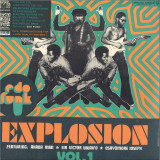
- A1: Africa Is My Root - Osayomore Joseph And The Creative Seven
- A2: Ta Gha Hunsimwen - Akaba Man The Nigie Rokets
- A3: Popular Side - Akaba Man And The African Pride
- B1: Iranm Iran - Victor Uwaifo And His Titibitis
- B2: Sakpaide No 2 - Victor Uwaifo And His Titibitis
- B3: Ta Ghi Rare - Akaba Man The Nigie Rokets
- C1: My Name Is Money - Osayomore Joseph
- C2: Ogbov Omwan - Akaba Man The Nigie Rokets
- C3: Aibalegbe - Victor Uwaifo And His Titibitis
- D1: Who Know Man - Osayomore Joseph And The Ulele Power Sound
- D2: Obviemama - Victor Uwaifo And His Titibitis
- D3: Ororo No De Fade - Osayomore Joseph And The Ulele Power Sound
Analog Africa Presents Edo Funk Explosion Vol. 1, available on
2xLP/Gatefold LP with 20-page booklet / CD with 36-page booklet. It was
in Benin City, in the heart of Nigeria, that a new hybrid of intoxicating
highlife music known as Edo Funk was born.
It first emerged in the late 1970s when a group of musicians began to experiment with different ways of integrating elements from their native Edo culture
and fusing them with new sound effects coming from West Africa s night-clubs.
Unlike the rather polished 1980 s Nigerian disco productions coming out of the
international metropolis of Lagos Edo Funk was raw and reduced to its bare
minimum.
Someone was needed to channel this energy into a distinctive sound and Sir
Victor Uwaifo appeared like a mad professor with his Joromi studio. Uwaifo
took the skeletal structure of Edo music and relentless began fusing them with
synthesizers, electric guitars and 80 s effect racks which resulted in some of the
most outstanding Edo recordings ever made. An explosive spiced up brew with
an odd psychedelic note known as Edo Funk.
That’s the sound you’ll be discovering in the first volume of the Edo Funk Explosion series which focusses on the genre’s greatest originators; Osayomore
Joseph, Akaba Man, and Sir Victor Uwaifo: Osayomore Joseph was one of the
first musicians to bring the sound of the flute into the horn-dominated world
of highlife, and his skills as a performer made him a fixture on the Lagos scene.
When he returned to settle in Benin City in the mid 1970s - at the invitation of
the royal family - he devoted himself to the modernisation and electrification
of Edo music, using funk and Afro-beat as the building blocks for songs that
weren’t afraid to call out government corruption or confront the dark legacy of
Nigeria’s colonial past.
Akaba Man was the philosopher king of Edo funk. Less overtly political than Osayomore Joseph and less psychedelic than Victor Uwaifo, he found the perfect
medium for his message in the trance-like grooves of Edo funk. With pulsating
rhythms awash in cosmic synth-fields and lyrics that express a deep personal
vision, he found great success at the dawn of the 1980s as one of Benin City’s
most persuasive ambassadors of funky highlife.
Victor Uwaifo was already a star in Nigeria when he built the legendary Joromi
studios in his hometown of Benin City in 1978. Using his unique guitar style as
the mediating force between West-African highlife and the traditional rhythms
and melodies of Edo music, he had scored several hits in the early seventies,
but once he had his own sixteen-track facility he was able to pursue his obsession with the synesthetic possibilities of pure sound, adding squelchy synths,
swirling organs and studio effects to hypnotic basslines and raw grooves. Between his own records and his production for other musicians, he quickly established himself as the godfather of Edo funk.
What unites these diverse musicians is their ability to strip funk down to its
primal essence and use it as the foundation for their own excursions inward to
the heart of Edo culture and outward to the furthest limits of sonic alchemy.
The twelve tracks on Edo Funk Explosion Volume 1 pulse with raw inspiration,
mixing highlife horns, driving rhythms, day-glo keyboards and tripped-out guitars into a funk experience unlike any other.
Clear Blue Vinyl
Unusual times, bring unusual records. So marks 'Hanabi' one of Desroi's most diaphanous works to date. After weaving through deluges of heaviness and penetrating synth lines we are promptly subjected to the ease and effortlessness of tracks such as the title track "Hanabi" or "Stripped From Light . Those tracks stress the fine line between bliss and darkness.
Bounding on from the Door to the Cosmos, the label'sexpansive triple vinyl compilation, OnTheCorner has paired up new artists in this series of cosmically twinned EPs. Twinning EPs on a single piece of wax reduces the impact on the environment and wallet friendly. Each brace of cosmically twinned OnTheCorner artists interstellar balearic for the deepspace bound. Each 12" will be split taking over a whole side of black wax. Party wax loaded with Stardust. Get your fix of tomorrow's sound, tonight! Side A is UFFE's 'Not All the Stars EP' - an underground emissary channeling dark bass weight through a prism of jazz-house - dub-tech hitters. A singular talent leading the charge into new frontiers with OnTheCorner. Not All The Stars EP is aprelude to his first LP on the label and follows on from City's Dead and that featured on Door to the Cosmos in 2020. Petwo Evans' 'Bootstrap EP' on the flip side is made of soundsystem-primed, innovative club tracks. Welsh Futurism, celestial electrics and objects of space-junk percussion. CERN loops, cyber kinetic grooves, machine pulses and chugging house kicks converse in the orbit of 'Gyroscope'. Petwo Evansfeeds the tracks compulsion with heady layers awash with dreamy vocal stabs, synths and hazy harmonics.
HIDE are an electronic duo based in Chicago. The pair create dark and heavy sample - based compositions using a combination of self - sourced field recordings and various pop culture and media references. Their music is textured, minimal, and powerful, giving raw vulnerability an opportunity to unfurl. Their work is honest, confrontational, powerful and thought - provoking.
HIDE's third album, Interior Terror further abandons traditional concepts of song structure in favor of splintered rhythms and fevered, immediate release. Expanding on previous themes of autonomy and empowerment, Interior Terror addresses and questions the corporeal and immaterial body in a physical and metaphysical sense. Turning to the dread inside, reflecting on the world around us,
HIDE gives voice to the power of destruction as a c atalyst for hope, and to the collective experiences of those who've come before us as a wellspring of our own power. Raw vocal delivery of mantra - like prose issued forth yields a raging, plaintive wail that lulls, mocks, questions, proclaims and decries. A dearth of collected field recordings give way to more fluid arrangements while retaining a scathing urgency. The result is minimal, spacious, and jarring; a distant knocking grown into the pulse of a hypnotic dirge, drones emerge from shards of decomposed sound, bending, seething their way through your body.
"Do Not Bow down" is a self - directed spell for fire and regeneration. “Nightmare” explodes, unrelenting; conflating time and space to the beat of repeated blows to the head. A reflection on perpetual suffering, generational traumas and the transformative action of release. Title track “Interior Terror” belies a new brand of body horror informed by the systemic enforcement of a contemporary Western gender binary, touching on experiences of dysphoria and disassociation . “Fear” answers the question 'Where do cops come from
HIDE are an electronic duo based in Chicago. The pair create dark and heavy sample - based compositions using a combination of self - sourced field recordings and various pop culture and media references. Their music is textured, minimal, and powerful, giving raw vulnerability an opportunity to unfurl. Their work is honest, confrontational, powerful and thought - provoking.
HIDE's third album, Interior Terror further abandons traditional concepts of song structure in favor of splintered rhythms and fevered, immediate release. Expanding on previous themes of autonomy and empowerment, Interior Terror addresses and questions the corporeal and immaterial body in a physical and metaphysical sense. Turning to the dread inside, reflecting on the world around us,
HIDE gives voice to the power of destruction as a c atalyst for hope, and to the collective experiences of those who've come before us as a wellspring of our own power. Raw vocal delivery of mantra - like prose issued forth yields a raging, plaintive wail that lulls, mocks, questions, proclaims and decries. A dearth of collected field recordings give way to more fluid arrangements while retaining a scathing urgency. The result is minimal, spacious, and jarring; a distant knocking grown into the pulse of a hypnotic dirge, drones emerge from shards of decomposed sound, bending, seething their way through your body.
"Do Not Bow down" is a self - directed spell for fire and regeneration. “Nightmare” explodes, unrelenting; conflating time and space to the beat of repeated blows to the head. A reflection on perpetual suffering, generational traumas and the transformative action of release. Title track “Interior Terror” belies a new brand of body horror informed by the systemic enforcement of a contemporary Western gender binary, touching on experiences of dysphoria and disassociation . “Fear” answers the question 'Where do cops come from
Crumb’s second album, Ice Melt, takes its name from the coarse blend of salts that you can buy from your local hardware store for $9.99. When sprinkled on your wintry steps, this mixture absorbs water and gives off heat, transforming the ice into a viscous, briney
slush and, eventually, nothing at all. Beginning with the dynamic chaos of “Up & Down,” and ending with Crumb’s closest thing to a lullaby, Ice Melt’ s ten tracks combine, like ice sculptures melting into a glistening puddle.
From the start, the group knew that cohesion was best achieved through plumbing their individual strengths— frontwoman Lila Ramani’s earliest songwriting, which catalyzed the group’s first two EPs; Bri Aronow’s knack for building (dis)affecting soundscapes; the hypnotic grounding of Jonathan Gilad’s drums, a Crumb mainstay; and Jesse Brotter’s distinctive bass playing, which subtly traces Ramani’s vocal melodies while providing an unrelenting pulse. These collective skills make Crumb a project of independent self-discovery, four creative minds converging around an idea that is always shifting and reforming.
Convening in Los Angeles to work with producer Jonathan Rado, Crumb tapped into atmosphere-creation like never before, building experimental compositions that are at turns head-nodding and surrealist, energetic and euphoric. Ramani characterizes the album as a “return back down to earth,” a deeply felt examination of “real substances and beings that live on this planet.” It is also the cultivation of road-worn musicians exploring brand-new sounds and thematic concepts, pushing themselves into territory they could never have anticipated five years ago.
Crumb’s second album, Ice Melt, takes its name from the coarse blend of salts that you can buy from your local hardware store for $9.99. When sprinkled on your wintry steps, this mixture absorbs water and gives off heat, transforming the ice into a viscous, briney
slush and, eventually, nothing at all. Beginning with the dynamic chaos of “Up & Down,” and ending with Crumb’s closest thing to a lullaby, Ice Melt’ s ten tracks combine, like ice sculptures melting into a glistening puddle.
From the start, the group knew that cohesion was best achieved through plumbing their individual strengths— frontwoman Lila Ramani’s earliest songwriting, which catalyzed the group’s first two EPs; Bri Aronow’s knack for building (dis)affecting soundscapes; the hypnotic grounding of Jonathan Gilad’s drums, a Crumb mainstay; and Jesse Brotter’s distinctive bass playing, which subtly traces Ramani’s vocal melodies while providing an unrelenting pulse. These collective skills make Crumb a project of independent self-discovery, four creative minds converging around an idea that is always shifting and reforming.
Convening in Los Angeles to work with producer Jonathan Rado, Crumb tapped into atmosphere-creation like never before, building experimental compositions that are at turns head-nodding and surrealist, energetic and euphoric. Ramani characterizes the album as a “return back down to earth,” a deeply felt examination of “real substances and beings that live on this planet.” It is also the cultivation of road-worn musicians exploring brand-new sounds and thematic concepts, pushing themselves into territory they could never have anticipated five years ago.
Rich in musical associations yet utterly singular in its voice, joyous with an inner tranquility, the music of Natural Information Society is unlike any other being made today. Their sixth album in eleven years for eremite records, descension (Out of Our Constrictions) is the first to be recorded live, featuring a set from London’s Cafe OTO with veteran English free-improv great Evan Parker, & the first to feature just one extended composition. The 75-minute performance, inspired by the galvanizing presence of Parker, is a sustained bacchanalia of collective ecstasy. You could call it their party album.
This was the second time Parker played with NIS. Joshua Abrams: “Both times we played compositions with Evan in mind. I don’t tell Evan anything. He’s a free agent.”
The music is focused & malleable, energized & even-keeled, drawing on concepts of ensemble playing common to musics from many locations & eras without any one specific aesthetic realization completely defining it.
“The rhythms that Mikel plays are not an exact reference to Chicago house, but that’s in there,” Abrams says. “I like to take a cyclic view of music history, can we take that four-on-the-floor, & consider how it connects to swing-era music? Can we articulate a through line? I dee-jayed for years in Chicago & lessons I learned from playing records for dancing inform how I think about the group’s music. The listener can make connections to aspects of soul music, electronic music, minimalism, traditional folk musics, & other musics of the diaspora as well. It’s about these aspects coming together. I don’t need to mimic something, I need to embody it to get to the spirit, to get to the living thing.”
For jazz fans, the sound of Parker’s soprano & Jason Stein’s bass clarinet might evoke Coltrane & Dolphy, even though they didn’t necessarily set out to do that & they play with complete individuality. Abrams sees a bridge to the historical precedent, too. “Since we first met in the 1990s, one of the things that Evan and I connected on was Coltrane’s music,” he says. “I hoped that we would tap into that sound world intuitively. In this case, I think that level of evocation adds another layer of depth, versus a layer of reference.”
Indeed, this is a performance in which the connections among the ensemble & the creative tension between improvisation and composition build into a complex mesh of associations & interactions. While the band confines itself to the territory mapped out by Abrams’ composition, they are remarkably attentive & responsive, making adjustments to Parker’s improvisations. When Parker’s intricate patterns of notes interweave with the band, the parts reinforce one another & the music rockets upward. Sometimes, Parker’s lines are cradled by the group’s gentle pulse & an unearthly lyrical balance is struck.
Drummer Mikel Patrick Avery is locked-in, playing with hellacious long-form discipline, feel & responsiveness. Jason Stein’s animated, vocalized bass clarinet weaves in & out with Lisa Alvarado’s harmonium to state the piece’s thematic material; the pulsing tremolo on the harmonium brings a Spacemen 3 vibe to the party. Abrams ties together melody & rhythm on guimbri, a presence that leads without seeming to. Like his bandmates, he shifts modes of playing frequently, improvising & then returning to the composed structure.
“As specific as the composition is, the goal is to internalize it & mix it up,” Abrams says. “The idea is to get so comfortable that we can make spontaneous changes, find new routes of activity, stasis & byways every gig. It’s like a web we’re spinning. If someone makes a move, we all aim to be aware of it, make room for it. Experiencing & listening is what it’s about, & Evan supercharges that.”
& “supercharged” is the word for this album. With Parker further opening up their music, descension (Out of Our Constrictions) is the sound of Natural Information Society growing both more disciplined and freer, one of the great bands of its time on a deep run.
Aguirre edition: Mastered by Helge Sten, Audio Virus, Oslo. Lacquers by Dubplates & Mastering. Liner Notes by Theaster Gates. LPs pressed on premium audiophile-quality vinyl at Pallas Records. US 2xLP edition available thru Eremite records.
2023 Repress
it’s happening again: dj, producer and dial records co-owner lawrence produced his fourth album for mule musiq. and once more, another very special one. the berlin-based artist wrote nine new arrangements specifically for “studio mule”, the new audiophile listening bar that mule musiq's head-honcho toshiya kawasaki recently opened in shibuya, tokyo. it features an exquisite vintage hi-fi sound system, a small record shop, craft liquor and beer as well as an extensive natural wine collection. “toshiya's wine and listening bar was the inspiration for the project. i followed the idea of listening to music in this (for me imaginary) place on a magic vintage sound system, slightly drunk with an always special drink in my hand! the music is therefore also very eccentric and “tipsy”, improvised on acoustic instruments, synthesizers and computer, combined with recordings i did in berlin's central tiergarten park.” lawrence acknowledges the imaginative superstructure above his new album and his mode of operating during the recordings. the records is called “birds on the playground” and features deep pulsating music, that unfolds its true absorbing character when the auditor listens care-fully to the detailed storytelling of lawrence. like always his tunes got a special, radiant pulse, that somehow is a signature sign of most of his productions. playful cosmic grooves, light-hearted, crafted with love and yet freshly unset-tling in some moments. his arpeggiated melodies remind partly on the music of hans-joachim roedelius. in other sec-onds they display a jazzy spiritual character and drift into meditative areas, that sound to a degree like long forgotten japanese folk music spheres. as “birds on the playground” isn’t aimed straight for the dancefloor, the overall coating of the music is a relaxed, cautious one, that goes beyond the average definition of ambient music. each track builds up gracefully, in order to present a mesmerizing musical architecture, that offers new sound dimensions with any fresh listening turn. as the record is made for mule musiq`s latest public space enterprise, everyone who is close-ly connected to the label was involved.
mule musiq’s core artist kuniyuki was in charge for the mastering. and the labels visual draw-er stefan marx painted the cover artwork. “when i saw the record cover for the first time, i had to think a bit of an extremely funny new year's eve party from over 10 years ago, when stefan and i founded the imaginary band “the dead sea”. this record would have been a wonderful soundtrack to the bustle during that night.” lawrence reveals.
it must have been a party beyond hysteric spheres, where all guests dance and talk dearly at the bar, while the music slows down their body functions enough to hear a sound that takes everybody away to a place, that must have been home in that very moment.
The first two EPs of rising French-Algerian singer-producer-songwriter Sabrina Bellaouel on InFiné are now available on a single 12" vinyl edition for the first time. At the crossroads of modern electronic production, alternative RnB & North African beats, Sabrina Bellaouel offers her listeners an unprecedented mix of grand emotion of the Pop stage and the cutting-edge underground flair of buzzing nightclubs
Textextext - (add your write up)
2020 saw Sabrina Bellaouel step out of her cocoon a fully formed artist. First, there was "We Don't Need To Be Enemies", a powerful and brave record - directing the limelight away from her talent as a singer and focusing on her honed, meticulous production skill and ingenuity in making demanding, forward thinking music. Bellaouel managed to tell stories of her identity and place in the world almost without a single vocal.
Then, there was "Libra" - fusing her own production with that gorgeous voice - showcasing a fully formed, trailblazing, independent artist. Sabrina jumps effortlessly between empowering trap on "Arab Liquor" to luscious RnB on "Float" and ends the record with "She Don't Care", a peak time house curveball that you can picture heating up the festival dance floors around Europe. The diverse and powerful EP united different sides of the press in its critical acclaim, receiving accolades from Resident Advisor, Mixmag, The Quietus, Metal Magazine and Pan African Music - just to name a few.
Both of these records then, represent a side of the coin - and are now available as a 12" Vinyl combining them to a singular listening experience. And when the clubs slowly open up again, you will surely see this secret weapon make it's way some well assorted DJ bags.
Nils Petter Molvær and Mino Cinelu had both come a long way in their careers before they met. Cinelu gained international renown on Miles Davis’ albums We Want Miles and Amandla, also noted for his playing with the likes of Weather Report, Gong, Herbie Hancock, Pat Metheny, Sting, Santana, Lou Reed and Laurie Anderson, to name just a few. He has also released 3 solo records and collaborated with Dave Holland and Kevin Eubanks on the World Trio album. Nils Petter Molvær, meanwhile, is one of the most outstanding figures in European jazz. In 1997, he made his debut on ECM Records with the album Khmer, combining the Nordic feeling of nature with the Southeast Asian philosophy of sound. His journey into the uncharted areas of music spans almost a dozen records, on which he explores various combinations of acoustic and electrical sounds. He collaborated with Berlin’s electronic producer Moritz von Oswald in 2013, with the reggae philosophers Sly & Robbie in 2018 and with Bill Laswell on several occasions.
Cinelu and Molvær in some senses represent two worlds, which – at first glance – could hardly be more different. Their musical home is the entire planet, but while Molvær's hoarse and cloudy trumpet sound evokes boreal cold, Cinelu stands for the rhythmic fire of Latin America and Africa. On ‘SulaMadiana’, they’ve found their common playground - the album’s title itself a tribute to the two musicians’ heritage. Sula is the Norwegian island from where Molvær grew up, and Madiana is a synonym for Martinique, from where Cinelu's father hails.
SulaMadiana is a cornucopia, spilling out reverberations of Miles Davis, Gong, and previous works of Molvær, and yet Molvær and Cinelu open up doors to entirely new worlds. Cinelu becomes a singer on his percussion, while Molvær's electronically distorted sounds create a driving pulse. Cinelu plays acoustic guitar, Molvær conjures up drones on the electric guitar. The interplay between the two musicians is key, Molvær observing; “We are different, but what we have in common is that we like to give some space to things. I create space for him, he creates space for me, and we both create space for music.” Cinelu adds: “It doesn't matter who has what share in music. We both know each other’s cultures, we find bridges and crossings, and often we walk these paths that lead in the same direction. We wrote everything together and followed our feelings. There are no limits or barriers.”
Cardinal Fuzz and Feeding Tube Records are proud to present a long awaited reissue of Dead Sea Apes & Black Tempest – The Sun Behind The Sun.
This re-issue is presented in a reflective Mirri Board reflective outer sleeve.
Manchester’s Dead Sea Apes and Godalming’s Black Tempest engage in a mind meld of galactic proportions on this; both band’s first outing on vinyl. Both entities weave together seamlessly as Grey Alphabets recalls Goblin’s giallo soundtracks, whilst Wilder Penfield pulses with post-punk metal-loid Harmonia kraut vibes. Side 2 is given over to the 25+minute Heliopause - a dubby astral meditation, where Oneida meet Tangerine Dream in an elongated Komische drift. For fans of: Harmonia, Oneida,Goblin, Mogwai, Tangerine Dream.
Apifera is the new project of Yuval Havkin aka Rejoicer (keys), Nitai Hershkovits (keys), Amir Bresler (drums) and Yonatan Albalak (bass), the latest addition to Stones Throw’s growing roster of talented jazz musicians. Rejoicer has released two albums on Stones Throw. Hershkovits has played in a trio with ECM Records musician Avishai Cohen.
The quartet have previously played together for Rejoicer’s albums ‘Energy Dreams’ and ‘Spiritual Sleaze’ and collaborated with funk legend Steve Arrington on his upcoming album ‘Down To The Lowest Terms: The Soul Sessions’.
Apifera create organic-sounding structures, harmonies and arrangements intended to reflect the rich variety and equilibrium of the natural world.
Working intuitively, the quartet wrote and recorded ‘Overstand’ mostly live in just three days and the final album includes minimal overdubbing.
Drawing on real-life spiritual and psychedelic experiences, often intertwined with nature, as a springboard for their music, Apifera showcase a sound that is free, improvisatory and live.
For fans of Moses Boyd, Teebs, Kamaal Williams, Sam Gendel, John Carroll Kirby, Sam Wilkes, Carlos Niño, Rejoicer.
The band that became Nightshift formed in 2019 in the ecosystem of Glasgow's current indie scene. The city's fertile & creative group of musicians have been committed to pushing the boundaries of and blurring the lines between DIY, punk, experimentalism and indie pop for decades now; a home to bands like Shopping, Vital Idles, Current Affairs, Still House Plants, and Happy Meals as well as forebears like Orange Juice, Teenage Fanclub and Yummy Fur. Nightshift slot right in with all mentioned, featuring members from current indie stalwarts Spinning Coin, 2 Ply and Robert Sotelo. Initially formed by guitarist David Campbell and bassist Andrew Doig as a "No Wave/No New York/ early Sonic Youth/This Heat-esque" group, the addition of Eothen Stern (keyboards/vocals) and Chris White (drums) instantaneously transformed their approach (guitarist/vocalist/clarinetist Georgia Harris joined as the band was writing "Zöe"). The band self-released a full-length tape on CUSP Recordings in early 2020, laying the foundation of their sound; hypnotic, melodic, understated indie post-punk with hooks that stick around long after you've heard them. "Zöe" is the band's newest effort, and first for Trouble In Mind. Unlike the band's previous album, the songs on "Zöe" weren't conceived live in the band's practice space, but rather pieced together and recorded remotely during quarantine lockdown, with each member composing or improvising their parts in homes/home studios, layering ideas over loops someone made and passing it on. The isolation actually allowed for an openness and creativity to flow and many of the songs took on radically different forms from when they were originally envisioned. Vocalist & primary lyricist Eothen Stern says "The process of writing these songs separately during lockdown was a kind of exquisite corpse - I liked this gesticulation of reaching out to one another and responding. Building up the next layer and passing it on." Stern says "poetic restraints" to writing & Eno's Oblique Strategies concepts were on their mind when composing the words to the songs on "Zöe" and lists the influence of author Rosi Bradiotti's book "The Posthuman". "Zöe" means "live drive", derived from the word conatus. Bradiotti defines conatus as "an effort or striving, endeavour, impulse, inclination, tendency, undertaking, serving is an innate inclination of a thing to continue to exist and enhance itself." and Stern views it as "...a kind of feminist re-claiming of communal public, anti- privatisation, looking to strive for social and environmental justice. Zöe kind of became a character of striving for me when writing.". "Zöe" kicks off with "Piece Together", a hypnotic song anchored by the band's chanted vocals and serpentine guitar licks. "Spraypaint the Bridge" showcases Harris' clarinet in an unexpected & delightful melodic shift during the song's anti-chorus. Elsewhere tunes like the swooning "Infinity Winner" and "Outta Space"s minimalist, slinky rhythm swirl in a late-night vibe, while "Make Kin" ruminates on "Looking to kinship as a way of engaging with entangled environmental and reproductive issues... how a band is a bond" and lurches forward with kinetic guitar strangling and staccato rhythmic percussion from White and Doig. "Power Cut" is the album's centerpiece, kicking off side two and lures the listener into its world over it's 7-minute runtime. Lulling them into involuntary movement with its waves of melodic harmonies, synth drones and metronomic pulse, until they all come crashing down in the song's dissonant midsection. The band acknowledges the whiffs of nostalgia prevalent in "Zöe"s songs (the title track in particular), and the nature of writing and recording the album is soaked in the self-work, reflection and reevaluations involved not only personally but creatively in each member's lives. Consequently, the album becomes a collection of sketches of hope, growth, awareness of the power of the world and the power of self, kith, kinship, friendship, resistance, and possibility.