quête:punk not punk

Genres
Tout
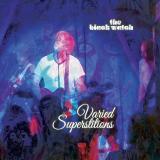
The Black Watch - Varied Superstitions LP

It is with some degree of surpriseand delight that we were contacted by John Andrew Fredrick, the founder and omnipresent member of Santa Barbara’s the black watch to see if Blue Matter would be interested in putting out their newest album. Of course we were. One listen was more than enough to convince us that it would fit perfectly on to the label. Perhaps a little more indie than other albums we’ve released, but sowhat? ‘Varied Superstitions’ is an intriguing collision of Cure-style indie and trippy psych which had us buzzing right away. the black watch (lower case intentional) wasformed in 1987 by John Andrew Fredrick in Santa Barbara, California, and he has been (and still is) it’s guiding light. They have released 25 albums over the last 38 years and show no sign of ageing. With a fantastic band behind him, John has presented us with a wonderful batch of songs ranging from mesmeric psych to indie/punk. In late 2025 John paid a brief visit to the UK to see friends and also to do a couple of live acoustic performances. The Bevis Frond was lucky enough to share the bill with John at London’s Betsey Trotwood for a wonderful evening of acoustic revelry. Not only is he a hugely talented musician/songsmith, but a thoroughly decent fellow. It’s a true privilege to be able to put out ‘Varied Superstitions’ on our label.

pré-commande17.04.2026

il devrait être publié sur 17.04.2026

25,00
BCUC - The road is never easy

BCUC – Bantu Continua Uhuru Consciousness – have been channeling the spirit of Soweto for over twenty years. Indigenous funk, hip-hop consciousness, and punk rock energy fused into something utterly original and deeply rooted. Their mantra: Music for the people, by the people, with the people. From humble beginnings rehearsing in a shipping container, a stone's throw from the church where Desmond Tutu organized the escape of the most wanted anti-Apartheid activists, they kept believing in their dream of self-empowerment. Today they command festival stages worldwide: Glastonbury West Holts, Roskilde, Afropunk Brooklyn, WOMAD, Fusion, Sziget, FMM Sines, Beaches Brew, Boomtown, Colours of Ostrava, Couleur Café – to name just a few. In 2023, BCUC were honoured with the prestigious WOMEX Artist Award, an accolade usually reserved for more established artists, in recognition of their fearless work and transcendent live performances.

THE ROAD IS NEVER EASY

The Road Is Never Easy is BCUC's fifth album and their debut on Outhere Records. On this new offering, BCUC take listeners on another Afro-psychedelic journey into the soul of Soweto. It feels like a gospel sermon colliding with a punk concert, "guaranteed to touch untapped corners of your soul" (OkayAfrica). BCUC's music is deeply rooted in history and echoes the voices of the ones who came before. The road was never easy for the people of Soweto who originally came to work in the mines of Egoli, the City of Gold, Johannesburg. When apartheid finally ended after a long struggle, it was hoped that life would improve. But more than 30 years later, many of those initial hopes and dreams are still waiting to be fulfilled. This album is about that struggle. The album contains 10 brand new songs – a record for BCUC, whose previous albums featured an average of 3 songs. It represents the culmination of more than two decades of performing together and building a reputation as a powerful live act. These ten songs encapsulate that same live energy, each one building gradually and drawing you into BCUC's Afro-psychedelic stream of consciousness. It's a seismic tour de force through life in Soweto today. Songs like Amakhandela (Breaking All the Chains) connect history to daily life: "How is this precious metal inflicting so much pain in us," sing BCUC, "this government has been telling us we are free, but we don't benefit from being free." The album also talks about all the hopes and dreams that remain: "I have too many wishes and dreams in my head," BCUC sing in Um duma khanda, "I think I am losing my mind". The album ends with the soothing Matla a rona ke Bophelo, "our strength is life", praising the spirits and thanking the elders for protection. The Road Is Never Easy is about the harsh reality of life in Soweto, where "people always carry heavy loads". BCUC are street poets trying to deal with that burden: sometimes revolutionary, sometimes soothing, but always hopeful and compassionate. "When you are from Soweto you can't retreat nor surrender." (Sebenzela)

RECORDING

The album was largely recorded in Munich, Germany during tour breaks over two sessions, each three days long. It took place in a small studio located in a German WW II bunker converted into rehearsal spaces. The songs were recorded in one take altogether in one room, with only a few overdubs added, mainly backing vocals, by BCUC at Fourways studio in Johannesburg. BCUC have created their own distinctive way of writing, or rather, finding and creating their songs. The recording process is like an improvised live performance. They bring their ideas into a zone where the music, the rhythm and the spirits take over until the song starts to form. In this Afro-psychedelic zone BCUC create their unique poetry that feeds on the dreams still dreamt, the hopes, the fears and the temptations lingering everywhere. BCUC's songs need to breathe and time to build. The right take was the one when the song took over, and just like their live performances, no one knew beforehand where the song would take them. During the recording, BCUC just let it all flow out: inner turmoil, cries of rebellion, but also resilience and a search for healing, love, unity and compassion. You don't have to be from Soweto to feel the deep meaning and impact of this music. In these times of so much hate and division, BCUC are like a campfire for people to gather around.

PRODUCTION & ARTWORK

"BCUC have a unique magic," says Outhere's Jay Rutledge, who produced the album. "It blew our minds. It's like punk and pure gospel at the same time. Their music can make you dance and it can make you cry, all at the same time. And when the song is over, you feel you're not alone in this world anymore. We felt compelled to do this." The album cover is based on a matchbox design, matches being a common household item in South Africa even today. "These were the matches people used to burn government buildings and cars," explain BCUC. Little messages, addresses, or phone numbers used to be scribbled on the back of these boxes; each one a reminder of the strength, resilience, and resistance that once drove the struggle for freedom in Soweto. BCUC keep this flame burning. The Road Is Never Easy is a heavy spiritual road trip, a deep dive into the subconscious of Soweto and a quest for truth, justice and sanity in this crazy world. BCUC tackle the harsh realities of the voiceless, guided by the spirit world of their ancestors. Rather than reinforcing stereotypes of poverty, BCUC's portrayal of Africa is one rich in tradition, rituals and beliefs. "We bring fun and Afro-psychedelic fire from the hood," says vocalist Kgomotso Mokone.

pas en stock

Commandez maintenant et nous commanderons l'article pour vous chez notre fournisseur.

19,75

Derniere entrée: 13 jours
Flipper - Generic Flipper

Generic Flipper, the debut album by Flipper, remains the most absorbing full-length LP to emerge from the early San Francisco punk scene. A constant source of imitation for so-called "noise rock" bands, it has yet to be surpassed in its nihilistic glee.

Recorded between October 1980 and August 1981 and released in 1982 on the indispensable Subterranean Records, this album functions as a chaotic, sticky mass of individual personalities: the magma-like bass eruptions and dual vocals of Will Shatter and Bruce Loose, Ted Falconi's icy guitar scraping and the relentless beat of drummer Steve DePace. At times playful and taciturn, paranoid and absurd, Generic charts a deliberate path that willfully chances destruction.

In early '80s punk, when the hardening default was "faster-shorter-louder," Generic subverts the nascent hardcore scene with a strictly applied regimen of turgid-slower-heavier. The lyrics are bleak, yet unnervingly beautiful. "Ever" sets the tone with trademark restraint – "Ever wish the human race didn't exist? And then realize you're one too?" – while closer "Sex Bomb" is a churning, 8-minute epic with looping bass, saxophone accompaniment and electronic effects of dropping bombs.

Tons of indie bands have attempted to recreate Flipper's mix of acidic guitar, metallic bass sludge and sardonically brilliant lyricism, using the seemingly effortless template they pioneered; however, the effect usually drives listeners right back to Generic. While most of their contemporaries wilt under direct comparison, No Trend, the Butthole Surfers, feedtime and Church Police are a few who can stand the frigid heat.

pas en stock

Commandez maintenant et nous commanderons l'article pour vous chez notre fournisseur.

26,47

Derniere entrée: 13 jours
Men With - Secrets Sand Clock

Men With

Secrets Sand Clock

12inchCITI034
CITITRAX
16.04.2026

Cititrax release Sand Clock, the new full-length album by Men With Secrets, the Italian trio of Donato Dozzy, Lino Monaco, and Nicola Buono (Retina.it). Originally emerging from a shared background in experimental techno under the name Le Officine Di Efesto, the three musicians turned toward classic post-punk, minimal wave, and synth-driven pop with the formation of Men With Secrets. Their debut album Psycho Romance (2020), released on Bunker Records, introduced a meticulously produced body of work that felt like a rediscovered European darkwave recording from the early 1980s—yet was entirely contemporary in its construction.

With Sand Clock, the trio deepen this language. The album leans more directly into the melodic clarity and romantic tension of late-80s and early-90s darkwave and synthpop while maintaining the stark restraint that defines the project. Icy synthesizers, shuddering basslines, and precise drum machine programming frame baritone vocals that are intimate, emotionally exposed, and quietly apocalyptic.

Balancing pop structure with gothic atmosphere, Sand Clock moves between shadowed dance floor momentum and solitary headphone introspection. It is not an exercise in revivalism, but a continuation—an acknowledgment that the emotional architecture of that era remains unresolved and still relevant. Written and produced by Donato Dozzy, Lino Monaco, and Nicola Buono and recorded in Rome and Pompeii.

The vinyl edition is pressed on clear 160-gram vinyl, limited to 500 copies worldwide. Each record is housed in a heavy printed jacket with a printed inner sleeve.

pas en stock

Commandez maintenant et nous commanderons l'article pour vous chez notre fournisseur.

27,52

Derniere entrée: 26 jours
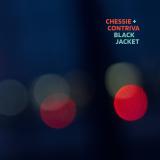
Chessie + Contriva - Black Jacket LP 2x12"

Chessie + Contriva

Black Jacket LP 2x12"

2x12inchWAT09LP
Watusi
16.04.2026

“Black Jacket” is a love letter between two bands separated by continents but united by mutual admiration. Contriva, of Berlin, and Chessie of Washington, DC, first came together in 2001 when sharing a stage, sparking a deep connection over their respective takes on textural, emotive, and mostly instrumental music that merges post-rock, ambient, and experimental elements into unique visions. Fast forward two decades and many trips to their respective studios and we now have “Black Jacket”, a double LP of musical alchemy that builds upon the expressionistic, idiosyncratic sounds of these two groups. A new classic that proves far greater than the sum of its parts.

Begun in the mid 1990's, Washington DC's Chessie is Stephen Gardner (also of noisy shoegaze pioneers, Lorelei) and Ben Bailes, whose various LP's for Slumberland's Dropbeat imprint and Plug Research pair abstract electronics and melancholy post-rock in search of the sounds and feelings of railways and train travel.

Berlin's Contriva, (Monika Enterprises, Lok Musik, and Morr Music) features Masha Qrella (known for her solo works for Morr Music), Max Punktezahl (also of Munich indie legends the Notwist and Berlin's Jersey and Saroos), Hannes Lehmann and Rike Schuberty. For over a decade beginning in the mid-1990's, Contriva crafted compelling instrumentals, grafting experimental textures onto beautiful and complex indie songs.

Together, the six of them have created “Black Jacket.”

pas en stock

Commandez maintenant et nous commanderons l'article pour vous chez notre fournisseur.

28,53

Derniere entrée: 26 jours
WILL WOOD & THE TAPEWORMS - SELF-ISH

WILL WOOD & THE TAPEWORMS

SELF-ISH

12inchHCDWWV34
HOSTILE CITY
15.04.2026

SELF-iSH is a quick but intensely dramatic concept album with dark psychedelic themes and nonstop experimental energy. Will Wood and the Tapeworms quickly grabbed attention in the punk scene following "Everything is a Lot" due to Wood's unique writing and refusal to break character even backstage and the band's dangerously high-energy shows. Face paint, confetti, and on-stage violence became the project's calling card, making SELF-iSH's dark and intense drama an inevitable direction for Wood. Mere months after the debut, producer Kevin Antreassian offered Wood a deal on his follow-up but only had a narrow time window, so Wood improvised. Bringing together a new lineup and with the help of guitarist Mike Bottiglieri, Wood wove scraps of discarded or unfinished songs together and created a tight yet abstract psychedelic concept album with the intent of taking every risk and trying every off-kilter idea he had. SELF-iSH began its highly conceptual production process during the holiday season in 2015, and the studio became littered with notepads, graphic charts, and teeth. The result was a manic little album featuring screaming, theremin, kazoo, power drills, the sound of breaking furniture, and an almost heavy-metal twist on Wood's off-kilter vision. By the time the album was finished, the piano was bloody, and the studio was wrecked. The album became what Wood described as the "bastard child" of his discography. Will Wood's early career can be primarily defined by his experimental vocal delivery, honky-tonk piano smashing, and darkly edgy songwriting. While his stylings have matured and taken on a more precise approach, his refusal to conform to expectations and constant shifts in the genre have continued to be hallmarks of his songwriting and production. In his "Will Wood and the Tapeworms" releases (Everything Is A Lot in 2015, SELF-iSH in 2016), audiences can see the first glimpses into what would eventually become his signature style, presented in a uniquely raw and chaotic state of potential.

pas en stock

Commandez maintenant et nous commanderons l'article pour vous chez notre fournisseur.

27,31

Derniere entrée: 27 jours
Zé Ibarra - Afim

Zé Ibarra

Afim

12inchMRBLP324
Mr Bongo
13.04.2026

Mr Bongo proudly presents, ‘AFIM’, the second solo album by one of Brazil’s most exciting new talents, Zé Ibarra. You may be familiar with the hypnotic, entrancing tones of Ibarra’s vocals through his work with the Latin Grammy award-winning, four-piece, Bala Desejo and the band Dônica. He has also toured with the musical titan, Milton Nascimento, performing guitar and vocals, which is quite the honour and a testament to Ibarra's craft. As a solo artist, he has performed headline solo shows in Japan, Portugal and the US, as well as recently completing a support tour with the great, Seu Jorge.

‘AFIM’ is comprised of eight tracks, featuring Zé’s own compositions as well as cover versions of tracks by contemporaries and friends, Sophia Chablau, Tom Veloso, and Dora Morelenbaum. It combines elements of MPB, jazz, pop and progressive rock in a bold, authoritative style. The album represents the intersection between different facets of the artist, from the stripped-down, intimate, guitar singer-songwriter, to dense arrangements with sweeping strings sections. Writing this album allowed Ibarra "to explore sides of myself that had not yet been organized in an album: a certain darkness, a more cinematic musicality, a desire for new soundscapes.

The album features the single, 'Transe', a song with an instantly comforting tone reminiscent of classic Brazilian songs of the past (think Caetano Veloso). It is built on a rhythmic guitar that supports dynamic sound layers, opening space for Ibarra's intense interpretation. Cinematic atmospheres that lend an air of mystery come courtesy of string arrangements by Jaques Morelenbaum.

His unique cover version of Sophia Chablau's 'Segredo' is equally compelling, taking Sophia's punky-indie original in a different direction and making it feel like his own. 'Essa Confusão', a song celebrating the intensity of love and co-written by Dora Morelenbaum, is steered into epic, 70's AOR, singer-songwriter territory with wind arrangements by Ibarra, Jorge Continentino and strings by Jaques Morelenbaum.

The album is the result of the collaboration of experienced musicians and long-time partners of Ibarra. Fellow Bala Desejo and Dônica member Lucas Nunes co-produced the album. The core band featured on the record consists of Lucas Nunes on organs, Alberto Continentino on bass, Daniel Conceição and Thomas Harres on drums and percussion, Rodrigo Pacato on additional percussion, Chico Lira on Fender Rhodes and Guilherme Lírio on guitar.

The overall feel of the record is archetypically quintessential without slipping into retro mode. It is a stunning album from one of the finest musicians of his generation. A true star of Brazil’s blooming contemporary scene.

pas en stock

Commandez maintenant et nous commanderons l'article pour vous chez notre fournisseur.

27,05

Derniere entrée: 32 jours
Guilty Razors - Complete Recordings 1977 - 1978

UILTY RAZORS, BONA FIDE PUNKS.


Writings on the topic that go off in all directions, mind-numbing lectures given by academics, and testimonies, most of them heavily doctored, from those who “lived through that era”: so many people today fantasize about the early days of punk in our country… This blessed moment when no one had yet thought of flaunting a ridiculous green mohawk, taking Sid Vicious as a hero, or – even worse – making the so-called alternative scene both festive and boorish. There was no such thing in 1976 or 1977, when it wasn’t easy to get hold of the first 45s by the Pistols or the Clash. Few people were aware of what was happening on the fringes of the fringes at the time. Malcolm McLaren was virtually unknown, and having short hair made you seem strange. Who knew then that rock music, which had taken a very bad turn since the early 1970s, would once again become an essential element of liberation? That, thanks to short and fast songs, it would once again rediscover that primitive, social side that was so hated by older generations? Who knew that, besides a few loners who read the music press (it was even better if they read it in English) and frequented the right record stores? Many of these formed bands, because it was impossible to do otherwise. We quickly went from listening to the Velvet Underground to trying to play the Stooges’ intros. It’s a somewhat collective story, even though there weren’t many people to start it.
The Guilty Razors were among those who took part in this initial upheaval in Paris. They were far from being the worst. They had something special and even released a single that was well above the national average. They also had enough songs to fill an album, the one you’re holding. In everyone’s opinion, they were definitely not among the punk impostors that followed in their wake. They were, at least, genuine and credible.

Guilty Razors, Parisian punk band (1975-1978). To understand something about their somewhat linear but very energetic sound, we might need to talk about the context in which it was born and, more broadly, recall the boredom (a theme that would become capital in punk songs) coupled with the desire to blow everything off, which were the basis for the formation of bands playing a rejuvenated rock music ; about the passion for a few records by the Kinks or the early Who, by the Stooges, by the Velvet mostly, which set you apart from the crowd.
And of course, we should remember this new wave, which was promoted by a few articles in the specialized press and some cutting-edge record stores, coming from New York or London, whose small but powerful influence could be felt in Paris and in a handful of isolated places in the provinces, lulled to sleep by so many appalling things, from Tangerine Dream to President Giscard d’Estaing...
In 1975-76, French music was, as almost always, in a sorry state ; it was still dominated by Johnny Hallyday and Sylvie Vartan. Local rock music was also rather bleak, apart from Bijou and Little Bob who tried to revive this small scene with poorly sound-engineered gigs played to almost no one.
In the working class suburbs at the time, it was mainly hard rock music played to 11 that helped people forget about their gruelling shifts at the factory. Here and there, on the outskirts of major cities, you still could find a few rockers with sideburns wearing black armbands since the death of Gene Vincent, but it wasn’t a proper mass movement, just a source of real danger to anyone they came across who wasn't like them. In August 1976, a festival unlike any other took place in Mont-de-Marsan – the First European Punk Festival as the poster said – with almost as many people on stage as in the audience. Yet, on that day, a quasi historical event happened, when, under the blazing afternoon sun, a band of unknowns called The Damned made an unprecedented noise in the arena, reminiscent of the chaotic Stooges in their early adolescence. They were the first genuine punk band to perform in our country: from then on, anything was possible, almost anything seemed permissible.

It makes sense that the four+1 members of Guilty Razors, who initially amplified acoustic guitars with crappy tape recorder microphones, would adopt punk music (pronounced paink in French) naturally and instinctively, since it combines liberating noise with speed of execution and – crucially – a very healthy sense of rebellion (the protesters of May 1968 proclaimed, and it was even a slogan, that they weren’t against old people, but against what had made them grow old. In the mid-1970s, it seemed normal and obvious that old people should now ALSO be targeted!!!).
At the time, the desire to fight back, and break down authority and apathy, was either red or black, often taking the form of leafleting, tumultuous general assemblies in the schoolyard, and massive or shabby demonstrations, most of the time overflowing with an exciting vitality that sometimes turned into fights with the riot police. Indeed, soon after the end of the Vietnam War and following Pinochet’s coup in Chile, all over France, Trotskyist and anarcho-libertarian fervour was firmly entrenched among parts of the educated youth population, who were equally rebellious and troublemakers whenever they had the chance. It should also be noted that when the single "Anarchy in the UK" was first heard, even though not many of us had access to it, both the title and its explosive sound immediately resonated with some of those troublemakers crying out for ANARCHY!!! Meanwhile, the left-wing majority still equated punks with reckless young neo-Nazis. Of course, the widely circulated photos in the mainstream press of Siouxsie Sioux with her swastikas didn’t necessarily help to win over the theorists of the Great Revolution. It took Joe Strummer to introduce The Clash as an anti-racist, anti-fascist and anti-ignorance band for the rejection of old-school revolutionaries to fade a little.

The Lycée Jean-Baptiste Say at Porte d’Auteuil, despite being located in the very posh and very exclusive 16th arrondissement of Paris, didn’t escape these "committed" upheavals, which doubled as the perfect outlet for the less timid members of this generation.
“Back then, politics were fun,” says Tristam Nada, who studied there and went on to become Guilty Razors’ frontman. “Jean-Baptiste was the leftist high-school in the neighbourhood. When the far right guys from the GUD came down there, the Communist League guys from elsewhere helped us fight them off.”
Anything that could challenge authority was fair game and of course, strikes for just about any reason would lead to increasingly frequent truancy (with a definitive farewell to education that would soon follow). Tristam Nada spent his 10th and 11th unfinished grades with José Perez, who had come from Spain, where his father, a janitor, had been sentenced to death by Franco. “José steered my tastes towards solid acts such as The Who. Like most teenagers, I had previously absorbed just about everything that came my way, from Yes to Led Zeppelin to Genesis. I was exploring… And then one day, he told me that he and his brother Carlos wanted to start a rock band.” The Perez brothers already played guitar. “Of course, they were Spanish!”, jokes their singer. “Then, somewhat reluctantly, José took up the bass and we were soon joined by Jano – who called himself Jano Homicid – who took up the rhythm guitar.” Several drummers would later join this core of not easily intimidated young guys who didn’t let adversity get the better of them.

The first rehearsals of the newly named Guilty Razors took place in the bedroom of a Perez aunt. There, the three rookies tried to cover a few standards, songs that often were an integral part of their lives. During a first, short gig, in front of a bewildered audience of tough old-school rockers, they launched into a clunky version of the Velvet Underground's “Heroin”. Challenge or recklessness? A bit of both, probably… And then, step by step, their limited repertoire expanded as they decided to write their own songs, sung in a not always very accurate or academic English, but who cared about proper grammar or the right vocabulary, since what truly mattered was to make the words sound as good as possible while playing very, very fast music? And spitting out those words in a language that left no doubt as to what it conveyed mattered as well.
Trying their hand a the kind of rock music disliked by most of the neighbourhood, making noise, being fiercely provocative: they still belonged to a tiny clique who, at this very moment, had chosen to impose this difference. And there were very few places in France or elsewhere, where one could witness the first stirrings of something that wasn’t a trend yet, let alone a movement.

In the provinces, in late 1976 or early 1977, there couldn’t be more than thirty record stores that were a bit more discerning than average, where you could hear this new kind of short-haired rock music called “punk”. The old clientele, who previously had no problem coming in to buy the latest McCartney or Aerosmith LP, now felt a little less comfortable there…
In Paris, these enlightened places were quite rare and often located nex to what would become the Forum des Halles, a big shopping mall. Between three aging sex workers, a couple of second-hand clothes shops, sellers of hippie paraphernalia and small fashion designers, the good word was loudly spread in two pioneering places – propagators of what was still only a new underground movement. Historically, the first one was the Open Market, a kind of poorly, but tastefully stocked cave. Speakers blasted out the sound of sixties garage bands from the Nuggets compilation (a crucial reference for José Perez) or the badly dressed English kids of Eddie and the Hot Rods. This black-painted den was opened a few years earlier by Marc Zermati, a character who wasn’t always in a sunny disposition, but always quite radical in his (good) choices and his opinions. He founded the independent label Skydog and was one of the promoters of the Mont-de-Marsan punk festivals. Not far from there was Harry Cover, another store more in tune with the new New York scene, which was amply covered in the house fanzine, Rock News (even though it was in it that the photos of the Sex Pistols were first published in France).
It was a favorite hang-out of the Perez brothers and Tristam Nada, as the latter explained. “It’s at Harry Cover’s that we first heard the Pistols and Clash’s 45s, and after that, we decided to start writing our first songs. If they could do it, so could we!”
The sonic shocks that were “Anarchy in the UK”, “White Riot” or the Buzzcocks’s EP, “Spiral Scratch” – which Guilty Razors' sound is reminiscent of – were soon to be amplified by an unparalleled visual shock. In April 1977, right after the release of their first LP, The Clash performed at the Palais des Glaces in Paris, during a punk night organised by Marc Zermati. For many who were there, it was the gig of a lifetime…
Of course, Guilty Razors and Tristam were in the audience: “That concert was fabulous… We Parisian punks were almost all dressed in black and white, with white shirts, skinny leather ties, bikers jackets or light jackets, etc. The Clash, on the other hand, wore colourful clothes. Well, the next day, at the Gibus, you’d spot everyone who had been at this concert, but they weren’t wearing anything black, they were all wearing colours.”

It makes sense to mention the Gibus club, as Guilty Razors often played there (sometimes in front of a hostile audience). It was also the only place in Paris that regularly scheduled new Parisian or Anglo-Saxon acts, such as Generation X, Siouxsie and the Banshees, the Slits, and Johnny Thunders who would become a kind of messed-up mascot for the venue. A little later, in 1978, the Rose Bonbon – formerly the Nashville – also attracted nightly owls in search of electric thrills… In 1977, the iconic but not necessarily excellent Asphalt Jungle often played at the Gibus, sometimes sharing the bill with Metal Urbain, the only band whose aura would later transcend the French borders (“I saw them as the French Sex Pistols,” said Geoff Travis, head of their British label Rough Trade). Already established in this small scene, Metal Urbain helped the young and restless Guilty Razors who had just arrived. Guitarist for Metal Urbain Hermann Schwartz remembers it: “They were younger than us, we were a bit like their mentors even if it’s too strong a word… At least they were credible. We thought they were good, and they had good songs which reminded of the Buzzcocks that I liked a lot. But at some point, they started hanging out with the Hells Angels. That’s when we stopped following them.”

The break-up was mutual, since, Guilty Razors, for their part, were shocked when they saw a fringe element of the audience at Metal Urbain concerts who repeatedly shouted “Sieg Heil” and gave Nazi salutes. These provocations, even still minor (the bulk of the skinhead crowd would later make their presence felt during concerts), weren’t really to the liking of the Perez brothers, whose anti-fascist convictions were firmly rooted. Some things are non-negotiable.
A few months earlier (in July 1978), Guilty Razors had nevertheless opened very successfully for Metal Urbain at the Bus Palladium, a more traditonally old-school rock night-club. But, as was sometimes the case back then, the night turned into a mass brawl when suburban rockers came to “beat up punks”.

Back then, Parisian nights weren’t always sweet and serene.

So, after opening as best as they could for The Jam (their sound having been ruined by the PA system), our local heroes were – once again – met outside by a horde of greasers out to get them. “Thankfully,” says Tristam, “we were with our roadies, motorless bikers who acted as a protective barrier. We were chased in the neighbouring streets and the whole thing ended in front of a bar, with the owner coming out with a rifle…”
Although Tristam and the Perez brothers narrowly escaped various, potentially bloody, incidents, they weren’t completely innocent of wrongdoing either. They still find amusing their mugging of two strangers in the street for example (“We were broke and we simply wanted to buy tickets for the Heartbreakers concert that night,” says Tristam). It so happened that their victims were two key figures in the rock business at the time: radio presenter Alain Manneval and music publisher Philippe Constantin. They filed a complaint and sought monetary compensation, but somehow the band’s manager, the skilful but very controversial Alexis, managed to get the complaint withdrawn and Guilty Razors ended up signing with Constantin with a substantial advance.

They also signed with Polydor and the label released in 1978 their only three-track 45, featuring “I Don't Wanna be A Rich”, “Hurts and Noises” and “Provocate” (songs that exuded perpetual rebellion and an unquenchable desire for “class” confrontation). It was a very good record, but due to a lack of promotion (radio stations didn’t play French artists singing in English), it didn’t sell very well. Only 800 copies were allegedly sold and the rest of the stock was pulped… Initially, the three tracks were to be included on a LP that never came to be, since they were dropped by Polydor (“Let’s say we sometimes caused a ruckus in their offices!” laughs Tristam.) In order to perfect the long-awaited LP, the band recorded demos of other tracks. There was a cover of Pink Floyd's “Lucifer Sam” from the Syd Barrett era – proof of an enduring love for the sixties’ greats –, “Wake Up” a hangover tale and “Bad Heart” about the Baader-Meinhof gang, whose actions had a profound impact on the era and on a generation seeking extreme dissent... On the album you’re now discovering, you can also hear five previously unreleased tracks recorded a bit later during an extended and freezing stay in Madrid, in a makeshift studio with the invaluable help of a drummer also acting as sound engineer. He was both an enthusiastic old hippie and a proper whizz at sound engineering. Here too, certain influences from the fifties and sixties (Link Wray, the Troggs) are more than obvious in the band’s music.

Shortly after a final stormy and rather barbaric (on the audience’s side) “Punk night” at the Olympia in June 1978, Tristam left the band ; his bandmates continued without him for a short while.

But like most pioneering punk bands of the era, Guilty Razors eventually split up for good after three years (besides once in Spain, they’d only played in Paris). The reason for ceasing business activities were more or less the same for everyone: there were no venues outside one’s small circuit to play this kind of rock music, which was still frightening, unknown, or of little interest to most people. The chances of recording an LP were virtually null, since major labels were only signing unoriginal but reassuring sub-Téléphone clones, and the smaller ones were only interested in progressive rock or French chanson for youth clubs. And what about self-production? No one in our small safety-pinned world had thought about it yet. There wasn’t enough money to embark on that sort of venture anyway.

So yes, the early days of punk in France were truly No Future!
pas en stock

Commandez maintenant et nous commanderons l'article pour vous chez notre fournisseur.

21,43

Derniere entrée: 32 jours
Vampire - What Seems Forever Can Be Broken LP
  • Built For Decline
  • Human Market Capital
  • The Zone
  • Endless Chain
  • Polite
  • Words
  • Nothing To Hold
  • Hollow Life
  • Seeing Blind
  • The Letter
  • View From The Tower

10 songs from what is possibly the best anarchopunk band currently in existence. The dynamics of the tracks are refreshingly simple, a powerful yet neutral- sounding recording, with very little embellishment or stylized production to hide behind, approaching filth with distorted guitars, haunting bass lines, and steady drum beats, all elevated by the combination of the three voices perfectly balanced between melody and hatred. In a quantized world, one can perceive an endearing dose of human spirit through their tense and disturbingly melodic expressions. A modern Anarcho Punk classic that is surprising to find 40 years after the wonderful bands that spawned the genre, especially England. Includes poster and insert with lyrics.

Since reviewing Pomegranate Seeds: An International Benefit for Mutual Aid in Gaza, the compilation put out by the DISSIDENTS, I've been hunting for more VAMPIRE material, so when I saw I was assigned this LP I became very excited. VAMPIRE is an Australian band that plays apocalyptic anarcho- punk. A sense of extreme urgency pervades VAMPIRE's sound, and What Seems Forever Can Be Broken is ten songs that combine the demanding hardcore of CONFLICT, with a foundation of CRASS, and the rough-hewn delivery of raw punk. The resulting album is dark, hauntingly mesmeric, but also aggressive with a sense of communal voice. In other words, this is anarchopunk that is of the moment, and articulates exactly what contemporary punk is about without being preachy or elitist. This is that eye-to-eye, in-the-trenches vocalization of criticism that comes off as eye-opening and perspective-altering. What Seems Forever Can Be Broken is by far my favorite release thus far in 2025, but also might be the best album I've heard in a really long time. Like, this is benchmark-level material, so definitely give this a listen.

pré-commande10.04.2026

il devrait être publié sur 10.04.2026

30,46
Stephan Eicher - Spielt Noise Boys

2025 Reissue.


Münchenbuchsee, a suburb of Bern, Switzerland. Stephan Eicher is the youngest of three children. His father, a radio and TV repairman, is also a jazz violinist and a sound tinkerer in his spare time. In the family home's converted fallout shelter turned studio, Mr. Eicher experiments with homemade sequencers, tortures handcrafted drum machines, and abuses reel-to-reel tape recorders—all under the fascinated gaze of young Stephan.

The boy quickly develops a musical curiosity, exploring sound through various experiments and wanderings. Alongside his younger brother Martin, Stephan crafts audio plays on a homemade multi-track recorder (essentially several cassette decks hooked together!), which they write, record, add sound effects to, and perform for family and friends. Just a couple of nice kids, really...

Then comes 1972, and Lou Reed's Transformer album changes everything for the Eicher kids. For 13-year-old Stephan, it's a revelation—especially "Vicious", the opening track, which he plays on repeat for months. He convinces his father to buy him an electric guitar. Not stopping there, his father also builds him a tube amp using an old radio.

Then comes adolescence. A rough one. Stephan leaves home at 16 and moves to Zurich. With obvious artistic talent, he persuades his art teacher to help him get into F+F, a radical, alternative art school—despite his young age. Accepted, he starts learning video techniques, determined to become a filmmaker.

At F+F, Stephan organizes Dada-style happenings and concerts with a group of friends known as the Noise Boys. Among them: one of his teachers on bass, Veit Stauffer on drums (who would later found ReR/Recommended Records), his girlfriend Sacha on vocals, and Stephan on guitar. In one of their early performances, they release a remote-controlled mouse covered in dull razor blades into the audience to create panic and chaos. Keeping with this aggressive, confrontational spirit, they once played a concert while wearing headphones blasting Tristan and Isolde, trying to perform their own songs simultaneously—to maximize the cacophony. The goal was always the same: clear the room.

Their “songs,” if you can call them that, followed suit. Take "Hungeriges Afrika", for instance—performed entirely with power drills and some drum feedback.

To make ends meet, Stephan returns to Bern on weekends to work as a waiter at the Spex Club, the city’s main punk venue. On September 16, 1980, during a show by proto-electro group Starter, the police raid the club and arrest everyone. Stephan, who manages to avoid arrest, seizes the opportunity to “borrow” Starter’s gear left behind. He suddenly finds himself in possession of a Roland Promars synth, a Korg MS20, and a gorgeous CR78 drum machine, which he runs through a Big Muff distortion pedal to get that perfect gritty sound.

He then sets out to reinterpret some Noise Boys tracks, reworking them during impromptu sessions recorded on a dictaphone (yes, a dictaphone—now the lo-fi sound makes more sense, doesn’t it?). He ironically titles the resulting cassette "Stephan Eicher spielt Noise Boys" ("Stephan Eicher plays Noise Boys"). This gem features seven tracks, which are the ones reissued here.

Back in Zurich, he visits his friends Andrew Moore and Robert Vogel, who have a DIY cassette duplication setup. They make 25 copies of Stephan Eicher spielt Noise Boys for Stephan and his friends. Robert encourages him to visit Urs Steiger of Off Course Records and play him the tape.

Without much hope, Stephan shows up at Urs’s office. But Urs is instantly hooked and suggests releasing a 7” single. Due to space constraints, they reluctantly drop two of the seven tracks ("Hungeriges Afrika" and "One Second"). As for the musical score featured on the cover—it was randomly chosen and remains a mystery to this day. Calling all music theory nerds!

The 7-inch is pressed in 750 copies and released in the first week of December 1980—a date Stephan remembers well, as it’s the same week John Lennon was killed. Smartly, Urs sends a promo copy to François Murner, Switzerland’s answer to John Peel, who hosts a show on alternative station Sounds. Murner falls in love with the record and starts giving it airtime. To Stephan’s surprise, sales follow—and people actually seem interested in his music.

Even this modest underground success scares Stephan a bit. He stops making music for a year and moves to Bologna, where he works as a programmer at Radio Città, a feminist radio station.

Meanwhile, Stephan’s younger brother Martin, who’s also involved in the punk scene, joins the band Glueams as a singer and guitarist. Glueams, named after the fanzine run by two of its members (drummer Marco Repetto and bassist GT), eventually rebrands as Grauzone. Stephan is invited to their shows to project hacked Super 8 visuals live on stage.

Urs Steiger, now working on a compilation titled Swiss Wave – The Album, asks Grauzone to contribute alongside bands like Liliput, Jack and the Rippers, The Sick, and Ladyshave (Fall 1980).

For the album, Martin tasks Stephan with producing their recording sessions. Under Stephan's artistic direction, two tracks emerge: "Raum" and "Eisbär". During "Eisbär", Martin plays a minimalist bass line borrowed from post-punk band The Feelies (just an open string). Drummer Marco Repetto struggles to keep time. Later that evening, unhappy with the takes, Stephan builds a four-bar drum loop from a ¼-inch tape and uses it instead of the flawed original. He then adds bleepy synths and wind sounds to complete the track’s icy vibe before handing it over to Urs.

The Swiss Wave – The Album compilation is released quietly at first, but things snowball thanks to "Eisbär", which eventually becomes a smash hit—selling over 600,000 singles.

Meanwhile, Stephan plays in a rockabilly band called SMUV (named after Switzerland’s social security agency) and begins producing artists, including the debut album of Starter (1981), which includes a more pop-oriented version of "Minijupe".

By early 1982, Stephan starts spending time with the post-punk girl band Liliput (formerly Kleenex). They’re older than him, and he happily drives them around in his Renault Major, acting as their roadie.

By 1983, Grauzone—signed to the major label EMI, which turned out to be a misstep—is falling apart. Stephan begins to pivot toward a more mainstream pop sound with his debut solo album Les Chansons Bleues.

But that... is already another story.

En stock du18.05.2026

23,11

Derniere entrée: 13 jours
ACCION MUTANTE - THE TIME MACHINE
  • 1: Fear
  • 2: Dreads And Spikes
  • 3: Die Human Race
  • What A Wonderful World
  • 5: Creature Of Inhuman Power
  • 6: Dead Dream
  • 7: Desensitized
  • 8: Ghetto Europa
  • 9: Narcissism Of Mankind
  • 10: Kranenwald
  • 11: Der Pabst
  • 12: Fuck Cancer
  • 13: Collapse
  • 14: Intox Not Detox
  • 15: Das Hohelied Der Larmoyanz
  • 16: Mankind Is The Reason
  • 17: Drug Schools
  • 18: Loser
  • 19: Theodicy
  • 20: Odin - Jesus

Die legendären Accion Mutante kehren mit einem neuen Album zurück! Sie kamen 1994 aus der Crust-Szene und prägten schon früh den Begriff "Metal Punk". "The Time Machine" verspricht erneut eine brutale, menschenunfreundliche Reise durch drei Jahrzehnte der Geschichte von Accion Mutante, darunter zehn brandneue Tracks plus zehn neu aufgenommene Songs, die von den Anfängen der Band bis zur Gegenwart reichen. Ehrliche Punk-Wut, gemischt mit rauem Metal-Sound und kombiniert mit einem unerbittlichen D-Beat sowie der kehligen Wut zweier Shouter. Auf "The Time Machine" thematisieren Accion Mutante textlich nach wie vor ihre Themen wie religiöser Blödsinn, Verbrechen gegen die Menschlichkeit oder Umweltzerstörung mit ihrem eigenen sarkastischen Ton und einer 100 % antifaschistischen Haltung. Das ist verdammt wütend und verdammt roh. Auch nach mehr als 30 Jahren sind ACCION MUTANTE noch immer Crustasfuck-Vertreter einer großartigen Mischung aus kaputtem Metal, Punk-Gestus, unerbittlichem D-Beat und den lauten Attacken beider Sänger. ACCION MUTANTE in ihrer ganzen Pracht, direkt ins Gesicht, für Fans von Britcore und Bands wie Extreme Noise Terror oder Ripcord.

pré-commande10.04.2026

il devrait être publié sur 10.04.2026

19,96
BAD BRAINS - BAD BRAINS

BAD BRAINS

BAD BRAINS

12inchORGMLPV2179
ORG Music
10.04.2026

Vinyl LP pressing. Bad Brains is the self-titled debut studio album recorded by hardcore punk/reggae band Bad Brains. Recorded in 1981 and released on (then) cassette-only label ROIR on February 5, 1982, many fans refer to it as The Yellow Tape because of it's yellow packaging. Though Bad Brains had recorded the 16 song Black Dots album in 1979 and the 5-song Omega Sessions EP in 1980, the ROIR cassette was the band's first release of anything longer than a single. In coordination with the band, Org Music has overseen the restoration and remastering of the iconic Bad Brains' recordings. The audio was mastered by Dave Gardner at Infrasonic Mastering and pressed at Furnace Record Pressing. This Punk Note edition comes with alternate packaging artwork from designer John Yates (Stealworks). The artwork is a nod to Reid Miles and Francis Wolff, and their amazing work at the Blue Note label

pré-commande10.04.2026

il devrait être publié sur 10.04.2026

24,79
Melvins with Napalm Death - Savage Imperial Death March LP

After two co-headlining tours over the past decade, (the) Melvins are continuing their long tradition with us of teaming up with another band on an album. Next up – Napalm Death! This isn’t just some split release with the bands each getting a side. Savage Imperial Death March is a full collaboration with both Melvins & Napalm Death playing together on all the tracks.


This release originally came out on super-limited CD and vinyl via AmRep in 2025 (tour and AmRep store only). This will be an extended version with 2 extra songs, brand new artwork from Mackie Osborne, new vinyl variants, and will be the official release for the first time at record stores, DSPs and more.


Napalm Death are credited as pioneers of the grindcore genre by incorporating elements of crust punk and death metal. Even after exerting an indelible influence on the entire world of heavy music for nearly 40 years, there is still no band on Earth that sounds like Napalm Death. Not just pioneers, but an enduring benchmark for invention and fearlessness in heavy and experimental music of all kinds, the Birmingham legends are still hurtling forward at full pelt.


The Melvins are one of modern music’s most influential bands. Having formed in 1983, the group — founded by vocalist/guitarist Buzz Osborne, with drummer Dale Crover joining a year later — has been credited with merging the worlds of punk rock and heavy music, forming a new subgenre all their own. Over their 40-plus-year career, they’ve released more than 30 original albums, numerous live records, and far too many to count singles and rarities.

pas en stock

Commandez maintenant et nous commanderons l'article pour vous chez notre fournisseur.

23,49

Derniere entrée: 34 jours
Jeffrey Lewis & Voltage - Bad Wiring LP
  • 1: Exactly What Nobody Wanted
  • 2: Except For The Fact That It Isn't
  • 3: My Girlfriend Doesn't Worry
  • 4: Depression! Despair!
  • 5: Till Question Marks Are Told
  • 6: Lps
  • 7: Knucklehead/Happy Rain
  • 8: Take It For Granted
  • 9: In Certain Orders
  • 10: Where Is The Machine
  • 11: Dogs Of My Neighborhood
  • 12: Not Supposed To Be Wise

‘Bad Wiring’ by Jeffrey Lewis & The Voltage, originally released in 2019 and long ago sold out, is re-released in UK/Europe on Blang Records. Recorded in Nashville by Roger Moutenot (Lou Reed, Yo La Tengo, Sleater-Kinny) the album blends raw lo-fi garage-punk with acoustic interludes. His trademark literate lyrics, moving between the poignant and the hilarious, shift from personal anxieties to existential dread (often in the same song eg, ‘My Girlfriend Doesn't Worry'), record stores ('LPs') and under-appreciated artists ('Exactly What Nobody Wanted'). The album was greeted with widespread acclaim in 2019 with many reviewers declaring it his best yet. Jeffrey Lewis & The Voltage play End Of The Road in September with a UK/Europe tour planned to follow.
Press For Bad Wiring In 2019:
" The “and about our relationship” refrain of ‘My Girlfriend Doesn’t Worry’ will have you replaying the album instantly." grade A- Robert Christgau, Consumer Guide (top albums of the year 2019).
" terrific wordplay." ******* Rob Hughes, Uncut
"Thick with the evergreen anti-folkie's charm." **** Mojo
"Electrifying, again." **** Q Magazine.
"one of the most consistently enjoyable records Lewis has made in his 18-year career." ********- HotPress
"possibly his best studio album yet." **** The Skinny.
"Jeff Lewis sits comfortably with Lou Reed and Leonard Cohen as an exemplary songwriter. Reed always strived for street cool and Cohen’s words were imbued with mysticism and his love of women. Lewis has the courage to open up his heart and lay out all the horrible neurosis, paranoia, and despair that we all fall prey to. Reed the cool, Cohen the mystic and Lewis the honest. A better triumvirate you couldn’t hope for.” Louder Than War.
"There’s a strong suggestion that this is the best album his written to date and after listening to just a handful of songs you’d be hard-pushed to disagree – you’ll also be left wondering why in the hell Lewis is not better known than he is, this album is filled with unforgettable songs that set his songwriting apart from anything else you’re likely to hear today." Folk Radio UK.

pré-commande10.04.2026

il devrait être publié sur 10.04.2026

21,43
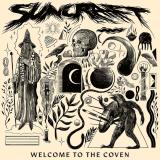
SUNCRAFT - WELCOME TO THE COVEN
  • 1: Ragebait
  • 2: Love's Underrated
  • 3: Greed Battalion
  • 4: Welcome To The Coven
  • 5: Wizards Of The Anger Magic
  • 6: Charlatan Killer
  • 7: High On Silence
  • 8: Forgotten Goddess
également disponible

RED VINYL[23,11 €]


Suncraft is an underground rock band from Oslo, Norway. After appearing on the scene with their debut in 2021, they"ve ratcheted up their sound a notch in every conceivable way with their furious and fun new album Welcome To The Coven. Formed in Oslo in 2017, Suncraft built their early identity on mid-tempo stoner rock, but Welcome to the Coven shows the band has broadened their foundation significantly. The album channels classic rock swagger, punk urgency, and flashes of blackened intensity without settling into pastiche or genre collage - think Turbonegro meets Venom with the odd helping of blast beats thrown in and you"re on your way. The album"s eight tracks move fluidly between heavy riffing, hook-forward choruses and sudden shifts in mood, giving the record a restless, forward thinking character that keeps its 40-minute runtime lean and engaging. Welcome To The Coven is a confident step forward for a promising band which emphasizes their sharpened songwriting and willingness to push beyond scene expectations. The album is available on red or black vinyl from Norwegian purveyors of heavy rock label All Good Clean Records.

pré-commande10.04.2026

il devrait être publié sur 10.04.2026

23,32
SUNCRAFT - WELCOME TO THE COVEN

Suncraft is an underground rock band from Oslo, Norway. After appearing on the scene with their debut in 2021, they"ve ratcheted up their sound a notch in every conceivable way with their furious and fun new album Welcome To The Coven. Formed in Oslo in 2017, Suncraft built their early identity on mid-tempo stoner rock, but Welcome to the Coven shows the band has broadened their foundation significantly. The album channels classic rock swagger, punk urgency, and flashes of blackened intensity without settling into pastiche or genre collage - think Turbonegro meets Venom with the odd helping of blast beats thrown in and you"re on your way. The album"s eight tracks move fluidly between heavy riffing, hook-forward choruses and sudden shifts in mood, giving the record a restless, forward thinking character that keeps its 40-minute runtime lean and engaging. Welcome To The Coven is a confident step forward for a promising band which emphasizes their sharpened songwriting and willingness to push beyond scene expectations. The album is available on red or black vinyl from Norwegian purveyors of heavy rock label All Good Clean Records.

pré-commande10.04.2026

il devrait être publié sur 10.04.2026

23,11
THE PRODIGY - INVADERS MUST DIE LP 2x12"

"Invaders Must Die" is The Prodigy"s 5th album, and is 40 minutes of having your head battered by future nostalgia, serotonin levels twisted by feel-good horrorcore and your synapses snapped by whiplash attitude. It"s the sound of The Prodigy mixing up genres, contorting the past and rewiring the future, ram-raiding through the tranquility of music"s status quo like a blot on the landscape of England"s dreaming. The first thing you notice about "Invaders Must Die" is how complete it sounds, a consistent collection of bangers all firing from the same cannon. The next thing you notice about "Invaders Must Die" is just how melodic it is. Not just melody in the vocal sense but in the heyday-of-hardcore keyboard-hookline sense. Yes, if The Prodigy have learned anything from the hugely successful live shows it was that those old skool rave anthems still rock hard - and are every bit as iconic to their generation as punk was to the nation"s forty-somethings. So "Invaders Must Die" is awash with references to the free party generation, thundering along like the mother of all E-rushes, all hairs tingling, spine jumping and lips buzzing. But not a retroactive arms-in-the-air, water-sharing nostalgia trip, but a set fuelled by punk"s saliva-dripping rabid snarl. "Invaders" also features Dave Grohl drumming on "Run With The Wolves".

pas en stock

Commandez maintenant et nous commanderons l'article pour vous chez notre fournisseur.

31,72

Derniere entrée: 33 jours
Babes Of Enola Grey/artist] - Krieg und Wohlstand

[artist]Babes Of Enola Grey/artist]

Krieg und Wohlstand

12inchCRAVE011
Crave Tapes
03.04.2026

Crave Tapes is thrilled to announce the first vinyl release on the label which will be the second album from Frankfurt's underground post-punk/dark wave band Babes of Enola Grey, Krieg und Wohlstand.
Krieg und Wohlstand sees Babes of Enola Grey follow the path of their 2021 debut, Anfang vom Ende, and take a step further into the realm of melancholic and disillusioned soundscapes. While keeping a certain retro character to the songs, Deborah Vision, Salvador Islero and Fabian van Castorp focus on quite contemporary themes, which some might call the most German obsessions:
War and prosperity.
But this is not the only reference to the band's heritage. Sometimes more, sometimes less, there are musical allusions to various German influences and contributions to (modern) music and music history. While Doppelt Frei is a nod to EBM and bands like DAF or the early Die Krupps and Wie auf Schienen as well as Die Heuschrecken pay homage to German düster punk bands like Fliehende Stürme or EA80, Panik and the title track Krieg und Wohlstand refer to the romantic German art song tradition of the 19th century (not to mention the obvious hint at a certain successful German Schlager in Die Kugeln und das Herz).
This makes Krieg und Wohlstand not only a worthy epigone of the band's debut, but also takes the album and the artistic approach to another level.
Commenting on the chosen format (12" vinyl), the band members said: "It was clear to us that we wanted to release this album on vinyl. When you look atGerman history, war and prosperity have to be seen as two sides of the same medal, or in this case of a record".

pré-commande03.04.2026

il devrait être publié sur 03.04.2026

17,61
GOAT - WORLD MUSIC LP

GOAT

WORLD MUSIC LP

12inchLAUNCHB358
Rocket Recordings
03.04.2026
  • 1: Diarabi
  • 2: Goatman
  • 3: Goathead
  • 4: Disco Fever
  • 5: Golden Dawn
  • 6: Let It Bleed
  • 7: Run To Your Mama
  • 8: Goatlord
  • 9: Det Som Aldrig Förändras / Diarabi

2026 black vinyl, 2022 Abbey Road remaster, original 2012 artwork! When the mysterious masked collective calling themselves Goat first emerged in 2012, armed with an incendiary debut album 'World Music' - there was, and there still isn't, anyone else on earth quite like them. With their enticing mythology, music full of sinuous grooves and manic explosions of fuzz, Goat were outliers from the very beginning. 'World Music', received an avalanche of acclaim with critics, psych heads, outernational crate diggers etc, all left enraptured by its thunderous intensity, conjured from a singular mix of sounds from across the globe. 'World Music' is brimming with tracks now seen as 'classic' Goat live favourites. Tracks that have been wowing audiences all over the world; the afrobeat stomp of 'Disco Fever', the fuzz abuse of 'Goathead', the post-punk groove of 'Let it Bleed', the sing-along repetitive pop of 'Run to your Mama'... From the first note to the last, 'World Music' oozes with a sonic confidence rarely seen on a debut album. What Goat have is unique - they've managed to create a sound unrestrained by genre or any other boundaries. So if you haven't done so already, then it is now time you joined the Goat commune.

pré-commande03.04.2026

il devrait être publié sur 03.04.2026

28,53
Anne Clark - Our Darkness

Anne Clark

Our Darkness

12inchDE-340
Dark Entries
31.03.2026

Doubting all the time. Fearing all the time. Our Darkness descends upon Dark Entries with a reissue of Anne Clark’s epochal proto-house masterpiece from 1984. As a young poet, Clark found herself drawn to London’s emerging punk scene. She became acquainted with Psychic TV affiliate David Harrow, with whom she would collaborate on 1983’s Changing Places and 1984’s Joined Up Writing. “Our Darkness,” off the latter album, was released as a single on Ink Records that same year, and became an underground club hit. It’s a singular piece of music: Clark’s lyrics, delivered with equal parts muscular confidence and unease, speak of urban alienation and heartbreak, while Harrow’s production pummels the listener with hydraulic beats and gloom-laced arpeggios. The song’s spirit would prove influential on both the early Chicago house and Detroit techno scenes, where mechanistic funk and existential despair could catalyse dancefloor mayhem. This reissue offers three versions of “Our Darkness”: the original 12” remix, the Razormaid mix, and a previously unreleased dub version uncovered by David Harrow. Also included is the extended mix of “Sleeper in Metropolis,” another dancefloor hit of Clark’s, as well as the elegiac “Poem for a Nuclear Romance.” The record includes an insert with liner notes and lyrics. “Our Darkness” channels timeless longing and contemporary dismay, a classic overdue for a little light shed upon it.

pas en stock

Commandez maintenant et nous commanderons l'article pour vous chez notre fournisseur.

16,18

Derniere entrée: 12 jours
Articles par page:
N/ABPM
Vinyl