
10
pré-commande18.05.2026
il devrait être publié sur 18.05.2026
21,81 €
il devrait être publié sur 18.05.2026

Red Vinyl[18,45 €]
In this post Sounds world, the boundaries of Post Punk have not only broadened but splintered. And over the course of (now) four releases, Index For Working Musik have seen to using the sprawling boundaries to great effect, flexing a polyglot of styles to convey the language of the moment. On Which Direction Goes The Beam, the murky, distant ambience that was 2023's Indexé has been fleshed out, incorporating everything from the Brian Aldiss laced, ground lightning shudder of Dome, to the chamber-like arrangements of This Kind Of Punishment. There's even a candle flickering in the window for Think Fellers Union Local 282 that warmed these ears. And if you're a fan of the great Dutch band, Trespassers W (who isn't?), the collective consciousness IFWM enunciates on here is a similar testament of a band growing more sure footed in the pursuit of not only knowing all the ways in, but carving a few of their own on the way out. And it's discerning releases like Which Direction Goes The Beam that keep us in the hunt. Long may they forge. - Tom Lax. RIYL: Brian Jonestown Massacre, Velvet Underground, TOY, John Cale, Wire, Dome
il devrait être publié sur 18.05.2026

YELLOW VINYL[25,17 €]
MEMORIALS jump off the waterslides and head above the clouds with their stunning second album, ‘All Clouds Bring Not Rain’. The duo of Verity Susman and Matthew Simms (formerly of Electrelane and WIRE) locked themselves away in a studio in a barn secluded deep in the woods in southwestern France and re-emerged with a beautiful, unusual record that is both melodic and unconventional. For such an ambitious album it’s striking that it was written, performed, recorded and mixed solely by the two of them. Sounding like an unearthed classic, MEMORIALS twist their influences into their own unmistakable sound. Imagine Nico singing with Can produced by David Axelrod and you’re somewhere in the right ballpark.
The record draws inspiration from a wide range of music including folk, dub, post punk, experimental tape music, 60s soul, garage rock, 70s spiritual jazz and Canterbury prog. This attention to detail in their sound meant finding several other studios to get what they needed to record with, including a harpsichord at 4AD’s studio in London and a vibraphone and vintage Leslie speaker in Stereolab drummer Andy Ramsay’s studio Press Play. Verity’s distinctive, unadorned singing is a focal point of the record, moving from tender to wild. Her vocal melodies quickly become earworms, providing the tuneful heart around which the songs’ more unorthodox elements are arranged, which is where Matthew’s unconventional approach to recording and production comes to the fore. With their adventurous arrangements, classic songwriting skills and innovative production techniques, MEMORIALS have created another mesmerising listen that’s accomplished and compelling in its unique approach yet remains dizzyingly immersive - just like their acclaimed live shows.
il devrait être publié sur 18.05.2026

REPRESSED !
Patrick Keel is a multi-instrumentalist, composer, producer, and performer. The Pool was his solo project, the sum of fifteen years of experience in live bands, studios, and home recording. Patrick was heavily influenced by the radio of the early and mid 1960's in Dallas. The British bands and Black soul of the era gave him a distinct style, and shaped his musical attitude. The New Wave/Punk/D.I.Y. attitudes of the late 1970s inspired him to express himself in a new way. 1980 saw the release of "Pool One," a sixty minute home-produced cassette. "Pool Two" followed in 1981, which received much praise and little distribution. In 1982 he released a 5-song self-titled vinyl EP of tight, skeletal, synthetic dance music.
In 1983, 'Dance It Down/Jamaica Running' 12' EP was released on Moment Productions. Based on response from D.J.'s in New York and the Bronx, Patrick went back in the studio and remixed two songs from the self-titled EP for rapping, scratching and break dancing. "Jamaica Resting" was sped-up, extended, and reconfigured as "Jamaica Running". The whirlpool synth-strut of 'Dance It Down' came out of the studio as 'Dance In Dub', with a heavier kick and extended dub outro. These spacious versions were optimal for DJ play, slotting regularly in sets at hip clubs like Danceteria. For this reissue we've added two bonus European remixes from the 1984 12' of 'Dance It Down/Jamaica Running', released on Nunk records from Belgium. Both songs employ the use of a Boss DR-55, Korg MS-20, Korg PolySix, and a Prophet 5, and were mixed on a 16- track Ampex recorder. The Pool's spartan, self-assured songs are experiments you can dance to.
All songs have been remastered for vinyl by George Horn at Fantasy Studios in Berkeley. The record comes housed in a newly designed jacket by Eloise Leigh, updating the magenta and blue grid and Pool logo of the Moment Productions release. Each copy includes a 12-page booklet with a never seen before photos, press clippings and notes.
il devrait être publié sur 18.05.2026
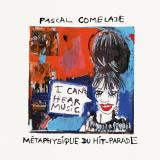
I first encountered Pascal Comelade’s music thirty years ago—and nothing has sounded quite the same since. I was immediately captivated: he is an artist like no other, whose sincere and selfless love of music is always evident, especially in his tender reworkings of other people’s songs.
Comelade seems to work like a watchmaker: meticulous, precise, and obsessive—yet always drifting into something dreamlike. His music opens hidden doors, telling strange and beguiling stories filled with obscurity, kindness, and reserved humour.
Back then, my fascination was instinctive. Today, with a few more words at my disposal, I look to this exceptional 70-year-old French musician and feel exactly the same pull.
Métaphysique Du Hit-Parade is the first vinyl compilation devoted to Pascal Comelade’s favourite cover versions. It spans a forty-year career and traces sixty years of rock and roll history along the way. “Sheena Is a Punk Rocker” becomes a soft, soothing lullaby that may well have made the Ramones weep. Then there are his idiosyncratic tributes to Jonathan Richman (“Egyptian Reggae”) and The Kinks (“Sunny Afternoon”), alongside nods to formative heroes such as The Gun Club, Captain Beefheart, and MC5.
Two exclusive recordings stand out particularly: Bob Dylan’s “Girl from the North Country” and Nirvana’s “Come As You Are”—a song that shaped my early youth. Both were recorded especially for this release.
Jan Lankisch, January 2026
il devrait être publié sur 22.05.2026
il devrait être publié sur 22.05.2026

DOGMA marks a new beginning for Coloray. As the name suggests, the project explores the endless search for meaning in a world that does not always offer one. Across 11 tracks, the artist reflects on queer romance, grief, youthful hope, and melancholic joy. Emotional, chaotic, and imperfect, DOGMA mirrors both the artist and the messy reality of a life unfolding. Rather than forcing rigid structures, the album embraces looseness and human presence. Live recordings and improvised songwriting take center stage- every lyric was written in the moment, and the tracks remain intentionally raw to preserve their imperfections.
In this way, the album is both personal and political. It calls for belief in keeping humanity alive and for dismantling the societal dogmas that push artists away from the core of their creative identity. DOGMA is an honest journey of self-authorship, unfolding through the sounds of new wave, disco-punk, electro, and ambient music.
il devrait être publié sur 22.05.2026
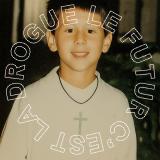
Le Futur c’est la drogue, which should here be translated as The Future Is the Drug, is not to be read as a promise, but as a statement of fact. The present is no longer an experience, but pure consumption. Life itself has taken the form of a dependency.
With this sixth album, Christophe Clébard goes straight to the point, driven by a free and repetitive form of writing, stripped of any syntactic rigidity. Words strike like balls against a wall, revealing darker zones of his mind where guilt, fear, and existential anxiety coexist.
The sound composition, equally minimal, sustains a dense and obsessive mental space, a vortex in which trance appears as the only escape. Driving drum machines, relentlessly hammered electronic loops, and a battered synthesizer, his music unfolds within a physical, strangely hypnotic synth-punk aesthetic that hits viscerally.
The Future Is the Drug is his sixth album.
Disponible en stock et prêt pour l'expédition

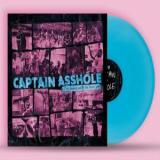
ounded in 1992 by the larger than life, Scottish punk-rock poet laureate, Mr Paul McKenzie, this merry band of miscreants has spent more than three decades circumnavigating the globe to bring the McKenzies gospel to an ever-expanding throng of rebels, scallywags and ne'er do wells. There's not many bands that can boast of a 30+ year career as staggeringly adventurous, wildly tempestuous and utterly death-defying as The Real McKenzies. It would be a serious mistake to write them off as just another Celtic punk band (they’ve been around longer than the Dropkick Murphys after all). They are an unstoppable juggernaut of touring mayhem. A ferocious troupe of insanely talented minstrels, storytellers and entertainers melding traditional acoustic and electric instruments to create a sound like no other. Their list of accolades is long. From sharing the stage with the likes of NOFX, Rancid, Flogging Molly, Metallica and Shane McGowan to appearing in film, books and video games to early releases with the almighty Fat Wreck Chords, their legendary status only continues to grow. On Yer Bike is an absolute beast of an album. A newly revitalized and laser-focused Paul McKenzie has never sounded better and his longtime bandmates have never been tighter. Boasting thirteen epic tracks, including the Sawney Bean trilogy (a trio of songs about Scotland's most infamous cannibal highwayman), the songs rage across topics including but not limited to love, literacy, historical sagas, eating sardines with your mother and, of course, cannibalism. Soaring bagpipes, heart pounding percussion and ultra melodic shoutalong Celtic punk rock are the orders of the day and are delivered piping hot from one of the most respected and adored pioneers of the genre.
il devrait être publié sur 29.05.2026
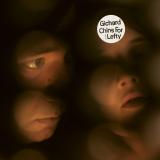
Chins For Lefty is the debut album and first recording by Gichard, a new duo chronicling the absurdities of end-stage capitalism and mouldering social rituals from their vantage point in Glasgow, Scotland. Recorded primarily in the band’s home studio straight to tape, Chins For Lefty combines gorgeous, ramshackle melody, DIY kosmische punk, drum machine + synth and, in vocalist/lyricist Lisa Jones, an absurdist commentator on the human condition as it navigates the anxieties of the modern world. Instrumentalist Chas Lalli’s swirling music accompaniment stitches an evocative mix of musical styles, the ragged wind beneath the lyrics’ wings.
Although the duo first collaborated in their previous group Dragged Up, their disparate musical and artistic backgrounds make for an alluring mix in Gichard. Lalli has spent the last 20 years in the Glasgow underground, most notably in the noise rock group VOM, while Lisa Jones’s practice was in poetry and spoken word. Beginning as co vocalist in her previous band, in Gichard her lyrics are centre stage; the vision concocted alongside Lalli amounts to a total world-build.
Chins For Lefty scans almost like a novel, with each track elucidating a skewed universe that bears only some resemblance to the one you and I partake in. Like all works of fiction Gichard’s songs are rooted in reality and the lived experiences of its authors, but here characters are exaggerated, social mores and habits are pulled apart to reveal their inherent alienness. Universal emotions are laid bare, the bright light of anxious examination searching out every hairline fracture in our relationships. Distorted and cracked, the mirror that Gichard hold up to our world is also pretty damn funny.
Opener Cholesterol Test launches an expansive, cosmic guitar and synth intro that belies the Tascam-tape recorder it was recorded onto, like a Chromatics cut substituting anxiety for overt sexuality. Here Jones intones an apology to a non-responsive recipient, in the medium of a long voice note forensically deconstructing an interaction from the night before. Over punk guitars and shuffling, lo-fi drum machine splutters, the narrator in Asking The Apes “prefers things to people” before being taken hostage in the city zoo to confess an obsession which consumes the protagonist, ending with the immortal two liner “I sleep in a cocoon of old newspapers at the end of your street / And I think I have been fired from my job,” On album standout Posthumous Hologram, the narrator is faced with a human simulacra, in this case an undead pop star; the face of the encroaching technological singularity. Yes, it does requests, it can do My Way in 200 different language options. But what are the implications? While you’re left pondering, the alternating deadpan verse delivery and undeniably catchy chorus keep you company.
By the time Break Up With Johnny Dogbirth rattles into view, the band are satirising a suburban inanity blown up to cartoon proportions, soundtracked with a drawled musicality that recalls Rowland S. Howard’s post-Birthday Party balladeering. This approach is furthered on Human Resources: over an angular guitar+bass track, Jones’s short story recalls Dry Cleaning’s erudite lyrical post punk. On Soft Face, Lalli’s guitar and drum machine are swathed in echo and delay, as Jones dissects dating rituals with a west of Scotland drollness. Hamming It Up brings a porcine perspective in a short story that begins with the line “I was breastfeeding discreetly in the service station. She didn’t mind.” What follows is a passage punctured with canned laughter and a narrative involving tribute acts, modern farming techniques.
Brilliant first single Your Private Hell closes the album, the closest the group get to earnest perhaps, filtered through a surreal central Scottishness. While Your Private Hell might seem like a sardonic take down of romance, perhaps it’s the very distillation of love in all its awkwardness, selflessness and weirdness. Here there’s a distinctive Glasgow-ness to this doomed romance: the protagonist falls for an outsider, offers them cheap jarred hot dogs and carbolic soap (the infamous, excoriating soap dished out in schools and government buildings throughout Scotland), offers to cover up a murder, stalks them in the all-night Spar. It’s a short story of intrigue, murder and the irresistible pull of self-sacrifice to share in someone else’s suffering. If that’s not love, what is it? You can see this vision mapped out in black and white on their video for 'Your Private Hell'.
il devrait être publié sur 29.05.2026
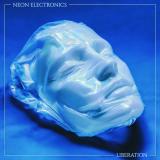
Neon Electronics presents “Liberation”, the final chapter of the project born as the successor to The Neon Judgement—an essential vehicle for Dirk Da Davo, an artist who helped lay the foundations of EBM and post-punk. As co-founder of The Neon Judgement, he forged a sonic language that continues to resonate across generations. With “Liberation”, he brings Neon Electronics to a close, marking the end of this era with clarity and intent.
Joined by longtime collaborators Glenn Keteleer (Radical G) and Pieter-Jan Theunis, this release captures the essence of his most vital years. It distills the spirit of the ’80s and early ’90s into a sequence of tracks that unfold like a collection of undeniable hits—direct, timeless, and uncompromising.
The record reaches its final form with remixes by Ancient Methods, a leading force in industrial techno, and Patrick Codenys of Front 242—one of the few acts whose legacy stands alongside Dirk’s own.
For the label, presenting this final work is both a privilege and a responsibility: a closing statement from one of the true architects of the sound itself, and the definitive work of Neon Electronics as a project.
il devrait être publié sur 29.05.2026

Sometimes the title of an album tells you everything you need to know. Laurence Pike’s Possible Utopias for Jazz Quintet is like that: The music within represents a search for freedom, potentiality—liberatory strategies that transcend the ego and the solitary, atomized figure.
But in this case, the album title is also a red herring, because there is no jazz quintet here—just Pike, his drums, and his machines, not so much an ersatz ensemble as a purely notional one, a thought experiment equipped with drumsticks, circuitry, and the desire to go beyond hardwired limits.
And the results, strictly speaking, aren’t really jazz, though they incorporate the vocabulary of jazz, along with that of ambient, electronica, and post-rock. They are some other thing, cognizant of genre but never beholden to it. Again, we’re talking about a search for freedom here.
The Sydney-based musician has a long history of coloring outside the lines, not just in his solo recordings—including four albums for the Leaf label between 2018 and 2024—but also in the trio Pivot (later PVT); Szun Waves (alongside saxophonist Jack Wyllie and Border Community’s Luke Abbott); Triosk, which recorded an album with Jan Jelinek in 2003; and even post-punk titans Liars, whom he joined in late 2018.
Of his first album for Balmat, Pike says, “My loose concept was: What does music sound like when the expectations of late capitalism are removed from it? How might a jazz musician from an idealised culture of the future, or even another world, utilise musical language when the conventions of style and marketing are no longer a factor in music making?”
That inquiry, he says, connects to his “guiding principle: that the purpose of music is to access something bigger than the individual, and reveal a sense of possibility and freedom in the world to the listener. To create an understanding that the future can be something other than what we imagined or expect, even unconsciously.”
Heady ideas, but plug into his stream-of-metaconsciousness flow and you may start to intuit what motivates him. There is a deeply lyrical expression in these pieces—in the ruminative piano of opener “Guardians of Memory,” for example—but also a sense of exploded perspective, of ideas approached from more angles than any one mind could dream up. Of a collectivized consciousness, of mycelial networks branching across tone and rhythm and timbre, of ideas articulated in distributed fashion, nodal points dancing across drum heads.
Pike’s imaginary quintet is hardly without precedent; it’s a continuation of concepts floated across Jan Jelinek’s Loop-Finding-Jazz-Records, Burnt Friedman’s many guises, and much of the recombinant improv of the International Anthem roster, not to mention the far corners of ECM’s catalog in the late 1970s and 1980s, which Pike says have been integral to his development since he was a teenager. Possible Utopias for Jazz Quintet is a point in a continuum, a voice in a conversation, a question with no obvious answer: How can the search for otherness in music manifest something true about ourselves?
il devrait être publié sur 29.05.2026
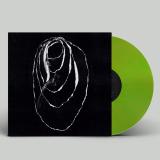
Splatter Vinyl[23,74 €]
Baby T is a space away from her work as B.Traits in which Brianna Price can lean more into the junglist, drum ‘n’ bass and hardcore sounds which she loves so dearly. With BSHEE02, the second drop on Price’s own Banshee label, Baby T delivers a darkside masterclass of an EP. This record is a quartet of system blowers which doesn’t let up for a single second from start to finish.
Opener ‘Times Up’ is urgent from the off - the initial strains of this joint find sirens wailing in the monitors over a twitchy kick/drum/hats combo. From here on it’s distilled raver perfection, the drums taking us on a wild Wipeout-style ride as the subbiest of bass skulks at the bottom of the mix. Imagine a more technoid take on the classic breakbeat freerides of Skanna and you’re not far off the ‘Times Up’ sound.
A remix of ‘Times Up’ from man like Aloka leans with devilish glee into the murky underworld that lurks beneath Baby T’s original. Aloka’s version is extremely eerie in a manner which makes you think of the darkest corners of a DMZ party. When things really kick into gear, driven by an irresistible kick dembow, the effect is hypnotic - think the dubwise junglism of the UVB-76 cohort.
BSHEE02’s B-side kicks off with ‘Coercive Control’. This is a cut which delivers on its title in spades, putting the listener in a trance with an interplay of low-slung bass, whirligig synth tones and more of those perfectly executed broken beats. The acid starts to kick in around the minute mark, and it turns out to herald a total earworm of a lead melody.
There’s plenty of dimly-lit malevolence to BHSEE02 closer ‘Dense Dickwood’s grinding atmospherics and gurgling bass throbs. However, Baby T opting for a half-time drum break here gives the cut a vibe not dissimilar to the weightiest jams of classic Massive Attack - that is, until an absolutely remorseless switch-up occurs halfway through, delivering volley after volley of intense drum hits.
il devrait être publié sur 29.05.2026

Neon Green Vinyl[16,39 €]
Baby T is a space away from her work as B.Traits in which Brianna Price can lean more into the junglist, drum ‘n’ bass and hardcore sounds which she loves so dearly. With BSHEE02, the second drop on Price’s own Banshee label, Baby T delivers a darkside masterclass of an EP. This record is a quartet of system blowers which doesn’t let up for a single second from start to finish.
Opener ‘Times Up’ is urgent from the off - the initial strains of this joint find sirens wailing in the monitors over a twitchy kick/drum/hats combo. From here on it’s distilled raver perfection, the drums taking us on a wild Wipeout-style ride as the subbiest of bass skulks at the bottom of the mix. Imagine a more technoid take on the classic breakbeat freerides of Skanna and you’re not far off the ‘Times Up’ sound.
A remix of ‘Times Up’ from man like Aloka leans with devilish glee into the murky underworld that lurks beneath Baby T’s original. Aloka’s version is extremely eerie in a manner which makes you think of the darkest corners of a DMZ party. When things really kick into gear, driven by an irresistible kick dembow, the effect is hypnotic - think the dubwise junglism of the UVB-76 cohort.
BSHEE02’s B-side kicks off with ‘Coercive Control’. This is a cut which delivers on its title in spades, putting the listener in a trance with an interplay of low-slung bass, whirligig synth tones and more of those perfectly executed broken beats. The acid starts to kick in around the minute mark, and it turns out to herald a total earworm of a lead melody.
There’s plenty of dimly-lit malevolence to BHSEE02 closer ‘Dense Dickwood’s grinding atmospherics and gurgling bass throbs. However, Baby T opting for a half-time drum break here gives the cut a vibe not dissimilar to the weightiest jams of classic Massive Attack - that is, until an absolutely remorseless switch-up occurs halfway through, delivering volley after volley of intense drum hits.
il devrait être publié sur 29.05.2026

Naya Beat is excited to announce 'PAWA!', a soaring disco-funk anthem celebrating feminism and the power (pawa) of togetherness. It is a mouthwatering collaboration between legendary jazz vocalist and disco pioneer Asha Puthli and NYC’s punk-chic, discodelic stars Say She She.
A fortuitous and fleeting window between touring schedules allowed Puthli and Say She She’s Nya Gazelle Brown, Sabrina Cunningham, and Piya Malik to write and record Pawa! with members of the cult funk band Orgone in the English countryside at Mike Oldfield’s (Tubular Bells) studio. Pawa! is a tribute to female fortitude and an anthemic call to action for unity and collective action. PAWA TO THE PEOPLE! Asha’s spoken word bursts into a soaring falsetto while Say She She’s celestial three-part harmonies make for a sublime call and response between the fabled mentor and her gifted disciples. Throw in a stellar bassline and one of tightest rhythm sections around, and you have an instant classic. And if that wasn’t enough, four remixes bring Pawa to the dancefloor! The UK’s legendary Crazy P deliver not one, but three future classics – an epic house take with a stomping bassline, a stripped-down vocal dub, and a sunshine-ready disco dub. Not to be outdone, Greece’s favourite dance duo Boys’ Shorts add magical disco touches and reimagine the original as an eight-minute balearic opus.
Featuring beautiful artwork and a premium poly-lined inner sleeve, the 12" has been cut to vinyl for the discerning DJ and listener by Grammy-nominated Frank Merritt from The Carvery, London.
Disponible en stock et prêt pour l'expédition

There is a particular kind of strangeness that arrives on long drives across Europe. Flat light, service stations and fields stretching endlessly past the window. It might look mundane at first glance, but becomes faintly surreal when the tiredness of touring blurs the edges of everything.
That feeling became the quiet engine behind Driving Through Belgium, the debut solo album from Anton Pearson, best known as one of the guitarists in respected post-punk outfit Squid. The title grew from a track that felt like the record’s centrepiece, which itself came from the recurring image of extensive periods on the road across the continent. It is a record shaped in the margins of touring, and finessed in the in-between hours.
Across six pieces, Pearson leans into atmosphere, texture and space. It is ambient in spirit, adjacent to contemporary classical in feeling, but composed less with notes in mind than with sound itself. The compositions rarely began with harmony or melody, with Pearson instead responding to his environment and sounds in real time, placing trust in his instinct.
Although initial inspiration came from the road, the album was recorded in a studio he shares in Brighton, and marks his first fully solo project made in that setting. It gave him access to not only new tools and techniques, but a hitherto un-experienced freedom. Much of the process began experimentally, feeding instruments into unfamiliar chains, pitching loops into unexpected registers and playing with previously unused synthesizers simply to see what they might reveal. Many of the sounds were created out of pure curiosity, wanting to understand a piece of equipment or technology, and then following wherever it led.
The album was built with this experimentation at its core, as Pearson would layer then extract, processing stacks of sound until things blur and confuse. Guitars dissolve into drones, a Pianet Clavinet dances against muddier textures whilst a Korg PS-1000 occasionally cuts through with its glittering top end. On ‘Driving Past the Muscular Cows in Belgium’, a flat, still drone is pushed through valve amps until it growls and tightens with tension, before receding again. Even the trumpet, which Pearson freely admits he is not technically proficient at, is embraced in its naivety, its squeaks left intact rather than corrected. The twin ‘Tintinnabulation’ pieces frame the record with looping, pitched bell like tones, accidental discoveries that became structural anchors. Meanwhile, ‘Teeth to Cut the Grass’ deliberately introduces abrasion, some of the harshest textures on the record, a refusal to become passive background music.
That embrace of imperfection is central. In contrast to the hyper-analytical precision of his band, Pearson was keen to honour first takes. If something felt good, it would stay. The end result is an album that favours looseness, instinct and the energy of creation itself. If Squid thrives on propulsion and tension, Anton Pearson finds his energy in suspension on Driving Through Belgium. It is curious rather than declarative, creating a space where experimentation feels playful again.
il devrait être publié sur 31.05.2026

The Dwarves return to their punk roots with a fun, energetic record. Standout tracks include: Damned If I Do, We Are The Scene, Psychosis Tripping. Jenkem finds The Dwarves returning to the raw, confrontational energy that defined their early work, delivering a fast, irreverent blast of punk rock that blends melody, aggression, and their trademark shock humor. Packed with short, high-impact tracks like "We Are The Scene," "Damned If I Do," and "Psychosis Tripping," the album balances tight songwriting with the band's chaotic, anything-goes attitude, moving effortlessly between hardcore punk bursts and hook-driven rock moments. Formed in the mid-1980s and long led by founding member Blag Dahlia, The Dwarves have built a reputation as one of punk's most provocative and unpredictable acts. Emerging from the underground with releases like Blood Guts & Pussy, they became notorious for their explicit artwork, confrontational lyrics, and myth-making persona that blurred fact and fiction. Over decades, the band has shifted fluidly between garage rock, hardcore punk, and pop-inflected punk, while maintaining a consistent identity rooted in speed, satire, and rebellion. Their ever-changing lineup has included notable musicians such as HeWhoCannotBeNamed and members connected to acts like The Queers and Zeke, reinforcing their deep ties within the punk scene. With Jenkem, The Dwarves reaffirm their core strengths--brevity, intensity, and attitude--while delivering a record that feels both nostalgic and immediate. The songs hit quickly and leave an impression, driven by sharp riffs, pounding rhythms, and Dahlia's biting vocal delivery. As a continuation of their long-standing ethos, the album stands as a reminder of the band's enduring ability to provoke, entertain, and channel punk's most unfiltered spirit.
il devrait être publié sur 05.06.2026

Following Parnell March’s Back Bar Grooves EP in February and November’s release of the Dust Tears (lead song from Sarah/Shaun’s debut) remixes, Edinburgh’s Hobbes Music label returns with a second EP of dream pop from husband-and-wife duo Sarah/Shaun (pronounced simply Sarah Shaun), alias Sarah and Shaun McLachlan (pronounced McLochlun), who wooed hearts and wowed critics with debut EP ‘It’s True What They Say?’ last year.
‘It’s True What They Say?’ attracted fans across the board: Artist Of The Week in The Scotsman, rapturous reviews from The Skinny and Tokyo's Ban Ban Ton Ton blog, BBC 6Music airplay courtesy of Nemone (Mary Anne Hobbs' Morning Show), more radio play from Radio Scotland's Roddy Hart & Vic Galloway, plus Simone Butler (Primal Scream) and Jim Sclavunos (Bad Seeds) via their respective Soho Radio shows, not forgetting ringing endorsements from the likes of David Holmes, Youth, Kevin Bales (Spiritualized), Brent Rademaker (Beachwood Sparks) and Julian Corrie (Franz Ferdinand).
They played gigs supporting Glasgow's huge Glasvegas, at festivals (Kendall Calling, Dunbar Music, Hidden Door), plus a slew of venues across the Scottish capital, ending the year with a trio of shows supporting Glaswegian 80s pop legends The Bluebells at Aberdeen’s Tunnels, Dunfermline’s PJ Molloys and Edinburgh’s Liquid Rooms, while The List magazine tipped them among their Ones To Watch For 2025, with journalist Fiona Shepherd suggesting they were “blending the starry-eyed pop of Sonny & Cher with the electronic experimentation of Chris & Cosey.”
Very much the companion piece to the debut EP but arriving a full twelve months later, Someone’s Ghost is emblematic of the duo’s desire not to rush things or release anything half-baked.
“I’ve always wanted to create the perfect pop record and I do really feel that we’ve achieved that with this one,” says Shaun. And he’s clearly not the only person who thinks so.
REVIEWS, FEEDBACK ETC:
"I LOVE that! Dreamy dreamy pop." ROY MOLLOY (Marvellous Crane/Alex Cameron) on BLAST RADIO, Sydney
“the Scottish music scene’s cream of the cool... buzzy drum beats, high, distant chimes, and heavenly electronics…. very ethereal.” THE SKINNY
"Listening to Sarah/Shaun is like eavesdropping on a noir dreampop, long-distance phone call between them both, across two separate sonic locations. On this stunning 4-song EP, Sarah’s voice, effortlessly mesmerising, draws you into these big beautiful and haunting passages of perfect dream-pop. All beautifully produced in a multi-layered-scape of low-fi analogue textures, epic cinematic crescendos, intense electro-pulse grooves and warped psycho-pop guitar riffs. Within the songs lurk a sense of unresolved emotions, longing and pathos. There are shades of classic Lee Hazelwood & Nancy Sinatra but also Post-Punk Electronica and Beach House. But what a unique sound they’ve created of their own. I love it" DAVID MCCLUSKEY (The Bluebells)
"Absolutely beautiful" SEAN JOHNSTON (A Love From Outer Space)
"Lovely stuff here! Total quality." MARTYN 'MASH' HENDERSON
"Ooooh. Everything the last record promised is here. Well done" GEORGE T aka George Demure (Accident Machine)
"Vince clark Era Depeche Mode in places" KEVIN BALES (Spiritualized)
"Sounds cool. Well done" PETE KEMBER (Sonic Boom, Spacemen 3)
"Glorious, it (Debbie Harry) grabs hold of you and doesn't let go." IAIN DAWSON aka RAVECHILD (Everyone Wants To Play The Hits Podcast)
SOMEONE’S GHOST
Born out of an incredibly anxious, stressful time, the songwriting process for these recordings has been something of a personal tonic for Shaun…
“There was a period when I was having nightmares,” he reveals. “Apparently I was saying there was someone in the room, I was talking to that person and Sarah was seeing all this while I was still asleep.
So, I was thinking that this was my ghost. I started writing songs because I was going through something and I was dealing with something and writing songs was a comfort. My ghost was a comfort, whether it was real or not. The idea of it was a comfort.”
“I firmly believe that everyone has someone who watches over them but all of the songs are essentially about being there for someone,” he says. “Everybody needs someone but also everyone needs to stay real and keep what you have, keep it close, never let it go. If you don’t have it, continue to tell people you’re there for them. It’s about loving and hoping people will be good to you in return.”
While Shaun took the songwriting lead on Filter Of Love and EP closer The Sound Which Stresses The Sound Of My Ears, Debbie Harry was originally instrumentally conceived by producer Jaguar Eyes, alias Ali Chisholm, later lyrically completed by Shaun, and the EP’s lead track, Anhedonia, and one of its stand-outs (much like Starbed on the debut) was conceived by Sarah, as a result of experiencing a bit of a spiritual epiphany of her own.
“When I first heard the word Anhedonia, I didn't know what it meant but when I found out I thought about it quite a bit. How sad it would be to have no enjoyment in anything,” she explains. “This song is really about my own personal beliefs. When I have been down, that's one of the things that helps me the most. It talks about trying to make amends but realising, for some things, you can't. But I think with any kind of faith comes hope… which is always a good thing.”
A record about hope, truth, honesty, a belief in something bigger than oneself… and all set to a soundtrack that wouldn’t feel out of place in a David Lynch or Eighties feature film. What more could anyone ask for, really?
There’s equally a desire to offer something universal and positive to anyone who tunes in. The labels for the 12” edition reveal the dual mantras “Who just wants to survive?” and “It’s about time to live a little”, with both messages also engraved in each record’s run-out grooves. T-shirts accompanying debut EP It’s True What They Say? bore the slogan “Kill Them With Kindness” - leading caps intentional. Shaun carries the acronym KTWK everywhere he plays, as a reminder: it’s stitched into his guitar strap. And this particular wee pebble has already caused a few ripples: people have been approaching him at gigs to acknowledge their appreciation and respect for it.
"We feel we have made an honest, open, colourful, body of work,” say the duo. “We hope to go out and play the songs with the guys (our band) and then potentially make more records. We are taking things as they come. Everything has been organic so far, after all. We are looking forward to whatever this brings."
Disponible en stock et prêt pour l'expédition
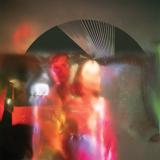
Following their 2023 LP Presents, Nathan Nelson's American Cream Band bring the Twin City heat back to Quindi with an album rooted in duality. From the yin and yang party-starting A side and meditative B side to the dual-attack boy-girl vocals, the nature of opposites and equals steer the expansive, artful strain of rock n' roll that spill out of this wholly unique Minnesotan export. For the ever intriguing Quindi, it's a strident step into Spring after the frosty introspection of Roudi Vagou & Läuten der Seele's Taghelle Nacht. While the world burns and injustice prevails, Twin is a celebration of unity and radical expression-all the more urgent against the backdrop of authoritarian overreach and righteous protest that has whipped through Minneapolis in recent times.
Twin continues Nelson's drive at the helm of American Cream Band to draw in a colourful cast of players to feed into his orgiastic sound, meshing the trance-induction of krautrock with the irrepressible funk of the post-punk-new-wave explosion. But principal among the cast of characters and forming a central tenet to the identity of this album is Liz Buhmann, lead vocalist and a formidable, playful foil to Nelson's own Midwestern twang. Around the electric spark between Buhmann and Nelson, a heavy duty ensemble wrangle guitar, bass, sax, a cornucopia of synths and a battery of percussion into all manner of sonic forms.
The double-sided concept manifests throughout Twin. On 'Call Me' Buhmann sings in French to contrast Nelson's English, while the strident strut of the NYC disco groove is offset by an inherent dreaminess that turns the track into a more cosmic kind of dancefloor workout. 'Ethical Vampire' is a spiky cut with a garage rock patina that spirals into a psychedelic, synth-soaked get-down. 'Don't Burn The House Down' is a loose and limber roller that captures Can at their funkiest along with the hypnotic vibe of other such esteemed long format jammers, but American Cream Band boils that energy into a hook-laden art pop sensibility before a gentle, drawn out landing.
Even the more pensive moments on Twin find space for friction. For all its tender, smoky temperament, 'Leda and the Swan' lets the electric piano and guitar fray at the edges and bleed into the red while Mat Heinrich's tumbling drums lurch with pent-up intensity on the one. 'No Funeral Necessary' skirts around the mellow pools of new age but prefers to let liberally doused Tape Echo tweak out Alex Meffert's honeyed sax inflections and Buhmann and Nelson's disparate sermons.
Nelson describes Twin as "an oppositorum coincidentia" - a reference to the mystical Latin concept of the coincidence of opposites that suggests contradictory ideas 'fall together' in a higher reality. Beyond the sound of the album, this idea also manifests in the cover photography by Sho Nikado and the swans on the LP labels by Autumn Garrington. As freewheeling and wide-open as American Cream Band feels, nothing appears by accident. The end result feels like a nourishing whole - rich with substance and nuance, deep enough to be explored and absorbed yet also so brazen and immediate you can't help but feel its surface charms from the first thrusts of 'The Hive Is Pissed' to the last ripples of 'We're Not So Sinister'.
il devrait être publié sur 05.06.2026
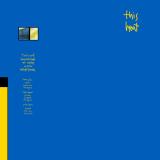
‘They went beyond punk before punk had properly started…the entire album is a controlled explosion of ideas. Nearly fifty years on, This Heat’s debut is something the world has still not completely caught up with.’ - Simon Reynolds
‘Over the years, there have been bands to play as aggressively, or even as strangely, but very few have been able to rise from their collective influences and histories to create music so singularly distinctive and inspiring.’ – Pitchfork 9/10
‘This Heat sounded like the future then ... and still do now.’ - Dan Snaith (Caribou)
Although widely considered to be Post-Punk’s finest, This Heat actually began performing and recording their music in 1976, the early days of London’s punk era. Within their two albums and an EP they perfected a strange and volatile new strain of avant-garde rock that time has proved to be massively influential, a blueprint for much that would follow: post-rock, math rock, homemade musique concrète, experimental electronica.
Numerous critics have recognised the band's influence on the music of Sonic Youth, Glenn Branca, Steven Wilson, Public Image Ltd., Radiohead, Swans, Shellac, Young Knives, Black Dice, Lightning Bolt and numerous other experimental and post-rock bands. Disbanding in 1982 they have left an undeniable legacy that has only continued to grow in stature and relevance.
The album This Heat, also known to fans and critics as the ‘Blue and Yellow’, was their eponymous debut release, recorded in sessions between February 1976 and September 1978 in a variety of studios including their own Cold Storage, a converted cold storage room in the Acme Studios complex. Innovating throughout, they combined loops and tape manipulation (producing for example the proto-drum and bass ‘24 Track Loop’) with live performance and haunting vocals to a complex, dissonant whole. The band recorded everything they ever did – including gigs – and tracks such as “Water” were entirely improvised in the studio.
Having recently passed the 50 year anniversary of their first gig, and the recording of material that appears on their debut album, the group’s surviving members Charles Bullen and Charles Hayward, true to their DIY roots, have set up an imprint to release their recordings for their growing fan base that is increasingly recognising their influential place in music history.
il devrait être publié sur 12.06.2026
