pre-ordina ora25.09.2026
dovrebbe essere pubblicato su 25.09.2026
23,95 €
dovrebbe essere pubblicato su 25.09.2026

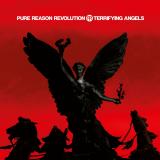
"Coming Up To Consciousness" ist das sechste Studioalbum von Pure Reason Revolution und das dritte ihrer Renaissance nach der Pause, die mit "Eupnea" von 2020 begann und mit "Above Cirrus" von 2022 fortgesetzt wurde. Wie die beiden Vorgänger ist auch das neue Album sehr persönlich. Die acht Tracks sind alle zwischen vier und sieben Minuten lang - kurz für PRR-Verhältnisse - und sie setzen sich mit verschiedenen Arten von Dunkelheit auseinander. Der unverwechselbare Stil der Band, der Prog und Pop durch verträumte Stimmungen, epische Riffs und engelsgleiche Harmonien verbindet, ist geblieben. Courtney und Greg Jong haben aber auch versucht, einen etwas anderen Weg einzuschlagen, indem sie neben ihren Dauerbrennern - vor allem Pink Floyd - auch Einflüsse von Talk Talk, Elliot Smith, The Smile und sogar Arctic Monkeys einfließen ließen. Der legendäre Session-Musiker Guy Pratt, der unter anderem mit Pink Floyd zusammengearbeitet hat, steuerte bei sieben der acht Tracks die Bassgitarre bei, während Jon Sykes von The Pineapple Thief bei einem Song den Bass spielte. Bruce Soord, ebenfalls von The Pineapple Thief, mischte das Album in Stereo und zum ersten Mal für PRR in Dolby Atmos und 5.1 Surround Sound.
dovrebbe essere pubblicato su 06.09.2024

Pure Reason Revolution kehren im Mai 2022 mit ihrem fünften Studioalbum 'Above Cirrus' zurück, ihrem zweiten seit ihrer Wiedervereinigung im Jahr 2019. Die Wiedergeburt der Band sah sie zu ihren frühesten Einflüssen zurückkehren, und 'Above Cirrus' sieht sie immer tiefer in die atmosphärischen, cineastischen Psych-Prog-Kompositionen eindringen, die 'Eupnea' zu einer so begeistert aufgenommenen Rückkehr machten. Basierend auf dem Kerntrio Jon Courtney, Chloe Alper und Greg Jong gelingt es dem neuen Album, die Klangpalette der Band noch weiter zu erweitern. Das Album, das wieder einmal von der Berliner Künstlerin Jill Tegan Doherty gemalt wurde, erscheint als limitierte CD, Gatefold 180g LP+CD und als digitales Album. Die Band wird im April 2022 zusammen mit Gazpacho auf Europa-Tournee sein.
Ordina ora e ordineremo l'articolo per te presso il nostro fornitore.
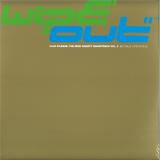
The legacy of wipE′out′′ has transcended time and cemented itself as a true transgenerational phenomenon. Launched in 1995, it didn’t just revolutionise the gaming industry, it created a bridge between the gaming ecosystem and the raver community. Its futuristic aesthetics and forward-thinking sound left a mark not only on mainstream audiences but also on the most demanding corners of the underground.
Decades later, the game’s impact is still alive. The release in 2023 of The Zero Gravity Soundtrack on Lapsus Records proved once again that wipE′out′′’s accompanying audio will go down in history as much more than just an anti-gravity racing game soundtrack.
This is why we decided to go deeper into the slipstream and build the second volume you’re now holding in your hands. Drawn from the original archives of Tim Wright, aka CoLD SToRAGE, this new collection surfaces unreleased cuts, pieces that couldn’t fit on the first edition, and a suite of self-authored ambient reworks that translate pure velocity into wide-screen atmospherics engineered for the long straights, the drone of airbrakes, the blue hour between checkpoints. It also reconnects the circuit, gathering selections and variants tied to later chapters of the saga — wipE′out′′ HD and wipE′out′′ Pure — plus alternative mixes that, until now, only existed in the Sega Saturn dimension of the franchise.
Finally, the material takes a leap into the future in the hands of four remixers especially chosen for this release: Tim Reaper, SHERELLE, Mantra, and NikNak, who collectively forge links between CoLD SToRAGE’s pioneering musical vision, the sound world of the game, and the contemporary breakbeats and drum & bass vanguard.
Expect the DNA you remember — accelerated breaks, trance-vector synths, jungle influences, sub-bass rumbling neatly beneath the craft’s hull, and at times even echoes of classic hardstyle — now revealed with new angles and air. The previously unheard material carries the same aerodynamic design sense that made these tracks feel faster than the track map itself, while the ambient versions open the field of view with melodies hovering at the lip of overdrive. Without a doubt, here you’ll find a strong sense of nostalgia. But this isn’t just nostalgia; it’s also proof that this sound world continues to evolve when you ease off the throttle.
For the faithful — crate-digging ravers, speed-run obsessives, and design nerds — this is an essential expansion pack: compiling rarities, restoring context, and reframing the emotional core of wipE′out′′ for late nights and early mornings alike. Bridging memory and momentum, club and console, rush and afterglow. Strap in.
Detailed tracklist, with annotations by Tim Wright aka CoLD SToRAGE
· Scratch Pad 1: “This track was composed using incomplete tracks that were developed around the time of the first wipE′out′′. It’s so long because it was used for a marathon-length Psygnosis promotional video.”
· Messij Received: “Messij was a firm favourite with wipE′out′′ fans, so it made sense that there’d be more where that came from — this was one of those re-workings.”
· God’s Gift: “I was always very fond of Erasure’s track Love to Hate You with the canned crowd FX sounds. God’s Gift was a tongue-in-cheek reference to how some musicians think they are just that. This was way before I even played live as CoLD SToRAGE.”
· Tentative: “I wasn’t sure about introducing some wacky beats and distorted sounds into one of the tracks, because it was kinda heading away from the other tracks, hence Tentative — but it turned out OK.”
· Canada 2048: “When wipE′out′′ 2048 was launched I decided to re-make Canada as a kind of tribute, but in a slightly new-tech, laid-back way, using Propellerhead Reason and all software synths.”
· Wiped Out: “Based on a few riffs from a MIDI file unused at the time of the original wipE′out′′ game compositions, this featured on my debut album MELT.”
· Body in Motion (Body Plus Mix): “A more trippy interpretation of Body in Motion that featured on non PlayStation versions of the game e.g. Sega Saturn.”
· Onyx (“Dark Side of the Moon”): “Onyx was my sole contribution to wipE′out′′ Pure on the Sony PSP handheld gaming console. This version was something I developed in a darker style, that eventually erupts into a crescendo.”
· Messij Received (WSTWGBE Mix): “Like I say, Messij was a hit with most wipE′out′′ fans, so when I was asked to compose more music for non-PlayStation versions, I adapted this tune into a parallel-universe version for PC and Sega Saturn. By the way, WSTWGBE refers to Who Said This Was Going To Be Easy?”
· Canada (Drunken Ausländer Mix): “In early 2018 I released a fresh album called Ch'illout′′, a re-working of many of my wipE′out′′ tracks in an ambient, Sunday-morning vibe style — it was a few years’ work, here and there.”
· Tentative (Woffenfum Mix): “Another chilled re-working of one of my wipE′out′′ tracks, the mix named with a nod to a good friend of mine, Carl Woffenden — someone who I've worked with for many years in the games industry.”
· Messij (Bobbing Boat Mix): “A nice cheesy computer blip-blop start belies its deep and upbeat chilled-out melodic finale.”
· Body in Motion (Timeless Techno Mix): “Another classic track given the chilled-out vibe mix, as featured originally on my Ch'illout′′ album. This one’s a really trippy, deep-space take on the original.”
· DOH-T (AM / FM Mix): “The idea with this chilled-out mix was to imagine all the melodic parts of this varied track being broadcast on terrestrial radio, so each theme drifts in and out through the radio static.”
· ’95 Future Echoes: “Originally developed as a companion album for wipE′out′′ HD, this track actually has its roots in a tiny loop of a song that never progressed to anything special back in the mid-’90s when I was composing for the original game.”
· Turbine: “Also from my wipE′out′′ HD album, it leans heavily into the upbeat, uplifting tunes from the original game, but also steals a bit of vibe and energy from The Prodigy, with those distorted flute sounds.”
· Pencil Neck: “This excerpt from my wipE′out′′ HD album features lots of sounds centre-stage and forward from Propellerhead Reason’s Subtractor virtual synth. I learned to love this more than my JD-800!”
· Messij 2005 (New Science Mix): “Yet another take on the track that still raises a smile, this time through a mix of samples from the original and Propellerhead Reason — the ‘new science’ when compared to an Amiga 1200 running Bars and Pipes.”
Disponibile in Stock e pronto per la spedizione

The Ibex Band, with Giovanni Rico and Selam Woldemariam at the creative helm, provided the musical backbone for legends like Aster Aweke, Girma Beyene, Tilahun Gessesse, Mulatu Astatke, and Mahmoud Ahmed, including the iconic album Ere Mela Mela, shaping modern Ethiopian music as we know it today. This 1976 album (Ge’ez Year 1968) played a pivotal role in that legacy and has now resurfaced to set the record straight.
There’s a tendency to talk about the seventies as a golden age of Ethiopian music. There are good reasons for that, and just as good reasons against it. However, the notion of a golden past privileges the role of Western explorers and suggests that the pinnacle of Ethiopia’s musical culture is something only a foreigner can appreciate and unearth. It downplays the complexities of Ethiopia’s culture and history, creating an artificial divide between then and now. And it underestimates the constantly evolving sound that has followed.
The legendary musical outfit The Ibex Band, later metamorphosed into The Roha Band, has played a central role in defining the sound of many of the greatest stars on the music scene of Ethiopia from the mid-seventies onwards–but their golden output has never really waned. The story of the origins of the band that provided the musical backbone for greats such as Aster Aweke, Girma Beyene, Tilahun Gessesse, backing the solo career of group member Mahmoud Ahmed as well as backing Mulatu Astatke and many others has yet to be properly told.
Two misconceptions plague the image of Ethiopian music, one is that the music is pure because it is, by some notion, unexploited, the other is that it is all traditional. To begin with, a combination of political changes between the late sixties and the mid-nineties created an environment where only the most dedicated and skilled musicians struggled on and pursued a musical career against fierce odds. The whole Ibex Band, with Giovanni Rico and Selam “Selamino” Seyoum Woldermarian at the creative helm, are arguably the origo of the vibrant scene in the mid-seventies, and the said pair are foremost responsible for not only navigating the band through troubled times, but also modernizing the 6/8 chickchicka rhythm to a contemporary form. Giovanni laid the rhythmic foundation with heavy looped basslines that reinvented traditional melodies as dance music, and with Selamino’s innovative guitar work they influenced scores of musicians from Abegaz Kibrework Shiota to Henock Temesgen. Even Giovanni’s Fender bass and Selamino’s Gibson guitar inspired younger musicians in their choice of instruments. Not only in choice of instruments but also in sound–even as the digital revolution hit Ethiopian music, a lot of popular music still took its cue from the masters from Ibex and Roha.
Ibex emerged out of the ashes of the sixties group the Soul Echos band, adding Giovanni and Selamino to their ranks and taking their cues from a slew of influences, such as Motown and The Beatles, fused with traditional music. A tighter-knit unit than most bands at the time – Ibex has remained six to seven members throughout their whole career, compared to many bands that were as large as fifteen or sixteen men strong when Ibex set out. Their playing has been viciously focused, economical yet heavy. Just a year before the recording sessions of the album in your hands, Giovanni and Selamino made a contribution to the popular musical lexicon of Ethiopia that was simply defining the popular sound: their arrangement and recording of bandmate Mahmoud Ahmed’s solo effort and real commercial breakthrough tune and eponymous album, Ere Mela Mela, from 1975.
Selamino has never limited himself to being an adroit lead guitarist, but has always been a scholar of history, and as such he has probably contributed as much to modern Ethiopian music with his guitar playing and compositions as with a deepened understanding of modern or contemporary – Zemenawi – Ethiopian music. Selamino’s contributions serve as a metaphor for those of the whole band, at one and the same time creating and defining a new, danceable and updated sound anchored in Giovanni’s bass, whilst also elevating the broader scene through their support for others on the scene and on top of that, increasing the understanding of the music.
There is an understandable desire to romanticize the musical heyday Ibex and Roha were at the forefront of, because so much of the output is sorrowfully hard to come by. Ibex creativity was nothing short of ridiculously fierce compared to many of their Western contemporaries. Based on their sheer recorded output alone they could have usurped the title “hardest working in show business” from James Brown, recording more than 250 albums or 2500 songs in the seventies and eighties. Some only surface as cassettes today, others were never given full LP release, and some are simply impossible to find today. In the light of that, it’s nothing short of a miracle that the recording Stereo Instrumental Music from 1976 (Ge’ez Year 1968) has resurfaced. Unearthed in perfect condition on a chrome cassette, this is musical history comes alive–to set the future straight. Stereo Instrumental Music was recorded in collaboration with Karl-Gustav Lundgren, a Swedish national working for the Radio Voice of the Gospel. It took two sessions at the Ras Hotel ballroom in Addis Ababa. The Ibex Band was the first band in Ethiopia to employ a four-track recorder for their recording (the first available in the country, lent by Karl-Gustav). Later the same week, Giovanni and Selamino realized that, lengthwise, the recorded material fell short of what they wished for, so they recorded four more tracks in one more session on a single-track recorder. The Ras Hotel and Ghion Hotel, where the Ibex Band held musical residencies were to Ethiopia in general and Addis Ababa in particular what Motown was to the USA and Detroit a few years earlier – a hotbed of musical creativity and showmanship.
The most astonishing thing about Ethiopian music of the last half century is how tradition and modernity are intertwined. Because of this feature, it’s kind of hard to tell when there ever was or when we are in a “golden age”. So much of music from the past has been criminally neglected, but because of the hardships in the past, it would be an oversimplification to say that said past was a golden age. Probably, the golden age is what we are approaching, because for the first time both the past and future are accessible, and the monumental contributions from before can lay a firm foundation for a thriving music scene today. The Ibex Band stands firmly in the past, present and the future. That, if anything, is golden.
The detailed history of Stereo Instrumental Music is in many ways unique. To begin with, it couldn’t have been recorded earlier (there were no four-track recorders available) and it really couldn’t have been recorded afterwards either, at least not in the years directly following, because of the toll the musical scene took from the unfavorable political climate that followed when the nascent Derg regime and rival groups tried to assert themselves, the musical equipment lent from The Voice of Gospel Radio simply disappeared from Ethiopia when the radio station folded in 1977. Karl-Gustav Lundgren,
the Swedish foreign national who assisted during the recording, worked with the Ethiopian Evangelical Church Mekane Yesus at the time, recalls how they only had about fifteen minutes to get the microphones in place for the recording as to not alert neither the management at Ras Hotel nor the authorities and most importantly, to complete the recording before the curfew came into effect at midnight. In leaping to the opportunity to use previously unavailable equipment to push their sound forward and improvising to meet the logistical challenges, the Ibex Band displayed the very avant-gardism and adaptability that explains their longevity as a band through the years. The recording of Stereo Instrumental Music is from a given time in history, but it sounds as beyond time.
Much of the energy that burst out of the scene that Stereo Instrumental Music came out of dissipated or got sidetracked during the societal changes Ethiopia went through in the 1970s and 80s. Whilst leaders might have professed to be revolutionary, the work ethic of the Ibex Band can truly be described as that. They never called it quits, but adapted, toured extensively abroad in Africa, Europe, and the Middle East, and found ways to work even in the face of the curfew that curtailed a lot of musical life. They even played major arenas in the nineteen eighties, despite said curfew and restrictions. The whole extent of their legacy has never been told, but their music speaks louder than words, so therefore… tune in to the Ibex Band’s Stereo Instrumental Music.
Ordina ora e ordineremo l'articolo per te presso il nostro fornitore.

Jazzrausch Bigband has more or less invented a new art form,
techno jazz, and has become well-known for performances of it. But
the band also has another, different story to tell. It has invented its
own tradition of hitting the road and touring at the end of each year
with a programme consisting of Christmas music, and has been doing
this ever since the band first emerged eight years ago. Bandleader
and founder Roman Sladek explains: “Whereas our regular projects -
the most recent album, ‘Emergenz’, is a good example - are all about
working through a specific theme and finding new ways to reinvent
ourselves, our Christmas thing is something we do for one reason
alone: to have fun. It was our very first programme, we still love it, and
we’re still nurturing, developing and growing it. Being able to devote
one month a year entirely to the big band tradition is something we’re
all really passionate about.”
Some bands might have been tempted just to throw together an
album of Christmas chestnuts any old how, but the Jazzrausch way of
doing things is not like that at all. Unlike any other album by the band,
for the first time we hear purely instrumental music. Furthermore,
Kuhn has taken ten classic Christmas songs - each one of them
rarely heard in jazz, and tunes which can often come across as a bit
staid in their original settings - from ‘Tochter Zion, freue dich# to
‘Adeste fideles’ or ‘Ihr Kinderlein, kommet’. The title track, ‘Alle Jahre
wieder!’ (based on the 1830s carol to music by Silcher which is very
familiar to children and adults in the German-speaking world) appears
here in completely new orchestral garb.
Sometimes the listener will recognise the kind of swing typical of
Glenn Miller. At other moments it is the incomparable big band
elegance of, say, Artie Shaw. ‘Es wird scho glei dumpa’ (an Austrian
carol) is given the full extra high pressure Tijuana brass treatment.
‘Maria durch ein’ Dornwald ging’ gets the touch of the Thad Jones /
Mel Lewis Orchestra after a Henry Mancini-like intro, and ‘Ich steh’ an
deiner Krippe hier’ recalls more of the great swing heritage.
Once again Jazzrausch Bigband has succeeded in a way that only
very few in the jazz field can, notwithstanding the openness of the
genre: they have brought young and old together, tradition and
revolution, the familiar and the new. Which is why it feels so
completely natural and right that they should continue to do this
‘again every year’, as the album title tells them: ‘Alle Jahre wieder’.
dovrebbe essere pubblicato su 02.12.2022

** INITIAL 400 LPs CONTAIN A BONUS 7" OF A RARE XMAS SOUL 45! **
** THE 4th VOLUME OF RARE & HIP-SHAKING SEASONAL GROOVES!! **
Dear Santa, we just loved "Santa's Funk & Soul Christmas Party," Volumes 1-3 TRLP-9013, TRLP-9027, TRLP-9050, and we have really tried to be good this year! Please bring us a whole 'nother album's worth of rare and obscure Christmas-themed funk and soul!
When the third volume of "Santa's Funk & Soul Christmas Party" was released in 2015, everybody involved was certain that it would be the final one. For years, the curators had been looking for "Christmas Rare Grooves" until they finally realized there was nothing left to discover that would justify a fourth volume. Sure, it would have been an easy task to dig through the catalogues of major labels to come up with 40 minutes of more-or-less trivial Christmas soul music. But who on earth would want that kind of album? Since the foundation of Tramp Records in 2003, the label has gained a high reputation as one of the very few German reissue labels of obscure funk, soul, and jazz music. 99% of the songs originate from 7" singles, the small and handy standard-format of the 1960s, which, like Santa's sleigh magically circling the planet on Christmas Eve, spins at forty-five revolutions per minute on the turntable.
So, what can you expect from this, the fourth volume of a series which had ostensibly been completed with only three volumes? After some seven years of digging across the world wide web with open ears and eyes, never tiring of the hundreds of (mainly) shitty songs, hoping to find that kind of monster soul or funk track that constituted the hallmark of the previous volumes, the compilers slowly and surprisingly began to see a fourth volume taking shape. Finally, after more than two thousand days, a complete album's worth of quality tunes had been discovered and secured for release.
"Santa's Funk & Soul Christmas Party Vol. 4" contains a highly diverse selection of obscure Christmas songs. For example, take Bey Ireland's garage-mod-rocker "All I Want For Christmas Is A Go-Go Girl," is something to get you go-going around the tree! Do you prefer mirror-balls to tinsel? Check out Bill Deal with Pure Pleasure. Too fast? How about the dazzling-melancholic "I Won't Be Home For Christmas"? Do you prefer rap music while you wrap presents? Then your choice is going to be Hot & Sassy. Old-School-Hip Hop at its best. Every single song has a compelling reason to be included in this extraordinary selection. Not least is the opening track by Sharon Jones & the Dap-Kings. Their contribution represents the soul sound of the 21st century. Charming soul music with sociocritical lyrics, something you rarely find in the current musical landscape.
Even though the selected tracks that the two compilers and their worker elves proudly present on "Santa's Funk & Soul Christmas Party Vol. 4" are unbelievable, they are very real and will be the surprise gift from Santa this season that can be enjoyed year-round! It took seven years to complete, but believe us when we say it was well worth the wait. Merry Christmas, everybody!
Key selling points:
- initial 400 LPs contain a BONUS 7" of a ULTRA-RARE Christmas soul 45
- ALL but one song appear on CD, Vinyl LP and digital for the very first-time
- the vinyl LP comes with a full album download code
- fold-out CD-booklet and gatefold LP come with liner notes and label scans
Ordina ora e ordineremo l'articolo per te presso il nostro fornitore.
