After five long years, Balance and Composure return with Too Quick To Forgive--newly signed to Grammy-nominated producer Will Yip's label, Memory Music, the alt-rock darlings sound more assured and adventurous than ever across two vulnerable tracks. Too Quick To Forgive is a reflection on personal perseverance in the wake of confrontation, told through two distinctly different scenarios. "Savior Mode" finds frontman Jon Simmons baring his soul in a way that is unparalleled in their discography, while "Last To Know" is an emotionally-resonant highlight that leaves a lasting impact well after its final notes play out. Simmons' vulnerability and emotional delivery across both tracks cut through with unflinching precision courtesy of Andy Slaymaker (guitar), Matt Warner (bass), Erik Petersen (guitar), Dennis Wilson (drums), and who the band considers their 6th member--producer Will Yip. In the fall of 2022, the group got together at his Conshohocken, PA studio, Studio 4, with a few ideas that Yip helped turn into these otherworldly tracks. "It was all magic," Jon says. With a renewed sense of purpose, Balance and Composure will return to the stage for a series of Too Quick To Forgive release shows in some of the biggest rooms they've ever played.
Buscar:purpose
Classically trained on piano in Ukraine as a child, Eduard embarked on a career in metallurgy and business before a crisis drove him to find more meaning and purpose in life. He started exploring the deep world of Kabbalah and science, and published his Amazon bestseller 'From Infinity to Man: The Fundamental Ideas of Kabbalah Within the Framework of Information Theory and Quantum Physics'. Some years later, he returned to playing music, and his radically changed mindset, research and life experience have now culminated in Shyfrin Alliance - his first ever album of intoxicating rock, blues and romantic balladry, composed entirely by Eduard himself.
Electronic Works for Choreography, Soundtrack, and Art Installation 1976-1996
Marden Pond’s “Evaporations” (1976-96) is an archival project showcasing the composers experimental music approaches that utilize synthesizers, electronics, and computer. These rare or unreleased tracks and demos were initially purposed for art installation, dance and theater , music exploration, and ambient listening experiences. Marden was artistically right beside his contemporaries of the Land Artist Movement of the Southwest during the 70’s, as he created soundscapes inspired by the vast and bizarre features of Utah. Some of the other work presented on this record was to inspire physical movement by use of unorthodox arrangements and percussive rhythms, juxtaposed with fleeting synth phrases and environmental textures.
Besides the two tracks included from Marden’s hyper rare 1980 private press LP “Castle Valley Impressions”, this collection of music is being presented on vinyl for the first time.
Inspired by the Buddhist sutras, Blitzen Trapper’s radiant new album, 100's of 1000's, Millions of Billions, offers a captivating take on rebirth and transcendence, navigating its way through the space beyond dreams and reality, beyond gods and mortals, beyond life and death. The songs here are as sincere as they are surreal, rooted in rich character studies and deep reflection, and the production is intoxicating to match, blending lo-fi intimacy and trippy psychedelia into a mesmerizing swirl of analog and electronic sounds. Add it all together and you’ve got a gorgeous collection of stripped-down bedroom folk wrapped in lush layers of synthesizers and washed out electric guitars, a poignant, expansive exploration of perception and purpose that manages to look both forwards and backwards all at once. This LP is pressed on clear blue vinyl and limited to 1,000 copies worldwide. Launched roughly two decades ago in Portland, OR, Blitzen Trapper broke out internationally with 2008’s Furr, which cemented their status at the forefront of the modern indie folk revival. Rolling Stone hailed the band’s “hazy, psychedelic Americana,” while NPR praised their “explosive live performances and infectious roots-rock swagger.” Dates with Fleet Foxes, Wilco, and Dawes followed, as did festival appearances at Bonnaroo, Lollapalooza, Newport Folk, and Coachella, among others. The band would go on to release six more similarly lauded studio albums, culminating with 2020’s Holy Smokes Future Jokes, which Mojo proclaimed “sounds like the Beatles at Big Pink.”
100's of 1000's, Millions of Billions by Blitzen Trapper, released 17 May 2024, includes the following tracks: "Cosmic Backseat Education", "Cheap Fantastical Takedown", "Planetarium", "Long Game" and more.
Inspired by the Buddhist sutras, Blitzen Trapper’s radiant new album, 100's of 1000's, Millions of Billions, offers a captivating take on rebirth and transcendence, navigating its way through the space beyond dreams and reality, beyond gods and mortals, beyond life and death. The songs here are as sincere as they are surreal, rooted in rich character studies and deep reflection, and the production is intoxicating to match, blending lo-fi intimacy and trippy psychedelia into a mesmerizing swirl of analog and electronic sounds. Add it all together and you’ve got a gorgeous collection of stripped-down bedroom folk wrapped in lush layers of synthesizers and washed out electric guitars, a poignant, expansive exploration of perception and purpose that manages to look both forwards and backwards all at once. This LP is pressed on clear blue vinyl and limited to 1,000 copies worldwide. Launched roughly two decades ago in Portland, OR, Blitzen Trapper broke out internationally with 2008’s Furr, which cemented their status at the forefront of the modern indie folk revival. Rolling Stone hailed the band’s “hazy, psychedelic Americana,” while NPR praised their “explosive live performances and infectious roots-rock swagger.” Dates with Fleet Foxes, Wilco, and Dawes followed, as did festival appearances at Bonnaroo, Lollapalooza, Newport Folk, and Coachella, among others. The band would go on to release six more similarly lauded studio albums, culminating with 2020’s Holy Smokes Future Jokes, which Mojo proclaimed “sounds like the Beatles at Big Pink.”
100's of 1000's, Millions of Billions by Blitzen Trapper, released 17 May 2024, includes the following tracks: "Cosmic Backseat Education", "Cheap Fantastical Takedown", "Planetarium", "Long Game" and more.
Bruno Berle, the young songwriter and poet originally hailing from Maceió, the capital of Brazil’s Alagoas state, crafts songs that are simple, direct, and full of tender nuance. With his first album No Reino Dos Afetos (which translates to "In the Realm of Affections” and was released in 2022), Berle firmly established himself as a unique and important voice in the burgeoning scene of new Brazilian artists making a global impact, including peers like Ana Frango Elétrico, Tim Bernardes, Bala Desejo, Sessa and more. Now back with his second album, No Reino Dos Afetos 2, he stretches that further.
Bruno Berle’s music lives between two worlds – a traditional Brazilian folk talent steeped in history, and a contemporary, dreamy electronic pop; the result is songwriting that’s genre-bending, intentional, iconoclastic and consuming, spacious and sinewy and singular, a striking reflection of its composer while leaving space for the listener to settle in. The album follows Bruno’s relocation to São Paulo, and the songs are a reflection of his past and present. A rebuke of former categorizations of his work in Brazilian music scenes, and an idea of where his music can move, unfettered.
Berle’s music is purposeful in being a true portrait of himself, and a reflection of the music, art, and fashion scenes he personally moves through. Berle aims to provide an entrypoint for Black queer joy in his music, in his storytelling, in his presence and vision as a creative. For him, it feels subversive to be playing MPB laced with dubstep and lo-fi, a sort of intentional sacrilege, capturing a dialogue of modernity in traditional music.
Berle wrote most of the arrangements and co-produced his new album, Reino Dos Afetos 2 with longtime friend and musical partner Batata Boy, who is also from Maceió; the album was recorded in Rio de Janeiro, Maceió, and São Paulo, his new home, and picks up the conversation begun in 2022 on Berle’s debut album No Reino dos Afetos. Both records are the result of a nonlinear but coherent seven-year music creation process culminating in these albums, holding hands across space and time.
“Tirolirole,” the first single from the record, was released at the end of 2023; sun-soaked rhythms and soft voice coat the song, the lilting refrain of “Tirolirole” throughout – hushed, gentle, but somehow almost tactile, a golden-hour moment unlocked in the mind. “Tirolirole” is a triumphant future classic about the temporality of a blossoming love, with Bruno’s stunning vocal soaring over melodies which ebb and flow like the waters on the Atlantic shore. Of the track, Berle explains: “Despite ‘Tirolirole’ being an expression that evokes my childhood, just like the light words about nature, the harmony, and the poetry are epic, carrying a great hope for love.”
In fact, the guiding theme of No Reino dos Afetos 2 is a relationship, unfolding in the arc of a weekend. It traverses the innocence of an early young love, how that can be formative, can stretch on to take new shapes, or shape you. The album happens at the genesis of meeting someone and falling for them, before the relationship is thrown into overdrive – set in a big city, against a backdrop of major life changes, rising energy, the sound of São Paulo.
Something transcendental emerges in “Dizer Adeus,” with an arrangement that echoes a gospel atmosphere (evangelical and Catholic environments were pivotal to Berle’s upbringing). On “É Só Você Chegar,” piano and flute gracefully intertwine, a dance, while “Quando Penso” skews sparser, the voice-and-guitar minimalism somehow cultivating an entirely different shape – somehow both cozy and melancholy, with the background sound of a rainy day. Coupled with the lo-fi aspects that shape much of the album’s personality in the vocals and the production, No Reino Dos Afetos 2 is meticulously elaborated by Berle’s sonic alchemy, like on the mid-album instrumental “Sonho,” which feels like floating. “It’s the apex. It’s when lovers are sleeping together,” Berle explains of the feeling he wanted to encapsulate in the song.
On “Love Comes Back” Berle interprets Arthur Russell, the late Iowa musician who only reached greater visibility after he died in 1992. “His way of making music is similar to mine,” Berle explains. “He sings in a more fragile way, has more of an experimental way of recording, letting ‘chance’ appear in the final work.”
Even so, Berle doesn’t want his music to be buried in sentimentality – and the purposefulness of his craft serves as a sort of north star. The production, the arrangements, his restraint and intentionality in crafting his songs feel just as vital as their emotional cores. His songwriting is amorphous, fluid, an encompassing genre-bending movement in-and-of-itself, quietly daring. The songs are often in conversation with other works – drinking in fountains as diverse as the filmmaking of Ingmar Bergman, the poetry of Walt Whitman, the rhythm of Djavan, and the painting of Maxwell Alexandre. Musically he weaves together a rich tapestry of Brazilian folk, UK 2-step garage/dub, trip hop and sun soaked west coast songwriters; something akin to the worlds of Milton Nascimento, Arthur Russell, James Blake, Feist, and Sade colliding into one. But even then No Reino Dos Afetos 2 floats separately, a romanticism driven by a simplicity and intimacy, an open-ended possibility, Berle’s singularity as an artist at the helm of the ship.
Aural Imbalance has enjoyed a colourful and celebrated journey through music over the years, taking in ambient soundscapes, deep house and of course, a pioneering role in atmospheric drum & bass. With Spatial, he has unearthed a pure, varied musical prowess seldom seen, with the ability to control both the lighter aspects of the mix as well as expert breakbeat craft. Infinity Spectrum showcases the breadth of talent Aural Imbalance possesses in one incredible package, not to be missed.
A1 - Aurealis
Opening the album with a wonderfully serene track, Aural Imbalance delicately rolls out his trademark smooth ambience with building cymbals and an energetic break merging perfectly in the mix - along with a great, pounding undertone of bass. Riddled with old-school sensibilities, Aurealis layers the building blocks until the track opens up further through a superbly lush breakdown, blooming like a flower in the summer sun before the breaks return.
A2 - Glistening Stars
Washing strings and the chitter-chatter of playful effects introduce Glistening Stars, before familiar, crisp old school breaks steal the limelight. A happy earworm melody soon reveals itself, and the breaks are gradually filtered back in following an other amazing breakdown before the melody takes on new life. Packed with detail and soul, this track will repeat on you long after you've moved on.
B1 - Alpha
Curious, apprehensive tones punctuate a fascinating intro, with a deep old school bassline creeping out first to greet us, before the hi-hat laden break loses its inhibitions and roams free.
Crafting a deliciously textured atmosphere, Aural Imbalance continues to showcase the breadth of his production techniques in his Spatial form, flecking the track with sumptuous melodies to create yet another gem.
B2 - Stargazers
This piece opens with a special blend of quiet, epic serenity, evoking hope and wonder as amen cymbal work and a stabbing snare-heavy break pattern rise and fall in the surrounding symphony. The quietly musical bassline plays a key role in the aural world-building here, complementing the breaks it harmonises with superbly. Aural Imbalance allows the composition to breathe and flourish for a superbly executed final act. Delightful.
C1 - Slow Motion
Introduced with quietly filtered breaks, Slow Motion dials back the pace with a break pattern which relaxes the snare while still maintaining a playful energy as the kicks and bass bumble along below. A uniquely atmospheric yet eccentric melody takes shape with dreamy pads filling the backdrop, and calming scatterings of echoing effects colliding and combining to generate a blissful collage of sound.
C2 - Apparition
Switching up the vibe we have Apparition, which boldly utilises long, tranquil yet purposeful pad work before an immense break pattern riddled with stark snares and a jumpy bassline which rides the smothered kickdrums so well, they appear to be fused as one. The breaks on this are truly special and will move the discerning dancefloor for sure, Aural Imbalance continuing to reveal a never-ending depth to his sound.
D1 - Artificial Satellite
Introduced with smooth synths and DJ-friendly hi hats, Artificial Satellite sees Aural Imbalance laying down a fresh showcase of old-school breakbeats, laced with that inimitable Spatial flavour. A swirling low-key sci-fi vibe punctuates the breakdown before the beats re-emerge. A deep, brooding bassline pulses beneath throughout, while the perfectly executed breaks enjoy their final flourish.
D2 - Unknown Forces
Finally, up steps Unknown Forces for a blistering finale to the LP. Aural Imbalance is at his amen-editing best here with a truly superb showcase of analogue break patterns to nourish the ears and set pulses racing on the dancefloor. Deep bass elevates the gentle intro before thumping kicks begin an epic workout, chopped to perfection with synths and strings flying gracefully above. We couldn't have a Spatial LP without an amen banger could we? What a way to end
Words by Chris Hayes (Spatial/Red Mist)
From multiple Emmy Award-winning creators David Benioff and D. B. Weiss (Game of Thrones), and Emmy-nominated Alexander Woo (The Terror: Infamy, True Blood) comes 3 Body Problem, a thrilling story that redefines sci-fi drama with its layered mysteries and genre-bending high stakes. Based on the acclaimed, international bestselling book trilogy, The Three-Body Problem. A young woman's fateful decision in 1960s China reverberates across space and time to a group of brilliant scientists in the present day. As the laws of nature unravel before their eyes five former colleagues reunite to confront the greatest threat in humanity's history.
The anticipated series features a score by the multiple award-winning composer Ramin Djawadi, who is best known for scoring memorable themes and dynamic pieces for films and series including Game of Thrones, House of the Dragon, and Westworld. The acclaimed composer has received two Primetime Emmy Awards, was nominated for five more, and received three nominations for a Grammy Award.
3 Body Problem is available as a limited edition on translucent blue coloured vinyl, includes an insert and sticker sheet.
The Album intends to represent the dystopian nature of the City we live in, with every inch of the city being swamped by new unaffordable quick fix developments, that in a few years will be in a state of disrepair and of which the only purpose is to line the pockets of investors. The album is intended to be listened to as if it's a soundtrack to a film that does not yet exist.
GRAMMY award-winning, multi-platinum rock band Kings of Leon are coming back big with their 9th full-length studio album, Can We Please Have Fun. As the title suggests, it’s a document of one of this era’s great rock & roll bands cutting loose, trying new things, and, yes, having some fun. Recorded at Dark Horse studio and produced with new collaborator Kid Harpoon (Harry Styles, Florence + the Machine) the album sees a new side of Kings of Leon. On the new album, the band harkens back to their gritty origins while simultaneously finding new gears. It’s the sound of a band unified in vision and purpose, freed from any expectations, and the album the band says they’ve always wanted to make.
- A1: Goldne Abendsonne, Wie Bist Du So Schön
- A2: Aprilnacht
- A3: Urin Deiner Blüten 1
- A4: Mutter Maria Zwischen Den Himmeln
- A5: Requiem Für Eine Ringelnatter
- A6: Urin Deiner Blüten 2
- B1: Apfelbaum, Kuh Und Backofen
- B2: Nie Kann Ohne Wonne, Deinen Glanz Ich Sehn
- B3: Requiem Für Ein Schwalbennest
- B4: Morgensonne
- B5: Afra Altar Maidbronx
Originally released on tape by SicSic in 2014, Aprilnacht commemorates a decade of music from Brannten Schnüre and marked the spring in a tetralogy of albums about the four seasons when it came out. Back then the Würzburg-based project consisted solely of Christian Schoppik, who later welcomed Katie Rich to take over the vocals. He used to perform as Agnes Beil, but dropped the name when, while making this album realized his music was becoming "much gentler and more fragile". Aprilnacht already captured the particular musical ideas that Schoppik would thoroughly keep exploring, delving deeper and deeper into the use and manipulation of samplers from sources so diverging as to wander between the five continents to post-war German family television and cult cinema. Heir of the ritualistic intensity of Coil, of the intricate sampler assemblies of Ghédalia Tazartès', and of the dusty, dismal old ballads from around the world, Brannten Schnüre manages to make these paths cross in a territory that is as inherent as it is uncanny; sieged by the past and intimate as a hearth. An organic approach to folk, ambient, and sound collage, where ethereal yet thoroughly textured pieces coalesce in enthralling, delicate, and innermost musical rituals.
The album cover paintings reveal the temper: dreary old towns where shadows come to dim the slow passage of crepuscular colors, a soft area of reanimation where wind and light come close and foresee the night of spring. Aprilnacht was inspired by the stories of German philosopher and writer Friedrich Alfred Schmid Noerr, whose work exhaustively examines the conflict between paganism and Christianity, safeguarding myth in a way that Schoppik describes as boldly modern, humorous and unpredictable in its variations of the Germanic folklore motifs. "I wanted to do the same with the music," he states, and the music here could as well be suitable for a night when household deities welcome wandering will-o'-the-wisps, water nymphs, and gyrovagues to discuss Perchta's leadership of The Wild Hunt, but this album is not a folk tale, it's not an elegy to worlds already gone, hidden in years; it's an intersection of routes that open mysteriously before our ears like a congregation of vapors. Aprilnacht is a gathering of voices; "There are too many children, and none of them keeps quiet," reads the last verse of «Requiem für eine Ringelnatter.»
Sensuality drips over the music to celebrate both the voluptuousness and tragic quality of nature; "It's raining on me, urine from your flowers," Schoppik sings in «Urin deiner Blüten» and later on, faced with a snake's erotic features, as if he wanted to be embraced by it: "Your quick, sharp tongue and your warm venom; that's what the pond is missing." Orality is where this profusion of contents thrives. When the voices get closer and condense, the words reveal the saliva employed to pronounce them; we feel the mouth and the tongue, but when breath envelops them in sorrow and softens their edges, they sound distant, diffused in the atmosphere, letting go of the body that held them. These two vocal facets oscillate permanently and interact naturally with the fertile assembly of samplers and instruments that develop throughout the album, which condense and disperse impersonating each other, interweaving to search for a specific syntax. Tangled whisperings of enigmatic phrases, timid voices that stick out to check the scene but hide away quickly, shivering trance chants and monastic ambiances, distant screams and clamors in between chaos and warfare swirl until bursting into subtle songs where even Mother Mary comes forth softly. Soothed by foggy atmospheres and crackling punctuations, these voices shape a vulnerable crowd, an occasion of fragility. Along this swarm of songs thrown into thin air, accordions sound like heavy-breathing lungs; clarinets sigh like curtains shaking; violin solos wander around like bees; Gjallarhorns cries distend like fleeing cattle; glockenspiels evoke remote music boxes and inherited toys; backward emanations emerge like slender waves retreating. On the banks of stretching loops and ember textures is where the songs slowly nest, collecting the words to find their tone.
A poem by Jorge Teillier says, "To talk with the dead you have to choose words that they recognize as easily as their hands recognized the fur of their dogs in the dark. To talk with the dead you have to know how to wait: they are fearful like the first steps of a child. But if we are patient one day they will answer us with a flame that suddenly revives in the fireplace." This may be Brannten Schnüre's main purpose: To find the voice to speak to those of whom we were a vision. Not in mourning, but acknowledging the obscure and volatile nature of spring's regenerative force, searching for the treasure of balance, as evidenced in the lyrics of «Requiem für ein Schwalbennest,» "Its nest was destroyed so many times before it was finished, and despite that, the shallow builds as if it is infatuated." The same idea is here in the words of Schmid Noerr, who made poetry an act of resistance to the horror of Nazism; "Since having seen the ability of a brilliant spirit to die, with a calm mouth that everyone saw, health is true again and we affirm it, even if rivers of blood flow." And as we call for the dusk's kindness, waiting to return home and eat with our kin by the stove, our ears become used to the games of the night. We feel like we're rowing on wetlands, while the "moon musick" keeps us vigilant against the slightest movement of water or sweet moan because eeriness here is imperative for survival. Do not succumb to the insipid howl of death, for nothing may last but mutability. You see, the rock has moved a little during the night; the rest is just wind fleeing from the void.
Deep Inspiration Show Records presents to you the Global Essence Sampler Part 2; created and curated with purpose, these 6 ¦ne delicacies nourish the mind and soul- on the A side we have Barce (Spain) featuring Roger Versey, Dan Piu (Zurich) and Zarenzeit (Valencia), providing a tour de force of style from blissfully jazzy & vocal Detroit House guides to paradise class deep vibes where late Nite Mediterranean meets Chicago auras arise. Melchior Sultana (Malta) introduces the Bside of the ride with instant club magic, remixing A1 in his own elegant & Profound way, followed by Dan Piu traversing the mind and ears through introspective Detroit Techno with soul permeating atmosphere, leading to the conclusion of this tour de force as He and Roger Versey (Ozarks,Arkansas) arrive as Passport bringing an eclectic collage of arcade funk sensibilities and warm analogue House to the occasion for the deeper persuasion. They say there is no genre, just the essence…Welcome and enjoy, the Global Essence Sampler Part 2. Mastered with passion by maestro Sven Weisemann.
Dream team trio Better Corners – Valentina Magaletti, Sarah Register and Matthew Simms – have completed a staggering new album Continuous Miracles: Vol. 2 for state51 Conspiracy, and where their debut LP joyfully opened the door to a brand new room, this one strides purposefully inside.
Renowned drummer/percussionist Magaletti (Holy Tongue, Vanishing Twin, Moin), avant rock musician and in demand mastering engineer Register (Kim Gordon, Talk Normal) and multi-instrumentalist and modular obsessed Simms (Wire, MEMORIALS) inject an all-too-rare sense of childlike wonder and joy into their own inimitable collage of experimental rock, wonky dream pop, analog ambient, tape experimentation, avant percussion, modular electronics and noise music.
It is this sense of fun that led to one of the band’s “uncovers”: ‘Modulating De Niro’ began with a solo piano version of Bananarama’s ‘Robert De Niro’s Waiting’ which was then sent on a very long journey through modular synth patches and FX chains until it became the unrecognisable to the original and the majestic beast it is now. The album centres round the colossal 16- minute-long ‘Career Test’, a dynamic trip through glitch-enhanced noise, machine dub and the ambience of amplified rock music, to a transcendent, mind-expanding modern raga.
Like an industrial Gamelan played by a future civilisation who have never heard it, only read about it in ancient books, the song is formed from bowed treated guitars, hypnotic hand drums, water bowl and bells. It also has a suitably macabre genesis, as Register reveals: “I was visiting my aunt's house and slept in her bedroom. In the headboard of her bed are places for curiosities and heirlooms. In these spaces she had box after box of the ashes of pets of hers that I had known over the years…”
Fernando Pulichino's slinky, syrupy dance floor records - all of which sit in a triple frontier death zone between rock, funk, and electronic sounds - have been cycling through DFA DJ bags for years, so it was only a matter of time until he made an official appearance on company letterhead. The original version of "I Got, She's Got," which appears here on B2, is a romping, scuzzed-out, howl-at-the-moon burner, but it's the remix (a little more clarity of purpose, a lot more arpeggios) that really goes and notched the A1 placement cut at 45RPM. Sandwiched between the two is another innocuous bomb, "She's Playing With Fire." Three tracks, all weapons, trust us. Written, produced, and performed by Fernando Pulichino in Buenos Aires. Saxophone on "She's Playing With Fire" by Gustavo Buchiniz. Mastered and cut by Bob Weston at Chicago Mastering Service. Pressed by Furnace Record Pressing in Alexandria, VA.
After 20 years of living on the road in different places, Six Organs of Admittance had returned home to Humboldt County - a far country, to some, but still part of the world through which creatures of all kinds are moving through and contributing to. And some of them are human. Alone together - forming connection and exchange out of thought and expression - no different from the people on the other side of the Redwood Curtain. It was there, where Six Organs had long ago emerged, in the name of everything cycling, of circles that spiral concentrically and remain unbroken, the new music was conceived. In moments, it was as if the future had somehow wrapped around 360 degrees; elsewhere, the systems and patterns inside the writing and recording only became evident later - like a recognition that cumulus and nimbus clouds which passed through the sky the day before contained familiar shapes. Informing the songs accordingly as he went, Ben picked up on modes both musical and lyrical, threading backward through the time of Six Organs of Admittance. Almost marinating in it as a way of life. Working on the music and the vocals, then spending some time with them while stepping away from them. Walking the dog and coming back to them Time is Glass is made of that kind of time. Alone time. Recorded in the visceral environs of home, Time is Glass is sharply focused, even as misty impressionist mountains float through the background. Sweet and spiny, "The Mission" sings its purpose, before turning abruptly to the orchestral rumble of "Hephaestus": rural industrial psychedelia, ecosystem goth, synths arcing to lift a helplessly earthbound community into the firmament above. Winding almost imperceptibly back into song with "Slip Away", the time of the record becomes clear, moves fluidly, relaxed but aware, from event to event. People and things coming around again. The intuit, passing through wormholes and time, sounding deep then dissolving into the universal. The acoustic sounds ringing, layered suddenly, then clear again. Explosions of a new kind of distortion. Ecstatic melodies. Communing. The space of a day. The space of a season. Time is Glass, and Six Organs of Admittance is here and will be here, again.
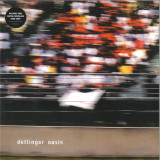
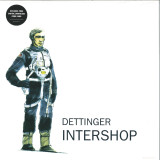
Dettinger’s Intershop and Oasis have long been held, by many fans of ambient and electronic music, to be some of the finest albums in their field. Produced by the mysterious Olaf Dettinger, about whom not much is publicly known, they were some of the earliest full-lengths released by the then-nascent Kompakt, and in many ways, they both articulated and defined the sound that would come to be known as Pop Ambient, while also existing, somehow, to the leftfield of any clearly recognisable genre.
Beautiful, sui generis works, it is a rare pleasure to see them being reissued on vinyl for a new generation of listeners to embrace. Originally released on CD only in 1999, Intershop was Kompakt’s first artist full-length. The music here simmers and broods, with opulent banks of tone marking out territory for rhythms that seem to be built from the clacking detritus of technology – hisses, thunks, knocks. Bass is deployed carefully, each drop a dubbed-out depth charge; drones spin and spiral, warping and weaving between the beats.
Oasis, released in 2000, refined the palette that Dettinger had explored on its predecessor. A blurred crusade of ambient texturology, its unassuming patterns, and subtle, incremental dynamics, admit to real beauty, and a kind of abstract sensuality that you don’t often experience with music that is, perhaps, similarly tooled, but not as poetic. Through seemingly simple gestures – whether lushly expansive repetitions, hyper-acute tremolo tones, or ear-tickling rhythms – it builds complex emotional resonance. It’s no surprise to discover Oasis is held in high esteem by artists like Panda Bear of Animal Collective, who once said of Dettinger, “For us, he was the dude.”
There is, of course, other music to know Dettinger by, too – his three excellent EPs for Kompakt, Blond (1998), Puma and Totentanz (1999), the latter of which, Michael Mayer once argued, “invented dubstep.” There is also a small, yet graceful run of compilation contributions, many of which can be found on Kompakt’s Total and Pop Ambient series. All this music has plenty to recommend it, sharing a clarity of purpose, and a rare, human warmth and depth. But Intershop and Oasis are the releases that distil Dettinger’s singular vision, and allow him, should he wish, to claim his place as a modern master of ambient and electronic music.
Dettingers Intershop und Oasis werden von vielen Fans von Ambient und elektronischer Musik seit langem als einige der besten Alben in diesem Bereich angesehen. Produziert von dem mysteriösen Olaf Dettinger, über den nicht viel bekannt ist, gehörten sie zu den ersten Alben, die von der damals aufstrebenden Plattenfirma Kompakt veröffentlicht wurden. In vielerlei Hinsicht formulierten und definierten sie den Sound, der später als Pop-Ambient bekannt werden sollte, während sie gleichzeitig irgendwie links von jedem klar erkennbaren Genre existierten.
Es ist eine seltene Freude zu sehen, dass diese wunderschönen Werke auf Vinyl wiederveröffentlicht werden, um sie einer neuen Generation von Hörern zugänglich zu machen. Ursprünglich wurde Intershop 1999 nur auf CD veröffentlicht und war Kompakts erstes komplettes Künstleralbum. Die Musik hier brodelt und brütet, mit opulenten Klangbänken, die das Territorium für Rhythmen abstecken, die aus dem klappernden Gerümpel der Technik gebaut zu sein scheinen – Zischen, Klopfen, Schaben. Der Bass wird sorgfältig eingesetzt, jeder Drop ist eine synchronisierte Tiefenladung; Drones drehen und winden sich spiralförmig und verflechten sich zwischen den Beats.
Oasis, das im Jahr 2000 erschien, verfeinerte die Palette, die Dettinger auf seinem Vorgänger erkundet hatte. Ein verschwommener Kreuzzug der Ambient-Texturologie, dessen unaufdringliche Muster und subtile, schrittweise Dynamik echte Schönheit und eine Art abstrakter Sinnlichkeit zulassen, die man nicht oft bei Musik erlebt, die vielleicht ähnlich ausgestattet, aber nicht so poetisch ist. Durch scheinbar einfache Gesten – seien es üppig ausladende Wiederholungen, hyperakute Tremolotöne oder ohrenbetäubende Rhythmen – baut sie eine komplexe emotionale Resonanz auf. Es ist keine Überraschung, dass Oasis von Künstlern wie Panda Bear von Animal Collective hoch geschätzt wird, der einmal über Dettinger sagte: “Für uns war er DER Typ”.
Es gibt natürlich auch noch andere Musik, die Dettinger bekannt macht – seine drei ausgezeichneten EPs für Kompakt, Blond (1998), Puma und Totentanz (1999), von denen letztere, wie Michael Mayer einmal kühn behauptete, “den Dubstep erfand”. Es gibt auch eine kleine, aber feine Reihe von Compilation-Beiträgen, von denen viele auf Kompakts Total- und Pop-Ambient-Serien zu finden sind. All diese Musik ist sehr empfehlenswert und zeichnet sich durch eine klare Zielsetzung und eine seltene, menschliche Wärme und Tiefe aus. Aber Intershop und Oasis sind die Veröffentlichungen, die Dettingers einzigartige Vision destillieren und es ihm ermöglichen, seinen Platz als moderner Meister der Ambient- und elektronischen Musik zu behaupten, sollte er dies wünschen.
Dettinger’s Intershop and Oasis have long been held, by many fans of ambient and electronic music, to be some of the finest albums in their field. Produced by the mysterious Olaf Dettinger, about whom not much is publicly known, they were some of the earliest full-lengths released by the then-nascent Kompakt, and in many ways, they both articulated and defined the sound that would come to be known as Pop Ambient, while also existing, somehow, to the leftfield of any clearly recognisable genre.
Beautiful, sui generis works, it is a rare pleasure to see them being reissued on vinyl for a new generation of listeners to embrace. Originally released on CD only in 1999, Intershop was Kompakt’s first artist full-length. The music here simmers and broods, with opulent banks of tone marking out territory for rhythms that seem to be built from the clacking detritus of technology – hisses, thunks, knocks. Bass is deployed carefully, each drop a dubbed-out depth charge; drones spin and spiral, warping and weaving between the beats.
Oasis, released in 2000, refined the palette that Dettinger had explored on its predecessor. A blurred crusade of ambient texturology, its unassuming patterns, and subtle, incremental dynamics, admit to real beauty, and a kind of abstract sensuality that you don’t often experience with music that is, perhaps, similarly tooled, but not as poetic. Through seemingly simple gestures – whether lushly expansive repetitions, hyper-acute tremolo tones, or ear-tickling rhythms – it builds complex emotional resonance. It’s no surprise to discover Oasis is held in high esteem by artists like Panda Bear of Animal Collective, who once said of Dettinger, “For us, he was the dude.”
There is, of course, other music to know Dettinger by, too – his three excellent EPs for Kompakt, Blond (1998), Puma and Totentanz (1999), the latter of which, Michael Mayer once argued, “invented dubstep.” There is also a small, yet graceful run of compilation contributions, many of which can be found on Kompakt’s Total and Pop Ambient series. All this music has plenty to recommend it, sharing a clarity of purpose, and a rare, human warmth and depth. But Intershop and Oasis are the releases that distil Dettinger’s singular vision, and allow him, should he wish, to claim his place as a modern master of ambient and electronic music.
Dettingers Intershop und Oasis werden von vielen Fans von Ambient und elektronischer Musik seit langem als einige der besten Alben in diesem Bereich angesehen. Produziert von dem mysteriösen Olaf Dettinger, über den nicht viel bekannt ist, gehörten sie zu den ersten Alben, die von der damals aufstrebenden Plattenfirma Kompakt veröffentlicht wurden. In vielerlei Hinsicht formulierten und definierten sie den Sound, der später als Pop-Ambient bekannt werden sollte, während sie gleichzeitig irgendwie links von jedem klar erkennbaren Genre existierten.
Es ist eine seltene Freude zu sehen, dass diese wunderschönen Werke auf Vinyl wiederveröffentlicht werden, um sie einer neuen Generation von Hörern zugänglich zu machen. Ursprünglich wurde Intershop 1999 nur auf CD veröffentlicht und war Kompakts erstes komplettes Künstleralbum. Die Musik hier brodelt und brütet, mit opulenten Klangbänken, die das Territorium für Rhythmen abstecken, die aus dem klappernden Gerümpel der Technik gebaut zu sein scheinen – Zischen, Klopfen, Schaben. Der Bass wird sorgfältig eingesetzt, jeder Drop ist eine synchronisierte Tiefenladung; Drones drehen und winden sich spiralförmig und verflechten sich zwischen den Beats.
Oasis, das im Jahr 2000 erschien, verfeinerte die Palette, die Dettinger auf seinem Vorgänger erkundet hatte. Ein verschwommener Kreuzzug der Ambient-Texturologie, dessen unaufdringliche Muster und subtile, schrittweise Dynamik echte Schönheit und eine Art abstrakter Sinnlichkeit zulassen, die man nicht oft bei Musik erlebt, die vielleicht ähnlich ausgestattet, aber nicht so poetisch ist. Durch scheinbar einfache Gesten – seien es üppig ausladende Wiederholungen, hyperakute Tremolotöne oder ohrenbetäubende Rhythmen – baut sie eine komplexe emotionale Resonanz auf. Es ist keine Überraschung, dass Oasis von Künstlern wie Panda Bear von Animal Collective hoch geschätzt wird, der einmal über Dettinger sagte: “Für uns war er DER Typ”.
Es gibt natürlich auch noch andere Musik, die Dettinger bekannt macht – seine drei ausgezeichneten EPs für Kompakt, Blond (1998), Puma und Totentanz (1999), von denen letztere, wie Michael Mayer einmal kühn behauptete, “den Dubstep erfand”. Es gibt auch eine kleine, aber feine Reihe von Compilation-Beiträgen, von denen viele auf Kompakts Total- und Pop-Ambient-Serien zu finden sind. All diese Musik ist sehr empfehlenswert und zeichnet sich durch eine klare Zielsetzung und eine seltene, menschliche Wärme und Tiefe aus. Aber Intershop und Oasis sind die Veröffentlichungen, die Dettingers einzigartige Vision destillieren und es ihm ermöglichen, seinen Platz als moderner Meister der Ambient- und elektronischen Musik zu behaupten, sollte er dies wünschen.
- 1: Your Favourite Coat
- 2: Things That Look Like Mistakes
- 3: Injured Crow
- 4: I Can’t See Anything I Don’t Like About You
- 5: All You Get Is Confetti
- 6: Tai Chi With My Dad
- 7: I Wanna Feel Calm
- 8: Henry Says
- 9: Hot Chocolate
- 10: Nothing Cures Melancholy Like Looking At Maps
- 11: We Don't Speak Anymore
- 12: I Don't Wanna Be Angry
Tri-Colour[23,32 €]
The upcoming album, How to Build an Ocean: Instructions is a project doused in personal conflict, but simultaneously a love letter to the normal and how beauty can be found in just being. Charged with references to literature, philosophy and film, as well as first hand experiences, the band explore thoughts of what it means to find purpose when everything feels purposeless, all whilst ultimately instructing themselves to find “small joys in the face of cosmic indifference”. Produced by George Perks (Enter Shikari, The Doves, You Me At Six), How to Build an Ocean: Instructions marks an exciting new development for Bears in Trees, being the first album they’ve recorded with the help of consultants outside of the band themselves, having previously relied on drummer George’s expertise, who outside of the band, works as an engineer at Subfrantic Studios. Tenderness, triumph, and a totally unashamed feeling of enjoying the ride whilst they're on it, How to Build an Ocean: Instructions is their definitive statement. Though no matter how far this record takes them, the most important thing is that they are together and doing what they love. Because when all is said and done, that's the connection that will last a lifetime. "We started the band because we loved hanging out with our friends and wanted to make stupid music together"; Iain concludes. "That's always been the reason, and it hasn't changed. All we want to do is make what we do as honest and authentic as possible. That's what it means to be in the Bears in Trees business."