F.S.Blumm is a man most might not know. He ́s no pop artist, and not overtly experimental either. But somehow with In Sight he has done the impossible: put his own sound in that perfect middle point, leaving his voice behind to deep-dive into some truly memorable, fully composed pieces.
In Sight is the kind of record you can put on at first crack of dawn, to enjoy its beautiful instrumental varieties during morning routine, while equally fitting as a listening experience towards the darker time of day, in the background or as highly rewarding deep listening experience. It ́s the kind of album that would be great to encounter played in a tiny Japanese jazz bar on a vintage, top notch speaker system together with a handful of local oddities. It sounds incredibly well produced and is full of beautiful, heart-warming, melancholic moments performed on everything from guitars to percussion, vibraphone, strings, piano and who knows what else. Frank shines on this record. He has created quietly composed pieces for moments one could only wish were real.
As often with F.S.Blumm ́s music, it ́s hard to pin down where to categorize it. He might be best known as frequent collaborator of Nils Frahm. Together they made three great duo albums for Sonic Pieces previously. Although this is far from his first solo album, it is his first for the label, and after listening to it on repeat for some time, we can only say that this is Frank on his finest, creating some of the most thought provoking instrumental music you can find in these parts of the world.
quête:put it on
- A1: Brian Bennett - The Swan 1
- A2: Francis Monkman - Stargazing
- A3: Steve Gray - Billowing Sails
- A4: Frank Ricotti - Vibes
- A5: Frank Reidy & Eric Allen - Reflections
- A6: John Cameron - Tropic 2
- B1: Orlando Kimber & John Keliehor - One Language
- B2: Johnny Scott - Utopia Revisited
- B3: Les Hurdle & Frank Ricotti - Dissolves
- B4: John Cameron - Floatation
- B5: John Cameron - Drifting
- B6: John Cameron - Trek
- B7: Alan Hawkshaw - Saturn Rings
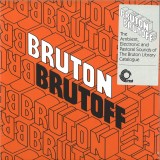
Rare musical magic from the Bruton library catalogue – ambient, spacey, pastoral and electronic. Music by John Cameron, Alan Hawkshaw, Fran-cis Monkman, Brian Bennett and more – all total masters of the scene. All very cool. All very now. All will sell very fast.
Over the last three decades Jonny Trunk has collected and written about library music. But he’s never had a great deal of luck with the Bruton catalogue. By this he means that he’s never stumbled across a massive stash, or lucked-out buying a huge run for practically nothing –that’s the kind of thing that used to happen in the 1990s and the early noughties if you were out there looking hard for library music. But he did manage to get about 25 in one hit about 20 years ago when the BBC shut down their “TV Training Department” near Lime Grove and also when a box of Brutons ended up being dumped at a hospital radio, and they didn’t want the records, so Jonny got a call.
There are lots of Bruton albums in existence – over 330 LPs in the vinyl catalogue, issued between 1978 and 1985. That’s a lot of music to wade through if you are looking for sublime modern day sounds. For many years now the “trophies” from the Bruton catalogue have been the beat or action driven LPs – the two Drama Montage albums (BRJ2 and BRJ8) have always been the big hitters, and others such as High Adventure (BRK2) too.
But Jonny has always found himself drawn to the lime green LPs, the pastoral, peaceful albums (The BRDs), which were full of the kind of gentle, lovely music that would turn up in Take Hart as Tony was paint-ing a woodpecker or a badger or an Autumn tree. The other Brutons he likes are the orange ones (The BRIs) simply because they are full of ex-perimental futuristic electronics and would remind him of 1980s ITV backgrounds. This LP series includes Brian Bennett’s cosmic classic Fantasia (BRI 10). Jonny has been knows to refer to this style of library music as “Krypton Factor library”, because it’s exactly what that strange but successful 1980s TV quiz show sounded like.
In recent years as interest in library music has expanded, we’ve watched
the price of a handful of Brutons really going through the roof - not the just the action and drama ones, but the more esoteric and experimental LPs too – like the BRDs and the BRIs. Jonny gets the vibe that people fi-nally want to hear this other more interesting and experimental side of the Bruton catalogue. So what better time than now to put together a compilation of such sublime period sounds.
Not only does this album bring together a set of fabulous cues that would cost the average man in the street a month’s wages (if the origi-nals were all wanted and if you could even track them all down), but it also chops out the need to listen to other tracks on library albums that are nowhere near as good.
The cues here all date from between 1978 and 1984. They come from the BRD, BRI, BRH, BRJ, BRM, BRR and BRs catalogues.
The composers are all legends within the genre, and here, were doing what great library composers do best – fulfilling a brief and utilising modern studio equipment to both commercial and beguiling effect.
This is the 1973 solo album by Ghanaian percussionist Anthony Kwaku Bah, who was given the nickname „Reebop“ by American
jazz legend Dizzie Gillespie. He passed away early at the age of 39 in Stockholm in 1983, but before made himself a name for his
works with UK 70s rock heroes TRAFFIC and German Krautrockers CAN, amongst others. If you might expect here the prototypical
Afro Beat and Afro Rock you mostly know from British bands, you will be surprised that this is only one part of the deal. Yes, there
are African elements to be found, buried somewhere in this boiling cauldron where polyrhythmic grooves are the base for jazz
improvisations by the brass section, that range from naughty swing and bebop, to freaked out free jazz and enchanting soul jazz
the way it was popular in the late 60s. The arrangements are utterly lush with so much going on here in every aspect that you
would get lost if there was no trace of melody to be discovered, but there they are and they tell you fantastic stories of exotic
places that only exist in your wildest dreams. Kwaku Bah’s rhythm patterns grab you by the horns and pull you into a world of
their own. Hypnotical, irresistible, hot and vivid. The tunes combine jazz, soul, funk and each one is constructed like a self –
contained story. One could imagine these tunes being used as library music for 70s movies from action to romance. All pieces
though are characterized by the constantly pulsating rhythm. To avoid drifting into the field of insubstantial disco dance music,
the performances witnessed here were executed with the highest possible emotional intensity and dedication. Lay back, close
your eyes and float away on a raft of sound upon the wild river of grooves and melodies. Some haunting Exotica jazz passages
with a typical „jungle“ feel get thrown in for the good measure. There are even vocals in an African language hard to identify,
which create and even more mysterious atmosphere. This is just an introduction part of another powerful speed funk groover but
the vocals stay and make this a clear standout track. Saxophone and guitars seem to have a duel here. You will not sit still while
having this tune „Iphonohimine“ coming down on you like a thunderstorm. Blues, Afro Beat, Psychedelic Rock, Funk, it can all be
found in here and the band goes wild into an everlasting improvisation that deprives you of your breath. Can this record get even better? Do not ask, just enjoy what comes next. If you think that some melodies by the giant brass section sound a bit too catchy
just reach out beyond these harmony lines and find yourself in a thicket of grooves, pulsations, bits and pieces of melody with a
dense, sultry atmosphere. Some smaller parts might make you think of cruise ship big bands and white suits, but everybody will
soon drop these and dance in their underwear for the hot blooded power funk base of the tune called „Africa“, which will take
over one’s soul and set it on fire. So clean, so nice and so filthy and dangerous at the same time, this album is a masterpiece of it’s
style. The exciting and very sensual funk rock of „Lovin‘ you baby“ with crazy fuzz guitars and a dark and haunting approach is
another reason to kneel down when you put this record onto your turntable. Great clean lead guitars give it a latin garage rock
edge Carlos Santana would commit serious crimes for. If you love bands like OSIBISA, Eric Burden & WAR, GINGER BAKER
AIRFORCE, SANTANA, Miles Davis, all around 1969 to 1973, this is what you always wanted to listen to. Grab your copy now.
Almost 35 years after its original release, the magical B side
track “In 80 Tagen um die Welt” from Christoph Moritz
receives a well-deserved reissue on 12” and marks the birth of
Tunesday Recordings. The original is a percussive cross-over
funk gem that paints a picture of good vibes on the lines of
your dreams. Aroop Roy’s Rework gives the original a modern
house outfit for worldwide dancing opportunities in the open,
in the clubs or even at home. Many thanks to Christoph Moritz
for making this reissue possible. Thanks to Dora Cuenca for
putting the vibe into the artwork. Stay tuned for more to come!
THE KILIMANJARO DARKJAZZ ENSEMBLE are a project which has always been tied to films. Films are luxurious because they dispose of all these boring, unimportant, and trivial parts of our lives. This allows them to fully control our sensations, to put us in a very specific mood. Joy and sadness are occasionally OK, endless joy or endless sadness are clinical. But there is one sensation which can be persistent and unconditionally bearable at the same time. In the absence of a better alternative, let's call it "the mood". The mood is what TKDE are aiming at. The mood.
The mood is infinite and illimitable, but not uniform and unique. On "From The Stairwell", TKDE deliver eight new incarnations of the mood. Stairwells have always been intriguing. They appear to unavoidably lead you to your destination, but they only disclose the path bit by bit. What lies far ahead of you and far beyond you is hidden in the shadows. The stairwell could just as well be infinite. You climb up this murky stairwell, passing by many doors. Every door contains a variation of the mood, a short film, a song. You open the first one, "All Is One". The evaporating mist discloses a large and empty room with a barstool in the middle. On the barstool, a chanteuse from the roaring twenties. Her voice starts to trigger vibrations of the ground, the walls start spiralling around her, but she remains untouched in the eye of the storm. Second room, "Giallo". Sly guy, telling smile, nice suit. Walking down the streets in the dusk. The ambience starts to get out of phase, the guy stumbles in horror while blending with the surrounding to a brown soup. Fourth room. "Cocaine". Naked people with pig heads crawl on the floor, on the walls, on the ceiling. They try to hopelessly suck up the white dust which covers every single piece of this room and is constantly spit out by tubes coming out of the walls. Dissonant sounds accompany the work of this desperate hive. As the people manage to counteract the tubes, fragile melodies start to overpower the dissonances. Sixth room, "Cotard Delusion". Baby morphing into a black fluid morphing into an old man which turns his eyes inwards and finds his inside to be completely empty. The journey up the stairwell, down the stairwell, continues. The pictures fill your head and make you forget where you wanted to go in the first place.
"From The Stairwell" is a surprise and a logical step at the same time. It is a surprise because the songs are far less beat-driven in comparison to TKDE's earlier works, and even contain a few hopeful tints here and there. It is a logical step because in the end each song turns to have a very diverse dramaturgic flow. This could raise the conjecture that TKDE, initially started out to make music for existing and non-existing films, wanted to incorporate the audiovisual impression completely into songs, making the films superfluous. At times, "From The Stairwell" makes you think of 60's soundtracks, but the organic feeling of those is always interwoven with mechanical elements. Altogether, every single of the numerous details present in TKDE's new songs feels to be at the right place and you can either just dive into the mood or pick one of the many aspects and enjoy it on its own - be it Gideon Kiers' beats & fx, Jason Köhnen's bass & piano, Hilary Jeffery's trombone, Charlotte Cegarra's voice & piano, Eelco Bosman's guitar, Nina Hitz' cello, Sarah Anderson's violin, or - appearing as guest musicians - Eiríkur Óli Ólafsson's trumpet and Coen Kaldeway's saxophone & bass clarinet.
it's been a while since we decided to open and launch this new project, we were just waiting for the right moment, and maybe we waited too long. or maybe not. we were a little stucked by the indecision of when to put it out, how to contextualize, and all the usual "psychological" practices that one faces before starting a new journey. but ever since we received the masters of this wonderful concentrate of different minds, we have been looking forward to smashing it out. and whether it's the real right time or not, it's now finally here! the true meaning behind this capsule is not so definable in words, perhaps because it is an attempt to look back and forth at the same time, without getting lost in a one concrete definition. but when we got to the tracks, first individually, and then together, it came spontaneous to glimpse something new and unconventional as a whole. we are therefore proud to present another of our musical journeys, this time in certainly more experimental and odd territories. the sounds you hear can definitely be taken as the true manifesto of this new chapter. proto? post? everything in between. ENTER >
- A1: Miami - Chicken Yellow
- A2: The Sunshine Band - Black Water Gold
- A3: Freedom - Get Up And Dance
- B1: Joe Thomas - Polarizer
- B2: Herman Kelly & Life - Dance To The Drummer's Beat
- C1: T-Connection - Groove To Get Down
- C2: George Mccrae - I Get Lifted
- C3: Queen Samantha - Take A Chance
- D1: Ralph Macdonald - Jam On The Groove
- D2: Blowfly - Rapp Dirty
Presenting a collection of stone-cold classic breakbeats and b-boy jams from the sunkissed vaults of Miami's legendary TK Disco label!
NYC in the late 70's and early 80's saw a nascent street subculture fully evolve, a movement with it's own language, art, aesthetics, dances, fashion and way of living.
What would become what is now globally known as 'hip-hop' was in its infancy, with it's own legends and history being forged on an almost daily basis across the city's Black and Hispanic neighbourhoods. Music was central to hip-hop, the DJ was king and at the hands of people like Kool Herc, Grandmaster Flash, Grandmaster Flowers, Mean Gene, Jazzy Jay, Afrika Bambaataa, Charlie Chase and numerous other groundbreaking DJ's of the era, music took on a whole new meaning that would reverberate through popular culture for the rest of time.
The breaks - minute sections or breakdowns of a record where we get to the unadulterated groove and the band on the record cut loose - is what it was all about! Unlike the discotheque DJ's who favoured the long mixes and blends in their club scenarios, hip-hop DJ's were amassing huge collections of records that had these magical sections on them, often x 2 copies of each, so that they could elongate the best part of the record ad infinitum by cutting them up live - all killer no filler! These special on the fly mixes and edits were then unleashed in the local parks of their neighbourhoods, on gargantuan DIY sound systems for all of their friends and neighbours to party on down until the wee small hours. These breakbeat segments also gave the MC's space to address the gathered masses without their voices colliding with lavish string arrangements or vocals underneath. A clear, concise, stripped back slab of funk on which to put forth their ideas, feelings and rhymes for all to enjoy.
Collected here are some of those most infamous breakbeats, all from the TK vaults. These records were studied by these young DJ's, coveted, covered up, hunted down, whispered about in darkened corners by those who needed and obsessed over the freshest of beats. There's a good chance you will have heard these records in some form or another as they have been covered, sampled, recreated and spun in clubs across the galaxy for over 4 decades. These are the very building blocks upon which popular culture and club music have been built, and here they are all in one place for your listening enjoyment!
Released with love and respect by: Above Board and TK Disco, Miami FL. 2020.
HIGHLIGHTS First ever reissue of "Kabwlú", a very hard-to-find album released by Discos Fuentes in 1965. The mysterious Los Picapiedra (which translates as The Flintstones, inspired by the 1960s American cartoon show), was a short-lived studio group with one albumto their name, "Kabwlú", mixing 'folkloric' and 'modern' elements with calculated 'caveman' humor. It is very musically diverse; not only are there the requisite genres that could be found on similar Colombian teenage-oriented groups' records of the time, such as cumbia, gaita, rock, twist and pachanga, but there is also a smattering of surf, doo-wop, Latin jazz, guajira, ska, and calypso. But what makes the whole thing so special is the odd, off-kilter arrangements, spooky tunings, rudimentary clanging percussion, invented 'cave' language, prominent twanging electric guitar and many zany sound effects. Several of Los Picapiedra's songs became very popular in Colombia as well as Venezuela and especially in the 'rebajada' (slowed down) version as played by the 'sonidero' sound system DJs in Mexico, such as "La Hossa". Presented in its original artwork and pressed on 180g vinyl. Part of Vampisoul's reissue series of classic Fuentes LPs. DESCRIPTION While Discos Fuentes was known for recording all sorts of interesting sounds from traditional folkloric Colombian music to the latest popular international styles, every once and a while they would put out a "novelty" record, perhaps to exploit a passing fad, and at times the label would green-light something strange or even outlandish. Many of those left-field releases have their merits and have subsequently become collectors' items over the years. One such case is the mysterious Los Picapiedra (which translates as The Flintstones, no doubt inspired by the 1960s American sitcom cartoon show), a short-lived studio group with one album to their name, "Kabwlú" (an unpronounceable, invented "caveman" term that is also untranslatable, but seems to have been the 'traditional rhythm' of Los Picapiedra's 'homeland'). What is interesting about the record is that it is very musically diverse; not only are there the requisite genres that could be found on similar Colombian teenage-oriented groups' records of the time, such as cumbia, gaita, rock, twist and pachanga, but there is also a smattering of surf, doo-wop, Latin jazz, guajira, ska, and calypso. But what makes the whole thing so special is the odd, off-kilter arrangements, spooky tunings, rudimentary clanging percussion, invented 'cave' language, prominent twanging electric guitar and many zany sound effects. Much like its namesake American cartoon The Flintstones, "Kabwlú" trades in creative anachronism, mixing 'folkloric' and 'modern' elements with calculated 'caveman' humor that works on many different levels. For instance the title tune seems to have been inspired by the pachanga craze and recalls the vibe of Ray Barretto's massive 1962 hit, 'El Watusi', but it has a certain joyful simplicity and rock-solid underpinning that elevates it beyond mere novelty or exploitation - and argues for its timely reissue for today's audience. The band was a studio invention that had no major significance in Medellin's live music activity. However, several of Los Picapiedra's songs were very popular in Colombia as well as Venezuela and especially in the 'rebajada' (slowed down) version as played by the 'sonidero' sound system DJs in Mexico, such as "La Hossa". Pablo E Yglesias (aka DJ Bongohead, Peace & Rhythm) Additional research by Luis Daniel Vega
Seeing himself as a social commentator, Coops continuously draws inspiration from everything around him and is feeling more inspired than ever. Having signed to the label in 2018 he has already released 2 poignant albums and continues to create at rapid speed.
The 8-track project - which was made in just 4 studio sessions - is unlike Coops’ usual 14+ track albums both he and his fans have become used to. Coops turned the album around in record time to ensure his music was released during this unparalleled time in history. The homegrown beats come from his close friend and long term collaborator Talos who has produced almost all his beats to date.
In the opening track, ‘ Boom Biddy Bye’ Coops doesn’t waste a second in putting his fellow rappers through their paces. A block rapper with no one to please but himself, Coops professes that he barely listens to what other rappers release to ensure they don’t infiltrate and influence his own music. Highly appropriate for these times, title track ‘ Crimes Against Creation ’ is the stand out voice of this generation and his message to the world. ‘W arped perception, thwart connections, they force perfection, then claim the antidotes an injection...’ plays out and we begin to appreciate how the current situation is playing heavily on his mind. As the album progresses we get to see all sides of Coops’ personality with ‘Piss Poor’ reminding us of the raw gritty London lifestyle from which he has risen from, whilst ‘Profile’ demonstrates his softer more promiscuous side as well as touching on themes of fatherhood and online relationships.
Coops’ musical entry point begun by making music with his friends, but it wasn’t until he really looked at himself and the world around him when he decided he needed to go it alone, opening his mind and his solo stream of creativity which hasn’t stopped since. A self-proclaimed hermit he embodies the essence of a true artist and only finds comfort in doing what he loves, not what he is told.
Second time around for label boss Tooli on Omena.
This time it's a remix package with an all-star line up !
The original track was recorded in NYC a few years ago and this release contains the remixes of that very track.
Mark Hand, FYI Chris and Saine all put their mark on the original.
UK's unsung hero Mark Hand infuses the original with some UR vibes, the dynamic duo FYI Chris twist and turns the track into something truly original and finally Saine finish the whole thing off with a beautiful version you never want to end.
Four intergalactic cuts from Natasha Kitty Katt on Ghetto Disco Records.
Kosmic Oscillations
A deeper Kosmic vibe from Natasha, Kosmic Oscillations puts your head in space. Designed to transcend the dancefloor and take your mind on a Kosmic trip.
Larry’s Code
Paying homage to the one and only, Larry Levan, this dancefloor number is guaranteed to set floors alight. With heavy synth use and a funky bassline, this is one to make you move.
Up There?
An upbeat number centered around the idea of UFOs and glitterballs. A feel-good mover that’s out of this world.
Katt Nip
This bizarre, yet wonderful Italo trip has everything from cat sounds to a thumping bassline. Perfect for the dancefloor, this number is sure to turn a few heads and move feet.
- A1: Kink - Machine Funk
- A2: Session Victim & Iron Curtis - Abalone (Gerd Janson Edit)
- B1: Genius Of Time - Network Labyrinth
- B2: Katerina - Sincerely, G
- B3: Robert Dietz - Isn’t It Nice
- C1: Roman Flügel - Feel The Heat (String Mix)
- C2: Dinky - This Ain’t No
- C3: Bella Boo - L A. Magic
- D1: Tiger & Woods - Lonely Toad
- D2: Todd Osborn - Friendly
When Bandcamp announced that they will be holding a special fundraiser on June 19th „that is specifically focused on racial justice, equality, and that they will donate their „share of revenues that day to the NAACP Legal Defence Fund“, we thought to put out a special sampler that contributes to that cause. All profits of the sales of „Music for the NAACP“ will go exactly there. Due to the lack of time, it might seemed knocked together, but old and new friends, from near and far alike did their best, to set it up. So, special thanks to everyone involved: especially to Lopazz at Mixmastering, Heidelberg, Rand Muzik Leipzig and the SST cutting house in Frankfurt, who did their part to also make this available on a 2x12“ compilation (same destination for its profits). Thank you for listening, helping and donating.
Sincerely,
Gerd Janson
Sublime, unique, sexy and peculiar unreleased scores by electronic and jazz pioneer Ron Geesin, made for the sublime, unique, sexy and peculiar films by maverick director Stephen Dwoskin. There. we’ve said it. And if you have not heard of one or either of these two dudes it doesn’t really matter. Geesin made great music and worked with Pink Floyd. Dwoskin made odd films, most of them are in the BFI permanent collection. They are great and a bit strange.
These superb unreleased soundtracks come from a fascinating, progressive and important period in British film history. They represent an intriguing collaboration between the lively Ron Geesin from Scotland and the American Stephen Dwoskin, who both met in London.
Musically they are minimal, charismatic and quite groundbreaking. Here is the story…
HISTORY:
Steve Dwoskin arrived in London in 1964, aged 25, with several 16mm films in his trunk, shot in the cold-water flats of Greenwich Village. He had been on the fringe of the Factory scene, and some of his films starred Beverly Grant, ‘the queen of the underground’. But they had scarcely been seen, and they didn’t have soundtracks. For almost a year they stayed in the trunk, and stayed silent. Then he met Ron Geesin, somewhere around Portobello Road.
‘Slept last night, completely dressed after working over 12 hours on sound tracks at Ron’s,’ wrote Dwoskin in his diary for 29 July 1965. ‘My films are not anywhere near being anything. I need more energy, more concise and positive ideas and less inhibition. And of course space, money and people.’ Dwoskin, who taught and practised graphic design by day, had recently decided to stay in London beyond the term of the Fulbright scholarship that had brought him there.
Ron, living with Frankie in a basement flat in Elgin Crescent – they would marry the next year, with Dwoskin as best man – was about to leave the Original Downtown Syncopators, the trad jazz band he had joined aged seventeen-and-a-half, and was trying to go solo. On stage he would make vigorous use of piano and banjo; at home Frankie had bought him a new kind of instrument – a tape recorder. ‘Soon I had one tape recorder, two tape recorders, three tape recorders.’
Ron, wrote Dwoskin in his unpublished autobiography, ‘loved to record, and to cut and splice the quarter-inch recording tape to make new sounds. This triggered in me the idea of getting back to my films and finishing them’. Soon he was living in a dank basement in Denbigh Road, a few minutes’ walk from Elgin Crescent. Ron’s soundtracks for Dwoskin’ films, recorded in the Geesins’ flat, encompassed Ron’s very eclectic range of styles – madcap piano and fretted banjo as well as tape manipulation.
Aside from Ron’s soundtracks, some of which belong to films that no longer exist (including Pot Boiler), Frankie would act in one of the films that Dwoskin either lost or never finished during these years. He was disabled, having contracted polio as a child, and Ron and Frankie were both carers and collaborators; Ron had met him when he was struggling into his car.
There was no London equivalent to the underground film scene that Dwoskin had known in New York, and his films remained unseen until such a scene began to come into being, in the autumn of 1966. Some of them made their debut at the Mercury Theatre, near Notting Hill Gate, that September. Dwoskin wrote that Alone, starring Zelda Nelson (from Ron Rice’s Chumlum), and Chinese Checkers, with Beverly Grant and Dwoskin’s friend Joan Adler, went over best.
Soon both Dwoskin and Geesin became involved in the nascent London Film-Makers’ Co-op, which put on screenings in Better Books on Charing Cross Road – ‘if you can call them screenings,’ Ron recalls; ‘I’d call it fifteen blokes in various stages of disarray, peering through the smoke’. One or more of the films had been ‘striped’ with magnetic audiotape; with others ‘we had no means of direct syncing to the picture, so he started the film and I started the tape recorder’.
In the same autumn, Dwoskin moved into a flat almost opposite the Geesins on Elgin Crescent. More collaborations followed, including Naissant, on which Gavin Bryars, whom Geesin had met during a stint on the northern club circuit with novelty act Dr Crock and His Crackpots, played double bass.
Around the end of 1967 Geesin released his first solo LP, A Raise of Eyebrows, and Dwoskin won recognition the Fourth Experimental Film Competition, aka EXPRMNTL 4, an occasional film festival staged at Knokke-le-Zoute in Belgium. By now the films had optical soundtracks.
It was only after this that Dwoskin completed his first ‘British’ films, including Me Myself and I, with Barbara Gladstone, an American dancer who had appeared in Barbara Rubin’s Christmas on Earth, and with whom Dwoskin and Geesin had at one point devised a stage show, never produced. For Moment, a single-shot film, Geesin provided his most experimental score yet. At the time of its debut in 1970, Dwoskin and the Geesins were sharing a house in Ladbroke Grove.
By then, Ron was working with Pink Floyd, and soon afterwards he and Frankie moved out to the country, to be replaced by Bryars both in the house and as Dwoskin’s principal collaborator.
Until now these scores have remained part of the Geesin Archive and have never been issued.
South London’s Lianne La Havas re-entered our musical consciousness at the end of February with her emotionally stirring soul-gem ‘Bittersweet’. This came in conjunction with an Annie Mac Hottest Record, a mind-blowing live show at the Barbican with the BBC Symphony Orchestra & Jules Buckley and an incredible Colors session – all of which helped put Lianne firmly back on the cultural map for 2020.
‘Lianne La Havas’, Lianne’s third album and her first in five years and is an album of startling beauty and insight—made entirely on her own terms which has been quite a journey. In one sense, geographically: La Havas spent a lot of time moving back and forth between the UK and the States working on writing and exploring her own identity. As a result, ‘Lianne La Havas’ feels spacious and luminous. Its sunbaked sounds recall, in places, the Brazilian singer, songwriter, and guitarist Milton Nascimento (on “Seven Times”). You might also hear the curveball chords of Joni Mitchell and Jaco Pastorious’s jazz explorations (“Green Papaya”), or the puttering drums and inviting warmth of golden-era Al Green (“Read My Mind”). And throughout the record, there’s a sense of empowerment that has its roots in the crisp ‘90s R&B of Destiny’s Child.
Abstrack proudly introduces the first of its new series of edits. The music on the record is a direct echo of the vibes found at Abstrack parties. These have been going on for over 8 years, taking place at roughly any time of day or night. The music on the record, dancing somewhere between dreamy slow motion tracks, peak-time weapons, and french singing anthem, was intended for the party rather than for the record and they’ve been rocking Nantes’ best-hidden dances for a while already. Now we’re happily putting them out for everyone to enjoy and rock their own party.
Rivage was one of the records during my early days into Modern Soul I was desperate to get hold of, 'Strung Out On You're Love' is up there in my top ten and I managed to pick a copy of the 45 when in the USA in the Early 2000s for a decent price. I only found out there was a rarer LP with a longer version of the track around the same time, with the bonus of a pile of solid Funk, modern and sweet soul tracks. Fast-forward to 2019 and friend Angelo Angione hooked me up with the band who were excited to work with me on a reissue. Now those who know the LP will know it's rather odd cover, this was a marketing idea by someone at the Label, despite the band not wanting to use it that's the way it ended up. We decided to put things right and have reinstated the original cover shot of the band. This LP is simply one of the finest 70s LPs, it's mad that it has not been reissued before now…enjoy.
Mint Condition continue their mission excavating the outer fringes of classic House and Techno. Unreleased mixes, classics and overlooked gems mined from the last 20+ of contemporary dance music are the order of the day. From Chicago, Detroit and New York to London and beyond, Mint Condition have got their expert digging hats on to bring you exclusive heat and those rarer than rare jams that have been on your wants list for years! Dig in....
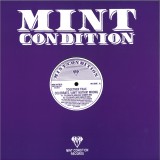
Back to 1994 and Charles Webster's lesser used Together Trax alias brings us 4 tracks of that deep, soulful and slamming garage house sound. Released on UR's much celebrated Happy Soul sub-label, famed for its gospel soaked, piano driven uplifting jams, Together Trax serves it up in fine style. Strange for UR to sign 4 cuts from a guy from Derbyshire, but once you hear both sets of mixes of 'Celebrate / Ain't Nothin' Wrong' it all makes sense! Both tracks could have come from the deepest, darkest basement session in downtown Detroit no problem, and it's obvious why Mad Mike signed them. This is old-school house, for the connoisseur who remembers how it used to be, way back. When dance music was fun and put a smile on your fave. Often a rare catch, this 12" fetches tidy sums in the netherworld of Discogs and the like, but now it's here again, lovingly restored and ready to make its way into your record bag once again.
Together Trax has been legitimately re-released with the full involvement of Charles Webster and was remastered by London's Curve Pusher from the original DAT's especially for Mint Condition. 100% legit, licensed and released. Dug, remastered, repackaged and brought to you by the caring folks at your favourite reissue label - Mint Condition!
- A1: East Man & Streema - Know Like Dat
- A2: East Man & Mic Ty - Everybody Knows
- A3: East Man & Fernando Kep - Ouroboros
- A4: East Man & Lyrical Strally - Ten Ton Riddim
- A5: East Man & Ny Ny - Boys
- A6: East Man & Whack Eye - Who Am I?
- B1: East Man & Eklipse - East Man Theme (Reprise)
- B2: East Man & Darkos Strife - Wow How?
- B3: Ease Up
- B4: Look & Listen (Part 2)
- B5: Machine Gun
- B6: Hi Tek Theme
'Prole Art Threat' is producer Anthoney Hart's second LP for Planet Mu under his East Man alias, after 2018's well received debut 'Red White & Zero'. It brings together a set of MCs from all over London, Darkos and Eklipse from East London and Lyrical Strally from near Feltham who were on the first album, Ny Ny and Mic Ty also from East London, Streema and 'Vision Crew' member Whack Eye from Lewisham plus Fernando Kep, an MC from the burgeoning Brazil grime scene. They work across a cohesive set of tight riddims forged from thoughtful amalgams of grime, dancehall and drum & bass. The album takes its name from a Fall song/mission statement of the same title, the band being self-consciously working class and led by a brilliant autodidact in Mark E Smith. East Man relates that the title is to be taken as “a reflection of working-class creativity and how the establishment marginalise us and (perhaps on a subconscious level) see us as a threat.” Les Back, author of 'The Art of Listening' and 'Out of Whiteness: Color, Politics and Culture (with Vron Ware)' contributes liner notes to the record: East Man understands the force and the democracy of the mic. Listening to Prole Art Threat is like being at a dance. As the mic is passed between each of the MCs, a different tale is ‘elevated... off the map’ as Ny Ny puts it. We hear instalmentsfrom Forest Gate, Lee, Lewisham and Manor Park as these ‘lyrical gaffers’ and ’top boys and girls’ tell tough stories of life under the scrutiny of the ‘Feds’ in a brutal and divided city. The bars and rhymes document what it means to live here; from the double standards applied to the sexuality of young girls and boys to the corrosive violence of everyday life. All this is dissected without compromise. This is not just aLondon story though, the inclusion of Fernando Kep from the burgeoning Grime scene in Brazil is evidence of the outernational reach of the music. The tracks on East Man’s album explode the wilful ignorance of those who see ‘the working class’ in contemporary London as code for whiteness. This is the sound of a proletarian urban multiculture, made from Caribbean and African influences, sound system culture, pirate radio and the inexorable rhythms of Grime, Drum & Bass, Techno and Dancehall. It is the stirring of the "white" & "black" working classes who are living together and coming together on their own terms in sound. ‘Making music because you love it... what the fuck else could you do?’ as East Man says. The tracks and voices you are holding in your hands are, as a result urgent, vital, as hard nails and twice as sharp.
Belgian techno wizard Cri Du Coeur is back with a new 2-part vinyl release on his label Arkham Audio titled 'Erickson' & 'Erickson on Acid', which features remixes exclusively from French artists. Jerome D., the man behind the Cri Du Coeur alias, is prized in the industry for giving platforms to Belgian and French artists throughout his career, so it comes as no surprise that he is showing his francophile roots by having a solely French lineup for the remixes on this release. Following the recent release of his EPs 'Diaphragm' and 'Warning', and now bringing us the inebriating 'Erickson' & 'Erickson on Acid', Cri Du Coeur has established that his new alias and freshly-founded but tenacious Arkham Audio label are a force to be reckoned with. The entrancing yet adrenalizing sound that he has adopted shows that his approach to industrial electronic music knows no boundaries or compromises.
The first part of this release features the original mix of 'Erickson' by Cri Du Coeur and remixes of the track by Electric Rescue, Wex 10 , and Trunkline. The second part 'Erickson on Acid' puts a squelching acid twist on things and features remixes by Roman Poncet, Umwelt, and Zadig.
The original mix of 'Erickson' leads with a strong beat and a mixture of industrial sounds that makes for a sublime dark dancefloor track. Electric Rescue follows on with a remix that engages the listener with a terrorising yet intoxicating heavy baseline. Next up is Wex 10 who enchants us with a bouncy laserbeam rhythm and muffled looping vocals. Last but not least on the 'Erickson' lineup is Trunkline's remix which delivers an addictive hazy melody and a deep and dirty mechanical synth horn.
Cri Du Coeur plays with tensions in 'Erickson (on Acid)', putting the listener into a state of hypnosis with squelching sounds that give the song a raunchy character. We are implored to dance as Roman Poncet's remix bears layers of lively percussion beats with twangy synth melodies. The mood intensifies once more as Umwelt's remix features a dark and fuzzy baseline that contrasts with a screeching siren sound creating an ultimate thrilling experience for the listener. Zadig closes off this immense concoction of remixes with a relentless distorted base and scintillating machinelike background noises.
Cri Du Coeur has outdone himself by bringing together such a well-suited selection of artists to create a visceral and magnetizing collection of tracks that showcases his competence in making industrial techno
Belgian techno wizard Cri Du Coeur is back with a new 2-part vinyl release on his label Arkham Audio titled 'Erickson' & 'Erickson on Acid', which features remixes exclusively from French artists. Jerome D., the man behind the Cri Du Coeur alias, is prized in the industry for giving platforms to Belgian and French artists throughout his career, so it comes as no surprise that he is showing his francophile roots by having a solely French lineup for the remixes on this release. Following the recent release of his EPs 'Diaphragm' and 'Warning', and now bringing us the inebriating 'Erickson' & 'Erickson on Acid', Cri Du Coeur has established that his new alias and freshly-founded but tenacious Arkham Audio label are a force to be reckoned with. The entrancing yet adrenalizing sound that he has adopted shows that his approach to industrial electronic music knows no boundaries or compromises.
The first part of this release features the original mix of 'Erickson' by Cri Du Coeur and remixes of the track by Electric Rescue, Wex 10 , and Trunkline. The second part 'Erickson on Acid' puts a squelching acid twist on things and features remixes by Roman Poncet, Umwelt, and Zadig.
The original mix of 'Erickson' leads with a strong beat and a mixture of industrial sounds that makes for a sublime dark dancefloor track. Electric Rescue follows on with a remix that engages the listener with a terrorising yet intoxicating heavy baseline. Next up is Wex 10 who enchants us with a bouncy laserbeam rhythm and muffled looping vocals. Last but not least on the 'Erickson' lineup is Trunkline's remix which delivers an addictive hazy melody and a deep and dirty mechanical synth horn.
Cri Du Coeur plays with tensions in 'Erickson (on Acid)', putting the listener into a state of hypnosis with squelching sounds that give the song a raunchy character. We are implored to dance as Roman Poncet's remix bears layers of lively percussion beats with twangy synth melodies. The mood intensifies once more as Umwelt's remix features a dark and fuzzy baseline that contrasts with a screeching siren sound creating an ultimate thrilling experience for the listener. Zadig closes off this immense concoction of remixes with a relentless distorted base and scintillating machinelike background noises.
Cri Du Coeur has outdone himself by bringing together such a well-suited selection of artists to create a visceral and magnetizing collection of tracks that showcases his competence in making industrial techno.