SML is the quintet of bassist Anna Butterss, synthesist Jeremiah Chiu, saxophonist Josh Johnson, percussionist Booker Stardrum, and guitarist Gregory Uhlmann. Their second album, How You Been, finds the supergroup of prolific composer/producers pushing ever further into the hyperrealist, collectivist approach to music creation nascently explored on their debut Small Medium Large, which was lauded as "awe-inspiring" by Glide, "exuberant" by the Los Angeles Times, and "an exciting milestone" by Pitchfork. As SML has evolved and spread out in space-time, their fluencies, both as an improvising unit in performance and as a production team in the studio, have sharpened. At inception the band inspired disparate but distinctive artist comparisons like Essential Logic, Oval, Herbie Hancock"s Sextant, and electric Miles Davis, as well as assorted genre touchpoints like Afrobeat, kosmiche, proto-techno and new-jazz. With How You Been their work manages to both collapse and explode such derivatives, displaying a new, high resolution version of SML, fully-flowered into a new strain of sound, bound to incite its own copycats in due time.
quête:q bass
- Beginning Again
- Bumpin' On Sunset
- Straight Ahead
- Change
- You'll Stay In My Heart
When Straight Ahead hit the shelves in 1974, it marked another bold chapter for Brian Auger"s Oblivion Express. The band - Steve Ferrone on drums, Barry Dean on bass, Jack Mills on guitar, and Lennox Langton on congas - was firing on all cylinders, pushing jazz fusion into fresh, uncharted territory. Critics took notice, with Billboard praising the album as "excellent in development and inventiveness", and it found its way onto multiple charts at once.
The Spacebunny tracks were originally released on Surreal Recordings back in 1996, the original mix being licensed to Danny Tenaglia's Twisted Secrets (vol2), since then it has become a party classic with original copies changing hands for over £100 on discogs.
The Mingers "Fancy A Shag" track was released in 2002 on Deeper London (a subsidiary of Surreal Recordings) with a limited press of only 200 copies. The track is floor filler and was often one that would kick things off in the early stages of the night, featuring big tribally beats, a fat funky bass and emotive strings.
- Particle
- Mind 1
- Blink
- Figment
- Dios
- Nightmare Kitten
- Contrivance
- Mind 2
- Gravity
- Expect Pain
Seit der Gründung von Blue Note im Jahr 1939 hatte Alfred Lion es sich zum Grundsatz gemacht, keine
Alben von Jazzsängerinnen auf seinem Label zu veröffentlichen. Eine Ausnahme von dieser Regel machte er
1962, als er “Portrait Of Sheila” produzierte, das Debütalbum der aus Detroit stammenden Sheila Jordan.
Darauf interpretierte die Kultsängerin, die am 11. August 2025 im Alter von 96 Jahren verstarb, in ihrem
unnachahmlichen Stil, nur begleitet von einem Gitarre-Bass-Schlagzeug-Trio, ein Dutzend Jazzstandards,
darunter eine brillante Duo-Version von Bobby Timmons’ Hard-Bop-Klassiker “Dat Dere” mit dem jungen
Steve Swallow am Kontrabass.
Als Pianist Aaron Parks 2017 sein Trio-Album ”Find The Way” mit Bassist Ben Street und Schlagzeuger
Billy Hart bei ECM Records veröffentlichte, überschlugen sich die Kritiker geradezu vor Begeisterung, Peter
Bacon nannte es in den London Jazz News ”eine der schönsten Klaviertrio-Aufnahmen des Jahres”. Mit
”By All Means!!” knüpft Parks jetzt an dieses Album an und präsentiert sieben neue Eigenkompositionen,
darunter ergreifende Widmungen an seine Frau und seinen Sohn.
Parks erweitert sein Trio mit Ben Street und Billy Hart durch den Tenorsaxofonisten Ben Solomon zu
einem Quartett, um auf seinem dritten Blue Note-Album neue Klangpaletten für seine Musik zu erkunden.
Mit der ins Auge springenden Cover-Optik spielt er zudem auf die Ästhetik klassischer Blue-Note-Alben
an und verweist damit auf eine weitere Inspiration für seinen mal packend dynamischen, mal berührend
lyrischen Jazz mit starken Melodien.
- A1: Her Begynner Mine Arr
- A2: Tragediens Trone
- A3: Trollskogen
- A4: Ulverytternes Kamp
- A5: Nattens Madrigal
- A6: Vargnatt
- A7: Vargnatt ( Live 1993 )
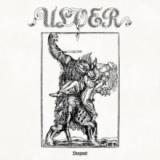
Ulver geben heute bekannt, dass ihr klassisches Promo-Tape aus dem Jahr 1993 auf Peaceville Records neu aufgelegt wird. 2023 markiert dreißig Jahre seit der Aufnahme und die Platte zeigt Ulvers Black-Metal-Wurzeln, bevor die Band begann, sich außerhalb der Grenzen des Genres zu entwickeln.
Weithin bekannt für hochkarätige Klanglandschaften und exquisite experimentelle und elektronische Kunst als Teil ihrer kontinuierlichen und sich ständig verändernden Entwicklung, verschmolzen Ulver's Anfänge ätherischen Black Metal mit zarten Folk-inspirierten Passagen. Trotz der rauen Kanten sticht das Material der Band mit seinen höchst unkonventionellen Kompositionen im Vergleich zu den primitiveren und roheren Angeboten anderer schnell aufstrebender Acts in der norwegischen Szene jener Zeit hervor.
Vargnatt war Ulvers erster Ausflug in die Wildnis und ein außergewöhnliches Debüt-Demo, das das verwendete, was zu einem Grundelement ihrer legendären Trilogie (Bergtatt, Kveldssanger und Nattens Madrigal) werden sollte, nämlich akustische Gitarren inmitten melodischer und oft komplexer und verworrener Arrangements, die mit einem bereits fortgeschrittenen Grad an Musikalität gezaubert und vorgetragen wurden, mit dem unheimlichen Gesang des langjährigen Frontmanns Kristoffer Garm" Rygg. Zu dieser frühen Inkarnation von Ulver gehörten auch Carl-Michael Eide von Aura Noir / Ved Buens Ende am Schlagzeug sowie Robin "Mean" Malmberg (von den norwegischen Pionieren Mysticum) am Bass.
Das auf dieser Platte enthaltene Audiomaterial besteht aus Originalmaterial, das vom Original-DAT stammt. Die Veröffentlichung enthält außerdem den Bonustrack "Vargnatt", der 1993 live bei Bootleg TV in Oslo aufgenommen wurde und aus der Nationalbibliothek Norwegens stammt.
Kristoffer "Garm" Rygg äußerte sich wie folgt zu der Wiederveröffentlichung:
Das ist das erste, was wir als Ulver aufgenommen haben. Wikipedia sagt, es sei unser zweites Demo, aber es ist unser erstes und einziges. Stovner, Oslo, 1993, zwei-drei Tage, wham, bam, thank you mam, mit sehr wenig oder gar keiner Erfahrung. Wir waren Kinder, 17-19 Jahre alt, und haben das Wasser getestet. Abgesehen vom Gesang und einigen merkwürdigen musikalischen Entscheidungen muss ich sagen, dass ich mich heute weit weniger dafür schäme, als ich es wahrscheinlich in den Neunzigern tat, und ich muss darüber lächeln, dass diese Aufnahme 30 Jahre später immer noch aktuell ist. Es erfüllt mich mit Freude (und etwas Traurigkeit), die verrückten Launen und Dinge, die wir erlebt haben, in relativ unberührter Form wiederzuhören. Peaceville, der Hauptlieferant vieler unserer Lieblingsplatten von damals, leistet hervorragende Arbeit bei der Wiederveröffentlichung einiger dieser alten Underground-Tapes. Also, nach ein paar limitierten Auflagen, "warum zum Teufel nicht", oder? (Kristoffer Rygg, Ulver)
Tracklisting
- 1: Jungle River Boat
- 2: Harbor Lights
- 3: Manila
- 4: Mama Iti E Papa E
- 5: Bamboo Lullaby
- 6: Ringo Oiwake
- 7: Moon Of Manakoora
- 8: Limehouse Blues
- 9: Beautiful Kahana
- 10: Caravan
- 11: Congo Train
- 12: Hello Young Lovers
Martin Denny returns with his loyal crew of multi-instrumentalists that had previously performed on
Forbidden Island, Primitiva, Hypnotique & Quiet Village: stand up bass player Harvey Ragsdale, vibe player Julius Wechter (also a member of the legendary recording unit The Wrecking Crew) and percussionist Augie Colon who was called the “Grandfather of Hawaii Percussion”. And of course, the famous cover girl on Martin Denny’s albums, Sandy Warner, otherwise known as “The Exotica Girl”, returns as well. Although Denny was recording his output at an astonishingly brisk rate, there’s something about Exotica Vol. III, which makes it one of his best and most sought-after with collectors and listeners. Of course, the brilliance of the lead-off track of Les Baxter’s “Jungle River Boat”, with its tight vibe-and-percussion workout intertwined with Colon’s iconic bird calls and other worldly sounds, only makes the sweet, lazy water sounds of the following track “Harbor Lights” all the more delightfully mysterious. So pour your drink of choice, dim the lights, open the windows, and let Exotica Vol. III roll across you.
“His last volume is a no-brainer. The material is simply too good to avoid.” – AMBIENT EXOTICA
The fourth installment in the acclaimed Jungle Scratch vinyl series brings together a heavyweight lineup
of DJs, producers, and turntablists from Poland and the UK. Jungle Scratch JS004 continues the label’s
mission to connect the energy of jungle and drum & bass with the craftsmanship of world-class scratch
performance. Numer 1, Cheeba, Sabot, and DJ Riffz (UK) contribute fresh jungle-infused tracks and cuts,
each crafted for both the dancefloor and the battle scene.
Mastering was handled by AudioAnimals (UK), ensuring the release delivers powerful low end and crisp
detail across all frequencies.
A special highlight of the record is the DJ Scratch Tool prepared by Needlework Scratch Crew — the
reigning IDA World Champions and DMC World Team Champions 2022. The crew also recorded an
The original album + 6 bonus tracks - limited edition pressing on 180g vinyl
The most talented bossa nova group of the '60s, Tamba Trio perfected a breezy,
swinging version of bossa nova vocal jazz that proved incredibly influential in Brazil
and throughout the world.
Comprising pianist Luiz Eca, bassist Bebeto, and drummer Helcio Milito, the trio not
only played a wide range of instruments but also contributed incredibly close vocal
harmonies. Presented here is their debut album, 'O Barquinho' (Little Boat), which was
a huge hit in Brazil and throughout South and Central America.
One of their later recordings, a rendition Jorge Ben's ' Mas, que nada!' ( But That Is
Nothing!) and included here as a bonus, became their best-known hit, and used most
famously by Nike in a 1998 World Cup television commercial.
Kai Winding (1922 -1983) was a Danish-born American trombonist and jazz
composer, particularly remembered for his collaborations and solo
exchanges with fellow trombonist JJ Johnson
Fans of their classic album 'The Great Kai & JJ' (Impulse!) will welcome 'Duo Bones'
with Kai trading solos with renowned Italian valve trombonist Dino Piana (1930 -
2023). The programme includes three original compositions by Kai, 'Duo Bones', 'Lady
H', and 'Stop Following Me', and one by Piana aptly titled, Kai & Dino. The rest of the
programme includes Cole Porter's 'Get Out Of Town', Bronislawl Kaper's 'On Green
Dolphin Street', Gorden Jenkin's 'This Is All I Ask', and an original composition by
producer Enrico Pieranunzi titled 'Soul Dance'.
"A series of pieces played very well, characterised by a marked swing and with solos
that transmit to the ear the joy felt by the musicians in performing them. An album of
pure fun, impeccable in execution, full of dizzying and spectacular phrasing,
impressive in the speed with which Winding and Piana intertwine their sounds in
elaborate counterpoints." - Marco Giorgi, from the liner notes
Kai Winding: trombone
Dino Piana: valve trombone
Enrico Pieranunzi: piano
Giovanni Tommaso: bass
Tullio De Piscopo: drums
Recorded by Francesco Melloni, Giovanni Fornari, Emmequattro Studio, Rome, Nov. 17
& 18, 1979.
Sex Tags UFO presents the second instalment of the non stop ongoing HOUSE music collaboration between the Burger man and DJ Sommer! Music created as house music as a FEELING!
Another four track EP smashing out some fine underground house music, all with the mix of DJ Sommers studio skills and old-school hardware approach, and the Burger man's wonky touch! The almost weekly live session recorded in DJ Sommer's studio, then arranged and mixed at Casa de Fett bare some fruits, and here is their first record!
The first track on this EP, a deep and mellow house groover, with some trippy beats and percussion that keeps it moving. Deep pad, with a light and engaging melody on top. A real house groover to start the night.
The second cut, the energy shifts! A power infused feel good house track with spacey elements, timeless and simple 909 kick, a catchy bass line, swinging hi-hats for the groove, a strong classic snap. Added with some keyboard infused organ melody, and a 303 bass line. Sparkled with some synth EFX to give it a feeling of Galaxy!
One the flip side we go back to the depth. A deep tribalistic and dubbed out house track. Simple by all means. A moving and grooving beat added with a simple but catchy pad that brings everything together! Simple, pure and groovy!
The last tune on the EP, another uplifting energy driven house track! Classic US house style, with the driving, and swinging beats to make you move. With an uplifting organ pad, and some additional party oriented flute action! A real underground party smasher!
Just as previous time, versatile, simple, raw dance floor oriented HOUSE EP made in and for the underground!
Enjoy!
In May, fans were treated to the first new music from Trentemøller since 2022. A new single, "A Different Light," showcased a stunning blend of prismatic space rock and folk. For anyone wondering if it foreshadowed the release of a full-length, Dreamweaver will drop in September, on Friday the 13th.
Featuring 10 tracks that traverse Trentemøller's many musical strengths, Dreamweaver also represents an obvious artistic leap, treading new ground while retaining the overall plot. Tracks featuring vocals come courtesy of of Iceland's Disa, who has been in Trentemøller's fold since the Memoria tour.
Dreamweaver's nylon string-led opening track, and first single from the album, "A Different Light," contains many of Trentemøller's trademarks: exploring dichotomies, musical shadowplay, Nordic frigidity, and warm waves. It opens the door for the steady, hypnotic "Nightfall," with its tetherless vocal, wistful guitars, and early morning desert chill. The third track in the opening trifecta, "Dreamweavers" finds its footing with a percussive soft trot, which starts after what feels like a shortwave radio scan in search of the right chords, eventually dialing in a weightless voice. Ostensibly keeping a ruminative pace with the previous two tracks, the song and, by extension, album soon opens up as the rest of the elements drop into place with a grand, luxurious burst.
Dreamweaver is about to enter its next phase. With the hatch blown off of the portal, the noisy "I Give My Tears," driven by its glissed and fuzzy bass line, pours into the void. It's followed by its sibling, the most chaotic track on Dreamweaver, "Behind My Eyes." Arriving as a piece of noise rock pandemonium, "Behind My Eyes," can't be contained in its plush vault. A whip-crack snare and convulsing guitars smash against each other in the song's verse chamber. The tension builds, as the particles collide, pushing past the point of critical mass, kicking off the chain reaction which is the chorus. At times it harkens back to the proto-gaze tracks that gave birth to dream pop, at others it newly defines what that is. There's no time to contemplate it, though, as the song disintegrates in a microphonic feedback instant.
A respite follows with the somnambulistic pair of "Hollow" and "Empty Beaches." Then, a moment of intensity returns as the soaring textures and tribal drum bursts of "In A Storm" take control, before being taken out with the ambient slo-core of "Winter's Ghost" and "Closure." This diptych wraps up an album which certainly feels on-script for Trentemøller, but is also much more psychedelic than previous offerings.
Dreamweaver will be released on Trentemøller's own In My Room label. It is an exceedingly immersive experience, bound to release any dormant hallucinations you may be harboring.
Tesfa Williams' La Clique EP is a masterclass in house music's evolution - a sprawling, intricate journey that seamlessly connects the genre's past, present, and future.
Drawing from a well of deep musical knowledge, the Londoner continues to push things forward, offering a stunning five-track release that moves effortlessly through Deep, Afro, Bassline, UK Funky, and everything in between. He's also brought a few friends along for the ride: Zansika, Obi, and Tendai, each adding their own unique touches to this sonic exploration.
Opening track 'Beat & Break' is a perfect introduction to what the La Clique EP has in store, Tesfa leans heavily on a classic house sound and keeps the momentum with 'Don't Stop' featuring Obi Franky. 'Brain' is a rich and bass heavy swinger while 'Gonna Get Through' featuring Zansika hits all the right notes for an anthem in the making. Last but not least there is 'Shake It Up' featuring Tendai, a pairing that is a good as it gets when Tesfa's signature Uk house goes full into swing.
Each track stands as a distinct creation, unique in its flavour and style, but all delivering the same high level of quality we've come to expect from Tesfa Williams.
The word "amateur" originates from the Latin word "amator," meaning "lover" or "admirer". This Latin term is derived from "amare," which means "to love". The French adopted "amateur" from Latin, and the English then borrowed it from French, initially retaining the sense of someone who loves or is devoted to something. Over time, the English usage of "amateur" also developed a meaning related to a lack of professional skill or experience. How did a word derived from love become a slur? Is love really so defenseless? They say love conquers all, but in reality isn’t love quite ridiculous? It has no intention, no motive, no agenda. How could it possibly prevail? It can’t be bought or sold, or so they say.Its mere existence can't be proven or even measured. What an impossible thing. Trying and failing, time and time again, no wonder cynicism always seems to win. I see “amateurism” as a delighted, even foolish, protest. Protest against everything. Of what’s expected of someone, or expected of someone to desire or strive for. To be elite, to be expert, to be professional, to be a master, to excel and succeed. Where’s the joy in that? I just want to have fun. I want to want. I want to love. And keep doing it, forever. I want to have fun, even when it’s tiring and sometimes even heaven is boring as hell. I want to be bad. I want to do my own thing. “I vant to be alone”. I want to be someone so dedicated to their passion that it starts to seem like there’s something wrong with them. All the way. We can take it all the way, and never get it back. ” - Molly Nilsson Amateur is the 12th studio album by Molly Nilsson. Deep in the teeth of a career that threatens to tip into something resembling a “legacy,” Molly Nilsson celebrates with an album recorded instinctively, quickly and bursting with so many moments of emotional brilliance and clarity it may be her greatest yet. Hers has been a career spent reaching out, perennially powerful in her earnestness, a warrior ridiculously defenceless and armed with a glittering sincerity. Shearing herself of the machinations of the music industry, recording at home, writing direct to the heart. Amateur is a jubilee for losers. A treatise in 13 songs, Amateur states clearly that we should live our life with eternal curiosity, offers us an open hand of comradeship out of the rat race. The songs on the album are both some of the most personal of Nilsson’s career and the most anthemic. First single How Much Is The World asks us to re-evaluate value in the face of a Neo-liberal system squeezing the life out of our loves. Pulsing opener Die Cry Lie satirises the commercialisation of emotion in the form of a shout-along diss-track. With a pounding rhythm track held down by gorgeous chord changes, heartbreaker Valhalla carries the torch for the main themes of the album: never growing up, making mistakes with kindness, moving on. When the drums crash in on the line “It’s going to get better now, you’ll see, going to be much better off without me” there is a world of feeling swirling about in the vocal delivery. One reading of the track might be that it’s a break up song but the subtext is classic Molly Nilsson: by living truthfully, making mistakes, we’re active agents against the myriad oppressions of the world. All The Way takes the theme for a run into the eternal sunset. It’s a manifesto for living fully. “Take it all the way, and never get it back” - it’s the process that’s the important point. The journey not the destination. Big Life, follows on like a part 2: An ode not only to Molly Nilsson’s career of endless gigs, endless connections with people, it’s a massive ode for following your dreams, doing it yourself. Closer The Bitter End is a powerful anthem for friendship, another definition of love infused in Nilsson’s work, A beautifully poignant ode to comradeship til the end, it seems to be the songwriter approaching aging, approaching life’s inevitability with the same vigour and earnestness, the same love of life she enjoyed at the onset of her career. There are moments on Amateur shrouded in reverb, slightly out of focus, forcing the listener to step deeper into the Mollyverse.. Nilsson’s open-armed beseeching to the world permeates every beat, every chord. These are songs exploding with life: the chunky, aggressive bassline on the punker Get A Life can’t hide its massive, catchy chorus. The sweeping Swedish Nightmare might be a tongue-in-cheek self-reference, but at its heart it’s a song about the duality of living life large, what is a dream, what is a nightmare? Molly Nilsson says you can’t have one without the other, and why would you want to? Here’s to making mistakes.
Anushka Chkheidze + Robert Lippok’s »Uncontrollable Thoughts« on Morr Music is the duo’s debut joint release. The Netherlands-based Georgian composer and the German sound artist from Berlin first met in 2019 in the context of a workshop programme that took place in Tbilisi, and later worked with Eto Gelashvili, Hayk Karoyi, and Lillevan on the massive »Glacier Music II« music and book project, released in 2021. This led them to engage in a less conceptually driven form of musicking and real-time composition that corresponds with their respective environments. They draw on traditions such as minimal music or late 1990s and early 2000s electronica to integrate subtle beats with elegiac organ drones, playful melodies with lush textures. The first document of an ever-shifting intergenerational dialogue, »Uncontrollable Thoughts« is a product of mutual listening outside time.
Though Chkheidze and Lippok had access to professional studios, they chose to rent a simple rehearsal space, equipped with only the bare essentials—bass and guitar amps as well as a small PA—to maintain immediacy in their working process. The music they made together corresponded to and drew on the respective possibilities and shortcomings of this studio, much like their collaboration in general is characterised by the care with which they approach each other's talents and ideas. While both had loosely defined roles—Chkheidze was responsible for the free-flowing beat programming and the evocative distortion came courtesy of Lippok, for example—they individually contributed in different ways to their joint process, which is as free of hierarchies as it is limitless. Hence, the duo’s focus on spontaneity and out-of-the-moment emergence makes them organically move beyond tried and tested conventions, resulting in music that seems to suspend time altogether.
When the first chimes on »Bird Song« announce a piece that sets rattling kickdrums against a backdrop of layered drones and rhizomatically entangled melodic elements, it becomes clear why »Uncontrollable Thoughts« carries this title: The album follows the constant detours of the subconscious of its makers, letting them explore moments of ecstasy such as on »Rainbow,« melancholy with »Field,« and the interplay of suspense and release through the ten-minute-long title track. But the different pieces also tie into one aother in various ways. The dirge-like organ drones on which »Rainbow Road« ends reappear in the beginning of »Uncontrollable Thoughts,« much like Chkheidze’s gentle yet emphatic piano chords on »Field« seem to provide the starting point from which the artist develops the striking motifs of the final piece »Opening«, whose title itself suggests that the record as a whole can and should be enjoyed as a loop. All this creates a unique, idiosyncratic temporal logic.
While there is much that sets Chkheidze and Lippok apart as solo artists, the major shared leitmotif in their respective bodies of work is the sonic engagement with space. »Uncontrollable Thoughts« is hence best understood as an extension of this practice; as an album that maps the geographies of their minds in motion, tracing musical movements as they melt into each other.
Downwards present Alexander Tucker in metamorphosis from psych folk to techgnostic bard, aided by notable guests – Justin K Broadrick, Regis, Phew, Karl D’Silva, JJOWDY, and Elvin Brandhi – in a quest for disordered convention and new thrills. One up to Tucker’s outings for Alter and The Tapeworm, and spiritual successor to his »Nonexistant« trio on Downwards, »Clear Vortex Chamber« is an enigmatic take on the brownfield edgelands where the eldritch intersects electronic heck. Decades of work spread between hardcore punk, psych rock, folk, and drone — including work with Stephen O’Malley (Ginnungap) and Neil Campbell (Astral Social Club, ESP Kinetic) — feed forward into this album’s unsteady machine rhythms and cranky junkyard atonalities, where Tucker panel-beats aspects of his previous sound with a newfound industrial thrust and cyber-punky lust that suits him dead well.
A crafty example of how to mutate without losing sight of yourself, the album’s eight parts feel like a cyborg patching itself into modernity. On opener »Udug« Tucker’s signature falsetto peals from a A Scanner Darkly-style scramble suit of stereo-strobing electronics, setting a melodramatic, neo-gothic tension that riddles the album thru the knotted, fractured industrial dancehall bullishness of »Mallets« with Yeah You’s feral gob Elvin Brandhi, via a pair of standout »Fedbck« parts with Tucker’s personal idol, Justin K Broadrick (Godflesh, Jesu, and the rest), featuring the Brum deity’s claw-handed riffs and howl on the first, and smeared with Karl D’Silva’s brass in its noctilucent second part.
Regis also proves a staunch foil for the album’s most robust, club-ready cut »Zona«, hammered out from buzzing metallic drums and monotone bass drones, and pitting his severed vox against Tucker’s own androgynous harmonies to recall aspects of The Ephemeron Loop via British Murder Boys, whilst scene legend, Can and Ryuichi Sakamoto spar Phew (aka Aunt Sally) ideally tempers the flow in a relatively soothing »Sansu«, sharing more cyber-romantic, recombinant sentiments with the channelling of Robert Wyatt gone Funk Bruxaria on »Folded«.
There is a new artist from Japan followed by the name Kakeru who is giving his Shaw Cuts debut with ãRaw CourageÒ, telling the story of an emperor besieged by an army who then entrusts his child to the Black Dragon Clan heading off to a dangerous journey.
An attempt to usurp the Ming Emperor's throne by the sinister martial artist simply known as ãold monster" and his armies results in most of the palace being massacred. ãQuagmireÒ and its vibrant percussive pattern carried by a heavy broken kick and a driving bassline help the emperorÕs infant son to escape and put in care of the Black Dragon Clan.
En route they are attacked by government forces but rescued by two knights. They prove to be a valuable addition to the party in subsequent encounters with their pursuers. ãMirror ForestÒ and its laid-back atmosphere, mysterious vocal snatches and shining pads carried by an expressive drum pattern help the travellers parrying every sneaky attack on their journey.
Trying to head to the White Dragon Clan in order to seek for help, the squad has to masquerade and take several battles, always protecting the baby in tow. The razor-sharp percussions, corrosive bass and thrashing kick of ãSwayingÒ tremendously supports the warriors in each fight.
Finally they make it to the temple of the White Dragons where they show their Black Dragon seal as a sign of solidarity. But all of a sudden the mood changes. ãBroken BubblesÒ and its menacing atmosphere built up by a monstrous sub bass, reduced but impactful drums and subtle synth elements underline the potential threat. Did they walk into a trap? Is there enough energy left for one big fight? Raw courage is vital now.
CENTRAL's new release is already here! On the B-Side, DJ KAWASAKI has edited the extra-hit “Samurai” to make it an even hotter dance track!
Both sides of the album are perfect for the field!
CENTRAL, a salsa band that has suddenly gained attention after releasing two singles and a full-length album last year, but is actually a group of seasoned salsa veterans, has already released a new single! This time around, CENTRAL has released a cover of “Brazilian Rhyme,” one of Earth, Wind & Fire's many classic songs that still remains a dance floor favorite, with a Latin arrangement that is full of CENTRAL's signature style. The groovy bass, shimmering electric piano, percussion, and outstanding horn arrangement make you want to dance and scream, “This is CENTRAL! The B-Side features DJ KAWASAKI's edit of “Samurai,” a definitive mellow salsa track that has now become a WANT-requested item from all over the world, sublimated into an even hotter dance track!
This summer, dance hard to CENTRAL's salsa!
oDYSea is back for its second release with the much-awaited debut EP of Penelope, featuring four compelling club tracks brimming with power and grace.
Opener ‘Unexpected Dreams’ surges with muscular basslines and acid liquidity, while ‘Usual Suspects’ adds crashing breaks into the mix.
On the B-side, ‘Strange World’ steps into outer space with a broken beat, alien foghorn motif and big synth riffs, before the electro-house groove of ‘Flow’ sends us home with a funky bang. A hypnotic blend of techno pulse and delicate breaks, ready to take you on a full dance floor immersion.