We The People were a vocal quarter who recorded a handful of singles between 1969 and 1976. Their most prolific release is this release from 1973 produced by Landy Mcneal. The music arranger was prolific Bert DeCoteaux Ace Spectrum (“Don’t Send Nobody Else”). Also Patti Austin, The Main Ingredient, Roy Ayers, Ramsey Lewis, Ben E.King, Sister Sledge, Lonnie Liston Smith and Marlena Shaw to name a few
Search:q bert
In October 2025, Västkransen Records releases its 10th output — a milestone double 12" vinyl compilation featuring eight dance tracks from some of Stockholm’s finest producers and DJs. A celebration of the city’s underground electronic music scene, Västkransen 10 brings together familiar names from the label’s past as well as producers making their record debut. What they all share is a vital role in the sound and spirit of Stockholm’s dance music today.
Launched in 2017, Västkransen Records grew out of Gården – a seasonal open-air party held beneath a highway on the border between the neighborhoods of Västberga and Midsommarkransen. Set in a place where industrial landscapes meet nature, this location has shaped both the party’s unique atmosphere and its blend of groovy sounds and rawer beats. Starting a label was a way to keep that energy going and showcase artists and selectors with few outlets in a city, at the time, often drawn to darker and harder strains of dance music.
Ambarchi, Berthling and Werliin are back, a little looser and wilder than before. Their ability to lock in and focus on the smallest of details is enhanced here by a sense of increased immediacy. Great news for fans of stimulating variations of tone and mood within a potentially infinite universe of rhythm and sound! The more you listen to Ghosted III, the better your hearing becomes. Or maybe it"s just that you hear more every time you play it.
The occasion of possibility runs through Ben Bertrand's new album Relic Radiation. It is all backdrops and layers. Hints of the emotive and the distant. Confronting the classical with what is new, looking for an expressive space. Melancholy, not melancholy. Contemplation on a midnight blizzard. Dust motes in a sunbeam. Sand dunes and microwaves.
Ever since 2018 and the release of his first solo album, Ben Bertrand has been working up his own interpretation of the bass clarinet as an instrument of the avant-garde. Touching upon ambient and cosmic as well as earthy sceneries, his is a gentle musical paradox come to life. Let go of explicit pleasantries, Relic Radiation is the polymathic interpretation of a frozen intercom, of a subdued intent of contact. The music is competent and familiar, distant without being distant. There is no predefined form or context here. It is a different kind of colour.
As musical moments and modi become enormous, things break down into exploration. On the crystal shores of perception, Relic Radiation leaves a lot of space for interpretation. It is never loud, although it works loud. An at times almost sequenced feel to treated and overdubbed bass clarinet and clarinet notes adds to a feeling of paradox. Every voice, every gesture indicates a way in. The electron is now an immeasurable wave."
Evissimax and Protopapa present a "double face" vinyl record that reimagines the 70s and 80s sounds of one of Italy's musical legends: Loredana Bertè.
"Fare l’amore" comes from Bertè's scandalous and psychedelic debut album (1974). Evissimax's unique style preserves the song's message of freedom, bridging generations united by shared ideals and explosive energy.
Protopapa, a DJ and a key figure in Italy's LGBTQIA+ community and electronic music scene, has previously remixed tracks by Raffaella Carrà, Ricchi e Poveri, and Ornella Vanoni. His remix of "La goccia" is a return to his roots, giving the track an electro makeover that blends with the original's rock essence. The remix incorporates hints of UK garage and classic house samples, staples of his DJ sets.
SCALER are the electrifying Bristol-based band hailed as the city’s “next national breakthrough” thanks to their pulverising live show and meticulous, mind-warping sound. Now they’re back with ‘Endlessly’, a sublime and stylistically expansive new album. 10 potent tracks written and recorded more collaboratively than ever before, as SCALER explore what it means to make music with no ceiling.
Building on what they know and taking it in new directions has been a constant throughout the three-year journey behind ‘Endlessly’, which came together in the studio beneath Bristol’s legendary The Louisiana. Inspired by time apart, the album finds them reconnecting with their diverse sonic touchpoints – many tangled in their city’s much-mused-on musical heritage – and the creative energy of collaborators around them. Close friends and long-admired peers, including Akiko Haruna, Art School Girlfriend, Tlya X An, Shadow Stevie, Thomas Ridley and Cold Light’s ELDON add colour to SCALER’s darkened palette and point to the left-turns they’re leaning into. The intense softens into introspection. The blistering becomes a balm.
‘Endlessly’ is the second album from SCALER, a.k.a. Alex Hill, Isaac Jones, James Rushforth and Nick Berthoud, alongside visual artist Jason Baker. The record follows 2022’s acclaimed ‘Void’ and marks their debut for Bristol’s revered Black Acre, a longtime champion of genre-defying electronic music.
26th May 1980. We were kids, or we were not even born yet. This day changed the thinking and the future of an entire nation. That day one man carried the weight of history and all the hope of a whole country, to infinity and back.
Bertalan Farkas was the first Hungarian to make a successful landing aboard SOYUZ-36 as part of the Interkosmos program led by the Soviet Union. Together with his partner Valery Kubasov, on 26th May 1980 he launched into outer space from the Baikonur Cosmodrome. With this space travel Hungary became the seventh nation to enter outer space.
In addition to his professional knowledge and merits, an entire country celebrated him for his humanity and loyalty to his people. The national hero of the 80's inspired generations. As children we wanted to be astronauts, and as adults we look up to the stars and the endless sky with the same childlike enthusiasm.
In an ever-expanding musical universe, Azymuth have long existed as a celestial giant, drawing countless artists, musicians and followers into their orbit. Marking fifty years since their 1975 debut album Azimuth, their new album Marca Passo proves that the band’s alchemic brew of Brazilian jazz-funk and cosmic samba soul remains as vital as ever, as the group honours the profound legacy of their departed founders.
Recorded in Rio de Janeiro, Marca Passo is the first full-length release since the passing of founding drummer Ivan "Mamão" Conti in 2023, following the earlier loss of keyboardist José Roberto Bertrami in 2012. Alex Malheiros, the sole remaining original member, sees his stewardship of the band’s musical legacy as his spiritual duty. He is joined by the equally devoted Kiko Continentino (Milton Nascimento, Djavan) on keyboards, who has been with the group since 2016, and new recruit Renato Massa (Marcos Valle, Ed Motta) on drums.
Yet since their earliest recorded music, Azymuth have always been far greater than the sum of their parts. The "three-man orchestra’s" unmistakable sound is rooted in Brazil's MPB studio scene of the 1970s and early 1980s—a time when artists blended traditional Brazilian rhythms with global jazz, rock, and emerging psychedelic and progressive elements. Marca Passo continues this legacy, seamlessly fusing Brazilian musical traditions with global influences while showcasing the exceptional musicianship that powers Azymuth's distinctive, multi-dimensional sound.
The album is produced by studio mastermind Daniel Maunick, responsible for Azymuth’s two previous studio albums, Fênix in 2016 and Aurora in 2011. Daniel’s credits also include albums by Marcos Valle, Sabrina Malheiros and Terry Callier. Azymuth also invited Daniel’s father, British jazz-funk royalty Jean Paul “Bluey” Maunick, of Incognito, to play guitar on a new version of Azymuth’s eighties classic “Last Summer In Rio”, in tribute to the song’s composer, José Roberto Bertrami. Equally, “Samba Pro Mamao” is a new composition dedicated to Azymuth’s beloved original drummer, Ivan “Mamão” Conti.
Credits:
Alex Malheiros - Bass, Acoustic Guitar & Vocals: 1,2, 3, 4, 5, 6, 7, 8, 9, 10
Kiko Continentino - Keyboards, Organ, Vocoder & Vocals: 2, 3, 4, 5, 6, 7, 8, 9, 10
Renato Massa - Drums & Vocals: : 2, 3, 4, 5, 6, 8, 9, 10
Ian Moreira - Percussion: 1, 2, 3, 4, 5, 6, 8, 9, 10
Sidinho Moreira - Percussion: 1, 2, 3, 4, 5, 7, 8, 9, 10
Dudu Viana - Keyboards & Vocals: 1
Victor Bertrami - Drums: 1
Mangueirinha - Repinique: 3
Jean Paul ‘Bluey’ Maunick - Electric Guitar: 5
Jose Carlos Bigorna - Soprano Sax: 9
Daniel Maunick: Additional Percussion, Synths & EFX: 1, 2, 3, 4, 5, 6, 7, 8, 9
Produced, Engineered, Mixed & Arranged by Daniel Maunick
Co-Produced & Arranged by Alex Malheiros
Executive Producer: Joe Davis
Recorded by:
Daniel Maunick & Leonardo Vieira @ Estúdio Nos Trilhos, Santa Teresa, Rio, Brazil
Daniel Maunick & Amadeu Signorelli @ Sigstudio, Niterói, Rio, Brazil
Daniel Maunick & Alex Malheiros @ Estúdio Basslab, Piratininga, Rio, Brazil
Mixed by Daniel Maunick @ The Sugar Shack, Carluke, Scotland
Artwork & Design: Tyler Askew
- A1: Speak Like A Child
- A2: Party Chambers
- A3: Mick's Up
- A4: Headstart For Happiness (Early Version)
- A5: Money-Go-Round (Parts 1&2) (Bert Bevans Remix/Club Mix)
- B1: Long Hot Summer (Extended Version)
- B2: Le Depart
- B3: The Paris Match
- B4: Spring, Summer, Autumn
- B5: Mick's Company
- C1: Mick's Blessings
- C2: The Whole Point Of No Return
- C3: Me Ship Came In!
- C4: Blue Café
- C5: The Paris Match
- C6: My Ever Changing Moods
- C7: Dropping Bombs On The Whitehouse
- D1: A Gospel
- D2: Strength Of Your Nature
- D3: You're The Best Thing
- D4: Here's One That Got Away
- D5: Headstart For Happiness
- D6: Council Meetin
- E1: My Ever Changing Moods (Long Version)
- E4: Mick’s Demo
- E5: Take It To The Top (Demo)
- E6: Dropping Bombs On The White House (Alternate Version)
- F2: A Solid Bond In Your Heart
- F3: The Big Boss Groove (12" Version)
- F4: You're The Dub Thing
- F1: Long Hot Summer (Pre Tsc Demo
- E2: Party Chambers (Alternate Version)
- E3: Up For Grabs (Demo)
When The Style Council’s debut album Café Bleu was released in 1984, Weller and wing-man Mick Talbot unveiled a cosmopolitan blend of jazz, soul, and pop that felt effortlessly sophisticated and daringly fresh. Café Bleu was more than a debut—it was a statement of intent, redefining what British pop could sound like in a new decade.
Since then, fans have been waiting for a deep dive into the Style Council vaults eager to hear any unreleased material. And now the wait is over.
The Café Bleu Special Edition is a treasure trove for Style Council devotees and music lovers alike - an immersive journey into one of the most inventive eras of Paul Weller’s career. This lavish release unveils a wealth of previously unheard material, including early demos, alternate takes, and unreleased songs that showcase the band’s restless drive for experimentation and evolution.
- A1: You Say I'm Crazy (Feat. Alice Carreri )
- A2: Sign Me Out (Feat. Fanney Osk)
- A3: Bodycodes (Feat. Asbjorn)
- B1: The Song Is In The Drum
- B2: Romano Song (Feat. Annisette Koppel)
- B3: Welcome To My Dream (Feat. Tuco)
- C1: Smoke Through Fire (Feat. Asbjorn)
- C2: Grey Heron Man
- C3: Landscape Of Love (Feat. Fanney Osk)
- D1: Ghost Mosquitoes
- D2: Crazy Epilogue (Feat. Alice Carreri)
Limited, 500 copies black gatefold 2LP...
Originally released in 2013, the long-awaited second album from Lulu Rouge finally returns to vinyl in its first-ever limited repress — revived after years of growing demand.
The Song Is In The Drum captures the duo at their most fearless and immersive. Known for their deep melancholia and anti-traditional pop structures, Lulu Rouge blur the lines between dark dub, cinematic electronica, and left-field songwriting. Intense, soul-cutting vocal pieces unfold alongside towering instrumentals — brooding, beautiful, and unapologetically atmospheric.
The album features standout appearances from Danish indie pop visionary Asbjørn and Icelandic-born vocalist Fanney Osk, adding further depth to an already richly textured sonic landscape.
Across 11 meticulously crafted tracks, producers Torsten “Buda” Jacobsen and Thomas “T.O.M” Bertelsen shape a world that feels both intimate and vast. Every beat is deliberate, every space intentional. This is music that doesn’t simply play — it envelops.
Fifty-three minutes that grip you by the heart and refuse to let go.
Welcome to the brightest dark place you’ve ever been.
Look out for a much anticipated new album coming later this year from Lulu Rouge - making this re-issue a timely reminder of the power of their work.
Transpac delivers the fourteenth drop on Curtis Electronix presenting Infobahn LP, a seven-track odyssey that showcases their refined, perceptive approach to Electro. Throughout the record they blend elegance and precision through a carefully crafted sonic environment where every sound, frequency, and element serves a purpose. It effortlessly alternates between 4/4 dancefloor killers and beatless segments, creating a dynamic energy that balances weightlessness and density. This interplay of intensity and suspension makes this record unpredictable and striking. The seeming simplicity of the structure hides a deep, sophisticated exploration of sound, where atmospheric textures and production dig deep into the potentialities of space and frequency. Simplicity serves as a gateway through which the deepest complexities unfold.
- A1: Design - Premonition
- A2: Vision - Lucifer’s Friend
- A3: Richard Bone - Alien Girl
- A4: John Howard - I Tune Into You
- A5: Ian North - We’re Not Lonely
- A6: Selwin Image - The Unknown
- B1: Harry Kakoulli - I’m On A Rocket
- B2: Rich Wilde - The Lady Wants To Be Alone
- B3: Billy London - Woman
- B4: Alan Burnham - Science Fiction
- B5: The Microbes - Computer
- B6: The Goo-Q - I’m A Computer
- C1: Gerry & The Holograms - Gerry & The Holograms
- C2: The Warlord - The Ultimate Warlord
- C3: Die Marinas - Fred From Jupiter
- C4: Dee Jay Bert & Eagle - I Am Your Master
- C5: Peta Lily & Michael Process - I Am A Time Bomb
- C6: Sole Sister - It’s Not What You Are But How
- D1: Alasdair Riddell - Do You Read Me?
- D2: Karel Fialka - Armband (The Mystery Song)
- D3: John Springate - My Life
- D4: Incandescent Luminaire - Famous Names
- D5: Disco Volante - No Motion
- D6: Dream Unit - A Drop In The Ocean
Compiled by Philip King
“And then came the rise of synth pop : blokes with dodgy haircuts hunched over keyboard-operated
machines stuffed with wires and do-it-yourself tone oscillators making sounds like a brood of geese
passing gas in a wind tunnel. Whoopee! This is the way the ‘70s ended : not with a blood-curdling bang
bang but with a cheap, synthesized, emasculating whimper.”
NICK KENT, NME.
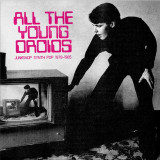
All The Young Droids: Junkshop Synth Pop 1978-1985 is a new compilation that charts the
underbelly of the epoch-defining sound of the synthesiser in 80s popular music. Compiled by Philip
King (previously seen compiling All The Young Droogs, Glitterbest and Boobs - The Junkshop
Glam Discotheque), the music here connects the dots between DIY synth enthusiasts grappling with
new, cheap synthesisers at the tail-end of punk and wannabe, jobbing songwriters enthral to the new
music pioneered by Gary Numan, Depeche Mode and Daniel Miller’s Mute Records. Featuring rare
tracks of auto-didactic progressive pop music, proto-techno punk, shoot-for-the-stars-land-in-the-gutter
chart flops and heralded, underground synth classics, School Daze paints a picture of beautiful failure.
Complete with extensive sleeve notes written by King and never before seen imagery, all 24 tracks
were remastered by RPM in-house engineer Simon Murphy, many from vinyl copies due to lost master
tapes. The story told on All The Young Droids is one of the dawning opportunity presented by both the
emergence to the market of cheaper analog synthesisers and the distribution networks plus indie labels
that exploded with the advent of punk music in 1976. While the music that sprouted out all over the
globe in the wake of these factors was decried as fake, plastic, a refutation of punk’s guitar-led
revolution, it’s telling that much of the music on All The Young Droids.. was created in bedrooms,
ramshackle studios and home-made set ups with often borrowed equipment. In the era of record labels
jumping to capitalise on the success of The Sex Pistols, The Clash (both on major labels, of course)
these artists struggled to stand out from a new gold-rush with next to no budget or PR team. With radio
and labels desperate for the new Yazoo, what resulted was a testament to necessity being the mother
of invention.
At the time, the synthesiser was the music of the future, a shiny new machine that could paint like an
orchestra with a single finger and a 4-track. In the hands of Manchester avant-pranksters Gerry & The
Holograms it’s a pulsing, sardonic weapon.. the only instrument on the Messthetics classic lampooning
of New Wave fashion. In Hamburg, a 16 year old Andreas Dorau used it to write and record (with his
female classmates on vocals) a global smash in Fred Vom Jupiter (later licensed to Mute Records).
The hard-to-find English version (Fred From Jupiter, natch) is included here. Many artists with alreadystoried careers caught the bug and recorded synthesiser-fuelled peons to space, computers, the future
and, of course, love-interests. Harry Kakoulli, late of Squeeze, recorded a solo album in 1979 that
included the incredible power-synth-pop smash-that-never-smashed I’m On A Rocket. Similarly, Ian
North of Neo and American Power Pop stalwarts Milk ’n’ Cookies bought a Korg MS20 and used a
tape machine to record We’re Not Lonely, an absolute lost-classic of minimal synth pop. We’re Not
Lonely also features on the Junkshop Synth Pop sampler 7” twinned with John Howard unreleased
track You Will See, released April 12th 2025.
There are plenty of compilation debuts in evidence. Sole Sister were a mysterious trio who were
featured on the Scaling Triangles compilation of female-fronted, queer-adjacent post-punk /
underground music that also featured The Petticoats. Selwin Image were from San Francisco and
featured members of the recently defunct power pop/punk group The Pushups. Their stupidly catchy
The Unknown fizzes with New Wave energy - think XTC to Sparks but remains unreleased until now.
Dream Unit’s A Drop In The Ocean is an early synth wave cut, positively teaming with Joy Division
instrumentation, previously only released on a long-forgotten and super rare, self-released EP.
Incandescent Luminaire’s Famous Names belies an archetypal struggle of a small-town trying to
make it in a cruel industry but is a thrilling New Romantic-Synth Wave cross over with a OMD
gloominess that’s a joy to hear. Feminist Minimal Wave track I Am A Time Bomb by performance artist
Peta Lilly and Michael Chance is a revelation destined for new found cult status. It was released on 7”
and lost until now.
The flipside to the subterranean, never-made-it synth pop mentioned above are the ambitious, even
fruity attempts at success that have a perennial elegance to their confidence. New Jersey-ite Billy
London (real name Ed Barth) tried to cash in on the synth boom with Woman, released by a major
label, a lurching new wave track built on the Louie Louie rhythm and a wonderfully camp Lou Reedstyle sleazy vocal before exploding in the synthesised chorus. The song bombed but with a chorus like
this, you have to wonder why? Ex-Glitter Band member John Springate’s My Life is truly epic, with
doomed chord progressions and massive sounding drums turning into at least 3 different songs in the
course of the track. Before you wonder what’s going on the song resolves with a glorious return to the
main refrain.
The dry-ice-dressed dance floor is well catered for too. Design’s Premonition and Vision’s Lucifer’s
Friend are stone-cold minimal synth bangers, well loved but given a new lease of life here. The
Warlord’s The Ultimate Warlord was released in 1978, a homespun proto Hi NRG banger that was
later re-recorded by The Immortals in Canada who had a club hit with it. One-man- band Disco
Volante’s No Motion was re-issued by Synth wave label Medical in 2012 but makes its first vinyl
compilation appearance here. Close your eyes and you can imagine what Lawrence of Felt would have
sounded like with some cheap Korgs a little earlier in his career. Gibraltar-based trio The Microbes
imagined a computer programming people to dance - how prescient - and ended up with a propulsive,
robo-funk track with splendid rubbery bass playing over a tectonic drum machine. Previously picked up
by Belgian label Stroom TV, Dee Jay Bert & Eagle’s heavily Euro-accented I Am Your Master
demands the listener to “come to paradise!” In a frankly terrifying manner.
All The Young Droids is the first compilation to peel away from the narrative that dour, Minimal Synth
and Cold Wave were the only musical children of the first rush of synth pop. Philip King and School
Daze Records describe a much more complicated world: along with the austere, Brutalist children of
Daniel Miller (who produced Alan Burnham’s Bowie-Low-influenced Science Fiction here) was a
plethora of desperate cash-ins, accidental mainstream hits, ambitious pop dramas and major label
punts that went nowhere. Crucially, the compilation blurs the line between junk and treasure. What if the
two things are interchangeable. What if it’s all science fiction?
In an ever-expanding musical universe, Azymuth have long existed as a celestial giant, drawing countless artists, musicians and followers into their orbit. Marking fifty years since their 1975 debut album Azimuth, their new album Marca Passo proves that the band’s alchemic brew of Brazilian jazz-funk and cosmic samba soul remains as vital as ever, as the group honours the profound legacy of their departed founders.
Recorded in Rio de Janeiro, Marca Passo is the first full-length release since the passing of founding drummer Ivan "Mamão" Conti in 2023, following the earlier loss of keyboardist José Roberto Bertrami in 2012. Alex Malheiros, the sole remaining original member, sees his stewardship of the band’s musical legacy as his spiritual duty. He is joined by the equally devoted Kiko Continentino (Milton Nascimento, Djavan) on keyboards, who has been with the group since 2016, and new recruit Renato Massa (Marcos Valle, Ed Motta) on drums.
Yet since their earliest recorded music, Azymuth have always been far greater than the sum of their parts. The "three-man orchestra’s" unmistakable sound is rooted in Brazil's MPB studio scene of the 1970s and early 1980s—a time when artists blended traditional Brazilian rhythms with global jazz, rock, and emerging psychedelic and progressive elements. Marca Passo continues this legacy, seamlessly fusing Brazilian musical traditions with global influences while showcasing the exceptional musicianship that powers Azymuth's distinctive, multi-dimensional sound.
The album is produced by studio mastermind Daniel Maunick, responsible for Azymuth’s two previous studio albums, Fênix in 2016 and Aurora in 2011. Daniel’s credits also include albums by Marcos Valle, Sabrina Malheiros and Terry Callier. Azymuth also invited Daniel’s father, British jazz-funk royalty Jean Paul “Bluey” Maunick, of Incognito, to play guitar on a new version of Azymuth’s eighties classic “Last Summer In Rio”, in tribute to the song’s composer, José Roberto Bertrami. Equally, “Samba Pro Mamao” is a new composition dedicated to Azymuth’s beloved original drummer, Ivan “Mamão” Conti.
Credits:
Alex Malheiros - Bass, Acoustic Guitar & Vocals: 1,2, 3, 4, 5, 6, 7, 8, 9, 10
Kiko Continentino - Keyboards, Organ, Vocoder & Vocals: 2, 3, 4, 5, 6, 7, 8, 9, 10
Renato Massa - Drums & Vocals: : 2, 3, 4, 5, 6, 8, 9, 10
Ian Moreira - Percussion: 1, 2, 3, 4, 5, 6, 8, 9, 10
Sidinho Moreira - Percussion: 1, 2, 3, 4, 5, 7, 8, 9, 10
Dudu Viana - Keyboards & Vocals: 1
Victor Bertrami - Drums: 1
Mangueirinha - Repinique: 3
Jean Paul ‘Bluey’ Maunick - Electric Guitar: 5
Jose Carlos Bigorna - Soprano Sax: 9
Daniel Maunick: Additional Percussion, Synths & EFX: 1, 2, 3, 4, 5, 6, 7, 8, 9
Produced, Engineered, Mixed & Arranged by Daniel Maunick
Co-Produced & Arranged by Alex Malheiros
Executive Producer: Joe Davis
Recorded by:
Daniel Maunick & Leonardo Vieira @ Estúdio Nos Trilhos, Santa Teresa, Rio, Brazil
Daniel Maunick & Amadeu Signorelli @ Sigstudio, Niterói, Rio, Brazil
Daniel Maunick & Alex Malheiros @ Estúdio Basslab, Piratininga, Rio, Brazil
Mixed by Daniel Maunick @ The Sugar Shack, Carluke, Scotland
Artwork & Design: Tyler Askew
- A1: Walter Rizzati - Fantasia Della Natura 3 43
- A2: Armando Sciascia Orchestra - Pusherman 3 33
- A3: Leo Cavallo - Smoke 3 40
- A4: Riz Ortolani E La Sua Orchestra - Meeting At Pub Swan 3 53
- A5: Orchestra Carlo Cordara - Battuta D’arresto 2 50
- B1: Romano Mussolini Trio - Blues For Alexandra 5 21
- B2: Graziano Mandozzi - Bilder Des Ruhmes 2 14
- B3: Berto Pisano - Flowers 2 38
- B4: Pippo Caruso - Sonatina Sui Tasti Neri 2 42
- B5: Orchestra Gino Paolillo - Xeus 3 49
- B6: Orchestra Giancarlo Chiaramello - Arequipa De Noche 2 18
- C1: Marcello Giombini - Zelda Theme 2 23
- C2: Vince Tempera - Ansia 3 52
- C3: Francesco Rajola - Idra 2 32
- C4: Franco Tallarita - Caos 2 33
- C5: Roberto De Simone - Dies Irae 5 25
- D1: Giampaolo Bellazza - Tropical Suite 3 50
- D2: Complesso I Centauri - The Blue Beat 2 41
- D3: Aldo Buonocore - La Festa 4 03
- D4: Black Blowing Flowers - Human Glow (Calore Umano) 5 10
- D5: Complesso Strumentale I Panamera - Scorribanda Shake 3 03
180 G. BLACK VINYL WITH LINER NOTES IN CREOLE, FRENCH, ENGLISH
Originally released in 1979, "Spiritual Sound" lives up to its name, a soaring, triumphant album, six tracks of spirit magic from Guadeloupe.
Telluric, intense, terribly alive, the gwoka drums of Guadeloupe carry the identity of a painful and fervent island. Marked forever by the crime of slavery, Guadeloupe's créolité cherishes the ka drums and their natural environment: the low-pitched boula drum with male goatskin, the high-pitched soloist makè drum with female goatskin, the chacha, ti bwa, triangle, calabash and other percussion instruments that surround them, and the voices - the fiery, proud, timbred, urgent voices of the gwoka.
This album is also a legend for its voices: in his then dazzling youth, singer Lukuber Séjor was one of the first gwoka artists to largely feminize the chorus of répondè, who converse with his text delivered in a straight and powerful voice.
And everything here sets new standards. In 1979, Mizik Filamonik - Spiritual Sound proclaimed a spiritual patriotism of ferocious intensity. The album by Lukuber Séjor - whose spelling alone is a battle - sets out to give Guadeloupe the intangible weapons of self-respect and self-knowledge, through a singular practice of traditional music.
The genesis of gwoka music is less straightforward than one might imagine... The drums performed the servile task of accompanying the work of slaves in the fields and during the “corvées” imposed by the administration, before being freely practiced by the common people after the abolition of 1848. At the heart of the conviviality of the Guadeloupeans furthest from the cities - geographically and socially - the gwoka drums come out for carnival, funeral wakes and neighborhood celebrations, but also during strikes, fits of anger and armed vigils of the riots and revolts that have punctuated the island's history. For generations, governors of the colony and then the prefects of the overseas department of Guadeloupe have been viewing the gwoka as a potential for turbulence and a threat to public order.
But as the Beatlesmania, “chanson engagée” and rock revolutions unfolded in Europe, young people turned to the drums of mizik a vié nèg (“bad negro music”, in Creole), which Guadeloupeans had learned to despise by following the “assimilation” process advocated by the school system and most of the political class. At the end of the sixties, in a Guadeloupe mourning the deadly repression of the May 1967 social movement, they played traditional music, refusing to wrap it up in tourist prettiness and madras folk costumes. Instinctively, they played a rough and contemporary gwoka, led by the incendiary Guy Konkèt. This was the era of decisive 45 rpm records such as Robert Loyson's Kann a la richès, which brought to light the fieriest words of union rallies.
At his home in Sainte-Anne, Lukuber Séjor played with flautist Olivier Vamur and his brother Claude Vamur, who cobbled together a drum kit from tin crockery and became, a few years later, the most influential drummer in Kassav'.
These were the years of the Bumidom program, when young Guadeloupeans were encouraged to emigrate to mainland France. At the age of twenty, Lukuber Séjor embarked on the liner Irpinia, disembarking at Le Havre and taking the train to the Gare Saint-Lazare - the route taken by thousands of young West Indians who went on to study or looked for work, all the while trying to maintain a link with their homeland. In this case, it's at the Antony university residence, where Lukuber played the drum and participated in a thousand gwoka updates and aggiornamentos, while exile reinforced the need for a spiritual link with the native land.
In 1978, Guy Konkèt played at the Salle Wagram, a historic event for West Indian music. After serving as répondè - i.e. backing vocalist - on one of his home-recorded albums, Lukuber joined his live band. Little by little, he became one of the key artists on a circuit parallel to French show business. At a student party in Caen, he met a young woman from Martinique who, at the time, was more motivated by her ambitions as a visual artist than by her vocation as a musician. Her name was Jocelyne Béroard and, a few years before she plunged into the Kassav' adventure and became the greatest West Indian singer of her generation, she designed the cover of Lukuber Séjor's LP.
This ambition was obvious and imposed its will. A more or less regular band was formed, with Roger Raspail, Rudy Mompière and Éric Danquin on ka drums, Claude Vamur on ti bwa, Olivier Vamur and Françoise Lancréot on flutes and Annick Noël on keyboards. Lukuber Séjor is set on wanting to extend the gwoka palette to other instruments, as the jazz-rock revolution opens a thousand new doors. Annick Noël will play a wide range of timbres and textures on electric piano and synthesizer. Another novelty: the répondè are two men and two women, Roger Raspail, Olivier Vamur, Françoise Lancréot and Maryann Mathéus ...
Mizik Filamonik - Spiritual Sound is a self-production in which the singer and leader sank all his savings, allowing him no more than a single day in the studio. The first side is more of a musical manifesto, with the first two tracks, Éritage and Penn é plézi, being instrumentals. The third, Son, forcefully celebrates the need for Guadeloupeans to connect with the gwoka. In fact, Jocelyne Béroard's cover shows a tambouyé in the shadow of a cloudy sky, against which a radiant sun is rising and whose light will soon flood the entire landscape. The silhouette and face of this man strongly evoke the immense Vélo, master of the ka, rejected at the time on the fringes of society.
The second side of the LP is surprising. Formally, three tracks are explicitly linked like the three parts of a triptych. Primyé voyaj evokes the appalling tribulation of Africans deported as slaves to Guadeloupe; dézyèm voyaj speaks of the Bumidom program and the economic, political and social forces driving young Guadeloupeans towards the mirage of prosperity in France; twazyèm voyaj closes the cycle with the emigrants' return from Europe after years away from their island...
This gwoka, obsessed with the need to save Guadeloupe spiritually, appeals far beyond the politicized audience. Mizik Filamonik - Spiritual Sound instantly became a classic, although Lukuber Séjor never really made a career for himself as a musician.
After all, the album was released in 1980, with no promotional resources in France or Guadeloupe - and therefore no concerts. The thirty-two-year-old author, composer and performer made his own third trip back to Guadeloupe. He set up a small woodworking business, which he lost in Hurricane Hugo in 1989. His other activity, teaching in a medical-educational institute, became the core of his professional life. He continued to be an active campaigner - a campaigner for the Creole language, a campaigner for the reawakening of identity, a campaigner for special education, a campaigner for a thousand causes that he ignited with his generous and perceptive enthusiasm, such as the defense of breadfruit fries...
The echoes of his 1979 album have not died down. Of course, the use of Penn é plézi as the theme tune for Radio Guadeloupe's funeral notices from 1980 to 1992 kept him in the collective memory, but he continues to sing and compose sporadically, as with his all-female
vocal group Vwapoulouéka... Still convinced that music is a means of liberating the spirit, he continues the journey of a young man eager to deploy the power of Creole music and language.
Bertrand Dicale
We all remember with mixed feelings the past two years of domestic isolation: a temporary anomaly in which the world had to adjust to a new routine, a new rhythm. In these daunting yet precious circumstances, Italian producer Markeno has found his rhythm back, dusting off old records and re-approaching his past musical love affairs that he believed to be long forgotten. Here, in the fertile limbo that connects past and future, “Dock lown (exploring)” is born: a 3-tracker release with a chameleonic nature and an undeniable groove, in which Markeno is able to tactfully combine different genres such as indie, post-rock, African mu- sic, electro and funk.
In the contemporary music scene, overly saturated with catchy melodies and seductive lyrics, it is refreshing to encounter a composition like “Fase 01”, which starts from a purely percussive structure. Just when the ear is settled and well inserted into the tangle of drums, here comes the melodic twist, no less than at the fourth minute, injecting an unexpected groove and chalking out the contours of a track with multiple personalities: a little esoteric, a little synth-wave, quirky and badass. The temperature rises with “Zona Ros- sa”, in which the electro hint sketched in “Fase 01” becomes more pronounced, opening the doors to a dense psychedelic scenario. A shamanic loop accompanies the electric bass and escorts us through the smoke of the bonfire, veils swayed by the wind and colored lights that sparkle in the night. The ritualistic humming of ‘’Zona Rossa”’ is still hearable, floating in the rarefied atmosphere, while the last track “Limbo” makes its entrance and confirms once again the poliedric but congruous essence of this release, whose percussive attitude lures you in and whose hypnotic and groovy body makes you stay. At least for one more dance.
Sara Berton
The second vinyl release from Exxtra Beats Records delivers a dynamic 4-track EP showcasing the label's commitment to cutting-edge electronic house music. Featuring a diverse lineup of artists, this Various Artists release explores a range of styles, from driving electro to raw acid, making it a must-have for dancefloors and collectors alike. A bold statement of the label's evolving sound.
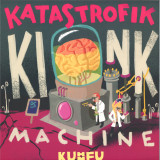
Der Waffle House Index bemisst in den USA seit 2011 die Wucht von Katastrophen: Grün = vollständiges Menü - Restaurant hat vollen Strom, Speisen unbegrenzt, Schaden schlimmstenfalls begrenzt. Gelb = eingeschränktes Menü - kein Strom, Verfügbarkeit von Speisen ist begrenzt. Rot = Restaurant zu - ernsthafte Schäden oder Überflutungen. Übertragen auf den freigeistigen Jazzrock der Band Kuhn Fu: Die Musik auf dem neuen Album "Katastrofik Kink Machine" springt mit Begeisterung und Verve zwischen Grün und Rot hin und her, und lässt die laue Mitte aus. Dem Wort Jazzrock haftet etwas Altbackenes an: Musik, in der seelenlose Virtuosität den Spirit und die Unmittelbarkeit ersetzt hat. Der Gitarrist und Komponist Christian Achim Kühn allerdings spielt mit seiner Band Kuhn Fu einen mit E-Gitarre infizierten Jazz, dem die Spielfreude und der Spaß am tiefschürfenden Unsinn (und eben dann doch auch: die Virtuosität) aus jeder Pore dampfen. Spaß an den Extremen nicht zuletzt, Grün und Rot, kein Gelb.
- A1: Bluenow1, Out-Of-Tune Piano, St Mary's Hospital Basement, Electriksnippets
- A2: Bluenow2, Virus, Hurricane Bomber
- A3: Derek Jarman Reads White Lies
- B1: Brother James Plays J.s. Bach's 'Erbarm Dich Mein, O Herre Gott' On The Great Rissington Organ, Bertrand Russell Gives Sound Advice
- B2: Brother James Plays J.s. Bach's 'Erbarm Dich Mein, O Herre Gott' On The Great Rissington Organ
- B3: Electriksnippets
- B4: Terre Thaemlitz's Remix Of Shishapangma, Remixed By Simon Fisher Turner
Where to begin with a figure like Simon Fisher Turner? From teenage stage and screen star to illustrious recording artist for Creation and Mute and score composer of Caravaggio, Blue and The Epic of Everest - via a stint with The The and collaborations with Derek Jarman, David Lynch and Tilda Swinton - Turner embodies a distinctly British sensibility and boundless curiosity for sound. For A Colourful Storm, discovering Deux Filles, his mysterious project with Colin Lloyd-Tucker that has since been reissued by Dark Entries, was a significant moment in shaping their identity.
In August 2023, A Colourful Storm presented Simon Fisher Turner and Time is Away at Spanners, London. Performed at the tail end of Blue Now, a series of events celebrating Derek Jarman's last feature film, Blue, the recording reveals a lifetime of significant events and influences. Terre Thaemlitz's remix of Turner's Shishapangma (Comatonse Recordings, 2015) is reworked and appears on vinyl only, Jarman is privately recorded reading White Lies, Bertrand Russell is sampled, and Turner records his brother practising the Great Rissington organ for their father's funeral.
"My wife and I lived in Brixton, near the venue, on Coldharbour Lane, 20 years ago. We were above a takeaway shop. The air extractor was a nightmare and the flat smelled of grease. The market was a great place to buy fish. We adopted a giant snail, who we called Ayrton. I used to take him all over town and he loved lettuce and tomatoes. There was a wonderful small pizza shop too, which was so delicious. But back to the music. Brixton is music and I'm a lucky man."
- A1: Rotterdam Terror Corps - We're Gonna Blow Your Mind
- A2: Buzz Fuzz - Jealousy (Is A M F)
- A3: The Bazeman - Can You Feel The Baze
- A4: Predator - Mind Of A Lunatic
- B1: Bertocucci Feranzano - Xtc Love
- B2: The Stunned Guys - Bim Bum Bam
- B3: Dj Sim - Simbiosis
- B4: Micropoint - Ping Machine
- C1: Neophyte Vs Stunned Guys - Army Of Hardcore
- C2: Dj Delirium & Dj Buzz Fuzz - Immortality
- C3: Diss Reaction - Jiiieehaaaa
- C4: Neophyte Vs Stunned Guys - Get This Motherfucker
- D1: J D.a. & Delta 9 - Real Harcore En Anders Niks
- D2: Charly Lownoise & Mental Theo - Ultimate Sextrack
- D3: Jappo & Lancinhouse - Exlxaxl
- D4: Dj Buby - A E.i.o.u Feat The Stunned Guys
Number One - ‘Il Locale dell’Impossibile’ presents
‘LA SALA 2’ - Limited Edition
Relive the music that made history in
‘Sala 2’ with this exclusive double vinyl!
Available starting Friday, December 13th, 2024, in
record stores and online, or grab your copy in
person at the Number One on Saturday, December
21st, 2024, during the epic celebration in Sala 2.