In Stock
On Stock and ready to ship
11,35 €
On Stock and ready to ship

On Stock and ready to ship

A decade has passed since we released our first vinyl in 2014 through the infamous ILLEGAL SERIES imprint.
To celebrate this milestone, we've invited Miki to create a mix that weaves together tracks from our entire catalogue, reminiscing of our journey over the past decade. We chose to release this mix on a classic tape cassette to better capture the essence of this special occasion.
On Stock and ready to ship

Congratulations is the debut EP for Raji Rags - DJ on NTS Radio, a label head, an A&R or behind the scenes at institutions like Boiler Room, Warp, Bleep, Livin' Proof and now at the helm of his own label, OTIH Records. The EP features instrumentation from members of Speakers Corner Quartet and a collaboration track with Taiwanese producer, Sonia Calico.
Confirmed mixes, reviews, radioplay and press confirmed from RA, DJ Mag, Mixmag, NTS Radio + more launch parties TBA. Limited edition run of 300 hand screen-printed vinyl.
On Stock and ready to ship

DJ Hasse is the alter ego of Erik Danielson—co-founder of Västkransen Records and one half of the duo Bike Thieves. Written and produced in the spring of 2023, his solo debut ”Hasse’s Fabrication EP” is now ready for the shelves. With two original tracks and a remix by Stockholm’s up-and-comer DJ Beverage, the record delves through styles and genres that Erik loves and always includes in his DJ sets.
On the record’s title track, DJ Hasse gives us a glimpse of the 1980s with a bass-driven italo piece ornamented by arpeggios and synthesized strings.
On the B-side, ”For My Friends” increases the energy with a euro house inspired tune built on a steady breakbeat groove. The record then closes with DJ Beverage’s own take on ”For My Friends”, which strips it down to its essentials and turns it into a bouncy UKG belter.
On Stock and ready to ship

Mal-One was always fascinated by the story of the legendary Gibson Les Paul Custom guitar, that Steve Jones, the guitarist of the Sex Pistols came to use. It was like a talisman object that got handed down from Sylvain Sylvain, the guitarist of the New York Dolls to Mr Jones. The story goes that Malcolm McLaren, during his brief stint working with the New York Dolls, acquired the guitar and carried it back to England. For monies owned to him for his work and on a promise that Sylvain Sylvain, was to come over to England to work with his new prodigies, the Sex Pistols. The guitar would be waiting for him.
Well history tells us that Sylvain Sylvain, did not make that trip and Steve Jones’s temporary use, became permanent. The guitar looked great with it’s two girly stickers ( decals ) and became a signature look for Steve Jones. Adding to this the story that Steve Jones stole Mal-One’s bike when he was seven years old. That story had to be told. Punk Art Poetry, that turned into a song. Hope you enjoy the indulgence.
Great rhythms matched with magic from King Tubby’s studio at the hands of Prince Jammy.
On Stock and ready to ship

Two mavericks, out on the weekend, trying to make it pay...
"Maverick was the word that came to mind when I listened to this music. A slightly wayward independence of spirit and outlook. The word originally referred to an unbranded male calf that had become separated from the herd (because Texan rancher Sam Maverick was so negligent in his branding - ‘if it ain’t branded, it’s a Maverick’). But Sam’s grandson Maury Maverick gave it a different twist in his short but stormy Congressional career as the only liberal member of the Southern Democratic caucus. Maury was so out of step with his own folks that he not only voted in 1937 to make lynching a federal crime, he even addressed the House to condemn the practice as barbaric. His attempt to ban racist mob murder sadly failed, but it’s that refusal to march in step which distinguishes the two ‘mavericks’ who made this record.
Who would attempt to combine cunning ethnological forgery, Scottish folk songs, claw-hammer guitar, untutored horn-tootling, elastically relaxed drumming and garage electronic fuckery? Only Greg and Stefan, high on sea, sunshine and mis-judged micro-dosing – that’s who. ‘Don’t drown’ was offered as practical advice during the self-described ‘Yellow Submarine’ phase of making this record. And while they managed to avoid literally doing so (phew), they sound here like they got pretty ‘deep in’ to an Octopus’s sound world all their own. This surprisingly clear analogue recording has just enough Bikini Bottom grit to ensure traction. The tunes are inviting, and the sonic disruptions are too good-natured and goofy to upset even the most delicate digestion.
The sessions have had a couple of years to marinate, courtesy of some pandemic, and are here offered in that most Archducal of vinyl formats, the double ten inch. What are you waiting for, a side of Crabby Patties? Get your water-wings and dive in (unless you’re tripping)!" - Bruce Russell (The Dead C)
Pumice is the long-running, endlessly inventive project of New Zealand native Stefan Neville (1974), whose shambolic music is equally reminiscent of Kiwi pop groups such as The Clean and Tall Dwarfs as well as the country's experimental noise-rock bands like the Dead C. Largely recorded solo by himself on junky equipment, his songs typically feature blown-out guitars, wheezing chord organs, and vocals disguised by tape hiss and static.
Greg Malcolm (1965) is a guitarist from New Zealand who has played everywhere on the globe and with all most everyone, including Rosy Parlane, Toshimaru Nakamura, Tetuzi Akiyama and Bruce Russell, as well as solo releases on his own label, Corpus Hermeticum, Kraak and Celebrate Psi Phenomenon.
On Stock and ready to ship

ALEXANDER SKANCKE´s exciting debut ep for SLICES OF LIFE, including a collaboration track with FOEHN & JEROME.
Alexander Skancke is a Berlin-based DJ, producer and rising talent within Europe´s underground house scene. The young Norwegian has made a sizeable impact on the electronic music scene, dating from way back to his early releases on Neostrictly, to the internationally respected releases on his own label Quirk. Entrenched in his love for vinyl and analog productions, Skancke is imbued with a passion for the very roots of house music, but has also kept his ears open far beyond the boundaries of electronic music.
Skancke’s excitement for analogue is reflected in all aspects of his life: from his work at Bikini Waxx (a record shop in Berlin specializing in second-hand vinyl), to his fascination with vintage studio gear, all culminating in his music having a wonderfully raw and organic feeling.
The 3 tracks that make up his “Public Trouble” ep showcase Alexander Skancke´s knowledge of the history of dance music without copying the originals, but instead creating his own unique signature:
The A side - “This Go This Way” sends you on a crazy acid dream, driven by a hypnotic unstoppable beat with Alexander Skancke´s voice appearing out of the ether, before vanishing away.
For the B1 track “Wind Sync” Alex teamed up with his label mates and renowned DJ- and Producer-Duo Foehn & Jerome at their studio in Berlin. Together they've masterfully crafted a light footed minimal house track with a slightly melancholic touch.
The EP´s title track “Public Trouble” truly shows off Alexander Skancke´s love for deep minimal funk: An ultra groovy piece of music based around tight beats and warm basslines, topped off with a funky stripped back synth line.
On Stock and ready to ship

Bliss Point is proud to welcome NY producer Duane Island to the roster with Solar Effect, three enormous and heartfelt club excursions, combining elements of trance, italo and disco to pack as much life as possible into one release.
The title track, “Solar Effect”, twists in on itself like a trip peaking at noon, pairing squelching FM synth lines with airy piano chords to get hands in the air, feet off the ground, and heads in the clouds. “Figo Dream” is an afternoon bike ride through a lifted and euphoric dreamscape, anchored by a pulsing bass line that changes course at just the right moment. “Olio” cruises back to earth by sunset, with cheeky keys and voices from dancefloors past beckoning for another go round.
On Stock and ready to ship

On Stock and ready to ship

On Stock and ready to ship
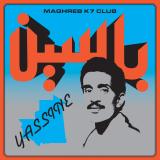
After Maghreb K7 Club – Synth Raï, Chaoui & Staïfi (1985-1997) and Maghreb K7 Club Disco Singles Volume 1, 2, and 3, Sofa Records and Les Disques Bongo Joe team up again for a new project exploring funky, synth-driven tape music from the Maghreb.
This compilation brings together eight songs —delivering a Saharan pop sound melted with reggae, dub, new-wave and funk — by Yassine (Ahl) Nana, the iconic figure of Mauritanian pop music in the 1980s and 1990s. Yassine and his band recorded songs between Nouakchott, Paris, and Rabat, resulting in only a pair of rare cassette tapes. This music was definitively part of the vibrant wave of African sounds sweeping across the continent at the time, from Abidjan to Oran and Kinshasa.
This compilation features previously unreleased recordings, along with liner notes, interviews, and exclusive iconography.
This item has not yet been released. You can pre-order the product now.
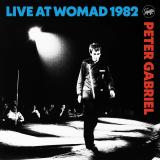
Es war eine einfache Idee: ein Festival zu schaffen, das brillante Musik und Kunst aus aller Welt vereint, entstanden außerhalb des Mainstreams entstanden – Musik, die nicht im Radio gespielt wurde und in Plattenläden noch schwerer zu finden war... Das allererste WOMAD-Festival fand am Wochenende vom 16. bis 18. Juli 1982 in Somerset, Großbritannien, statt. Mit dem Traum, „Weltmusik nicht nur als Beigabe zu einem Rockfestival zu präsentieren, sondern zu beweisen, dass diese großartigen Künstler selbst Headliner sein können”.
An den drei Tagen fand im Showering Pavilion auf dem Festivalgelände eine „Abendkonzertreihe“ statt. Am Freitagabend traten Tian Jin (eine Gesangs- und Tanzgruppe aus China), Simple Minds und Peter Gabriel mit einem „speziellen Festival-Set mit Nicht-Album-Material“ auf.
Live at WOMAD 1982 ist eine Aufnahme dieses Freitagabendkonzerts. Bei dem Nicht-Album-Material handelt es sich um sieben der acht Songs, aus denen das Album Peter Gabriel 4 (Security) bestehen würde. Ein Album, das erst zwei Monate später veröffentlicht werden sollte.
Peter Gabriels Live at WOMAD 1982 versetzt uns nicht nur zurück in die Geburtsstunde eines Festivals, das mittlerweile mehr als 160 Ausgaben in 27 Ländern veranstaltet hat, sondern auch in die Premiere eines Albums mit Songs wie "The Rhythm of the Heat", "San Jacinto" und "Shock the Monkey", die zu zentralen Werken im Schaffen Gabriels geworden sind. „Live at WOMAD 1982“ ist mehr als nur ein Live-Album, es ist ein entscheidender Moment, der zum ersten Mal auf CD und LP erhältlich ist.
expected to be published on 08.05.2026

The classic Fearless Iranians From Hell Die For Allah LP is now back in print after a twenty-five year hiatus. Remastered and repressed on nuclear green vinyl, this hardcore punk arsenal also includes all tracks from their literally explosive Blow Up The Embassy 7-inch debut. FIFH was a mysterious Texan monstrosity formed in 1983 by Iranian expat (and modern day hashashin) Amir Mamori, who gathered to his side various mutants and apocalyptic freaks from the San Antonio punk rock blast zone, even throwing in two Butthole Surfers rejects for good measure (including none other than the notorious Anus Presley himself). The subsequent recording sessions were a chaotic affair, as guitars were rarely in tune and the drums were seemingly scavenged from the trash. It was all directed by Amir who, with fanatical focus, would inspire the band on to victory from behind a stupifying cloud of hash smoke. The resulting releases were widely praised; from places like Maximum Rock n Roll and the Village Voice in the US, to Sounds and New Musical Express in the UK. They were even cited as forerunners of the musical genre known as Taqwacore. After touring the US in the late ’80s—and leaving in their wake crowd turbulence, police intimidation, and even bounties being place on the heads of the members—the band disbanded in 1989 upon the death of the Ayatollah Khomeini (may Allah have mercy on him). “We’re stoned as shit, and we’re ready to roll.” - F.I.F.H. ’87
Order now and we will order the item for you at our supplier.

UILTY RAZORS, BONA FIDE PUNKS.
Writings on the topic that go off in all directions, mind-numbing lectures given by academics, and testimonies, most of them heavily doctored, from those who “lived through that era”: so many people today fantasize about the early days of punk in our country… This blessed moment when no one had yet thought of flaunting a ridiculous green mohawk, taking Sid Vicious as a hero, or – even worse – making the so-called alternative scene both festive and boorish. There was no such thing in 1976 or 1977, when it wasn’t easy to get hold of the first 45s by the Pistols or the Clash. Few people were aware of what was happening on the fringes of the fringes at the time. Malcolm McLaren was virtually unknown, and having short hair made you seem strange. Who knew then that rock music, which had taken a very bad turn since the early 1970s, would once again become an essential element of liberation? That, thanks to short and fast songs, it would once again rediscover that primitive, social side that was so hated by older generations? Who knew that, besides a few loners who read the music press (it was even better if they read it in English) and frequented the right record stores? Many of these formed bands, because it was impossible to do otherwise. We quickly went from listening to the Velvet Underground to trying to play the Stooges’ intros. It’s a somewhat collective story, even though there weren’t many people to start it.
The Guilty Razors were among those who took part in this initial upheaval in Paris. They were far from being the worst. They had something special and even released a single that was well above the national average. They also had enough songs to fill an album, the one you’re holding. In everyone’s opinion, they were definitely not among the punk impostors that followed in their wake. They were, at least, genuine and credible.
Guilty Razors, Parisian punk band (1975-1978). To understand something about their somewhat linear but very energetic sound, we might need to talk about the context in which it was born and, more broadly, recall the boredom (a theme that would become capital in punk songs) coupled with the desire to blow everything off, which were the basis for the formation of bands playing a rejuvenated rock music ; about the passion for a few records by the Kinks or the early Who, by the Stooges, by the Velvet mostly, which set you apart from the crowd.
And of course, we should remember this new wave, which was promoted by a few articles in the specialized press and some cutting-edge record stores, coming from New York or London, whose small but powerful influence could be felt in Paris and in a handful of isolated places in the provinces, lulled to sleep by so many appalling things, from Tangerine Dream to President Giscard d’Estaing...
In 1975-76, French music was, as almost always, in a sorry state ; it was still dominated by Johnny Hallyday and Sylvie Vartan. Local rock music was also rather bleak, apart from Bijou and Little Bob who tried to revive this small scene with poorly sound-engineered gigs played to almost no one.
In the working class suburbs at the time, it was mainly hard rock music played to 11 that helped people forget about their gruelling shifts at the factory. Here and there, on the outskirts of major cities, you still could find a few rockers with sideburns wearing black armbands since the death of Gene Vincent, but it wasn’t a proper mass movement, just a source of real danger to anyone they came across who wasn't like them. In August 1976, a festival unlike any other took place in Mont-de-Marsan – the First European Punk Festival as the poster said – with almost as many people on stage as in the audience. Yet, on that day, a quasi historical event happened, when, under the blazing afternoon sun, a band of unknowns called The Damned made an unprecedented noise in the arena, reminiscent of the chaotic Stooges in their early adolescence. They were the first genuine punk band to perform in our country: from then on, anything was possible, almost anything seemed permissible.
It makes sense that the four+1 members of Guilty Razors, who initially amplified acoustic guitars with crappy tape recorder microphones, would adopt punk music (pronounced paink in French) naturally and instinctively, since it combines liberating noise with speed of execution and – crucially – a very healthy sense of rebellion (the protesters of May 1968 proclaimed, and it was even a slogan, that they weren’t against old people, but against what had made them grow old. In the mid-1970s, it seemed normal and obvious that old people should now ALSO be targeted!!!).
At the time, the desire to fight back, and break down authority and apathy, was either red or black, often taking the form of leafleting, tumultuous general assemblies in the schoolyard, and massive or shabby demonstrations, most of the time overflowing with an exciting vitality that sometimes turned into fights with the riot police. Indeed, soon after the end of the Vietnam War and following Pinochet’s coup in Chile, all over France, Trotskyist and anarcho-libertarian fervour was firmly entrenched among parts of the educated youth population, who were equally rebellious and troublemakers whenever they had the chance. It should also be noted that when the single "Anarchy in the UK" was first heard, even though not many of us had access to it, both the title and its explosive sound immediately resonated with some of those troublemakers crying out for ANARCHY!!! Meanwhile, the left-wing majority still equated punks with reckless young neo-Nazis. Of course, the widely circulated photos in the mainstream press of Siouxsie Sioux with her swastikas didn’t necessarily help to win over the theorists of the Great Revolution. It took Joe Strummer to introduce The Clash as an anti-racist, anti-fascist and anti-ignorance band for the rejection of old-school revolutionaries to fade a little.
The Lycée Jean-Baptiste Say at Porte d’Auteuil, despite being located in the very posh and very exclusive 16th arrondissement of Paris, didn’t escape these "committed" upheavals, which doubled as the perfect outlet for the less timid members of this generation.
“Back then, politics were fun,” says Tristam Nada, who studied there and went on to become Guilty Razors’ frontman. “Jean-Baptiste was the leftist high-school in the neighbourhood. When the far right guys from the GUD came down there, the Communist League guys from elsewhere helped us fight them off.”
Anything that could challenge authority was fair game and of course, strikes for just about any reason would lead to increasingly frequent truancy (with a definitive farewell to education that would soon follow). Tristam Nada spent his 10th and 11th unfinished grades with José Perez, who had come from Spain, where his father, a janitor, had been sentenced to death by Franco. “José steered my tastes towards solid acts such as The Who. Like most teenagers, I had previously absorbed just about everything that came my way, from Yes to Led Zeppelin to Genesis. I was exploring… And then one day, he told me that he and his brother Carlos wanted to start a rock band.” The Perez brothers already played guitar. “Of course, they were Spanish!”, jokes their singer. “Then, somewhat reluctantly, José took up the bass and we were soon joined by Jano – who called himself Jano Homicid – who took up the rhythm guitar.” Several drummers would later join this core of not easily intimidated young guys who didn’t let adversity get the better of them.
The first rehearsals of the newly named Guilty Razors took place in the bedroom of a Perez aunt. There, the three rookies tried to cover a few standards, songs that often were an integral part of their lives. During a first, short gig, in front of a bewildered audience of tough old-school rockers, they launched into a clunky version of the Velvet Underground's “Heroin”. Challenge or recklessness? A bit of both, probably… And then, step by step, their limited repertoire expanded as they decided to write their own songs, sung in a not always very accurate or academic English, but who cared about proper grammar or the right vocabulary, since what truly mattered was to make the words sound as good as possible while playing very, very fast music? And spitting out those words in a language that left no doubt as to what it conveyed mattered as well.
Trying their hand a the kind of rock music disliked by most of the neighbourhood, making noise, being fiercely provocative: they still belonged to a tiny clique who, at this very moment, had chosen to impose this difference. And there were very few places in France or elsewhere, where one could witness the first stirrings of something that wasn’t a trend yet, let alone a movement.
In the provinces, in late 1976 or early 1977, there couldn’t be more than thirty record stores that were a bit more discerning than average, where you could hear this new kind of short-haired rock music called “punk”. The old clientele, who previously had no problem coming in to buy the latest McCartney or Aerosmith LP, now felt a little less comfortable there…
In Paris, these enlightened places were quite rare and often located nex to what would become the Forum des Halles, a big shopping mall. Between three aging sex workers, a couple of second-hand clothes shops, sellers of hippie paraphernalia and small fashion designers, the good word was loudly spread in two pioneering places – propagators of what was still only a new underground movement. Historically, the first one was the Open Market, a kind of poorly, but tastefully stocked cave. Speakers blasted out the sound of sixties garage bands from the Nuggets compilation (a crucial reference for José Perez) or the badly dressed English kids of Eddie and the Hot Rods. This black-painted den was opened a few years earlier by Marc Zermati, a character who wasn’t always in a sunny disposition, but always quite radical in his (good) choices and his opinions. He founded the independent label Skydog and was one of the promoters of the Mont-de-Marsan punk festivals. Not far from there was Harry Cover, another store more in tune with the new New York scene, which was amply covered in the house fanzine, Rock News (even though it was in it that the photos of the Sex Pistols were first published in France).
It was a favorite hang-out of the Perez brothers and Tristam Nada, as the latter explained. “It’s at Harry Cover’s that we first heard the Pistols and Clash’s 45s, and after that, we decided to start writing our first songs. If they could do it, so could we!”
The sonic shocks that were “Anarchy in the UK”, “White Riot” or the Buzzcocks’s EP, “Spiral Scratch” – which Guilty Razors' sound is reminiscent of – were soon to be amplified by an unparalleled visual shock. In April 1977, right after the release of their first LP, The Clash performed at the Palais des Glaces in Paris, during a punk night organised by Marc Zermati. For many who were there, it was the gig of a lifetime…
Of course, Guilty Razors and Tristam were in the audience: “That concert was fabulous… We Parisian punks were almost all dressed in black and white, with white shirts, skinny leather ties, bikers jackets or light jackets, etc. The Clash, on the other hand, wore colourful clothes. Well, the next day, at the Gibus, you’d spot everyone who had been at this concert, but they weren’t wearing anything black, they were all wearing colours.”
It makes sense to mention the Gibus club, as Guilty Razors often played there (sometimes in front of a hostile audience). It was also the only place in Paris that regularly scheduled new Parisian or Anglo-Saxon acts, such as Generation X, Siouxsie and the Banshees, the Slits, and Johnny Thunders who would become a kind of messed-up mascot for the venue. A little later, in 1978, the Rose Bonbon – formerly the Nashville – also attracted nightly owls in search of electric thrills… In 1977, the iconic but not necessarily excellent Asphalt Jungle often played at the Gibus, sometimes sharing the bill with Metal Urbain, the only band whose aura would later transcend the French borders (“I saw them as the French Sex Pistols,” said Geoff Travis, head of their British label Rough Trade). Already established in this small scene, Metal Urbain helped the young and restless Guilty Razors who had just arrived. Guitarist for Metal Urbain Hermann Schwartz remembers it: “They were younger than us, we were a bit like their mentors even if it’s too strong a word… At least they were credible. We thought they were good, and they had good songs which reminded of the Buzzcocks that I liked a lot. But at some point, they started hanging out with the Hells Angels. That’s when we stopped following them.”
The break-up was mutual, since, Guilty Razors, for their part, were shocked when they saw a fringe element of the audience at Metal Urbain concerts who repeatedly shouted “Sieg Heil” and gave Nazi salutes. These provocations, even still minor (the bulk of the skinhead crowd would later make their presence felt during concerts), weren’t really to the liking of the Perez brothers, whose anti-fascist convictions were firmly rooted. Some things are non-negotiable.
A few months earlier (in July 1978), Guilty Razors had nevertheless opened very successfully for Metal Urbain at the Bus Palladium, a more traditonally old-school rock night-club. But, as was sometimes the case back then, the night turned into a mass brawl when suburban rockers came to “beat up punks”.
Back then, Parisian nights weren’t always sweet and serene.
So, after opening as best as they could for The Jam (their sound having been ruined by the PA system), our local heroes were – once again – met outside by a horde of greasers out to get them. “Thankfully,” says Tristam, “we were with our roadies, motorless bikers who acted as a protective barrier. We were chased in the neighbouring streets and the whole thing ended in front of a bar, with the owner coming out with a rifle…”
Although Tristam and the Perez brothers narrowly escaped various, potentially bloody, incidents, they weren’t completely innocent of wrongdoing either. They still find amusing their mugging of two strangers in the street for example (“We were broke and we simply wanted to buy tickets for the Heartbreakers concert that night,” says Tristam). It so happened that their victims were two key figures in the rock business at the time: radio presenter Alain Manneval and music publisher Philippe Constantin. They filed a complaint and sought monetary compensation, but somehow the band’s manager, the skilful but very controversial Alexis, managed to get the complaint withdrawn and Guilty Razors ended up signing with Constantin with a substantial advance.
They also signed with Polydor and the label released in 1978 their only three-track 45, featuring “I Don't Wanna be A Rich”, “Hurts and Noises” and “Provocate” (songs that exuded perpetual rebellion and an unquenchable desire for “class” confrontation). It was a very good record, but due to a lack of promotion (radio stations didn’t play French artists singing in English), it didn’t sell very well. Only 800 copies were allegedly sold and the rest of the stock was pulped… Initially, the three tracks were to be included on a LP that never came to be, since they were dropped by Polydor (“Let’s say we sometimes caused a ruckus in their offices!” laughs Tristam.) In order to perfect the long-awaited LP, the band recorded demos of other tracks. There was a cover of Pink Floyd's “Lucifer Sam” from the Syd Barrett era – proof of an enduring love for the sixties’ greats –, “Wake Up” a hangover tale and “Bad Heart” about the Baader-Meinhof gang, whose actions had a profound impact on the era and on a generation seeking extreme dissent... On the album you’re now discovering, you can also hear five previously unreleased tracks recorded a bit later during an extended and freezing stay in Madrid, in a makeshift studio with the invaluable help of a drummer also acting as sound engineer. He was both an enthusiastic old hippie and a proper whizz at sound engineering. Here too, certain influences from the fifties and sixties (Link Wray, the Troggs) are more than obvious in the band’s music.
Shortly after a final stormy and rather barbaric (on the audience’s side) “Punk night” at the Olympia in June 1978, Tristam left the band ; his bandmates continued without him for a short while.
But like most pioneering punk bands of the era, Guilty Razors eventually split up for good after three years (besides once in Spain, they’d only played in Paris). The reason for ceasing business activities were more or less the same for everyone: there were no venues outside one’s small circuit to play this kind of rock music, which was still frightening, unknown, or of little interest to most people. The chances of recording an LP were virtually null, since major labels were only signing unoriginal but reassuring sub-Téléphone clones, and the smaller ones were only interested in progressive rock or French chanson for youth clubs. And what about self-production? No one in our small safety-pinned world had thought about it yet. There wasn’t enough money to embark on that sort of venture anyway.
So yes, the early days of punk in France were truly No Future!
Order now and we will order the item for you at our supplier.

expected to be published on 10.04.2026
Hagridden' is the second full-length from Scottish sisters Bratakus. Fiercely political and unapologetic, the duo made up of siblings Brèagha Cuinn (guitar and vocals) and Onnagh Cuinn (bass and vocals) deliver ten songs that combine garage rock and feminist punk with the same deft poise as forerunners The Distillers, The Donnas, Bikini Kill and X-Ray Spex.
In 2019, a BBC news report called Bratakus "the UK's most remote punk band". Formed in 2015 outside a small whiskey village called Tomintoul in the Scottish Highlands, the sisters (then 14 and 8 years old) have maintained a DIY ethos in everything they've done. Recording at home, self-releasing music, booking their own tours and with no drummer available locally, the duo turned their limitation into a statement, performing live with a drum machine and cementing their reputation as an uncompromising force within the punk scene.
'Hagridden' marks a new beginning for the two sisters, introducing real drums to the recording process (including a guest appearance from Chris Dangerous of Swedish rock band The Hives) plus a more focused approach to songwriting. The message and music are just as loud, but the execution is now deadlier than ever.
expected to be published on 27.03.2026

Red Motorbike hits the road in '26 with an original production from Berlin's master of boogie funk LJ Simon!
Givin' Up is a soulful modern funk 7" steeped in warm '80s analogue production and classic groove.
The OG version blends vintage synth textures with a deep, understated rhythm section. Known for his love of fat-sounding vintage gear, LJ Simon begins every song with no blueprint, working purely from sound, instinct, and feel, tuning in to receive what the moment brings. The influences are unmistakable, yet the result feels fresh, intuitive and alive.
Vocals are delivered by Denice Brooks, a formidable singer from Austin, Texas, now based in Berlin. Denice built her solo career while performing with an exceptional list of artists including Tina Turner, Roy Ayers, David Bowie, Nancy Wilson, Natalie Cole, and many others. She is notably the only singer to receive Prince's blessing to record an official cover of 'Purple Rain' - a distinction that speaks volumes about her artistry.
Her career has taken her across Germany, Europe, the Middle East, and South Africa, where she even once performed for Nelson Mandela. Her continued experience across stage, studio, television, and musical theatre shines through in a vocal performance rich in depth and soul.
Label head Eddie C offers up his Disko Mix and reframes the track through a '90s street soul lens; stripped-back, dusty, and perfectly tuned for late-night selectors and heads-down dancefloors.

Kicked in the Teeth relies primarily on rip-roaring punk rock & roll guitar riffs and hardcore drum beats, the entire LP slashing by like a Japanese street bike on a rain-soaked highway -- blink your eye, and it's passed. Zeke does one thing, and that one thing they do very very well - incredibly fast, out of control punk rock & roll, executed with exceptional lead guitar work. There are, however, some slower-paced tunes on Kicked In the Teeth - after all, Zeke is not the typical snotty American punk or hardcore act -- and they are performed well. For example, the amped-up cover of Kiss' "Shout It Out Loud".
Kicked In The Teeth is available as a limited edition of 1000 individually numbered copies on red & black marble vinyl and includes an insert.
expected to be published on 13.03.2026

expected to be published on 27.02.2026
